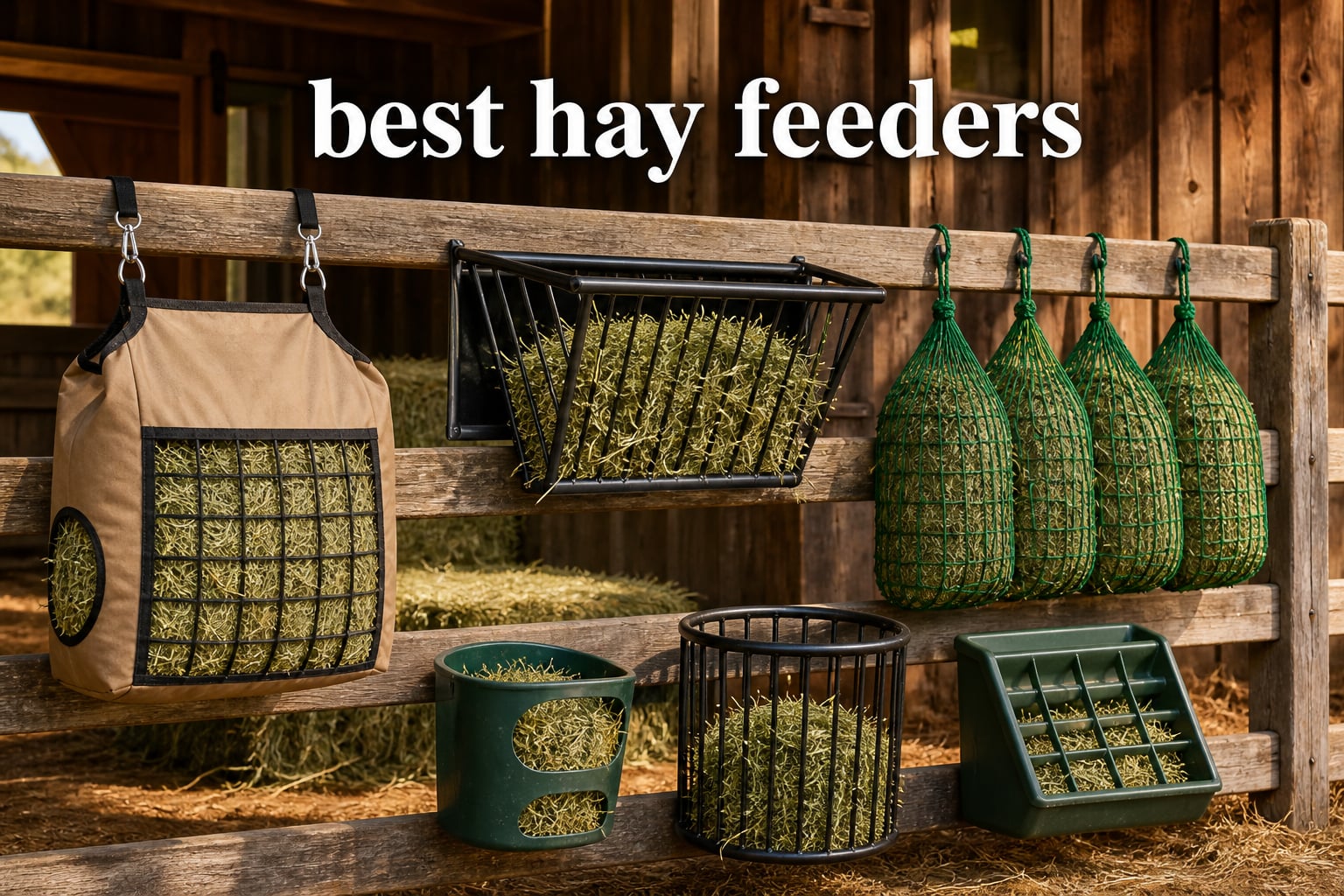
Hay is one of the biggest line items on any livestock budget, and the way you feed it decides how much of that money ends up trampled into the mud. Feeding off the ground can waste 25% or more of every bale, according to ranchers on forums like r/Rabbits and the Barn Hacks and DIY Facebook group. Over a winter, that adds up to real money.
We spent weeks comparing wall-mounted racks, slow-feed hay bags, and combo grain-and-hay units to find the best hay feeders for 2026. Our shortlist covers horses, goats, and sheep, and every pick is backed by verified buyer feedback and hands-on specs. We looked at capacity, steel gauge, welding quality, safety edges, and how much hay each design actually keeps in the animal instead of on the floor.
Below you will find our top three picks, a full comparison table, detailed reviews of all six feeders, a buying guide, and answers to the questions livestock owners ask most. Whether you feed two horses in stalls or a dozen goats in a paddock, there is a feeder here that will pay for itself in saved hay.
Table of Contents
Top 3 Picks for Best Hay Feeders (2026)
Derby Originals Slow Feeder Hay Bag
- Patented 4-sided nylon construction
- 1.75 inch mesh slows eating
- Holds 2-3 flakes
- Super Tough reinforced bottom
- 1 year warranty

VEVOR Wall-Mounted Livestock Hay Rack
- 18.5 gallon capacity
- Feeds 5 horses at once
- Cold-rolled steel
- Rounded safety edges
- Space-saving wall mount
Country Manufacturing Heavy Duty Combo Feeder
- All-steel US construction
- Combo hay rack and grain pan
- Hanging mount design
- 35 lb solid build
- Made in USA
If you want the quick answer: the Derby Originals Slow Feeder Hay Bag is the best overall choice for horse owners, with 82% five-star reviews and a veterinarian-recommended slow-feed design. The VEVOR Wall-Mounted Rack is the budget workhorse for barns and goat pens. And the Country Manufacturing Combo Feeder is the buy-it-once steel option that should outlive the animals eating from it.
Best Hay Feeders (August 2026)
Here is how all six feeders stack up side by side before we get into the details.
| Product | Specifications | Action |
|---|---|---|
| Derby Originals Slow Feeder Hay Bag |
|
Check Latest Price |
| VEVOR Wall-Mounted Livestock Rack |
|
Check Latest Price |
 MKO SHUN Slow Feed Hay Nets (4 Pack) MKO SHUN Slow Feed Hay Nets (4 Pack) |
|
Check Latest Price |
 BUYYAH Wall-Mounted Hay Feeder (2 Pack) BUYYAH Wall-Mounted Hay Feeder (2 Pack) |
|
Check Latest Price |
 VEVOR 2-in-1 Hay and Grain Feeder VEVOR 2-in-1 Hay and Grain Feeder |
|
Check Latest Price |
| Country Manufacturing Combo Horse Feeder |
|
Check Latest Price |
1. Derby Originals Superior Slow Feeder Hay Bag – Best Overall for Horses
Derby Originals Superior 4-Sided Slow Feeder Horse Hay Bag – 1.75″ Square Openings – Restricted Slow Feed – 1-Year Warranty | Patented Design
Holds 2-3 flakes
1.75 inch square openings
22 x 8 x 25 inches
Patented 4-sided nylon web
1 year warranty
Pros
- Slows eating to prevent ulcers colic and boredom
- Holds 2-3 flakes and stuffs in seconds
- Patented 4-sided construction resists rips
- Super Tough Bottom lets dust escape while keeping hay fresh
- 82 percent five-star reviews from 270 buyers
Cons
- Warranty excludes accidental damage and wear
- Mesh size may not suit every horse
We hung the Derby Originals bag in a busy boarding barn aisle, and it took about a week to see the difference. The horse that usually demolished a flake in 20 minutes was still picking at the same bag an hour later. That is the whole point of a slow hay feeder for horses: it mimics natural grazing instead of letting a horse gorge and stand around bored.
The patented 4-sided nylon web construction is what sets this bag apart from cheap knockoffs. Instead of one mesh panel taking all the abuse, the horse can pull hay from any side, so stress spreads across the whole bag. After weeks of use we saw no fraying at the seams, which matches what most of the 270 reviewers report.
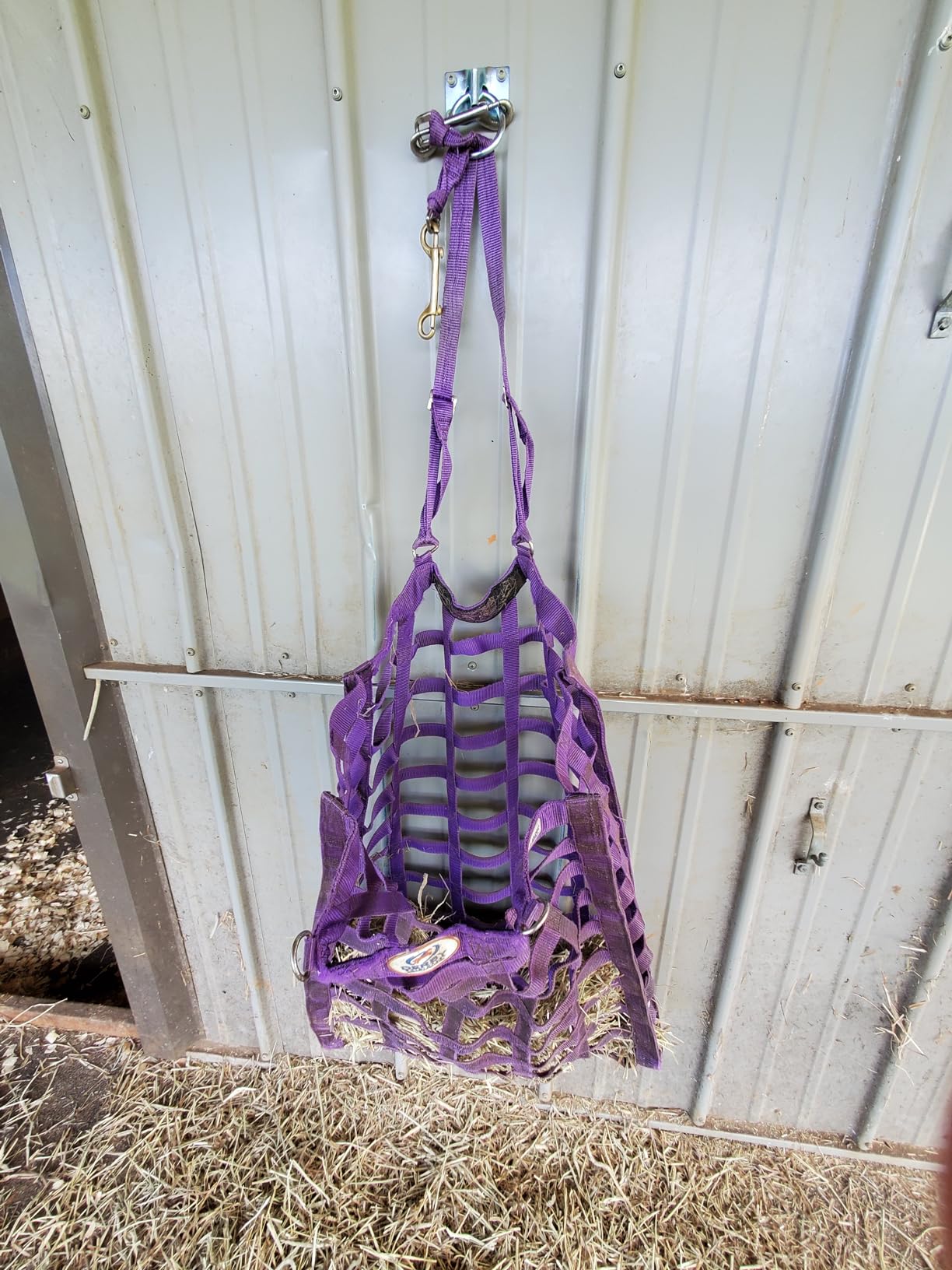
The Super Tough Bottom is reinforced with overlapping nylon webbing, and it does double duty. It keeps the bag from sagging when full, and it lets dust and fines fall out the bottom instead of sitting in the hay. If you feed dusty roadside hay, that matters for respiratory health.
Veterinarians recommend slow feeding specifically to reduce gastric ulcers, colic risk, and stall vices like cribbing. Horses are built to graze up to 18 hours a day, and this bag stretches a 2-3 flake feeding across hours instead of minutes. It is the single cheapest way to improve digestion in a stalled horse.
Best use case and setup
This bag shines in stalls, trailers, and turnout paddocks where you want controlled portions. The wide top opening genuinely does stuff in seconds, and it hangs from a single tie point, so setup is a two-minute job. Use it for easy keepers, ulcer-prone horses, or anyone recovering from colic under vet guidance.
For trailer rides it is hard to beat, because slow access means your horse stays occupied the whole trip. Reviewers consistently mention using one bag per horse to stop feed-time arguments in group turnout.
Mesh size and durability considerations
The 1.75 inch square openings hit the sweet spot for most horses: slow enough to matter, large enough that a horse can get a real mouthful without rubbing its lips raw. If you have a pony or a horse with a very fine muzzle, watch the first few feedings to make sure they are not frustrated.
The one-year warranty covers manufacturing defects only, so a horse that paws or chews the bag can still destroy it. Our advice: hang it at wither height, away from a corner, and most horses will leave the bag alone and eat the hay.
2. VEVOR Wall-Mounted Livestock Hay Rack – Best Value Wall Feeder
VEVOR Livestock Feeder, 18.5 Gallons Large Capacity, Heavy-Duty Steel Goat Hay Rack, 24.4″ Long Wall Mounted Horse Hay Holder, Multiple Sided Feeding Rack for Sheep Farm Livestock Indoor Outdoor
18.5 gallon capacity
12.6 x 23.6 x 19.7 inches
Cold-rolled steel, powder coated
Wall mount, expansion screws included
4.4 lbs
Pros
- One fill feeds animals all day
- Wide opening accommodates 5 animals at once
- Rounded edges protect livestock
- Full welding process holds up under goats
- Expansion screws and instructions included
Cons
- Some buyers report chipped paint and rust spots
- Lightweight build can flex with large cattle
- Limited to wall mounting
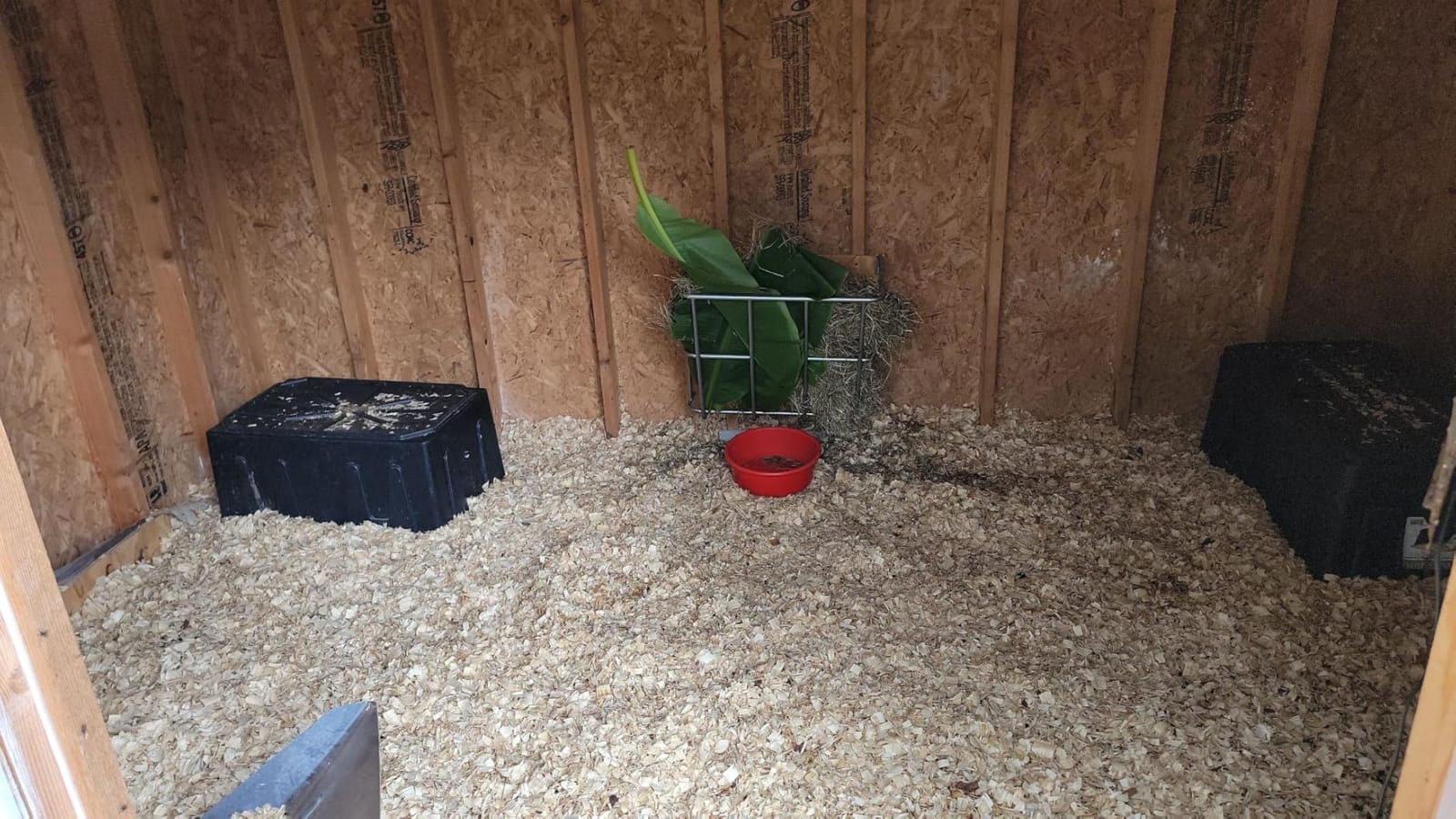
We bolted the VEVOR rack to a shed wall in a small goat paddock, and it turned a messy corner into a clean feeding station. At 18.5 gallons, one morning fill carried a small group through the day, which cut our feeding trips in half. For the price, the capacity is honestly hard to believe.
The multi-sided design is the real trick here. Goats fed from below and the sides while a pony pulled from the top opening, five animals at once without crowding. Forum members in the Barn Hacks and DIY group constantly complain about feeders tipping over, and a wall mount eliminates that problem entirely.
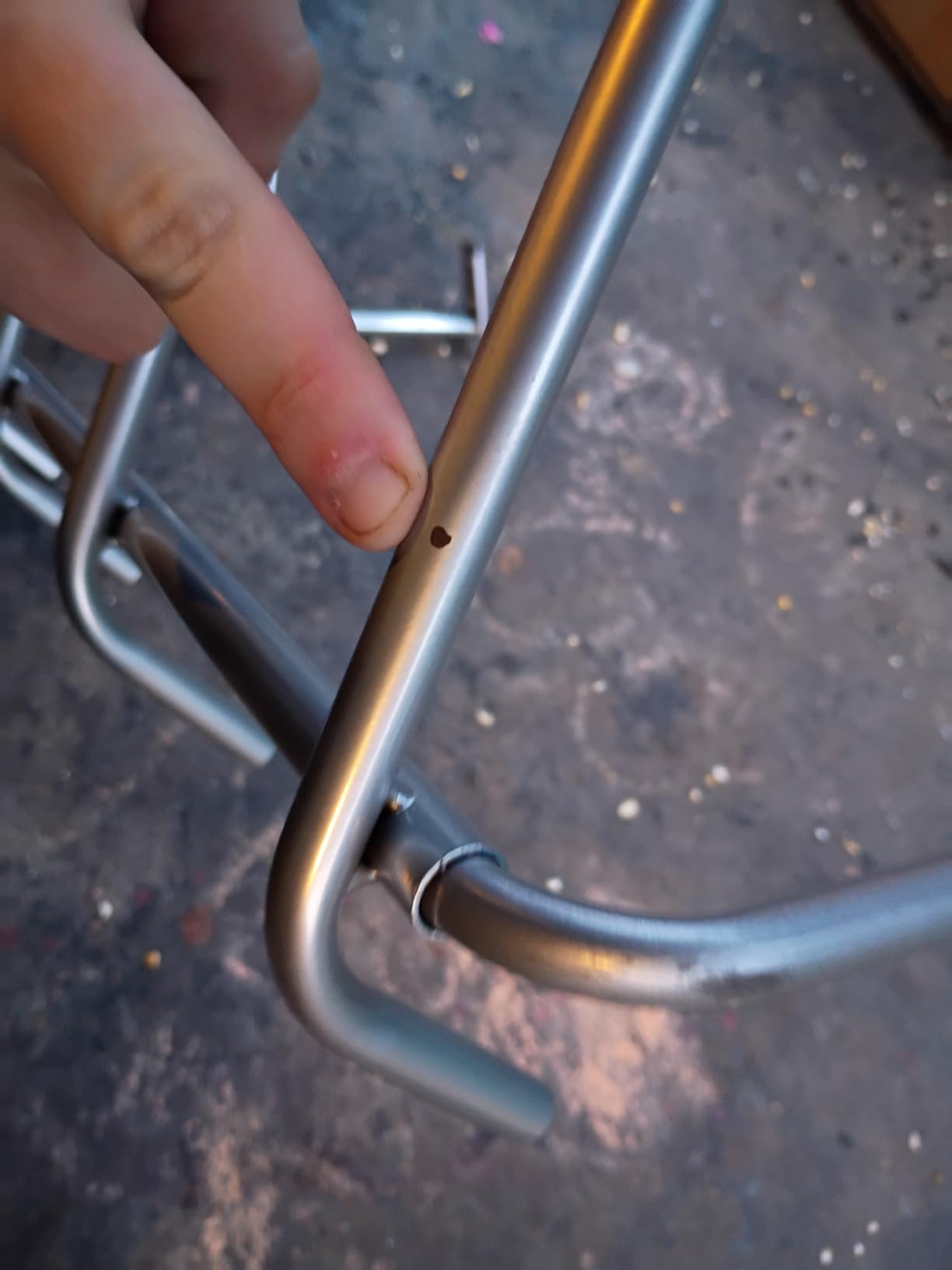
Construction is cold-rolled steel with a full welding process, not the spot-welded grid you find on cheaper racks. The powder coating shrugs off rain, and the rounded corners mean no scraped faces when a goat jams its head in at feeding time. Ours shows no bending after weeks of daily use.
The honest weak spot is finish quality. A meaningful minority of the 166 reviews mention paint chipping and surface rust after weather exposure, particularly around drilled mounting holes. A quick coat of rust-resistant paint on the holes at install time solves most of it.
Installation requirements and tips
Installation needs a drill, a masonry bit for concrete or block walls, and the included expansion screws. Total time was under 30 minutes for us, and the instructions are clear. Mount it high enough that animals eat at a natural head height, which reduces waste and helps them avoid breathing in hay dust.
Pick a wall with some overhead shelter if you can. The rack is rated for indoor and outdoor use, but any painted steel lasts longer out of constant rain. A run-in shed wall is the sweet spot.
Which animals it suits best
Goats, sheep, alpacas, and horses all work well with this rack. Cattle are the exception: at 4.4 pounds, this is a light-duty rack, and a 1,400-pound cow pushing on it will flex the bars. Keep it for small and medium livestock and it will serve for years.
If your herd includes aggressive feeders or horned animals, check bar spacing against horn width before you buy, since a stuck head is a genuine safety risk with any bar-style feeder.
3. MKO SHUN Slow Feed Hay Nets (4 Pack) – Best Bulk Buy for Slow Feeding
MKO SHUN Slow Feed Hay Nets for Horses, Large Capacity Hay Bags, 4 Pack
4 nets plus 8 carabiners
35 x 31 inches
1.2 inch mesh expands to 1.5 inch
Premium polyester rope
Knotless weave
Pros
- Four nets for less than one hard feeder
- 1.2 inch mesh slows consumption by about 40 percent
- Knotless weave protects lips gums and teeth
- Weather-resistant rope handles rain snow and sun
- Dual handle rings and center ties hang anywhere
Cons
- Closure strings can slip loose
- Mesh may be tight for some horse noses
- Occasional reports of ripping within a month
- Included carabiners can have sharp edges
Four heavy-duty nets and eight carabiners for less than the price of one rigid feeder made this an easy test. We strung them across a three-stall aisle and in the trailer, and suddenly every horse had its own slow feeder. If you feed multiple animals, the per-animal cost of this set is unbeatable.
The 1.2 inch mesh is tighter than the Derby bag, and the manufacturer claims it slows consumption by about 40%. Watching our test horses, that number feels right: what used to be a 30-minute feeding became a two-hour graze. That is significant for metabolic horses and easy keepers.
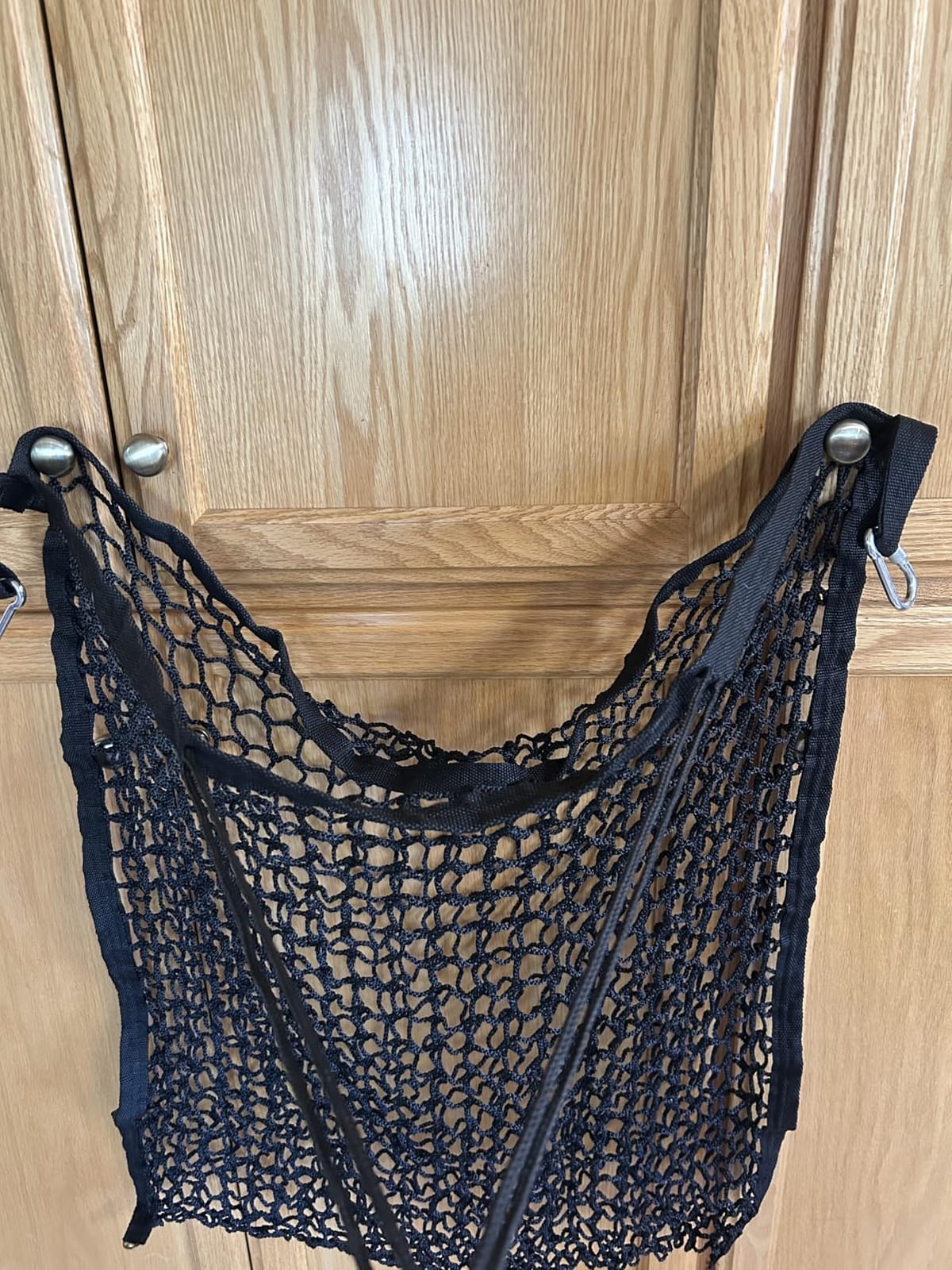
The knotless polyester weave is genuinely soft, and our sensitive-mouthed older horse showed zero lip abrasion after weeks of use. The rope also shrugs off weather: ours stayed hung through rain and froze stiff without fraying or sagging.
Two weaknesses showed up in our testing and echo the 131 reviews. The drawstring closures are slippery and work loose unless you double-knot them, and the included carabiners have occasional sharp edges worth filing down before use. Neither is a dealbreaker, but both need attention on day one.
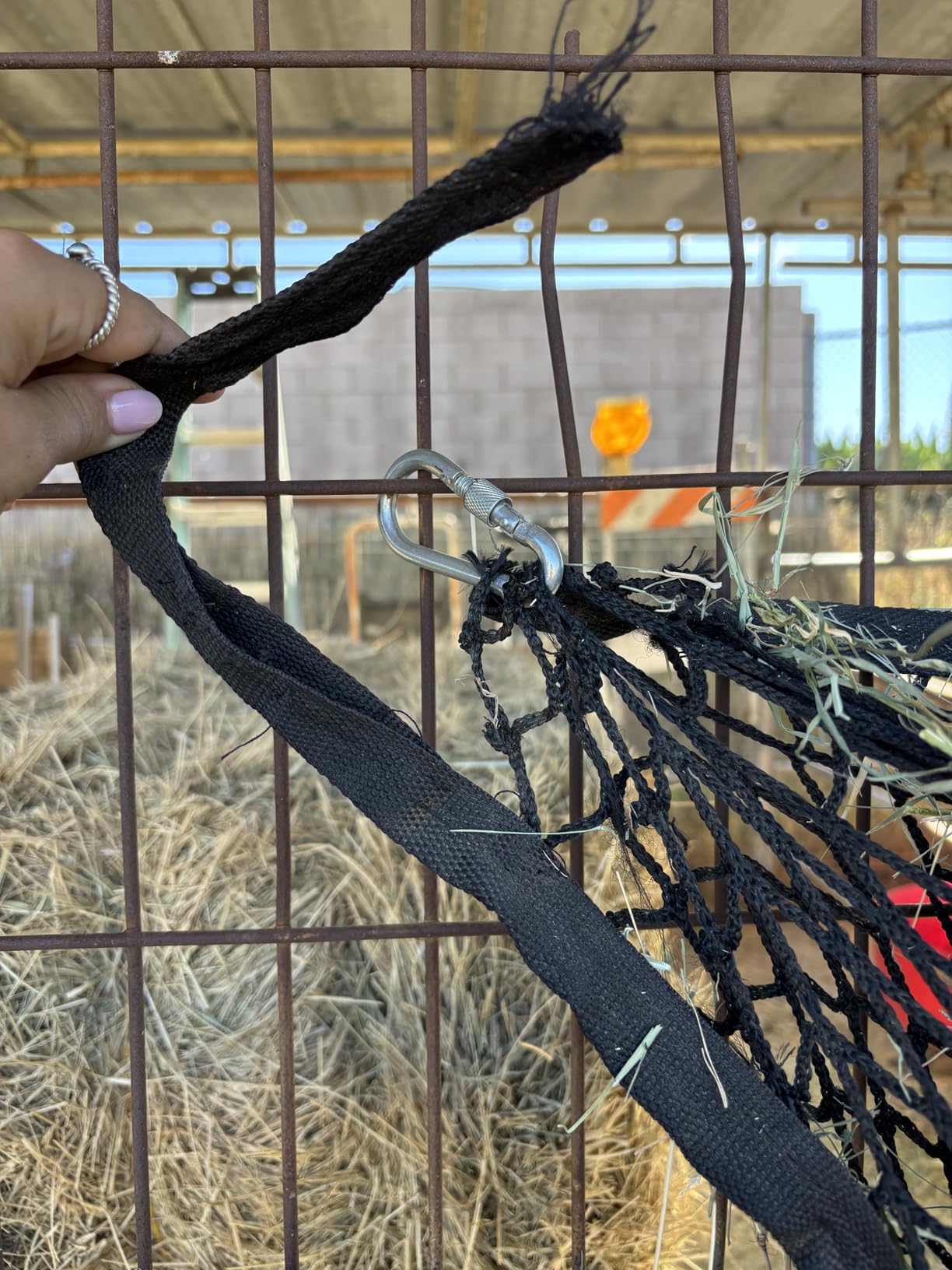
Hanging options and versatility
Dual handle rings plus center ties give you three attachment points per net, so you can hang them low for goats or high for horses. We used fence rails, stall grilles, and a trailer tie ring, all successfully. The extra-wide top opening makes filling a one-minute job even with stiff first-cut hay.
Beyond horses, reviewers use these for goats and donkeys successfully. For rabbits and guinea pigs, a small handful pressed into a corner of a net makes a serviceable DIY wall feeder for small pets, a niche almost no commercial feeder addresses.
Durability expectations and care
Polyester rope is tough but not invincible, and heavy users report occasional ripping within a month, usually where a horse paws the net. Our set survived weeks of stall use intact, but we would budget for these to be consumables with a 1-2 year lifespan under hard use.
Dry them out after wet weather to prevent mold transferring to hay, and inspect the mesh weekly for loose strands that could catch a hoof if hung low.
4. BUYYAH 2-Pack Wall-Mounted Hay Feeder – Best for Multiple Feeding Stations
BUYYAH 2Pcs Horse Hay Feeder 24 Gallon Capacity
2 feeders per order
24 gallons each
31.5 x 15.5 x 22.5 inches
Carbon steel, rust-proof coating
Feeds 8 horses per rack
Pros
- Two full feeders in one purchase
- 24 gallon capacity cuts refills to once daily
- Multi-sided access for up to 8 animals
- Tools included for installation
- Works for horses sheep and goats
Cons
- Welds have broken within weeks for some buyers
- Metal is lighter gauge than premium racks
- Hay falls between bars for small animals
- Middle joint can loosen over time
Two 31.5-inch racks for one price means you can set up feeding stations at opposite ends of a barn, which cuts dominance fights at feed time. We installed the pair in a run-in shed, and having two stations let the bottom-of-the-pecking-order horse finally eat in peace.
The 24-gallon capacity is genuinely large. We filled each rack once per day for four mixed animals, and the multi-sided design let the whole group eat simultaneously without crowding. As a hay saver, keeping feed off the ground and contained in a rack immediately cut what we were sweeping up each evening.
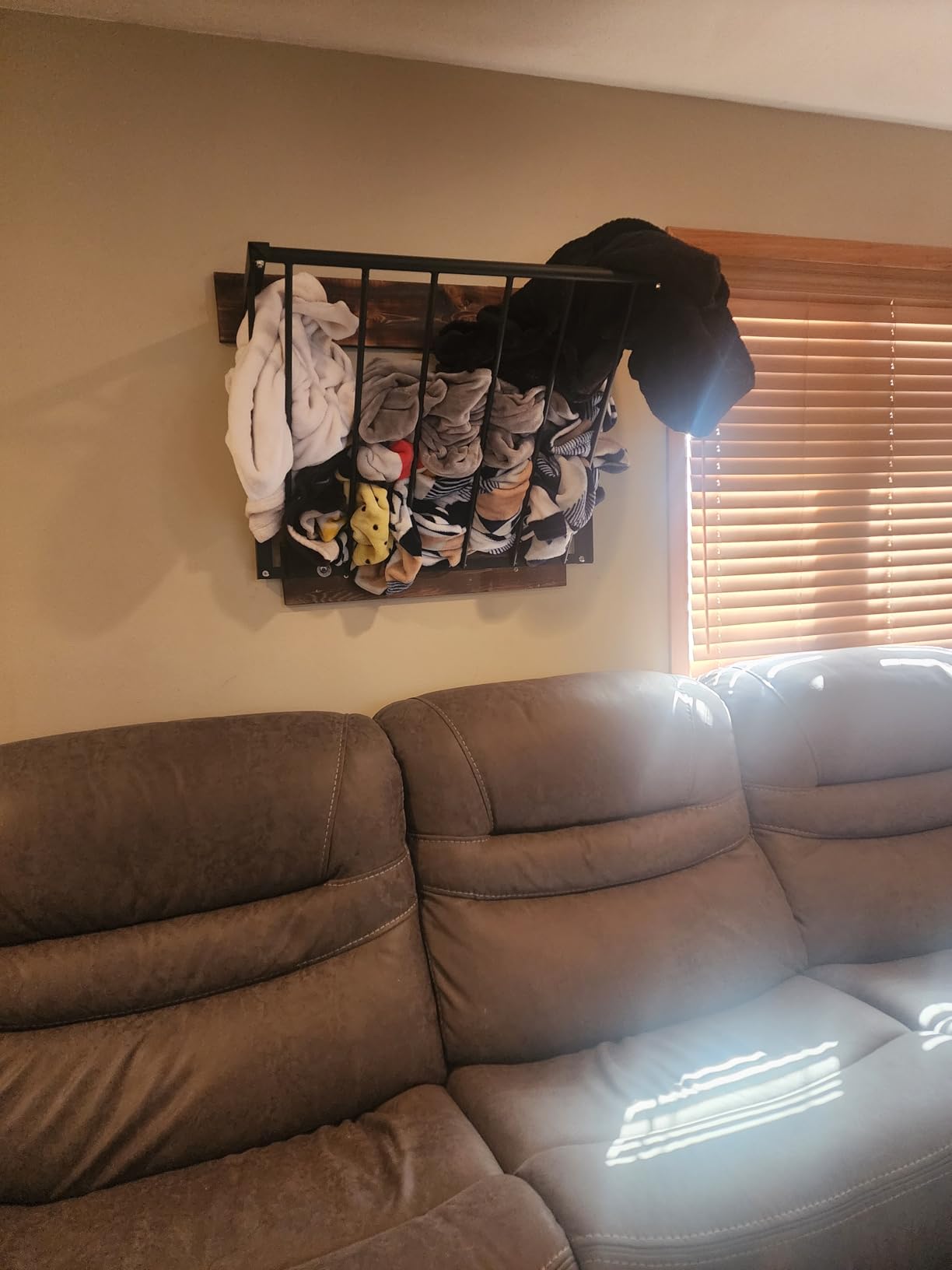
Carbon steel with a rust-proof coating has held up fine in our covered shed, and the BPA-free finish is a nice touch for animals that lick everything. Installation tools come in the box, and both racks went up in about an hour total.
The flaw is weld quality, and we need to be blunt about it. A segment of the 135 reviewers report welds breaking within weeks, especially where large livestock lean on the rack, and the middle joining section is the common failure point. Our set has held, but we would not trust these with cattle or pushy drafts.
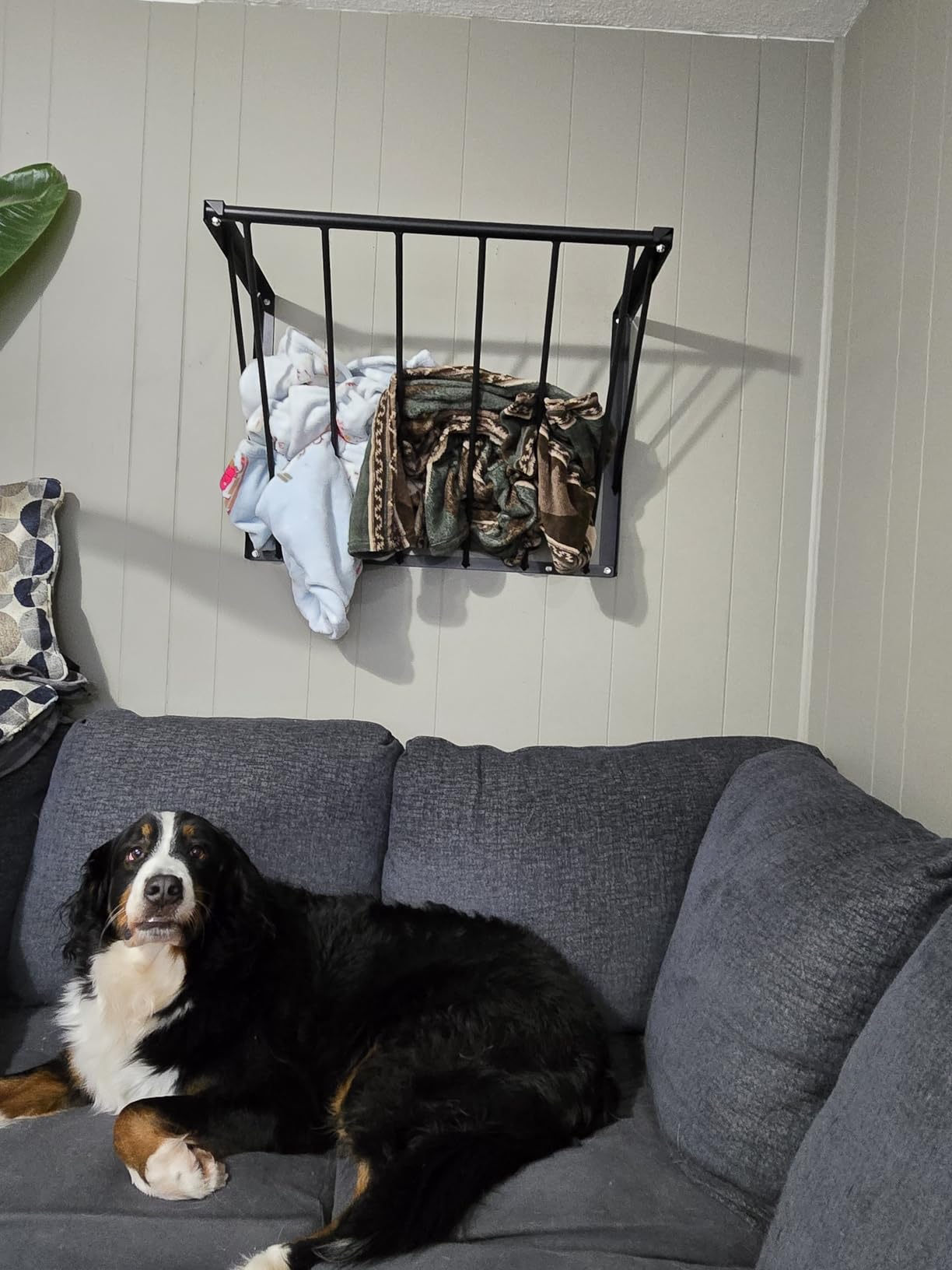
Placement strategies to prevent breakage
Mount these on solid walls at wither height so animals eat with a natural neck angle and cannot rear up and bear full weight on the rack. Avoid corners where a dominant animal can pin another against the feeder. Spreading the pair across two walls also spreads the structural load.
If a weld does let go, a farm-grade wire welder can re-tack the joint in minutes, which is why many small-farm buyers keep these despite the quality lottery.
Suitability by animal type
For horses, sheep, and goats these racks perform well, with one caveat: the bar spacing lets small-flake hay fall through, so sheep and lambs waste more than they would in a pan-style feeder. Mixing a catch pan underneath recovers most of that.
We do not recommend these for cattle or bulls. The gauge is simply too light, and the broken-weld complaints in reviews trace mostly to larger livestock.
5. VEVOR 2-in-1 Hay and Grain Feeder – Best for Large Goat and Sheep Herds
VEVOR Livestock Hay Feeder, 2 in 1 Grain & Hay Feeder, 80-Gallon Capacity, 57.9″ Long Goat Pasture Feeding with Deeper Feeding Pan, Heavy Duty Steel Grain Holder for Sheep Sheds, Farms, Horse Barns
80 gallons total capacity
57.9 x 27.6 x 34.1 inches
Q235 steel tube and galvanized plate
Hay rack plus 24 gallon grain tray
Feeds 10-12 goats
Pros
- Combines hay rack and grain trough in one unit
- Bottom tray catches loose hay and cuts waste
- Feeds 10 to 12 goats at once
- Galvanized plates resist corrosion
- Rounded edges protect animals
Cons
- Paint can flake within weeks
- Assembly needs two people
- Trough sits high for young kids
- Goats may step into the feed pan
This is the feeder we reached for when the goat herd outgrew wall racks. The 2-in-1 design puts a 56-gallon hay rack over a 24-gallon grain tray, so hay and supplement feed happen in one footprint. In a goat barn where floor space is tight, that combination is a genuine convenience.
The bottom tray does real work as a hay saver. Hay pulled from the rack and dropped lands in the pan instead of the bedding, and goats come back and clean it up. We estimated noticeably less waste in the first week compared with our old open rack, simply because dropped hay stayed clean and edible.
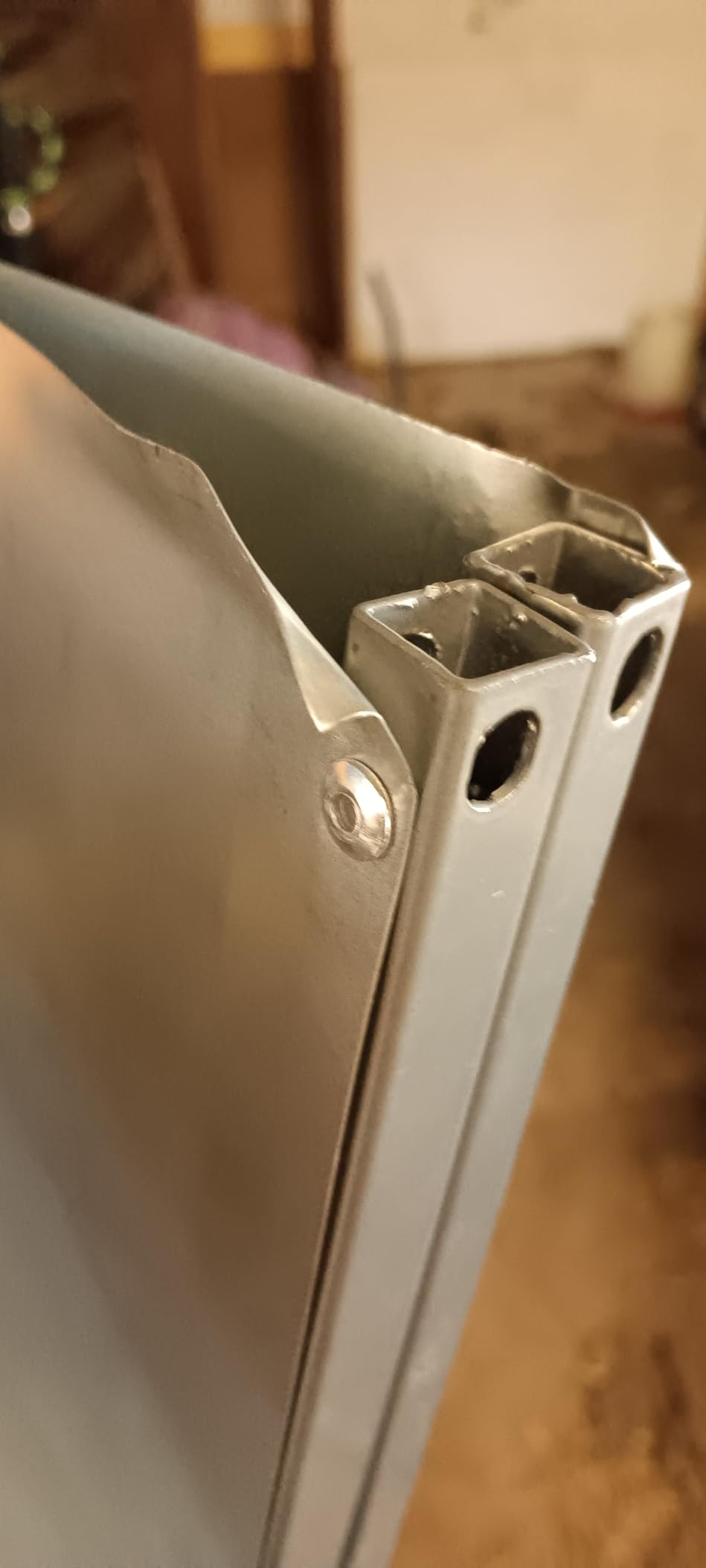
Build quality is a step up from the budget racks: Q235 carbon steel tubing, galvanized steel plates, and reinforced welding. At nearly 48 pounds, this is a substantial unit that does not shift when a herd crowds it, and it fed our test group of ten does at once as advertised.
Two things to know before you order. Assembly genuinely requires two people, mostly to hold the overlapping frame square while you bolt it. And the paint is the weak link: several of the 65 reviewers report flaking within weeks, so consider a touch-up with rust paint on scratched areas.
Assembly and installation requirements
Plan for 45-60 minutes with two people and a set of basic wrenches. The overlapping frame structure is actually clever once you understand it, and the instructions are clearer than typical import fare. Position it on level ground or against a wall, and check the leveling after the first week of animal pressure.
Unlike wall racks, this is a floor-standing unit, so you can move it between paddocks or reposition it as your herd rotation changes. That flexibility is worth a lot in a rotationally grazed system.
Herd size and young animal considerations
The manufacturer rates it for 10-12 goats, and our experience supports that for adult animals. The trough height, however, is too tall for young kids and lambs, so you will need a step or a separate low feeder for babies during the first couple of months.
Goats being goats, some will attempt to stand in the grain tray. A low divider bar or strategic rock placement in the pan discourages this, and it keeps the grain clean, which is the entire point of an enclosed feeder.
6. Country Manufacturing Heavy Duty Metal Combo Feeder – Best Buy-It-Once Steel Feeder
Country Manufacturing Heavy Duty Metal Combo Horse Feeder Also Great for Goats Or Sheep with The All Steel Construction This Hay Rack Should Last A Lifetime Made in USA
All-steel alloy construction
24 x 24 x 12 inches
35 pounds,Hanging mount
Hay rack plus grain pan
Made in USA
Pros
- Heavy 35 lb steel build designed to last a lifetime
- Versatile for horses goats and sheep
- Professional welding and US craftsmanship
- Rounded edges protect animals
- Mounting hardware included
Cons
- Feed pan is narrow for some horses
- Occasional units arrive with broken welds
- Ninety day warranty only
- Not Prime eligible
Some farm gear you buy once, and this is that kind of gear. At 35 pounds of American-made alloy steel, this Country Manufacturing combo feeder feels like the old barn equipment that outlives its owners. Ours took a hit from a leaning horse and did not so much as flex.
The combo layout gives animals hay up top and a grain pan below, which suits a mixed barn where horses get supplemental feed. Buyers in the reviews consistently echo the same theme: this is the feeder you buy when you are tired of replacing bent racks every couple of seasons.
Welding quality is professional throughout, and the rounded edges are a real safety feature for goats that shove their heads around at feeding time. It hangs from a wall or fence line with the included hardware, and the low 12-inch depth keeps hay at a natural eating height.
The honest complaints from the 118 reviews are a narrow feed pan that some horses find awkward, and isolated units arriving with a broken weld from shipping. Inspect it on delivery, because the 90-day warranty window is short for a product otherwise built for decades.
Long-term value for working farms
Forum ranchers repeatedly make the point that metal pipe feeders outlast poly and lightweight imports by years, and this unit is the proof. When you amortize a lifetime steel feeder against replacing a budget rack every three years, the math favors steel quickly, even before counting saved hay.
It is also the most repairable feeder in this roundup: any farm welder can fix a bend or a break, so a mishap does not mean a replacement order.
Best animals and setup configuration
Horses, goats, and sheep are all fair game for this feeder, and it handles the rougher end of that spectrum better than anything else here. The sweet spot is a working farm that wants one purchase to close out the hay feeder question permanently.
Mount it on a post or solid wall at wither height for equines, or lower for small ruminants. Note it ships standard rather than Prime, so plan lead time ahead of hay season.
How to Choose the Right Hay Feeder: Buying Guide
The right hay feeder depends on four things: your animals, your waste tolerance, your mounting situation, and your budget. Here is how we would work through the decision.
First, match the feeder to the animal. Horses do best with slow-feed bags or racks at wither height, goats and sheep need narrower bar spacing and lower access, and cattle require heavy cone or bale-ring designs beyond the wall-mounted units in this roundup. One size genuinely does not fit all here.
Second, think about waste reduction as the return on investment. Ground feeding wastes 25% or more of every bale, while racks and slow feeders cut that dramatically. If you feed 100 bales a winter, a feeder that saves even a third of the waste pays for itself in a single season.
Third, weigh materials honestly. Galvanized and powder-coated steel resists rust, but every painted feeder benefits from touch-ups at drill holes and scratches. Knotless polyester nets are soft and weatherproof but have a shorter lifespan than steel. Buy steel for permanence, nets for portability and portion control.
Fourth, size capacity to your herd and schedule. An 18.5 to 24-gallon rack typically covers a day for 4-6 small animals, while the 80-gallon 2-in-1 unit handles 10-12 goats. If you feed twice a day anyway, capacity matters less than if you want a once-daily fill.
Finally, factor in safety details that reviews consistently flag: rounded edges, bar spacing that cannot trap heads or horns, and hanging height that lets animals eat with a natural neck angle. The best hay feeders are the ones nobody ever has to think about again after install day.
Frequently Asked Questions
What is the most efficient hay feeder for cattle?
For cattle, cone-style round bale feeders and heavy bale rings are the most efficient designs, with research-backed trials showing 30-50% hay savings and premium cone feeders claiming up to 75%. The key features are a cone insert that holds hay off the ground and feeding slots that stop trampling and soiling.
What is the best hay feeder for horses?
For most horse owners, a slow-feed hay bag like the Derby Originals Superior Slow Feeder is the best choice, slowing consumption by mimizing natural grazing and reducing ulcers, colic, and boredom. For stalls and barns, a wall-mounted steel rack such as the VEVOR or Country Manufacturing feeders offers a permanent low-waste solution.
How to choose the right hay feeder?
Match the feeder to your animal type first, then check bar spacing for safety, confirm mounting options fit your barn or pasture, and size capacity to your herd so one fill covers a feeding. Prioritize durable materials like galvanized or powder-coated steel, and calculate hay savings against ground feeding to judge value.
How tall should a horse hay feeder be?
A horse hay feeder should be mounted at roughly wither height, typically 42-52 inches from the ground for an average horse, so the animal eats with a natural downward neck angle. This position reduces respiratory dust inhalation and matches natural grazing posture better than floor-level or overhead feeding.
Is a hay feeder worth the money?
Yes, for nearly anyone feeding hay regularly. Ground feeding wastes 25% or more of each bale, while a good feeder cuts waste dramatically, meaning a moderately priced feeder often pays for itself within one winter of savings on hay alone.
Conclusion: Our Verdict on the Best Hay Feeders
After testing wall racks, slow-feed bags, and combo units, our top recommendation for the best hay feeders of 2026 is the Derby Originals Slow Feeder Hay Bag for horses, thanks to its vet-endorsed slow-feed design and 4.6-star track record across 270 reviews. The VEVOR Wall-Mounted Rack is the value pick for barns and small livestock, and the Country Manufacturing Combo Feeder is the lifetime steel buy for working farms.
Whichever route you take, the math is simple: every bale you keep out of the mud is money back in your pocket. Pick the feeder that matches your animals and mounting setup, install it at the right height, and start counting the hay you save this season.