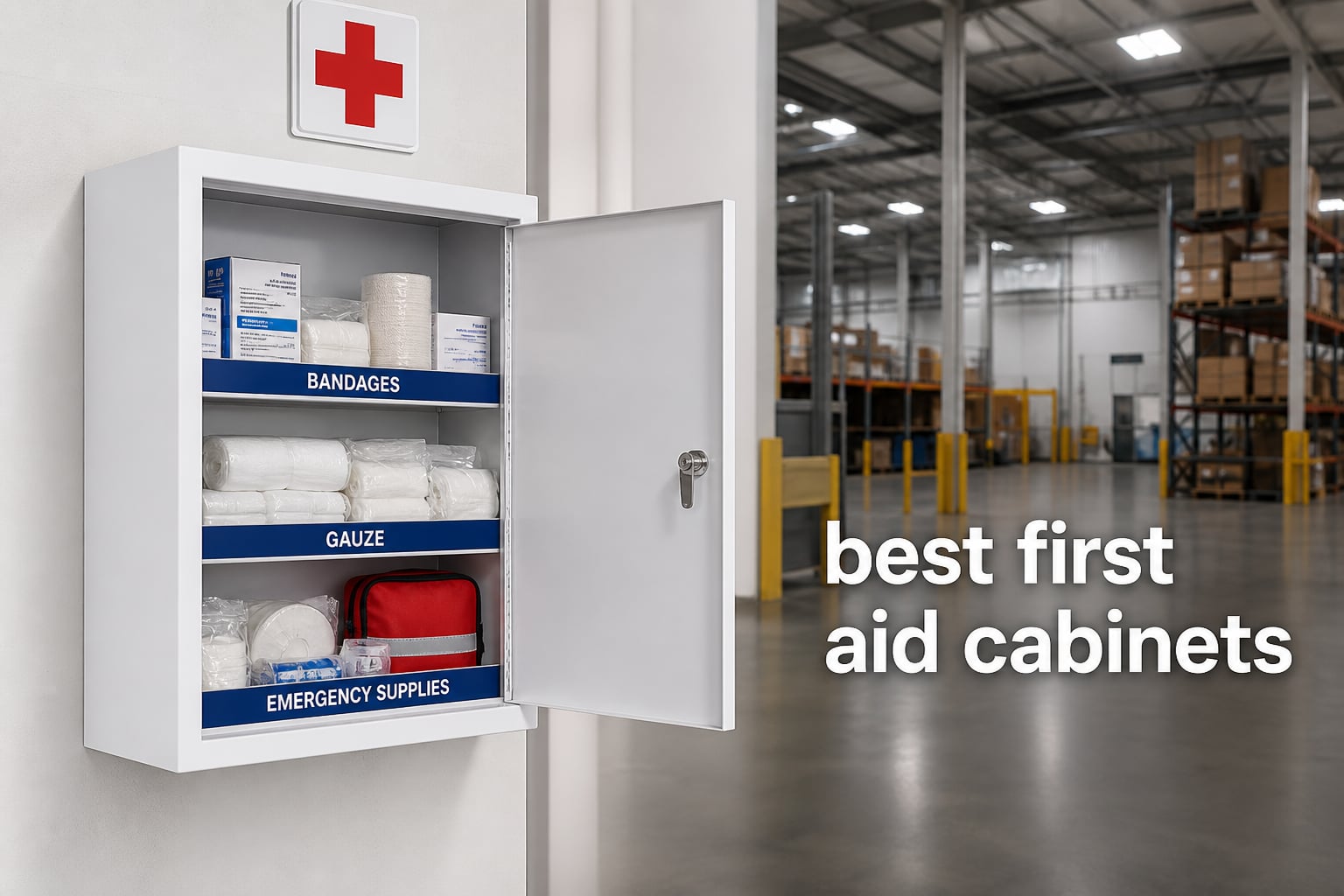
When someone slices a hand open on a box cutter or burns themselves on a machine, the last thing you want is a first aid “kit” buried in a drawer somewhere. Our team has spent the last several months comparing wall-mounted stations for warehouses, offices, restaurants, and home workshops, and one thing became obvious fast: the best first aid cabinets are the ones you can spot from across the room, open in two seconds, and trust to actually have what you need inside.
That last part matters more than most people realize. Reddit threads from r/Construction and r/SafetyProfessionals are full of stories about pre-made kits that looked stocked but turned out to be thin on gauze, light on trauma supplies, or full of items that expired years ago. A proper commercial first aid cabinet solves this with labeled shelves, clear compartments, and enough volume to handle real workplace incidents instead of just paper cuts.
In this guide, we break down eight first aid cabinets we would actually mount on a wall, from a budget-friendly locking medicine box to a Class B cabinet that covers 100+ people. We also cover OSHA 1910.151 and ANSI Z308.1 requirements in plain English, because compliance jargon shouldn’t stop you from protecting your crew. We have organized everything so you can jump straight to the pick that fits your headcount, your wall space, and your risk level.
One quick note before we start: an empty cabinet and a stocked cabinet serve two different buyers. If you already own supplies, buying an empty industrial first aid cabinet and filling it yourself is usually cheaper long term. If you are starting from zero, a fully stocked OSHA-compliant first aid cabinet gets you audit-ready on day one. We have included both types below.
Table of Contents
Top 3 Picks for Best First Aid Cabinets (August 2026)
If you only have two minutes, here are the three cabinets we would grab first. The M2 BASICS 350-piece kit is the workhorse pick — it has nearly 4,500 reviews at a 4.7-star average, and the dual-layer hard case mounts on a wall while still snapping off for portable use.
The BrightCare large cabinet is our value pick for anyone who needs documented OSHA compliance without spending much, thanks to tilting shelves and a full supply load including CPR masks. And the EVERLIT CARE 2-shelf cabinet is the top-rated pick for businesses that want an ANSI Class A kit covering up to 50 people, with labeled boxes that make restocking painless.
M2 BASICS 350 Piece First Aid Kit
- 350 pieces
- dual-layer hard case
- wall mount or portable
- workplace ready

BrightCare Large First Aid Cabinet
- OSHA compliant
- tilting shelves
- wall mount or portable
- CPR mask included

EVERLIT CARE 2-Shelf OSHA Kit
- ANSI Class A
- covers 50 people
- labeled shelves
- includes eye wash
Best First Aid Cabinets in 2026
Here is the full lineup side by side. Every cabinet below is wall mountable except where noted, and we have flagged which ones ship empty versus fully stocked. Check the shelf count and piece count against your team size before you buy.
| Product | Specifications | Action |
|---|---|---|
| M2 BASICS 350 Piece Kit |
|
Check Latest Price |
| BrightCare Large Cabinet |
|
Check Latest Price |
| EVERLIT CARE 2-Shelf Kit |
|
Check Latest Price |
 KYODOLED Locking Cabinet KYODOLED Locking Cabinet |
|
Check Latest Price |
 Medique 712MTM 3-Shelf Cabinet Medique 712MTM 3-Shelf Cabinet |
|
Check Latest Price |
 VEVOR 3-Shelf 1000-Piece Cabinet VEVOR 3-Shelf 1000-Piece Cabinet |
|
Check Latest Price |
 First Aid Only 90575 3-Shelf Kit First Aid Only 90575 3-Shelf Kit |
|
Check Latest Price |
 UniShield 4-Shelf Class B Cabinet UniShield 4-Shelf Class B Cabinet |
|
Check Latest Price |
1. M2 BASICS 350 Piece Professional First Aid Kit – Best Overall Value
M2 BASICS 350 Piece Professional Wall-Mount First Aid Kit, Home, Business
350 pieces
Dual-layer hard case
13 x 11 x 4 inches
3 pounds
Wall mount or portable
Pros
- Comprehensive 350-piece kit
- Dual-layer wall mount design for easy organization
- Sturdy hard case keeps supplies protected
- Ideal for workplace office warehouse and job sites
- Good value for the price
Cons
- Some users suggest adding antibiotic and anti-sting pads
- Contents may need periodic replenishment
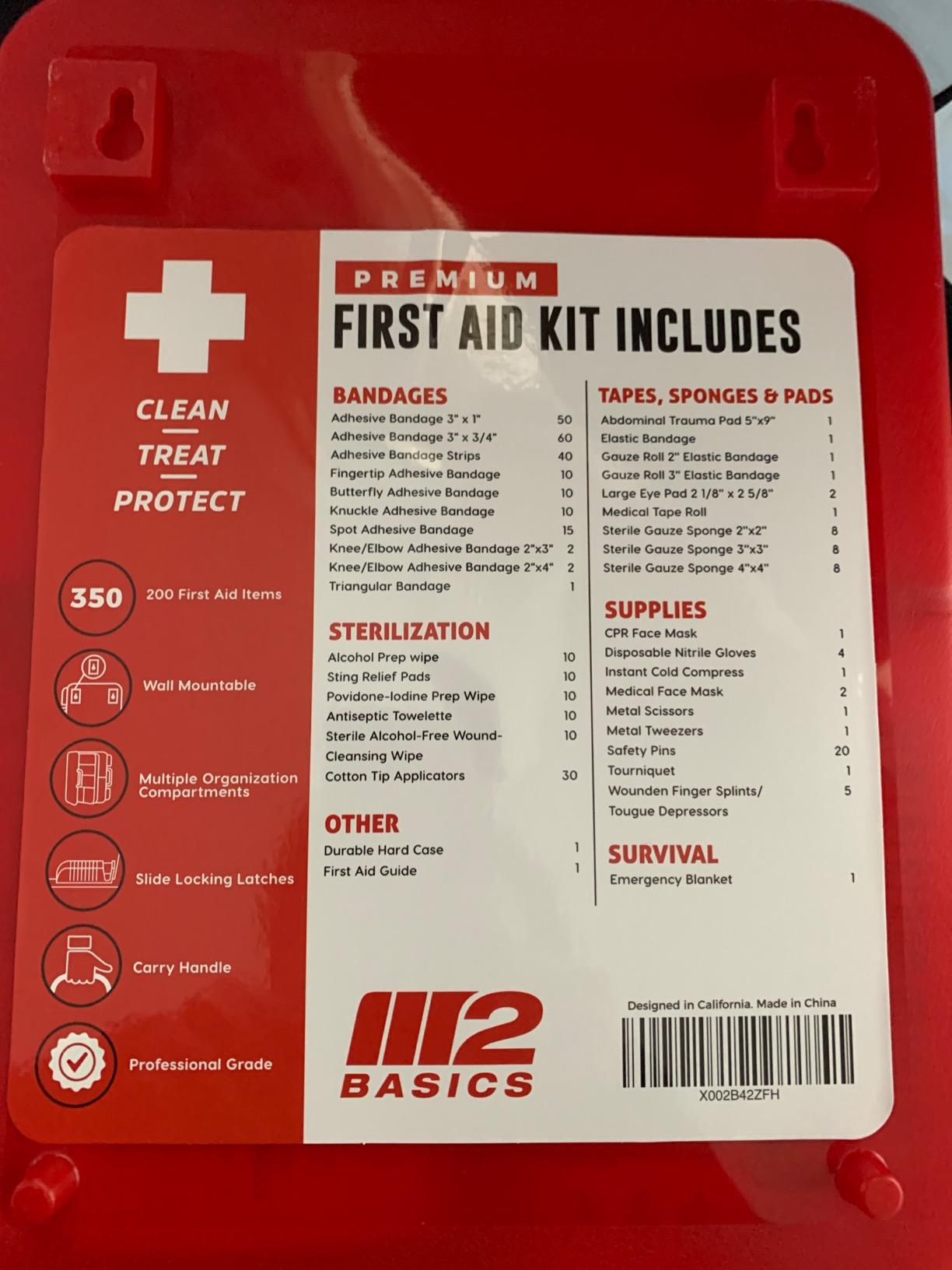
We mounted the M2 BASICS kit in a workshop wall near the loading bench, and it took all of ten minutes start to finish. The case splits into two layers that fan open, so bandages are not hiding behind a wall of gauze pads. At 3 pounds and 13 x 11 inches, it fits in spots where a full metal cabinet would look ridiculous, like a small office kitchen or a van’s cargo wall.
The 350 pieces cover the hits: adhesive bandages in multiple sizes, gauze pads, antiseptic wipes, dressings, wraps, gloves, and a few tools. For a 10-to-20 person crew doing light work, this is genuinely enough. The dual-layer case is the real selling point though — every item is visible the moment you open it, which matters when the person reaching for it is panicking.
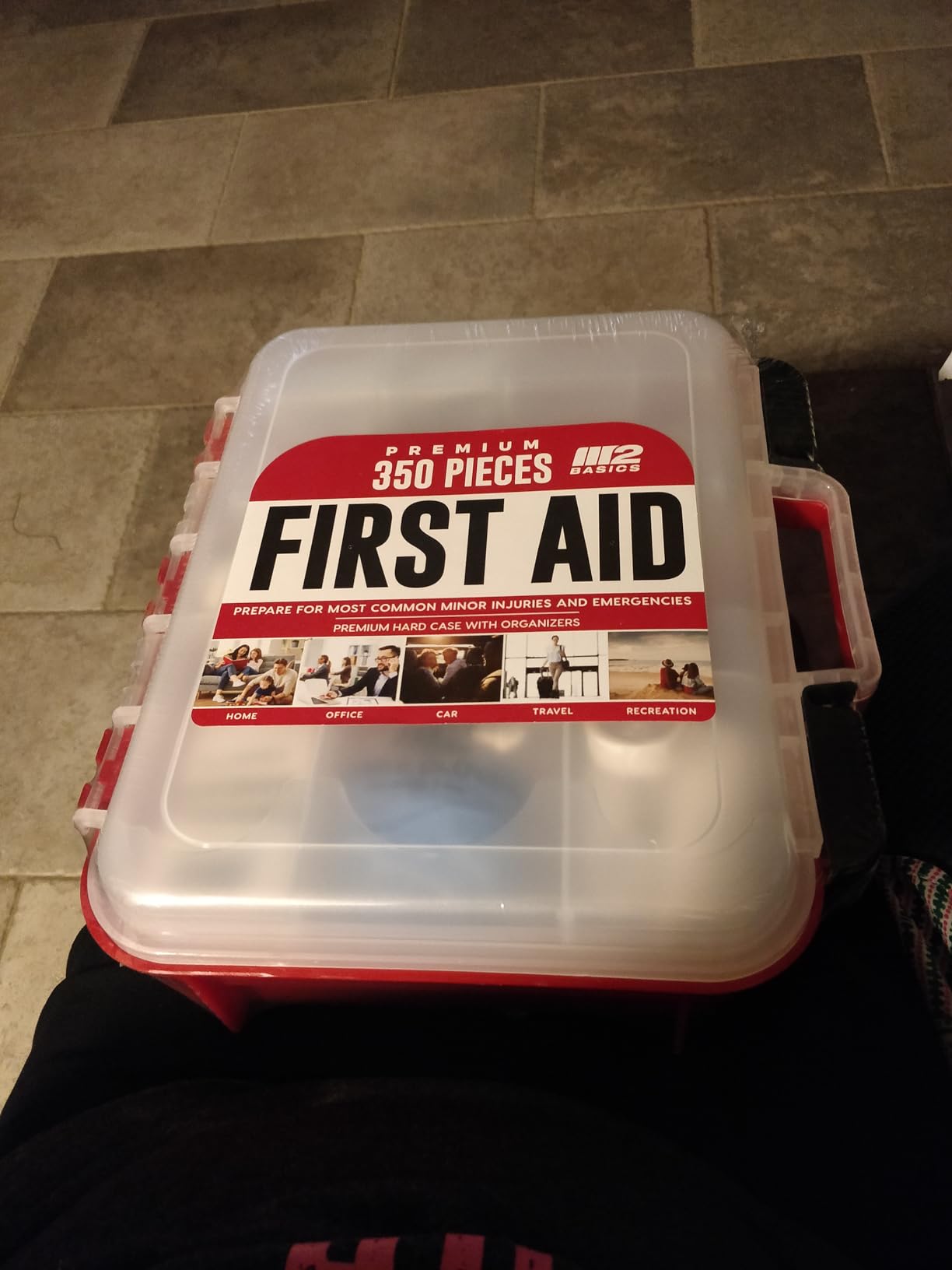
After several months on the wall, the case still latches tight and the hinges have not developed that floppy feel cheap plastic gets. The plastic is hard-shell, not soft vinyl, so it shrugs off the occasional knock from a hand truck. Our only real complaint is that the included wipes and a few consumables run out long before the bandage supply does, so plan on topping those up.
The 4.7-star average across more than 4,400 reviews backs up our experience. Users consistently call out the organization and the case durability, with the occasional note that you should add antibiotic ointment and sting relief pads. We agree with both takes — this is a starter system you customize slightly rather than a fix-and-forget solution.
How many people does this kit realistically cover?
M2 BASICS designs this for a home, small business, or vehicle rather than a large facility. We would call it comfortable for roughly 10 to 20 people in a low-risk environment like an office or retail shop. For warehouses or manufacturing with higher injury rates, expect to restock more frequently or step up to a larger cabinet.
If your site has more than about 25 people, a single unit will strain during busy months. Two of these mounted in different zones is often smarter than one big central cabinet anyway, since response time matters more than total capacity for minor injuries.
Is this kit OSHA compliant on its own?
It covers the practical basics that OSHA’s 1910.151 rule cares about, but it is not marketed as a certified ANSI Z308.1 kit. For most low-risk workplaces with a nearby clinic or hospital, that is fine in practice. If your inspector or insurer wants documented ANSI Class A compliance, pair it with a compliance checklist or buy a certified cabinet instead.
Adding a CPR mask, an eye wash bottle, and a couple of trauma pads would close most gaps cheaply. That is the route several safety managers on forums recommend when they love the case but need to tick compliance boxes.
2. BrightCare Large First Aid Cabinet – Best OSHA Compliant Pick
Large First Aid Kit Cabinet, Wall Mountable & Portable, OSHA Compliant
OSHA compliant
Tilting shelves
12.87 x 11.65 x 4.02 inches
3.24 pounds
Wall mount or portable
Pros
- OSHA compliant for workplace safety
- Large capacity for multiple users
- Tilting shelves keep supplies organized and visible
- Can be wall mounted or taken portable
- Comprehensive first aid supplies included
Cons
- Some users report shelves are cheaply made
- May need more compression bandages for heavy use
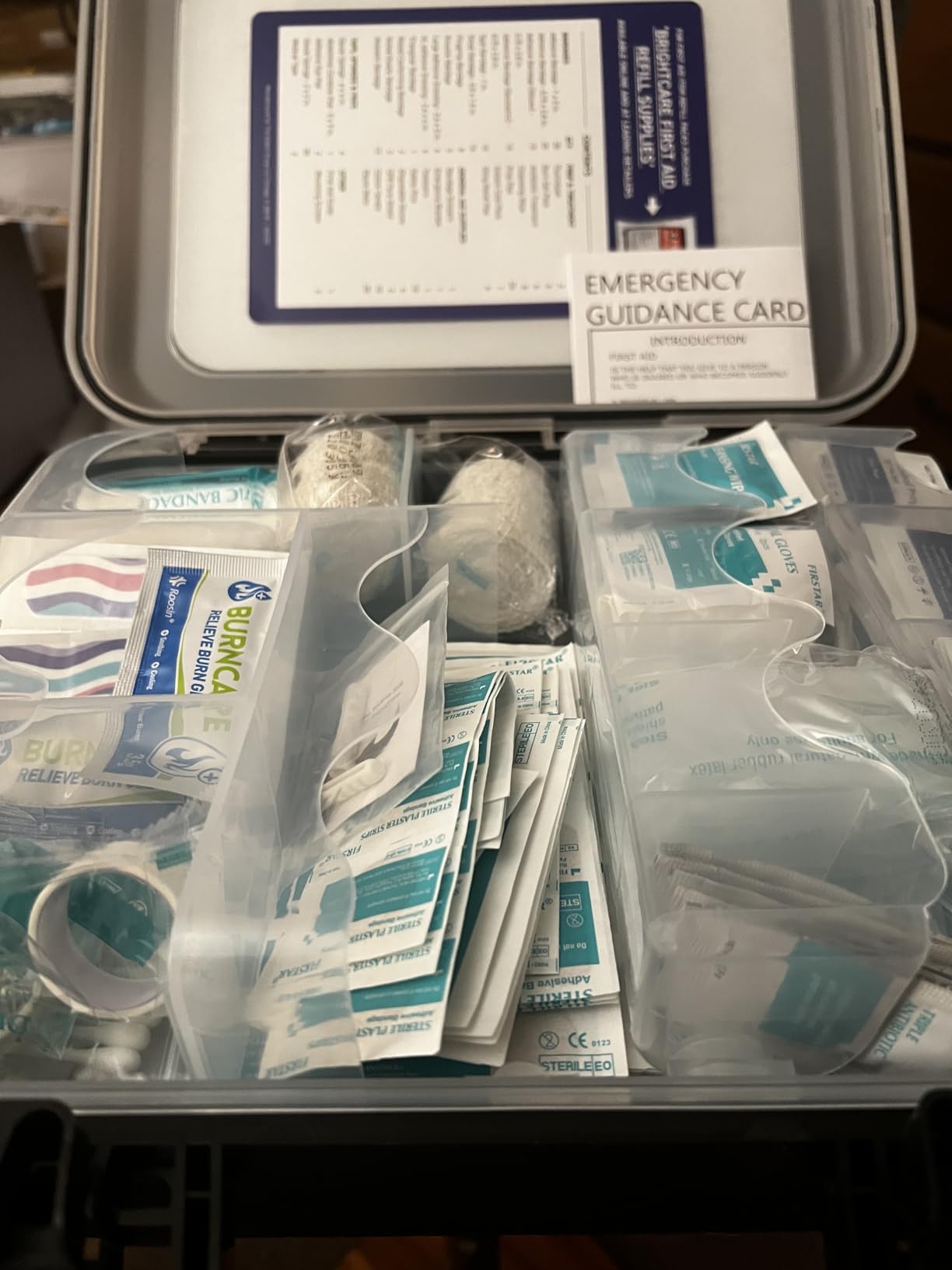
The BrightCare cabinet is the one we recommend when someone asks for an OSHA-compliant first aid cabinet at a reasonable cost. The tilting shelves are a small design touch that makes a big difference — when you pull a shelf forward, you can see every box’s label without digging. During a bleed, those saved seconds count.
Inside, you get bandages, gauze, dressings, tape, gloves, scissors, prep pads, triangular bandages, and a CPR mask. The CPR mask inclusion is notable because plenty of budget kits skip it, and OSHA’s bloodborne pathogens guidance makes a barrier device a smart addition for any workplace responder.
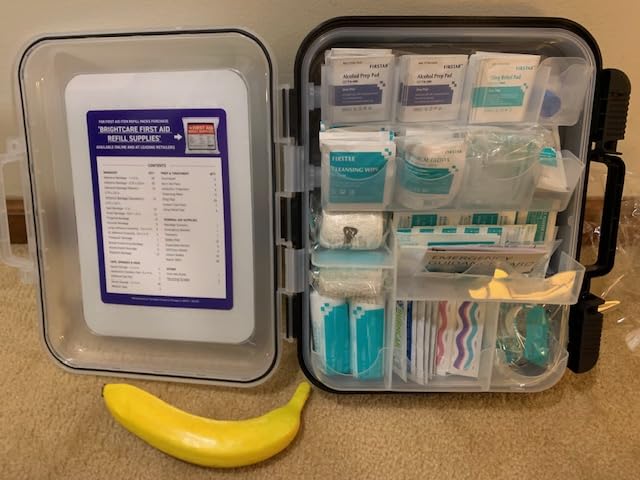
We used this as a portable kit for a site walkthrough and appreciated the carry option. It is light at 3.24 pounds but still rigid enough to toss in a truck bed kit bag. The mounting hardware comes in the box, so you are not making a hardware store run before installation.
The 4.8-star rating is strong, but the review pool is small at 57 reviews, and some of those reviews flag the shelves as thin. We noticed the same thing — the shelves are functional but clearly the cost-saving component here. Treat them gently during restocking and they hold up fine.
Can this cabinet handle an industrial site?
For light industrial and general workplace use, yes. For heavy manufacturing with serious laceration or burn risks, we would add extra trauma pads, a tourniquet, and a burn dressing kit. Heavy users also note the standard compress bandage count runs low, so bulk up those first.
Think of this as a compliant base that you extend based on your hazard assessment. That is exactly how OSHA expects employers to approach first aid anyway — match supplies to your actual injury profile.
How does the wall mount hold up over time?
The cabinet uses a keyhole-style mount with included screws, and it has stayed solid on drywall with anchors in our testing. The plastic body is where the cost savings live, so mount it into a stud where possible if the wall gets bumped regularly.
For garages and workshops, mounting it at eye height near the work zone rather than by the door keeps it in the line of sight. Several users mention mounting it inside a truck canopy or trailer for mobile crews, which works given the light weight.
3. EVERLIT CARE 2-Shelf OSHA-Compliant Kit – Best for 50-Person Businesses
EVERLIT CARE 2-Shelf OSHA-Compliant First Aid Kit, ANSI Class A 50 Person Emergency First Aid Cabinet for Business, Job Site, Industrial Manufacturing Facility, Restaurant, and Kitchen
ANSI Class A
Covers 50 people
2 shelves
15 x 13 x 6.5 inches
Includes meds and eye wash
Pros
- Comprehensive first aid kit with extensive supplies
- Sturdy metal cabinet with wall-mount capability
- Well-organized 2-shelf layout with clearly labeled boxes
- OSHA and ANSI Class A compliant
- Includes medications and eye wash
Cons
- Bandages may peel after heavy use
- Class A kit not suitable for high-risk workplaces
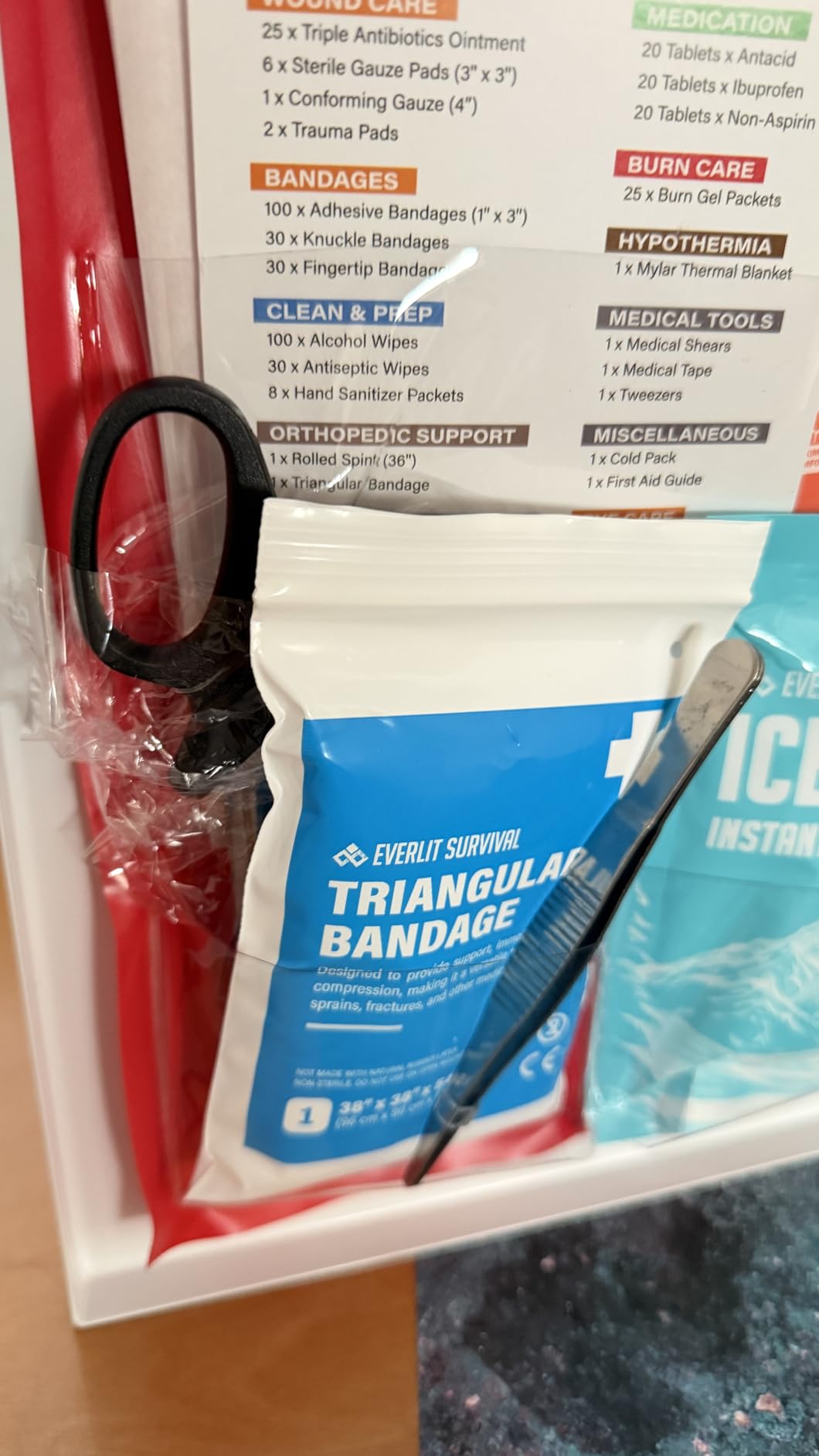
The EVERLIT CARE cabinet is a genuine metal first aid cabinet, not a plastic case with ambition, and you feel the difference the moment you open the door. The two shelves hold clearly labeled boxes sorted by category, which makes the “someone else has to find it” test easy — anyone can locate the burn cream without a map.
This is an ANSI/ISEA Z308.1 Class A kit designed to cover about 50 people, and it includes items most kits at this size skip: medications for common discomforts and a sterile eye wash. For offices, restaurants, schools, and small industrial shops, that coverage math works out cleanly.
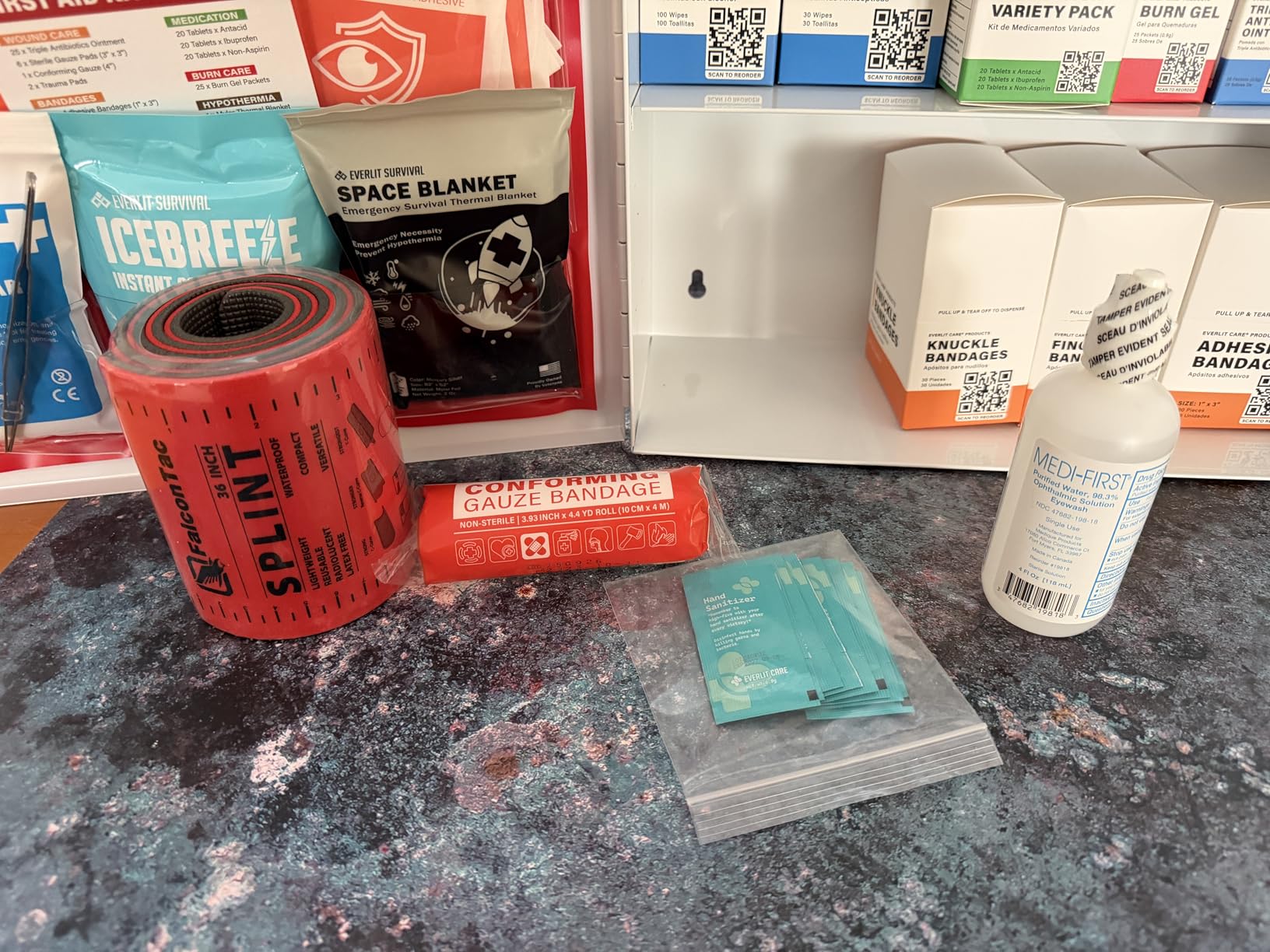
The 4.8-star average reflects how comprehensive the loadout is for the size. Reviewers repeatedly call it a complete kit in a sturdy box rather than a shell with a few token supplies. At 3.85 pounds with hardware included, mounting it takes one coffee break.
Two honest criticisms from long-term users: the adhesive bandages can peel after rough handling, and Class A is simply the wrong rating for high-injury environments. Neither surprised us — Class A is designed for typical workplace incidents, not for a fabrication floor.
What is the difference between Class A and Class B kits?
Class A kits cover common workplace injuries like cuts, minor burns, and sprains — think offices, retail, restaurants, and schools. Class B kits add higher quantities and trauma-oriented supplies for environments with more severe or complex injury risks, like manufacturing and construction. EVERLIT’s kit is Class A, so match it to a low-to-moderate risk site.
If you are unsure which class you need, start with your injury history. Sites with frequent lacerations, burns, or heavy machinery should be in Class B territory.
Does the included medication supply matter for compliance?
Medications are not strictly required by OSHA, but ANSI Class A kits are allowed to include them and many employers prefer having aspirin and pain relief on hand for heart-attack response and general discomfort. The sterile eye wash is the bigger win here, since eye irrigation is one of the most time-sensitive first aid actions.
One caveat from forum safety managers: check your state and company policy on dispensing medication, and keep an eye on expiration dates. Medication expiry is the most commonly missed item during inspections.
4. KYODOLED Wall Mount Locking Medicine Cabinet – Best Budget Lockable Option
KYODOLED Wall Mount Locking Medicine Cabinet, Large Capacity First Aid Cabinet for Bathroom, Medicine Cabinet with Key, Secure Steel Lock Box for Medication, 15.75″ H x 11.82″ W x 4.72″ D, White
Lockable steel
15.75 x 11.82 x 4.72 inches
3 compartments
2 keys included
Wall mount
Pros
- Large capacity with three storage compartments
- Secure locking design with 2 keys
- Durable steel construction
- Easy wall mount installation
- Versatile use for home office schools and clinics
Cons
- Limited door storage for small items
- Some users report wanting more internal space
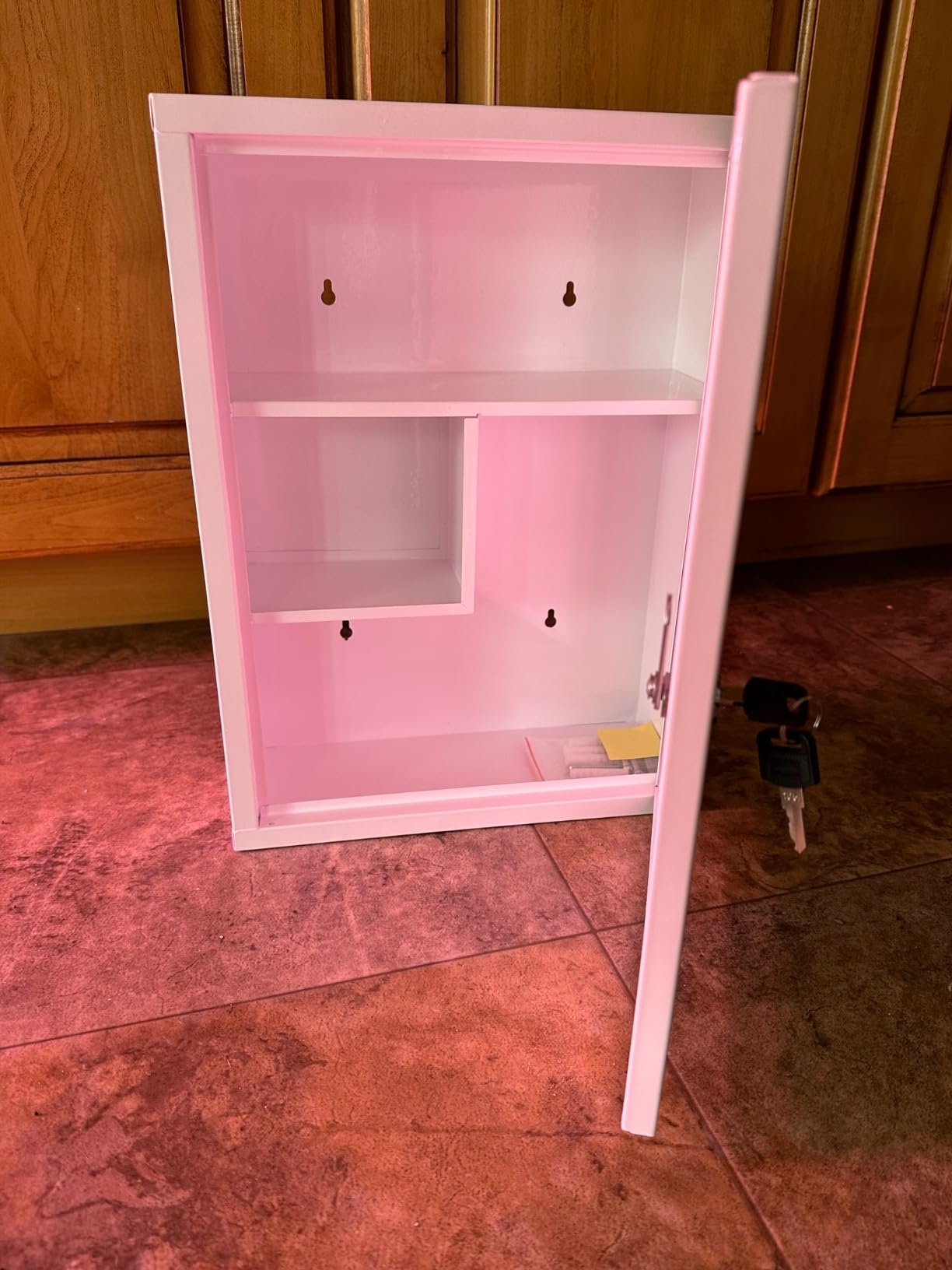
The KYODOLED is technically a locking medicine cabinet, but we include it here because it is one of the most affordable ways to get a lockable steel first aid station on a wall. If you run a gym, a studio, a classroom, or any space where you do not want people helping themselves to supplies, the lock and two included keys do the job.
At 15.75 inches tall with three storage compartments, it swallows a surprising amount of gear. We loaded one with a 200-piece refill set, a CPR mask, an instant cold pack stash, and there was still room left. The steel build with a rust-resistant finish feels far more substantial than the price suggests.
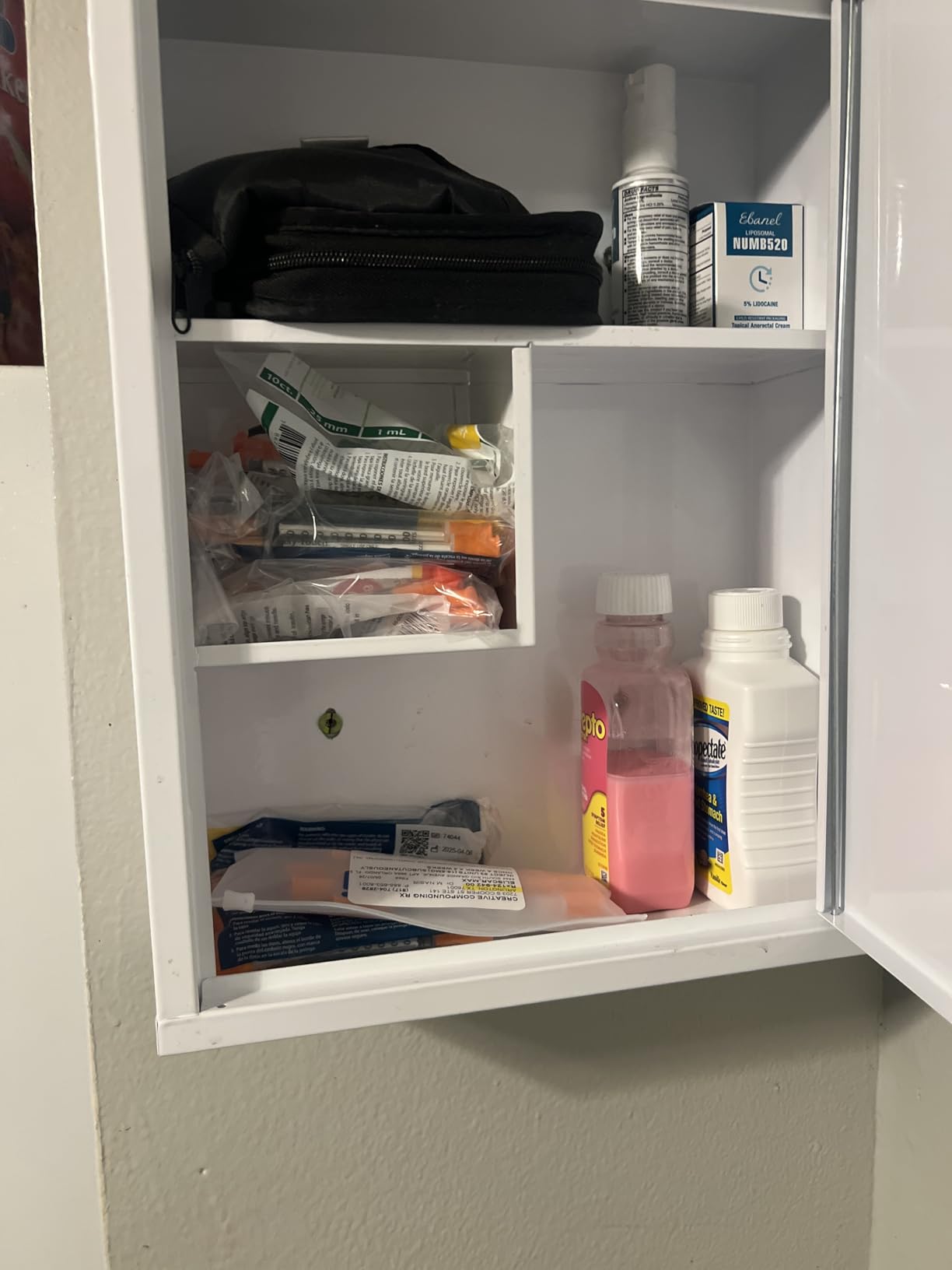
The 4.7-star average across 475 reviews is excellent for this category. Owners praise the simple install and the clean white look that does not scream “industrial” in a home or office hallway. The pre-drilled holes line up properly, which sounds trivial until you have fought a cabinet that was drilled crooked.
Remember this ships empty. That is a feature if you already own supplies or want to build a custom kit, which forum preppers consistently say beats buying pre-stocked kits on quality per dollar. It is a downside if you expected a turnkey OSHA kit, because this is not one.
Does the lock actually prevent tampering?
The cam lock with two keys stops casual access, which is the goal for schools, shared offices, and public spaces. It will not stop someone determined with a pry bar, but it prevents the slow drain of supplies that plagues unlocked kits in shared areas.
Keep one key with the designated first aid responder and a spare in a lockbox or with management. Several office managers note that hiding the spare key too well is a real problem during an actual emergency.
How much can you realistically fit inside?
The 4.72-inch depth is the constraint. Standard first aid boxes and a folded tri-panel kit fit fine, but bulky items like large eye wash bottles or AED accessories will not. Users who want shelf bottles upright mention the tight shelf spacing as their main complaint.
For best use, decant supplies into slim labeled boxes rather than trying to cram original retail packaging in. That also makes visual restocking checks faster.
5. Medique 712MTM 3-Shelf First Aid Cabinet – Best Empty Cabinet for Custom Stocking
Medique Products First Aid Cabinet with Pockets, Medical Storage with 3 Shelves – 712MTM, White, Full Size
Empty steel cabinet
3 shelves plus door pouches
5.13 x 15.13 x 21.13 inches
10 pounds
Powder coated metal
Pros
- Sturdy heavy-duty metal construction
- 3 shelves plus door pouches for ample storage
- Easy wall installation
- Professional appearance suitable for workplaces
- Good value compared to renting
Cons
- Empty cabinet does not include first aid supplies
- No first aid sticker included
- Shelves not tall enough for upright 16oz hydrogen peroxide bottles
The Medique 712MTM is the classic empty industrial first aid cabinet you see mounted in machine shops and warehouses, and it has been around long enough to earn a 4.6-star average over 316 reviews. The powder-coated steel body weighs 10 pounds empty, which tells you it is built for environments where things get hit.
Inside you get three shelves plus door pouches for small packets, which is the layout safety managers prefer. Small antiseptic wipes and single-use ointment packets live in the door pouches, while boxed bandages and gauze sit on the shelves where you can read every label.
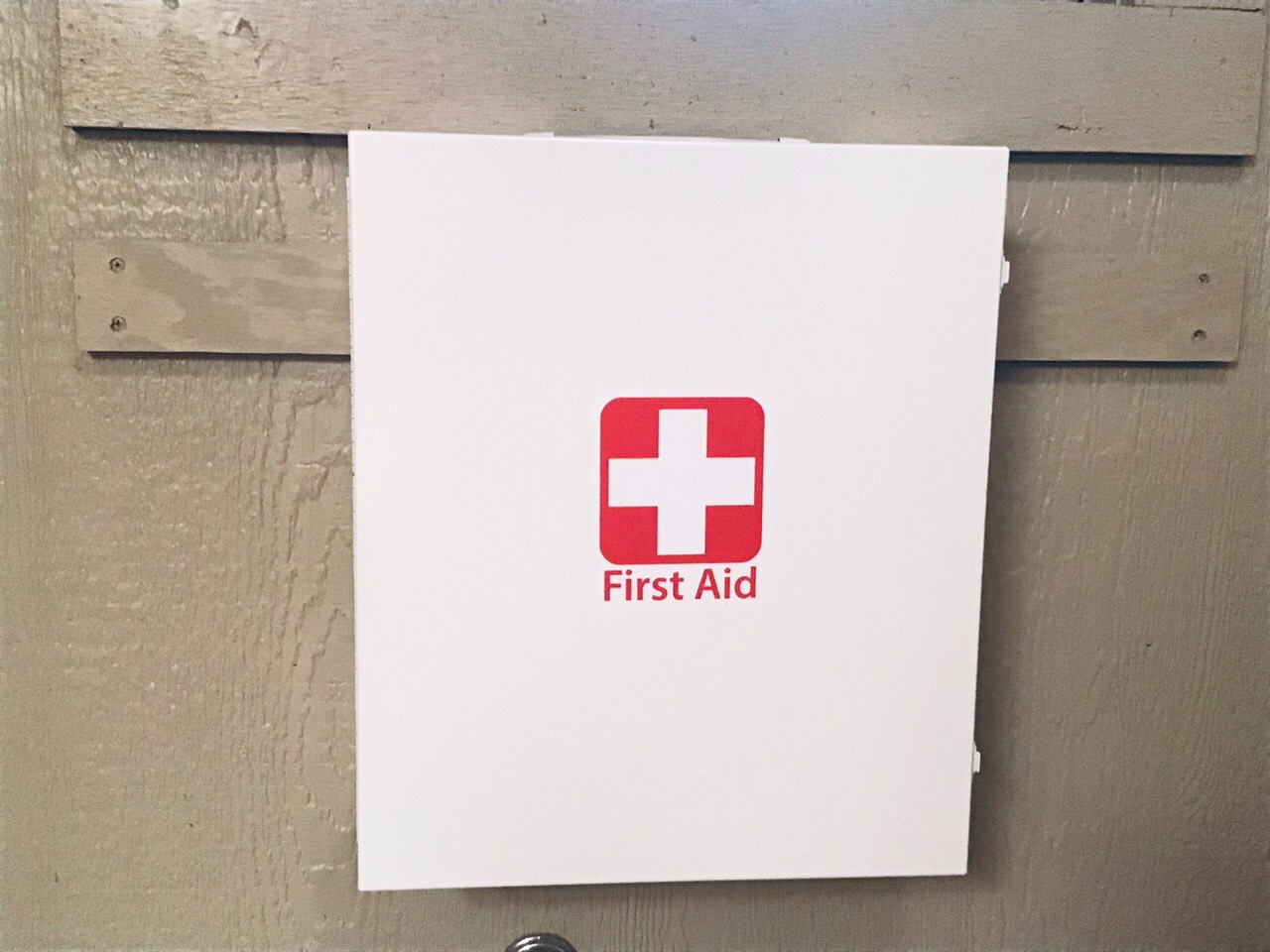
Buying empty is the move if you want to control supply quality — a repeated point in r/preppers and r/woodworking threads, where users complain that budget pre-stocked kits come with items they would never choose. Fill this with your own mix and you know every component is up to standard.
Two gripes worth passing on: there is no first aid cross sticker in the box, so buy one separately or nobody will know what the white box is. And the shelf spacing will not fit a 16oz hydrogen peroxide bottle upright, which several reviewers ran into.
Is an empty cabinet a smart buy compared to a stocked one?
Financially it usually is over the long run. Pre-stocked cabinets carry a premium on the initial loadout, and refill packs from service companies are frequently more expensive than buying the same items individually. With an empty cabinet, you source supplies at retail prices and control exactly what goes in.
The tradeoff is time and expertise — you need to build your own checklist against ANSI Z308.1 if compliance matters. If you want zero effort, buy a stocked kit. If you want maximum quality per dollar, this is the path.
What size workspace is this cabinet right for?
Medique positions it for small to medium industrial settings, and we agree with that framing. Properly filled, it comfortably serves a workshop, garage, or small production floor of roughly 20 to 50 people depending on risk level.
The full-size footprint at just over 21 inches wide also means it reads as a proper first aid station rather than a box on a wall. That visibility alone increases the odds supplies get used and restocked properly.
6. VEVOR 3-Shelf 1000-Piece First Aid Cabinet – Best High-Volume Workspace Kit
VEVOR 3-Shelf First Aid Cabinet, 1000 Pieces, Large Capacity First Aid Kit, Wall Mounted Medicine Cabinet, OSHA & ANSI 2015 (Class A), Industrial Emergency Metal Med Box, for Business and Worksite
1000 pieces
OSHA and ANSI 2015 Class A
Cold-rolled steel
5.51 x 11.81 x 18.11 inches
Wall mount or desktop
Pros
- 1000 pieces of professional-grade supplies
- OSHA and ANSI 2015 Class A certified
- Durable steel construction
- Wall mount or desktop placement options
- Good value for worksite compliance
Cons
- Some reports of bent shelves and damaged shipping
- Contents are not name brand quality
- Mixed reviews on overall value
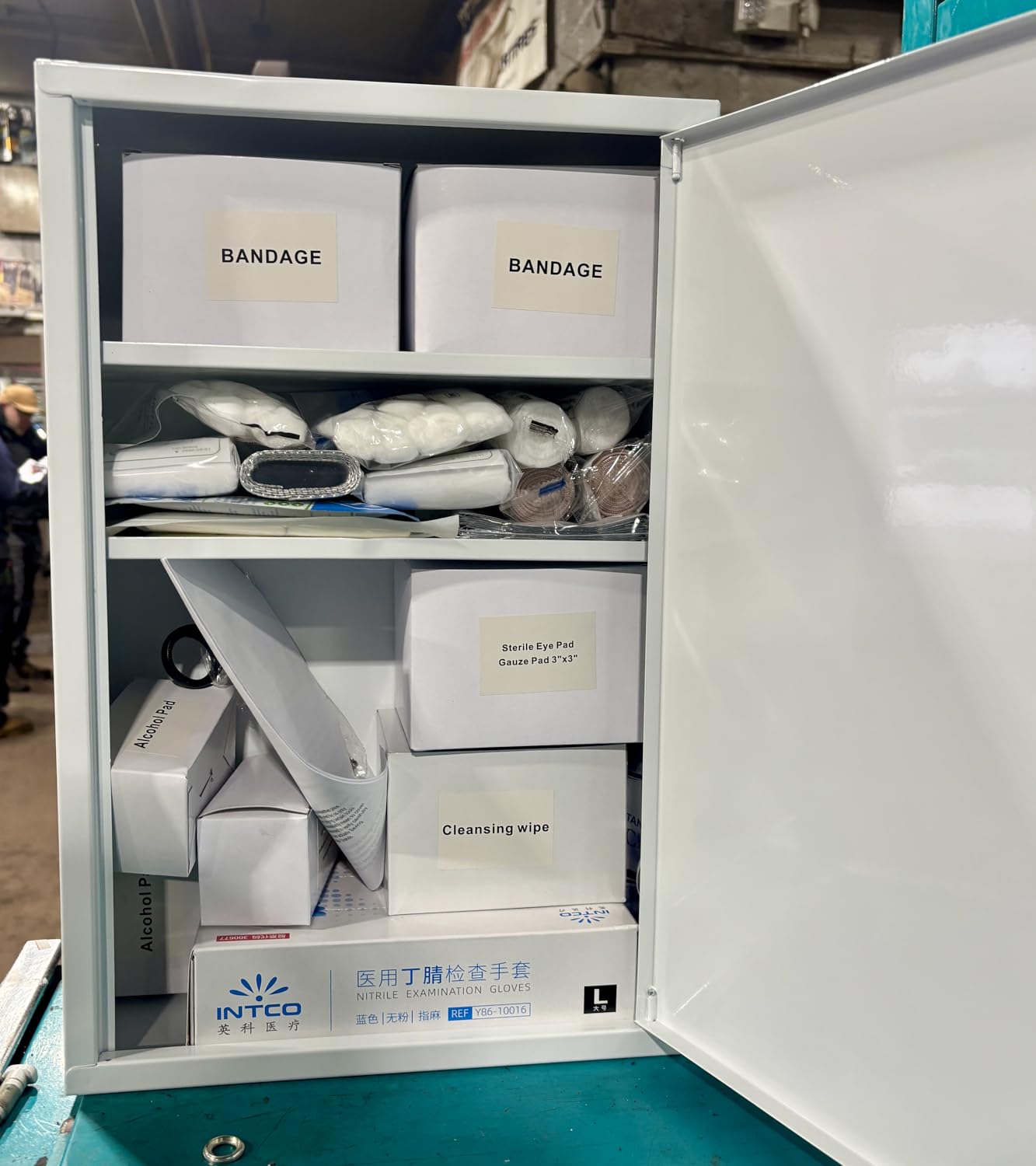
VEVOR’s cabinet is the piece-count king of this list at 1,000 items, and it arrives certified to OSHA and ANSI 2015 Class A standards. The cold-rolled steel body with a rustproof coating feels like the industrial cabinet it claims to be, and it works as a wall unit or a desktop box depending on your layout.
For a growing site that wants one purchase to cover a lot of people, the math here is hard to beat. Bandages, gauze, wipes, tapes, and gloves in bulk mean fewer restocking cycles in year one. We would still do a full inventory check on arrival, which is good practice with any big kit.
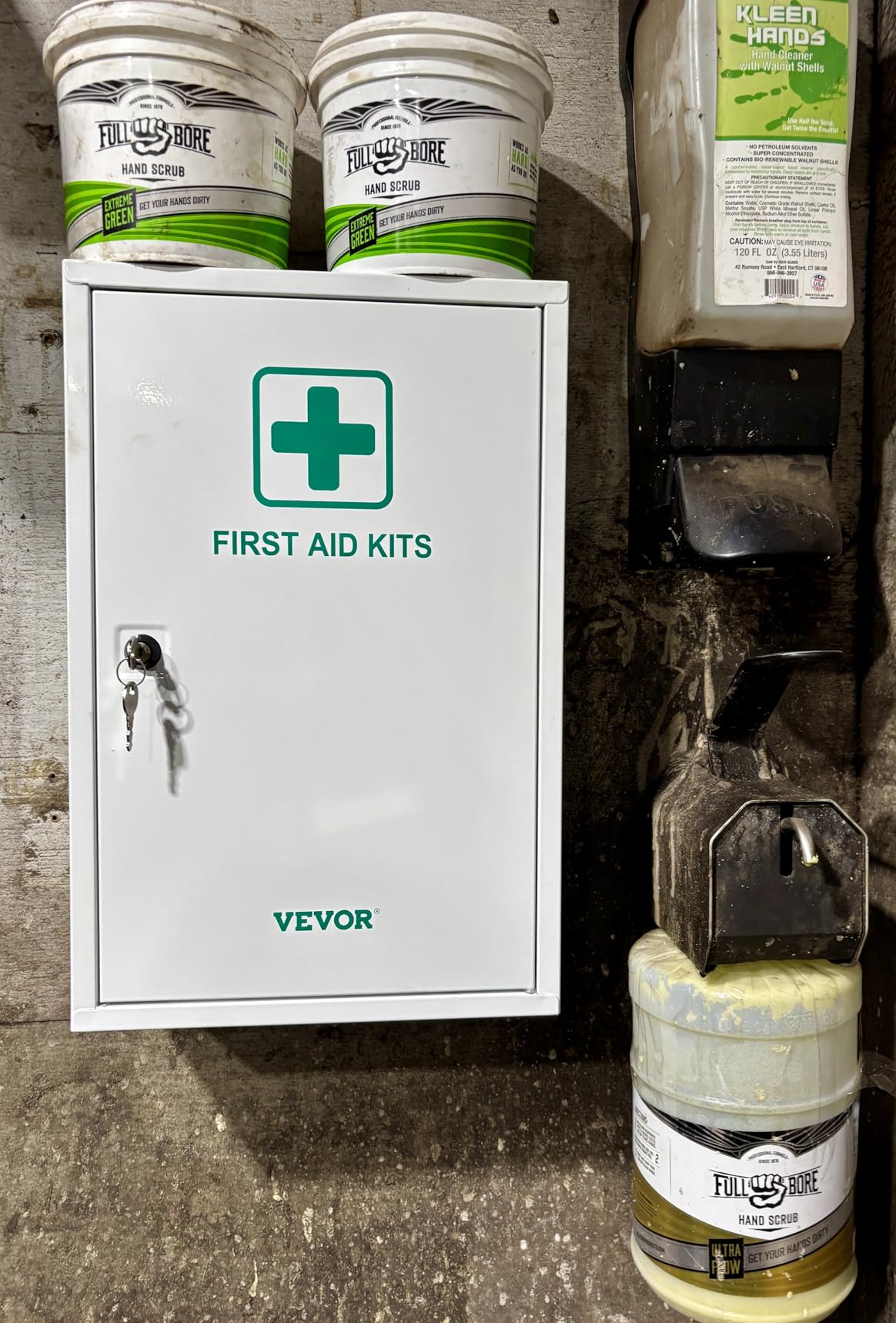
The 4.5-star rating comes from a small pool of 18 reviews, so treat the average with caution. The recurring criticisms are honest ones: some units arrive with bent shelves thanks to shipping, and the supplies are generic rather than name brand. Neither is a dealbreaker, but both are real.
Our take after comparing it against premium rivals: this is a compliance and capacity play, not a boutique supply experience. If your priority is passing an inspection with a large covered headcount at low cost, it delivers. If you want North American Rescue-grade contents, you will be swapping items out.
How does the piece count translate to real coverage?
A 1,000-piece Class A cabinet realistically serves a business of 50 to 75 people in a moderate-risk environment. Piece counts are dominated by small items like bandages and wipes, so they do not scale linearly with risk. For high-hazard sites, supplement with a dedicated trauma kit regardless of the piece count.
For offices, schools, and retail with multiple departments sharing one station, this capacity means you check it monthly instead of weekly.
What should you inspect when it arrives?
Check each shelf for bending, confirm the door latch works, and do a quick count against the included contents list. Shipping damage is the most common complaint with this cabinet, and reporting it immediately makes replacement simple.
Also verify the mounting holes line up and grab heavy-duty anchors if you are not hitting studs. At 10.8 pounds loaded far heavier, this cabinet needs solid wall anchoring.
7. First Aid Only 90575 3-Shelf Kit – Best for Large Facilities
First Aid Only 90575 3-Shelf ANSI B+ and OSHA-Compliant First Aid Kit, 100-150-Person Emergency First Aid Kit for Business and Worksite, First Aid Metal Cabinet with Medications, 676 Pieces
676 pieces
ANSI B+ and OSHA
Covers 100-150 people
3 adjustable shelves
15.2 pounds
Pros
- 676 pieces sufficient for 100-150 people
- Sturdy metal construction with 3 adjustable shelves
- Wall-mountable with carry handle for portability
- ANSI 2015 B plus and OSHA-compliant
- Ideal for industrial facilities and large corporate offices
Cons
- Tweezers are low quality
- Packaging protection could be improved
- Some items like tourniquet are not medical-grade
The First Aid Only 90575 is the cabinet you buy when you have a lot of people to cover — it is rated for 100 to 150 people and certified to ANSI 2015 B+ on top of OSHA compliance. That B+ rating means it carries enhanced contents beyond standard Class A, which matters for industrial facilities and large corporate campuses.
The three adjustable shelves let you reconfigure as your supply mix changes, and the carry handle means you can pull it off the wall and bring it to the incident instead of walking an injured person to the wall. At 15.2 pounds it is manageable for one person to move.
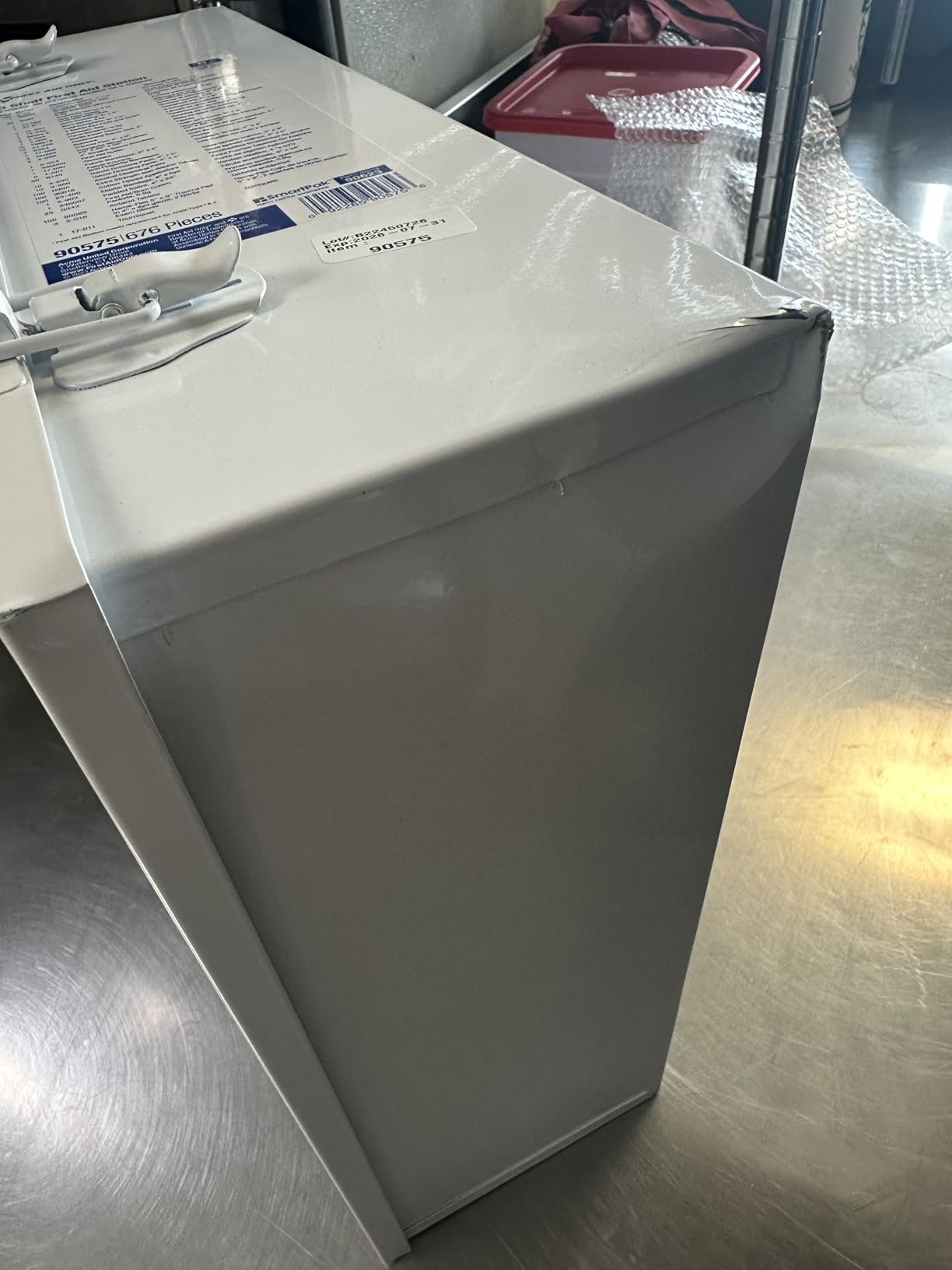
With 124 reviews at 4.5 stars, this is one of the more battle-tested large cabinets available. Reviewers consistently describe it as well organized and comprehensive for the size, which tracks with First Aid Only’s reputation in the commercial safety space.
The criticisms are specific and worth knowing: the included tweezers are weak, the shipping packaging could protect the cabinet better, and at least one reviewer flagged that an included tourniquet is not medical grade. If you run a high-risk site, swap in a proven tourniquet — that is cheap insurance.
Is ANSI B+ meaningfully better than Class A?
Yes, for the right environment. The B+ designation indicates a kit built to Class B quantities with additional enhanced supplies, targeting workplaces with higher injury severity potential. You get more of everything plus items aimed at complex wounds, which is why this cabinet suits factories and manufacturing floors.
If your site is an office park with paper cuts and the occasional kitchen burn, Class A is plenty and you can save money. B+ earns its keep when lacerations, burns, and eye injuries are part of your reality.
Where should you mount a cabinet this size?
Central and visible, ideally near a sink and on the route people walk daily. For multi-floor facilities, one per floor beats one giant cabinet in the basement. The 15 x 16 inch footprint needs solid stud mounting given the loaded weight.
Post a sign above it and make sure night-shift workers know the location. Emergency response times drop sharply when people have walked past the cabinet fifty times.
8. UniShield 4-Shelf Class B Cabinet – Best Premium Compliance Kit
UniShield 4-Shelf Metal 1st Aid Cabinet Class B, Large Capacity First Aid Wall Mount Medicine Cabinet, Secure Metal Med Box with Easy Access, Exceeds OSHA/ANSI Z308.1 2015, Over 775-Pieces
775+ pieces
Class B compliance
4 shelves
15.5 x 22.75 x 5.5 inches
21.75 pounds
Pros
- Over 775 pieces for comprehensive coverage
- Class B compliance exceeds OSHA and ANSI Z308.1 2015 requirements
- Durable metal construction made in USA
- Space-efficient wall mount design
- 4-shelf layout for organized storage
Cons
- Not Prime eligible
- Components made outside USA
The UniShield is the heavy hitter of this list — a 4-shelf, 21.75-pound metal cabinet loaded with over 775 pieces and built to exceed OSHA and ANSI Z308.1-2015 Class B requirements. When reviewers say a cabinet “exceeded expectations for large office or school use,” this is the tier they mean.
The contents list reads like a proper emergency station: adhesive fabric and triangular bandages, a CPR face shield, antibiotic ointments, antiseptic towelettes, burn cream packets, eye wash and eye pads, plus gauze rolls and pads. That trauma-adjacent coverage is what separates Class B from the starter kits.
Build quality is the reason to pay the premium. The cabinet is made in the USA from durable metal, and the four-shelf layout keeps categories separated so restocking and inspections go quickly. For schools, large offices, and industrial sites that want one cabinet to handle serious incidents, this is the one.
Two practical notes from our research: it is not Prime eligible, so shipping takes the standard route, and while the cabinet itself is US-made, some internal components are sourced internationally. Neither changes the performance picture, but both come up in reviews.
Who actually needs Class B compliance?
OSHA does not mandate a specific kit class — it requires adequate first aid supplies for your workplace under 1910.151, and ANSI Z308.1 classes are the accepted way to demonstrate adequacy. Class B is the recognized choice for high-risk environments: construction sites, manufacturing, fabrication, and any site with machinery or elevated injury severity.
If your hazard assessment includes deep lacerations, serious burns, or crushed injuries, Class B quantities and content types are what you want on the wall when it happens.
Is this cabinet worth it over buying two cheaper kits?
For large sites, usually yes. One well-organized cabinet beats two scattered kits for inspection simplicity, visibility, and response speed during a real incident where multiple responders need supplies simultaneously. The four-shelf layout means two people can work out of it without elbowing each other.
For smaller or multi-building sites, two mid-size cabinets in different zones may cover more ground. Match the architecture to your facility, not just the headcount.
How to Choose the Best First Aid Cabinet?
Choosing a first aid cabinet comes down to five practical questions, and answering them in order will narrow this list to one or two picks fast. Here is how we work through it when recommending cabinets for a specific site.
1. How many people are you covering? This is the first filter. A 350-piece kit suits roughly 10 to 20 people in a low-risk setting, a Class A 50-person cabinet covers most small businesses, and 100+ person facilities should be looking at the First Aid Only or UniShield options. Always buy slightly above your current headcount so you are not restocking monthly.
2. What is your risk level? Match the cabinet class to your hazard profile. Offices, retail, and restaurants are fine with Class A. Manufacturing, construction, and fabrication call for Class B or B+ contents with trauma-capable supplies. Forum safety professionals repeatedly flag that under-buying risk level is the most common — and most dangerous — mistake.
3. Wall mount, portable, or both? A fixed wall station is the default because visibility drives usage. If you have mobile crews or multi-building sites, a cabinet that detaches for carry, like the M2 BASICS or BrightCare, adds flexibility. Some sites run one fixed cabinet plus one portable backup.
4. Metal or plastic? Metal wins for durability and professional appearance — the recurring forum complaint about cheap kits is plastic cases cracking in demanding environments. Plastic makes sense where weight, budget, or moisture is a factor. If the cabinet will live in a shop or warehouse, go metal.
5. Stocked or empty? Stocked cabinets get you compliant immediately with zero effort. Empty cabinets cost less long term and let you control supply quality, which experienced buyers consistently prefer. As a rule of thumb, first-time buyers should go stocked; anyone replacing an existing station should consider empty plus their own supplies.
Beyond those five, check the OSHA and ANSI compliance documentation before purchasing if inspections are part of your life. Look for explicit references to ANSI Z308.1-2015 and the appropriate class. And whatever you buy, put a monthly inspection reminder on the calendar immediately — an unstocked cabinet on inspection day is worse than no cabinet at all.
Frequently Asked Questions
What does OSHA require in a first aid cabinet?
OSHA regulation 1910.151(b) requires that adequate first aid supplies be readily available in workplaces without nearby medical facilities, but it does not list specific items. In practice, employers follow ANSI Z308.1, which specifies required contents like adhesive bandages, gauze pads, burn treatment, eye wash, gloves, and a CPR mask, with Class A for low-risk sites and Class B for high-risk sites.
What is the best first aid kit on the market?
For most workplaces, the M2 BASICS 350-piece wall-mount kit is the best combination of value, organization, and review track record. For documented compliance covering about 50 people, the EVERLIT CARE 2-shelf ANSI Class A cabinet is the strongest option, while large facilities should step up to the First Aid Only 90575 or the UniShield Class B cabinet.
What is the difference between IFAK and AFAK?
An IFAK is an Individual First Aid Kit — a compact kit carried by one person, usually trauma-focused with a tourniquet, pressure dressing, and chest seal. An AFAK is an Assault or Advanced First Aid Kit, which is larger, carries more supplies, and is designed to treat multiple casualties or sustain one casualty longer than an IFAK can.
What is a good quality first aid kit?
A good quality first aid kit has contents matched to your actual injury risks, organized and labeled so anyone can find items under stress, a durable case that survives your environment, and supplies that get inspected and replaced before they expire. Metal cabinets with labeled shelf boxes and documented ANSI compliance represent the quality tier for workplace use.
Final Verdict on the Best First Aid Cabinets
After comparing all eight options, our recommendations are clear. The M2 BASICS 350-piece kit wins as the best first aid cabinet for most small workplaces thanks to its organization, durability, and proven track record. The BrightCare cabinet is the smart budget pick for OSHA compliance, and the UniShield Class B cabinet is the choice for large or high-risk facilities that cannot afford to under-supply.
Whatever you choose, mount it visibly, load it for your real risks, and inspect it monthly. The best first aid cabinet is the one that is stocked, signed, and reachable when it counts.