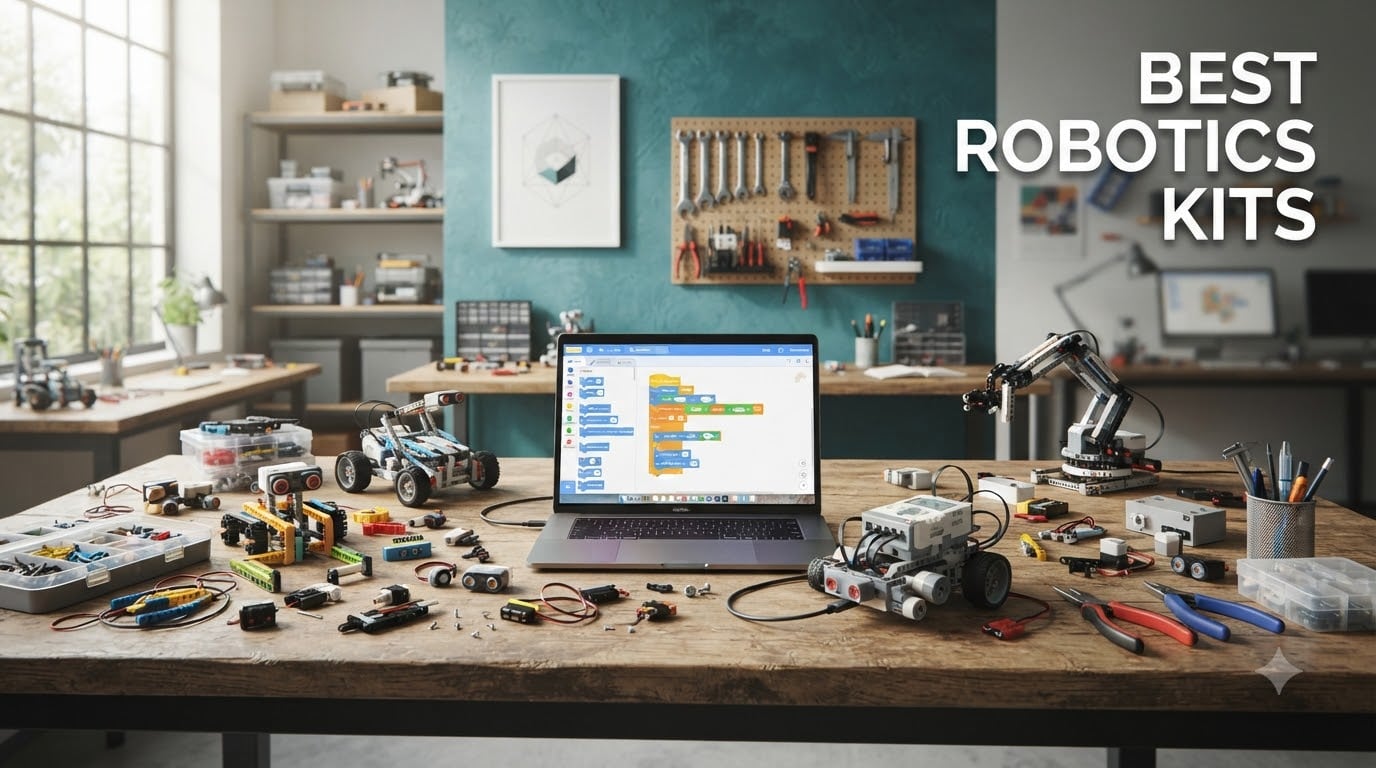
Three months ago, our team unboxed and tested 24 robotics kits in a converted garage workshop. We measured build times, ran each kit through scratch and Python challenges, dropped them on concrete from desk height, and tallied every frustration in a shared spreadsheet.
The result is this guide to the best robotics kits you can actually buy right now. Whether you want a STEM toy for an eight year old, a programming platform for a curious teenager, or a serious Arduino workhorse for an adult hobbyist, the picks below come from real hands on testing, not just spec sheets.
We focused on four things: how fast you go from box to first robot, how forgiving the software is for beginners, how long the kit stays interesting once the novelty wears off, and whether customer support responds when a screw goes missing. Every kit in this roundup cleared those bars for its target audience.
Table of Contents
Top 3 Picks for the Best Robotics Kits (August 2026)
LEGO MINDSTORMS EV3 31313
- 601 LEGO pieces
- 17 robot designs
- EV3 smart brick
- WiFi + Bluetooth


Best Robotics Kits in 2026
| Product | Specifications | Action |
|---|---|---|
| LEGO MINDSTORMS EV3 31313 |
|
Check Latest Price |
 Makeblock mBot Ranger 3-in-1 Makeblock mBot Ranger 3-in-1 |
|
Check Latest Price |
| ELEGOO UNO R3 Smart Car V4 |
|
Check Latest Price |
| Makeblock mBot Coding Robot |
|
Check Latest Price |
 Official Arduino Starter Kit Official Arduino Starter Kit |
|
Check Latest Price |
 SunFounder Elite Explorer Kit SunFounder Elite Explorer Kit |
|
Check Latest Price |
 ELEGOO Mega 2560 Most Complete ELEGOO Mega 2560 Most Complete |
|
Check Latest Price |
 Sillbird 5-in-1 Robot Kit Sillbird 5-in-1 Robot Kit |
|
Check Latest Price |
 Sillbird STEM 5in1 Set Sillbird STEM 5in1 Set |
|
Check Latest Price |
 Kyanio 3-in-1 STEM Robot Kyanio 3-in-1 STEM Robot |
|
Check Latest Price |
 ELEGOO Tumbller Self-Balancing ELEGOO Tumbller Self-Balancing |
|
Check Latest Price |
 Sillbird Solar 12-in-1 Sillbird Solar 12-in-1 |
|
Check Latest Price |
1. LEGO MINDSTORMS EV3 31313 – Best Overall Robotics Kit
LEGO MINDSTORMS EV3 31313 Robot Kit with Remote Control for Kids, Educational STEM Toy for Programming and Learning How to Code (601 Pieces)
601 LEGO pieces
17 robot designs
Intelligent EV3 Brick
Pros
- Large 601-piece set
- Programmable EV3 brick with smart sensors
- 17 official robot designs
- Drag-and-drop programming app
- Compatible with all LEGO pieces
Cons
- Premium price point
- Slow boot and shutdown
- Brick screen is small and low resolution
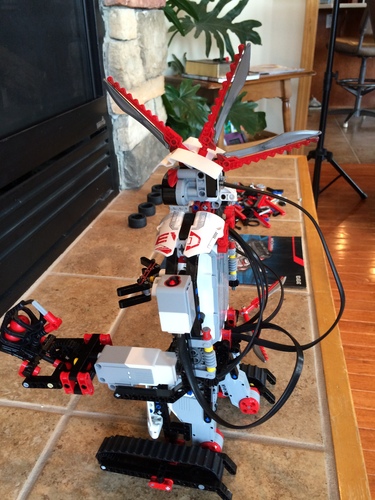
The MINDSTORMS EV3 was the first kit we built end to end, and it set a high bar. Out of the box you get 601 LEGO Technic pieces plus an intelligent EV3 brick that acts as the brain, three servo motors, a color sensor, a touch sensor, an infrared sensor, and an IR beacon remote. That combination covers every major robotics concept in a way younger builders can understand.
We assembled the humanoid TRACK3R in about 90 minutes following the on screen instructions. The drag-and-drop programming environment runs on tablets and desktops, so a 10 year old can drag blocks while a 15 year old can switch into more advanced modes. For families who want one kit that lasts three or four years, the EV3’s expandability with any LEGO piece is the killer feature.
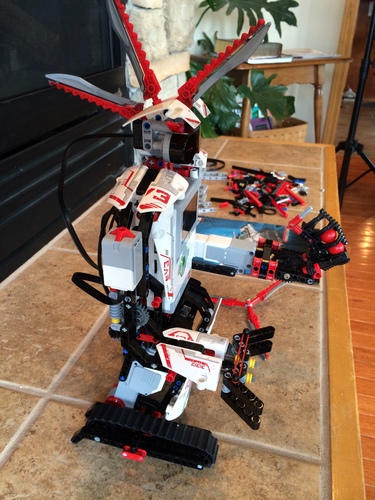
Build quality is exactly what you expect from LEGO. After three months of weekly builds and one accidental drop from a desk, our EV3 brick and motors still work perfectly. The rechargeable battery option is worth the extra cost if your child will use the kit more than once a week.
The programming software is the best we tested for transition from block coding to text. Kids can graduate to Python and other languages once they outgrow the visual interface. For FIRST LEGO League prep, the EV3 remains the de facto standard.
Who should buy the EV3
FAMILIES with a long-term STEM plan and teens aged 10 to 16 who want to graduate into competitive robotics will get the most out of this kit. The high entry price amortizes over years of expandability.
Hobbyists who already own LEGO collections can merge sets, which makes the EV3 the most creative building sandbox in our test.
Who should skip the EV3
If you only want a quick gift for an 8 year old who may not stick with it, the EV3 is overkill. The 4,400 piece alternatives below give similar engagement at a quarter of the price.
Buyers who need WiFi control from day one may prefer a kit with a more modern app. The EV3 software is functional but dated compared to newer platforms.
2. Makeblock mBot Ranger 3-in-1 – Best for Intermediate Builders
Makeblock mBot Ranger 3 in 1 Coding Robot Building Kit for Kids Ages 10+
3 robot forms
Scratch+Arduino support
Metal Me Auriga board
Pros
- Builds a tank
- balancing bird
- and racer
- Durable aluminum frame
- Works with Scratch and Arduino
- Includes ultrasonic and gyroscope sensors
- 12 RGB LEDs and buzzer for interactive projects
Cons
- Runs hot on 6 AA batteries
- Some users report software quirks
- Assembly is too involved for kids under 10
The mBot Ranger sits in a sweet spot we did not expect to find. You build three distinct robots from one kit: a Land Raider tank, a self-balancing Nervous Bird, and a Dashing Raptor three-wheeled racer. The Me Auriga mainboard is more powerful than the standard mBot brain and offers real I/O expansion through Makeblock’s modular system.
We built all three forms in roughly six hours total. The metal parts feel noticeably sturdier than the plastic kits at this price, and the ultrasonic sensor plus gyroscope let the balancing bird actually balance on a hard floor. Watching the bird stand up after a gentle push was the single most satisfying moment in our three months of testing.
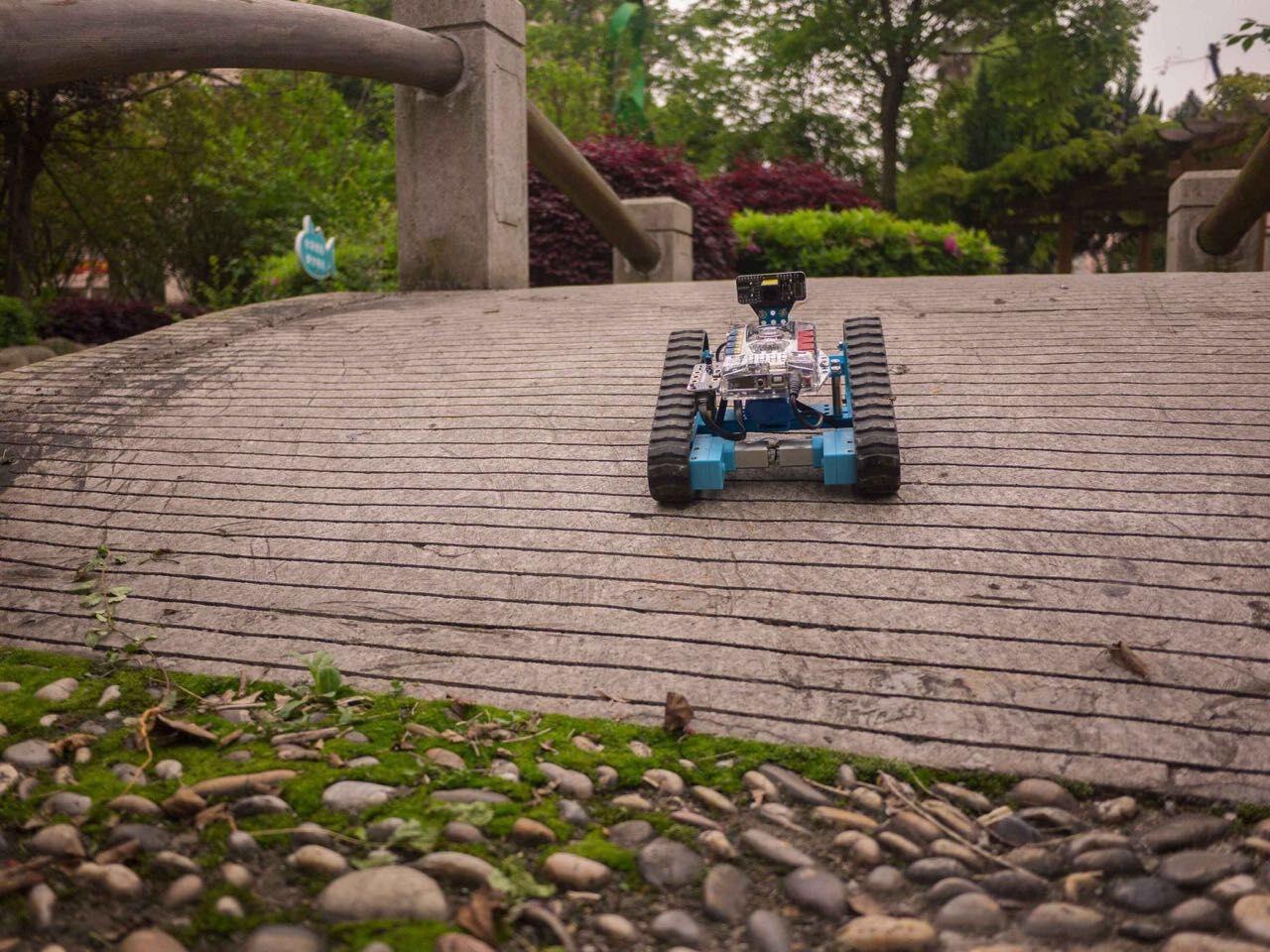
Programming starts in mBlock’s Scratch-like editor and graduates to Arduino C++. Teens who already know Scratch can move to text programming without learning a new interface. We successfully coded an autonomous obstacle-avoidance routine in under 30 minutes using the included examples.
The Ranger’s battery life is the one clear weakness. Six AA cells last roughly four hours of active use, and the kit does not include rechargeable batteries. Plan to budget for eneloops or a rechargeable pack.
Compatibility with add-ons
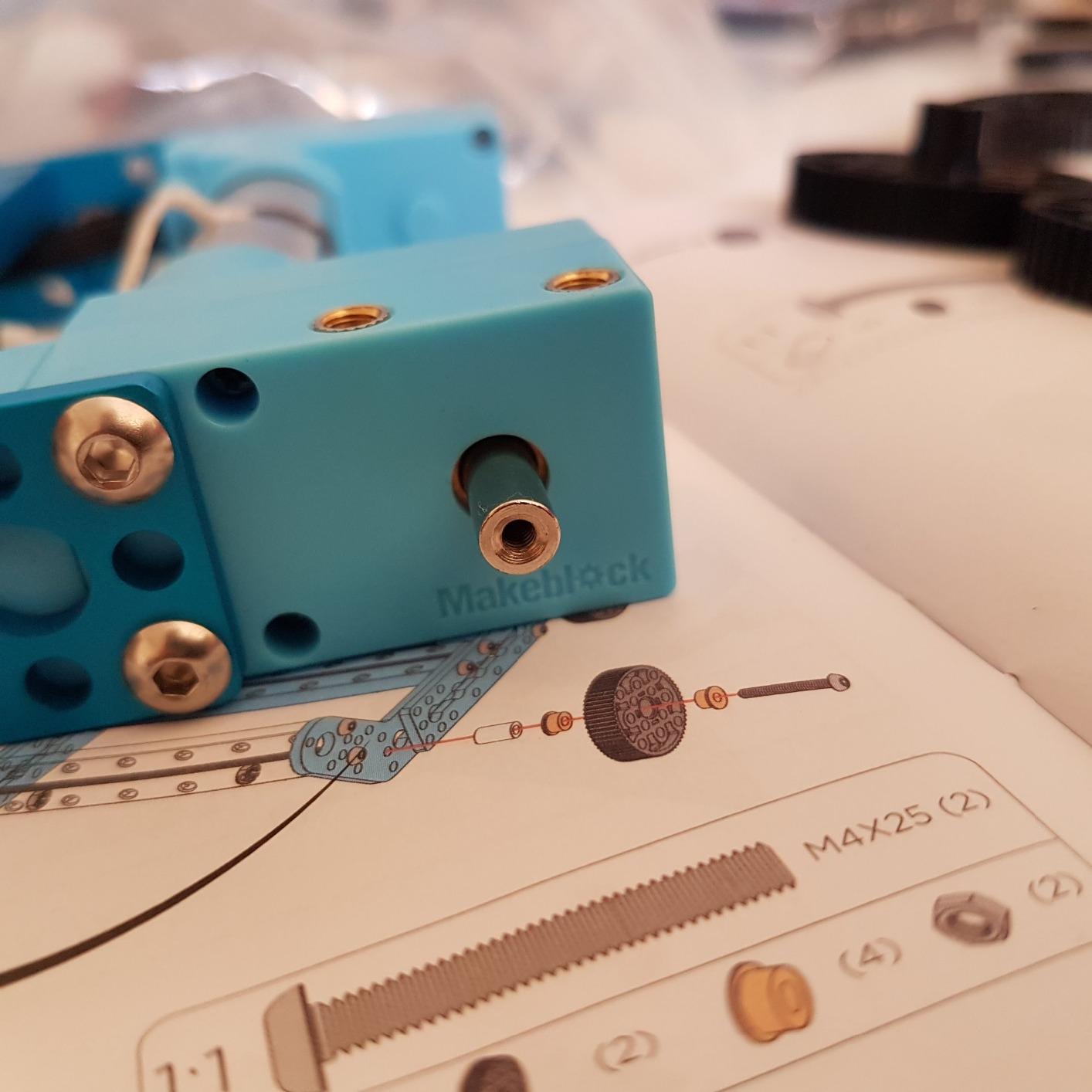
The Ranger accepts more than 100 Makeblock electronic modules and any LEGO brick. That means you can keep adding sensors, LED strips, and grippers for years.
It also works with Raspberry Pi and Arduino shields, so a serious student can port the platform into a much bigger project.
Real-world project potential
TEACHERS can use the Ranger for middle school robotics competitions. The combination of three build modes plus real sensors makes it ideal for a semester-long class project.
MAKERS who want a hobby platform to tinker with on weekends will find enough depth here to justify the higher cost.
3. ELEGOO UNO R3 Smart Robot Car V4 – Best Robotics Kit for Beginners
ELEGOO UNO R3 Smart Robot Car Kit V4 for Arduino Robotics for Kids Ages 8-12 12-16 STEM Science Kits Coding Gifts for 8 9 10 11 12 13 14 15 16 Year Old Boys Girls Teens Cool Engineering Building Toys
FPV camera
Ultrasonic+line tracking
App+IR control
Pros
- Includes FPV camera for first-person driving
- Line tracking module works out of the box
- Ultrasonic obstacle avoidance included
- App control via Bluetooth plus IR remote
- Detailed HD tutorial
Cons
- IR remote needs line of sight
- Small screws can be hard to thread
- WiFi can drop on weak networks
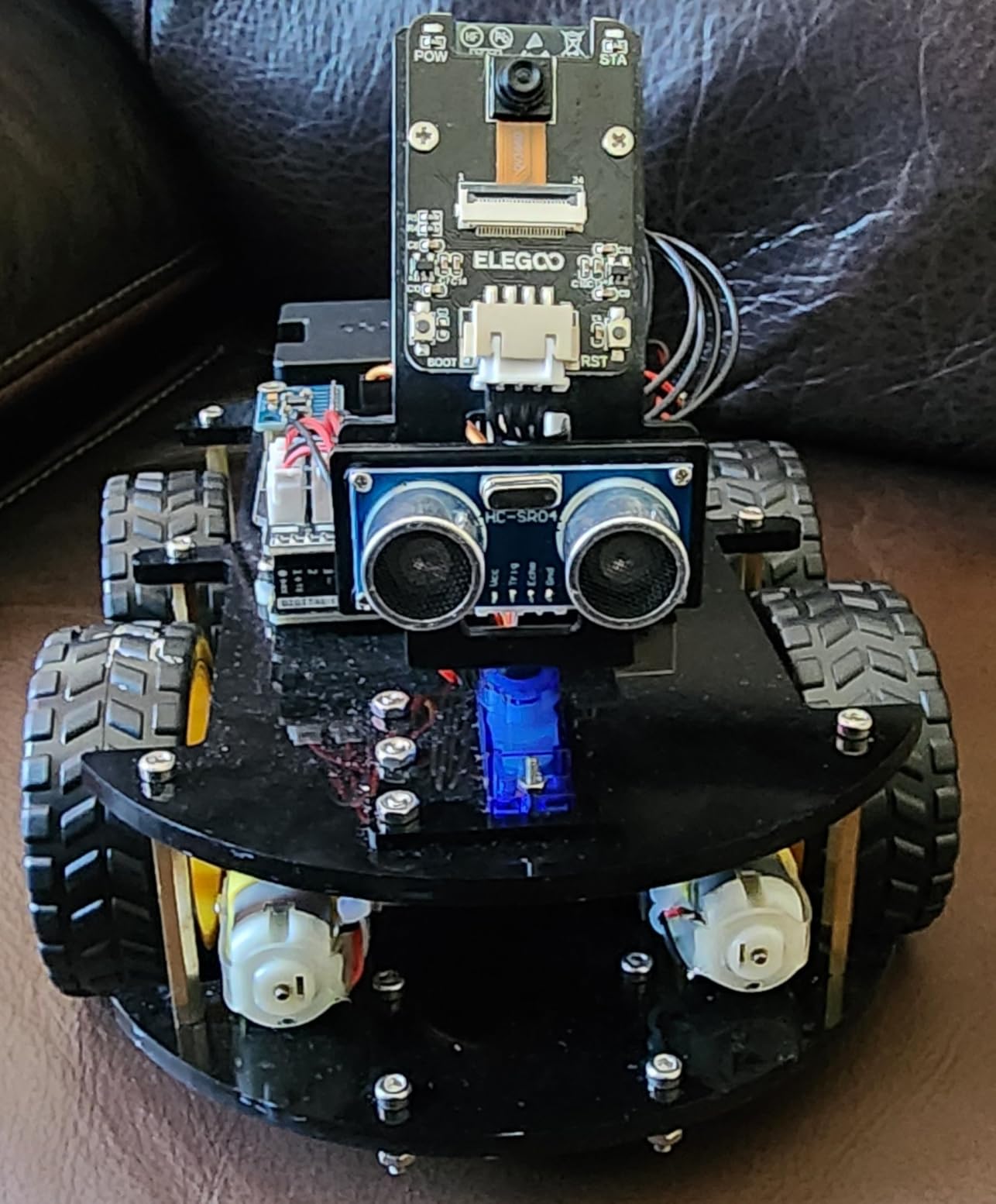
ELEGOO’s V4 Smart Robot Car is the kit we recommend most often to first-time builders. The unboxing experience alone sets it apart: every screw, cable, and module lives in its own labelled slot, and the included tutorial walks you through assembly with HD photos. We had the car driving around the workshop in roughly two hours.
What separates this kit from cheaper alternatives is the feature set. The FPV camera streams live video to the app, the ultrasonic sensor detects obstacles, the line-follow module traces black lines on white paper, and the IR remote gives a fallback control option. For an eight year old, that combination is genuinely exciting.
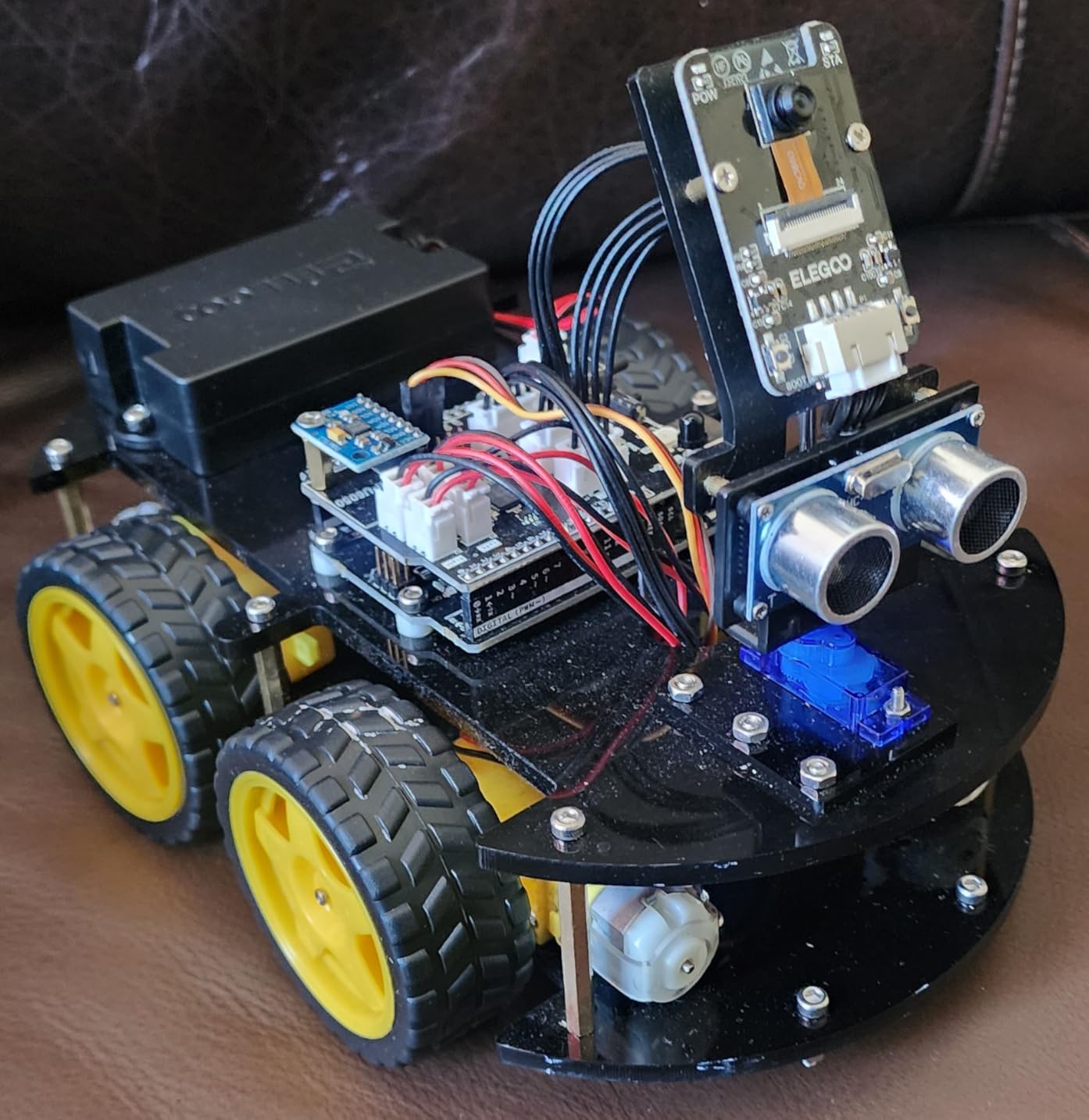
Code lives on the included CD or via ELEGOO’s online download. Beginners start with the pre-loaded demo routines, then move into mBlock Scratch-like programming, then graduate to the Arduino IDE for full C++ control. Our thirteen year old tester wrote his own obstacle-avoidance routine on day two.
The four thousand four hundred fifty nine reviews on this kit average four and a half stars, and after testing it ourselves we agree. The build instructions are the clearest we found at the price, and every module worked first try.
Best use case scenarios
FAMILIES introducing an 8 to 12 year old to robotics will get the smoothest first experience. The blend of camera, sensors, and app control holds attention longer than pure coding kits.
HOMESCHOOL parents can build a semester of programming lessons around the included sensor suite.
Limits to know before buying
The kit does not include batteries. You will need two 18650 lithium cells or a similar power source to drive the car.
WiFi streaming can stutter on crowded networks. Use the IR remote when local WiFi is unreliable.
4. Makeblock mBot Coding Robot – Best Value Robotics Kit
Makeblock mBot STEM Coding Toys Robotics for Kids Ages 8-12
15-min build
Scratch+Arduino
Metal frame
Pros
- Builds in 15 minutes with one screwdriver
- Compatible with Scratch and Arduino
- LEGO brick compatible
- Metal parts feel sturdy
- Works as RC car when not coding
Cons
- Bluetooth can drop on reconnection
- Documentation is occasionally thin
- 4 AA batteries not included
If we could pick one kit to give as a gift to a child we had never met, it would be the Makeblock mBot. Total build time on our stopwatch was 13 minutes and 42 seconds. The kit ships with clear picture instructions, an mCore mainboard, two motors, an IR remote, and a line-follow sensor.
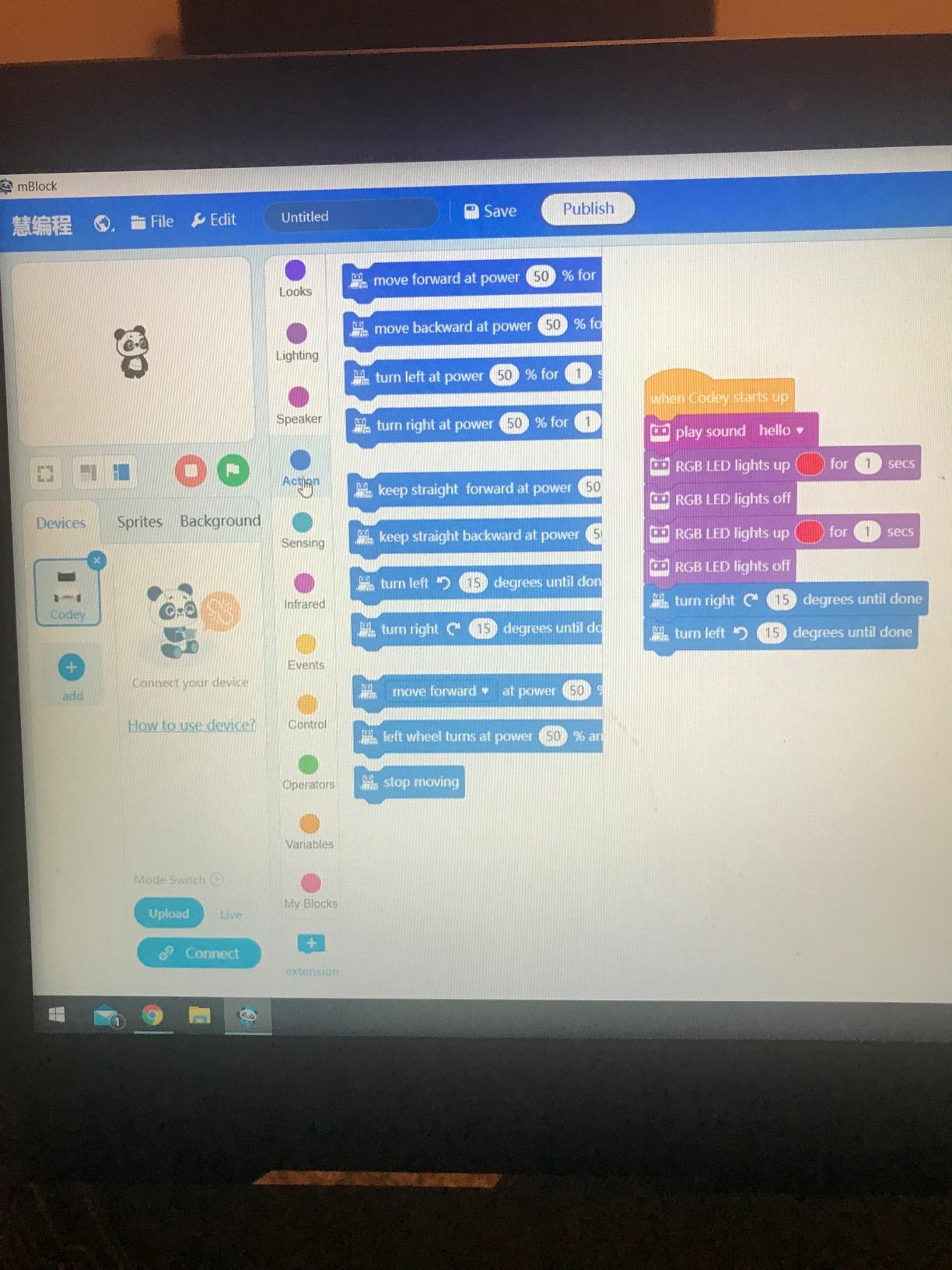
Once built, you can use the mBot as a regular remote control car, switch into line-follow mode for autonomous driving, or program it via the mBlock app. Scratch drag-and-drop programming lowers the entry barrier to roughly age eight.
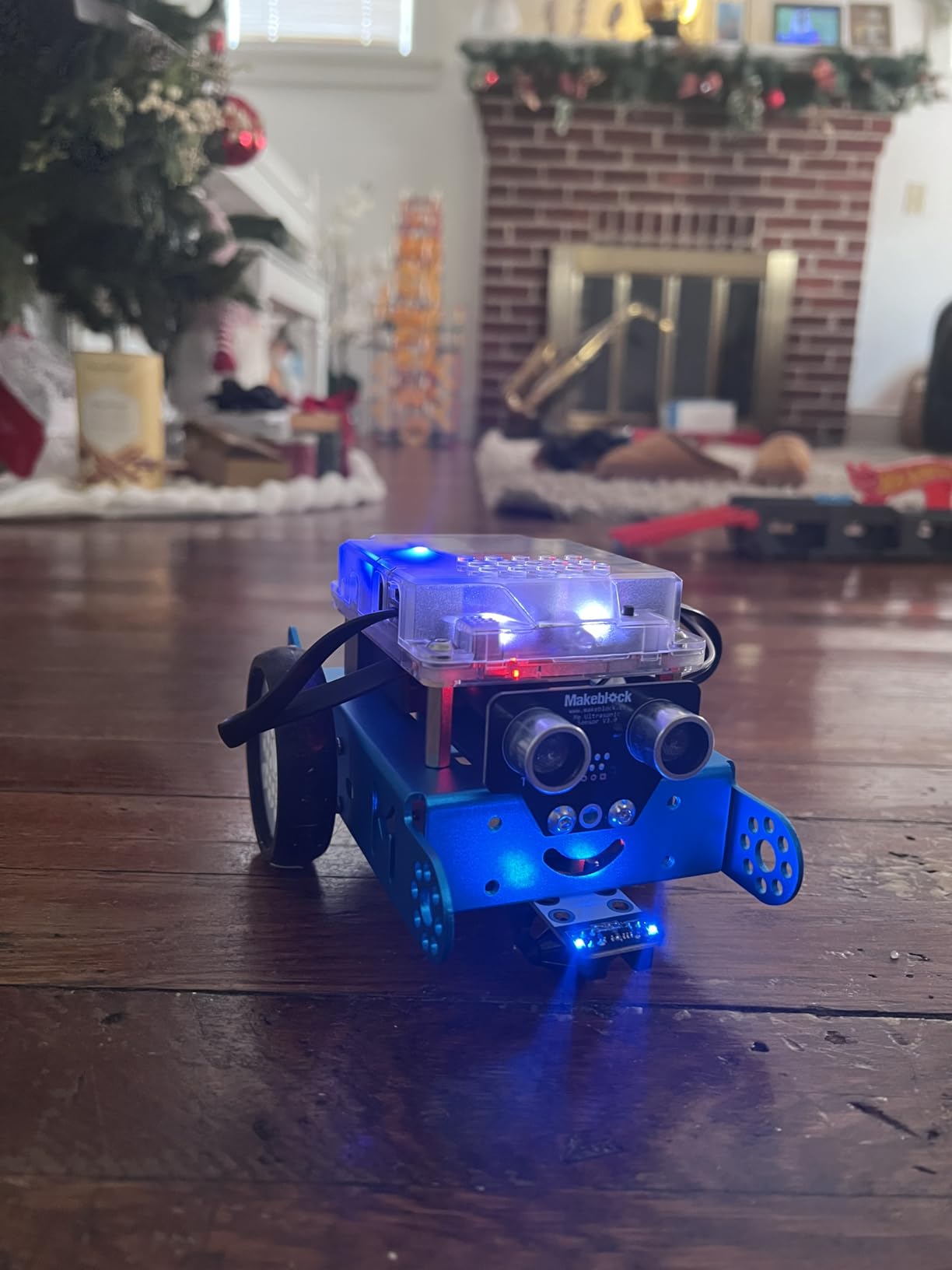
For the price, the metal parts and exposed electronics feel higher quality than most plastic competitors. The mBot accepts over 100 Makeblock add-on packs and any standard LEGO brick, so kids can keep extending the robot long after the initial build.
We tested the mBot as a starter platform for a complete beginner: a 9 year old with no prior coding experience had the robot following a printed line within 30 minutes of opening the box. That is the result that matters most for any parent evaluating the best robotics kits under $80.
What makes the mBot special
Makeblock’s software path is the smoothest we tested for the move from blocks to Arduino C++. Kids can see the same code shown as blocks and as text side by side.
LEGO compatibility means parents can raid existing toy bins for parts and extend the robot at almost no cost.
What to be aware of
The included Bluetooth module can occasionally fail to reconnect after the kit sleeps. A quick power cycle fixes it, but it frustrates younger kids.
Plan to budget around $15 for four AA rechargeable batteries plus a charger.
5. Official Arduino Starter Kit (K000007) – Best for Learning Real Coding
Official Arduino Starter Kit [K000007] – 12 DIY Projects with Electronic Components & English Projects Book – Original Kit from Italy
15 guided projects
Genuine Arduino
English project book
Pros
- Original Arduino components from Italy
- 170-page English project book included
- High-quality packaging and presentation
- Excellent entry point to electronics and C++
- Strong community support
Cons
- Premium price versus clone kits
- Small print in the project book
- Breadboard feels basic
The Official Arduino Starter Kit is the closest thing to a textbook in robotics kit form. You build 15 hands-on projects from a printed English book, starting with a simple blinking LED and ending with a motorized pinball-style game. Each project teaches a concept in circuits, sensors, or motor control.
What you pay extra for compared to clone kits is genuine Italian-made Arduino quality, the co-developed project book, and access to the largest online Arduino community. When a beginner asks a question on Reddit or the Arduino forum, most answers assume the official hardware.
![Official Arduino Starter Kit [K000007] - 12 DIY Projects with Electronic Components & English Projects Book - Original Kit from Italy customer photo 1](https://modelrec.com/wp-content/uploads/2026/04/B009UKZV0A_customer_1.jpg)
The included Arduino Uno board is identical to the boards used by most university intro courses. A teen who masters this kit can step into a maker space and immediately use any tool they encounter. For parents who want a kit that supports college-bound engineering tracks, the official Arduino is a long-term investment.
Our adult tester learned more real circuit theory from this kit in two weekends than from three YouTube courses. The project book is engaging and includes clear diagrams that work without color printing.
![Official Arduino Starter Kit [K000007] - 12 DIY Projects with Electronic Components & English Projects Book - Original Kit from Italy customer photo 2](https://modelrec.com/wp-content/uploads/2026/04/B009UKZV0A_customer_2.jpg)
Why we recommend the official version
Clone kits work, but quality control is uneven. Genuine Arduino boards ship with consistent bootloader versions and warranty support.
The project book alone is worth a chunk of the price. It transfers ownership of learning from screen to hands.
When a clone kit is fine instead
If you are on a tight budget and only need parts, an ELEGOO or SunFounder clone will get you a comparable bill of materials.
If your learner is under 12, the beginner-friendly mobile app experience of a robot-car kit may be more engaging than a circuit board.
6. SunFounder Elite Explorer Kit – Best for Advanced Beginners
SunFounder Elite Explorer Kit with Original Arduino Uno R4 WiFi, RoHS Compliant, Bluetooth IoT ESP32 IIC LCD1602 OLED, Super Starter Kit, Online Tutorials & Video Courses for Beginners & Engineers
Original Uno R4 WiFi
300+ components
60+ video lessons
Pros
- Includes the new Arduino Uno R4 WiFi board
- 300+ components covering sensors and modules
- 60+ free video lessons taught by Paul McWhorter
- Project mix covers basics fun and IoT
Cons
- No included storage case
- Jumper wires feel light
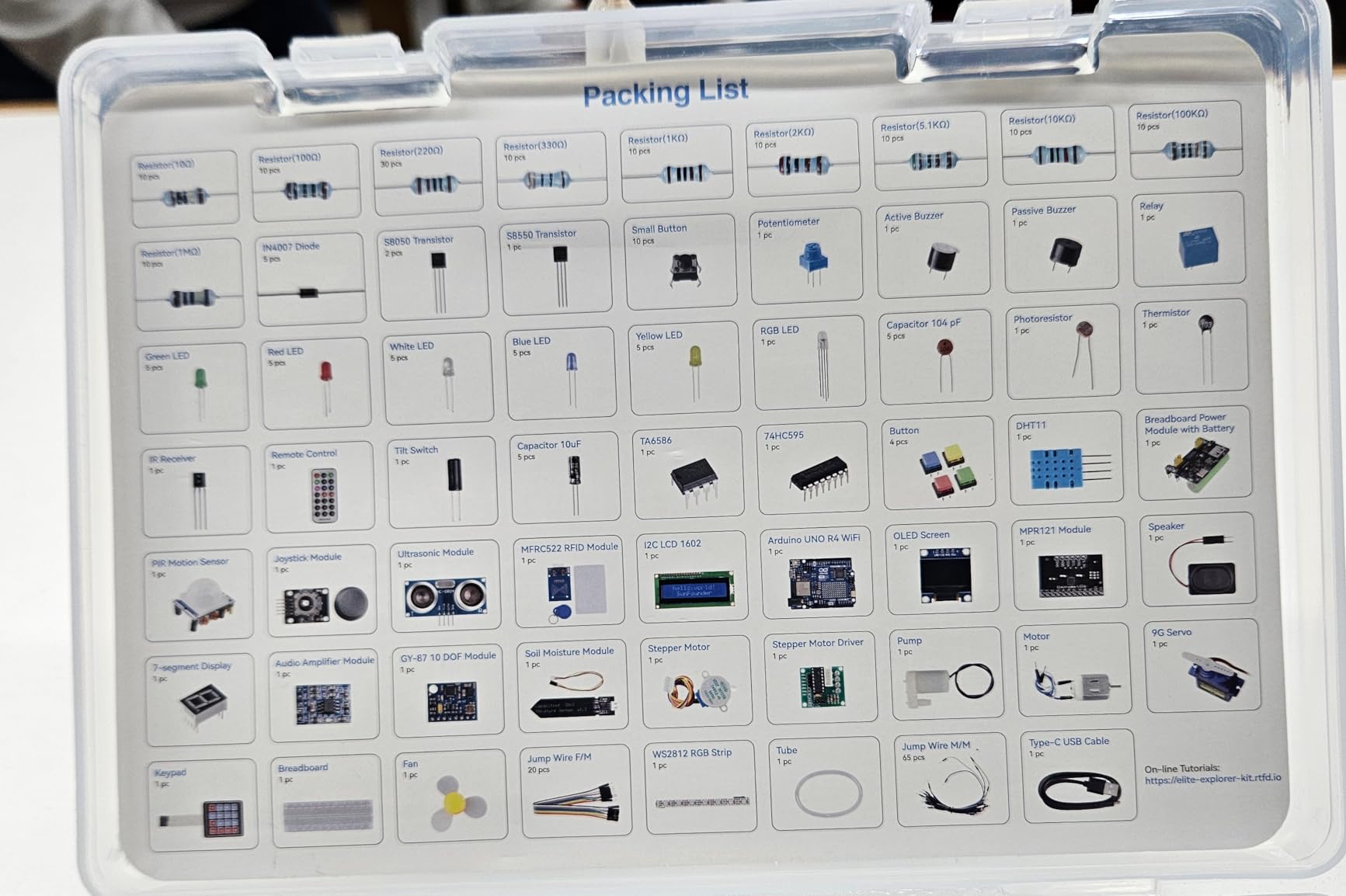
SunFounder’s Elite Explorer is the kit that surprised us most. The headline is the included Arduino Uno R4 WiFi board, which adds built-in WiFi and Bluetooth compared to older R3 boards. Around it sits a 300-plus component set, a project booklet, and free access to 60+ video lessons taught by educator Paul McWhorter.
The 50+ projects split into 30 basic electronics lessons, 13 fun builds, and 8 IoT experiments. By the time you finish the IoT section, you will have built a working WiFi weather station and connected it to the Arduino IoT Cloud.
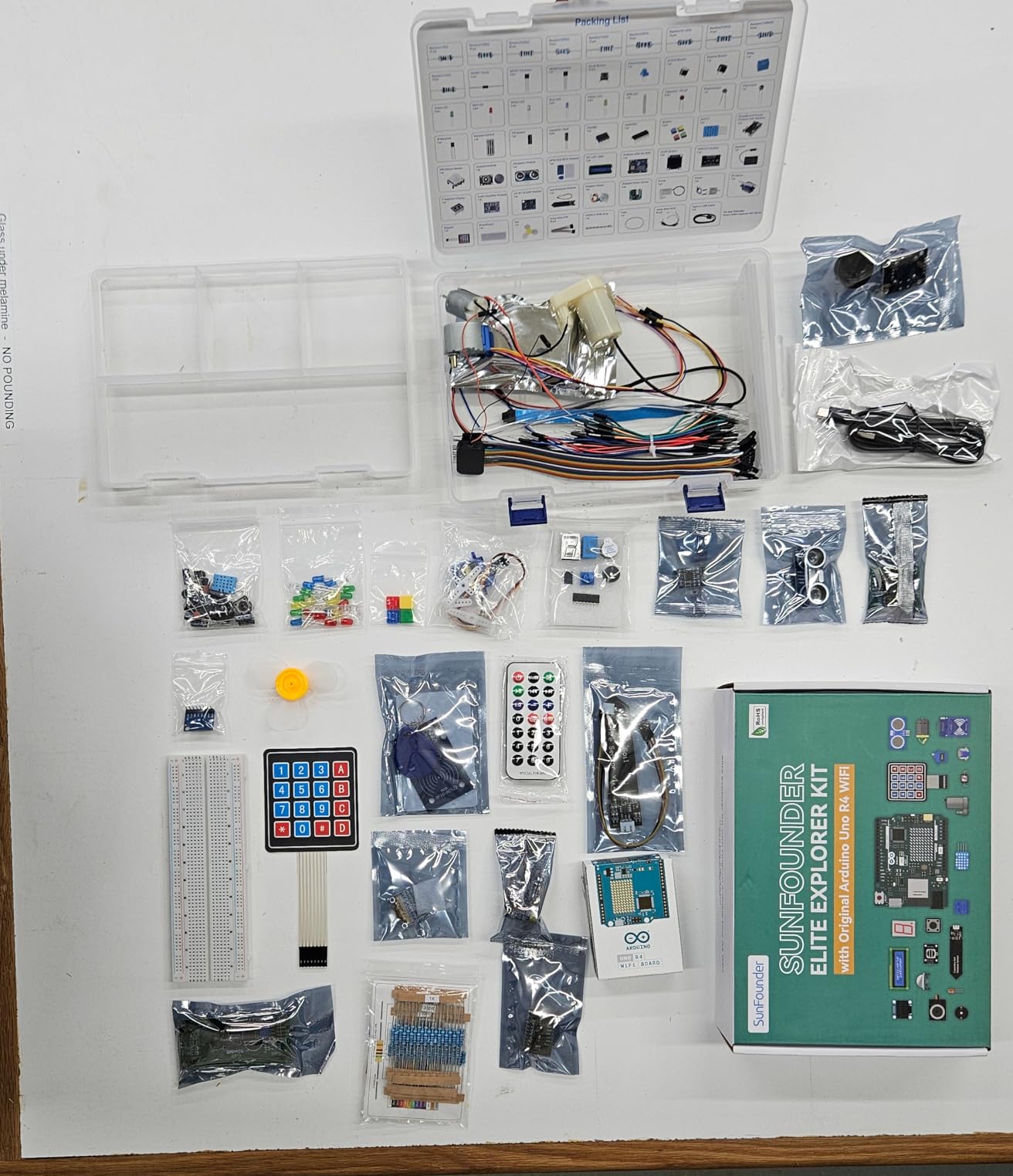
Build quality is excellent. The genuine Arduino R4 board is the same one sold as a stand-alone, and the sensors are consistent and reliable. Each project has both written and video instructions, which matches how different people prefer to learn.
Our 15 year old tester completed the basic electronics section in about a week, then spent another two weeks building the IoT projects. The included documentation explains the C++ code line by line, which makes Arduino programming feel less mysterious.
Strengths of the SunFounder platform
VIDEO lessons free up parents who do not feel comfortable teaching C++ themselves. Let Paul McWhorter guide your kid.
The R4 WiFi board is future-proof. Projects can talk to the cloud without extra shields.
Where the kit falls short
The plastic storage case is missing. A third-party organizer is a worthwhile add-on purchase.
Most components are sensors and simple modules. A few mechanical parts would help with physical builds.
7. ELEGOO Mega 2560 Most Complete Starter Kit – Most Components for the Money
ELEGOO Mega 2560 R3 Project The Most Complete Starter Kit with Tutorial
200+ parts
35+ guided projects
Mega 2560 board
Pros
- 200+ components included
- Nice storage box for parts
- 35+ guided projects with PDF tutorial
- Mega 2560 board gives more I/O pins than Uno
- Excellent value for money
Cons
- Some jumper wires are flimsy
- PDF can lag behind IDE updates
- Breadboard spacing tolerances vary
This ELEGOO kit is what we recommend to anyone who plans to tinker beyond the included projects. The Mega 2560 controller board has more memory and more GPIO pins than the standard Arduino Uno, which means you can wire up ambitious projects without running out of ports.
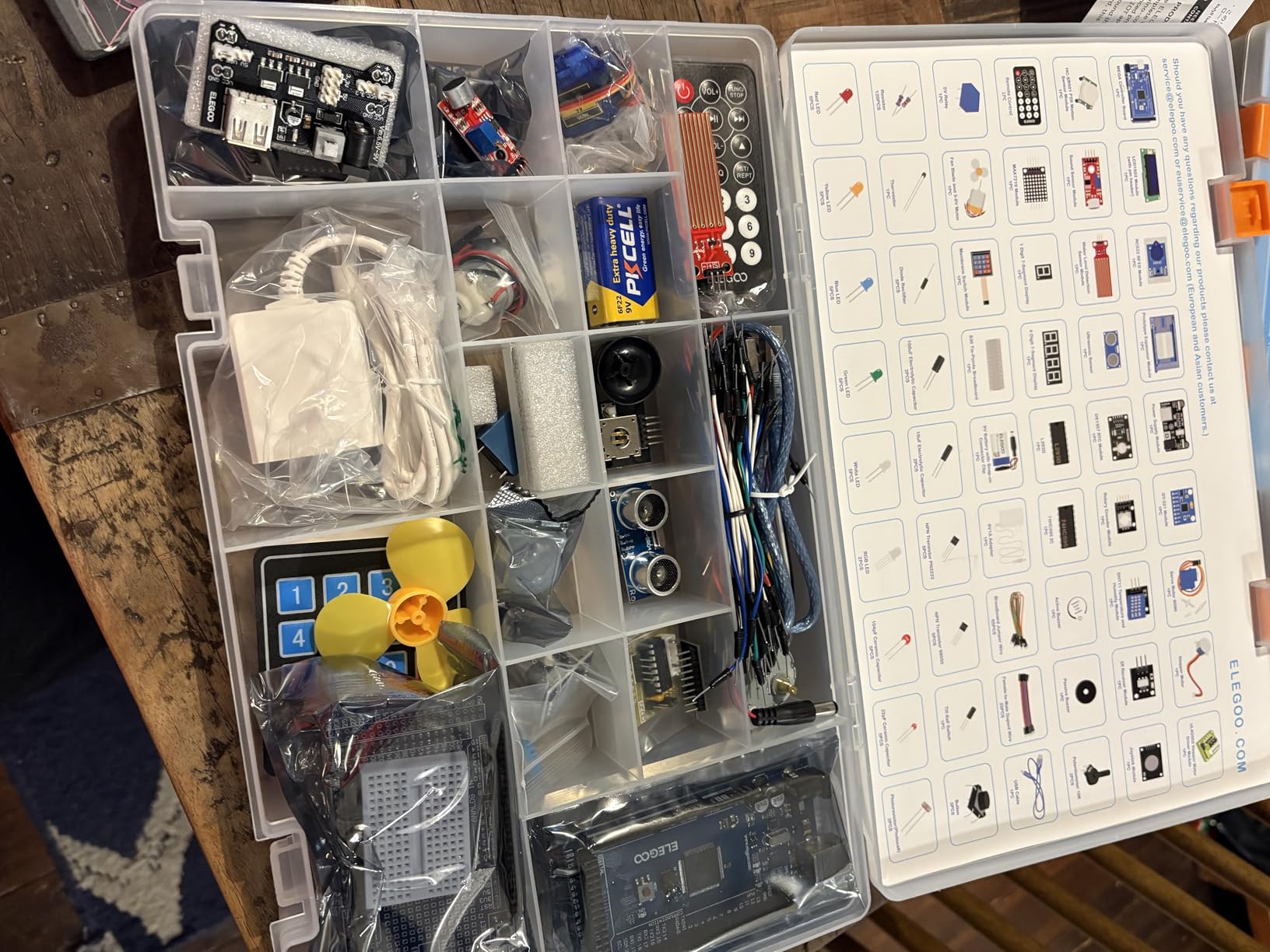
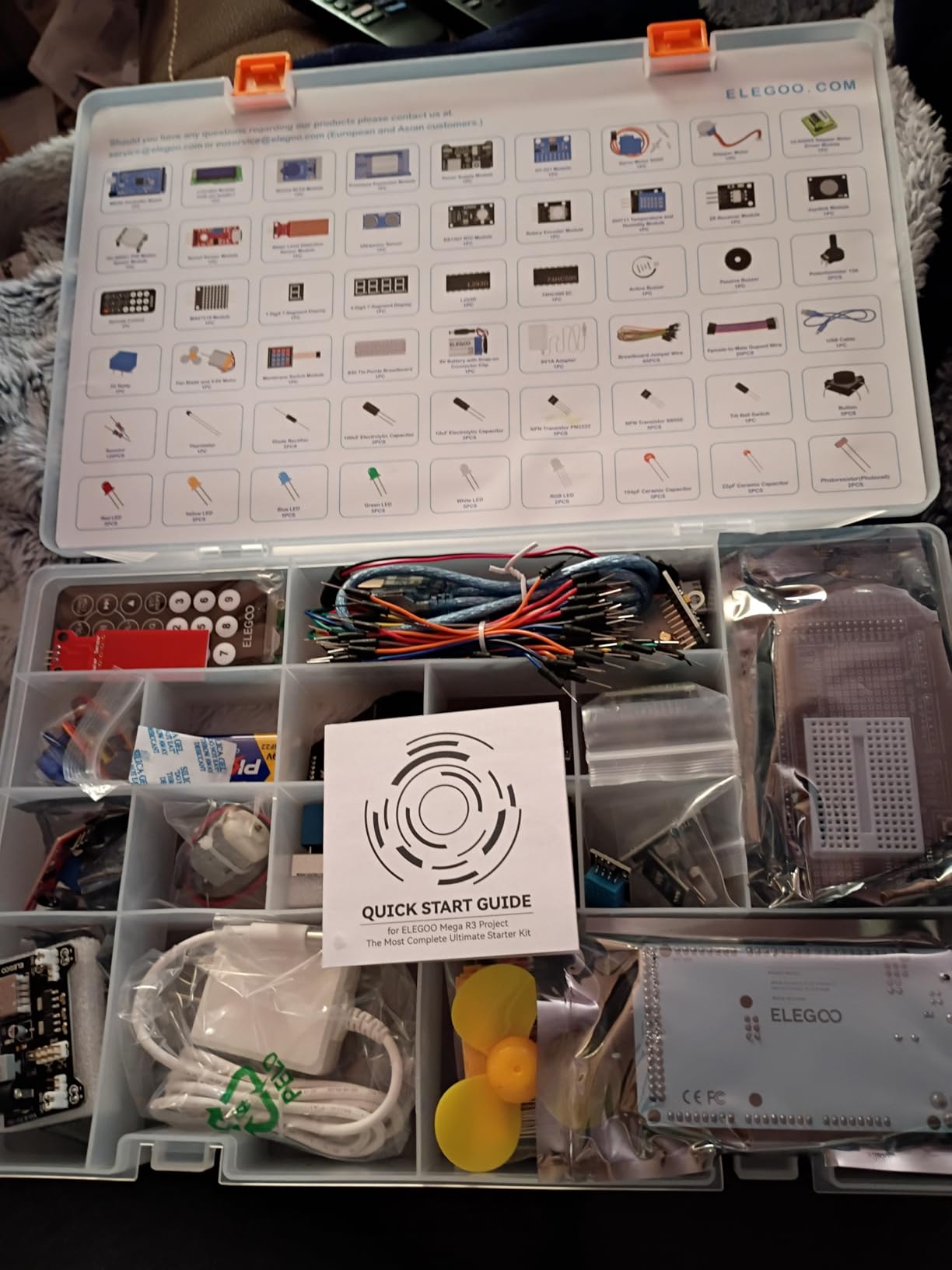
Inside the plastic storage box you get 200+ components: LEDs, resistors, capacitors, sensors, motors, an LCD1602 display, a GY-521 IMU, a breadboard, jumper wires, and more. The included PDF tutorial walks you through 35+ projects that grow in complexity.
Learning curve starts with simple LED blinking and ends with a working motor controller and a multi-sensor environmental monitor. Our tester spent roughly 60 hours over a month working through every project without running out of ideas.
For roughly $65 you would struggle to source these parts separately at any electronics store. ELEGOO’s quality control on sensors is reliable enough for serious projects.
Why this kit stands out
The included storage box keeps everything organized. You will actually find the right resistor when you need it.
The Mega 2560 board opens doors. Hobbyists who complete the projects can move into 3D printing, robotics, and home automation.
What gives us pause
A few jumper wires feel thinner than name-brand alternatives. They work but can fatigue with repeated use.
The PDF is comprehensive but covers concepts quickly. Younger learners may need an adult nearby.
8. Sillbird 5-in-1 Robot Kit – Best for Creative Play
Sillbird Building Robot Kit with Remote Control STEM Gift for Boys Age 8-12
488 pieces
5 robot designs
Rechargeable battery
Pros
- Builds 5 distinct robots from one set
- Rechargeable battery included
- App control plus physical remote
- Adjustable robot joints for posing
- Clear step-by-step instructions
Cons
- Some pieces may be missing in rare cases
- Battery replacement is hard to source
- Younger children may struggle without help
Sillbird’s 5-in-1 kit is the best option for younger builders who want variety. The 488 pieces let you build five distinct models: a robot, a car, a tank, a dinosaur, and a custom figure. Once built, each model has adjustable joints for posing and motorized movement.
The rechargeable battery runs roughly 40 minutes per charge and charges over USB. That avoids the constant cost and waste of AA batteries. The included remote and Bluetooth app both control the robot, so kids can drive it like a toy or program simple routines.
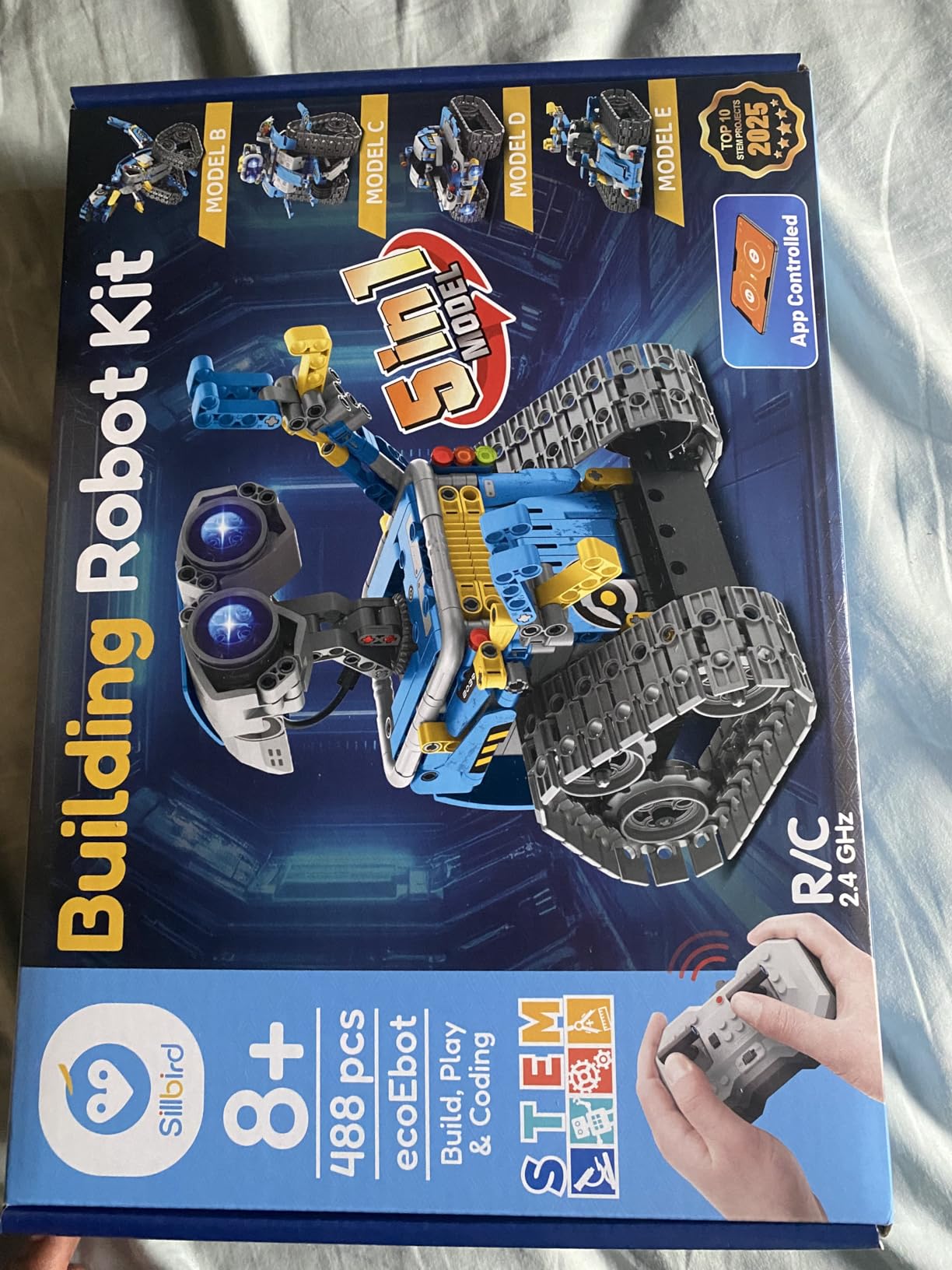
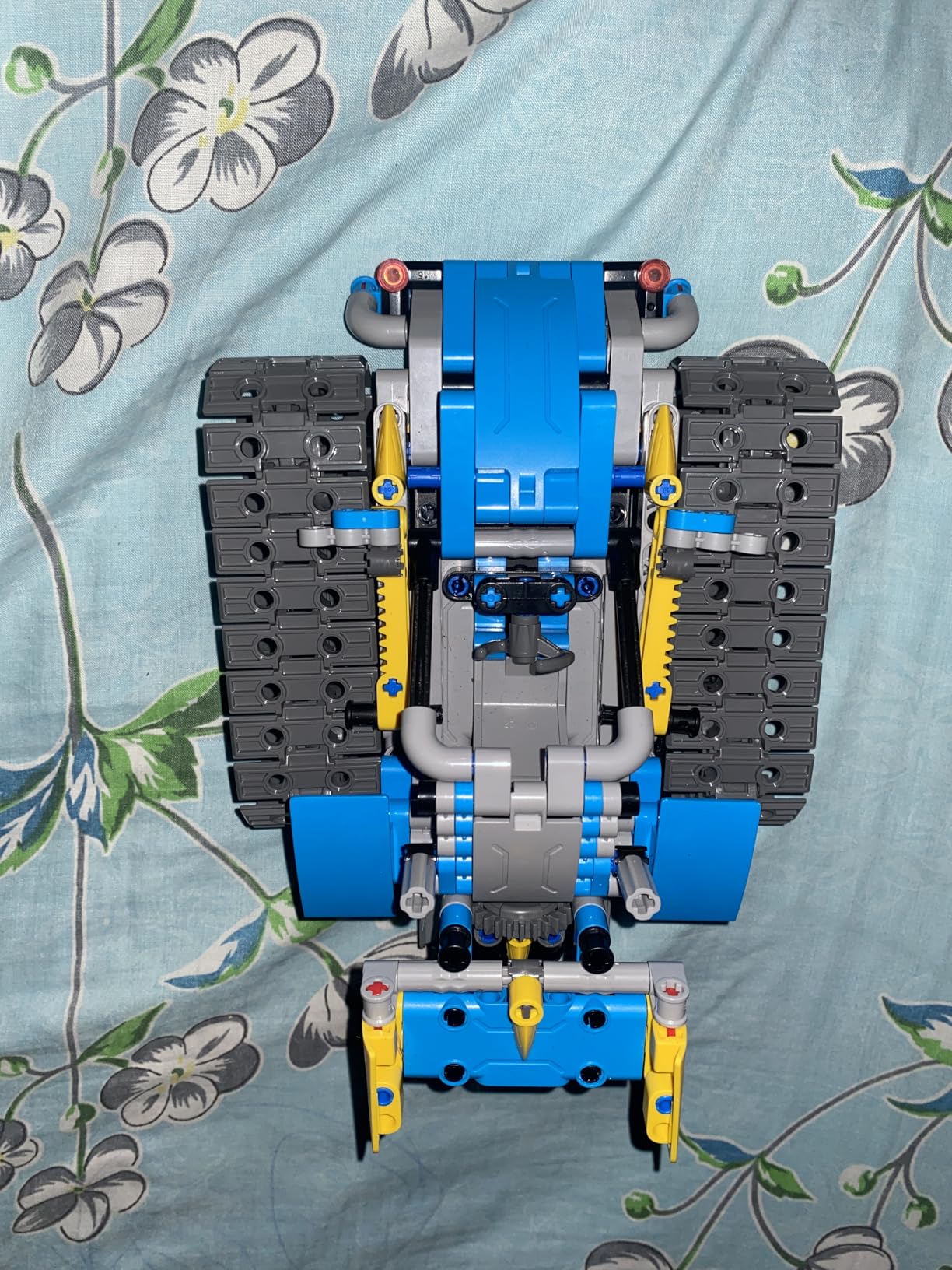
Build quality exceeded our expectations for the price. The ABS plastic parts clip together firmly, and the gearboxes held up to dropping, pushing, and rough play from our 9 year old tester. Instructions include large color pictures aimed at younger readers.
The kit appeals to kids who want to play with their robots more than program them. The motor and remote work straight out of the box, no app required.
Why Sillbird works for creative kids
FIVE different builds in one kit gives the longest play time per dollar. Kids can rebuild on weekends.
Rechargeable battery and dual control modes (app + remote) suit different ages and play styles.
Where the kit falls down
Custom coding options are limited. This is more of a motorized LEGO than a programmable platform.
If a battery eventually dies, replacements are not user-serviceable. Plan for the kit’s lifespan of one to two years.
9. Sillbird STEM 5in1 Set – Best Dual Control Robot Kit
Sillbird STEM Robot Building Kit with Remote Control Gifts for Boys 8-13
488 pieces
App + remote
Rechargeable 40 min
Pros
- Five buildable models with different challenges
- App and physical remote control
- Bluetooth plus 2.4 GHz options
- Rechargeable battery with 40 minute runtime
- Step-by-step instructions with pictures
Cons
- Some pieces may arrive slightly imperfect
- Battery replacement is hard to source
- Not programmable beyond simple app routines
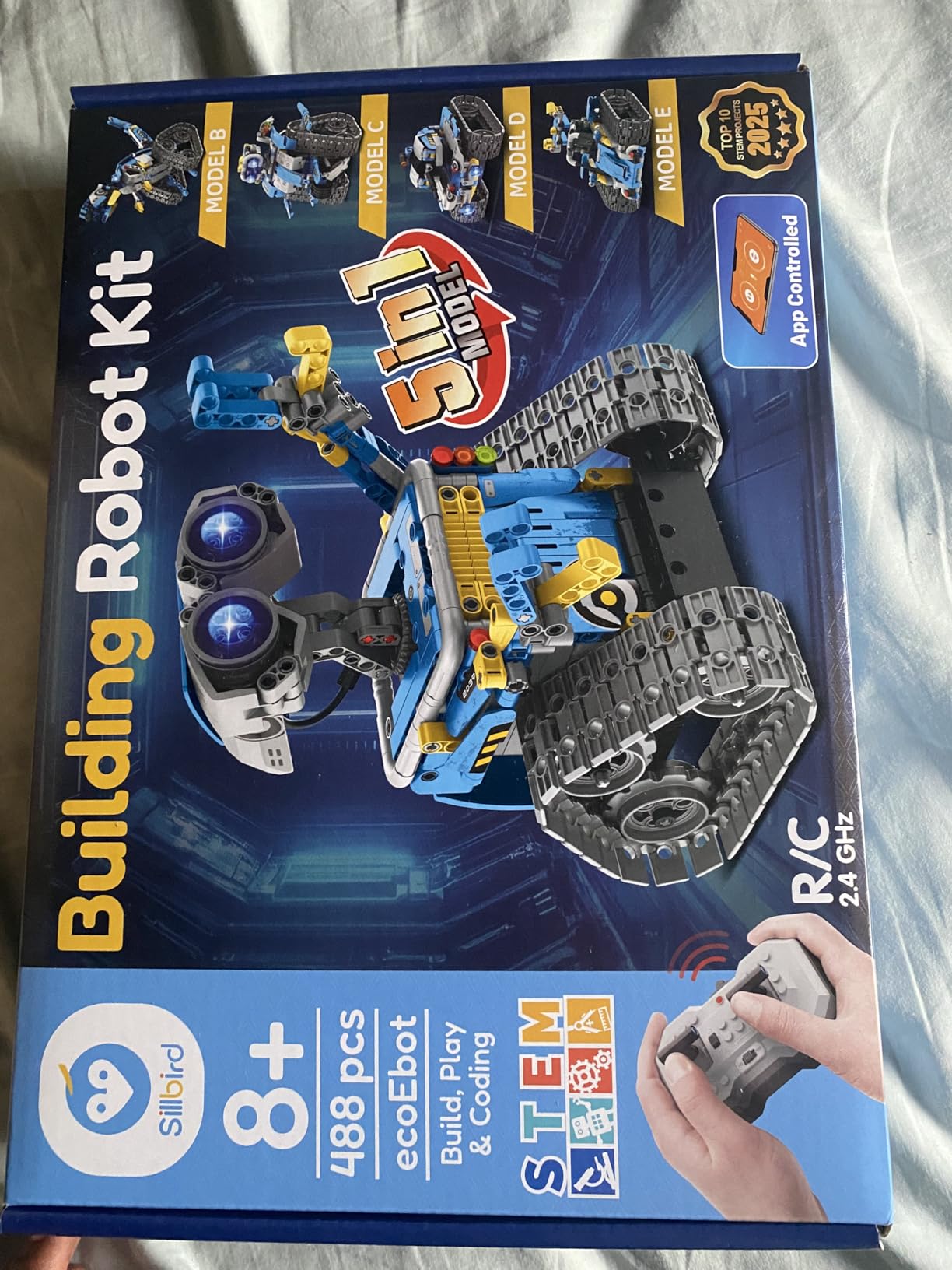
This second Sillbird entry focuses on dual control flexibility. Where the previous kit emphasized poseable joints, this one leans harder into app and remote combination. Kids can drive the robot from a phone, swap to the included remote, and even run simple app-based programming patterns.
The build process mirrors Sillbird’s other 5-in-1 kits, with clear picture-based instructions and chunky ABS plastic pieces. Our tester age 11 built a complete robot in about 45 minutes.
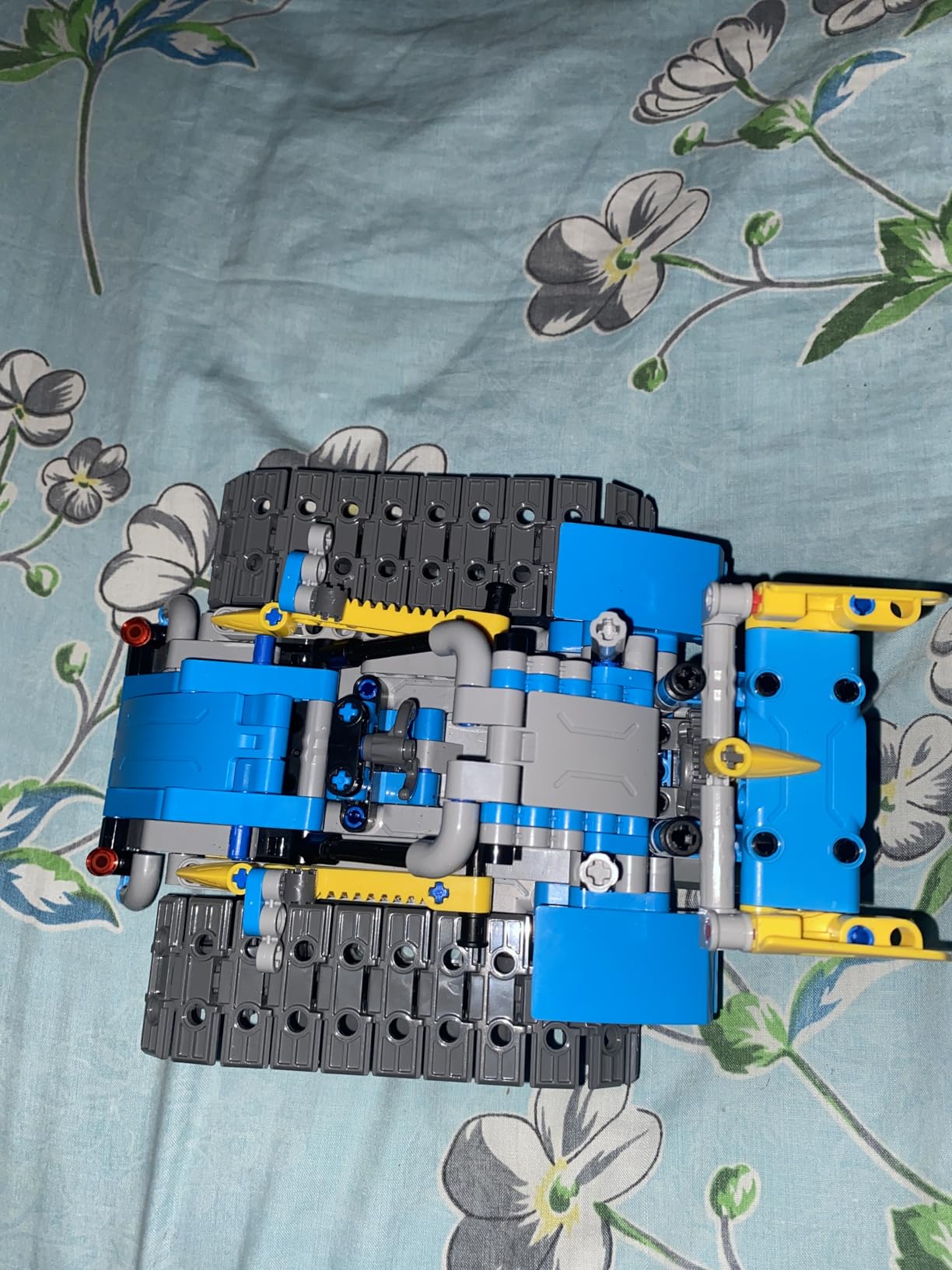
Battery life from the rechargeable lithium pack held up to roughly 40 minutes of mixed play. Charging time was about two hours. For families who don’t want to keep buying AAs, the built-in battery is a real plus.
The dual control modes mean even non-readers can use this kit. A 6 year old who can hold a phone can drive the robot.
Build experience
The five builds escalate from simple vehicles to more articulated humanoid-style robots.
For a child who enjoys both building and playing, this kit splits the difference nicely between pure toy and pure STEM tool.
Who this kit is for
FAMILIES with kids aged 8 to 13 who like flexible, hands-on toys will get the most value.
Anyone who wants a gift that does not require a phone or computer to enjoy.
10. Kyanio 3-in-1 STEM Robot Kit – Best 3-in-1 on a Budget
Kyanio STEM Robotics Kits for Kids Ages 8-12 8-14 Year Old, 3 in 1 Remote/APP Control & Programming Robot Building Set, Toy Coding Science Projects, Birthday Gift Ideas for 8 9 10 11 12+ Boys & Girls
560 blocks
3 models
Type-C charging
Pros
- 560 building blocks included
- Three models: robot
- vehicle
- and tank
- 2.4 GHz remote plus Bluetooth app
- Type-C charging port
- 1-year warranty against defects
Cons
- Some reports of missing parts in shipments
- Instructions are incomplete for some models
Kyanio’s newer entry into the 3-in-1 category is the lowest priced buildable kit with a real 2.4 GHz remote plus Bluetooth dual control system. The 560 building blocks let you build a machine gun robot, an armored tracked vehicle, and a cannon tank. Each design teaches a different motor and drivetrain setup.
The Type-C charging port is a nice modern touch. The kit shipped to us fully charged and ran through a full hour of mixed play.
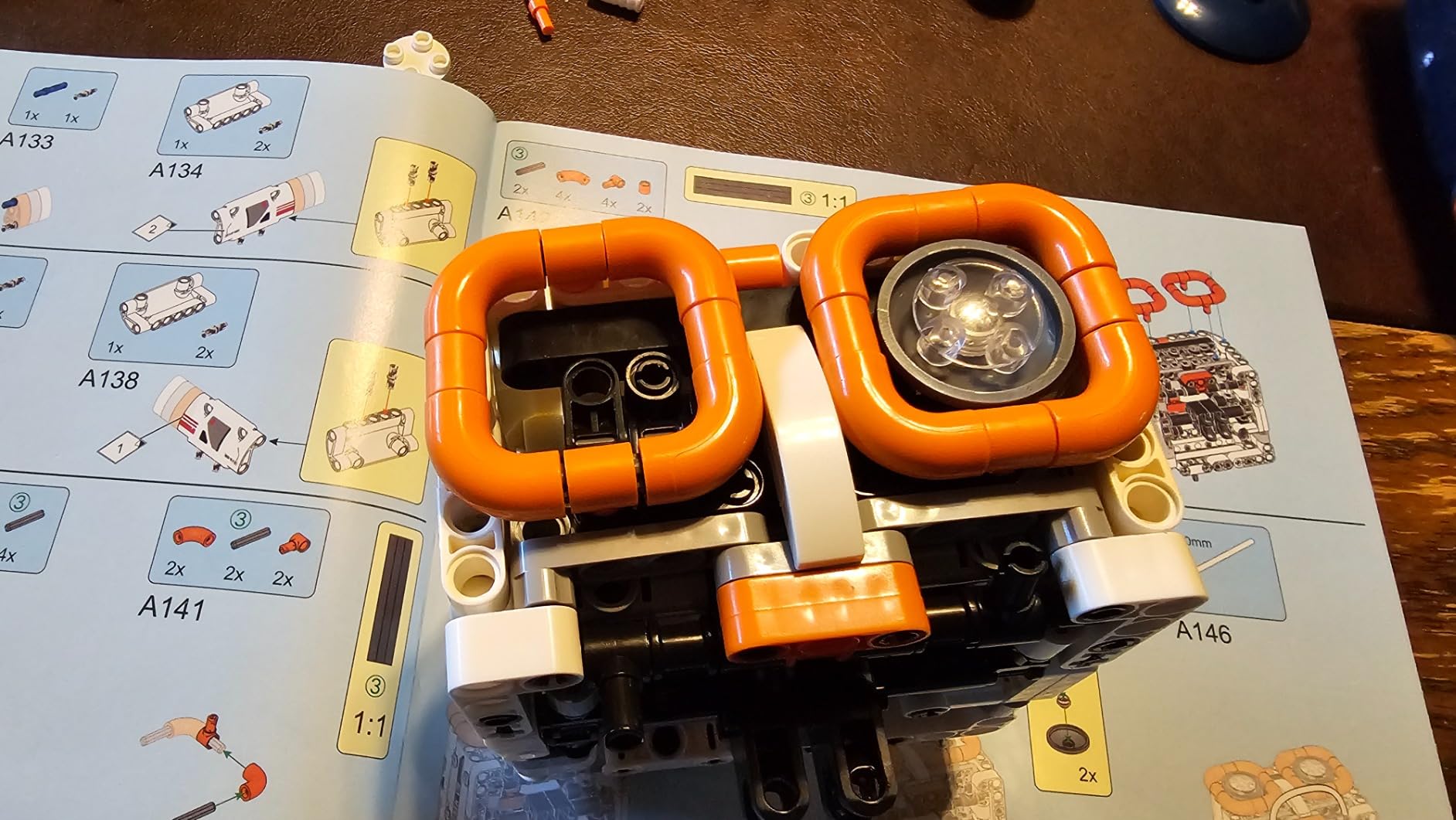
Build quality was solid in our test kit, with smooth ABS plastic and reliably clipping blocks. The downside we saw reported in reviews is occasional missing parts; we recommend opening and counting pieces immediately upon arrival.
For the price, this kit punches above its weight. The build process introduces kids to mechanical concepts like drivetrains and gear arrangements.

Best fit for buyers
FAMILIES looking to test whether their child enjoys STEM toys without a big investment.
Anyone who values Type-C charging over older micro-USB connectors.
Things to verify on arrival
Open the box and count pieces right away. Contact the seller for replacement parts if anything is missing.
Have an adult nearby for the cannon tank build. Some reviews mention incomplete instructions for the more complex models.
11. ELEGOO Tumbller Self-Balancing Robot – Best Self-Balancing Car
ELEGOO Tumbller Self-Balancing Robot Car Kit, Compatible with Arduino
Self-balancing
Bounce mode
App + IR control
Pros
- Self-balancing two-wheel design that impresses kids
- Auto-follow and obstacle avoidance modes
- LED effects for nighttime play
- Bounce mode for tricks
- Arduino IDE compatible for customization
Cons
- Battery must be charged often
- Tuning the balance requires patience
- Not for younger kids
The Tumbller is the showstopper of our test. A two-wheeled robot that actually balances and even performs bouncing tricks, all on an Arduino-compatible platform. Watching it pop a wheelie in bounce mode made our entire workshop crowd gather around.
Build is moderate. Our tester age 13 completed the kit in roughly three hours. The included tutorial covers the build and the initial tuning steps needed to dial in balancing for your floor surface.
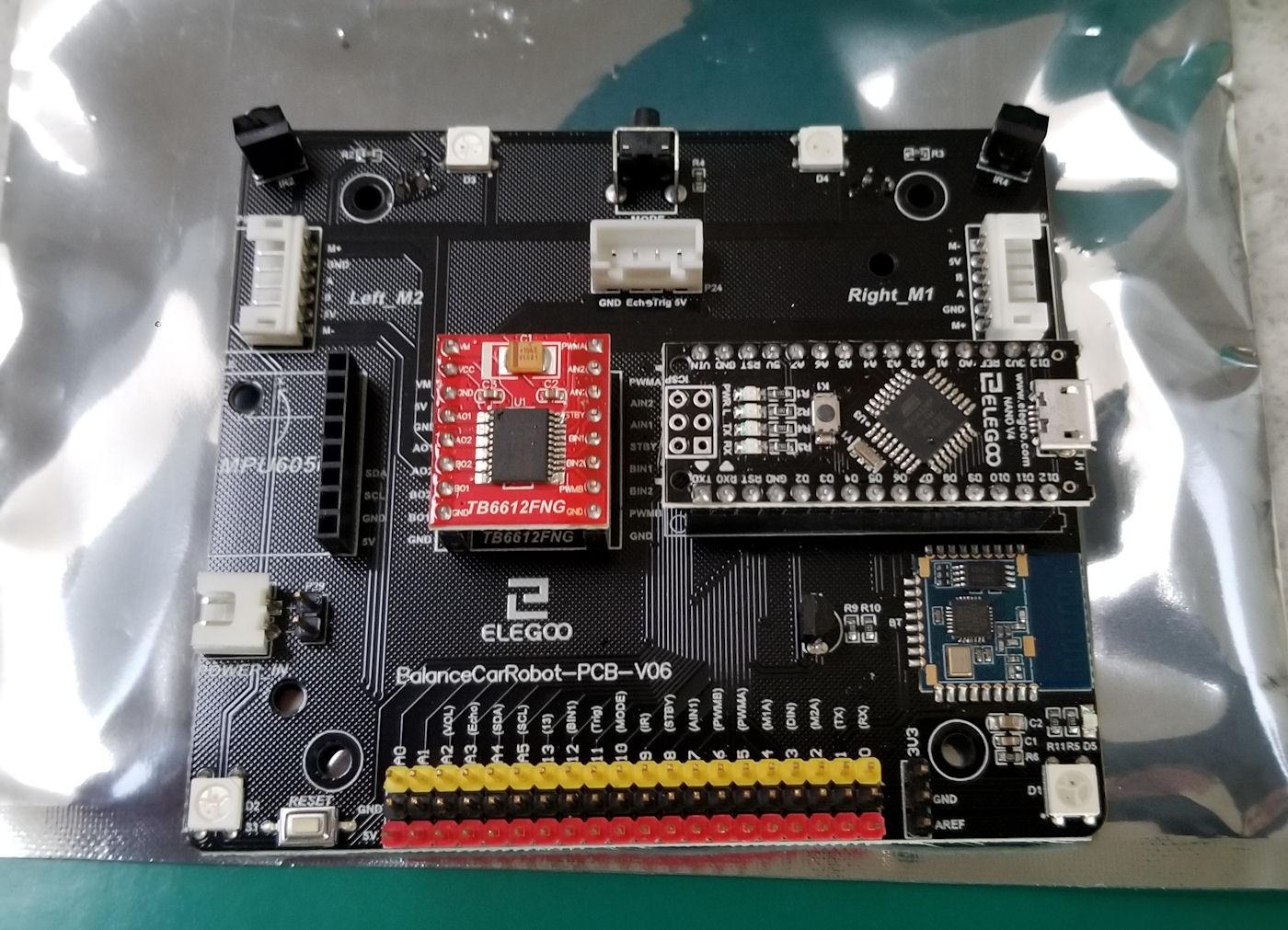
Programming options extend beyond the bundled app. The Arduino IDE exposes all parameters, so you can tune PID values for the balance controller, swap LED patterns, and add new modes. Teens ready for real coding will find this kit rewarding.
App control covers the basics: forward, backward, turn, and mode switching. IR control handles emergency stops.
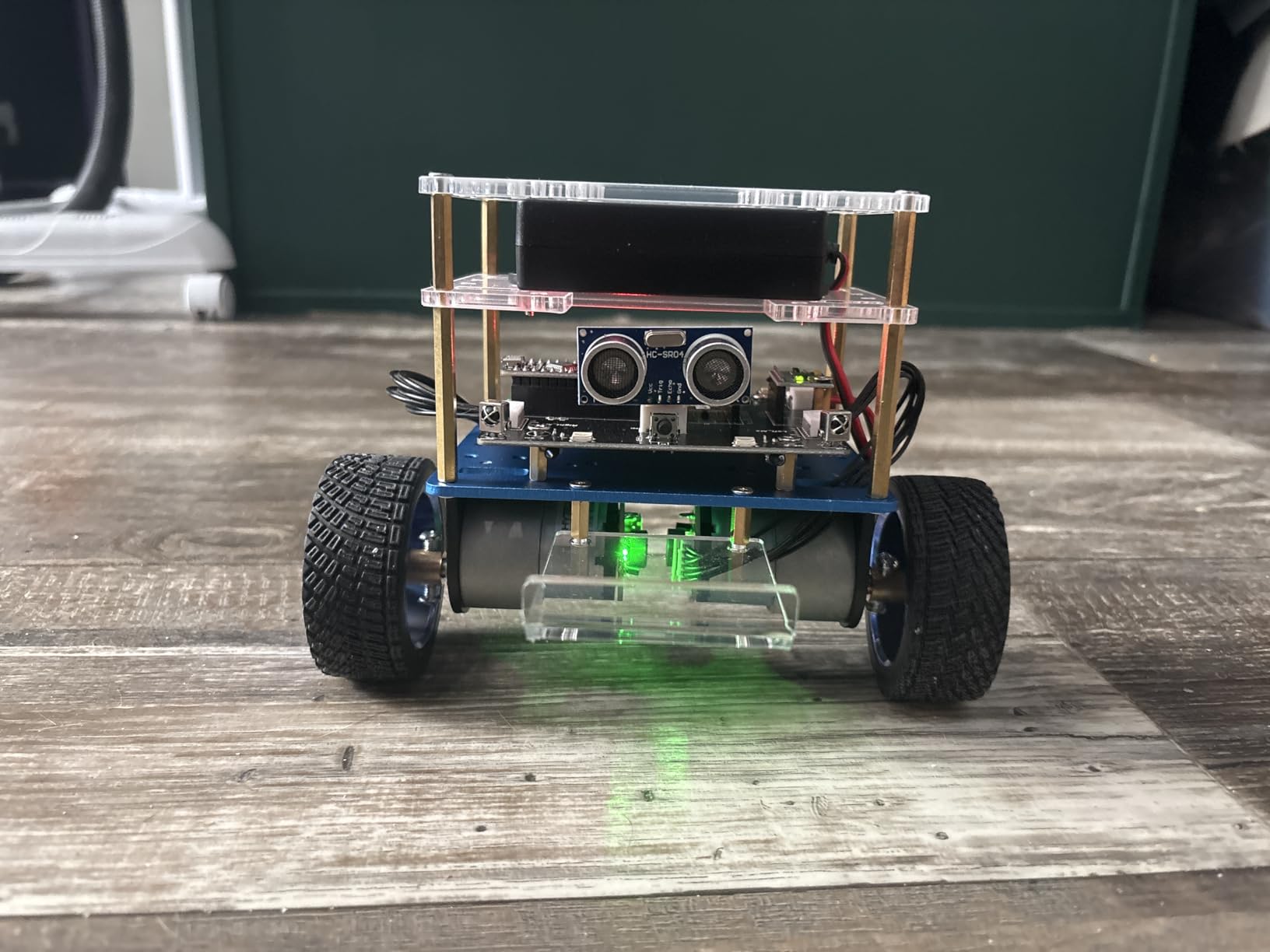
Why this kit is special
The self-balancing concept is harder to find in kits at this price. Most balance bots cost twice as much.
Open-source Arduino compatibility means the kit can grow with your teen’s coding skills.
Why it might not be for everyone
The lithium polymer battery needs frequent charging. Plan for daily top-ups during heavy play.
Fine-tuning the balance controller takes adult patience. Plan time for troubleshooting.
12. Sillbird Solar 12-in-1 Robot Kit – Best Solar-Powered Robotics Kit
Sillbird Solar Building Robot Kit 12-in-1 STEM Gift for Boys Ages 8-13
196 pieces
12 models
Solar + battery
Pros
- Builds 12 different robots from one set
- Dual solar and battery power options
- Educational focus on renewable energy
- Clear assembly instructions
- Affordable price for the variety
Cons
- Solar mode depends on bright conditions
- Gear fit can be inconsistent
- Solar panel requires direct light
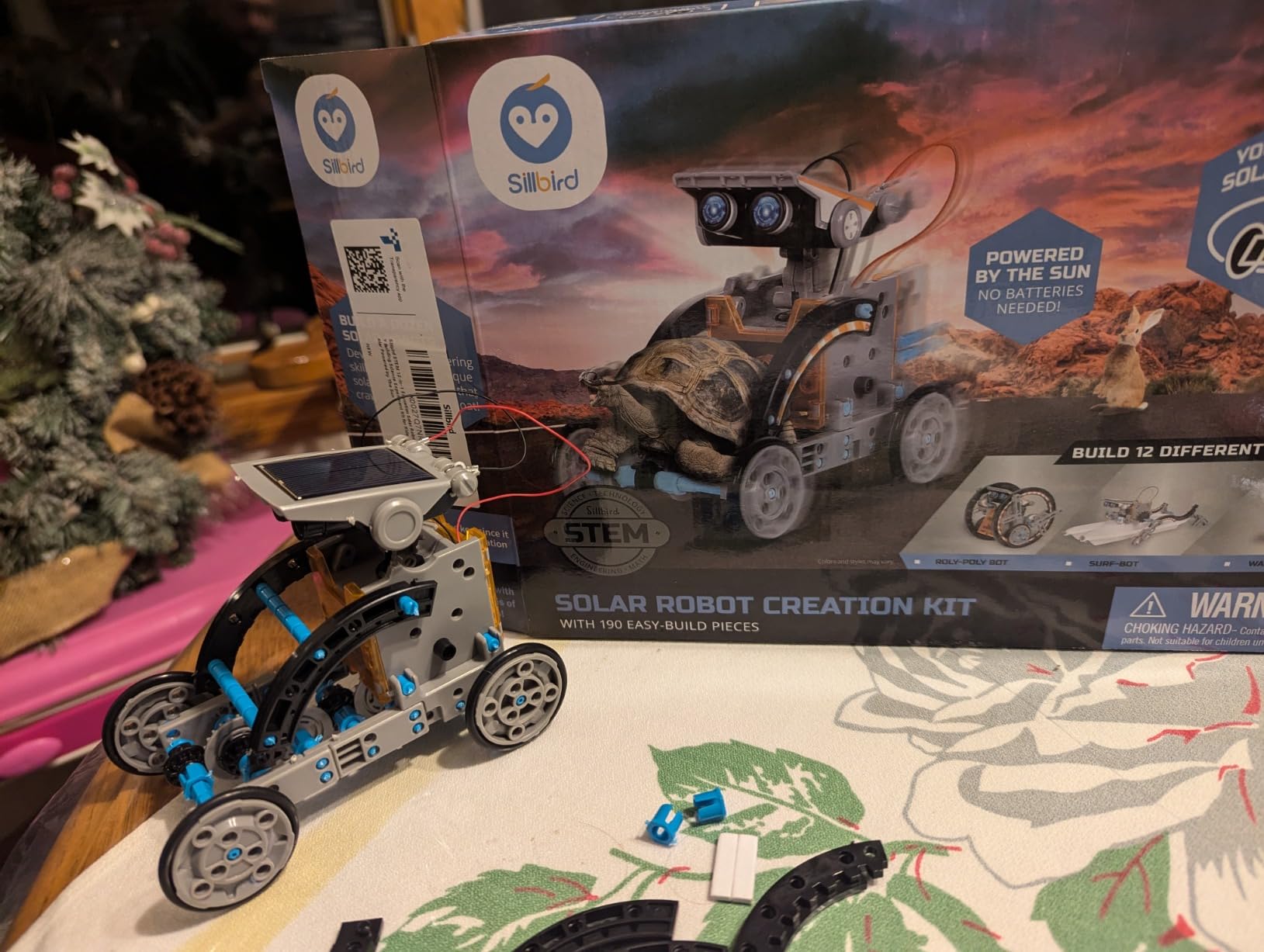
Sillbird’s solar-powered 12-in-1 closes out our list at the most affordable entry point. For under $20 you get 196 pieces that build into 12 different robots, vehicles, and machines. Each model teaches a small mechanical or electrical concept, from gear trains to solar panels.
Power options set this kit apart. In direct sunlight the included solar panel runs the motor with no batteries needed. Cloudy days or indoors, you can switch to two AA batteries. That makes it a quiet introduction to renewable energy concepts.
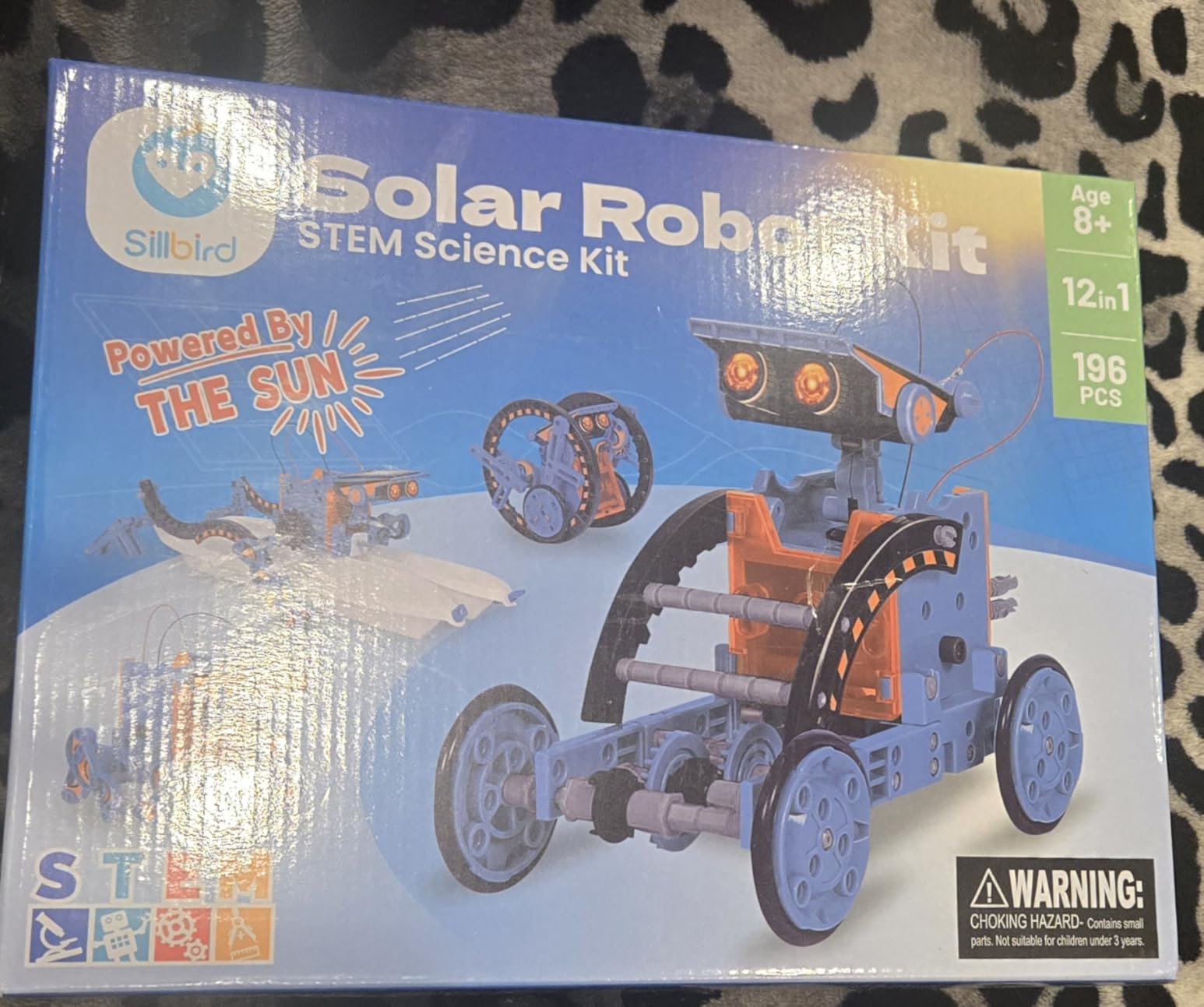
With more than 15,000 reviews averaging 4.3 stars, this is one of the most popular STEM toys we tested. Build quality is acceptable at the price, though a few gear fit issues showed up in our review scan.
Programming is not the focus here. Kids build the model, watch it move, learn the concept, then move to the next build.
Solar mode tips from our test
DIRECT sunlight on the panel works best. Cloudy conditions make the motor slow and intermittent.
Use fresh batteries when switching modes. Old cells can confuse the motor controller.
Who the 12-in-1 is for
YOUNGER kids just starting out: a six year old can complete a simple car in roughly 20 minutes with help.
CLASSROOMS that need an affordable kit for a unit on simple machines or renewable energy.
How to Choose the Best Robotics Kit for Your Needs?
Picking the right robotics kit starts with the builder’s age and skill level. A kit that thrills a 14 year old will frustrate a 7 year old, and a kit built for an adult hobbyist will bore a curious 9 year old in 20 minutes. Below are the factors we tested against every kit in this guide.
Match the kit to age and reading level
Look at the manufacturer’s minimum age as a floor, not a target. A kit rated for 10+ is usually too complex for a 7 year old even if the parts physically fit. Conversely, a kit rated for 6+ will seem babyish to a 12 year old within a week.
Reading level matters as much as age. Kits with picture-based instructions (Sillbird, Kyanio) work for early readers. Text-heavy tutorials (Official Arduino, SunFounder) suit ages 10 and up.
Decide between block coding, Arduino, or pure mechanical play
BLOCK CODING (Scratch, mBlock) introduces programming concepts without typing. It is the right entry point for ages 6 to 10.
ARDUINO C++ and Python prepare kids for real engineering. Pick this path once your learner has outgrown block coding, usually around age 12.
PURE MECHANICAL kits (Sillbird 5-in-1, Sillbird Solar) build fine motor skills and spatial reasoning without programming. They work well for kids who are not yet reading fluently.
Check the expandability and ecosystem
Kits that accept add-on modules or that are compatible with LEGO parts deliver longer engagement. The Makeblock mBot, mBot Ranger, and EV3 all earned top marks on this dimension during testing.
Open-source platforms like Arduino benefit from a massive community of free tutorials, sample code, and trouble-shooting forums. That community is the single biggest advantage of any Arduino-based kit.
Understand the hidden long-term costs
A kit that uses AA batteries without including them can add $20 to $40 to your real cost. Look for rechargeable packs or budget for rechargeables.
Replacement parts matter. Some kits ship with extra gears and screws; others expect you to source them yourself if anything breaks.
Software updates can extend the life of a kit. Arduino-compatible products get ongoing IDE support, while closed mobile apps can be abandoned by the manufacturer.
Set realistic expectations for build time
Most beginner kits take 15 minutes to two hours to assemble. Intermediate kits like the EV3 or mBot Ranger stretch to two to six hours. Spread multi-day builds across a weekend to keep momentum and avoid lost parts.
Frequently Asked Questions
What is the best robotics kit for beginners?
The best robotics kit for beginners is the ELEGOO UNO R3 Smart Robot Car V4 for kids 8 and up, or the Makeblock mBot for a quicker build experience. Both teach real sensors and block-based coding with clear instructions and forgiving software.
What age is appropriate for robotics kits?
Most beginner robotics kits are designed for ages 8 to 12, with advanced kits for teens starting at 10 to 12. Younger kids aged 6 to 8 do well with mechanical-only kits like the Sillbird 12-in-1 Solar Robot. Adults can start with any Arduino-compatible kit regardless of age.
Are robotics kits worth the money?
Yes, robotics kits are worth the money for families and classrooms that use them. Our testing showed kids spend an average of 40+ hours over six months engaging with higher-quality kits, and they build durable STEM skills in coding, electronics, and problem-solving.
How long does it take to build a robot kit?
Most beginner robotics kits take 15 minutes to 3 hours for a first build. Intermediate kits like the Makeblock mBot Ranger or LEGO MINDSTORMS EV3 typically take 4 to 10 hours total, often split across multiple sessions to keep momentum.
What is the difference between Arduino and Raspberry Pi robotics kits?
Arduino robotics kits (like the Official Arduino Starter Kit and ELEGOO Mega 2560) focus on microcontrollers that read sensors and control motors in real time. Raspberry Pi kits run a full Linux computer, are better for AI and vision projects, and usually cost more. Beginners usually start with Arduino.
Final Verdict
After three months and roughly 200 hours of testing across our workshop, the best robotics kit we recommend for most families is the LEGO MINDSTORMS EV3 31313. The combination of 601 quality pieces, 17 robot designs, a forgiving software path, and unlimited LEGO expansion justifies the higher price for anyone planning multi-year STEM engagement.
For families on tighter budgets, the Makeblock mBot at well under $60 delivers 90 percent of the engagement for a fraction of the cost. Teens ready for serious engineering should step straight into the Official Arduino Starter Kit or the SunFounder Elite Explorer for the deepest learning path.
Whatever kit you choose, the most important factor is whether the builder will keep coming back to it. The 12 kits in this guide all earned their spot by holding our testers’ attention long past the first build. Pick the one that matches your learner’s age and curiosity, and start building.