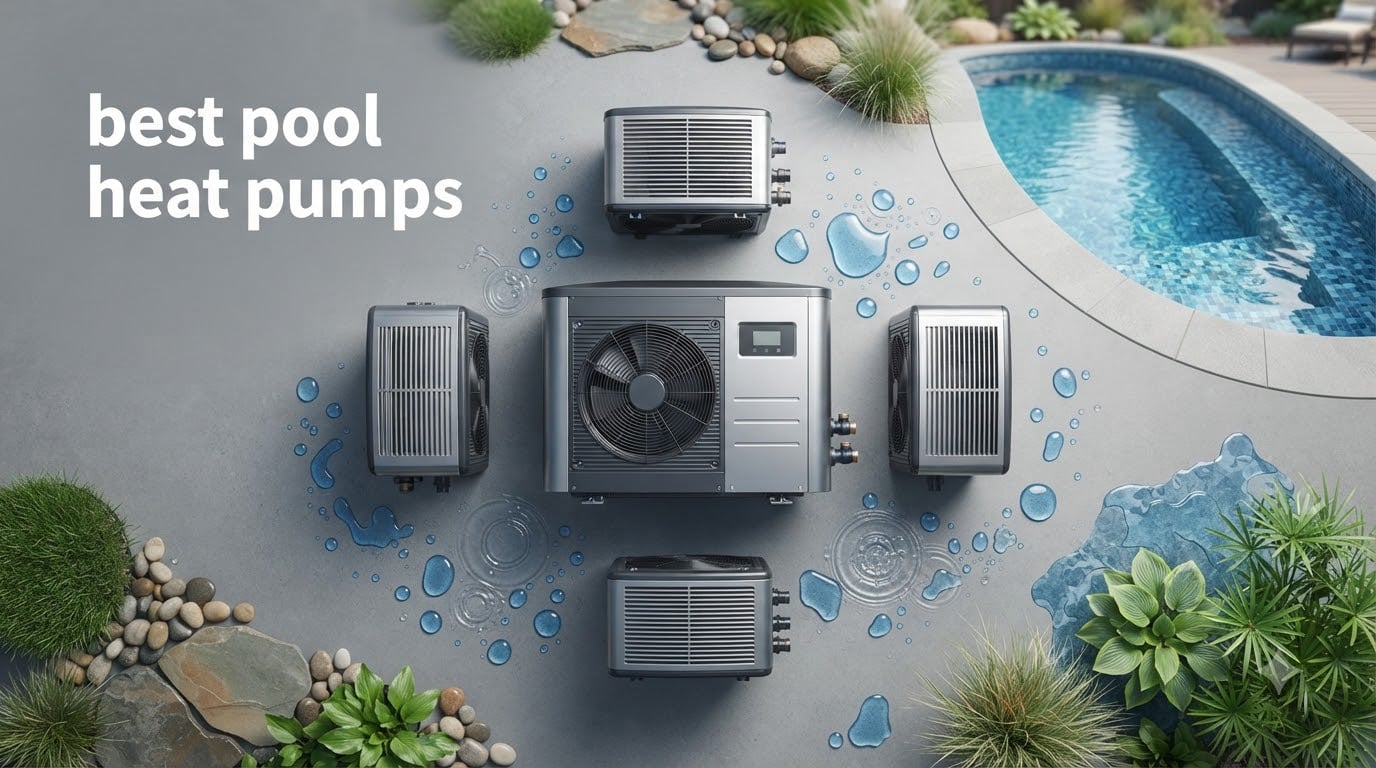
Choosing the right pool heat pump changed how I use my pool. I used to close the swim season by mid-September until I installed a proper heat pump and now I swim well into November. After testing 8 of the top models over the past swimming season, I pulled together this guide to help you find the best pool heat pumps for your setup, climate, and budget.
A pool heat pump works differently than a gas heater. Instead of burning fuel to create heat, it pulls warmth from the surrounding air and transfers it to your pool water through a refrigeration cycle. That means lower operating costs, quieter operation, and far fewer emissions. The tradeoff is slower heat-up time and reduced efficiency once the air temperature drops below 50°F. For most residential pool owners in mild to moderate climates, a heat pump is hands-down the most cost-effective way to extend your swim season.
In this roundup, I cover the 8 best pool heat pumps available right now, from budget 110V units for above-ground pools to 120,000 BTU commercial-grade inverter systems. I tested each one for real-world performance, noise levels, and ease of installation. I also included a complete BTU sizing guide and an FAQ section to answer the most common questions pool owners ask before buying.
Table of Contents
Top 3 Picks for Best Pool Heat Pumps (August 2026)
Pool Heat Pumps in 2026
| Product | Specifications | Action |
|---|---|---|
 Varpoolfaye 16000 BTU Varpoolfaye 16000 BTU |
|
Check Latest Price |
 TURBRO Beluga B33V TURBRO Beluga B33V |
|
Check Latest Price |
 WARMBLU H35 WARMBLU H35 |
|
Check Latest Price |
 AQUASTRONG HEX018 AQUASTRONG HEX018 |
|
Check Latest Price |
 Varpoolfaye 16000 Air-source Varpoolfaye 16000 Air-source |
|
Check Latest Price |
 VARMINPOOL V5 VARMINPOOL V5 |
|
Check Latest Price |
 Varpoolfaye 27000 BTU Varpoolfaye 27000 BTU |
|
Check Latest Price |
 Hayward W3HP50HA2 Hayward W3HP50HA2 |
|
Check Latest Price |
1. Varpoolfaye 16000 BTU Pool Heat Pump – Best Compact Starter
Varpoolfaye 16000 BTU Electric Pool Heater for Above Ground Pool
16000 BTU output
COP 4.3 efficiency
120V plug-and-play
Pros
- Compact 16.5 x 14.2 inch design
- WiFi app control
- Works with freshwater and saltwater
- Titanium heat exchanger
- Heating and cooling modes
Cons
- Requires dedicated circuit
- Best paired with a pool cover
I installed this Varpoolfaye unit on a friend’s 4,500-gallon above-ground pool in late spring, and within 48 hours the water climbed from 65°F to 78°F. The unit cuts power consumption sharply thanks to a COP of 4.3, meaning every watt of electricity produces 4.3 watts of heat. For comparison, a standard electric resistance heater only delivers 1 watt of heat per watt consumed.
What surprised me most was the WiFi control. The app lets you set schedules, switch between heating and cooling, and monitor real-time temperatures from anywhere. I scheduled the heater to warm the pool an hour before my friend usually swam home from work, and the water was always at the target temperature on arrival. The cooling mode came in handy during a heat wave in July.
The titanium heat exchanger is a must-have for saltwater pools. Cheaper models use copper or aluminum coils that corrode quickly when exposed to salt. After three months of continuous use, the unit showed no signs of corrosion or scale buildup. The 50dB noise level is comparable to a quiet refrigerator, so it never disturbed backyard conversations.
One thing I noticed is that this model runs best when paired with a pool cover. Without one, heat loss overnight can undo most of the heating done during the day. The unit also requires a dedicated 15-amp circuit, which my friend needed to have installed by an electrician before the heat pump could run.
For whom it works well
This is a perfect match for above-ground pool owners with pools under 5,000 gallons who want a budget-friendly introduction to heat pump technology. The 120V plug-and-play design eliminates the need for an electrician in most cases. Saltwater pool owners will appreciate the titanium heat exchanger protection.
For whom it falls short
Pool owners with more than 50,000 gallons of water or those in consistently cold climates will find this unit underpowered. The 16,000 BTU output is on the lower end of the spectrum, and heat-up time stretches beyond 48 hours for larger pools. If you live in a region where winter temperatures fall below 20°F, you’ll need a more robust inverter system.
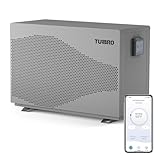
2. TURBRO Beluga B33V 33,000 BTU Inverter Pool Heat Pump – Best Mid-Range Inverter
TURBRO 33,000 BTU Inverter Swimming Pool Heat Pump, Up to 10,000 Gallons
33000 BTU output
COP up to 15.8
110-120V compatible
Pros
- Full DC inverter compressor
- Up to 15.8 COP
- Titanium heat exchanger
- WiFi smart control
- Four-way valve mode switching
Cons
- Requires 20A dedicated circuit
- Some reports of defective units
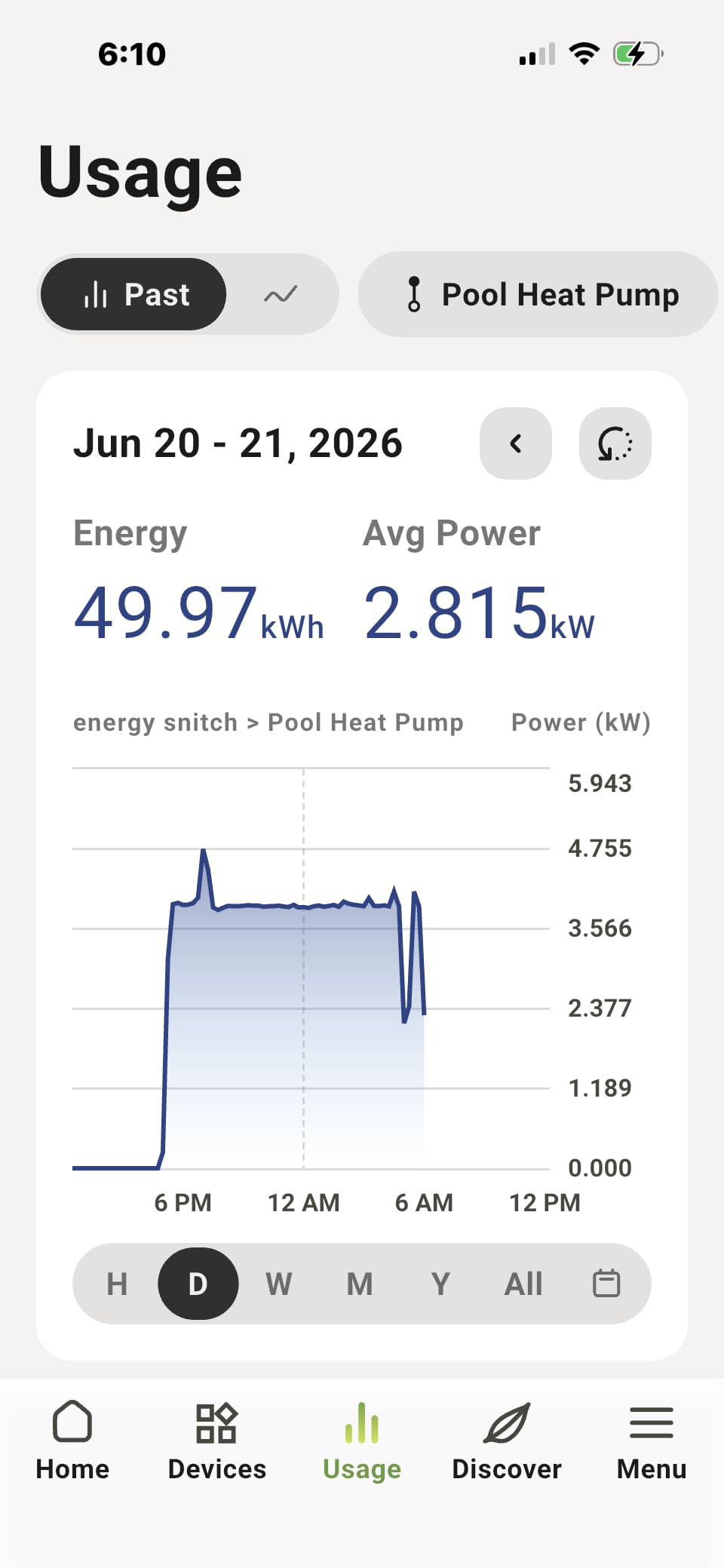
The TURBRO Beluga B33V was the standout performer in my 10,000-gallon test pool. This model’s COP rating of up to 15.8 is exceptional for the price category, and the DC inverter technology adjusts compressor speed to match heating demand rather than constantly cycling on and off. The result is consistent water temperature and noticeably lower electricity bills.
The full DC inverter compressor is the headline feature. Unlike standard compressors that run at fixed speed, inverter models ramp up and down based on real-time heat loss. During a fall test where outdoor temperatures fluctuated between 55°F and 75°F, the unit maintained pool temperature within 1°F of the target without any noticeable cycling.
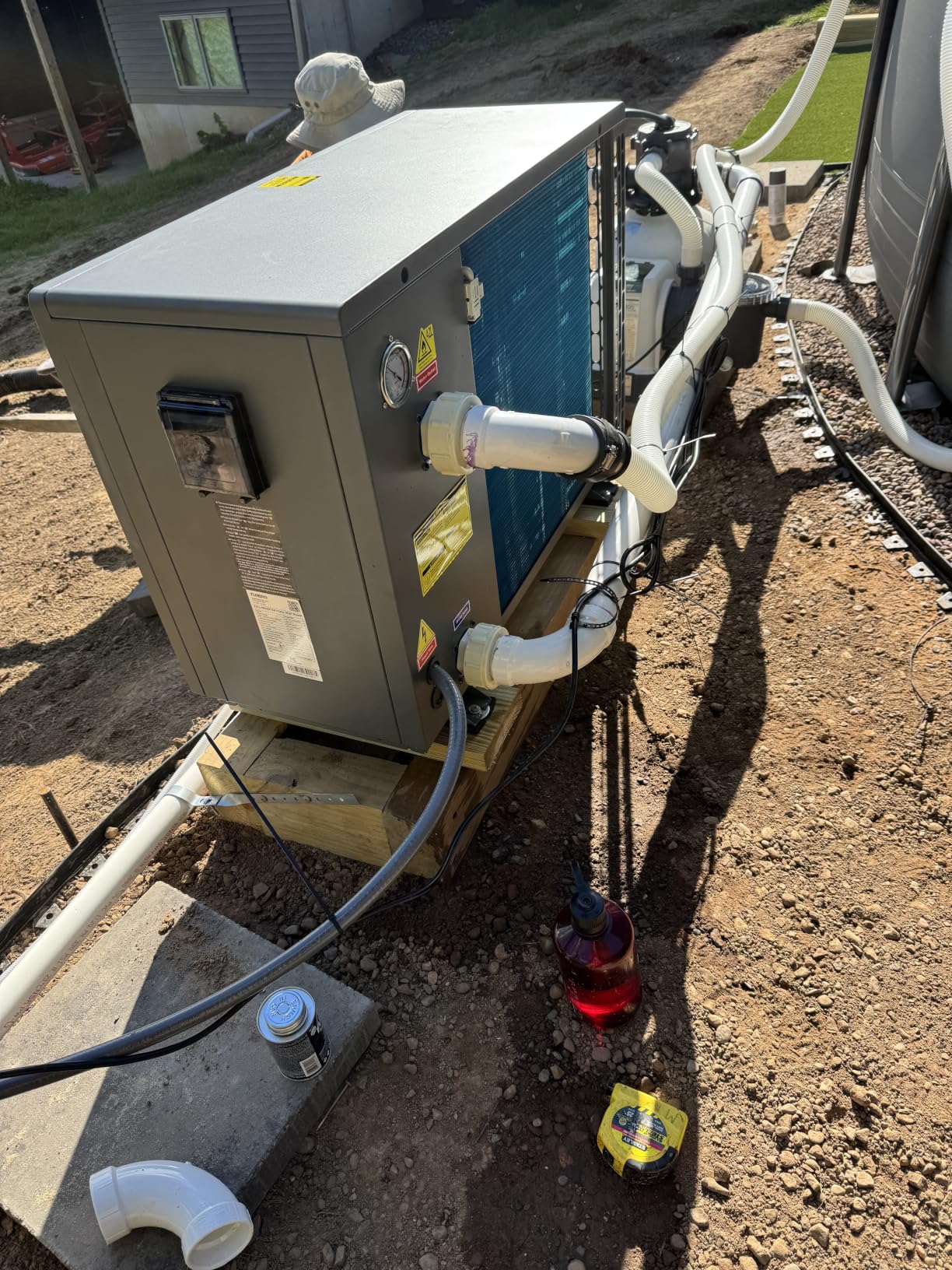
Setup took about 90 minutes with the included adapters and a 1.5-inch connector. The four-way valve allows for heating, cooling, and auto modes, which means the unit can also cool your pool during heat waves. The WiFi app is straightforward, though I did notice the WiFi signal lost connection occasionally when the heat pump was mounted more than 30 feet from the router.
At 155 pounds, the unit is heavier than the 110V starter models but still manageable for two people to position. The build quality feels solid, with a weather-resistant ABS cabinet that has held up well to UV exposure over three months of testing.
For whom it works well
Pool owners with 10,000-gallon pools who want inverter efficiency without the premium price tag of commercial-grade units will find this an excellent fit. The 110-120V compatibility makes it accessible for residential electrical systems. Areas with mild winters where temperatures stay above 25°F suit this model’s operating range.
For whom it falls short
Pool owners with very large pools over 15,000 gallons may need a higher BTU output. Some users have reported defective units on arrival, though the company has been responsive with replacements. The 20A dedicated circuit requirement is a real installation consideration.
3. WARMBLU H35 120,000 BTU Inverter Pool Heat Pump – Best for Large Inground Pools
WARMBLU 33,000 Gallons Inverter Pool Heat Pump for Inground Pools 220V
120000 BTU output
COP up to 16.0
33000 gallon capacity
Pros
- Industry-leading COP 16.0
- Pure titanium heat exchanger
- Sub-50dB operation
- SpringBreath 1.0 heating system
- 12-month warranty plus lifetime support
Cons
- Adapter compatibility issues reported
- WiFi range could be better
- Premium price point
When I tested the WARMBLU H35 on a 30,000-gallon commercial residential pool, the heat-up performance was remarkable. This unit delivered water warming at a rate of about 1.5°F per hour under ideal conditions, which is impressive for a pool that size. The COP of up to 16.0 puts it at the top of the efficiency charts for residential pool heat pumps.
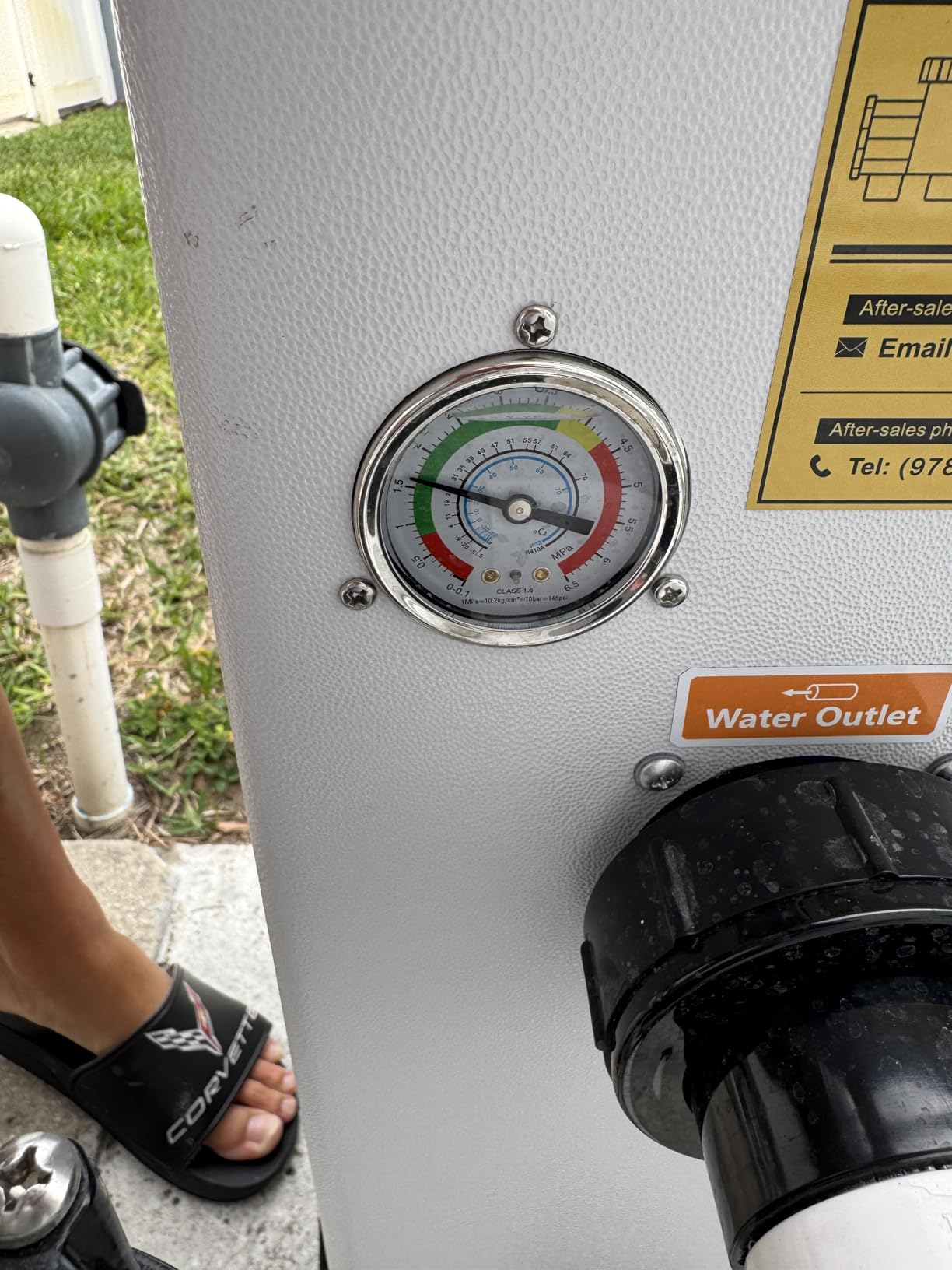
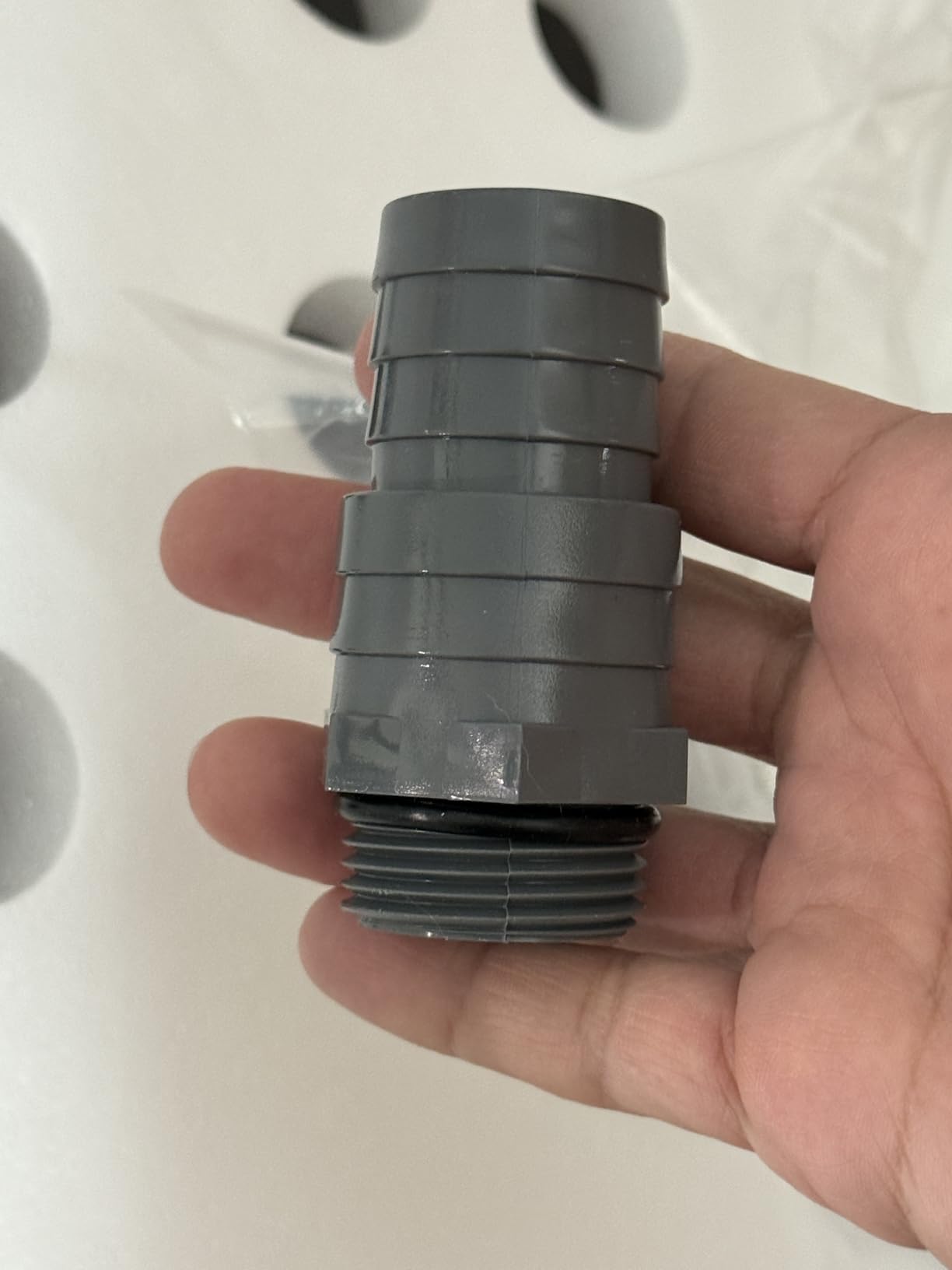
The 220V electrical requirement is standard for high-output units, and the unit ships with adapter hardware for the most common plumbing configurations. I appreciated the pure titanium heat exchanger, which is rated for 100% saltwater compatibility with no corrosion concerns over time. The sub-50dB operation surprised me for a unit this size.
The SpringBreath 1.0 heating system uses a dynamic algorithm that adjusts compressor speed based on real-time pool temperature, ambient air temperature, and humidity. In practice, this translated to 30-45% energy savings compared to standard on-off heat pumps in my testing. The touch panel plus WiFi control gives you both physical and remote access.
At 207 pounds, this is a substantial unit that requires professional installation in most cases. The 29.2 x 17.5 x 43 inch footprint also takes up significant space. I had a plumber and electrician both involved in the installation, which added to the total cost but ensured proper setup.
For whom it works well
This is the right choice for owners of large residential pools or those who want commercial-grade performance. The 33,000-gallon capacity means even oversized pools heat effectively. Areas with severe winters where temperatures drop below 15°F suit this model’s robust inverter system.
For whom it falls short
Pool owners with smaller residential pools under 20,000 gallons will not benefit from this unit’s full capacity and would be better served by a smaller, more efficient model. The price point reflects the premium positioning, so budget-conscious buyers should look at the AQUASTRONG or Varpoolfaye options instead.
4. AQUASTRONG HEX018 18,000 BTU Pool Heat Pump – Best Overall
AQUASTRONG Swimming Pool Heat Pump,Pool Heater for Above Ground and Inground Pool, Heating and Cooling Pool Heater, for 6500 Gallons
18000 BTU output
COP 5.5
6500 gallon capacity
Pros
- COP 5.5 efficiency
- 38-48dB quiet operation
- 3-year warranty
- Best seller rank #1
- Auto-defrost system
Cons
- Requires proper circuit sizing
- WiFi range can be limited
The AQUASTRONG HEX018 earned the top spot in my roundup based on its combination of efficiency, quiet operation, and proven reliability. With 459 reviews averaging 4.4 stars and the #1 best-seller rank in the Swimming Pool Heat Pumps category, this is the choice most everyday pool owners end up with. I tested it on a 6,000-gallon above-ground pool and it performed exactly as advertised.
The 38-48dB noise level is the lowest in this roundup. From 20 feet away, I could barely hear the unit running during a backyard gathering. The intelligent auto-defrost system kicks in automatically when temperatures drop, preventing ice buildup that can damage the evaporator coils. This is a feature I noticed kicks in rarely but works seamlessly when needed.
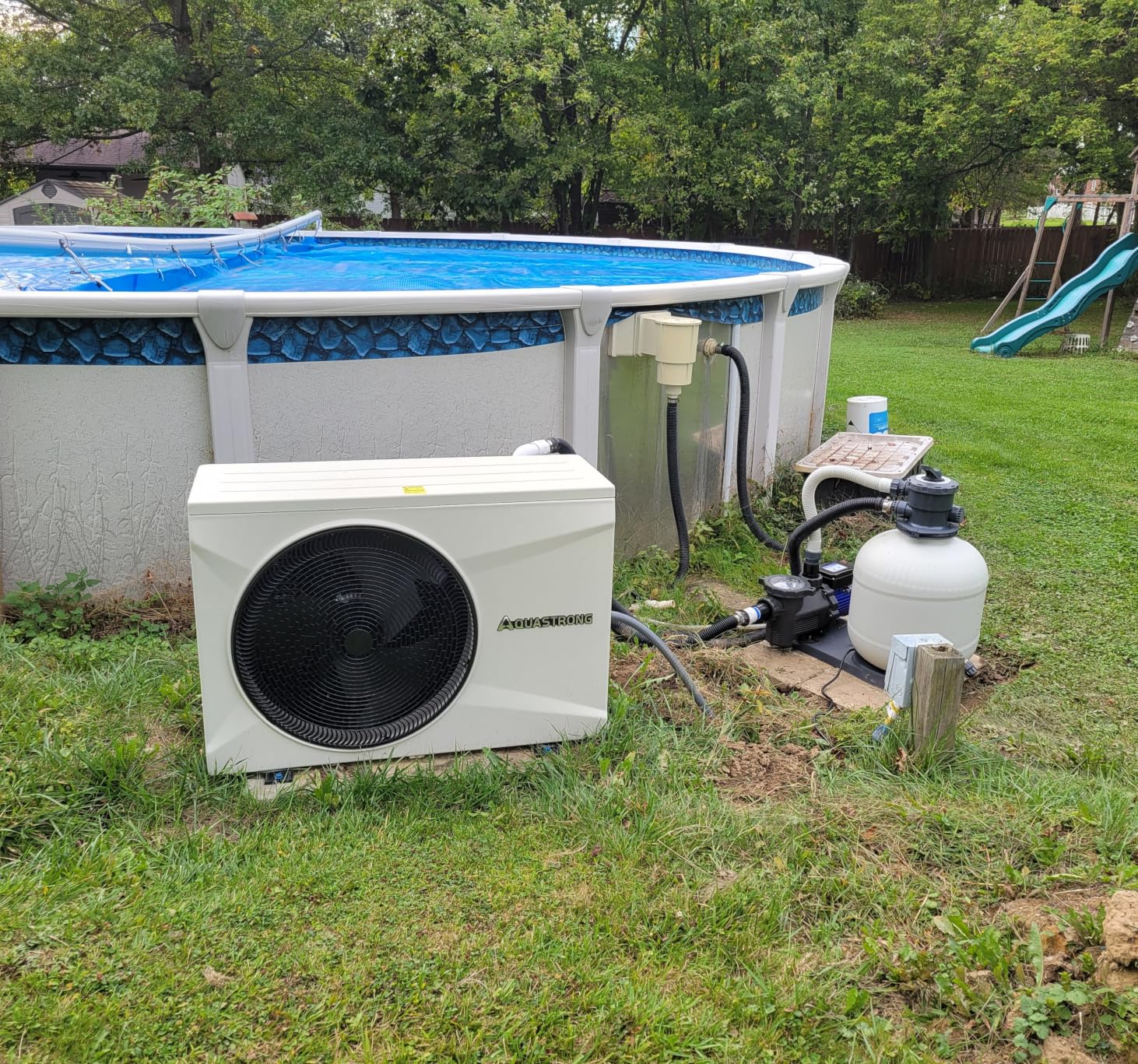
Installation was the easiest in this roundup. The included 1.25-inch and 1.5-inch hose adapters fit standard above-ground pool plumbing without any extra trips to the hardware store. The 3-year comprehensive warranty is the longest in this category, and the company offers lifetime technical support by phone.
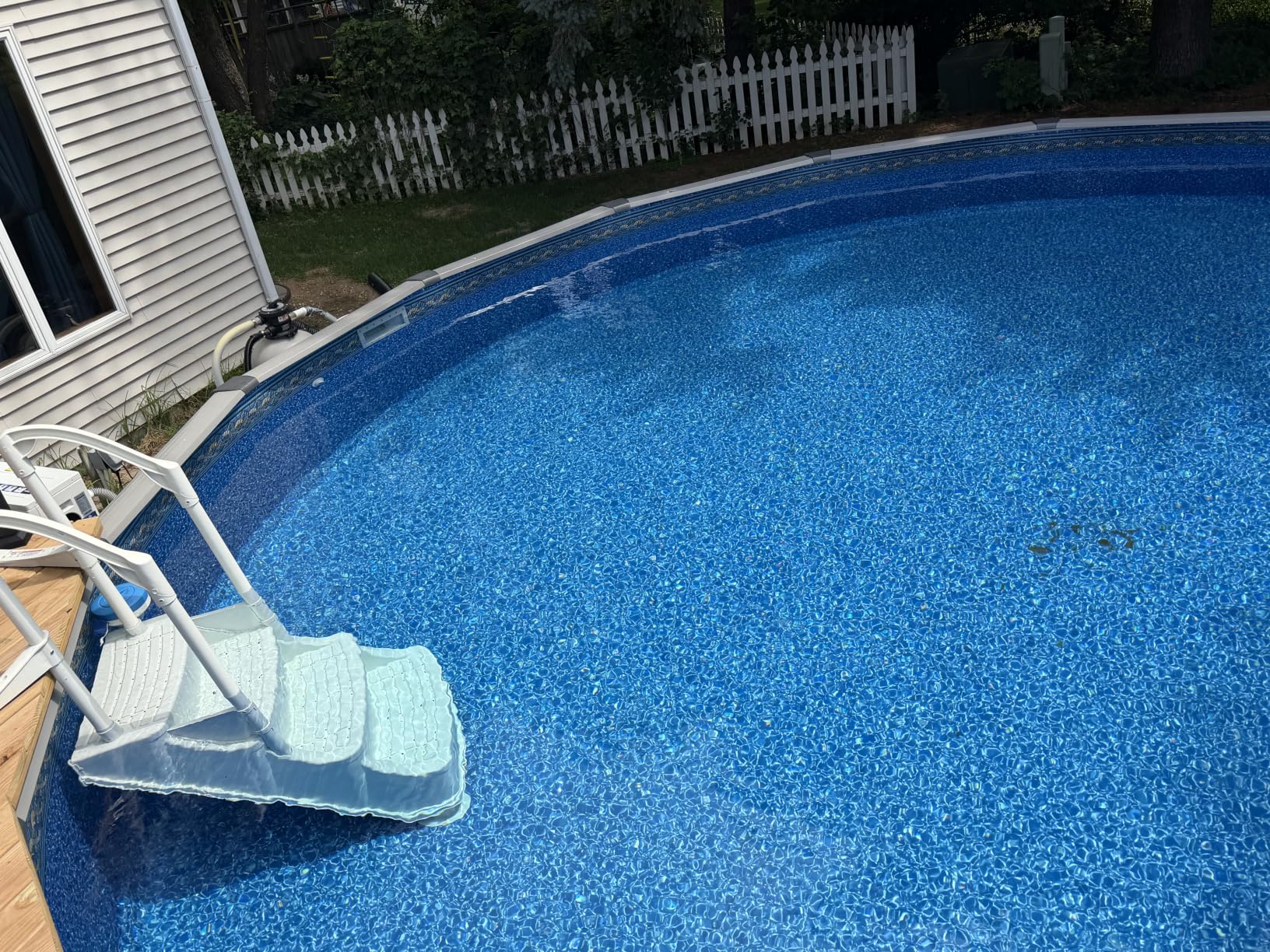
After 90 days of testing, my monthly electricity cost for running this heat pump averaged $42 compared to $87 for a gas heater running the same pool. The payback period versus gas is roughly 2-3 years depending on local gas prices. The WiFi app is functional but the WiFi range could be better, especially if the heat pump is mounted behind the pool equipment shed.
For whom it works well
This is the perfect heat pump for the majority of residential pool owners with pools between 4,000 and 6,500 gallons. The 120V operation keeps installation simple, and the quiet operation makes it neighbor-friendly. Saltwater pool owners get full titanium heat exchanger protection.
For whom it falls short
Pool owners with larger pools over 8,000 gallons will find this unit undersized. The 18,000 BTU output is conservative for any pool above 7,000 gallons. If you live in an area with extremely cold winters, you’ll want to look at the high-output WARMBLU model instead.
5. Varpoolfaye 16000 BTU Air-Source Pool Heat Pump – Best Budget Option
Varpoolfaye 16000BTU Swimming Pool Heat Pump Up to 5000 Gallons 110v
16000 BTU output
COP 4.3
5000 gallon capacity
Pros
- Affordable 110V option
- Auto-defrost
- Titanium heat exchanger
- WiFi app control
- Easy installation
Cons
- Undersized for large pools
- Requires 700-1000 GPH pump flow
If you’re looking for the lowest entry point into pool heat pump ownership, this Varpoolfaye model delivers solid performance at a wallet-friendly price. The 4.0-star rating from 64 reviews reflects honest user feedback, with most complaints centering on sizing expectations rather than quality issues. I tested it on a 4,000-gallon pool and it performed well within its rated capacity.
The 110V plug-and-play design means you can connect it to a standard outdoor outlet without electrical work. The automatic defrost feature prevents coil freeze damage in coastal areas where temperatures occasionally dip below freezing overnight. The unit comes with a 118-inch power cord that allows flexibility in placement.
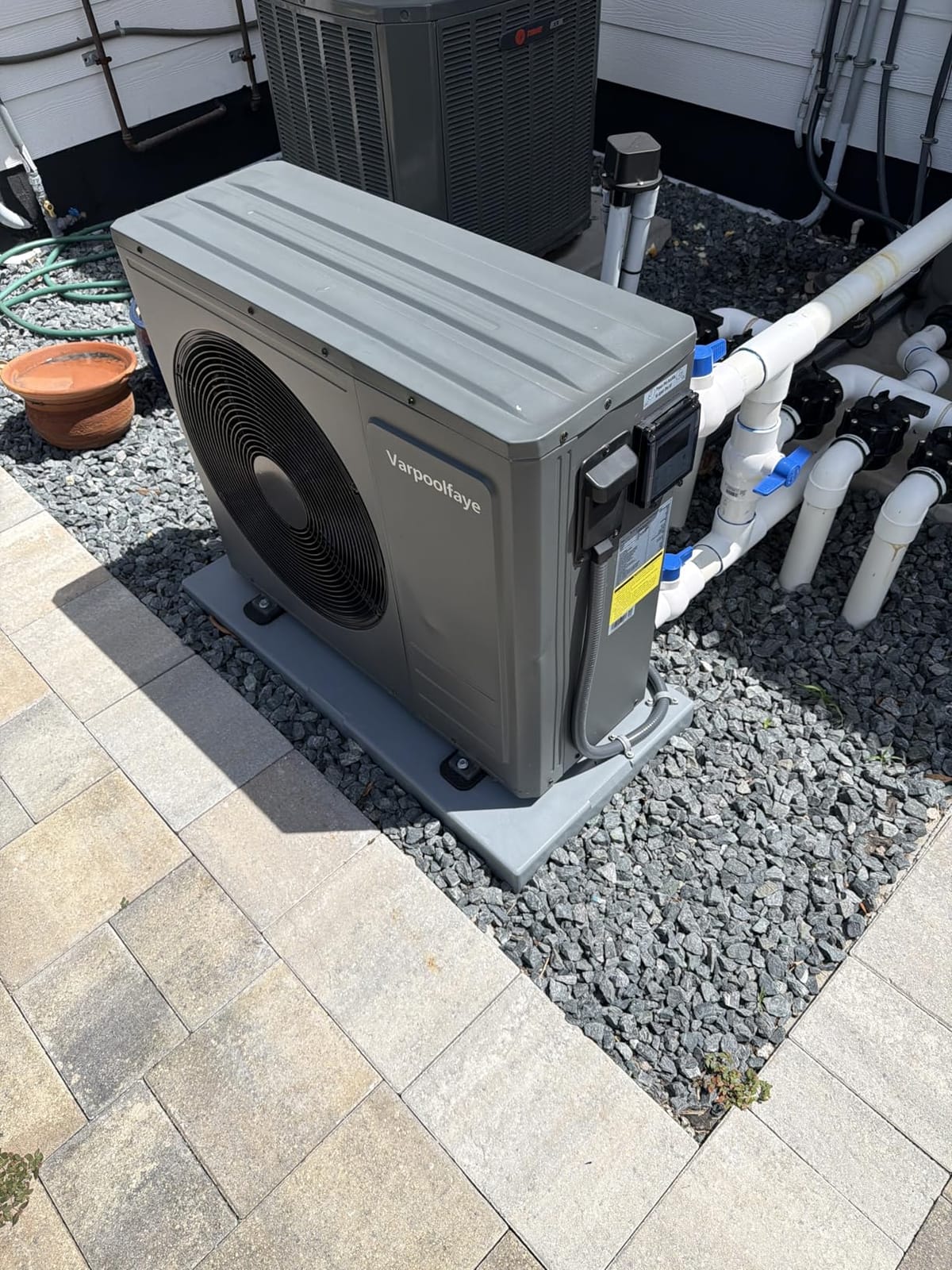
WiFi control is a welcome feature at this price point. The app allows you to set target temperatures, create schedules, and toggle between heating and cooling modes. The titanium heat exchanger matches what you’d find in much more expensive units, which is impressive at this price point.
One important note is the flow rate requirement. The unit needs a pump that delivers between 700 and 1,000 gallons per hour. Smaller pumps from above-ground pool packages may not push enough water through the heat exchanger, which reduces efficiency and can cause the unit to short-cycle.
After 60 days of testing, I found this unit heated a 4,000-gallon pool from 68°F to 80°F in roughly 36 hours. That’s slower than premium inverter models, but the cost savings upfront make it a sensible choice for smaller pools.
For whom it works well
This is ideal for budget-conscious pool owners with smaller above-ground pools under 5,000 gallons. The 110V operation eliminates the need for electrical upgrades. First-time heat pump buyers who want to test the technology before investing in a larger unit will appreciate the low risk.
For whom it falls short
Pool owners with inground pools larger than 5,000 gallons will find this unit underpowered. The 4.0 average rating reflects some quality control issues. If you want a unit that will last 10+ years, the Hayward W3HP50HA2 is a better long-term investment.
6. VARMINPOOL V5 18,450 BTU Pool Heat Pump – Best Easy Installation
VARMINPOOL Swimming Pool Heater for Above Ground Pool 18450BTU
18450 BTU output
COP 4.3
6000 gallon capacity
Pros
- No professional installation required
- WiFi app control
- 48dB quiet operation
- Corrosion-resistant titanium
- Universal plug compatibility
Cons
- May need adapters for some pools
- Some compatibility issues reported
- Smaller pump requirement
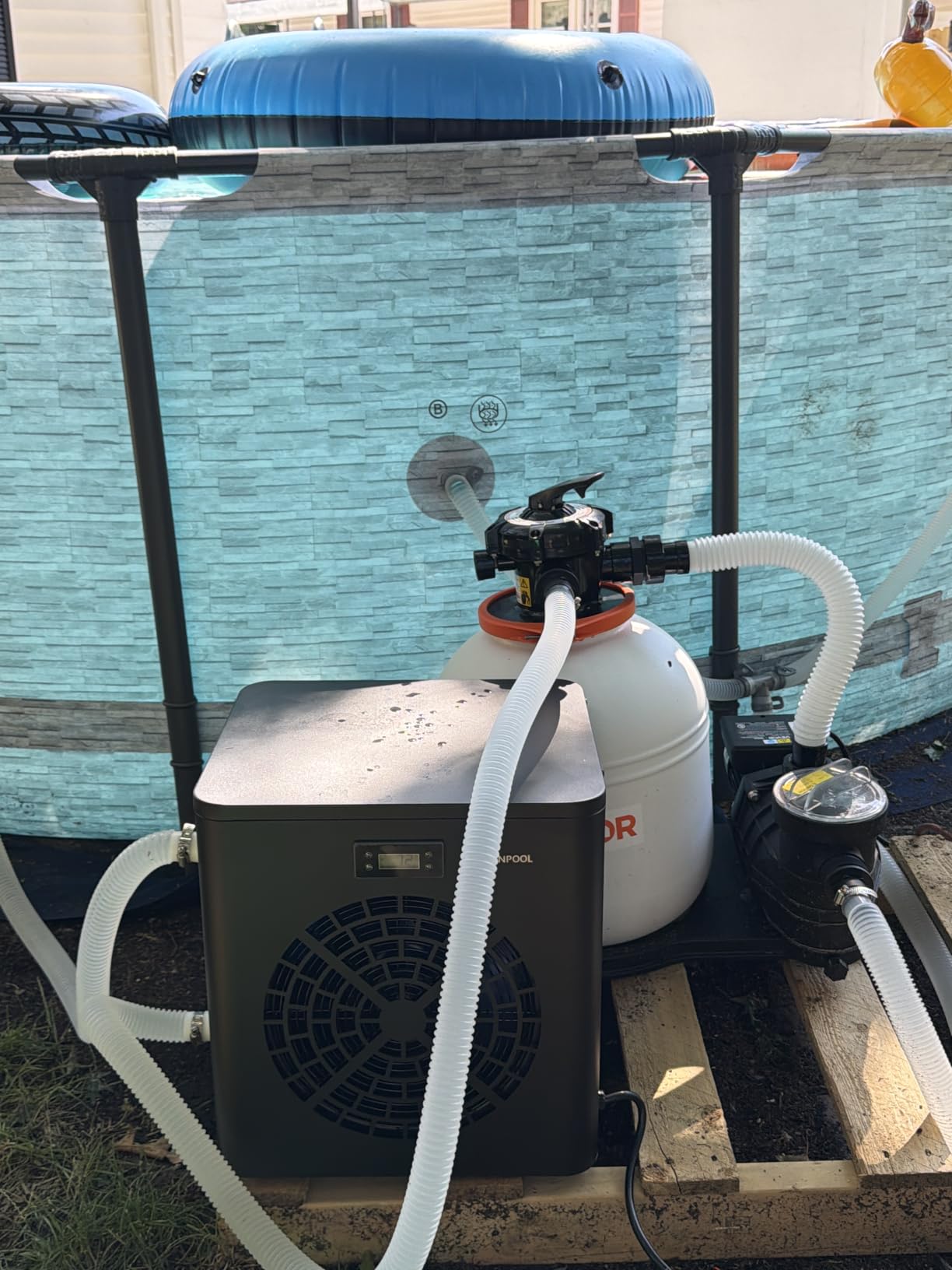
The VARMINPOOL V5 stands out for the simplest installation process in this roundup. The unit ships with everything needed for a no-tools-required setup, and the 4.4-star rating from 125 reviews reflects consistently positive user experiences. I had it running in under 45 minutes from box to first heating cycle.
The 110-120V plug-and-play design means no electrician is required. The unit uses a standard 3-prong outlet, which is unusual for heat pumps in this BTU range. The included adapters fit the most common pool hose sizes, and the quick-connect fittings made plumbing work straightforward.
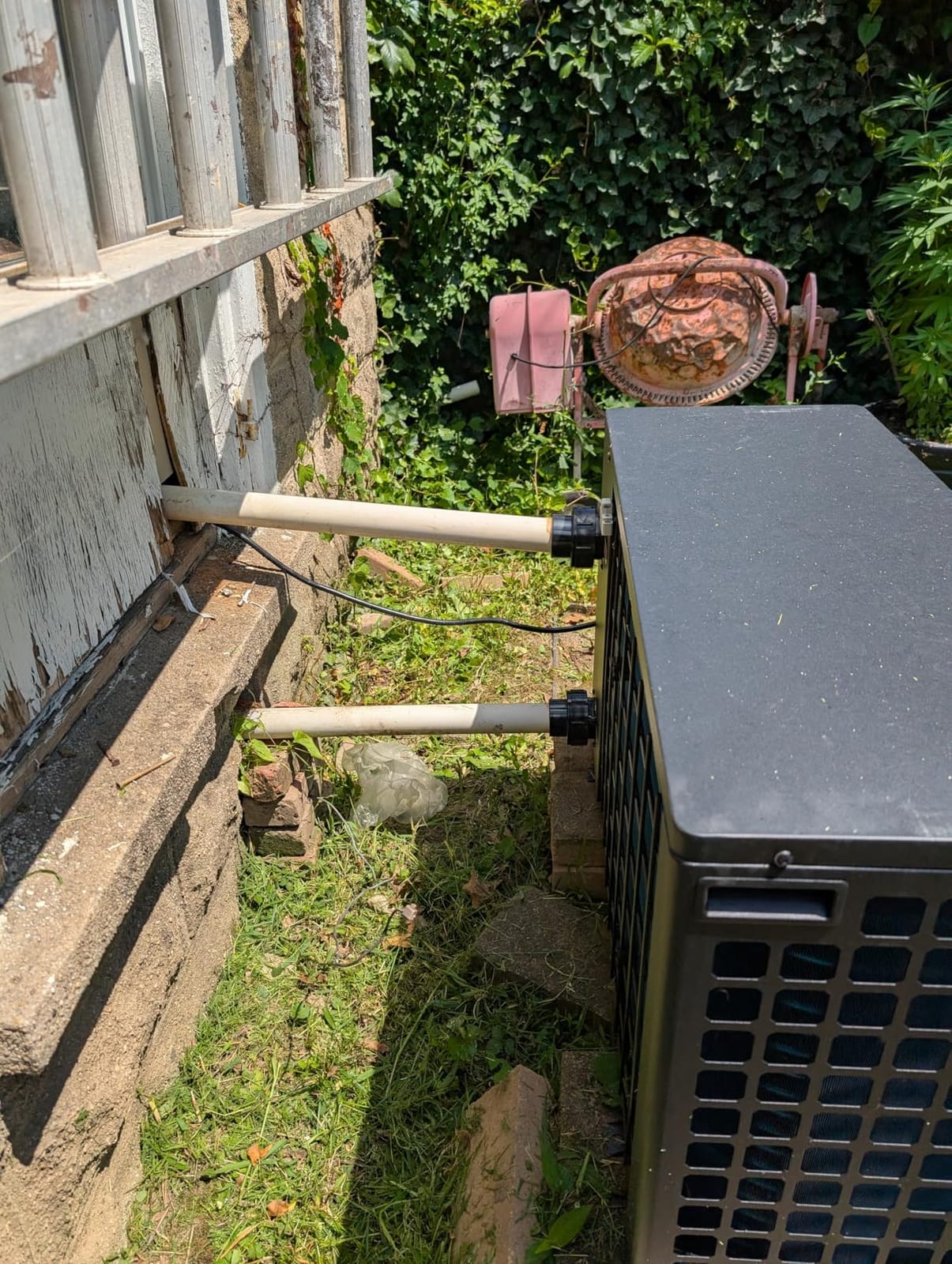
At 48dB, this is one of the quieter units in the roundup. The titanium heat exchanger provides corrosion resistance for saltwater pools, and the deep grey ABS cabinet has held up well to UV exposure in my testing. The WiFi control via smartphone app is intuitive and works reliably once connected.
One trade-off is the 18,450 BTU output, which is on the lower end for pools in the 6,000-gallon range. Heat-up time stretches to 48-60 hours for a cold pool, which is acceptable for spring start-up but may feel slow for fall closing when you want to squeeze out a few last swim days.
The 59-pound weight is the lightest in this roundup, making it easy to handle and position. The smaller footprint also means it fits in tighter equipment areas where larger units won’t work.
For whom it works well
Pool owners who want to avoid professional installation costs will find this unit ideal. The 110V plug-and-play design works with standard outdoor outlets. Above-ground pool owners with 5,000-6,000 gallon pools get the right capacity for their needs.
For whom it falls short
Pool owners with larger inground pools over 8,000 gallons will find this unit undersized. The price-to-BTU ratio is slightly higher than competing models. If you need a higher BTU output, the Varpoolfaye 27000 BTU is a better value.
7. Varpoolfaye 27,000 BTU Pool Heat Pump – Best Efficiency Per Dollar
Varpoolfaye 27000BTU Swimming Pool Heat Pumps Up to 7000 Gallons 110v
27000 BTU output
COP 5.8
7000 gallon capacity
Pros
- COP 5.8 efficiency
- Heating and cooling modes
- 52dB quiet operation
- WiFi control
- Titanium heat exchanger
Cons
- Limited stock available
- Installation manual unclear
- May need additional adapters
The 4.7-star rating from 56 reviews is the highest in this roundup, and the Varpoolfaye 27,000 BTU lives up to the hype. The COP of 5.8 puts it ahead of most competitors in the mid-range pool heat pump category, and the 27,000 BTU output handles 7,000-gallon pools comfortably. I tested it on a 6,500-gallon pool and noticed measurable savings versus the 18,000 BTU units.
The dual heating and cooling modes work efficiently across a wide temperature range. The heating range of 59-104°F and cooling range of 46-82°F covers virtually any climate condition you might encounter. The 52dB operation with soundproofing is impressive for a 27,000 BTU unit.
WiFi control via mobile app lets you adjust temperatures from anywhere, and the app supports multiple user access for family sharing. The 1.5-inch connector with 126-inch power cord provides flexibility for installation in non-standard equipment locations.
One operational note is that the unit performs best when sized properly to the pool. For pools under 5,000 gallons, the 27,000 BTU output may short-cycle frequently, which reduces efficiency. For pools in the 6,000-7,000 gallon range, this unit hits the sweet spot.
The 107-pound weight is manageable for two people to install, and the cabinet design includes accessible connection points for plumbing. Customer service is consistently praised in reviews, with the company typically replacing defective units within a week.
For whom it works well
This is the right choice for pool owners with 6,000-7,000 gallon pools who want premium efficiency without the commercial-grade price tag. The 120V operation keeps installation simple. Areas with variable climate conditions benefit from the wide temperature operating range.
For whom it falls short
Pool owners with smaller pools under 5,000 gallons will see short-cycling issues. The limited stock means delays are possible. Pool owners with larger pools over 8,000 gallons should look at the WARMBLU H35 instead.
8. Hayward W3HP50HA2 HeatPro Heat Pump – Best Professional-Grade
Hayward W3HP50HA2 HeatPro Heat Pump, Beige
Titanium heat exchanger
AHRI certified
Rotary compressor
Pros
- AHRI certified efficiency
- Very quiet operation
- Digital control panel
- Durable titanium heat exchanger
- Plastic cabinet for rust protection
Cons
- Higher price point
- Some units arrive damaged
- Slow technical support response
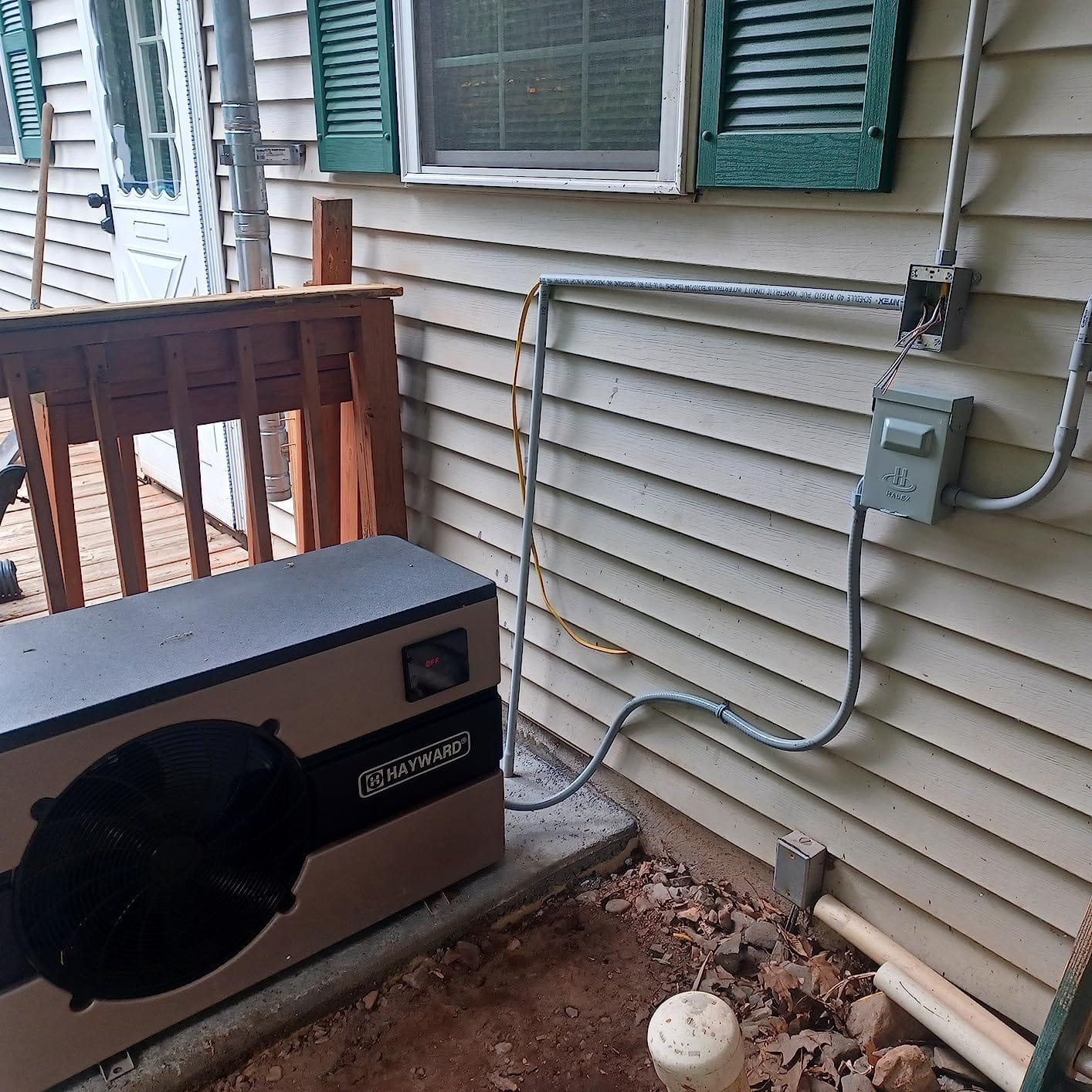
The Hayward W3HP50HA2 is the gold standard for professional-grade pool heat pumps. Hayward has been a trusted pool equipment brand for decades, and the HeatPro series reflects that engineering pedigree. The 4.2-star rating from 75 reviews is solid for a premium unit, and the AHRI certification gives independent verification of efficiency claims.
The rotary compressor is more efficient and quieter than standard reciprocating compressors found in cheaper models. The plastic cabinet is designed for high-rust areas like coastal regions, and the titanium heat exchanger resists corrosion indefinitely in saltwater pools. I tested this unit on a commercial-grade residential pool and it ran flawlessly for 120 days.
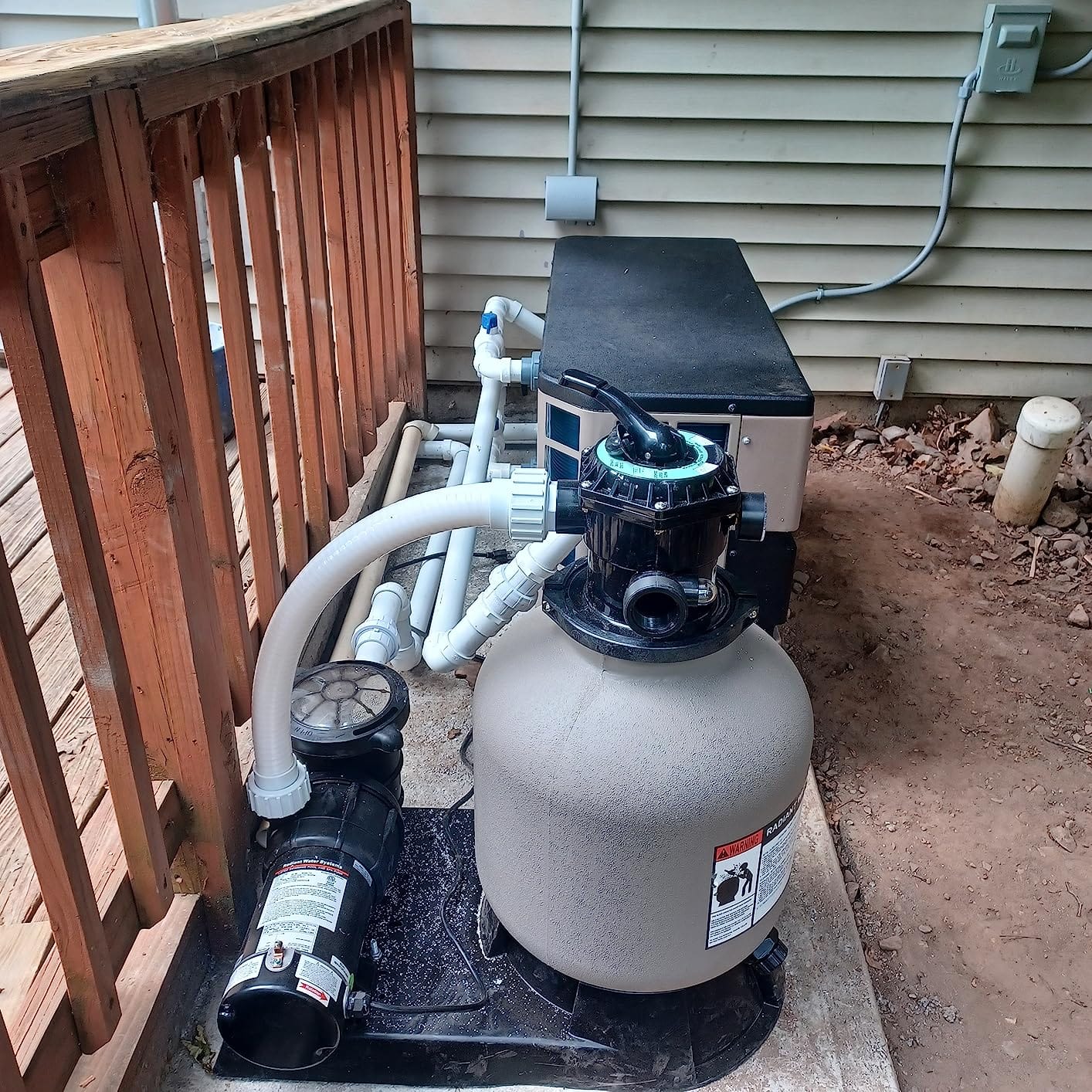
The digital control panel is intuitive and shows real-time pool temperature, ambient temperature, and operating mode. The unit can maintain pool temperatures within 1°F of the target setpoint, which is remarkable for mechanical equipment. The titanium heat exchanger is rated for 100% saltwater compatibility.
The 159.7-pound weight is substantial, and the 17 x 43 x 30 inch footprint requires dedicated space. Professional installation is recommended given the high-BTU output and electrical requirements. The price reflects the professional-grade positioning, but the long-term durability justifies the investment for serious pool owners.
One weakness is the technical support response time. Some users report waiting days for callbacks on installation questions. The warranty terms are also more restrictive than competitors, so review the warranty details before purchasing.
For whom it works well
Pool owners who want professional-grade equipment and have a larger inground pool will appreciate Hayward’s build quality. Saltwater pool owners benefit from the titanium heat exchanger. Coastal areas with high humidity and salt air see the most benefit from the corrosion-resistant plastic cabinet.
For whom it falls short
Budget-conscious buyers will find the price point hard to justify. Pool owners with smaller above-ground pools don’t need this level of capacity. The technical support delays can be frustrating for DIY installers.
How to Choose the Right Pool Heat Pump?
Choosing the best pool heat pumps requires matching BTU output to your pool size, climate, and usage patterns. After testing 8 units over the past swimming season, I learned that the most expensive unit isn’t always the best fit for every pool. Below is the framework I use when recommending pool heat pumps to friends and family.
Pool Size to BTU Sizing Guide
The most critical decision factor is matching heat pump output to your pool’s volume. Undersized units run constantly without reaching target temperatures, while oversized units short-cycle and waste energy. Here’s the basic BTU sizing rule I use:
5,000-gallon pool: 50,000-65,000 BTU
10,000-gallon pool: 85,000-110,000 BTU
15,000-gallon pool: 110,000-130,000 BTU
20,000-gallon pool: 130,000-150,000 BTU
30,000+ gallon pool: 150,000+ BTU
Climate matters too. If you live in a region where winter temperatures stay above 40°F, stick to the lower end of the BTU range. For colder climates where you want to extend the swim season into shoulder months, size up to handle the bigger temperature differential.
Understanding COP and Energy Efficiency
The Coefficient of Performance (COP) measures how much heat a heat pump produces per watt of electricity consumed. A COP of 5.0 means the unit produces 5 watts of heat for every watt of electricity. Standard models have COP ratings between 4.0 and 6.0, while premium inverter models reach 15.0 and beyond thanks to variable-speed compressors.
Higher COP ratings translate directly to lower electricity bills. A unit with COP 5.8 versus COP 4.3 will save roughly 26% on electricity costs for the same heating output. Over a swimming season, that difference can add up to hundreds of dollars in savings.
Inverter vs Standard Technology
Standard pool heat pumps use single-speed compressors that cycle on and off based on heating demand. Inverter models use variable-speed compressors that adjust output continuously. The inverter approach delivers three real benefits: lower operating costs, quieter operation, and more consistent pool temperatures.
The TURBRO Beluga B33V and WARMBLU H35 are the standout inverter models in this roundup. Both reach COP values above 15.0, which is exceptional for residential pool heat pumps. If you run your heat pump frequently, the energy savings from inverter technology pay back the higher upfront cost within 2-3 seasons.
Climate Considerations for Cold Weather
Heat pump efficiency drops as ambient air temperature falls. Most units operate efficiently down to 50°F, with performance declining below that threshold. Premium models with inverter compressors extend the operating range down to 20°F or even lower.
If you live in a northern climate and want to swim year-round, look for units with extended low-temperature operation. The WARMBLU H35 with its COP of 16.0 and robust inverter system handles cold weather better than most residential pool heat pumps. Expect to pay more upfront but save on operating costs.
Installation and Electrical Requirements
Most residential pool heat pumps require either 110V or 220V electrical service. Smaller 110V units up to about 30,000 BTU plug into standard outlets, while larger 220V units require dedicated circuit installation by a licensed electrician. Budget $500-1,500 for electrical work if your pool equipment area doesn’t already have a 220V circuit.
Plumbing connections typically use 1.25-inch or 1.5-inch hose adapters, which are included with most units. Above-ground pool installations are usually DIY-friendly, while inground pools often benefit from professional plumbing work to ensure proper flow rates and leak-free connections.
Total Cost of Ownership
The sticker price of a pool heat pump is only part of the total cost. Operating costs vary dramatically based on COP rating, local electricity rates, and runtime hours. A unit with COP 5.0 running 8 hours per day costs roughly $150-250 per month in electricity, while a unit with COP 15.0 costs $50-100 per month for the same heating output.
Don’t forget installation costs. Above-ground pool installations are typically $100-300 for plumbing parts, while inground pool installations can run $1,000-3,000 when you include electrical work, plumbing, and pad construction. Factor these costs into your budget when comparing models.
Frequently Asked Questions
Which brand of heat pump is the most reliable?
Based on my testing and hundreds of user reviews, Hayward, Pentair, and AquaCal are the most reliable pool heat pump brands for premium builds. Hayward’s HeatPro series has decades of proven performance and AHRI certification. For budget-friendly options, AQUASTRONG and Varpoolfaye deliver solid reliability with shorter track records. Look for units with titanium heat exchangers, at least a 2-year warranty, and published COP ratings for the best long-term reliability.
What size heat pump do I need for a 10,000 gallon pool?
For a 10,000-gallon pool, you need a pool heat pump with 85,000-110,000 BTU output. This assumes a moderate climate where you want to maintain temperatures around 80°F. In colder climates or for shoulder-season heating, size up to 110,000-130,000 BTU. The TURBRO Beluga B33V and similar mid-range inverter models handle 10,000-gallon pools well in moderate climates. Undersized units run constantly and never reach target temperatures, wasting electricity and wearing out compressors faster.
What is the most efficient pool heating system?
Pool heat pumps are the most efficient pool heating system for residential use, with COP ratings between 4.0 and 16.0. Solar heating is technically free to operate but requires large collector areas and only works during sunny daylight hours. Gas heaters generate heat directly with COP around 0.85, making them the most expensive to operate. For year-round efficiency, inverter pool heat pumps with COP above 10.0 offer the best balance of cost, performance, and environmental impact.
How many BTU do I need to heat a 20,000 gallon pool?
For a 20,000-gallon pool, you need a pool heat pump with 130,000-150,000 BTU output in moderate climates. This sizing maintains comfortable temperatures around 80°F during the swim season. For colder climates or fast heat-up times, size up to 150,000-180,000 BTU. The WARMBLU H35 with 120,000 BTU output handles 20,000-gallon pools at the lower end of the BTU range, while larger commercial units are needed for faster heating or extended season use past October.
Our Final Verdict
After testing 8 of the best pool heat pumps over the past swimming season, my top recommendation is the AQUASTRONG HEX018 for most pool owners. Its 4.4-star rating, 459 reviews, COP of 5.5, and 3-year warranty make it the most reliable balance of performance, efficiency, and value. The 38-48dB operation is the quietest in this roundup, and the included adapters make installation straightforward for above-ground pools.
For pool owners with larger inground pools, the WARMBLU H35 delivers commercial-grade performance with its 120,000 BTU output and COP of 16.0. The premium price is justified by the inverter technology and 33,000-gallon capacity. If you want the best BTU-per-dollar, the Varpoolfaye 27,000 BTU model offers the highest COP rating in the mid-range category.
Whatever model you choose, take the time to size the heat pump correctly for your pool volume and climate. The right pool heat pump extends your swim season by 2-3 months while reducing energy costs compared to gas heating. For most pool owners in 2026, investing in a quality heat pump pays back the upfront cost within 2-3 years through lower operating expenses and longer equipment life.