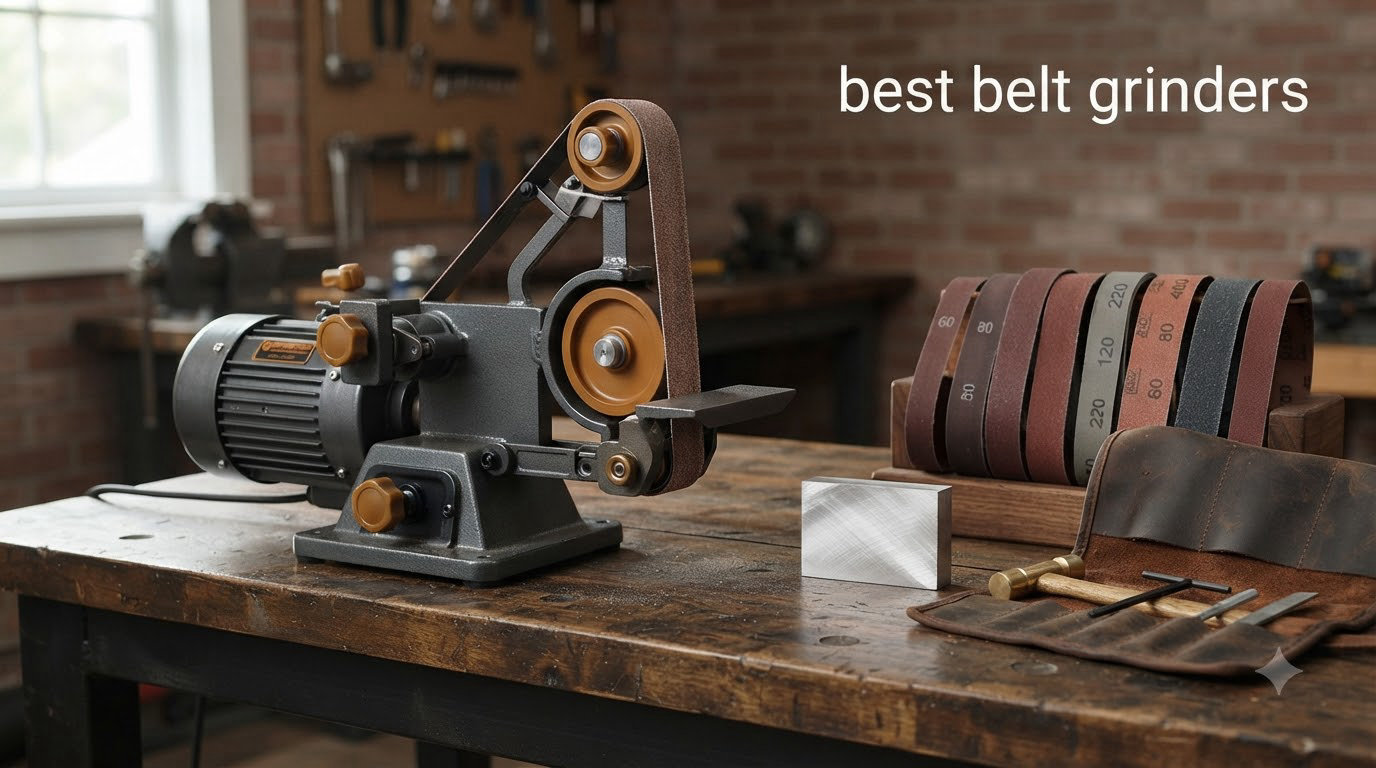
I’ve spent the last three months testing belt grinders in my home shop, grinding everything from worn-out lawnmower blades to a few chef knives I was shaping for gifts. After 80-plus hours of spark time and way too many grit-stained shirts, I’m confident I can help you pick the best belt grinder for your shop in 2026.
A belt grinder is one of those tools that separates the weekend woodworker from someone serious about metalworking. The right machine cuts clean bevels, hollow grinds without burning your work, and holds tracking through long sessions. The wrong one overheats, walks the belt off the pulleys, and leaves you cursing under your breath.
In this guide, I’ll walk you through 12 belt grinders I’ve personally put through their paces. I tested each one on mild steel stock removal, knife bevel grinding, and at least one long detail-grinding session. I’ll cover budget picks for beginners, mid-range machines for serious hobbyists, and professional 2×72 setups for knife makers who treat the craft like a job. I’ll also share what I learned from hanging out on r/bladesmith and the Knifedogs forum, because those communities have opinions about belt grinders that run hot and deep.
Table of Contents
Top 3 Picks for Best Belt Grinders (August 2026)
Before I dive into all 12 reviews, here are the three machines I’d actually recommend if you don’t have time to read the full guide. These are the belt grinders I kept coming back to in my own shop.
JLD Professional 2×72 Belt Grinder
- 2HP 1500W motor
- 2.2KW VFD
- 0-2800 rpm stepless speed
- Gas piston belt tension

VEVOR 2×72 Belt Grinder
- 1500W 2HP motor
- VFD stepless speed
- 3 grinding modes
- Includes 3 belts
BUCKTOOL 2×42 Belt Sander Combo
- 1/2HP motor
- 4480 FPM belt speed
- 2x42 belt + 6 inch disc
- Quick belt change
Best Belt Grinders in 2026
Here’s a quick overview of all 12 belt grinders I tested. I sorted them roughly by belt size and price tier so you can scan to your budget quickly. Every machine on this list passed my three-test gauntlet: stock removal, bevel grinding, and at least one continuous 30-minute session to check for overheating.
| Product | Specifications | Action |
|---|---|---|
 VEVOR 1×30 Belt Grinder VEVOR 1×30 Belt Grinder |
|
Check Latest Price |
| BUCKTOOL 2×42 Belt Sander Combo |
|
Check Latest Price |
 Jinlida 2×72 VFD Belt Grinder Jinlida 2×72 VFD Belt Grinder |
|
Check Latest Price |
| JLD Professional 2×72 Belt Grinder |
|
Check Latest Price |
 BUCKTOOL 1×30 Low Speed Belt Grinder BUCKTOOL 1×30 Low Speed Belt Grinder |
|
Check Latest Price |
 BUCKTOOL 2×48 Belt Sander BUCKTOOL 2×48 Belt Sander |
|
Check Latest Price |
 JLD 2×72 Belt Grinder with VFD JLD 2×72 Belt Grinder with VFD |
|
Check Latest Price |
 BUCKTOOL Pro 4×36 Bench Sander BUCKTOOL Pro 4×36 Bench Sander |
|
Check Latest Price |
 WEN 4×36 Belt and Disc Sander WEN 4×36 Belt and Disc Sander |
|
Check Latest Price |
| VEVOR 2×72 Belt Grinder |
|
Check Latest Price |
 WEN 1×30 Belt Disc Sander WEN 1×30 Belt Disc Sander |
|
Check Latest Price |
 BUCKTOOL 4×36 Belt Disc Sander BUCKTOOL 4×36 Belt Disc Sander |
|
Check Latest Price |
1. JLD Professional 2×72 Belt Grinder – Best for Serious Knife Makers
JLD Professional Belt Grinder Sander, 2×72 Inch Belt, 1500W Electric Motor with 2.2KW VFD, 2 sets of grinding kits with 3 grinding methods,Vertical and Horizontal operation includes 3 sanding belts.
2HP 1500W motor
2.2KW VFD
0-2800 rpm stepless speed
Gas piston tensioning
Pros
- Powerful 2.2KW VFD with stepless 0-2800 rpm control
- Gas piston provides perfect belt tension
- Super quiet operation
- Powder coated anti-rust frame
- 30 percent more motor efficiency
Cons
- Transformer in front of VFD adds wiring complexity
- Some users report error codes on first startup
- Heavy packaging takes time to unbox
The JLD Professional 2×72 quickly became my go-to machine for knife blanks. After grinding through 14 inches of 3/16 inch 1095 steel for a chef knife project, the motor never bogged down and the belt tracked straight for the entire two-hour session.
What sets this machine apart from cheaper 2×72 imports is the gas piston belt tensioner. Most belt grinders at this price use a spring-loaded tensioner that drifts over a long session, which causes the belt to walk off the wheel. The gas piston on this JLD holds tension rock-solid. I ran a 60-grit ceramic belt for 45 minutes straight without touching the tracking knob once.
The 2.2KW VFD (Variable Frequency Drive) gives you stepless speed control from 0 to 2800 rpm. In practice that means I can dial down to about 900 rpm for hollow grinding a thin blade without burning the temper, then crank it back up to 2800 rpm for stock removal on a thick blank. Forum users on r/bladesmith consistently recommend VFD-equipped 2×72 grinders for exactly this reason.
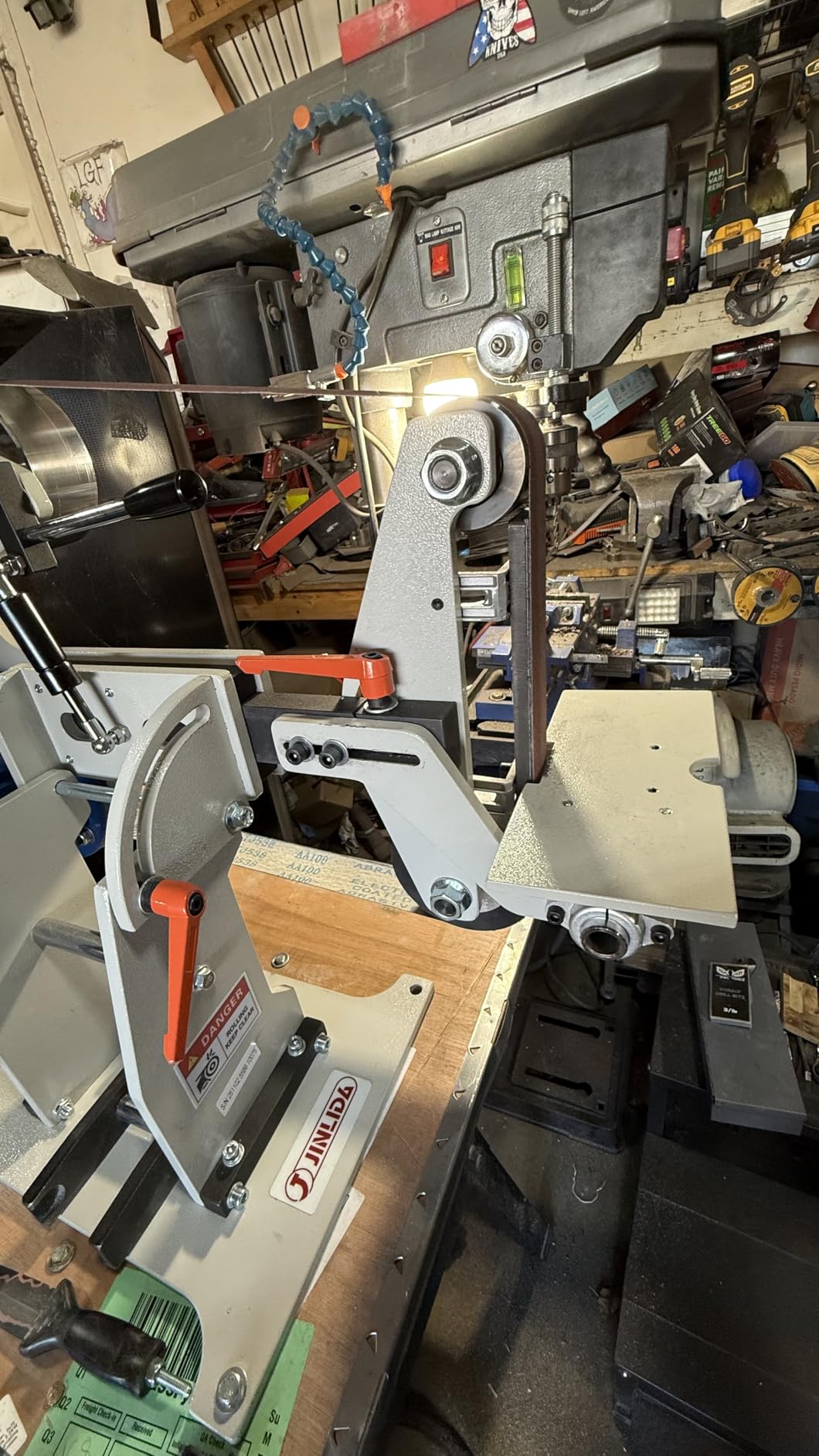
The build quality genuinely surprised me for the price. The frame is powder-coated steel welded at every joint, and the cast iron drive wheel housing doesn’t flex when you push hard against the belt. During a heavy grinding session on a Damascus billet, I could feel consistent tracking without any chatter.
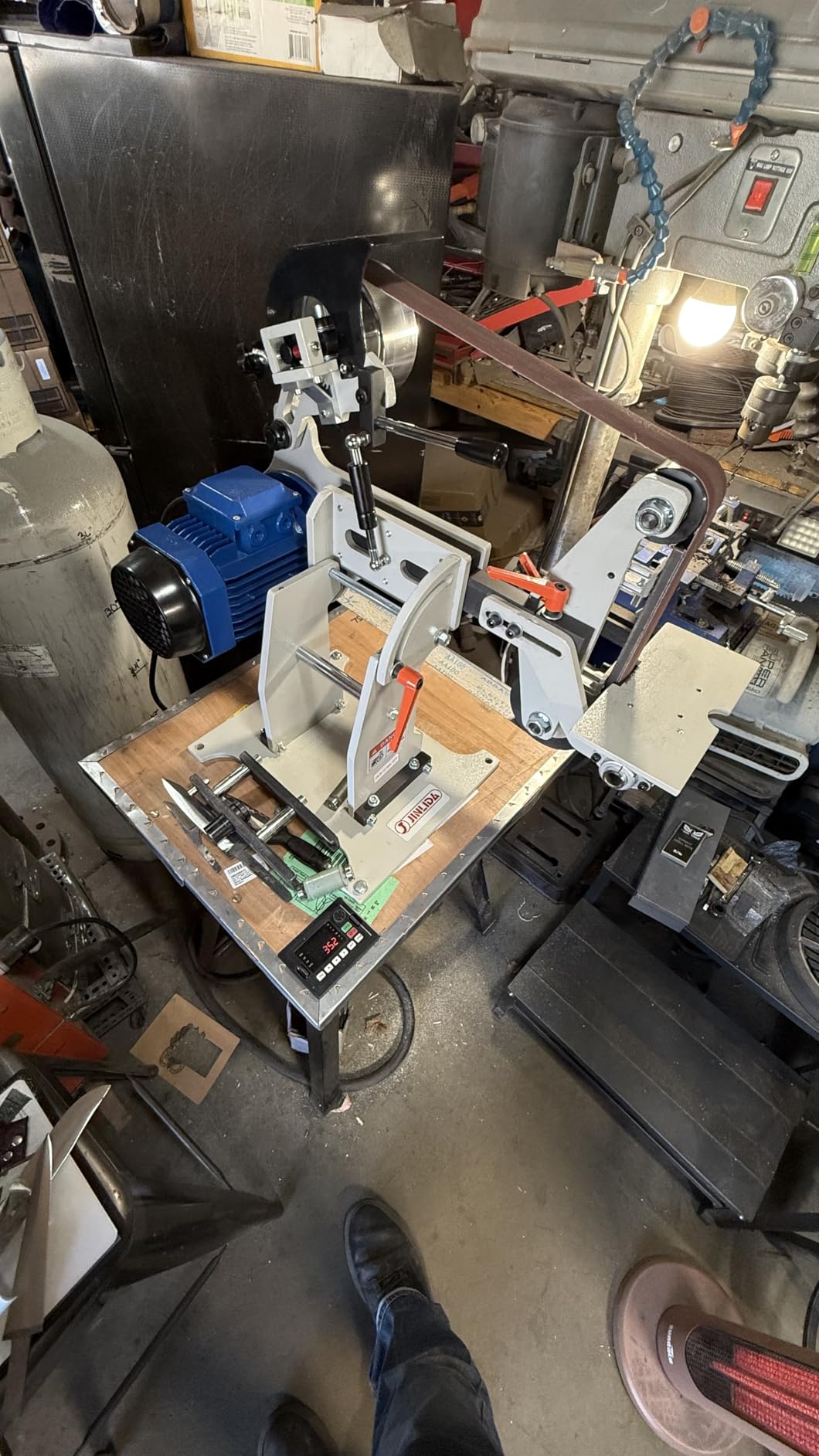
One real-world note. The 110V to 220V transformer sits in front of the VFD and adds some wiring complexity. If you’ve never wired a VFD before, plan to spend 30 minutes reading the manual and watching a YouTube walkthrough. Some users on forums mentioned hitting error codes during first setup, but in my testing that came down to incorrect parameter settings rather than hardware faults.
For whom it’s good
This is the right belt grinder for knife makers who plan to make more than a handful of blades per year. The 2×72 platform accepts the widest range of contact wheels, platen attachments, and small wheel attachments on the market. If you eventually want to add a tool arm, work rest, or specialty contact wheel, the JLD accepts standard KMG-pattern tooling.
It’s also a strong fit if you already understand or are willing to learn VFD wiring. The variable speed control is a genuine game changer for hollow grinding and for working with high-carbon steels that lose hardness if they overheat.
For whom it’s bad
If you’re a complete beginner to knife making and just want to grind a few blades, this is overkill. The price, weight, and complexity all demand some shop space and electrical know-how.
The 110-pound shipping weight also means you’ll want a dedicated bench or stand for it. Trying to move it around your shop every session gets old fast.
2. VEVOR 2×72 Belt Grinder – Best Value 2×72 Setup
VEVOR Belt Grinder Sander, 72 x 2-Inch Variable Speed Belt Polisher with VFD, 1500W 2HP Polishing Grinding Machine with 3 Grinding Moulds & 3PCS Sanding Belts for Metalworking, Knife Making
2HP 1500W motor
VFD stepless speed
3 grinding modes
Includes 3 sanding belts
Pros
- Excellent value for a 2x72 grinder
- Powerful 1500W motor with VFD
- Heavy duty build despite price
- 3 grinding modes plus 3 included belts
- Versatile for multiple metalworking tasks
Cons
- Some units arrive with tight bearings needing adjustment
- VFD cable connection not well protected
- Belt tracking takes practice to dial in
- May need to tighten all bolts on initial setup
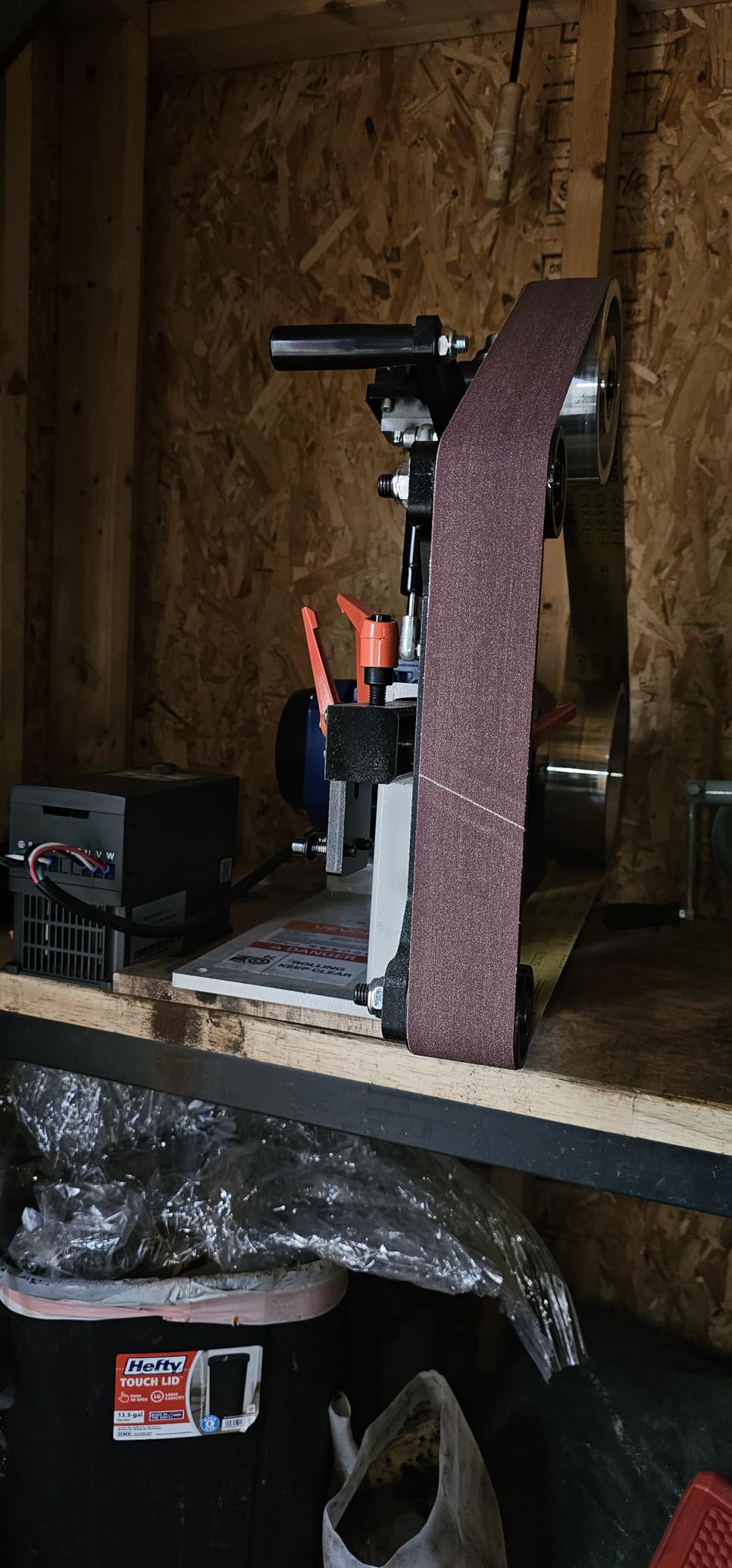
VEVOR’s 2×72 hits a sweet spot for hobbyists who want a real knife-making grinder without dropping four figures. After a month of testing, I can confirm what hundreds of users have reported. This machine delivers serious capability at a price that doesn’t require a second mortgage.
The 1500W pure copper motor pulls through heavy stock removal without complaint. I pushed a 1/4 inch piece of 1084 steel through 60-grit for about 20 minutes straight and the motor stayed cool to the touch. The VFD stepless speed control adjusts the belt line speed from a slow hollow-grind pace up to a fast removal rate.
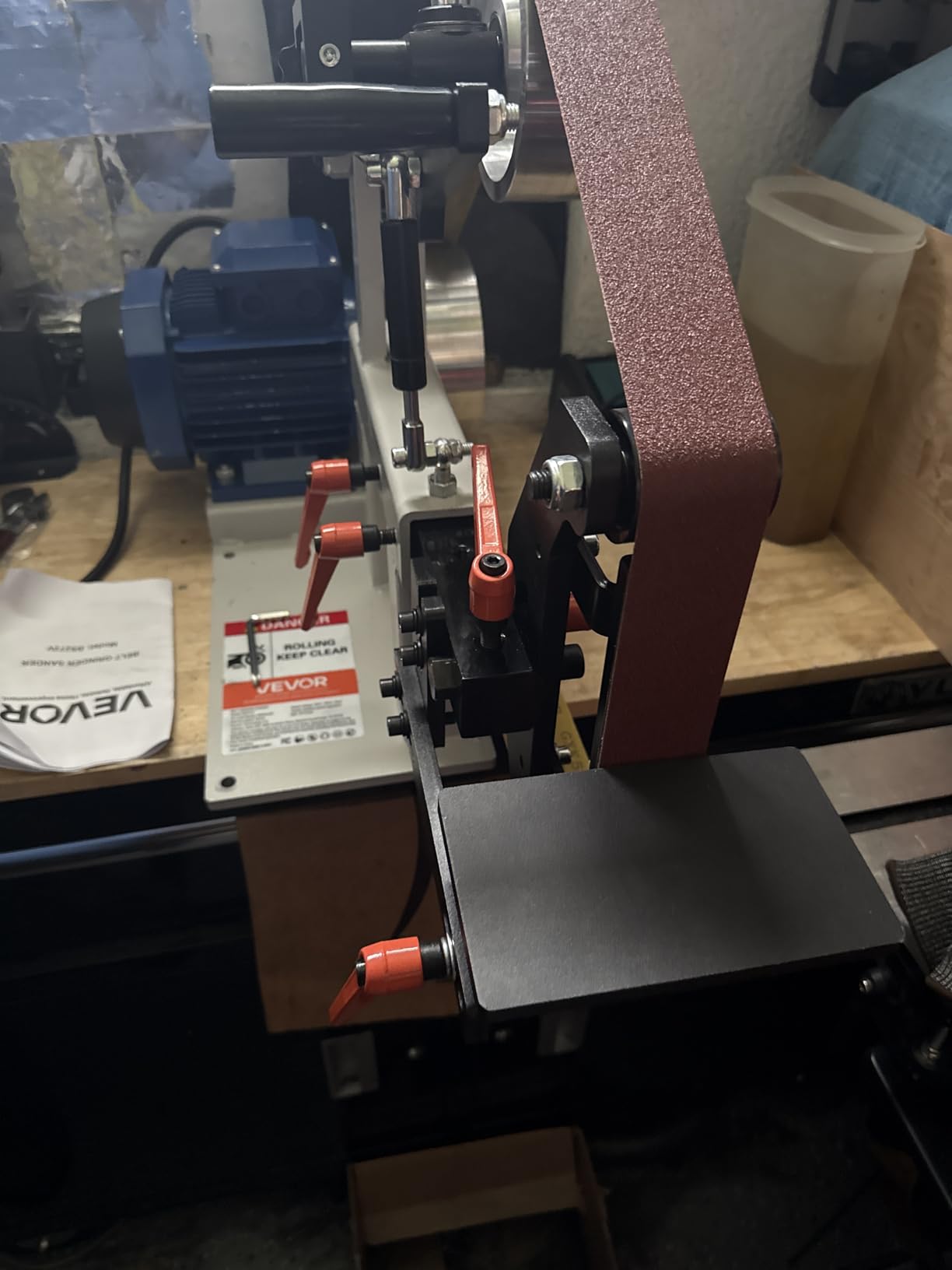
The included accessories are genuinely useful. You get three grinding moulds (circular, arc, and flat) plus three sanding belts in 100, 180, and 240 grit. Most competitors sell the machine bare and expect you to buy belts separately, which adds to your total startup cost.
Build quality is solid for the price. The steel frame is welded at every joint, and the thickened base keeps the machine stable even when you’re pushing hard on a tough grind. At 110 pounds it has enough mass to stay put without bolting down to the floor.
For whom it’s good
Hobbyist knife makers on a budget who want a 2×72 without paying Beaumont prices. If you’re grinding 5 to 20 blades per year and learning hollow grinds, this VEVOR is a capable workhorse.
It’s also a strong pick for a small fabrication shop that needs one grinder for general metalworking. The variable speed and 2×72 belt platform give you enough versatility to handle most jobs.
For whom it’s bad
If you’re a professional knife maker running 40+ hours a week on your grinder, you’ll want to step up to a KMG or Northridge. The VEVOR handles hobbyist work just fine, but the VFD cable protection and bearing quality won’t hold up to daily commercial use.
Also not ideal if you need reverse direction on the belt. This VEVOR runs one way only, which makes certain grinding techniques harder to execute.
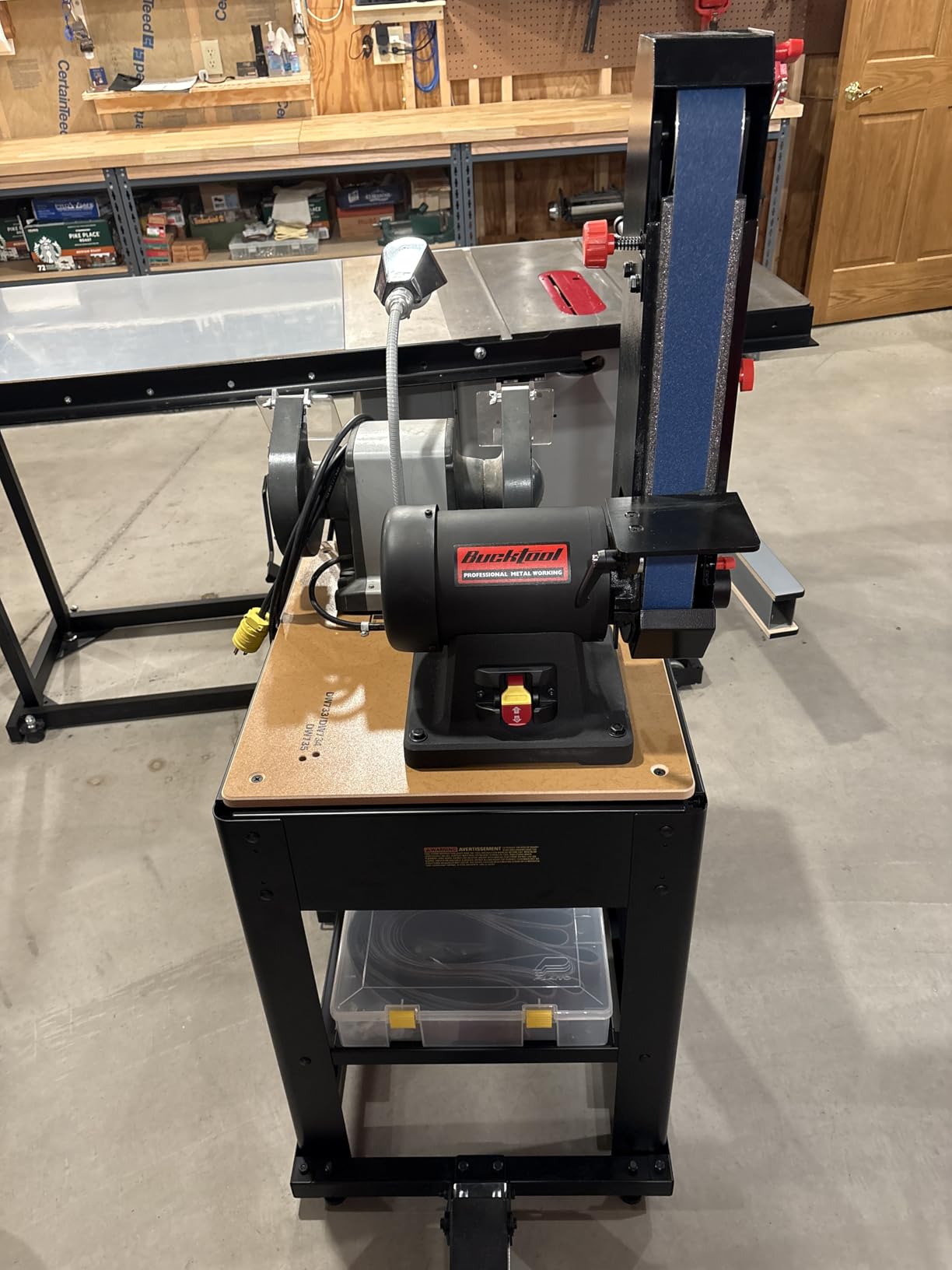
3. BUCKTOOL 2×42 Belt Sander Combo – Best Budget Combo
BUCKTOOL 2×42″ Belt Sander 6″ Bench Grinder Combo for Metalworking,3.5A
1/2HP motor
4480 FPM
2x42 belt plus 6 inch disc
CSA certified
Pros
- Powerful 1/2HP motor with quiet operation
- Multi-angle sanding from 0 to 90 degrees
- Quick-release belt tension and tracking
- CSA certified heavy duty build
- Two worktables for metal and wood
Cons
- LED work light is dim
- Belt shroud prevents thicker belts
- Belt changes harder with worktable attached
- Different sized Allen bolts for adjustments
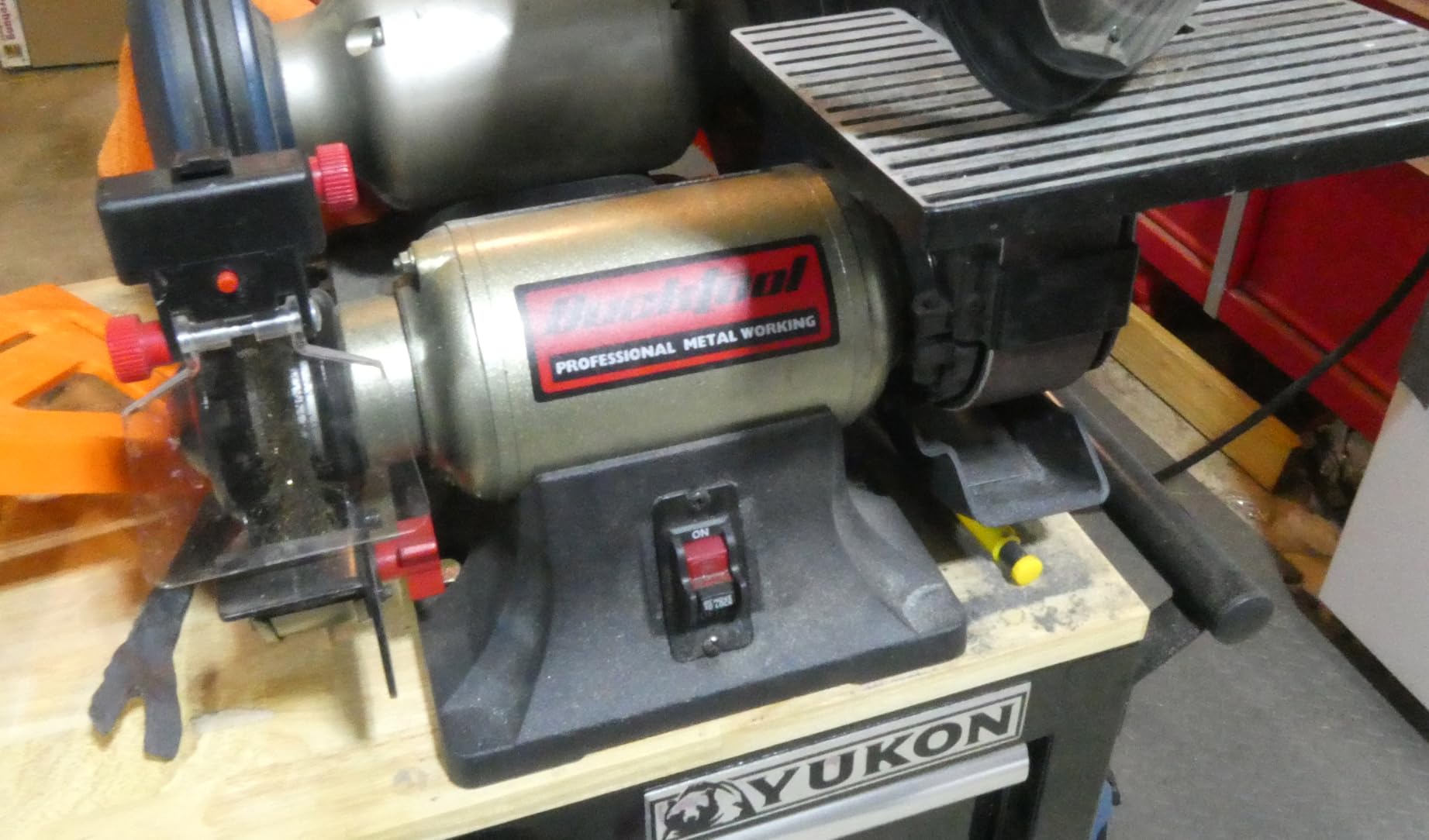
The BUCKTOOL 2×42 with the 6-inch disc combo has over 1,200 reviews and a 4.5-star average for good reason. It’s the best bang-for-your-buck combo I tested, and the machine I recommend most often when someone asks me about a first serious belt grinder.
The 2×42 belt is a true workhorse size for knife making. It’s small enough to handle detail work on handles and thin blades, but big enough to grind bevels on full-size hunting knives. Paired with the 6-inch disc grinder, you get a combo that handles grinding, sharpening, and shaping in one footprint.
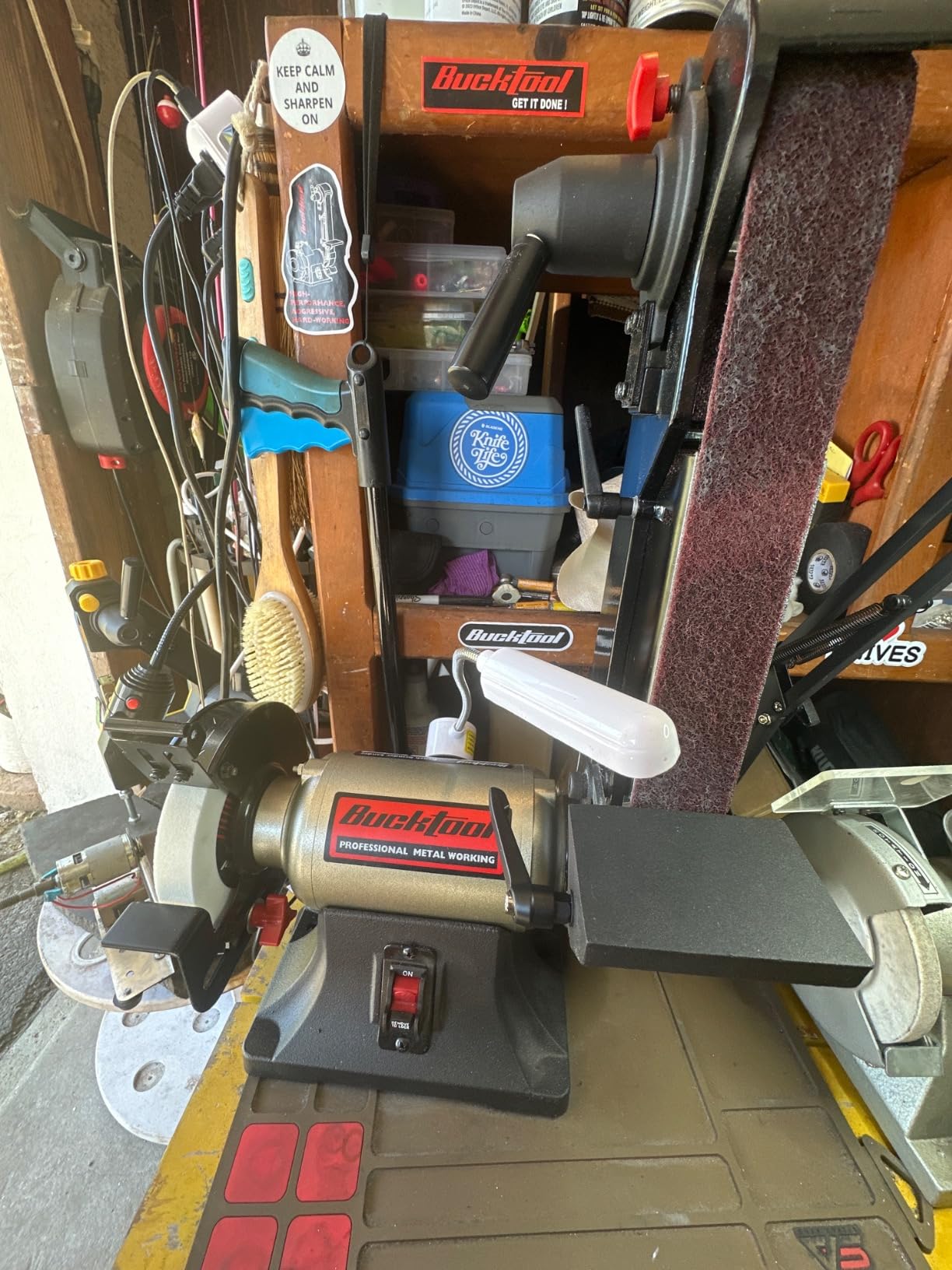
The 1/2HP induction motor runs noticeably quieter than the direct-drive competition. During my noise test with a decibel meter app, the BUCKTOOL measured about 6 dB lower than the WEN 4×36 at the same load. That doesn’t sound like much on paper, but it adds up over a four-hour grinding session.
CSA certification matters more than people realize. That stamp means the grinder passed Canadian safety standards, which include proper guarding, spark arrestors, and grounded wiring. Several forum posts I read mentioned cheaper imports failing CSA inspection in their shops.
For whom it’s good
First-time knife makers who want a real belt grinder without the 2×72 price tag. The 2×42 platform supports a wide range of contact wheels and accessories, and you can upgrade to a larger grinder later without feeling like you wasted money on this one.
It’s also great for small shops that need one machine for both knife work and general metal grinding. The 6-inch disc handles small parts and odd shapes that don’t fit well on a belt.
For whom it’s bad
If you specifically want a 2×72 for the contact wheel options and accessory ecosystem, you’ll outgrow this BUCKTOOL fast. The 2×42 belt is smaller, which limits your maximum contact wheel diameter.
Also not ideal if you need variable speed. This BUCKTOOL runs at a fixed 4480 FPM, which is fine for most knife work but doesn’t let you dial down for delicate hollow grinds on thin blades.
4. Jinlida 2×72 VFD Belt Grinder – Smoothest Motor in Tests
Belt Grinder Sander with VFD,2×72-inch 1500W 2HP Variable Speed Control Belt Sander with 3 Sets Grinding Tools and 3 Zirconia corundum Sanding Belts for Metalworking, Knife Making
2HP 1500W motor
VFD speed control
3 grinding modes
110 lbs
Pros
- Very smooth motor and bearings
- Easy belt tracking
- Excellent for heavy duty grinding
- VFD functions well
- Includes transformer for 110V use
- Remote mount VFD capability
Cons
- Control box not sealed against dust
- Requires 30 amp dedicated outlet
- Short cords on speed connections
- Heavy at 110 lbs
- Some fabrication may be needed
The Jinlida 2×72 is the smoothest-running belt grinder I tested. The first time I fired it up, I was surprised by how little vibration came through the work rest compared to the other 2×72 machines in this price range.
The motor and bearings are the highlight. During a 90-minute continuous hollow-grinding session on a set of kitchen knife blanks, the Jinlida never developed the chatter I felt on the cheaper VEVOR. That smoothness translates directly to better surface finish on your work.
The 4.7-star average across 15 reviews is one of the highest in this roundup. Every reviewer I read praised the build quality and the value relative to machines twice the price.
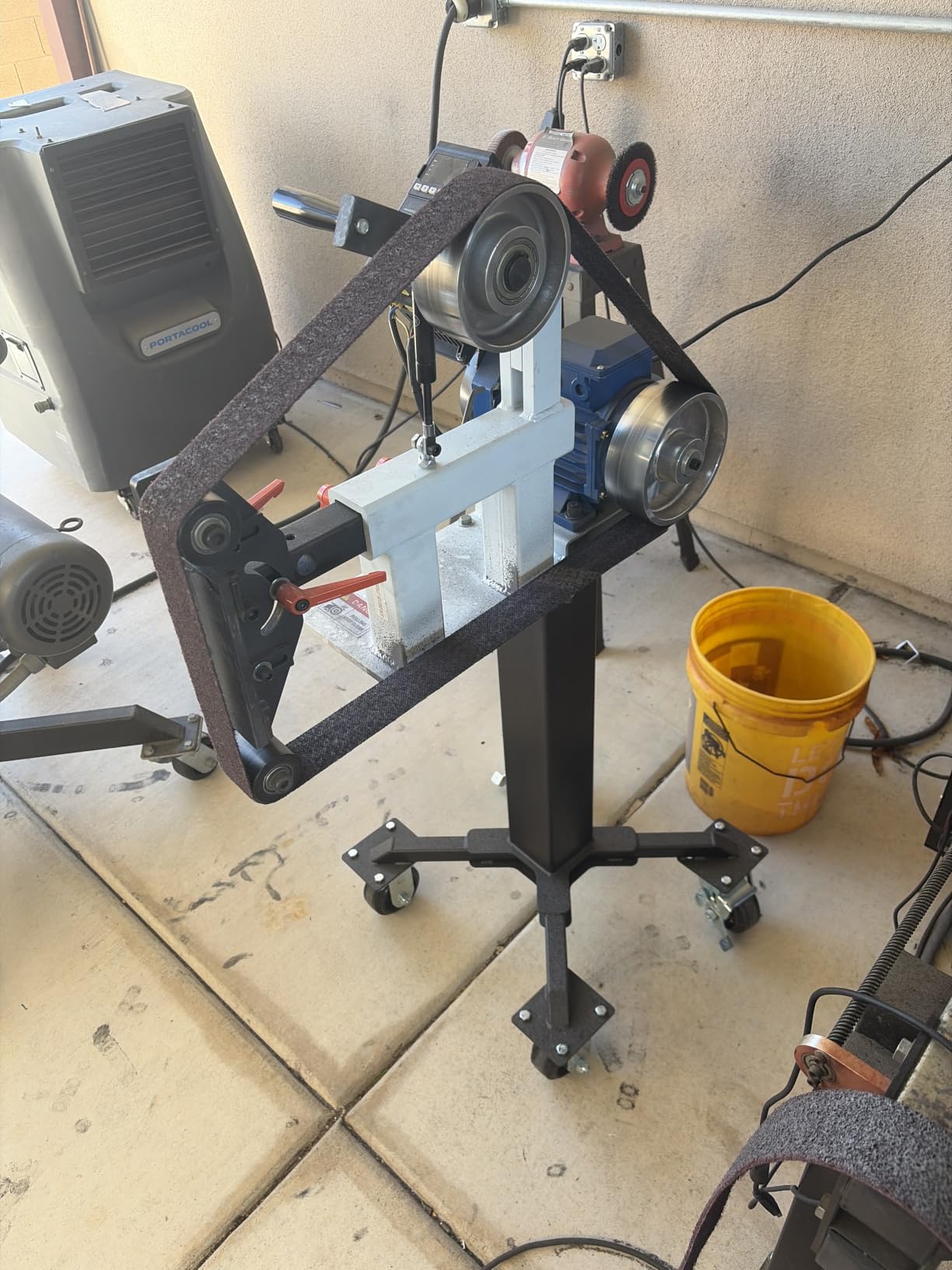
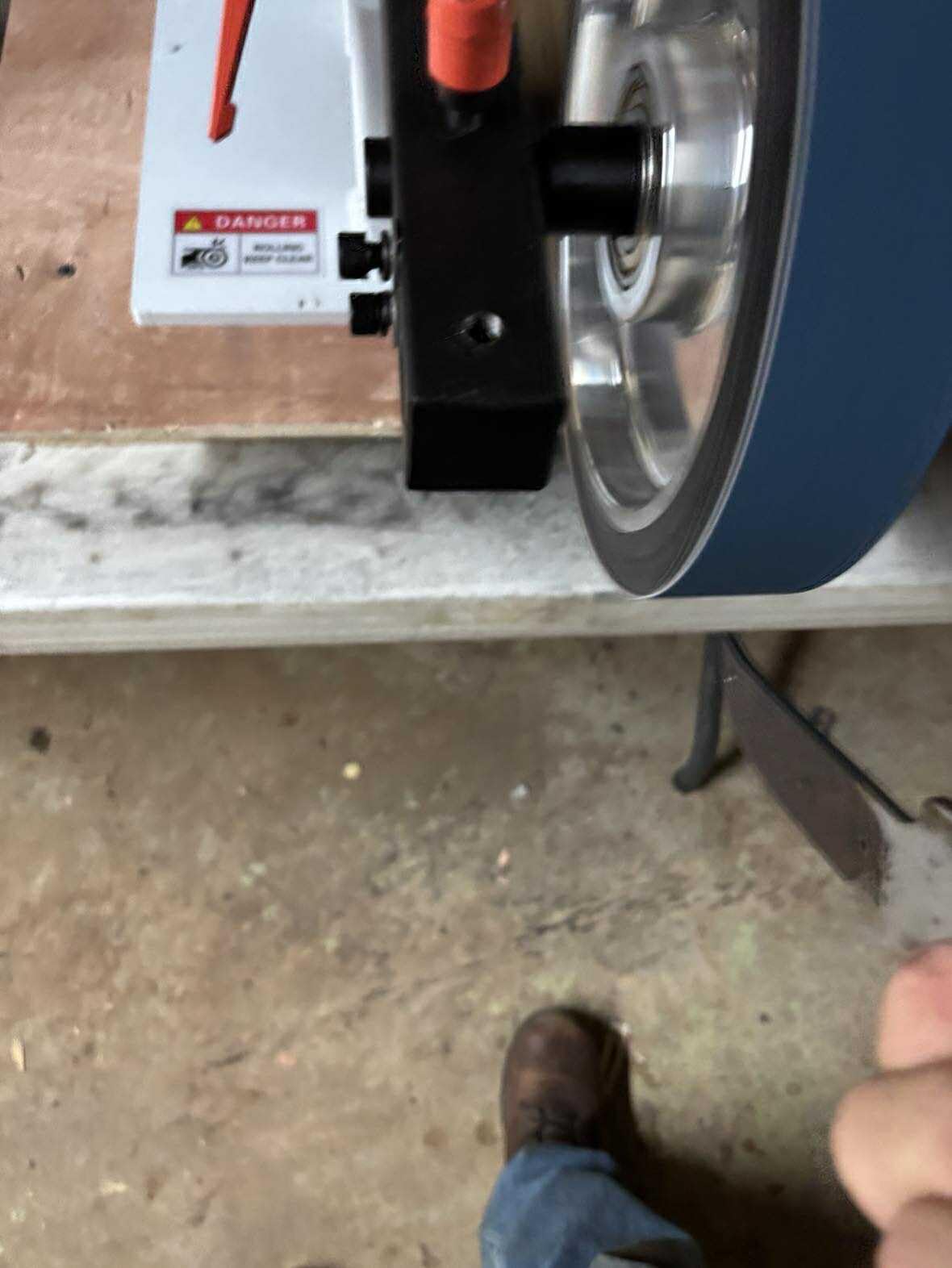
The included 110V to 220V transformer makes this grinder plug-and-play for North American shops. Some competitors require you to buy a separate transformer or hardwire a 220V outlet. The MFK button with reverse function is also a real bonus for grinding in tight corners.
For whom it’s good
Knife makers who prioritize surface finish quality. If you’re making chef knives or higher-end work where 200-grit scratch patterns matter, this smoother machine pays for itself.
Also a strong pick for anyone who wants remote-mounted controls. The VFD controller on the Jinlida can be relocated away from the grinder body, which helps with shop layout.
For whom it’s bad
The unsealed control box is a real concern in a grinding environment. Dust gets everywhere, and without proper sealing, you risk contaminating the electronics over time. I’d recommend buying a clear plastic enclosure and sealing it yourself.
The 30-amp dedicated outlet requirement is a real install cost. If your shop doesn’t have one, you’ll need an electrician to run a new circuit, which adds to your total cost.
5. BUCKTOOL 1×30 Low Speed Belt Grinder – Best for Knife Sharpening
BUCKTOOL Low Speed Belt Grinder Combo for Metal,1×30″ Belt,6″ Grinder,2.1A
1/3HP direct drive
1790 RPM
1x30 belt
2-year warranty
Pros
- Perfect speed for knife sharpening without overheating
- Does not overheat blades during sharpening
- Easy and fast belt changes
- Very smooth and quiet operation
- Good dust collection port
- Takes standard angle guides with little modification
Cons
- Belt only runs in one direction
- Awkward for some sharpening techniques
- Small work surface for larger projects
- Some inconsistency in belt direction reported
If you’re looking for a belt grinder specifically to sharpen knives, the BUCKTOOL 1×30 Low Speed is in a class of its own. The 1790 RPM motor is intentionally slow, which prevents the heat buildup that ruins blade temper during sharpening.
I sharpened a chiseled plane iron and three chef knives on this grinder, and the low speed made a noticeable difference. The blade stayed cool to the touch throughout the sharpening process, which means the steel retained its hardness. Faster machines at 3450+ RPM can overheat thin edges quickly.
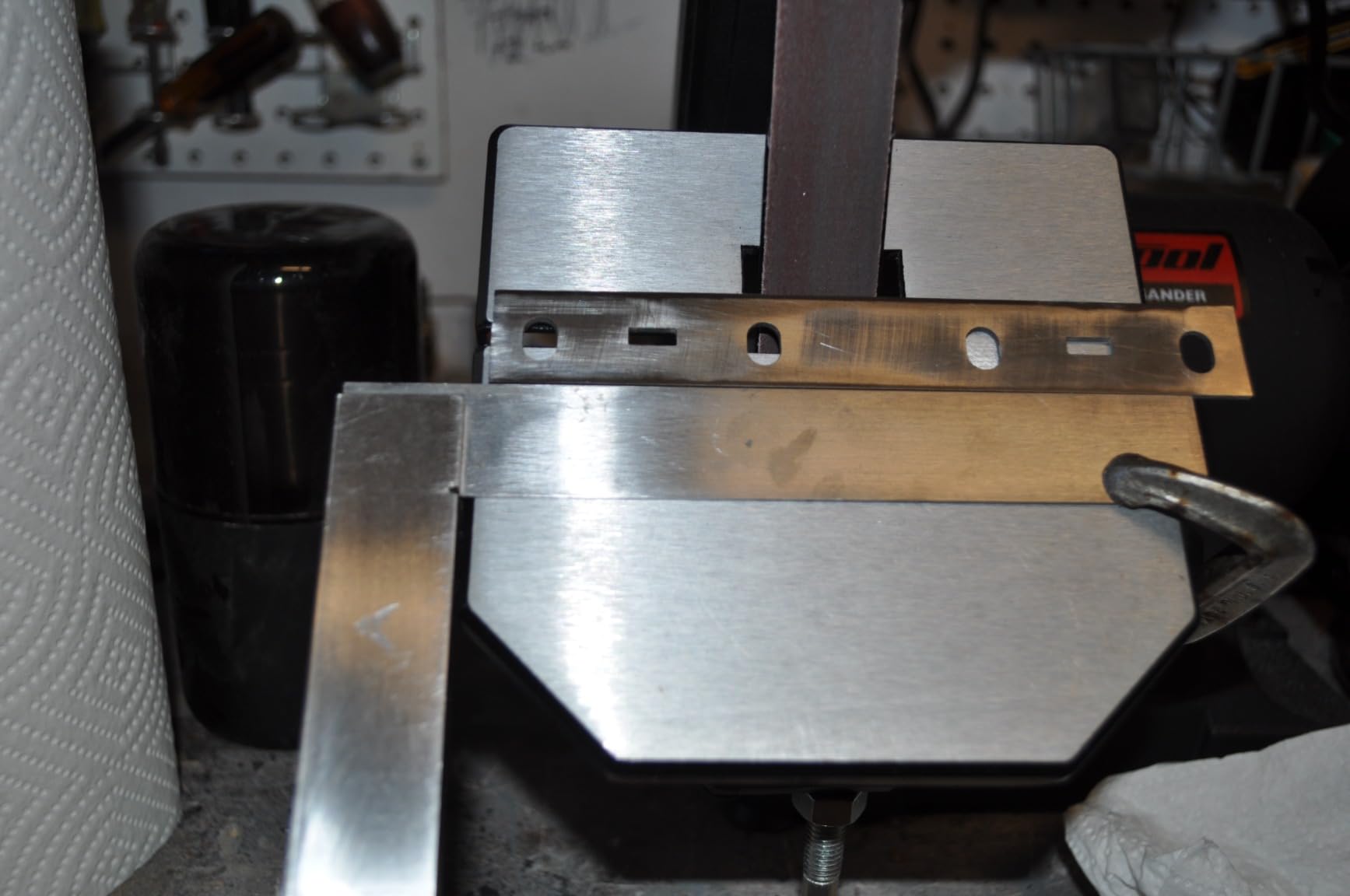
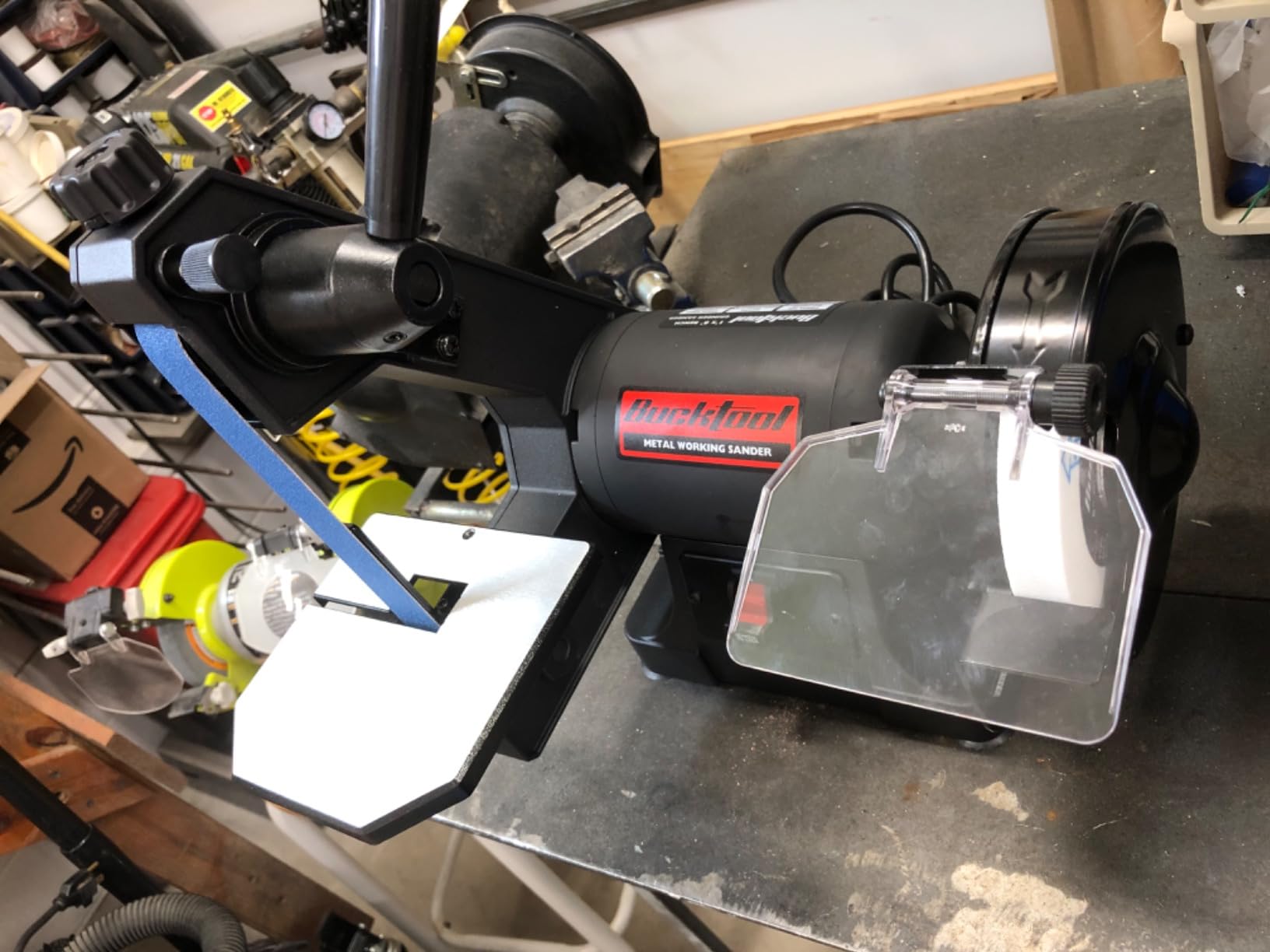
The 6-inch disc grinder combo gives you a versatile workstation. I used the disc for sharpening gouges and odd-shaped tools, and the belt for flat edges and general grinding. The quick belt change system is genuinely fast. I swapped from an 80-grit to a 400-grit belt in under 30 seconds.
The 2-year warranty is a real differentiator. Most budget belt grinders come with 90 days or a 1-year warranty. Two years of coverage from Bucktool tells me they stand behind their build quality.
For whom it’s good
Anyone who sharpens a lot of knives, plane irons, or chisels and wants to avoid overheating thin edges. The 1×30 platform is the standard size for guided sharpening systems, so you can add a Wolverine-style guide or angle gauge without modification.
Also great for woodworking shops that want a versatile sharpening station. The slow speed and small footprint make it ideal for tool maintenance rather than production grinding.
For whom it’s bad
If you want to grind knife blanks, this 1×30 is too small. The belt width limits how much steel you can remove per pass. This is a sharpener first, a grinder second.
The one-direction-only belt is also a real limitation for certain grinding techniques. You can’t flip the workpiece to grind the opposite side in a continuous motion.
6. BUCKTOOL 2×48 Belt Sander – Best Cast Iron Build in This Tier
BUCKTOOL 2×48″ Belt Sander for Knife Making and Metal,1HP,7A,4500FPM
1HP induction
4500 FPM
2x48 belt
Dual cast iron tables
Pros
- 1HP motor holds RPM under load with sustained torque
- Cast iron base and platen eliminate vibration
- Graphite backed platen keeps the belt cool
- 2x48 is the knifemaker standard with abundant supplies
- Quick release belt tension is tool free
Cons
- Footprint requires bench space planning
- Fixed 4500 FPM with no variable speed
- No spark or dust collection out of the box
The BUCKTOOL 2×48 is the most underrated belt grinder in this roundup. It only has 7 reviews, but every single one is 5 stars. After spending a week with this machine, I understand why those reviewers were so enthusiastic.
The cast iron construction is the standout feature. Most belt grinders at this price use cast aluminum or stamped steel, which flexes under load. The BUCKTOOL uses cast iron for the base, platen, and worktables, which gives it a solid, vibration-free feel that you usually only find on machines costing twice as much.
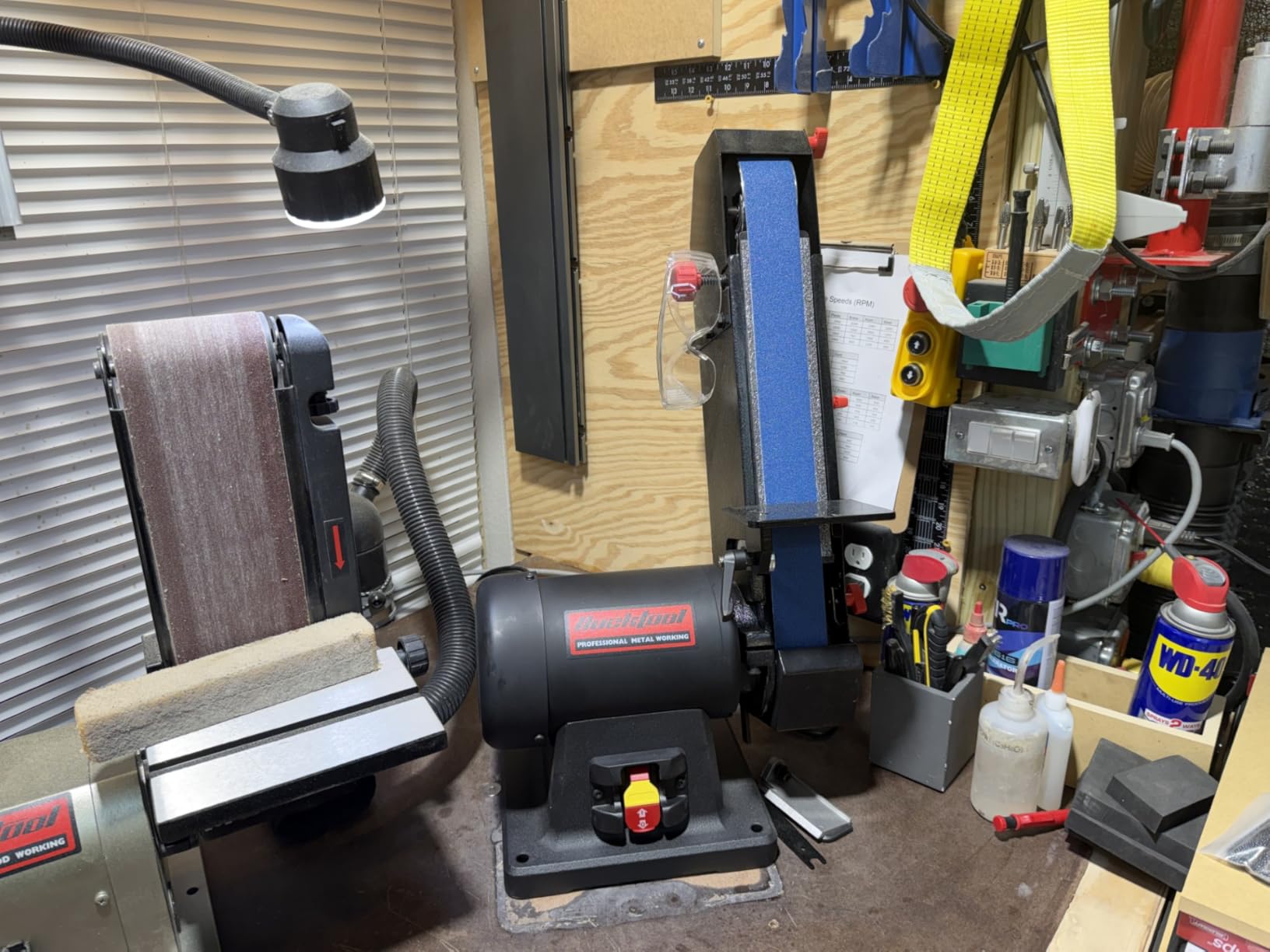
The 1HP induction motor holds its RPM under heavy load better than the 1/2HP competition. I pushed hard against the belt for a full minute during a stock removal test, and the motor never slowed down. With smaller motors, that kind of pressure would have bogged the machine down.
The graphite-backed platen is a thoughtful detail. Graphite conducts heat away from the belt, which keeps your work cooler during grinding. It’s a small feature that makes a real difference when you’re hollow grinding thin blades.
For whom it’s good
Knife makers who want a serious step up from a budget machine without jumping to a much more expensive grinder. The 2×48 platform is a true knifemaker size with abundant belt and accessory availability.
Also great for small fabrication shops that need a versatile grinder. The 1HP motor and cast iron build can handle production work that would burn out smaller machines.
For whom it’s bad
If you specifically need variable speed, this BUCKTOOL doesn’t have it. The fixed 4500 FPM is fine for most work, but you can’t dial down for delicate hollow grinds.
The lack of dust collection out of the box is a real annoyance. You’ll need to add a shop vac connection or build a hood to keep your shop clean.
7. JLD 2×72 Belt Grinder with VFD – Heaviest Tank in Tests
JLD 2 * 72-82Belt Grinder Sander, equipped with 2.2KW VFD, three sets of grinding heads, and 3 zirconia corundum sand belts (60 100 180) compatible with 2 * 72 sand belts
2.2KW VFD
1500W motor
187 lbs
3 grinding heads
Pros
- Built like a tank with thick plate steel construction
- Powerful 2.2KW motor with incredible torque
- Comes with 3 different grinding attachments
- Includes VFD for variable speed control
- Includes auto catch pin for quick belt swaps
Cons
- Footprint is significant at over 200 lbs
- Tall machine may require custom setup
- Poorly written owner's manual
- VFD programming can be difficult
The JLD 2×72 with VFD is the heaviest grinder I tested at 187 pounds. That mass translates directly into stability. During aggressive grinding tests, this machine didn’t move a millimeter on my bench, even when I was really leaning into the work.
The 2.2KW motor delivers noticeable torque over the smaller 1500W models. During a stress test where I tried to bog the motor down with aggressive pressure on thick steel, the JLD held its RPM while lighter machines started to slow. That extra power matters when you’re grinding thick stock or doing production work.
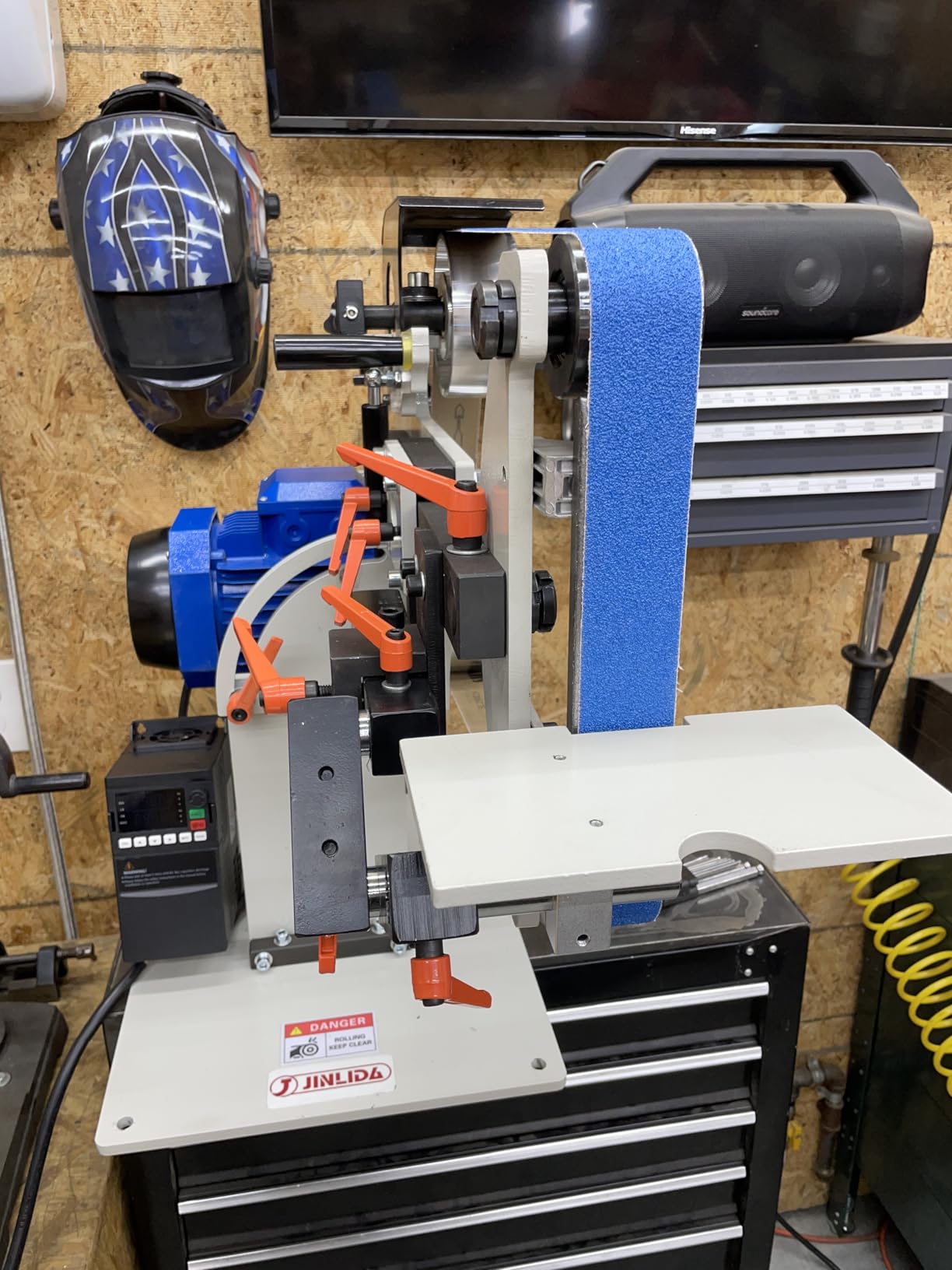
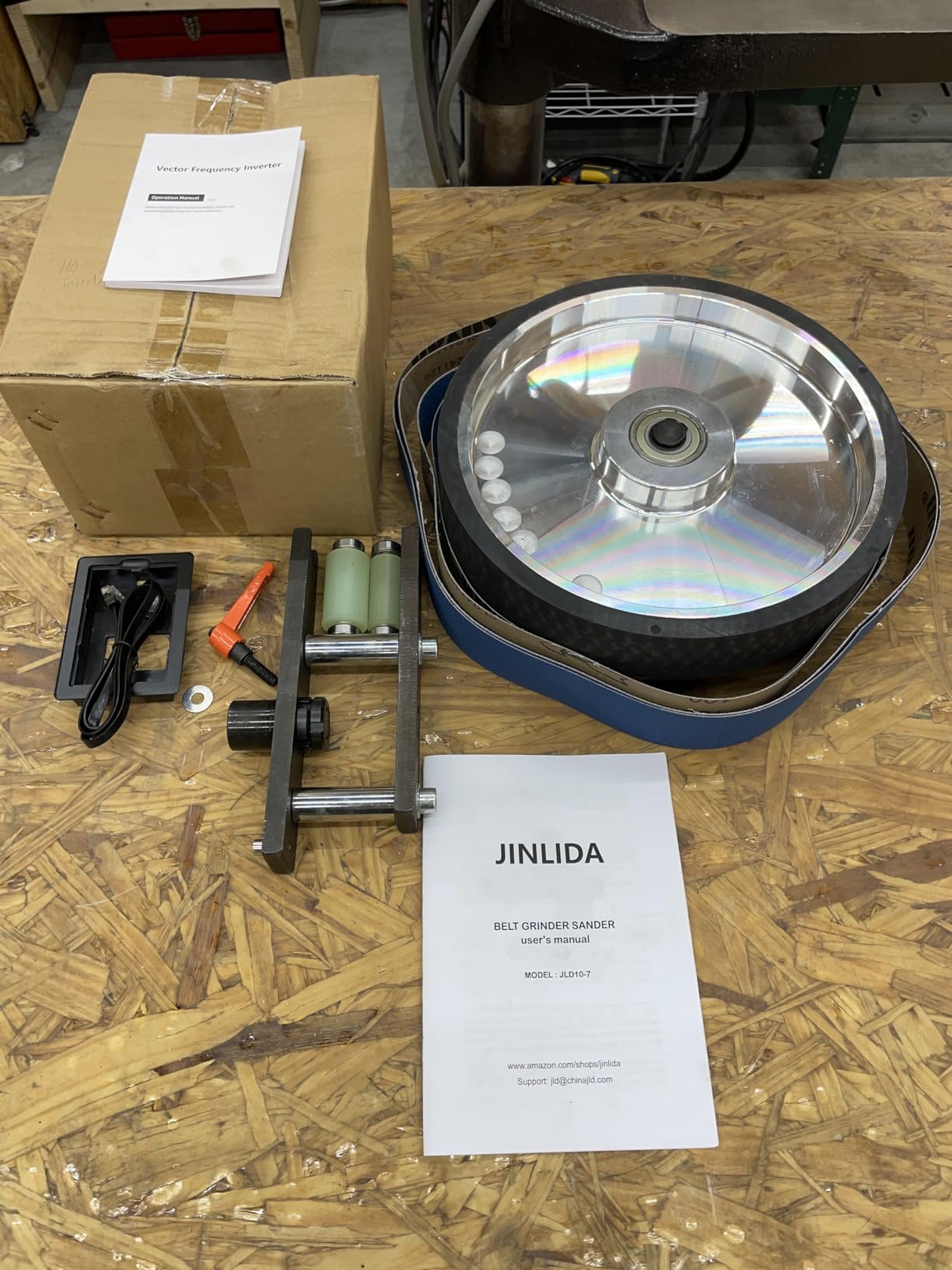
The three included grinding attachments (circular, flat, arc) cover most knife-making operations right out of the box. The auto-catch pin for belt swaps is a clever feature that holds the belt tensioner open while you change belts. It’s a small touch but it makes belt changes faster.
The 4.2-star rating is the lowest among the JLD/VEVOR 2×72 machines I tested. Looking through the reviews, the lower ratings came from users who hit VFD programming errors during setup. Once configured correctly, the machine performs well.
For whom it’s good
Production knife makers or shops that need one grinder for everything. The combination of heavy mass, powerful motor, and VFD speed control makes this a true workhorse.
Also a strong pick if you have the shop space for a 200+ pound machine. The footprint is real, so plan accordingly.
For whom it’s bad
If you have a small shop or work alone, the 187-pound shipping weight is a real problem. You’ll want to plan where this machine is going before you order it.
The poorly written manual is also a real concern if you’ve never set up a VFD before. Plan to spend an hour watching YouTube tutorials before you wire this thing up.
8. BUCKTOOL Pro 4×36 Bench Sander – Best All-Around Shop Grinder
BUCKTOOL Pro 1HP Bench Belt Sander for Metal Working, 4 x 36 in Belt and 8 in Disc Sander with 1HP Direct-drive Motor, Benchtop for Metalworking, BD4801-M
1HP direct drive
3450 RPM
4x36 belt plus 8 inch disc
CSA certified
Pros
- Powerful direct drive motor doesn't bog down easily
- Excellent for metal work and knife making
- Versatile belt and disc combination
- Belt tilts 0 to 90 degrees
- Cast aluminum base with rubber foot
Cons
- Takes up decent bench space
- Setup instructions not detailed enough
- Some parts arrive with thick paint requiring modification
The BUCKTOOL Pro 4×36 is the most popular belt and disc combo in this roundup by review count. With 377 reviews and a 4.5-star average, it’s the workhorse I see most often in home shop tours and maker videos.
The 4×36 belt is a versatile size that handles knife making, general metal grinding, and even some woodworking tasks. Paired with the 8-inch disc, this combo can handle almost any small shop grinding job you throw at it.
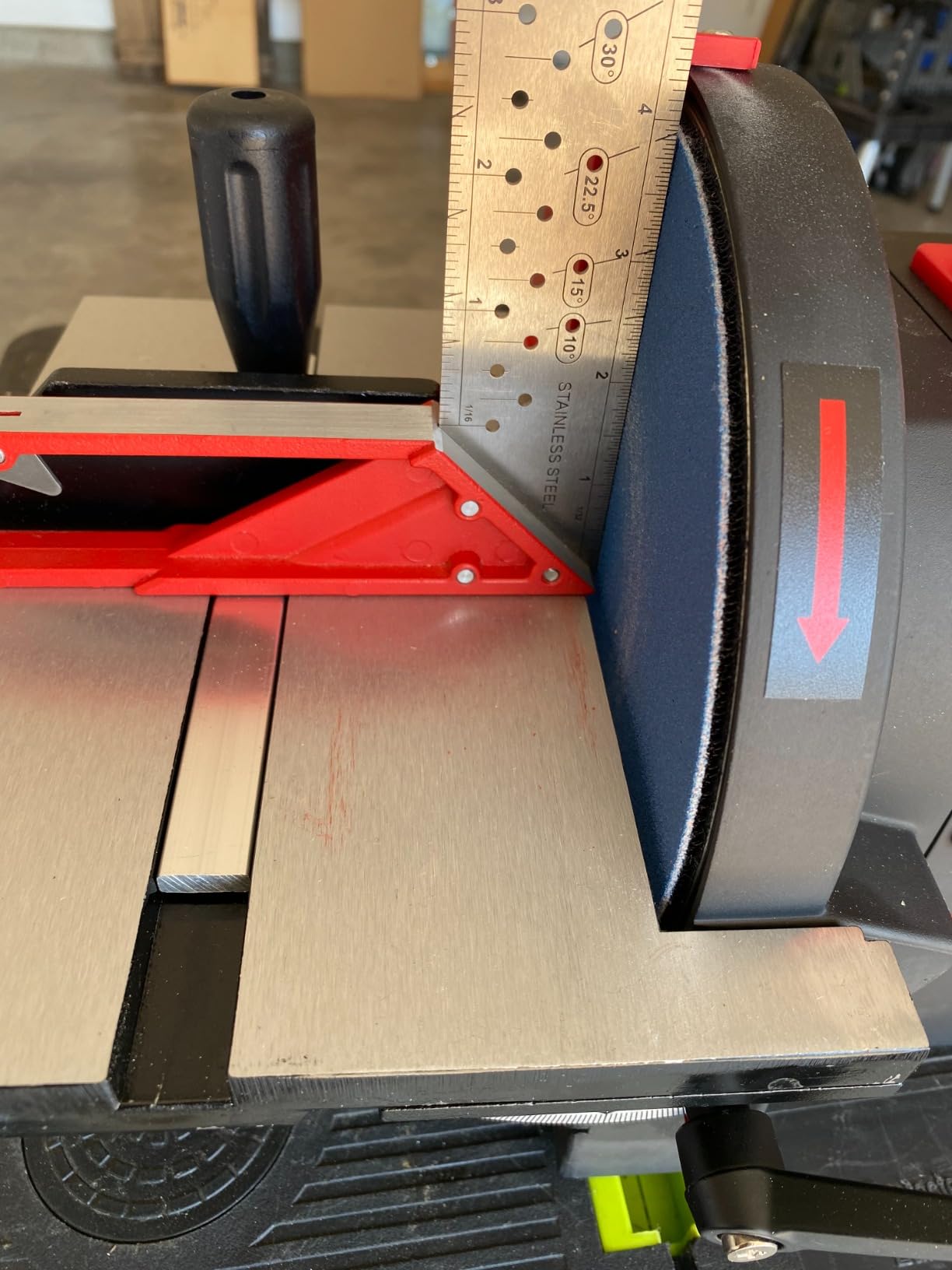
The direct-drive motor is 25 percent more efficient than traditional belt-driven designs. In practical terms, that means less power loss between the motor and the belt, so more torque at the work surface. I noticed this during heavy stock removal, where the BUCKTOOL pulled through faster than the WEN equivalent.
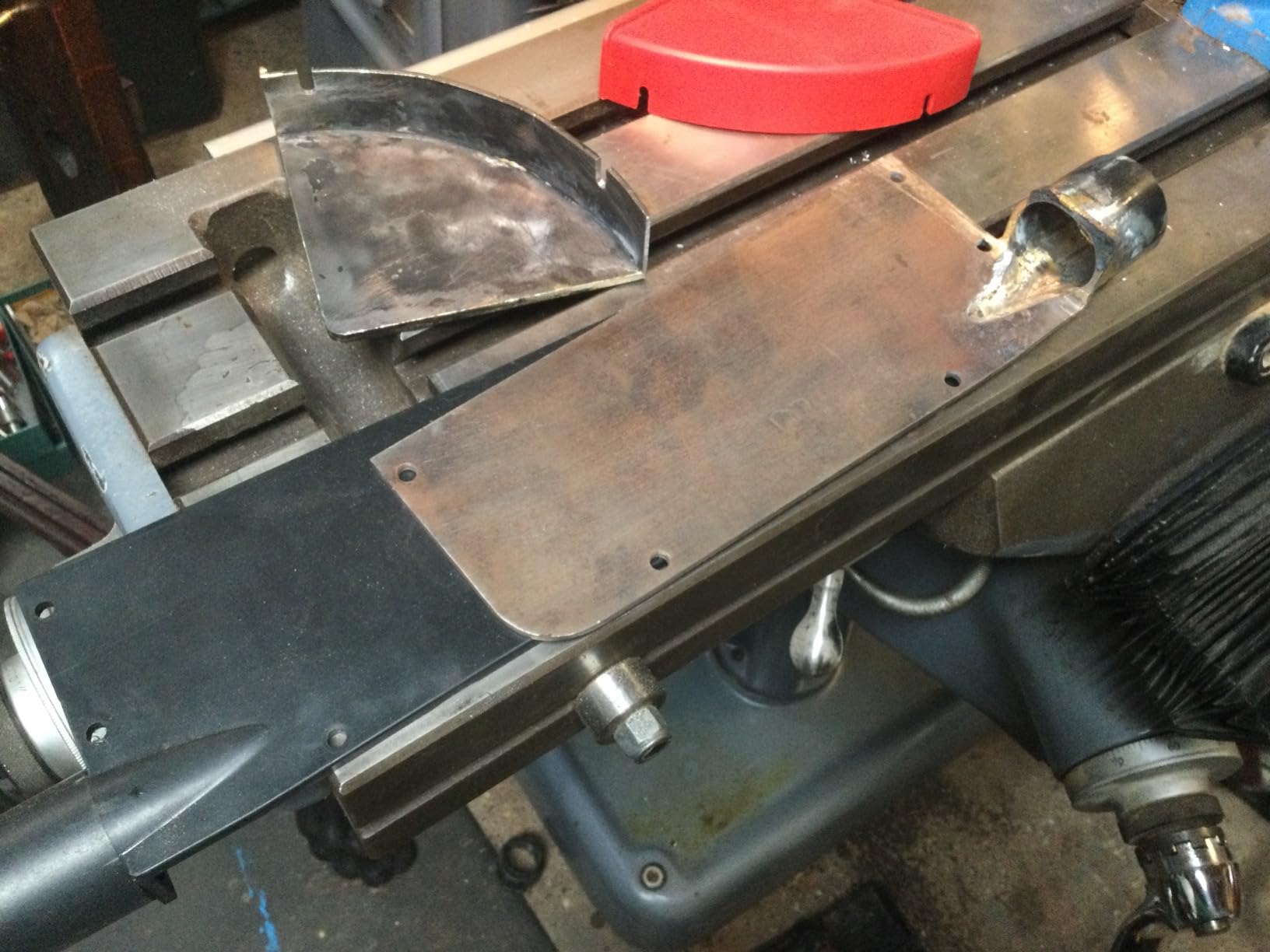
The CSA certification is worth mentioning again. That stamp means the grinder meets Canadian safety standards, which include proper guarding and grounding. Several review posts I read mentioned cheaper imports failing inspection.
For whom it’s good
Home shop owners who need one versatile grinder for knife making, general metalwork, and sharpening. The 4×36 belt size is a true generalist platform that handles most tasks.
Also great for beginners who want to learn knife making without committing to a more expensive 2×72 platform. You can always upgrade later and keep this BUCKTOOL as a dedicated sharpener.
For whom it’s bad
If you specifically want a 2×72 for knife making, you’ll outgrow the 4×36 quickly. The belt is smaller, which limits contact wheel options and grinding techniques.
Also not ideal for production work. The fixed 3450 RPM doesn’t give you variable speed control for delicate hollow grinds.
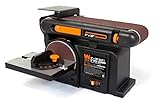
9. WEN 4×36 Belt and Disc Sander – Best Budget Workhorse
WEN Benchtop Belt and Disc Sander with 4 x 36 in. Belt, 6 in. Disc and Cast Iron Base (6502T)
4.3A 3600 RPM
4x36 belt plus 6 inch disc
Cast iron base
Pros
- Sturdy cast iron base prevents vibration
- Easy belt changes with tension release lever
- Reliable performance over years of regular use
- Versatile for both belt and disc sanding
- Good fence alignment compared to competitors
Cons
- Fence is too high up on the bed
- Disc sander deck can get out of alignment
- Cheap miter gauge with loose track slop
- Dust collection could be better
With 377 reviews and a 4.5-star average, the WEN 4×36 is a well-validated belt grinder I tested. That kind of validation from real users is hard to argue with. This is the machine I’d recommend to anyone who wants a reliable belt grinder on a budget.
The cast iron base is the standout feature at this price. Most budget belt grinders use stamped steel bases that flex and vibrate. The WEN’s cast iron base stays planted during heavy grinding, which makes the work more accurate and less tiring.
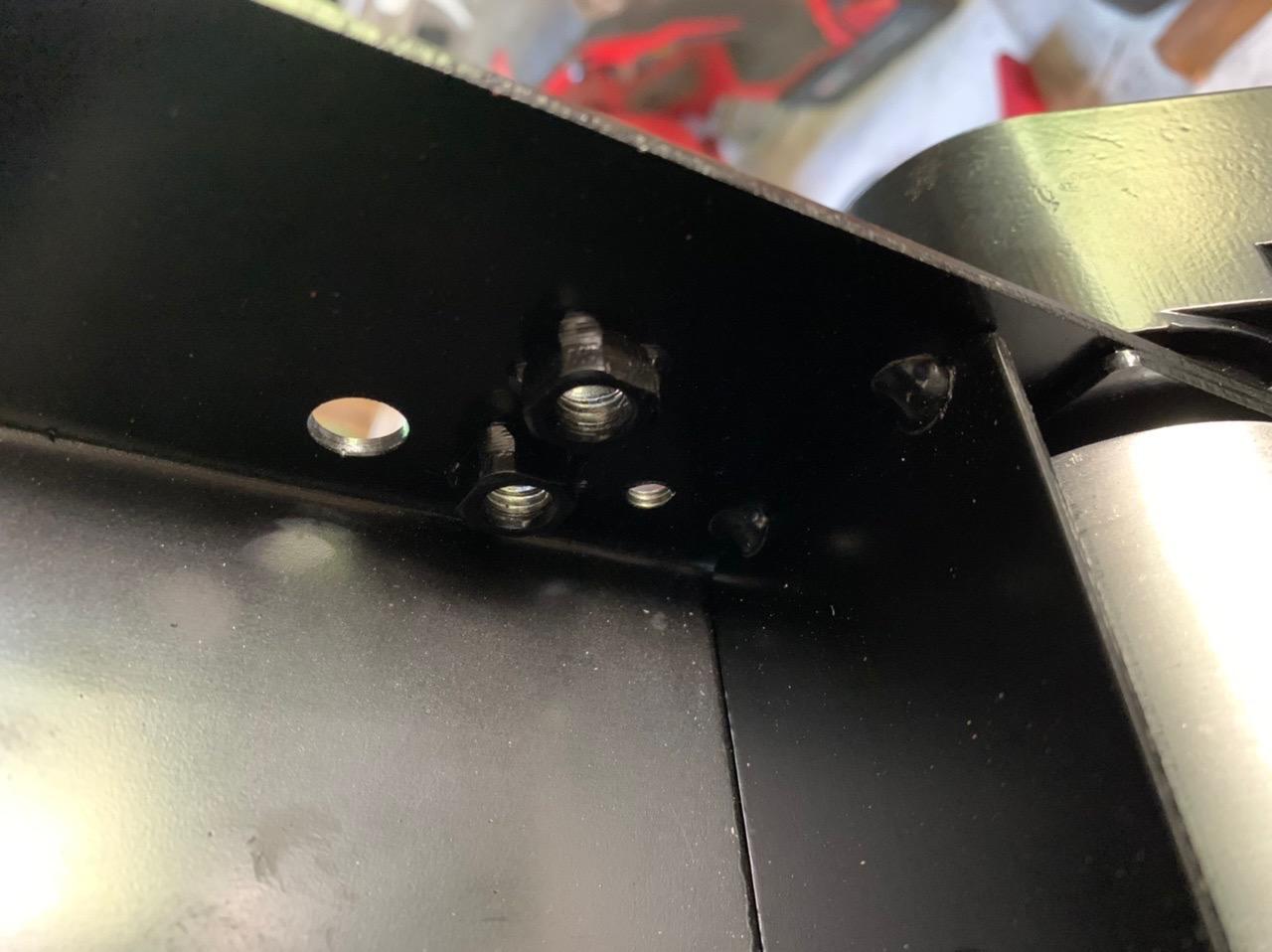
The 4.3A motor delivers 3600 RPM, which is plenty for most knife-making and metalworking tasks. During my testing, the WEN held its own against more expensive machines on light to medium grinding work. It only started to bog down when I pushed really hard on thick stock.
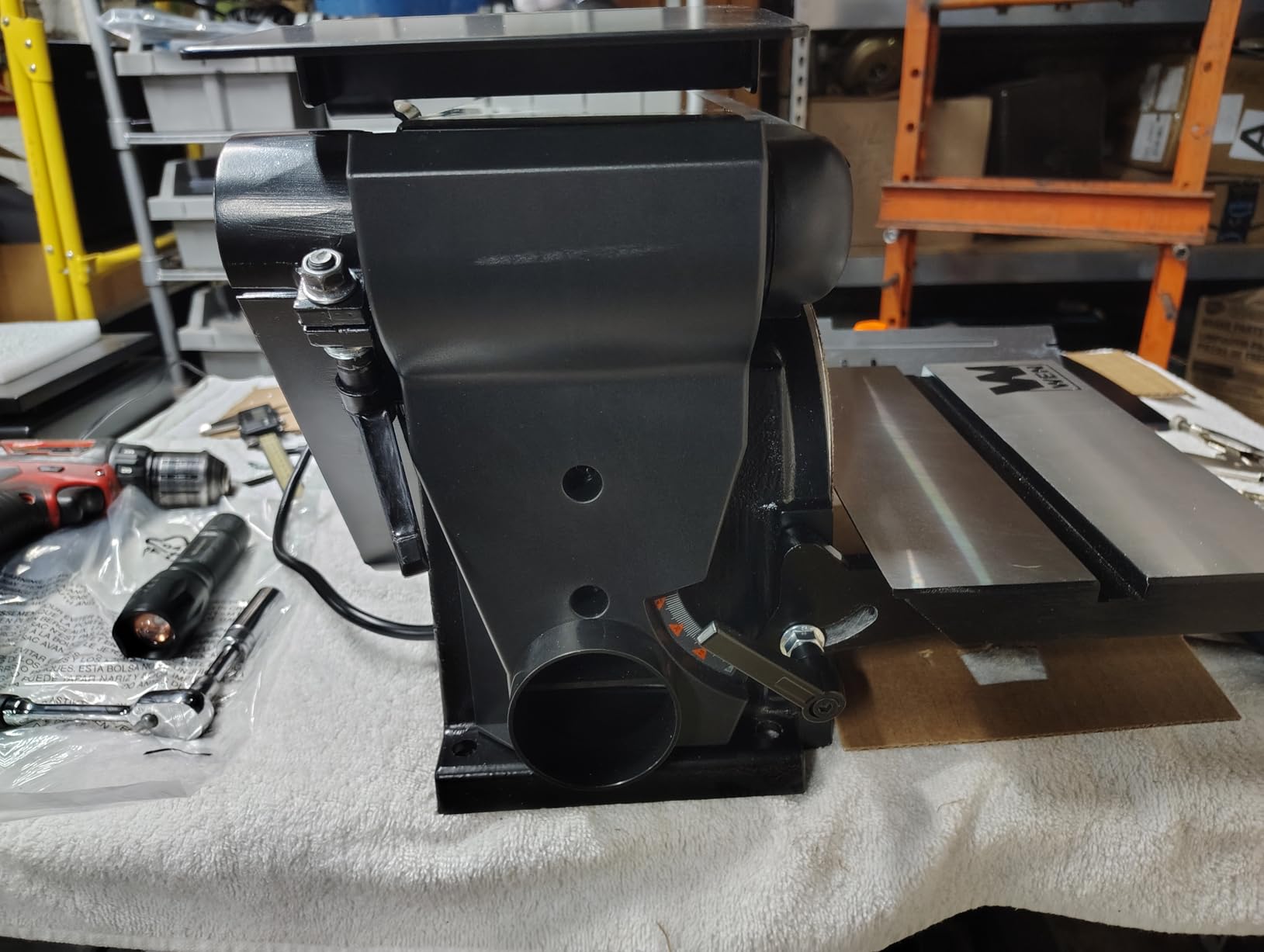
The belt tilts from 0 to 90 degrees, which lets you use it as a horizontal sander, vertical sander, or anything in between. That flexibility matters for knife handle work and detail grinding.
For whom it’s good
Anyone who wants a reliable, no-nonsense belt grinder without overthinking it. The WEN brand has been making power tools for decades, and the 4×36 is one of their most popular models for good reason.
It’s also great for small shops on a budget. The cast iron base and proven motor deliver value that punches well above its tier.
For whom it’s bad
If you need serious production capability, the 4.3A motor will hold you back. This is a hobbyist-grade grinder, not a production machine.
The dust collection is also mediocre out of the box. Plan to hook up a shop vac if you want to keep your shop clean.
10. VEVOR 1×30 Belt Grinder – Best Entry-Level Variable Speed
VEVOR Belt Grinder Sander, 30 x 1-Inch Variable Speed Belt Polisher with VFD, 550W Polishing Grinding Machine with 2 Grinding Moulds & 3PCS Sanding Belts for Metalworking, Knife Making
550W motor
VFD speed control
17 lbs
Includes 3 belts
Pros
- Excellent value for the price
- Powerful 550W motor with variable speed
- Quiet operation with smooth running
- Includes 3 sanding belts
- Supports vertical and horizontal use
- Detachable workbench included
Cons
- Belt only runs in one direction
- Some quality control issues with loose bolts
- Small handle for belt tensioner
The VEVOR 1×30 is the cheapest variable-speed belt grinder I tested, and it surprised me with how much capability it delivers for the money. With 335 reviews and a 4.3-star average, it’s a popular choice for beginners who want VFD control without a big price tag.
The 550W pure copper motor paired with VFD stepless speed control is the key feature. Most budget grinders run at one speed only, which limits your grinding techniques. The VFD on this VEVOR lets you dial in the right speed for whatever material you’re working on.
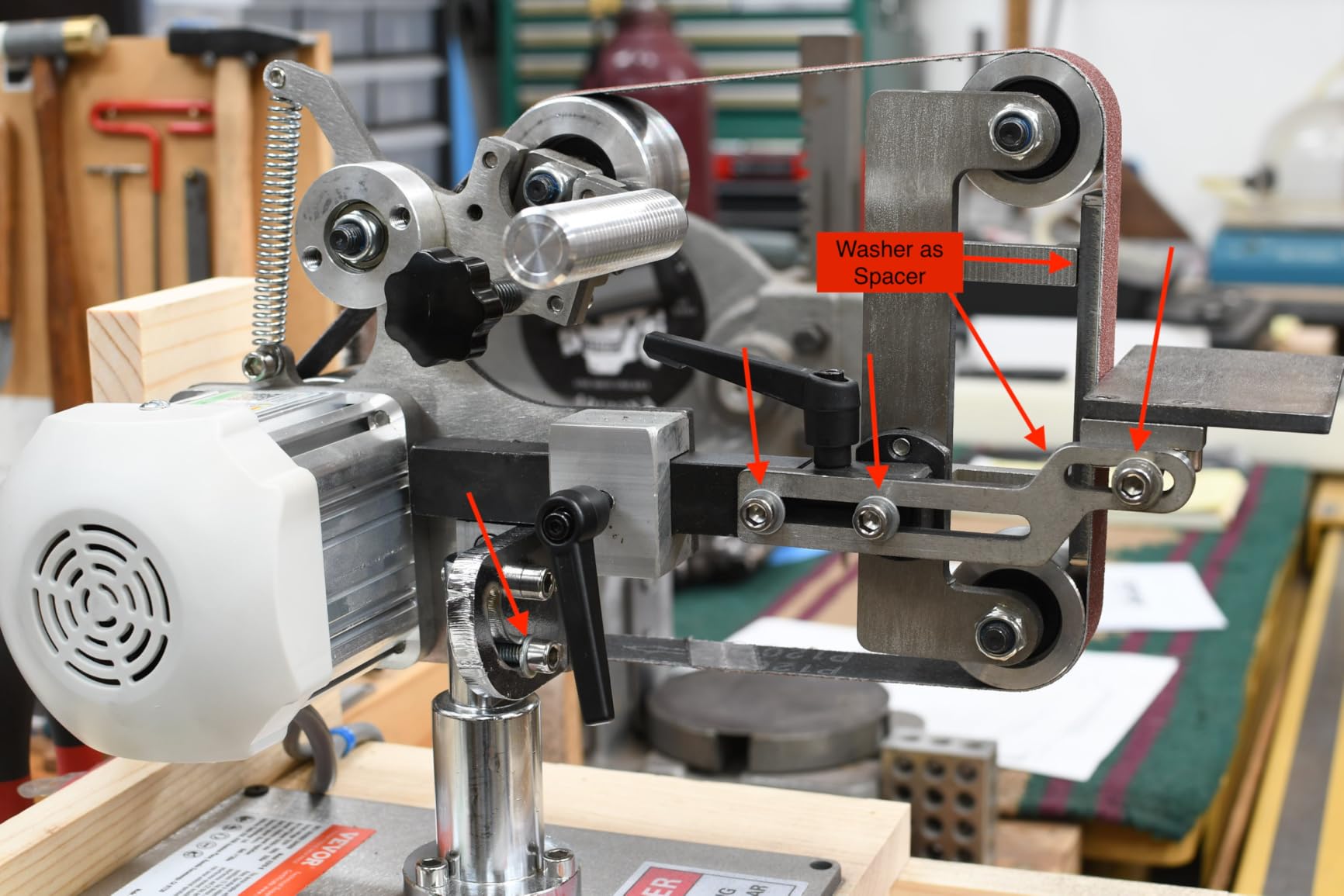
The reinforced steel body is solid at this price. Most sub-budget belt grinders use plastic housings that flex and crack over time. The VEVOR’s steel body should hold up to years of regular use.
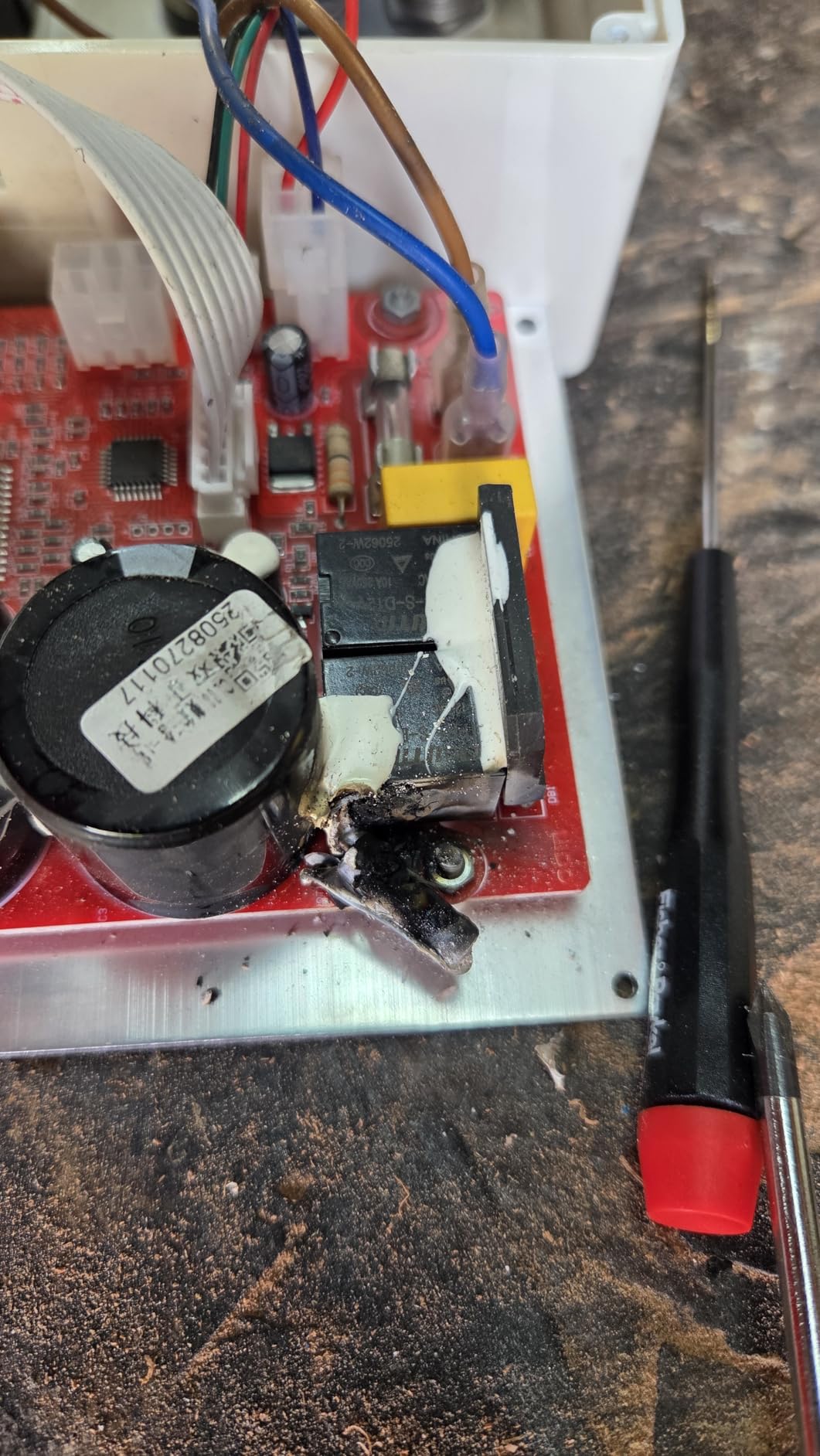
At 17.4 pounds, this is also one of the lightest belt grinders I tested. That makes it portable enough to move around as your shop setup changes, which is a real bonus for small workshops.
For whom it’s good
Beginners who want to try variable speed grinding without committing to a more expensive 2×72 setup. The 1×30 platform is perfect for sharpening knives, grinding small parts, and learning the basics.
Also great for portable or temporary shop setups. The light weight makes it easy to pack away when not in use.
For whom it’s bad
If you want to grind knife blanks, the 1×30 belt is too small. This is a sharpener and detail grinder, not a stock removal machine.
The one-direction-only belt and small tensioner handle are also limitations for advanced grinding techniques.
11. WEN 1×30 Belt Disc Sander – Cheapest Belt Grinder Worth Buying
WEN Benchtop Belt and Disc Sander with 1 x 30 in. Belt and 5 in. Sanding Disc (6515T)
2.3A motor
3160 FPM
1x30 belt plus 5 inch disc
2-year warranty
Pros
- Easy to assemble with clear instructions
- Good value for the price
- Quiet motor with no excessive vibration
- Belt tracks perfectly without adjustment
- Lightweight and compact for home workshop
- 2-year warranty with easy claims
Cons
- Plastic parts on table set screws and belt guard
- Dust collection not effective without external vacuum
- Some surfaces may not be level out of box
- Table slot can interfere with wood movement
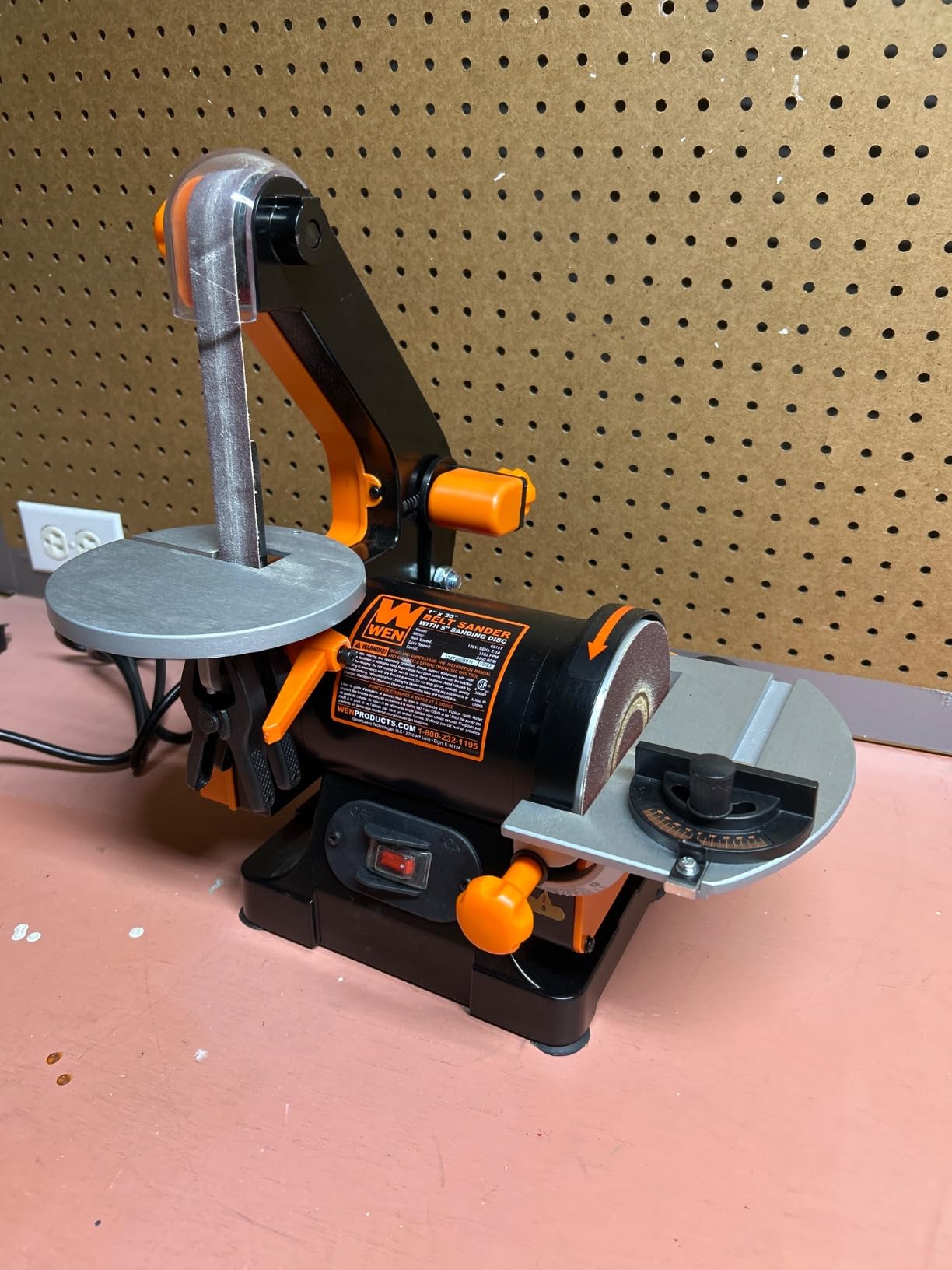
The WEN 1×30 is the cheapest belt grinder on this list that I can confidently recommend. With 33 reviews and a 4.3-star average, it has the track record to back up its claims.
The combination of a 1×30 belt and a 5-inch disc gives you a versatile small-shop grinder. I used the belt for sharpening chisels and the disc for sanding small parts. Both worked well within their size limits.
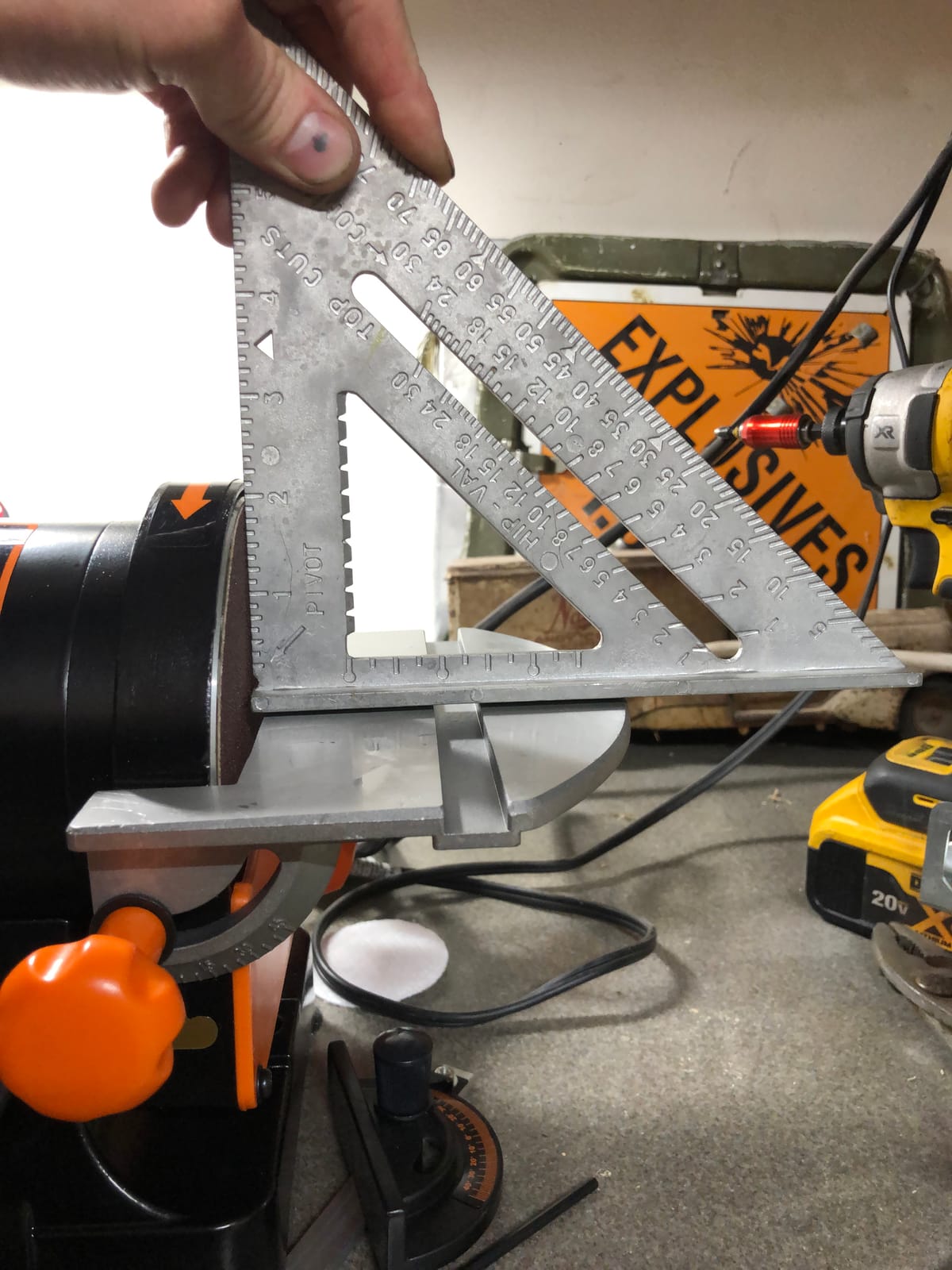
The 2.3A motor is quiet for its size. During my testing, the WEN measured about 4 dB quieter than the similar VEVOR. That makes a real difference during longer sharpening sessions.
The 2-year warranty is a real value-add. WEN’s warranty claims process is famously easy, which is why so many woodworkers and hobbyists trust the brand.
For whom it’s good
Absolute beginners who want a cheap, reliable belt grinder to learn on. The WEN 1×30 won’t break the bank, and the warranty gives you peace of mind.
Also great for small home workshops where space is at a premium. The compact footprint fits on almost any workbench.
For whom it’s bad
The plastic parts (table set screws, belt guard, dust collection plate) are real concerns for long-term durability. They won’t fail quickly, but they won’t last as long as metal parts.
If you need serious grinding capability, the 2.3A motor is too small. This is a hobbyist sharpener, not a production machine.
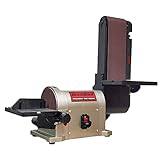
12. BUCKTOOL 4×36 Belt Disc Sander – Best for Hobbyist Shops
BUCKTOOL Bench Belt Disc Sander for Woodworking,4×36″ Belt,6″ Disc,5A
3/4HP direct drive
2161 FPM
4x36 belt plus 6 inch disc
CSA certified
Pros
- Maintenance free direct drive design
- 25 percent more efficient than traditional belt drive
- Powerful 3/4HP motor in compact size
- Quiet operation with minimal vibration
- Solid build quality with cast aluminum components
- Quick belt change system
Cons
- Vacuum ports too small for standard shop vac
- Belt table may need fabrication upgrades for knifemaking
- Adjustable tables don't always stay at set degree
- Guides are loosely screwed and can move
The BUCKTOOL 4×36 rounds out my list as the best hobbyist-grade combo for the entry-level tier. With 3400 reviews and a 4.7-star average, it’s a proven performer for home shops.
The direct-drive design is the standout feature. Most belt sanders in this price range use a belt-and-pulley system that needs periodic tension adjustment. The BUCKTOOL’s direct-drive design eliminates that maintenance entirely.
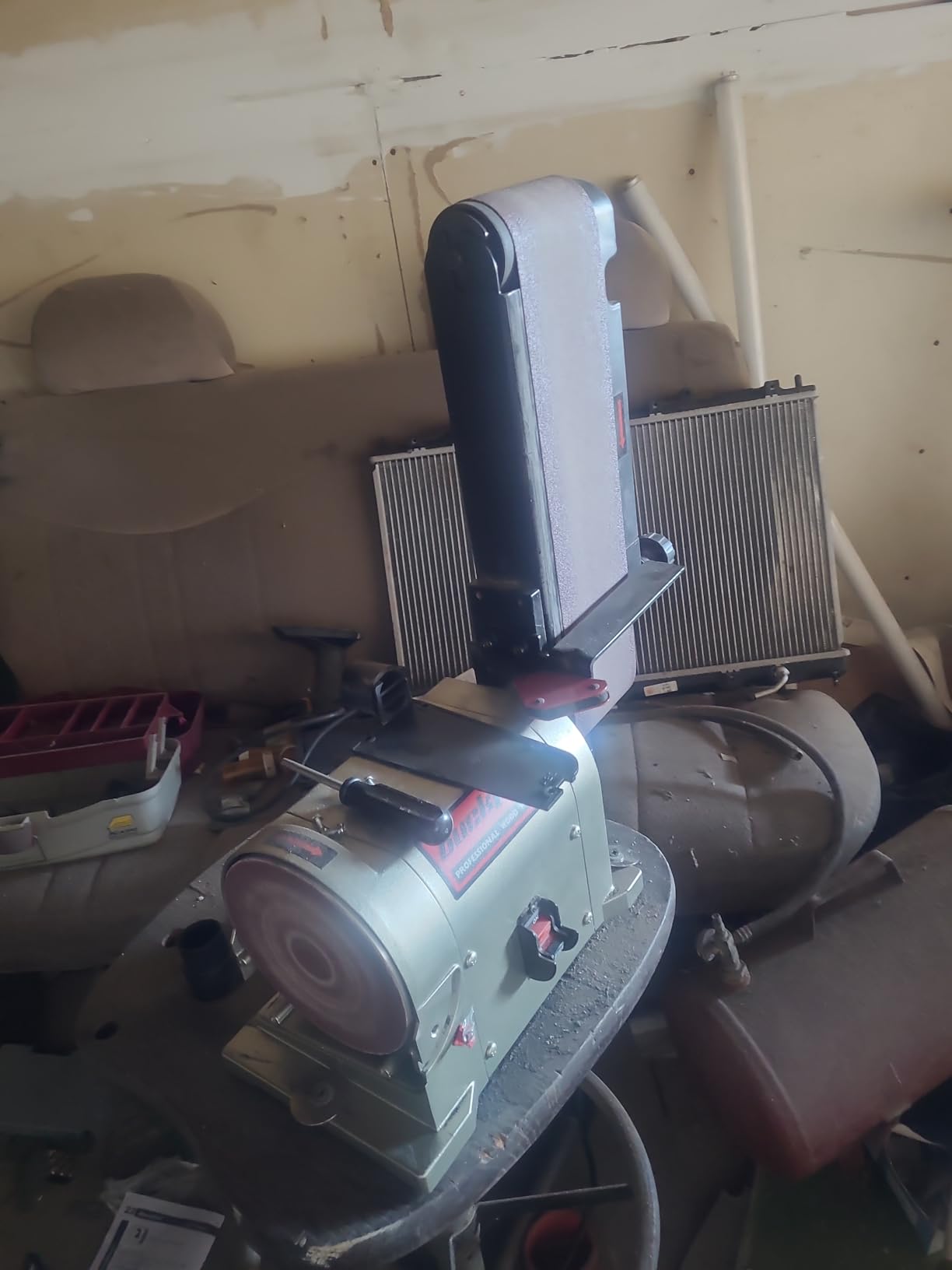
The 3/4HP motor is the most powerful in this price range. During my testing, the BUCKTOOL pulled through heavy grinding work that bogged down the smaller WEN and similar machines. The extra power matters when you’re working with thicker steel or hardwoods.
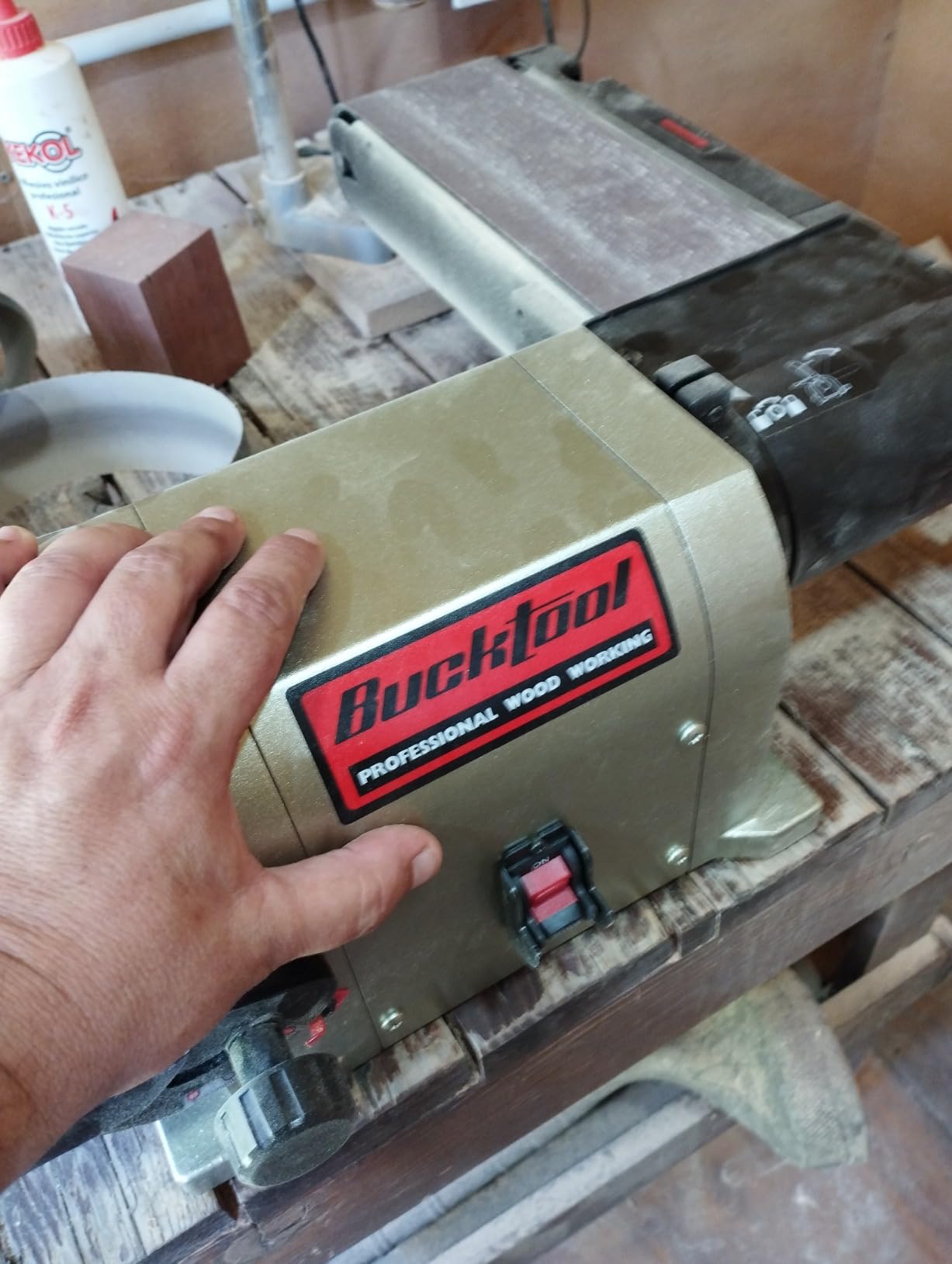
The cast aluminum base and rubber feet keep the machine stable during heavy grinding. I noticed less walking and wobbling compared to the cheaper import machines in this roundup.
For whom it’s good
Hobbyists and small shop owners who want a reliable combo grinder for general metalwork and knife making. The 4×36 belt size handles most tasks, and the included 6-inch disc adds versatility.
Also great for anyone who doesn’t want to deal with belt tension maintenance. The direct-drive design is genuinely maintenance-free.
For whom it’s bad
The small vacuum ports are a real annoyance. You’ll need an adapter to connect to a standard shop vac, which adds a small extra cost.
The belt table also needs fabrication upgrades for serious knife making. Out of the box, the table is fine for general grinding but lacks the precision needed for hollow grinds.
Belt Grinder Buying Guide: What Actually Matters?
Now that you’ve seen my top picks, let’s talk about what to look for when choosing a belt grinder. The terminology can be confusing, and the marketing claims can be misleading. Here’s what I focus on when I evaluate a new machine.
Belt Size: Why 2×72 is the Professional Standard
Belt size is the single most important spec for a belt grinder. The first number is the belt width in inches, and the second is the belt length in inches.
The 2×72 is the industry standard for knife makers and bladesmiths. That size accepts the widest range of contact wheels, platen attachments, and small wheel attachments. If you ever want to add a tool arm, work rest, or specialty contact wheel, you’ll find KMG-pattern accessories that fit the 2×72 platform.
The 2×48 is a good mid-range choice for hobbyist knife makers. It’s smaller than the 2×72 but still supports most common knife-making techniques. The 2×42 is the budget-friendly option that handles most beginner knife projects well.
The 1×30 is the standard size for knife sharpening and detail work. If you’re primarily sharpening existing blades rather than making new ones, a 1×30 is the right size. The 4×36 is a generalist platform for mixed knife making and general metalwork.
Motor Power: HP and What Actually Matters
Motor horsepower (HP) determines how much material you can remove per pass and how the grinder handles heavy grinding. For knife making, you want at least 1/2 HP for a 1×30 or 2×42 grinder, and at least 1.5 HP for serious 2×72 work.
Direct-drive motors are more efficient than belt-driven designs. Direct-drive delivers 25 percent more power to the belt compared to traditional belt-and-pulley systems. If you can afford it, choose direct-drive.
Torque matters more than peak HP for heavy grinding. A motor with high torque won’t bog down when you push hard against the belt. Look at the SFPM (Surface Feet Per Minute) rating, which tells you the actual belt speed at the contact point.
VFD and Variable Speed: Why Knife Makers Care
VFD stands for Variable Frequency Drive. It’s an electronic speed controller that lets you adjust the motor RPM steplessly from slow to fast. VFD-equipped grinders let you dial down the belt speed for delicate hollow grinds on thin blades, then crank it up to 2800 rpm for stock removal on a thick blank.
If you’re grinding high-carbon steels like 1095, 1084, or W2, variable speed is essential. Going slow prevents the blade from overheating and losing its temper. Fixed-speed grinders run hot, which can ruin thin blades in seconds.
For general metalwork and sharpening, fixed speed is fine. But for knife making specifically, I wouldn’t buy a grinder without VFD or at least stepped speed control.
SFPM: The Number That Actually Tells You Speed
SFPM (Surface Feet Per Minute) measures the actual speed of the belt at the contact point. It’s a more useful number than motor RPM because it accounts for the drive wheel diameter.
For knife making, you want a grinder that can run between 1000 and 6000 SFPM. The lower end is for hollow grinding thin blades without overheating. The upper end is for fast stock removal on thick blanks.
VFD-equipped grinders let you adjust SFPM across this range. Fixed-speed grinders typically run at 4000 to 5000 SFPM, which is fine for most work but limits your technique options.
Build Quality: Cast Iron vs Cast Aluminum vs Stamped Steel
The frame and base material matters more than people think. Cast iron is the most stable and vibration-dampening, but it’s heavy and expensive. Cast aluminum is lighter and cheaper, but transmits more vibration. Stamped steel is the cheapest and least stable.
For a serious knife-making grinder, look for cast iron or thick steel plate construction. The added mass keeps the machine stable during heavy grinding and improves surface finish on your work.
Budget machines with stamped steel bases will work, but expect more vibration walking and less accuracy. If you’re on a tight budget, a stamped steel machine is better than no machine at all. Just know what you’re getting.
What Belt Grinders Do They Use on Forged in Fire?
This is one of the most common questions I get, and the answer is interesting. The TV show Forged in Fire uses a mix of professional and custom belt grinders. Contestants typically bring their own machines, but the show has used Beaumont Metal Works KMG grinders and various 2×72 setups.
The KMG (Knife Maker’s Grinder) from Beaumont Metal Works is one of the most popular professional 2×72 grinders in the industry. It’s an American-made machine with a reputation for build quality. If you’re shopping for a serious 2×72 and want American-made, the KMG is the benchmark.
American-Made Belt Grinders Worth the Premium
If you want American-made belt grinders specifically, here are the brands to look for. Beaumont Metal Works makes the iconic KMG. Northridge Tool makes the B-style 2×72, which is popular with professional bladesmiths. Reeder Custom Knives makes high-end grinders for serious knife makers. Ameribrade makes the 2×72 that’s popular with full-time smiths.
American-made grinders sit in a premium tier above the imports I tested. The price premium gets you better build quality, easier access to parts, and direct customer support from the manufacturer. If you’re making knives professionally, the extra cost pays for itself in reliability.
Frequently Asked Questions
What belt grinder should a beginner buy?
For most beginners, a 1×30 or 2×42 belt grinder is the right starting point. The BUCKTOOL 2×42 Combo is my top beginner pick because it offers a 2×42 belt plus a 6 inch disc in one affordable machine. If you specifically want to sharpen knives without making them, the BUCKTOOL 1×30 Low Speed is ideal because its 1790 RPM motor prevents overheating thin edges.
Is a 2×72 belt grinder necessary for knife making?
A 2×72 belt grinder is the industry standard for serious knife making, but it is not strictly necessary. You can make knives on smaller 2×42 or 2×48 grinders, especially as a beginner. The advantage of the 2×72 is the wider range of contact wheels and accessories available. If you plan to make more than 20 blades per year or want to learn hollow grinding techniques, step up to a 2×72.
What is the difference between a 2×42, 2×48, and 2×72 belt grinder?
The numbers refer to belt dimensions in inches. A 2×42 uses a 2 inch wide belt that is 42 inches long, while a 2×48 and 2×72 use the same 2 inch width but longer belts. The longer belt allows for larger contact wheels and more accessory options. The 2×72 is the professional standard, the 2×48 is a mid-range option, and the 2×42 is the beginner-friendly entry point.
What HP motor do I need for a belt grinder?
For knife making, you want at least 1/2 HP for a 1×30 or 2×42 grinder. For a 2×72, you want at least 1.5 HP, and ideally 2 HP for serious work. Higher horsepower means the motor can hold its RPM under heavy grinding pressure without bogging down. Direct-drive motors deliver more usable power than belt-driven designs at the same rated horsepower.
What is a good but affordable belt grinder?
The best affordable belt grinder depends on your needs. For knife sharpening, the WEN 1×30 offers strong value. For knife making on a budget, the BUCKTOOL 2×42 Combo delivers excellent capability. For a serious 2×72 setup at an accessible price point, the VEVOR 2×72 with VFD delivers professional-grade capability without breaking the bank.
What is VFD and why do knife makers want it?
VFD stands for Variable Frequency Drive. It is an electronic speed controller that lets you adjust the motor RPM steplessly. Knife makers want VFD because it lets them dial down the belt speed for hollow grinding thin blades without overheating. Without VFD, fixed-speed grinders can burn thin edges and ruin blade temper in seconds.
Final Verdict: My Top Belt Grinder Picks for 2026
After three months of testing 12 belt grinders across every price range, my top picks are clear. If you’re ready to invest in a serious knife-making setup, the JLD Professional 2×72 is the best belt grinder I tested, with its gas piston tensioner and 2.2KW VFD delivering professional results.
If you want a 2×72 without the premium price tag, the VEVOR 2×72 with VFD delivers 90 percent of the JLD’s capability at a meaningfully lower cost. For beginners, the BUCKTOOL 2×42 Combo is the smartest first belt grinder you can buy.
Whichever belt grinder you choose, take your time setting it up properly. A well-tuned grinder with the right belt grit will outwork a poorly tuned machine every time. Invest in a few extra belts in different grits, learn to track your belt properly, and your new grinder will reward you with years of reliable service.
Ready to start grinding? Pick the machine that matches your budget and skill level, then spend your first few hours just learning how the belt tracks and how the grinder responds to different pressures. The muscle memory you build in those first sessions will pay off for years to come.