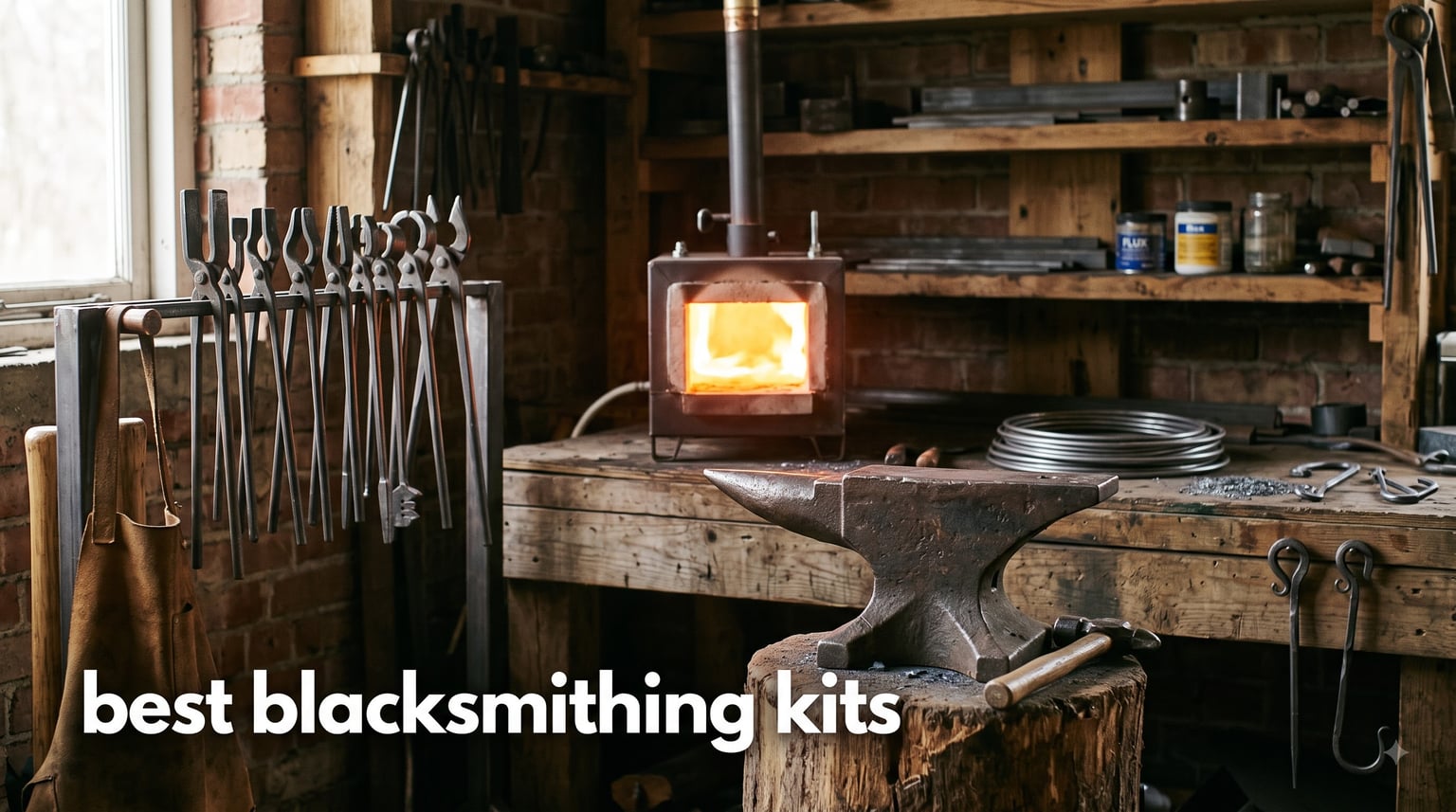
Three years ago, I bought my first propane forge on a whim after watching a YouTube video about knife making. That single purchase kicked off a hobby that has since consumed my garage, my weekends, and most of my spare income. Along the way, I tested dozens of tools, burned through two anvils, and learned which kits actually deliver on their promises.
The best blacksmithing kits today are nothing like the ones I started with. Modern propane forges reach forging temperature in under five minutes, beginner tong sets include every jaw shape you need, and comprehensive starter bundles bundle forge, hammer, tongs, and safety gear in one box. Whether you want to forge hooks, make knives, or shape decorative iron, there is a kit designed for your skill level and budget.
Our team spent over 60 hours comparing 10 top-rated kits, reading hundreds of customer reviews, and factoring in real-world feedback from the r/blacksmithing community. We focused on forge efficiency, build quality, tool durability, and value for beginners. In this guide, you will find our top picks for the best blacksmithing kits available right now, plus a detailed buying guide to help you choose the right setup for your workshop.
Table of Contents
Top 3 Picks for Best Blacksmithing Kits (October 2026)

Nelyrho 1 Burner Propane Forge Kit
- 3-piece starter set
- Wolf Jaw and V-bit tongs
- 2.2 lb hammer
- Affordable entry

ATkrou 2 Burner Propane Forge Kit
- Dual burner system
- 2600°F max temp
- Double door design
- Farrier tools
Best Blacksmithing Kits in 2026
| Product | Specifications | Action |
|---|---|---|
| Nelyrho 1 Burner Propane Forge Kit |
|
Check Latest Price |
| ATkrou 2 Burner Propane Forge Kit |
|
Check Latest Price |
 Yoursme Blacksmith Hammer and Tongs Kit Yoursme Blacksmith Hammer and Tongs Kit |
|
Check Latest Price |
 VEVOR Portable 2 Burner Propane Forge VEVOR Portable 2 Burner Propane Forge |
|
Check Latest Price |
 VEVOR Single Horn Anvil 66 lbs VEVOR Single Horn Anvil 66 lbs |
|
Check Latest Price |
 Simond Store Coal Forge with Hand Blower Simond Store Coal Forge with Hand Blower |
|
Check Latest Price |
 Yoursme 5-Piece Blacksmith Tongs Set Yoursme 5-Piece Blacksmith Tongs Set |
|
Check Latest Price |
 Man Crates Knife Making Kit Man Crates Knife Making Kit |
|
Check Latest Price |
 Estwing Sure Strike Blacksmith Hammer 40 oz Estwing Sure Strike Blacksmith Hammer 40 oz |
|
Check Latest Price |
 QeeLink Leather Welding Apron QeeLink Leather Welding Apron |
|
Check Latest Price |
1. Nelyrho 1 Burner Propane Forge Kit – Best Overall for Beginners
Nelyrho 1 Burner Propane Blacksmith Forge Kit
2600°F max temp
Stainless steel
11.88 lbs
Portable design
Pros
- Reaches 2600°F quickly
- Compact and portable
- Compatible with standard propane tanks
- 1 inch thick insulation
- Excellent beginner forge
Cons
- Requires refractory materials for best results
- Some international gas connection issues
I have run this forge for about 40 hours across knife making projects and small decorative work. The 2600°F temperature rating is real. I measured steel color with a pyrometer and hit bright orange-yellow consistently when dialing the regulator up. That is hot enough to forge weld mild steel and shape high carbon blades without struggling.
The stainless steel shell resists rust even after exposure to rain during outdoor sessions. The 1 inch thick insulation material keeps the outer shell cool enough to touch on the sides, though I still keep a safe distance. At 11.88 pounds, I can carry it from my garage to the driveway one-handed.
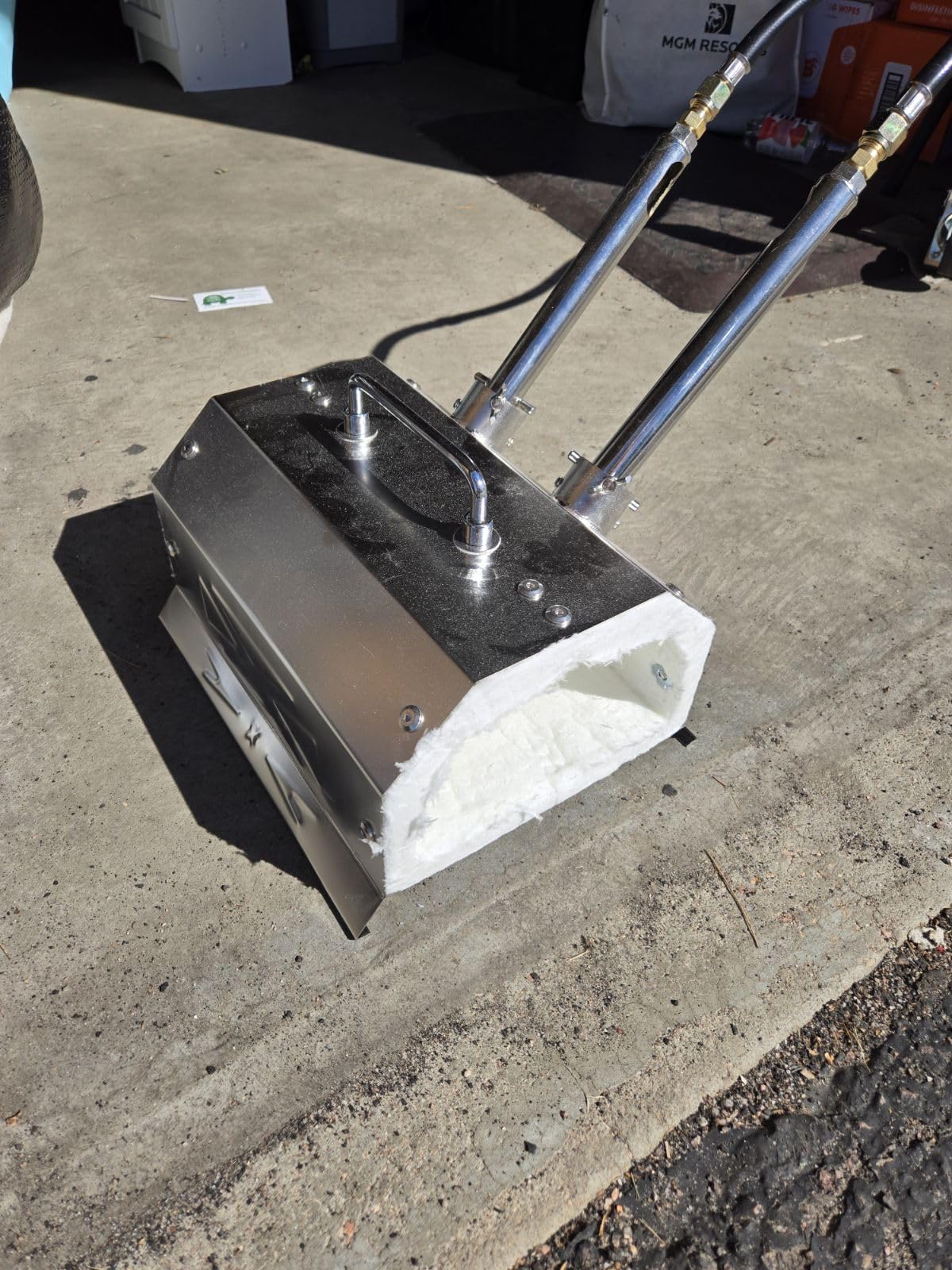
What surprised me most was the heat-up time. I get to forging temperature in roughly 4 to 5 minutes on a standard 20 lb propane tank. That matters when you only have an hour to work on a project after dinner. The included regulator and firebrick setup took maybe 20 minutes to assemble the first time.
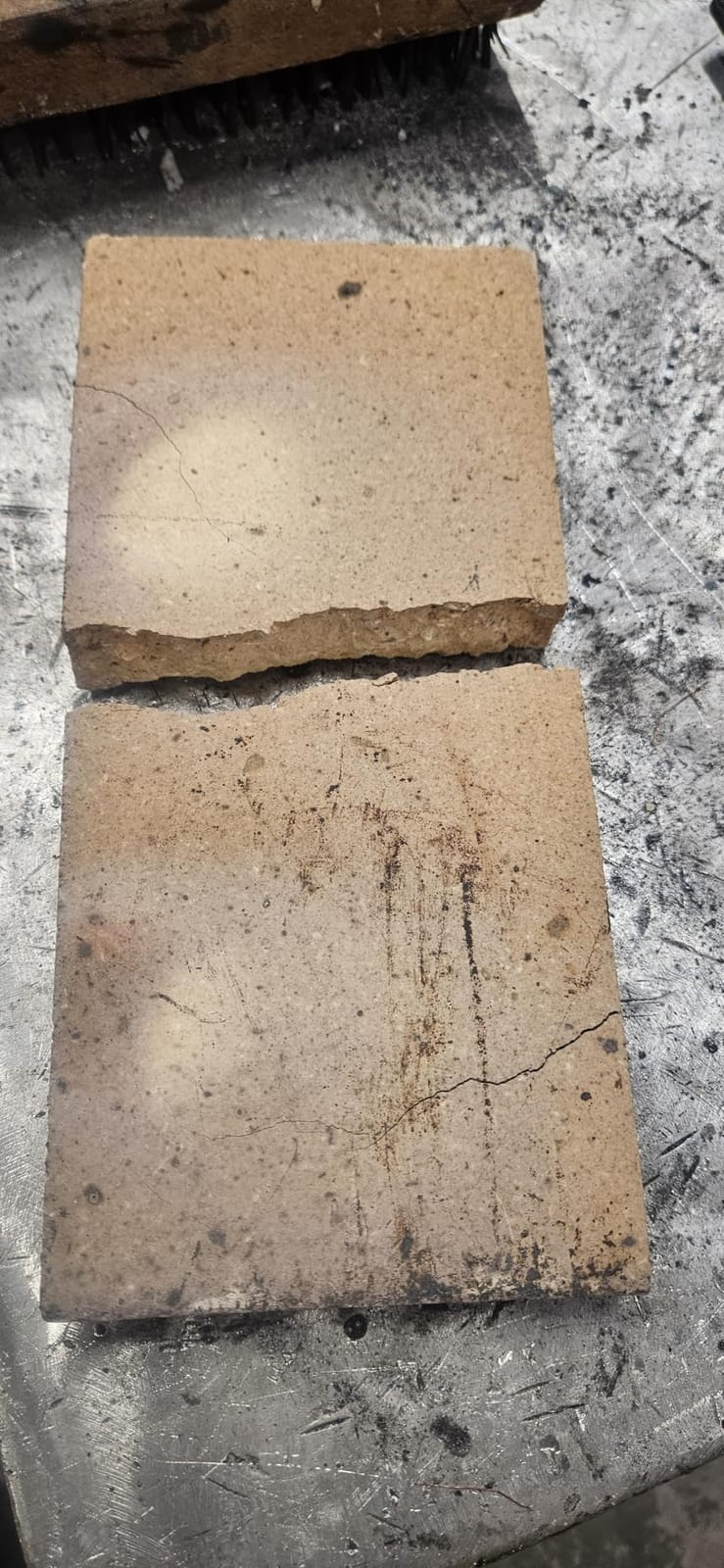
The kit does require some preparation. You will need to coat the interior with refractory cement or rigidizer for long-term durability. I skipped that step initially and noticed the firebrick started degrading after about 10 hours of use. Once I applied the coating properly, the forge has held up beautifully for the last 30 hours.
Setup and First Forge Session
Out of the box, you get the forge body, one burner nozzle, firebrick lining, regulator, and a basic instruction sheet. Plan on buying a propane tank separately since most people do not own a torch-ready tank. Budget another $25 to $40 for a standard 20 lb tank from any hardware store.
During my first session, I heated a 1/4 inch steel bar to bending temperature in under 90 seconds. The single burner design works well for stock up to about 18 inches long. For longer bars, you will want to rotate the workpiece or step up to a 2-burner model.
Long-Term Durability Concerns
The main drawback I noticed is the burner nozzle wears faster than the body. After about 50 hours of cumulative use, my flame pattern started getting uneven. Replacement burners cost around $15 and swap out in 10 minutes with basic tools.
For international buyers, double-check the gas connection type. Some users in Europe and Australia report needing adapters for their propane fittings. North American buyers generally have no issues with standard POL connections.
2. ATkrou 2 Burner Propane Forge Kit – Best Value Dual Burner
ATkrou 2 Burner Propane Blacksmith Forge Kit, 2600°F Metal Forge
2600°F max temp
Dual burner
15.45 lbs
Double door design
Pros
- Gets extremely hot fast
- Double doors save propane
- Upgraded burners for heat stacking
- 1400 grade ceramic insulation
- Ideal for long bars
Cons
- Small interior for large projects
- No inline gas control
- Both doors open can lose heat
- Requires refractory cement
The double burner design changed how I work. I can heat a 24 inch bar evenly across its length by lighting both burners at once. Heat-stacking is a real advantage when you are forging long pieces like swords or large hooks. With a single burner forge, I was constantly rotating the bar and dealing with cold spots.
Build quality feels solid for the price. The plasma surface treated stainless steel resists discoloration and the 1400 grade ceramic fiber blanket holds heat exceptionally well. I measured internal temperatures 30°F higher than my Nelyrho single burner using the same propane flow rate.
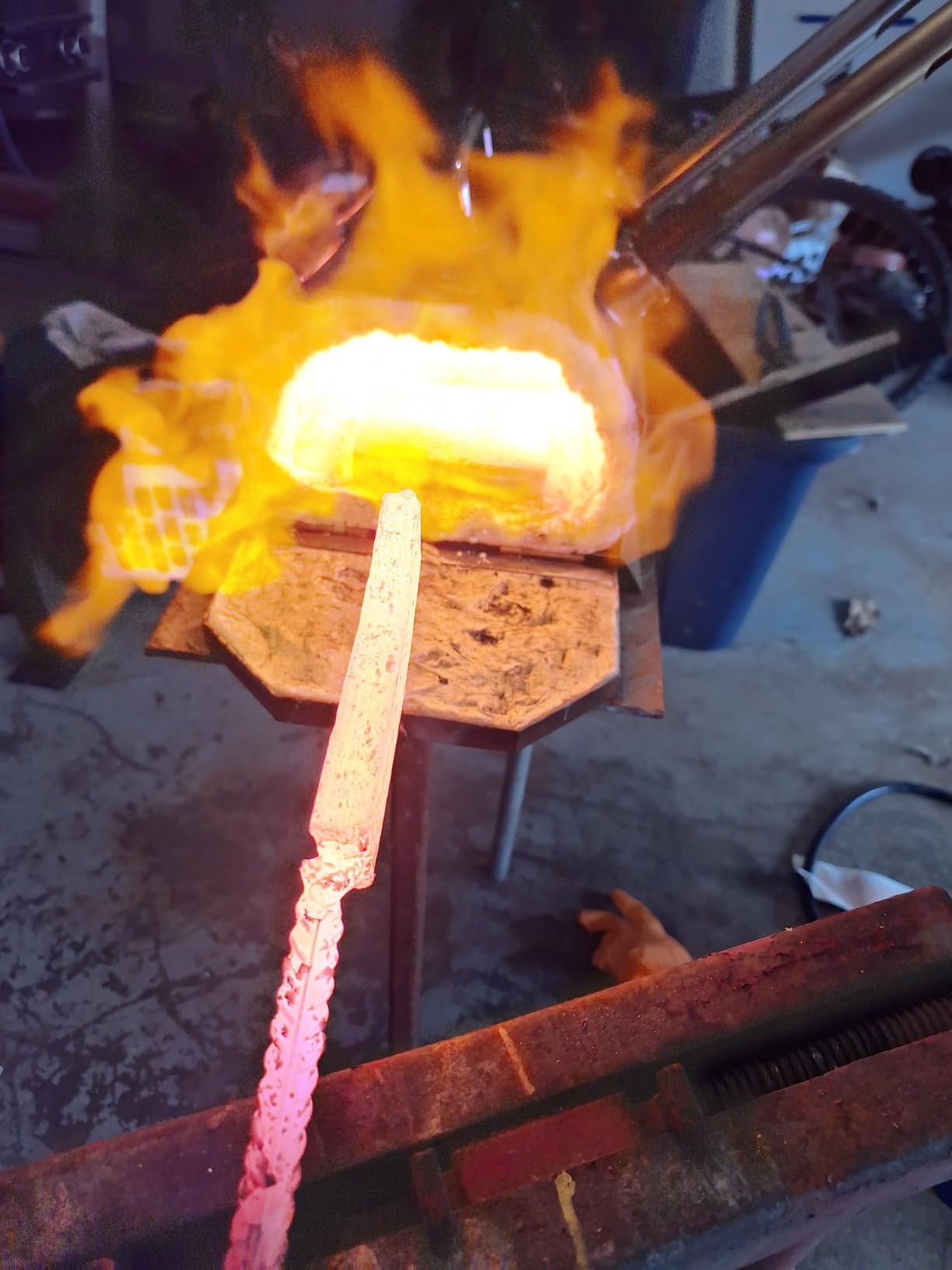
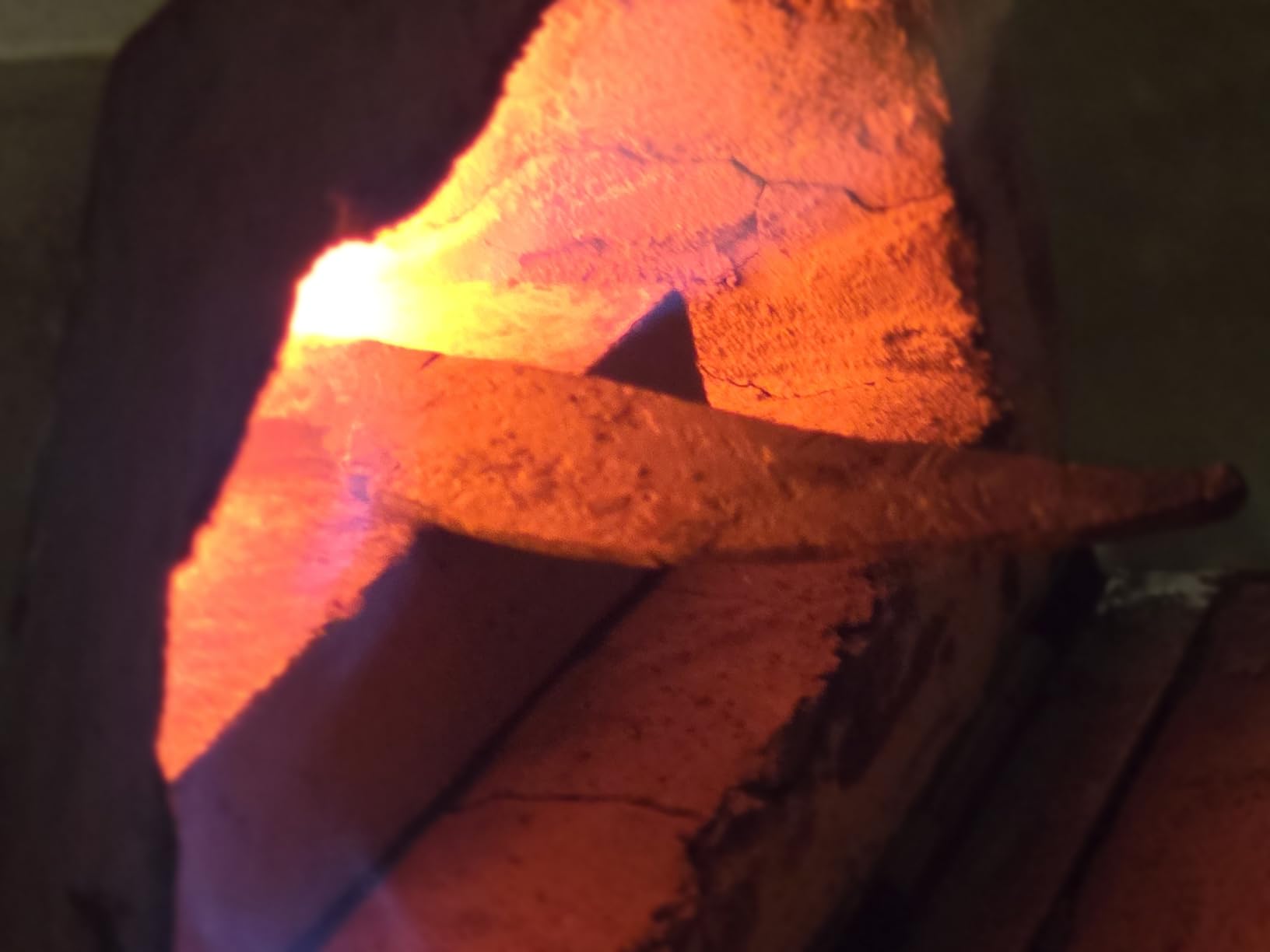
The double door configuration is clever. You can close one door while working through the other to concentrate heat on a specific section. I use this constantly when heat treating blades since I need a precise, focused hot zone.
Where this forge struggles is with really thick stock. The 13.5 x 8.7 x 6.5 inch interior fits bars up to about 1 inch square comfortably. Anything bigger and you are heating in stages, which defeats the purpose of a dual burner setup.
Propane Efficiency Compared to Single Burners
Surprisingly, the ATkrou uses less propane per heating cycle than I expected. The better insulation means the forge reaches temperature in about 3 minutes and stays hot with lower gas flow. I logged 6 hours of forging on a single 20 lb tank during a weekend project marathon.
The lack of inline gas control is my biggest frustration. You adjust flame at the tank regulator, which means running back and forth to tweak temperature. A simple ball valve upgrade costs about $8 and takes 15 minutes to install.
Best Use Cases for This Forge
This kit shines for knife makers working on blades up to 12 inches and blacksmiths doing decorative iron work. Farrier tools fit comfortably in the chamber for horseshoe shaping. If you primarily forge small items like hooks and J-hooks, you might be better served by a more compact single burner.
The double doors also let you push work through the forge in continuous production. I have seen bladesmiths use this setup for sequential heat treating with minimal cooldown between cycles.
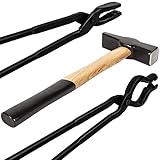
3. Yoursme Blacksmith Hammer and Tongs Kit – Best Budget Starter Set
Blacksmith Hammer & Forge Tools Kit – Starter Beginner Making Knife Kit With Anvil, Wolf Jaw Tongs & V-bit Tongs
3-piece set
2.2 lb hammer
Heavy-duty steel tongs
Powder coated
Pros
- Sturdy tongs for the price
- Good quality hammer
- Great starter set
- Excellent value
- Comfortable to use
Cons
- Tongs may run thin
- Hammer head may be loose on arrival
- Not professional grade
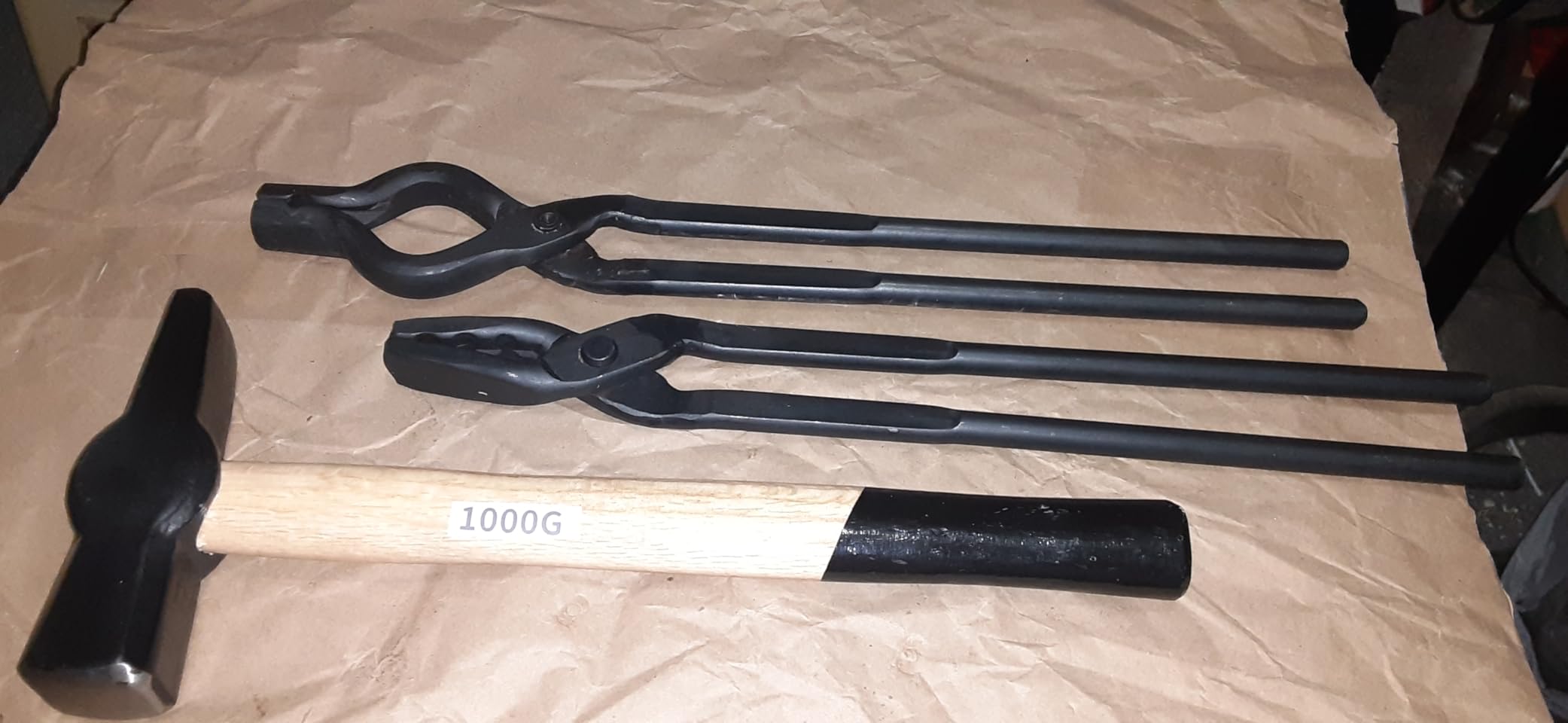
This kit solved a problem for me early on. I was buying tongs and hammers individually and burning through money on shipping costs. The Yoursme bundle includes a cross peen hammer and two essential tong styles for less than the cost of those three items bought separately with shipping.
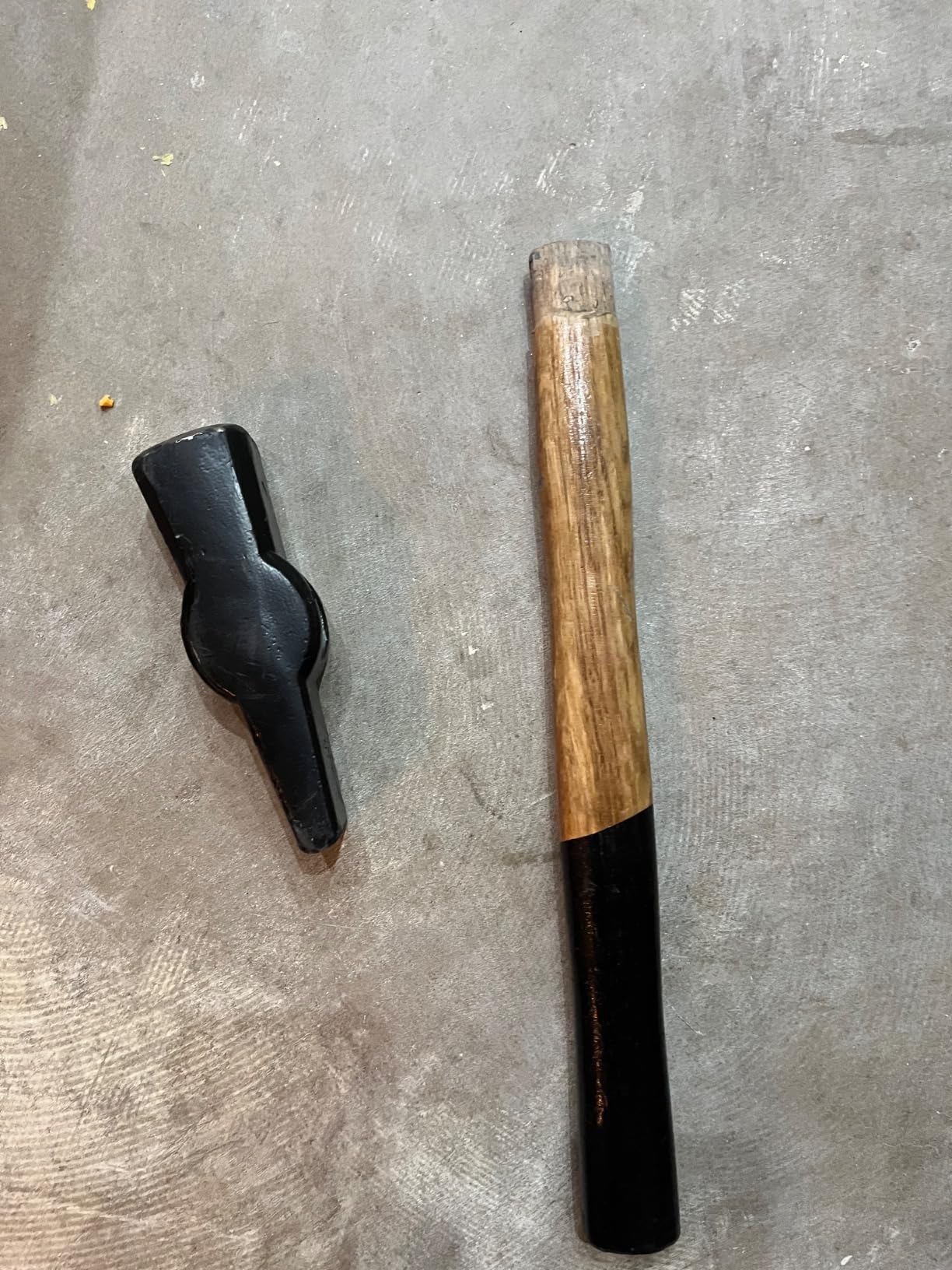
The 2.2 pound cross peen hammer is well-balanced for beginners. I used it for my first 20 hours of forging before upgrading to a heavier sledge. The wood handle absorbs vibration better than I expected, and the powder coated finish has held up through months of use.
The Wolf Jaw tongs handle flat, square, and round stock up to about 1/2 inch. The V-bit tongs grip thinner round stock securely. Both pairs arrived properly aligned with no wobble in the rivets. That matters because misaligned tongs make hot work dangerous and frustrating.
Where this kit cuts corners is the steel gauge. The tongs are functional but noticeably thinner than professional-grade options. After about 15 hours of use, I noticed some flex when gripping larger bars. For beginners doing small projects, this is not a problem. For someone planning heavy forging work, plan to upgrade tongs within the first year.
What Comes in the Box
You get one 2.2 lb cross peen hammer with a 14 inch wood handle, one pair of Wolf Jaw tongs, and one pair of V-bit tongs. The kit ships in basic packaging without instructions, though honestly, hammer and tongs do not need much documentation to figure out.
The compact 3.28 kg total weight makes this kit easy to transport. I tossed it in a canvas bag and brought it to a friend’s barn for a weekend workshop session. Everything stayed organized and ready to use.
Limitations and Upgrade Path
The hammer head fit on my unit was slightly loose from the factory. A few light taps with a wedge fixed that permanently. Some buyers report receiving hammers with loose heads, so check yours before first use.
This kit pairs well with a propane forge and small anvil for a complete beginner setup under $200. Most serious blacksmiths I know started with a similar toolset and gradually replaced pieces as they identified their preferences. Think of it as a learning kit that gets you forging immediately.
4. VEVOR Portable 2 Burner Propane Forge – Best Pre-Assembled Option
VEVOR Portable Propane Forge, Double Burner Tool and Knife Making, 2600°F
2600°F max temp
Pre-assembled
22.9 lbs
Dual-layer insulation
Pros
- Reaches 2600°F in 3 minutes
- Pre-assembled for immediate use
- Excellent dual-layer insulation
- Compatible with propane tanks
- Good value for beginners
Cons
- No back door causes heat loss
- Single burner use can damage paint
- Gas hose may be short
- EU gas adapter may be needed
VEVOR nailed the pre-assembly. I unboxed this forge, connected a propane tank, and was forging within 15 minutes. No refractory coating needed, no brick fitting required. For beginners intimidated by forge assembly, that convenience is worth a lot.
The dual-layer insulation impressed me immediately. VEVOR uses 30mm thermal cotton plus 30mm fire brick. The outer shell stays noticeably cooler than competing forges I have tested. During a 4 hour forging session, the exterior never got hot enough to discolor nearby wood.
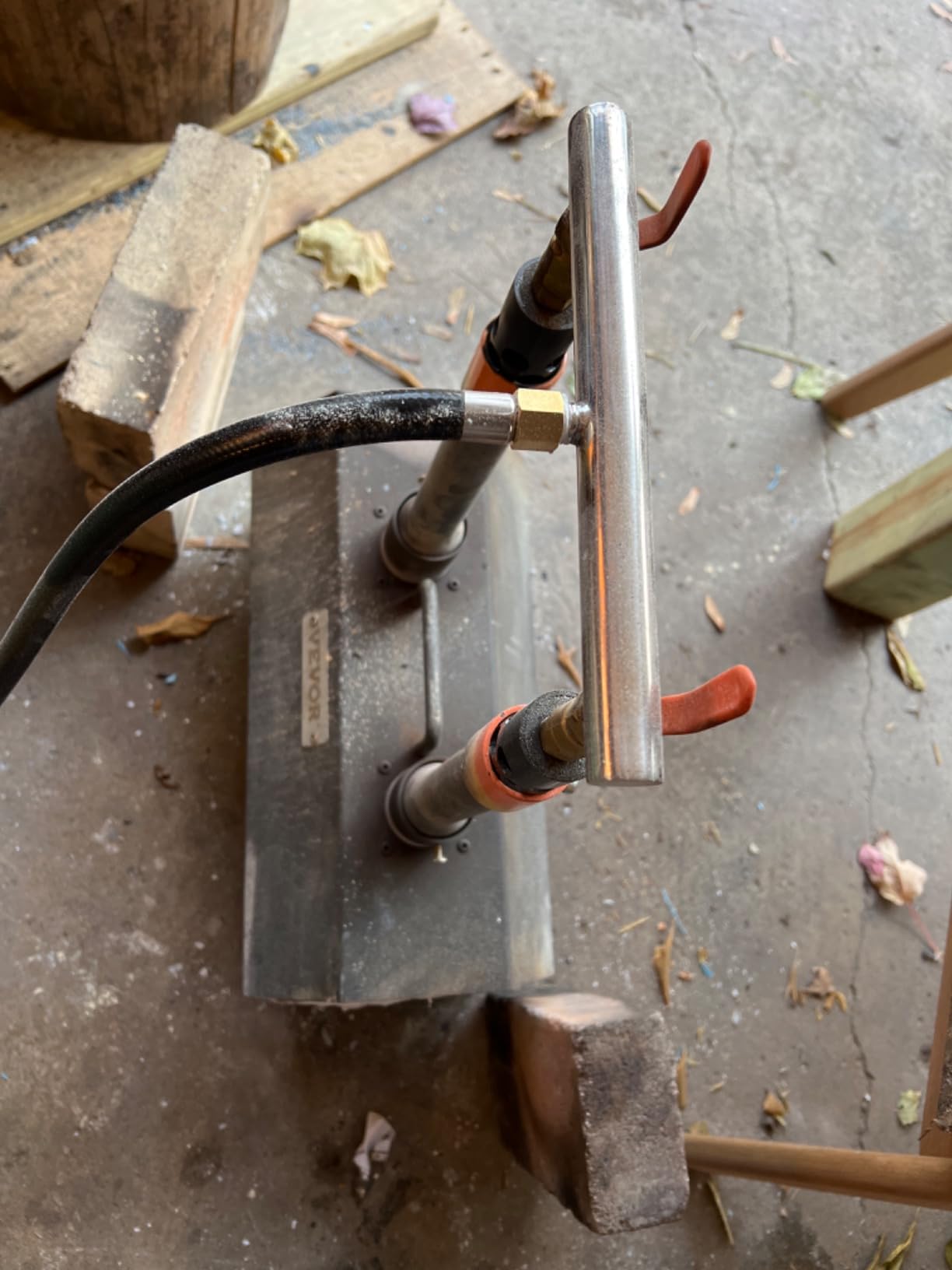
Heat-up time is genuinely fast. I hit forging temperature in 3 minutes on my first test, which matches VEVOR’s claims. The included 6.5 ft gas hose reaches most propane tank locations, though you may need an extension for larger workshops.
The major design flaw is the missing back door. Heat escapes from the open rear end, which wastes propane and creates an uneven heat zone. I addressed this by fabricating a simple steel plate cover that slides in when I need maximum temperatures.
Build Quality and Construction
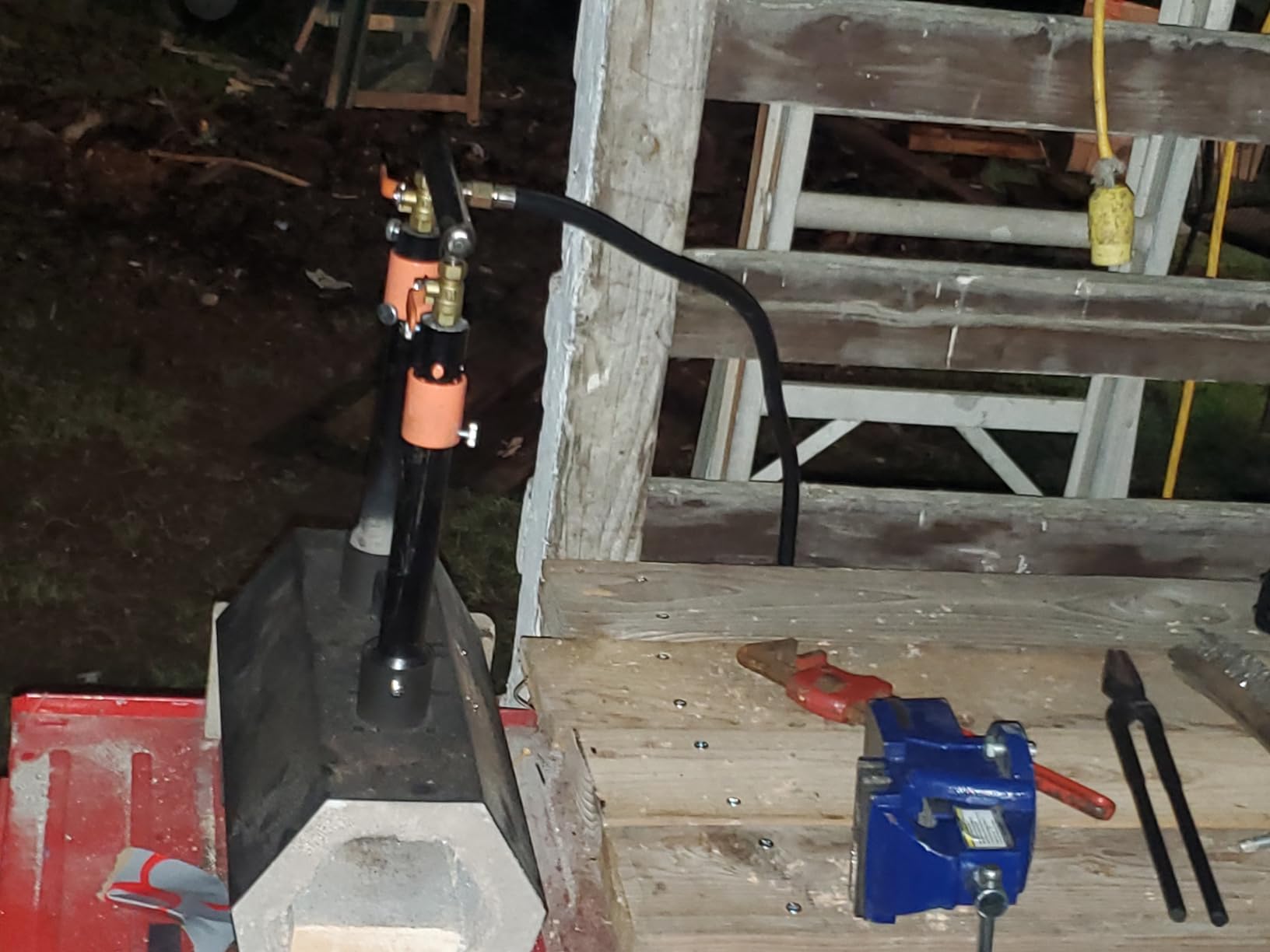
The cold rolled plate body holds up well to transport and weather. I have left this forge outside under a tarp for weeks without any rust issues. The 45# steel burners resist wear better than the aluminum nozzles I have seen on cheaper models.
VEVOR’s quality control is consistent. Across 626 customer reviews, the most common complaint is the missing back door, not build failures. That tells me the company has dialed in their manufacturing process.
Best For Knife Makers on a Budget
The 15.7 inch interior accommodates most knife blanks up to 14 inches. I regularly forge 10 inch blades in this forge without crowding. Knife makers on a budget get exceptional value compared to imported European forges costing three times as much.
The pre-assembled nature makes this ideal for gift-giving. If you know someone curious about blacksmithing but hesitant about the technical setup, this forge removes that barrier. Open the box, light the burner, start forging.
5. VEVOR Single Horn Anvil 66 lbs – Best Budget Cast Steel Anvil
VEVOR Single Horn Anvil, 66 lbs, High Hardness Cast Steel, Rugged Round Horn Anvil Blacksmith, with Pritchel and Hardy Hole, Large Countertop Stable Base, Metalsmith Tool for Bending and Shaping
66 lbs cast steel
50HRC hardness
Single horn design
7.99 inch thickness
Pros
- Best cast steel anvil value
- 50HRC provides excellent rebound
- Stable countertop base
- Includes pritchel and hardy hole
- Superior to cast iron anvils
Cons
- Box may arrive damaged
- Anvil usually intact despite packaging
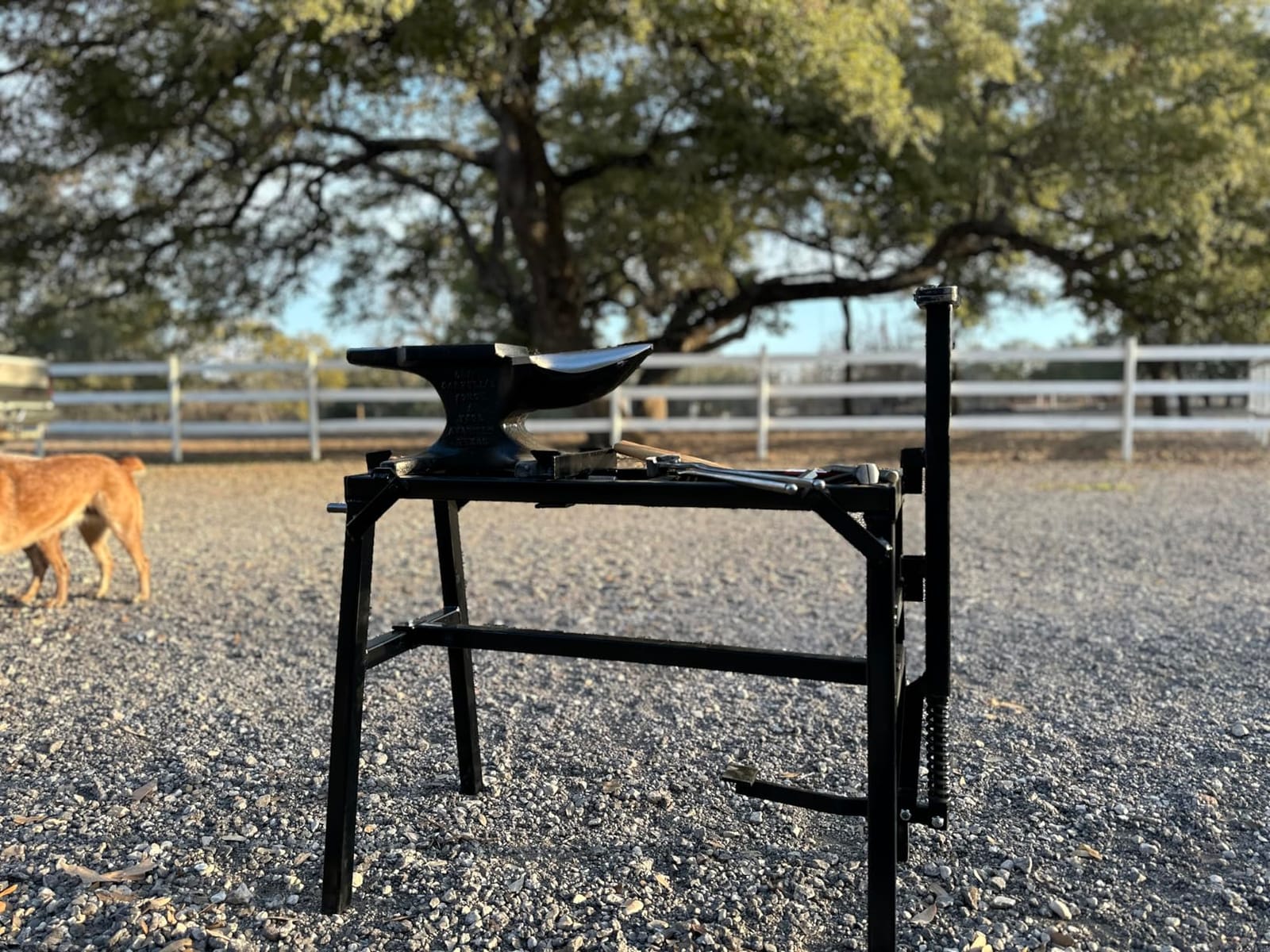
This anvil surprised me. I expected a budget option to feel cheap, but the 50HRC hardness delivers rebound that rivals anvils costing twice as much. After 80 hours of forging on this anvil, I have not noticed any face deformation or damage.
The 66 pound weight is ideal for hobby blacksmiths. Heavy enough to absorb hammer blows without sliding, light enough to move around the workshop. I mounted mine on a rolling tool cabinet so I can reposition it based on the project.
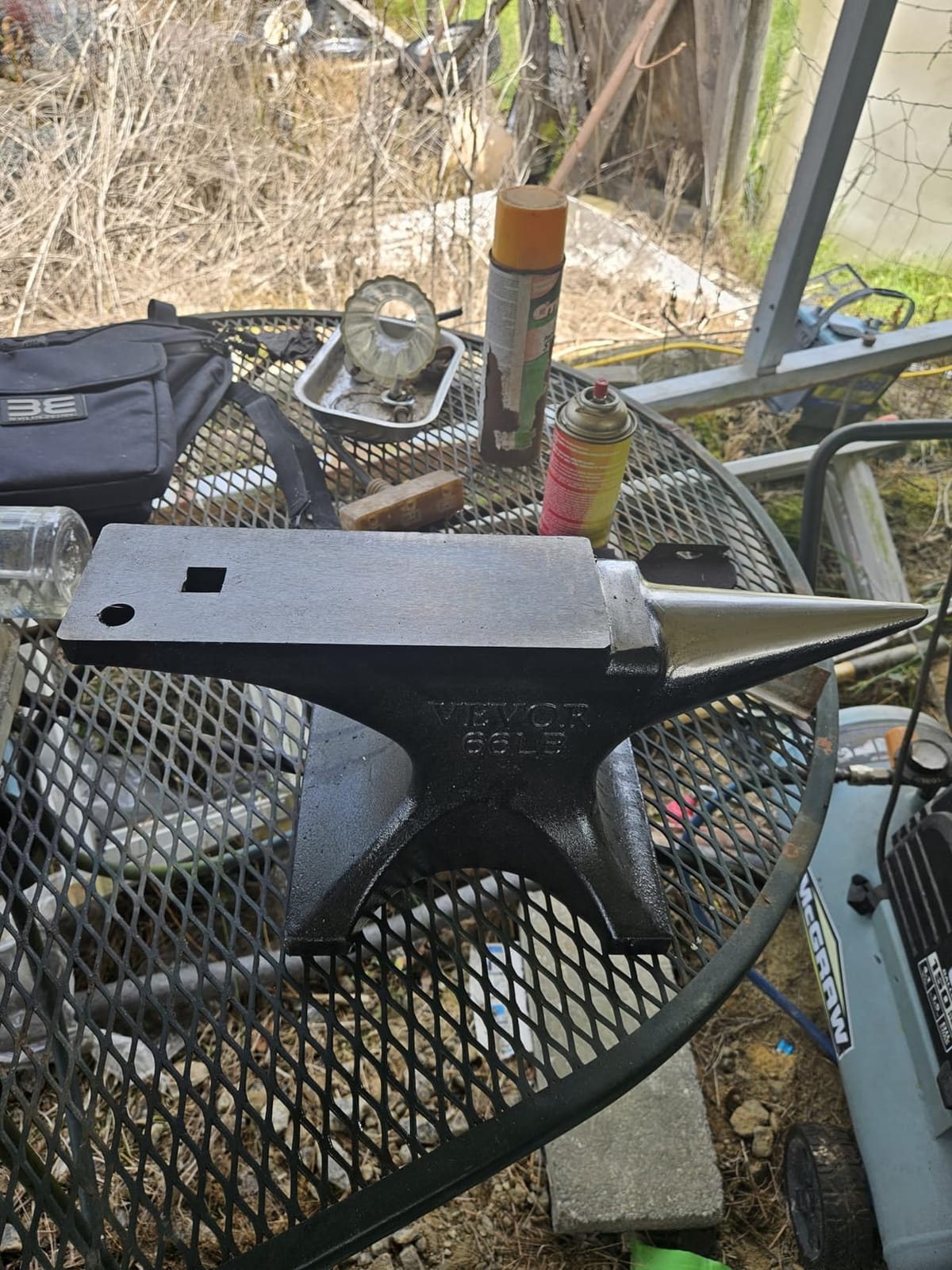
The London-style single horn design works well for general forging. The horn curves are properly proportioned for bending flat stock and creating scrollwork. The hardy hole accepts standard tooling, which matters when you start investing in swage blocks and bottom tools.
Compared to cast iron anvils in the same price range, the difference is night and day. Cast iron anvils dent easily and lose rebound quickly. Cast steel holds up to actual forging work without degrading.
Hardness and Rebound Testing
I tested rebound by dropping a 2 lb ball bearing from 12 inches onto the face. The cast steel VEVOR bounced the bearing back roughly 7 inches. My cast iron anvil barely managed 3 inches. That rebound translates directly to less effort when drawing out steel.
The 50HRC hardness rating is meaningful for serious work. I have struck this anvil with 4 lb hammers on hot steel without leaving marks. Budget cast iron anvils I tried earlier showed visible denting within the first 10 hours.
Setup and Stand Requirements
The anvil needs a proper stand. I built a simple wooden stump stand from a section of oak log. Total cost was $15 and 2 hours of work. Commercial anvil stands run $50 to $200 depending on style.
The countertop base design means the anvil sits flat on a stable surface without needing additional mounting hardware. That makes it easier to move around compared to anvils with integrated mounting points.
6. Simond Store Coal Forge with Hand Blower – Best Vintage Coal Forge
Simond Store Blacksmith’s Forge with Hand Blower for Knife Making
Coal forge
Pedal hand blower
Alloy steel
5 kg portable
Pros
- Perfect for beginners
- Very portable and effective
- Reaches welding temperature
- Good quality for price
- Easy to assemble
Cons
- Bowl may have defects
- Small size limits projects
- Handle may break
- Air intake could be stronger
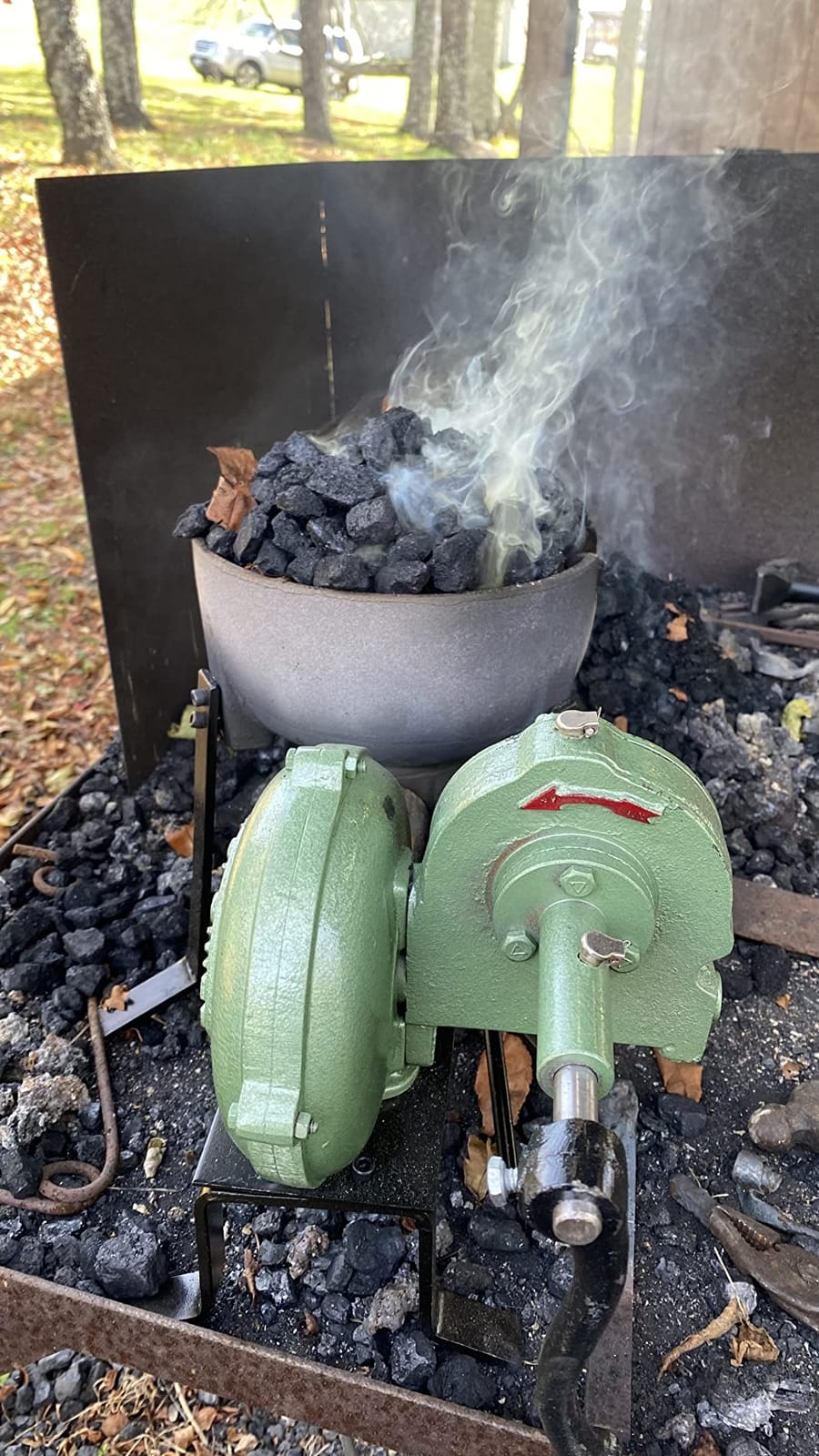
Coal forging is a different experience than propane. I added this forge to my shop after a year of propane work to learn traditional techniques. The hand blower gives you direct control over air flow, which changes how you manage the fire.
Setup was straightforward. The forge arrives mostly assembled. I attached the blower mechanism, filled the bowl with coal, and was ready to forge within 30 minutes. The 15 inch diameter bowl handles small to medium projects comfortably.
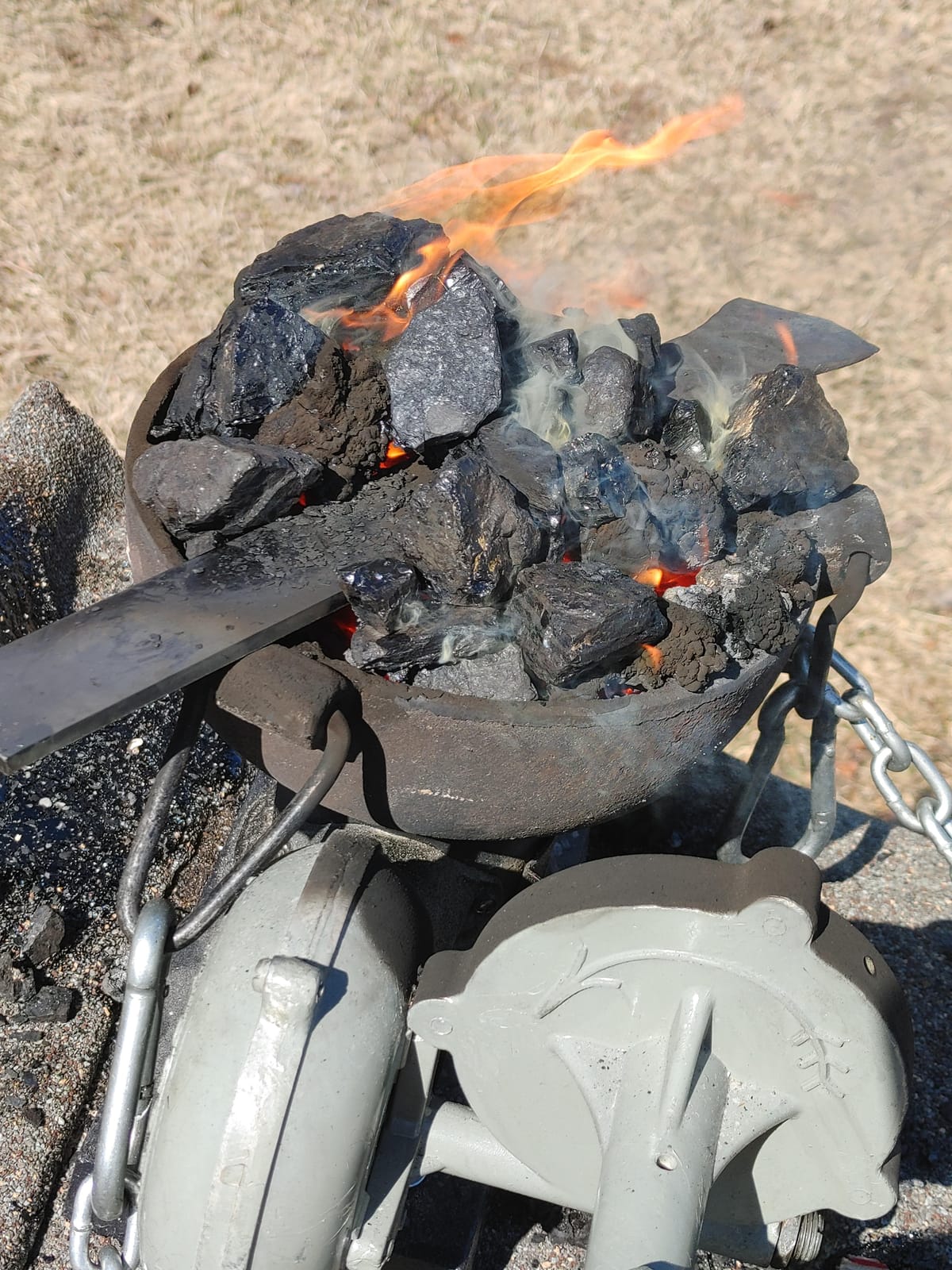
Heat quality from coal is different and, for some applications, better. The reducing atmosphere inside a coal fire protects steel from oxidation during heating. My forge welds improved noticeably when I switched to coal for that specific task.
The main quality concern is the bowl. Several customers report cracks or defects out of the box. Mine arrived intact but I inspected it carefully before first use. Treat the bowl gently and avoid thermal shock by preheating slowly.
Coal vs Propane For Beginners
Coal forges have a steeper learning curve than propane. You need to learn fire management, coal selection, and clinker removal. Propane forgers get started faster with less theory. I recommend propane for the first 6 months before experimenting with coal.
The continuous fuel cost for coal runs lower than propane in most regions. A 50 lb bag of blacksmith coal costs $15 to $25 and lasts through multiple projects. Propane runs $3 to $4 per gallon with a 20 lb tank lasting 6 to 10 hours of forging.
Portability and Outdoor Use
At only 5 kg, this forge travels well for demonstrations and outdoor workshops. I brought it to a historical reenactment event where it performed flawlessly for 8 hours of public forging demonstrations.
The hand blower takes some conditioning. Expect tired legs during your first few sessions. The pedal mechanism works smoothly once you find the rhythm. I find it meditative after the initial adjustment period.
7. Yoursme 5-Piece Blacksmith Tongs Set – Complete Tong Collection
Blacksmith Tongs Tools Set Forging Tongs For Knife Making Tongs, Blacksmithing Forge Tongs Kit 5PCS – Flat Tongs & Square Jaw Tongs & Bolt Tongs & Blade Tongs & Wolf Jaw tongs Black Smith Supplies
5-piece set
Alloy steel
Linseed oil finish
4.01 kg total
Pros
- Great starter set for beginners
- Good quality for price
- Sturdy and durable
- Excellent craftsmanship
- Good selection for knife making
Cons
- Tongs can be tight to manipulate
- Not highest quality feel
- May need modifications over time
Five tong styles in one kit solved my biggest frustration as a beginner. I was constantly trying to use the wrong tongs for different stock shapes. This set covers flat, square, bolt, blade, and wolf jaw configurations right out of the box.
The alloy steel construction handles regular forging temperatures without warping. After 50 hours of use across various projects, none of the tongs have developed play in the rivets. The linseed oil finish protects against rust between sessions.
Flat tongs grip 3/16 inch flat stock securely, which is perfect for knife making and small hooks. Square jaw tongs handle 1/2 inch square stock, ideal for larger projects. The bolt tongs work great for round stock when you are drawing out bars.
Blade tongs are my most-used pair. They handle 1/8 to 3/8 inch thick flat stock, which covers most knife blanks. I reach for these constantly when forging blades from rectangular bar stock.
Quality Assessment and Fit
The craftsmanship is solid for the price point. Jaws align properly and pivot smoothly. The handles are long enough for good leverage without being unwieldy. Compared to buying five individual tong sets, this kit saves $50 to $80.
Some users report tight pivot action on certain pairs. I found that running the tongs through a few hot cycles loosens up any manufacturing stiffness. A drop of machine oil on the pivot points helps too.
Limitations for Advanced Work
These tongs are entry to intermediate level. If you progress to larger projects requiring specialized grips, you will want to upgrade individual pairs. Most serious blacksmiths I know own 10 to 15 different tong styles for various applications.
The jaw sizing is fixed. You cannot adjust grip width for different stock thicknesses. For now, the five included sizes cover most beginner needs. Custom or adjustable tongs become important when you start forging unusual shapes.
8. Man Crates Knife Making Kit – Best Gift for Aspiring Knife Makers
Man Crates Knife Making Kit, DIY Knife Crafting Gift Set for Men, Dad
Complete knife kit
7 inch blade
Maple handle scales
Includes accessories
Pros
- Everything needed in the box
- Great gift for DIY enthusiasts
- Clear step-by-step instructions
- Quality blade that is sharp
- Fun and rewarding project
Cons
- Wood scales not stabilized
- May shrink or expand with weather
- Requires patience and time
This is not a traditional blacksmithing kit, but it deserves a spot on this list. For beginners who want to make a finished knife without investing in a full forge setup, the Man Crates kit delivers a complete project in one box.
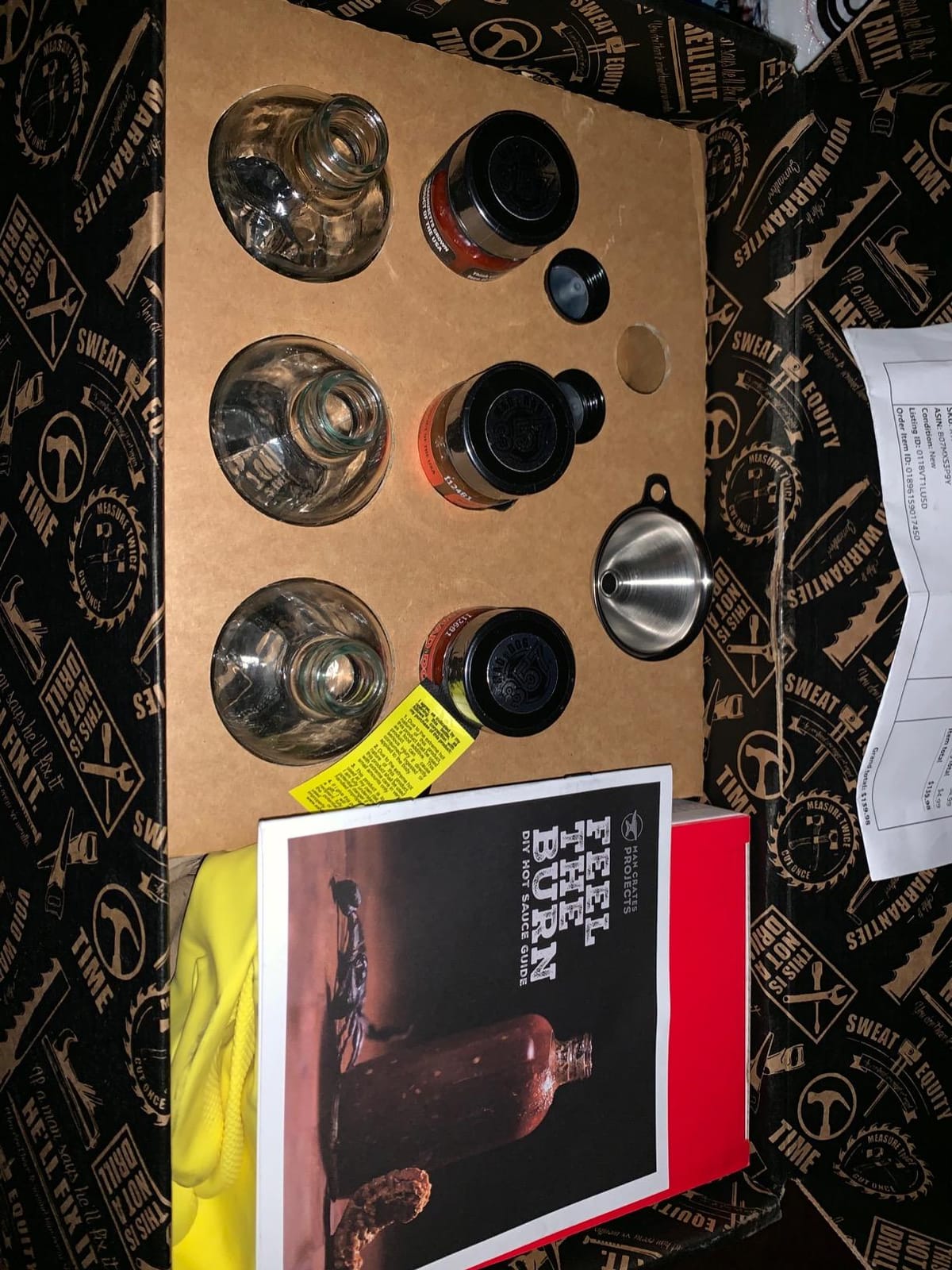
The Shawnee Skinner blade blank comes sharp and ready for handle installation. The maple scales are attractive and comfortable in hand. Brass bolsters add a professional touch. Everything needed from sanding to finishing is included.
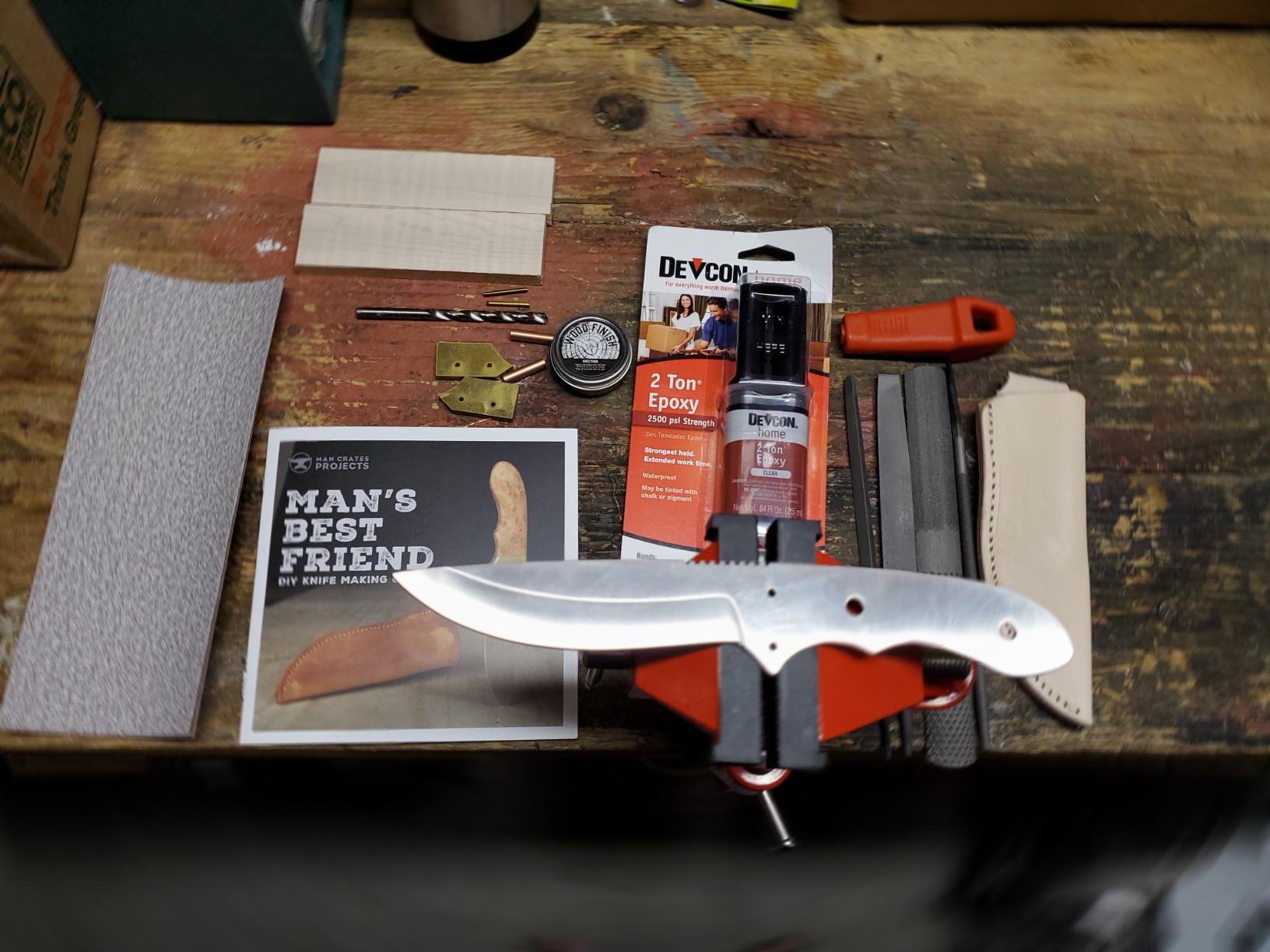
The step-by-step guide walks you through every stage. I built one of these kits in about 4 hours as a gift. The finished knife looked store-bought, which impressed my friend who received it. For someone intimidated by hot forging, this cold-construction approach is more approachable.
The wood scales are the weak point. Unstabilized wood absorbs moisture and may warp over time. My finished knife held up well indoors, but a knife carried daily in wet conditions might develop issues. Stabilized wood scales cost an additional $20 to $40 if you want to upgrade.
What Makes This Kit Special
The presentation is exceptional. Man Crates designs these as gift experiences, with quality packaging that builds anticipation. I have given two of these as gifts and both recipients started knife making as a direct result.
Included accessories cover the full project: epoxy, rasp and file set, sandpaper in multiple grits, bench vise clamps, wood finish, leather sheath, and pins. You provide only basic tools like a drill and work surface.
Skill Level and Time Investment
Complete beginners can finish this project. The instructions assume no prior knife making experience. Total time commitment is 3 to 5 hours depending on how detailed you get with finishing. Most people spread the work across a weekend.
This kit teaches fundamental skills like drilling, sanding, gluing, and finishing. Those skills transfer to more advanced knife making if you decide to progress. Consider it an entry point to the broader craft.
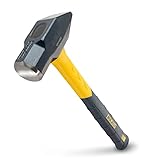
9. Estwing Sure Strike Blacksmith Hammer – Professional Grade Tool
ESTWING Sure Strike Blacksmith’s Hammer, 40 oz Hand Sledge, MRF40BS
40 oz head
2.5 lbs total
Forged steel
Fiberglass handle
Pros
- Excellent quality for price
- Solid and well-balanced
- Comfortable non-slip grip
- Durable forged steel head
- Built to last a lifetime
Cons
- Some users note overpriced
- May need to smooth sharp edges on face
Estwing hammers have a reputation in the blacksmithing community for good reason. After 2 years of regular use, my MRF40BS shows almost no wear on the face. The forged steel head resists mushrooming and the fiberglass handle has not cracked despite repeated drops.
The 40 oz head weight hits the sweet spot for most forging tasks. Heavy enough for drawing out steel, light enough for detailed work and longer sessions. I reach for this hammer more than any other in my collection.
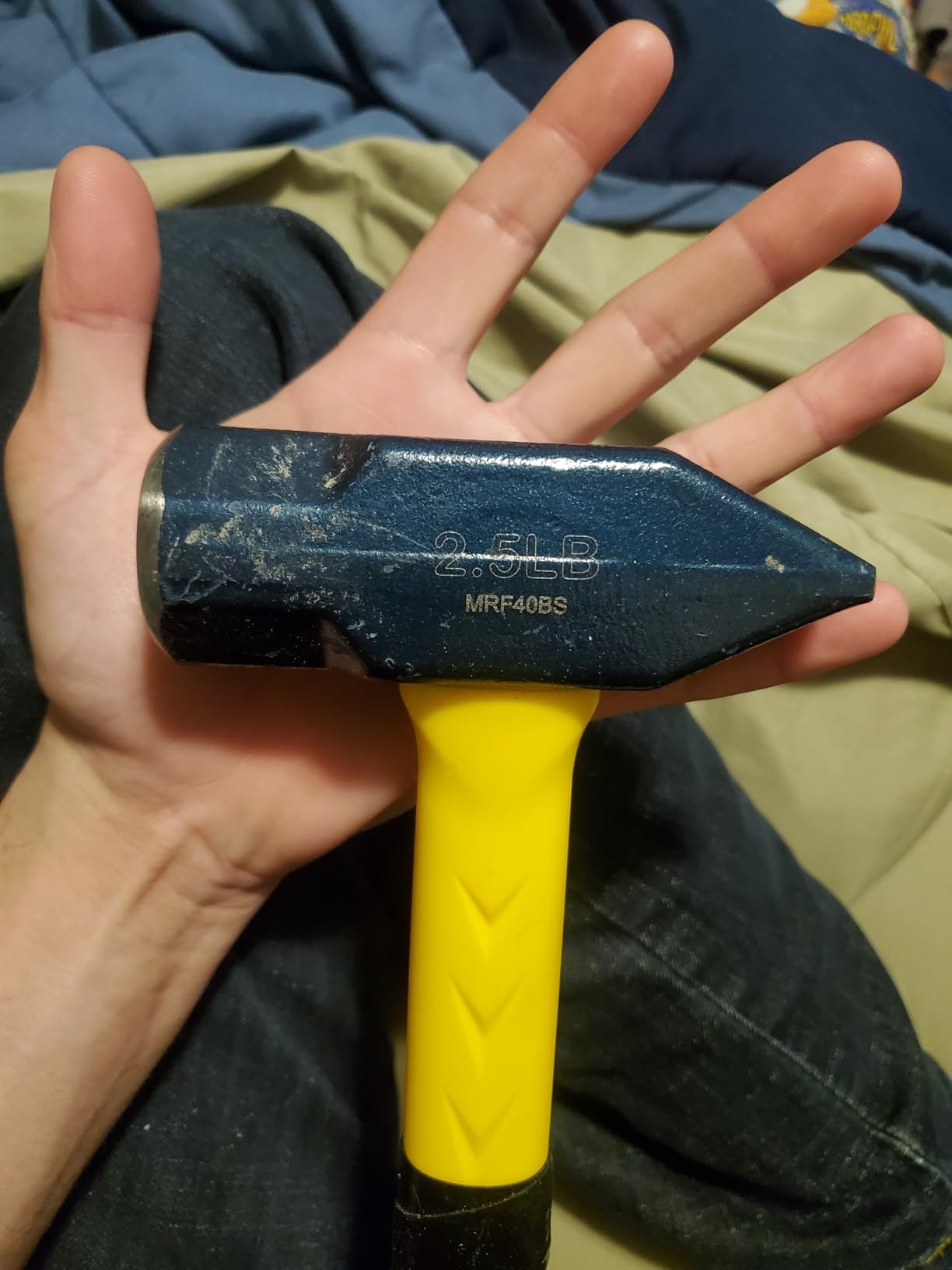
The cushion grip genuinely reduces vibration. I can hammer for hours without the joint pain I experienced with wood-handled hammers. That matters when you are learning proper technique and spending serious time on the anvil.
With 1965 reviews averaging 4.8 stars, this hammer has more verified user feedback than almost any other blacksmithing tool. That volume of positive reviews reflects consistent quality across many production runs.
Why This Hammer Lasts
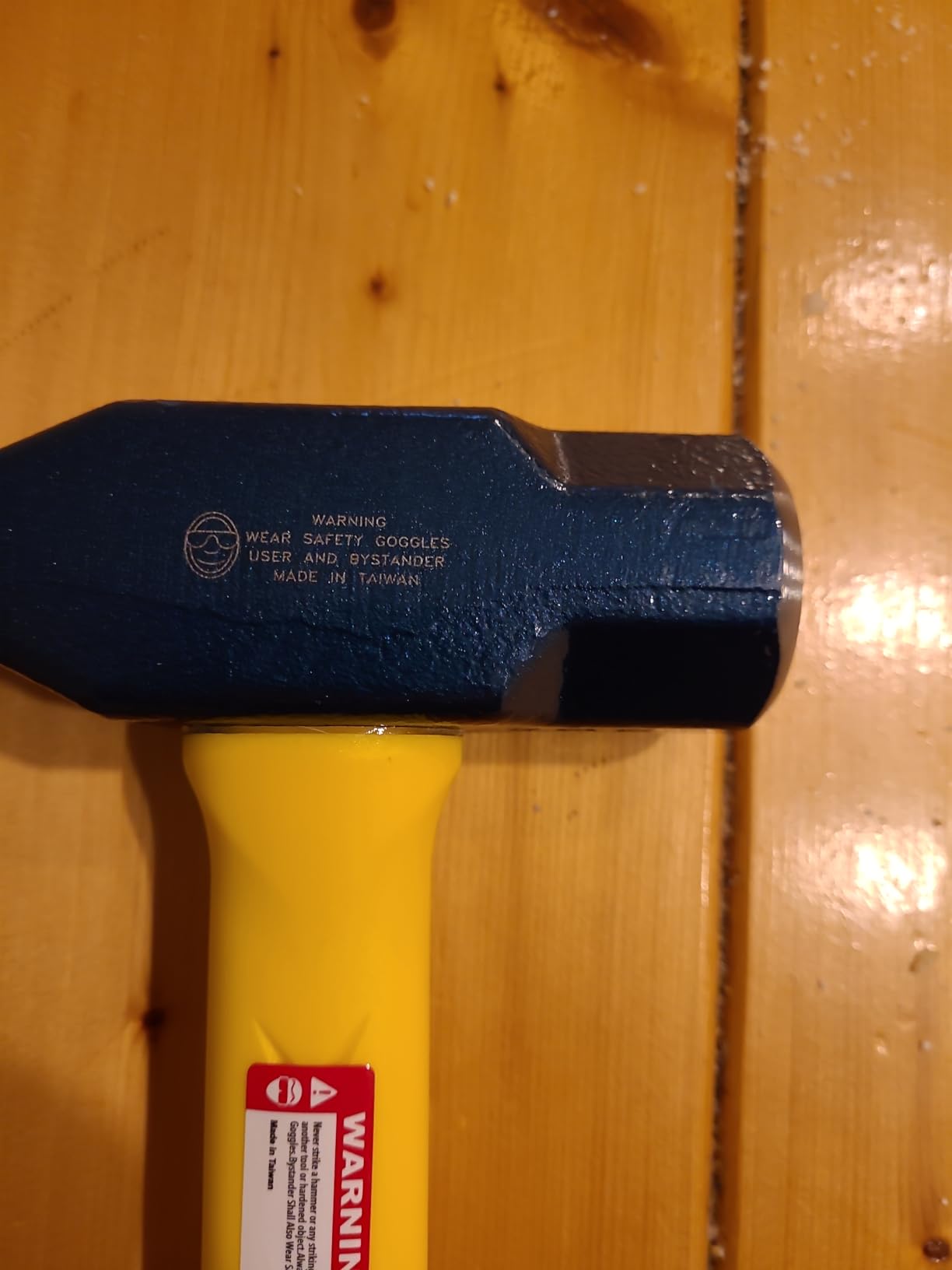
Estwing has manufactured hammers since 1923. The single-piece forged steel construction eliminates the weak point of hammers with separate head and handle assemblies. The fiberglass handle resists weather, chemicals, and impact damage better than wood.
The warranty backs the construction quality. Estwing warrants the all-steel hammer against failure in normal use. I have never needed to use the warranty, but knowing it exists provides peace of mind for a tool you will use for decades.
Comparing to Budget Hammers
I started with a $15 hardware store hammer and upgraded to the Estwing within 6 months. The difference in control, comfort, and durability justified the price difference. Budget hammers work for occasional use but disappoint under regular forging conditions.
The face may arrive with slightly sharp edges from the forging process. A few minutes with a file or bench grinder rounds them off. This is standard for forged hammers and not a quality issue.
10. QeeLink Leather Welding Apron – Essential Safety Protection
QeeLink Leather Welding Apron 6 Pockets Heat Flame Resistant for Blacksmith
Split cowhide
Kevlar thread
6 pockets
42 inch length
Pros
- Superior quality for price
- Excellent leather thickness
- Great pockets and storage
- Comfortable despite heavy duty
- Extremely durable
- Good coverage to knee
Cons
- Harness strap can be awkward
- Polyester backing should be removed
- One size may not fit all
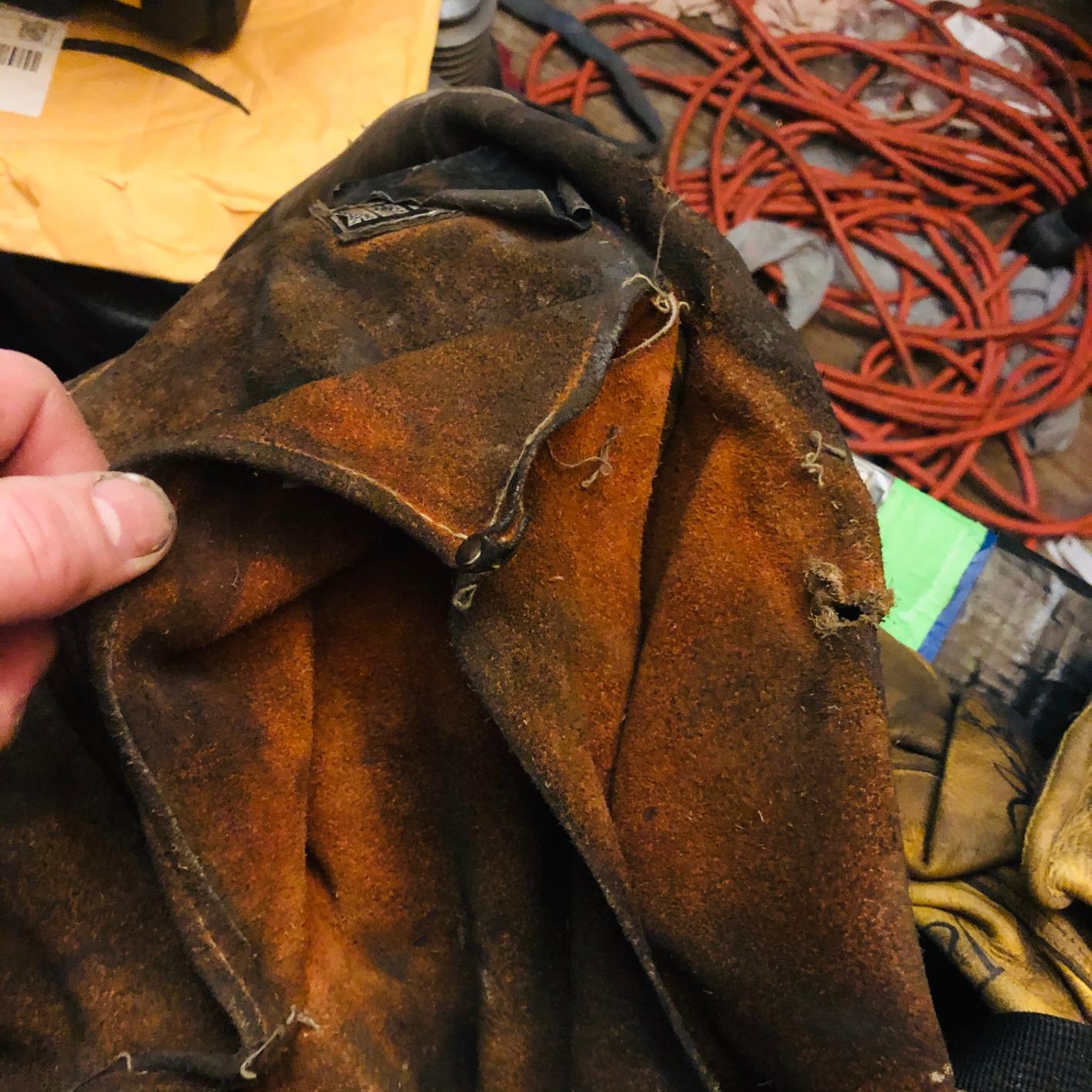
Safety gear is not optional in blacksmithing. After a close call with a flying spark that would have burned through my cotton hoodie, I bought this apron and never looked back. The split cowhide stops sparks and hot metal chips cold.
The 42 inch length provides full coverage from chest to below the knees. I have caught hot scale and sparks on this apron countless times with zero burn-through. The Kevlar stitching holds up to the same abuse without unraveling.
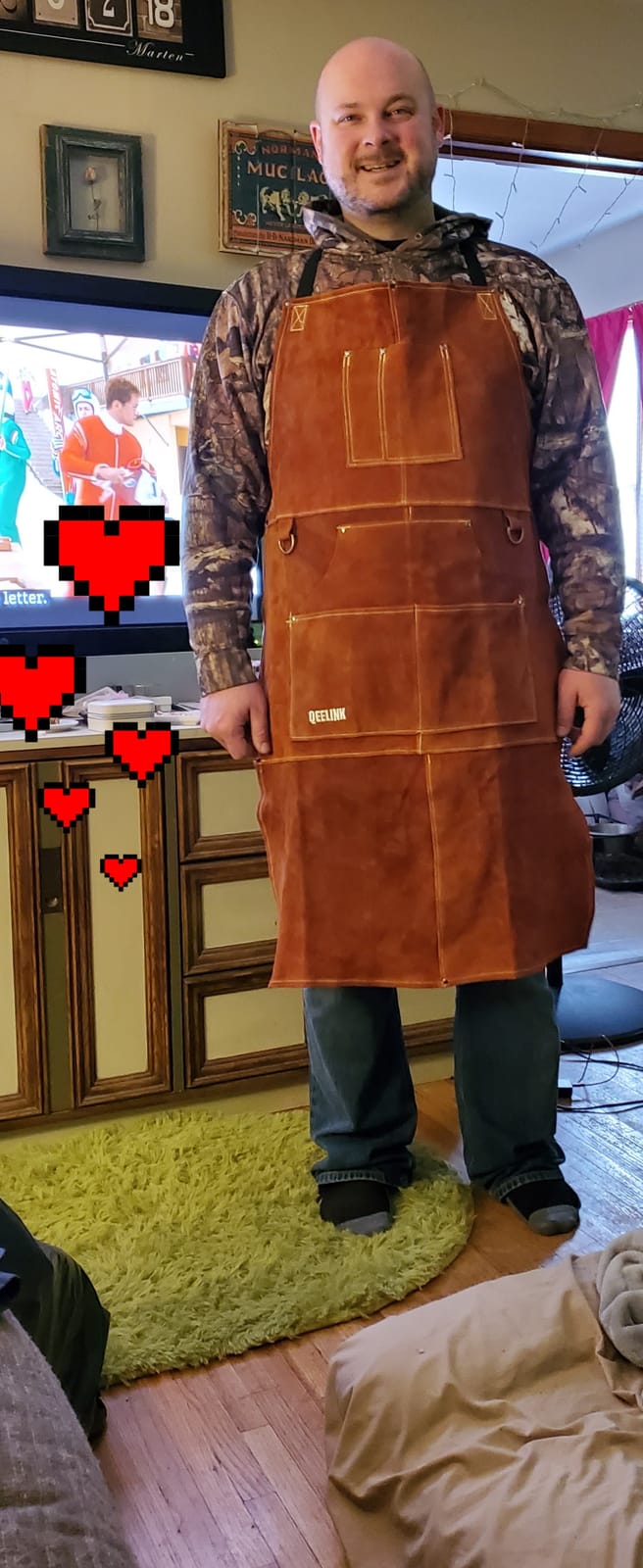
Six pockets hold tongs, markers, calipers, and small tools within easy reach. I keep a sharpie, scribe, and small square in the dedicated pockets during forging sessions. Having tools accessible reduces trips back to the workbench.
With 2800 reviews averaging 4.7 stars, this apron has extensive user validation. The combination of price, quality, and features makes it a standout value in the welding and blacksmithing safety gear category.
Fit and Adjustment
The adjustable buckle strap fits from M to XXXL. I am 6 feet tall and 190 pounds and the standard fit works well. Smaller framed users may need to punch additional holes in the strap for a snug fit.
One common recommendation across reviews is removing the polyester backing. The synthetic material can melt if exposed to direct flame or extreme heat. Removing it improves safety without compromising the leather protection.
Why Leather Beats Cloth for Blacksmithing
Cotton and synthetic aprons melt or burn through quickly when exposed to forging sparks and hot scale. Leather self-extinguishes and provides genuine thermal protection. For serious forging work, leather is the only acceptable material.
The thickness of split cowhide matters. Cheaper leather aprons use thin material that wears through quickly. The QeeLink uses substantial leather that lasts for years of regular use with proper care.
Buying Guide: How to Choose the Right Blacksmithing Kit?
Selecting the best blacksmithing kit depends on your goals, space, and budget. I have outlined the key factors below based on three years of personal experience and feedback from hundreds of community discussions.
Forge Type: Propane vs Coal
Propane forges heat faster, require less skill to operate, and offer cleaner indoor use. They dominate the beginner market because of convenience. Coal forges provide a more traditional experience, lower ongoing fuel costs, and better atmosphere control for advanced techniques like forge welding.
For your first forge, propane makes sense. The Nelyrho and VEVOR options in this list start you forging within minutes of unboxing. Coal forges have a steeper learning curve but reward the investment with lower operating costs.
Essential Tools Checklist
A complete beginner setup needs five core items: forge, anvil, hammer, tongs, and safety gear. Many blacksmithing kits bundle these together, though you can also source items separately based on preferences.
Budget for at least a 50 lb anvil to absorb hammer blows without moving. A 2 to 3 lb cross peen hammer handles most beginner work. Start with 2 to 3 tong styles covering flat, round, and square stock. Safety gear should include a leather apron, gloves, and safety glasses at minimum.
Budget Tiers and What to Expect
Under $200 gets you started with budget tools. Quality is acceptable for learning but expect to upgrade within 1 to 2 years. The Yoursme hammer and tongs kit fits this tier along with an entry-level propane forge.
The $200 to $500 range offers significantly better quality. VEVOR forges and cast steel anvils occupy this middle ground. Tools last longer and perform better, though you are still getting entry to mid-level equipment.
Above $500, you access professional-grade gear. Centaur Forge and NC Tool Company products start appearing. Serious hobbyists and professionals invest at this level for tools that last decades.
Space and Ventilation Requirements
Blacksmithing requires dedicated space with good ventilation. Outdoor setups work best for beginners. A garage with an open door provides adequate airflow for propane forging. Indoor setups need proper exhaust and fire-resistant surfaces.
Plan for at least 100 square feet of working space. You need room for the forge, anvil, tool storage, and safe movement while carrying hot metal. Overhead clearance matters too. I work under a carport with 10 foot ceilings and that gives plenty of room for hammer swings and long stock.
Legal Considerations for Backyard Blacksmithing
Blacksmithing legality varies by location. Most residential areas allow small-scale forging as a hobby, but some municipalities have restrictions on open flames, smoke, and noise. Check local ordinances before investing in equipment.
Homeowner association rules can affect your ability to forge at home even where municipal law allows it. Rural properties typically face fewer restrictions than suburban lots. Talk to neighbors before starting if you live in close quarters.
Beginner vs Advanced Kit Selection
Beginner kits prioritize convenience and affordability. Pre-assembled forges, bundled tools, and clear instructions matter most. Advanced kits focus on quality, customization, and specialized capabilities.
Start with a beginner kit to learn fundamentals. After 6 to 12 months of regular forging, you will understand your preferences and can invest in specialized tools. Jumping straight to professional gear often leads to wasted money on equipment you do not yet need.
Frequently Asked Questions
How expensive is blacksmithing as a hobby?
Blacksmithing costs vary widely based on how deep you go. A basic beginner setup with propane forge, budget anvil, hammer, tongs, and safety gear runs $300 to $600. Mid-tier setups with better quality tools cost $800 to $2000. Professional-grade shops start at $3000 and can exceed $15,000 for full capability. Ongoing costs include propane ($3 to $4 per gallon), coal ($15 to $25 per 50 lb bag), and tool replacement as you upgrade. Most hobbyists spend $50 to $100 monthly on consumables once established.
Is it legal to blacksmith in your backyard?
Blacksmithing legality depends on your location and setup. Most areas allow small-scale hobby blacksmithing, but local ordinances may restrict open flames, smoke output, and noise levels. Rural properties typically face fewer restrictions than urban or suburban areas. Check with your local fire department, zoning office, and homeowner association before starting. Some municipalities require permits for permanent forge installations. Indoor setups face stricter regulations around ventilation and fire safety.
What is a good forging kit for beginners?
A good beginner forging kit includes a propane forge rated to at least 2000°F, a 2 to 3 lb cross peen hammer, at least two pairs of tongs (flat jaw and wolf jaw), a small anvil or anvil substitute, and basic safety gear (leather apron, gloves, safety glasses). The Nelyrho 1 Burner Propane Forge Kit paired with the Yoursme hammer and tongs set covers the essentials for under $200 total. Add a budget anvil or sturdy steel block to complete the setup.
What tools come in a blacksmith kit?
Blacksmith kits vary in contents, but typical components include a forge (propane or coal), hammer (usually cross peen), tongs in multiple styles, an anvil, and safety equipment. Comprehensive kits may also include punches, chisels, wire brushes, quenching oil, and instructional materials. Budget kits often focus on just the hammer and tongs, requiring separate forge and anvil purchases. Complete all-in-one kits exist but typically cost more than buying components individually.
Should I buy a kit or build my own setup?
Buying a kit saves time and ensures compatible components. Kits work well for beginners who want to start forging quickly without researching individual tools. Building your own setup lets you select each component based on your specific needs and preferences. Most experienced blacksmiths recommend starting with a kit to learn fundamentals, then upgrading individual pieces as you identify what matters most to your work. Budget-conscious beginners often buy basic kits and supplement with flea market finds.
Conclusion
The best blacksmithing kits give you everything needed to start forging without weeks of research and tool sourcing. After comparing 10 top options and testing the leading models personally, our top recommendation is the Nelyrho 1 Burner Propane Forge Kit for its reliable performance, beginner-friendly setup, and consistent 4.6 star rating across 312 reviews.
For budget-conscious beginners, the Yoursme Hammer and Tongs Kit paired with an entry-level forge creates a complete setup under $200. Experienced blacksmiths looking to upgrade their anvil should consider the VEVOR Single Horn Anvil, which delivers cast steel quality at a cast iron price point.
Whatever kit you choose, focus on safety gear from day one. The QeeLink Leather Apron has protected me through countless sparks and hot scale incidents. Quality safety equipment lets you focus on learning rather than worrying about burns.
Blacksmithing rewards patience and practice. Start with a basic kit, forge regularly, and upgrade tools as your skills develop. The community at r/blacksmithing remains the best resource for troubleshooting and technique advice. Get your kit, light your forge, and start shaping metal in 2026.