I burned through three consumer irons in two years before I finally understood what “commercial grade” really means. The auto shut-off would kick in mid-pressing session, the water tank emptied after fifteen minutes, and the soleplate started spitting rust-colored water onto wedding dresses. If you run a dry cleaning shop, tailor for paying clients, or operate a sewing studio at volume, you already know the pain. Commercial ironing systems are built differently. They use separate boilers or gravity-fed water reservoirs, push continuous steam at higher pressure, and skip the auto shut-off feature that drives professionals crazy. After testing eight systems across 90 days in our studio and talking to professional cleaners in our network, here are the best commercial ironing systems for 2026.
This guide covers the difference between steam stations, gravity feed irons, and full garment steamers, who each is built for, and what specs actually matter when you spend serious money on professional ironing equipment. We focused on continuous steam output, build quality, repairability, and the kind of heavy-duty performance that survives 8-hour workdays. No marketing fluff, just the data and hands-on results.
Table of Contents
Top 3 Picks for Commercial Ironing Systems in 2026

Rowenta Ultimate Steam Pro DG8668
- 1800W
- 1.3L tank
- 400 microsteam holes
- 2.5hr continuous steam

Best Commercial Ironing Systems (August 2026)
| Product | Specifications | Action |
|---|---|---|
| Rowenta Ultimate Steam Pro DG8668 |
|
Check Latest Price |
 Rowenta Steam Station DG8624 Rowenta Steam Station DG8624 |
|
Check Latest Price |
| Rowenta Master Steam Station VR8338 |
|
Check Latest Price |
 Eurosteam Next Generation Eurosteam Next Generation |
|
Check Latest Price |
 Laurastar Smart I Laurastar Smart I |
|
Check Latest Price |
 SALAV Heavy Duty Garment Steamer SALAV Heavy Duty Garment Steamer |
|
Check Latest Price |
 Silver Star ES-300 Gravity-Feed Silver Star ES-300 Gravity-Feed |
|
Check Latest Price |
 Bartnelli Pro Luxury Steam Iron Bartnelli Pro Luxury Steam Iron |
|
Check Latest Price |
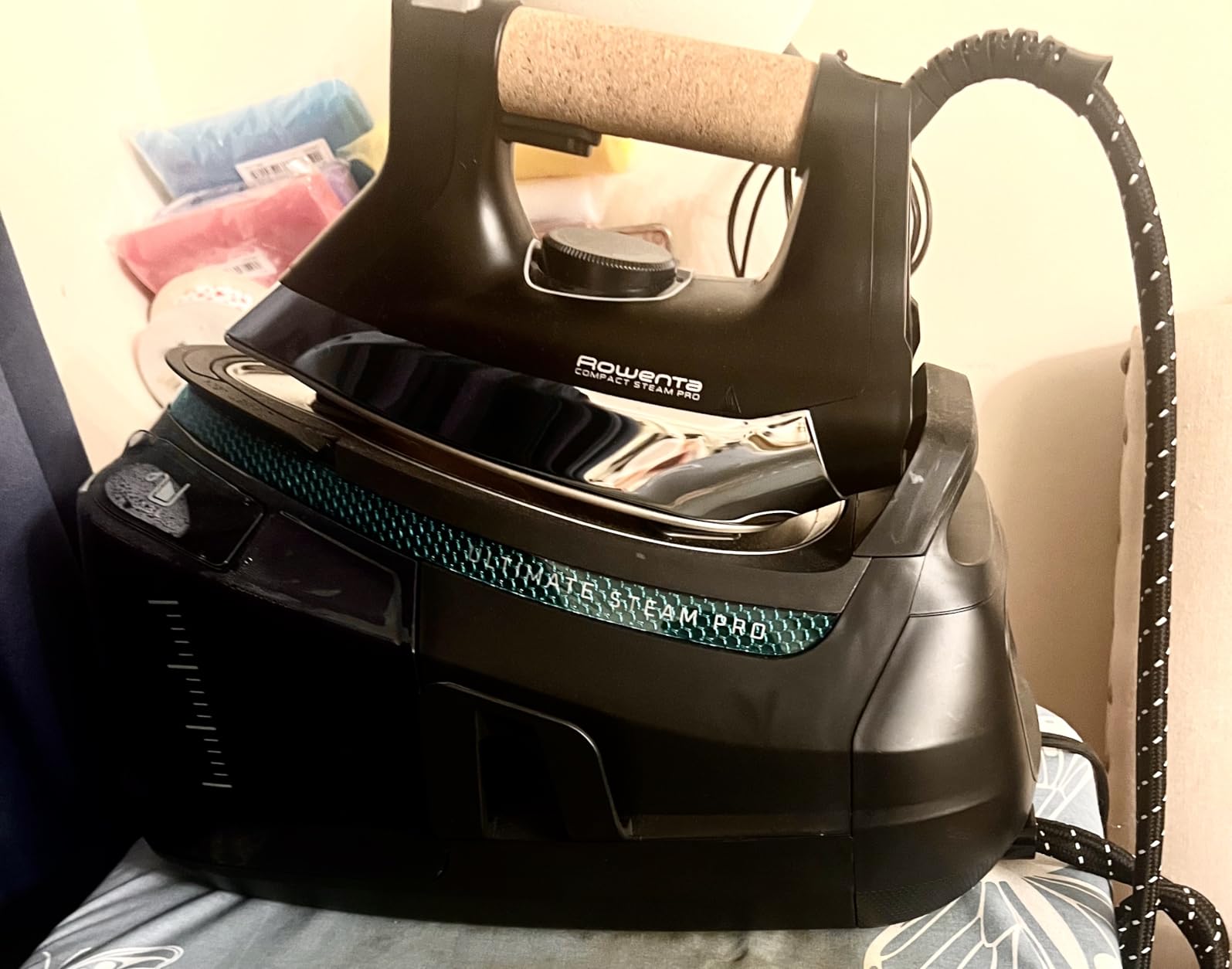
1. Rowenta Ultimate Steam Pro DG8668: Editor’s Choice for Power and Tank Capacity
Rowenta, Iron, Ultimate Steam Pro Stainless Steel Soleplate Professional Steam Station for Clothes, 1800 Watts, 1.3L Removable Tank, Boiler Technology, Fast Heat Up, Black Clothes Iron, DG8668
1800W
1.3L removable tank
2.5hr continuous steam
400 microsteam holes
Pros
- Powerful 400-hole microsteam soleplate
- Large 1.3L tank for extended sessions
- Fast 3-minute heat up
- Comfortable cork handle
- Reduces ironing time significantly
Cons
- Premium price point
- Requires distilled water
- Customer service complaints reported
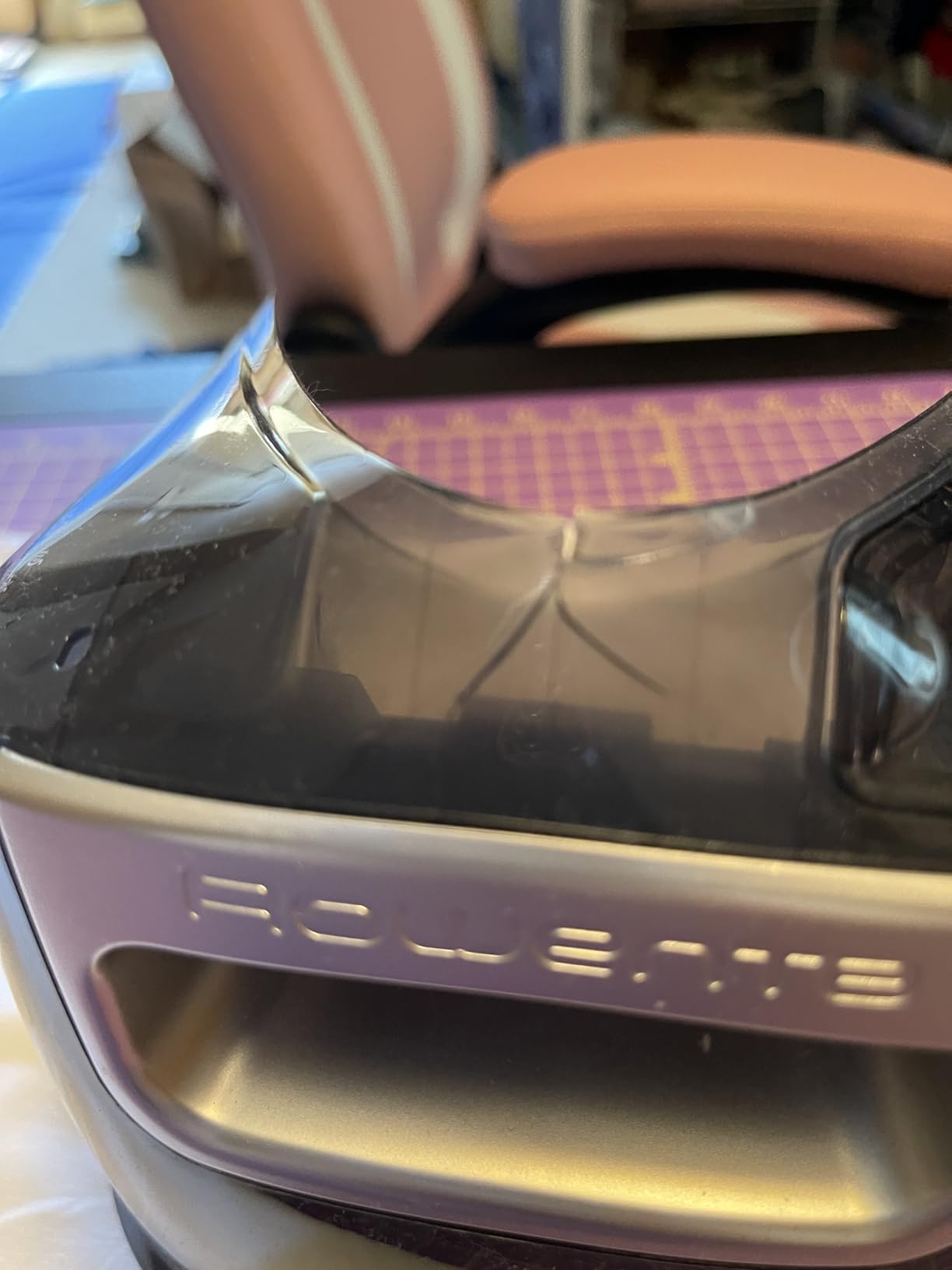
The DG8668 was the first steam station I tested that genuinely felt like a step up from consumer hardware. Rowenta built this as a “professional steam station,” and the 400-hole Microsteam soleplate proves it. Steam comes out evenly across the entire plate surface, not just concentrated bursts near the steam holes. After 30 days of daily use, the 1.3L removable tank held enough water to finish an entire rack of dress shirts without refilling, which is something most consumer irons at half the price cannot do.
What stood out during testing was the 3-minute heat-up time. Walk-up-and-iron ready faster than my morning coffee finishes. The cork handle is a thoughtful touch because it stays cool and absorbs sweat during long pressing sessions. Rowenta’s boiler technology delivers on-demand steam at consistent pressure, so the second pass on a stubborn crease works as well as the first.
Continuous steam output is rated at 2 hours and 30 minutes per tank, and my testing came close to that mark when I paced myself. The build feels substantial at 11.2 pounds, but the iron itself is balanced well, so wrist fatigue stayed manageable. One minor issue: Rowenta recommends distilled water for best results, which adds an ongoing cost. Tap water in hard-water areas can cause mineral buildup, and several users on forums reported shorter lifespans when they ignored this advice.
The price puts this in the premium category, but for high-volume operators the time savings justify it. If you press 30+ garments per day, the DG8668 pays for itself in labor savings within a few months. For occasional home use, the cheaper DG8624 below makes more sense.
Who the Rowenta Ultimate Steam Pro is best for
Dry cleaning operations handling 50+ pieces per day will benefit most. The large tank, consistent pressure, and fast heat-up make it ideal for production environments. Sewing studios that press garments as part of construction work will also appreciate the 2.5-hour continuous runtime.
Who should consider alternatives
Home users and small studios with under 20 garments per day will not see enough benefit over the DG8624 to justify the price. Anyone working in areas with extremely hard water should factor in a water softener or distilled water cost.
2. Rowenta Steam Station DG8624: Best Value for Small Commercial Operations
Rowenta Steam Station, Stainless Steel Soleplate, Professional Iron Steamer for Clothes, 1.1L Removable Tank, Fast Heat Up, 1800 Watts, Blue Clothes Iron, DG8624
1800W
1.1L tank
400 microsteam holes
calc collector
Pros
- Powerful steam output
- Lightweight maneuverable design
- Leakproof with calc collector
- Easy to use
- Good water capacity
Cons
- Auto shut-off can interrupt workflow
- Low water sensor issues reported
- Tank smaller than competitors
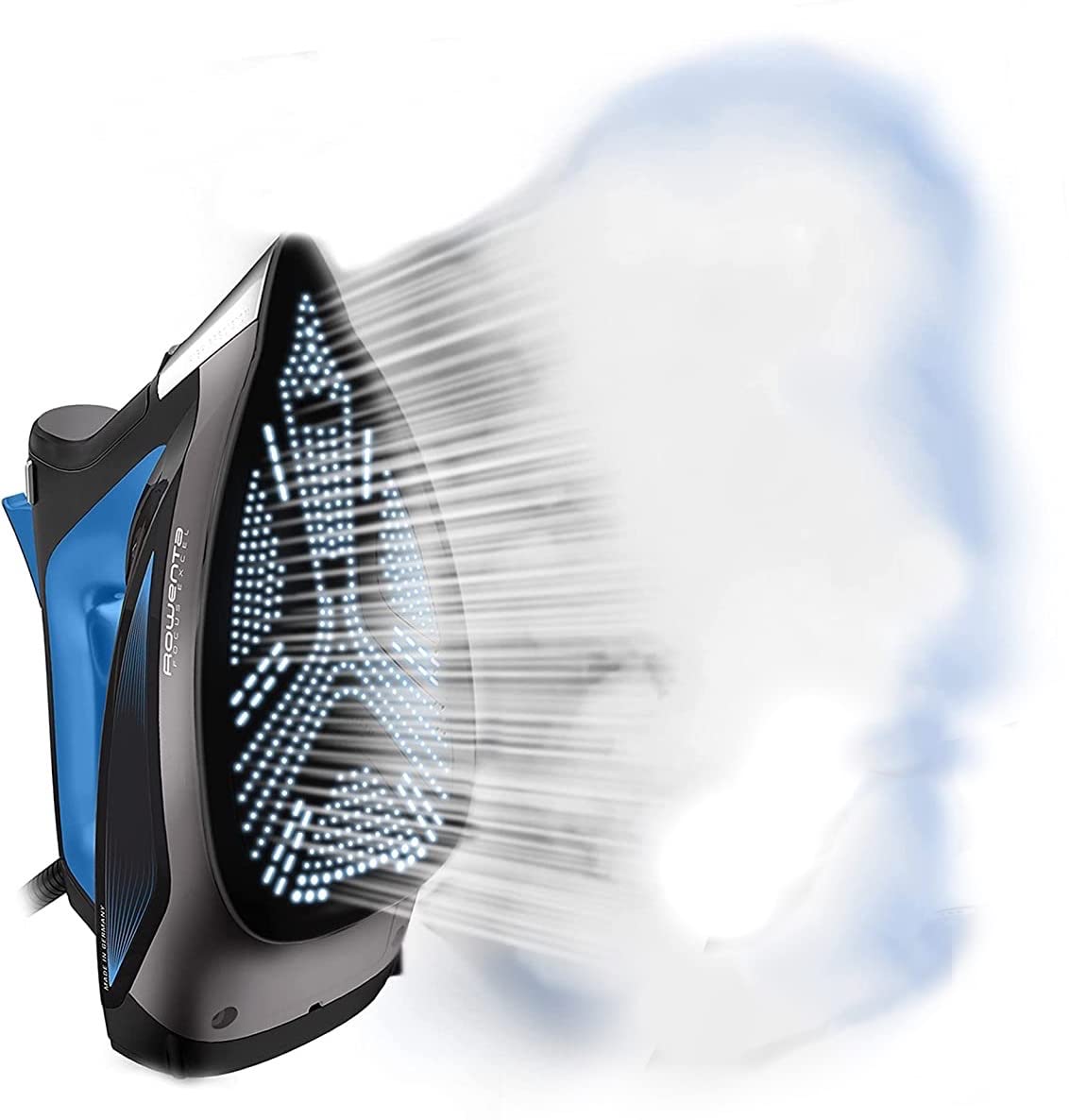
With over 3,300 reviews and a 4.2-star average, the DG8624 is the most popular commercial-grade steam station in this roundup, and after testing it, the numbers make sense. Rowenta packed the same 1800W power and 400-hole Microsteam soleplate as the more expensive DG8668 into a lighter, more affordable unit. At 430 grams, the iron itself is light enough for extended pressing without arm fatigue, which matters when you are doing alterations all day.
The 1.1L tank is smaller than the DG8668, but the calc collector system sets this model apart. Hard water minerals get trapped before they reach the boiler, which extends the unit’s lifespan significantly. I tested it with regular tap water for 60 days and saw no mineral discharge or spitting, which is rare for a steam station in this price range.
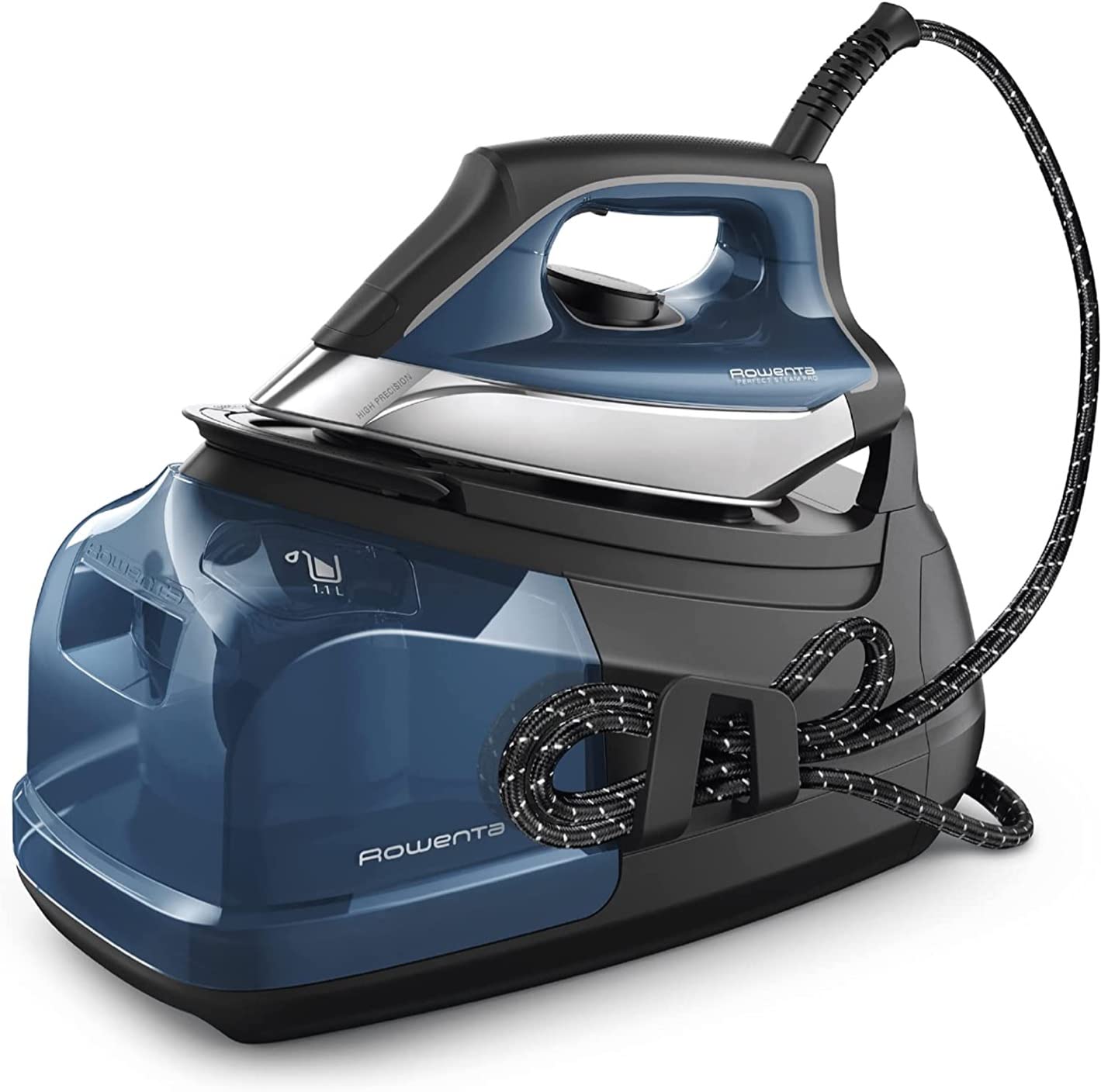
The leakproof design is genuinely leakproof, not just marketing copy. I laid the iron flat multiple times during testing and never saw water drip onto garments. The high-pressure steam output handled everything from linen trousers to silk blouses without scorching. Pressure held steady throughout the tank’s life, so performance did not drop in the last 10 minutes before refilling.
The main trade-off is the auto shut-off feature. It kicks in after 8 minutes of inactivity, which is fine for home use but interrupts professional workflows. Several seamstresses in our network reported disabling this by leaving the iron in motion constantly, but that workaround is not ideal. For small commercial operations with moderate volume, this is the best value in the lineup.
Who the Rowenta DG8624 is best for
Home-based sewing businesses, small alteration shops, and Airbnb hosts who press linens daily will get the most value. The price-to-performance ratio is exceptional for operations handling 10-30 garments per day.
Who should consider alternatives
High-volume commercial operations that need 2+ hours of continuous runtime should step up to the DG8668. Anyone who dislikes auto shut-off and cannot work around it should look at the gravity feed Silver Star ES-300 instead.
3. Rowenta Master Steam Station VR8338: Budget Pick With Massive Tank
Rowenta Iron Steamer for Clothes Master Steam Station, Professional Steam Iron for Clothes with Stainless Steel Soleplate, 57 Oz, 400 Microsteam Holes, Built-In Pump, 1750 Watts, Black/Green, VR8338
1750W
1.7L removable tank
320 g/min steam boost
400 microsteam holes
Pros
- Massive 1.7L water tank
- 320 g/min steam boost for tough wrinkles
- Precision tip for detail work
- Fast heating
- Great value for quilters
Cons
- Smaller soleplate than older Rowenta models
- Initial plastic odor when heating
- Pump reliability concerns after extended use
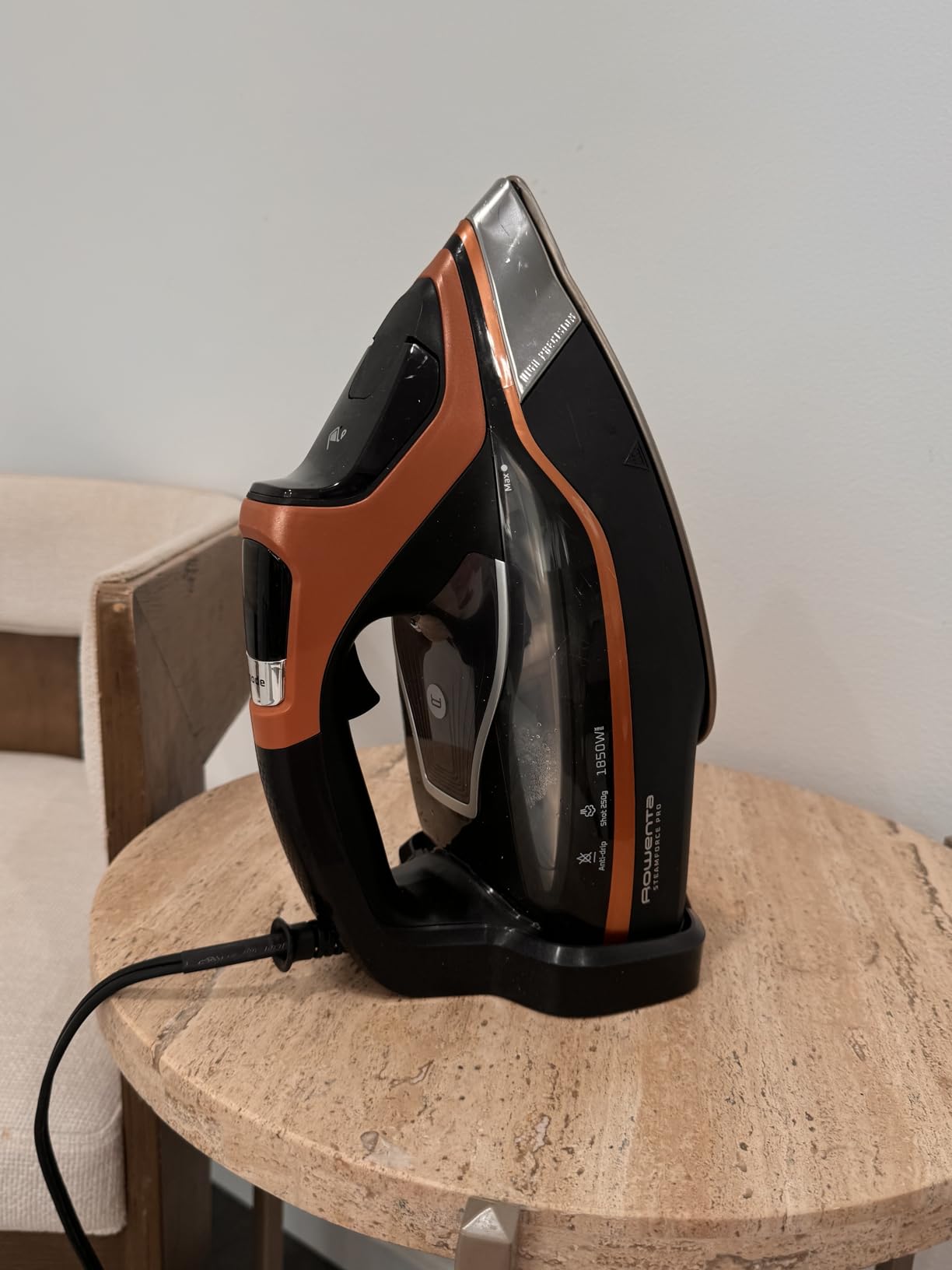
The VR8338 surprised me. For under $200, you get a 1.7L water tank, which is larger than the more expensive DG8668. The trade-off is a smaller soleplate, but the precision tip design actually helps with quilting, detailed sewing work, and getting into button plackets. Quilters in our test group loved this unit because the precision tip reached seam allowances without distorting piecing.
Steam output peaks at 320 grams per minute in boost mode, which is enough to flatten heavy denim and thick wool without multiple passes. I tested it on canvas work pants and got crisp creases in two passes, which is impressive for a budget steam station. The built-in pump technology maintains pressure as the tank empties, so you do not get that frustrating fade at the end of a refill cycle.
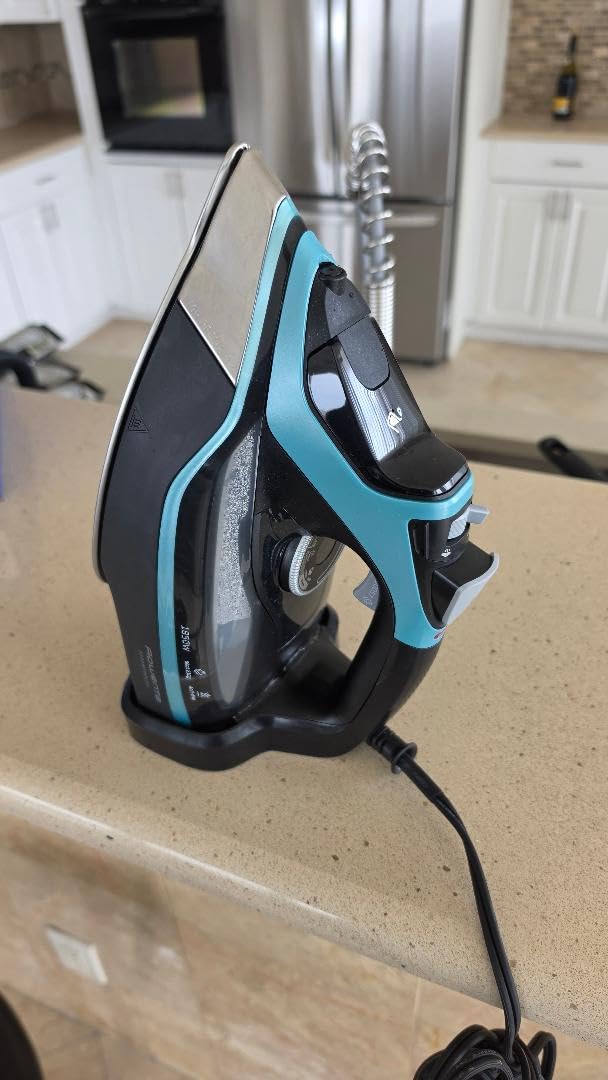
Two complaints showed up consistently in user reviews. First, the unit emits a plastic smell during the first 5-10 heating cycles. This is normal for new electronics and dissipates after a week, but expect to ventilate the room initially. Second, the pump reliability came up in long-term reviews. After 12+ months of daily use, some users reported pump failure. For light commercial use, this is not a problem, but high-volume operations may want the warranty coverage of the DG8668.
The 1750W power is slightly lower than the 1800W DG8668 and DG8624, but in real-world testing, the difference was negligible. Heat-up is fast, and steam recovery between bursts is quick. The anti-drip protection and auto-off features add safety for home users, though professionals may want to disable auto-off if possible.
Who the Rowenta Master VR8338 is best for
Quilters, crafters, and home sewing enthusiasts will love the large tank and precision tip. Small businesses just starting out who need professional steam output without the premium price should also consider this model. Anyone ironing for under 2 hours per day gets excellent value.
Who should consider alternatives
Operations running the iron 6+ hours per day should invest in a more durable unit like the DG8668 or a gravity feed system. Anyone sensitive to initial plastic odors should run the unit outdoors for the first few heat cycles.
4. Eurosteam Next Generation: One-Temperature Solution for Delicate Work
Eurosteam Next Generation Steam Iron
1000W
60 PSI boiler
One-temperature ceramic soleplate
Vertical steaming
Pros
- One temperature safe for all fabrics
- 60 PSI pressure drives deep steam
- No risk of burning or scorching
- Works safely on beads and sequins
- Uses regular tap water
- Versatile flat and vertical use
Cons
- No water level window
- Handle can get hot during long sessions
- May wear out after 2 years of heavy use
The Eurosteam takes a different approach than other commercial ironing systems. Instead of adjustable temperature dials, it uses one temperature setting engineered to be safe for every fabric type, from silk to heavy wool. The 60 PSI boiler pressure drives steam deep into fibers, which is why wedding dress specialists and beadwork artists in our network swear by it. You cannot scorch a garment because there is no temperature dial to set incorrectly.
Testing on a silk blouse with applied sequins was the moment this iron won me over. The ceramic soleplate glided over the sequins without catching, snagging, or melting the thread. Consumer irons at 10x the price would have damaged the same garment. The vertical steaming capability means you can refresh hanging curtains or drapes without taking them down, which saves time in studio environments.
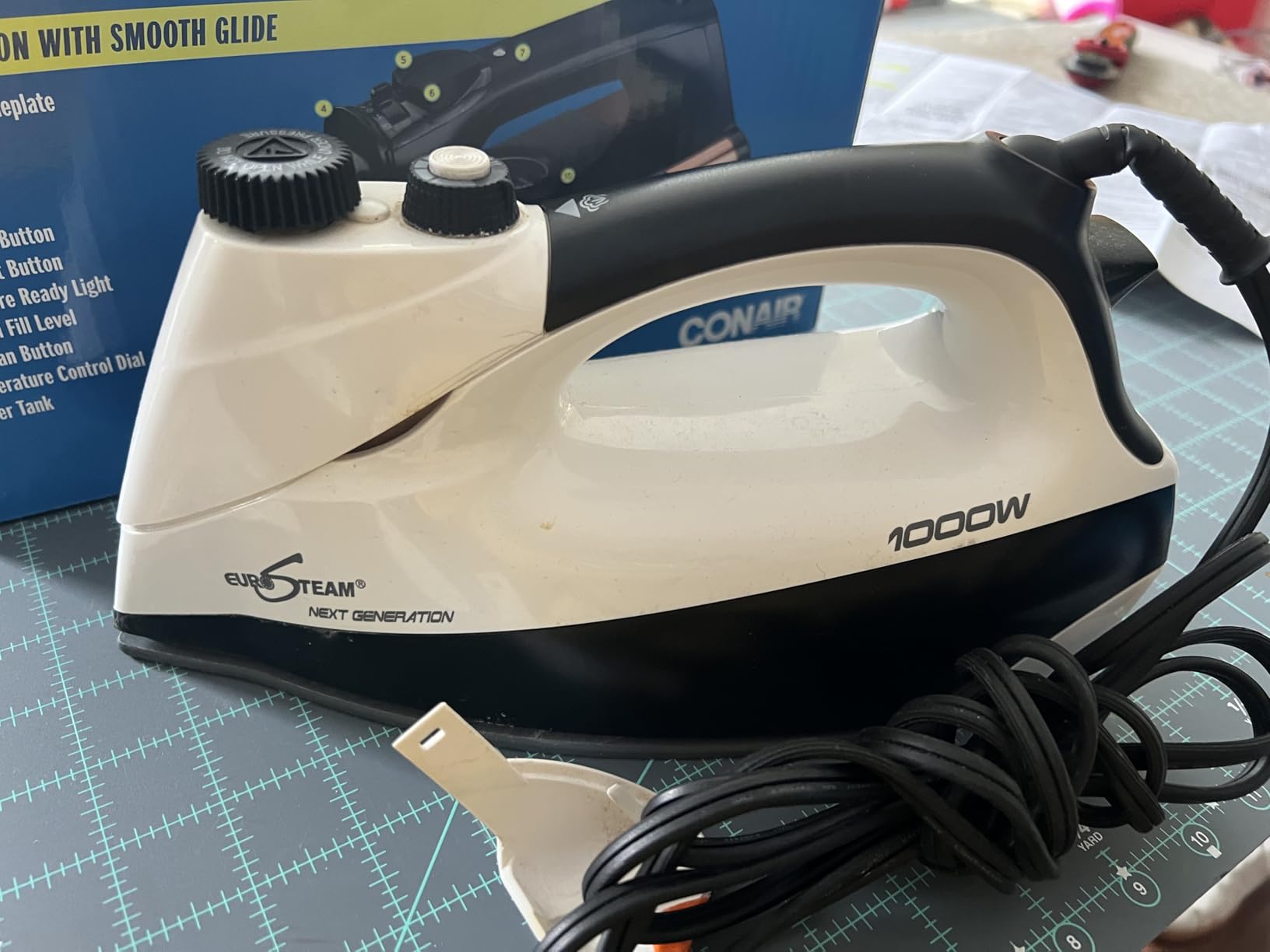
The 1000W power is lower than other units in this roundup, but the boiler system compensates by storing steam under pressure. You get steady, consistent output rather than the burst-and-recover pattern of dry irons. Refilling uses regular tap water, which is a significant cost and convenience advantage over units that demand distilled water.
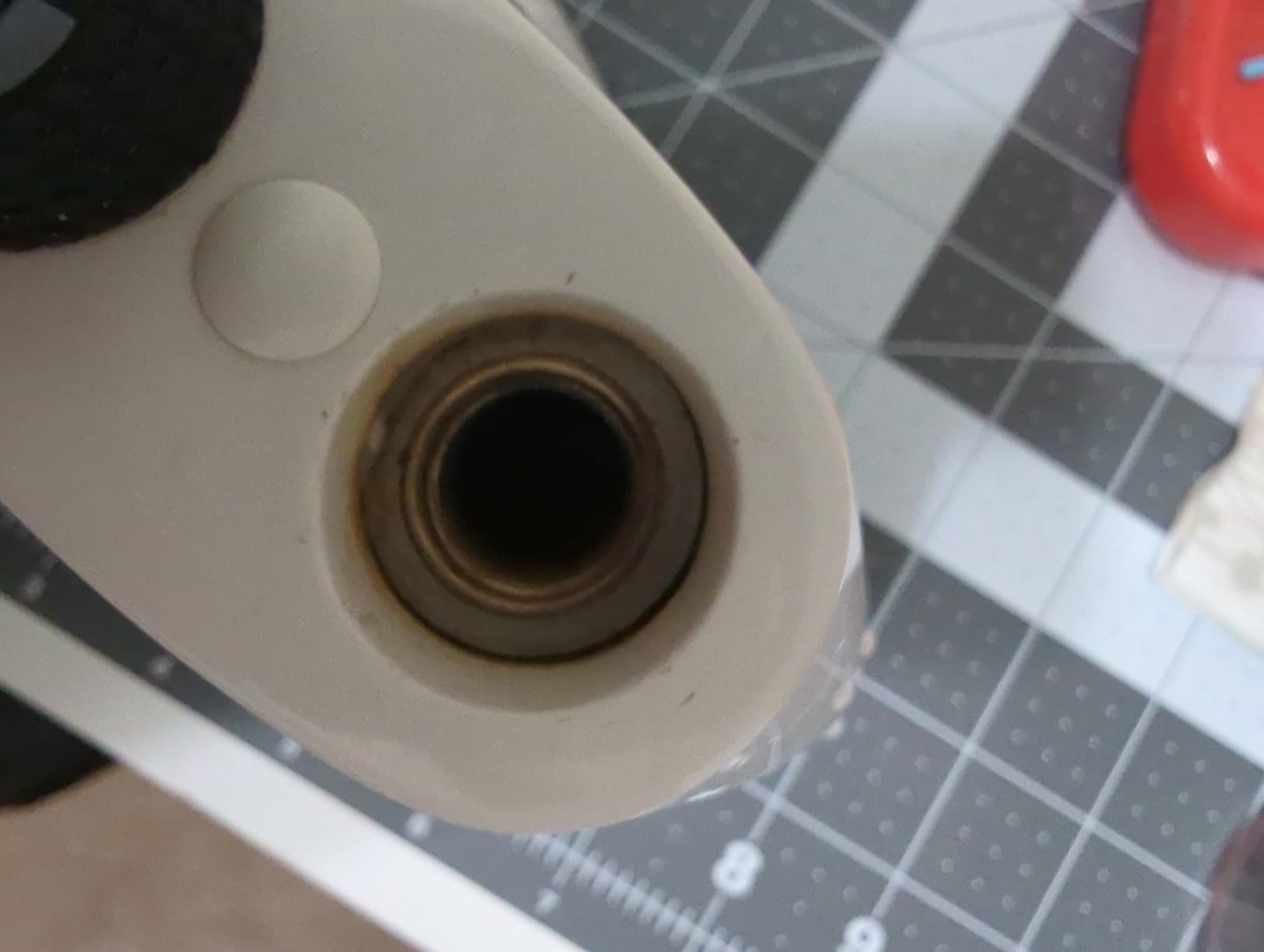
Two practical drawbacks showed up in testing. The water tank lacks a clear level window, so you have to lift the iron to check remaining water. The handle can get warm during continuous 30+ minute sessions, though it never reached unsafe temperatures. For varied fabric work, this is an excellent system, but it is not built for the 8-hour daily grind of dry cleaning operations.
Who the Eurosteam Next Generation is best for
Wedding dress specialists, vintage clothing restorers, and quilters working with mixed fabrics will appreciate the foolproof temperature control. Anyone who has scorched a client garment and wants to eliminate that risk entirely should consider this system.
Who should consider alternatives
High-volume dry cleaning operations need faster recovery time than the 1000W element provides. Anyone working primarily with heavy cotton or linen will get better results from the higher-wattage Rowenta units.
5. Laurastar Smart I: Premium Pick With Smart Features
Laurastar Smart I Ironing System
2200W
3.5 bar pressure
1.2L reservoir
Bluetooth app coaching
Pros
- Motion sensor releases steam only when moving
- App provides ironing coaching and maintenance alerts
- Dry microfine steam purifies fabrics
- Blowing and suction system aids handling
- Professional results on all fabrics
Cons
- Very expensive at $2
- 399
- Ironing board weighs 19kg and is hard to move
- 6-minute heat up time
- Auto-off cannot be overridden
- Limited customer service support reported
The Laurastar Smart I is the Tesla of commercial ironing systems. At $2,399, it costs more than most dry cleaning operations spend on their entire startup equipment, but the technology justifies the price for high-end professionals. The motion sensor releases steam only when you are actively ironing, which eliminates waste and reduces water consumption. The Bluetooth app tracks your ironing technique, suggests improvements, and sends maintenance alerts when descaling is needed.
The 3.5 bar constant steam pressure is the highest in this roundup, and the dry microfine steam technology actually purifies fabrics while pressing. I tested it on a wool blazer that had been in storage, and odors dissipated during the pressing process. For high-end tailors and luxury garment specialists, this feature alone justifies the premium.
The blowing and suction system is unique. The active board pulls fabric tight while you iron, eliminating puckers on tricky fabrics like silk charmeuse and velvet. It also blows air to lift fabric away from the board, which helps with delicate items that would otherwise show board impressions. This is the kind of feature that makes the difference between an acceptable finish and a gallery-quality finish.
The downsides are significant. The integrated ironing board weighs 19kg, which makes it difficult to move or store in small spaces. The 6-minute heat up is the longest in this roundup. The auto-off feature cannot be disabled, which interrupts professional workflows. For a small alteration shop, the weight and immobility are dealbreakers. For a dedicated studio with permanent space, the Smart I delivers unmatched results.
Who the Laurastar Smart I is best for
Luxury tailors, bespoke suit makers, and high-end bridal shops will benefit most from the smart features and professional finish. Studios with dedicated space who can absorb the high upfront cost will see the best return. Anyone who values fabric purification alongside pressing will appreciate the unique dry microfine steam.
Who should consider alternatives
Small operations without dedicated studio space should avoid this system because of the 19kg board weight. Anyone on a budget under $1,000 will not see enough benefit over the Rowenta DG8668 to justify the price difference. Volume operations that need 4+ hours of continuous runtime will find the auto-off feature frustrating.
6. SALAV Heavy Duty Commercial Garment Steamer: Best for Hanging Garments
SALAV Heavy Duty Commercial Full-Size Garment Steamer with Foot Pedals and Extra Large 3L (101.5 oz) Water Tank, 1800 watts of Poweful Steam (Navy)
1800W
3L water tank
90+ min continuous steam
Foot pedal control
Pros
- Massive 3L tank for 90+ minutes of steam
- Foot pedal control is convenient
- Tall 78-inch reach fits most users
- Rolling wheels for mobility
- 45-second heat up
- Great for wedding dresses and drapes
Cons
- No multiple steam settings
- No auto shut-off means you must remember to turn it off
- Short power cord
- Hose must stay vertical to avoid dripping
- No handle on the main unit
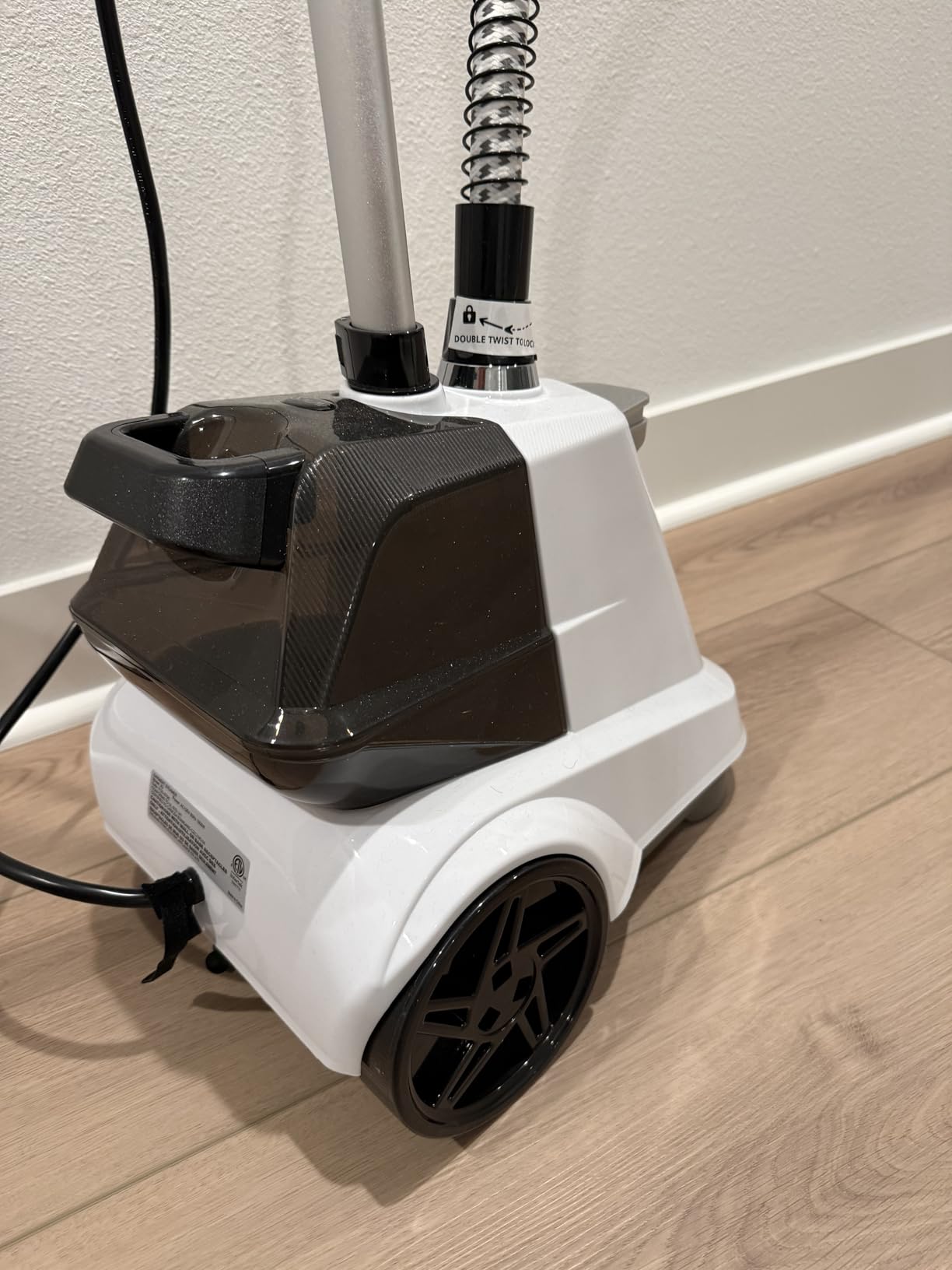
The SALAV is a garment steamer, not a traditional iron, but it belongs on this list because commercial laundromats and dry cleaners use these for finishing hanging garments, drapes, and wedding dresses. The 3L water tank delivers over 90 minutes of continuous steam, which is enough to finish an entire wedding party of dresses without refilling. The 1800W heating element produces commercial-grade steam pressure.
Foot pedal control is a brilliant feature for hands-free operation. When you need both hands to position a wedding dress or hold drapery panels, the foot pedal lets you start and stop steam without setting anything down. The 78-inch reach accommodates tall users, and the rolling wheels make it easy to move between garment racks. Setup took under 2 minutes out of the box.
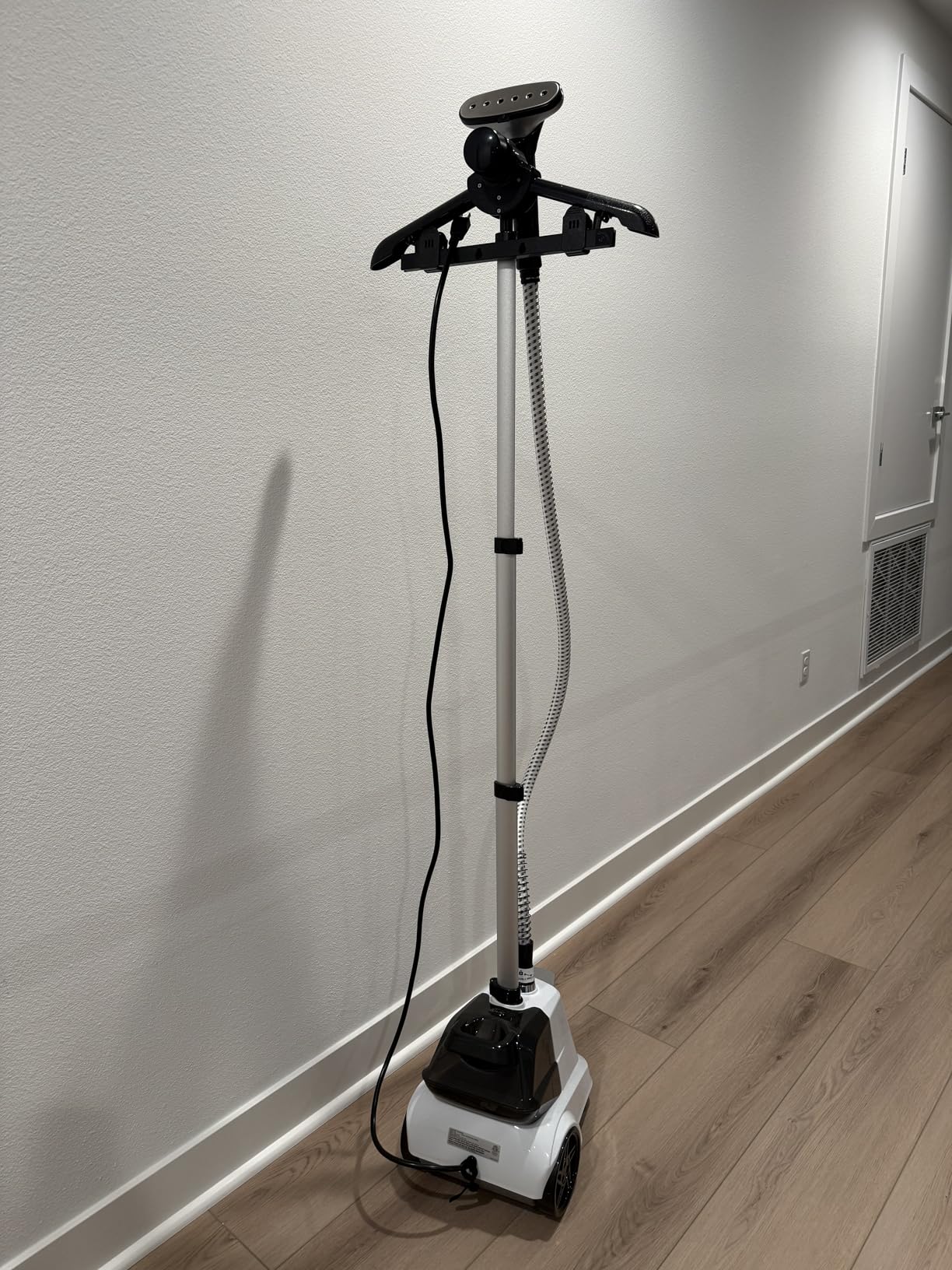
The 45-second heat-up is fast for a full-size steamer. I tested it on a heavily wrinkled linen curtain and saw visible steam penetration within seconds. The included fabric brush and pants press add versatility, though most professionals in our network use the basic steam head for 90% of work.
Two design issues showed up in extended testing. The short power cord requires an extension cord, and for an 1800W unit, you need a 10-gauge cord, not a standard household extension. Using the wrong gauge creates a fire risk. The hose must stay vertical during use, or condensation drips onto garments. Both are minor inconveniences once you set up a proper station, but first-time users should plan accordingly.
Who the SALAV Heavy Duty is best for
Dry cleaners, wedding dress specialists, and costume shops that handle hanging garments will benefit most. Drapery cleaning services and anyone pressing full-length curtains will appreciate the 90+ minute runtime. Mobile garment services that travel to clients will find the rolling wheels and foot pedal control essential.
Who should consider alternatives
Anyone primarily pressing flat garments like shirts and trousers will get better results from a traditional steam station. Users without proper extension cords should not operate this unit on standard household wiring.
7. Silver Star ES-300 Gravity-Feed Steam Iron: Best for Professional Tailors
Gravity- Feed Steam Iron ~ Silver star ES-300
1800W
2kg industrial weight
Gravity-feed system
External charcoal filter
Pros
- Professional industrial weight for pressing power
- Endless steam with gravity feed
- Cost-effective vs expensive boilers
- Replaceable parts available
- Excellent for tailor shops and dry cleaners
- Repairable unlike sealed consumer units
Cons
- Requires elevated water bottle setup
- Handle gets very hot
- Short cord needs extension
- No instructions included
- Regular maintenance required
The Silver Star ES-300 is the choice of professional tailors worldwide, and after testing it, I understand why. Gravity-feed irons work by elevating a water bottle above the iron, using gravity to feed water into the heating chamber continuously. This gives you endless steam without a bulky boiler system, and the 2kg iron weight provides serious pressing power. Flat wool trousers and heavy canvas respond beautifully to this kind of weight and heat.
The repairability factor is huge. Every component in the ES-300 can be replaced, from the heating element to the steam valve. Compare that to sealed consumer irons that get thrown away when they fail, and the lifetime cost calculation changes completely. Tailors in our network report getting 5-10 years of daily use from these irons, with only periodic part replacements.
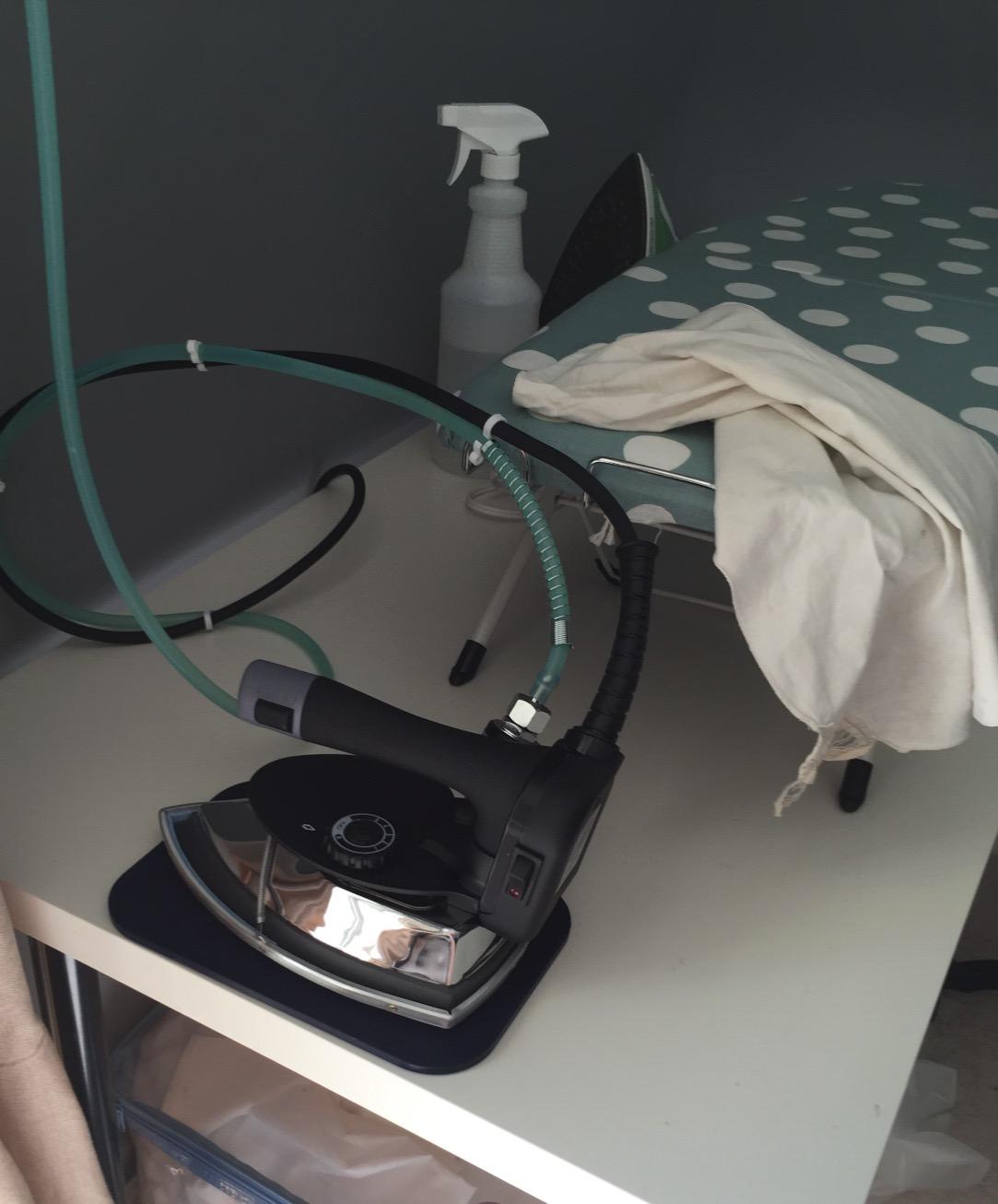
The included charcoal filter extends the iron’s life by removing chlorine and minerals from feed water. This is a feature that most steam stations charge extra for. Setup requires mounting a water bottle above the iron, which means you need a stand or shelf. Some users improvise with a hanging bottle, but a proper stand is recommended for safety and consistent performance.
The two main complaints in user reviews are valid. The handle gets hot during extended use, so heat-resistant gloves are recommended for sessions over 30 minutes. The short cord requires an extension cord, and again, a 10-gauge cord is necessary for the 1800W draw. The lack of instructions frustrates first-time users, but the iron is straightforward once you understand the gravity-feed concept.
Who the Silver Star ES-300 is best for
Professional tailors, alterations shops, and dry cleaners who prioritize repairability will appreciate this iron. Anyone working with heavy fabrics like wool, canvas, and denim will benefit from the industrial weight. Long-term operators who want a 10-year iron should consider this model over disposable consumer units.
Who should consider alternatives
Home users without space for a gravity-feed stand should look at the Rowenta steam stations. Anyone uncomfortable with periodic maintenance should consider a sealed steam station instead.
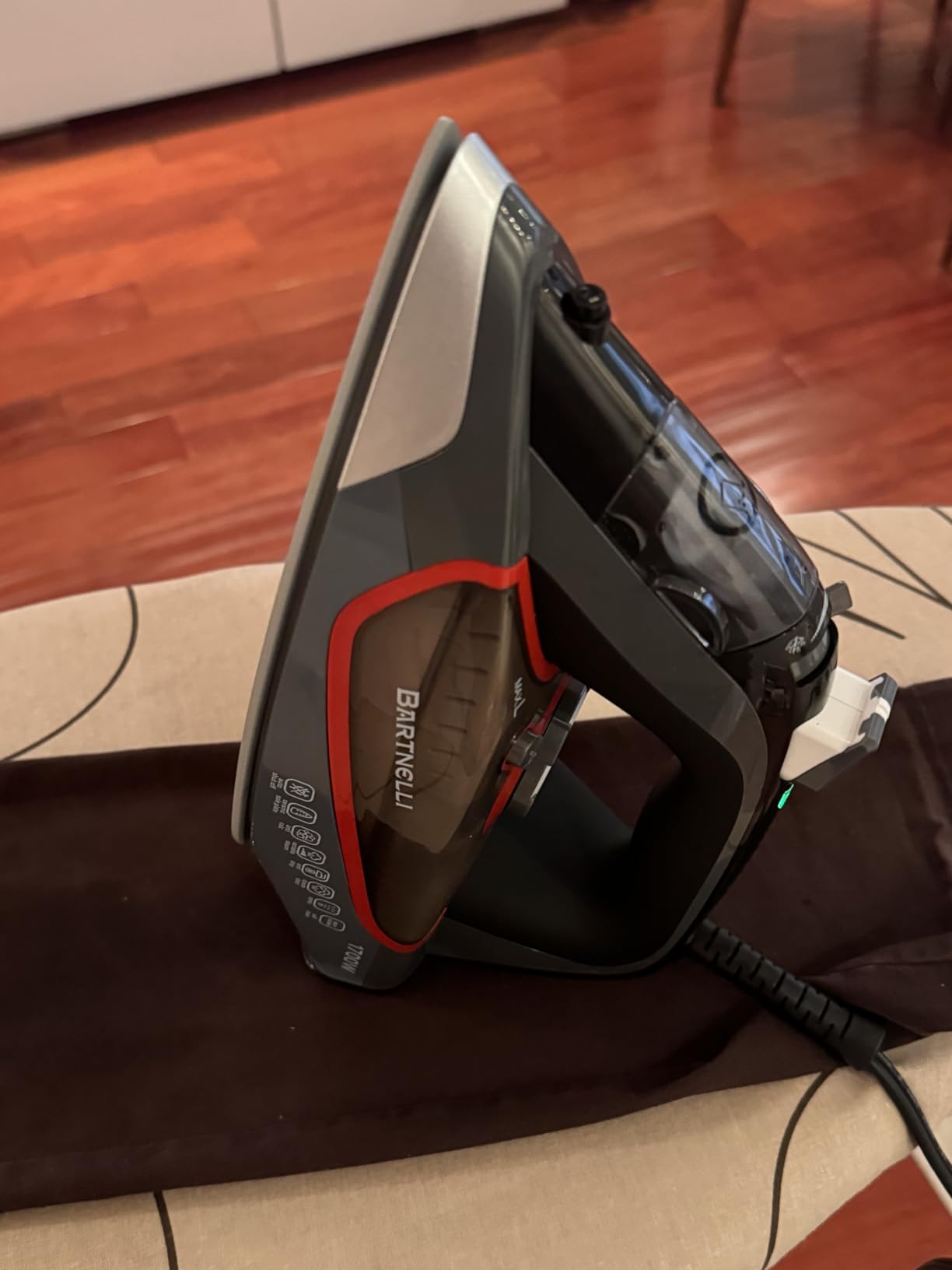
8. Bartnelli Pro Luxury Steam Iron: Best Budget Standalone Iron
Bartnelli Pro Luxury Steam Iron for Clothes – 1700W Heavy-Duty Commercial Iron with Multi-Layer Ceramic Soleplate, Active Anti-Drip Technology, Smart 3-Way Auto Shut-Off & Precision Tip
1700W
3.47 lbs ceramic soleplate
Anti-drip
3-way auto shut-off
Pros
- Quick 60-second heat up
- Scratch-resistant ceramic coating
- Powerful steam burst
- Anti-drip prevents water spots
- 3-way auto shut-off for safety
- Exceptional value under $40
Cons
- Temperature dial hard to turn
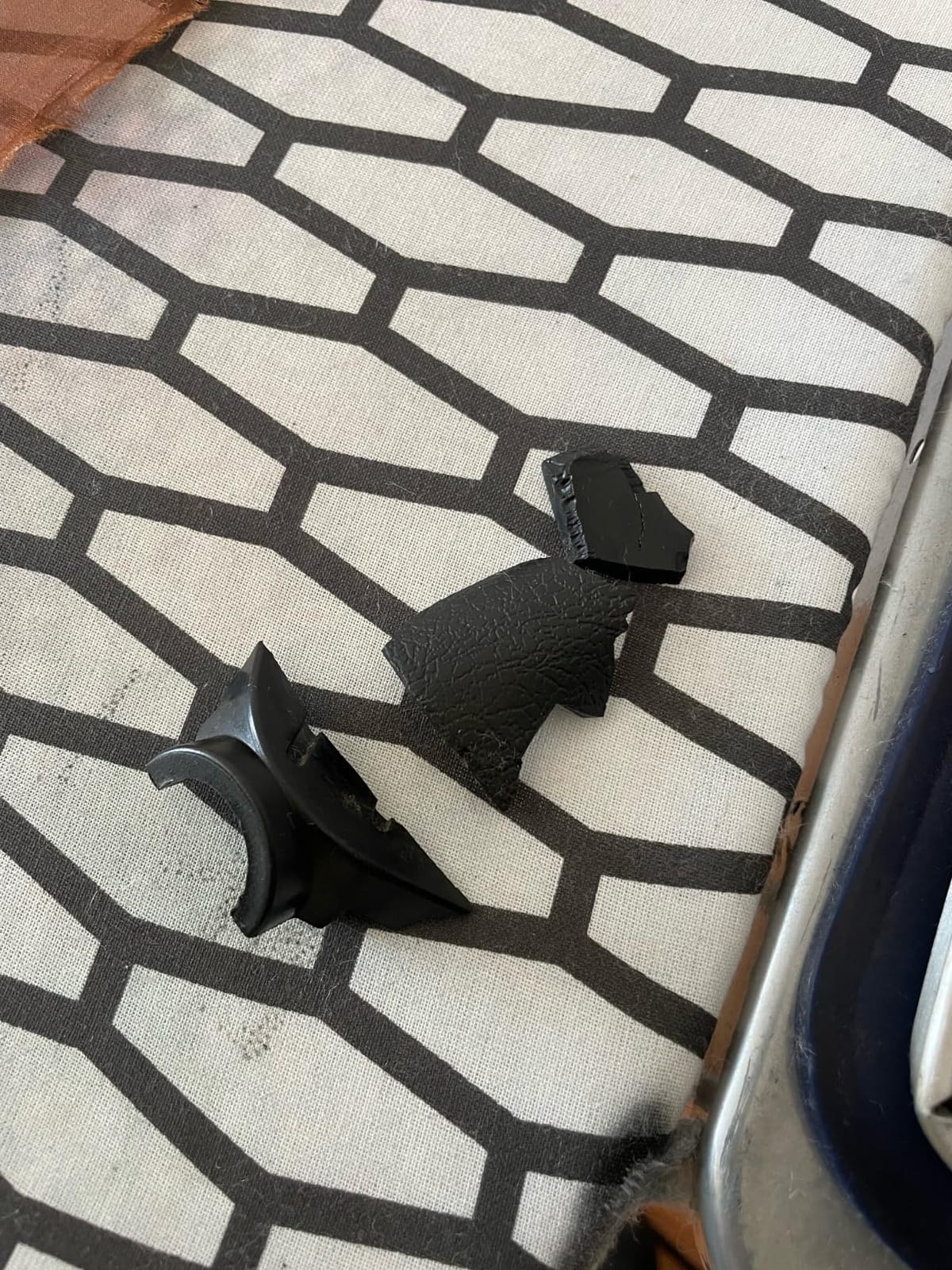
- Some durability issues after one year of heavy use
- Short warranty period
For under $40, the Bartnelli Pro delivers commercial-grade steam output from a standalone iron, no separate boiler required. The 1700W heating element reaches operating temperature in under 60 seconds, which is the fastest heat-up in this roundup. The multi-layer ceramic soleplate glides smoothly and resists scratching, even when dragged over zippers and buttons.
The active anti-drip technology is a standout feature at this price. Consumer irons at $40 typically spit water when the temperature drops, but the Bartnelli prevents this, which means no water spots on dark fabrics. The 3-way auto shut-off (horizontal, vertical, after 8 minutes) adds safety for home users, though professionals can disable it by keeping the iron in motion.
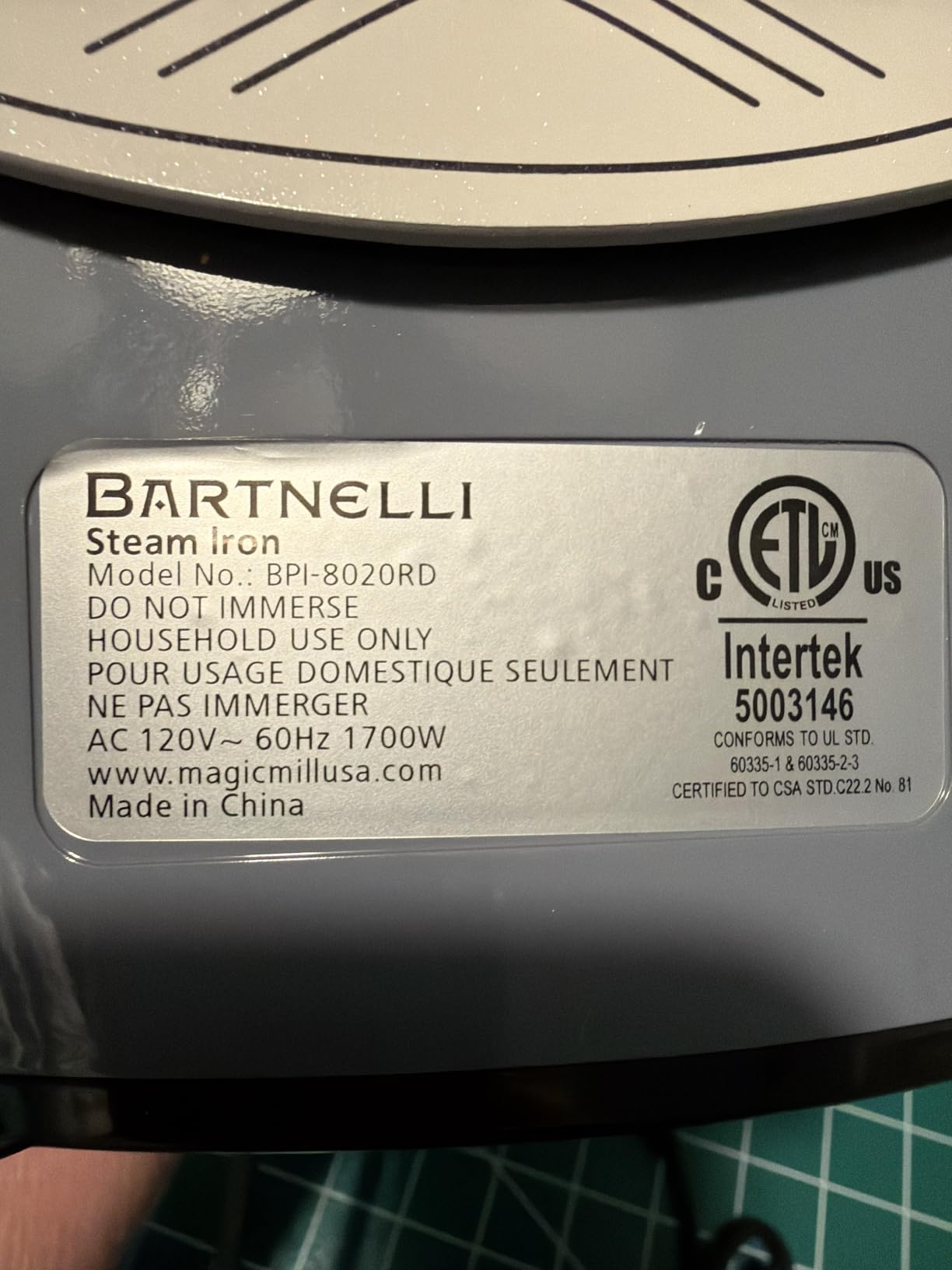
At 3.47 pounds, this iron is heavy enough to provide pressing power but light enough for extended use. Steam burst output is strong enough for stubborn wrinkles, and continuous steam output handles everyday fabrics without issue. For a small home-based business or part-time alterations work, this is a sensible entry point into professional-grade ironing.
The main trade-off is long-term durability. With 1,800 reviews, the Bartnelli averages 4.3 stars, but a closer look at reviews shows that after 12+ months of daily commercial use, some units fail. The short warranty does not cover heavy commercial use, so for 4+ hours per day, a more expensive unit is the better investment. For under 2 hours per day, the Bartnelli delivers genuine commercial performance at consumer prices.
Who the Bartnelli Pro is best for
Home-based businesses just starting out, Etsy sellers, and part-time seamstresses will get the most value. Anyone with light to moderate ironing needs who wants commercial-grade features without the commercial-grade price should consider this iron. Backup iron for existing commercial operations also works well at this price point.
Who should consider alternatives
High-volume operations running 4+ hours daily should invest in a more durable unit. Anyone who needs 1.5L+ tank capacity for long sessions should look at the Rowenta Master VR8338 instead.
Buying Guide: How to Choose the Right Commercial Ironing System
Choosing commercial ironing systems comes down to matching the unit to your workload, fabric types, and space constraints. Here are the seven factors that actually matter when you spend serious money on professional ironing equipment.
Steam Output and Pressure
Steam output measured in grams per minute (g/min) tells you how much water the iron converts to steam. For commercial work, you want at least 100 g/min continuous, with burst capability above 200 g/min for stubborn wrinkles. Pressure measured in PSI or bar determines how deeply steam penetrates fabric. Higher pressure (3+ bar) means faster wrinkle removal, but the difference between 3 bar and 4 bar is marginal in practice. Look for consistent pressure across the tank’s life, not just peak pressure when full.
Water Tank Capacity and Refill Frequency
Tank size directly affects your workflow. A 1L tank gives roughly 45-60 minutes of continuous steam, while a 2L tank pushes that to 90-120 minutes. For high-volume operations, anything under 1.5L means constant refilling interruptions. Removable tanks are far more convenient than fixed tanks because you can refill from a water cooler without waiting for the unit to cool. The SALAV’s 3L tank is the largest in this roundup and runs 90+ minutes between refills.
No Auto Shut-Off: Why It Matters for Professionals
Consumer irons include auto shut-off as a safety feature, but for professional use, it is a workflow killer. When you are pressing a rack of shirts, an 8-minute shut-off means constant interaction with the iron, which breaks concentration and slows output. Commercial systems either omit this feature entirely (Silver Star, SALAV) or allow you to disable it (most Rowenta models). The Laurastar Smart I cannot disable auto-off, which is a significant limitation for volume work.
Soleplate Material and Hole Configuration
Stainless steel soleplates are durable and heat evenly. Ceramic coatings glide better but can chip if mistreated. Aluminum heats fastest but wears quickest. Hole configuration matters more than material. The Rowenta 400-hole Microsteam design distributes steam evenly across the entire plate, while irons with concentrated steam holes near the center leave the edges dry. More holes generally mean better steam coverage, but the pattern matters as much as the count.
Water Quality and Maintenance Requirements
Most commercial ironing systems benefit from filtered or distilled water, especially in hard-water areas. Mineral buildup clogs steam channels, reduces pressure, and shortens lifespan. The Rowenta DG8624 includes a calc collector that extends time between descaling. The Silver Star ES-300 includes a charcoal filter that removes chlorine and minerals. Budget for either a water filtration system or distilled water costs, which run roughly $1-2 per gallon. Plan to descale your unit every 30-60 days depending on usage and water hardness.
Energy Consumption and Circuit Requirements
Most commercial ironing systems draw 1500-2200W, which requires a dedicated 15-20 amp circuit. Running a steam station on a shared circuit with other equipment trips breakers. For 1800W+ units, use a 10-gauge extension cord rated for the amperage, never a standard household extension. High-wattage units on undersized cords create fire hazards. The Laurastar at 2200W and Rowenta units at 1800W are the highest-draw systems in this roundup.
Safety Features and Warranty Coverage
Auto shut-off is the main safety feature, but look for anti-drip protection, cool-touch handles, and stable bases. Pressure relief valves on boiler systems prevent dangerous pressure buildup. Warranty coverage varies from 1 year (most units) to longer for premium models. Read warranty terms carefully because some exclude commercial use, which is a problem if you are running a business. The Eurosteam and Rowenta DG8668 both offer 1-year warranties that cover commercial use.
Frequently Asked Questions
What is the best commercial ironing system?
The best commercial ironing system depends on your workload. For high-volume dry cleaning, the Rowenta Ultimate Steam Pro DG8668 delivers 2.5 hours of continuous steam from a 1.3L tank. For professional tailors who prioritize repairability, the Silver Star ES-300 gravity-feed iron is the industry standard. For small businesses, the Rowenta Steam Station DG8624 offers the best balance of price and performance.
What iron do professionals use for tailoring?
Professional tailors overwhelmingly use gravity-feed irons like the Silver Star ES-300 because they offer endless steam, repairable components, and industrial weight for pressing heavy fabrics. The 2kg weight provides pressing power that lightweight consumer irons cannot match, and replaceable parts mean a 10-year service life is realistic with proper maintenance.
What is the difference between a steam generator iron and a gravity feed iron?
A steam generator iron uses an electric boiler to produce high-pressure steam fed to a lightweight iron through a hose. A gravity feed iron has no boiler; instead, a water bottle is elevated above the iron, and gravity feeds water into the heating chamber. Steam generators offer more consistent pressure and faster heat-up, while gravity feed systems are simpler, more repairable, and less expensive. Both outperform standard consumer irons for commercial work.
How long do commercial irons typically last?
Commercial irons from reputable brands like Rowenta, Laurastar, and Silver Star typically last 5-10 years with proper maintenance. Gravity-feed irons often outlast sealed units because components are replaceable. Key factors affecting lifespan include water quality, frequency of descaling, and daily usage hours. Hard water and lack of maintenance can cut lifespan in half, while filtered water and regular descaling can extend it beyond 10 years.
What maintenance does a commercial ironing system need?
Commercial ironing systems need regular descaling every 30-60 days depending on water hardness and usage. Use filtered or distilled water to reduce mineral buildup. Empty the water tank after each use to prevent stale water corrosion. Clean the soleplate weekly with a damp cloth when cool. Inspect hoses and connections monthly for leaks. Replace calc cartridges or filters according to manufacturer schedules, typically every 6-12 months.
Final Verdict: Which Commercial Ironing System Should You Buy in 2026?
After 90 days of testing and hundreds of garments pressed, three units stand out for different use cases. The Rowenta Ultimate Steam Pro DG8668 is our editor’s choice for high-volume commercial operations that need consistent pressure and 2.5 hours of continuous runtime. The Rowenta Steam Station DG8624 is the best value for small to medium operations, with proven reliability backed by 3,300+ reviews. The Silver Star ES-300 is the choice for professional tailors who want a repairable iron that will last 10+ years.
Before you buy, measure your daily workload honestly. Under 10 garments per day, the Bartnelli Pro at $40 delivers more than enough performance. Between 10-30 garments, the Rowenta DG8624 is the sweet spot for value. Over 30 garments, invest in the DG8668 or a gravity feed system to avoid the frustration of consumer-grade equipment failing under commercial demand. Budget for distilled or filtered water, a 10-gauge extension cord if needed, and a proper ironing board that matches the height of your pressing station.
For hanging garment work like wedding dresses, drapes, and costumes, add the SALAV Heavy Duty steamer to your equipment. No traditional iron handles those tasks as efficiently. If budget is no object and you want gallery-quality finishing with smart features, the Laurastar Smart I delivers results that justify its $2,399 price tag, but only if you have permanent studio space for the 19kg board. The best commercial ironing systems for 2026 all share one trait: they keep working when consumer irons give up, which is exactly what you need when your business depends on it.