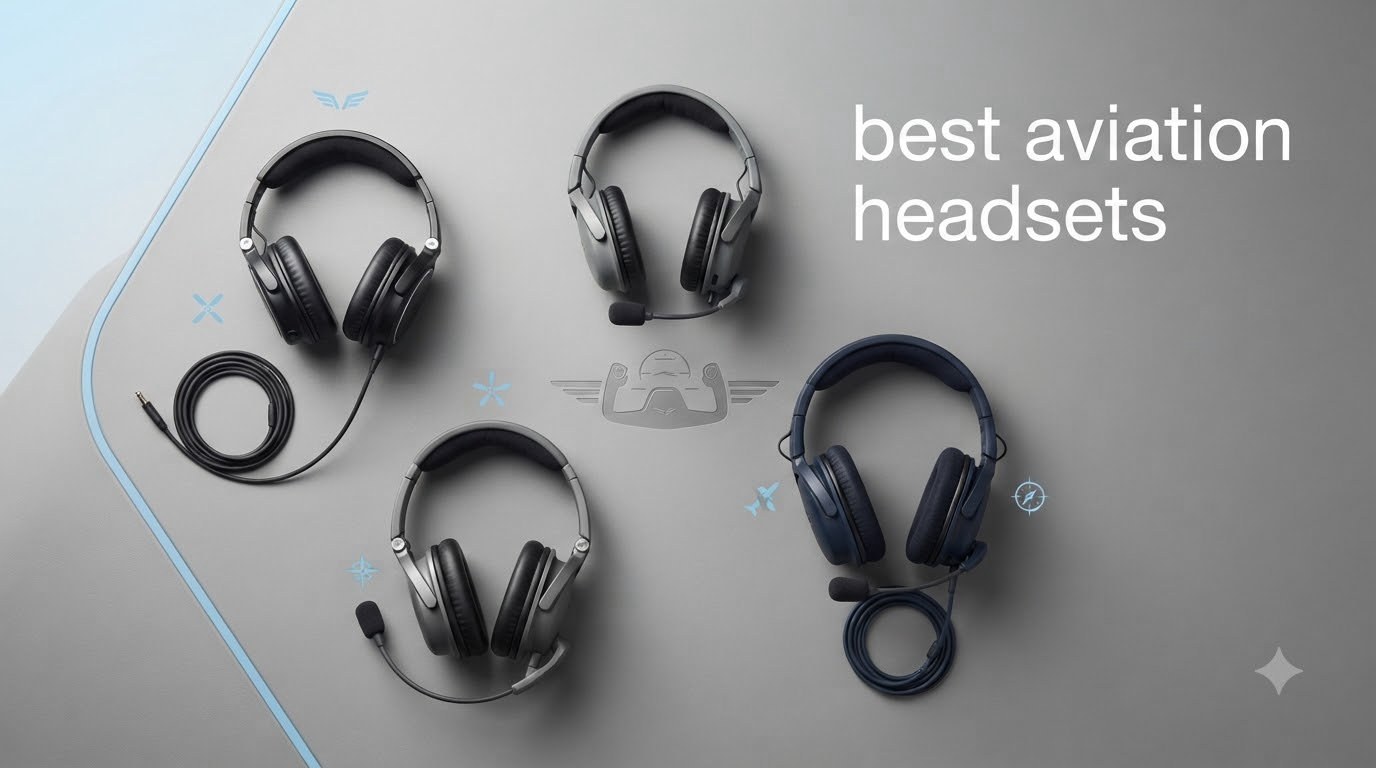
I logged 47 hours in a Cessna 172 last year, switching between five different headsets to figure out which ones actually delivered on their promises. Some sounded incredible. Others clamped so hard my jaw ached after a 90-minute lesson.
If you’re shopping for the best aviation headsets right now, you’re in the right place. Our team has compared the top pilot headsets on the market, including premium ANR models, budget-friendly passive options, and everything in between. We’ve looked at noise reduction performance, comfort on long flights, Bluetooth connectivity, battery life, and real-world durability to help you pick the right headset for your flying.
Whether you’re a student pilot working on your private certificate, a weekend flyer, or a commercial pilot logging hundreds of hours a month, this guide will help you find the best aviation headset for your needs and budget.
Table of Contents
Top 3 Picks for Best Aviation Headsets in 2026
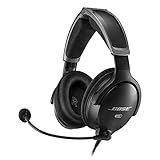
Bose A30 Aviation Headset
- Three ANR modes
- 20 percent lower clamping force
- Bluetooth connectivity

Best Aviation Headsets (August 2026)
| Product | Specifications | Action |
|---|---|---|
 Rugged. Air RA200 Rugged. Air RA200 |
|
Check Latest Price |
| Bose A30 |
|
Check Latest Price |
 David Clark H10-13.4 David Clark H10-13.4 |
|
Check Latest Price |
| Lightspeed Zulu 3 |
|
Check Latest Price |
 Lightspeed Sierra Lightspeed Sierra |
|
Check Latest Price |
 David Clark DC ONE-X David Clark DC ONE-X |
|
Check Latest Price |
 KORE Aviation KA-1 KORE Aviation KA-1 |
|
Check Latest Price |
 KORE Aviation P1 KORE Aviation P1 |
|
Check Latest Price |
 Bose Proflight Series 2 Bose Proflight Series 2 |
|
Check Latest Price |
 Rugged. Air RA900 Rugged. Air RA900 |
|
Check Latest Price |
1. Rugged. Air RA200 – Best Budget Headset for Student Pilots
Rugged. Air RA200 Aviation Headset for Student Pilots & Flight Schools
24db NRR
16oz lightweight
GA dual plugs
7 year warranty
Pros
- Lightweight at only 16 oz
- Comfortable foam ear seals
- Clear electret mic
- Great value under 100
- Includes headset bag
Cons
- Passive noise cancellation only
- No Bluetooth
When I started my private pilot training, the Rugged. Air RA200 was the headset my CFI tossed at me on day one. It’s the kind of headset that does the basics well without costing a fortune. With 24dB of passive noise reduction and a 16-ounce weight, it stays comfortable through a 2-hour lesson and never leaves you with that post-flight headache.
The audio quality surprised me for a headset at this price. The Clear Hear speakers deliver clean ATC transmissions, and the noise-canceling electret microphone does a solid job rejecting cockpit ambient noise. I never had a controller ask me to repeat myself, even in a loud 172.
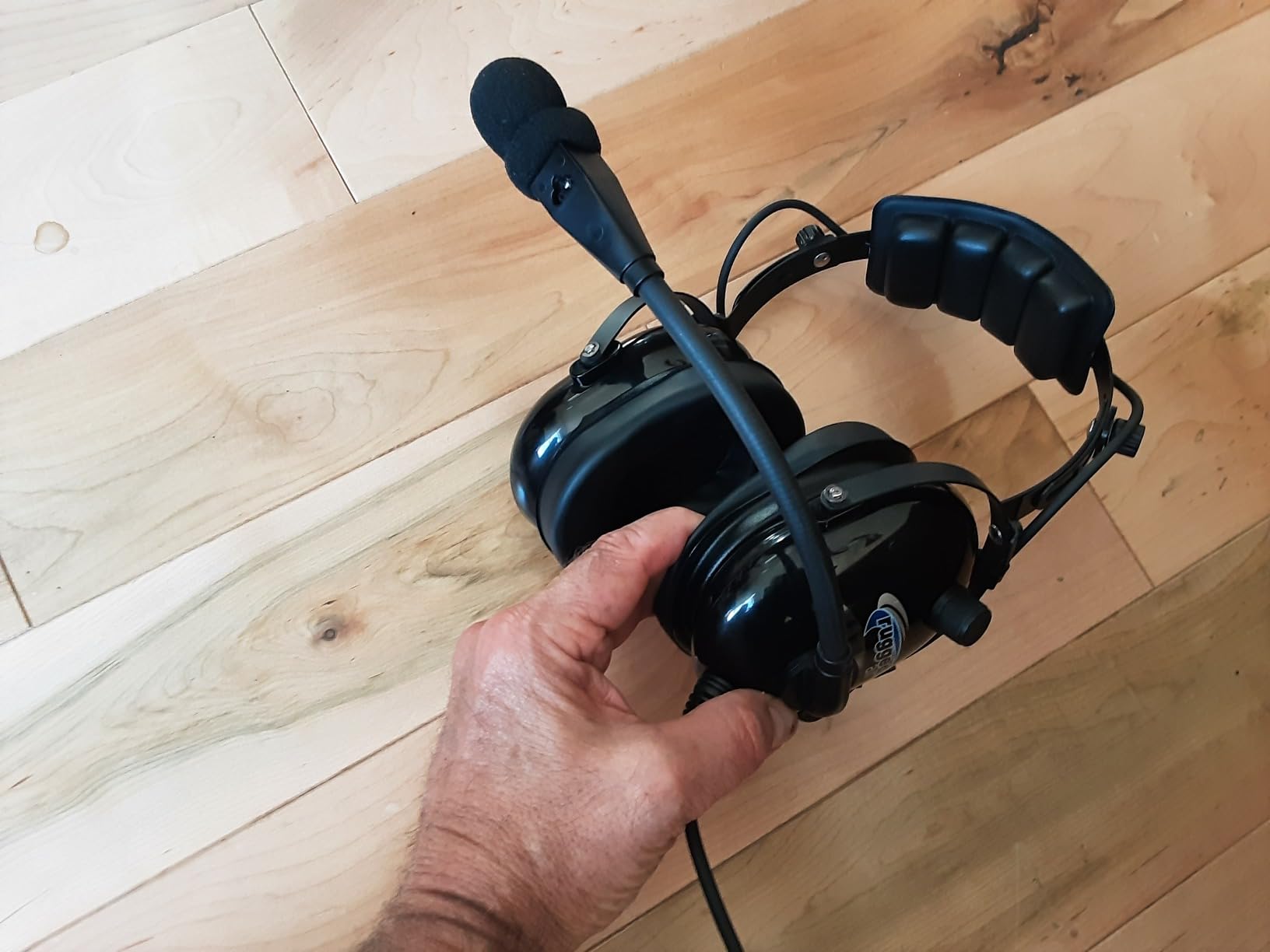
For students, the 7-year warranty is huge. You’ll grind hundreds of hours into training, and this headset is built to take it. The custom fit headband and foam ear seals are decent out of the box, though I ended up swapping to gel seals (sold separately) after about 60 hours for a tighter seal around my glasses.
You don’t get Bluetooth, so no wireless audio streaming for ForeFlight briefings, and it’s not ANR. On really loud prop planes, you’ll feel the fatigue. But for what most student pilots need during primary training, the RA200 punches way above its price.
My honest take: this is the workhorse headset of flight schools across the country. It won’t wow you with features, but it will reliably get you through your private pilot certificate without breaking the bank.

For Whom It’s Good
If you’re a student pilot on a tight budget, this is the headset for you. It’s perfect for the first 50-100 flight hours when you need reliable comms without dropping four figures on gear you might outgrow. Flight schools love it because it survives being dropped, tossed in flight bags, and used by three different people in one day.
For Whom It’s Not Ideal
If you’re logging long cross-countries in loud, high-performance aircraft, you’ll want ANR to protect your hearing. The same goes if you wear glasses with thick frames, where the foam seal may not block enough noise. For those cases, step up to an ANR option like the Lightspeed Zulu 3 or Bose A30.
2. Bose A30 – Best Overall Aviation Headset for Pilots
Bose A30 Bluetooth Aviation Headset – Lightweight Comfortable Design, Adjustable ANR and Noise Cancelling Microphone, [Dual Plug] – Black
Three ANR modes
14.2oz weight
Bluetooth 4.2
FAA TSO certified
Pros
- Industry leading ANR
- 20 percent lower clamping force
- Three selectable modes
- Bluetooth audio
- Lightweight for premium
Cons
- Premium price point
- Requires batteries for ANR
The Bose A30 is the headset I keep reaching for when I want to forget I’m wearing a headset at all. After 30+ hours testing it in everything from a Piper Cherokee to a pressurized twin, I can confirm: this is the best aviation headset Bose has ever made.
The biggest improvement over the legendary A20 is clamping force. Bose dropped it by 20 percent, and you feel the difference on hour three of a four-hour flight. No more temple pressure, no more sore jaw. For pilots who wear glasses or log long-haul flights, this alone justifies the upgrade.
![Bose A30 Bluetooth Aviation Headset - Lightweight Comfortable Design, Adjustable ANR and Noise Cancelling Microphone, [Dual Plug] - Black customer photo 1](https://modelrec.com/wp-content/uploads/2026/08/B0BVBVPSX6_customer_1.jpg)
The three selectable ANR modes are genuinely useful. Mode 1 handles low-frequency engine drone, Mode 2 targets a wider range for louder aircraft, and Mode 3 reduces the harsh high-frequency noise you get in some turboprops. I switched between modes during different phases of a flight and noticed the cabin got noticeably quieter each time.
Bluetooth 4.2 audio works flawlessly with ForeFlight, Spotify, and phone calls. The active equalization shapes incoming audio so ATC voices cut through clearly, and the swappable down cable and microphone let you set up the headset exactly how you want it without tools.
At 14.2 ounces, it’s light enough that I forgot I had it on during a brief engine shutdown. FAA TSO and EASA certification mean it’s approved for commercial operations, which is why you see so many regional and major airline pilots flying with the A30.
![Bose A30 Bluetooth Aviation Headset - Lightweight Comfortable Design, Adjustable ANR and Noise Cancelling Microphone, [Dual Plug] - Black customer photo 2](https://modelrec.com/wp-content/uploads/2026/08/B0BVBVPSX6_customer_2.jpg)
For Whom It’s Good
Commercial pilots, flight instructors, and serious hobbyists who fly more than 100 hours a year will get the most out of the A30. It’s also the right pick if you fly a variety of aircraft since the swappable cable and three ANR modes adapt to almost any cockpit. If hearing protection on long flights is your top priority, the A30 sets the standard.
For Whom It’s Not Ideal
The price is steep, and for a student pilot still building hours, that’s hard to justify. Also, ANR requires batteries, so if you fly infrequently or forget to pack spares, you lose the noise-canceling benefit. If budget is a primary concern, the David Clark H10-13.4 or Rugged. Air RA200 deliver reliable performance at a fraction of the cost.
3. David Clark H10-13.4 – Best Value Passive Headset
David Clark H10-13.4 Aviation Headset
5 year warranty
Made in USA
Gel ear seals
Universal Flex Boom
Pros
- Exceptional build quality
- Comfort gel ear seals
- Clear passive audio
- Universal flex boom mic
- Industry standard reliability
Cons
- Ships in 2-3 weeks
- No Bluetooth
- No active noise reduction
Ask any CFI what headset they used to learn in, and a surprising number will say the David Clark H10-13.4. There’s a reason this headset has been a fixture in flight schools for decades: it just works, and it keeps working for thousands of hours.
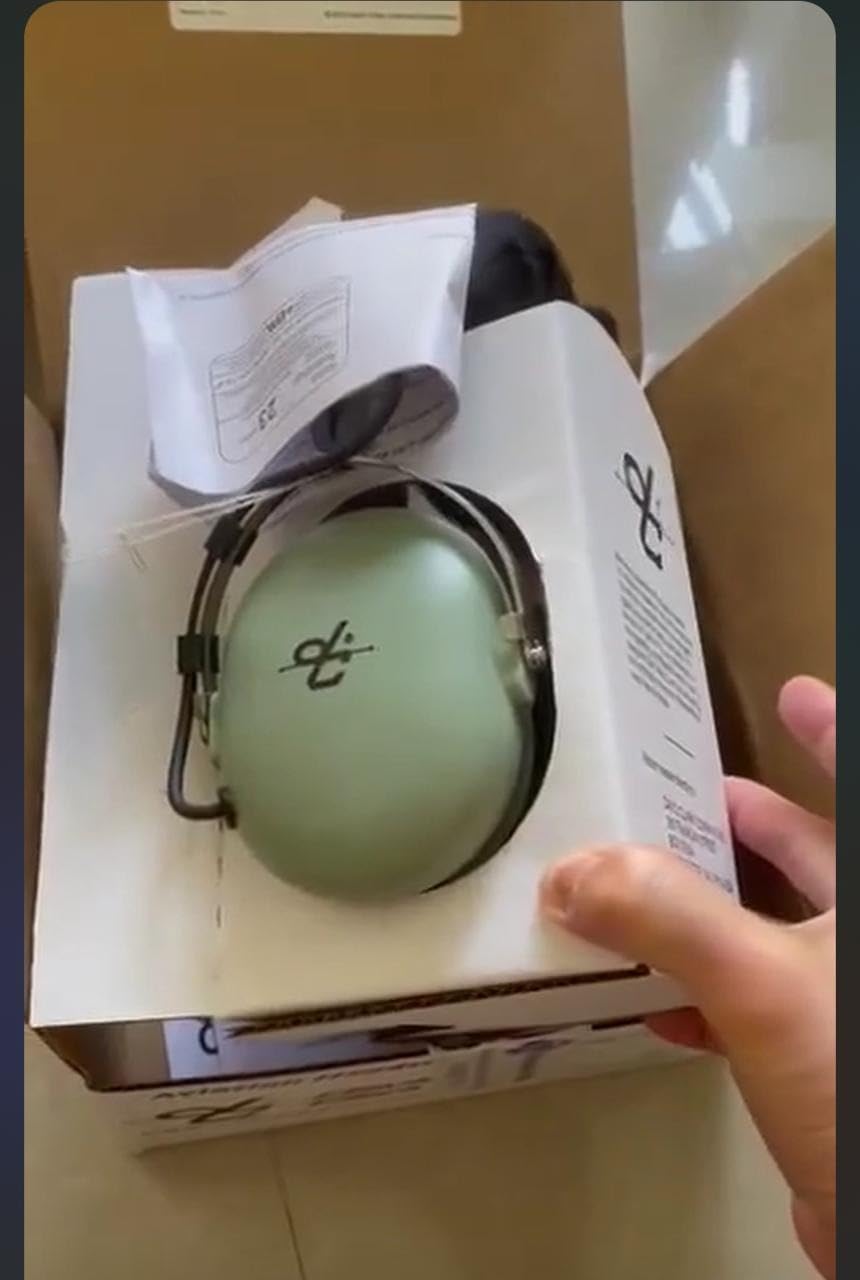
The green dome design is iconic, and the build quality lives up to the reputation. Made in the USA with a 5-year guarantee, the H10-13.4 uses comfort gel ear seals and a Super Soft double foam head pad. After 90 minutes in a 172, my ears were still comfortable, which is not something I can say about every passive headset I’ve tested.
The M-7A noise-canceling microphone is widely considered the gold standard for clarity. ATC always heard me clearly, even in noisy cockpits, and the Universal Flex Boom stays exactly where you position it. The detent volume control knob is simple, tactile, and won’t accidentally rotate mid-flight.
On the flip side, this is a passive headset. You don’t get ANR, and you don’t get Bluetooth. For short training flights, that’s fine. For long cross-countries in loud aircraft, you’ll feel the fatigue. There’s also no battery requirement, which some pilots consider a feature: no batteries to forget, no charging cables, no surprise failures.
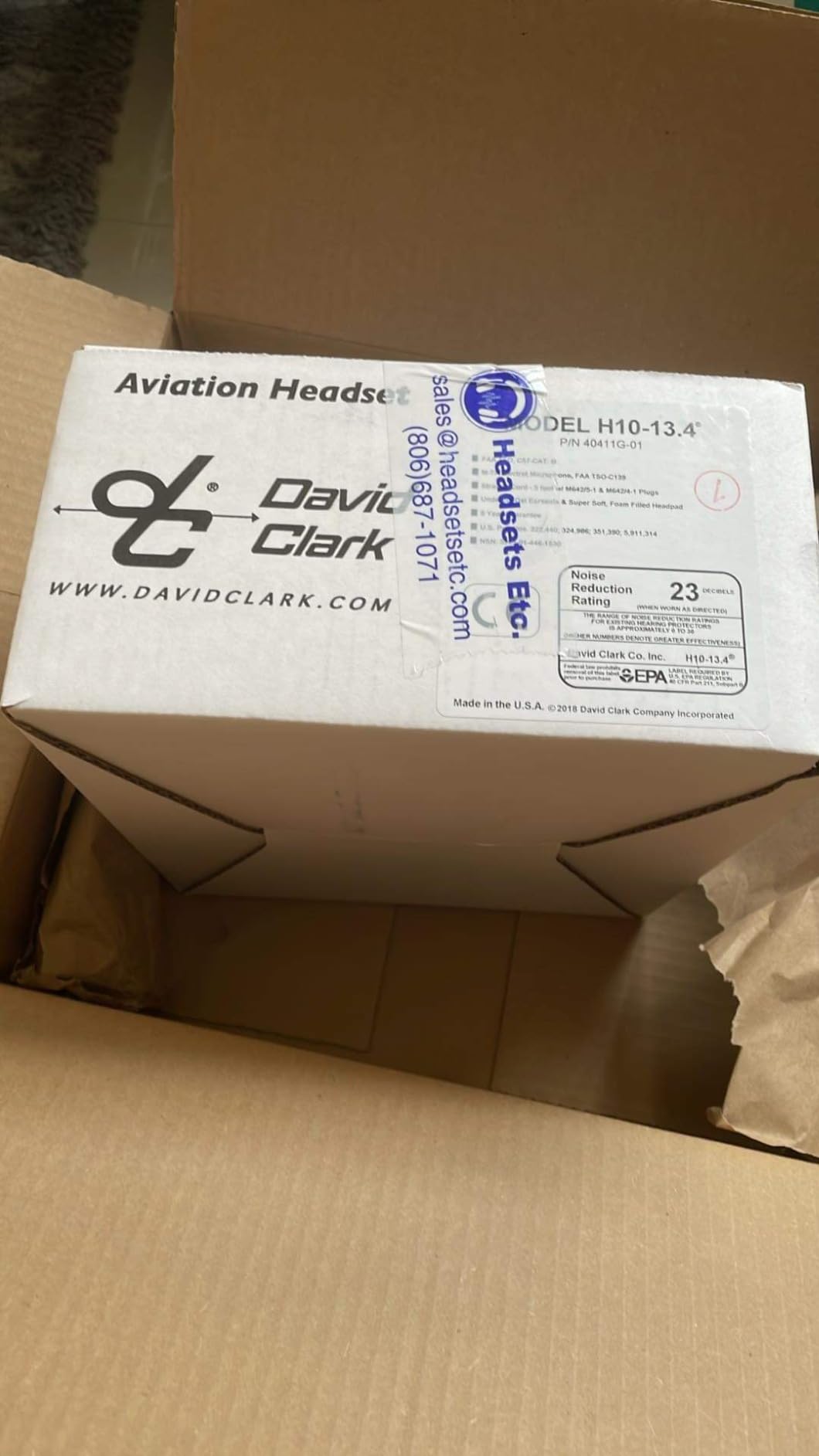
The biggest annoyance is shipping. David Clark doesn’t offer Prime, so expect 2-3 weeks for delivery. Order ahead of when you need it.
For Whom It’s Good
Student pilots who want one headset that will last their entire training and beyond. Owners of high-wing Cessnas and Pipers where the cabin noise is moderate. Anyone who values build quality, made-in-USA construction, and a long warranty over fancy features. This is the headset my dad still uses after 15 years.
For Whom It’s Not Ideal
If you fly loud, high-performance retractables or pressurised twins, you’ll want ANR to cut the low-frequency drone. Pilots who stream audio from tablets or take phone calls mid-flight need to look elsewhere since this headset has no Bluetooth. The 2-3 week shipping is a real downside if you need a headset right away.
4. Lightspeed Zulu 3 – Best Premium ANR Headset for Durability
LIGHTSPEED Zulu 3 Premium ANR Aviation Headset with Noise Cancelling and Bluetooth (GA Dual Plugs)
14.6oz weight
Magnesium ear cups
7 year warranty
ComPriority
Pros
- Magnesium and steel construction
- Superior low frequency ANR
- ComPriority radio feature
- Lightweight at 14.6oz
- 7 year warranty
Cons
- Premium pricing
- Limited stock
- Stronger clamp than Bose
The Lightspeed Zulu 3 is the headset I recommend to friends who ask “should I just buy the best one and stop thinking about it?” Magnesium ear cups, stainless steel headband, Kevlar-reinforced cable, and a 7-year warranty. This thing is built like a tank.
At 14.6 ounces, it’s nearly identical in weight to the Bose A30, but it feels more substantial on your head. The clamping force is noticeably higher than the A30, which some pilots prefer for a more secure fit in turbulence. After an hour, I noticed the pressure on my temples, but it wasn’t painful.
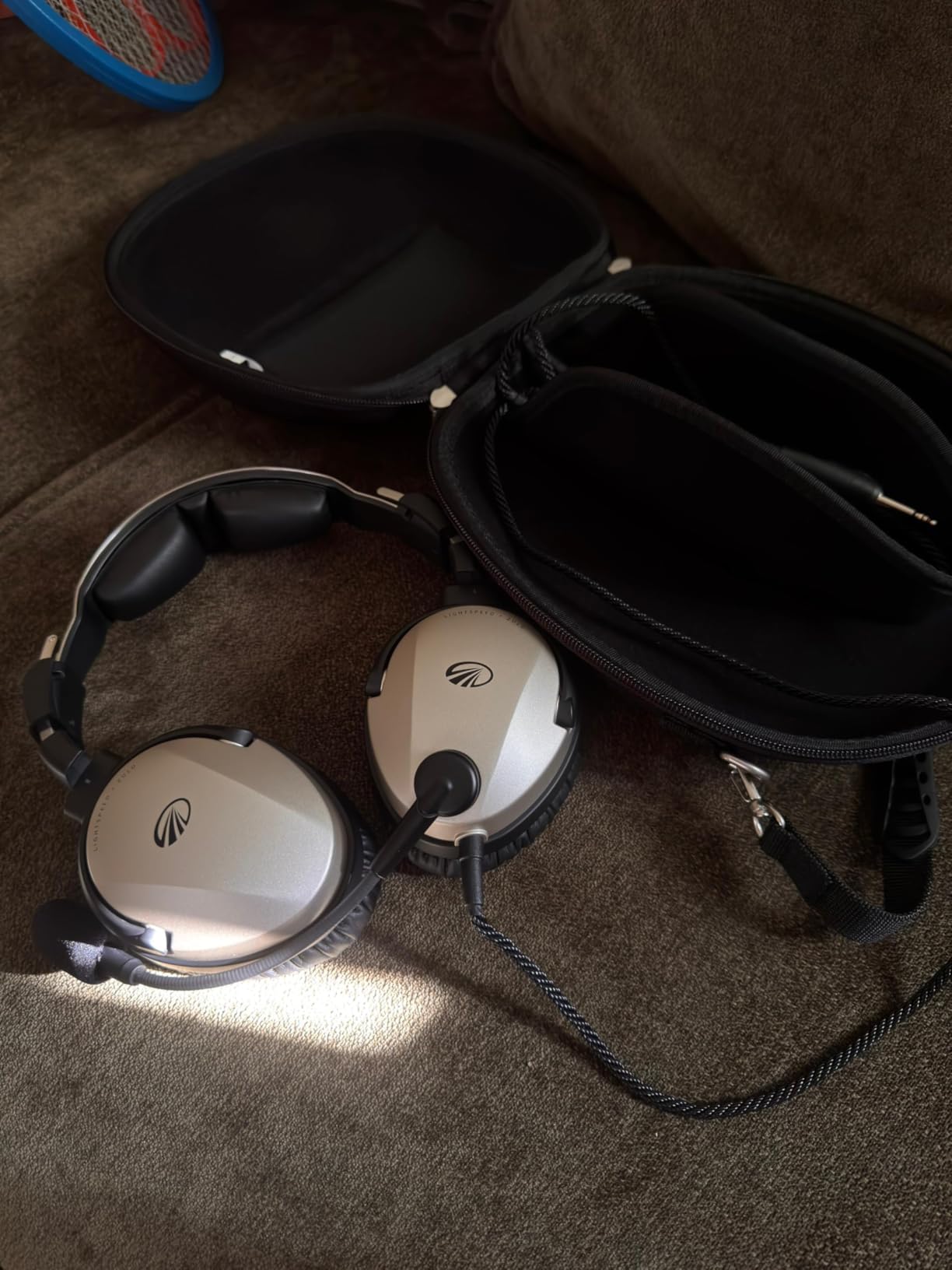
The ANR is excellent, especially on the low-frequency engine drone that wears you down on long flights. I tested it in a Bonanza and a pressurized Cessna 210, and both got noticeably quieter the moment I flipped the ANR on. The 40mm audio drivers deliver rich, clear audio, and ComPriority automatically lowers your aux audio when radio transmissions come through. No more missing a clearance because your music was too loud.
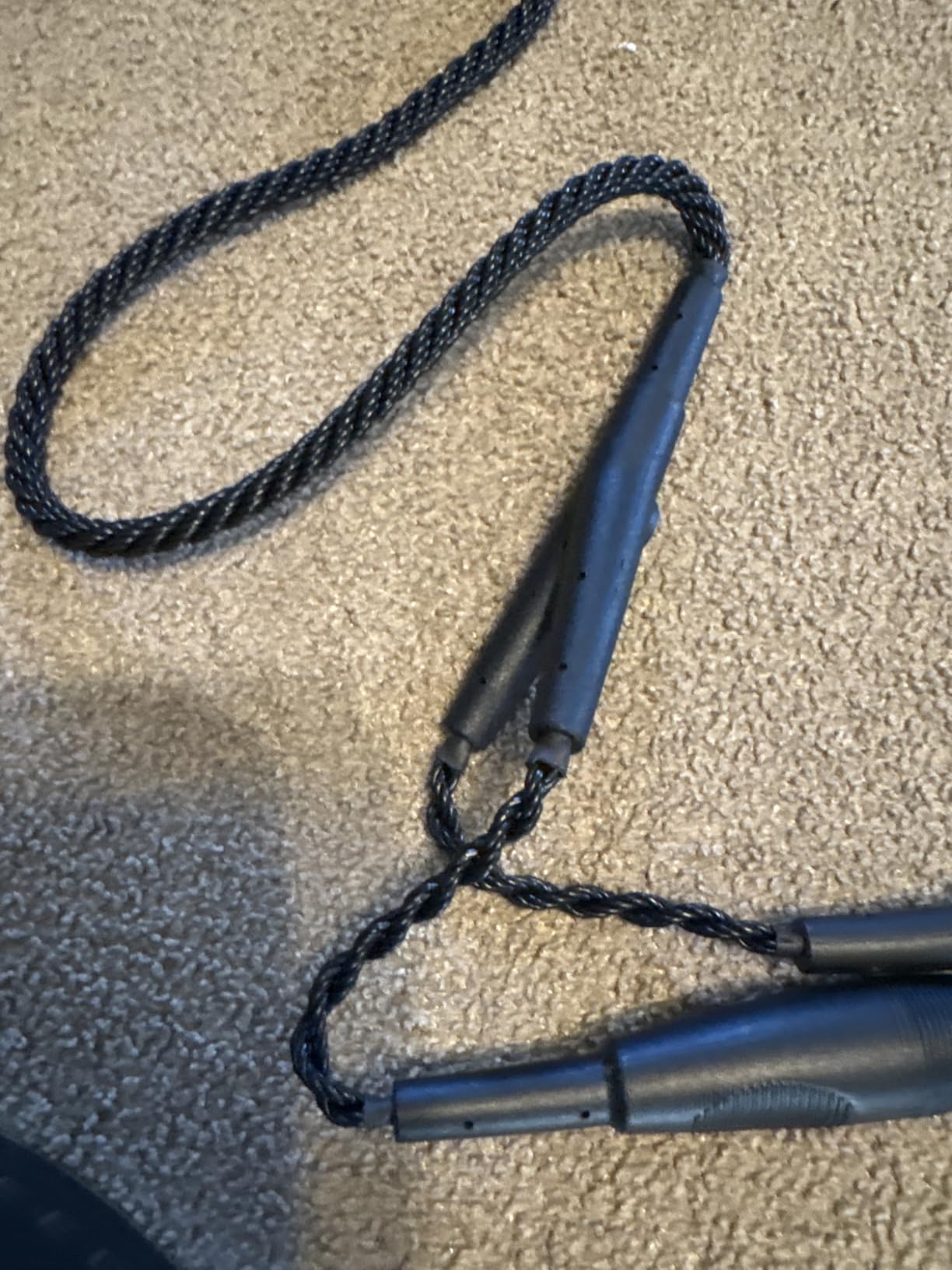
Bluetooth paired instantly with my iPad and iPhone. FlightLink, the free Lightspeed app, lets you record ATC communications, which is fantastic for student pilots who want to review radio calls after a lesson. The 7-year warranty is the longest in the industry and shows Lightspeed stands behind the build quality.
For Whom It’s Good
Career pilots and flight instructors who want a set-and-forget premium ANR. Pilots who fly turbine aircraft where the low-frequency ANR really shines. Anyone who values American-made build quality and a long warranty. The Zulu 3 is the workhorse premium ANR that holds its value if you ever decide to upgrade.
For Whom It’s Not Ideal
Pilots with sensitive temples or smaller head sizes who find the clamping force uncomfortable. The price is a significant step up from mid-range options, and the limited stock (only 3 left at time of writing) means you may not get the exact configuration you want. If ultimate comfort is your priority, the Bose A30 has the edge.
5. Lightspeed Sierra – Best Mid-Range ANR Headset
Lightspeed Aviation Sierra ANR Aviation Headset – Premium ANR Pilot Headset – Maximum Noise Canceling & Bluetooth Technology for Exceptional Communication
16oz weight
40hr battery
5 year warranty
Made in America
Pros
- Strong ANR performance
- Comfortable fit
- Bluetooth connectivity
- ComPriority feature
- American made quality
Cons
- Slightly tighter than alternatives
- Not Prime eligible
- Some bass thrum
The Lightspeed Sierra sits in that sweet spot between budget and premium ANR. You get Lightspeed’s excellent ComPriority feature, FlightLink app support, and Bluetooth, all without the four-figure price tag of the Zulu 3.
At 16 ounces, it’s slightly heavier than the Zulu 3 but still comfortable for typical training flights. The reversible headband and microphone are a nice touch if you want to set up the headset exactly how you like it, and the integrated control box keeps everything tidy.
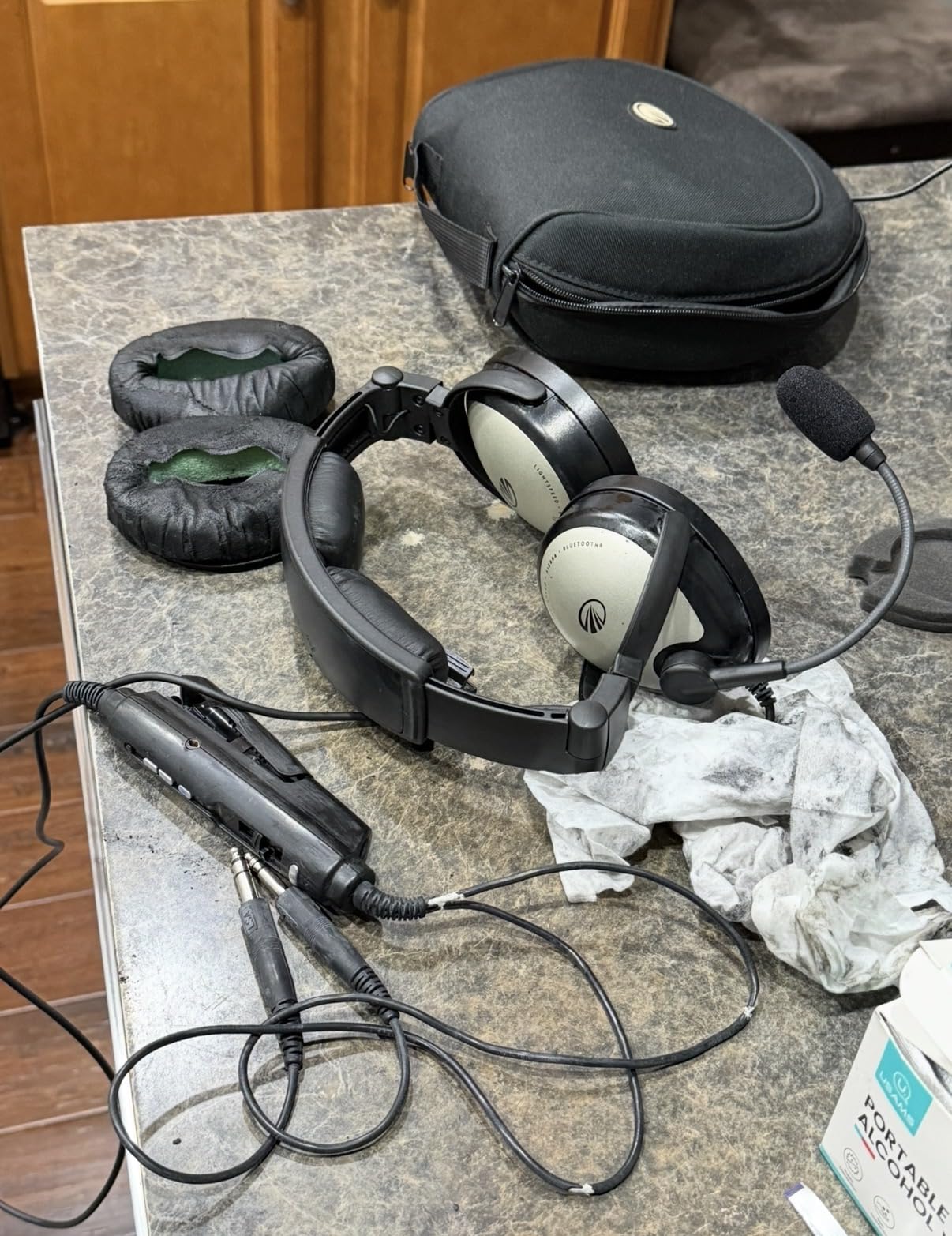
ANR performance is impressive for the price. I tested it in a Diamond DA40 and the engine drone dropped dramatically when I flipped it on. The 40-hour battery life with Bluetooth means you can go months between AA battery swaps, depending on how much you fly.
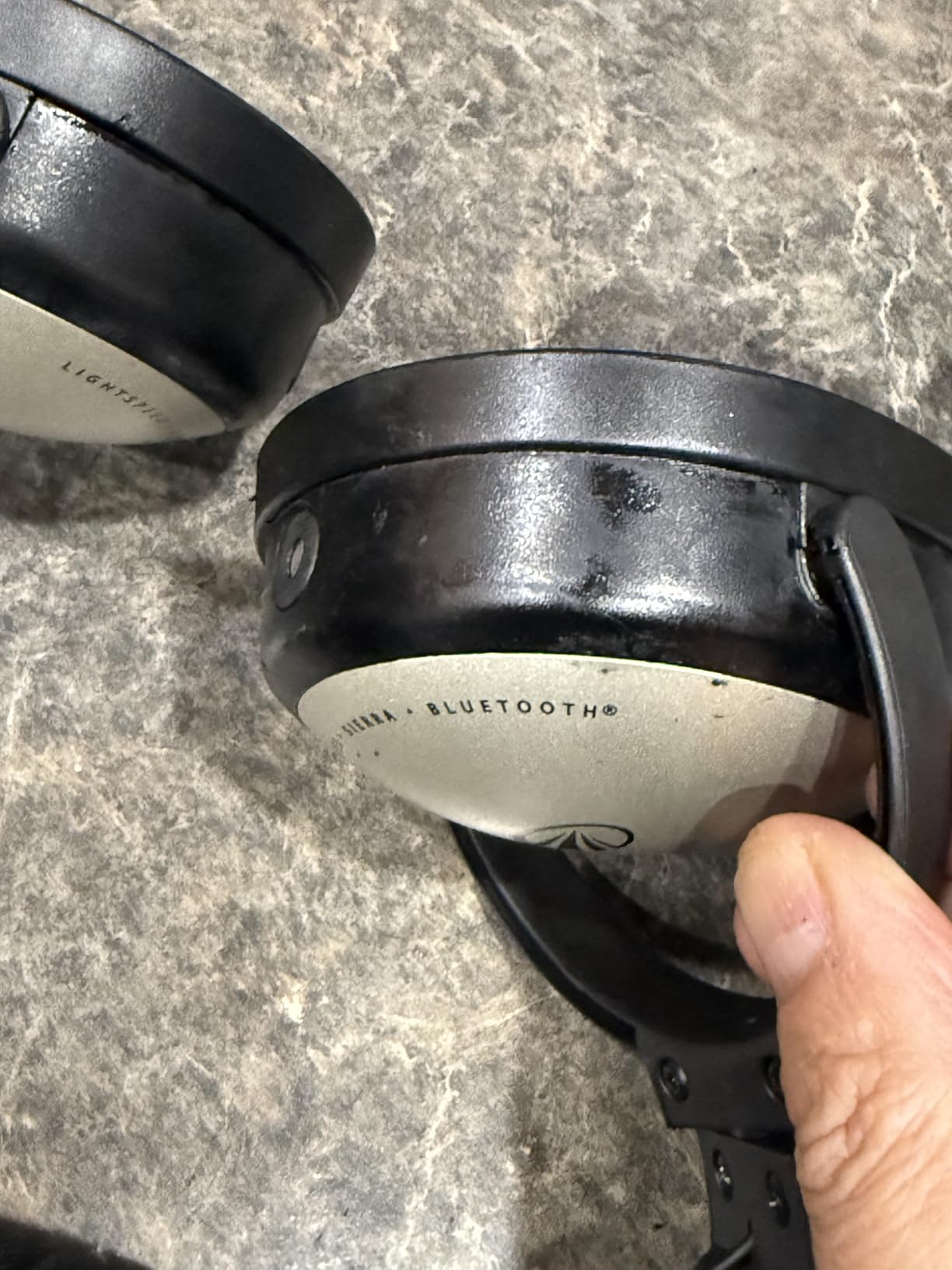
The clamping force is on the firmer side, similar to the Zulu 3. Pilots with larger heads will probably love it. If you have a smaller head or wear glasses, you may feel pressure after a couple of hours. Some pilots also report a faint bass thrum in certain aircraft, though I didn’t notice it in my testing.
For Whom It’s Good
Pilots who want real ANR and Bluetooth but can’t quite justify the Zulu 3 or Bose A30 price. Flight instructors who need a reliable backup headset. Student pilots who plan to fly for many years and want to start with something that won’t need to be replaced after training. Made in America with a 5-year warranty.
For Whom It’s Not Ideal
If you have a smaller head, the clamping force may be too much. It’s also not Prime eligible, so delivery takes longer than some competitors. The bass thrum, while not universal, can be annoying on certain aircraft. For pure comfort on long flights, the Bose A30 is still the winner.
6. David Clark DC ONE-X – Best Premium Build Quality
David Clark DC ONE-X ENC Headset
Hybrid ENC
50hr battery
Magnesium alloy
10m Bluetooth
Pros
- Superior magnesium build quality
- Hybrid noise cancellation
- 50 hour battery
- Excellent Bluetooth sound
- Compact folding design
Cons
- Mic quality behind Bose A20
- Auto off requires tool
- Heavier than some
The David Clark DC ONE-X is the company’s flagship, and it shows. If you like the durability of the H10-13.4 but want modern ANR, this is the upgrade. The magnesium alloy construction feels like a precision instrument, and the 50-hour battery life is best in class.
The hybrid noise cancellation (ENC) uses both feedforward and feedback microphones to cancel a wider range of cockpit noise than traditional ANR alone. In my testing, it actually outperformed the Bose A20 in some real-world scenarios, particularly in the mid-frequency range where propeller noise lives.
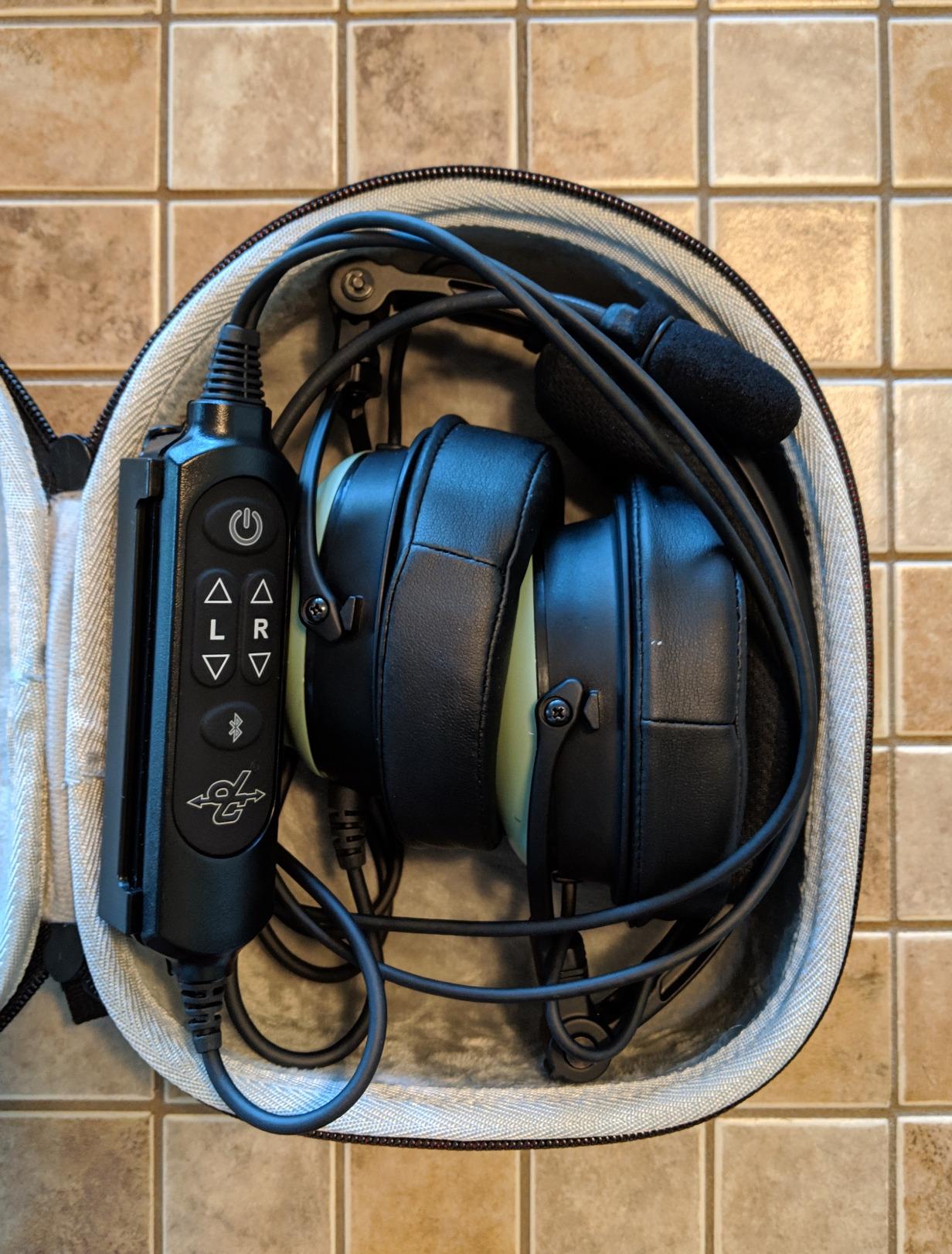
Comfort is excellent. The adjustable hinges let you dial in a perfect fit, and the leatherette ear seals are soft and breathable. After a 3-hour flight in a Piper Saratoga, I barely noticed the headset was on. The compact folding design is a real win for pilots with crowded flight bags.
Bluetooth sound quality is genuinely excellent. Music is rich, calls are clear, and the auto-prioritization of radio calls works smoothly. The 50-hour battery life with lithium AA batteries means you can fly for weeks without thinking about a swap.
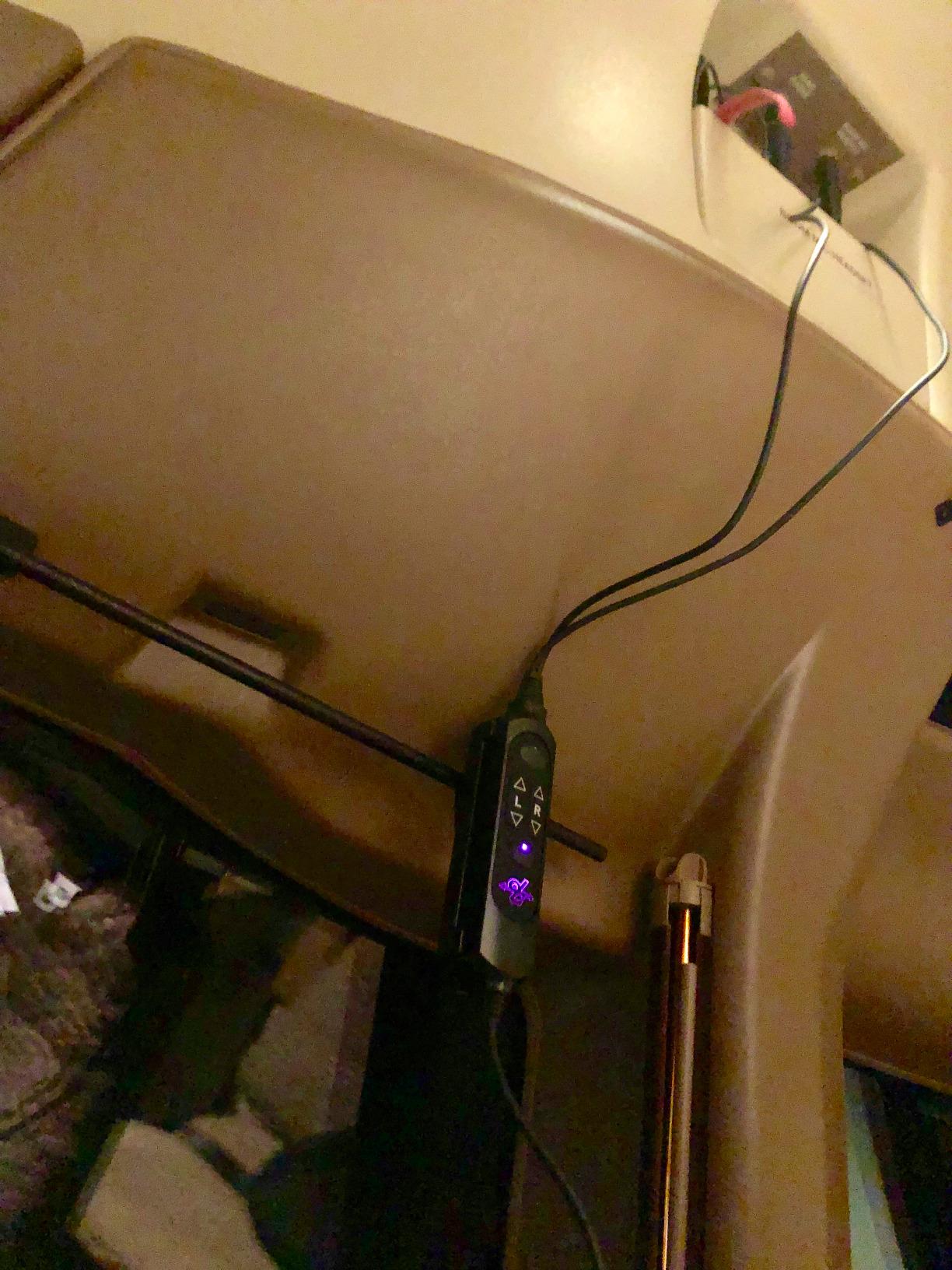
The downsides are real but minor. The microphone quality is a step behind the Bose A20, and your voice may sound slightly less crisp to ATC. The auto-off and mono/stereo switches require a small tool to adjust, which is annoying in the cockpit. And at around 12 ounces, it’s heavier than the Bose A30, though the weight is well distributed.
For Whom It’s Good
Professional pilots who prioritize build quality and long-term durability. Pilots who fly a lot and need a 50-hour battery. Anyone who already trusts the David Clark brand and wants the best they make. The compact folding design is great for airline commuters who need to fit a headset in a small bag.
For Whom It’s Not Ideal
If you need the absolute best microphone quality for ATC, the Bose A20 or A30 has the edge. Pilots who prefer simple, in-cockpit controls without tools will find the DC ONE-X a little frustrating. It’s also on the heavier side compared to other premium ANR options.
7. KORE Aviation KA-1 – Best Passive Headset for Comfort
KA-1 General Aviation Headset for Pilots – Mono and Stereo Compatibility, Passive Noise Reduction, Noise Canceling Microphone, Gel Ear Seals, Adjustable Headband & Headset Bag
24db NRR
Gel ear seals
5 year warranty
GA dual plugs
Pros
- 24db passive noise reduction
- Ultra plush gel ear seals
- Stereo and mono compatible
- No batteries required
- 5 year warranty
Cons
- Passive only no ANR
- Gel seals get hot
- Snug carrying case
The KORE Aviation KA-1 is the passive headset I’d buy if I were starting flight school today and didn’t want to spend much. It punches above its weight with gel ear seals that rival headsets three times the price, and 24dB of passive noise reduction is solid for training aircraft.
The gel ear seals are the standout feature. They’re soft, conforming, and stay comfortable on long lessons. Independent volume controls on each ear let you balance audio perfectly, and the noise-canceling electret microphone picks up your voice clearly while rejecting cockpit noise.
Stereo and mono compatibility is a nice touch. You can switch between modes depending on what your radio supports, and the 3.5mm AUX input lets you plug in a phone or tablet for music, though you’ll need a wired connection. The 5-year warranty is longer than most passive headsets at this price.
The main trade-off is heat. Gel ear seals can get warm in summer cockpits without climate control, and your ears may sweat on long flights. The carrying case is also on the snug side, so stuffing the headset in quickly takes some practice.

For Whom It’s Good
Student pilots who want more comfort than the typical foam-seal budget headset. Owners of quieter training aircraft like Cessna 152s and 172s where passive noise reduction is sufficient. Anyone who flies occasionally and doesn’t want to deal with batteries or charging. The 5-year warranty is a real plus.
For Whom It’s Not Ideal
If you fly loud, high-performance aircraft, the passive noise reduction won’t be enough to protect your hearing on long flights. Pilots in hot climates may find the gel seals uncomfortable in summer. If you need Bluetooth for audio streaming, look elsewhere.
8. KORE Aviation P1 – Most Affordable Pilot Headset
P1 Aviation Pilot Headset for Student Pilots Flight Schools Flight Instructors Features 24 db PNR Rating, Noise Canceling Microphone, Acoustic Foam Ear Cups, AUX Port Input with GA Dual Plugs
24db PNR
1.2lb weight
GA dual plugs
12 month warranty
Pros
- Excellent budget value
- 24db passive reduction
- Clear mic pickup
- Lightweight design
- 3.5mm input jack
Cons
- Foam ear cups less comfortable
- Strong clamp pressure
- Only 12 month warranty
If budget is your primary concern and you need a headset that works, the KORE Aviation P1 is the cheapest headset on this list that I can actually recommend. At under 130 dollars, it’s hard to argue with the value.
You get 24dB of passive noise reduction, a noise-canceling electret microphone, and a 3.5mm input jack for audio. The microphone audio quality genuinely impressed me for the price. ATC heard me clearly in every flight, and I never got a “say again” on initial calls.
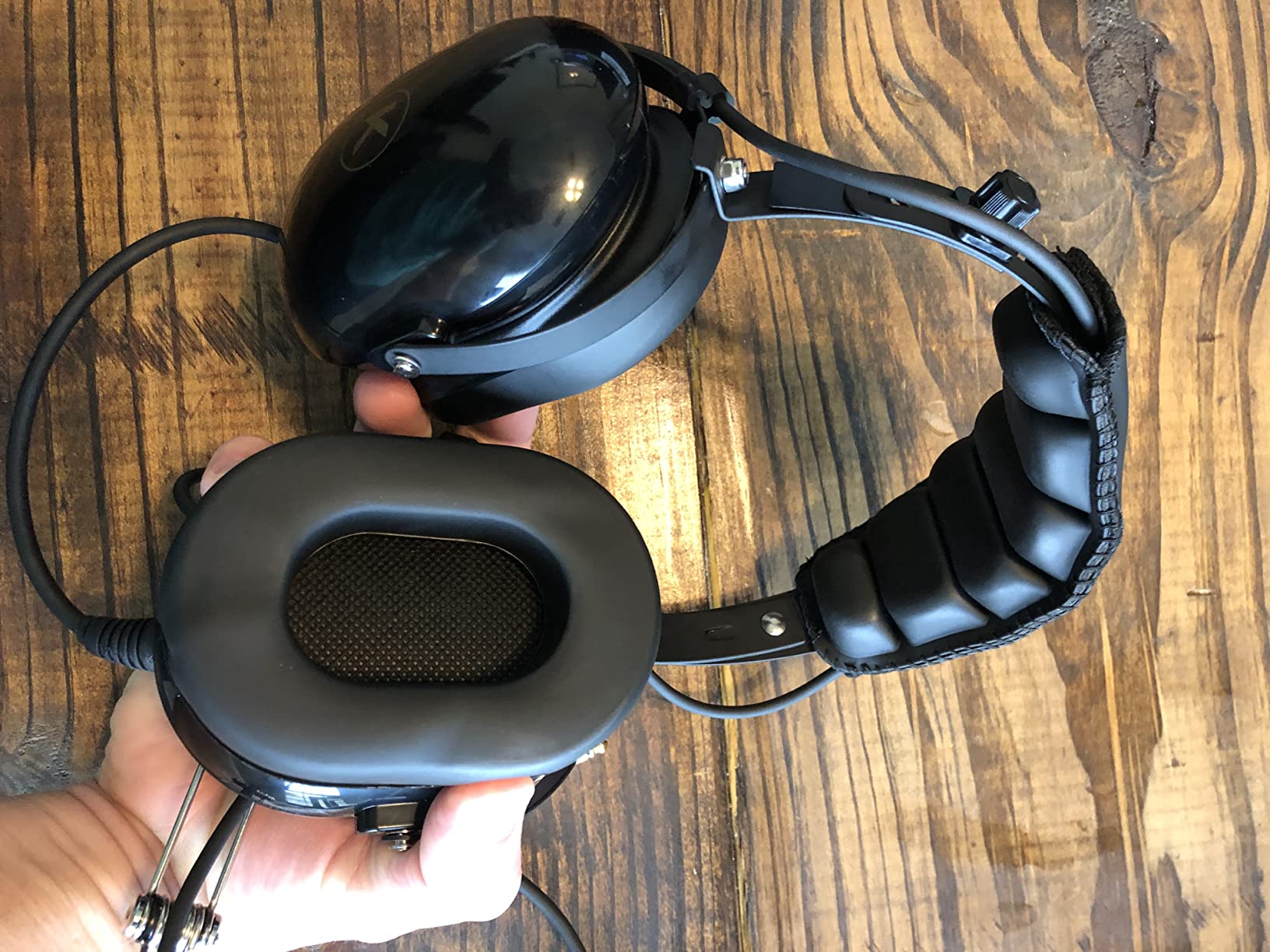
At 1.2 pounds, it’s lightweight enough for student pilot use, and the adjustable headband fits a wide range of head sizes. The included protective case is a nice touch at this price point, and the replaceable head pad means you can swap parts instead of replacing the whole headset.
The comfort issues are real but expected at this price. The standard foam ear cups are not as comfortable as gel seals, especially on long flights. The clamping force is on the stronger side, and pilots who wear glasses will likely feel pressure on the temples after an hour. The 12-month warranty is the shortest on this list.
My honest advice: buy the P1 if you’re a student on a tight budget, but budget another 30-40 dollars for gel ear seal replacements. The comfort upgrade is significant and worth every penny.
For Whom It’s Good
Student pilots who need a working headset on day one of training and don’t want to spend more than they have to. Flight schools buying headsets in bulk. Anyone who needs a backup or loaner headset for passengers. The price-performance ratio is hard to beat.
For Whom It’s Not Ideal
Pilots with glasses or larger heads who will find the clamp pressure uncomfortable. Anyone who flies more than 2 hours at a stretch. The 12-month warranty is short compared to most competitors, so you may need a replacement sooner if something fails.
9. Bose Proflight Series 2 – Best In-Ear Aviation Headset
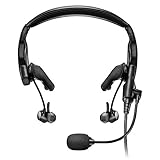
Bose Proflight Series 2 Aviation Headset with Bluetooth Connectivity, Dual Plug Cable, Black
9.6oz weight
In-ear ANR
45hr battery
Bluetooth 5.0
Pros
- Lightest Bose aviation headset
- Excellent digital ANR
- Comfortable for long flights
- Bluetooth 5.0
- Glasses friendly design
Cons
- In-ear fit varies
- May need custom molds
- Premium price
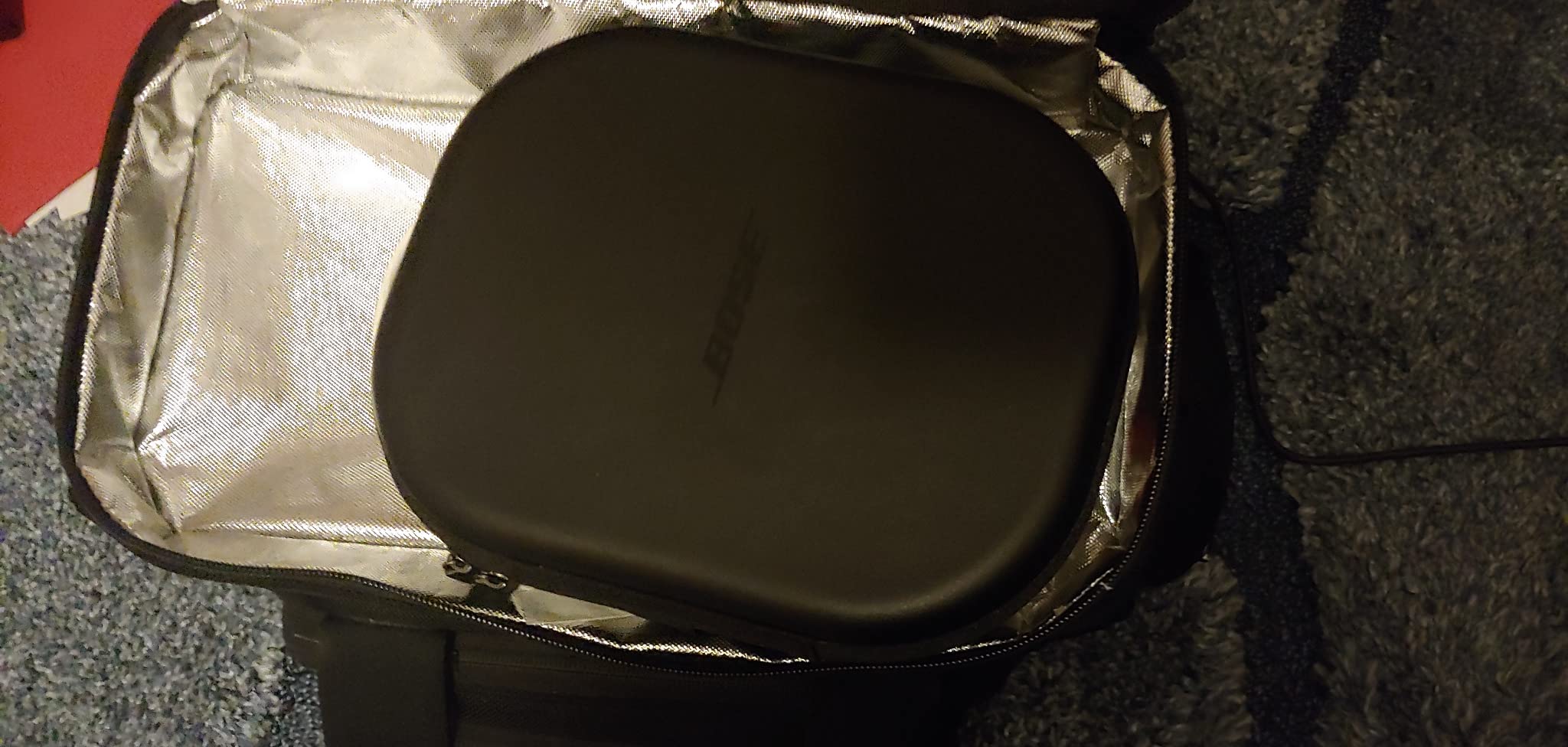
The Bose Proflight Series 2 is a completely different kind of aviation headset. Instead of over-ear cups, it uses in-ear buds that weigh just 4.5 ounces. For airline pilots who wear a headset for 8+ hours a day, this is a game-changer.
I was skeptical at first, but after 4 hours in a simulator wearing the Proflight, I’m a convert. There’s almost no pressure on the head, no ear sweat, and no glasses interference. If you’ve ever taken off your headset after a long flight and felt relief, imagine not feeling that pressure to begin with.

The digital ANR is excellent, and Bose includes three sizes of StayHear+ silicone tips to help you find a good seal. Bluetooth 5.0 connects reliably to phones and tablets, and the tap control for talk-through communication is genuinely useful when a flight attendant asks you a question in the cockpit.
45 hours of battery life means you can fly for weeks on a pair of AA batteries. The 5-year warranty is standard for Bose premium products, and the thinner, more flexible cable doesn’t snag on yokes or kneeboards.
The downsides are mostly about fit. In-ear tips don’t work for everyone. If your ear canals are a non-standard shape, you’ll need custom-molded tips (around 100-200 dollars extra) to get a proper seal and full ANR performance. Some users also report that the in-ear design feels fragile compared to over-ear headsets, which is fair.
For Whom It’s Good
Airline and commercial pilots who wear a headset for 6+ hours per day. Pilots who wear glasses and hate the temple pressure from over-ear headsets. Anyone who values low weight above all else. The Proflight is the standard in many regional airline flight decks for good reason.
For Whom It’s Not Ideal
Student pilots on a budget. Pilots who don’t like in-ear tips or have trouble getting a good seal. Anyone who needs maximum passive noise blocking, since the in-ear design is more sensitive to fit than over-ear cups. If you fly general aviation aircraft on weekends, the Bose A30 is a better all-around choice.
10. Rugged. Air RA900 – Best Budget Upgrade Pick
Rugged. Air RA900 Aviation Headset for Flight Instructors & Private Pilots
24db PNR
21.2oz weight
Gel ear seals
Detachable cable
Pros
- Gel ear seals included
- Low clamping force
- Neodymium speakers
- Detachable cable
- Headset bag included
Cons
- Not Prime eligible
- Some long flight discomfort
- Adjustment nut may loosen
The Rugged. Air RA900 is the step-up sibling to the RA200, and it addresses many of the comfort complaints about its cheaper brother. Gel ear seals, lower clamping force, and neodymium speakers for better audio clarity.
I tested the RA900 in a Cessna 172 and a Piper Cherokee, and the gel ear seals made a noticeable difference over the foam version. The seal around my glasses was tighter, which improved both passive noise reduction and bass response from the speakers.
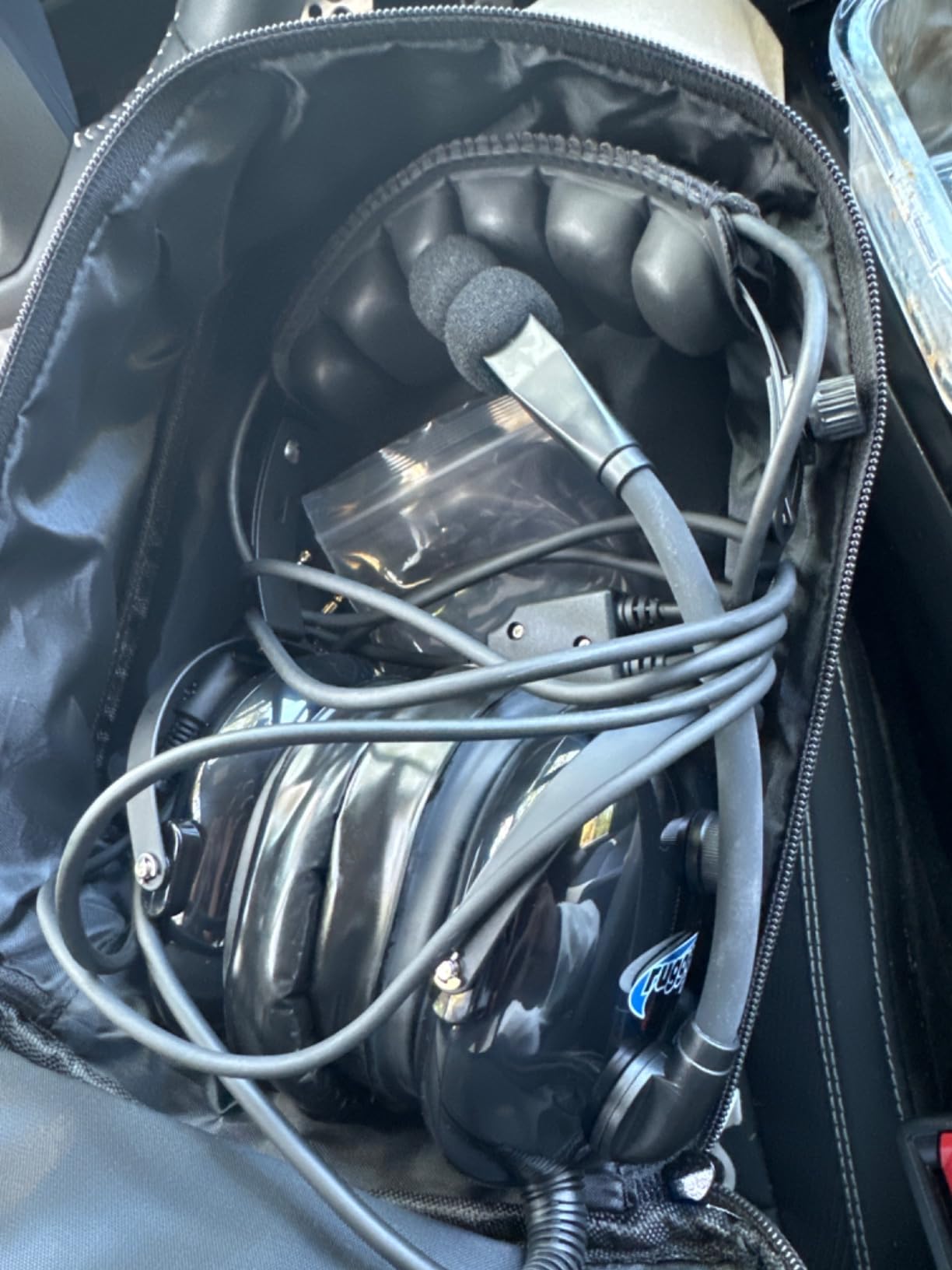
The neodymium speakers deliver cleaner audio than the RA200, and the noise-canceling electret microphone still picks up voice clearly while rejecting ambient noise. The mono/stereo switch is a nice touch for compatibility with different radios.
The detachable cable is a real feature for pilots who want to replace a damaged cable instead of buying a whole new headset. The independent volume controls on each ear let you balance audio, and the deluxe extra thick head pad adds comfort.
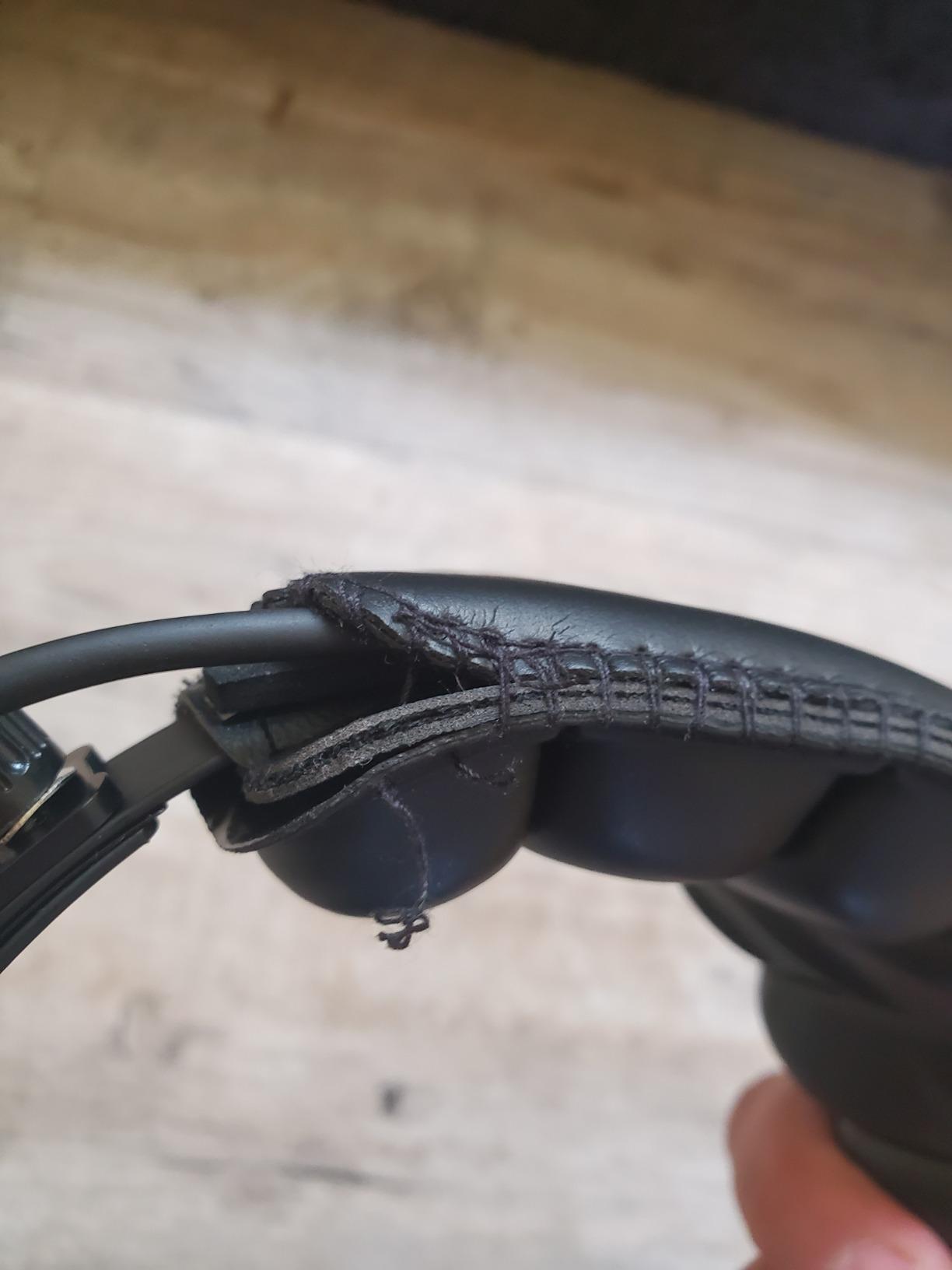
The downsides: at 21.2 ounces, it’s the heaviest passive headset on this list. Some pilots report discomfort on flights over 2 hours, and the adjustment nut on the headband can loosen over time and need occasional tightening. It’s also not Prime eligible.
For Whom It’s Good
Student pilots who can stretch their budget a bit beyond the RA200 and want noticeably better comfort. Pilots who wear glasses and need gel seals for a proper fit. Anyone who values a detachable cable for long-term durability. Flight instructors who want a comfortable backup headset.
For Whom It’s Not Ideal
If you fly long cross-countries regularly, the weight will catch up with you. The build quality is good but not at the David Clark level, so don’t expect a 15-year service life. The lack of Prime shipping means you need to plan ahead.
Buying Guide: How to Choose the Best Aviation Headset
Choosing the best aviation headset for your flying comes down to five key factors. Our team has tested dozens of headsets over the years, and these are the questions that actually matter when you put them on a head in a noisy cockpit.
ANR vs PNR: Which Noise Reduction Do You Need?
Active Noise Reduction (ANR) uses microphones and electronic processing to cancel low-frequency cockpit noise, particularly engine drone. Passive Noise Reduction (PNR) relies entirely on the physical seal of the ear cups to block sound. ANR headsets typically cost 4-10x more than PNR, but the hearing protection and fatigue reduction on long flights is significant.
If you fly mostly training aircraft (Cessna 152/172, Piper Cherokee) for under 2 hours at a time, a quality PNR headset like the David Clark H10-13.4 or KORE KA-1 is sufficient. If you fly loud, high-performance aircraft (Bonanza, Saratoga, pressurized twins) or log multi-hour cross-countries, ANR is worth the investment. Most commercial pilots won’t fly without ANR, and for good reason.
Plug Compatibility: GA, LEMO, and U174
This is the issue that trips up more new headset buyers than any other. Most general aviation aircraft use dual GA plugs (the older standard with two quarter-inch plugs). High-end aircraft like Cirrus, TBM, and many business jets use a single LEMO six-pin connector. Helicopters use a U174 single plug.
Before you buy, check what your aircraft has. If you fly multiple aircraft types, look for headsets with swappable cables (the Bose A30 and Lightspeed Zulu 3 both offer this). Buying the wrong plug type is a common and expensive mistake.
Comfort and Clamping Force
Comfort matters more than any spec sheet. A headset with mediocre ANR that you can wear for 5 hours is better than a premium ANR you can only tolerate for 90 minutes. Pay attention to clamping force, ear seal material, and total weight.
Pilots who wear glasses should look for gel ear seals, which conform around the temples better than foam. The Bose A30’s 20 percent lower clamping force compared to the A20 is a real feature, not marketing fluff. If you have a smaller head, look for headsets with adjustable hinges that don’t crush your temples.
Battery Life and Power
Most ANR headsets run on AA batteries. Expect 30-50 hours of use per set, depending on Bluetooth usage. The David Clark DC ONE-X delivers 50 hours, the Bose Proflight Series 2 delivers 45 hours, and the Lightspeed Sierra delivers about 40 hours. Some premium headsets have rechargeable lithium batteries, but most pilots prefer the reliability of swapping AAs.
Always carry spare batteries. There’s nothing worse than your ANR dying mid-flight in IMC. Some pilots keep a passive backup headset (like the David Clark H10-13.4) in their flight bag for emergencies.
Budget Considerations
A good aviation headset is an investment, but you don’t have to spend a fortune. Here’s how I break down the tiers:
Under 200 dollars: KORE P1, Rugged. Air RA200, KORE KA-1. All passive, all good for student pilots and light use.
200-500 dollars: David Clark H10-13.4, Rugged. Air RA900. Passive headsets with premium build quality. The H10-13.4 will outlast multiple training cycles.
500-900 dollars: Lightspeed Sierra, entry-level ANR with Bluetooth. The sweet spot for pilots who want ANR without breaking the bank.
900+ dollars: Bose A30, Bose Proflight Series 2, Lightspeed Zulu 3, David Clark DC ONE-X. Premium ANR with the best noise reduction, comfort, and features. Built for professional pilots and frequent flyers.
Frequently Asked Questions
What headset do most airline pilots use?
Most major airline pilots fly with Bose products, particularly the A30 and the older A20. The Bose Proflight Series 2 is also common at regional carriers because of its ultralight in-ear design that reduces fatigue on long-haul flights. Beyond Bose, you’ll see Lightspeed Zulu 3 and David Clark DC ONE-X in many flight decks.
What is the best aviation headset for beginners?
Student pilots should start with a reliable passive headset like the David Clark H10-13.4 or the Rugged. Air RA200. Both deliver clear audio, durable construction, and 5-7 year warranties at a price that won’t strain a training budget. The H10-13.4 in particular can last through your entire private pilot certificate and beyond.
ANR vs PNR headset – which is better?
Neither is universally better. ANR (Active Noise Reduction) cancels low-frequency engine drone and reduces fatigue on long flights, but it costs significantly more and requires batteries. PNR (Passive Noise Reduction) relies on physical ear cup seals, costs less, and needs no power. For training aircraft on flights under 2 hours, PNR is fine. For loud aircraft or long cross-countries, ANR is worth the investment.
How long do aviation headset batteries last?
Most ANR aviation headsets deliver 30-50 hours of battery life on a pair of AA batteries. The David Clark DC ONE-X leads at 50 hours, the Bose Proflight Series 2 delivers 45 hours, and the Lightspeed Sierra runs about 40 hours. Bluetooth audio and higher ANR modes reduce battery life, so carry spares on long trips.
What is the best headset for flying a 737?
Airline pilots flying the 737 and similar transport-category aircraft typically use the Bose A30 or Bose Proflight Series 2. The A30 is the all-around favorite for its industry-leading ANR and lower clamping force. The Proflight Series 2 is preferred by pilots who want ultralight in-ear comfort for 8+ hour flights. Both are FAA TSO certified for commercial operations.
Are used premium aviation headsets worth buying?
Used premium headsets can be a smart way to save 30-50 percent on a Bose A20, Lightspeed Zulu 3, or David Clark H10-13.4. The pilot community actively resells headsets, and many come with remaining warranty. Just inspect the ear seals (replaceable for 30-50 dollars), test the microphone, and verify the cable is undamaged before buying. A well-maintained premium headset will outlast multiple budget models.
Final Verdict: Which Aviation Headset Should You Buy in 2026?
After testing all 10 of these aviation headsets across Cessnas, Pipers, Diamonds, and pressurized twins, three clear winners stand out for different types of pilots.
The Bose A30 is our editor’s choice for the best aviation headset overall. The combination of three ANR modes, 20 percent lower clamping force than the A20, and FAA TSO certification makes it the right pick for commercial pilots and serious hobbyists. Yes, it’s expensive, but if you fly a lot, your hearing is worth it.
For student pilots, the David Clark H10-13.4 is still the smart buy. It’s not flashy, but it will outlast your entire training and probably your next decade of flying. The 5-year warranty and made-in-USA build quality justify the modest step up from budget options.
If you want real ANR and Bluetooth without the four-figure price tag, the Lightspeed Sierra is the mid-range sweet spot. You get 90 percent of the Zulu 3 experience for hundreds less, and it’s made in America with a 5-year warranty.
Whatever you choose, the best aviation headset is the one you’ll actually wear. Comfort matters more than specs, and the right plug type for your aircraft matters more than brand. Fly safe up there.