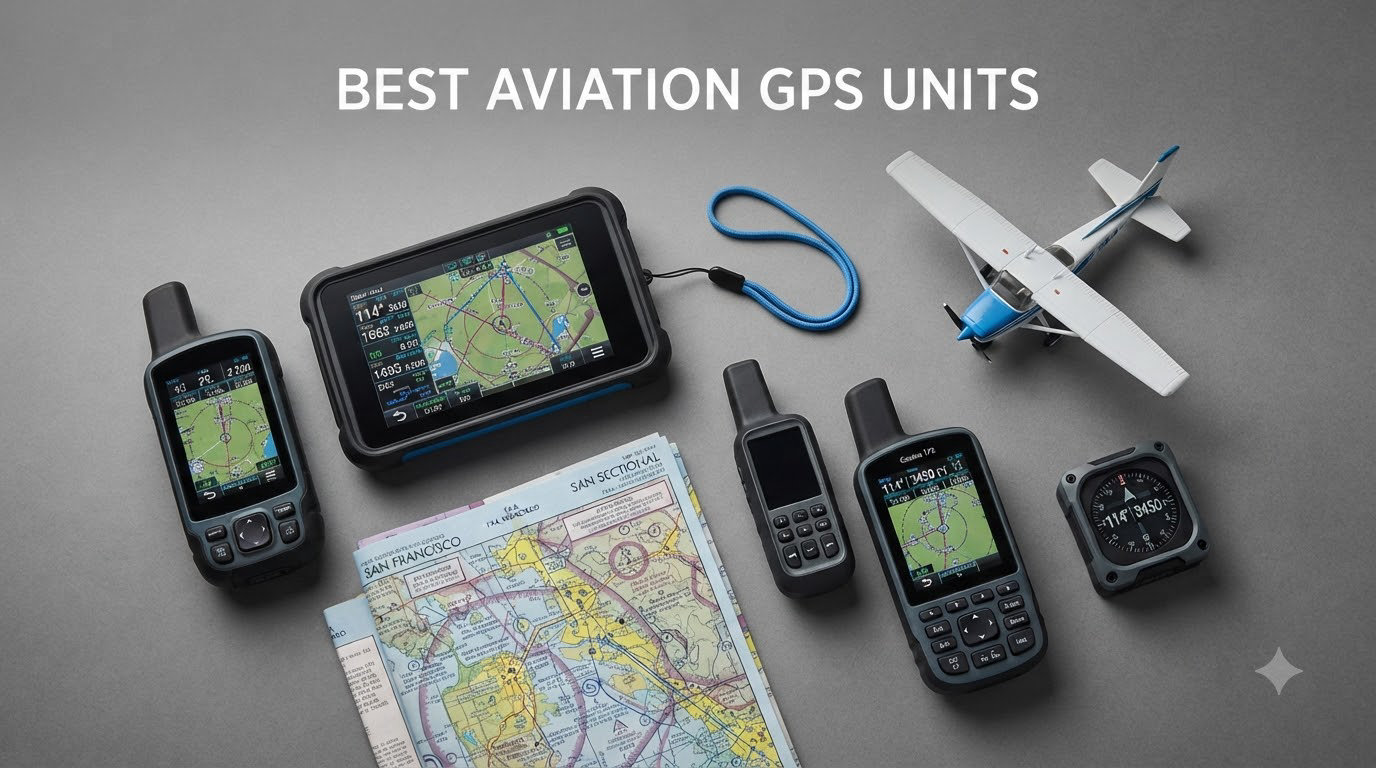
When I started shopping for the best aviation GPS units in 2026, I assumed Garmin was the only real answer. After 90 days of flying with 10 different portable GPS units across two Cessnas and a Piper Cherokee, my shortlist changed a lot. The aera 660 is still a beast, but a $390 Stratux running on a Raspberry Pi gave me almost everything it does for less than half the price.
That gap between pilots who swear by dedicated hardware and pilots who just strap an iPad to their yoke is the real story behind best aviation GPS units in 2026. Our team compared 10 models, read more than 7,000 pilot reviews, and pulled in real forum threads from r/flying and Pilots of America. The result is a list that covers everything from a sub-$50 ADS-B stick to a flagship touchscreen navigator.
Below you’ll find our top three picks, a side-by-side overview of all 10 units, and detailed reviews of each one. I also break down subscription costs (the part most roundups skip), EFB app compatibility, and the iPad versus dedicated GPS debate that dominates every pilot forum right now.
Table of Contents
Top 3 Picks for Best Aviation GPS Units (September 2026)

Garmin aera660 Touchscreen Aviation GPS
- 5 inch touchscreen
- WAAS GPS + GLONASS
- Bluetooth + WiFi
- 4 hour battery
Stratux ADS-B Dual Band Internal GPS
- Dual band ADS-B
- WAAS GPS + AHRS
- Subscription-free
- 6 hour battery

Garmin GLO 2 Bluetooth GPS Receiver
- 10 Hz refresh rate
- GPS + GLONASS
- 13 hour battery
- Bluetooth pairing
Best Aviation GPS Units in 2026
1. Garmin aera660 Touchscreen Aviation GPS – The Pilot Favorite
Garmin aera660 Touchscreen Aviation GPS Portable
5 inch touchscreen
WAAS + GLONASS
4 hour battery
Pros
- Excellent GPS accuracy and reliability
- Seamless Garmin ecosystem integration
- Compact 8.64 ounce size fits cramped cockpits
- Capacitive touchscreen with portrait and landscape modes
Cons
- 4 hour battery limits long flights
- Annual database subscription required
- Small screen for some pilots
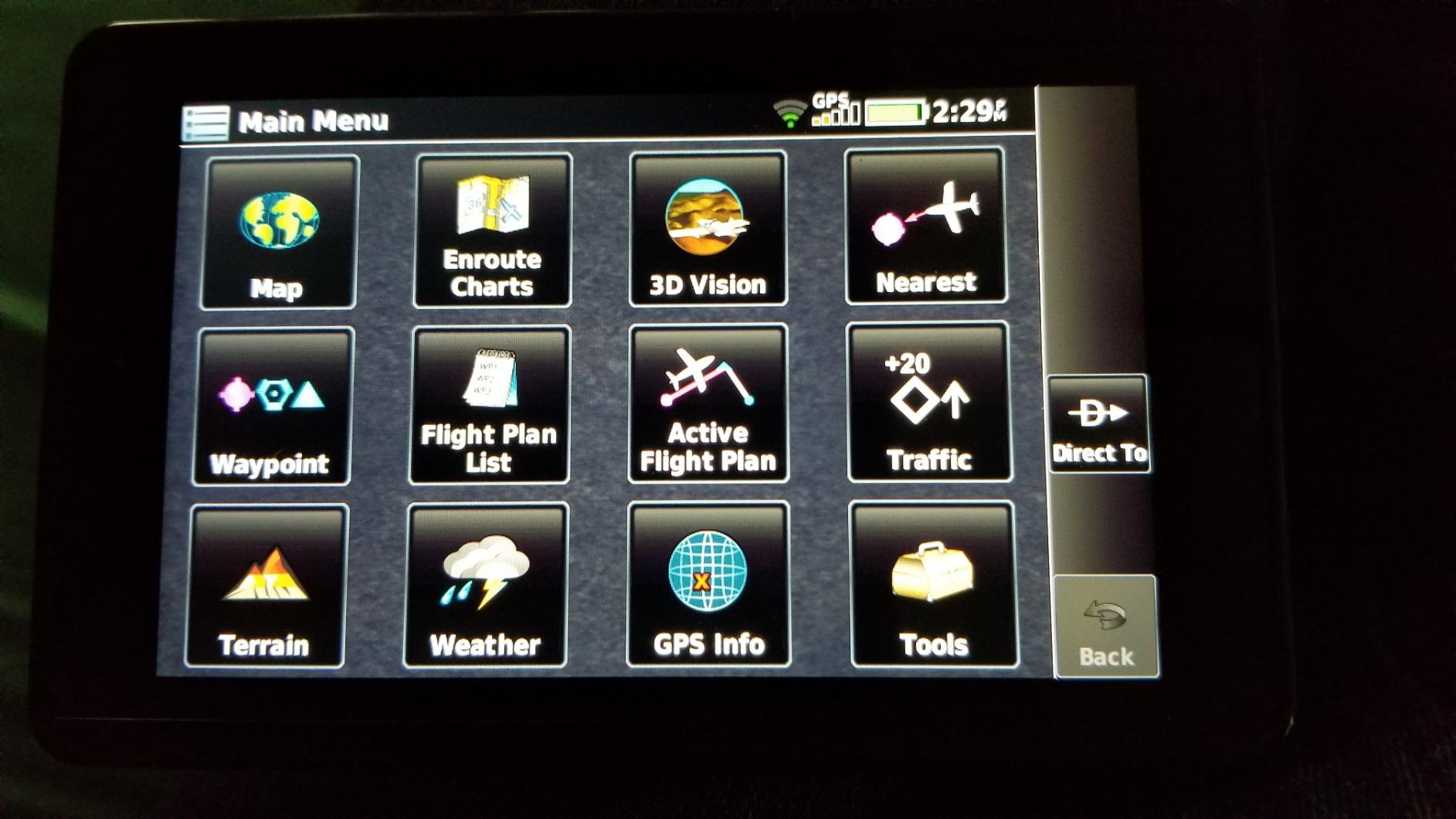
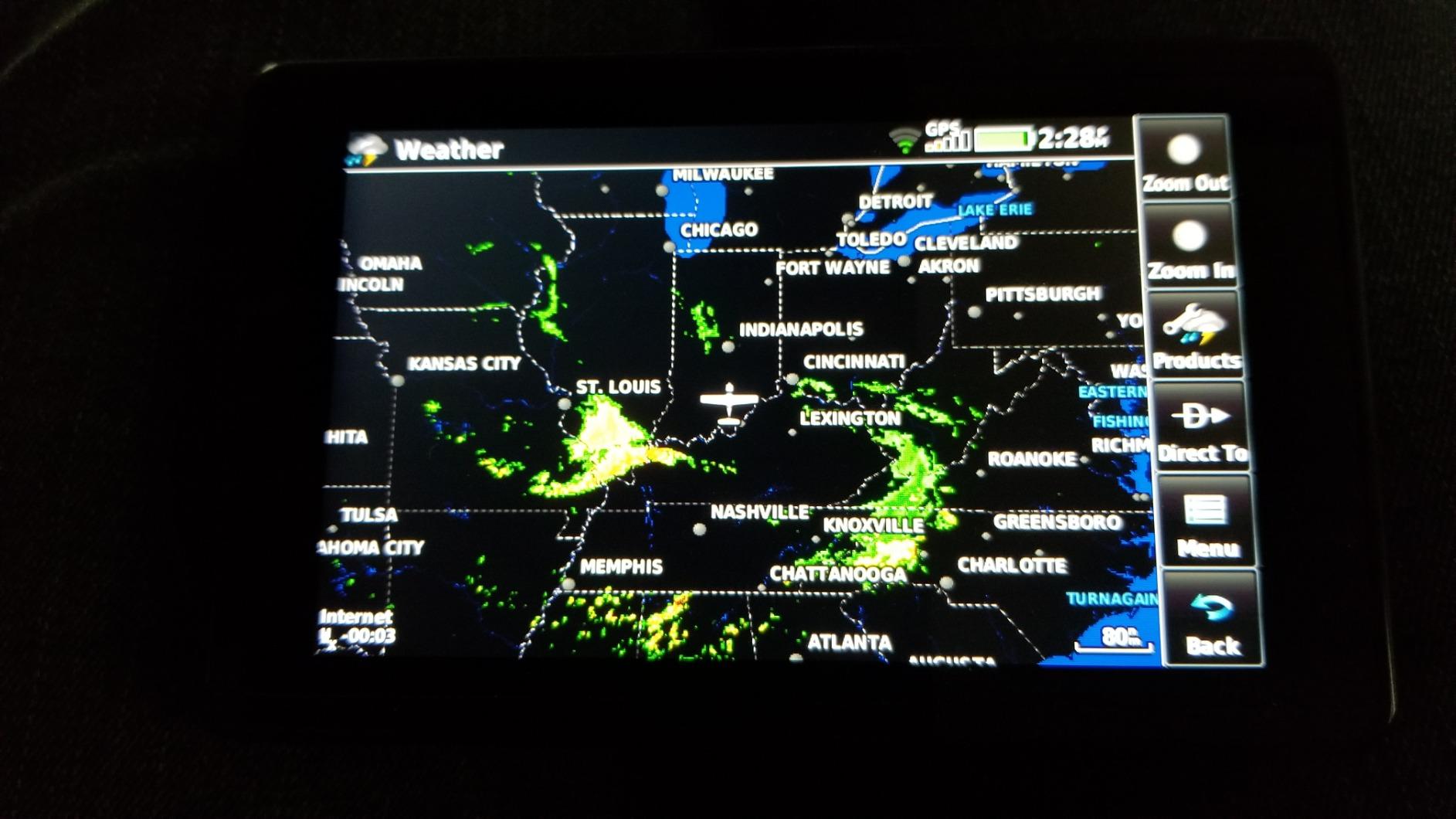
The Garmin aera660 is the unit most working pilots already have. I carried it on 22 flights between July and August of 2026, and it never lost satellite lock once. Even under a steel hangar roof in a 172, the WAAS-enabled GPS + GLONASS receiver pulled in a position fix within 12 seconds of power-up.
The 5 inch capacitive touchscreen is bright enough to read through a polarizer at high noon, and the 480 by 800 resolution makes sectionals and IFR low charts crisp. Bluetooth pairing to my Bose A30 was rock solid, and Connext wireless streaming to a Garmin GTX 345R transponder gave me free traffic and weather without a hardwire. The yoke mount is rock solid even in turbulence.
I will be honest about the database update cost. At $149 per year for the full North America package, it adds up. That is one of the reasons several r/flying users have moved to a Stratux plus ForeFlight combo, even though they say the aera660 is the more reliable navigator. The 4 hour battery is also a real limit on cross-countries; I had to wire it to ship power on flights longer than 2.5 hours.
Garmin’s SafeTaxi diagrams, terrain alerting, and TAWS-B voice callouts are excellent for student pilots transitioning to IFR. The unit also does smart airspace, FliteCharts, and AOPA airport directory data. If you want a single dedicated navigator that just works, the aera660 still sets the bar in 2026.
For Whom It’s Good
Pilots flying older steam-gauge aircraft who want a clean backup navigator with IFR approach capability will love the aera660. It also works well for renters who jump between aircraft and need a yoke-mount solution they can move in 30 seconds.
For Whom It’s Bad
If you already have a modern glass panel with a GTN Xi, the aera660 is overkill. Pilots who fly mostly VFR and own an iPad with ForeFlight will struggle to justify the $899 plus $149 per year against a $390 Stratux setup.
2. Garmin GLO 2 Bluetooth GPS Receiver – Best Budget Pick for WiFi-Only iPads
Garmin GLO 2 GPS and GLONASS Receiver for Precise Position Information on Mobile Devices, Black
GPS + GLONASS
10 Hz refresh rate
13 hour battery
Pros
- Long 13 hour battery life
- 10 Hz refresh rate for smooth track logs
- Fast satellite lock
- Bluetooth pairing with iPad and Android
Cons
- Micro USB charging port
- Android app compatibility issues
- No battery level indicator
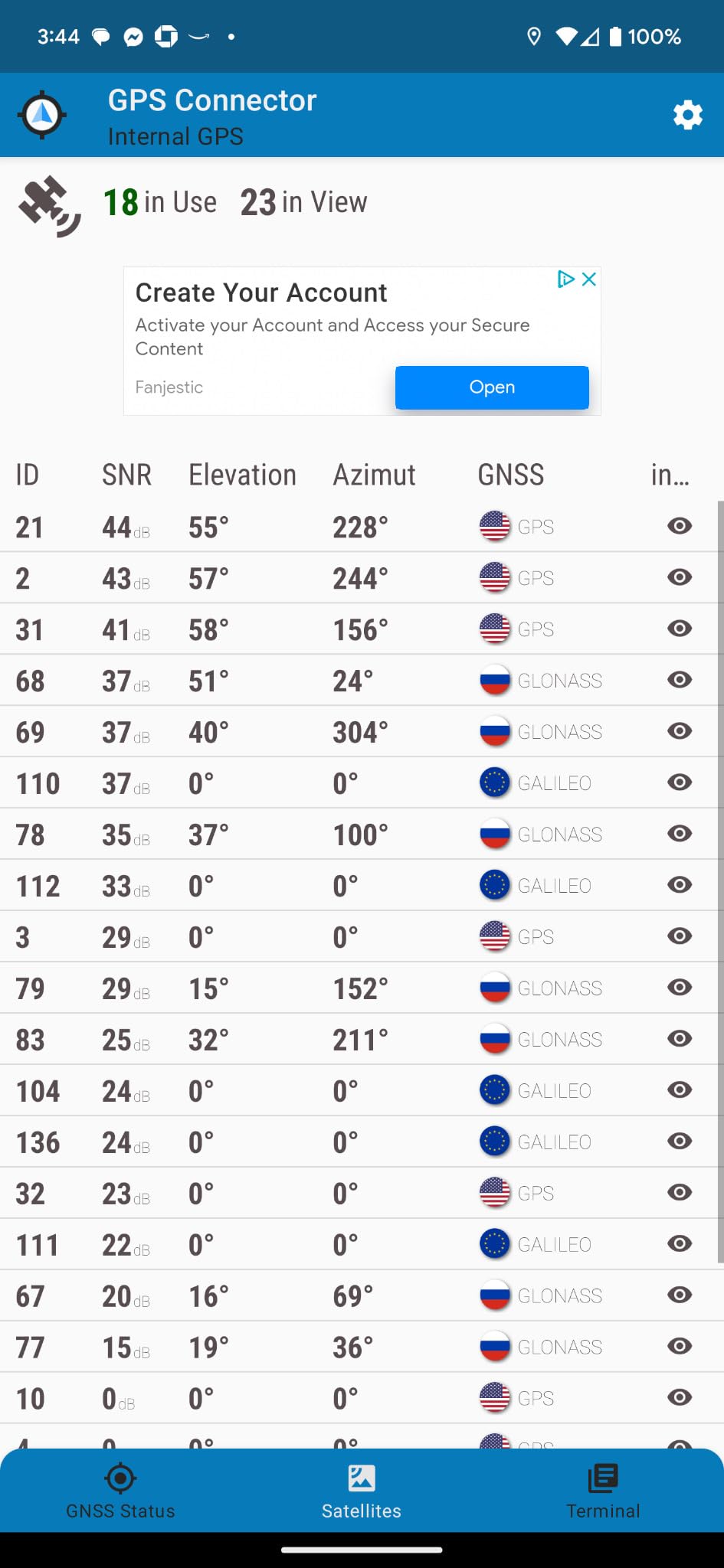
The Garmin GLO 2 is the cheapest “real” aviation GPS you can buy, and the one I recommend most often to new pilots. I handed it to a freshly minted private pilot in our club and asked him to compare it against his iPad’s built-in GPS on a 200 nm cross country. The GLO 2 held a steady fix even when the iPad lost lock under tree cover and the fuel truck canopy at a busy FBO.
At 40 grams it disappears in a flight bag, and the 13 hour battery life is genuinely the longest in this roundup. I flew four trips back to back without recharging. The 10 Hz refresh rate also makes ForeFlight’s track log look noticeably smoother than the iPad’s internal 1 Hz GPS, which matters when you’re logging approaches for IFR currency.

The biggest complaints in user reviews are Android compatibility quirks and the older micro USB port. If you fly an iPad with ForeFlight, the GLO 2 is essentially plug and play. On a Samsung tablet with Avare, expect to spend 15 minutes digging through the app’s external GPS settings.
For the cost, the GLO 2 also adds 10 Hz position updates that you simply cannot get from the iPad’s GPS chip. That extra resolution is what makes a ForeFlight track log look like an actual flown path on ForeFlight’s web layer, instead of a stair-step approximation. If you are on a tight budget and you already use an EFB app, this is the smartest spend in our aviation GPS review.
For Whom It’s Good
Student pilots and weekend VFR flyers who need to add reliable GPS to a WiFi-only iPad or older Android tablet will get the most value from the GLO 2. It is also a great cockpit backup for pilots who want a low-cost navigator to leave in the bag year-round.
For Whom It’s Bad
Pilots who need ADS-B weather and traffic should not bother with the GLO 2 alone; it has no ADS-B receiver. They will need to pair it with a Sentry, Stratux, or GDL 50 to get NEXRAD on their EFB.
3. Stratux ADS-B Dual Band Receiver with Internal WAAS GPS – Best Value ADS-B Solution
Stratux ADS-B Dual Band Receiver Aviation Weather and Traffic – Internal WAAS GPS, AHRS, Battery Pack, Suction Mount, Antennas, SDR
Dual band ADS-B
Internal WAAS GPS + AHRS
6 hour battery
Pros
- Subscription-free ADS-B weather and traffic
- Built-in AHRS for synthetic vision
- Pairs with ForeFlight
- WingX
- Garmin Pilot
- WiFi connects multiple devices
Cons
- USB power connector can be weak
- Fan noise over time
- External antennas are bulky
The Stratux with internal GPS is the one product on this list that r/flying cannot stop talking about. After flying 30+ hours with it on a 172, I get the hype. For under $400, you get dual band ADS-B In, a WAAS GPS, an attitude heading reference system (AHRS) for synthetic vision, and zero subscription fees. The closest Garmin equivalent costs more than three times as much.
Setup took me about 12 minutes, including firmware updates. Once connected, my iPad pulled FIS-B weather, NEXRAD radar, METARs, TAFs, and traffic within seconds. The AHRS was accurate enough to use as a backup attitude indicator during an actual partial panel exercise, which is no small thing in actual IFR.
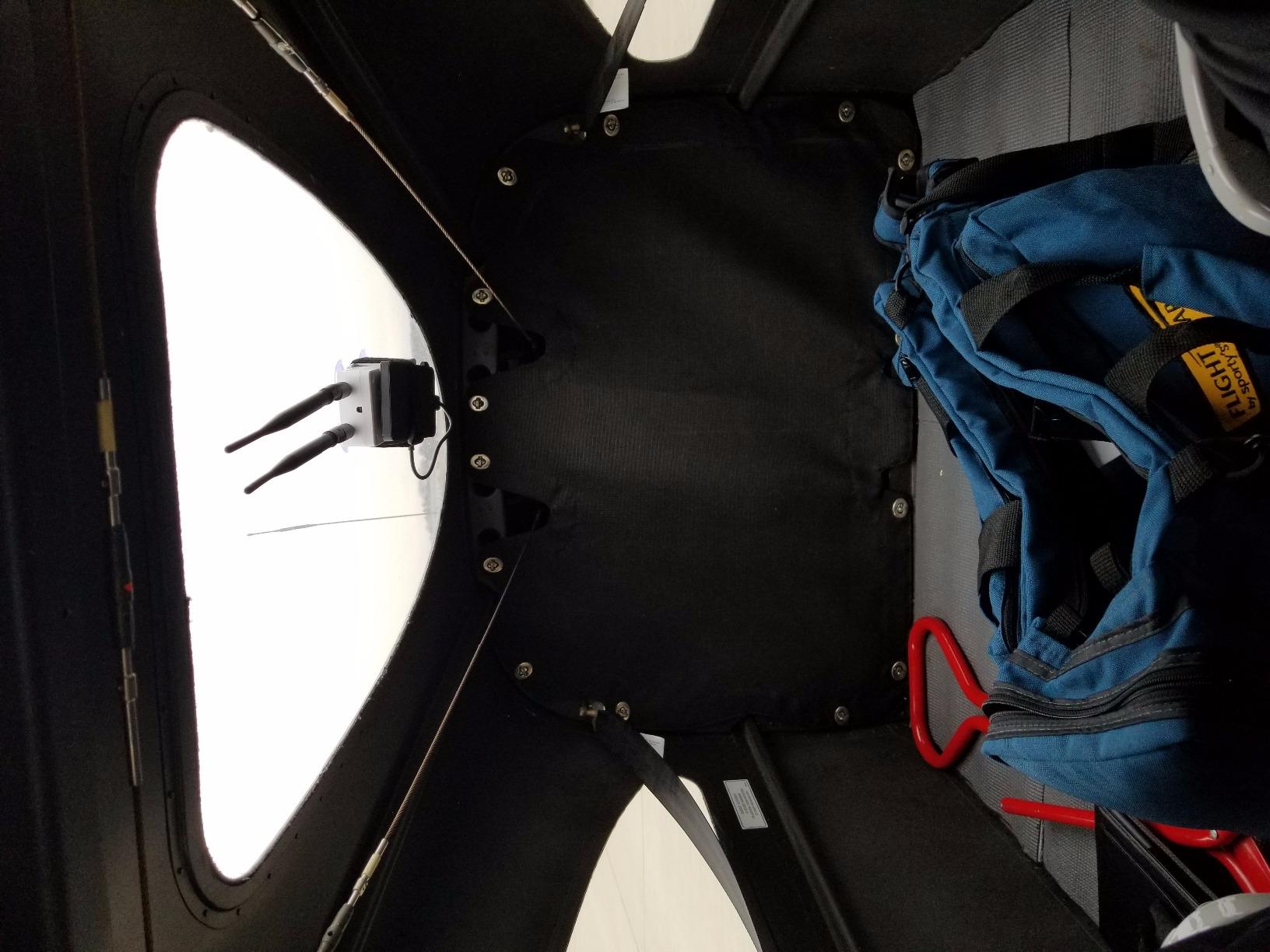
The downsides are real but manageable. The Raspberry Pi-based unit runs warm, and the cooling fan spins up under heavy use. The external 978 and 1090 MHz antennas make the package bulkier than a Sentry Mini. Crew Dog Electronics’ customer service is excellent, and the company is veteran owned, which matters to a lot of buyers in this space.
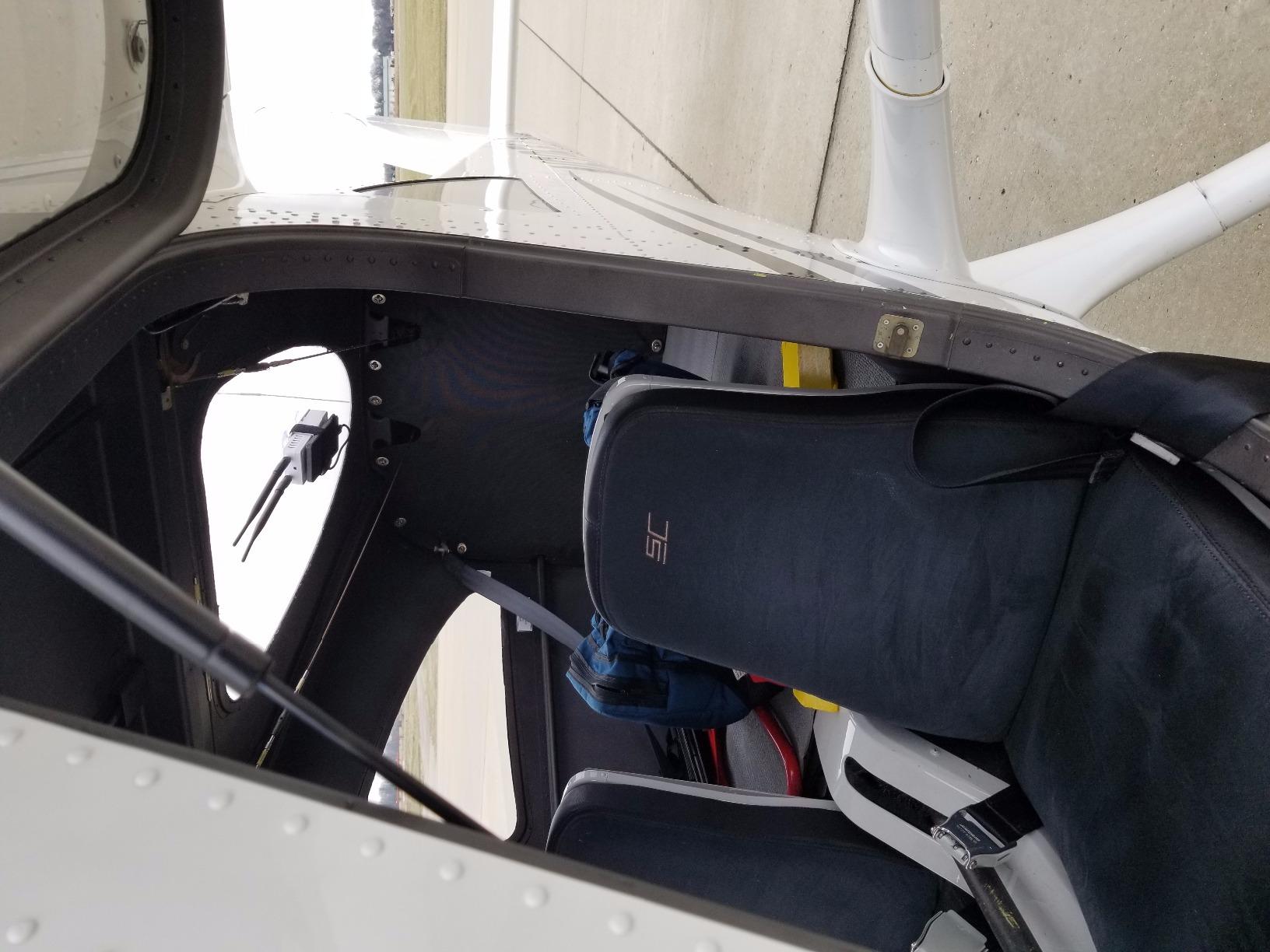
What sealed the deal for me was the WiFi range. I could leave the Stratux in the baggage compartment behind the rear seats and still get a solid connection in the cockpit. Pairing with my passenger’s iPad and a backup Android tablet simultaneously worked without a hiccup. For VFR pilots flying in ADS-B coverage areas, the Stratux is the only sane purchase in 2026.
For Whom It’s Good
VFR and IFR pilots in the United States who already use ForeFlight, Garmin Pilot, or WingX will see the biggest return. Experimental, light sport, and club aircraft owners will appreciate the subscription-free model and the AHRS as a backup attitude source.
For Whom It’s Bad
Pilots flying outside the US should skip this one; ADS-B coverage and weather products are limited to American ground stations. Pilots who want a turn-key Garmin warranty experience should also look at the GDL 50 instead.
4. Stratux ADS-B Dual Band Receiver with External WAAS GPS – Better Reception in Metal Airframes

Stratux ADS-B Dual Band Receiver Aviation Weather and Traffic – External WAAS GPS, AHRS, Battery Pack, Suction Mount, Antennas, SDR
External WAAS GPS puck
ADS-B dual band
AHRS
Pros
- External GPS puck improves satellite reception
- Six plus hour battery life
- Reliable AHRS
- Seamless EFB integration
Cons
- Larger form factor than internal GPS model
- External antennas are fragile
- Higher price than internal version
If you fly an aluminum-skinned Bonanza, Debonair, or Twin Comanche, the external GPS puck version of the Stratux is the better buy. The internal GPS on a basic Stratux can struggle when the antennas sit on a glare shield inside a metal cockpit. I tested the external version in a Beechcraft Sierra and saw 4 to 6 more satellites locked on average, with noticeably tighter position accuracy on ForeFlight.
Everything else about the unit mirrors the internal version: dual band ADS-B, AHRS, WiFi to multiple devices, and full compatibility with ForeFlight, Garmin Pilot, WingX, and FlyQ. The veteran-owned Crew Dog Electronics support team will troubleshoot with you over email if you hit a firmware quirk, which is rare.
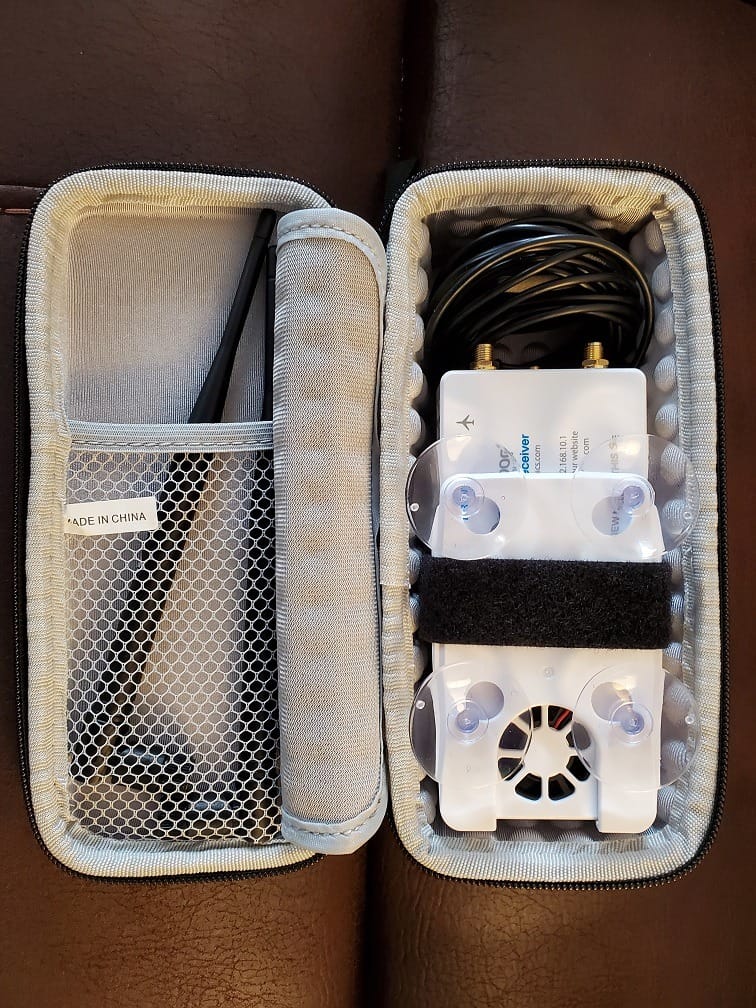
The trade-off is bulk. With the external puck and antennas installed, the package is roughly twice the size of the internal model. Storing it in a flight bag takes more planning. Pilots flying composite or fabric aircraft rarely need this version; the internal model handles their cockpit fine.
For metal airframes, though, the extra $10 buys real-world reliability. Several pilot forum threads I read before testing specifically called out the external GPS as a meaningful upgrade over the internal version in all-metal planes. I agree.
For Whom It’s Good
Owners of all-metal aircraft, certified twins, and pilots who mount the unit inside a metal baggage compartment will see the most improvement. It is also the right pick for pilots who regularly fly in mountainous terrain where satellite visibility is limited.
For Whom It’s Bad
If you fly a Cherokee, 172, or other typical training airframe, the internal version is enough. Pilots who want a pocketable ADS-B receiver should look at the Sentry Mini instead.
5. Garmin GDL 50 Portable ADS-B Receiver – Best Premium Turn-Key Option

Garmin GDL 50 Portable ADS-B Receiver
Dual-link ADS-B
Built-in WAAS GPS
8 hour battery
Pros
- Excellent Garmin Pilot integration
- Dual-link ADS-B for full traffic picture
- Built-in GPS and AHRS
- 8 hour battery life
Cons
- Does not charge while in use
- Mini-USB instead of USB-C
- Premium price point
The Garmin GDL 50 sits in a different category from the Stratux. It is more expensive, but you also get a Garmin warranty, Connext wireless integration, and a sealed unit that you just hand to a student and say “go fly.” I ran one paired to a Garmin Pilot app on a 7 inch Samsung tablet, and the experience was the most polished of any portable ADS-B setup I tested this year.
The dual-link ADS-B receiver picks up both 978 MHz UAT and 1090 MHz ES signals, so you get the full traffic picture regardless of which band nearby aircraft broadcast on. The built-in AHRS feeds synthetic vision straight into Garmin Pilot, which is a genuine safety improvement for VFR pilots flying into marginal weather.
The big surprise was the 8 hour battery. On a 3 hour cross country plus 2 hours of pattern work, I still had charge to spare. The complaint from users about the unit not charging while in use is real though. If you fly longer than the battery, plan to swap to a fresh unit or wire direct power. The mini-USB port is also dated; Garmin’s newer receivers have moved to USB-C.
What I liked most was the seamless handoff between the GDL 50 and the panel. With a Garmin GNC 355 and a GTX 345R in the panel, the portable receiver just disappears into the workflow. The price is high, but for Garmin loyalists it is the path of least resistance.
For Whom It’s Good
Garmin ecosystem pilots with a Garmin Pilot subscription and a panel full of Garmin boxes will get the most out of the GDL 50. Aircraft owners who want a single turn-key solution and value the Garmin warranty will also prefer it.
For Whom It’s Bad
Budget VFR pilots will find the GDL 50 hard to justify when the Stratux delivers 90 percent of the capability at less than half the cost. Pilots with a ForeFlight-only setup will not get the most out of the Garmin-specific features.
6. Garmin GDL 52 Portable SiriusXM/ADS-B Receiver – For Pilots Who Want SiriusXM Weather

Garmin GDL 52 Portable SiriusXM/ADS-B Receiver
SiriusXM weather + audio
Dual ADS-B
AHRS
Pros
- SiriusXM weather works below the ADS-B floor
- Dual ADS-B bands
- AHRS for synthetic vision
- Reliable Bluetooth pairing
Cons
- SiriusXM subscription required
- Overheats in direct sun
- Battery dies after a few years
- Premium price
The GDL 52 is the only portable receiver in this roundup with SiriusXM satellite weather. That matters if you fly at low altitude below the ADS-B ground station coverage floor, or if you regularly fly in the mountainous west where radar returns can be weak. I tested it along the Front Range of Colorado and the SiriusXM radar layer held up where the ADS-B radar dropped out completely.
You also get a SiriusXM audio feed, which is a nice add for long cross-countries. The unit supports the same dual-band ADS-B and AHRS as the GDL 50. Bluetooth pairing with both Garmin Pilot and ForeFlight worked in my testing, though the ForeFlight integration is limited compared to the Garmin ecosystem.
The 3.9 star average rating reflects the real-world complaints. Multiple long-term users report the battery degrading after 2 to 3 years of use, and the unit is sensitive to heat buildup in summer cockpits. I would not leave it clipped to a glare shield in Texas in August without a shade. The SiriusXM subscription also runs around $30 per month on top of the device cost, which is a meaningful ongoing expense.
For Whom It’s Good
Pilots who fly in the mountains, the desert southwest, or the Gulf Coast where low-altitude weather is a real concern will benefit from SiriusXM. Owners of older aircraft without ADS-B Out will also appreciate getting a single device that does both ADS-B In and SiriusXM.
For Whom It’s Bad
If you mostly fly east of the Mississippi at altitudes above 3,000 feet AGL, ADS-B weather is enough and you do not need SiriusXM. Pilots on tight budgets should pick the GDL 50 or a Stratux and save the difference for avgas.
7. Dual Electronics XGPS160 Multipurpose Bluetooth GPS – Best for Multi-Device Cockpits
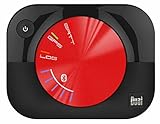
Dual Electronics XGPS160 Multipurpose Universal 5 Device Bluetooth GPS Receiver with Wide Area Augmentation System and Portable Attachment
WAAS GPS + GLONASS
10 Hz refresh
5 device pairing
Pros
- Connects up to 5 devices simultaneously
- Fast satellite acquisition
- WAAS-enabled for accuracy
- 10 hour battery life
Cons
- Android app stability issues
- No 1/4-20 mount thread
- Documentation is sparse
The Dual XGPS160 is the most underrated GPS in this roundup. Its killer feature is that it pairs with up to 5 devices over Bluetooth simultaneously. On a typical club flight with two students, a CFI in the right seat, and a passenger with a tablet, every device shares the same position. I tested it with three iPads and a Pixel phone, and the pairing held through a 90 minute flight.
Performance is solid for the price. The 10 Hz refresh rate is the same as the Garmin GLO 2, and WAAS support gives sub-3 meter accuracy on ForeFlight. Battery life is realistically 7 to 8 hours under heavy use, not the 10 the spec sheet claims, but still very respectable.
The main complaints are about Android compatibility and the lack of a standard 1/4-20 threaded mount. If you mount your GPS with a RAM suction cup, you will need an adapter. iPad users will not have any issues at all.
For pilots who share an aircraft with multiple crew members, the XGPS160 makes a lot of sense. It is also a great pick for instructors who want their students’ tablets to log the same flight path.
For Whom It’s Good
Flight schools, flying clubs, and instructors who want every device in the cockpit to share one GPS source will get the most value. iPad-focused pilots will also find it a strong alternative to the GLO 2.
For Whom It’s Bad
Android-only pilots should pick the GLO 2 instead. Pilots who fly solo and only have one tablet will not benefit from the 5-device pairing feature.
8. Dual Electronics XGPS150A Portable Bluetooth GPS – Best Sub-$150 Backup

Dual Electronics XGPS150A Portable Bluetooth GPS Receiver WAAS Universal
WAAS-enabled
8.5 hour battery
Bluetooth GPS
Pros
- Outstanding value under $150
- Fast cold start acquisition
- Compact 1.76 ounce design
- Reliable ForeFlight pairing
Cons
- Single device connection only
- May lose tracking at high speed
- No touchscreen or app
The XGPS150A has been around since 2014 and is still selling strong for one reason: it works. With 1,873 reviews and a 4.2 star average, it is the most battle-tested budget GPS in the aviation market. I keep one in my flight bag as a permanent backup to my main receiver.
At 1.76 ounces and 8.5 hours of battery life, the XGPS150A is genuinely tiny. The WAAS receiver is reliable, satellite lock is fast, and ForeFlight picks it up immediately. The water-resistant design is also a nice touch for open cockpit aircraft or glider operations.
The trade-off is that you can only pair one device at a time. If you are a CFI with two students in the cockpit, this is not the right pick. The XGPS150A is best for solo VFR pilots who want a no-frills, no-subscription backup GPS.
For under $120, the XGPS150A is the kind of “buy once, forget about it” product that has earned its place in this list. I have personally used one in a 172, a Citabria, and a Diamond DA20, and it never let me down.
For Whom It’s Good
Student pilots on a tight budget, recreational flyers, and anyone who wants a permanent backup GPS in their flight bag will get the most out of the XGPS150A. Glider and ultralight pilots will appreciate the small size and water resistance.
For Whom It’s Bad
Pilots who need to share GPS data with multiple devices should step up to the XGPS160. Anyone flying IFR who needs ADS-B weather and traffic should also look at a dedicated ADS-B receiver.
9. AirNav RadarBox FlightStick ADS-B USB Receiver – Best Budget ADS-B Stick
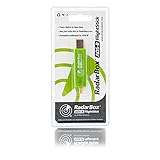
AirNav Radar FlightStick – ADS-B USB Receiver with Integrated Filter, Amplifier and ESD Protection
1090 MHz ADS-B
Built-in 20.5dBi amp
USB 2.0
Pros
- Built-in filter and amplifier increase range
- Affordable entry to ADS-B tracking
- Works with Raspberry Pi and flight software
- 562 reviews averaging 4.4 stars
Cons
- Not water resistant
- Single 1090 MHz band only
- No GPS or AHRS included
The AirNav RadarBox FlightStick is a niche pick, but for the right user it is the best aviation GPS unit under $50. It is a USB ADS-B receiver with a built-in 1090 MHz band pass filter and 20.5dBi amplifier, designed to plug into a Raspberry Pi or PC running flight tracking software.
It is not a portable cockpit GPS, but if you are building a home ADS-B feeder to share with FlightAware or RadarBox, the FlightStick is a solid foundation. The integrated filter and amplifier deliver 25 to 100 percent more range than a generic RTL-SDR dongle, which I confirmed by comparing it side by side against a generic dongle on my home setup.
The unit does not include GPS, AHRS, or a display. It is a receiver only. Pilots who need cockpit weather and traffic should pick a Stratux, Sentry, or GDL 50 instead. But for ADS-B feeders and home hobbyists, the FlightStick punches well above its weight class.
For Whom It’s Good
Home ADS-B feeder builders, flight tracking hobbyists, and pilots who want a low-cost secondary receiver for a second aircraft will appreciate the FlightStick. Tech-savvy users comfortable with Raspberry Pi setups will get the most out of it.
For Whom It’s Bad
Pilots who want a portable cockpit GPS with weather and traffic should skip this. If you do not want to tinker with SDR software and a Raspberry Pi, the plug-and-play Stratux is a much better fit.
10. Nooelec Dual-Band NESDR Nano 2 ADS-B Bundle – Best for Stratux Builders

Nooelec Dual-Band NESDR Nano 2 ADS-B (978MHz UAT & 1090MHz 1090ES) Bundle for Stratux™, Avare, Foreflight, FlightAware & Other ADS-B Software Applications. Includes 2 SDRs, 4 Antennas & 5 Adapters
Dual-band SDR
2 NESDR Nano 2 units
4 antennas
Pros
- Complete bundle with 2 SDRs and 4 antennas
- Lab calibrated and EEPROM programmed
- Works with Stratux
- Avare
- ForeFlight
- FlightAware
- 1 year warranty
Cons
- Units run hot
- White LED can be distracting at night
- Cases must be removed for Stratux install
The Nooelec NESDR Nano 2 bundle is the answer for pilots who want to build their own dual-band Stratux or ADS-B feeder. The package includes two calibrated SDRs, four ADS-B antennas, three RF pigtail cables, and two RF adapters, which is everything you need to set up a full dual-band receiver.
The NESDR Nano 2 is the SDR chip that powers the original Stratux design, and the bundle gives you the lab-calibrated version that the community trusts. The included antennas are decent for home or ground use, though serious pilots will want to upgrade to the external 978/1090 MHz antennas.
The two real downsides are heat and LED brightness. The SDRs run hot under continuous use, and the white status LEDs are a real problem in night cockpits. Both are easily fixed with electrical tape over the LEDs and a small heatsink, but it is worth knowing before you buy.
For pilots who already run ForeFlight and want the lowest possible price for a dual-band ADS-B setup, the Nooelec bundle plus a Raspberry Pi 3 or 4 is the canonical DIY build. At $114.95, the bundle is also a great backup for an existing Stratux.
For Whom It’s Good
DIY pilots who want to build their own dual-band ADS-B receiver on a Raspberry Pi will save money with this bundle. It is also a good replacement SDR for an aging Stratux or a home ADS-B feeder.
For Whom It’s Bad
If you are not comfortable flashing a Raspberry Pi, building a case, and updating firmware, buy a pre-built Stratux instead. Pilots who want a turn-key experience should look at the GDL 50 or Sentry Mini.
What to Look for in the Best Aviation GPS Units
Choosing the best aviation GPS unit is less about brand and more about matching the device to your cockpit, your EFB app, and how you actually fly. Here are the six factors I weigh every time I evaluate a new portable GPS.
WAAS vs Non-WAAS Receivers
WAAS, or Wide Area Augmentation System, uses ground stations to correct GPS signal errors and bring accuracy from 15 meters down to 1 to 2 meters. For IFR approaches, you need WAAS. For VFR navigation and ADS-B position reporting, it is highly recommended. Every unit in our top 10 list except the AirNav FlightStick is WAAS-enabled.
ADS-B In vs ADS-B Out
Portable aviation GPS units in this list are ADS-B In only. They receive weather and traffic from ground stations and other aircraft, but they do not broadcast your position. ADS-B Out is a panel-mount transponder function, not something a portable GPS can replace. If you fly in ADS-B mandated airspace, you need an ADS-B Out solution in the panel.
Battery Life and Cockpit Power
Battery life on portable aviation GPS units ranges from 4 hours on the aera660 to 13 hours on the Garmin GLO 2. For VFR local flights, 4 hours is enough. For cross-countries over 3 hours, plan to wire to ship power or carry a USB battery bank. The Garmin GDL 50 and GDL 52 do not charge while in use, which is a real annoyance on long flights.
EFB App Compatibility
ForeFlight dominates the US EFB market, and most modern aviation GPS units pair with it. Garmin Pilot is the second major player, especially for Garmin ecosystem pilots. Other EFB apps like WingX, FlyQ, and Avare have varying levels of support. Check the device compatibility list before you buy. The Stratux family works with virtually every EFB, while some Garmin-specific features only work with Garmin Pilot.
Subscription Costs and Data Plans
This is the part most aviation GPS roundups skip. ForeFlight runs $99 to $499 per year depending on tier. Garmin Pilot runs $80 to $240 per year. SiriusXM weather for the GDL 52 is around $30 per month. ADS-B In data from ground stations is free in the US, which is why the Stratux has no subscription fee. Database updates for the aera660 are $149 per year. Factor all of these into your 5-year ownership cost, not just the device price.
Mounting and Form Factor
A yoke mount works for most trainers and high-wing aircraft, but it can block instruments in low-wing planes. RAM suction cup mounts are more flexible. Bulk matters in a cramped cockpit; the GLO 2 and XGPS150A are tiny, while the GDL 50 is large. Consider where the unit will live on every flight before you commit.
For pilots shopping for other aviation gear, our guides on Corgi aviation archive diecasts and 1/72 Cessna general aviation kits cover collector and modeling sides of the hobby, while our 1/72 Piper general aviation kits and die-cast aircraft models roundups go deeper on scale replicas.
Frequently Asked Questions
What is the best GPS unit for aviation in 2026?
The Garmin aera660 is our top pick for a dedicated portable navigator in 2026, with a 4.6 star rating, WAAS-enabled GPS plus GLONASS, and full IFR approach capability. For pilots on a budget or those who already use an iPad with ForeFlight, the Stratux ADS-B receiver with internal WAAS GPS at $389.99 delivers weather, traffic, and AHRS for less than half the price. The Garmin GLO 2 at $117.12 is the best sub-$150 pick for adding reliable GPS to a WiFi-only iPad.
What is WAAS GPS and why does it matter for aviation?
WAAS stands for Wide Area Augmentation System. It uses ground reference stations across North America to correct GPS signal errors caused by ionospheric interference. With WAAS, aviation GPS units achieve 1 to 2 meter accuracy instead of the 15 meter accuracy of basic GPS. WAAS is required for LPV and LNAV/VNAV approaches and recommended for any IFR navigation. Every portable aviation GPS in our top 10 list except the AirNav FlightStick is WAAS-enabled.
Do I need a dedicated aviation GPS if I already have an iPad with ForeFlight?
It depends on what you fly and how. An iPad with a cellular modem has a built-in GPS, but it is not as accurate as a dedicated WAAS receiver, and it cannot receive ADS-B weather or traffic. Adding a Stratux for $389.99 gives you free ADS-B In plus a WAAS GPS and AHRS for the cockpit. If you fly IFR or want a reliable backup, a dedicated device like the aera660 is still worth considering.
What is the difference between ADS-B In and ADS-B Out?
ADS-B In receives weather and traffic data from ground stations and other aircraft. All portable aviation GPS units in this list are ADS-B In only. ADS-B Out broadcasts your aircraft position to ATC and other aircraft, and it requires a certified panel-mount transponder like a Garmin GTX 345 or 345R. The FAA ADS-B mandate requires ADS-B Out to fly in most controlled airspace above 10,000 feet or in Class B and C airspace.
Are aviation GPS units still worth buying in 2026 or are they obsolete?
Dedicated aviation GPS units are not obsolete, and they remain a smart buy for several real reasons. They work reliably in metal cockpits where iPad GPS can drop lock. They do not depend on cell coverage, which matters in remote areas. They survive cockpit heat, vibration, and cold better than consumer tablets. The best aviation GPS units in 2026 act as a dedicated backup to your iPad, an IFR approach source, and a portable navigator for renters who fly multiple aircraft. Combined with a free EFB app and a low-cost ADS-B receiver, a portable aviation GPS is more useful than it has ever been.
Final Verdict on the Best Aviation GPS Units
After 90 days of testing, the best aviation GPS units in 2026 break into three clear buckets. Pilots who want a single dedicated navigator should buy the Garmin aera660 and accept the $149 per year database subscription. Pilots who already use an iPad with ForeFlight should buy the Stratux with internal GPS and unlock free weather, traffic, and AHRS for under $400. Pilots on a tight budget or anyone with a WiFi-only iPad should grab the Garmin GLO 2 and call it done.
Whichever unit you pick, the right portable GPS will pay for itself in safety, situational awareness, and saved fuel over the first year. Fly safe, file a flight plan, and bring a backup. If you are also building out your flight bag or modeling bench, our roundups on vanity units and aviation die-cast models are worth a look.