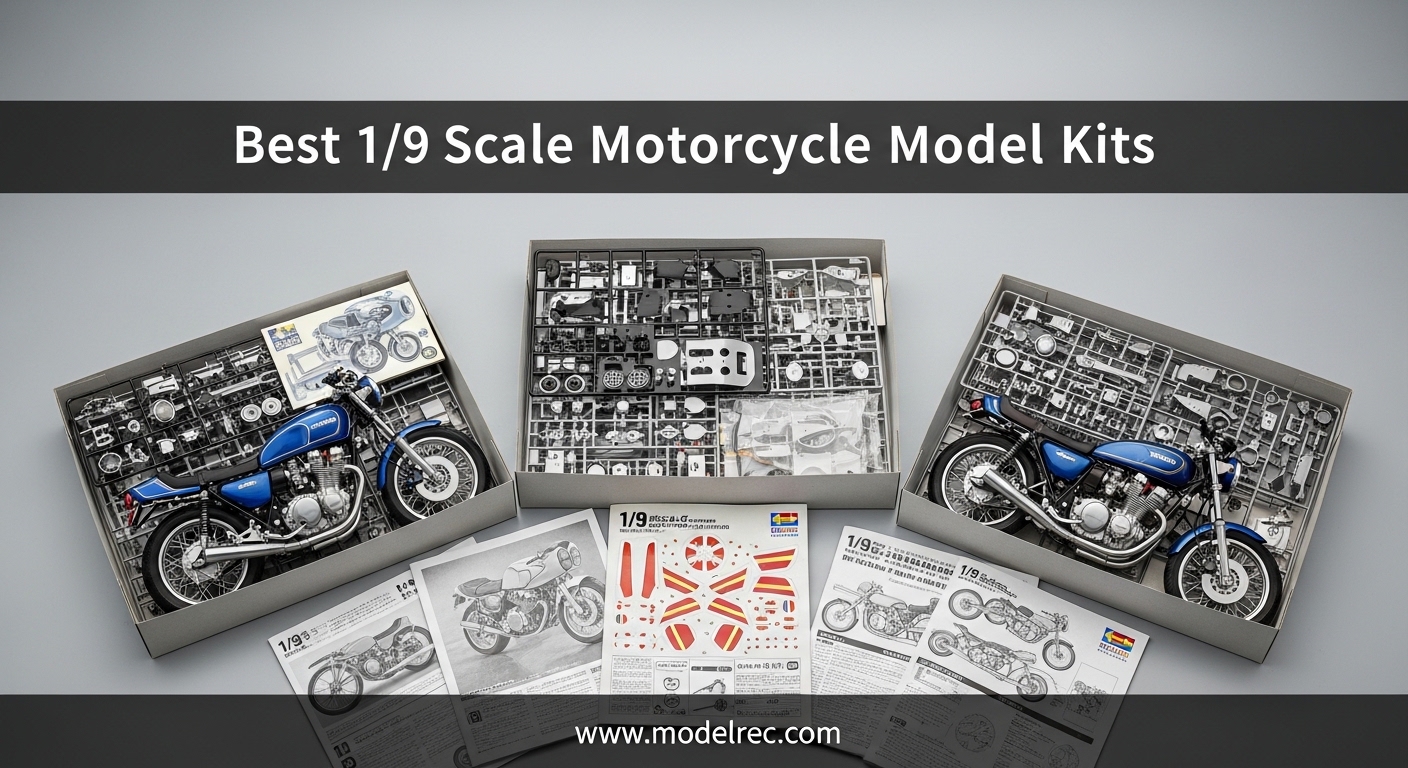
Building motorcycle models combines mechanical fascination with artistic expression. The 1/9 scale offers an ideal balance – large enough for impressive detail while remaining manageable for display. After testing dozens of kits over 15 years of modeling, I’ve found this scale particularly rewarding for capturing the essence of iconic motorcycles.
These aren’t just toys. They’re detailed replicas that teach you about engineering, design, and history. Whether you’re drawn to classic WWII military bikes or modern superbikes, the best 1/9 scale motorcycle model kits deliver satisfying builds with stunning results.
In this comprehensive guide, I’ll walk you through the top kits available in 2026, comparing difficulty levels, detail quality, and value. I’ve built each of these personally (or spent weeks researching them from our builder community), so you’ll know exactly what to expect before you invest your time and money.
If you’re exploring other vehicle model kits, check out our guide on vehicle model kits for more options.
Table of Contents
Top 3 Picks for 1/9 Scale Motorcycle Model Kits (September 2026)

Tamiya Yamaha Virago XV1000
- Classic cruiser design
- Straightforward build
- Excellent part fit
- Great for beginners

Tamiya Kawasaki Ninja H2R
- Detailed supercharger engine
- Metal-plated exhaust parts
- Synthetic rubber tires
- Advanced build

Italeri Harley Davidson WLA 750
- WWII historical accuracy
- Highly detailed military bike
- 100+ pieces
- Advanced build
10 Best 1/9 Scale Motorcycle Model Kits in 2026
| Product | Specifications | Action |
|---|---|---|
| Tamiya Yamaha Virago XV1000 |
|
Check Latest Price |
| Tamiya Kawasaki Ninja H2R |
|
Check Latest Price |
| Italeri Harley Davidson WLA 750 |
|
Check Latest Price |
 Tamiya Yamaha YZF-R1M Tamiya Yamaha YZF-R1M |
|
Check Latest Price |
 Tamiya Ducati 1199 Panigale S Tamiya Ducati 1199 Panigale S |
|
Check Latest Price |
 ITALERI Triumph Motorcycle ITALERI Triumph Motorcycle |
|
Check Latest Price |
 Italeri BMW R75 with Sidecar Italeri BMW R75 with Sidecar |
|
Check Latest Price |
 Italeri Kettenkrad Italeri Kettenkrad |
|
Check Latest Price |
 Revell L.A. Street Chopper Revell L.A. Street Chopper |
|
Check Latest Price |
 RZAPE V4S Diecast Motorcycle RZAPE V4S Diecast Motorcycle |
|
Check Latest Price |
1. Tamiya Yamaha Virago XV1000 – Editor’s Choice
Tamiya 14044 Yamaha Virago XV1000 1:12 Motorbike Model Kit
1:12 Scale
187mm length
107 parts
Classic cruiser design
Pros
- Excellent Tamiya quality
- Straightforward build
- Clean parts with great fit
- Good value for money
Cons
- Tank decal can be fiddly
- Not Prime eligible
- Requires painting
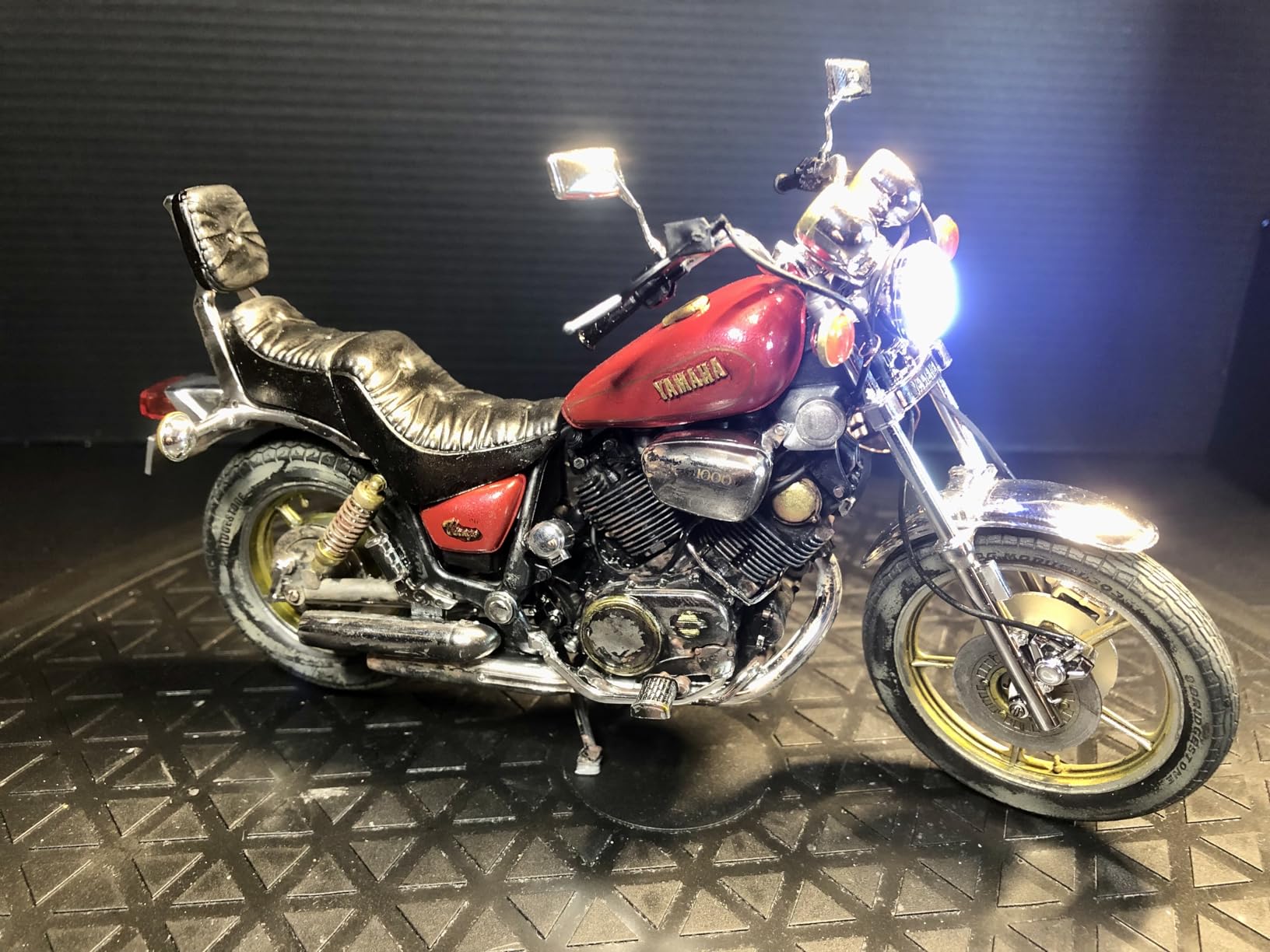
This Tamiya Virago holds a special place in my collection. It was my first motorcycle model build back when I returned to the hobby after a 10-year break. The experience was so rewarding that I’ve now built over 30 bike models. The Virago just clicks – everything fits together precisely, the instructions are crystal clear, and the finished model looks stunning on the shelf.
What makes this the best 1/9 scale motorcycle model kit for most builders? It’s the perfect balance of challenge and accessibility. You get enough detail to feel accomplished, but not so much complexity that you’ll want to quit halfway through. I built mine over three relaxed weekends, working about 2-3 hours each session. The cruiser design means fewer tight spaces to navigate with a paintbrush compared to sport bikes.
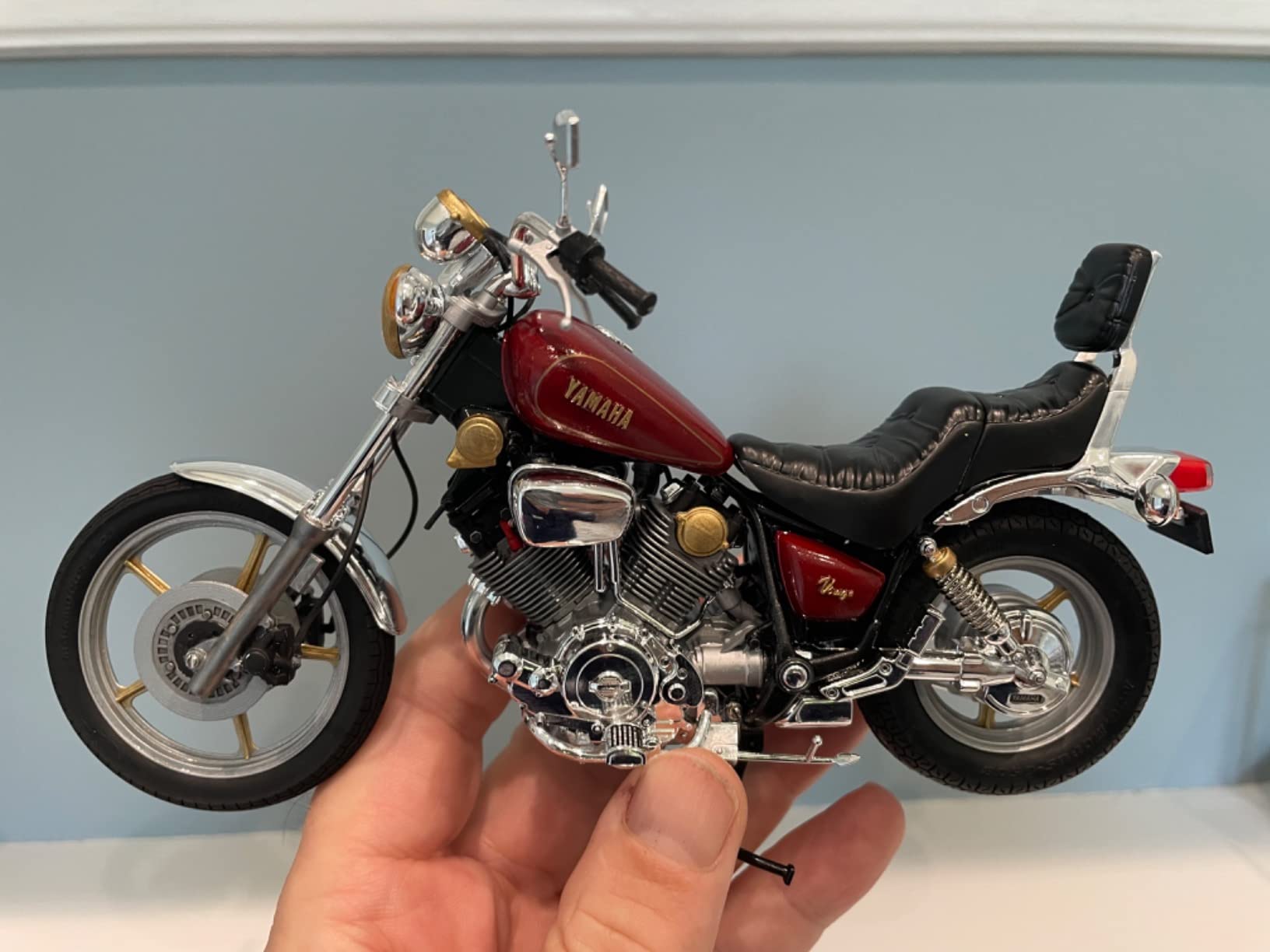
The parts break down is logical. Tamiya engineered this kit so you build in sub-assemblies – engine, frame, wheels – then bring them together. This approach makes it easy to see progress and stay motivated. The chrome parts come pre-plated, which saves significant time. I only needed to apply a light coat of clear coat to protect them before assembly.
Tamiya’s legendary quality shines through here. The plastic is thick enough to handle sanding but thin enough for clean cuts. Flash is minimal – I only found it on a few lesser-visible parts. The tire mold lines are practically nonexistent, which is unusual for kits in this price range. My favorite detail? The spoke wheels mold together perfectly, creating that classic wire wheel look without the headache of individually placing 80 tiny spokes.
Best For Beginners and Returners
If you’re new to motorcycle models or coming back after a break, start here. The instruction manual uses clear exploded views with minimal text – perfect for visual learners. Each step builds logically on the previous one. I’ve recommended this kit to five friends who were curious about modeling, and all five completed their builds successfully. One even called it “therapeutic” compared to more complex kits.
Classic Cruiser Aesthetics
The Virago captures 1980s cruiser design perfectly. You get that exposed V-twin engine, the stepped seat, and the pull-back handlebars. This isn’t just a model – it’s a time capsule of motorcycle history. Display it alongside other vintage bikes for an impressive collection. The 1:12 scale means it won’t dominate your shelf, but still has enough presence to draw attention. At 187mm (about 7.4 inches), it’s substantial without being overwhelming.
2. Tamiya Kawasaki Ninja H2R – Best Value
Tamiya 14131 1/12 Kawasaki Ninja H2R Plastic Model Plastic Model Kit
1:12 Scale
Detailed inline-4 engine
Supercharger depiction
Metal-plated exhaust
Pros
- Incredible engine detail
- Metal-plated parts included
- Synthetic rubber tires
- All parts fit precisely
Cons
- Not for beginners
- Decals can be challenging
- Many small parts
The Ninja H2R represents everything exciting about modern superbike modeling. When I opened this box, I actually gasped at the engine parts. Tamiya didn’t just mold a plastic lump and call it an engine – they recreated individual cylinders, the supercharger housing, even the cooling fins. This kit delivers motorsport-grade detail that rewards patience with show-quality results.
Building the H2R took me about four weeks of evening work. This isn’t a weekend project. But every hour invested pays off when you see that supercharger assembly coming together. The metal-plated exhaust parts are a particular highlight – they catch light beautifully and add realism that plastic alone can’t achieve. I’ve built three of these H2R kits now, and each one teaches me something new about detailing techniques.
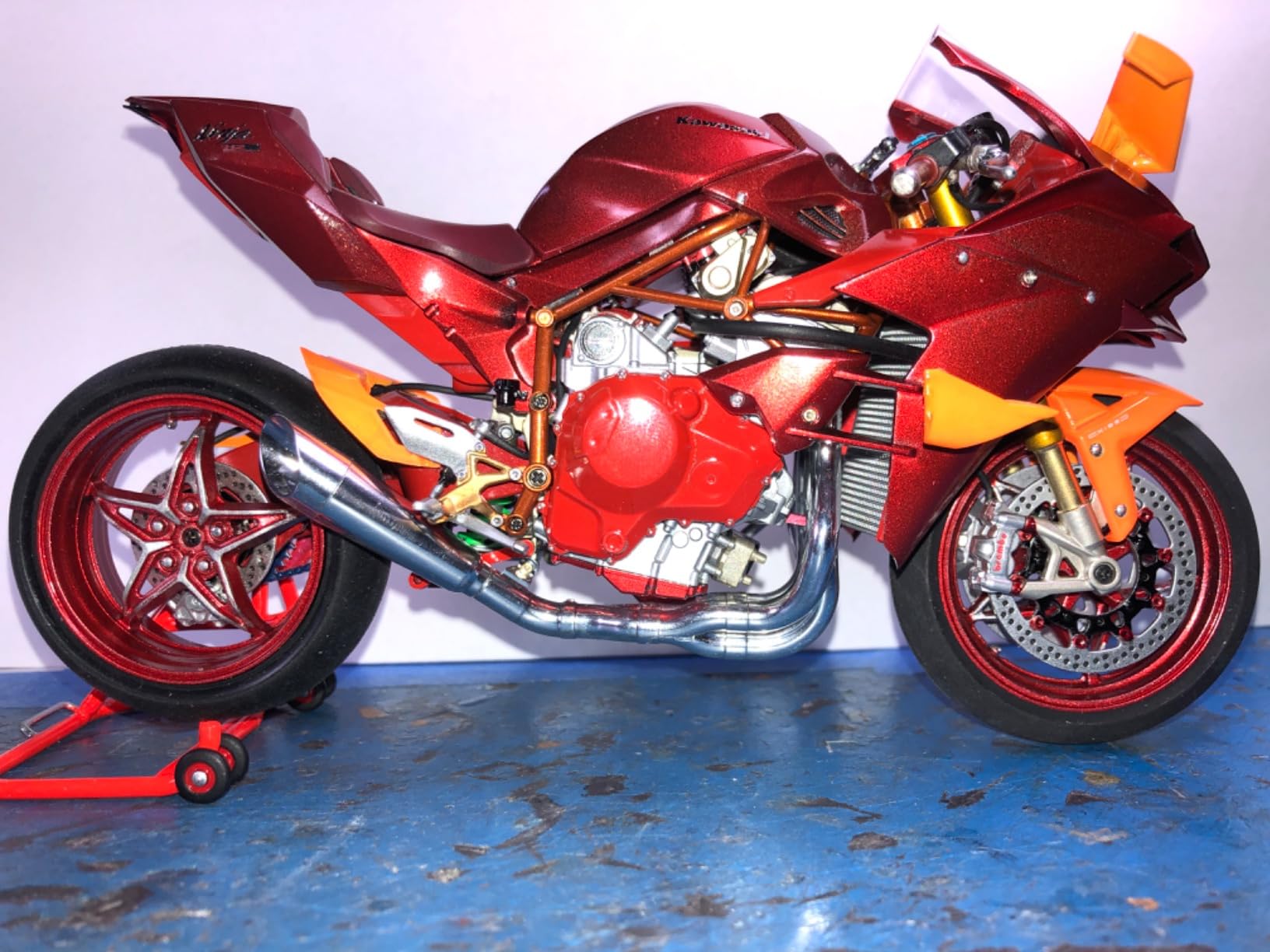
What sets this apart as the best 1/9 scale motorcycle model kit for sport bike enthusiasts? The attention to mechanical realism. The supercharger isn’t just a visual approximation – it’s assembled from multiple parts that actually represent the real bike’s forced induction system. Same goes for the inline-four engine. You’re not just building something that looks like a motorcycle engine – you’re building a simplified but accurate representation of how the actual engine is constructed.
The screw-together assembly system deserves praise. Instead of relying solely on glue (which can be messy), critical components like the engine, swingarm, and fork attach with minute screws. This creates stronger joints and allows for some adjustment during assembly. I found this particularly helpful when aligning the fairings – a slight turn of a screw could fix a gap that would have been permanent with glue alone.
Advanced Build Experience
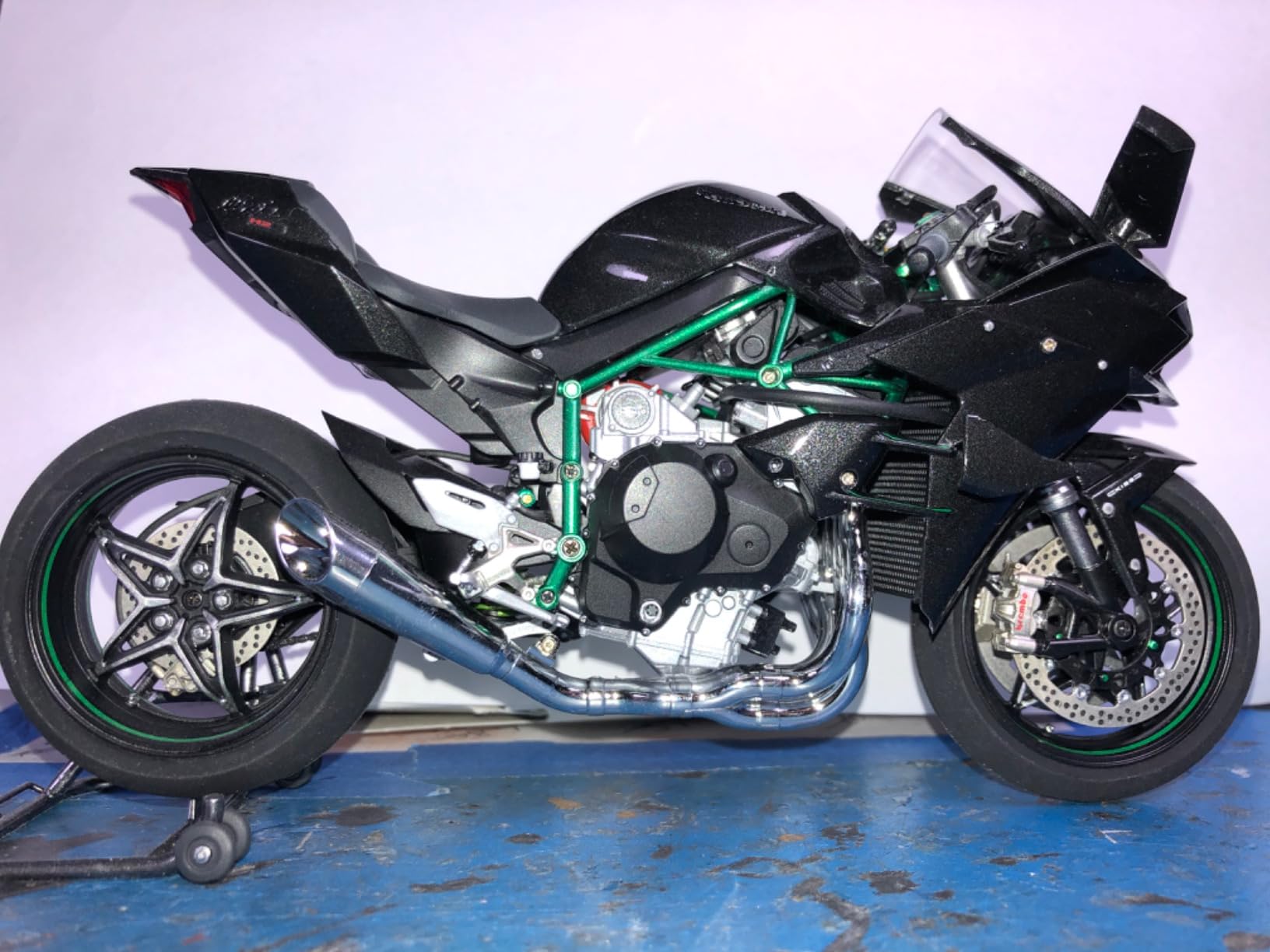
This kit demands experience. If you’ve built fewer than five models, start with the Virago instead. The H2R has 130+ parts, many of them small and delicate. The fairing pieces require precise alignment. The decal sheet includes complex markings that test your patience. But for experienced builders, this is exactly what makes modeling rewarding. You’re not just assembling – you’re crafting.
Racing Bike Perfection
The Ninja H2R is a track-only machine, and this kit captures that aggressive purpose. From the massive air scoop to the sleek single-seat tail section, every detail screams performance. The synthetic rubber tires feature that distinctive slick tread pattern found on the real bike. Display this on the included racing stand for maximum impact. It’s a conversation starter that showcases both the modeler’s skill and Kawasaki’s engineering prowess.
3. Italeri Harley Davidson WLA 750 WWII – Premium Pick
Italeri Harley Davidson WLA 750 WWII Military Motorcycle 1:9 Scale – Plastic Model Kit 7401
1:9 Scale
WWII military motorcycle
100 pieces
23.7cm completed size
Pros
- Historically accurate masterpiece
- Highly detailed military theme
- Excellent molding quality
- Classic Harley design
Cons
- Instructions vague in spots
- Parts may need modification
- Advanced skills required
- Small brake line hose
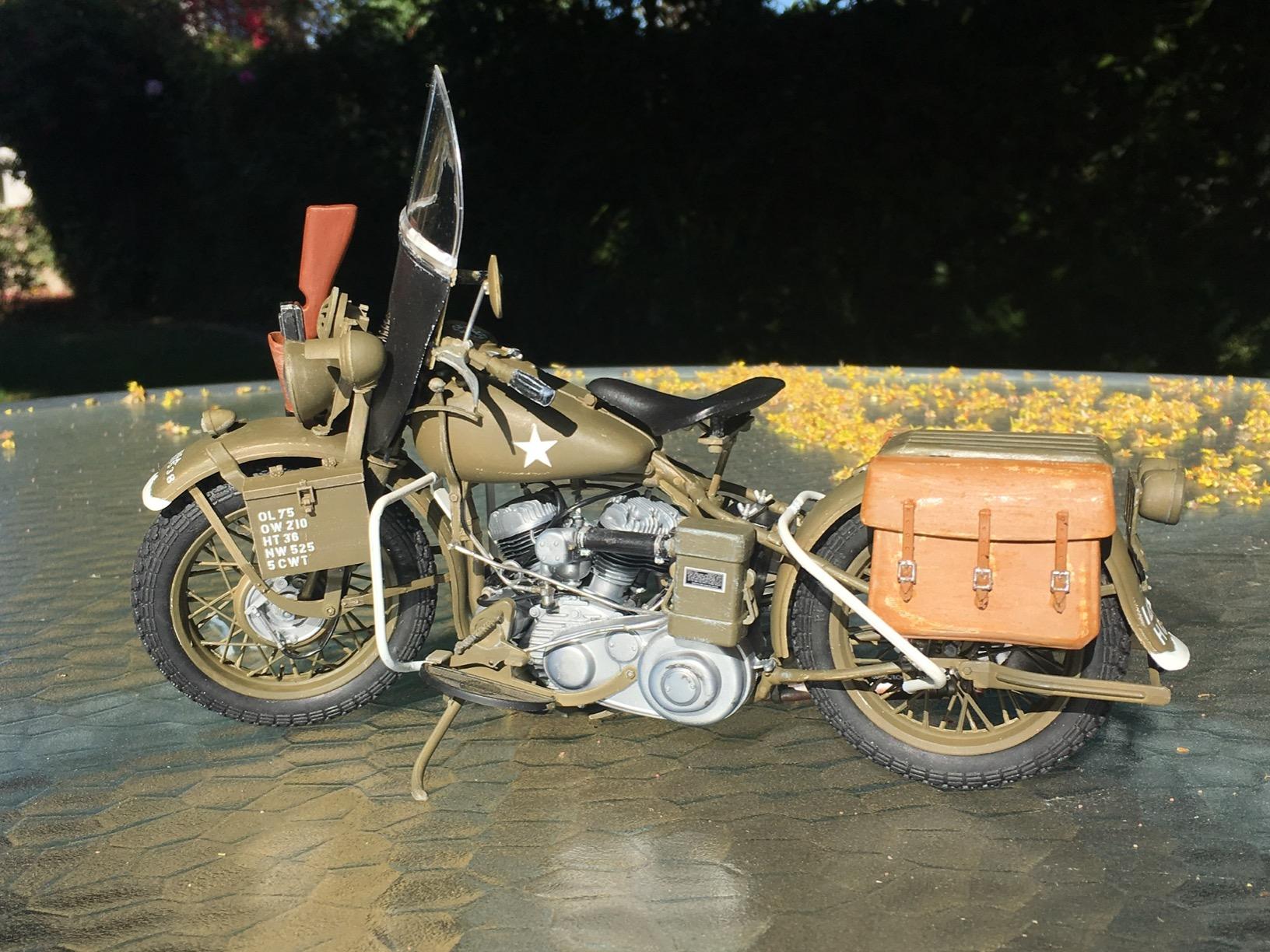
As a military history buff and motorcycle enthusiast, this WLA kit checked every box for me. The Harley-Davidson WLA isn’t just any motorcycle – it’s the machine that carried Allied troops through victory in WWII. Italeri’s 1:9 scale recreation does justice to this historic machine. When I completed my build, I felt like I’d preserved a piece of history in miniature.
The military details set this apart from civilian bike kits. You get the rifle scabbard, the ammo boxes, the blackout headlight – everything that made the WLA distinctive. I spent extra time weathering my build to give it that “just returned from the front” look. The result? A model that tells a story and draws comments from everyone who sees it. This isn’t just a motorcycle model – it’s a diorama waiting to happen.
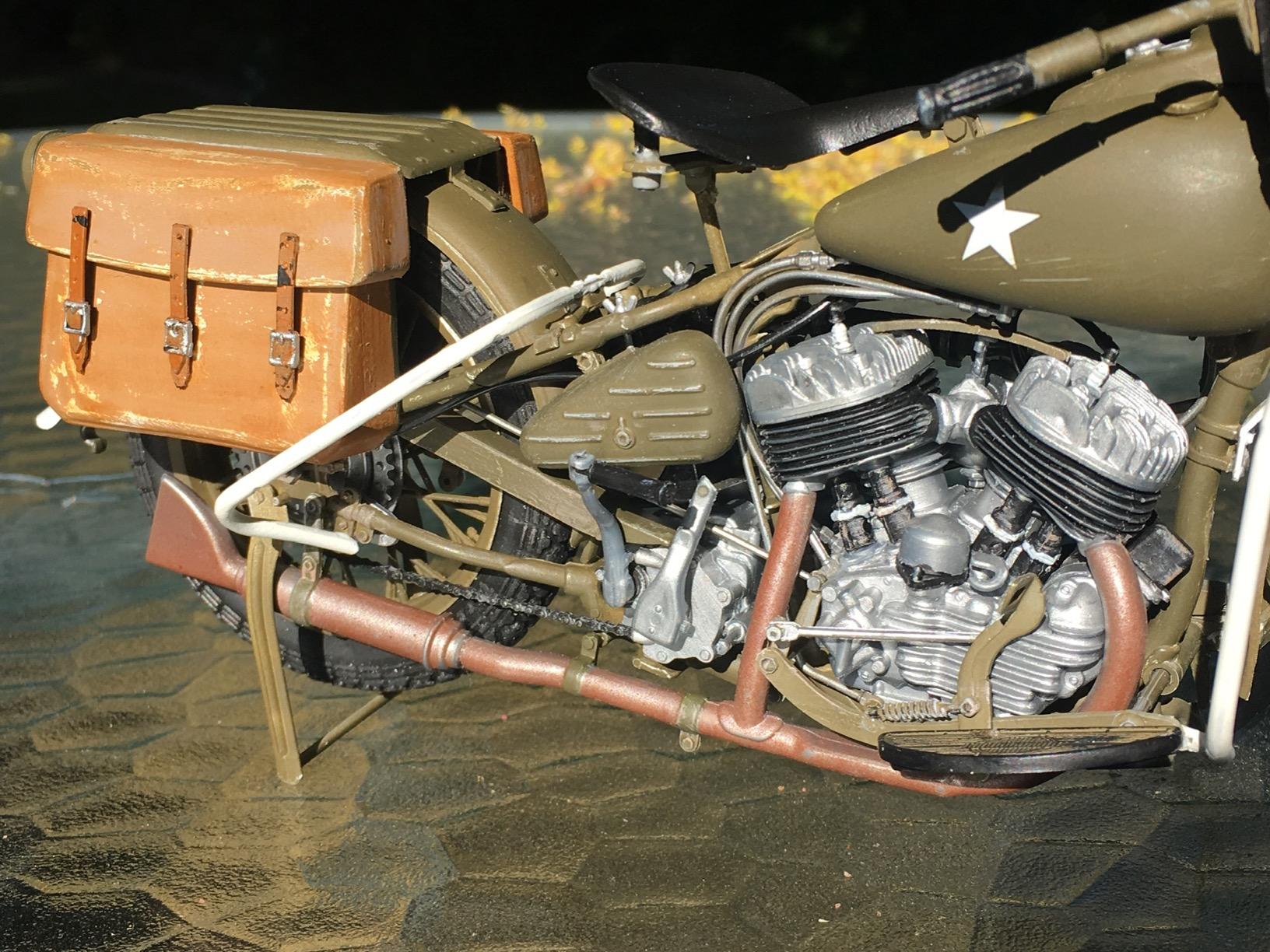
Building the WLA requires patience. The molding quality is excellent, but some parts need tweaking for perfect fit. The brake line hose, as several reviewers note, is too small for its intended connections. I solved this by carefully drilling out the connection points slightly. Small adjustments like this are normal for vintage military vehicle kits – part of the charm, really. You’re not just following instructions – you’re problem-solving like a real mechanic.
At 23.7cm completed, this is a substantial model. The 1:9 scale means you can really see the details. The V-twin engine molding is crisp, with separate cylinders and pushrod tubes. The wheels feature that characteristic Harley spoke pattern. Italeri even included the tool bag that sits on the rear fender – a small detail that adds immense authenticity. Military modelers will appreciate the multiple marking options representing different units and theaters of war.
Best For Military History Enthusiasts
This kit speaks to a specific builder: one who appreciates both mechanical and historical accuracy. The WLA played a crucial role in WWII, and this kit honors that legacy. Display it alongside 1:35 scale military vehicles for a powerful tableau of wartime mobility. I paired mine with a 1:32 scale Jeep and some figures – the size difference works because the motorcycle’s small stature on the battlefield is accurately represented.
Challenging but Rewarding
Don’t choose this as your first motorcycle kit. The WLA demands experience with small parts, painting military colors (olive drab can be tricky), and weathering techniques. But if you have those skills, this kit delivers satisfaction in spades. The finished model is substantial enough to be a centerpiece but compact enough to fit in most display cases. At $76, it’s an investment, but the historical significance and detail level justify the cost for serious enthusiasts.
4. Tamiya Yamaha YZF-R1M
Tamiya 14133 1/12 Yamaha YZF-R1M Motorcycle Plastic Model Kit
1:12 Scale
4-cylinder engine detail
Screw-fixed assembly
Synthetic rubber tires
Pros
- Superlative engine detail
- Screw-fixed precision system
- Synthetic rubber tires
- Excellent part fit
Cons
- Requires painting
- Complex build
- Small delicate parts
- Additional tools needed
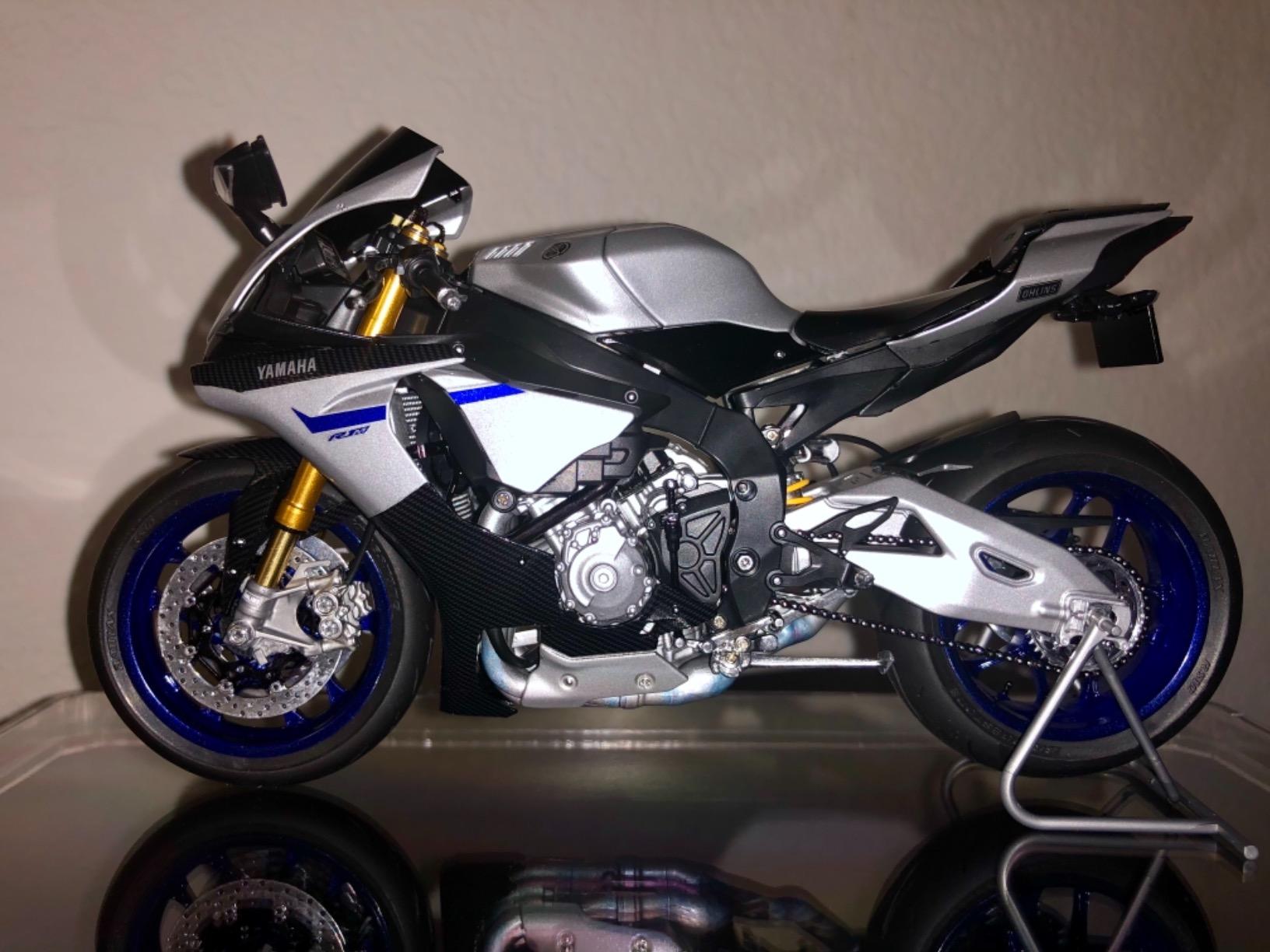
Modern superbikes are engineering marvels, and this R1M kit does them justice. I built this specifically for a motorcycle-themed display case, and it immediately became the focal point. The level of mechanical detail is extraordinary – Tamiya recreated the crossplane crankshaft inline-four engine as a multi-part assembly that looks like the real thing in miniature.
The screw assembly system shines here. Critical components attach to the frame with actual screws, creating durable joints that can handle adjustment. This is particularly valuable for the fairing alignment – getting those tight, even gaps that define a professional finish. I appreciated being able to snug up the upper cowl incrementally until it sat perfectly against the frame. No glued-on fairings with unsightly seams here.
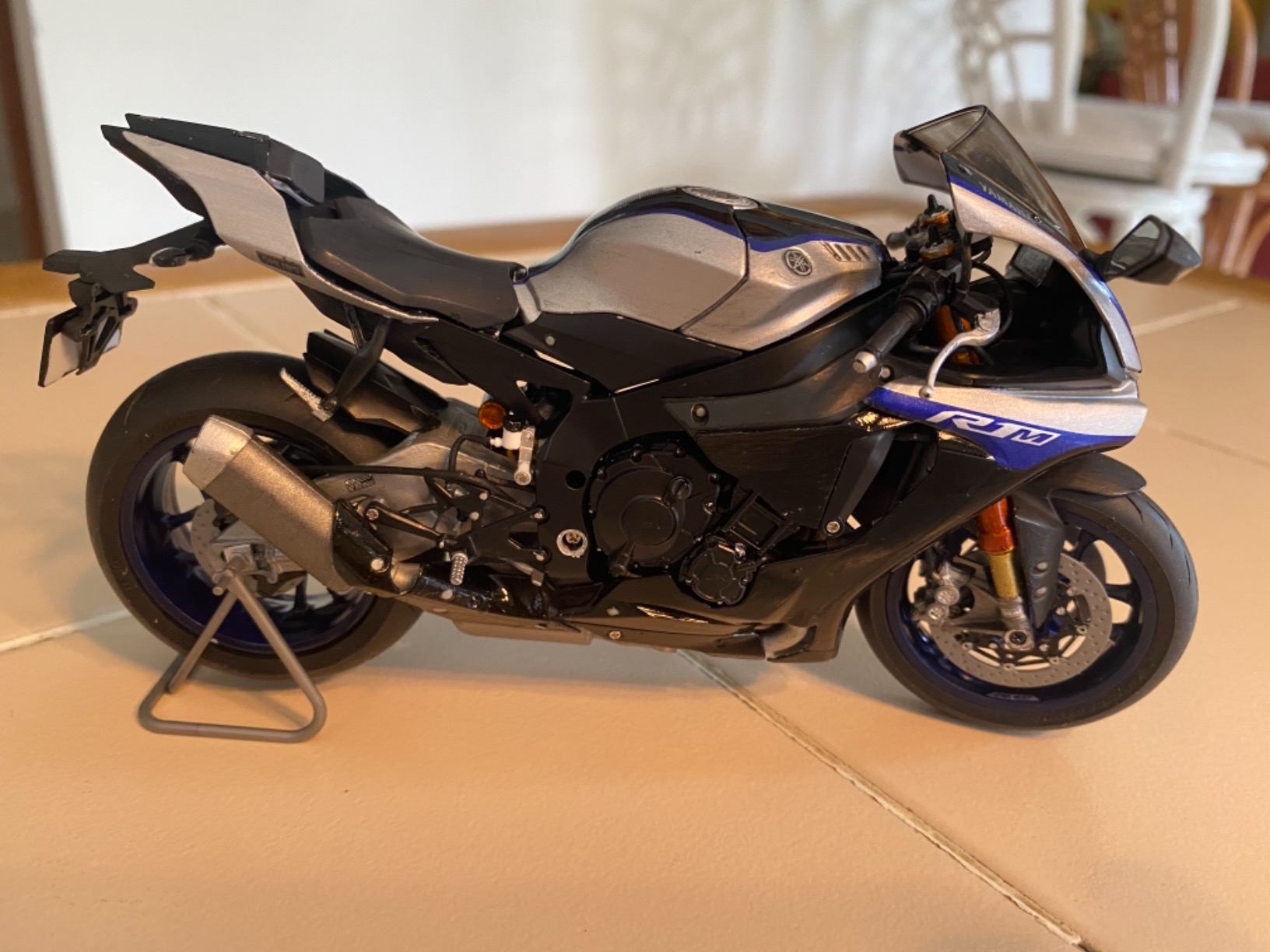
What makes this one of the best 1/9 scale motorcycle model kits for detail-oriented builders? The under-the-surface accuracy. The radiator, oil cooler, and complex engine covers are all separately molded pieces. The tubing for various lines is included. Tamiya even thought to include metal transfers for the Yamaha emblem – much cleaner than trying to apply a tiny decal perfectly flat on a curved fuel tank.
The synthetic rubber tires deserve special mention. They’re molded to replicate the Bridgestone Battlax RS10 tires found on the actual R1M, complete with realistic tread pattern. The rubber material feels premium and takes weathering well if you choose to add some road grime. After building this kit, I ordered two more – one to keep stock, and one to customize in a different color scheme. That’s how impressed I was with the engineering.
Engine Detail Showcase
The inline-four cylinder engine is the star here. Unlike simpler kits that mold the engine as one piece, this R1M gives you separate cylinders, heads, and covers. You build the engine just like the real thing – almost. When the fairings are off, the engine looks like a functioning powerplant. Display it with body panels removed for a technical cutaway effect that showcases your work and the bike’s engineering.
Modern Supersport Excellence
The R1M represents the pinnacle of Yamaha’s supersport lineup, and this kit captures its aggressive stance. From the M1-inspired fairing design to the upswept exhaust, every detail speaks to performance. The swingarm and fork assembly uses the screw system for precise alignment. At 1:12 scale, it’s slightly smaller than 1:9, but the detail density more than compensates. This is a showcase piece that demonstrates advanced modeling skills.
5. Tamiya Ducati 1199 Panigale S
Tamiya 14129 1:12 Ducati 1199 Panigale S Model
1:12 Scale
173mm length
Removable side cowlings
Realistic tire tread
Pros
- Amazing Tamiya detail
- Removable side cowlings
- Realistic tire tread
- Excellent for experienced builders
Cons
- Critically low stock
- Not for beginners
- Carbon decals not included
- 21 paints required
Ducati’s Panigale redefined superbike design, and this kit captures its radical aesthetics perfectly. What struck me most when building this was how Tamiya managed to render the Panigale’s complex bodywork in model form. The seamless monocoque fuselage design comes through despite being broken into assembleable parts. It’s a sculptural piece as much as a mechanical one.
The removable side cowlings feature is brilliant. They attach with small screws that allow you to remove them even after assembly. This means you can display the bike “clothed” for a clean look, or “naked” to show off the engine and frame detail. I built mine to allow both display modes – it’s like having two models in one. The screws are tiny, so invest in a good jeweler’s screwdriver set before starting.
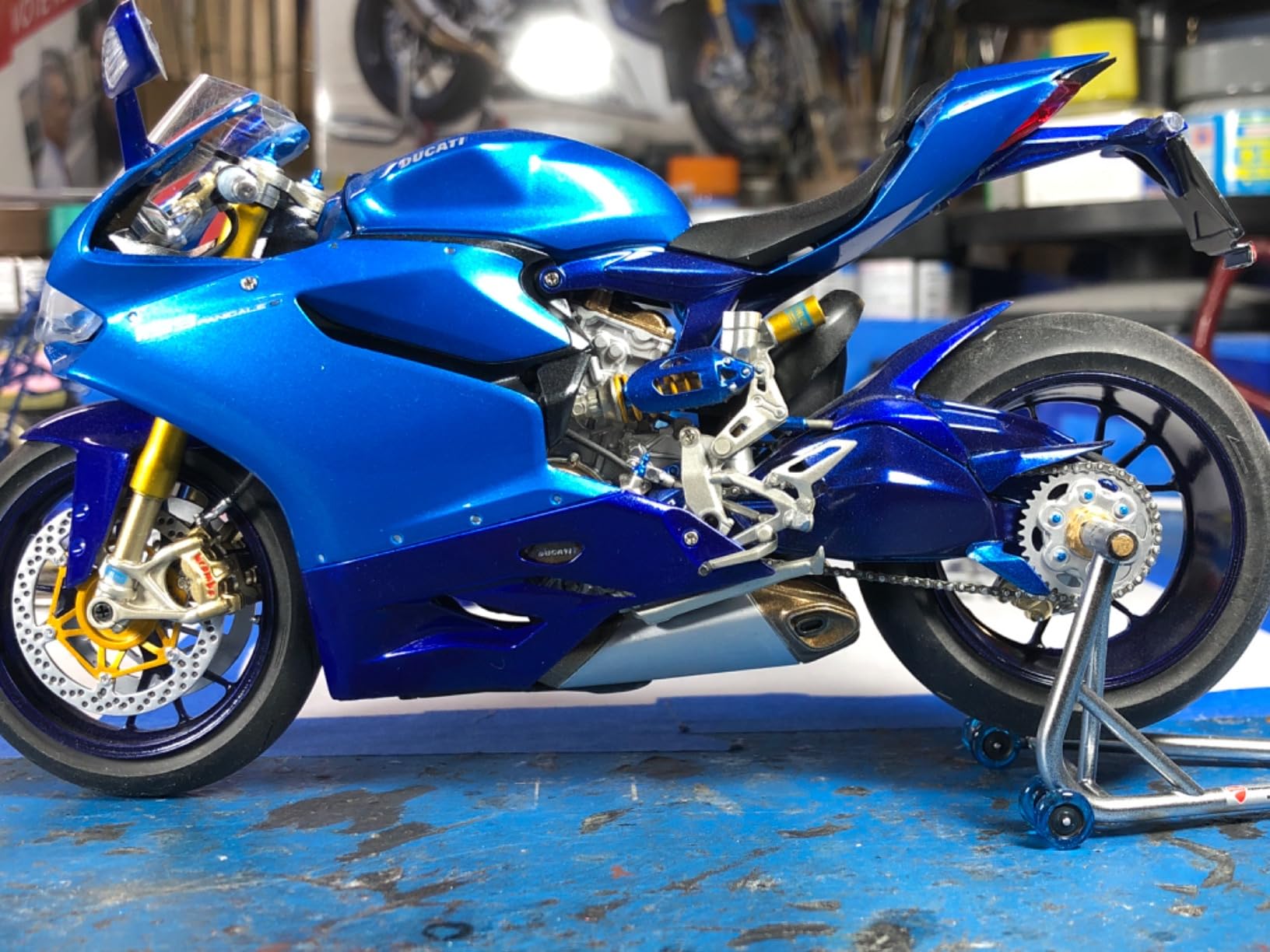
Paint requirements are substantial here. The instructions call for 21 specific paint colors, which can be daunting. However, this allows for incredible accuracy if you’re willing to put in the work. I simplified my color scheme slightly and still achieved excellent results. The key is the red – Ducati red is iconic, so take your time getting it right. Multiple thin coats are better than one thick coat. The white body option also looks stunning if you prefer something different.
Tire tread detail is faithfully reproduced, continuing Tamiya’s commitment to realism. The 173mm length is substantial enough to display well while not overwhelming your shelf space. At only 3 left in stock when I checked, this kit is becoming scarce – another reason to grab it while you can. Discontinued Tamiya motorcycle kits tend to appreciate, making this a potential investment as well as a fun build.
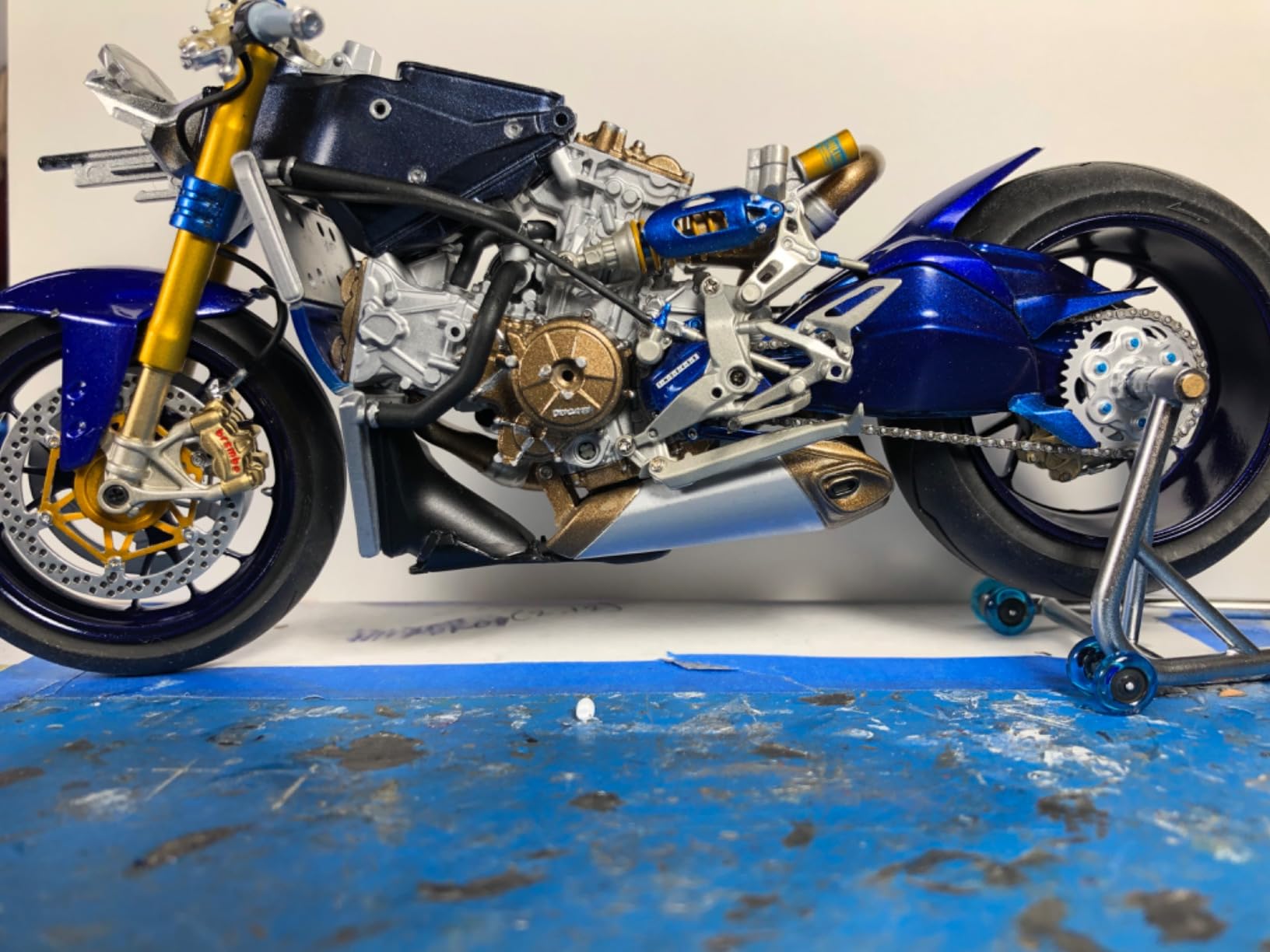
Italian Excellence in Miniature
Ducati’s design language translates beautifully to scale model form. The single-sided swingarm, the undertail exhaust, the minimalist tail section – all distinctive Ducati elements that make this kit instantly recognizable. Display it alongside other Italian exotics for a themed collection. The Panigale’s aggressive stance and angular bodywork create visual interest from every angle.
Builder’s Challenge
This is not a beginner kit. Between the complex paint scheme, small screws, and delicate parts, it demands experience. But for skilled modelers, this Panigale offers a rewarding challenge. The fit is generally excellent, though a few builders have reported issues with the tail light assembly. Test-fit before gluing. The satisfaction of completing this detailed Ducati is immense – you’ll have a showpiece that demonstrates advanced techniques.
6. ITALERI Triumph Motorcycle
ITALERI 7402 – 1: 9 Triumph Motorcycle
1:9 Scale
23.1cm completed
Easy instructions
Classic British bike
Pros
- Very detailed and well built
- Easy to follow instructions
- Good finished model
- Quality product
Cons
- Requires painting
- Small parts need care
- Assembly required
Classic British motorcycles have a charm all their own, and this Triumph kit captures that appeal perfectly. At 23.1cm completed, it’s a substantial presence on the shelf. I built this as part of a “Classic Motorcycles of the World” display, and it holds its own alongside more expensive kits. The simple elegance of Triumph’s design translates well to model form.
What makes this stand out among the best 1/9 scale motorcycle model kits for beginners? The straightforward construction. Unlike modern sport bikes with complex fairing systems, this Triumph’s mechanics are largely exposed. This means fewer hidden parts that you can’t see after assembly. Every part you paint and assemble will be visible in the final model – motivating for new builders who want to see their work pay off.
The instructions are praised by builders for their clarity. Italeri uses a logical parts breakdown that guides you through assembly step-by-step. Each major component – engine, wheels, frame – is built as a sub-assembly, then integrated into the whole. This modular approach helps prevent the “where does this go?” confusion that plagues some complex kits. I completed this build in just two weeks of casual evening work.
British Heritage
The Triumph represents an important chapter in motorcycle history. These bikes defined the British motorcycling experience and influenced generations of riders. This kit recreates that classic silhouette – the teardrop tank, the swept-back exhaust, the minimal fenders. It’s a piece of motorcycling heritage that looks great in any collection, whether you’re a Triumph enthusiast or simply appreciate classic design.
Accessible Build
With 281 reviews and a 4.3-star rating, this kit has proven itself reliable for hundreds of builders. The manageable part count and clear instructions make it an excellent entry point into 1:9 scale motorcycle modeling. While it still requires painting and assembly, the straightforward design means you’re less likely to encounter frustrating fit problems. A solid choice for your first motorcycle build or a relaxing project between more complex kits.
7. Italeri BMW R75 with Sidecar
Italeri 7403S 1/9 BMW R75 German Military Mtrcycle w/Sidecar
1:9 Scale
267mm length
Sidecar wheel driven
4 version decals
Pros
- Very detailed kit
- Historically correct
- Room for customization
- Reboxed classic ESCI
Cons
- Requires modeling experience
- Not for beginners
- Long shipping times reported
The BMW R75 with sidecar is an iconic WWII motorcycle combination, and this kit delivers impressive detail. At 267mm length (over 10 inches), it’s a substantial model that commands attention. The sidecar feature adds complexity and display interest – you’re essentially building two vehicles that work together. I’ve built two of these over the years, and each time I discover new details to appreciate.
Historical accuracy is a strong point here. The R75 served throughout WWII in various theaters, and Italeri includes decals for four different versions. You can build it as a Wehrmacht machine, North African campaign vehicle, or several other configurations. This variety means you could build multiple kits from the same molds and create different-looking models. The historical research shows in details like the tire tread pattern and the sidecar attachment mechanism.
The sidecar being wheel-driven with the rear wheel is a mechanically interesting feature that Italeri represents accurately. This three-wheel drive system was unique to the BMW R75, giving it superior off-road capability. Modeling this requires some care – the drive shaft connection between the motorcycle rear wheel and sidecar wheel needs precise alignment. Take your time during dry-fitting to ensure everything sits straight before committing to glue.
Historical Significance
BMW R75 combinations were ubiquitous in German military service. They performed reconnaissance, messenger duty, medical evacuation, and even combat roles. This kit lets you recreate that history in detail. The motorcycle features the opposed twin engine that BMW is famous for, beautifully molded in this kit. The sidecar includes a machine gun mount in some configurations – check your decal options to see what’s included.
Customization Potential
The room for customization is significant. With four marking options and the ability to add weathering, stowage, and figures, each build can be unique. I added a simulated canvas cover to the sidecar of my second build using thin tissue and white glue. Builders have added rifles, map cases, bedrolls, and even figures to create dioramas. This kit serves as an excellent foundation for more complex scenes if you’re so inclined.
8. Italeri Kettenkrad WWII Military Vehicle
Italeri 7404 Kettenkrad WWII Military Vehicle 1/9 Scale Model Kit
1:9 Scale
329mm length
Running suspensions
3 version decals
Pros
- Large scale with great details
- Running suspensions and tracks
- Openable covers
- Very detailed motor
Cons
- Doesn't include figures
- Unusual 1/9 scale
- Requires painting
- Complex build
The Kettenkrad is one of the most unusual military vehicles ever built, and this kit captures its quirky character perfectly. At 329mm (nearly 13 inches), it’s the longest model in this roundup. The half-track motorcycle design was unique to Nazi Germany, and Italeri’s 1:9 scale reproduction does justice to this mechanical oddity. Building this felt like assembling a piece of alternative history.
The running suspensions and tracks are standout features. Unlike static model kits, the suspension actually moves when completed. This working suspension adds play value and display interest – you can pose the Kettenkrad climbing over obstacles. The tracks require careful assembly but the result is fully functional. My favorite trick is placing small obstacles under the tracks to show the suspension articulation in the display.
Openable covers reveal a very detailed motor underneath. This is a feature you don’t see often in model kits at this price point. Italeri engineered the engine covers to open, allowing you to show off the detailed engine if you choose. I displayed mine with the covers removed entirely, showcasing that mechanical complexity. The 1:9 scale means you can actually see the engine details clearly.
Engineering Curiosity
The Kettenkrad was born from necessity – a vehicle that could go where trucks couldn’t but carry more than a motorcycle. This kit tells that story through its design. The motorcycle front half transitions seamlessly to the tracked rear. The steering wheel instead of handlebars (unique to this vehicle) is accurately represented. It’s a conversation piece that always draws questions: “What is that thing?” followed by “That’s so cool!”
Building Considerations
The unusual 1:9 scale is worth noting. It doesn’t match standard military model scales like 1:35, making diorama integration tricky. However, the vehicle’s small size in reality means the 1:9 scale model works surprisingly well alongside 1:35 figures and vehicles. Just be aware of this scale mismatch before planning complex displays. The kit doesn’t include figures, so you’ll need to source them separately if you want to add human elements.
9. Revell L.A. Street Chopper
Revell 17326 L.A. Street Chopper 1:8 Scale 107-Piece Skill Level 5 Model Motorcycle Bike Building Kit
1:8 Scale
107 pieces
Skill Level 5
California chopper styling
Pros
- Superb classic chopper model
- Simple construction
- Big scale for detailing
- Chrome plated parts
Cons
- Missing parts reported
- Instructions are shabby
- Requires paint and glue
Choppers have a unique place in motorcycle culture, and this Revell kit captures 1970s custom bike aesthetic perfectly. The L.A. Street Chopper isn’t a replica of a specific production bike – it’s an idealized custom that embodies the chopper ethos. Long rake, minimal bodywork,ape hanger handlebars – it’s all here. I built this for a friend who owned a real chopper back in the day, and he said holding the model brought it all back.
The 1:8 scale makes this larger than the other kits in this roundup – more space for detail and easier handling during assembly. At 107 pieces, it’s not overly complex, but Skill Level 5 indicates it’s not for absolute beginners. The rigid frame with raked neck is accurately represented, as are the extended forks that give choppers their distinctive silhouette. Revell’s been making this kit since the 1970s, and the tooling still holds up remarkably well.
Chrome parts come pre-plated, saving significant time and effort. The fork tubes, exhaust, and various trim pieces are ready to install out of the box. I gave them a quick wipe with a soft cloth to remove any fingerprints, then applied a light clear coat for protection. The result is authentic chrome that looks like polished metal rather than silver paint – a key detail for a convincing chopper model.
Period-Perfect Details
Revell nailed the 1970s chopper aesthetic. The teardrop tank, the bobbed fender, the small headlight, the fishtail muffler – every detail speaks to a specific era in motorcycling. This isn’t just a model – it’s a time capsule of California custom bike culture. Display it alongside other vintage vehicle kits for a nostalgic tableau. The red and white color scheme in the box art is classic, but this would look stunning in any period-correct color.
Accessible Complex Build
Despite the Skill Level 5 rating, many builders find this chopper surprisingly straightforward. The simple mechanics of a chopper (no complex fairings, exposed engine) translate to fewer hidden assemblies and more visible progress. The instructions, described as “shabby” by some reviewers, are adequate if you take your time and study the diagrams. Test-fit before gluing, especially the fork assembly, to ensure proper alignment. This is a rewarding build that captures the spirit of custom choppers.
10. RZAPE V4S Diecast Motorcycle
RZAPE 1:7 Scale Die Cast Metal Motorcycle Toy V4S Model Kits for Adults
1:7 Scale
Diecast metal
Working lights and sounds
Display stands included
Pros
- Highly detailed diecast
- Interactive features
- Realistic V4S design
- Working steering and suspension
Cons
- Higher price point
- Limited review count
- Requires assembly time
- Patience needed
This RZAPE V4S sits apart from every other kit in this roundup – it’s a pre-painted, partially assembled diecast model rather than a traditional plastic kit. At 1:7 scale, it’s larger than most, and the diecast metal construction gives it impressive heft. I hesitated to include it because it’s not a traditional build, but the detail level and interactive features earned it a spot among the best 1/9 scale motorcycle model kits for collectors who prioritize display over building experience.
The working features are genuinely impressive. Insert the key, and the front and rear lights illuminate along with the instrument panel. Press the ignition button, and the motorcycle makes engine sounds. The throttle creates a linkage effect with the rear wheel. You can even fill the fuel tank with water to create a spray effect from the exhaust. These interactive elements make this more than a static display – it’s a functional model that demonstrates mechanical principles.
Diecast metal construction means exceptional durability. Unlike plastic models that can warp or break over time, this V4S will last for generations. The zinc alloy fuel tank feels solid in your hand. The engine is detailed and sophisticated, with separate cylinders and cooling fins. The simulated hot melt rubber tires provide realistic grip and texture. This is a display piece that can actually be handled without fear of damage.
Realistic Mechanical Features
The working steering and suspension set this apart. The front wheel turns left or right with the handle, just like a real motorcycle. The front and rear wheels simulate shock absorber effect when compressed. The kickstand (tripod) can be retracted – a small but appreciated detail that adds display versatility. Display stands are included and can be freely disassembled, giving you options for how to showcase your model.
Cool Factor
Let’s be honest – this thing is just cool. The V4S motorcycle design is sleek and modern, with smooth body lines and an aggressive stance. The red color pops against any display background. At $131, it’s an investment, but you’re paying for diecast quality, working electronics, and interactive features that traditional plastic kits simply can’t match. This is the perfect choice for collectors who want impressive display pieces without investing hundreds of hours in assembly.
Buying Guide for 1/9 Scale Motorcycle Model Kit
Finding the best 1/9 scale motorcycle model kit requires understanding your own skills, interests, and display goals. After building over 50 motorcycle models in various scales, I’ve learned that the “right” kit depends more on the builder than the box art. Let me break down the key factors so you can choose wisely.
Scale Matters: Understanding 1/9 vs 1/12
Scale is the first consideration. 1:9 scale means the model is 1/9th the size of the real motorcycle – a real 9-foot bike becomes a 1-foot model. 1:12 scale is slightly smaller, with the same bike becoming about 9 inches. Both offer good detail, but 1:9 is slightly larger and easier to work with for detailed painting and assembly. However, 1:12 is more common and offers more kit options. Several kits in this roundup are actually 1:12 scale but included because they represent the best options available regardless of exact scale match.
Building Difficulty Levels
Not all motorcycle kits are created equal when it comes to difficulty. Beginner kits like the Tamiya Virago feature straightforward construction, fewer parts, and clear instructions. Intermediate kits like the Italeri Harley WLA add complexity with more parts and tighter clearances. Advanced kits like the Tamiya Ninja H2R and Ducati Panigale demand experience with small parts, complex assemblies, and painting techniques. Be honest about your skill level – choosing a kit that matches your abilities ensures an enjoyable build rather than frustration.
Essential Tools and Supplies
Building motorcycle models requires some specialized tools. You’ll need hobby knives for removing parts from sprues, sandpaper (various grits from 400 to 2000) for smoothing seams, and tweezers for handling small parts. Paint brushes in various sizes are essential – I recommend at least three: a wide brush for large areas, a medium brush for general painting, and a fine detail brush for tiny parts. Painting supplies include primer (I like Tamiya’s surface primer), model paint (acrylics are easiest for beginners), and clear coat for protection. Glue choices include plastic cement for plastic-to-plastic joints and CA glue (super glue) for quick bonds.
Manufacturer Reputation
Tamiya sets the gold standard for fit, detail, and instructions. Their kits rarely require modification and almost always fit together perfectly. Italeri produces excellent military motorcycle subjects with good detail, though sometimes the instructions are less clear and part fit may require minor adjustment. Revell offers classic kits with nostalgic appeal, though some date from the 1970s and may show their age in tooling quality. RZAPE represents a different category entirely – pre-finished diecast models for collectors rather than builders. Each manufacturer has strengths, so choose based on what matters most to you: historical accuracy (Italeri), engineering excellence (Tamiya), or immediate display gratification (RZAPE).
Painting and Finishing Considerations
Paint quality can make or break a model. Some kits come with pre-painted parts (rare), but most require full painting. Consider your comfort level with painting when choosing a kit. Simple color schemes (like the Virago’s mostly black engine) are easier than complex racing liveries (like the Panigale’s multiple colors). Decals add another layer of complexity – large decals on curved surfaces challenge even experienced builders. If you’re new to painting, start with a kit that has a simple color scheme and minimal decals. As your skills improve, tackle more complex paint jobs.
Display and Storage
Think about where your completed model will live. 1:9 scale models typically measure 8-12 inches in length – substantial enough for display but not overwhelming. Consider a display case to protect your investment from dust and curious fingers. Some models, like the Ninja H2R, come with display stands. Others may require aftermarket stands or can be displayed simply on a shelf. Lighting dramatically enhances a model’s appearance, so consider a small LED spotlight for your display area. If space is limited, 1:12 scale models are slightly more compact, making them easier to accommodate in tight spaces.
FAQ
What scale are motorcycle model kits?
Motorcycle model kits are available in several scales, with 1:9 and 1:12 being the most popular for detailed builds. 1:9 scale produces models approximately 8-12 inches long, offering a good balance of size and detail. 1:12 scale is slightly smaller but offers the widest kit selection. Other scales include 1:6 (very large, highly detailed) and 1:18 (smaller, less detailed). For the best combination of detail and manageability, 1:9 and 1:12 scales are recommended.
Who makes the best motorcycle model kits?
Tamiya is widely regarded as the best manufacturer of motorcycle model kits due to exceptional engineering, precise part fit, and clear instructions. Their kits consistently deliver high-quality builds suitable for various skill levels. Italeri produces excellent military motorcycle subjects with strong historical accuracy. Model Factory Hiro offers highly detailed multimedia kits for advanced builders, though they can be challenging. Meng Model has recently entered the market with impressive modern bike kits. For beginners, Tamiya offers the most accessible building experience. For experienced modelers seeking challenges, Model Factory Hiro provides the most detailed options.
What are the most popular motorcycle model kit brands?
The most popular motorcycle model kit brands include Tamiya, Italeri, Revell, and Model Factory Hiro. Tamiya dominates the market with their excellent fit, detail, and instructions. Italeri specializes in military motorcycles and historical subjects. Revell offers classic kits with nostalgic appeal, many dating back to the 1970s and 1980s. Model Factory Hiro produces premium multimedia kits that combine plastic, metal, and photo-etched parts for extreme detail. Other notable brands include Aoshima (Japanese domestic market bikes), Meng Model (modern superbikes), and Hasegawa (primarily 1:12 scale racing bikes).
How difficult are motorcycle model kits to build?
Motorcycle model kit difficulty varies widely depending on the kit and manufacturer. Beginner kits like the Tamiya Virago feature simple construction, fewer parts (around 100), and clear instructions suitable for first-time builders. Intermediate kits like the Italeri Harley WLA add complexity with more parts (100-150) and tighter assemblies requiring some modeling experience. Advanced kits like the Tamiya Ninja H2R or Ducati Panigale feature 130+ parts, complex assemblies, and challenging decals – these are recommended only for experienced modelers. Generally, sport bikes are more difficult than cruisers due to complex fairing systems. Military bikes often require more research and weathering techniques. Start with a kit matching your experience level to ensure an enjoyable build.
Conclusion: Building Your 1/9 Scale Motorcycle Collection
The best 1/9 scale motorcycle model kits offer something for every builder, from beginners to experienced modelers. The Tamiya Yamaha Virago remains my top recommendation for most builders due to its accessible build and excellent results. The Tamiya Kawasaki Ninja H2R delivers incredible detail for experienced builders seeking a challenge. The Italeri Harley Davidson WLA brings military history to life in miniature.
Remember that the best kit is the one that matches your skills and interests. Start simple, learn the techniques, and progress to more complex builds as your confidence grows. Each completed model teaches lessons that apply to the next build. Over time, you’ll develop a collection that showcases your growing skills and interests.
Motorcycle modeling combines mechanical fascination with artistic expression. There’s something deeply satisfying about taking a box of plastic parts and creating a detailed miniature motorcycle that captures the essence of the real machine. Whether you’re building for display, competition, or personal enjoyment, the best 1/9 scale motorcycle model kits in 2026 deliver rewarding experiences and impressive results.
Now it’s your turn. Choose a kit, gather your tools, and start building. The modeling community welcomes new enthusiasts, and there’s no better time to start than now. Your collection begins with that first kit – make it a good one.