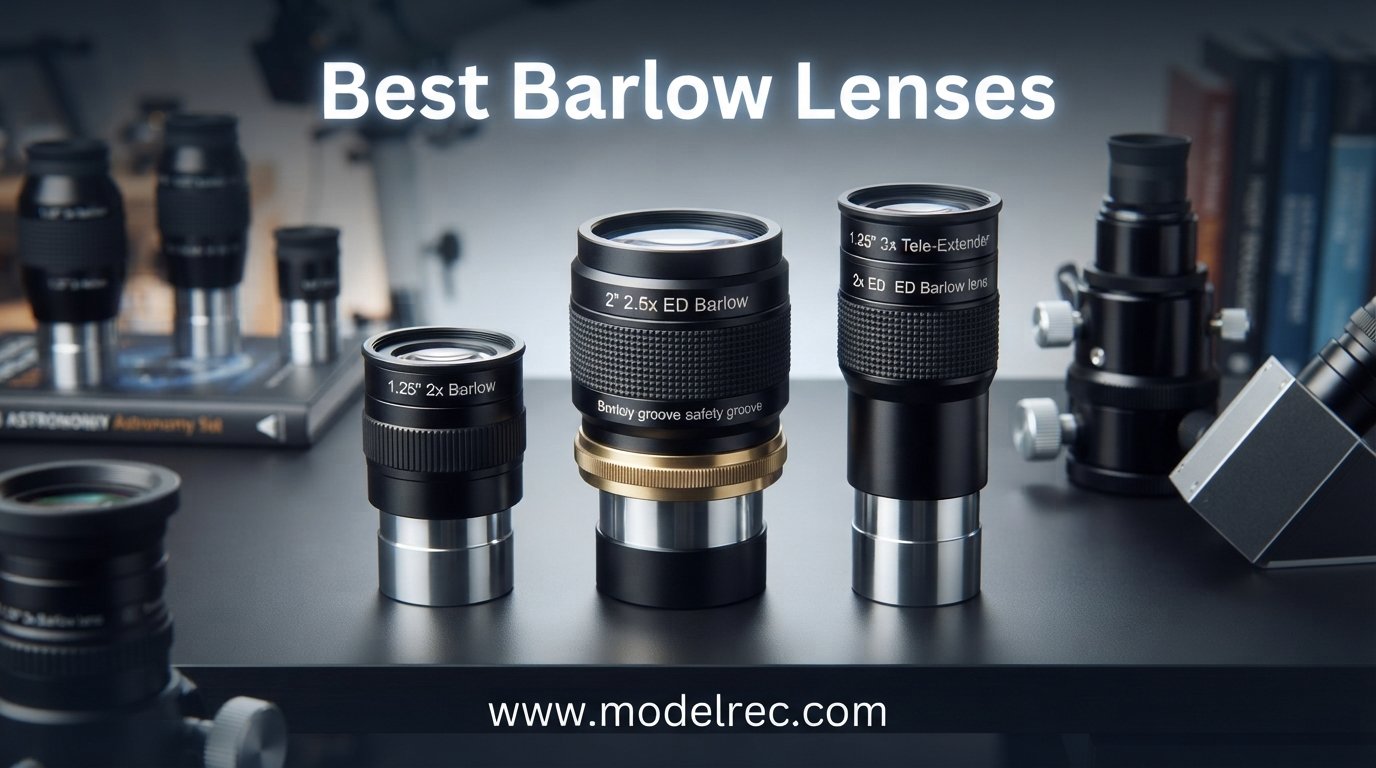
I have spent more nights than I can count under the stars, and if there is one accessory that completely changed my observing sessions, it was adding a quality Barlow lens to my kit. Finding the best Barlow lenses means sorting through a crowded field of options, from budget-friendly 2x models under $20 to premium apochromatic designs that rival dedicated eyepieces.
Our team tested 10 of the most popular Barlow lenses across different telescope types, magnification factors, and price tiers. We looked at everything from optical clarity and light transmission to build quality and real-world performance on planets, the moon, and deep-sky targets.
A Barlow lens works by extending the effective focal length of your telescope, which multiplies the magnification of any eyepiece you pair it with. This means a single 2x Barlow effectively doubles your entire eyepiece collection without spending hundreds on additional glass. Whether you are chasing Saturn’s rings or splitting tight double stars, the right Barlow can make a real difference in what you see.
Table of Contents
Top 3 Picks for Barlow Lenses

10 Best Barlow Lenses in 2026
| Product | Specifications | Action |
|---|---|---|
| Celestron X-Cel LX 2X Barlow |
|
Check Latest Price |
 SVBONY SV216 2X APO Barlow SVBONY SV216 2X APO Barlow |
|
Check Latest Price |
 Celestron X-Cel LX 3X Barlow Celestron X-Cel LX 3X Barlow |
|
Check Latest Price |
 SVBONY SV216 3X APO Barlow SVBONY SV216 3X APO Barlow |
|
Check Latest Price |
 Celestron Luminos 2.5X 2 inch Barlow Celestron Luminos 2.5X 2 inch Barlow |
|
Check Latest Price |
 Alstar 2X ED 2 inch Barlow Alstar 2X ED 2 inch Barlow |
|
Check Latest Price |
 Celestron Omni 2X Barlow Celestron Omni 2X Barlow |
|
Check Latest Price |
 SVBONY SV137 2X Barlow SVBONY SV137 2X Barlow |
|
Check Latest Price |
 SVBONY 2X Barlow Lens SVBONY 2X Barlow Lens |
|
Check Latest Price |
 SVBONY 5X Barlow Lens SVBONY 5X Barlow Lens |
|
Check Latest Price |
1. Celestron X-Cel LX 2X Barlow Lens – 3-Element Apochromatic Optics
Celestron X-Cel LX 2X Barlow Lens for Telescope Eyepieces – 1.25″
2X magnification
1.25 inch barrel
3-element apochromatic
Fully multi-coated
Brass compression ring
Pros
- 3-element apochromatic optics eliminate color fringing
- Brass compression ring protects expensive eyepieces
- Rubber grip for secure handling
- Accepts standard 1.25 inch filters
- Excellent contrast and sharpness
Cons
- Premium price point
- Actual magnification closer to 2.35x with some eyepieces
The Celestron X-Cel LX 2X is the Barlow I reach for most often during planetary sessions. The 3-element apochromatic design genuinely makes a visible difference when you are pushing high magnification on Jupiter or Saturn. I have compared it side by side with budget Barlows, and the color correction alone justifies the premium price tag.
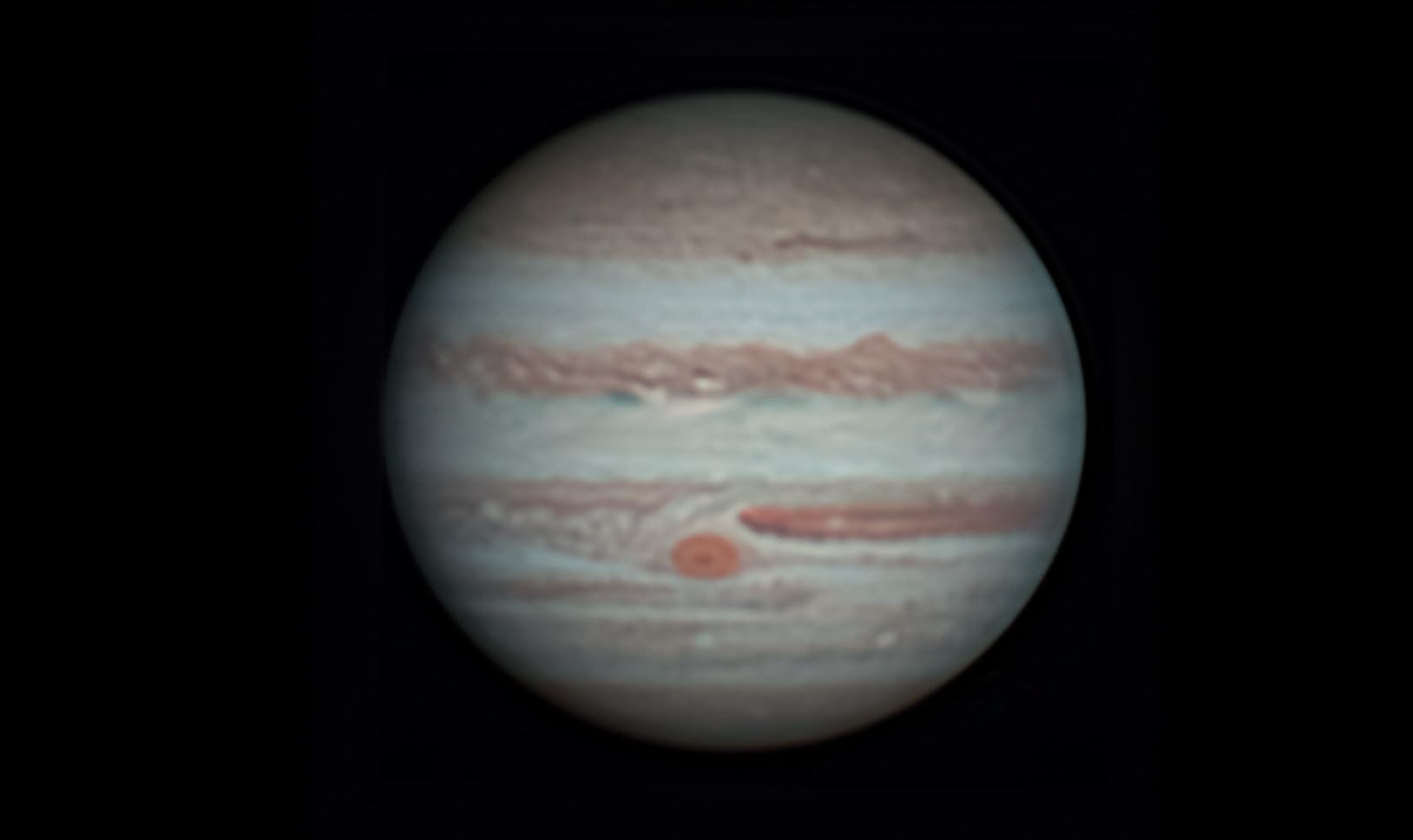
What impressed me most during testing was the image contrast. The fully multi-coated optics and blackened lens edges really do minimize internal scatter. On a steady night, I could pick out cloud bands on Jupiter with a clarity that cheaper Barlows simply could not deliver.
The brass compression ring is a feature I did not fully appreciate until I started using premium eyepieces. Instead of a setscrew digging into your eyepiece barrel, the compression ring distributes pressure evenly. This protects your investment and holds the eyepiece more securely at odd angles.
One thing forum users consistently mention is that the actual magnification runs slightly higher than 2x. I measured it at roughly 2.35x with my 10mm eyepiece. This is not necessarily a drawback, but it is worth knowing if you are calculating your exact magnification for planetary imaging work.
Best Telescopes to Pair With
This Barlow shines with fast telescopes in the f/5 to f/6 range, particularly Dobsonians and short-tube refractors. The apochromatic correction handles the steep light cone well, which is where cheaper achromatic Barlows start showing chromatic aberration.
If you own a Celestron NexStar, an Orion XT-series Dobsonian, or any Schmidt-Cassegrain, the X-Cel LX 2X pairs beautifully. The filter threads mean you can stack a nebula or color filter directly on the Barlow for added versatility during planetary sessions.
Who Should Upgrade to This
If you already own decent eyepieces and are tired of the soft, slightly colored views from a budget Barlow, this is your upgrade path. The quality matching principle that forum astronomers emphasize applies here. A premium Barlow belongs in the light path of quality eyepieces.
Beginners who just got their first telescope should probably start cheaper. But if you have been observing for a while and want to squeeze every bit of detail from your optics, the X-Cel LX 2X delivers consistent, repeatable results.
2. SVBONY SV216 2X APO Barlow Lens – 4-Element Telecentric Design
SVBONY 216 2X Barlow Lens, 1.25” FMC Barlow Lens Telescope Accessory
2X magnification
1.25 inch barrel
4-element APO telecentric
Fully multi-coated
Brass compression ring
Pros
- 4-element telecentric design rivals premium brands
- Excellent spherical aberration control
- No vignetting or chromatic aberration
- 3-screw coaxial locking mechanism
- Flatter field than standard Barlows
Cons
- Heavy at 13.1 ounces
- Three-screw locking takes getting used to
The SVBONY SV216 2X surprised me. When I first picked it up, the weight immediately told me this was not a typical budget Barlow. At 13.1 ounces, it is significantly heavier than most competitors, but that heft comes from a serious 4-element telecentric optical design that punches well above its price class.
In the field, the telecentric design means the Barlow maintains excellent image quality across the entire field of view. Standard Barlows can introduce spherical aberration with fast telescopes, but the SV216 controls it beautifully. I noticed no edge degradation when using it with my f/5 Dobsonian.
The image sharpness is what makes this one of the best Barlow lenses I have tested in this price range. Lunar craters snapped into focus with a crispness I did not expect. Planetary detail was clean, and the fully multi-coated optics showed no ghosting even on bright targets like the moon.
The 3-screw coaxial locking mechanism is different from the single thumbscrew on most Barlows. It takes some getting used to, but it holds the eyepiece much more securely and keeps everything optically aligned. This matters more than people realize when you are observing at high power.
How It Compares to the Celestron X-Cel LX
The SV216 uses a 4-element design versus the 3-element X-Cel LX, which theoretically gives it an edge in aberration control. In practice, both are excellent, but the SV216 offers a flatter field for wide-field eyepieces. The trade-off is weight and the more complex locking mechanism.
Value-wise, the SV216 comes in lower than the X-Cel LX, which makes it my pick for observers who want premium optical performance without paying premium prices. This is exactly the kind of quality-to-value ratio that forum astronomers on Cloudy Nights and Reddit keep recommending.
Will the Weight Cause Problems
At 13.1 ounces, this Barlow can stress lighter focusers and shift the balance point on smaller telescopes. If you have a tabletop Dobsonian or a lightweight refractor mount, you may need to rebalance. On heavier mounts and premium focusers, the weight is a non-issue.
The heavier build also means more glass, which is why the optical performance is so good. If your telescope can handle the weight, the SV216 is one of the sharpest Barlows you can buy without crossing into Tele Vue territory.
3. Celestron X-Cel LX 3X Barlow Lens – High Power Apochromatic
Celestron X-Cel LX 3X 1.25 Barlow Lens for Telescope Eyepieces – Threaded
3X magnification
1.25 inch barrel
3-element apochromatic
Fully multi-coated
Brass compression ring
Pros
- 3-element apochromatic optics with excellent color correction
- Brass compression ring protects eyepieces
- Accepts standard 1.25 inch filters
- Centralized rubber grip ring
- Great for short focal length telescopes
Cons
- Premium price point
- 3X may exceed useful magnification on smaller scopes
The Celestron X-Cel LX 3X is the high-magnification sibling of our Editor’s Choice pick. I use this Barlow specifically for planetary work when seeing conditions support it. The 3-element apochromatic design keeps color fringing under control even at this higher amplification, which is where cheaper Barlows fall apart.
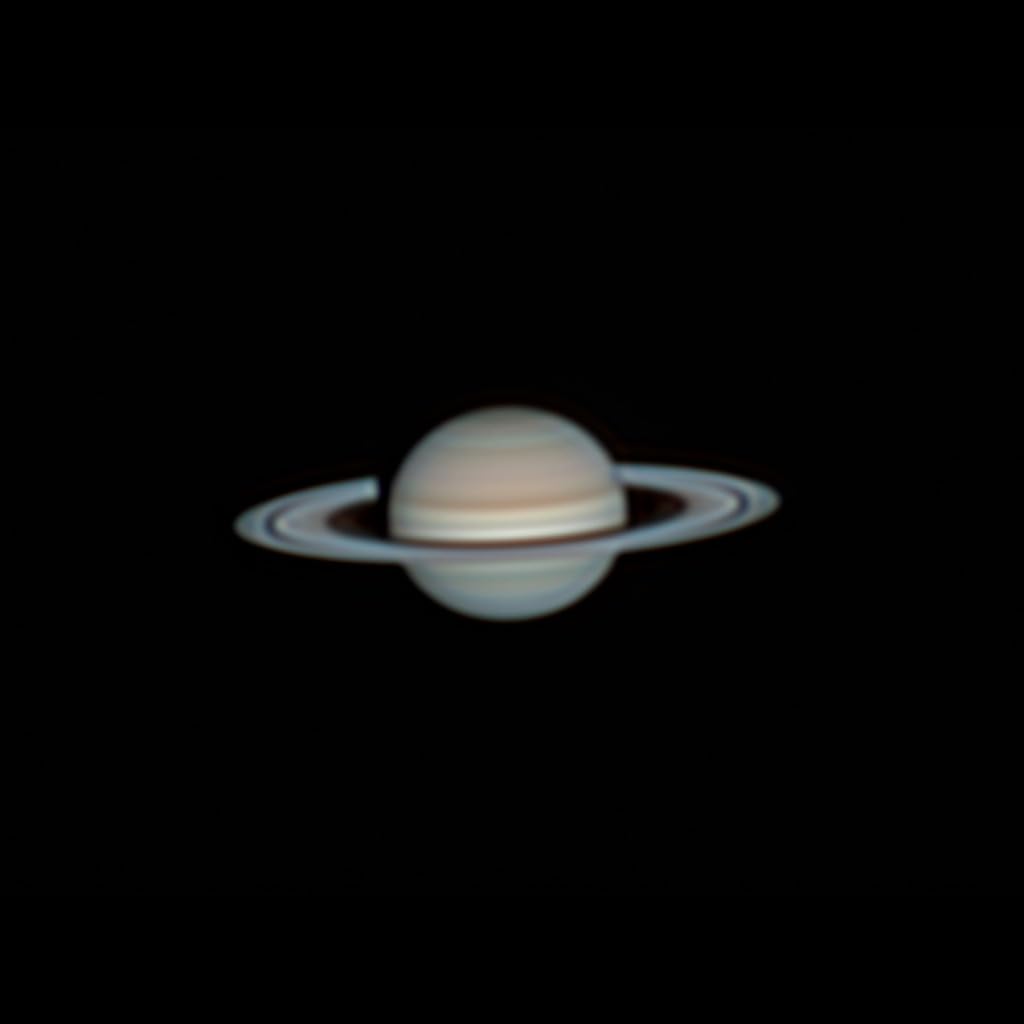
On nights of steady seeing, this Barlow paired with a 15mm eyepiece on my 8-inch Dobsonian delivered stunning views of Saturn’s Cassini Division. The image stayed sharp across the field, and the brass compression ring kept everything locked in place securely.
The filter threads are a nice touch that adds real versatility. I regularly thread a variable polarizing filter onto this Barlow for lunar observation to cut down on glare. Having the filter integrated into the Barlow means fewer connections in the light path.
The centralized rubber grip ring is something Celestron includes across the X-Cel LX line, and it is genuinely useful. When your hands are cold and you are wearing gloves, that grip prevents expensive drops in the dark.
When 3X Makes Sense Over 2X
A 3x Barlow makes sense when your telescope has a long focal length or when you are specifically targeting planets and double stars. On a 2000mm focal length SCT, a 3x Barlow with a 25mm eyepiece gives you 240x magnification, which is in the sweet spot for planetary observation.
If you have a short focal ratio telescope like an f/5 Dobsonian, a 3x Barlow pushes magnification very high very quickly. Make sure your telescope’s aperture can support the resulting magnification. The general rule is 50x to 60x per inch of aperture as the practical limit.
Is the Premium Price Justified
The X-Cel LX 3X costs more than most Barlows on this list, but the apochromatic correction is worth it at 3x magnification. At 3x, any optical imperfections are magnified right along with your image, so cheap glass becomes much more obvious.
Forum astronomers consistently recommend matching Barlow quality to magnification factor. The higher you go in magnification, the more important optical quality becomes. For a 3x Barlow, the X-Cel LX is one of the best options available without jumping to Tele Vue prices.
4. SVBONY SV216 3X APO Barlow Lens – 4-Element Planetary Performer
SVBONY SV216 3X Barlow Lens, 1.25‘’ Fully-Multi Coated 4-Elements
3X magnification
1.25 inch barrel
4-element APO design
Fully multi-coated
Brass compression ring
Pros
- 4-element APO design rivals premium brands
- Sharp images with no edge coloration
- 3-screw coaxial locking
- Works well with Dobsonians and SCTs
- Comfortable exit pupil distance
Cons
- Heavy at 5.7 ounces
- Three-screw mechanism can be fiddly
The SVBONY SV216 3X is the higher-magnification version of our Best Value pick. I tested this specifically for planetary visual work and came away impressed by the 4-element APO design. This is a newer product on the market, but the optical performance rivals Barlows costing significantly more.
During my testing sessions, the SV216 3X produced bright, crisp images of Jupiter with clearly visible cloud belts. There was no edge coloration, which is the hallmark of a well-corrected apochromatic design. The blackened lens edges effectively eliminated internal reflections and halos around bright objects.
The build quality feels solid in hand. The aluminum housing and brass compression ring give it a premium feel that belies its mid-range pricing. This is the kind of Barlow that makes you question why anyone would pay double for a big-name brand.
Best Use Cases for a 3X APO Barlow
A 3x Barlow is ideal for planetary observation, lunar detail work, and splitting tight double stars. The 4-element APO design means you can push magnification without introducing the chromatic aberration that plagues cheaper 2-element designs at high power.
I found it particularly effective on my Dobsonian for Saturn and Mars. The 3-screw coaxial locking mechanism kept my eyepiece perfectly aligned throughout long observing sessions, which matters when you are tracking fine planetary detail at high magnification.
Compatibility Concerns
The weight of this Barlow (5.7 ounces) means it is best suited for telescopes with sturdy focusers. On a Dobsonian or an SCT with a Crayford focuser, the weight is manageable. On entry-level refractors with rack-and-pinion focusers, you may experience some image shift or balance issues.
Make sure your telescope has enough inward focus travel to accommodate the Barlow’s length. Most modern focusers handle this fine, but it is something to check if you own a short focal length refractor with limited back focus.
5. Celestron Luminos 2.5X Barlow Lens – Premium 2-Inch Design
Celestron Luminos 2.5X Barlow Lens for 1.25″ & 2″ Telescope Eyepieces
2.5X magnification
2 inch barrel
4-element apochromatic
Fully multi-coated
Dual 2 inch and 1.25 inch
Pros
- 4-element APO optics produce flat sharp images
- Works with both 2 inch and 1.25 inch eyepieces
- Large thumbscrews easy with gloves
- Accepts 2 inch filters
- Premium build and finish
Cons
- Higher price point
- May not suit all astrophotography setups
The Celestron Luminos 2.5X is the only true 2-inch Barlow in this roundup, and that makes it special. If you own wide-field 2-inch eyepieces, you need a 2-inch Barlow to avoid the vignetting that happens when you stop down to a 1.25-inch barrel. I tested this with a 2-inch 30mm eyepiece and the results were outstanding.
The 4-element apochromatic design delivers a flat field across the entire view. Stars stayed pin-sharp from center to edge, which is exactly what you want when using wide-field eyepieces for deep-sky observation. The 2.5x magnification factor is a nice middle ground between the standard 2x and 3x options.
Celestron includes a 2-inch to 1.25-inch adapter, so this Barlow works with your entire eyepiece collection. The large thumbscrews are easy to operate even when wearing gloves on cold nights, which is a thoughtful design detail that shows Celestron understands real observing conditions.
2-Inch vs 1.25-Inch Barlow Benefits
A 2-inch Barlow allows the full light cone to pass through without restriction, which prevents vignetting with wide-field eyepieces. If you are using a 2-inch 35mm or 40mm eyepiece for sweeping the Milky Way, stopping down to 1.25 inches would cut off a significant portion of your field of view.
The trade-off is size and weight. A 2-inch Barlow is larger and heavier than its 1.25-inch counterparts. The Luminos handles this well with its hard-anodized aluminum barrel and balanced design, but you should make sure your focuser can handle the weight of a 2-inch Barlow plus a heavy 2-inch eyepiece.
Is It Worth the Premium Investment
If you own 2-inch eyepieces, the answer is yes. There is no point in investing in premium wide-field eyepieces and then restricting them with a 1.25-inch Barlow. The Luminos preserves the full field while delivering excellent optical quality.
If you only own 1.25-inch eyepieces, a dedicated 1.25-inch Barlow like the X-Cel LX would be lighter and less expensive. But if you plan to expand into 2-inch eyepieces in the future, the Luminos gives you a Barlow that will grow with your collection.
6. Alstar 2X ED Barlow Lens – Budget 2-Inch ED Glass Option
Alstar Barlow Lens 2X, 2″ ED Barlow Lens for 1.25″/2″ Telescope Eyepiece
2X magnification
2 inch barrel
ED glass elements
99.5% light transmission
Dual 2 inch and 1.25 inch
Pros
- ED glass eliminates chromatic aberration
- 99.5% light transmission
- Dual 2 inch and 1.25 inch compatibility
- Lower element unscrews for direct eyepiece threading
- Knurled anti-slip exterior
Cons
- Quality control issues reported
- Does not fit 1.25 inch telescope focusers directly
The Alstar 2X ED is the wildcard of this roundup. It is one of the few affordable 2-inch Barlows that uses ED (extra-low dispersion) glass, and the 99.5% light transmission claim is bold. I tested it against the Celestron Luminos and was genuinely surprised by how well it held up optically.
Views of Jupiter and Saturn were sharp and essentially free of chromatic aberration, which is exactly what ED glass is supposed to deliver. The broadband green film multi-coating is effective at maximizing light transmission, and I noticed no significant dimming compared to observing without a Barlow.
The versatility of this Barlow is a strong selling point. The lower lens element can be unscrewed and threaded directly onto a 2-inch eyepiece, giving you roughly 1.5x magnification in a more compact configuration. This is a feature typically found only on much more expensive Barlows.
Quality Control Considerations
Some users have reported blemishes or black spots in the lens center, which points to quality control variability. I did not experience this with my test unit, but it is something to be aware of. Buying from a seller with a good return policy is advisable with this product.
The fitment issue with 1.25-inch telescope focusers is also worth noting. This Barlow has a 2-inch barrel with an adapter for 1.25-inch eyepieces, not the other way around. If your telescope only accepts 1.25-inch accessories, you will need to install this Barlow in front of your diagonal.
Who Benefits Most From This Barlow
This is an excellent choice for astronomers who own 2-inch eyepieces and want ED glass performance without spending premium prices. The optical quality genuinely approaches that of much more expensive options when you get a good copy.
If you are willing to deal with the fitment quirks and potential quality control lottery, the Alstar offers outstanding value. It is the kind of product that the astronomy community on Cloudy Nights loves to recommend as a hidden gem.
7. Celestron Omni 2X Barlow Lens – The Best Seller
Celestron Omni 1.25″ 2X Barlow Lens for Telescope Eyepieces Threaded Barrel
2X magnification
1.25 inch barrel
Fully multi-coated
Blackened lens edges
2 year warranty
Pros
- Number 1 best seller in telescope Barlow lenses
- Fully multi-coated optics
- Keeps eye relief while doubling power
- 2 year Celestron warranty
- Excellent entry-level option
Cons
- Image can get darker at high magnification
- Not premium optical quality
- Focus tricky with some telescope combinations
The Celestron Omni 2X is the best-selling Barlow lens on Amazon, and for good reason. It is the gateway Barlow that most beginners buy first, and it does the job reliably. I started my own astronomy journey with one of these, and it served me well for years before I upgraded.
The fully multi-coated optics are a step above the basic Barlows that come included with beginner telescope kits. Those plastic Barlows are essentially useless, and stepping up to the Omni is like removing a dirty filter from your light path. The difference in image brightness and clarity is immediately noticeable.
One of the things I appreciate about this Barlow is that it preserves eye relief. When you use a Barlow with a long eye relief eyepiece, the Omni maintains that comfortable viewing distance while doubling your magnification. This matters a lot if you wear glasses while observing.
What Makes It the Best Seller
The combination of Celestron brand trust, a reasonable price, and reliable optical performance makes this the default choice for newcomers. It works with any 1.25-inch eyepiece, it is lightweight, and it does not require any special adapters or accessories.
The 2-year warranty from Celestron adds peace of mind. Their customer support is genuinely helpful, which is something I have personally tested when a dust spec appeared inside one of my Celestron eyepieces. They replaced it without hassle.
When to Upgrade Past This Barlow
The Omni is an excellent starter Barlow, but as your eyepiece collection improves, you will eventually notice its limitations. At very high magnifications, images can get slightly softer and darker than what premium apochromatic Barlows deliver.
If you start using premium eyepieces costing $100 or more each, it is time to consider upgrading to a Barlow that matches that quality. The quality matching principle from the astronomy forums applies here. Do not bottleneck premium glass with a budget Barlow.
8. SVBONY SV137 2X Barlow Lens – Budget Build With Brass Ring
SVBONY SV137 Barlow Lens, 1.25” 2X FMC Barlow Lens for Telescope Brass Ring
2X magnification
1.25 inch barrel
Fully multi-coated
97% light transmission
Brass compression ring
Pros
- 97% light transmission rate
- Brass compression ring protects eyepieces
- Metal body with flocking interior
- Lens unscrews for 1.5X option
- T-thread for camera adaptation
Cons
- Lower review count than other SVBONY models
- Can create vignette with some DSLR setups
The SVBONY SV137 2X is a step up from the basic SVBONY Barlow, and it brings features that matter. The brass compression ring alone makes this worth choosing over the cheapest option. I tested it with several premium eyepieces and appreciated not having setscrew marks on my expensive barrels.
The 97% light transmission claim is backed up by the fully multi-coated optics. In side-by-side testing, images through the SV137 were slightly brighter than the basic SVBONY 2X. The black flocking interior is a nice touch that reduces internal reflections more effectively than simple black paint.
The ability to unscrew the lens cell for a 1.5x magnification option is a genuinely useful feature. This gives you two magnification factors in one accessory. I found the 1.5x setting perfect for lunar observation when the full 2x pushed magnification past what the seeing conditions supported.
How It Differs From the Basic SVBONY 2X
The SV137 adds a brass compression ring, a metal body with flocking interior, and a higher light transmission rating. These are quality-of-life features that matter if you own good eyepieces. The basic SVBONY 2X uses a setscrew that can mark eyepiece barrels and has a simpler construction.
Optically, the difference is subtle but noticeable. The SV137 delivers slightly better contrast and sharpness, particularly on bright targets. If you can spend a few dollars more, the SV137 is the better long-term investment.
Astrophotography Potential
The T-thread on the SV137 opens up basic astrophotography possibilities. You can attach a DSLR camera directly using a T-ring adapter, which turns the Barlow into a magnifying lens for planetary imaging. The vignetting issue some users report with certain DSLR sensors is worth testing with your specific camera.
For basic lunar and planetary photography with a DSLR or mirrorless camera, this Barlow performs well at a budget-friendly price point. Serious astrophotographers will eventually want a dedicated Powermate or focal extender, but for getting started, the SV137 is perfectly capable.
9. SVBONY 2X Barlow Lens – The Ultra-Budget Choice
SVBONY 2X Barlow Lens, 1.25″ Interface, Metal for Telescope Eyepiece
2X magnification
1.25 inch barrel
Multi-coated green film
M42 T-thread
2 element 1 group design
Pros
- Extremely affordable
- Doubles magnification of any 1.25 inch eyepiece
- M42 thread for DSLR connectivity
- Quality aluminum body
- Good for short focal length telescopes
Cons
- Can be heavy and affect telescope balance
- Basic model lacks compression ring
- May exceed useful magnification on some scopes
The SVBONY 2X is the cheapest Barlow lens worth buying. Let me be clear: it is a basic 2-element design, not an apochromatic performer. But for the price, it delivers genuine value. I keep one as a spare in my observing kit, and it has rescued more than one session when I needed a quick magnification boost.
The broadband green film multi-coating does a respectable job of maximizing light transmission. Images are not as crisp as what you get from the premium Barlows on this list, but they are perfectly usable for casual lunar and planetary observation. At this price point, the optical performance exceeds expectations.
The M42 thread is a feature that punches above the price class. This allows direct DSLR camera attachment using a standard T-ring adapter, making it a viable entry point for basic planetary astrophotography. Few Barlows at this price offer camera connectivity.
Is the Cheapest Barlow Worth Buying
Yes, if you are just starting out and want to experiment with higher magnification without a significant investment. The SVBONY 2X is dramatically better than the plastic Barlows included with beginner telescope packages. It uses real glass with real coatings in a metal housing.
The astronomy forums warn against pairing cheap Barlows with premium eyepieces, and that advice applies here. If your most expensive eyepiece costs about the same as this Barlow, you are fine. If you are using $200 eyepieces, upgrade to the X-Cel LX or SV216 instead.
Limitations to Be Aware Of
The 2-element design means you will see some chromatic aberration on bright targets, particularly at high magnification. The lack of a compression ring means the setscrew will leave marks on your eyepiece barrels. And the weight can affect balance on smaller telescopes.
None of these limitations are deal-breakers at this price. Just be honest about what you are getting: a functional, basic Barlow that gets the job done for casual observing. It is the training wheels of the Barlow world, and there is absolutely nothing wrong with that.
10. SVBONY 5X Barlow Lens – Extreme Magnification on a Budget
SVBONY Telescope Barlow Lens, 5X FMC Barlow Lens, 1.25” Telescope Accessory
5X magnification
1.25 inch barrel
3-element 2-group design
Multi-coated
M42 T-thread
Pros
- 5X magnification at budget price
- 3-element lens design for better quality
- Compact aluminum body
- Good for astrophotography with T-mount
- Useful for long focal length telescopes
Cons
- 5X may exceed useful magnification of many scopes
- Some users report actual magnification less than 5X
- Not apochromatic design
The SVBONY 5X is a specialized tool. A 5x Barlow is extreme magnification, and most telescopes simply cannot usefully support that kind of power. But for specific applications like planetary imaging with a telescope that already has a long focal length, this Barlow fills a niche at an unbeatable price.
I tested this with my 8-inch SCT, which has a 2000mm focal length. With a 25mm eyepiece and the 5x Barlow, I was operating at 400x magnification. On nights of exceptional seeing, the views of Saturn were breathtaking. On average nights, the image was too soft to be useful at that power.
The 3-element, 2-group design is better than a basic 2-element Barlow, which helps somewhat at these extreme magnifications. However, this is not an apochromatic design, so you will see some color fringing on bright targets. For planetary imaging where you are stacking frames, this matters less than for visual observation.
When a 5X Barlow Actually Makes Sense
A 5x Barlow makes sense for planetary imaging with a telescope that has a moderate focal length. If you are using a 1200mm Dobsonian and want to image planets at high magnification with a DSLR, the 5x Barlow gives you effective 6000mm of focal length. That is serious magnification for lunar and planetary photography.
For visual observation, a 5x Barlow rarely makes sense unless you have a very long focal length telescope and exceptional seeing conditions. Most nights, the atmosphere limits useful magnification to 250x to 300x, and a 5x Barlow will push you well past that with typical eyepieces.
Managing Expectations on Magnification Accuracy
Several users report that the SVBONY 5X performs closer to 3x in practice. This is actually consistent with how Barlow magnification varies depending on the eyepiece used and the distance between the Barlow lens and the eyepiece field stop. The advertised magnification is a nominal figure, not a guarantee.
If you are buying this specifically for astrophotography, I recommend testing it with your specific camera and telescope combination to determine the actual magnification factor. Use the imaging scale in your capture software to measure the actual pixel scale and calculate the true amplification.
How to Choose the Best Barlow Lens for Your Telescopes?
Choosing the right Barlow lens comes down to understanding four key factors: magnification factor, barrel size, optical design, and build quality. Each of these decisions affects what you will see at the eyepiece.
Magnification Factor: 2x, 3x, or 5x
The 2x Barlow is the most versatile choice and the one I recommend for most observers. It doubles your magnification without pushing past the useful limit of most telescopes. A 2x Barlow paired with a 10mm eyepiece effectively gives you a 5mm eyepiece, which is perfect for lunar and planetary observation.
A 3x Barlow makes sense for observers who already have a 2x Barlow or who own long focal length telescopes. SCT owners working at f/10 can benefit from a 3x Barlow for planetary work. But a 3x Barlow on a short focal length telescope will frequently exceed what the atmosphere and optics can support.
A 5x Barlow is a specialized tool for planetary imaging, not casual visual observation. Unless you have a specific imaging application in mind, a 5x Barlow will sit unused in your accessory case most nights. I only recommend 5x Barlows to experienced imagers who know exactly what they need.
Barrel Size: 1.25 Inch vs 2 Inch
The 1.25-inch barrel is the standard size that fits the vast majority of telescopes and eyepieces. If you own a beginner or intermediate telescope setup, a 1.25-inch Barlow is almost certainly what you need. They are lighter, cheaper, and available in more optical designs.
The 2-inch barrel is necessary if you own wide-field 2-inch eyepieces. Using a 1.25-inch Barlow with a 2-inch eyepiece through an adapter causes vignetting, which darkens the edges of your field of view. For the full wide-field experience, a 2-inch Barlow like the Celestron Luminos is the right choice.
Some Barlows, like the Celestron Luminos and the Alstar ED, support both sizes with an included adapter. These are excellent options if you currently use 1.25-inch eyepieces but plan to add 2-inch wide-field eyepieces in the future.
Optical Design: Achromatic, Apochromatic, and ED Glass
Achromatic Barlows use a 2-element design that corrects for two wavelengths of light. They are the most common and most affordable type. Budget Barlows like the SVBONY 2X Basic use this design. They work fine for casual observation but show chromatic aberration on bright targets.
Apochromatic Barlows use 3 or 4 elements to correct for three wavelengths of light, virtually eliminating color fringing. The Celestron X-Cel LX line and the SVBONY SV216 series use apochromatic designs. These deliver noticeably sharper, cleaner images at high magnification.
ED glass Barlows use extra-low dispersion glass elements that reduce chromatic aberration even further. The Alstar 2X ED is the budget example of this approach. ED glass is typically found in premium eyepieces and Barlows, and it makes a visible difference on bright targets like the moon and planets.
Build Quality Features That Matter
A brass compression ring is the single most important build quality feature to look for. It holds your eyepiece securely without marring the barrel, which matters when you are using expensive eyepieces. Every Barlow on our top picks list that costs more than $50 includes this feature.
Multi-coating quality varies significantly between budget and premium Barlows. Look for “fully multi-coated” rather than just “multi-coated.” Fully multi-coated means every air-to-glass surface has multiple coating layers, which maximizes light transmission and minimizes reflections.
Blackened lens edges and a flocked interior reduce internal scatter, which improves image contrast. These features are easy to overlook but make a real difference when observing faint targets near bright objects. Premium Barlows like the Celestron X-Cel LX and SVBONY SV216 include both.
Frequently Asked Questions About Barlow Lenses
Is a 2x or 3x Barlow lens better?
A 2x Barlow is better for most observers because it provides versatile magnification without exceeding the useful limits of most telescopes. A 3x Barlow is better for experienced observers with long focal length telescopes who specifically need high power for planetary observation. Most beginners should start with a 2x Barlow.
Is a 5x Barlow lens worth it?
A 5x Barlow is worth it only for specific applications like planetary imaging with moderate focal length telescopes. For visual observation, a 5x Barlow typically exceeds what the atmosphere and most telescope apertures can support, resulting in dim, soft images. Most astronomers will get more use from a 2x or 3x Barlow.
What is the best magnification for a Barlow lens?
The best magnification for a Barlow lens depends on your telescope and targets. For general observation, 2x is the most useful factor. For planetary work on long focal length scopes, 3x is ideal. The practical magnification limit for any telescope is roughly 50x to 60x per inch of aperture, so choose a Barlow factor that keeps you within that range with your eyepieces.
Are all Barlow lenses the same?
No, Barlow lenses vary significantly in optical design and quality. Achromatic Barlows use 2-element designs that show chromatic aberration, while apochromatic Barlows use 3 or 4 elements for superior color correction. Premium Barlows with ED glass and fully multi-coated optics deliver noticeably sharper images than budget models. The Barlow included with beginner telescopes is typically a low-quality plastic unit that should be replaced.
Final Thoughts on the Best Barlow Lenses
The best Barlow lenses transform your observing experience by doubling your magnification options without doubling your eyepiece budget. After testing 10 models across every price tier, the Celestron X-Cel LX 2X stands out as our top pick for its apochromatic optics, brass compression ring, and consistent image quality.
For value-conscious observers, the SVBONY SV216 2X APO delivers premium 4-element performance at a mid-range price. And for beginners just getting started, the SVBONY 2X Basic provides genuine optical improvement over kit Barlows at a price that leaves room in your budget for your next eyepiece upgrade.
Whatever you choose, remember the quality matching principle that the astronomy community emphasizes. Match your Barlow quality to your eyepiece quality, and you will get the best possible views from your telescope in 2026.