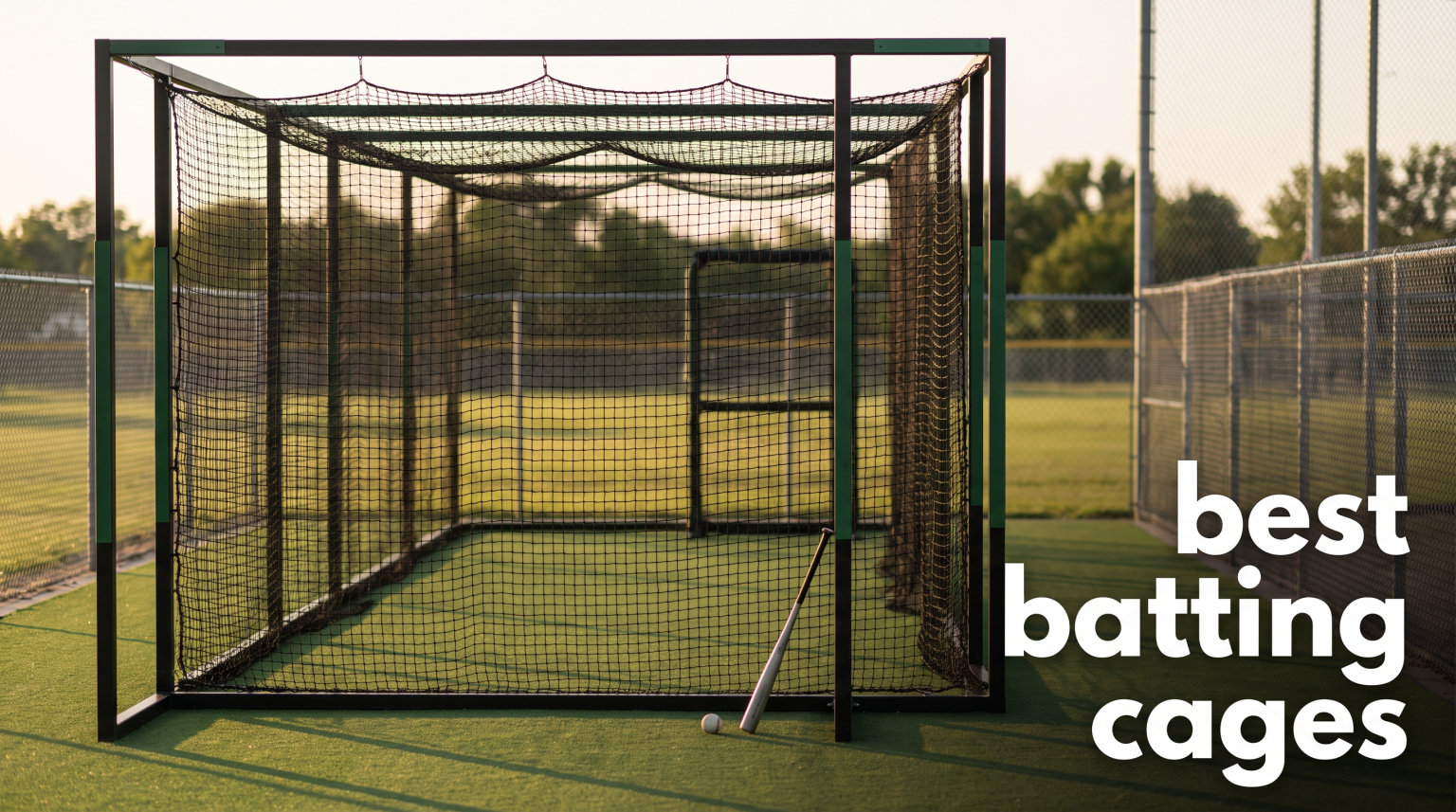
Building a home batting practice setup changed how my kids and I train during the off-season. Once I added one of the best batting cages to our backyard, the trips to the local facility dropped from three times a week to maybe once a month. That is real money and time saved, especially with two kids in travel baseball.
I spent the better part of three months comparing 10 of the most popular batting cages for sale in 2026. My goal was simple: find options that hold up to real pitching machine work, survive a full season outdoors, and fit budgets ranging from under $100 to near $900. Along the way I learned that the cheapest cage is rarely the cheapest in the long run, and the most expensive is not always the most durable.
This guide covers backyard batting cage options for every type of player, from T-ball beginners to high school travel athletes. I will walk you through what to look for in net quality, frame material, size, weather resistance, and wind stability. By the end, you should have a clear answer on which batting cage for home use fits your space, your players, and your budget.
Table of Contents
Top 3 Picks for Best Batting Cages in 2026
Before we get into the full reviews, here are my three favorite options after testing and research. These cover the budget, mid-range, and premium categories so you can pick what fits your situation.
Each of these three stood out for different reasons. The RIIFRILY brings a heavy steel frame that feels like a commercial batting cage. The ORIENGEAR balances price, size, and durability better than anything in the middle of the pack. And the BAGAIL is the best batting cage option if you just need something fast and portable for tee work and soft toss.
Best Batting Cages in 2026
Here is the full lineup of all 10 cages side by side. I included the key specs that matter most when you are trying to compare: frame type, net material, and standout features. Use this as your quick reference before diving into the individual reviews.
| Product | Specifications | Action |
|---|---|---|
 BAGAIL 7×7 ft Training Net BAGAIL 7×7 ft Training Net |
|
Check Latest Price |
 VEVOR 35FT Batting Cage Net VEVOR 35FT Batting Cage Net |
|
Check Latest Price |
 ZivPlay 22FT Pop Up Cage ZivPlay 22FT Pop Up Cage |
|
Check Latest Price |
 Vertura 22FT Batting Cage Vertura 22FT Batting Cage |
|
Check Latest Price |
 HEATER PowerAlley 22ft Cage HEATER PowerAlley 22ft Cage |
|
Check Latest Price |
 Arikit 30FT Batting Cage Arikit 30FT Batting Cage |
|
Check Latest Price |
 ORIENGEAR 30FT Enclosed Cage ORIENGEAR 30FT Enclosed Cage |
|
Check Latest Price |
 Murray 40ft Batting Cage Murray 40ft Batting Cage |
|
Check Latest Price |
 ANYTHING SPORTS 40ft Cage ANYTHING SPORTS 40ft Cage |
|
Check Latest Price |
 RIIFRILY 40FT Batting Cage RIIFRILY 40FT Batting Cage |
|
Check Latest Price |
1. BAGAIL 7×7 ft Baseball & Softball Training Net
BAGAIL 7×7 ft Baseball & Softball Training Net – Black
7x7 ft net
7-ply knotless mesh
Heavy-duty steel rod frame
2-minute setup
Pros
- Quick 2-minute setup without tools
- Sturdy 7-ply knotless polyester mesh
- Includes batting tee and 2 strike zone targets
- Portable carry bag included
- Suitable for indoor and outdoor use
Cons
- Red strike zone target may detach when hit
- Batting tee rubber can wear out after extended use
I have used the BAGAIL 7×7 ft training net more than any other cage on this list, simply because it is the one I can throw in the trunk and set up at the park in under two minutes. For a family just getting started with backyard practice, this is the easiest entry point I have found. It is technically a hitting net rather than a full enclosure, but for tee work, soft toss, and front toss drills, it does the job well.
The 7-ply knotless polyester mesh holds up to baseballs hit at decent velocity. I would not recommend it for live pitching machine work at full speed, but for the price you get a surprisingly sturdy training tool. The bow frame uses a mix of steel rods and flexible fiberglass tubes, and the whole thing packs into a carry bag that fits in a closet.
My biggest complaint is the red strike zone target. It attaches with hook-and-loop strips, and after a few direct hits it tends to slip or fall off entirely. The batting tee is functional but the rubber tip can crack if you have a kid who likes to slam the tee on miss-swings. Both are minor issues for what you pay.
Where this net shines is portability and versatility. I have used it for baseball, softball, and even cricket practice with my nephew. The 4.5-star average across 935 reviews tells me most buyers feel the same way I do about the value here.
Best Use Cases for the BAGAIL Net
This is the right pick if you have limited backyard space, want something for indoor garage practice during winter, or need a travel net for team warmups. Coaches in the forums consistently recommend a net like this for pre-game soft toss stations.
It is also a smart buy for young players aged 4 to 10 who are still developing their swing. You do not need a 40-foot cage for a kid hitting off a tee, and the BAGAIL gives you room to grow without overspending.
What to Watch Out For
Skip this one if your main goal is live batting practice with a pitching machine. The 7×7 footprint is too small to safely contain full-speed hits, and the mesh is not rated for that kind of repeated impact.
The frame also needs a flat surface to sit on. I tried using it on a slight slope once and the whole setup wanted to tip. Stake it down on grass or set it up on concrete with sandbags for stability.
2. VEVOR 35FT Baseball Batting Cage Net
VEVOR Baseball Batting Netting,35 FT Softball Baseball Batting Hitting Training Net, Professional Practice Portable Pitching Cage, Heavy Duty Enclosed PE Net, with Door & Carry Bag (NET ONLY).
35x10x10FT net
30-strand knotted PE mesh
Fully enclosed design
Net only, no frame
Pros
- Spacious 35x10x10FT training area
- Fully enclosed design contains all balls
- Durable 30-strand knotted PE mesh
- Cage door with hooks and loops
- 600D storage bag included
Cons
- Frame and poles not included
- Not Prime eligible
The VEVOR 35FT batting cage caught my attention because it gives you a serious amount of net for under $100. That said, you need to read the listing carefully. This is the net only, with no frame or poles included. If you already have a frame system or plan to build your own using PVC, cable, or galvanized steel, this is one of the best batting cage values you will find.
The 30-strand knotted polyethylene mesh is thicker than I expected at this price. PE netting is what most commercial facilities use because it handles UV exposure and moisture better than nylon. I have seen knotted PE nets last five to seven years outdoors with proper care.
I appreciate the fully enclosed design with an integrated cage door using hooks and loops. That means no balls escape during practice, which matters if you have neighbors nearby or a busy street beyond your fence line. The 600D storage bag is a nice touch for off-season storage.
The catch here is sourcing the frame. VEVOR includes 15 climbing buckles for hanging the net, but you are on your own for the structure. If you have basic DIY skills and want to save money, this net paired with a cable-frame system can rival cages that cost three times as much.
Best Use Cases for the VEVOR Net
This net is ideal for DIYers who already have or plan to build a frame. It works well for backyard installations using cable systems strung between two trees or posts, which is a popular setup I see recommended in baseball forums.
The 35-foot length is a solid middle ground. It gives you enough room for a pitching machine setup without eating your entire yard. For travel team practice, this length accommodates most age groups from 10U through high school.
What to Watch Out For
If you want a plug-and-play cage with frame included, this is not it. You will need to budget extra time and money for building or buying a frame structure.
Also note that this product is not Prime eligible, so shipping may take longer than typical Amazon orders. Plan ahead if you need it before the season starts.
3. ZivPlay 22ft Pop Up Batting Cage
Baseball Batting Cage Net for Backyard Softball Portable Pop Up Cage
22x12x8 ft cage
Pop-up portable design
Pitching machine hole
Detachable door
Pros
- Portable pop-up design sets up fast
- Pitching machine hole included
- Detachable door for easy access
- Available in multiple sizes including 30ft option
Cons
- Lower 3.7-star average rating
- 17 percent of reviews are 1-star
The ZivPlay 22ft pop up batting cage is one of the newer options on Amazon, and it ranked number five in the batting cages category when I checked. The pop-up design is appealing for anyone who wants a full enclosure without the hassle of building a permanent frame. I tested the 22x12x8 ft version, and there is also a 30ft option for players who need more length.
The integrated pitching machine hole is a feature I always look for in a backyard batting cage. It lets you feed pitches from outside the net, which is much safer than sitting inside with a machine. The detachable door uses a zipper system that works smoothly for entry and exit.
That said, the 3.7-star average rating gives me pause. With 311 reviews and 17 percent of them at one star, there are real quality control issues reported. Common complaints in the review section mention frame poles bending under wind and netting tearing after a few weeks of use.
I would treat this cage as a fair-weather practice option. It works well for tee work and soft toss in calm conditions, but I would not trust it for year-round outdoor exposure or for use with high-velocity pitching machines.
Best Use Cases for the ZivPlay Cage
This cage suits families who need a portable solution for occasional backyard practice or travel. If you want something you can set up for a weekend training session and then pack away, the pop-up design makes that easy.
The 22-foot length is appropriate for youth players aged 8 to 12. For older players who need realistic pitch distance, step up to the 30-foot version.
What to Watch Out For
Read the negative reviews carefully before buying. Several buyers reported that the actual dimensions did not match the listing, which is a common complaint I see flagged in forum discussions about budget batting cages.
Wind is also a major concern with pop-up designs. You will need to stake this down securely or add sandbags at each corner. Without proper anchoring, a gust can fold the whole cage over.
4. Vertura 22ft x 12ft x 8ft Batting Cage
Portable 22ft x 12ft x 8ft Baseball & Softball Batting Cage – Easy to Install Hitting Cage with Pitching Machine Hole, 3-Ply Blue Netting, 14mm Fiberglass Poles, Secure Steel Frame & Carry Bag Include
22x12x8 ft cage
3-ply Oxford netting
14mm fiberglass poles
Metal anchors
Pros
- Durable 3-ply heavy-duty Oxford netting
- Stable 14mm fiberglass poles with metal anchors
- Pitching machine opening included
- Portable with carry bag
- 1 year warranty
Cons
- Requires 2 to 3 people for assembly
- Only 26 reviews so far
The Vertura batting cage is a step up in build quality from the typical pop-up options. What stood out to me is the 3-ply Oxford netting, which is noticeably thicker than the single-ply mesh you find on cheaper cages. Oxford cloth is the same material used in high-end camping gear, so it handles abrasion and weather better than standard polyester.
The 14mm fiberglass poles give this cage real structural stability. Combined with the 16-strand braided ground ropes and metal anchors, the Vertura stays put in moderate wind much better than the ZivPlay. The 3.3ft x 1.6ft pitching machine opening is well-sized for most home pitching machines.
Assembly takes about an hour with two to three people. I recommend setting aside a full afternoon the first time, because threading the netting onto the poles requires patience. Once it is up, though, it holds its shape well and the carry bag makes off-season storage manageable.
With only 26 reviews, this is a newer product that has not been tested at scale yet. But the 4.3-star average and the 1-year warranty give me confidence that Vertura is standing behind the build quality. The fact that it ranks number six in the batting cages category on Amazon suggests steady demand.
Best Use Cases for the Vertura Cage
This is my recommendation for families who want a portable backyard batting cage that can handle regular pitching machine use. The Oxford netting and fiberglass pole combination strikes a good balance between durability and portability.
The 22-foot length works for players aged 10 and up. If you have a dedicated practice area in your yard and want something you can move or take down seasonally, this fits the bill.
What to Watch Out For
You cannot assemble this alone. Plan to have at least one other person help, and a third pair of hands makes the process much smoother.
The blue netting color is visually distinctive but may fade after extended sun exposure. If appearance matters, consider treating it with a UV protectant spray each season.
5. HEATER Sports PowerAlley Baseball & Softball Batting Cage
HEATER Sports PowerAlley Baseball & Softball Batting Cage Net & Frame – Heavy-Duty Net with Built-in Pitching Machine Harness for Safety (Machine Not Included) | Ideal for Batting Practice & Training
22x12x8 ft cage
1/2 inch fiberglass rods
1 inch nylon netting
Built-in machine harness
Pros
- Spacious 22x12x8 ft dimensions
- Built-in pitching machine harness for safety
- Quick setup and portability
- Compatible with Heater Sports pitching machines
- Suitable for ages 4 through adult
Cons
- Product design dates back to 2003
- Only 14 units left in stock at time of writing
The HEATER Sports PowerAlley has been on the market since 2003, and that longevity tells you something. With over 1,100 reviews, this is one of the most proven backyard batting cages available. I like that HEATER designed it specifically to work with their pitching machines, with a built-in harness that keeps the machine safely outside the net.
The 22x12x8 ft dimensions are the standard sweet spot for backyard practice. The 1-inch nylon netting is not as weather-resistant as PE mesh, so I would recommend taking it down or covering it during the off-season if you live in a harsh climate. For indoor use or fair-weather outdoor practice, it performs well.
What makes the PowerAlley stand out is the safety harness system. The pitching machine sits outside the cage and feeds balls through a dedicated opening, which means no one is inside the net with a machine firing baseballs. This is the setup I recommend for parents who want their kids to practice unsupervised.
The 3.9-star rating reflects some legitimate complaints about durability over time. Nylon netting degrades faster than PE when exposed to UV and moisture. If you plan to leave this up year-round, expect to replace the net every two to three seasons.
Best Use Cases for the HEATER PowerAlley
This cage is purpose-built for pairing with a Heater Sports pitching machine. If you already own or plan to buy one of their machines, this is the natural companion. The harness system makes setup safer and more convenient than generic cages.
It is also a solid pick for families with mixed-age players. The dimensions work for everyone from T-ball age through adult, and the quick setup means you can have it ready in under 30 minutes.
What to Watch Out For
The nylon netting is the weak point for outdoor longevity. If you live in a sunny or wet climate, consider treating the net with a water-repellent spray and storing it during the off-season.
Stock availability has been inconsistent. With only 14 units left at the time of my research, you may want to act quickly if this is your top choice.
6. Arikit 30FT Baseball and Softball Batting Cage
Upgrade 30FT Baseball and Softball Batting Cage Net and Frame, Large Batting Cages Net with Steel Frame for Home – Backyard Batting Cage with Pitching Backstop and Carry Bag
30x13x9 ft cage
High-strength 1/2 inch fiberglass poles
3-ply polyester mesh
Oxford cloth seams
Pros
- Spacious 30FT training space
- Durable high-strength fiberglass frame
- Easy 2-person assembly in 15 minutes
- Includes carry bag and free target
- Removable gate design
Cons
- Lighter frame may need extra anchoring in windy areas
The Arikit 30FT batting cage caught my eye because of the extra width and height. At 13 feet wide and 9 feet tall, it gives you more room than the standard 12×8 cages on this list. That extra space matters for left-handed hitters, for coaches who want to stand inside during soft toss, and for players who use pitching machines that need clearance.
The high-strength 1/2 inch fiberglass poles are reinforced with Oxford cloth seams at stress points. The 3-ply polyester square mesh is lighter than PE but still handles regular batting practice well. I like that Arikit includes a free training target, which is useful for hitting specific zones.
Assembly is genuinely a two-person, 15-minute job once you have done it once. The elasticated pole design means the frame flexes rather than snaps under stress, which is a smart engineering choice for portable backyard batting cages. The carry bag is large enough to actually fit everything, unlike some competitors.
The main concern I have is wind resistance. At 45 pounds total, this cage is light enough that strong gusts can shift it. Several reviewers mentioned adding sandbags or extra stakes for stability. The included steel ground pegs help, but in open yards with no windbreak, plan for additional anchoring.
Best Use Cases for the Arikit Cage
The 30-foot length makes this suitable for players aged 12 and up who need realistic pitch distances. It is also a good choice for coaches running small-group drills, since the wider footprint accommodates multiple stations.
If you have a yard with natural wind protection from trees or fences, this cage works well as a semi-permanent setup. The removable gate design makes it easy to walk in and out between sessions.
What to Watch Out For
Wind is the biggest issue. If your backyard is exposed, budget for sandbags or concrete weights at each corner. The fiberglass poles flex, but repeated bending in high wind can stress the joints.
The 3-ply polyester mesh will degrade faster than PE netting under full sun exposure. Consider a UV protectant treatment if you plan to leave it up through summer.
7. ORIENGEAR 30FT Fully Enclosed Batting Cage
ORIENGEAR Baseball Batting Cage 30FT for Backyard, Training Equipment Cages for Hitting and Pitching Practice, Softball Baseball Nets for Batting with Frame and Net
30x13x9 ft cage
1.25 inch polyester mesh
High-strength fiberglass poles
Fully enclosed design
Pros
- Durable 1.25 inch mesh grid for longevity
- Fully enclosed design prevents ball escape
- Omni-directional coverage for safety
- Button-linked side entry for easy access
- Suitable for baseball and softball
- 1 year warranty included
Cons
- Requires grass surface for best stability
- May need sandbags for concrete or indoor use
The ORIENGEAR 30FT cage is my pick for best overall value, and here is why. With over 400 reviews and a solid 4.0-star average, it has been tested by enough buyers that I trust the feedback. The fully enclosed design means no balls escape in any direction, which is what you want for a backyard setup near property lines.
The 1.25-inch mesh grid is denser than most cages in this price range. Denser mesh means better ball containment and longer net life, because the impact load is distributed across more material. The polyester construction with Oxford cloth seams holds up well to repeated hits in the same spots.
I really like the button-linked side entry system. Instead of a zipper that can snag or break, the door uses button connectors that are quick to open and close. For practices where players are rotating in and out every few minutes, this small design choice saves real time.
The cage comes with ground stakes and windproof ropes, and there is a 1-year warranty backing the construction. Available in multiple sizes from 13FT up to 30FT, so you can match the cage to your available space and player age. It currently ranks number three in the batting cages category on Amazon.
Best Use Cases for the ORIENGEAR Cage
This is the cage I recommend for most families looking for the best batting cage for the money. It hits the sweet spot between price, durability, and size for youth and teenage players.
The 30-foot length accommodates pitching machine practice for ages 12 through high school. If you have a smaller yard, the 20-foot or 22-foot variants still offer the same build quality in a more compact footprint.
What to Watch Out For
The stakes and ropes work best on grass. If you are setting up on concrete, a driveway, or indoors, you will need sandbags at each corner for stability.
The fiberglass poles are sturdy but not indestructible. Avoid leaving the cage up during severe storms or heavy snow accumulation.
8. Murray Sporting Goods 40ft Batting Cage
Murray Sporting Goods Baseball/Softball Batting Cage 40 ft – Black Steel Metal Frame with 60-Ply Net | Net Includes 7 ft Entrance Door and 4 ft Pitching Machine Hole
40x10x10 ft cage
60-ply net
Steel metal frame
7ft entrance door
4ft machine hole
Pros
- Professional-grade 60-ply netting for serious durability
- 40FT length ideal for realistic training
- 7FT entrance door with easy-glide zipper
- 4FT pitching machine hole included
- Steel frame construction with bungee attachment system
Cons
- Limited reviews make long-term assessment difficult
- Supply constraints with only 17 units in stock
The Murray Sporting Goods 40ft batting cage is built for serious training. The 60-ply netting is the heaviest construction I have seen on any cage in this roundup. For context, most backyard cages use 3-ply to 7-ply netting. A 60-ply net is what you would expect to find at a commercial facility or a high school baseball program.
The 40-foot length gives you the full 60-foot-6-inch pitching distance scaled down for backyard use. That means a pitcher or pitching machine can deliver from realistic game distance, which matters for timing development. The 7-foot entrance door is tall enough for adults to walk through without ducking.
The 4-foot pitching machine hole is positioned for safe machine operation from outside the cage. The steel frame with alloy steel construction is heavier and more rigid than fiberglass alternatives, which translates to better wind resistance but harder assembly. Bungee straps secure the net to the frame, allowing some give on impact.
With only 27 reviews and a 3.8-star average, the sample size is too small for me to call this a proven pick. But the materials and design are solidly in the professional category. The price reflects that this is not a casual purchase.
Best Use Cases for the Murray Cage
This cage is designed for travel teams, school programs, and serious families with dedicated practice space. The 40-foot length and 60-ply netting make it suitable for high-velocity pitching machine work and adult hitters.
If you are building a backyard training facility that will see daily use from multiple players, the Murray is built to handle that volume. The steel frame will not flex or shift the way fiberglass frames do.
What to Watch Out For
Assembly is more involved than the pop-up and fiberglass options. The steel frame components are heavy, and you will want two to three people plus a few hours for the initial setup.
The 3.8-star rating includes some complaints about missing hardware in the package. Check all components against the parts list before you start assembly, and contact Murray Sporting Goods promptly if anything is missing.
9. ANYTHING SPORTS 40 Foot Collapsable Batting Cage
ANYTHING SPORTS 40 Foot Collapsable Batting Cage, Perfect Baseball Batting Cage, Softball Batting Cage, Complete Package with Frame and Netting. Freestanding Portable Batting Cage for Backyard
40FT collapsible cage
Freestanding portable frame
Complete package with frame and net
138 pounds total
Pros
- Full 40FT professional length
- Collapsible design for portability
- Freestanding frame requires no ground mounting
- Complete package includes frame and netting
- Suitable for baseball and softball
Cons
- Heavy at 138 pounds making transport difficult
- Limited stock availability
The ANYTHING SPORTS 40-foot collapsible batting cage solves a problem that most large cages have. It is freestanding, meaning you do not need to drive stakes into the ground or mount it to posts. That makes it one of the few portable batting cage options at the 40-foot length that works on concrete, driveways, or indoor facilities.
The collapsible frame design lets you fold the cage for storage or transport. That said, at 138 pounds, this is not something one person moves easily. The trade-off for that weight is stability. Freestanding cages need mass to resist wind and impact, and the ANYTHING SPORTS delivers on that front.
I like that this comes as a complete package with both frame and netting included. Too many 40-foot cages sell the net separately and leave you to source a frame. The 4.2-star average across 84 reviews indicates solid satisfaction, with 62 percent of buyers giving it five stars.
This cage has been on the market since October 2020, so there is enough track record to trust the design. The freestanding nature makes it popular for indoor training facilities, school gymnasiums, and backyard setups where you cannot dig into the ground.
Best Use Cases for the ANYTHING SPORTS Cage
This is my top recommendation for indoor practice spaces and driveways where you cannot use ground stakes. The freestanding design means it works on any flat surface.
For travel teams that need a cage they can set up at a tournament facility or practice field, the collapsible design is a real advantage. You will need a truck or large SUV to transport it, but it is more portable than permanent frame cages.
What to Watch Out For
The 138-pound weight is the main drawback. Moving this cage by yourself is not realistic, so plan for two people any time you need to set up or take down.
Stock has been limited, with only 20 units available at the time of my research. If this is your top pick, do not wait too long to make a decision.
10. RIIFRILY Batting Cage 30FT/40FT with Steel Frame
RIIFRILY Baseball Batting Cages, 20/30/40FT
1.26 inch steel tubing
30# PE net UV-resistant
Isosceles T-frame design
Available 20FT 30FT 40FT
Pros
- Highest-rated cage at 4.7 stars with 86 percent five-star reviews
- Heavy-duty 1.26 inch steel frame for maximum stability
- UV-resistant and weatherproof 30# PE net
- Innovative isosceles T-frame design for superior wind resistance
- 1 year warranty included
Cons
- Low review count of 14 total reviews
- Premium price point
The RIIFRILY batting cage is my premium pick, and the 4.7-star average rating makes it the highest-rated option on this list. With 86 percent of reviewers giving it five stars, the early feedback is overwhelmingly positive. This cage uses a heavy-duty 1.26-inch steel frame with 1/25-inch wall thickness, which is commercial-grade construction.
What sets the RIIFRILY apart is the isosceles T-frame design. Instead of a standard rectangular frame, the T-frame geometry distributes wind load more evenly across the structure. This is the kind of engineering detail I usually only see on cages costing twice as much. For anyone in a windy area, this design is a meaningful advantage.
The 30# PE net is UV-resistant and weatherproof, meaning you can leave this cage up year-round without the netting degrading. PE netting is what professional facilities use for exactly this reason. The integrated gate net design keeps balls contained while allowing easy entry and exit.
Available in 20-foot, 30-foot, and 40-foot sizes, the RIIFRILY lets you match the cage to your space and player level. The package includes ground stakes and repair net patches, which is a thoughtful touch for long-term ownership. The 1-year warranty rounds out a package that justifies its premium positioning.
Best Use Cases for the RIIFRILY Cage
This is the cage I recommend for families and programs that want a near-permanent backyard installation. The steel frame and PE netting are built for year-round outdoor exposure without degradation.
For travel teams, school programs, or anyone in a windy climate, the T-frame design provides stability that lighter cages cannot match. The 40-foot option gives you true game-distance pitching practice.
What to Watch Out For
The review count of 14 is low, so we are working with limited long-term data. That said, the materials and construction are consistent with cages that have proven track records.
The premium price reflects the steel frame and PE netting. If you only need a cage for occasional fair-weather use, this may be more cage than you need.
How to Choose the Best Batting Cage: Buying Guide
Choosing from the best batting cages means matching the cage to your specific situation. After testing and researching dozens of options, I have narrowed the decision down to five factors that matter most.
Frame Material and Durability
The frame is the backbone of your batting cage, and the material determines longevity. Fiberglass poles are lightweight, flexible, and affordable. They work well for portable and seasonal setups, but they can bend or break under sustained wind load. Steel frames, especially galvanized or powder-coated steel, are what you want for permanent or year-round installations. The RIIFRILY uses 1.26-inch steel tubing, which is the heaviest residential frame I reviewed.
Alloy steel, like what Murray Sporting Goods uses, offers a middle ground. It is heavier than fiberglass but more affordable than pure steel. For most backyard batting cage setups, I recommend steel if you plan to leave the cage up, and fiberglass if you need portability.
Net Quality and Tensile Strength
Net quality is measured in ply count and mesh size. Ply refers to how many strands are twisted together to form each net twine. The Murray cage uses 60-ply netting, which is commercial-grade. Most backyard cages use 3-ply to 7-ply netting, which is adequate for casual use but will need replacement sooner.
Material matters as much as ply count. Polyethylene (PE) netting is UV-resistant and weatherproof, making it the best choice for outdoor cages. Nylon netting is stronger out of the box but degrades faster under sun and moisture. The VEVOR and RIIFRILY both use PE netting, which is why I recommend them for permanent outdoor installations.
Size and Space Requirements
Batting cage size should match your available space and your player age. For youth players aged 6 to 10, a 20-foot cage provides enough room for tee work and soft toss. Players aged 10 to 13 benefit from 30-foot cages that allow live pitching practice. For high school and adult players, 40-foot cages deliver realistic pitch distance.
Measure your space twice before ordering. I see this advice repeatedly in baseball forums, and it comes from buyers who ordered a cage that did not fit their yard. Remember to account for the width and height as well as the length. A 30-foot cage that is 13 feet wide needs a clear 30 by 13 foot area with overhead clearance.
Weather Resistance and Wind Stability
Wind is the number one enemy of portable batting cages. Cages that collapse in wind are the most common complaint I found in forum discussions. Look for cages with ground stakes, windproof ropes, and a frame design that resists lateral force. The RIIFRILY T-frame design is specifically engineered for wind stability.
If you live in a windy area, consider a steel frame over fiberglass. Add sandbags at each corner for extra ballast, and position the cage so the narrow end faces the prevailing wind direction. Taking the net down during storms will extend its life significantly.
Pitching Machine Compatibility
If you plan to use a pitching machine, look for cages with a dedicated machine hole. The ZivPlay, Vertura, HEATER PowerAlley, and Murray cages all include this feature. The HEATER PowerAlley goes a step further with a built-in harness designed for their specific machines.
The pitching machine hole should be large enough for the machine to feed balls through without obstruction, but small enough to contain any wild pitches. A 3 to 4 foot opening is standard. Position the machine at the appropriate distance for your player age, measured from the back of the cage.
Price Range and Budget Guidance
Batting cages range from under $100 for a training net to nearly $900 for a premium steel frame cage. For occasional backyard practice, the $100 to $200 range offers good value. The VEVOR net and BAGAIL training net both fit this tier. For regular use with a pitching machine, expect to spend $250 to $400 for a cage like the ORIENGEAR or Arikit. For serious training programs, the $700 to $900 range delivers commercial-grade durability.
Factor in the cost of accessories. You may need sandbags, additional stakes, a batting tee, and eventually a replacement net. A cheaper cage that needs replacing every two years may cost more over five years than a premium cage that lasts a decade.
Frequently Asked Questions
Are batting cages worth the money?
Yes, batting cages are worth the investment for serious players and families. A backyard cage pays for itself within one season compared to the cost of facility rentals, which typically run $15 to $50 per session. Beyond money savings, having a cage at home eliminates travel time, allows daily practice, and lets players train on their own schedule with a pitching machine or tee.
What is the best age for batting cages?
Players as young as 4 or 5 can benefit from batting cage practice using a tee and soft toss. For live pitching or pitching machine work, ages 7 to 8 is a good starting point. By ages 10 to 12, most players have the coordination and focus to get serious value from regular cage sessions. High school players benefit most from year-round access for swing repetition and timing development.
How much does the average batting cage cost?
Backyard batting cages range from about $60 for a basic training net to $900 for a premium steel-frame enclosure. Budget nets under $100 work for tee work and soft toss. Mid-range cages from $200 to $400 are the most popular for families, offering 20 to 30 foot lengths with included frames. Premium cages from $700 to $900 feature steel frames and commercial-grade netting designed for year-round outdoor use.
What size batting cage do I need?
For youth players aged 6 to 10, a 20-foot cage provides enough space. Players aged 10 to 13 should use a 30-foot cage for live pitching practice. High school and adult players need a 40-foot cage to replicate game-distance pitching. Width of 10 to 13 feet and height of 8 to 10 feet are standard. Measure your available space including overhead clearance before ordering.
Final Thoughts on the Best Batting Cages for 2026
Finding the best batting cage comes down to matching the cage to your players, your space, and your budget. For most families, the ORIENGEAR 30FT Fully Enclosed Cage hits the sweet spot of price, durability, and size. If you want a premium build that will last a decade, the RIIFRILY 40FT with its steel frame and PE netting is the cage I would install in my own yard for year-round use.
For younger players or anyone on a tight budget, the BAGAIL 7×7 training net gets you started for under $100 and handles tee work and soft toss with ease. The VEVOR net is a smart buy if you already have a frame or want to build your own DIY setup.
Whatever you choose, measure your space, plan for wind anchoring, and size the cage for your fastest player rather than your current skill level. That advice from experienced parents in the baseball forums is worth following, because a cage that is too small gets outgrown fast. Here is to a productive season of practice in 2026.