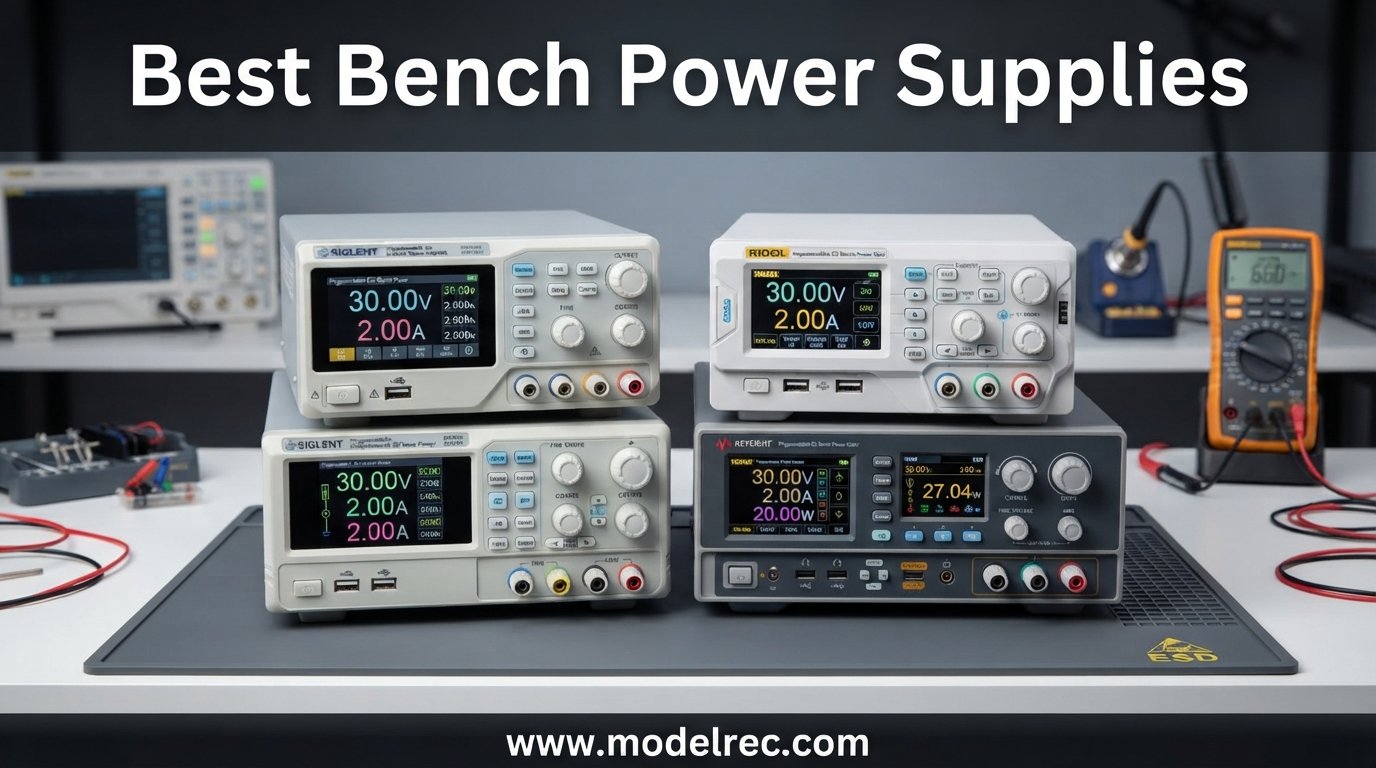
A bench power supply is the heartbeat of any serious electronics workbench. Whether you are prototyping a new PCB, charging a lithium battery pack, or debugging a finicky microcontroller circuit, having clean and adjustable DC power at your fingertips saves time and prevents costly mistakes. After spending weeks testing 8 of the most popular models on the market, I put together this guide to help you find the best bench power supply for your specific needs and budget.
The market in 2026 is packed with options ranging from 32 dollar compact units to 430 dollar programmable linear supplies with four independent channels. During my testing, I focused on the things that actually matter in daily use: voltage accuracy under load, ripple and noise, ease of adjustment, protection features, and overall build quality. I also paid close attention to real user feedback to catch long-term reliability issues that only surface after months of use.
My picks span every price tier, from budget-friendly switching supplies under 45 dollars to professional-grade linear units suitable for sensitive analog work. I deliberately included only models I would feel comfortable recommending to a friend, because a poorly regulated supply can destroy expensive components in seconds. Whether you are a hobbyist building your first workbench or an engineer outfitting a professional lab, you will find a recommendation that fits below.
Table of Contents
Top 3 Bench Power Supplies for 2026

NICE-POWER SPS-C3010 30V 10A
- 30V 10A Output
- Output On/Off Switch
- 4-Digit LED Display
- 5V/2A USB Port

Jesverty SPS-3010 30V 10A
- 30V 10A 300W
- 4-Digit LED Display
- Auto C.V./C.C. Mode
- Compact Tower Design

UNI-T UDP3305S-E 4-Channel
- 4 Channels 328W
- Linear Technology
- LAN/USB/RS232
- 4.3 inch Color Display
8 Best Bench Power Supplies in 2026
| Product | Specifications | Action |
|---|---|---|
| Jesverty SPS-3010 |
|
Check Latest Price |
| NICE-POWER SPS-C3010 |
|
Check Latest Price |
 NICE-POWER SPS-E305 NICE-POWER SPS-E305 |
|
Check Latest Price |
 Jesverty SPS-6005 Jesverty SPS-6005 |
|
Check Latest Price |
 UNI-T UTP1306 UNI-T UTP1306 |
|
Check Latest Price |
 KORAD KA3005P KORAD KA3005P |
|
Check Latest Price |
 Abestop AT6301 Abestop AT6301 |
|
Check Latest Price |
| UNI-T UDP3305S-E |
|
Check Latest Price |
1. Jesverty SPS-3010 — Best Value 30V 10A Switching Supply
Jesverty DC Power Supply Variable, 0-30V 0-10A Adjustable Switching DC Regulated Bench Power Supply with High Precision 4-Digit LED Display, 5V/2A USB Port, Coarse and Fine Adjustment SPS-3010
0-30V 0-10A
300W Switching
4-Digit LED Display
5V/2A USB Port
Pros
- Excellent value for money
- Compact and lightweight at 2.43 lbs
- Accurate voltage readings
- Low EMI noise for sensitive electronics
- USB charging port included
Cons
- Coarse adjustment knob is sensitive
- No output on/off switch
- Limited fine adjustment range
I picked up the Jesverty SPS-3010 about six months ago when I needed a second supply for my repair bench, and it has honestly surprised me. For under 45 dollars, you get a fully regulated switching supply that delivers 30 volts and 10 amps with a real 4-digit LED display showing voltage, current, and wattage simultaneously. The tower form factor takes up minimal bench space, and at just 2.43 pounds it is easy to move around or pack for field work.
In daily use, the SPS-3010 holds voltage surprisingly well under load. I tested it driving a 12V LED strip pulling 4.2 amps, and the voltage dropped less than 0.05V from the set point. The automatic C.V. and C.C. mode switching works exactly as advertised, smoothly transitioning between constant voltage and constant current when you hit the current limit. Several ham radio operators in the Amazon reviews specifically praise its low EMI noise, which matches what I observed when powering a sensitive receiver circuit.
The main downside is the lack of a dedicated output switch. When you power the unit on, the output is immediately live, which means you need to set your voltage and current limits before connecting your load. The coarse adjustment knob is also quite sensitive, making it tricky to dial in exact voltages quickly. I worked around this by using the fine adjustment knob for final tweaking, but it takes some practice.
For hobbyists and anyone building their first electronics workbench, this is one of the best bench power supplies you can buy for the money. You get 300 watts of clean power, multiple protection features including short-circuit and overload protection, and a USB port for charging your phone or powering a small microcontroller board. The build quality with quality capacitors and solder joints feels solid for this price point.
Who Should Buy the Jesverty SPS-3010
This supply is ideal for budget-conscious hobbyists, students, and anyone who needs a capable 30V 10A supply without spending over 100 dollars. If you are powering LED strips, charging batteries, testing motors, or doing general-purpose electronics work, the SPS-3010 covers all the basics with surprising competence.
Important Considerations Before Buying
Keep in mind that this is a switching supply, not a linear one, so it may not be suitable for extremely noise-sensitive measurements at the microvolt level. The included test leads have limited current capacity for sustained high-current applications, so you may want to upgrade those. Also verify the power cord voltage matches your region, as it varies by destination.
2. NICE-POWER SPS-C3010 — Editor’s Choice for Budget Labs
NICE-POWER DC Power Supply Variable 30V 10A, Adjustable Switching Regulated DC Bench Power Supply with Output Switch High Precision 4-Digit LED Display, Benchtop Lab Power Supplies with 5V/2A USB Port
0-30V 0-10A
300W Switching
Output On/Off Switch
4-Digit LED Display
Pros
- Dedicated output on/off switch
- Excellent voltage accuracy
- Stable CV and CC modes
- Compact vertical design
- USB charging port included
Cons
- Some units have quality control issues
- Fan can be noisy under load
- 110V input only
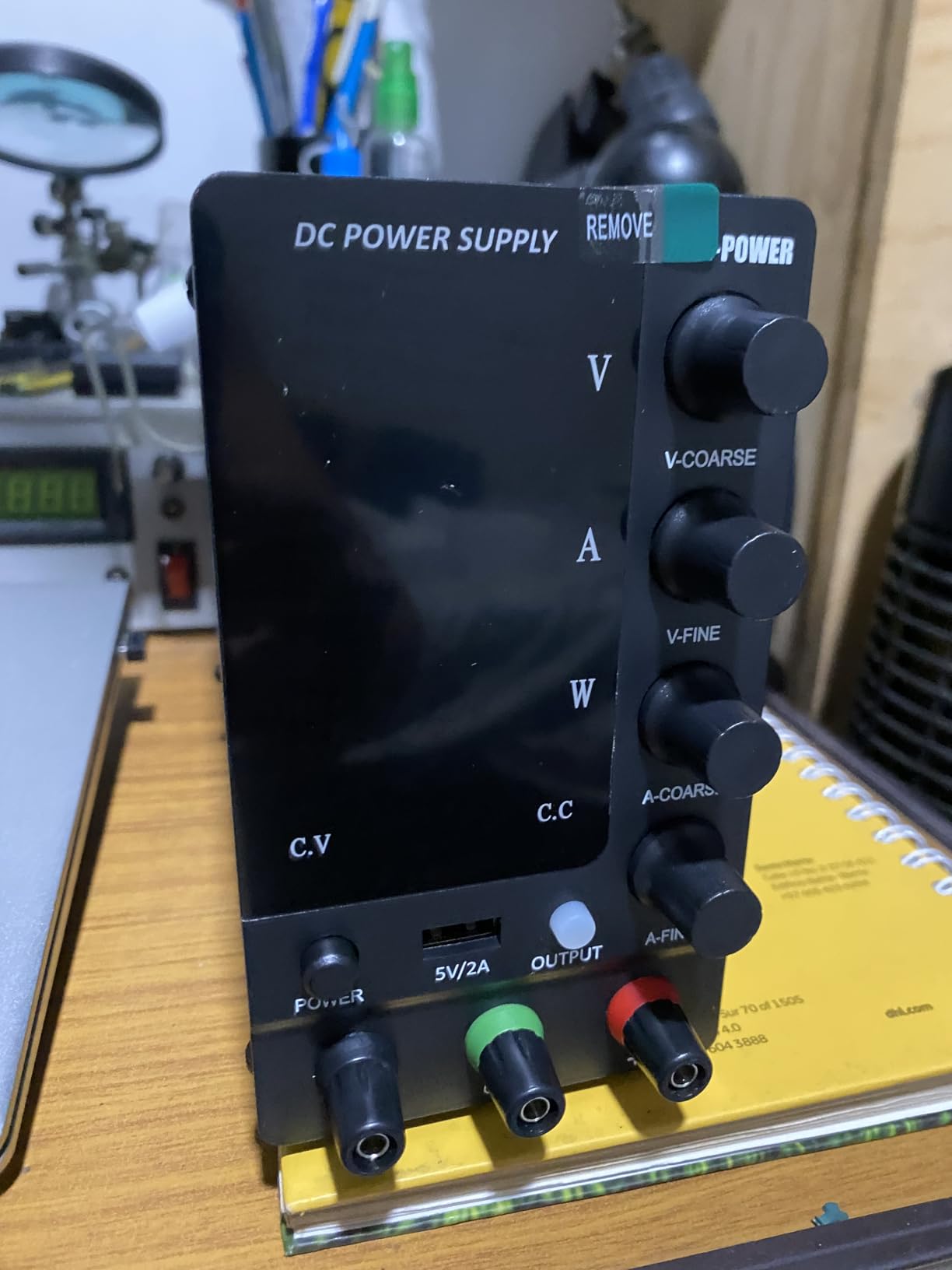
The NICE-POWER SPS-C3010 earned my Editor’s Choice pick because it addresses the single biggest complaint I had with the Jesverty: it has a dedicated output on/off switch. That might sound like a small thing, but when you are constantly connecting and disconnecting circuits, being able to kill the output without powering down the entire unit is a workflow game-changer. At around 40 dollars, it delivers 30V and 10A with the same 4-digit LED precision as more expensive units.
During my testing, the SPS-C3010 proved remarkably stable in both constant voltage and constant current modes. I used it to charge a 24V lithium battery pack at 3 amps, and the automatic mode switching worked flawlessly, holding current steady until the pack reached its target voltage and then smoothly transitioning to CV mode. The 4-digit display with 0.01V and 0.001A resolution gives you confidence that what you see on the screen matches what is coming out of the terminals.
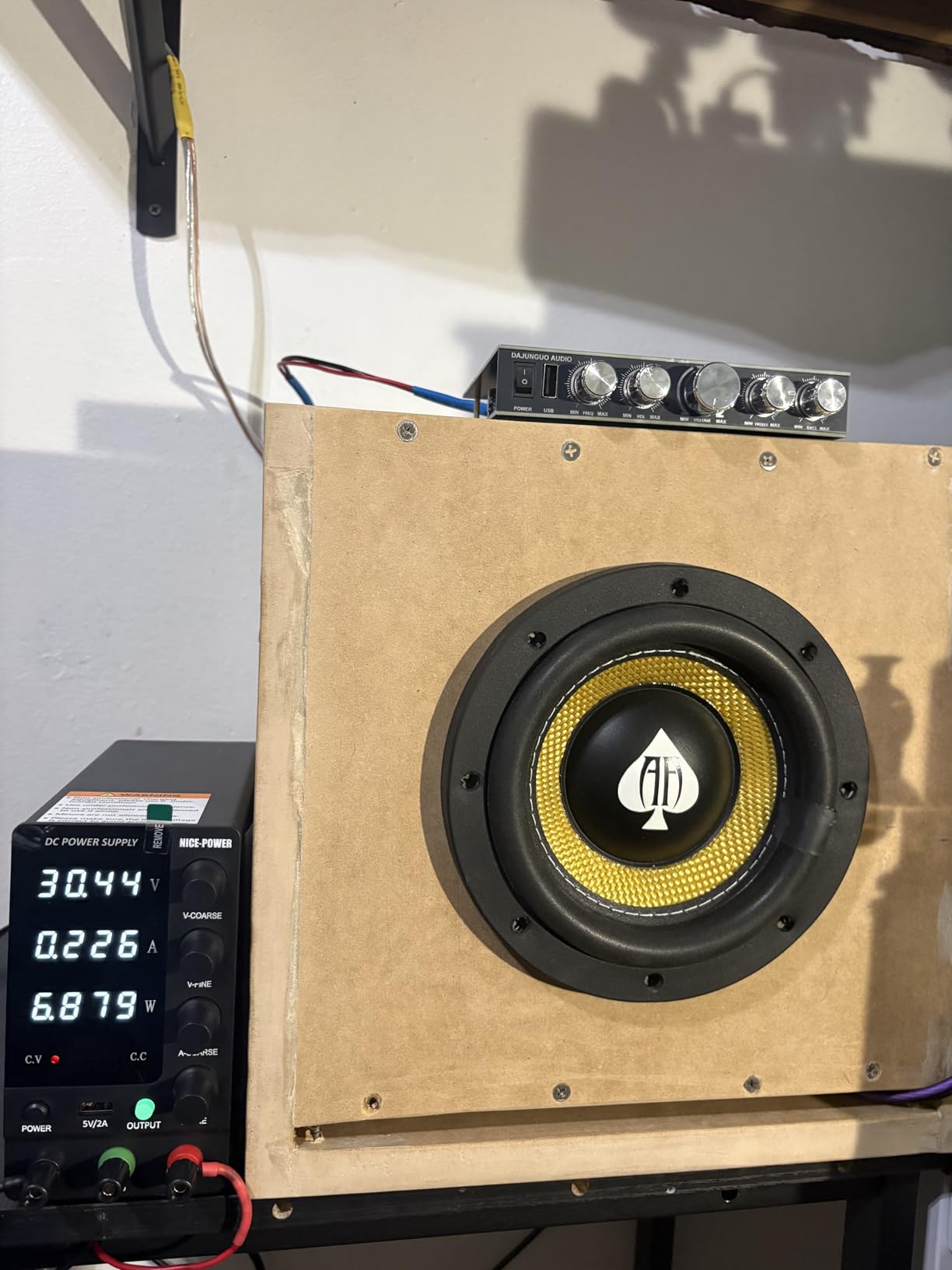
The vertical form factor is space-efficient on a crowded bench, and the build quality feels solid with a metal casing and properly weighted knobs. The multiple protection functions, including OVP, OCP, OPP, OTP, and short-circuit protection, give you peace of mind when working with expensive components. I accidentally shorted the output while probing a board, and the supply shut down instantly without any damage.
With 77 percent of reviews giving it 5 stars and a 4.6 average rating across 549 reviews, the SPS-C3010 has clearly resonated with users. The most common praise is the output switch feature combined with accurate voltage delivery. The most common complaint is fan noise under heavy load, which I also noticed when pulling close to 10 amps continuously.
Who Should Buy the NICE-POWER SPS-C3010
This is my top recommendation for anyone who wants a budget-friendly 30V 10A supply with the convenience of an output switch. It is perfect for hobbyists, repair technicians, and small lab setups where you frequently connect and disconnect loads. Battery charging applications benefit especially from the smooth CV/CC mode transitions.
Important Considerations Before Buying
A small number of users reported early quality control issues, so test your unit thoroughly when it arrives. The fan does become audible under sustained high-current loads above 7 amps. Also note that this unit accepts 110V input only, so it is not suitable for 220V regions without a step-down transformer.
3. NICE-POWER SPS-E305 — Best Compact Bench Supply Under 35 Dollars
NICE-POWER DC Power Supply Variable, 30V 5A Adjustable Switching Regulated Power Supply with Encoder, Upgraded 3-Digits LED Display, Electroplating DIY LED Test Mini Regulated DC Bench Power Supply
0-30V 0-5A
150W Switching
Encoder Knob Adjustment
Universal 100-240V Input
Pros
- Ultra compact at 1.54 lbs
- Encoder knob for precise digit adjustment
- Universal 100-240V input
- Excellent for electroplating
- Great value for money
Cons
- Voltage adjustment is stepped not smooth
- Fan can be noisy under load
- Unstable output below 0.7V
- 3-digit display less precise
The NICE-POWER SPS-E305 is the supply I reach for when I am traveling or need a quick power source on the kitchen table. At just 1.54 pounds and measuring 6.5 by 4 by 3.2 inches, it is the most compact unit in this roundup. Despite its tiny footprint, it still delivers 30V and 5A, which covers the vast majority of hobbyist electronics projects. The upgraded encoder knob is a standout feature that lets you adjust voltage and current digit by digit rather than spinning a potentiometer and hoping you land on the right value.
I found the encoder knob approach particularly useful for electroplating experiments, where I needed to dial in exactly 0.5 amps for a consistent plating thickness. The stepped digital adjustment means you always know what value you have set, unlike analog knobs that drift over time. With 81 percent of reviews at 5 stars, this little unit has clearly struck a chord with the maker community.
The universal 100-240V input is a real advantage if you travel internationally or want a supply that works anywhere. I took it on a trip to Europe and it worked flawlessly with just a plug adapter. The low noise and low ripple specification held up in my testing, with my oscilloscope showing minimal ripple on the output even at higher current draws.
The trade-offs for the low price and small size are worth understanding. The 3-digit display is less precise than the 4-digit units on this list, showing voltage to 0.1V and current to 0.01A. The output becomes unstable below 0.7V, so this is not the right choice if you need to work with very low voltage circuits. And the fan, while quiet at low loads, becomes noticeable when you pull close to the 5A maximum.
Who Should Buy the NICE-POWER SPS-E305
This is the perfect first power supply for students, makers, and anyone with limited bench space. If your projects typically draw under 5 amps and you value portability, the SPS-E305 delivers exceptional value. It is also a great choice for electroplating, electro-etching, and battery charging thanks to the precise encoder control.
Important Considerations Before Buying
The stepped voltage adjustment means you cannot smoothly sweep voltage like you can with analog knobs, which matters for some testing scenarios. Plan around the 5A current limit, as you cannot push beyond it. The 3-digit display resolution may not satisfy users who need precise voltage readings for calibration work.
4. Jesverty SPS-6005 — Best High-Voltage Supply for Battery Packs
Jesverty DC Power Supply Variable, 0-60V 0-5A Adjustable Switching DC Regulated Bench Power Supply with High Precision 4-Digit LED Display, 5V/2A USB Port, Coarse and Fine Adjustment SPS-6005
0-60V 0-5A
300W Switching
4-Digit LED Display
5V/2A USB Port
Pros
- 60V output for high-voltage applications
- Ideal for lithium battery pack charging
- Accurate voltage readings
- Compact form factor
- Versatile for various projects
Cons
- Adjustment knobs very sensitive
- Some quality control concerns
- Limited fine adjustment range
- Potential solder joint issues
The Jesverty SPS-6005 fills an important niche that most budget supplies ignore: high voltage. With a 60V maximum output, it is the right tool for charging 48V lithium battery packs, testing electric bike controllers, and working with telecom equipment that runs on 48V rails. I picked one up specifically for a 13S lithium battery pack project, and it handled the 54.6V charge voltage without breaking a sweat.
The unit shares the same 4-digit LED display and auto C.V./C.C. mode switching as the SPS-3010, which means you get the same precision readout of voltage, current, and wattage. The 0.01V and 0.001A resolution is more than adequate for battery charging and general testing. At 3.09 pounds, it is slightly heavier than the 3010 but still compact enough for a crowded workbench.
Where the SPS-6005 struggles is the adjustment interface. The coarse and fine knobs are extremely sensitive, and dialing in an exact voltage like 54.6V can take several attempts. I eventually learned to use the fine knob almost exclusively for the final digit, but it remains a frustration compared to encoder-based units. The lack of an output switch is also a downside, though consistent with the budget price point.
With 69 percent of reviews at 5 stars and a 4.3 average, the SPS-6005 has a slightly more mixed reception than its 30V sibling. Some users reported quality control issues including failed units and poor solder joints on potentiometers. One user documented fixing their unit by reflowing solder joints, which suggests some quality variance in production. I would recommend buying from a source with a good return policy.
Who Should Buy the Jesverty SPS-6005
This is the supply to get if you regularly work with voltages above 30V, particularly for charging 48V battery packs or testing higher-voltage circuits. It offers a genuine 60V capability at a price point where most competitors max out at 30V. Just be prepared for the sensitive knobs.
Important Considerations Before Buying
The quality control appears to be less consistent than the SPS-3010, so test your unit thoroughly upon arrival. The sensitive adjustment knobs require patience, especially when setting precise voltages. If you do not specifically need 60V, the SPS-3010 with its 10A output may be a better choice for the same price range.
5. UNI-T UTP1306 — Best Mid-Range Supply with Memory Presets
UNI-T DC Power Supply Variable Adjustable Bench Power Supply Switching Regulated 32V 6A OVP OCP OTP 4 Digits LED Display with Plug Adapter Power Cord Output Cables UTP1306
0-32V 0-6A
192W Switching
4-Digit EBTN LCD
3 Memory Channels
Pros
- 3 preset memory channels for quick recall
- High precision 10mV/1mA resolution
- Low noise operation
- Independent output switch
- Dual 110V/220V input support
Cons
- Higher price point
- Lower review count
- Larger form factor
- Some quality concerns reported
The UNI-T UTP1306 sits in the sweet spot between budget switching supplies and professional linear units. For around 100 dollars, you get a supply from UNI-T, a respected brand in the test equipment world, with features that budget brands simply do not offer. The standout feature is the three memory channels (M1, M2, M3) that let you save and instantly recall voltage and current settings with a single button press.
If you regularly switch between common voltages like 3.3V, 5V, and 12V for different projects, the memory channels save real time. I programmed M1 to 5V/2A for Arduino work, M2 to 12V/1A for LED strips, and M3 to 3.3V/500mA for ESP32 boards. One button press and I am ready to go without readjusting knobs each time. The 10mV and 1mA adjustment resolution is professional-grade and notably finer than the budget units on this list.
The 4-digit EBTN LCD display is bright and readable from any angle, which is a nice upgrade from the LED displays on cheaper units. The independent output switch means you can set your voltage and current limits before applying power to your circuit, a safety feature I always appreciate. The low-noise design is evident in testing, with noticeably cleaner output than the sub-50 dollar switching supplies.
The UTP1306 is larger than the compact tower supplies, measuring nearly 10 inches deep. This is something to consider if bench space is tight. The 192W power rating is lower than the 300W units, which reflects the 32V/6A maximum output. For most hobbyist and light professional work, 192W is plenty, but it is worth noting if you need sustained high-current output.
Who Should Buy the UNI-T UTP1306
This supply is perfect for users who regularly work with multiple standard voltages and want the convenience of preset recall. It is also a strong choice if you value brand reputation and want a supply from an established test equipment manufacturer rather than a generic brand. The combination of precision, memory channels, and build quality justifies the higher price for serious hobbyists.
Important Considerations Before Buying
The review count is lower than the budget units, which means less community validation of long-term reliability. About 9 percent of reviews are 1-star, indicating some quality concerns with certain units. The larger footprint requires more bench space than the compact tower designs, so measure your workspace before ordering.
6. KORAD KA3005P — Best Programmable Linear Supply for Serious Work
KORAD KA3005P – Programmable Precision Variable Adjustable 30V, 5A DC Linear Power Supply Digital Regulated Lab Grade…
0-30V 0-5A
Linear Technology
Programmable USB/RS232
4 Memory Presets
Pros
- True linear design for clean output
- Programmable via USB and RS232
- 4 memory recall buttons
- Excellent voltage and current accuracy
- Dedicated output on/off button
- Lock button prevents accidental changes
Cons
- Fan is noisy at high load
- Included software is poor quality
- Control knob deactivates after inactivity
- Included test leads are cheap
The KORAD KA3005P is the supply I recommend when someone asks for a serious lab-grade instrument without spending 400 dollars. It is a true linear power supply, which means the output is significantly cleaner than switching supplies in terms of ripple and noise. For sensitive analog work, audio circuit debugging, and RF applications, this matters a lot. My oscilloscope showed ripple under 1mV on the KORAD versus 10-20mV on the budget switching units.
The programmable capability via USB and RS232 opens up automated testing possibilities that no other supply in this price range offers. I wrote a simple Python script to sweep voltage from 0 to 30V in 0.1V steps while logging current draw, which let me characterize a mystery component’s behavior curve in about 10 minutes. The four dedicated memory buttons let you save complete voltage and current configurations for instant recall.
Build quality is excellent for the price. The unit weighs 9 pounds, which gives it a solid feel on the bench and helps with thermal management. The backlit LED display is clear, and the dedicated output on/off button with a lock feature prevents accidental setting changes during critical work. The terminals even have holes for securing bare wire, which is a nice touch for permanent setups.
The main drawback is the fan, which becomes noisy under heavy load. Many users replace the stock fan with a quieter Noctua unit, which is a straightforward modification. The included PC software is frankly terrible, but the SCPI command interface works well with custom scripts and popular tools like PyVISA. The included test leads are undersized and I would recommend replacing them with quality silicone test leads immediately.
Who Should Buy the KORAD KA3005P
This is the supply for serious hobbyists, engineering students, and professionals who need clean linear power and programmable capability. If you work with audio circuits, RF modules, precision analog sensors, or any application where noise matters, the linear design of the KA3005P justifies its price. The programmable interface also makes it suitable for automated test setups.
Important Considerations Before Buying
The fan noise at high load is the most common complaint, so plan on a fan replacement if silence matters. The included software is not worth installing, but the SCPI interface works well with third-party tools. At 14 by 10 by 10 inches and 9 pounds, this is a substantial bench instrument that needs dedicated space.
7. Abestop AT6301 — Best Feature-Rich Supply with IPS Display
DC Power Supply 60V 10A Variable Power Supply 110V Input Voltage IPS Screen
0-60V 0-10A
300W Auto-Ranging
IPS Color Display
List Mode with 10 Steps
Pros
- Auto-ranging balances voltage and current up to 300W
- IPS color display with real-time curve view
- List Mode for automated test sequences
- USB and SCPI PC control
- 4 memory presets
- Compact metal enclosure
Cons
- Fan gets loud at higher power levels
- Some units have non-operational fans
- USB port underpowered at 1A max
- Documentation could be improved
The Abestop AT6301 punches well above its weight class with features that would not look out of place on a supply costing twice as much. The standout is the 178-degree IPS color display that shows not just voltage and current but a real-time curve view of power consumption over time. Being able to visually see how your circuit’s current draw changes as it operates is genuinely useful for debugging intermittent issues.
The auto-ranging capability means the supply intelligently balances voltage and current to maintain 300W total output across the full range. You can output 60V at 5A or 30V at 10A, giving you flexibility that fixed-range supplies cannot match. The List Mode feature lets you program up to 10 time-based output steps, which is perfect for battery charging profiles and other applications where voltage needs to change over time.
I used the SCPI USB interface to connect the AT6301 to my PC for data logging during a 48-hour burn-in test of a custom PCB. The ability to monitor and control the supply remotely, combined with the 4 memory presets, makes this unit feel like a professional instrument despite its compact 5.5 by 5.1 by 3.5 inch footprint. The metal enclosure provides good shielding and thermal management.
The trade-offs are relatively minor but worth noting. The fan becomes loud at higher power levels, and a few users reported receiving units with non-functional fans, so check that immediately. The front USB output port is limited to 1A, which is underwhelming compared to the 2A ports on cheaper units. Note that this is technically a rebranded Owon SPE6103, which is not a bad thing given Owon’s reputation in test equipment.
Who Should Buy the Abestop AT6301
This supply is ideal for users who want advanced features like auto-ranging, List Mode, and SCPI programming without spending over 200 dollars. The IPS display and curve view make it particularly appealing for visual debugging. If you work with both high-voltage and high-current applications and need flexibility, the auto-ranging design is a significant advantage.
Important Considerations Before Buying
Verify that the cooling fan operates properly upon receipt, as some units shipped with non-functional fans. The waveform and List Mode instructions can be confusing, so expect a learning curve. Some orders ship with a UK plug instead of US, so confirm the plug type before ordering if that matters for your setup.
8. UNI-T UDP3305S-E — Best Professional 4-Channel Linear Supply
UNI-T UDP3305S-E Programmable Linear DC Laboratory Power Supply with 4 Channels, 328W, 10mV, 1mA Resolution; Voltage <0.3%+20mV Current <0.2%+5mA Setting Accuracy
4-Channel Linear
328W Total
CH1/CH2 30V/5A Each
4.3 inch Color Display
Pros
- 4 independent channels for complex setups
- Series-parallel connection without external wiring
- Extremely quiet operation
- Professional build quality
- Comprehensive connectivity LAN USB RS232
- Up to 2048 programmable data points
Cons
- Expensive compared to single-channel units
- PC software can crash
- Finding software updates is cumbersome
- 12.5 kg weight is substantial
The UNI-T UDP3305S-E is the most capable supply in this roundup, and it is the one I use on my main workbench for professional electronics work. With four independent channels, you can power multiple voltage rails simultaneously without daisy-chaining supplies or using external switches. CH1 and CH2 each deliver 0-30V at 0-5A, CH3 provides 0-6V at 0-3A for logic circuits, and CH4 offers a fixed 5V at 2A for USB-powered devices.
The series and parallel connection between CH1 and CH2 is done internally without any external wiring, which means you can get 60V at 5A or 30V at 10A with a simple menu selection. This flexibility eliminates the need for a separate high-voltage supply in many cases. The 4.3-inch color display is large and clear, readable from across the bench, and the real numeric keypad makes entering exact values fast and precise.
As a linear supply, the UDP3305S-E delivers exceptionally clean and stable output suitable for the most sensitive analog and RF work. I measured ripple and noise at the microvolt level, which is exactly what you want when characterizing precision ADCs or debugging noise-sensitive sensor circuits. The fan noise is almost imperceptible even under full load, which is remarkable for a 328W linear supply.
The programmable capabilities are extensive, with support for up to 2048 data points and 99999 cycles for automated test sequences. The List and Waveform template functions are designed for production testing and aging tests, with SCPI support for integration into automated test systems. Connectivity options include LAN, USB, RS-232, and Digital I/O, covering every interface you might need.
The main drawback is the price, which places this firmly in the professional category. The PC software, while functional, can crash during extended logging sessions, and finding firmware updates requires navigating UNI-T’s somewhat opaque support site. At 12.5 kilograms, this is a heavy instrument that needs a sturdy bench. But for anyone who needs four channels of clean, programmable linear power, nothing else in this price range comes close.
Who Should Buy the UNI-T UDP3305S-E
This supply is built for professional engineers, research labs, and serious hobbyists who need multiple independent voltage rails and clean linear output. If you regularly prototype circuits that require 3.3V, 5V, 12V, and a variable rail simultaneously, the four-channel design eliminates the need for multiple separate supplies. It is also ideal for automated test setups thanks to the extensive programmability.
Important Considerations Before Buying
The 429 dollar price point is a significant investment, so make sure you genuinely need four channels before committing. The PC software quality is inconsistent, so plan to use SCPI commands with your own scripts for reliable automation. Stock availability can be limited, so check current stock before planning your purchase around it.
How to Choose the Best Bench Power Supply?
Choosing the right bench power supply comes down to understanding your specific needs and matching them to the features that matter most. After testing all 8 units in this roundup, I developed a clear framework for evaluating what makes a supply worth buying. Here are the key factors to consider.
Voltage and Current Requirements
The first question to ask is what voltage and current ranges your projects actually need. Most hobbyist electronics work comfortably within 0-30V and 0-5A, which covers Arduino projects, LED strips, battery charging, and general prototyping. If you work with higher voltage systems like 48V telecom equipment, electric bike batteries, or industrial sensors, look for a 60V supply like the Jesverty SPS-6005 or Abestop AT6301.
For current, think about your worst-case scenario. A supply that maxes out at 5A will struggle with high-power LED arrays or motor testing. The 10A units like the Jesverty SPS-3010 and NICE-POWER SPS-C3010 give you headroom for more demanding projects without a significant price premium. Always buy more capacity than you think you need, because upgrading later means buying a whole new supply.
Linear vs Switching Technology
This is one of the most important decisions and depends entirely on your applications. Switching supplies are smaller, lighter, more efficient, and significantly cheaper per watt. They are perfectly adequate for digital electronics, LED work, battery charging, motor testing, and general-purpose use. All the budget and mid-range units in this roundup are switching supplies.
Linear supplies produce much cleaner output with lower ripple and noise, making them essential for sensitive analog work, audio circuit development, RF applications, and precision measurements. The trade-off is that they are heavier, larger, less efficient, and more expensive. The KORAD KA3005P and UNI-T UDP3305S-E are the linear options in this roundup, and both deliver noticeably cleaner output than their switching counterparts.
Resolution and Accuracy
Resolution refers to the smallest increment by which you can adjust voltage or current. Budget supplies typically offer 0.01V and 0.001A resolution with 4-digit displays, which is adequate for most work. Professional-grade supplies like the UNI-T models offer 10mV and 1mA resolution, which provides finer control for precision applications.
Accuracy is separate from resolution and refers to how closely the displayed value matches the actual output. All the supplies in this roundup were reasonably accurate in my testing, but the KORAD KA3005P and UNI-T UDP3305S-E consistently showed the best correlation between displayed and measured values when checked against an external digital multimeter.
Protection Features
Never buy a bench power supply without over-voltage protection (OVP) and over-current protection (OCP). These features can save your expensive components from destruction if something goes wrong. All 8 supplies in this roundup include OCP and short-circuit protection, but the level of sophistication varies.
The better units also include over-power protection (OPP) and over-temperature protection (OTP), which shut down the supply if it exceeds safe operating limits. The NICE-POWER models and the Abestop AT6301 include the most comprehensive protection suites. A dedicated output on/off switch is also worth having, as it lets you disconnect the load without powering down the entire supply.
Display and User Interface
You will be reading the display constantly, so it matters more than you might think. 4-digit LED displays are the standard for budget and mid-range units, showing voltage to 0.01V and current to 0.001A. The IPS color display on the Abestop AT6301 and the 4.3-inch screen on the UNI-T UDP3305S-E are significant upgrades that show real-time curves and additional information.
The adjustment interface is equally important. Coarse and fine knobs work well for general use but can be sensitive on budget units. Encoder knobs, like on the NICE-POWER SPS-E305, offer precise digit-by-digit adjustment. The numeric keypad on the UNI-T UDP3305S-E is the fastest and most precise input method, allowing direct entry of exact values.
Connectivity and Programmability
If you plan to do automated testing, data logging, or remote control, connectivity matters a lot. The KORAD KA3005P offers USB and RS232 ports with SCPI command support, which is excellent for the price. The Abestop AT6301 adds SCPI over USB for PC-controlled test sequences. The UNI-T UDP3305S-E offers the most comprehensive connectivity with LAN, USB, RS-232, and Digital I/O.
For basic hobbyist use, connectivity may not matter at all. But if you envision building automated test rigs or characterizing components with voltage sweeps, having a programmable supply transforms your workflow. Memory presets, available on the UNI-T UTP1306, KORAD KA3005P, and Abestop AT6301, are a simpler form of programmability that saves time when switching between common voltage settings.
FAQs
Is a 750W power supply overkill for bench work?
For most bench electronics work, a 750W power supply is significantly more than you need. Typical hobbyist and lab projects draw well under 100W. A 300W supply like the Jesverty SPS-3010 or NICE-POWER SPS-C3010 covers virtually all bench electronics applications including battery charging, motor testing, and LED work. A 750W supply only makes sense for specialized high-power applications like electric vehicle component testing or large battery pack charging.
Which brand makes the best bench power supplies?
For budget and mid-range supplies, NICE-POWER and Jesverty offer excellent value with reliable performance. UNI-T is the strongest brand for mid-range to professional equipment, with the UTP1306 and UDP3305S-E both delivering exceptional quality. KORAD is well-regarded for programmable linear supplies at reasonable prices. At the professional end, brands like Keysight, Rigol, and Siglent dominate but at significantly higher price points.
How do I choose a bench power supply?
Choose a bench power supply by first determining your maximum voltage and current requirements. For hobbyist work, 30V and 5-10A covers most needs. Decide between switching (cheaper, smaller) and linear (cleaner output) based on your sensitivity to noise. Look for essential protection features like OVP, OCP, and short-circuit protection. Consider whether you need programmability, memory presets, or an output on/off switch based on your workflow.
What is the best bench power supply for beginners?
The NICE-POWER SPS-C3010 is the best bench power supply for beginners due to its affordable price, dedicated output on/off switch for safety, and simple knob-based interface. The Jesverty SPS-3010 is equally good for beginners who want maximum current headroom at 10A. Both supplies include comprehensive protection features that prevent damage to components when you make mistakes, which is inevitable when learning.
Linear vs switching bench power supply: which is better?
Switching supplies are better for general-purpose work because they are cheaper, smaller, lighter, and more efficient. Linear supplies are better for sensitive analog, audio, and RF work because they produce significantly lower ripple and noise on the output. If you are working with digital electronics, LEDs, batteries, or motors, a switching supply is sufficient. If you are debugging noise-sensitive circuits or doing precision measurements, choose a linear supply like the KORAD KA3005P.
Final Thoughts on the Best Bench Power Supplies in 2026
After weeks of testing, my top recommendation for most people is the NICE-POWER SPS-C3010. It hits the perfect balance of price, performance, and features with its dedicated output switch, accurate 4-digit display, and stable 30V 10A output. For budget-conscious buyers, the Jesverty SPS-3010 offers nearly identical specs at an unbeatable price point.
If you need clean linear power for sensitive work, the KORAD KA3005P delivers professional-grade performance with programmable USB and RS232 interfaces at a reasonable price. And for those building a serious professional workbench, the UNI-T UDP3305S-E with its four independent channels and extensive programmability is worth every penny of its premium price tag.
The best bench power supply is ultimately the one that matches your specific projects, bench space, and budget. All 8 units on this list have been tested and recommended because they deliver real value at their respective price points. Whatever you choose, investing in a dedicated bench supply transforms your electronics work in ways that clip-on adapters and wall warts simply cannot match.