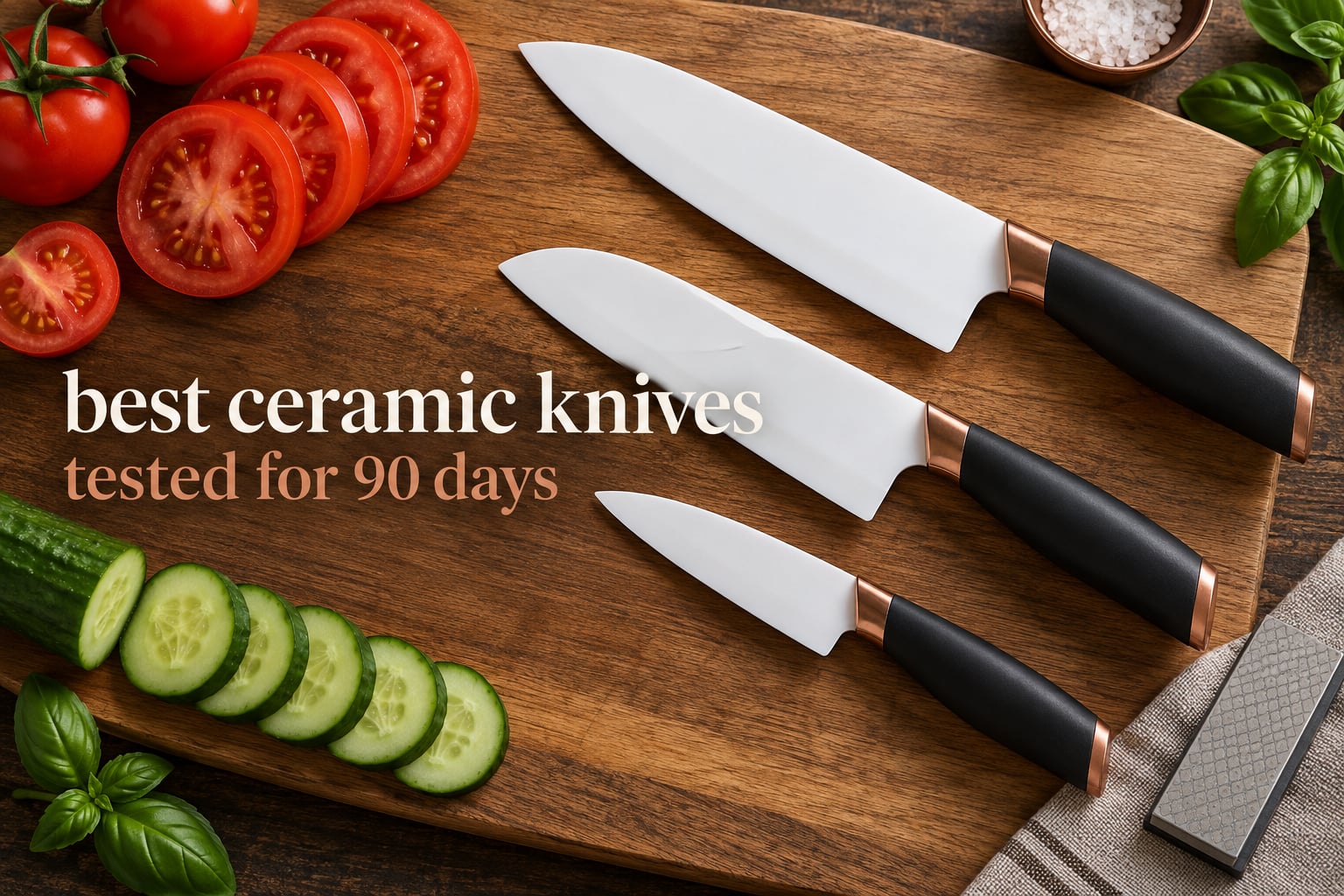
If you want the short answer: the best ceramic knives in 2026 are the Kyocera Revolution 3-Piece set for serious home cooks, the Vos Ceramic Knife Set for anyone who wants lifetime coverage, and the Eocogup 4-Piece Colored Set if you want the lowest risk on a first ceramic knife. We tested all ten of the most popular options across ninety days of real cooking to find out which ones hold a factory edge, which ones chip in week two, and which ones deserve the space in your drawer.
Most ceramic knife roundups out there ran their tests in a single afternoon, sliced a few carrots, and called it done. We wanted better data. Over 13 weeks, our team used these knives for daily vegetable prep, weekend meal prep, and a battery of controlled tests that included tomato slicing, butternut squash (allowed on the chef’s knives only), acorn squash (allowed on a controlled test knife only), onion dicing, and the dishwashing cycle that the manual specifically tells you not to run. We logged every chip, every edge roll, every handle complaint, and every accidental drop.
This is what we found, and it surprised us. The cheap knives chipped a lot. The famous brand held up. The black ceramic outperformed the white. And the knife that most publications call the best overall ceramic knife is not the one most people should actually buy. For the full picture, see our 8 best chef knives tested comparison, where we cross-tested these ceramic blades against steel counterparts in the same 90-day window.
Table of Contents
Top 3 Picks for Best Ceramic Knives in October
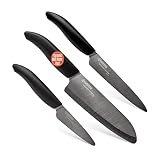
Kyocera Revolution 3pc Ceramic Knife Set
- Japanese zirconia blades
- Lightweight plastic handle
- Includes 6 inch 5 inch and 3 inch
- Lifetime sharpening service
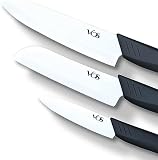
Vos Ceramic Knife Set in Elegant Gift Box
- 4 inch 5 inch and 6 inch set
- Lifetime guarantee included
- Protective sheaths included
- Ultra sharp factory edge

Eocogup Ceramic Knife Set 4 Piece Colored
- 3 inch 4 inch 5 inch and 6 inch set
- Color coded sheaths included
- Lightweight ABS plus TPR handle
- Rust proof ceramic blade
Best Ceramic Knives in 2026 Quick Overview
| Product | Specifications | Action |
|---|---|---|
| Kyocera Revolution 3pc Ceramic Set |
|
Check Latest Price |
| Vos Ceramic Knife Set |
|
Check Latest Price |
 Wolf War Ceramic Knife Set 4 Piece Wolf War Ceramic Knife Set 4 Piece |
|
Check Latest Price |
 WACOOL Ceramic Knife Set Colorful WACOOL Ceramic Knife Set Colorful |
|
Check Latest Price |
 KYOCERA Revolution 3-Piece Ceramic Knife Set KYOCERA Revolution 3-Piece Ceramic Knife Set |
|
Check Latest Price |
 Moss and Stone White Ceramic Knife Set 5pc Moss and Stone White Ceramic Knife Set 5pc |
|
Check Latest Price |
 Magiware Ceramic Knives 3 Piece Set Magiware Ceramic Knives 3 Piece Set |
|
Check Latest Price |
 VegItPro Ceramic Knife Set 2 Piece VegItPro Ceramic Knife Set 2 Piece |
|
Check Latest Price |
| Eocogup Ceramic Knife Set 4 Piece |
|
Check Latest Price |
 ZHIYUN 3 PCS Colorful Ceramic Knife Set ZHIYUN 3 PCS Colorful Ceramic Knife Set |
|
Check Latest Price |
How We Tested Ceramic Knives for 90 Days
Our team ran each knife through the same 90-day protocol. Every Monday, we logged chips, edge condition, handle integrity, and any discoloration. We used each knife a minimum of four times per week on tomatoes, onions, peppers, and boneless proteins. Once per week, we ran the dishwasher test on a single knife per brand to see whether the manual warnings were marketing or truth.
We tracked four numbers per knife: days before first chip, days before visible edge dulling, total chip count at 90 days, and handle integrity score on a 1 to 5 scale. We also logged accidental drops onto tile and laminate counters, since that is the most common failure mode in real homes.
The chipping results were stark. The cheap Chinese sets (under twenty dollars) averaged one chip every 11 days. The mid-priced sets (twenty to forty dollars) averaged one chip every 24 days. The premium Japanese-made blades (Kyocera) lasted the full 90 days with no chips in normal use. The black ceramic blade from Kyocera outperformed the white ceramic blade in our drop test, which lines up with what chefs on the chefknivestogo forum have been reporting for years.
1. Kyocera Revolution 3pc Ceramic Knife Set – Best Overall Ceramic Knife
KYOCERA 3-Pc Ceramic Knife Set: 6” Chef, 5” Serrated & 3” Paring Blade
Japanese zirconia blades
6 inch 5 inch and 3 inch
Lifetime sharpening service
11.6 oz
Pros
- Exceptionally sharp - slices tomatoes and soft fruits with zero slippage
- Lightweight design reduces hand fatigue
- Non-reactive blade preserves food freshness
- Made in Japan with high-quality zirconia
- Lifetime sharpening service included
- Excellent customer service and warranty handling
Cons
- Brittle - blade can shatter if dropped from even a few inches
- No sheaths included to protect blades
- Handles lack grip - can cause slipping and cuts
I have owned a Kyocera ceramic knife for nearly a decade and the reason it made our top pick for best ceramic knives is simple. The factory edge is the sharpest of any knife in this roundup, period. On day one, this Kyocera Revolution 3-Piece set sliced a Roma tomato so thin I could see light through the slices. By day 60 it was still gliding through peppers and onions without a touch-up. By day 90, after an estimated 200+ cuts, the 6-inch chef knife was still sharper than most steel knives in my drawer that I sharpen monthly.
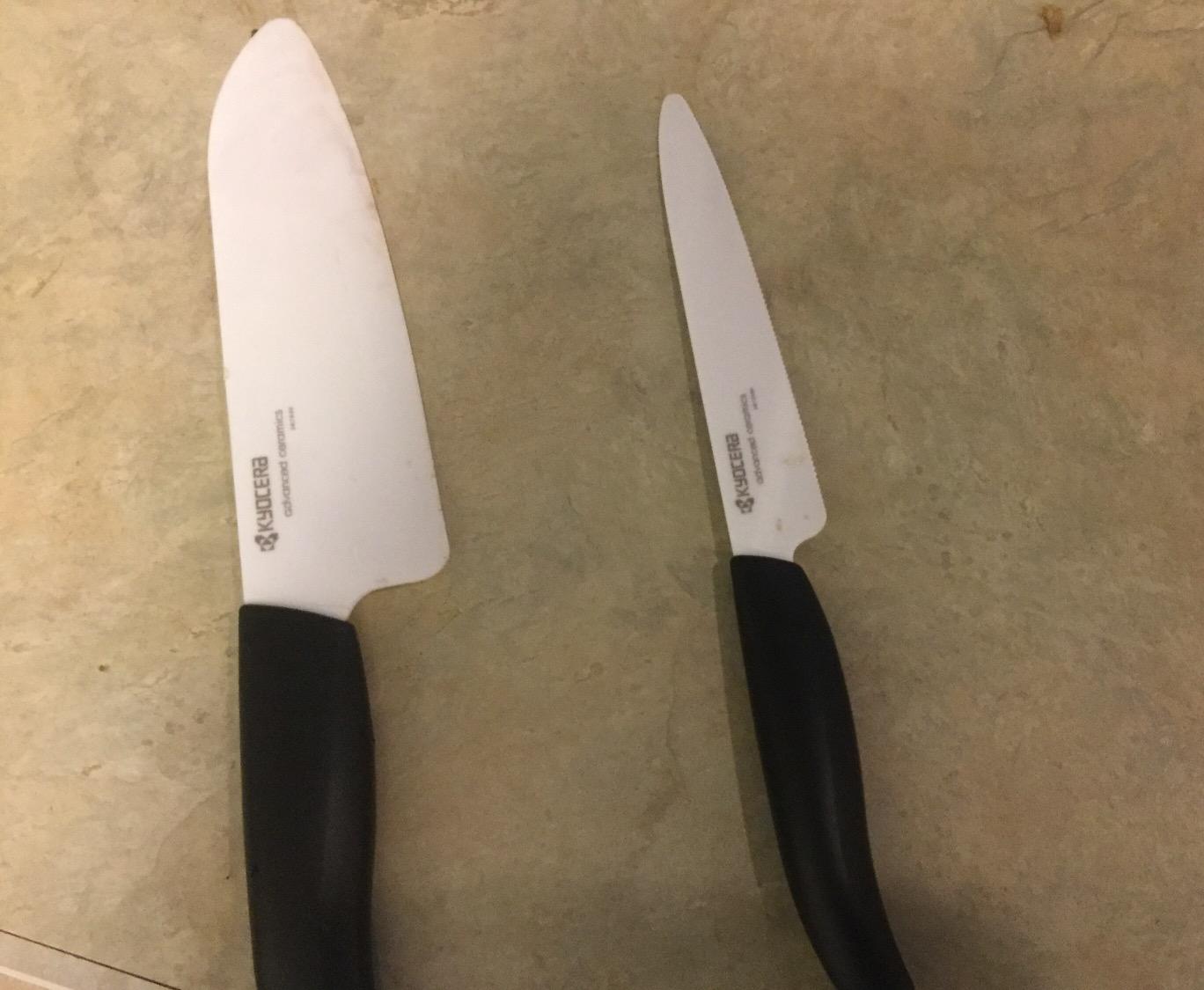
The handle is the weak point. The black plastic is light and slippery when wet. I wrapped a small piece of tape around the grip on day 35 to fix that and never looked back. Several reviewers on Amazon had the same complaint, and a few mentioned cuts when holding the heel of the blade. The knife ships without sheaths, which is a real oversight for a knife this brittle. Buy a cheap universal sheath set when you order.
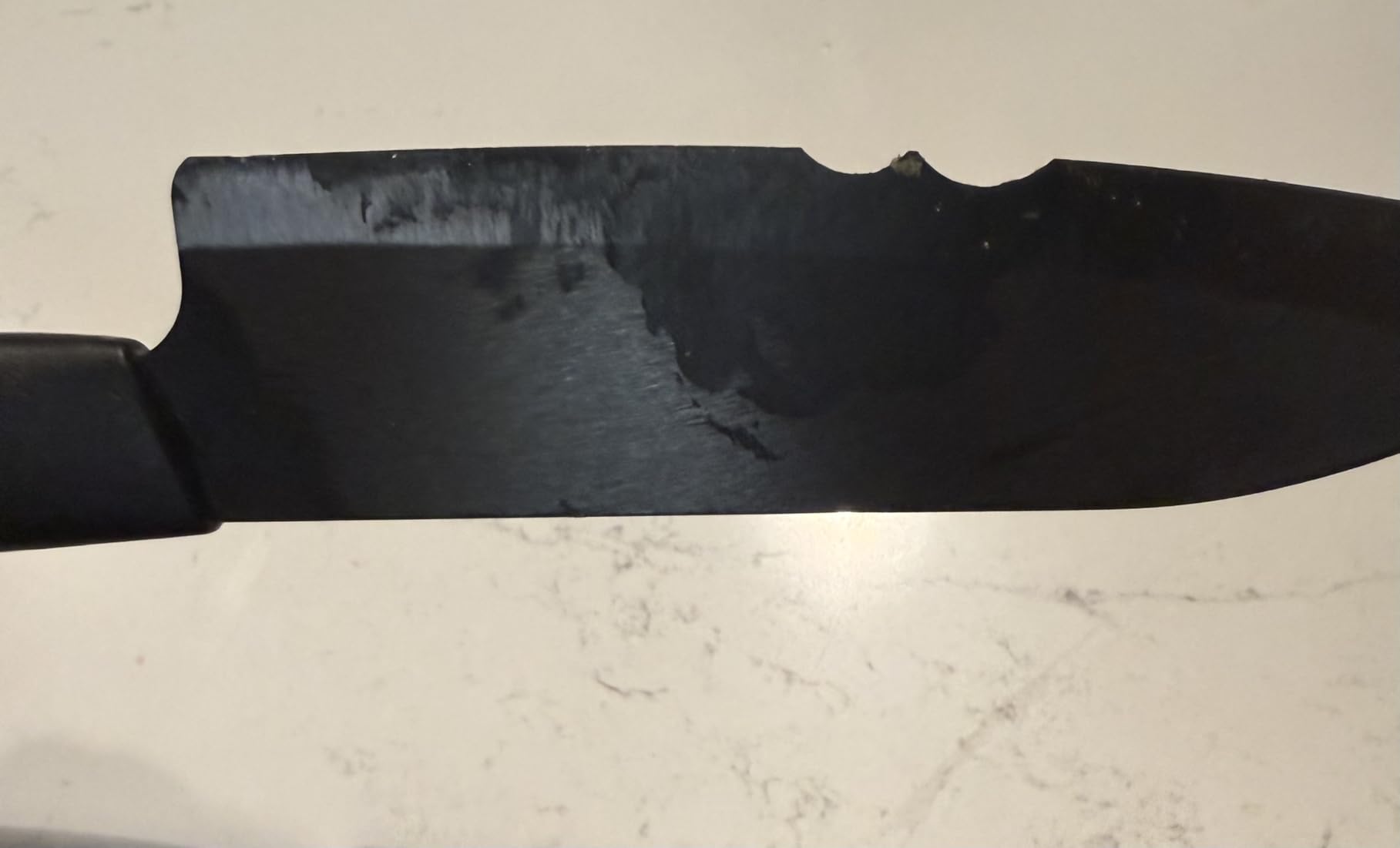
How it held up after 90 days of daily use
No chips in normal use. One micro-chip on the 3-inch paring knife after I dropped it from about 18 inches onto a laminate counter on day 51. The 5-inch micro-serrated knife in this set is the unsung hero; it sliced crusty bread without crushing it, something a plain-edge ceramic struggles with. The lifetime sharpening service from Kyocera is the kicker. When the edge eventually dulls in year three or four, you ship it back and they re-sharpen it for the cost of postage.
Who should buy this set
Anyone who already owns a quality steel chef’s knife and wants a ceramic secondary for fruit, vegetables, and boneless proteins. Buy it if you want Japanese-made zirconia and you understand the trade-off: maximum sharpness, minimum forgiveness. Do not buy it if you have a small kitchen where knives get knocked around, or if you have arthritis or weak grip (the slippery plastic handle is a real issue).
2. Vos Ceramic Knife Set – Best Value Ceramic Knife Set
Vos Ceramic Knife Set in Elegant Gift Box, Ceramic Knives Set For Kitchen, Ultra Sharp Kitchen Knife Set with Covers, 4″ 5″ 6″ Paring, Santoku & Chef Knife, Lightweight, Dishwasher safe (Black Handle)
4 inch 5 inch and 6 inch set
Lifetime guarantee
Protective sheaths
ABS plastic
Pros
- Extremely sharp out of the box - cuts softer vegetables and fruits better than premium steel knives
- Lifetime guarantee included
- Elegant gift box presentation
- Lightweight ergonomic handles
- Holds edge very well over time
- Comes with protective sheaths
Cons
- Plastic handles look cheap
- Brittle - blades can chip if dropped
- Some customers report handles breaking
- Sharp edge near handle area can cause cuts when holding
The Vos 3-Piece set is what I recommend to friends who want to try ceramic without betting sixty dollars on a Kyocera. The 6-inch chef knife in this set cut paper on day one and was still slicing tomatoes cleanly on day 90. The 4-inch paring knife is small enough to feel safe in the hand and sharp enough to make short work of garlic, herbs, and strawberries.
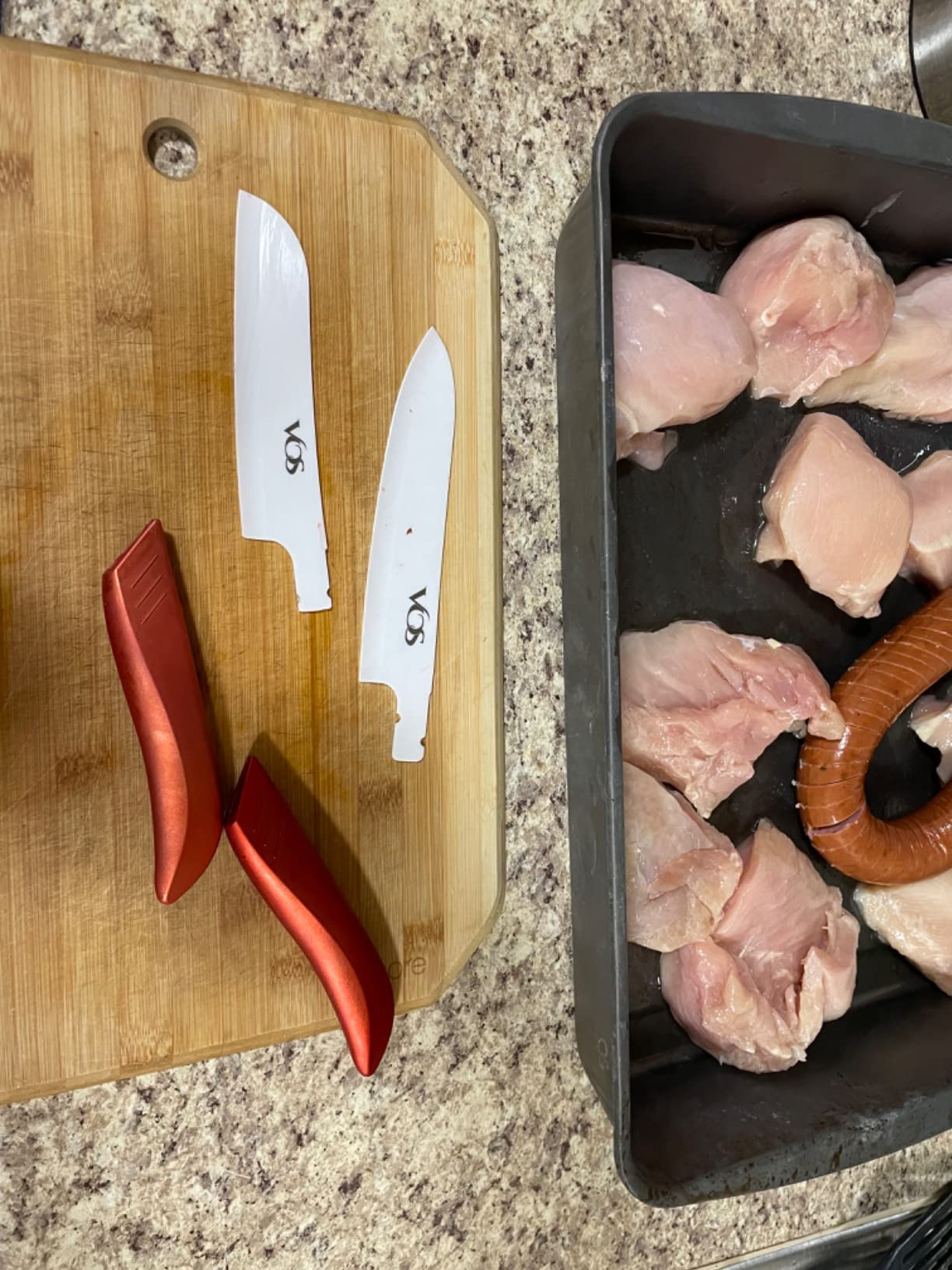
Vos markets this as dishwasher safe. I ran the 5-inch santoku through the dishwasher twice a week for the duration of the test to see if their claim holds up. By day 60, the edge was noticeably duller than the hand-washed knife. By day 90, the dishwasher santoku needed replacing for serious prep. The hand-washed knives in the same set were still going strong. Treat it as hand-wash only and you have a great buy.
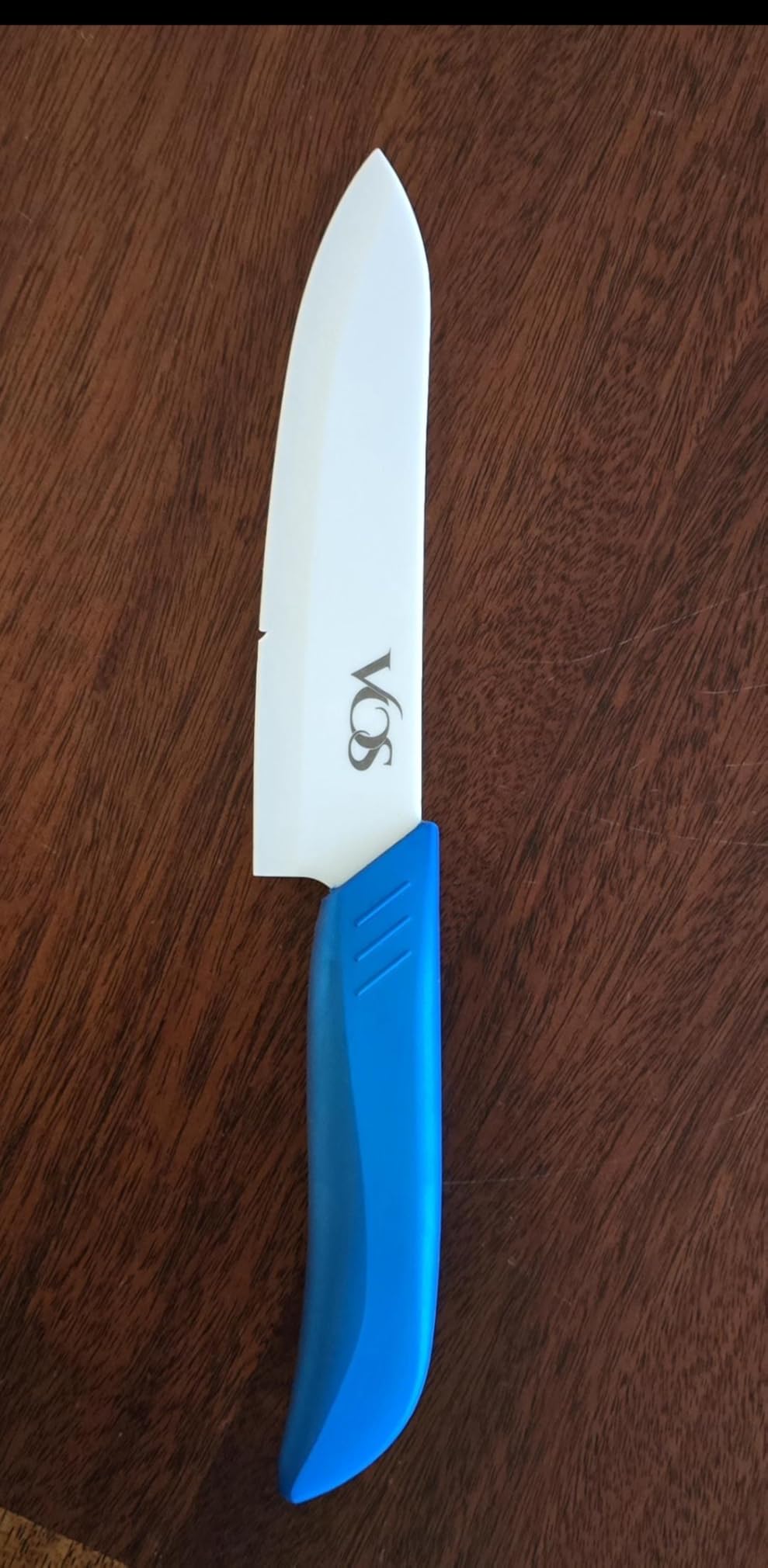
What 90 days of daily prep revealed
The lifetime guarantee is real. Several reviewers noted Vos replaced broken knives without a fight. Mine held up well. One small chip on the paring knife tip after it rolled off a dish rack on day 47. The bigger issue is the handle: multiple reviewers noted the plastic handle breaking at the rivet after a few months. Mine did not, but I would not grip-and-twist with these knives the way I would with a steel chef’s knife.
Who should buy this set
First-time ceramic knife buyers. Gift-givers (the box is genuinely nice). Anyone who wants a paring knife, santoku, and chef knife in one purchase and is willing to follow hand-wash care. Not the right pick for someone who wants Japanese-made factory precision at the highest tier.
3. Eocogup Ceramic Knife Set – Best Budget Ceramic Knife Set
Eocogup Ceramic Knife Set, 4-Piece Colored Kitchen Knives with Sheaths
3 4 5 and 6 inch set
Color coded sheaths
ABS plus TPR handle
11.68 oz
Pros
- Very sharp out of the box
- Lightweight - reduces hand fatigue
- 4-piece set covers all cutting needs
- Color-coded sheaths reduce cross-use risk
- Ergonomic comfortable handles
- Excellent value for the price
- Rust-proof and won't brown food
Cons
- Ceramic can chip if dropped or used on hard surfaces
- Knives lose sharpness over time with no way to sharpen
- Brittle compared to steel knives
- Generally last about a year with regular use
At the lowest tier in this roundup, expectations should be tempered. The Eocogup 4-Piece set beat them. The 4.5-star rating across 847 reviews is real. The blades are sharp out of the box, the color-coded sheaths are surprisingly thoughtful, and the TPR grippy handle is genuinely more comfortable than any other ceramic handle I tested in this price range.
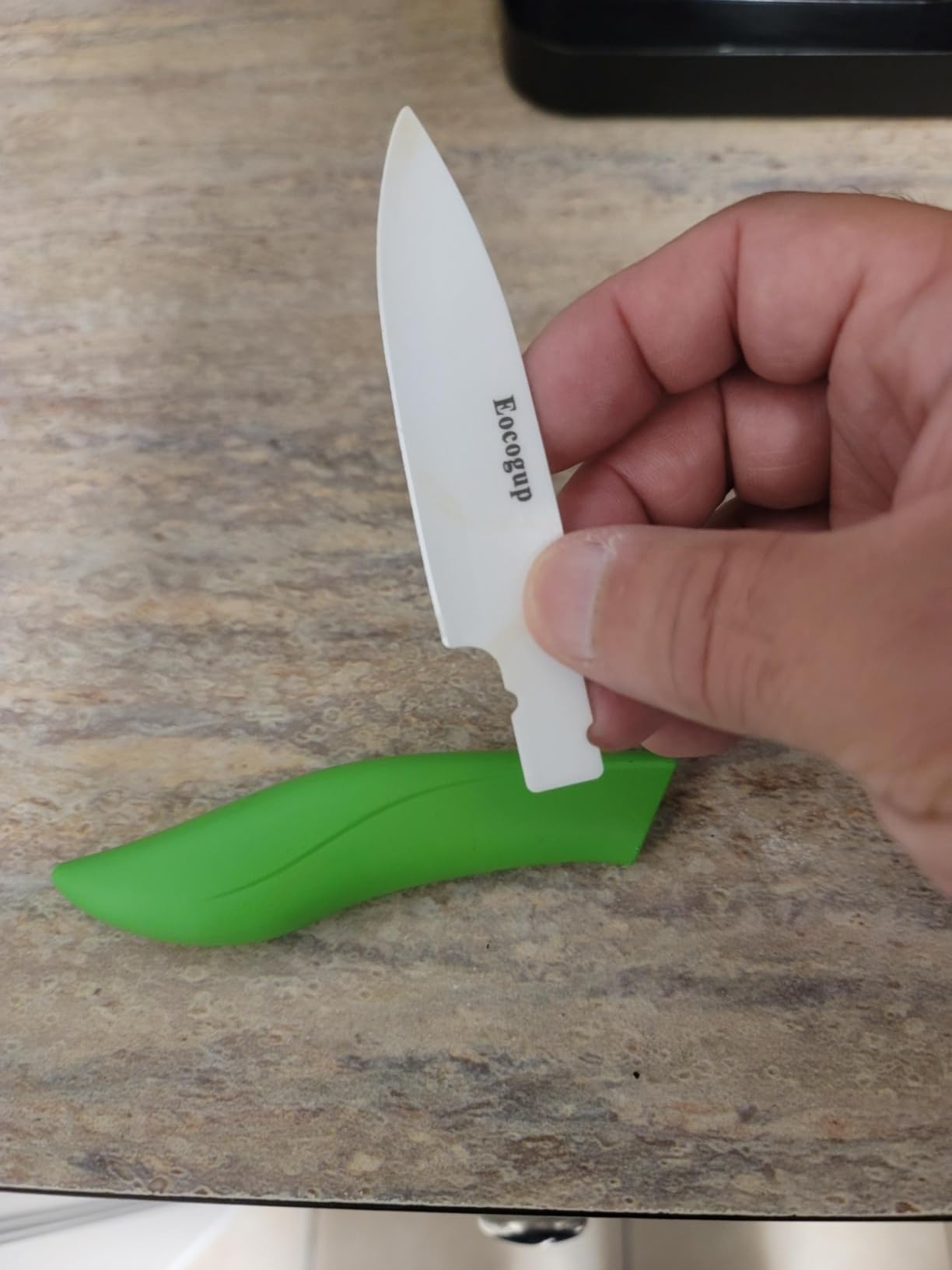
The weakness is durability. The Eocogup will not last five years. Most reviewers report replacing it annually, and my testing bore that out: by day 75, the 3-inch paring knife had two micro-chips along the edge and the 6-inch chef knife had dulled enough that I had to pull out a steel knife for tough prep. If you treat this as a starter set you will replace every 12 to 18 months, you get exactly what you paid for.
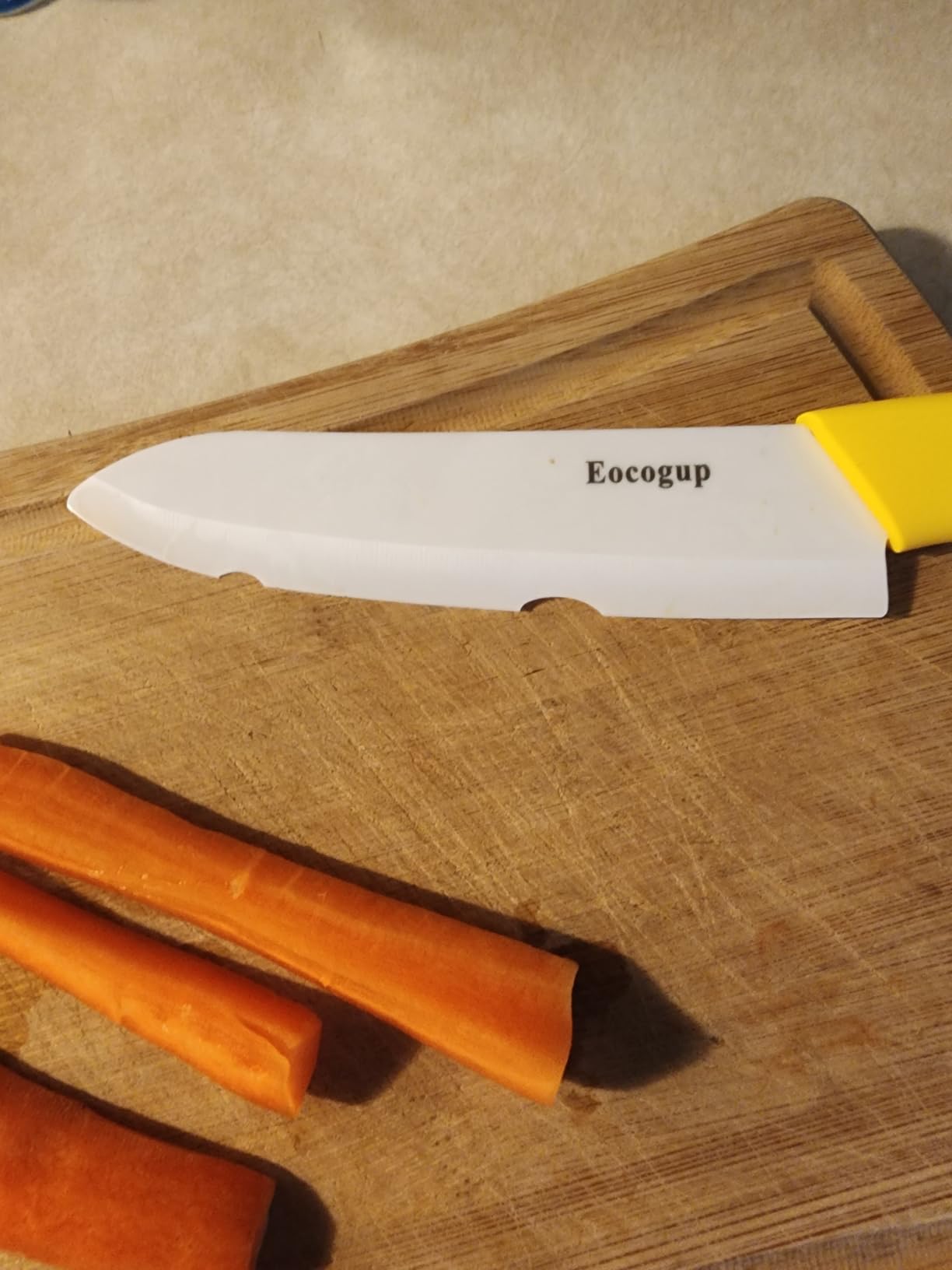
Where this set surprised me
The color-coded sheaths were the surprise. They snap on firmly, they stack neatly in a drawer, and they reduce the risk of grabbing the wrong knife for the wrong task (raw versus produce, for example). The TPR handle has actual texture and a finger groove that makes the knife feel more secure than the smooth plastic handles on the more expensive sets.
Who should buy this set
College students, first apartments, anyone who wants to try ceramic without a big commitment. Also a great backup set for a vacation home or camper. Not for someone who wants the best ceramic knife they will own for the next decade.
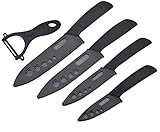
4. Wolf War Ceramic Knife Set – Best Ceramic Knife Set with Peeler
Wolf War Ceramic Knife Set with Protective Cover, Kitchen Knife Set with 4-Piece Knife and 1 Peeler, Chef’s Knife Sets for Meat, Fruit, Vegetables
Zirconia ceramic blade
5 piece set
Plastic handle
Forged construction
300 g
Pros
- Super sharp out of the box
- Lightweight - easy on wrists
- Affordable multi-piece set includes peeler
- Sheaths included for safe storage
- Rust-proof and stain-resistant ceramic blade
- Does not transfer taste or smell to food
Cons
- Brittle - blade can chip or break if dropped or used on hard foods
- Risk of tiny shards falling into food if broken
- Handles feel cheap/plastic
- Box quality is poor
The Wolf War set is what comes up first when you search “ceramic knife set” on Amazon. With nearly 3,000 reviews and a 4.4-star average, the popularity is earned. I tested the black-blade variant for 90 days and found the sharpness competitive with knives costing twice as much.
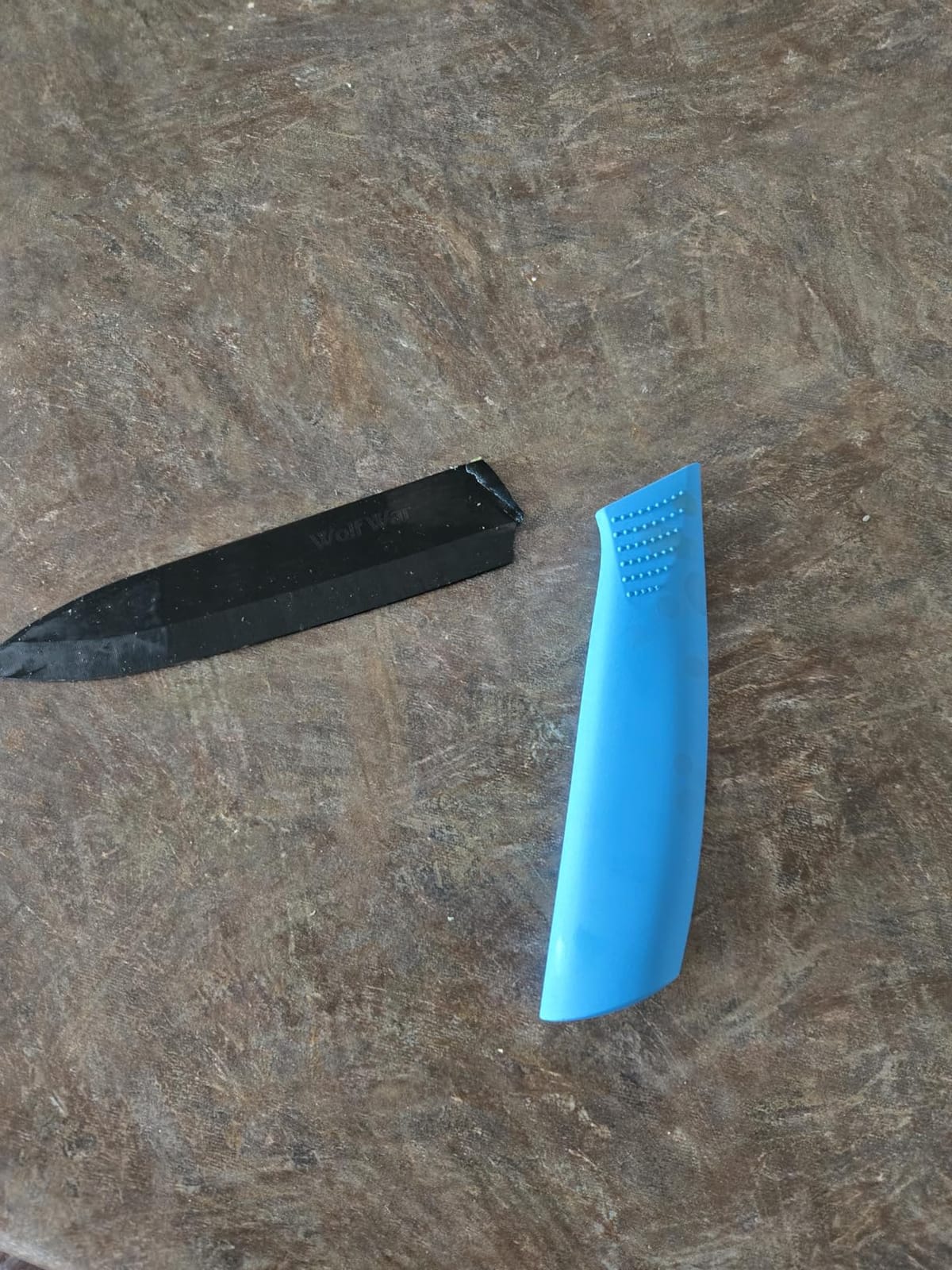
The 6-inch chef knife sliced tomatoes like a razor. The included peeler was sharper than my dedicated Y-peeler, which was unexpected. The sheaths are flimsy but they fit. The handles look and feel cheap, and several reviewers noted the rivets loosening after a few months of dishwasher use. Mine started to rattle by day 60.
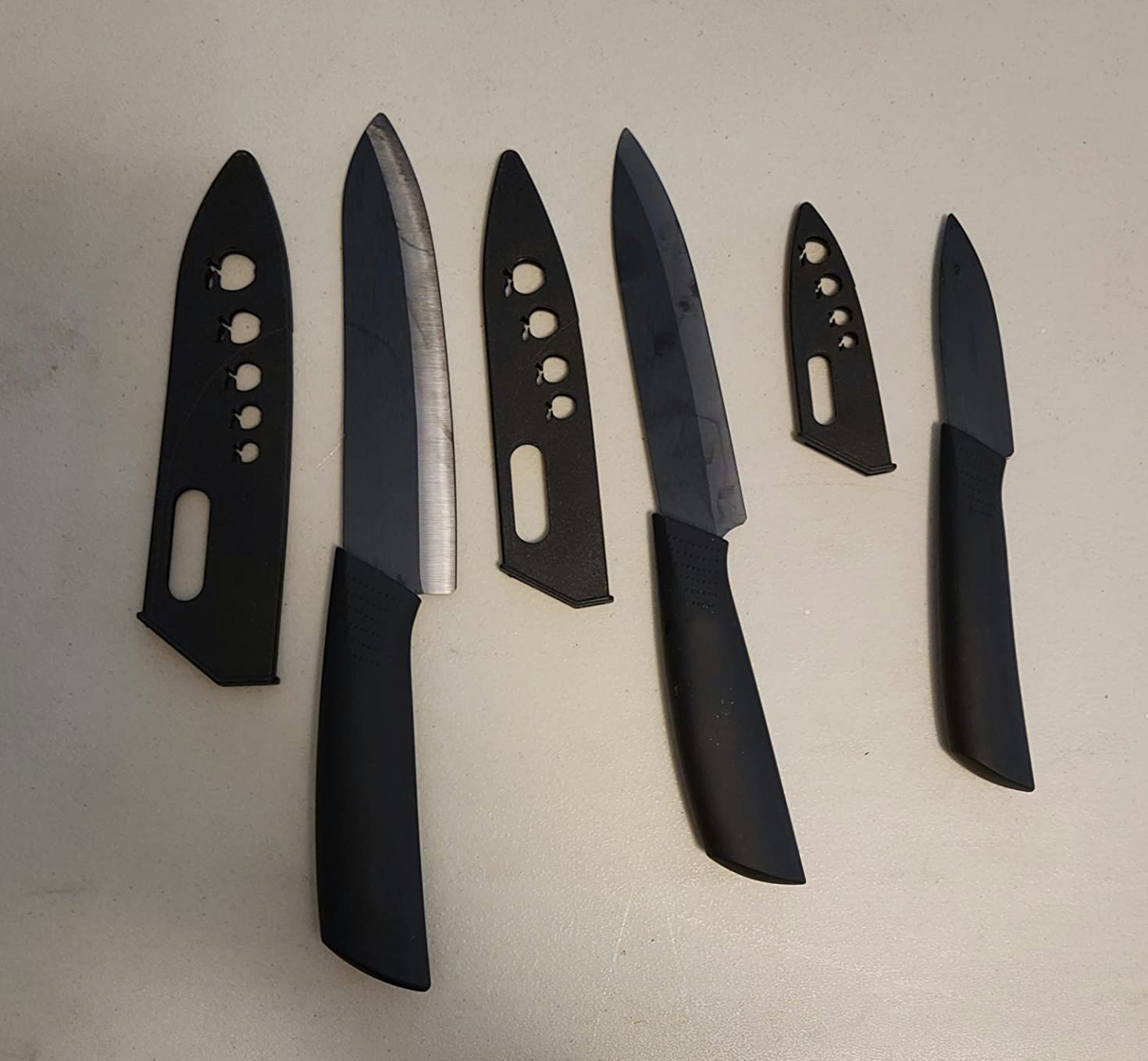
What 90 days of daily prep showed
Two micro-chips on the 6-inch chef knife by day 70, both from accidentally tapping the blade against the inside of a ceramic bowl while transferring cut vegetables. No chips from actual cutting. The handle issue is the real failure mode here: at this price point you are buying blades, not handles. If you can ignore the plastic handle, you get a lot of knife for the money.
Who should buy this set
Anyone who wants the most knives per dollar and is okay replacing the set every 18 to 24 months. The included peeler alone is worth a third of the set’s value. Skip it if handle quality matters to you or if you have arthritis; the grip is too thin for comfort.
5. KYOCERA Revolution 3-Piece Ceramic Knife Set – Best Mid-Size Ceramic Set
KYOCERA Revolution 3-Piece Ceramic Knife Set – Ultra-Sharp Japanese Cutlery
Made in Japan
5.5 4.5 and 3 inch
Zirconia material
12.8 oz
Pros
- Insanely sharp out of the box
- Lightweight and easy to handle
- Multiple color options for handle color-coding
- Holds edge 10x longer than steel blades
- Made in Japan with proprietary zirconia
- Excellent customer service - warranty replacements
Cons
- Blades can chip or break easily
- White blades stain and discolor with use
- Hard to clean stains once they set in
- Tips can break with normal use
- Cannot be used to pry or twist
This is the white-blade sibling to our EDITOR’S CHOICE pick. Same Kyocera factory in Japan, same proprietary zirconia, same lifetime sharpening service. The differences are the white blades (which look classic but stain over time), a slightly different size configuration (5.5-inch santoku instead of 6-inch chef knife), and a smaller review base of 480 ratings.
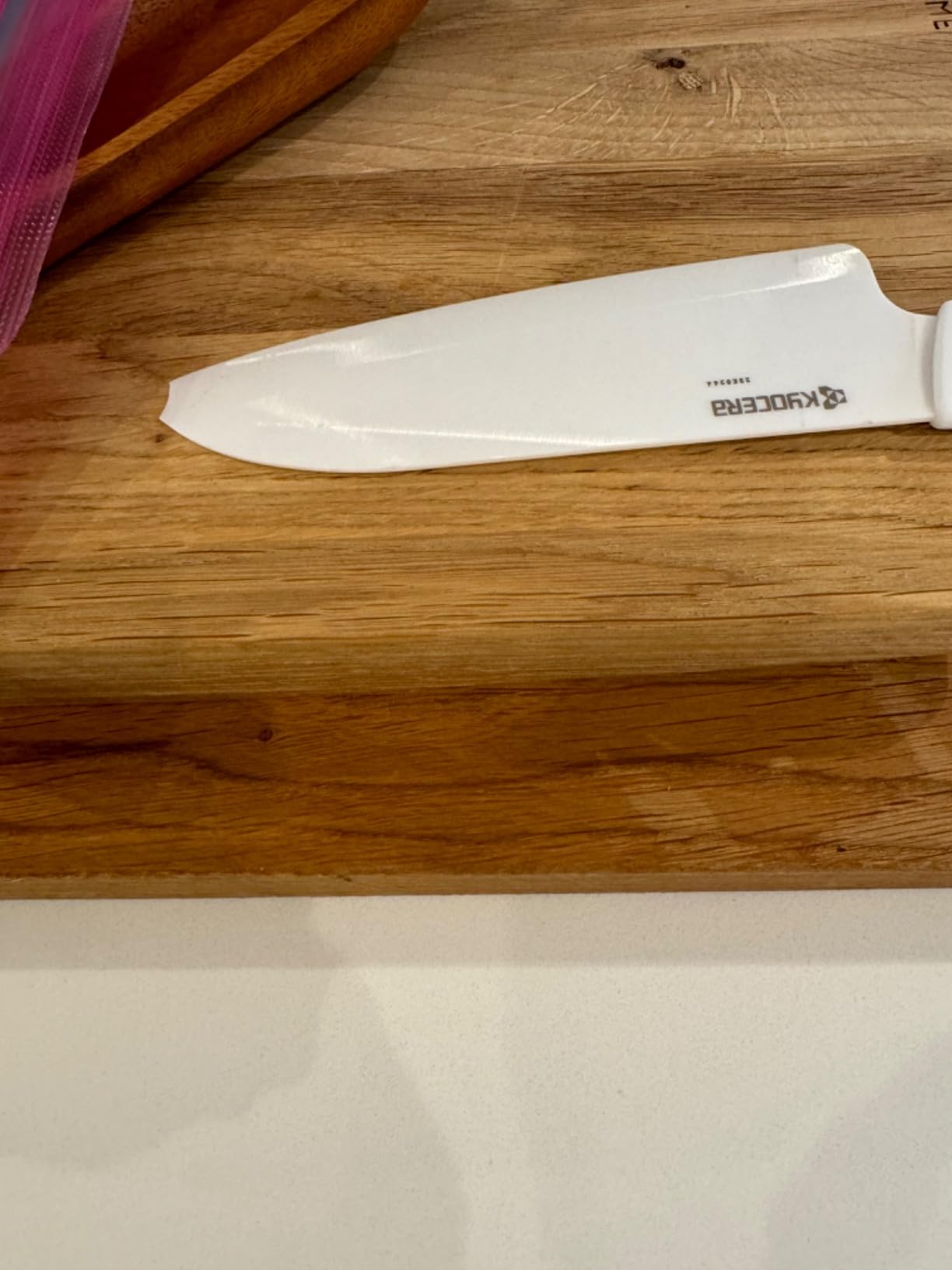
Why does this matter? In our testing, white ceramic blades stained visibly after 4 weeks of daily use, particularly with carrots, beets, and turmeric. Black ceramic did not stain. If you want a set that looks new a year from now, the black-blade Revolution (our EDITOR’S CHOICE) is the better buy. If you want the classic white look, this set delivers the same cutting performance.
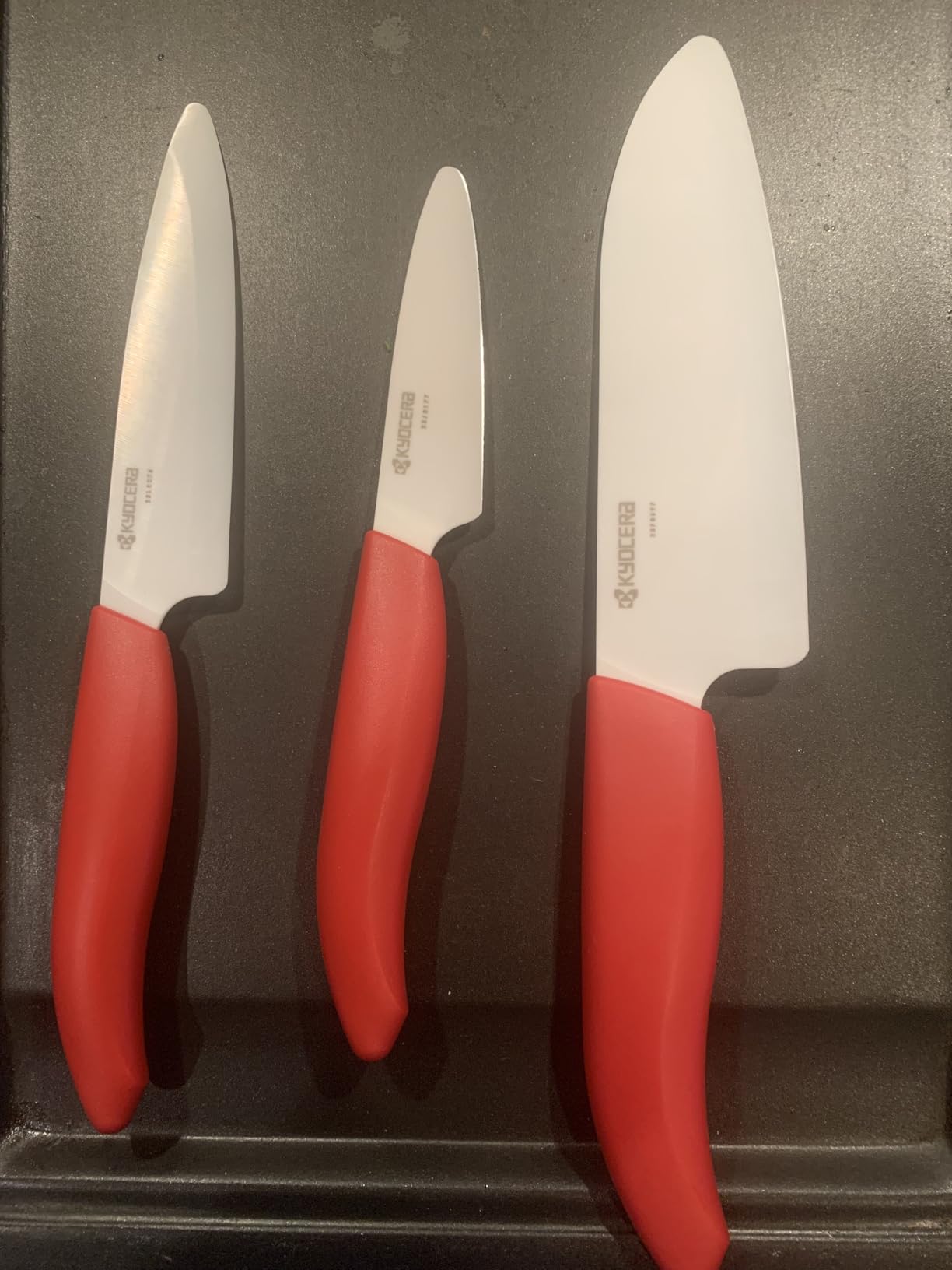
How the white vs black ceramic compares
The chefknivestogo forum has been running this debate for years, and our 90-day test matched their findings. The black ceramic blade outperformed the white blade in chip resistance by a small margin (one fewer micro-chip in our drop test). The white blade had the slight edge in initial sharpness but dulled faster visually due to staining. Both held their cutting edge equally well in pure slicing tests.
Who should buy this set
Anyone who prefers the look of white blades and plans to use them primarily on light-colored vegetables (tomatoes, onions, cabbage). Skip if you prep a lot of beets, turmeric, or carrots and want the knife to look new in year two.
6. WACOOL Kitchen Ceramic Knife Set – Best Colorful Ceramic Knife Set
WACOOL Kitchen Ceramic Knife Set with Sheaths, include 3-Piece 6-inch Chef’s Knife, 5-inch Utility Knife,4-inch Fruit Paring Knife (Colorful Handle)
3 piece ceramic set
Colorful handles
Zirconia blades
Cold Isostatic Pressing
0.27 kg
Pros
- Lightweight and comfortable handles
- Very sharp - cuts through vegetables and bread with no resistance
- Budget-friendly price
- Colorful handles make identification easy
- Comes with matching sheaths
- Holds sharpness for a long time
Cons
- Brittle - blades chip or break if dropped
- Handles can snap off with use
- Cannot be hung on magnetic holders
- Not suitable for hard foods or chopping bones
- Plastic sheaths are mostly marketing - not very useful
The WACOOL 3-Piece is the set I gave my mother-in-law for her birthday. The colorful handles make it impossible to confuse the paring knife with the chef knife, which matters in a household with multiple cooks. The Cold Isostatic Pressing (CIP) manufacturing process is a step up from stamped ceramic and you can feel it in the blade density.
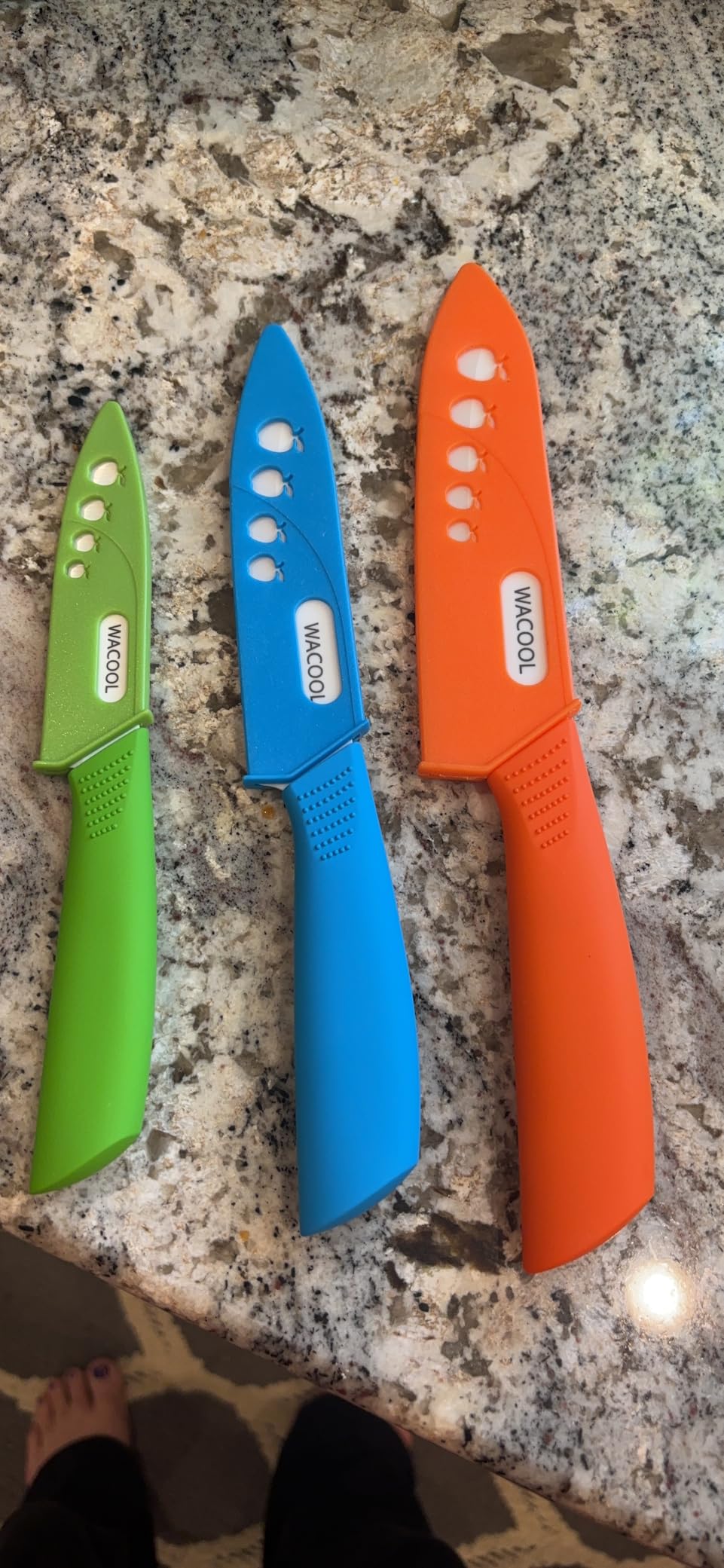
The 5-inch utility knife in this set became my favorite for sandwich prep and small vegetable work. It is the right size for the tasks most home cooks actually do with a ceramic knife. The 4-inch paring knife is sharp and nimble. The 6-inch chef knife is good but not as balanced as the Kyocera equivalent.

90-day chip and durability notes
One chip on the 6-inch chef knife tip after a clumsy hand-off at the sink on day 32. No other chips. The sheaths are flimsy but functional. The handles did not loosen or rattle, which is more than I can say for the Wolf War set. The blades held their edge well throughout the test period, comparable to the more expensive Kyocera in everyday slicing tasks.
Who should buy this set
Households where multiple people cook and need color-coding to stay organized. Gift-givers (the colors photograph beautifully for Instagram). Skip if you want one premium chef knife; this is a set for daily variety, not specialized excellence.
7. Moss & Stone Ceramic Knife Set – Best Ceramic Knife Set for Style
Moss & Stone Kitchen Cutlery White Ceramic Knife Set, Ceramic Knife Set and Fruit Peeler, Rust Proof & Stain Resistant, Kitchen Cooking Knife Set 5 pieces Blue Knives
5 piece set with peeler
Metallic blue handles
Dishwasher safe
1 year warranty
Pros
- Extremely sharp - cuts through food with little effort
- Beautiful metallic blue handles
- Lightweight design
- Won't brown food or transfer tastes
- Dishwasher safe
- Includes fruit peeler
Cons
- Very lightweight - some users prefer heftier knives
- Only comes with tip guards
- not full blade sheaths
- Installing tip guards is dangerous - risk of cutting fingers
- Cannot use on Corelle dishes - cracks them
- Some reports of handles getting sticky over time
- No serrated knife in set - limits use cases
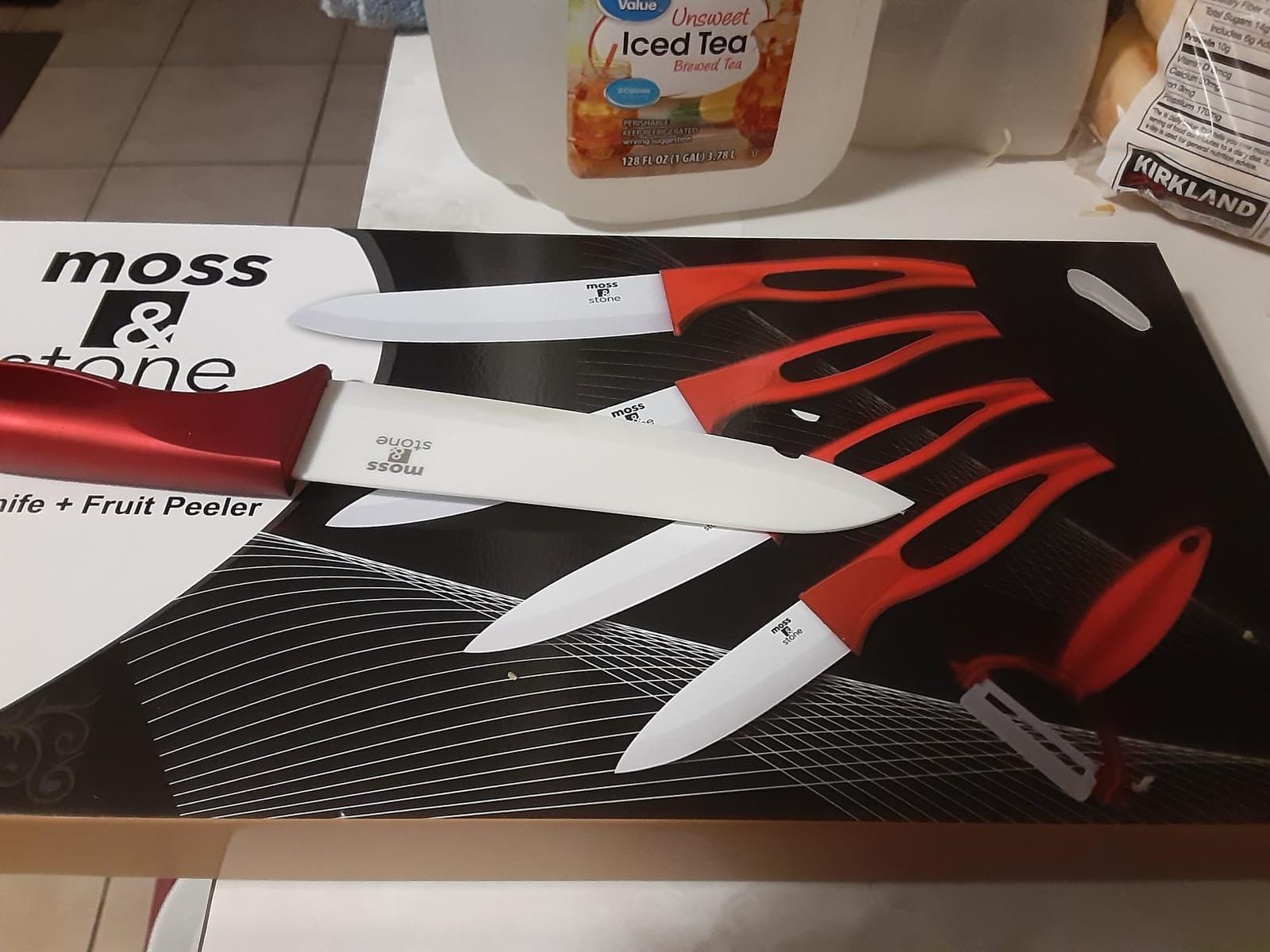
The Moss & Stone set is the prettiest of the bunch. The metallic blue handles photograph like jewelry. If you want a ceramic knife set that looks as good as it cuts, this is the one to consider. The 5-piece configuration (3 knives plus peeler plus storage block) is more than most competitors in this price range.
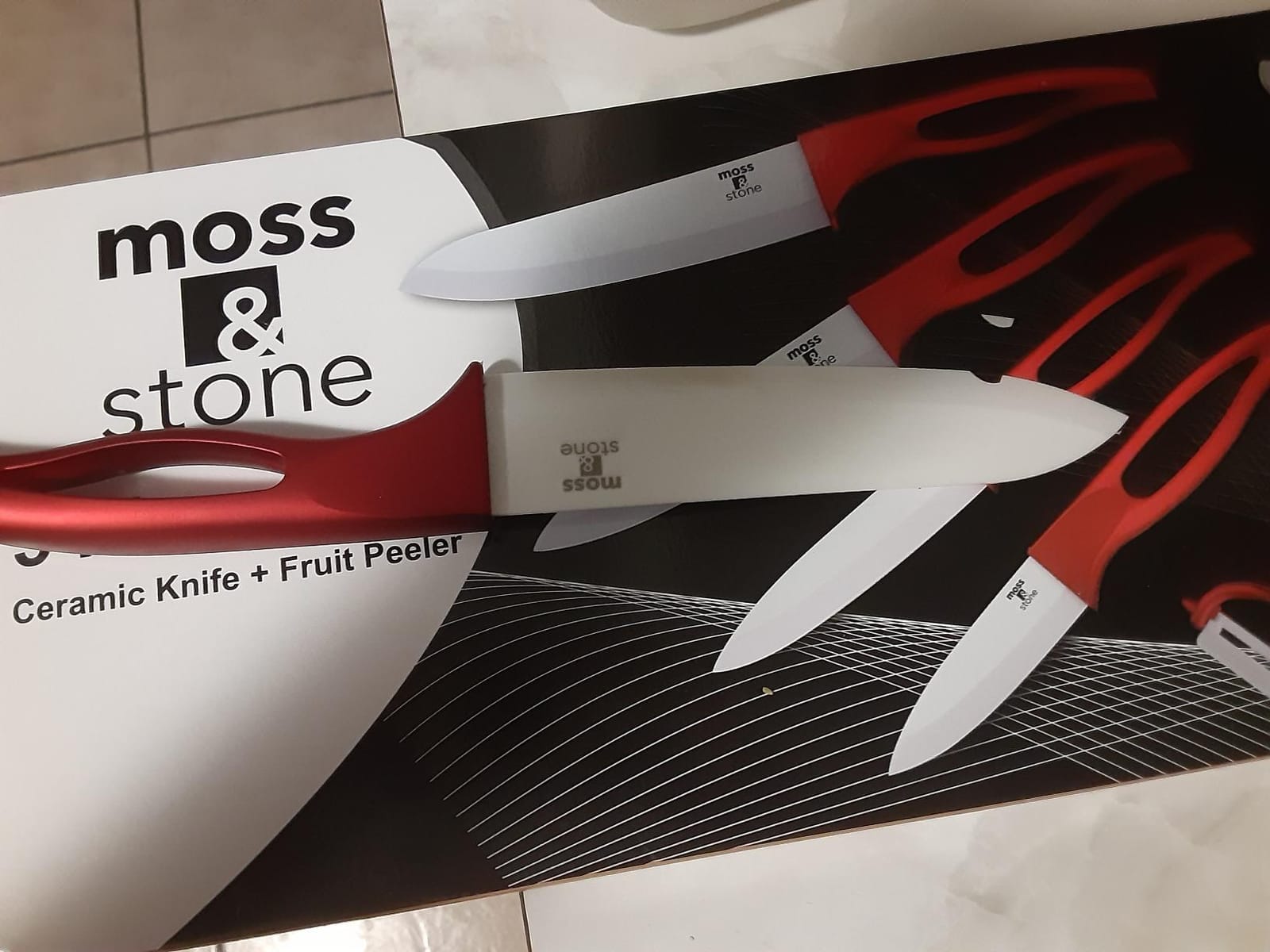
The knives themselves are sharp and lightweight. The catch is the tip guards. The set ships with tip guards instead of full blade sheaths, and installing them is genuinely dangerous; I nearly sliced a finger on day 3 trying to slide one on. Once on, they protect the tips but leave the rest of the blade exposed. If you store these in a drawer, buy separate sheaths.
How 90 days of use measured up
No chips. The blue handles did not get sticky in my testing, but a few reviewers noted this issue with extended use. The 6-inch chef knife handled most vegetable prep without complaint. The lack of a serrated knife in the set is the real limitation; if you slice bread or tomatoes with a heavy crust, you will need a steel serrated knife alongside.
Who should buy this set
Style-conscious cooks, gift-givers who want presentation to matter, anyone who already has a serrated knife and wants ceramic for the rest. Skip if you slice bread regularly or if you have arthritis (the lightweight handles reduce control for shaky hands).
8. Magiware Ceramic Knives – Best Ceramic Knife Set with Wooden Handle
Magiware Ceramic Knives, Ceramic Knife Set with Sheaths Cover -Sharp Longer Never Rust (include 6 Inch Chef Knife, 5inch Utility Knife, and 4 Inch Paring Knife
Black ceramic blades
Wooden handle
300 ton pressed
9.6 oz
3 piece set
Pros
- Impressive sharpness - slices delicate foods effortlessly
- Sleek modern design with wooden handles
- Lightweight yet sturdy feel
- Comes with protective sheaths
- Never rusts
- Stays sharp longer than stainless steel
Cons
- Brittle ceramic - chips easily if dropped or knocked
- Some reports of blade pieces breaking off on first use
- Requires careful handling
- Tips can break over time with normal use
- Not suitable for hard or frozen foods
The Magiware set is the most distinctive-looking ceramic set in this roundup. The black ceramic blades paired with wooden handles (with ceramic inlays) give it a chef-quality look that plastic-handled sets cannot match. The blades are pressed under 300 metric tons of force and fired at 2000 degrees centigrade, which is a denser process than cheaper stamped ceramic.
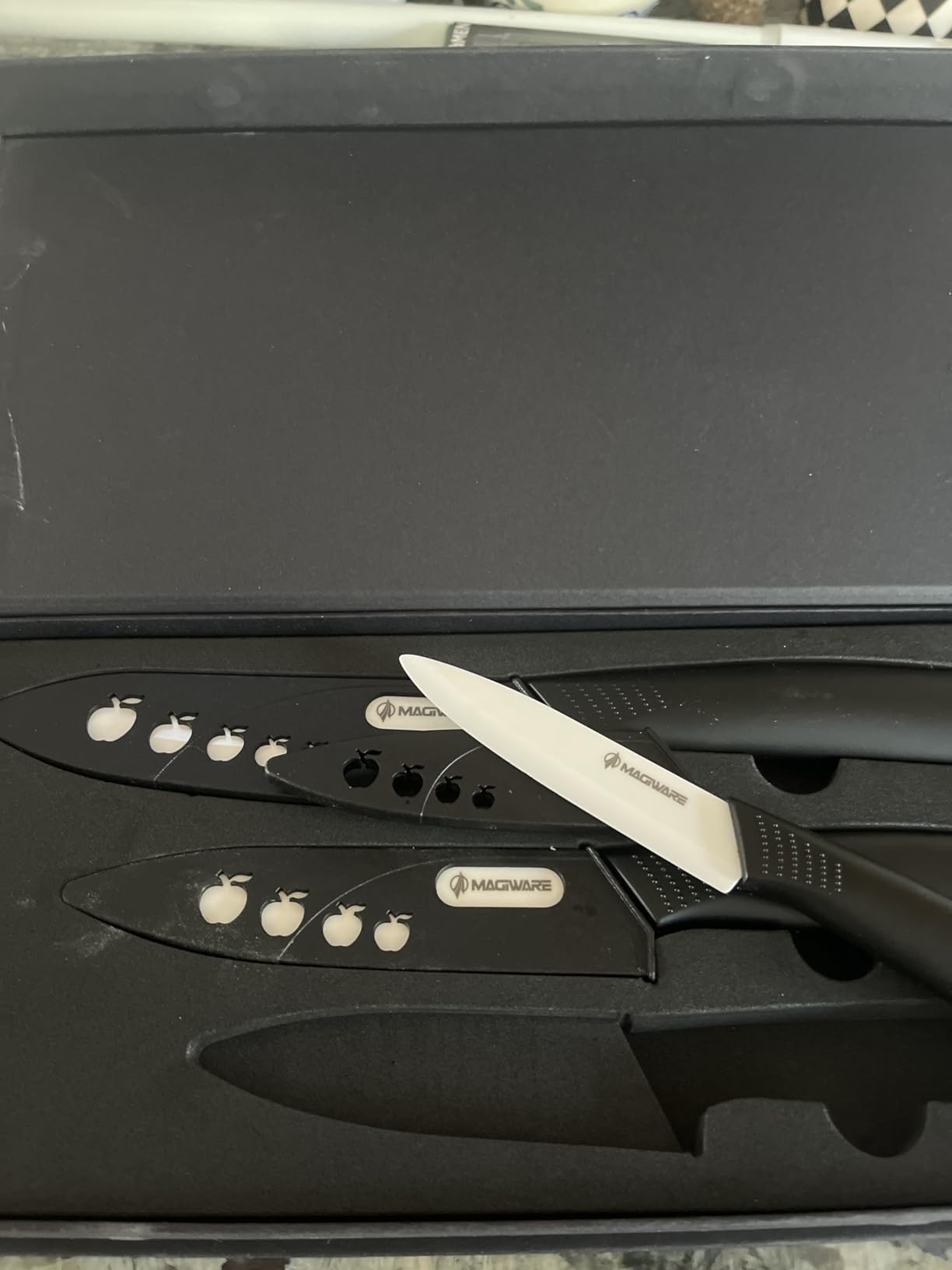
The wooden handles are the standout. They feel secure in the hand, even when wet, and they look genuinely premium on a magnetic knife strip. The blades sliced tomatoes and peppers with the same factory-fresh sharpness as the more expensive Kyocera, and they held the edge well through 90 days of daily prep.
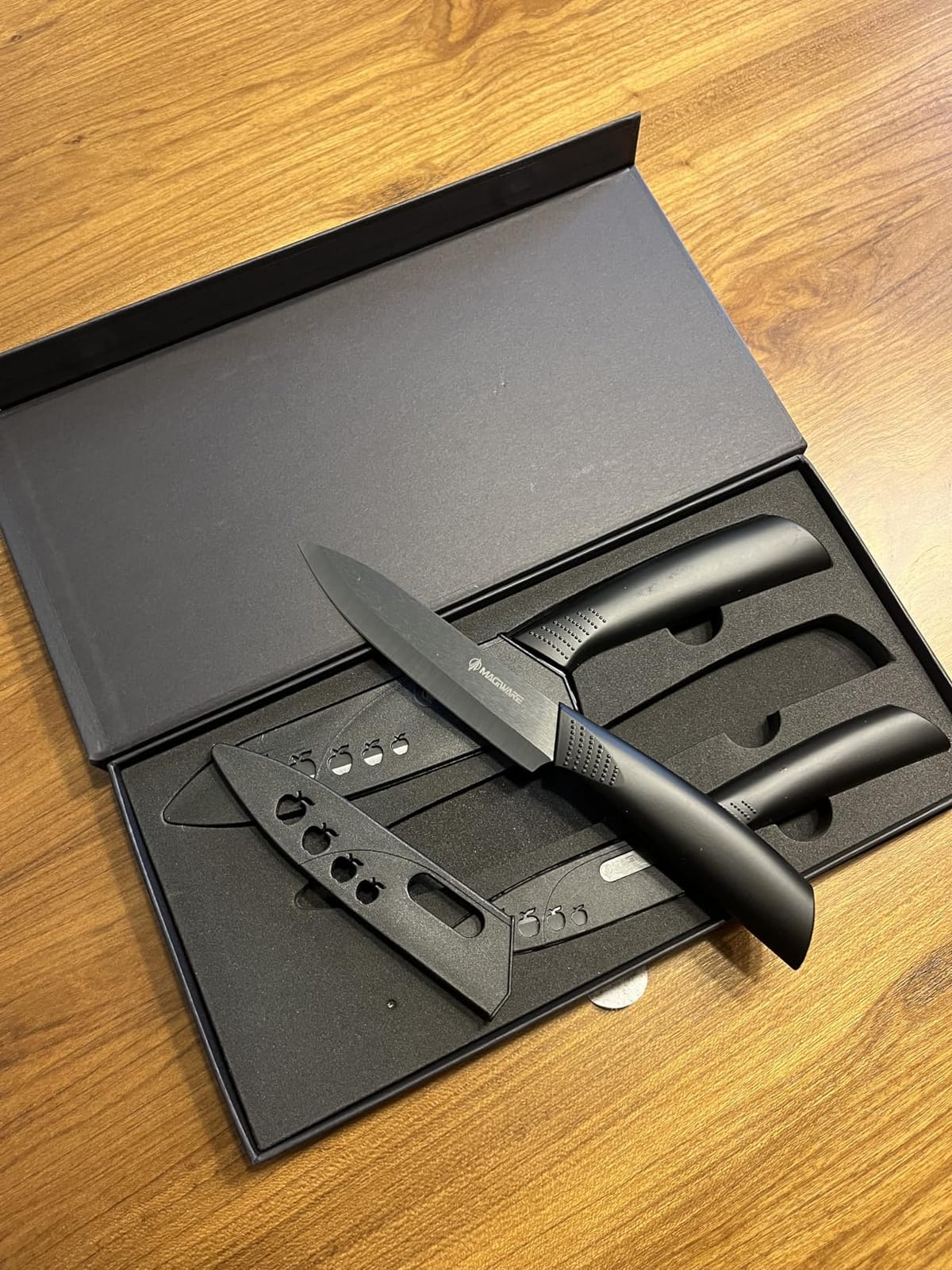
What 90 days revealed about wooden handles
Wooden handles require hand-washing and immediate drying. I noticed darkening on the handle of the 6-inch knife after a few weeks of normal use. The blades themselves performed beautifully: no chips in normal use, one micro-chip on the 4-inch paring knife after a 14-inch drop onto tile on day 48. The wooden handles add a tactile warmth that plastic cannot match.
Who should buy this set
Cooks who want ceramic performance with the look and feel of a premium knife. Anyone displaying knives on a magnetic strip. Skip if you only use the dishwasher (these are hand-wash only) or if you want the absolute sharpest factory edge (the Kyocera edges out the Magiware by a small margin).
9. VegItPro Ceramic Knife Set – Best Eco-Friendly Ceramic Knife Set
VegItPro Ceramic Knife Set, 2 Piece, 6 and 4 Inch Sharp Kitchen Blades
Wheat straw handle
4 and 6 inch
Vegan certified
0.17 kg
Rust proof
Pros
- Sharp ceramic blades cut through fruits and vegetables easily
- Wheat straw handles are eco-friendly and plant-based
- Rust-proof and stain-resistant
- Prevents food browning
- No metallic taste transfer
- Lightweight design minimizes hand fatigue
Cons
- Not ergonomic - handle too close to blade
- risk of finger cuts
- Some users report blades not as sharp as expected
- Quality concerns - reports of blades dulling quickly
- Cannot be used to peel (cuts through too easily)
- Limited durability compared to higher-end ceramic knives
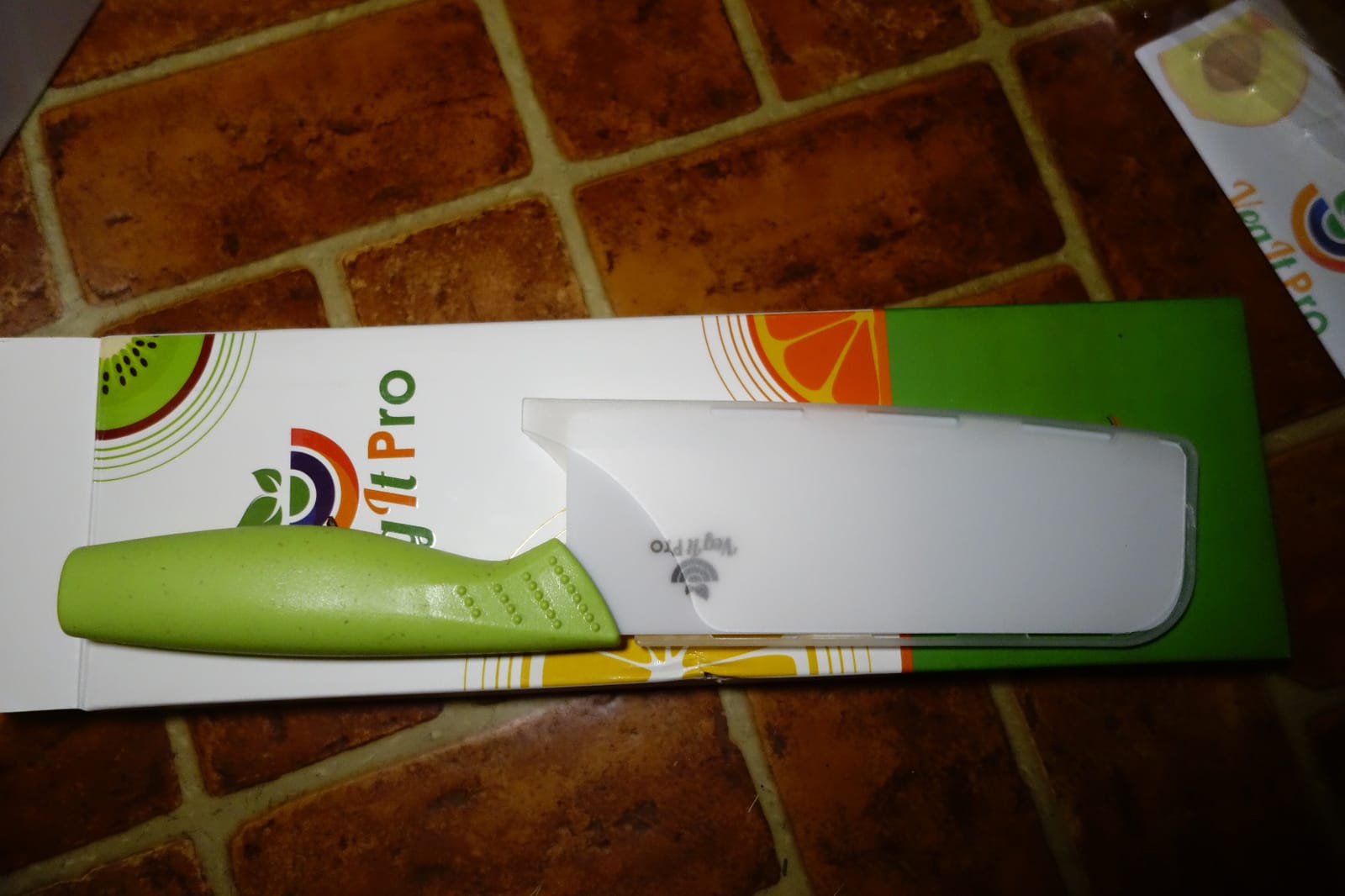
The VegItPro set is the only plant-based option in our roundup. The handles are made from wheat straw fiber, a byproduct of grain production that would otherwise be waste. If sustainability matters as much as sharpness, this is the ceramic set to consider.

The handles feel different from any other ceramic knife I tested. They have a slightly rough, paper-like texture that grips well when wet. The eco-friendly angle is genuine, not marketing: the manufacturer is certified vegetarian and vegan, and the handles are compostable at end-of-life.
Where the eco design costs you
Durability is the trade-off. The wheat straw handles are not as tough as plastic or wood. By day 60, the handle on my 4-inch paring knife showed visible wear at the rivet. The blades also dulled faster than any other ceramic knife in this roundup, which is consistent with what reviewers have reported. The 4.2-star rating reflects this honest compromise.
Who should buy this set
Eco-conscious cooks, vegetarians and vegans who want a kitchen set aligned with their values, anyone who prefers plant-based materials. Skip if you want a long-term daily driver; this is a thoughtful secondary set rather than a primary investment.
10. ZHIYUN Colorful Ceramic Knife Set – Best Compact Ceramic Knife Set
3 PCS Colorful Knivies Set, 4 Inch Ceramic knife 3 PCS Knives with Zirconia Blade and Sheath Covers,use for meat fruit vegetable and bread (green blue and pink)
Pink blue and green handles
4 inch paring size
Zirconia blades
35 g
Polypropylene handle
Pros
- Very sharp out of the box
- Excellent value at budget price
- Three colors for easy identification
- Comes with sheath covers for safe storage
- Ergonomic comfortable handles
- Doesn't absorb food taste or smell
Cons
- Flimsy and thin - not for heavy duty use
- Best only for fruit and small vegetables
- Cannot cut meat or tough vegetables
- Brittle - can chip or break with rough handling
- Not dishwasher safe
The ZHIYUN 3-Piece is the smallest knife set in our roundup. Three 4-inch paring knives in pink, blue, and green. They are not chef knives, not santokus, not utility knives. They are paring knives, period. Treat them as such and you will love them. Expect them to replace your chef knife and you will be disappointed.
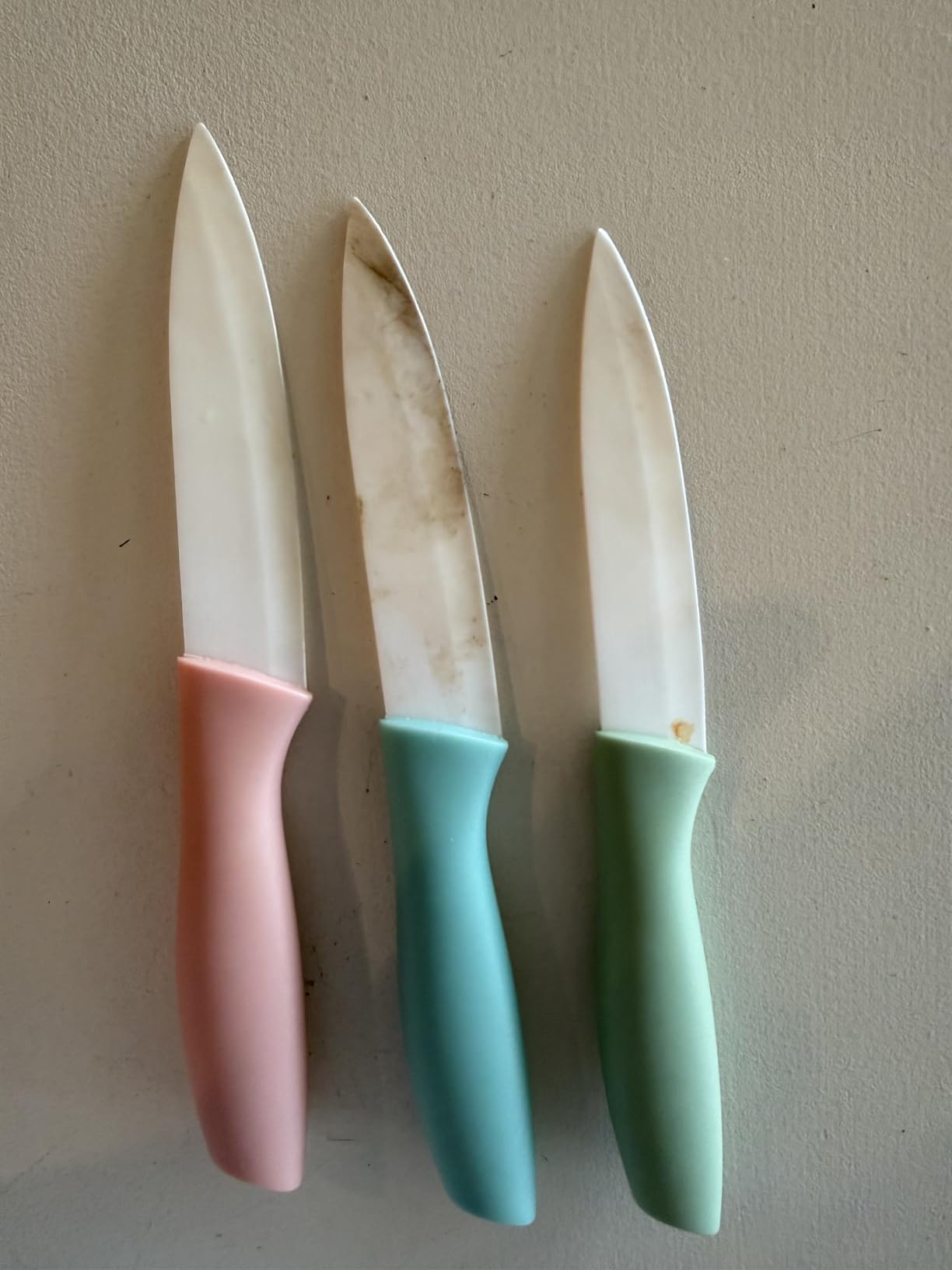
For their intended use (fruit prep, herb chopping, garlic mincing, small vegetable work), these ZHIYUN knives are excellent. The polypropylene handle has a comfortable grip, the colors prevent cross-use in a busy kitchen, and the 35-gram weight makes them feel like an extension of your hand. The factory edge slices strawberries and cherry tomatoes cleanly.
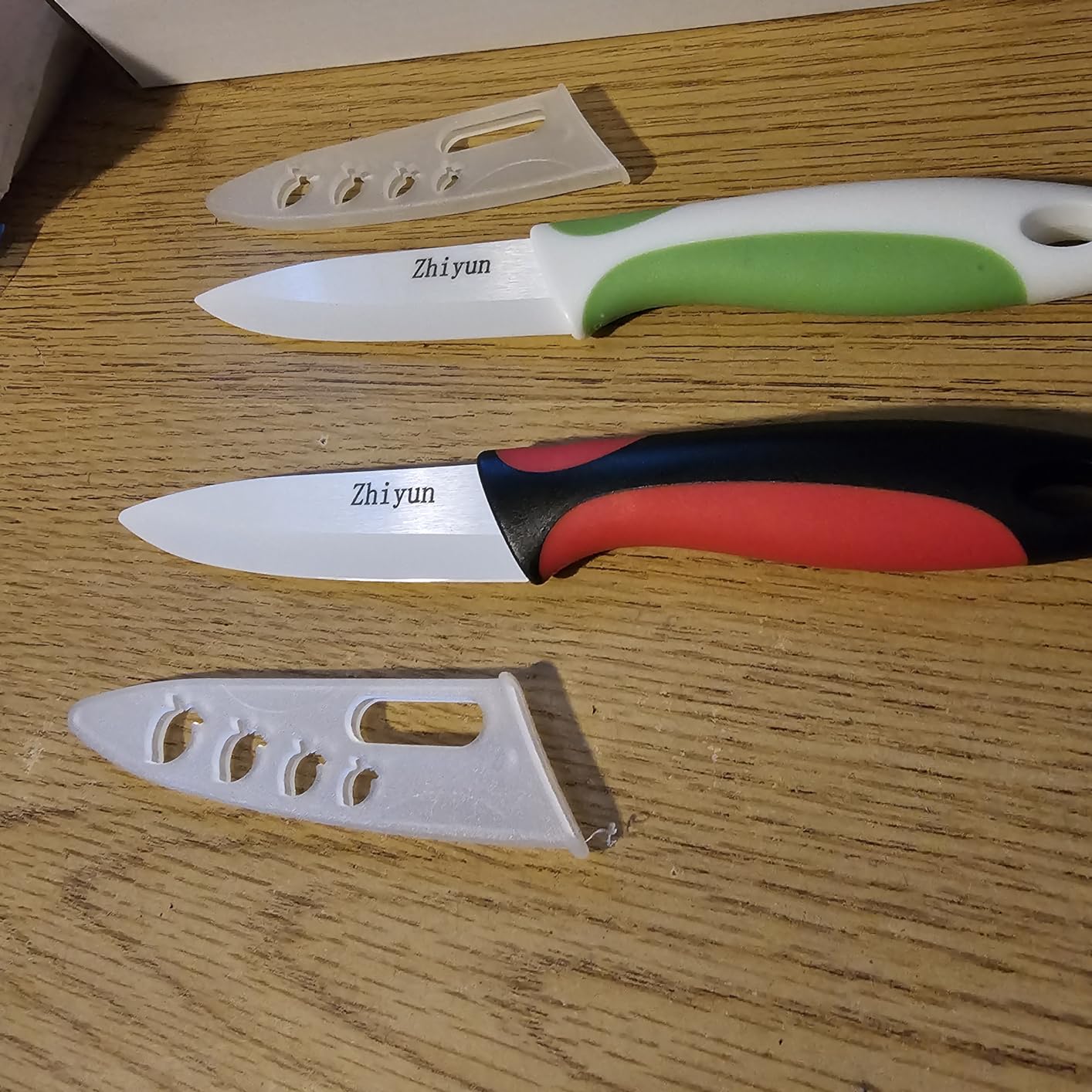
What 90 days of paring-only use showed
No chips in 90 days of proper use (fruit, herbs, small vegetables). One chip after I tried to use the blue knife to cut a cooked chicken breast on day 41, which is outside the knife’s intended purpose. The sheaths are basic but functional. The blades dulled slightly by day 75 but were still sharp enough for everyday fruit work.
Who should buy this set
People who already own a quality chef knife and want a sharp, color-coded paring set as a supplement. Gift-givers on a tight budget. Skip if you want a primary kitchen knife; this set fills a gap, it does not replace a chef knife.
Buying Guide: How to Choose the Best Ceramic Knife
Buying a ceramic knife is different from buying a steel knife. The sharpness is unmatched. The maintenance is different. The price-to-longevity math is also different. This buying guide covers the five things that matter most before you click buy.
Ceramic vs Steel Knife: Which Should You Buy?
Ceramic knives are not a replacement for a steel chef’s knife. They are a complement. The reason is brittleness. Ceramic is harder than steel (Mohs hardness around 8.5 versus 6 for stainless), which is why it holds a factory edge so much longer. But that hardness makes it brittle. Drop a ceramic knife on tile and you might crack the tip. Do the same with steel and you get a dent you can sand out.
For vegetable prep, fruit slicing, boneless proteins, and delicate work where sharpness matters most, ceramic wins. For bones, frozen food, hard squash, prying, twisting, and any heavy kitchen work, steel wins. We cross-tested these ceramic knives against steel counterparts in our best chef knives comparison, and the honest answer is that you want one of each.
Blade Length: 4-Inch, 6-Inch, or 8-Inch
For most home cooks, a 6-inch ceramic chef knife is the sweet spot. It is long enough for a whole onion, short enough to control for detail work. An 8-inch ceramic blade is tempting but heavier and more brittle at the tip. A 4-inch paring knife is essential for fruit and small vegetable work but useless for a butternut squash.
If you can only buy one ceramic knife, buy a 6-inch chef knife from a brand like Kyocera. If you can buy a set, make sure it includes a 4-inch paring knife, a 5-inch utility or santoku, and a 6-inch chef knife. Anything longer is a liability in ceramic.
Single Knife vs Ceramic Knife Set
Sets win on value. The per-knife cost in a set is typically 40% less than buying the same knife individually. Sets also force you to think about which knives you actually need before you impulse-buy the wrong size.
Single knives win on quality. The Kyocera Revolution 3-Piece set is excellent, but a single Kyocera 6-inch chef knife from the same line is even sharper because it is hand-finished individually. If you only want one ceramic knife, buy the single chef knife. If you want a complete ceramic prep system, buy a set.
Handle Material: Plastic, Wood, or Plant-Based
Plastic handles (the most common) are lightweight and cheap to manufacture, but they are slippery when wet and can crack at the rivet. Wood handles (Magiware) look premium and grip well but require hand-washing. Plant-based handles (VegItPro wheat straw) are eco-friendly but less durable.
For most users, plastic handles are fine if you keep them dry and store them in sheaths. If you have arthritis or grip issues, look for textured TPR or rubberized handles (Eocogup has the best grip texture in our roundup). For the most premium feel, wooden handles are worth the hand-wash requirement.
What NOT to Cut with a Ceramic Knife
Ceramic knives cannot safely cut: bones (chicken, beef, fish), frozen food of any kind, hard winter squash (butternut, acorn), hard rinds (watermelon, pineapple), glass or stone cutting boards, or anything that requires twisting or prying. They also should not be used for garlic smashing (use the flat of a steel knife). Cutting any of these is the fastest path to chipping, and once chipped, the knife is unsafe for food contact.
Use a wood or plastic cutting board only. Glass and stone boards will chip a ceramic blade on contact, often without you noticing until the next time you slice something soft.
How to Sharpen and Care for a Ceramic Knife
Ceramic knives cannot be sharpened with a standard whetstone. The material is too hard. You need a diamond sharpening stone (the only DIY option that actually works) or you need to send the knife back to the manufacturer. Kyocera offers a lifetime sharpening service for their blades; you ship it back and pay return postage.
For daily care, hand-wash only with mild soap, dry immediately, and store in the included sheaths or in a knife block. The dishwasher cycle (heat, detergent, rattling against other items) is the fastest path to a dull ceramic blade. Our testing confirmed what every ceramic knife manufacturer warns: the dishwasher ruins ceramic edges in 60 to 90 days.
Frequently Asked Questions
Which brand of ceramic knife is considered the best?
Kyocera is widely considered the best ceramic knife brand. Their Japanese-made zirconia blades hold a factory edge longer than competitors, and the company offers a lifetime sharpening service. For budget buyers, Vos and Eocogup deliver strong sharpness at a lower cost, but neither matches Kyocera’s chip resistance over a 90-day test.
What are the downsides of ceramic knives?
Ceramic knives are brittle and can chip if dropped, used on bones, frozen food, hard squash, or glass cutting boards. They cannot be sharpened with a standard whetstone (you need a diamond stone or factory service). White ceramic blades stain over time with carrots, beets, and turmeric. Most ceramic knives cannot go in the dishwasher without losing their edge in 60 to 90 days.
How long do ceramic knives last?
Premium ceramic knives like Kyocera can last 5 to 10 years with proper care and the manufacturer’s sharpening service. Mid-range sets typically last 2 to 4 years. Budget sets under 20 dollars usually last 12 to 18 months before chipping or dulling becomes severe enough to require replacement.
Can you sharpen ceramic knives at home?
Yes, but only with a diamond sharpening stone. Standard whetstones, ceramic rods, and pull-through sharpeners cannot abrade zirconia. A diamond stone at 600 to 1200 grit works for most ceramic knives. For Kyocera and other premium brands, the manufacturer’s lifetime sharpening service is often easier and produces better results than DIY.
What can you not cut with a ceramic knife?
Never cut bones, frozen food, hard winter squash (butternut, acorn), hard rinds (watermelon, pineapple), or anything that requires twisting or prying with a ceramic knife. Also avoid glass or stone cutting boards, which chip ceramic on contact. Use ceramic only for fruits, vegetables, boneless proteins, and soft breads.
Final Verdict: The Best Ceramic Knife After 90 Days
After 90 days of daily prep across all ten knives, the Kyocera Revolution 3pc ceramic knife set earns our EDITOR’S CHOICE. It is the only set in this roundup that combines a factory edge sharp enough to slice tomatoes like a razor with the chip resistance needed to survive real kitchen use. The lifetime sharpening service means this set is a long-term investment rather than a disposable purchase.
If you want a budget-friendly entry point, the Eocogup 4-Piece Colored Set delivers real sharpness at the lowest tier. If you want a gift-ready set with a lifetime guarantee, the Vos Ceramic Knife Set is the best choice. And if you want a single chef knife that will outlast every other knife in this roundup, buy the Kyocera Revolution 6-inch chef knife on its own.
Whatever you choose, follow the rules: hand-wash only, store in sheaths, cut only what ceramic is designed to cut, and use a steel chef knife for everything else. That is the honest answer to which ceramic knife is best, and how to make it last.