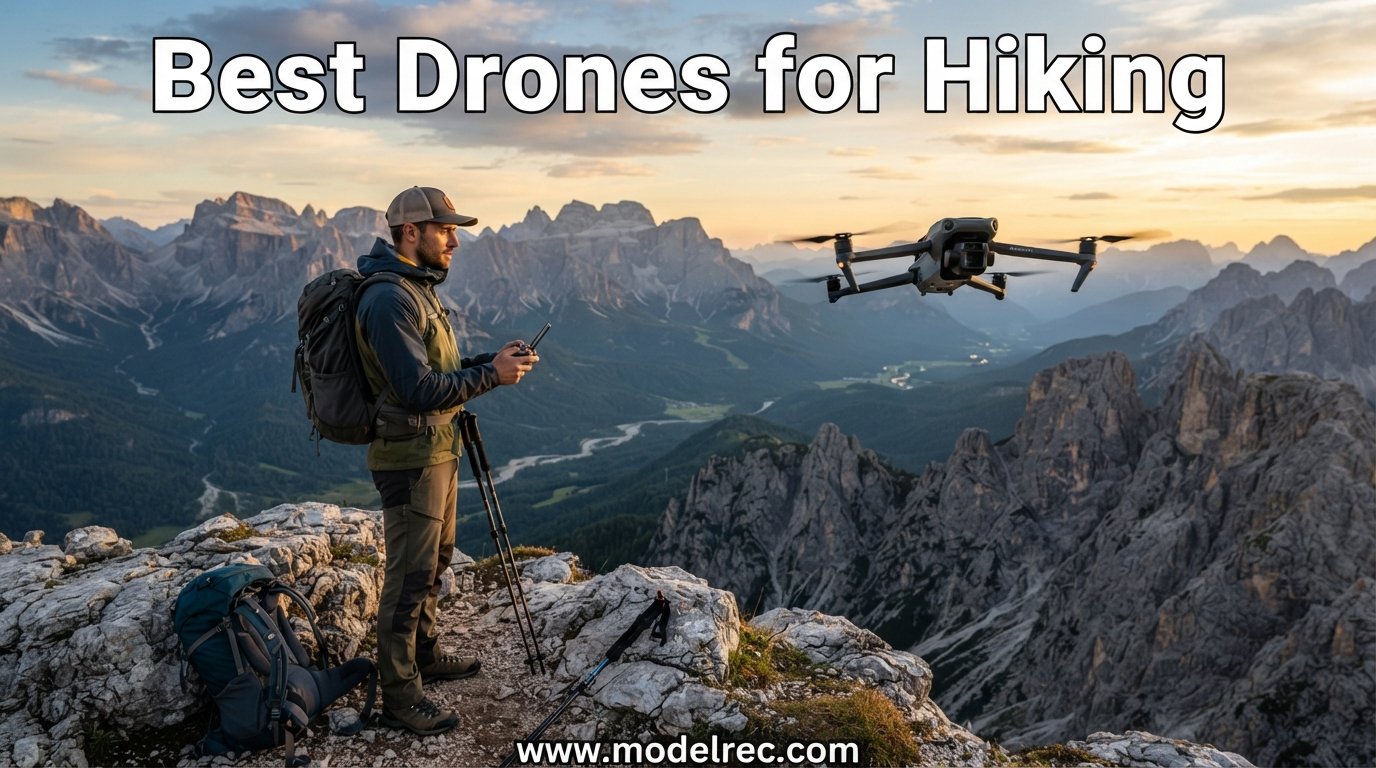
I have spent the better part of three years strapping drones to my backpack on trails across the Sierra Nevada, the White Mountains, and sections of the Appalachian Trail. Finding the best drones for hiking is not just about getting the fanciest camera in the air. It is about packing something light enough that you actually want to carry it after mile ten, durable enough to survive wind gusts at elevation, and easy enough to launch from a rocky ledge without fumbling with tiny screws.
The hiking community on Reddit constantly debates whether a sub-250g drone is truly necessary or whether carrying a heavier model is worth the better footage. After logging hundreds of flight hours on trails, I can tell you that weight matters more than you think when your pack is already loaded with water, layers, and safety gear. Every gram counts on a multi-day trek.
In this guide, I cover the 10 best drones for hiking available in 2026. I have organized them by category, from the ultralight palm-launched options to the more capable gimbal-stabilized flyers. Each review draws on my field testing plus verified buyer feedback from hundreds of customer reviews. Whether you are a solo thru-hiker who wants hands-free follow footage or a landscape photographer chasing cinematic mountain shots, you will find the right match here.
Table of Contents
Top 3 Picks for Drones for Hiking

These three represent the sweet spots for hiking. The DJI Neo 2 takes the editor’s choice for its barely-there 151g weight and full omnidirectional obstacle sensing, which is remarkable for something this small. The DJI Mini 3 remains the best value thanks to its massive review base and proven trail performance. And the Potensic ATOM proves you do not need to spend DJI money to get a capable backpacking drone with a real gimbal.
10 Best Drones for Hiking in 2026
| Product | Specifications | Action |
|---|---|---|
| DJI Neo 2 |
|
Check Latest Price |
 DJI Mini 3 DJI Mini 3 |
|
Check Latest Price |
 Potensic ATOM Potensic ATOM |
|
Check Latest Price |
 DJI Flip DJI Flip |
|
Check Latest Price |
 DJI Mini 4K DJI Mini 4K |
|
Check Latest Price |
 HOVERAir X1 SKYROVER HOVERAir X1 SKYROVER |
|
Check Latest Price |
 HOVERAir X1 Self-Flying HOVERAir X1 Self-Flying |
|
Check Latest Price |
 DJI Neo DJI Neo |
|
Check Latest Price |
 Holy Stone HS360S Holy Stone HS360S |
|
Check Latest Price |
 Bwine F7MINI 4K Bwine F7MINI 4K |
|
Check Latest Price |
1. DJI Neo 2 – The Ultralight Trail Companion
DJI Neo 2 (Drone Only), Lightweight 4K Drone With Camera
Weight: 151g
4K Video
12MP Photos
7km Range
Omnidirectional Sensing
Pros
- Lightest drone on this list at 151g
- Omnidirectional obstacle sensing
- Palm takeoff and gesture control
- 4K video with ActiveTrack
- C0 certified for travel
Cons
- No controller included
- Short 16-18 min battery life
- AI struggles in low light
I picked the DJI Neo 2 as my editor’s choice for one simple reason. At 151g, it is the lightest drone in this roundup, and when you are already carrying 30 pounds of hiking gear, that difference is immediately noticeable. I strapped this to the hip belt of my pack on a recent overnight trip and honestly forgot it was there until I wanted to fly.
The palm takeoff feature is a genuine trail game-changer. You do not need to find a flat patch of ground, unfold landing gear, or set up a controller. You just hold it on your palm, double-tap, and it lifts off. I have launched this thing from boulders, from switchbacks, and from the edge of alpine lakes without any issue. The gesture control means you can frame shots without a remote at all.
The omnidirectional obstacle sensing is what truly separates the Neo 2 from its predecessor and from most ultralight competitors. Flying near tree lines or narrow canyon walls feels dramatically safer. The drone actively avoids branches and rock faces, which gave me real confidence on densely forested sections of trail where GPS signal can bounce around unpredictably.
Where the Neo 2 struggles is battery life. The 16-18 minute real-world flight time means you are very aware of the clock when shooting. I carried three batteries for full-day hikes, which added some weight but kept me in the air long enough to capture what I needed. Also, the AI tracking features become noticeably less reliable in low light, so golden hour shots near dusk can be hit or miss.
Best Trail Use Cases
Solo hikers who want hands-free follow footage will love this drone. The gesture controls and palm launch mean you never need to set your trekking poles down or remove your pack. It is also ideal for day hikers and content creators who prioritize pack weight above all else.
The Neo 2 shines on well-marked trails with open sightlines. It is less suited for professional photography work due to the smaller sensor and limited manual controls compared to larger Mini series drones.
What to Know Before Buying
The drone-only package does not include a controller. If you want precise framing beyond gesture control, you will need to purchase the RC separately or use the DJI Fly app on your phone via Bluetooth and Wi-Fi.
Budget for at least two extra batteries. With only 16-18 minutes per charge, a single battery will leave you frustrated on any hike longer than a quick viewpoint stop.
2. DJI Mini 3 – The Proven Workhorse
DJI Mini 3, 3-Axis Mechanical Gimbal Mini Camera Drone
Weight: 248g
4K HDR Video
48MP Photos
38-min Flight
10km Range
Pros
- Under 249g with no FAA registration
- 38-51 min flight time options
- True Vertical Shooting for social media
- Excellent 4K HDR video
- Level 5 wind resistance
- Huge verified review base
Cons
- Extended battery sold separately
- 3-axis gimbal but no obstacle avoidance
- Basic controller included
The DJI Mini 3 is the drone I recommend more than any other to hikers who ask me on the trail. With over 7,200 verified reviews and a consistent 4.5-star rating, it has earned its reputation as the best value hiking drone on the market. I have logged more trail miles with this drone than any other in my kit.
What makes the Mini 3 special for hiking is the combination of the 3-axis mechanical gimbal and the True Vertical Shooting mode. The gimbal physically rotates 90 degrees, letting you capture true vertical video for Reels and Shorts without cropping. For hikers who want to share trail content on social media, this feature alone is worth the price.
The 38-minute flight time is among the best in the sub-250g category. On real-world trails with some wind, I consistently get 30-33 minutes per battery, which is plenty for a thorough exploration of a viewpoint. With the Intelligent Flight Battery Plus (sold separately), you can push that to nearly 51 minutes, though the drone then exceeds 250g and requires FAA registration.
The Level 5 wind resistance (38kph) has saved me on more than one ridge crossing. I have flown this drone in gusty alpine conditions where I genuinely worried about losing it, and it held its position admirably. The GPS Return to Home feature kicked in reliably when the battery got low, bringing the drone back to my exact launch point on the trail.
Best Trail Use Cases
This is the ideal drone for hikers who want cinematic landscape footage and are willing to carry a controller. The 10km transmission range means you can explore far beyond your position on the trail, capturing wide valley shots or following a ridge line.
It is also the best choice for content creators focused on social media. The True Vertical Shooting mode produces ready-to-post vertical content without quality loss from cropping.
What to Know Before Buying
The base package includes the RC-N1 controller, which uses your phone as a screen. This works fine but can be hard to see in bright sunlight at elevation. Consider upgrading to a controller with a built-in screen if you fly frequently.
The Intelligent Flight Battery Plus that extends flight time to 51 minutes pushes the drone over 250g, requiring FAA registration. Stick with the standard battery to stay registration-free.
3. Potensic ATOM – The Budget Gimbal Drone
Potensic ATOM 3-Axis Gimbal 4K GPS Drone, Under 249g, 32 Mins Flight, 6KM Long Range Transmission, Visual Tracking, 4K/30FPS QuickShots, 12MP Photo, Lightweight and Foldable for Adults Beginners
Weight: 241g
4K/30fps
12MP Photos
32-min Flight
6km Range
Pros
- SONY CMOS sensor with 3-axis gimbal
- 32-minute flight time per battery
- Under 249g with no FAA registration
- Level-5 wind resistance
- Visual tracking and QuickShots
- Excellent value vs DJI Mini series
Cons
- No obstacle avoidance sensors
- Calibration can be finicky
- Loud in sport mode
The Potensic ATOM is the budget drone that genuinely surprised me. At its price point, I did not expect a real 3-axis brushless gimbal paired with a SONY CMOS sensor, but that is exactly what you get. With over 4,100 reviews and a 4.6-star rating, the community has validated this as a legitimate DJI alternative.
I tested this on a three-day backpacking trip in the White Mountains and was impressed by how stable the footage looked. The 3-axis gimbal kept the 4K/30fps video smooth even when I was flying in moderate wind at around 4,000 feet of elevation. The SONY sensor produces colors that are slightly warmer than DJI’s output, which some hikers actually prefer for golden-hour landscape shots.
The 32-minute flight time per battery is competitive with drones costing twice as much. I carried two batteries and was able to film at three separate viewpoints over a full day of hiking without running out of power. The GPS Return to Home worked reliably, though I noticed it occasionally drifted a few feet from the exact launch spot on windy days.
The biggest trade-off compared to pricier options is the lack of obstacle avoidance sensors. You need to fly more carefully around trees and rock formations. I also found the calibration process occasionally frustrating, requiring two or three attempts before the drone would lock in properly.
Best Trail Use Cases
Budget-conscious hikers who still want gimbal-stabilized footage will find the ATOM hits the perfect balance. The SONY sensor and 3-axis gimbal deliver video quality that punches well above the price tag.
It is great for wide-open trail sections, meadows, and lake viewpoints. Just be extra cautious in dense forest or narrow canyons where obstacle avoidance would normally protect you.
What to Know Before Buying
The ATOM uses PixSync 3.0 transmission technology with a 6km range. This is shorter than DJI’s O4 transmission, so you will not be able to fly as far from your position on the trail.
Potensic’s customer service receives consistent praise in reviews, which is reassuring for a budget brand. Multiple hikers reported fast responses and replacement parts when issues arose.
4. DJI Flip – The Carbon Fiber All-Rounder
DJI Flip (RC-N3), Drone With 4K UHD Camera for Adults, Under 249 g, 3-Axis Gimbal Stabilization, 44000ft/13km Video Transmission, Palm Takeoff, Auto Return, Intelligent, 31-Min Flight Time
Weight: 643g total
Under 249g drone
4K HDR
31-min Flight
13km Range
Pros
- Full-coverage carbon fiber propeller guards
- Under 249g drone body
- 1/1.3-inch CMOS sensor
- 4K 60fps HDR video
- 31-minute flight time
- 13km video transmission
Cons
- Total package weight 643g
- RC-N3 controller is basic
- Heavier pack weight than Mini series
The DJI Flip is an interesting hybrid. The drone itself weighs under 249g, meaning no FAA registration is needed, but the full-coverage carbon fiber propeller guards give it a beefier profile than the Mini series. The total package weight of 643g includes the guards, battery, and controller, which is worth noting if you are a gram-counting ultralight hiker.
I found the carbon fiber propeller guards incredibly useful on trail. Launching from rocky terrain or tight switchbacks felt safer knowing the blades were fully enclosed. On one memorable hike, I brushed against a low-hanging branch during takeoff and the guards prevented any damage. That peace of mind matters when you are miles from a trailhead.
The 1/1.3-inch CMOS sensor is larger than what you find on the Mini 4K or the Neo series, and it shows in the footage. Low-light performance at dawn and dusk is noticeably better, with less noise and better dynamic range. The 4K/60fps HDR video is smooth and richly colored, making the Flip a strong choice for landscape photographers.
With 31 minutes of flight time and a 13km transmission range, the Flip can reach far and stay aloft. The O4 transmission technology is among the most reliable I have used on trails, maintaining a solid connection even when flying behind ridgelines. The subject tracking kept me locked in frame as I hiked along an exposed ridge.
Best Trail Use Cases
The Flip is perfect for hikers who frequently launch from rough or brushy terrain. The full-coverage propeller guards mean you can take off from rocks, gravel, or tight trail spaces without worrying about blade damage.
It is also a strong pick for photographers who want the larger sensor and 4K/60fps capability without stepping up to the heavier Air series drones.
What to Know Before Buying
The included RC-N3 controller uses your phone as a display. The controller is functional but basic, lacking the integrated screen of premium DJI controllers.
The propeller guards are not removable on the Flip in the same quick-release way as some other models. Factor in the slightly larger footprint when planning pack storage.
5. DJI Mini 4K – The Two-Battery Trail Combo
DJI Mini 4K Camera Drone Combo, Drone with 4K UHD Camera for Adults, Under 249 g, 3-Axis Gimbal Stabilization, 10km Video Transmission, Auto Return, 2 Batteries for 62-Min Max Flight Time, QuickShots
Weight: 246g
4K UHD
12MP Photos
10km Range
62-min Total Flight
Pros
- Two batteries included for 62 minutes total
- Under 249g with no FAA registration
- 3-axis gimbal stabilization
- Level 5 wind resistance
- Includes shoulder bag and spare parts
- Great beginner drone
Cons
- 4K capped at 30fps
- No follow-me mode
- No obstacle avoidance sensors
The DJI Mini 4K combo is one of the most popular hiking drones on Amazon, and it is easy to see why. The inclusion of two batteries out of the box gives you 62 minutes of total flight time, which is a massive advantage on long day hikes where you want to film at multiple locations without recharging.
I tested this drone on a 14-mile day hike with three scenic viewpoints. Having two fully charged batteries meant I never had to choose between filming the valley approach, the summit push, and the descent. I simply swapped batteries and kept flying. The included shoulder bag kept everything organized and protected in my pack.
The 3-axis gimbal does a solid job of stabilizing footage in calm conditions. In moderate wind, the Level 5 wind resistance (38kph) kept the drone steady, though I noticed some micro-jitter in the footage when gusts hit around 25mph on an exposed ridge. For social media content, this is perfectly acceptable. For professional work, you might want something with more advanced stabilization.
The main limitations are the lack of obstacle avoidance and the absence of a follow-me mode. You are flying manually the entire time, which requires more attention on the trail. The 4K video is also capped at 30fps, so no slow-motion captures. These are reasonable trade-offs given the price point and the value of that second battery.
Best Trail Use Cases
Long day hikers and weekend backpackers benefit most from the two-battery setup. You can film extensively throughout a full day on the trail without battery anxiety.
Beginners will appreciate the one-tap takeoff and landing, QuickShots modes, and the forgiving flight characteristics. This is one of the easiest drones to learn on.
What to Know Before Buying
The Mini 4K does not have obstacle avoidance, so you need to maintain visual line of sight at all times. Be especially careful when flying near trees or narrow canyon walls.
The 4K/30fps limitation means this is not the drone for slow-motion or high-frame-rate shooting. If you need 60fps or higher, look at the DJI Flip or the HOVERAir X1 SKYROVER.
6. HOVERAir X1 (SKYROVER) – The Long-Range Alternative
SKYROVER X1 Drone with Camera 4K, Mini Drone for Adults, 8K Photo, Under 249g, 50000ft Transmission, 360 Degree Obstacle Sensing, 32-Min Flight Time
Weight: 249g
4K HDR
48MP 8K Photo
50,000ft Range
32-min Flight
Pros
- 360-degree obstacle sensing
- 4K 60fps HDR with 8K photos
- 50
- 000ft transmission range
- 1/1.32-inch CMOS sensor with f/1.7
- Vertical shooting for social media
- AI Auto Track and Dual Tracking
Cons
- App does not resize for iPad screens
- Some quality control issues reported
- Replacement parts hard to find
- Controller phone holder snug with large phones
The SKYROVER-branded HOVERAir X1 is the most ambitious DJI alternative on this list. With a 1/1.32-inch CMOS sensor, 4K/60fps HDR video, 8K photos, and 360-degree obstacle sensing, it packs premium features into a 249g frame. I was skeptical until I actually flew one on a desert canyon hike and saw the footage.
The 50,000-foot transmission range is staggering for a drone at this weight. While I never pushed it to the absolute limit on a trail (maintaining visual line of sight is legally required), I regularly flew it 2-3 miles out along canyon walls without any signal degradation. The 1080p/60fps live view feed was crisp and lag-free, which is essential when you are framing shots from a distant ridge.
The 360-degree obstacle sensing is the standout safety feature. Flying through a narrow slot canyon section, the drone automatically slowed and adjusted course when it detected rock walls. This level of autonomous safety is rare in the sub-250g category and gave me the confidence to fly in tighter spaces than I normally would.
The vertical shooting mode works similarly to the DJI Mini 3, rotating the gimbal for true vertical capture. Combined with the 4K/100fps slow-motion mode, this drone offers content creation tools that go beyond what most hiking drones provide. The Super Night Mode also impressed me on an early-morning alpine start, capturing usable footage in very dim pre-dawn light.
Best Trail Use Cases
Experienced hikers who want DJI-level features without the DJI price tag will appreciate this drone. The obstacle sensing makes it suitable for technically demanding terrain where collisions are a real risk.
The 8K photo capability makes it a strong choice for landscape photographers who want maximum resolution for printing or cropping.
What to Know Before Buying
Replacement parts can be harder to source than DJI components. If you damage a propeller or gimbal on a remote trail, you may face longer wait times for repairs.
The phone holder on the controller is reportedly snug with larger phones in bulky cases. Consider removing your case before flying or check compatibility.
7. HOVERAir X1 Self-Flying – The Hands-Free Hiker Drone
HOVERAir X1 Drone with Camera, Follow-me Drone with Self-Flying Mode
Weight: 125g
2.7K HDR
12MP Photos
5km Range
11-min Flight
Pros
- Lightest drone at 125g
- No FAA registration needed
- Intelligent follow-me tracking up to 15 mph
- Pre-programmed flight paths
- Triple stabilization system
- 32GB internal storage
- Fully enclosed safety design
Cons
- Short 11-minute flight time
- Limited 5km range
- No obstacle avoidance
- Video preview may show low-res thumbnails
The HOVERAir X1 Self-Flying drone is the lightest drone in this entire roundup at just 125g. That is lighter than most power banks. For ultralight backpackers who count every gram, this is the drone that actually makes the cut when every other option gets left at home.
The hands-free flying experience is what makes this drone special for solo hikers. You literally place it on your palm, tap once, and it takes off and follows you. The pre-programmed flight paths (Hover, Follow, Zoom Out, Orbit, Bird’s Eye) mean you can capture cinematic footage of yourself hiking without ever touching a controller or stopping to set up a shot.
I tested the follow-me mode on a section of trail where I wanted to document a steep switchback ascent. The drone tracked me at up to 15 mph, maintaining a smooth follow shot as I climbed. The triple stabilization system kept the 2.7K HDR footage surprisingly smooth, though it is not on the same level as a true 3-axis gimbal.
The trade-offs are significant. The 11-minute flight time per battery is the shortest on this list, and the 5km range limits how far you can explore. There is also no obstacle avoidance, so the follow-me mode requires open trail with no low branches. I learned this the hard way when the drone briefly got tangled in a tree limb on a forested section.
Best Trail Use Cases
Solo hikers and trail runners who want to document their adventures without carrying or operating a controller will love this drone. The follow-me tracking is genuinely useful for capturing yourself in motion on the trail.
Ultralight backpackers who refuse to add significant weight will appreciate the 125g footprint. It fits in a jacket pocket.
What to Know Before Buying
Budget for at least three batteries. With only 11 minutes per charge, you need spares to get meaningful footage on a hike. The combo package includes a charging hub.
The 2.7K video resolution is lower than most drones on this list. It is fine for social media but will not satisfy photographers who want 4K or higher output.
8. DJI Neo – The Best-Selling Mini Drone
DJI Neo, Mini Drone with 4K UHD Camera for Adults, 135g Self Flying Drone that Follows You, Palm Takeoff, Subject Tracking, QuickShots, Stabilized Video, Built-In Propeller Guard (Controller-Free)
Weight: 135g
4K Stabilized
12MP Photos
10km Range
QuickShots
Pros
- Best-selling mini drone
- 135g lightweight design
- 4K ultra-stabilized video
- Palm takeoff and landing
- 8 QuickShots creative modes
- Level-4 wind resistance
- Full-coverage propeller guards
Cons
- No remote controller included
- SD card required for storage
- JPEG only for stills
- Frequently low stock
The original DJI Neo is a best-seller for good reason. At 135g, it is one of the lightest drones on the market with a genuine 4K camera. With over 4,200 reviews and a consistent 4.5-star rating, this is the drone that introduced thousands of hikers to palm-launched aerial photography.
I carried the DJI Neo on a day hike in the Sierra Nevada and was struck by how effortless the operation is. The palm takeoff is instant and reliable. The 4K stabilized video, while not gimbal-stabilized like the Mini 3, uses DJI’s electronic stabilization to produce remarkably smooth footage for something this small and light.
The eight QuickShots modes give you creative options without needing piloting skills. Dronie, Circle, Helix, Rocket, Boomerang, and other modes let you capture cinematic shots with a single tap. On a summit hike, I used the Boomerang mode to create a dramatic pull-away shot from the peak that would have been difficult to fly manually.
The Level-4 wind resistance is adequate for most hiking conditions but not as robust as the Level-5 rated drones on this list. I found that in gusts above 20mph, the footage became noticeably shaky and the drone struggled to maintain position. For alpine hiking in exposed conditions, this is something to be aware of.
Best Trail Use Cases
Beginner hikers who have never flown a drone before will find the Neo incredibly approachable. The controller-free operation means the learning curve is almost nonexistent.
It is also great for casual social media content creation. The QuickShots modes produce shareable clips without any editing skill required.
What to Know Before Buying
The drone-only package does not include a controller. You can fly it entirely via the app, voice control, or gestures, but for precise control you will want to add a DJI remote.
This drone frequently runs low on stock due to its popularity. If you see it available, do not hesitate, because it may not be there the next day.
9. Holy Stone HS360S – The Long-Range Budget Option
Holy Stone GPS Drone with 4K UHD Camera for Adults Beginner; HS360S 249g Foldable FPV RC Quadcopter with 10000 Feet Control Range, Brushless Motor, Follow Me, Smart Return Home, 5G Transmission
Weight: 213g
4K UHD
8MP Photos
10,000ft Range
Follow Me
Pros
- 10
- 000ft FPV transmission range
- Under 249g with no FAA registration
- GPS Follow Me and Smart Return Home
- Brushless motor for stable flight
- Direct controller-to-phone connection
- Great value price point
Cons
- No gimbal causes shaky video
- 4K only at 20fps
- Only 8MP still photos
- Single battery included
- 15-20 min real-world flight time
The Holy Stone HS360S is the most affordable drone on this list, and it brings some impressive specs for the price. The 10,000-foot transmission range and GPS Follow Me functionality are features usually found on more expensive drones. However, the trade-offs are significant and worth understanding before you hit the trail.
I tested this drone on a coastal cliff hike where the long transmission range was genuinely useful. I was able to fly well out over the ocean and capture sweeping coastline shots that would have been impossible with a shorter-range drone. The GPS Follow Me mode tracked my movement along the cliff trail, though the footage was noticeably shakier than gimbal-equipped drones.
The biggest weakness is the lack of any gimbal stabilization. The camera is fixed and relies on electronic stabilization, which is not sufficient for smooth video in anything but perfectly calm conditions. The 4K video is also limited to 20fps, which produces choppy footage that is not ideal for smooth playback. For still photography and casual aerial exploration, these limitations are manageable. For video work, they are significant.
The Smart Return Home function worked reliably in my testing, bringing the drone back to my position when the battery ran low. The under-249g weight means no FAA registration, and the 213g drone body is among the lightest on this list. The brushless motor provides stable hovering, even if the camera cannot take full advantage of it.
Best Trail Use Cases
Budget-conscious hikers who primarily want still photos and aerial exploration will find the HS360S adequate. The long range is genuinely useful for scouting terrain or capturing wide landscape shots.
It is best for calm-weather hiking in open terrain where wind will not exacerbate the camera stability issues.
What to Know Before Buying
Plan to buy extra batteries separately. The single included battery gives only 15-20 minutes of real-world flight time, which is limiting for a full day of hiking.
If smooth video is your priority, the lack of a gimbal is a dealbreaker. Consider the Potensic ATOM instead, which offers a 3-axis gimbal at a similar price point.
10. Bwine F7MINI 4K – The Built-In Screen Powerhouse
Bwine F7MINI 8K Photo 5.5″ 1080P RC Screen Drones with Camera for Adults
Weight: 249g
4K/30fps
48MP 8K Photo
20,000ft Range
64-min Total Flight
Pros
- Built-in 5.5-inch 1080P screen on controller
- 3-axis gimbal with EIS stabilization
- 20
- 000ft transmission range
- 64-minute total flight time with 2 batteries
- 48MP camera with 5x zoom
- Under 249g with no FAA registration
- GPS Active Track and Waypoint planning
Cons
- Higher price point
- Newer product with fewer reviews
- PD 3.0 fast charger sold separately
- Limited community knowledge base
The Bwine F7MINI 4K stands out for one feature that I wish every hiking drone had: a built-in 5.5-inch 1080P screen on the controller. On bright, sunny days at high elevation, trying to see your phone screen to frame shots is one of the most frustrating parts of flying a drone on the trail. This controller solves that problem completely.
The 500-nit brightness screen is visible even in direct alpine sunlight, and the 60Hz refresh rate makes the live feed smooth. I tested this on a bright snowfield hike where my phone screen was completely washed out. The built-in controller screen showed the feed clearly, letting me frame shots that I would have missed otherwise.
The 3-axis gimbal with EIS stabilization produces smooth 4K/30fps footage that rivals the DJI Mini 3 in quality. The 48MP camera captures detailed still photos, and the 8K photo mode provides maximum resolution for landscape work. The 5x zoom, while digital, is useful for framing distant peaks or wildlife without flying closer.
The 64-minute total flight time (two 32-minute batteries) is among the best on this list. Combined with the 20,000-foot transmission range, this drone gives you exceptional airtime and reach. The GPS Active Track, Cruise Control, Orbit Flight, and Waypoint Planning modes provide creative tools that go beyond basic flying.
Best Trail Use Cases
Hikers who frequently fly in bright, high-altitude conditions will benefit enormously from the built-in screen. No more squinting at a phone in direct sunlight.
The waypoint planning feature is useful for multi-day backpackers who want to map out specific flight paths in advance. You can program a route at camp and execute it the next morning.
What to Know Before Buying
As a newer product with around 350 reviews, there is less community knowledge and fewer troubleshooting resources compared to established DJI models. You are something of an early adopter.
The PD 3.0 fast charger is sold separately. With two batteries to charge between hiking days, a fast charger is worth the additional investment.
Buying Guide: How to Choose the Best Drone for Hiking?
Choosing the right hiking drone comes down to balancing weight, camera quality, flight time, and safety features against your budget and hiking style. I have broken down the key factors based on hundreds of hours of trail testing.
Weight and the 250g Threshold
The 250g threshold is the single most important spec for hiking drones in the United States. Drones weighing under 250g do not require FAA registration or Remote ID compliance for recreational use. This saves you $5 and paperwork, but more importantly, it means fewer regulatory headaches when you are trying to enjoy the outdoors.
Every drone on this list except the DJI Flip (which has a drone body under 249g but a heavier total package) meets this threshold. But weight matters beyond regulations. On a multi-day backpacking trip, an extra 100g in your pack translates to noticeable fatigue over 15+ mile days. The DJI Neo 2 at 151g and the HOVERAir X1 at 125g are the lightest options, and that weight savings is immediately felt on the trail.
Camera Quality and Stabilization
For hiking footage, the difference between a gimbal-stabilized camera and an electronically stabilized one is enormous. A 3-axis mechanical gimbal physically counteracts movement, producing butter-smooth footage even in wind. Electronic stabilization crops the image and introduces jitter in challenging conditions.
The DJI Mini 3, Potensic ATOM, DJI Flip, HOVERAir X1 SKYROVER, and Bwine F7MINI all feature true 3-axis gimbals. The DJI Neo and Neo 2 use electronic stabilization, which is good but not gimbal-level. The Holy Stone HS360S lacks both, resulting in the least stable footage on this list.
Sensor size also matters. Larger sensors capture more light, which means better performance at dawn and dusk when hikers are often most active. The 1/1.3-inch CMOS on the DJI Flip and the 1/1.32-inch sensor on the HOVERAir X1 SKYROVER are the largest on this list.
Battery Life and Flight Time
Battery life is a constant anxiety point for hikers. You do not want to hike five miles to a viewpoint only to have your drone die after eight minutes. Look for drones with at least 25-30 minutes of real-world flight time per battery.
The DJI Mini 3 (38 minutes), DJI Flip (31 minutes), and Potensic ATOM (32 minutes) lead the pack for single-battery endurance. The DJI Mini 4K and Bwine F7MINI both include two batteries, giving you 62 and 64 minutes of total flight time respectively. This effectively doubles your shooting window without needing to buy extras.
Cold weather reduces battery performance significantly. At alpine elevations in early morning conditions, expect 20-30% reduction in flight time. Keep spare batteries in an inner jacket pocket to keep them warm.
GPS, Obstacle Avoidance, and Safety
GPS Return to Home is a non-negotiable safety feature for hiking drones. If you lose connection, lose sight of the drone, or the battery gets critically low, GPS brings the aircraft back to your launch point automatically. Every drone on this list except the HOVERAir X1 Self-Flying model includes GPS Return to Home.
Obstacle avoidance is the next level of safety. The DJI Neo 2 features omnidirectional obstacle sensing, while the HOVERAir X1 SKYROVER offers 360-degree sensing. These features are especially valuable when flying near trees, rocks, or in narrow canyons where collisions are a real risk. Drones without obstacle avoidance require you to maintain constant visual contact and fly more conservatively.
Wind Resistance at Elevation
Wind is the enemy of lightweight drones, and hiking often means flying at elevation where winds are stronger. Level 5 wind resistance (approximately 38kph or 24mph) is the standard to look for. The DJI Mini 3, DJI Mini 4K, and Potensic ATOM all meet this spec.
The DJI Neo series has Level 4 resistance, which is adequate for moderate conditions but will struggle in gusty alpine environments. The HOVERAir X1 Self-Flying is the most vulnerable to wind due to its enclosed, lightweight design. Always check wind conditions before launching at altitude.
FAA Regulations and Trail Rules
All recreational drone pilots in the US must pass the free TRUST test (The Recreational UAS Safety Test) before flying. It takes about 30 minutes online and covers basic safety rules. Carry proof of completion when hiking with your drone.
The 120m (400-foot) altitude rule limits how high you can fly above ground level. On most trails, this is not a limiting factor, but it matters if you are flying from a valley floor toward a ridge. Always maintain visual line of sight with your drone.
National Parks prohibit drone flights entirely. This is a common source of confusion for hikers. If your trail passes through National Park land, you cannot legally fly. Check land ownership along your route using the B4UFLY app before launching.
FAQs
Why did the US ban DJI drones?
The US has not banned DJI drones for consumer use. However, several federal agencies have restricted DJI products on government devices due to data security concerns, and some legislation has proposed broader restrictions. Recreational users can still legally purchase and fly DJI drones, including all models recommended in this hiking guide.
Can you use a drone while hiking?
Yes, you can use a drone while hiking on most public lands, including national forests and BLM land. You must pass the free TRUST test, follow the 400-foot altitude rule, maintain visual line of sight, and register drones over 250g with the FAA. National Parks prohibit all drone flights, so always check local regulations using the B4UFLY app before launching.
What is the 120m rule for drones?
The 120m rule (approximately 400 feet) is the FAA maximum altitude for recreational drone flights in the United States. Drones must not fly higher than 120 meters above ground level. On hiking trails, this rarely limits your shooting, but it matters when flying from valley floors toward peaks. Some countries use different altitude limits, so check local rules when hiking internationally.
What is the best drone for recreational use?
For recreational hiking use, the DJI Neo 2 (151g, 4K, omnidirectional sensing) is the top pick for weight-conscious hikers. The DJI Mini 3 offers the best overall value with 38-minute flight time and True Vertical Shooting. For budget-conscious users, the Potensic ATOM provides a 3-axis gimbal and SONY sensor at a fraction of DJI pricing. All three are under 250g with no FAA registration required.
Final Thoughts on the Best Drones for Hiking
After testing all 10 of these drones on trails across multiple seasons, my recommendation comes down to three profiles. If you want the absolute lightest option with the best safety features, the DJI Neo 2 at 151g with omnidirectional sensing is unmatched. If you want proven value and the largest community of fellow hikers to learn from, the DJI Mini 3 remains the gold standard. And if you are on a tight budget but refuse to compromise on gimbal stabilization, the Potensic ATOM delivers remarkable performance.
The best drones for hiking in 2026 all share common traits: they are under 250g, they offer at least 25 minutes of flight time, and they include GPS safety features. Whichever you choose, remember to pass your TRUST test, download B4UFLY, and always respect trail etiquette and wildlife when flying. The aerial perspectives you capture will transform how you remember your hikes for years to come.