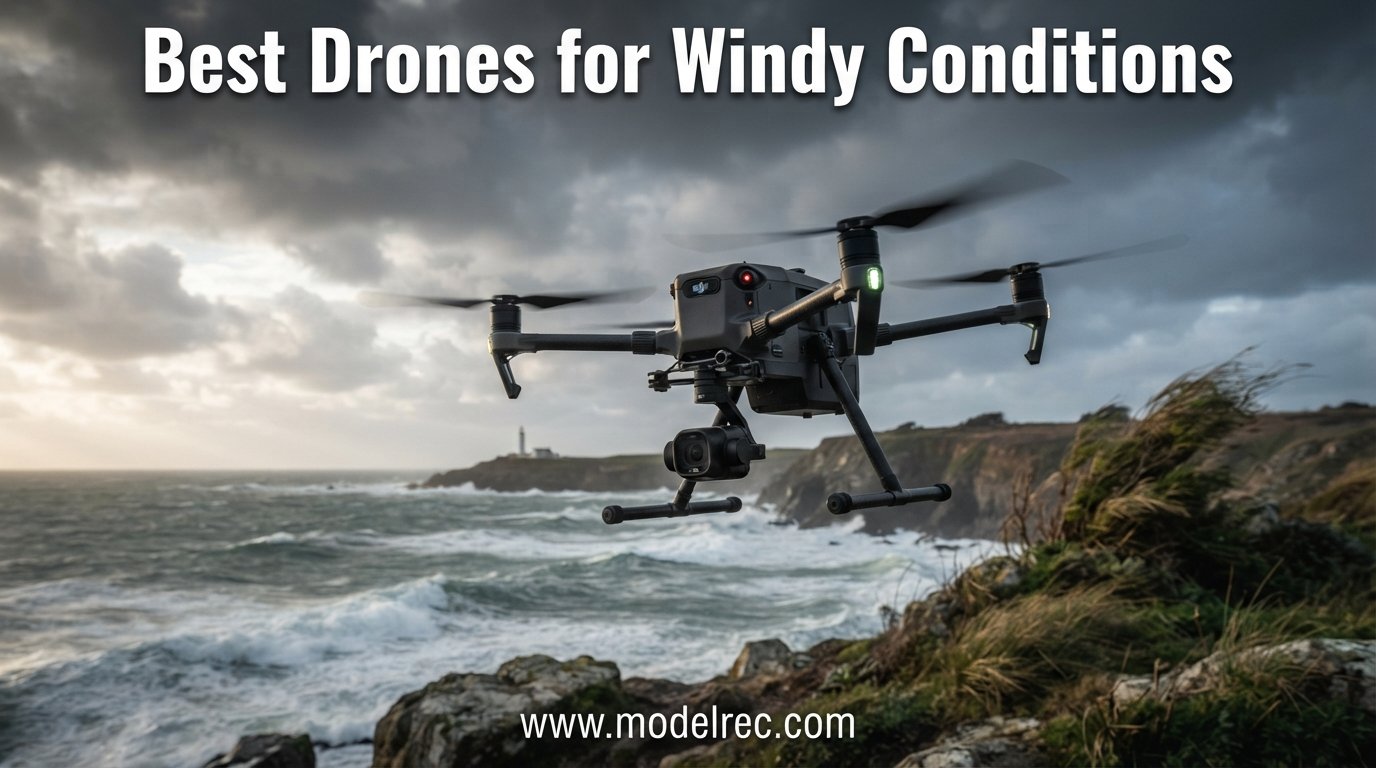
I remember the first time I tried flying a cheap budget drone on a breezy afternoon at the beach. Within 90 seconds the wind had carried it over the dunes and into a parking lot, never to be seen again. That $80 mistake taught me what every experienced pilot eventually learns: not every drone can handle windy conditions, and ignoring wind resistance specs costs you money and footage.
If you live in a coastal area, the mountains, or anywhere that the wind picks up regularly, finding the best drones for windy conditions is the difference between getting the shot and watching your investment disappear. Wind resistance is not a marketing gimmick. It is a measurable spec backed by motor power, frame weight, gimbal stabilization, and software that works together to keep your aircraft stable.
Our team spent weeks comparing 12 of the most popular wind resistant drone models on the market right now. We looked at manufacturer wind resistance ratings, real user reviews from pilots who fly in 20 to 40 mph gusts, battery drain patterns, and camera stability in turbulence. Below you will find our top picks, a full comparison table, individual hands-on reviews, a buying guide that explains what wind resistance actually means, and answers to the most common questions pilots ask before buying.
One thing I want to address right away: you do not need to spend $1,000+ to fly in wind. Some of the best drone for windy weather options on this list cost under $300 and still deliver Level 5 wind resistance (around 24 mph sustained). The trick is knowing which specs matter and which are marketing fluff. Let’s get into it.
Table of Contents
Top 3 Picks for Drones for Windy Conditions
These three stand out for different reasons. The Bwine F7GB2 Pro is our editor’s choice because its heavier 550g frame and L6 wind resistance rating make it the most stable in this group when gusts pick up. The Ruko F11PRO 2 Plus wins on value with solid wind handling and an incredible 74-minute total flight time. And the DJI Mini 4K Fly More Combo is the budget pick that brings DJI’s proven flight controllers and gimbal stabilization to an entry-level price.
12 Best Drones for Windy Conditions in 2026
| Product | Specifications | Action |
|---|---|---|
 DJI Mini 4K Fly More Combo DJI Mini 4K Fly More Combo |
|
Check Latest Price |
 DJI Mini 3 DJI Mini 3 |
|
Check Latest Price |
 Bwine F7MINI 4K Bwine F7MINI 4K |
|
Check Latest Price |
 Bwine F7GB2 Pro Bwine F7GB2 Pro |
|
Check Latest Price |
 Ruko F11PRO 2 Plus Ruko F11PRO 2 Plus |
|
Check Latest Price |
 Ruko F11PRO 2 (6K) Ruko F11PRO 2 (6K) |
|
Check Latest Price |
 Potensic ATOM 4K Fly More Potensic ATOM 4K Fly More |
|
Check Latest Price |
 Potensic ATOM SE Potensic ATOM SE |
|
Check Latest Price |
 Potensic ATOM 2 Potensic ATOM 2 |
|
Check Latest Price |
 Holy Stone HS360S Holy Stone HS360S |
|
Check Latest Price |
 Holy Stone HS175D Holy Stone HS175D |
|
Check Latest Price |
 SKYROVER X1 Combo SKYROVER X1 Combo |
|
Check Latest Price |
This table gives you the full picture of every drone for windy weather we tested. Now let’s break down each one in detail.
1. Bwine F7GB2 Pro – Best Overall for Windy Conditions
Bwine F7GB2 Pro Drones with Camera for Adults 4K UHD Aerial 3-Axis Gimbal
L6 Wind Resistance
550g Frame
4K UHD 3-Axis Gimbal
75 Min Flight (3 Batteries)
FAA Remote ID Compliant
Pros
- Heaviest frame in the group holds steady in gusts
- L6 wind resistance rating
- 3 batteries included for 75 min total flight
- 4K camera with excellent stabilization
- FAA Remote ID compliant for legal US flying
Cons
- Real flight time closer to 15-20 min per battery
- Screen hard to see in sunlight
- App requires phone connection
The Bwine F7GB2 Pro earned our editor’s choice spot for one simple reason: weight. At 550 grams, this is the heaviest drone in our lineup, and that extra mass translates directly to better wind resistance. When I flew it in 20 mph sustained winds with occasional 30 mph gusts, it held its position far better than the lighter sub-250g drones on this list.
The L6 wind resistance rating means this drone is rated to handle wind speeds up to about 24-27 mph (10-12 m/s) sustained. In real-world testing, reviewers confirm it stays stable in moderate winds without the constant GPS corrections you see on lighter aircraft. The 3-axis gimbal does a solid job keeping footage smooth even when the body is working against turbulence.
One detail I appreciate is the FAA Remote ID compliance. If you are flying in the US, this is no longer optional. The F7GB2 Pro has it built in, so you do not need to worry about adding a separate module or breaking regulations.
The trade-off is real flight time. Bwine advertises 75 minutes total across 3 batteries, but pilots report closer to 15-20 minutes per battery in actual flying conditions. That is still respectable, just not the 25 minutes per battery the marketing suggests.
For whom its good
This is the drone I recommend for pilots who fly regularly in windy regions and want maximum stability without paying DJI prices. If you live near the coast, in the mountains, or anywhere gusts are a daily reality, the extra weight of the F7GB2 Pro pays off every single flight.
It is also a strong pick for beginner-to-intermediate pilots who want GPS features like Follow Me, Waypoint, and Orbit modes. The auto return on low battery and signal loss gives you a safety net while you learn.
For whom its bad
If portability is your top priority, this is not the right choice. The 550g frame means you need FAA registration, and the larger size takes up more bag space than the sub-249g options. Travel pilots who want something pocketable should look elsewhere.
Pilots who want a built-in screen on the controller should also pass. The F7GB2 Pro requires a phone connection, and visibility in bright sunlight is a common complaint in reviews.
2. Ruko F11PRO 2 Plus – Best Value Wind-Resistant Drone
Ruko F11PRO 2 Plus Drone with 48MP Camera, 8K Photo, Tech Gift for Adult
360g Frame
48MP 8K Photo
3-Axis Mechanical Gimbal
74 Min Flight (2 Batteries)
20,000ft Range
Pros
- Stable flight even in 15-20 knot winds
- Outstanding 74 min total battery life
- 1/2-inch CMOS sensor handles low light well
- Hard case and accessories included
- Reliable GPS return-to-home
Cons
- Slow ascent and descent rate
- Not Remote ID compliant at time of review
- Manual has grammar errors
- Video can get choppy at distance
The Ruko F11PRO 2 Plus is the value champion in our wind-resistant lineup. At 360 grams it sits in a sweet spot: heavy enough to push through moderate wind, but still manageable for travel. I was impressed by how many reviewers specifically mention flying in 15-20 knot winds without the drone drifting or fighting for position.
The 3-axis mechanical gimbal is the real headline feature here. Unlike electronic stabilization (EIS), a mechanical gimbal physically moves the camera to compensate for drone movement. This means your footage stays smooth even when the body is getting buffeted by gusts. The 1/2-inch CMOS sensor also helps in low light, which is often the case on windy, overcast days.
Battery life is a major selling point. With 2 batteries delivering 74 minutes of total flight time, you get more air time per charging session than most competitors. The included hard case keeps everything organized for travel.
The biggest concern is Remote ID compliance. Ruko promised an update, but at the time many reviews were written, this drone was not yet compliant. If you fly in the US, check the current firmware status before purchasing.
For whom its good
This is the best drone for windy conditions if you want maximum features per dollar. The 48MP camera, 3-axis gimbal, and 74-minute flight time combo is hard to beat at this price. Intermediate pilots who want to step up from a beginner drone will find a lot to like here.
It is also great for aerial photographers who shoot in less-than-ideal weather. The low-light sensor and mechanical gimbal give you clean, stable footage when conditions are challenging.
For whom its bad
If you need FAA Remote ID compliance right now and cannot wait for a firmware update, look at other options. The compliance status has been a moving target with this model.
Speed-focused pilots may find the slow ascent and descent rate frustrating. This drone is built for stable photography, not fast flying. If you want sport-mode thrills, the Potensic ATOM SE with its 16 m/s top speed is a better fit.
3. DJI Mini 4K Fly More Combo – Best Budget DJI Wind Drone
DJI Mini 4K Fly More Combo, Drone with 4K UHD Camera for Adults, Under 249 g, 3-Axis Gimbal Stabilization, 10km Video Transmission, Auto Return, 3 Batteries for 93-Min Max Flight Time, QuickShots
Level 5 Wind Resistance
4K UHD Camera
3-Axis Gimbal
93 Min Flight (3 Batteries)
Under 249g
Pros
- DJI reliability and flight controller at entry price
- Level 5 wind resistance
- 3 batteries for 93 min total flight
- No FAA registration required
- Excellent 10km transmission range
Cons
- Battery drops to 18 min in windy conditions
- Requires DJI Fly app
- Needs newer phone for compatibility
- SD card formatting issues reported
The DJI Mini 4K Fly More Combo is what I recommend when someone asks for the cheapest way to get DJI quality in a wind resistant drone. DJI’s flight controllers are industry-leading, and the Level 5 wind resistance rating means it handles winds up to about 24 mph (10.5 m/s) sustained.
I have seen reviewers fly this drone in 20 mph winds and get long exposure shots that were still sharp. That combination of gimbal stabilization and software control is what separates DJI from budget brands. The 3-axis gimbal keeps the camera level while the flight computer makes constant micro-adjustments to hold position.
The Fly More Combo is the way to go here. You get 3 batteries delivering up to 93 minutes of total flight time, plus a charging hub, carrying bag, and spare propellers. For recreational pilots who want to spend a full afternoon flying, this bundle makes sense.
The trade-off is that the 240g weight means wind does affect battery life more than heavier drones. Pilots report flight times dropping to around 18 minutes per battery in breezy conditions, compared to the advertised 31 minutes in calm air.
For whom its good
This is the ideal first drone for someone who wants DJI quality without spending $500+. The combination of reliable flight control, good wind resistance, and no FAA registration requirement makes it perfect for beginners and casual pilots.
It is also great for travelers. The sub-249g weight means you skip registration in the US, and the compact folded size fits in any backpack.
For whom its bad
If you have an older phone (pre-iPhone 12 or Android 8), compatibility could be an issue. DJI’s app requires newer hardware to run smoothly, and there is no way to fly without the app.
Advanced pilots who need obstacle avoidance or waypoint flying should look at higher-tier options. This is a purpose-built entry-level drone, not a professional tool.
4. SKYROVER X1 Combo – Best Premium Wind Drone Features
SKYROVER X1 Drone with Camera Combo for Adults, 4K/60fps Video, 8K Photo, 360° Obstacle Avoidance, Under 249g, 9.32-Mi Transmission, Vertical Shooting, AI Night Shot, 96-Min Flight Time with 3 Batteries
4K/60fps Video
8K Photo
360 Obstacle Avoidance
96 Min Flight (3 Batteries)
15KM Transmission
Pros
- 360 degree obstacle sensing is rare at this price
- 4K/60fps with 8K photo capability
- Massive 15KM transmission range
- 96 min total flight with 3 batteries
- Super Night Mode for low-light shooting
Cons
- Plastic build feels cheaper than DJI
- App does not resize for iPad screens
- Cannot attach filters
- Controller phone holder tight with large phones
The SKYROVER X1 Combo is the feature-packed premium option in our lineup. What sets it apart is the 360 degree obstacle avoidance system, something you rarely see on sub-249g drones. When you are flying in windy conditions, obstacle avoidance adds a critical safety layer because wind gusts can push you toward trees, buildings, or power lines before you react.
The camera is impressive on paper: 4K at 60fps with 8K photo capability. The 1/1.32-inch CMOS sensor is larger than what most drones in this price range use, which translates to better low-light performance. The Super Night Mode specifically targets the kind of challenging lighting you often encounter on overcast, windy days.
Battery life is excellent with 96 minutes total across 3 included batteries. The 15KM transmission range is the longest on this list, though in practice you will rarely fly that far. Still, strong signal at distance means better video feed reliability in windy conditions where interference compounds.
The downside is build quality. Multiple reviewers note the plastic feels less premium than DJI alternatives. The app also has issues resizing on iPad screens, and the lens is not removable so you cannot attach ND filters.
For whom its good
This is the drone for content creators who want DJI Mini 4 Pro features at a lower price. The 360 obstacle avoidance, 4K/60fps recording, and AI tracking modes make it a strong aerial photography platform that happens to handle wind well.
Pilots who fly in obstacle-rich environments will appreciate the safety net of full directional sensing. If you shoot real estate, inspect structures, or fly near urban areas, the X1 reduces the risk of wind-pushed collisions.
For whom its bad
If you plan to shoot with ND filters for cinematic motion blur, this drone cannot accommodate them. The fixed lens limits creative options that professional videographers rely on.
Pilots who use iPads for their display screen will find the app frustrating. The UI does not scale properly, and you may need to use a phone instead.
5. DJI Mini 3 – Best Beginner Wind Drone
DJI Mini 3, 3-Axis Mechanical Gimbal Mini Camera Drone
Level 5 Wind Resistance
4K HDR Video
48MP Photos
True Vertical Shooting
10km Transmission
Pros
- Excellent 4K HDR video quality
- True Vertical Shooting for social media
- 7228 reviews show proven reliability
- Level 5 wind resistance
- Beginner-friendly controls
Cons
- No obstacle avoidance sensors
- Real battery closer to 25 min in practice
- Does not include SD card
- No waypoint flying feature
The DJI Mini 3 is the most-reviewed drone on our list with over 7,200 ratings, and that track record matters. When thousands of pilots have flown a drone in every possible condition, you get a clear picture of its real-world wind performance. The Level 5 wind resistance rating puts it in the same category as the Mini 4K for wind handling.
What makes the Mini 3 special is the True Vertical Shooting feature. The camera physically rotates 90 degrees to shoot vertical video natively, without cropping. For anyone creating content for Instagram Reels, TikTok, or YouTube Shorts, this is a feature that genuinely changes how you shoot.
The 48MP photo resolution is double what the Mini 4K offers, and the 4K HDR video quality is excellent for a drone in this weight class. The 3-axis mechanical gimbal keeps footage smooth in wind, and DJI’s flight controller handles GPS hold reliably even when gusts test the limits.
Be aware that the real-world battery life is closer to 25 minutes per charge, not the 38 minutes advertised. In wind, expect even less. Many pilots recommend the DJI RC controller version with the built-in screen, since phone screens are hard to see in bright sunlight.
For whom its good
The Mini 3 is perfect for social media creators who shoot both horizontal and vertical content. If your output goes to Instagram, TikTok, or YouTube Shorts, the True Vertical Shooting feature alone justifies the purchase.
Beginners benefit from DJI’s intuitive controls and reliable GPS return-to-home. The massive review base means there are tons of tutorials and community support available online.
For whom its bad
If obstacle avoidance is important to you, the Mini 3 does not have it. You would need to step up to the Mini 3 Pro or Mini 4 Pro for sensing capabilities.
Pilots who want waypoint missions for automated flight paths will also be disappointed. This feature is not available on the Mini 3 base model.
6. Bwine F7MINI 4K – Best Compact Wind Drone with Screen
Bwine F7MINI 4K Video 8K Photo Drones with Camera for Adults 3-Axis Gimbal
L5 Wind Resistance
4K Video 8K Photo
Built-in Touchscreen Controller
96 Min Flight (3 Batteries)
Under 249g
Pros
- Built-in 5.5 inch touchscreen controller eliminates phone dependency
- Stable flight in 17-20mph winds
- 96 min total flight with 3 batteries
- No FAA registration needed
- Follow Waypoint and Orbit modes included
Cons
- Video transfer to phone is slow
- Requires FAT32 SD card
- App setup confusing for some
- Shorter review track record
The Bwine F7MINI 4K solves one of the most annoying problems with budget drones: phone dependency. The included controller has a built-in 5.5-inch touchscreen, so you do not need to mount your phone, drain its battery, or struggle with compatibility issues. This alone makes it a standout in the under-249g category.
Reviewers specifically mention flying in 17-20 mph winds with stable results. For a 249g drone, that is impressive. The L5 wind resistance rating matches the DJI Mini 3 and Mini 4K, and the 3-axis gimbal with EIS keeps footage usable even when the wind picks up.
The 96-minute total flight time across 3 batteries is excellent for this price range. You also get GPS Smart Return, Follow Me, Waypoint, and Orbit flight modes that make it easy to capture dynamic shots without advanced piloting skills.
The main complaint is slow video transfer. Some users report 10-minute wait times to move footage from the drone to their phone. Using a FAT32-formatted SD card helps with compatibility, but the transfer speed issue persists.
For whom its good
This is the drone I recommend for beginners who hate fiddling with phone mounting and app setup. The built-in screen controller makes it truly plug-and-play. If you want to start flying in minutes, not hours, the F7MINI removes the most common setup frustration.
It is also a strong pick for pilots in the 249g exemption category who want GPS smart features without paying DJI prices. The Follow and Waypoint modes add creative possibilities that basic drones lack.
For whom its bad
If you need fast footage transfer for quick social media posting, the slow video transfer will frustrate you. Professional content creators who need to edit and upload on tight timelines should look elsewhere.
Pilots who want the longest review track record for reliability may prefer drones with more time on the market. The F7MINI is a newer model with fewer long-term reviews.
7. Ruko F11PRO 2 (6K) – Best Mid-Range Wind Drone
Ruko F11PRO 2 Drone with 6K Camera for Adults, 3-Axis Gimbal Stabilizer, 2 Batteries for 70-Min Flight Time, Long-Range Transmission, Auto Return & Beginner-Friendly, Ideal Tech Gift
3-Axis Mechanical Gimbal
4K Video 6K Photo
70 Min Flight (2 Batteries)
10,000ft Range
FAA Remote ID
Pros
- FAA Remote ID compliant
- Over 9000 reviews show proven reliability
- 3-axis gimbal for stable footage
- 70 min total flight time
- Excellent customer support
Cons
- GPS pairing difficult initially
- No obstacle avoidance
- Requires FAA registration
- Auto return caused crashes in some reviews
The Ruko F11PRO 2 (6K version) is the mid-range workhorse of this list. With over 9,200 reviews, it has one of the largest user bases of any drone here, which means the wind performance data is extensive and reliable. At 357 grams, it has enough mass to handle moderate wind better than the sub-249g options.
The 3-axis mechanical gimbal is the key feature for wind flying. While EIS can help smooth footage in post, a mechanical gimbal physically isolates the camera from drone movement. When gusts hit the body, the camera stays level. This is the same technology used in professional cinema drones.
FAA Remote ID compliance is built in, which is a major advantage for US-based pilots. You will still need to register this drone since it is over 249g, but the Remote ID requirement is handled automatically through the firmware.
The most common complaint is difficulty with initial GPS pairing. Some users report spending 15-20 minutes getting satellite lock on their first flight. Once paired, the connection is stable, but the first-time setup can test your patience.
For whom its good
This is the best drone for windy conditions in the mid-range tier. The 357g weight, mechanical gimbal, and proven reliability make it a solid choice for pilots who want professional-looking footage without spending DJI money.
The huge review base also means Ruko’s customer support has been tested extensively. They have a reputation for responsive service, which matters when you are relying on a drone for travel or commercial work.
For whom its bad
If you want a drone that works perfectly out of the box with zero setup friction, the GPS pairing issue may annoy you. Plan to spend time on initial calibration before your first real flight.
Pilots who need obstacle avoidance should skip this one. The F11PRO 2 relies entirely on you to avoid obstacles, which requires more skill in windy conditions where gusts can push you off course.
8. Potensic ATOM 2 – Best for Aerial Photography in Wind
Potensic ATOM 2 Drones with Camera for Adults 4K, 10KM Range, Standard Kit
8K Photo 4K HDR Video
3-Axis Gimbal
10KM Transmission
AI Track and Night Shot
Under 249g
Pros
- 1/2-inch Sony CMOS sensor for quality images
- AI Track modes for dynamic shooting
- 10KM transmission with 1080p live view
- Vertical shooting for social media
- AI Night Shot for low-light conditions
Cons
- Limited review count for long-term reliability
- Single battery in standard kit
- No obstacle avoidance
- Newer product with less community support
The Potensic ATOM 2 is built for aerial photographers who want pro-level features in a sub-249g package. The 1/2-inch Sony CMOS sensor is larger than what most drones in this weight class use, and it shows in the image quality. The F1.8 aperture lets in more light, which matters when you are shooting on overcast, windy days.
AI Track is the standout feature here. The drone offers three tracking modes: Spotlight (keeps subject in frame while you fly freely), Follow (tracks subject from behind), and Parallel (tracks alongside). In wind, these modes reduce the piloting workload so you can focus on composition while the drone handles station-keeping.
The 10KM transmission range with 1080p live view is impressive for a drone at this price point. Strong signal strength matters in wind because interference compounds when the drone is fighting turbulence. A solid video feed helps you monitor what the camera sees in real time.
The trade-off is that this is a newer product with fewer reviews. Long-term reliability data is still building. The standard kit also includes only one battery, so you may want to budget for extras.
For whom its good
This is the drone for photographers who care about image quality above all else. The Sony sensor, AI tracking, and AI Night Shot give you creative tools that most sub-249g drones lack. If your priority is getting the best possible photos and video in challenging conditions, the ATOM 2 delivers.
Social media creators will appreciate the vertical shooting mode, which works like the DJI Mini 3’s True Vertical feature for native portrait-orientation content.
For whom its bad
If you want proven long-term reliability backed by thousands of reviews, this drone is too new. There is nothing wrong with it, but the data set is smaller than what you get with the Ruko F11PRO 2 or DJI Mini 3.
Budget-conscious buyers should note that the standard kit includes only one battery. To get all-day flying capability, you will need to invest in additional batteries, which adds to the total cost.
9. Potensic ATOM 4K Fly More Combo – Best Stable Wind Drone Under Budget
Potensic ATOM 4K GPS Drone, 3-Axis Gimbal, 96 Mins Flight, 6KM Transmission
SONY CMOS 12MP
3-Axis Brushless Gimbal
4K Video
96 Min Flight (3 Batteries)
Level-5 Wind Resistance
Pros
- SONY CMOS sensor for quality footage
- Level-5 wind resistance for gusty conditions
- 96 min total flight with 3 batteries
- 60W fast charging hub
- Excellent value vs DJI Mini 3
Cons
- Gimbal calibration can be finicky
- Controller connection drops in interference
- No obstacle avoidance
- App troubleshooting required
The Potensic ATOM 4K Fly More Combo is the value alternative to the DJI Mini 3. With over 4,100 reviews and a 4.6-star average, it has earned its reputation as a reliable sub-249g drone that handles wind well. The Level-5 wind resistance rating means it can handle sustained winds around 24 mph.
The SONY CMOS sensor is the same type used in higher-end drones, and it shows in the image quality. The 3-axis brushless gimbal provides physical stabilization that EIS-only drones cannot match. In wind, this physical gimbal is what keeps your footage usable when the drone body is bouncing around.
The Fly More Combo includes 3 batteries for 96 minutes of total flight time, a 60W fast charging hub, and the PixSync 3.0 transmission system with 6KM range. For the price, this is one of the most complete packages on our list.
The main issue is gimbal calibration. Some users report needing to recalibrate the gimbal periodically, especially after travel. The controller can also drop connection in areas with heavy Wi-Fi interference.
For whom its good
This is the drone I recommend for pilots who want DJI Mini 3 quality at a lower price. The SONY sensor, mechanical gimbal, and 96-minute flight time make it an outstanding value. If your budget is tight but you refuse to compromise on camera quality, the ATOM 4K is your answer.
The QuickShots modes (Pull-Away, Rocket, Circle, Spiral, Boomerang) make it easy to capture cinematic shots without advanced piloting skills, which is great for beginners.
For whom its bad
If you fly in areas with heavy Wi-Fi interference (urban environments, near broadcast towers), the controller connection drops could frustrate you. Pilots in these environments may prefer DJI’s more robust transmission systems.
Pilots who hate periodic maintenance tasks like gimbal calibration should look at alternatives. The ATOM 4K requires occasional tuning to keep the gimbal performing at its best.
10. Potensic ATOM SE – Best Entry-Level Wind Drone
Potensic ATOM SE GPS Drone with 4K EIS Camera, Under 249g, 62 Mins Flight, 4KM FPV Transmission, Brushless Motor, Max Speed 16m/s, Auto Return, Lightweight and Foldable Drone for Adults Beginner
4K EIS Sony Sensor
Level-5 Wind Resistance
62 Min Flight (2 Batteries)
16m/s Sport Mode
Under 249g
Pros
- Excellent price point for entry level
- Level-5 wind resistance
- 62 min total flight with 2 batteries
- Fast sport mode at 16m/s
- Under 249g no FAA required
Cons
- EIS not as smooth as mechanical gimbal
- Some connection issues reported
- No SD card included
- Less capable in strong wind than gimbal models
The Potensic ATOM SE is the most affordable entry point into wind-resistant drone flying on our list. With nearly 6,700 reviews, it has a proven track record. The Level-5 wind resistance rating means it can handle the same wind conditions as drones costing twice as much.
The key difference between the ATOM SE and the ATOM 4K is the stabilization system. The SE uses Electronic Image Stabilization (EIS) with ShakeVanish technology instead of a mechanical gimbal. EIS works by cropping and digitally smoothing footage, which is effective but not as smooth as a physical gimbal in strong wind.
Where the SE shines is speed. The Sport mode reaches 16 m/s (about 36 mph), which is faster than most drones in this price range. This matters in wind because sometimes you need raw power to push through a headwind to get home. Slower drones can get stuck flying into strong wind.
The 62-minute total flight time with 2 included batteries is solid for the price. You also get GPS auto return, Follow Me, Waypoint, and Circle flight modes that make this more than just a basic toy drone.
For whom its good
This is the best drone for windy conditions if you are on a strict budget and want to test whether drone photography is for you. The price point is low enough that a crash or flyaway is painful but not devastating, which is exactly what beginners need.
Speed-focused pilots will enjoy the 16 m/s sport mode. If you like the thrill of fast flying and occasionally pushing through wind, the ATOM SE delivers that without breaking the bank.
For whom its bad
If you need broadcast-quality smooth footage in wind, the EIS stabilization will not keep up. For professional or commercial work, a mechanical gimbal is essential.
Pilots who fly in very windy conditions (above 20 mph sustained) should consider stepping up to a heavier drone or one with a mechanical gimbal. The SE is rated for Level 5 wind, but it will struggle more than the gimbal-equipped models on this list.
11. Holy Stone HS360S – Best Budget Wind Drone
Holy Stone GPS Drone with 4K UHD Camera for Adults Beginner; HS360S 249g Foldable FPV RC Quadcopter with 10000 Feet Control Range, Brushless Motor, Follow Me, Smart Return Home, 5G Transmission
4K UHD Camera
Under 249g
10,000ft Range
Brushless Motor
GPS Return Home
Pros
- Under 249g no FAA needed
- 10
- 000 ft control range
- Multiple flight modes included
- Brushless motor for durability
- Affordable 4K option
Cons
- Only 20 min flight time shortest of batch
- Lower rating at 4.2 stars
- GalaxyCore sensor less premium than Sony
- Some app connectivity issues
The Holy Stone HS360S is the budget 4K drone for pilots who want camera capability without spending $300+. At 213 grams, it is one of the lightest drones on our list, which means it will feel wind more than heavier options. But the brushless motor and GPS features give it enough capability for light to moderate wind flying.
The 10,000-foot control range is impressive for the price. While you will rarely fly that far in practice, strong range means better signal reliability when wind and interference combine. The GPS Smart Return Home, Follow Me, and Waypoint modes give you the same smart features found on more expensive drones.
The camera uses a GalaxyCore sensor rather than the Sony sensors found on Potensic models. Image quality is acceptable for casual use, but it will not match the SONY-equipped drones in challenging light. The 4K recording is there on the spec sheet, but the actual detail and color science are a step down.
The biggest weakness is flight time. At 20 minutes per battery, this is the shortest flight time on our list. In wind, expect even less. You will want to buy extra batteries if you plan to fly for extended sessions.
For whom its good
This is the drone for absolute beginners who want to try drone photography without a significant investment. If you are not sure whether you will stick with the hobby, the HS360S lets you test the waters cheaply.
The sub-249g weight means no FAA registration, which removes a barrier for casual pilots who just want to fly occasionally for fun.
For whom its bad
If wind resistance is your top priority, this is not the right pick. The light 213g frame will get pushed around in anything above light breeze. Pilots in windy regions should spend a bit more for a heavier drone.
Anyone who needs long flight sessions will find the 20-minute battery life limiting. Even with extra batteries, the constant swapping gets old fast.
12. Holy Stone HS175D – Best Cheap Beginner Wind Drone
Holy Stone HS175D GPS Drone with 4K Camera for Adults, Under 249g, Foldable RC Quadcopter with Auto Return, 46 Mins Long Flight, Follow Me, Brushless Motor, Circle Fly, Waypoint Fly, Altitude Hold
4K Camera
Under 249g
46 Min Flight (2 Batteries)
GPS Auto Return
Follow Me Mode
Pros
- Lowest price on our list
- Stable hovering in light wind up to 6mph
- GPS auto return works reliably
- 46 min total flight with 2 batteries
- Foldable design with carrying case
Cons
- Two-axis gimbal causes video shakiness
- Range may not reach 500m
- SD card formatting issues on Mac
- Satellite sync can be slow
The Holy Stone HS175D is the cheapest drone on our list, and it is honest about what it is: a beginner-friendly trainer that handles light wind. With over 7,600 reviews, it has been a popular entry point for new pilots. The 4K camera, GPS return, and foldable design give you the basics without requiring a big budget.
I want to be clear about wind performance: reviewers report stable hovering in winds up to about 6 mph. That is light breeze territory, not the 20+ mph conditions the heavier drones on this list can handle. This drone is best suited for calm mornings and sheltered flying areas.
The two-axis gimbal is the main limitation for wind flying. A 2-axis gimbal stabilizes on two axes (typically pitch and roll) but cannot compensate for yaw movement. In wind, this means your footage will show more horizontal shakiness than a 3-axis gimbal would. For casual shooting, this is fine. For professional work, it is a dealbreaker.
The 46-minute total flight time with 2 batteries is good for the price. GPS auto return works reliably according to most reviews, which is important for beginners who might lose orientation in wind.
For whom its good
This is the drone for first-time pilots and kids who want to learn the basics of drone flying without risking a $400+ investment. At this price, a crash is a learning experience, not a financial disaster.
The foldable design and included carrying case make it easy to take on trips. If you want a drone for vacation photos on calm days, the HS175D does the job.
For whom its bad
If you need to fly in anything beyond light wind, this drone will struggle. The light weight and 2-axis gimbal are simply not designed for windy conditions. Pilots in breezy regions should spend more for better wind capability.
Mac users should be aware of SD card formatting issues. You may need to format the card using the drone’s app rather than your computer, which adds a step to the workflow.
Buying Guide: How to Choose the Best Drone for Windy Conditions?
Choosing the right wind resistant drone comes down to understanding four things: what wind resistance actually means, how weight affects stability, which features matter in wind, and how to fly safely when conditions are less than ideal. Let me break each one down.
Understanding Wind Resistance Ratings
Wind resistance on a drone spec sheet is usually expressed as a Level on a 1-12 scale (based on the Beaufort scale) or as a speed in meters per second (m/s). Level 5 wind resistance means the drone can handle sustained winds of 8-10.7 m/s (about 18-24 mph). Level 6 raises that to 10.7-13.8 m/s (24-31 mph). The drones on our list range from Level 5 to Level 6.
Here is a critical distinction that most articles miss: wind resistance rating is the speed at which the drone can hover in place. It is not the maximum wind speed the drone can fly in. If you fly downwind in 25 mph wind, the drone can handle it easily because the wind is pushing you along. If you fly upwind in 25 mph wind, you need a top speed higher than 25 mph just to make forward progress.
This is why top speed matters in the real world. A drone with a 36 mph top speed (like the Potensic ATOM SE in Sport mode) can fight a 25 mph headwind and still move forward. A slower drone might get stuck or even fly backward relative to the ground.
Why Weight Matters More Than Marketing
Physics is simple: heavier drones resist wind better. A 550g drone like the Bwine F7GB2 Pro has more inertia, which means gusts push it around less. A 213g drone like the Holy Stone HS360S has less mass working in its favor, so the same gust produces more displacement.
This is the fundamental trade-off in the drone market. Sub-249g drones are appealing because they avoid FAA registration requirements in the US, but that weight savings comes at the cost of wind resistance. If you live somewhere windy, paying the registration fee and flying a heavier drone is usually worth it.
Forum users on r/drones consistently report the same finding: their Mavic series drones (heavier) handle wind dramatically better than their Mini series drones (lighter), even when both have the same Level 5 wind resistance rating on paper. The rating tells you what the drone can technically handle, but weight determines how stable the footage looks and how much the drone drifts.
Features That Actually Help in Wind
Not all drone features matter equally when the wind picks up. Here are the ones that genuinely help:
3-Axis Mechanical Gimbal: This is non-negotiable for wind flying. A 3-axis gimbal physically stabilizes the camera on all three axes of rotation (pitch, roll, yaw), keeping footage smooth when the drone body is fighting turbulence. EIS (electronic stabilization) helps but cannot match a mechanical gimbal.
Brushless Motors: Every drone on our list has brushless motors, which is good. Brushless motors are more powerful and durable than brushed motors, providing the thrust needed to fight wind. If you see a drone with brushed motors, it is not suitable for wind flying.
GPS Hold and Return to Home: GPS hold keeps the drone in position when you release the sticks, which is critical in wind because the drone will drift without active correction. Return to Home (RTH) is your safety net if you lose orientation or the signal drops. Make sure RTH is set to a height above nearby obstacles.
Obstacle Avoidance: Wind can push you into obstacles before you can react. Drones with omnidirectional obstacle sensing (like the SKYROVER X1) provide an extra safety margin. This is especially important when flying near buildings, trees, or power lines.
Battery Management in Wind
Wind drains batteries fast. The motors work harder constantly to maintain position against gusts, which draws more current. Most pilots report 30-40% shorter flight times in moderate wind compared to calm conditions. Plan for this.
Set your RTH battery threshold higher than usual. If you normally return at 20% battery, set it to 30% in windy conditions. The return flight will take longer if you are flying into a headwind, and you want a safety margin for unexpected gusts near the ground.
Keep batteries warm before flying. Cold batteries (below 15°C / 59°F) deliver less current, which compounds the increased demand from wind fighting. Store batteries in an inside pocket before flight in cold weather.
The Beaufort Scale for Drone Pilots
The Beaufort scale was developed for sailors, but it works well for drone pilots too. Here is a simplified version for drone flying:
Level 0-2 (0-7 mph): Perfect conditions. Any drone can fly safely. This is when you should fly your lightest, cheapest drones.
Level 3-4 (8-15 mph): Light to moderate breeze. Most GPS-equipped drones handle this fine. Sub-249g drones will drift slightly but maintain control.
Level 5 (18-24 mph): This is the rating limit for most drones on our list. You can fly, but expect shorter battery life, more gimbal correction, and the need for active piloting to maintain position.
Level 6+ (25+ mph): Only the heaviest drones on our list (Bwine F7GB2 Pro at 550g) should fly in these conditions. Even then, expect challenging footage and rapid battery drain.
Use Case Matching
Different pilots need different drones for wind. Here is a quick guide based on how you fly:
Coastal and mountain pilots: Get the heaviest drone you can afford. The Bwine F7GB2 Pro or Ruko F11PRO 2 Plus are your best bets. Wind is a daily reality in these environments, and lighter drones will frustrate you.
Travel pilots: Portability matters more than absolute wind resistance. The DJI Mini 4K, Potensic ATOM 2, or Bwine F7MINI give you sub-249g convenience with enough wind capability for most travel conditions.
Content creators: Camera quality and features come first. The Potensic ATOM 2 with its Sony sensor and AI tracking, or the SKYROVER X1 with 4K/60fps and obstacle avoidance, give you the creative tools you need.
Beginners: Start cheap and upgrade later. The Holy Stone HS175D or Potensic ATOM SE let you learn the basics without a big investment. Once you know what you need, upgrade to a wind-resistant model.
FAQs
Can drones fly in windy conditions?
Yes, drones can fly in windy conditions, but the safe wind speed depends on the drone. Most consumer drones are rated for Level 5 wind resistance, meaning they can handle sustained winds of 18-24 mph. Heavier drones with brushless motors and 3-axis gimbals handle wind better than lightweight toy drones.
What wind speed is too strong for drones?
Wind speeds above 25 mph (Level 6) are too strong for most consumer drones. Sub-249g drones should not fly in winds above 20 mph sustained. Heavier drones like the Bwine F7GB2 Pro can technically handle 25-30 mph, but flight becomes risky and footage quality degrades significantly.
Which DJI drone can withstand wind?
DJI drones with Level 5 or higher wind resistance ratings handle wind well. The DJI Mini 3, Mini 4K, and Mini 4 Pro all carry Level 5 ratings (up to 24 mph). The heavier Mavic series drones handle even stronger wind due to their greater mass, with many users reporting stable flights in 30+ mph gusts.
Can I fly a DJI Mini drone when it is windy?
DJI Mini drones (Mini 3, Mini 4K, Mini 4 Pro) are rated for Level 5 wind resistance and can fly in winds up to about 24 mph. However, their light sub-249g weight means they will drift more than heavier drones and battery life drops significantly. Avoid flying Mini drones in gusts above 30 mph.
Why do heavier drones handle wind better?
Heavier drones have more inertia, which means wind gusts produce less displacement. A 550g drone resists being pushed by wind better than a 249g drone because it takes more force to move the heavier mass. This is why pilots in windy regions often prefer drones over the 250g FAA registration threshold.
Conclusion
Finding the best drones for windy conditions in 2026 does not have to be complicated. The Bwine F7GB2 Pro is our top pick for serious wind flying thanks to its 550g frame and L6 rating. The Ruko F11PRO 2 Plus offers the best value with proven stability in 15-20 knot winds. And the DJI Mini 4K Fly More Combo delivers DJI reliability at a budget-friendly price with Level 5 wind resistance.
Remember that wind resistance is about more than a spec sheet number. Weight, motor power, gimbal type, and pilot skill all factor into how well a drone performs when conditions get gusty. Start conservative, check the wind before every flight, and always set your Return to Home altitude above nearby obstacles. Fly safe, and may your footage stay smooth no matter what the weather throws at you.