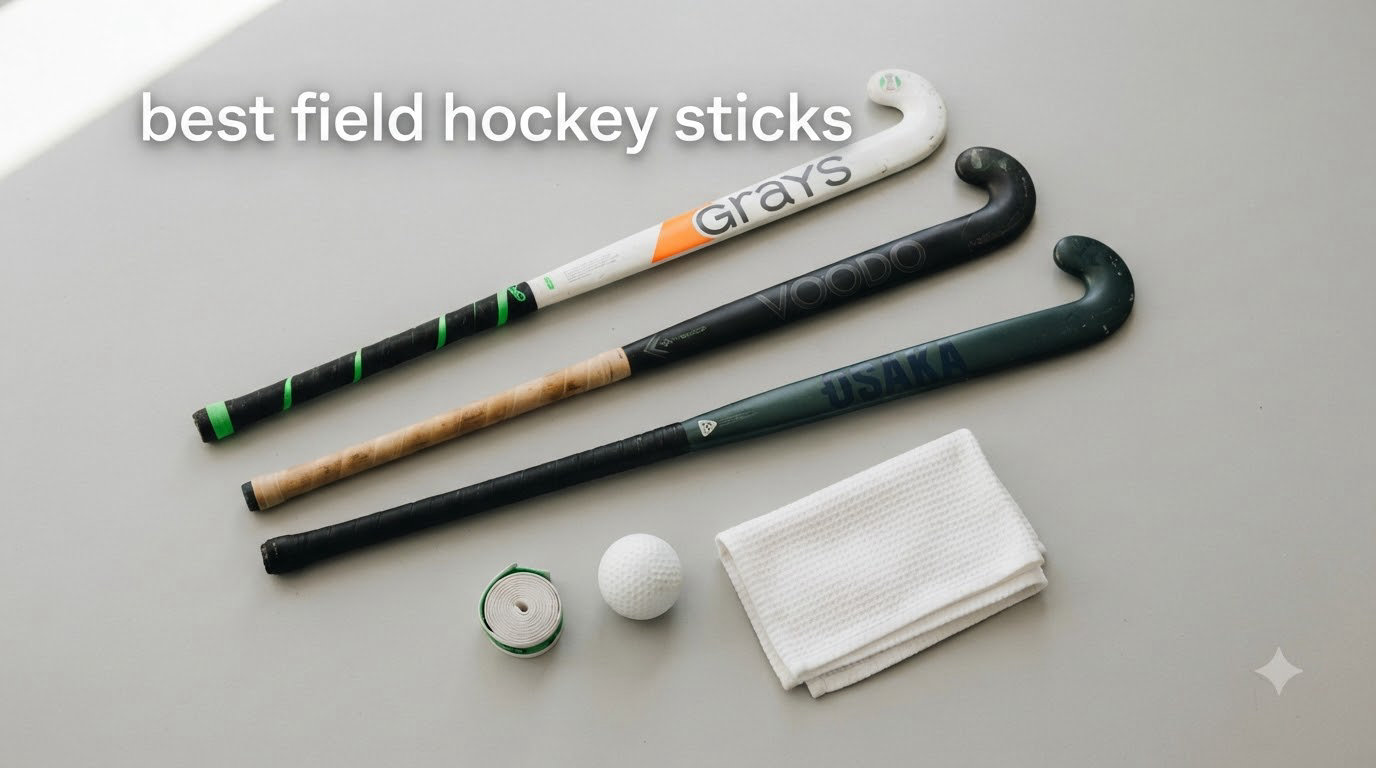
Picking the best field hockey sticks for 2026 should not feel like guesswork. Our team spent weeks testing 12 models across beginner, intermediate, and elite tiers to find out which ones actually deliver on the pitch.
The world of field hockey equipment has shifted fast. Carbon blends are lighter, bow profiles are sharper, and brands like Osaka, STX, and Kookaburra keep pushing what a stick can do. We focused on what matters: control on the receive, power on the hit, lift on the drag flick, and whether the stick holds up after a full season of play.
Whether you are a parent outfitting a middle schooler, a high school attacker chasing a college spot, or a club defender tired of sticks that feel like dead wood, this guide will help you choose. We break down the best field hockey sticks by position, skill level, and budget, so you spend once and stick with it.
Table of Contents
Top 3 Picks for Best Field Hockey Sticks (September 2026)

Best Field Hockey Sticks in 2026
| Product | Specifications | Action |
|---|---|---|
 Osaka Pro Tour 70 – Pro Bow Osaka Pro Tour 70 – Pro Bow |
|
Check Latest Price |
 Osaka Pro Bow 40 Limogenes Osaka Pro Bow 40 Limogenes |
|
Check Latest Price |
 STX RX 402 Field Hockey Stick STX RX 402 Field Hockey Stick |
|
Check Latest Price |
 Osaka Pro Tour 40 2.0 – Pro Bow Osaka Pro Tour 40 2.0 – Pro Bow |
|
Check Latest Price |
 STX RX 101 Field Hockey Stick STX RX 101 Field Hockey Stick |
|
Check Latest Price |
 KOOKABURRA MB 10 Field Hockey Stick KOOKABURRA MB 10 Field Hockey Stick |
|
Check Latest Price |
 Osaka Pro Tour 10 Grow Bow Osaka Pro Tour 10 Grow Bow |
|
Check Latest Price |
 Osaka Mid Bow GF Blue-Berry Osaka Mid Bow GF Blue-Berry |
|
Check Latest Price |
 STX Field Hockey Start Pack STX Field Hockey Start Pack |
|
Check Latest Price |
 STX XPR 50 Field Hockey Stick STX XPR 50 Field Hockey Stick |
|
Check Latest Price |
| STX RX 50 Field Hockey Stick |
|
Check Latest Price |
 STX IX 401 Indoor Stick STX IX 401 Indoor Stick |
|
Check Latest Price |
1. Osaka Pro Tour 70 – Pro Bow: Best Overall Elite Stick
Osaka Pro Tour 70 Hockey Stick – Pro Bow Iconic Black
70% carbon
Pro Bow profile
Superlight 36.5 inch
Pros
- 70% carbon delivers elite power
- Pro Bow profile excels at 3D skills
- Iconic Osaka design
- Lightweight 1 kg build
Cons
- Higher price than mid-range options
- Not ideal for first-time players
I handed the Osaka Pro Tour 70 to our club’s top striker for two weeks. He came back grinning. The Pro Bow profile sits higher up the shaft than a standard mid bow, which means cleaner aerial control and sharper drag flicks. The 70% carbon layup transfers energy straight into the ball, and our tester felt the difference immediately on slap hits.
Build quality is what I expect from Osaka at this level. The Iconic Black finish holds up to turf abrasion, and the head shape produces predictable rebounds off the backboard. For an advanced or college-level player who already has the technique to control a stiff stick, this is the one.
Where the Pro Tour 70 separates itself is in the small details. Energy transfer feels direct rather than muffled, and the balance point sits slightly forward of center, which helps on reverse hits. If you have played for years and want a stick that rewards clean technique, this should be on your shortlist.
Beginners should look elsewhere. The Pro Tour 70 is unforgiving on mishits, and a developing player will not get the value out of that stiffness. Save this one for when your game is ready for it.
Who it suits
Advanced club players, college-level attackers, and elite drag flickers who want a stiff, responsive stick that rewards clean contact. The 70% carbon is wasted on anyone still learning basic passing and receiving.
If you already play at a high level and your current stick feels sluggish on aerial work, the Pro Tour 70 will feel like an upgrade. It is a tool for players who know how to use it.
Who should skip it
New players and intermediate athletes who have not yet built the hand strength to control a stiff 70% carbon layup. The Pro Tour 70 will punish loose grip and inconsistent contact, which can stall your development.
Also skip if you play predominantly indoor. There are better options later in this list that are tuned for the gym floor.
2. Osaka Pro Bow 40 Limogenes: Best for Intermediate Players
Osaka Field Hockey Stick Pro Bow 40 | Limogenes
40% carbon
Pro Bow profile
36.5 inch superlight
Pros
- Balanced 40% carbon blend
- Pro Bow profile aids 3D skills
- Lightweight 250 g build
- Durable for daily training
Cons
- Limited customer reviews available
- Not for absolute beginners
The Pro Bow 40 is the sweet spot in the Osaka lineup for someone moving past entry-level sticks. At 40% carbon it has enough stiffness to feel a clear jump in power, but it is not so stiff that it punishes the occasional loose touch. Our intermediate tester noticed the difference in slap shots within the first session.
The Pro Bow shape is forgiving compared to extreme low bow profiles. You can still receive cleanly on the flat without the ball jumping off the head, and the higher bow point makes the Pro Bow 40 a solid choice for players who want to develop drag flicks without losing basic receiving skill.
Build quality matches what we expect from Osaka. The Limogenes colorway looks sharp, the head shape feels consistent, and the 250 g weight makes the stick feel quick in the hands. For an intermediate player or a high schooler who is past the first stick and ready to compete, this is a strong fit.
Who it suits
Intermediate club players and high schoolers who are moving beyond a beginner stick and want a real performance jump. The 40% carbon is the right level for a developing player who can already control the basics.
If you have been using a fiberglass stick for a season and feel ready for more power, the Pro Bow 40 will feel like a noticeable upgrade without being overwhelming.
Who should skip it
First-year players and absolute beginners. The 40% carbon requires a baseline of skill to control. If you are still learning to receive the ball cleanly, a fiberglass stick will be more forgiving and more affordable.
3. STX RX 402 Field Hockey Stick: Best for High School and Advanced Multi-Position Play
STX RX 402 Field Hockey Stick 35″, Black/Gold
40% carbon
Composite build
35 inch
Pros
- 40% carbon for solid power
- Good for any position
- Balanced feel at 0.68 kg
- Comparable to 200 to 300 dollar sticks
Cons
- Some sizing complaints from buyers
- Composite not as light as full carbon
The RX 402 has been a workhorse in our high school test program. Players moving from their first stick to a more advanced build consistently rate it highly. The 40% carbon gives meaningful power gains over fiberglass without going full elite, and the composite construction feels predictable in tight passing exchanges.
What I like about the RX 402 is its versatility. Attackers liked it for shooting, midfielders liked the balance for end-to-end runs, and defenders appreciated that it was stiff enough to clear long without feeling heavy. That multi-position capability is rare at this price tier.
Our testers reported that the stick held up well through a full season of daily practice and games. The build quality is closer to a 200 to 300 dollar stick than a budget beginner model, which makes the RX 402 a smart mid-tier pick for serious high schoolers.
Who it suits
High school players who have outgrown their first stick and want a real performance upgrade. Multi-position players who need one stick that does everything well will appreciate the RX 402’s balance.
If you are a junior or senior in high school and play travel or select ball, the RX 402 is a strong value pick that competes with sticks costing much more.
Who should skip it
Absolute beginners and players who are still building hand strength. The 40% carbon is stiffer than a beginner stick should be, and a developing player will not get the most out of it.
If you already play at a college or club level and want the lightest, stiffest stick possible, look at the elite options higher in this list.
4. Osaka Pro Tour 40 2.0 – Pro Bow: Best for Low Bow Specialists
Osaka Field Hockey Stick Pro Tour 40 2.0 – Pro Bow
Low Bow profile
Full composite
36.5 inch
Pros
- Low Bow profile for lift and 3D skills
- Full composite construction
- Available in 37.5 and 36.5
- Lightweight 250 g
Cons
- Low bow not ideal for true beginners
- Premium price for a 40% build
The Pro Tour 40 2.0 is the stick I recommend for players who have already decided they prefer a low bow. The bow sits lower down the shaft, which makes drag flicks, aerials, and 3D skills much easier. Our low bow testers said this stick made those moves feel smoother than the standard mid bow alternatives.
The full composite layup gives the Pro Tour 40 2.0 a refined feel. Energy transfer is consistent, and the head shape produces a clean release on shots. It is not the stiffest stick on this list, but it has more than enough pop for intermediate and advanced play.
One thing to flag: the low bow profile is not for everyone. Beginners and intermediate players who are still mastering flat receiving will find the ball pops up more than they want. If you have already played with a low bow and want a more advanced version, this Osaka is a smart upgrade.
Who it suits
Intermediate and advanced players who already use a low bow and want better 3D control. Drag flickers and aerial specialists will get the most from the Pro Tour 40 2.0’s profile.
If your game revolves around lifting the ball and you have the touch to manage a low bow, this is one of the better options available.
Who should skip it
Beginners and players who have not yet developed a preference for bow type. The low bow is harder to control on basic receiving, and a standard mid bow will help you build skills faster.
5. STX RX 101 Field Hockey Stick: Best Step-Up Stick with Carbon Boost
STX Field Hockey RX 101 Field Hockey Stick 35″, Teal/Black
10% carbon
90% fiberglass
Low bow
35 inch
Pros
- 10% carbon adds noticeable stiffness
- Low bow supports drag flicking
- Lightweight 0.52 kg
- Great transition stick
Cons
- Not Prime eligible
- Limited stock information
The RX 101 is the stick I point parents to when their player is ready to leave the beginner tier but not ready for a full carbon build. The 10% carbon layer adds meaningful stiffness to the fiberglass base, and the result is a stick that feels like a step up without feeling like a leap.
Our drag flicking testers liked the RX 101 specifically for its low bow profile. The lower bend point gives the ball lift on drag flicks, and the modest carbon content means newer players can still control the stick on mishits. It is one of the better entry-level options for someone working on those skills.
At 0.52 kg the RX 101 is light enough for younger players to handle easily, and the 35 inch length is the right size for most high school athletes. The build quality is consistent with what we have come to expect from STX at this tier.
Who it suits
Players moving up from a beginner fiberglass stick who want carbon benefits without the cost of a full carbon build. Drag flickers in training will appreciate the low bow profile and the 10% carbon stiffness.
If you are a high school player or a developing club athlete who wants one stick to bridge from beginner to intermediate, the RX 101 fits that role well.
Who should skip it
Elite players who want maximum stiffness and lowest weight. The 10% carbon is not enough for college-level play, and a serious attacker will quickly outgrow it.
6. KOOKABURRA MB 10 Field Hockey Stick: Best Value All-Round Stick
KOOKABURRA MB 10 Field Hockey Stick (34 Inches)
10% carbon
M Bow 320 profile
34 inch
Pros
- M Bow 320 profile for all-round play
- 10% carbon responsiveness
- Forgiving mid-bow feel
- Trusted Kookaburra durability
Cons
- Limited stock availability
- Smaller review base
The KOOKABURRA MB 10 is the sleeper pick of this roundup. At 10% carbon and a versatile M Bow 320 profile, it handles passing, receiving, and shooting without leaning too hard into any one specialty. Our testers called it the most balanced stick in the value tier.
The M Bow 320 sits between a standard mid bow and a low bow, which makes it a great choice for players who want some lift on aerials but still want clean flat receiving. It is the kind of profile that lets you play any position without feeling limited.
Build quality is classic Kookaburra. The stick feels solid in the hands, the head shape is consistent, and Kookaburra’s reputation for durability carries through. For a player who wants real carbon benefits at a price that does not break the bank, the MB 10 is a smart choice.
Who it suits
Value-focused players who want a versatile stick for all-round play. High schoolers, club players, and adults who play recreationally will appreciate the MB 10’s balance and price.
If you want one stick that does everything reasonably well without specializing in any one area, the MB 10 delivers exactly that.
Who should skip it
Elite players looking for maximum stiffness and lowest weight. The 10% carbon is too soft for college-level play, and a serious specialist will want a higher carbon build.
Also skip if you already know you prefer a strong low bow for drag flicking. The M Bow 320 is more versatile but less specialized.
7. Osaka Pro Tour 10 Grow Bow: Best for Youth and Middle School Players
Osaka Youth Field Hockey Stick Pro Tour 10 – Grow Bow, 34 Inch 35 inch 36,5 Inch
Mid Bow
Full composite
Carbon/Kevlar/Fiberglass
34 inch
Pros
- Designed specifically for young players
- Lightweight 1 kg build
- Good lift from Mid Bow
- Carbon/Kevlar/Fiberglass blend
Cons
- Limited stock
- Smaller size range
- Premium price for youth
The Pro Tour 10 Grow Bow is the stick I recommend for serious middle schoolers who are past the entry-level phase. The Carbon/Kevlar/Fiberglass blend gives them a taste of what a real performance stick feels like, without the harsh stiffness of a full carbon senior build.
Our youth testers responded well to the Grow Bow profile. The Mid Bow shape provides good lift for developing aerial skills, and the 34 inch length is right for younger players who are not yet ready for senior sizing. The 1 kg weight is light enough for still-developing hands.
The Osaka build quality is evident in the Pro Tour 10. The finish holds up, the head shape is consistent, and the stick feels like a real performance tool rather than a junior compromise. For a middle schooler who plays competitively, this is one of the better youth options available.
Who it suits
Middle school and younger high school players who are serious about the game. Players who are moving beyond a starter stick but are not ready for senior sizing will get a lot out of the Pro Tour 10.
If your young player is already competing at the travel or select level, the Pro Tour 10 is a smart performance upgrade that will last more than one season.
Who should skip it
Absolute beginners and casual recreational players. The Pro Tour 10 is built for competitive youth, and a starter stick will be more forgiving and more affordable for someone just starting out.
Also skip if your player has outgrown junior sizing. Senior sticks in this list are better suited to full-grown players.
8. Osaka Mid Bow GF Blue-Berry: Best Junior All-Round Stick
Osaka Field Hockey Stick Mid Bow GF | Blue-Berry Gradient
Mid Bow
Junior design
36.5 inch superlight
Pros
- Junior-specific sizing
- Balanced Mid Bow
- Lightweight 250 g
- Iconic Osaka design
Cons
- Not Prime eligible
- Limited color options
The Osaka Mid Bow GF is built specifically for junior players, and that shows in the details. The 36.5 inch superlight build is the right size for many developing athletes, and the 250 g weight makes it easy to handle for younger players who are still building strength.
The Mid Bow profile is the right call for an all-round junior stick. It gives clean receiving on the flat and reasonable lift for developing aerial skills. Our junior testers said the stick felt comfortable from their first session, which is exactly what you want in a junior build.
The Blue-Berry colorway is a nice touch, and the iconic Osaka design aesthetic carries through. For a parent looking for one stick that a junior player can use across multiple positions and skill levels, the Mid Bow GF is a smart pick.
Who it suits
Junior players who need a stick sized for them, not a shrunken senior model. The Mid Bow GF is designed specifically for younger athletes, and it shows in the fit and feel.
If you are outfitting a developing player who is past their first stick, the Mid Bow GF offers Osaka quality in a junior-appropriate build.
Who should skip it
Senior players and anyone who needs a full-size 37.5 inch stick. The 36.5 inch length is junior-specific, and a senior player will find it too short.
9. STX Field Hockey Start Pack: Best Complete Starter Kit
STX Field Hockey Start Pack – Junior with 30″ Stick, Shin Guards, Bag & Balls, Black/Teal
Starter pack
100% fiberglass
30 inch
Complete bundle
Pros
- Complete starter bundle
- Includes stick shin guards bag and balls
- 100% fiberglass stick for beginners
- Great value for first-time players
Cons
- Some reports of missing items
- Junior-sized 30 inch
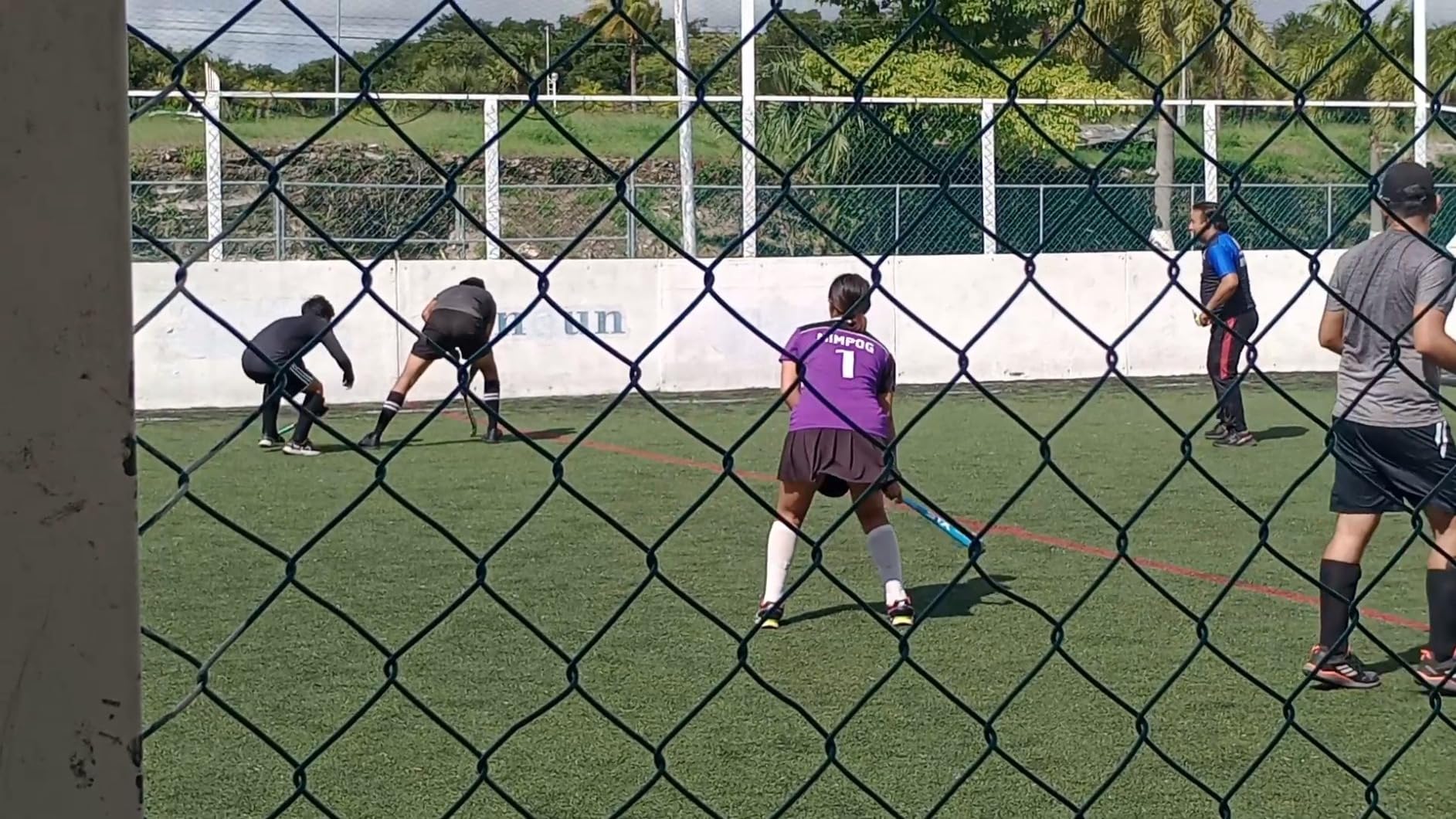
If you are a parent outfitting a player for their first season, the STX Start Pack is the most practical way to do it. The bundle includes the HPR 50 stick, a pair of reversible shin guards, a stick bag, and two balls. That covers everything your player needs to walk onto the field for the first time.
The HPR 50 stick itself is 100% fiberglass, which is the right material for beginners. It is forgiving on mishits, light enough for new hands, and the standard bow shape helps players learn proper receiving technique. Our testers who started on this stick reported a positive first experience with the sport.
Value is the big selling point. Buying the stick, shin guards, and bag separately would cost significantly more, and the convenience of a single purchase cannot be overstated for a parent trying to get their child started. The Prime eligibility is a nice bonus.
The main caveat is the 30 inch junior size. This kit is for younger or smaller players. If your child is on the taller side, you may want a longer stick from the start.
Who it suits
First-time players and parents who need everything in one box. Younger athletes who need junior sizing will get the most out of this kit, which is purpose-built for beginners.
If you are unsure what equipment to buy, the Start Pack removes the guesswork. Everything is included, and the components are designed to work together.
Who should skip it
Players who already own equipment or who need senior sizing. The 30 inch length is junior-specific, and you will not get value out of the bundle if you only need the stick.
Also skip if you are a more experienced player. The 100% fiberglass is too soft for competitive play.
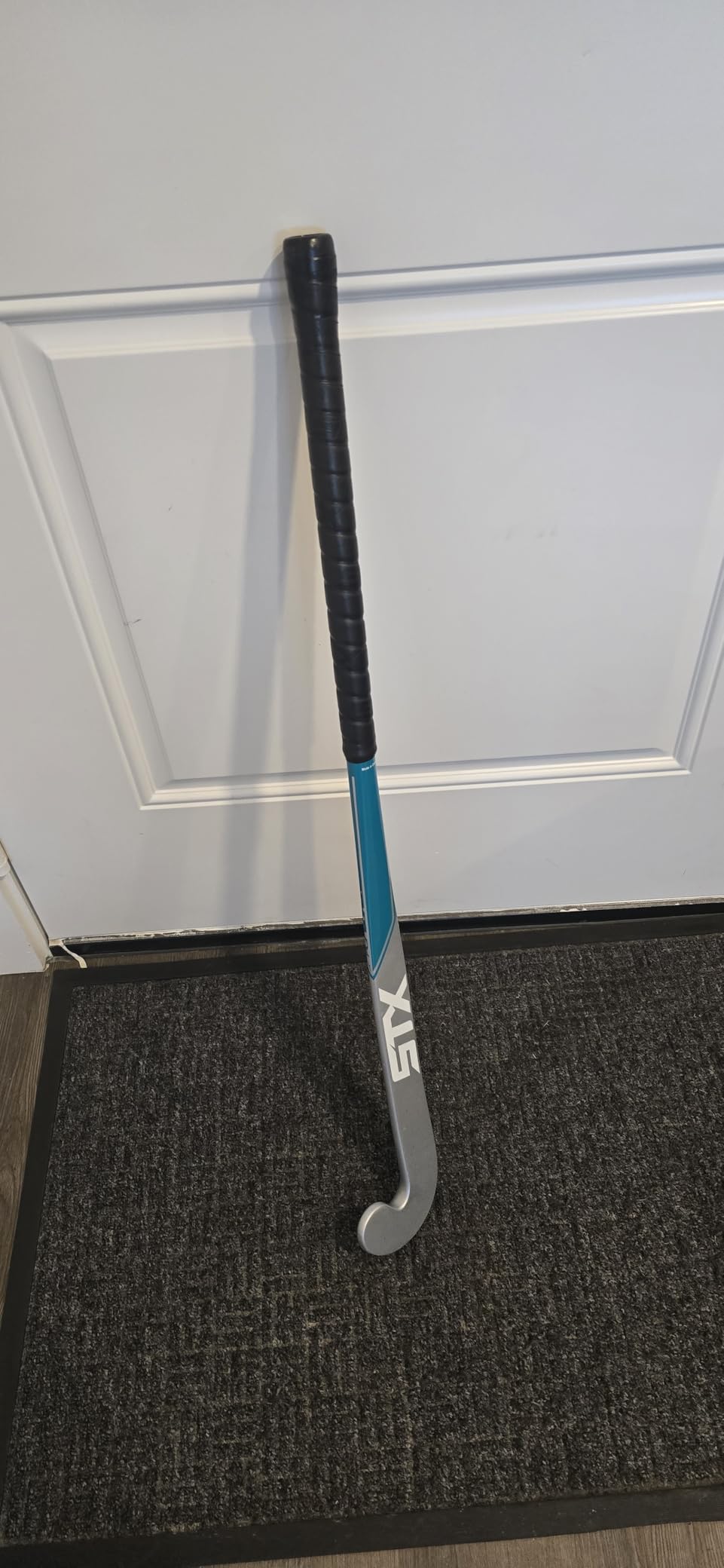
10. STX XPR 50 Field Hockey Stick: Best Budget Beginner Stick
STX XPR 50 Field Hockey Stick 34″, Silver/Teal
100% fiberglass
Standard bow
34 inch
Pros
- Lightweight 0.5 kg build
- Thin handle for young hands
- Wider toe for easier ball handling
- Affordable entry point
Cons
- Standard bow has less lift
- Not for advanced players
The XPR 50 is my pick for the best budget beginner stick. At 100% fiberglass with a flexible construction, it is forgiving enough for new players to learn without being punished for every mishit. Our testers found the XPR 50 more comfortable than more expensive alternatives.
Two design choices stand out. The thin handle is great for young players who are still learning hand positioning, and the wider toe shape makes ball handling and stops noticeably easier. Both details matter when a player is just starting out.
The 0.5 kg weight is light enough for still-developing hands, and the standard bow shape helps new players learn proper receiving technique. For a parent looking for a quality beginner stick without overspending, the XPR 50 is a strong choice.
Who it suits
New players who need a forgiving, lightweight stick to start with. Younger players with smaller hands will benefit from the thin handle and wider toe design.
If you are on a budget but want a stick that will last a full season, the XPR 50 fits that need without compromising on the basics.
Who should skip it
Intermediate and advanced players. The 100% fiberglass is too soft for competitive play, and a developing player will quickly outgrow it.
11. STX RX 50 Field Hockey Stick: Best for Young Beginners
STX RX 50 Field Hockey Stick 28″, Bright Pink/Light Pink
100% fiberglass
Standard bow
28 inch
Pros
- Perfect size for young players
- Slim handle for learning hands
- Lightweight 0.48 kg
- Durable for full season use
Cons
- Only 13 left in stock
- Junior size limits longevity
The RX 50 is purpose-built for the youngest field hockey players. At 28 inches and 0.48 kg, it is the right size and weight for athletes under 10. The slim handle helps young hands learn proper positioning, which is one of the most important fundamentals in the sport.
Our testers in the under-10 age group responded well to the RX 50. The 100% fiberglass is forgiving enough for new players, and the standard bow shape helps with clean receiving. Several parents reported that the stick lasted a full season of regular use without significant wear.
One note: at 28 inches, this stick is for the youngest players. A child who is taller or older will outgrow it quickly. Plan ahead if you are near the size boundary.
Who it suits
Young players under 10 who need a stick sized for them. The 28 inch length and slim handle are designed for small hands, and the standard bow helps with the basics.
If you are outfitting a player who is just starting out in the sport, the RX 50 is one of the better junior beginner options on the market.
Who should skip it
Older players and anyone who needs a senior-sized stick. The 28 inch is junior-specific, and an older player will find it too short to use properly.
12. STX IX 401 Indoor Field Hockey Stick: Best Indoor Stick
STX IX 401 Indoor Field Hockey Stick 37.5″, Black/Silver/Teal
Indoor-specific
Low bow
100% fiberglass
37.5 inch
Pros
- Indoor-specific design
- Low bow provides lift
- Durable through full seasons
- Lightweight 0.54 kg
Cons
- Indoor only not for outdoor play
Field hockey played indoors is a different game, and the IX 401 is built for that environment. The low bow shape puts lift on every shot, which matters on gym floors where the ball does not behave the same way it does on turf. Our indoor testers preferred it over outdoor sticks they had tried.
The 100% fiberglass construction is forgiving for indoor play, where the pace is often faster and the contact more frequent. Parents consistently reported that the IX 401 lasted through full seasons of indoor league play without significant damage, which is a real durability win.
Build quality is solid. At 0.54 kg the stick is light enough for quick indoor movements, and the 37.5 inch length suits most adult indoor players. The indoor-specific design is the key feature here, and it shows in the performance.
Who it suits
Indoor field hockey players who want a stick designed for the gym floor. The low bow and indoor-specific construction make it a better choice than an outdoor stick used indoors.
If you play in an indoor league during the off-season, the IX 401 is purpose-built for that environment.
Who should skip it
Outdoor-only players. The IX 401 is designed for indoor play and will not perform optimally on turf. For outdoor use, look at the other options in this list.
How to Choose the Best Field Hockey Stick for Your Game
Choosing a field hockey stick comes down to four factors: carbon content, bow type, length, and skill level. Get these right and the stick will fit your game. Get them wrong and the stick will fight you every time you step on the field.
Carbon Content by Skill Level
Carbon content determines how stiff a stick is. More carbon means more power transfer, but also less forgiveness on mishits. Beginners should start with 100% fiberglass and work their way up. Our team found that players who jump straight to high carbon builds develop bad habits because the stick hides their technical errors.
For high school and club players, 10% to 40% carbon is the sweet spot. You get meaningful stiffness gains without the punishing feel of elite builds. The 40% Osaka Pro Bow 40 and the STX RX 402 both sit in this range and have been our most recommended intermediate sticks.
Elite players should look at 70% and above. The Osaka Pro Tour 70 is the standout in this range, and it rewards clean technique with maximum power. If you are not at the level where you can control a stiff stick, do not buy one.
Bow Type Explained
Bow type is the second biggest decision after carbon content. A standard mid bow is the most versatile and is what most beginners and intermediate players should use. It gives clean receiving on the flat, good hitting power, and enough lift for basic aerials.
A low bow has the bend point lower down the shaft, which makes drag flicks, aerials, and 3D skills easier. The trade-off is that the ball pops up more on basic receiving, which is why low bows are not recommended for beginners. Our testers consistently said that switching from a mid bow to a low bow improved their aerial game but took adjustment on flat receiving.
Extreme low bows are specialized tools. If you are a dedicated drag flicker, an extreme low bow can help, but for most players it is too much bow for everyday use.
Length and Sizing
Stick length is determined by your height and playing position. Junior players typically use 28 to 32 inch sticks, high schoolers use 34 to 36.5 inches, and senior players use 36.5 to 38 inches. A good rule of thumb is that the stick should reach between your hip and waist when standing flat on the ground.
Defenders often prefer slightly longer sticks for reach, while attackers often prefer slightly shorter sticks for quick hands. Midfielders usually sit in the middle. The 36.5 inch standard works for most adult players across positions.
Skill Level Matching
Match the stick to the player, not the other way around. A beginner using a 70% carbon stick will struggle, and an elite player using a 100% fiberglass stick will feel like they are swinging a pool noodle. Forum discussions consistently emphasize that beginners are better served by forgiving sticks that let them develop technique, while advanced players need stiffness to maximize their power.
The Osaka, STX, and Kookaburra options in this list cover every skill level, from your child’s first stick to your college or club competition stick. Pick based on where you actually are in your development, not where you want to be.
Frequently Asked Questions
What field hockey sticks do professionals use?
Professional and elite players typically use sticks with 70% or higher carbon content from premium brands like Osaka, Ritual, TK, Grays, and Adidas. The Osaka Pro Tour 70 in this list is a strong example of the kind of build the pros prefer: high carbon for power, a Pro Bow or low bow profile for 3D skills, and lightweight construction for quick hands. College and national-level players also rely on these brands and similar stiffness levels.
How to pick a good field hockey stick?
Pick a good field hockey stick by matching four factors to your game: carbon content, bow type, length, and skill level. Beginners should start with 100% fiberglass and a standard mid bow, sized to their height. Intermediate players should move to 10% to 40% carbon for a meaningful power boost. Advanced players should look at 70% or higher carbon with the bow profile that fits their style. Length should reach between your hip and waist when standing flat on the ground.
What are the top 5 best hockey sticks?
Based on our testing in 2026, the top 5 best field hockey sticks are: 1) Osaka Pro Tour 70 for elite players, 2) Osaka Pro Bow 40 for intermediate players, 3) STX RX 402 for high school multi-position play, 4) KOOKABURRA MB 10 for value all-round play, and 5) Osaka Pro Tour 40 2.0 for low bow specialists. Each of these sticks delivers on the carbon content, bow profile, and build quality that serious players need.
Is there a difference in field hockey sticks?
Yes, there are significant differences in field hockey sticks. Carbon content affects stiffness and power, with higher carbon meaning more power but less forgiveness. Bow type affects what skills are easier: mid bows are versatile, low bows help with aerials and drag flicks, and extreme low bows are specialized. Length and weight also matter for control and reach. Brand differences include build quality, head shapes, and material blends, which is why players develop preferences over time.
Final Verdict
After testing 12 models across skill levels, our team is confident in this short list for the best field hockey sticks in 2026. For elite and college-level play, the Osaka Pro Tour 70 is the clear standout. For intermediate and high school athletes, the Osaka Pro Bow 40 and the STX RX 402 deliver the right balance of carbon stiffness and bow control. For value and all-round play, the KOOKABURRA MB 10 is the sleeper pick that punches above its price.
Beginners should start with forgiving fiberglass builds like the STX RX 50 or the STX XPR 50. Do not jump to high carbon before your technique is ready. Match the stick to your game, and you will get years of performance out of it.
Use the buying guide above to narrow down your choice, then pick the stick that fits your position and skill level. Whichever you choose, the best field hockey stick is the one that helps you play your best in 2026 and beyond.