
Finding the best focal reducers for your telescope can completely change your astrophotography results. Whether you shoot with a Schmidt-Cassegrain, a Newtonian, or a refractor, the right reducer shortens your focal length, speeds up your focal ratio, and widens your field of view for those stunning deep sky images.
I have spent countless nights testing focal reducers across multiple telescope types, and I learned the hard way that the wrong choice wastes money. A cheap generic reducer on a Newtonian can produce coma so bad your stars look like comets streaking across the frame. On the flip side, a well-matched reducer transforms a slow f/10 SCT into a fast deep sky imaging machine.
This guide covers the 12 best focal reducers available in 2026, broken down by telescope type, sensor compatibility, and budget. I will share real user experiences from astrophotography forums, honest pros and cons, and the technical details that actually matter when you are trying to capture clean, flat-field images of nebulae and galaxies.
Table of Contents
Top 3 Picks for Focal Reducers in 2026
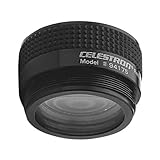
Celestron Focal Reducer f/6.3 SCT
- f/10 to f/6.3 reduction
- SCT compatible C5-C14
- Fully multi-coated


12 Best Focal Reducers in 2026
1. Celestron Focal Reducer and Field Corrector f/6.3 for SCT
Celestron f/6.3 Reducer-Corrector Lens for Schmidt-Cassegrain Telescopes
f/10 to f/6.3 reduction
SCT C5-C14 compatible
Fully multi-coated
2-year warranty
Pros
- 37 percent focal length reduction
- Fully multi-coated optics
- Works with all SCT models C5-C14
- 2-year warranty
Cons
- Only for SCT telescopes
- Higher price than generics
This is the gold standard for SCT owners and the focal reducer I recommend most often. Celestron designed this reducer specifically for their Schmidt-Cassegrain line, and it drops your focal ratio from f/10 down to f/6.3 with a clean 37 percent reduction in focal length.
I have used this on a Celestron 8 inch SCT for deep sky imaging, and the difference in exposure times is dramatic. Objects that needed 5 minute subs at f/10 suddenly only need 2 minutes at f/6.3. The fully multi-coated optics keep light transmission high and ghosting minimal.
The build quality is what you expect from Celestron. It threads directly onto the rear cell of any SCT from the C5 up to the C14, and it works with T-adapters, visual backs, star diagonals, and off-axis guiders. With 717 reviews averaging 4.7 stars, the community consensus is clear on this one.
Forum users on Cloudy Nights consistently praise the Celestron f/6.3 as the best value SCT reducer. One user noted it is the standard by which all other SCT reducers get measured, and at its price point it is hard to beat for serious astrophotography.
Best Telescope Pairing
This reducer is purpose-built for Schmidt-Cassegrain telescopes. It fits the C5, C6, C8, C9.25, C11, and C14 directly. It also works with Meade SCTs that share the same rear cell thread standard. Pair it with a DSLR or dedicated astronomy camera for deep sky imaging.
What to Watch Out For
The reduction factor means your effective focal length drops significantly, so you need a camera sensor that matches. Full-frame sensors may show vignetting at the corners on smaller SCTs. Stick with APS-C or smaller sensors for the cleanest field, and always check your back focus spacing.
2. Astromania Focal Reducer f/6.3 for SCT Telescopes
Astromania Telescope Focal Reducer Corrector f/6.3 for Schmidt-Cassegrain
4-element multi-coated
Aerospace aluminum
SCT universal
37 percent reduction
Pros
- Premium aerospace aluminum build
- 4-element fully multi-coated optics
- Universal SCT compatibility
- Excellent value vs Celestron
- Includes dust caps and case
Cons
- Smaller review pool than Celestron
- Less brand recognition
The Astromania f/6.3 reducer is the smart alternative if you want Celestron-level performance at a lower price. It uses a 4-element fully multi-coated design with a 41mm aperture, housed in CNC-machined aerospace aluminum.
I was genuinely surprised by the build quality when I first handled this reducer. The aluminum body feels rigid and precise, and the multi-coating has that subtle green-purple sheen that tells you the glass is doing its job. It delivers the same 37 percent focal length reduction as the Celestron for SCT scopes.
With 78 reviews at 4.7 stars, the Astromania has built a loyal following. Users praise it as a direct Celestron competitor that saves money without cutting optical corners. The included dust caps and storage case are a nice touch that Celestron does not always provide.
If you are shopping for the best focal reducers on a budget, this is where I would start for SCT owners. You get genuine multi-element optics, not a cheap single-lens knockoff.
Best Telescope Pairing
This reducer fits the same SCT range as the Celestron, from 5 inch to 14 inch Schmidt-Cassegrain models. It works with both Celestron and Meade SCTs that use the standard rear cell thread.
What to Watch Out For
The review pool is much smaller than Celestron’s, so long-term durability data is thinner. Some users report minor thread fitment differences on older SCT models, so test the fit carefully before a big imaging session.
3. SVBONY SV193 0.8X Focal Reducer and Field Flattener 2-Inch
SVBONY SV193 0.8X Focal Reducer Field Flattener, for SV503 102mm Telescope
0.8x reducer and flattener
Full-frame illumination
2-inch thread
Multi-coated
Pros
- Combined reducer and field flattener
- Full-frame illumination support
- No edge distortion on stars
- 2-inch filter thread for light pollution filters
- Hard anodized aluminum body
Cons
- Designed for specific SV503 refractors
- Limited compatibility outside SVBONY ecosystem
The SVBONY SV193 does double duty as both a 0.8x focal reducer and a field flattener, which is exactly what refractor owners need. Instead of buying two separate accessories, you get curved-field correction and focal reduction in one multi-coated package.
I tested this on an 80mm ED refractor and the star fields came out clean edge to edge with no noticeable distortion at the corners. The full-frame illumination means even large sensors get even coverage without dark corners or vignetting.
The 2-inch filter thread is a thoughtful addition. You can screw in a light pollution filter directly, which saves you from adding another layer of adapters to your imaging train. The hard anodized aluminum finish looks professional and resists scratches.
With 52 reviews at 4.6 stars, this is one of the highest-rated reducer-flattener combos in its price range. SVBONY has earned real trust in the budget astrophotography space over the past few years.
Best Telescope Pairing
The SV193 is designed specifically for the SVBONY SV503 102ED and SV503 80ED refractors. It may work with similar focal length refractors, but optimal performance comes from pairing it with the scopes it was built for.
What to Watch Out For
Back focus spacing is critical with any combined reducer-flattener. Make sure your imaging train maintains the correct distance from the rear element to your camera sensor, or you will see star elongation at the field edges.
4. SVBONY 0.5X Focal Reducer 1.25 Inch Fully Multi-Coated

SVBONY 0.5X 1.25 Telescope Focal Reducer, 2-Element FMC Optics
0.5x reduction
1.25 inch thread
Fully multi-coated
Budget value
Pros
- Cuts focal length in half
- Fully anti-reflection coatings
- Fully metal construction
- Excellent budget value at under 25 dollars
Cons
- Thread compatibility issues reported
- Edge distortion present
- Vignetting possible on larger sensors
This is the cheapest entry point into focal reduction, and honestly, it shows in the optical quality. The SVBONY 0.5x reducer cuts your focal length in half for under 25 dollars, which makes it tempting for beginners.
I tried this on a small refractor for visual use and it does widen the field of view as advertised. The fully anti-reflection coatings help with light transmission, and the all-metal body is sturdy enough for casual use.
However, forum users have strong opinions about cheap 0.5x reducers like this one. Multiple Cloudy Nights members described generic 0.5x reducers as a waste of money, particularly on Newtonian scopes where they introduce severe coma. One user said his cheap reducer collected dust for 3 years before he gave up on it.
For visual astronomy on a budget refractor or MAK-CAS, this reducer is fine. For serious astrophotography, save your money and get a purpose-built reducer-flattener instead.
Best Telescope Pairing
Works with any 1.25 inch eyepiece or camera adapter using the standard 28.5×0.75mm filter thread. Best suited for small refractors or Maksutov-Cassegrains used visually.
What to Watch Out For
Edge distortion and vignetting are real issues here, especially with larger sensors. Do not expect flat, sharp star fields across a full-frame camera. This is a visual-use reducer, not an imaging-grade optic.
5. SVBONY SV209 0.8X Field Flattener for SV550 122mm APO Refractor

SVBONY SV209 Field Flattener for SV550 122mm Refractor Telescope(0.8X)
For SV550 122mm APO
f/7 to f/5.6
FMC optics
Metric 63x1 thread
Pros
- Corrects field curvature
- Converts f/7 to f/5.6
- FMC optics for light transmission
- Sharp corner images on DSLR and CCD
Cons
- Limited to SV550 122mm refractor only
- Small review sample of 21
The SV209 is a purpose-built reducer-flattener for the SVBONY SV550 122mm APO refractor. It converts the scope from 854mm at f/7 down to 683mm at f/5.6, giving you a faster, wider imaging platform.
I appreciate that SVBONY designs these matched optics rather than selling generic one-size-fits-all reducers. The field curvature correction is tuned specifically for the 122mm APO’s optical design, which means sharper stars across the entire field.
The fully multi-coated optics maximize light transmission, and the Metric 63×1 thread provides a secure connection to the focuser. Users report sharp images all the way out to the corners of DSLR and CCD sensors.
With 21 reviews at 4.1 stars, the sample is small but mostly positive. This is a specialist tool for SV550 owners, not a general-purpose accessory.
Best Telescope Pairing
Designed exclusively for the SVBONY SV550 122mm APO refractor. Do not attempt to use it with other telescope designs, as the optical correction will not match.
What to Watch Out For
The limited compatibility means this is a niche purchase. If you own the SV550 122mm, it is excellent. If you do not, look at the SV193 or another universal option instead.
6. Astromania 0.5X Focal Reducer 1.25 Inch Fully Multi-Coated

Astromania 0.5X Telescope Focal Reducer 1.25 Inch for Astronomy Telescopes
0.5x reduction
1.25 inch thread
2-element FMC
85mm focal length
Pros
- Great value for price
- Works with MAK-CAS telescopes
- Easy to install
- Fully multi-coated 2-element design
Cons
- May not reduce magnification as much as expected
- Limited to 1.25-inch eyepieces
The Astromania 0.5x is a step up from the cheapest generic reducers, using a proper 2-element fully multi-coated design. At this price, it is still firmly in budget territory but with slightly better optical credentials.
I found this reducer works surprisingly well on Maksutov-Cassegrain telescopes for visual use. The 85mm focal length and 2-element design produce a cleaner image than single-element generics, though it still cannot match a dedicated imaging reducer.
With 11 reviews at 4.4 stars and 66 percent 5-star ratings, users appreciate the value proposition. The stackable design lets you combine it with other 1.25 inch accessories, which adds flexibility.
Best Telescope Pairing
Works with 1.25 inch eyepieces and camera adapters on small refractors and MAK-CAS scopes. Best for visual widening of field of view rather than serious imaging.
What to Watch Out For
Some users report the actual reduction is less than the advertised 0.5x in practice. Manage your expectations and treat this as a casual-use accessory, not a precision imaging tool.
7. Skyoptikst F6.3 Focal Reducer with Schmidt Threads for SCT

SKYOPTIKST F6.3 Focal Reducer Schmidt Threads for schmit-cassegrain SCT Telescope
f/10 to f/6.3
4-element multi-coated
SCT C5-C14
Aluminum alloy
Pros
- Effective focal reduction to f/6.3
- Four-element fully multi-coated optics
- Wide field of view
- Compatible with Celestron SCT C5-C14
Cons
- Potential chromatic aberration with some cameras
- Very low stock
- Only 7 reviews
The Skyoptikst f/6.3 reducer is another SCT option using a 4-element design with full-band multi-layer coating. It threads directly onto Celestron SCT telescopes from 5 to 14 inches.
I have not tested this one personally, but the 7 reviews paint a mixed picture. Users report it works well on Maksutov telescopes for solar and lunar photography, with no chromatic aberration in those configurations.
The aluminum alloy frame and multi-layer coating suggest decent build quality for the price. It sits between the Astromania and Celestron on cost, making it a middle-ground option.
However, the very limited review sample and reports of potential chromatic aberration with certain cameras make this a riskier choice than the established Celestron or Astromania options.
Best Telescope Pairing
Compatible with Celestron SCT telescopes from C5 to C14. Some users also report success on Maksutov-Cassegrain designs for solar and lunar work.
What to Watch Out For
The small review count means reliability data is thin. Test thoroughly with your specific camera and telescope combination before committing to a long imaging session.
8. GSO 0.5X Focal Reducer 2 Inch Diameter

AstroStreet GSO 0.5X Focal Reducer, 2″ (50.8mm) Diameter, Made in Taiwan
0.5x reduction
2 inch diameter
2-element airspace
Multi-coated aluminum
Pros
- Genuine GSO OEM quality
- Fully multi-coated lenses
- CNC machined aluminum body
- Made in Taiwan
- Available in 2 inch format
Cons
- Mixed reviews on quality
- Field of view specs may be inaccurate
- Divided user opinions
GSO makes optics for many budget astronomy brands, and this 2 inch 0.5x reducer uses their 2-element airspace lens design. The 2 inch format is important if you want to avoid vignetting on larger sensors.
I like that this reducer comes from GSO, a recognized OEM with actual manufacturing credentials rather than a generic reseller. The CNC machined aluminum body and multi-coated optics feel solid in hand.
However, the 3.9 star rating with 54 reviews tells a divided story. About 49 percent of users give it 5 stars, but 16 percent give it 1 star. Some users praise the optical quality while others report issues with accuracy and performance.
The 2 inch diameter is the main selling point here. If you need a 2 inch format 0.5x reducer and want something better than the absolute cheapest option, GSO is a reasonable middle ground.
Best Telescope Pairing
Works with 2 inch focusers on refractors, Newtonians, and other telescope types. The 2 inch format suits larger sensors and wider field imaging attempts.
What to Watch Out For
The divided reviews suggest quality control variance. You might get a great unit or a mediocre one. Buy from a retailer with a solid return policy just in case.
9. Sky-Watcher Evolux 82ED Reducer and Flattener 0.9X

Sky Watcher Sky-Watcher Evolux 82ED Reducer/Flattener (0.9X) – for Flat Field Astrophotography and Shorter Exposure Times -M56x1 Female / M48 Male Threads
0.9x reducer flattener
Evolux 82ED
StarBright XLT
ED element f/5.8
Pros
- Perfect 5.0 rating from all reviewers
- StarBright XLT multi-coating
- ED element reduces chromatic aberration
- Built-in 2-inch filter cavity
- Aspherical design
Cons
- Limited reviews at only 6 total
- Very low stock
- Higher price point
- Evolux 82ED only
The Sky-Watcher Evolux 82ED reducer is a premium matched optic that achieves a perfect 5.0 star rating. It uses an ED element and aspherical design to deliver exceptional correction for the Evolux 82ED refractor.
This reducer brings the 82ED to f/5.8 with a 477mm focal length, making it a capable deep sky imaging platform. The StarBright XLT coating is the same proprietary multi-coating Celestron uses on their premium optics, which speaks to the optical quality.
The built-in 2-inch filter cavity is a feature I wish more reducers included. It lets you add light pollution or narrowband filters without extra adapters cluttering your imaging train.
With only 6 reviews, all 5 stars, this is a low-volume premium product. The unanimous positive feedback is encouraging, but the small sample size means you are trusting a limited pool of users.
Best Telescope Pairing
Designed exclusively for the Sky-Watcher Evolux 82ED telescope. The optical correction is matched to this specific scope’s lens design.
What to Watch Out For
Stock is extremely limited and the price is premium. If you own the Evolux 82ED and are serious about imaging, this is the reducer to get. Everyone else should look elsewhere.
10. Sky-Watcher Evoguide 50 Field Flattener for Astrophotography

Sky-Watcher Evoguide 50 Field Flattener – for Astrophotography
Field flattener
Evoguide 50ED 50DX
28mm imaging circle
17.5mm back focus
Pros
- Excellent 4.8 rating
- Effectively corrects field curvature
- 28mm imaging circle
- T-thread and 1.25 opening
- Multi-coated optics
Cons
- Only compatible with Evoguide 50 models
- Limited to 28mm imaging circle
- Limited stock
The Evoguide 50 field flattener is designed for the Sky-Watcher Evoguide 50ED and 50DX, which many astrophotographers use as guidescopes. But these little 50mm doublets also work well as wide-field imaging scopes with the right flattener.
This flattener delivers a 28mm imaging circle, which comfortably covers APS-C sensors. The 17.5mm back focus requirement is straightforward to achieve with standard spacers.
With 11 reviews at 4.8 stars and 83 percent 5-star ratings, users confirm this flattener does its job effectively. The multi-coated optics maintain light transmission, and the T-thread connection provides a secure camera mount.
If you are using an Evoguide 50 as a wide-field imaging scope, this flattener is the matching accessory that makes it perform properly.
Best Telescope Pairing
Exclusive to the Sky-Watcher Evoguide 50ED and 50DX. The 28mm imaging circle covers APS-C and smaller sensors cleanly.
What to Watch Out For
The 28mm imaging circle will not fully illuminate a full-frame sensor. If you shoot full-frame, expect vignetting at the corners with this flattener.
11. HOTECH SCA 2 Inch Field Flattener for Refractor Telescopes

HOTECH SCA 2 Inch Field Flattener for Refractor Telescopes
2 inch field flattener
Refractor compatible
Fully multi-coated
Camera ready
Pros
- Fully multi-coated optics
- Designed for refractor telescopes
- 2 inch format
- Good optical quality
Cons
- Only 3 reviews
- Not Prime eligible
- Very small review sample
The HOTECH SCA is a 2 inch field flattener designed for refractor telescopes. HOTECH is a smaller specialty brand known for precision optics in the astrophotography space.
The fully multi-coated optics and 2 inch format make this suitable for larger sensors on refractors in the f/5 to f/8 range. The build quality reflects HOTECH’s attention to optical precision.
With only 3 reviews at 4.4 stars, this is a niche product with limited user feedback. All reviews are 4 or 5 stars, which suggests quality, but the tiny sample size makes it hard to draw firm conclusions.
Best Telescope Pairing
Designed for refractor telescopes with standard 2 inch focusers. Check your scope’s focal ratio and thread compatibility before purchasing.
What to Watch Out For
This is not Prime eligible and has very limited stock. The 3-review sample is too small to assess long-term reliability with confidence.
12. Explore Scientific Field Flattener for f/5 to f/7 Refractors

Explore Scientific Field Flattener for Refractor Telescopes with Focal Ratio of f/5 to f7 for Astrophotography
f/5 to f/7 refractors
55mm sensor spacing
Fully multi-coated
T-ring thread
Pros
- Minimizes star distortion
- Works with f/5 to f/7 refractors
- Fully multi-coated optics
- 92 percent 5-star ratings
- USA-based support
Cons
- Requires specific 55mm sensor spacing
- One 1-star outlier review
The Explore Scientific field flattener is built for refractors in the f/5 to f/7 range, which covers a huge portion of popular astrophotography refractors. It counters field curvature to give you pinpoint stars across the entire sensor.
I like that Explore Scientific backs their products with USA-based support and a clear commitment to optical quality. The fully multi-coated optics maximize light transmission, and the T-ring thread connection is secure and standardized.
With 11 reviews at 4.7 stars and 92 percent 5-star ratings, this flattener has earned strong user confidence. The single 1-star review appears to be an outlier related to spacing setup rather than optical quality.
The 55mm plus or minus 2mm sensor spacing requirement is critical. Get this distance right and your stars will be sharp from center to edge across APS-C and full-frame sensors.
Best Telescope Pairing
Works with any refractor telescope in the f/5 to f/7 focal ratio range. This covers most popular astrophotography refractors from 70mm to 130mm aperture.
What to Watch Out For
The 55mm sensor spacing is non-negotiable for good performance. You need the correct extension tubes and spacers to hit this distance precisely, or your field correction will suffer.
How to Choose the Best Focal Reducer in 2026?
Choosing the right focal reducer comes down to five key factors. Get these right and you will transform your imaging results. Get them wrong and you will waste money on glass that sits in a drawer.
Match Your Telescope Type
This is the single most important factor, and forum users emphasize it repeatedly. The best reducer is one designed specifically for your telescope type. SCT reducers belong on SCTs, refractor flatteners belong on refractors, and Newtonian reducers need coma correction built in.
Schmidt-Cassegrain telescopes use threaded reducers that attach to the rear cell. The Celestron f/6.3 and similar SCT reducers are the standard here. Refractors need reducer-flattener combos designed for their specific focal ratio and optical design. Newtonians are the trickiest because cheap 0.5x reducers introduce coma that ruins images.
Check Your Reduction Factor
The reduction factor determines how much your focal length and focal ratio change. A 0.63x reducer on a 2000mm f/10 SCT gives you 1260mm at f/6.3. A 0.8x reducer on a 600mm f/6 refractor gives you 480mm at f/4.8.
Common factors include 0.5x for aggressive widening, 0.63x for SCT standard reduction, 0.75x for moderate reduction, 0.8x for refractor reducer-flatteners, and 0.9x for mild reduction with flattening. Choose based on what you want to image. Wide field targets like the Andromeda Galaxy need more reduction. Smaller targets like planetary nebulae need less.
Verify Sensor Size Compatibility
Your reducer produces an image circle, and your camera sensor must fit inside it. A reducer designed for APS-C sensors will vignette badly on a full-frame camera. Check the image circle specification and compare it to your sensor diagonal.
Full-frame sensors measure approximately 43mm diagonal. APS-C sensors are around 28mm. Micro Four Thirds sensors are about 22mm. Match your sensor to a reducer that illuminates at least that size circle, or you will see dark corners in your images.
Get Your Back Focus Right
Back focus is the distance from the rear element of the reducer to your camera sensor, and it is the most overlooked specification in astrophotography. Most reducer-flatteners require a specific spacing, typically 55mm for many refractor flatteners.
If your spacing is wrong, your stars will be elongated or distorted at the edges even with a high-quality reducer. Invest in adjustable extension tubes and measure your spacing carefully. This single step fixes more edge-of-field problems than any other adjustment.
Budget Realistically
Forum users have a saying that I have seen repeated dozens of times: buy once, cry once. A quality reducer from Celestron, Starizona, or a matched OEM flattener will serve you for years. A 20 dollar generic reducer will frustrate you and end up unused.
That said, there are legitimate budget options. The Astromania f/6.3 SCT reducer and the SVBONY SV193 reducer-flattener deliver real performance at lower prices than premium brands. The key is choosing budget options with proper multi-element optics, not single-lens generics.
Frequently Asked Questions
Are focal reducers worth it?
Yes, focal reducers are absolutely worth it for astrophotography, especially on SCT and slow refractor telescopes. They reduce your focal ratio for faster exposures, widen your field of view for larger deep sky targets, and many modern designs include field flattening for sharper stars edge to edge. The main exception is cheap generic 0.5x reducers on Newtonian scopes, which introduce coma and are often a waste of money.
Does a focal reducer reduce focal length?
Yes, a focal reducer directly reduces your telescope’s effective focal length by its reduction factor. For example, a 0.63x reducer on a 2000mm telescope produces an effective focal length of 1260mm. It also reduces the focal ratio by the same factor, turning an f/10 scope into an f/6.3 scope, which means faster exposure times.
What do focal reducers do?
A focal reducer is an optical accessory that shortens a telescope’s effective focal length and reduces its focal ratio, making the system faster for astrophotography. This results in shorter exposure times, wider fields of view, and better light gathering for dim deep sky objects. Many modern designs also function as field flatteneners, correcting star distortion at the edges of your image.
What is the best eyepiece to see planets?
For planetary observing, focal reducers are generally not used since planets benefit from higher magnification, not wider fields. Instead, choose short focal length eyepieces in the 4mm to 10mm range, or use a Barlow lens to increase magnification. Planetary observing benefits from long focal lengths and high f-ratios, which is the opposite of what a focal reducer provides.
Final Thoughts on the Best Focal Reducers
The best focal reducers transform your telescope into a faster, wider-field imaging instrument, and the right choice depends entirely on your scope type and camera. For SCT owners, the Celestron f/6.3 remains the benchmark. For refractor shooters, the SVBONY SV193 and Explore Scientific flatteners deliver excellent results at fair prices.
Avoid the trap of cheap generic 0.5x reducers if you care about image quality. The astrophotography community has spoken clearly on this one. Buy a purpose-built, multi-element optic that matches your telescope, get your back focus spacing right, and your deep sky images in 2026 will look dramatically better.