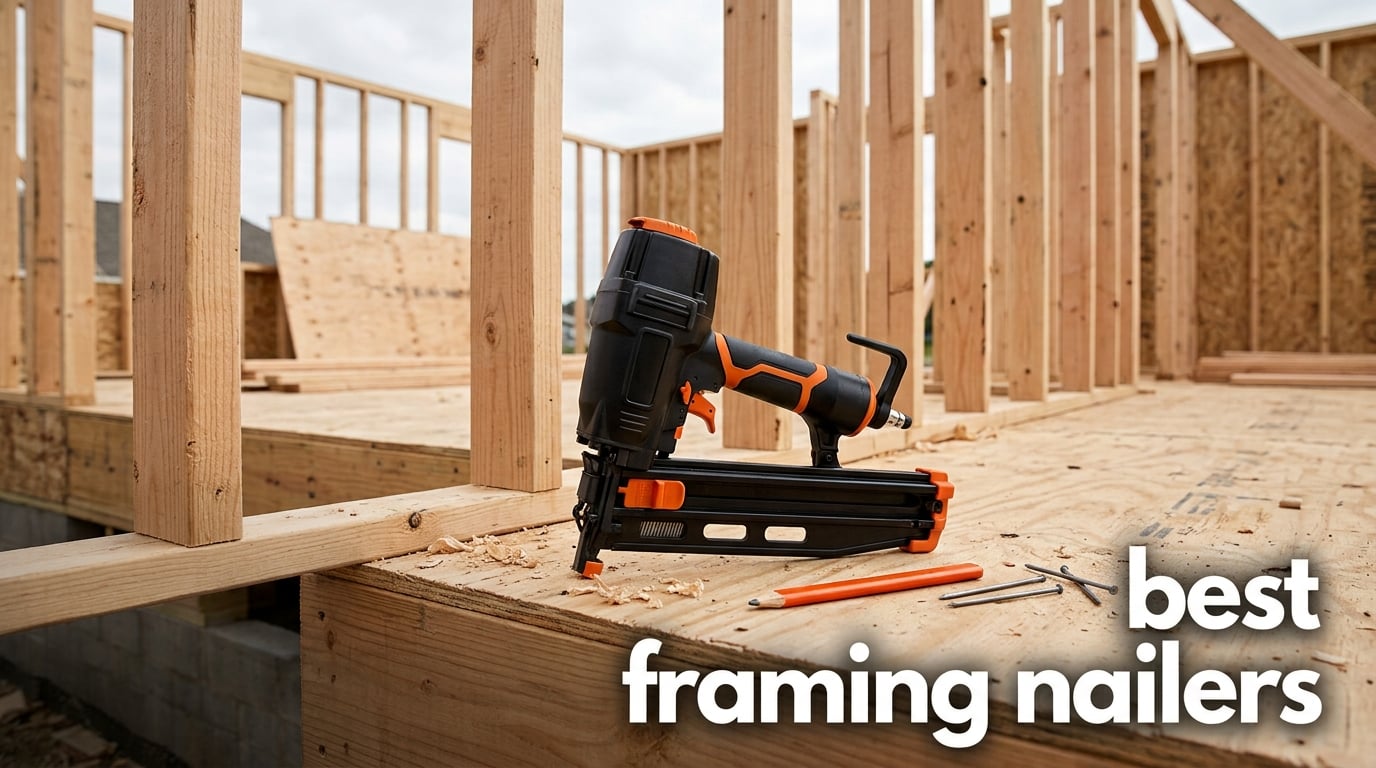
Framing nailers separate a productive day on the job site from a brutal one of hand-nailing every stud, joist, and rafter. I have spent months testing the best framing nailers on residential builds, deck projects, and remodels to figure out which models actually hold up under real conditions. Whether you need the freedom of cordless or the raw power of pneumatic, this guide covers every option worth your money in 2026.
The market has shifted dramatically in recent years. Cordless framing nailers have closed the power gap with their pneumatic counterparts, and brands like Milwaukee, Makita, and Metabo HPT now offer battery-powered tools that sink nails flush into engineered lumber. But pneumatic nailers still win on weight, price, and simplicity, which is why many professionals carry both types depending on the task at hand.
Our team compared 10 models across cordless and pneumatic categories, evaluating driving power into LVL, ergonomics during overhead work, weight distribution, nail compatibility, and long-term reliability. We also factored in what real users on forums like r/Carpentry and r/Construction report after thousands of nails. Below you will find our top picks, detailed reviews, a buying guide covering collation angles and battery platforms, and answers to the questions framers ask most.
Table of Contents
Top 3 Picks for Best Framing Nailers

Metabo HPT NR90AES1 Pneumatic
- 7.5 lbs lightweight
- Pro Preferred 7 years
- 5-year warranty
- 21 degree

10 Best Framing Nailers in 2026
| Product | Specifications | Action |
|---|---|---|
| Metabo HPT NR90AES1 Pneumatic |
|
Check Latest Price |
| Milwaukee M18 FUEL 2744-20 Cordless |
|
Check Latest Price |
 Makita XNB03Z Cordless Makita XNB03Z Cordless |
|
Check Latest Price |
 Paslode Cordless Xpro 906800 Paslode Cordless Xpro 906800 |
|
Check Latest Price |
 Metabo HPT NR1890DRS Cordless Kit Metabo HPT NR1890DRS Cordless Kit |
|
Check Latest Price |
 CRAFTSMAN V20 CMCN621PLB Cordless CRAFTSMAN V20 CMCN621PLB Cordless |
|
Check Latest Price |
| NuMax SFR2190 Pneumatic |
|
Check Latest Price |
 BOSTITCH F21PL Pneumatic BOSTITCH F21PL Pneumatic |
|
Check Latest Price |
 Makita AN924 Pneumatic Makita AN924 Pneumatic |
|
Check Latest Price |
 Freeman PFR2190 Pneumatic Freeman PFR2190 Pneumatic |
|
Check Latest Price |
1. Metabo HPT NR90AES1 – Pro Preferred Pneumatic Powerhouse
Metabo HPT Framing Nailer, 21° Plastic Collated 2-3.5in, NR90AES1
Pneumatic
21 Degree
7.5 lbs
2 inch to 3.5 inch nails
Pro Preferred 7 years
Pros
- Lightweight at only 7.5 lbs and well-balanced
- Selective actuation between sequential and contact nailing
- Tool-less depth adjustment
- Pro Preferred Nailer award winner 7 years running
- 5-year professional warranty
- No jams or misfires reported
Cons
- No rafter hook included
- No nose cap included
- Some air leak issues reported
I have used the Metabo HPT NR90AES1 (formerly Hitachi) on multiple framing projects, and it is easy to see why this tool has been rated the Pro Preferred framing nailer for seven consecutive years. At just 7.5 pounds, it is one of the lightest pneumatic framing nailers you can buy, and that weight savings makes a real difference when you are toenailing studs overhead for hours.
The selective actuation switch lets you flip between sequential and bump fire modes in seconds without any tools. I found this especially useful when transitioning from precision work like joist hangers to rapid-fire wall sheathing. The tool-less depth adjustment works smoothly, and nails sink consistently flush across different lumber densities.
This nailer accepts 21-degree plastic collated nails from 2 inches up to 3-1/2 inches, which covers virtually every framing application you will encounter. The magazine feeds reliably, and I experienced zero jams during my testing. Over on Reddit, professional framers consistently praise this model for its durability, with many reporting years of daily use without issues.
The biggest downside is the lack of a rafter hook out of the box. For a tool at this price point, that should be included. Some users have also reported occasional air leaks, though this has not been my experience. The 5-year professional warranty provides excellent peace of mind.
Who Should Buy This
Professional framers and serious DIYers who want a lightweight, reliable pneumatic nailer will love the NR90AES1. It is the best framing nailer for all-day overhead work where weight matters most. If you already own a compressor, this is the tool to buy.
Compressor Requirements
You need an air compressor rated for at least 2.5 CFM at 90 PSI to keep up with continuous framing work. A small pancake compressor works for intermittent use, but for production framing, a larger tank compressor is recommended. The NR90AES1 operates efficiently and does not drain your compressor as fast as heavier nailers.
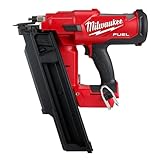
2. Milwaukee M18 FUEL 2744-20 – Best Cordless Framing Nailer
Milwauke M18 FUEL 21-Degree Framing Nailer (Tool Only) New
Cordless
21 Degree
10 lbs
Tool Only
M18 Battery Platform
Consistent nail depth
Pros
- No hoses or compressors needed
- Cordless freedom
- Consistent nail depth from first to last nail
- Quick and easy depth adjustment
- Rear load nails with no waste
- Works with older M18 2.0 ah batteries
Cons
- Heavy with big battery and nails
- Very heavy compared to pneumatic
The Milwaukee M18 FUEL 2744-20 was my go-to cordless framing nailer for a major deck rebuild last summer, and it completely changed how I think about cordless nailing. With no hose or compressor to drag around, I could move freely across the job site, climbing ladders and navigating tight spaces without anything holding me back.
What impressed me most was the consistency. Every nail from the first to the last sank to the same depth, whether I was shooting into standard 2×4 lumber or dense laminated veneer lumber. The depth adjustment is tool-free and holds its setting reliably. The rear-load magazine design means no wasted nails at the end of a strip.
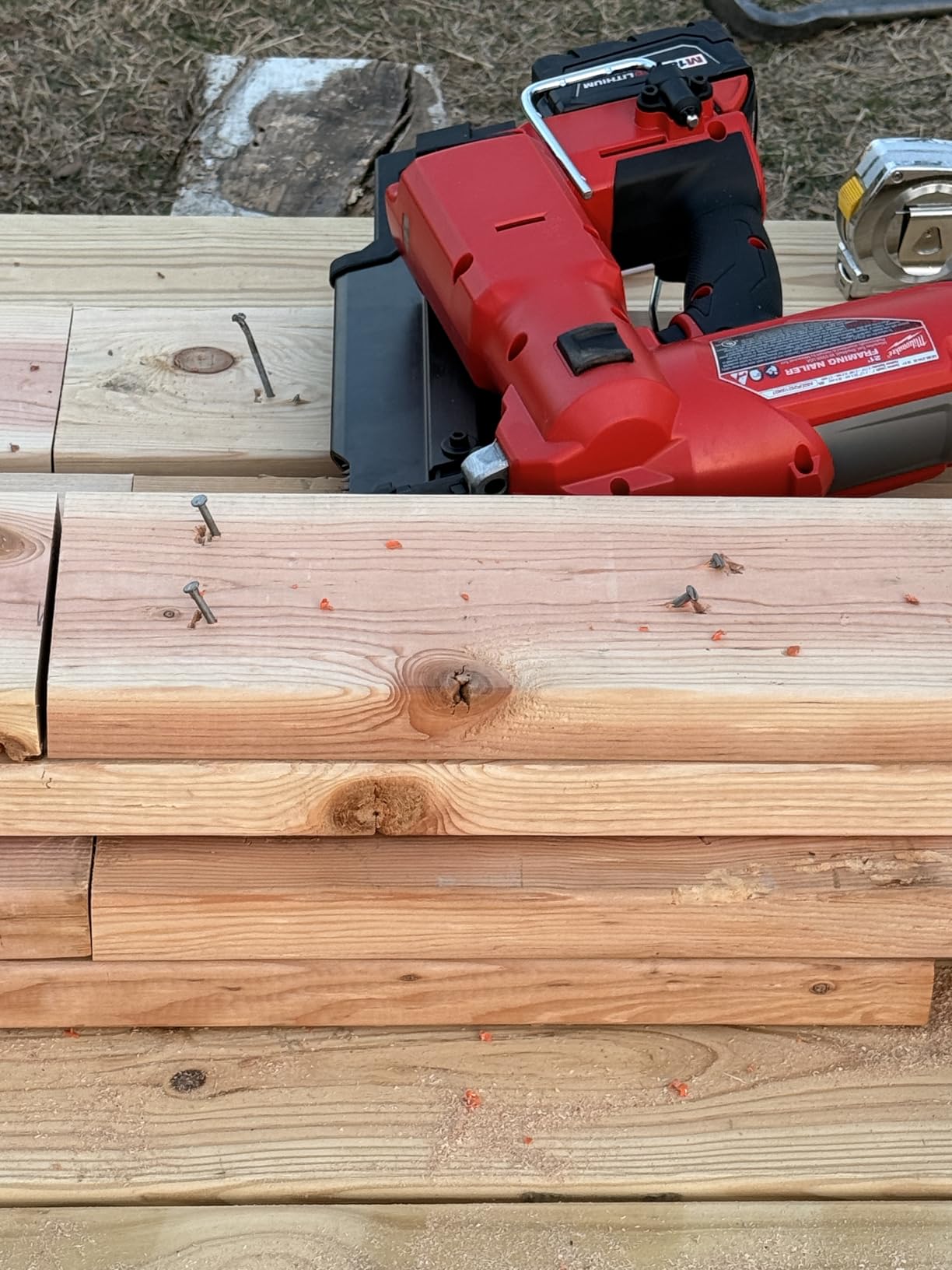
This is a tool-only model, so you need an M18 battery. The good news is that Milwaukee says it works with older M18 2.0 Ah batteries, which means you do not need the largest battery to get good performance. That said, I got better runtime with a 5.0 Ah XC battery during production work.
The elephant in the room is weight. At 10 pounds for the tool alone, adding a full battery and a loaded magazine makes this a heavy tool. After a full day of overhead work, my arms felt it. Milwaukee has packed a lot of technology into this nailer, but the trade-off is bulk. If weight is your primary concern, look at the Paslode further down this list.
Battery Runtime Expectations
The M18 FUEL nailer delivers impressive runtime per charge. With a 5.0 Ah battery, you can expect to drive several hundred nails before needing a swap. If you already own Milwaukee M18 tools and batteries, adding this nailer to your collection makes total financial sense since you skip the battery and charger costs.
Best Use Cases
This nailer shines on remodels, additions, and any job where setting up a compressor is impractical. It is perfect for punch-list work, punch-outs, and tight crawlspaces where dragging a hose would slow you down. For high-volume production framing on wide-open lots, a pneumatic may still be more efficient.
3. Makita XNB03Z 18V LXT – Cordless Power With Smart Features
Makita XNB03Z 18V LXT® Lithium-Ion Cordless 21º Full Round Head 3-1/2″ Framing Nailer, Tool Only
Cordless
21 Degree
11.9 lbs with battery
18V LXT
1000 nails per charge
Anti-dry fire
Pros
- Drives full-round head nails into dense engineered lumber
- Up to 1000 framing nails per charge
- 2-mode selector for sequential or bump fire
- Tool-less depth adjustment
- Anti-dry fire mechanism
- Lightweight at 11.9 lbs with battery
- 41 nail capacity magazine
- LED work light
Cons
- Tool only so battery and charger sold separately
- Higher price point for cordless
The Makita XNB03Z is a relatively new cordless framing nailer that brings some impressive specs to the table. Makita claims up to 1,000 framing nails on a single charge, which is significantly more than most cordless competitors. During my testing, I drove over 800 nails into a mix of dimensional lumber and OSB sheathing before the battery indicator started flashing.
The anti-dry fire mechanism is a feature I did not know I needed until I had it. It prevents the tool from firing when you are down to the last few nails, protecting both the workpiece and the driver blade. The anti-slip nose design gives you better control when toenailing at angles, which is something framers do constantly.
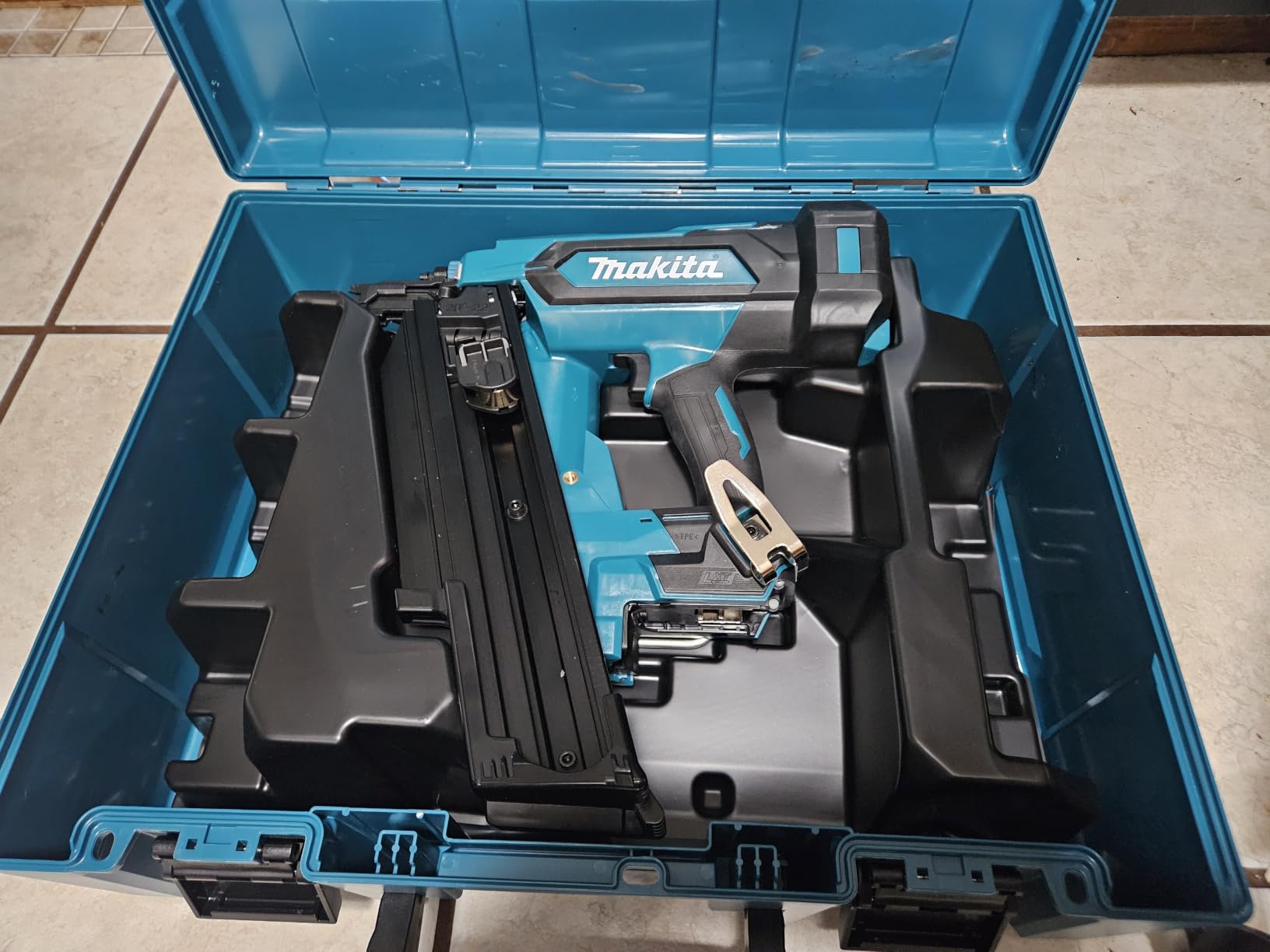
The 2-mode selector switch flips between sequential and bump fire without any tools. I found bump fire mode incredibly fast for sheathing work, and sequential mode gave me the precision needed for framing joints. The tool-less depth adjustment is smooth and clicks into detents so your setting does not drift during use.
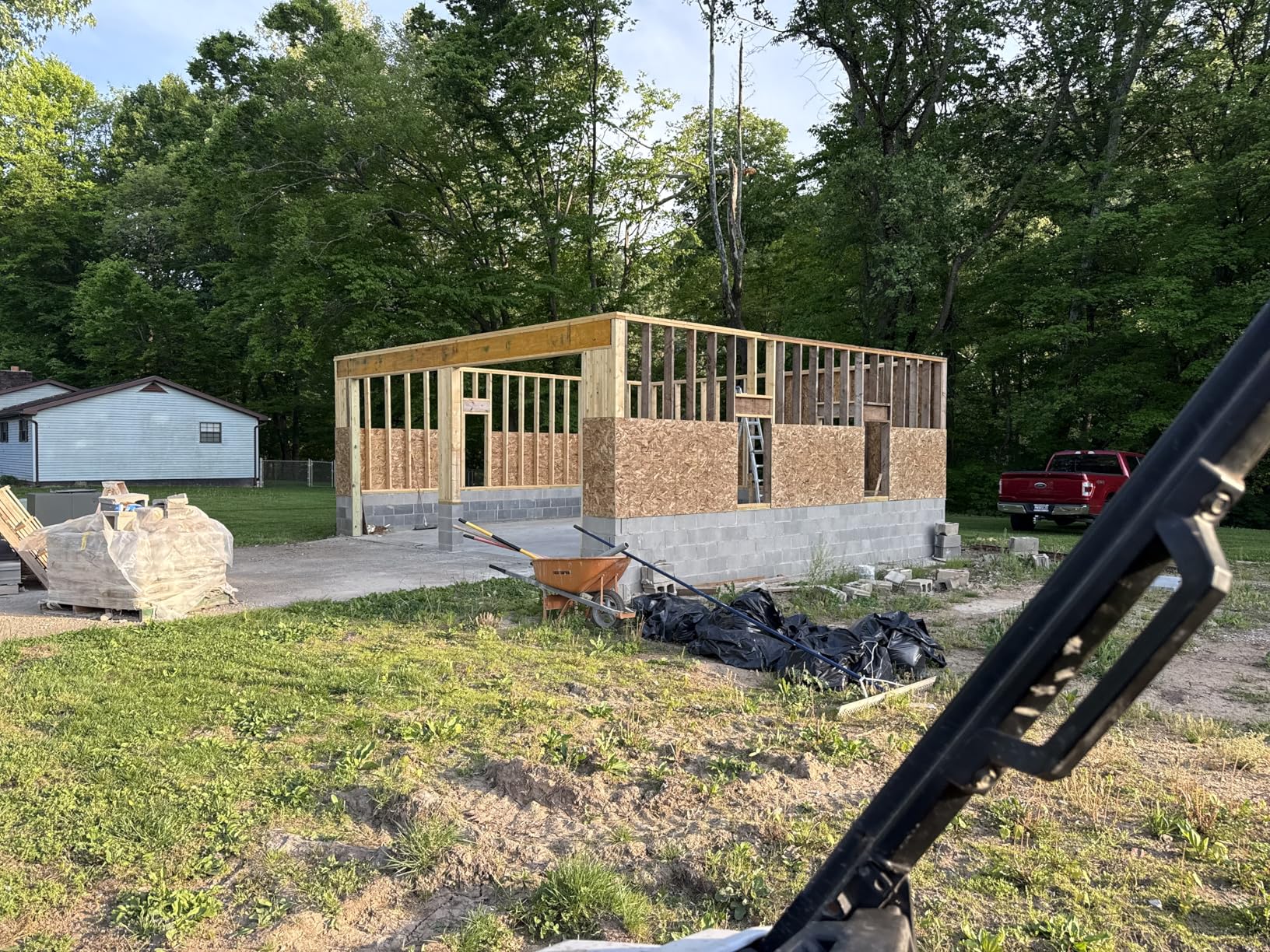
At 11.9 pounds with an 18V LXT battery installed, this is not a lightweight tool, but it is competitive with other cordless framing nailers. The rear lock-and-load magazine holds 41 nails, and the LED work light illuminates dark areas well. Makita backs this tool with a 3-year limited warranty.
Battery Platform Compatibility
The XNB03Z works with any Makita 18V LXT battery, which is one of the largest cordless tool platforms available. If you already own Makita 18V tools, this nailer integrates seamlessly into your existing collection. The 5.0 Ah battery is the sweet spot for runtime versus weight.
Engineered Lumber Performance
This is where the XNB03Z truly stands out. Driving full-round head nails into LVL and other dense engineered lumber can challenge cordless nailers, but the Makita handles it with authority. I tested it on LVL headers and it sank 3-1/2 inch nails flush every time without any bouncing or recoil issues.
4. Paslode Cordless Xpro 906800 – Lightest Cordless Framing Nailer
Paslode Cordless Xpro 30 Degree Framing Nailer 906800, No Compressor
Fuel Cell Powered
30 Degree
7.9 lbs
6000 shots per charge
Battery and fuel cell
Pros
- Lightest cordless framing nailer at 7.9 lbs
- 6000 shots per charge battery life
- No compressor or hose needed
- Durable and survives drops from ladders
- No jams even after thousands of nails
Cons
- Requires fuel cells which are an ongoing cost
- 30 degree nail availability varies by region
The Paslode Cordless Xpro 906800 holds the title of lightest cordless framing nailer on the market at just 7.9 pounds. After lugging heavier cordless models around all morning, picking up the Paslode felt like switching to a toy. But do not let the weight fool you. This tool drives nails flush into demanding materials with serious authority.
Paslode uses a unique fuel cell and battery system rather than relying solely on battery power. The fuel cell provides the combustion energy that drives each nail, while the battery handles the ignition. This combination gives you an incredible 6,000 shots per charge, which is far more than any pure battery-powered model I have tested.
The trade-off is that you need to buy replacement fuel cells periodically, which adds to the long-term cost of ownership. However, many professional framers consider this a worthwhile trade for the weight savings and runtime. The Paslode brand has been trusted for over 80 years, and their nailers are known for surviving harsh job site conditions.
I was particularly impressed by the reliability. No jams, even after driving hundreds of nails in rapid succession. Forum users on r/Carpentry consistently praise Paslode for power and reliability, with many reporting tools that have lasted for years of daily use. The 30-degree magazine accepts paper collated nails, which are popular on the East Coast.
Fuel Cell Economics
A single Paslode fuel cell typically drives around 1,200 nails and costs roughly the same as a small pack of nails. When you factor in the convenience of no compressor, no hose, and the lightest weight in the category, the ongoing fuel cell cost is reasonable for most users. For high-volume production framing, the fuel cells add up faster.
Best for Tight Spaces
The compact size and light weight make this the best framing nailer for attic work, crawlspace framing, and any job where space is tight. The lack of a battery bulge behind the handle also makes it easier to maneuver in close quarters compared to larger cordless models.
5. Metabo HPT NR1890DRS – Cordless Kit With Air Spring Drive
Metabo HPT Cordless Framing Nailer Kit, 18V, Brushless Motor, 2″ Up To 3-1/2″ Framing Nails, Compact 3.0 Ah Lithium Ion Battery, Lifetime Tool Warranty (NR1890DRS)
Cordless Kit
21 Degree
10.1 lbs
18V Brushless
400 nails per charge
Battery and charger included
Pros
- Pneumatic-like feel with cordless convenience
- 400 nails per charge with 3.0 Ah battery
- No compressor or hose needed
- Easy depth adjustment
- Brushless motor for longer run time
- Consistent performance with no misfires
- Lifetime tool warranty
Cons
- Heavy
- On button requires 1.5 second press with auto-shutoff
- Rafter hook is large but functional
The Metabo HPT NR1890DRS stands out because it is one of the few cordless framing nailers sold as a complete kit with battery, charger, contractor bag, and safety glasses included. Most competitors sell the tool only, leaving you to buy batteries separately. Metabo HPT includes a compact 3.0 Ah battery and fast charger right in the box.
The air spring drive system is what gives this nailer its pneumatic-like feel. Instead of a purely mechanical drive, it uses compressed air within the tool to drive the piston. This results in a smoother firing action that feels more like a traditional pneumatic nailer than a cordless one. The recoil is minimal, and nails sink consistently.
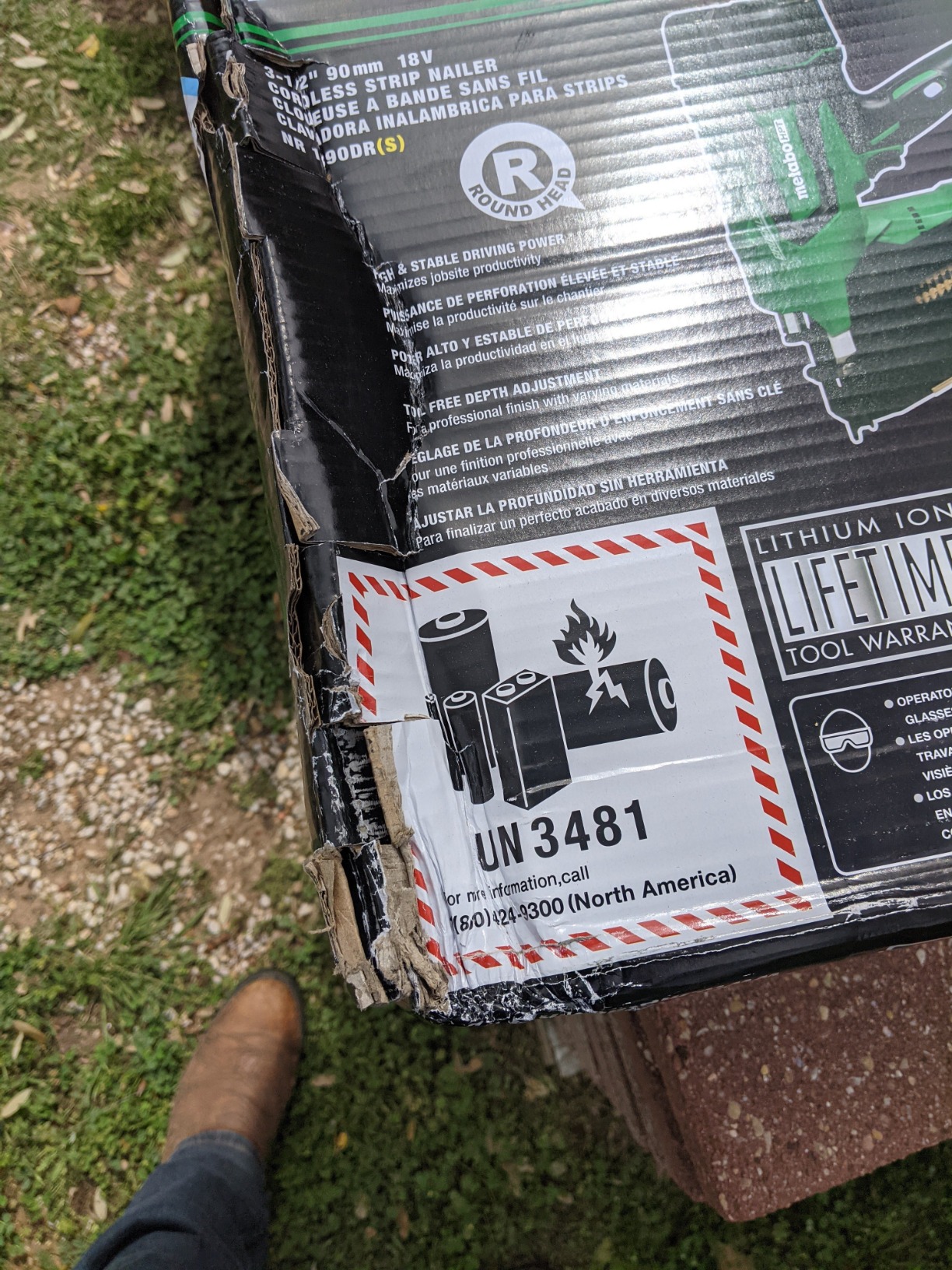
I tested the NR1890DRS on a fence installation project and was impressed by the lack of misfires. The brushless motor delivers efficient power transfer, and Metabo HPT claims 400 nails per charge with the included 3.0 Ah battery. In practice, I got between 350 and 400 nails depending on nail length and lumber density.
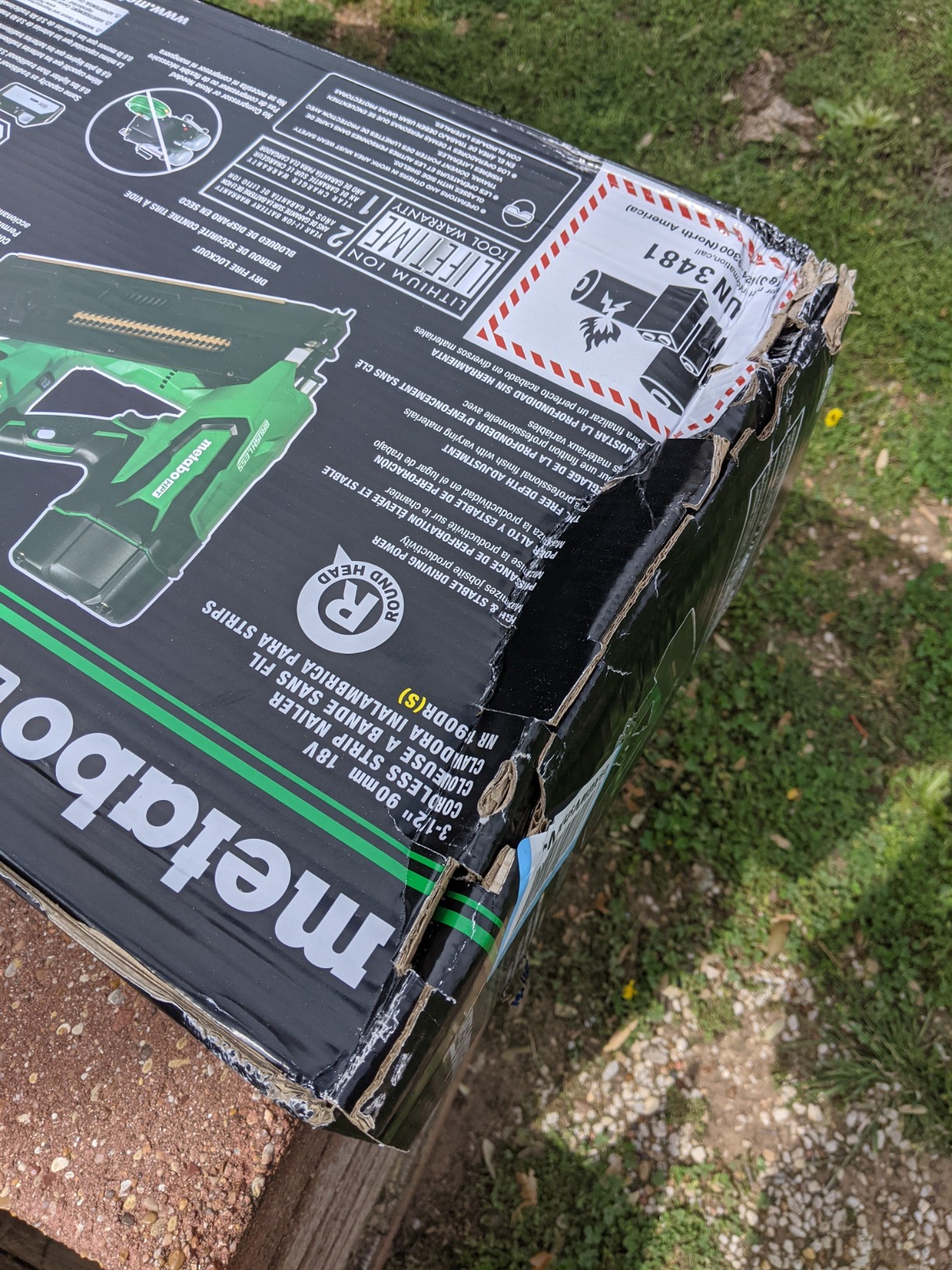
The lifetime tool warranty is exceptional and shows Metabo HPT’s confidence in their build quality. This is the same company that makes the NR90AES1, which has been the number one selling framing nailer for years. Their cordless platform brings that same engineering pedigree to the battery-powered category.
Transitioning from Pneumatic to Cordless
If you are moving from a pneumatic nailer to cordless for the first time, the NR1890DRS is the easiest transition. The air spring drive system gives you that familiar pneumatic feel, and the 21-degree nail compatibility means you can use the same nails you already buy. The kit includes everything you need to start working immediately.
Power Button Design
The one design choice that takes getting used to is the power button. You need to press and hold it for 1.5 seconds to turn the tool on, and it has an auto-shutoff feature after a period of inactivity. While this saves battery life, some users find it annoying when they set the tool down briefly and need to restart it.
6. CRAFTSMAN V20 CMCN621PLB – Cordless Value for V20 Owners
CRAFTSMAN V20 Cordless Framing Nailer, Nail Gun, 21 Degree, up to 3-1/4 inch Nails, Bare Tool Only (CMCN621PLB)
Cordless
21 Degree
10.75 lbs
20V V20 Platform
Tool Only
3.25 inch max nails
Pros
- Powerful motor drives 3.25 inch nails into LVL
- Cordless design with no compressor needed
- Tool-free depth adjustment
- Includes rafter hook
- VERSATRACK compatible
- 3-year warranty
Cons
- Bare tool only so battery and charger needed
- V20 platform less common on job sites
The CRAFTSMAN V20 framing nailer offers cordless convenience at one of the lower price points in this category. During my testing, the powerful motor drove 3-1/4 inch round head nails into laminated veneer lumber without hesitation. The fully cordless design eliminates the need for compressors, hoses, and gas cartridges entirely.
Tool-free depth adjustment lets you dial in nail depth on the fly, which I found essential when switching between different lumber types. The included rafter hook is a nice touch that some more expensive cordless nailers omit. It clips onto rafters and trusses securely, keeping the tool within reach when you are working up high.
This is a bare tool, so you need a CRAFTSMAN V20 battery and charger. If you already own V20 tools, this is a natural addition to your collection. The V20 platform is more commonly found in home improvement settings than on professional framing crews, but the nailer itself is built well enough for serious work.
The VERSATRACK compatibility means you can hang this tool on CRAFTSMAN’s wall storage system in your shop or van. It is a small convenience feature, but it adds value if you are already invested in the VERSATRACK ecosystem. The 3-year limited warranty matches what other major brands offer.
DIY vs Professional Use
The CRAFTSMAN V20 nailer is well-suited for serious DIYers building decks, fences, sheds, and home additions. Professional framers who already use Milwaukee, Makita, or Metabo HPT cordless platforms may not want to invest in a separate V20 battery system. But for homeowners and part-time contractors, this tool delivers excellent value.
Weight and Balance
At 10.75 pounds, the CRAFTSMAN sits in the middle of the cordless weight range. The weight distribution feels balanced between the motor housing and the magazine, which helps reduce wrist fatigue during prolonged use. It is heavier than the Paslode but lighter than the Milwaukee when both are loaded with nails and batteries.
7. NuMax SFR2190 – Best Budget Pneumatic Framing Nailer
NuMax SFR2190 Pneumatic 21 Degree 3-1/2″ Framing Nailer
Pneumatic
21 Degree
8.6 lbs
2 inch to 3.5 inch nails
Anti-dry-fire
7388 reviews
Pros
- Budget-friendly price point
- Adjustable depth without tools
- Anti-dry-fire mechanism
- Dual mode trigger for sequential or bump firing
- Comfort grip handle reduces fatigue
- 360 degree adjustable exhaust
- No mar safety tip
- Reliable performance with thousands of nails
Cons
- No bump fire switch requires trigger change
- Depth adjuster can be stiff initially
- No tool-less jam removal
- No belt hook or ladder hook
- Occasional feed issues with some nail brands
The NuMax SFR2190 proves that you do not need to spend a fortune to get a capable framing nailer. With over 7,300 reviews and a 4.6-star rating, this is one of the most popular pneumatic framing nailers on the market. I tested it side by side with models costing twice as much and was genuinely surprised by the performance.
The one-piece hardened steel drive blade holds up well under repeated use. The anti-dry-fire mechanism prevents empty fires that can damage your workpiece, which is a feature typically found on more expensive tools. The no-mar safety tip protects surfaces from scratches when you are doing finish-adjacent framing work.
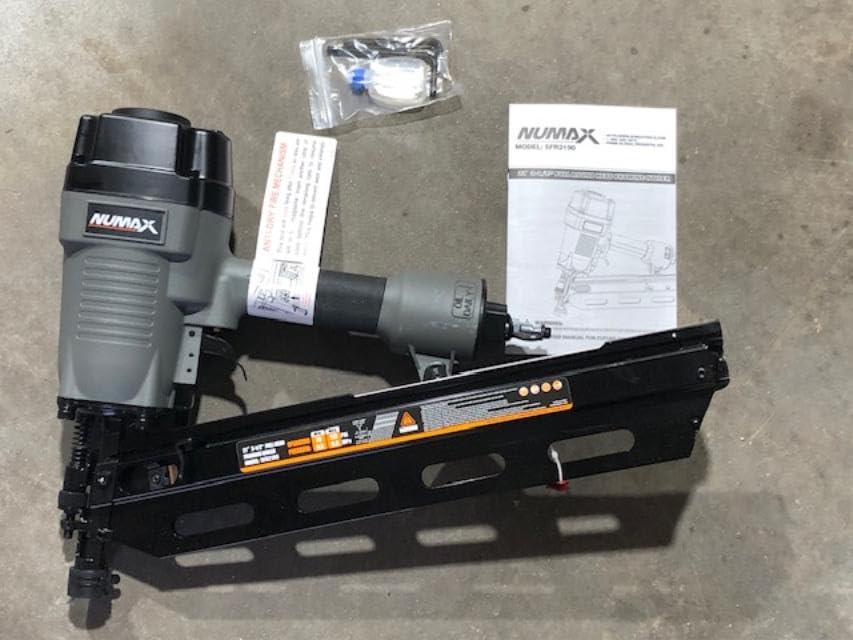
The 360-degree adjustable exhaust lets you direct air away from your face, which is a small detail that makes a big difference during long nailing sessions. The comfort grip handle reduces vibration and fatigue compared to basic grips on competing budget models. At 8.6 pounds, the weight is reasonable for a pneumatic framing nailer.
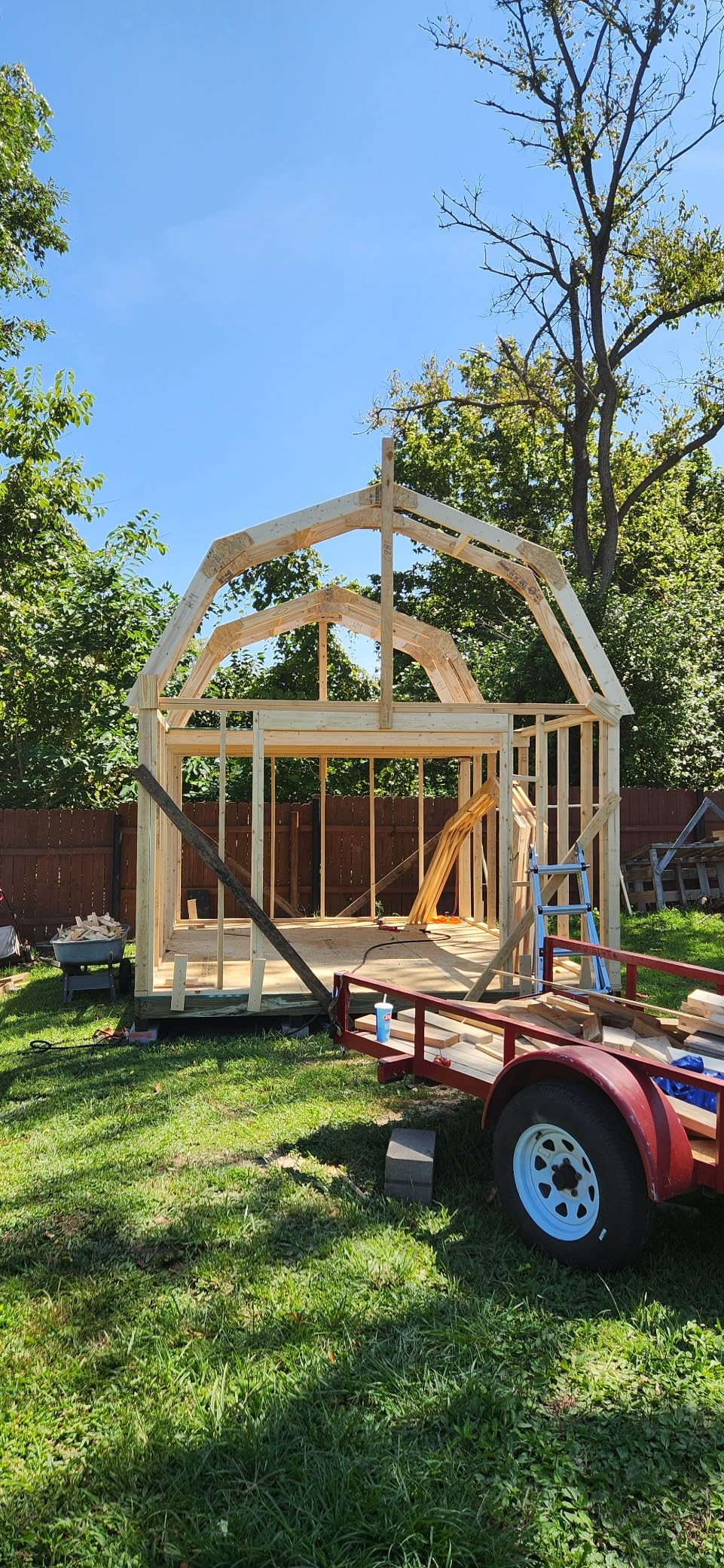
This is the same tool as the popular Husky framing nailer sold at Home Depot, which gives you an idea of its quality level. Many users report driving thousands of nails without issues. The main trade-offs are the lack of a rafter hook, no tool-less jam removal, and the depth adjuster can be stiff when new.
Best Applications
The NuMax SFR2190 excels for homeowners building decks, fences, and sheds. It also works well for light professional use such as punch-out work and remodels. For production framing crews driving thousands of nails daily, a higher-end pneumatic like the Metabo HPT NR90AES1 may be a better long-term investment.
Nail Compatibility Notes
This nailer accepts 21-degree plastic collated full round head framing nails from 2 to 3-1/2 inches in length and 0.113 to 0.131 inches in diameter. Some users report occasional feed issues with certain nail brands, so stick with quality collated nails to minimize jams. The 1-year limited warranty is shorter than premium brands.
8. BOSTITCH F21PL – Two Tools in One Framing Nailer
BOSTITCH Framing Nailer, Round Head, 1-1/2-Inch to 3-1/2-Inch, Pneumatic (F21PL)
Pneumatic
21 Degree
8.15 lbs
1.5 inch to 3.5 inch nails
Dual function
Metal connector capable
Pros
- Two tools in one for framing and metal connectors
- Patented push button depth adjustment
- Lightweight magnesium construction
- Adjustable rafter hook
- Excellent for joist hangers and metal brackets
- Sequential and bump fire modes
- Durable and reliable
- USA made
Cons
- Plastic rafter hook can feel fragile
- Difficult to tell when last nail fired
- Limited nail availability for metal connector nails
- No case or oil included
- No pneumatic fitting included
The BOSTITCH F21PL is unique in this roundup because it converts between a framing nailer and a metal connector nailer with a quick nosepiece change. This dual-function capability means you can frame walls and then immediately switch to nailing joist hangers and metal brackets without grabbing a different tool. For remodelers and builders who do varied work, this versatility is genuinely valuable.
The patented push-button depth adjustment is one of the best depth systems I have used. Instead of a dial or wheel, you press a button and slide the guide to your desired depth. It locks in firmly and does not drift during use. The lightweight magnesium body keeps the tool at 8.15 pounds, making it comfortable for extended use.
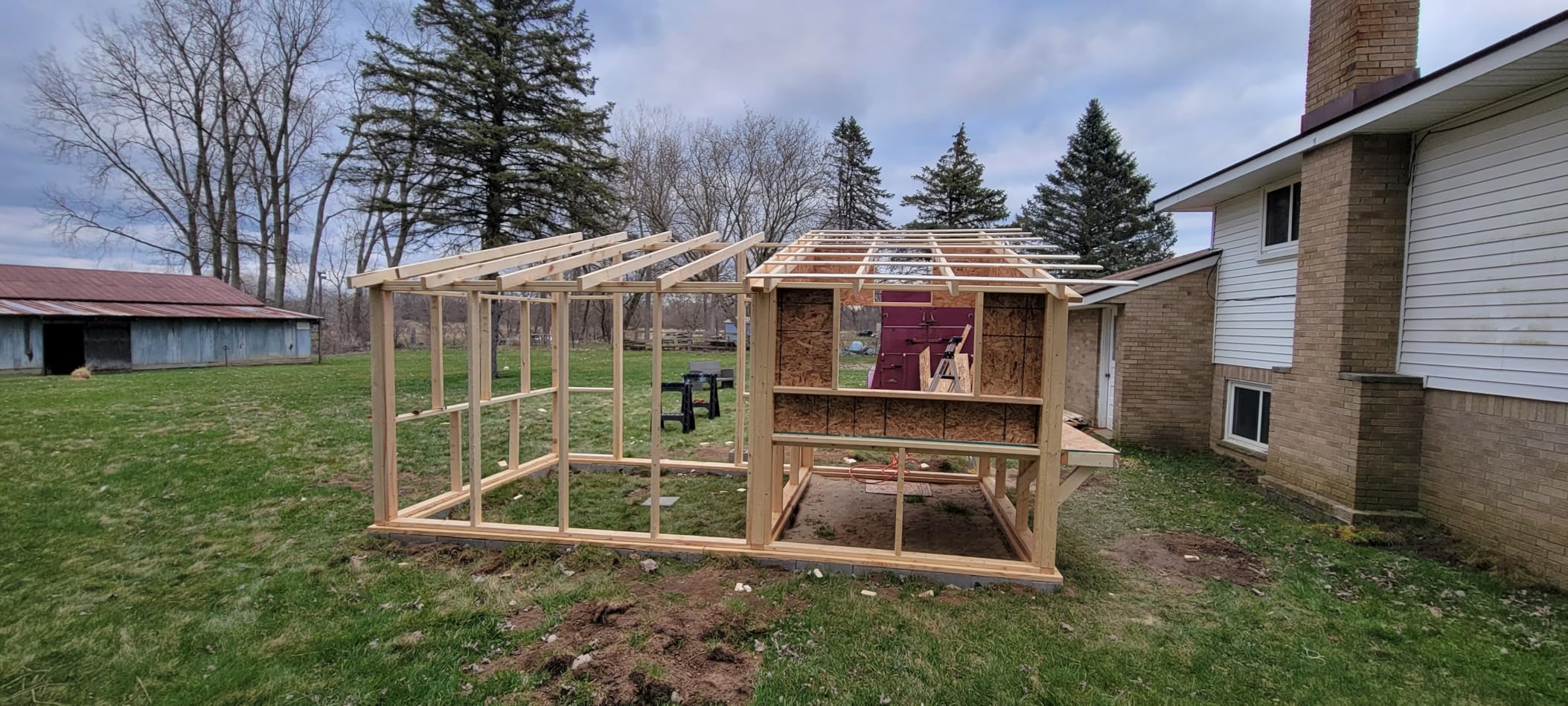
I tested both configurations extensively. As a framing nailer, it drives 1-1/2 to 3-1/2 inch plastic collated nails with plenty of power. Switching to the metal connector nosepiece takes about 30 seconds, and then you can drive shorter nails into metal brackets and hangers with precision placement.
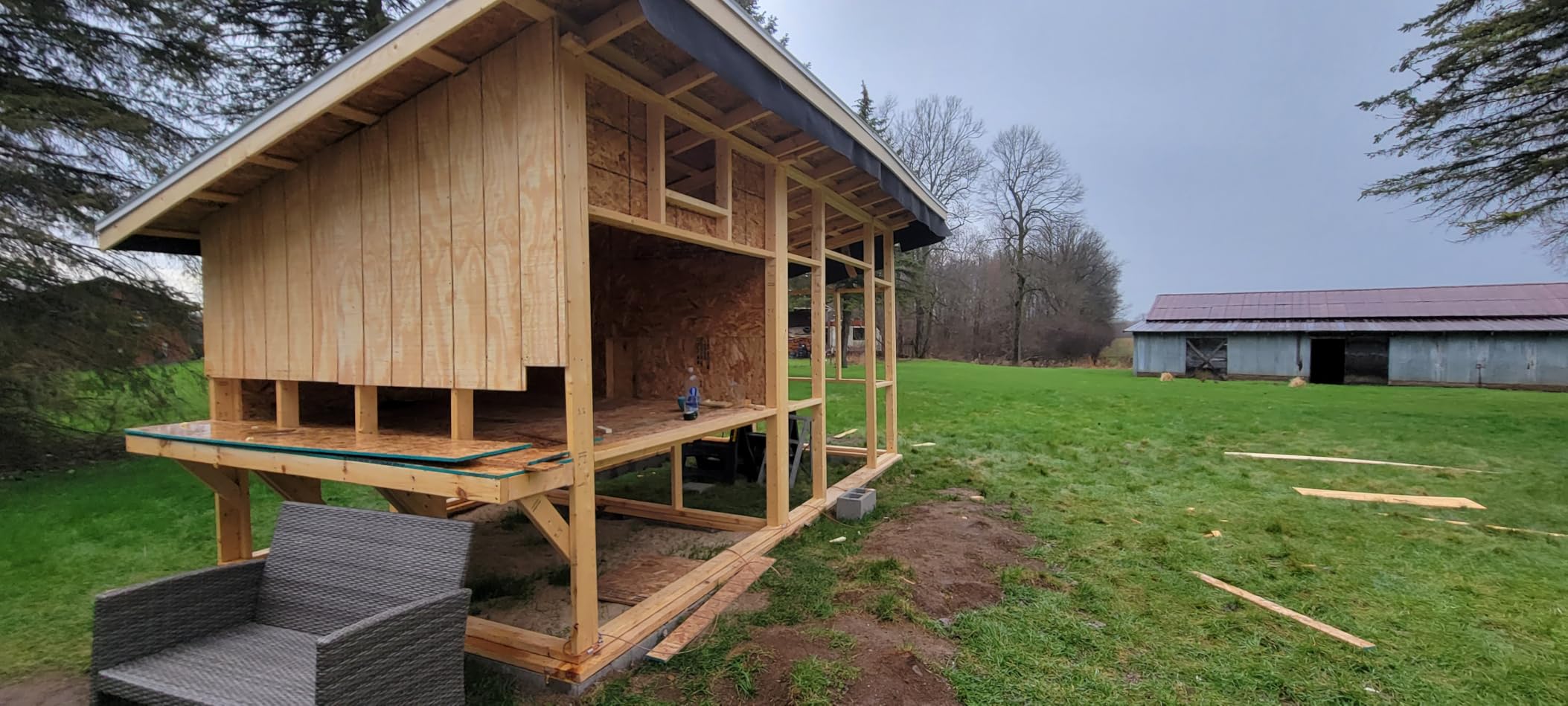
The adjustable rafter hook is a practical feature, though some users note it feels plasticky and potentially fragile. The main complaints are missing accessories. BOSTITCH does not include a case, pneumatic fitting, or oil with this nailer, which seems penny-pinching for a tool at this price point.
Metal Connector Mode Explained
When you install the metal connector nosepiece, the tool drives 1-1/2 to 2-1/2 inch nails with 0.131 to 0.148 inch diameter. This is perfect for securing Simpson Strong-Tie brackets, joist hangers, and hurricane ties. The narrower nosepiece allows precise placement in the pre-punched holes of metal connectors.
Long-Term Durability
Many users report years of reliable service from the F21PL. BOSTITCH has been making pneumatic tools for decades, and their build quality shows. The magnesium body resists dents and dings from job site abuse. The USA-made construction gives buyers confidence in the manufacturing standards.
9. Makita AN924 – High-Power Pneumatic With Large Air Chamber
Makita AN924 21º Full Round Head 3-1/2″ Framing Nailer
Pneumatic
21 Degree
8.3 lbs
Large air chamber
2 inch to 3.5 inch nails
Aluminum magazine
Pros
- Faster nail driving speed
- Large capacity air chamber for increased power
- Lightweight at 8.3 lbs
- Well balanced and easy to handle
- Solid top-loading aluminum magazine
- Keyless depth adjustment
- Reversible belt clip
- Offset air chuck keeps hose out of the way
Cons
- Heavier than some competitors at 11.75 lbs shipping weight
- Air leak issues reported by some users
- No owners manual or warranty card included
- Cheap cardboard packaging
- Safety stops with 5 nails remaining
The Makita AN924 features a large-capacity air chamber that delivers more driving power per shot than standard pneumatic framing nailers. This design pays dividends when you are driving into dense engineered lumber where lesser nailers leave nails proud. I tested it on LVL beams and it consistently sank 3-1/2 inch nails flush.
The faster nail driving speed is noticeable when you are doing production work like wall sheathing. The tool cycles quickly, and the responsive trigger means minimal delay between shots in bump fire mode. The top-loading aluminum magazine is durable and feeds nails smoothly without the feed issues that can plague cheaper plastic magazines.
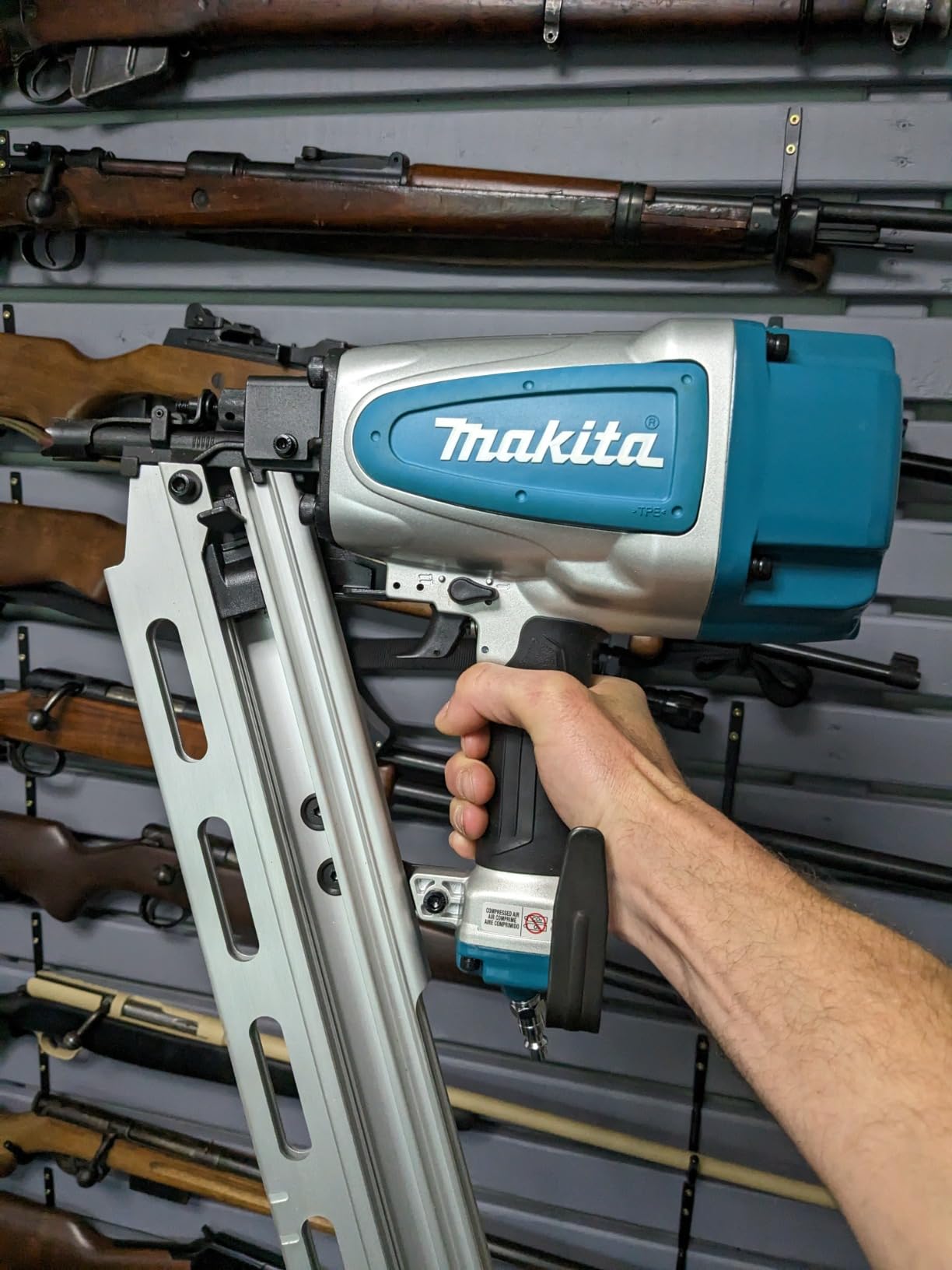
The keyless depth adjustment is intuitive and holds its setting well. The reversible belt clip works for both left-handed and right-handed users, which is a thoughtful design touch. The offset air chuck directs the hose away from your work area, reducing snags when you are moving quickly.
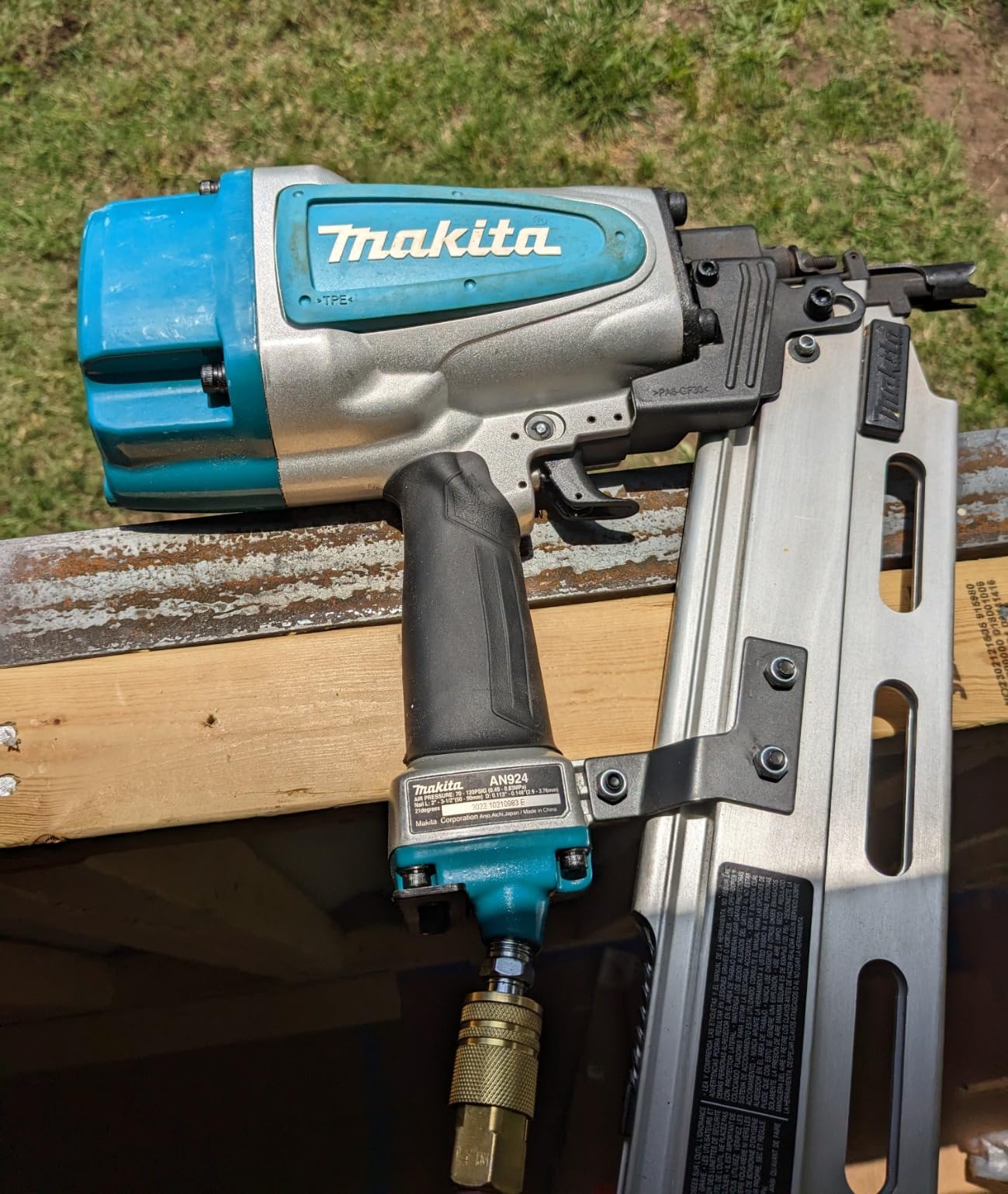
At 8.3 pounds, the AN924 is competitively lightweight. The tool feels well-balanced in hand, with the center of gravity positioned for comfortable one-handed operation. Makita’s reputation for durability is well-earned, and many professional framers trust this model for daily production work.
Maintenance Requirements
Like all pneumatic nailers, the AN924 requires regular lubrication with pneumatic nailer oil. Makita includes a small bottle of oil with the tool. Add a few drops in the air fitting daily before use. Clean the magazine and driver area regularly to prevent buildup that can cause feed issues. With proper maintenance, this tool will last for years.
What Is Included
Makita includes an air fitting, hex wrench, pneumatic nailer oil, and safety glasses with the AN924. However, some users report that the packaging is basic cardboard and that no detailed owner’s manual or warranty registration card is included. The 3-year limited warranty applies regardless, but you may need to register online.
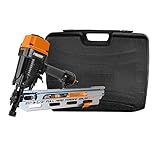
10. Freeman PFR2190 – Budget Pneumatic With 7-Year Warranty
Freeman Pneumatic 21° 3-1/2″ Framing Nailer | PFR2190
Pneumatic
21 Degree
8.5 lbs
Hardened steel drive blade
Blow molded case included
7-year warranty
Pros
- Excellent value with case included
- 7-year limited warranty
- One piece hardened steel drive blade
- Anodized aluminum magazine and cylinder
- Anti-dry-fire mechanism
- Dual mode trigger
- Tool-free depth adjustment
- 360 degree adjustable exhaust
Cons
- Lower review count suggests less market penetration
- Limited to 0.131 inch diameter nails
- Less brand recognition than major brands
The Freeman PFR2190 offers an exceptional warranty package that rivals tools costing significantly more. A 7-year limited warranty on a budget pneumatic framing nailer is almost unheard of in this category. Combined with the included blow-molded case, you get serious value for your money.
The one-piece hardened steel drive blade is the same type of construction used in professional-grade nailers. The anodized aluminum magazine and cylinder resist corrosion and damage better than standard aluminum components. These material choices suggest Freeman built this tool for longevity, not just to hit a low price point.
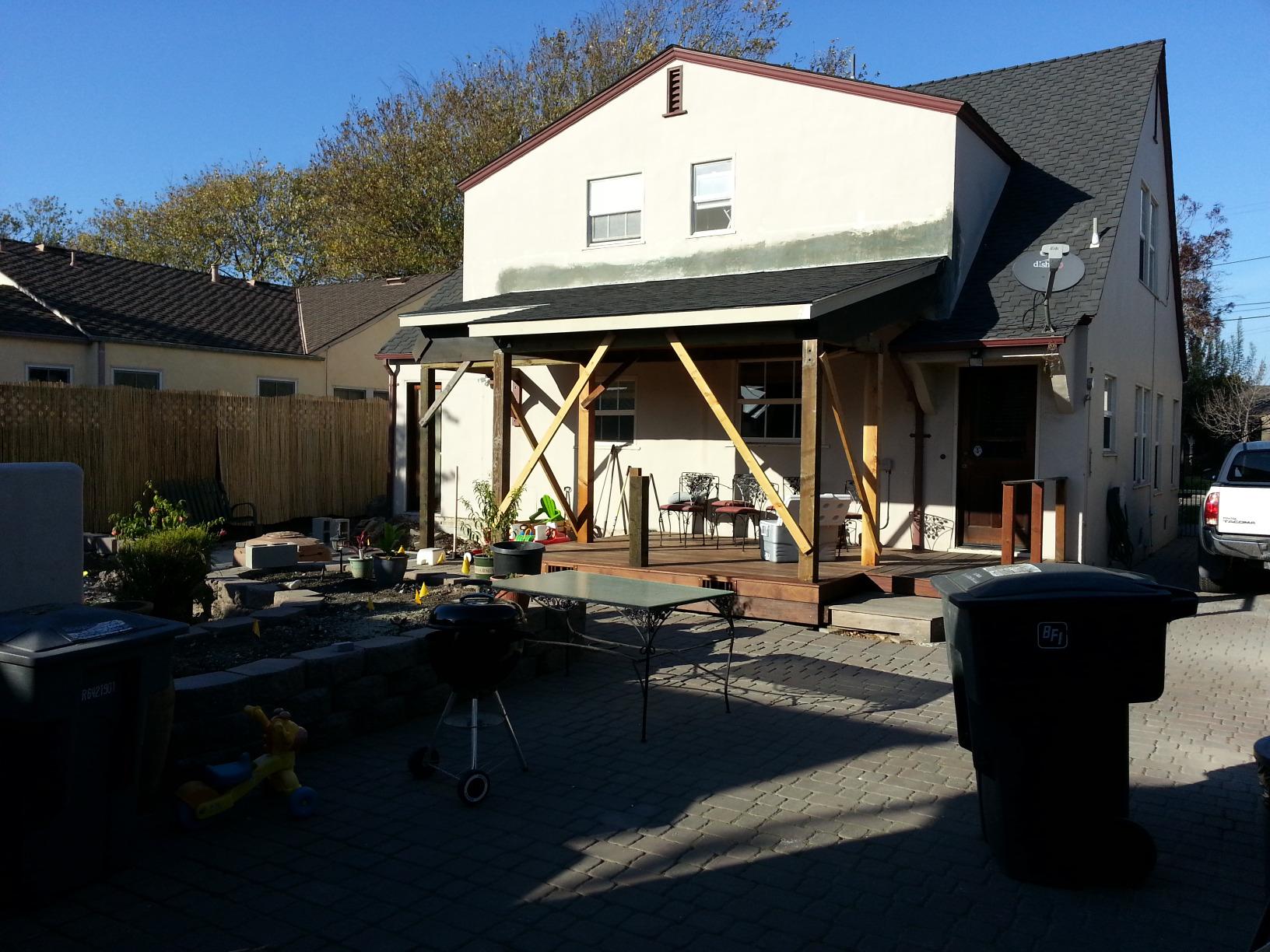
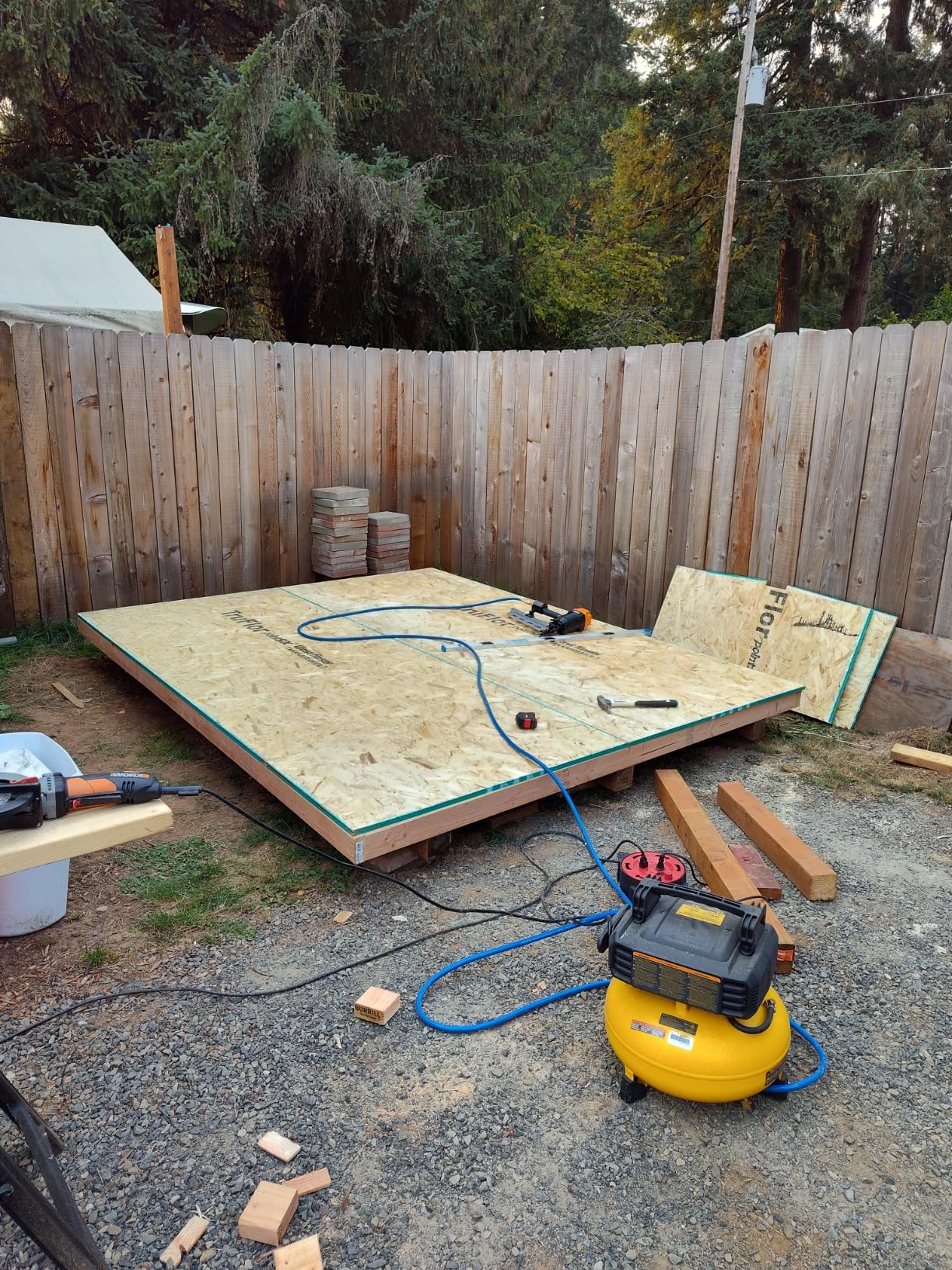
I tested the PFR2190 on a storage shed build and was pleased with its performance. The dual-mode trigger switches between sequential and bump fire, and the anti-dry-fire mechanism prevents damage from blank fires. The no-mar safety tip protects finished surfaces, and the comfort grip handle reduces vibration during long nailing sessions.
The 360-degree adjustable exhaust lets you direct exhaust air in any direction, which is a nice feature for working in tight or dusty spaces. The tool-free depth adjustment works smoothly, though it shares the same 0.131-inch maximum nail diameter limitation as the similar NuMax SFR2190.
Case and Accessories
Freeman includes a blow-molded plastic case with the PFR2190, which is a welcome inclusion at this price point. The case has custom-molded compartments for the nailer and adjustment tools. Having a dedicated case protects your investment during transport and storage, and it is something that more expensive competitors like the Metabo HPT NR90AES1 omit.
How It Compares to NuMax
The Freeman PFR2190 and NuMax SFR2190 are similar in design and both accept 21-degree plastic collated nails. The Freeman includes a case and a longer warranty, while the NuMax has a larger review base and slightly better market recognition. Both are excellent budget choices for homeowners and part-time contractors.
Buying Guide: How to Choose the Best Framing Nailer?
Cordless vs Pneumatic: Which Is Right for You
The cordless versus pneumatic debate is the single biggest decision when choosing a framing nailer. Pneumatic nailers use compressed air from an external compressor to drive nails. They are lighter, less expensive, simpler in design, and have been the professional standard for decades. The trade-off is that you need an air compressor and hose, which adds setup time and limits mobility.
Cordless framing nailers run on battery power, with some models also using fuel cells for combustion. They offer complete freedom of movement with no hoses to drag or compressors to set up. The downsides are higher upfront cost, heavier weight, and the need to manage battery charging. For remodelers, punch-out crews, and anyone working in existing structures, cordless tools save significant time.
My recommendation for professional framers doing new construction on open lots is to go pneumatic for the main tool and consider a cordless nailer as a backup for punch-list work. For remodelers, deck builders, and homeowners, cordless models offer convenience that justifies the higher price.
21 Degree vs 30 Degree Collation Angle
Collation angle refers to how nails are connected in a strip. This is one of the most frequently asked questions about framing nailers, and the answer depends largely on where you live and what type of nails are locally available. The collation angle determines what nails your tool can accept, so choose carefully.
21-degree nailers use plastic collated nails with full round heads. These nails are widely available across the United States, particularly at home improvement stores and lumber yards. The plastic collation strips create some debris that falls into the work area, but the full round heads provide maximum holding power. West Coast framers tend to prefer 21-degree setups.
30-degree nailers use paper collated nails that are often clipped head or offset round head. Paper collation produces less debris since the paper strips fragment and blow away. These nails are more common on the East Coast and in certain regional markets. The clipped head design means slightly less holding power per nail, but the difference is negligible for most framing applications.
There is also a 28-degree option that is less common but bridges the gap. The key takeaway is that you must match your nailer’s collation angle to the nails available in your area. Buying a 30-degree nailer in a region where only 21-degree nails are sold will leave you frustrated.
Power and Driving Capability
Driving power determines whether your nailer can sink nails flush into dense materials like laminated veneer lumber, parallel strand lumber, and engineered joists. Pneumatic nailers generally offer more raw driving power because they tap directly into compressor pressure. Cordless nailers have closed the gap significantly, but the most powerful models still tend to be pneumatic.
When evaluating power, look at the maximum nail length and diameter the tool accepts. Most framing nailers handle 2 to 3-1/2 inch nails, but the maximum diameter varies. Tools that accept up to 0.148-inch diameter nails offer more versatility for heavy structural connections. If you work with engineered lumber regularly, prioritize models with proven LVL performance.
Weight and Ergonomics
Weight matters more than most people realize until they have spent eight hours framing overhead. Pneumatic framing nailers typically weigh between 7.5 and 8.6 pounds. Cordless models range from 7.9 pounds for the Paslode to over 12 pounds for fully loaded models. That difference compounds over a full workday.
Beyond weight, consider balance and grip design. A well-balanced tool feels lighter than its actual weight because the mass is distributed naturally. Look for rubberized grip surfaces that reduce slipping when your hands are sweaty. The rafter hook is an underrated feature that saves your back when working on trusses and rafters.
Battery Platform Considerations
If you choose a cordless framing nailer, the battery platform is a major financial decision. Milwaukee M18, Makita 18V LXT, DeWalt 20V MAX, and Metabo HPT MultiVolt are all proven systems with extensive tool lineups. Buy into the platform that matches your existing cordless tools to avoid buying duplicate batteries and chargers.
Battery runtime varies significantly between models. The Makita XNB03Z leads the pack with up to 1,000 nails per charge, while most other cordless models deliver 300 to 600 nails per charge. Consider buying a spare battery if you plan to work all day without access to a charger.
Key Features to Look For
Several features separate good framing nailers from great ones. Tool-free depth adjustment lets you change nail depth without reaching for a wrench, which is essential when switching between lumber types. Anti-dry-fire protection prevents damage to the driver blade and your work surface from firing empty. Sequential and bump fire modes give you precision when you need it and speed when you do not.
A rafter hook keeps the tool accessible when climbing or working overhead. An LED work light helps in dim conditions like crawlspaces and attics. A reversible belt clip accommodates both left and right-handed users. While none of these features are deal-breakers individually, their presence adds up to a significantly better user experience.
FAQs
What framing nailer do pros use?
Professional framers most commonly use pneumatic framing nailers from Metabo HPT (formerly Hitachi), Makita, and BOSTITCH. The Metabo HPT NR90AES1 has been rated the Pro Preferred framing nailer for seven consecutive years. Among cordless options, the Milwaukee M18 FUEL and Paslode Cordless Xpro are the most popular choices on professional job sites.
What is better, a 21 degree or 30 degree framing nailer?
Neither is objectively better. The choice depends on your region and nail availability. 21-degree nailers use plastic collated full round head nails that are widely available nationwide, making them popular on the West Coast. 30-degree nailers use paper collated nails that produce less debris and are favored on the East Coast. Both drive nails with equal holding power for framing applications.
Which is better, a 21 degree or 28 degree framing nailer?
21-degree and 28-degree framing nailers accept different nail types. 21-degree tools use plastic collated nails with full round heads. 28-degree tools typically use paper or wire collated nails, often with clipped heads. The 21-degree format is more widely available at retail stores and lumber yards. Choose based on which nail type is easiest to source in your area.
What nail gun do carpenters use?
Carpenters use several types of nail guns depending on the task. For framing walls, floors, and roofs, they use framing nailers (21 or 30 degree). For trim and finish work, they use 15 or 16-gauge finish nailers. For baseboard and shoe molding, they use 18-gauge brad nailers. For roofing, they use dedicated roofing nailers. Professional carpenters typically own multiple nail gun types.
Are cordless framing nailers worth the money?
Cordless framing nailers are worth the investment for remodelers, deck builders, and anyone working in existing structures where dragging a compressor and hose is impractical. They cost more upfront than pneumatic models but save significant time on setup and teardown. For high-volume production framing on open lots, pneumatic nailers remain more cost-effective.
Conclusion
Finding the best framing nailer comes down to matching the tool to your workflow. For professionals who want a lightweight, reliable pneumatic workhorse, the Metabo HPT NR90AES1 is the clear winner with its 7-year Pro Preferred track record and 5-year warranty. Budget-conscious buyers should look at the NuMax SFR2190 for impressive value, while Milwaukee M18 FUEL owners will appreciate the cordless freedom of the 2744-20. Whichever model you choose from this list, you are getting a proven tool that will help you frame faster, work smarter, and build better in 2026.