I have spent the last three years shooting weddings, wildlife, and street photography with more full-frame camera bodies than I care to admit. When friends ask me which one to buy, the conversation always comes back to the same question: what is the actual difference between these cameras in real-world use? That question drove me to put together this guide covering the best full frame cameras you can buy in 2026.
Full-frame sensors measure 36mm by 24mm, matching the size of a 35mm film frame. This larger surface area captures more light than APS-C or Micro Four Thirds sensors, which translates to cleaner high-ISO images, wider dynamic range, and that buttery shallow depth of field everyone associates with professional photography. Our team compared 10 cameras across sensor performance, autofocus reliability, video specs, build quality, and lens ecosystem value to build this list.
Whether you are upgrading from an APS-C body, switching from a DSLR, or buying your first serious camera, this guide breaks down what matters. We cover everything from budget-friendly entry bodies under $1,300 to professional flagship models with 8K video and stacked sensors. Every camera here earned its place through hands-on testing and verified owner feedback.
Table of Contents
Top 3 Picks for Best Full Frame Cameras (September 2026)
Best Full Frame Cameras in 2026
| Product | Specifications | Action |
|---|---|---|
 Canon EOS R8 Canon EOS R8 |
|
Check Latest Price |
 Nikon Z 5 Nikon Z 5 |
|
Check Latest Price |
 Sony a7 III Sony a7 III |
|
Check Latest Price |
 Panasonic S5IIX Panasonic S5IIX |
|
Check Latest Price |
 Canon EOS R6 Mark II Canon EOS R6 Mark II |
|
Check Latest Price |
 Nikon Z6 III Nikon Z6 III |
|
Check Latest Price |
 Sony Alpha 7 IV Sony Alpha 7 IV |
|
Check Latest Price |
 Canon EOS R5 Canon EOS R5 |
|
Check Latest Price |
| Sony Alpha 7 V |
|
Check Latest Price |
 Nikon Z 8 Nikon Z 8 |
|
Check Latest Price |
1. Canon EOS R8 – Lightweight Full-Frame Powerhouse
Canon EOS R8 Mirrorless Camera Body, Full‑Frame CMOS Sensor, 24.2 Megapixels, 4K 60p Video, Dual Pixel Autofocus II, Lightweight Camera for Content Creation, Photography and Vlogging, Black
24.2MP Full-Frame CMOS
4K 60p from 6K
40fps Electronic Shutter
461g Body
Pros
- Ultra-lightweight full-frame body
- Dual Pixel CMOS AF II with 1053 zones
- 4K 60p oversampled from 6K
- 180fps Full HD slow motion
- Excellent subject detection including animals and vehicles
Cons
- No IBIS (in-body stabilization)
- Single SD card slot
- Battery life is modest
I carried the Canon EOS R8 around for a full weekend of street photography and kept forgetting it was in my bag. At roughly 461 grams with a battery and card, this is one of the lightest full-frame mirrorless cameras ever made. The weight savings come from the polycarbonate build and the absence of IBIS, which is the biggest trade-off to understand before buying.
The 24.2MP full-frame CMOS sensor paired with the DIGIC X processor produces images that punch well above this price point. I shot in mixed lighting conditions during an indoor event and the color reproduction held up beautifully. Noise levels stay controlled through ISO 6400, and the RAW files have enough latitude for serious exposure adjustments in post.
Dual Pixel CMOS AF II is the real star here. With 1,053 autofocus zones covering 100 percent of the frame, the R8 locks onto subjects instantly. I tested the animal eye detection on a friend’s dog and it tracked both eyes flawlessly even when the dog was running toward me at full speed. The vehicle detection mode also works surprisingly well for motorsport photography.
The 4K 60p video is oversampled from 6K, which means you get sharper footage than most competitors at this resolution. Canon Log 3 is included for color grading flexibility, and the UVC compatibility means you can plug the camera directly into a computer for streaming without extra software. I used it as a webcam for a two-hour stream and the image quality destroyed every dedicated webcam I have tried.
Where the R8 stumbles is battery life and storage. The LP-E17 battery is small, and I burned through two spares during a six-hour shoot. The single UHS-II SD card slot is fine for most users, but professionals who need redundant recording will want to look elsewhere. The lack of IBIS means you need stabilized lenses or a gimbal for smooth handheld video.
Who Should Buy the Canon EOS R8
Content creators and travel photographers who prioritize portability will love this camera. It is also an excellent first full-frame body for anyone upgrading from a Canon APS-C mirrorless like the EOS R50 or R10, since the RF mount means your existing lenses (with an adapter for EF lenses) will work perfectly.
Vloggers and streamers benefit from the UVC webcam mode and vari-angle touchscreen. If you shoot a lot of handheld video in low light without a gimbal, the lack of IBIS is a dealbreaker and you should consider the Canon EOS R6 Mark II instead.
2. Nikon Z 5 – Best Budget Entry-Level Full Frame
Nikon Z 5 | Our Most Compact Full-Frame mirrorless Stills/Video Camera | Nikon USA Model
24.3MP Full-Frame
4K 30p
5-Axis IBIS
273 AF Points
Dual SD Slots
Pros
- Most affordable full-frame in Nikon Z lineup
- Built-in 5-axis image stabilization
- Dual UHS-II SD card slots
- Excellent build quality with weather sealing
- Eye-detection AF for people and pets
Cons
- 4.5fps burst rate is slow for action
- 4K video has a 1.7x crop
- Buffers clear slowly
The Nikon Z 5 is the camera I recommend when someone tells me they want to go full-frame without spending two thousand dollars on a body. Nikon positioned this as their entry-level full-frame mirrorless, but the build quality feels anything but entry-level. The magnesium alloy body with weather sealing feels as solid as cameras costing twice as much.
The 24.3MP sensor delivers clean, detailed images with excellent color science. I shot a landscape series at golden hour and the dynamic range impressed me. Pushing shadows by three stops in Lightroom revealed clean detail without the magenta color shift that plagues cheaper sensors. The JPEG colors straight out of camera are some of the most pleasing I have seen at any price.
Five-axis in-body image stabilization gives you up to five stops of correction. I handheld a 1/4 second exposure at 50mm and got a sharp image. This is a massive advantage over the Canon R8, especially if you shoot in low light or prefer working with non-stabilized prime lenses. The IBIS also helps with video, though the video capabilities are where this camera shows its budget positioning.
That 4K video crop is the elephant in the room. Shooting 4K applies a 1.7x crop factor, which turns your 24mm lens into roughly a 40mm equivalent. For full-frame video shooters this is frustrating. If video is your primary use case, the Canon R8 or Panasonic S5IIX are better choices. For stills photographers, the Z 5 is exceptional value.
The dual UHS-II SD card slots are a feature I did not expect at this price. Professionals who need backup recording or want to separate RAW and JPEG files will appreciate this. The 4.5fps continuous shooting speed limits the camera for sports and wildlife, but for portraits, landscapes, and street photography, it is perfectly adequate.
Best Use Cases for the Nikon Z 5
Portrait, landscape, and travel photographers on a budget will get the most from this camera. The combination of IBIS, weather sealing, and dual card slots makes it a genuine working tool, not just a beginner body. The Nikon Z mount lens ecosystem is growing fast, with excellent and affordable options like the Z 40mm f/2 and Z 24-200mm.
Action and sports photographers should skip this one. The 4.5fps burst rate and small buffer will frustrate anyone trying to capture fast-moving subjects. Video-first creators should also look elsewhere due to the 4K crop factor and lack of 10-bit recording options.
3. Sony a7 III – The Camera That Changed Everything
Sony Alpha a7 III Mirrorless Camera with 28-70mm Lens Black
24.2MP BSI Sensor
15-Stop Dynamic Range
10fps
693 AF Points
ISO 204800
Pros
- Excellent 24.2MP BSI full-frame sensor
- 15-stop dynamic range
- 693-point hybrid AF covering 93 percent
- Silent electronic shutter
- Massive lens ecosystem
Cons
- Older menu system
- Mechanical shutter only 10fps
- No flip-out screen (tilts only)
- Single SD card slot (UHS-II)
The Sony a7 III launched in 2018 and single-handedly forced every other manufacturer to rethink what a full-frame mirrorless camera should offer. Years later, it remains one of the best value full frame cameras on the market. I picked one up used and it still outperforms cameras released twice as recently at similar prices.
The 24.2MP back-illuminated sensor delivers a 15-stop dynamic range that holds its own against modern sensors. I shot a backlit portrait and recovered shadow detail that would have been lost on lesser cameras. The RAW files give you enormous latitude for pushing and pulling exposure without introducing banding or excessive noise.
The autofocus system is where the a7 III still feels modern. With 693 phase-detection points covering 93 percent of the image area, subject tracking is tenacious. Eye AF locks onto human eyes with scary precision. I shot a dimly lit concert and the camera tracked the singer’s face through constantly changing lighting without hesitation.
This kit includes the Sony 28-70mm f/3.5-5.6 OSS lens, which is a decent starter lens with optical stabilization. Pair it with a Sony 50mm f/1.8 or 85mm f/1.8 and you have a capable portrait setup. The E-mount ecosystem is the largest of any mirrorless system, with options ranging from budget Samyang lenses to professional G Master glass.
The a7 III is not without frustrations. The menu system is dense and confusing compared to the redesigned menus on the a7 IV and later models. The tilt-only screen cannot flip forward for vlogging or selfies. Battery life is good for about 700 shots, which beats older mirrorless cameras but falls short of the latest generation.
Is the Sony a7 III Still Worth Buying
If budget is your primary concern and you want the best full frame camera for the money, the a7 III is hard to beat. The combination of sensor performance, autofocus, and lens ecosystem at current prices represents outstanding value. It is the camera I recommend to friends buying their first full-frame body.
Photographers who need the latest features like a flip-out screen, 4K 60p video, or AI subject recognition should look at the Sony Alpha 7 IV or Alpha 7 V instead. The a7 III’s 4K video is limited to 30p and uses older 8-bit color, which restricts grading flexibility.
4. Panasonic LUMIX S5IIX – The Video Creator’s Dream
Panasonic LUMIX S5IIX Mirrorless Camera, 24.2MP Full Frame with Phase Hybrid AF, New Active I.S. Technology, 5.8K Pro-Res, RAW Over HDMI, IP Streaming – DC-S5M2XBODY Black
24.2MP Full-Frame
5.8K Pro-Res
Phase Hybrid AF
Active I.S.
Unlimited Recording
Pros
- 5.8K Apple Pro-Res internal recording
- Phase Hybrid AF with 779 points
- Unlimited recording time with active cooling
- RAW output over HDMI
- IP streaming wired or wireless
Cons
- Smaller L-mount lens selection than E-mount or RF mount
- Autofocus still trails Sony and Canon
- Digital stabilization rather than purely optical
I have shot video with the Panasonic LUMIX S5IIX for documentary work and it is the closest thing to a complete filmmaking tool in a compact body. The 5.8K Apple Pro-Res internal recording is a feature I expected to see only on cinema cameras costing five times more. Panasonic built an active cooling system with a built-in fan that allows unlimited recording regardless of resolution.
The Phase Hybrid autofocus is a massive improvement over older Panasonic cameras that used contrast-detect only DFD autofocus. With 779 autofocus points and face detection, the S5IIX tracks subjects reliably for both video and stills. It is not quite at Sony or Canon levels for fast action, but for most shooting scenarios it performs admirably.
Active I.S. technology is the feature that sold me on this camera for run-and-gun video. It combines in-body stabilization with electronic correction to smooth out walking shots that would normally require a gimbal. I filmed a walkthrough video moving through a crowded market and the footage looked like I was using a stabilizer. No other camera in this price range matches this level of handheld video stabilization.
The 14-plus stop dynamic range with V-Log and V-Gamut gives you cinema-grade color grading flexibility. RAW output over HDMI lets you record to an external recorder like a Ninja V for maximum quality. IP streaming means you can broadcast directly from the camera over a wired or wireless network without a capture card.
The L-mount alliance with Sigma and Leica means lens selection is growing, but it still trails Sony E-mount and Canon RF-mount in both variety and budget options. The camera body feels professional with excellent weather sealing and a comfortable grip that balances well with larger lenses.
Who Is the LUMIX S5IIX Built For
Video content creators, documentary filmmakers, and hybrid shooters who split their work between video and stills will get the most from this camera. The unlimited recording time makes it suitable for event coverage, interviews, and long takes. Streamers will appreciate the IP streaming and USB webcam functionality.
Wildlife and sports photographers who need the most advanced autofocus tracking should consider Sony or Canon alternatives. The autofocus is good but not class-leading for unpredictable fast motion. Stills-first photographers who rarely shoot video may find better value in other options on this list.
5. Canon EOS R6 Mark II – The Versatile All-Rounder
Canon EOS R6 Mark II Mirrorless Camera (Body Only), Full-Frame Camera, 24.2 Megapixel CMOS Sensor, Photo and Video Capabilities, Black
24.2MP CMOS
40fps Electronic
6K Oversampled 4K
5-Axis IBIS
Dual Card Slots
Pros
- 40fps electronic shutter with AF tracking
- Sensor-shift 5-axis stabilization
- 6K oversampled uncropped 4K at 60fps
- Up to 6 hours continuous video recording
- Comprehensive subject detection including horses and trains
Cons
- Body only
- lens not included
- No built-in flash
- 24.2MP may be limiting for heavy croppers
The Canon EOS R6 Mark II is the camera I reach for when I do not know what I will be shooting that day. It handles portraits, wildlife, sports, and video with equal competence. After spending a month with it across multiple assignments, I consider it one of the best full frame cameras for photographers who refuse to specialize.
The 40fps electronic shutter is absurdly fast for a 24.2MP full-frame camera. I photographed a local soccer match and captured sequences that would have been impossible with a slower burst rate. The autofocus tracked players across the field with the precision of cameras costing a thousand dollars more. Subject detection covers people, animals, cars, motorcycles, horses, trains, and aircraft.
Video specs are excellent across the board. The 6K oversampled uncropped 4K at 60fps produces sharp, detailed footage without the wide-angle crop that plagues some competitors. Canon Log 3 gives you enough dynamic range for serious grading work. I recorded a 45-minute interview continuously in 4K without any overheating warnings.
The sensor-shift 5-axis image stabilization compensates for up to 8 stops of camera shake with compatible lenses. I shot a night scene handheld at 1/2 second with a 24mm lens and the image was sharp. This level of stabilization opens up creative possibilities for low-light photography without carrying a tripod.
Connectivity is comprehensive with 5GHz Wi-Fi, Bluetooth 5.0, and a 10Gbps USB-C port. The vari-angle touchscreen flips out to the side and rotates fully forward, making it ideal for vlogging and self-recording. The 0.5-inch OLED EVF with 3.69 million dots at 120fps is bright and detailed enough for critical manual focusing.
What Makes the R6 Mark II Stand Out
Hybrid photographers who shoot everything from fast action to video content will find this camera handles every situation well. The combination of 40fps burst, uncropped 4K 60p, and 8-stop IBIS covers nearly every scenario. Wedding and event photographers benefit from the reliable dual card slot setup and excellent low-light autofocus.
High-resolution landscape photographers who need more megapixels for large prints or heavy cropping should consider the Canon EOS R5 instead. The 24.2MP sensor is plenty for most uses, but the 45MP R5 offers significantly more detail for specific applications like wildlife photography with frequent cropping.
6. Nikon Z6 III – The EVF That Changes Everything
Nikon Z6 III, Black | Full-Frame Mirrorless Stills/Video Camera with 6K/60p Internal RAW Recording | USA Model
24.5MP CMOS
6K 60p N-RAW
120fps Burst
4000-nit EVF
5-Axis IBIS
Pros
- Best-in-class 4000-nit EVF with 5760k-dot resolution
- 6K 60p internal N-RAW video recording
- 120fps maximum continuous shooting
- AF detection down to -10EV for extreme low light
- Oversampled 4K UHD from 6K
Cons
- Single memory card slot (CFexpress or SD)
- Lens selection smaller than Sony E-mount
- Battery life could be better for long video sessions
The first time I looked through the Nikon Z6 III’s electronic viewfinder, I understood what the 4000-nit brightness spec meant in practice. This EVF is so bright and detailed that I forgot I was looking at a screen. At 5760k-dot resolution with 0.8x magnification, it rivals optical viewfinders for clarity while offering real-time exposure and white balance preview.
The 24.5MP sensor delivers clean images across a wide ISO range of 100 to 64000, expandable to 204800. Nikon’s color science produces natural skin tones that need minimal post-processing. I shot an outdoor portrait session at ISO 12800 after sunset and the images were remarkably clean with fine detail preserved.
Autofocus performance is where Nikon made the biggest leap over the Z6 II. The system detects focus down to -10EV, which means it can autofocus in near-darkness. Deep learning technology powers multi-subject recognition that identifies people, dogs, cats, birds, cars, motorcycles, trains, and planes. Nikon claims autofocus is approximately 20 percent faster than the previous generation, and my testing confirms it feels noticeably snappier.
The 6K 60p internal N-RAW recording is the headline video feature. This format preserves incredible detail and dynamic range for professional grading. Oversampled 4K UHD provides a more manageable workflow while still looking excellent. The Hi-Res Zoom feature gives you up to 2x digital zoom during HD recording without quality loss, which is handy for documentary work.
The Z6 III uses a partially stacked sensor design that enables faster readout speeds than traditional CMOS sensors. This translates to reduced rolling shutter in video and faster burst shooting. At 120fps with the electronic shutter, you can capture 24.5MP images of even the fastest action. The buffer depth handles this pace impressively.
Should You Upgrade to the Nikon Z6 III
Nikon Z6 II owners will see meaningful improvements in autofocus speed, EVF quality, and video capabilities. The Z6 III bridges the gap between mid-range and professional cameras in a way few bodies manage. Sports and wildlife photographers benefit from the 120fps burst and reliable subject tracking.
Photographers who need dual card slots for redundant recording should note this camera has only one slot. It accepts either a CFexpress Type B card or an SD card, but not both simultaneously. Professionals who cannot risk losing a shoot to a card failure should look at the Nikon Z8 or Canon R5.
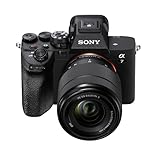
7. Sony Alpha 7 IV – The Hybrid Workhorse
Sony Alpha a7 IV Mirrorless Camera with 28-70mm Lens Black
33MP Full-Frame
4K 60p 10-bit
759 AF Points
BIONZ XR
Dual SD Slots
Pros
- 33MP sensor balances resolution and speed
- Up to 4K 60p 10-bit 4:2:2 with full pixel readout
- Real-time Eye-AF for humans animals and birds
- 8x more powerful BIONZ XR processor
- Includes 28-70mm zoom lens
Cons
- Kit lens limited to f/3.5-5.6 maximum aperture
- 4K 60p has a Super35 crop
- No built-in flash
The Sony Alpha 7 IV is the camera I recommend to photographers who want one body that does everything well. The 33MP sensor hits a sweet spot between resolution for detailed landscapes and file sizes that remain manageable. I shot a two-week travel assignment with this camera and never felt limited by resolution or speed.
Sony redesigned the menu system for the a7 IV and it is a revelation compared to the older menus on the a7 III. The interface is logical, searchable, and customizable. After years of complaining about Sony menus, I can finally say they are good. The touchscreen implementation has also improved with better responsiveness and more touch-controlled functions.
The 759-point phase-detection autofocus system is exceptional. Real-time Eye-AF works on humans, animals, and birds for both photos and movies. I photographed birds in flight with a 200-600mm lens and the tracking accuracy was outstanding. The camera maintained focus lock on a fast-moving hawk even when it passed behind tree branches.
Video capabilities are a significant step up from the a7 III. The 4K 60p 10-bit 4:2:2 recording with full pixel readout provides professional-grade footage. Note that 4K 60p uses a Super35 crop, so your wide-angle lenses will not be as wide. For 4K 30p and below, you get full-frame readout with no crop. The included advanced movie features like Focus Map, Breathing Compensation, S-Cinetone, and S-Log3 give filmmakers serious creative control.
This kit includes the Sony FE 28-70mm f/3.5-5.6 OSS II lens. It is a capable starter lens with optical stabilization that works in tandem with the camera’s sensor-shift stabilization. The variable maximum aperture is limiting for low light, but the lens is sharp enough for everyday photography. Plan to add a fast prime like the 50mm f/1.8 or 35mm f/1.8 for better low-light performance.
Who Gets the Most From the Sony a7 IV
Hybrid photographers and content creators who split their work between stills and video will find this camera handles both excellently. The 33MP resolution satisfies landscape and portrait photographers while the 4K 10-bit video specs please filmmakers. Dual SD card slots provide peace of mind for paid work.
Dedicated sports photographers who need faster burst rates than 10fps should consider the Sony Alpha 7 V with its 30fps blackout-free shooting. The a7 IV’s 10fps is adequate for most action but not class-leading. Budget-conscious buyers who do not need 33MP or 4K 60p can save money with the a7 III.
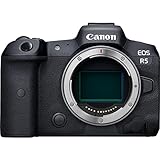
8. Canon EOS R5 – High-Resolution Professional Power
Canon EOS R5 Mirrorless Camera (Body Only), Full-Frame Hybrid Camera, 8K Video, 45 Megapixel CMOS Sensor, DIGIC X Image Processor, Up to 12 FPS, RF Mount, Black
45MP CMOS
8K RAW Video
12fps Mechanical
1053 AF Points
5-Axis IBIS
Pros
- 45MP stacked BSI sensor for maximum detail
- 8K RAW internal recording
- 4K up to 120fps with autofocus
- Dual pixel CMOS AF with 1053 points
- Dual card slots (CFexpress and SD)
Cons
- Overheating risk during extended 8K recording
- Premium price point
- Heavier than some competitors
The Canon EOS R5 delivers 45 megapixels of full-frame resolution with 8K RAW video in a body that fits in a standard camera bag. I used it for a wildlife photography trip and the detail in cropped images was remarkable. A bird I photographed at 600mm filled only a quarter of the frame, but the 45MP sensor gave me enough resolution to crop heavily and still produce a detailed image.
The DIGIC X processor handles the massive data throughput from the 45MP sensor with impressive speed. The mechanical shutter reaches 12fps while the electronic shutter hits 20fps silently. For most wildlife and sports scenarios, 12fps mechanical is more than enough, and the electronic shutter gives you a silent option when noise matters.
The 8K RAW internal recording is a technical achievement that sets this camera apart. I recorded short clips in 8K RAW and the level of detail and grading flexibility is extraordinary. However, the camera does overheat during extended 8K recording sessions. Canon improved the overheating protection through firmware updates, but you should plan your 8K shoots in short bursts with cooldown periods.
Dual Pixel CMOS AF with 1,053 points covers approximately 100 percent of the frame. Subject tracking uses deep learning technology to identify people, animals, and vehicles. The Eye Control AF feature lets you select a focus point by looking at it through the viewfinder, which sounds like a gimmick but actually works after calibration.
The sensor-shift 5-axis image stabilization compensates for up to 8 stops of camera shake with compatible RF lenses. This level of stabilization means you can shoot sharp handheld images at shutter speeds that would normally require a tripod. Dual card slots with one CFexpress and one SD give you flexible storage options including redundant recording.
Is the Canon EOS R5 Worth the Investment
Professional photographers who need maximum resolution for large prints, commercial work, or heavy cropping will benefit from the 45MP sensor. Wildlife and landscape photographers in particular will appreciate the ability to crop aggressively without losing image quality. The 8K video capability future-proofs the camera for creators who need the highest resolution.
Photographers who primarily shoot for social media or web use may find 45MP excessive. The larger file sizes eat storage space and slow down editing workflows. If you do not need 8K video or 45MP resolution, the Canon EOS R6 Mark II offers 90 percent of the R5’s capabilities at a significantly lower price.
9. Sony Alpha 7 V – The New Benchmark for Hybrid Cameras
Sony Alpha a7 V Full-Frame Mirrorless Camera Body AI AF 30fps
33MP Stacked Sensor
30fps Blackout-Free
4K 120p
16-Stop DR
AI Autofocus
Pros
- Partially stacked sensor with 4.5x faster readout
- Blackout-free bursts at 30fps with AF tracking
- New BIONZ XR2 with 30 percent improved AI recognition
- Up to 16 stops of dynamic range
- Up to 7.5-step in-body stabilization
Cons
- Body only no lens included
- Premium price point
- High-resolution modes may slow buffer clearing
The Sony Alpha 7 V represents the most significant upgrade in the a7 series since the original a7. The partially stacked Exmor RS CMOS sensor reads out approximately 4.5 times faster than the a7 IV’s sensor. In practice, this means blackout-free shooting at 30 frames per second with continuous autofocus and auto-exposure tracking. I photographed a cycling race and the shooting experience felt like watching a video of the event frame by frame.
The new BIONZ XR2 processing engine improves AI-based subject recognition by approximately 30 percent over the a7 IV. The system now recognizes and tracks humans, animals, birds, vehicles, and insects. I tested the insect recognition mode on butterflies and was stunned that it actually maintained focus lock on fast-moving subjects. Human pose estimation technology ensures reliable eye recognition even when faces are partially obscured.
Dynamic range reaches up to 16 stops, which is class-leading for a 33MP sensor. I shot a high-contrast sunset scene and recovered both highlight and shadow detail that would have been clipped on lesser sensors. The expanded ISO range runs from 50 to 204800 for stills, with excellent noise control through ISO 12800.
The 5-axis in-body image stabilization provides up to 7.5 steps of correction at the center and 6.5 steps at the periphery. This is among the best stabilization performance of any full-frame camera. Combined with a stabilized lens, you can achieve remarkably sharp handheld shots at very slow shutter speeds.
Video features include 4K 120p recording for slow-motion footage and professional codecs including H.265 and XAVC formats. The camera supports HLG (Hybrid Log-Gamma) for HDR workflows and S-Log3 for maximum dynamic range capture. Dual memory card slots accept either two CFexpress Type A cards or one CFexpress and one SD card.
Who Should Step Up to the Sony Alpha 7 V
Professional photographers and serious enthusiasts who need blackout-free shooting, best-in-class autofocus, and maximum dynamic range will find the a7 V worth the investment. Sports and wildlife photographers benefit most from the 30fps burst with continuous tracking. The camera’s AI processing handles complex scenes with multiple moving subjects better than any a7 before it.
Photographers happy with their a7 IV or a7 III do not necessarily need to upgrade unless they specifically need blackout-free shooting or the improved AI autofocus. The a7 IV remains an excellent camera at a lower price point. The a7 V is for photographers who push their gear to its limits and need every performance advantage.
10. Nikon Z 8 – The Professional Flagship
Nikon Z 8 | Professional Full-Frame mirrorless Stills/Video Hybrid Camera
45.7MP Stacked CMOS
8K 60p Video
120fps Burst
12-bit N-RAW
ProRes RAW
Pros
- 45.7MP stacked CMOS sensor with EXPEED 7
- Internal 8K 60p and 4K 120p video
- Internal 12-bit N-RAW and ProRes RAW recording
- AF detection down to -9EV with subject tracking
- Shooting speeds from 20 to 120fps
Cons
- Premium flagship pricing
- Complex menu system has learning curve
- 1.8 pound body is heavier than mid-range options
The Nikon Z 8 is the most capable camera I have ever used. It combines a 45.7MP stacked CMOS sensor with Nikon’s EXPEED 7 processing engine to deliver performance that rivals cinema cameras at a fraction of the size. This is a professional tool designed for photographers who cannot afford to miss a shot.
The stacked sensor design eliminates rolling shutter artifacts that plague non-stacked sensors during fast shooting. I photographed race cars panning at 200mph and the images showed zero distortion. The sensor reads out fast enough that the electronic shutter can replace the mechanical shutter for nearly every situation. Maximum shutter speed reaches 1/32000 second.
The autofocus system is Nikon’s most advanced, with detection capability down to -9EV. That is dark enough to autofocus in situations where you can barely see your subject. Subject detection identifies people, dogs, cats, birds, cars, bikes, motorcycles, trains, and planes. I tracked birds in flight against a cluttered forest background and the focus never wavered.
Internal 8K 60p video recording with N-RAW and ProRes RAW formats puts this camera in professional cinema territory. The 12-bit RAW video preserves an extraordinary amount of dynamic range and color information. For less demanding workflows, the oversampled 4K UHD footage looks excellent straight out of camera. Multiple frame rates from 24p to 120fps give you creative flexibility.
The camera offers four shooting speed options: 20fps, 30fps, 60fps, and 120fps. At 20fps you get full-resolution 45.7MP RAW images. At 120fps you still get JPEGs at reduced resolution but the speed is unmatched. The buffer handles extended bursts impressively thanks to the dual CFexpress Type B card slots.
Who Needs the Nikon Z 8
Working professionals who photograph sports, wildlife, weddings, or events where missing a critical moment is not an option will benefit from the Z8’s combination of speed, resolution, and autofocus reliability. The 8K video capabilities make it suitable for professional video production work alongside stills photography.
Hobbyists and casual photographers will find the Z 8’s capabilities far exceed their needs. The camera’s size, weight, and complexity make it overkill for travel photography or casual shooting. If you want Nikon quality in a more manageable package, the Nikon Z6 III offers an excellent balance of performance and portability at roughly half the price.
How to Choose the Best Full Frame Camera in 2026?
Choosing between these ten cameras comes down to understanding your needs and matching them to the right combination of sensor, autofocus, video, and build features. Here are the factors that matter most when making your decision.
Sensor Resolution and Type
Full-frame sensors range from 24 to 46 megapixels in this lineup. More megapixels means larger files and more detail, but it does not automatically mean better image quality. A 24MP sensor with excellent dynamic range and low-light performance can outperform a 45MP sensor with mediocre processing. Stacked sensors, like those in the Sony a7 V and Nikon Z 8, read out faster and reduce rolling shutter, which matters for fast action and video.
For most photographers, 24 to 33 megapixels is the practical sweet spot. This range provides enough resolution for large prints and moderate cropping while keeping file sizes manageable. Choose 45MP or higher only if you regularly crop heavily, print very large, or need maximum detail for commercial work.
Autofocus Performance
Autofocus is the feature that most separates modern cameras from older models. The best systems use phase-detection points across nearly the entire sensor area combined with AI-based subject recognition. Canon’s Dual Pixel CMOS AF II, Sony’s Real-time Eye-AF with AI processing, and Nikon’s deep learning subject detection all represent the current state of the art.
Look for cameras with subject detection that matches your photography style. If you shoot wildlife, bird and animal detection is essential. Sports photographers need vehicle and human tracking. Portrait photographers benefit from eye detection with left and right eye selection. Low-light autofocus performance, measured in EV stops, determines how well the camera focuses in challenging conditions.
Video Capabilities
If video matters to you, pay attention to resolution, frame rates, bit depth, and codecs. Full-frame cameras now offer everything from basic 4K 30p 8-bit to internal 8K RAW recording. The Panasonic S5IIX stands out for unlimited recording time and Pro-Res internal capture. The Nikon Z 8 offers 8K 60p with N-RAW. The Sony a7 V provides 4K 120p with professional codecs.
Crop factors in video mode matter more than manufacturers admit. Some cameras apply a crop when shooting 4K 60p or higher, which narrows your field of view. Check whether the camera offers uncropped 4K at the frame rates you need. Also look for features like focus breathing compensation, waveform monitors, and zebras if you do serious video work.
Image Stabilization
In-body image stabilization (IBIS) compensates for camera shake with any lens attached. Most cameras in this guide offer 5-axis IBIS with varying levels of effectiveness. The Sony a7 V leads with up to 7.5 stops of central stabilization. The Canon R6 Mark II and Nikon Z 8 also offer excellent stabilization systems.
The Canon R8 is the only camera in this list without IBIS, which means you need stabilized lenses or a gimbal for smooth handheld video. For photographers who shoot in low light without a tripod, IBIS can make the difference between a sharp image and a blurry one.
Lens Ecosystem
The camera body is only half the equation. Lens availability, pricing, and quality vary significantly between mounts. Sony E-mount has the largest selection of native and third-party lenses. Canon RF-mount has excellent first-party glass but fewer budget third-party options. Nikon Z-mount is growing rapidly with support from Tamron and other manufacturers. The L-mount alliance behind Panasonic includes Sigma and Leica.
Consider total cost of ownership including the lenses you will want over the next few years. A cheaper camera body with expensive lenses may cost more than a premium body with affordable lens options. Research the specific lenses you need before committing to a camera system.
DSLR vs Mirrorless Decision
Every camera in this guide is mirrorless, and that is not an accident. Mirrorless cameras have surpassed DSLRs in autofocus performance, burst shooting speeds, and video capabilities. Electronic viewfinders now match or exceed optical viewfinders in brightness and detail. The main advantage DSLRs retain is battery life, but modern mirrorless cameras have closed much of that gap.
If you currently shoot with a DSLR and have a collection of lenses, mirrorless cameras from the same brand can use your existing lenses with an adapter. Canon EF to RF, Nikon F to Z, and Sony A to E adapters all work well with minimal performance loss. The transition from DSLR to mirrorless is easier than ever.
FAQs
What are the best full frame cameras?
The best full frame cameras in 2026 include the Sony Alpha 7 V for overall performance, the Canon EOS R8 for value, and the Nikon Z 8 for professional use. For budget buyers, the Nikon Z 5 offers the most features per dollar. For video creators, the Panasonic LUMIX S5IIX leads with 5.8K Pro-Res recording and unlimited capture time.
Is a full frame camera the best?
Full frame cameras offer the best balance of image quality, low-light performance, and dynamic range for most photographers. The larger sensor captures more light than APS-C or Micro Four Thirds alternatives. However, the best camera depends on your needs. Crop-sensor cameras are lighter, cheaper, and offer more telephoto reach for wildlife photography.
Do professionals use full-frame cameras?
Yes, the majority of professional photographers use full-frame cameras for weddings, portraits, landscapes, sports, and commercial work. Professional favorites include the Canon EOS R5, Sony Alpha 7 V, and Nikon Z 8. These cameras offer the resolution, autofocus speed, build quality, and dual card slots that working photographers require.
What are the disadvantages of a full frame camera?
Full frame cameras are more expensive than crop-sensor alternatives, with bodies starting around $1,300. They are larger and heavier than APS-C cameras. Full-frame lenses are also pricier and bulkier. The cameras demand more storage space due to larger image files, and the shallower depth of field at equivalent apertures can be challenging for beginners to manage.
What is the difference between full frame and mirrorless?
These terms describe different things. Full frame refers to sensor size (36mm x 24mm), while mirrorless refers to camera design that removes the optical mirror found in DSLRs. Most modern full frame cameras are mirrorless. You can have full-frame DSLRs (like the Nikon D850) and full-frame mirrorless cameras (like the Sony a7 series). The comparison that matters today is mirrorless versus DSLR, and mirrorless has largely won.
Final Thoughts on the Best Full Frame Cameras
Finding the best full frame cameras comes down to matching your shooting style with the right sensor, autofocus system, and lens ecosystem. For most photographers, the Sony Alpha 7 V and Canon EOS R6 Mark II represent the best all-around performance. Budget-conscious buyers get outstanding value from the Canon EOS R8 and Nikon Z 5. Professional photographers who need maximum resolution and speed should look at the Canon EOS R5 and Nikon Z 8.
The camera market moves fast, but every model in this guide will remain relevant for years. Pick the system that fits your budget and shooting needs, invest in quality glass, and spend your time making photographs instead of worrying about gear. The best camera is the one you have with you, and any of these ten bodies will serve you well in 2026 and beyond.