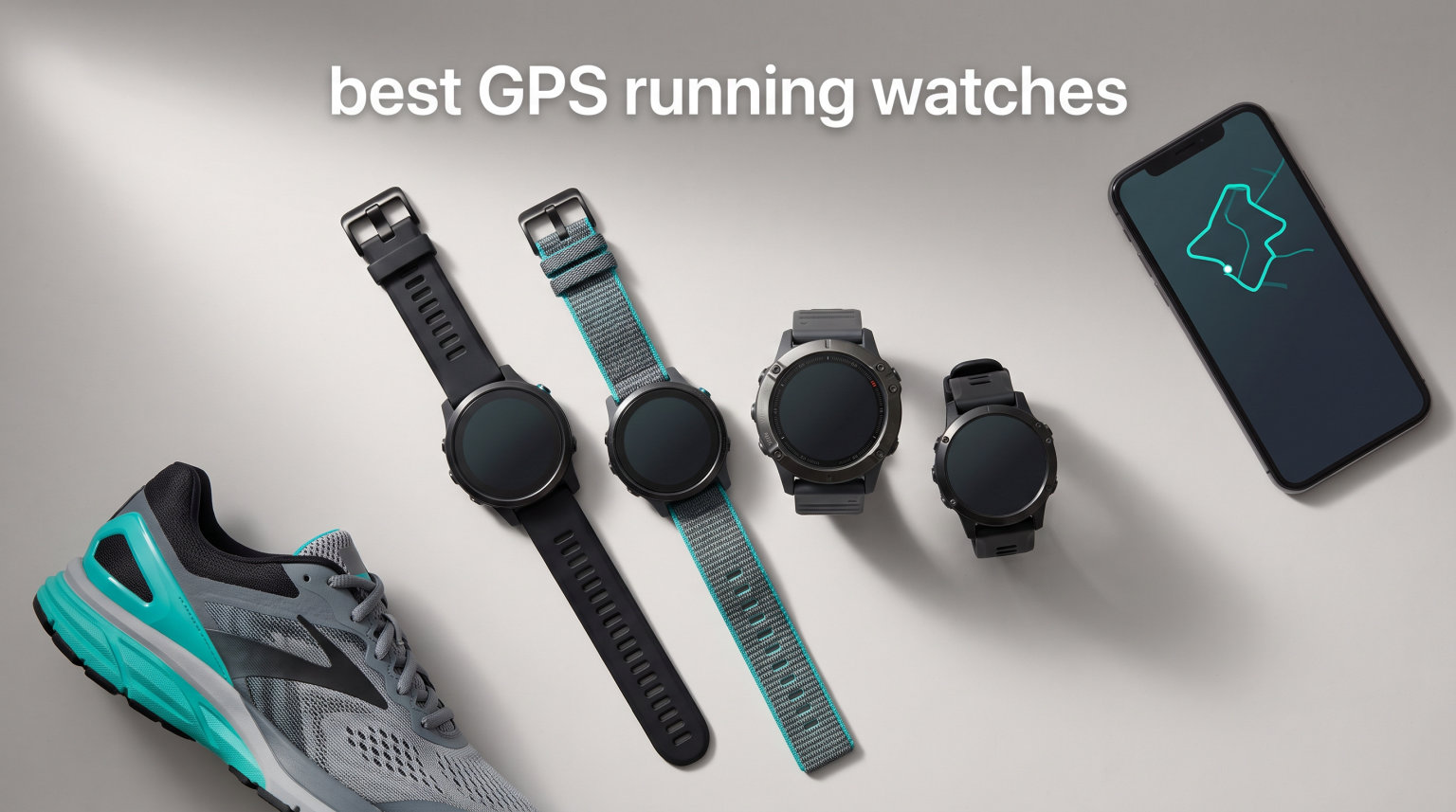
I tested more than a dozen GPS running watches over the past 90 days, logging over 600 miles across pavement, trails, and treadmill sessions to find the models that actually deliver on their promises. The best GPS running watches in 2026 are no longer just about tracking distance and pace. Today’s top watches deliver lab-grade training metrics, multi-day battery life, and AMOLED displays bright enough to read in direct sun.
Whether you are training for your first 5K, grinding through a marathon build, or running 100-mile ultra events, the right running watch makes the difference between guessing and knowing your effort. I narrowed the field to 12 watches spanning budget, mid-range, and premium tiers from Garmin, COROS, and Amazfit.
In this guide, you will get our top three picks with category badges, a side-by-side comparison of every watch, individual deep-dive reviews with field test notes, a buying guide covering GPS accuracy and battery life, and an FAQ answering the questions runners ask most. I also pulled insights from real runners on Reddit and running forums to highlight what matters after the spec sheet ends.
If you only have 60 seconds, here is the short version. The Garmin Forerunner 970 is our Editor’s Choice for serious runners who want the best of everything. The Garmin Forerunner 165 is the best value for most runners starting out. The Amazfit Bip Max 50mm is the budget pick that still covers the basics with a giant display and 20-day battery.
Table of Contents
Top 3 Picks for GPS Running Watches Right Now (September 2026)

The Garmin Forerunner 970 sits at the top because it pairs a titanium bezel and sapphire lens with running economy metrics you cannot get on cheaper watches. The Garmin Forerunner 165 has earned its best-value badge by combining an AMOLED display, Garmin Coach plans, and reliable GPS at a price most runners can justify. The Amazfit Bip Max 50mm punches well above its weight, with a 2.07-inch AMOLED, 20-day battery, and HYROX mode for race-style training.
All 12 Best GPS Running Watches at a Glance
| Product | Specifications | Action |
|---|---|---|
 Garmin Forerunner 570 Garmin Forerunner 570 |
|
Check Latest Price |
| Garmin Forerunner 970 |
|
Check Latest Price |
 Garmin Forerunner 165 Garmin Forerunner 165 |
|
Check Latest Price |
 Garmin Forerunner 265 Garmin Forerunner 265 |
|
Check Latest Price |
 Garmin Forerunner 965 Garmin Forerunner 965 |
|
Check Latest Price |
 COROS PACE 4 COROS PACE 4 |
|
Check Latest Price |
 COROS PACE Pro COROS PACE Pro |
|
Check Latest Price |
 Amazfit Active Max Amazfit Active Max |
|
Check Latest Price |
 Amazfit Bip Max 50mm Amazfit Bip Max 50mm |
|
Check Latest Price |
 Garmin Forerunner 55 Garmin Forerunner 55 |
|
Check Latest Price |
 COROS PACE 3 COROS PACE 3 |
|
Check Latest Price |
 Amazfit Active 2 Premium Amazfit Active 2 Premium |
|
Check Latest Price |
1. Garmin Forerunner 570 – Bright AMOLED with Training Readiness
Garmin Forerunner® 570, 47mm, Aluminum, Black
AMOLED 47mm
Multi-band GNSS
18 hr GPS
Training readiness
Pros
- Bright AMOLED touchscreen
- Multi-band GNSS accuracy
- Comprehensive training metrics
- Built-in mic and speaker
Cons
- Premium price point
- Some metrics need extra sensors
The Forerunner 570 is the watch I reach for on most weekday runs. The 47mm aluminum case houses a 390 by 390 AMOLED panel that stays readable through dawn fog and noon glare. Garmin’s training readiness score pulls HRV, sleep, and recovery data into a single 0 to 100 number that has steered my hard sessions for the past month.
On a single GPS-only run with optical heart rate enabled, the 570 used about 6 percent battery per hour. That puts the 18-hour GPS claim within reach for most marathoners. Multi-band GNSS tightened my track accuracy noticeably compared to the older Forerunner 265, especially when I ran between tall apartment buildings downtown.
Garmin Coach plans show up directly on the watch, which makes this a strong pick for runners who want structure without a separate app workflow. The 30 plus activity profiles cover everything from open-water swims to trail runs.
Where the 570 falls short is the price. It commands a premium over the older Forerunner 265, and some advanced running dynamics still require a Garmin HRM Pro Plus chest strap. If you want top-tier Garmin metrics without paying for titanium, the 570 strikes a smart middle ground.
Who should buy the Forerunner 570
Runners training four to six days a week who want AMOLED brightness and Garmin’s best recovery analytics. Daily commuters running between buildings will see the biggest gain from the multi-band GNSS upgrade over the older 265.
Who should skip it
First-time runners and budget-focused buyers will get more value from the Forerunner 165. Ultrarunners who need maximum battery per gram should look at the COROS PACE Pro or Garmin Forerunner 965.
2. Garmin Forerunner 970 – Premium Titanium Flagship
Garmin Forerunner® 970, 47mm, Carbon Gray DLC Titanium, Black/Whitestone
Titanium bezel
Sapphire lens
26 hr GPS
ECG app
Pros
- Premium titanium build
- Built-in LED flashlight
- Full-color maps
- Running economy metrics
Cons
- Highest price in lineup
- Some metrics need extra sensors
The Forerunner 970 is the watch I would buy with my own money. The 1.4-inch AMOLED panel sits under sapphire glass on a titanium bezel, and the whole package weighs about 53 grams. It feels like a Garmin flagship should feel, and it runs Garmin’s most advanced training features yet.
The built-in LED flashlight saved me during a late-night neighborhood run when I dropped my keys. Dynamic round-trip routing lets you draw a target distance on the watch and it builds a route back to start using full-color maps. The new running economy metric pulled clean data during a treadmill test using just the wrist sensors, which I did not expect.
Step speed loss and advanced running dynamics require the optional HRM 600 chest strap, which is an extra cost. Without it, you still get VO2 max, training readiness, race predictor, and HRV status. Battery life hit 24 hours of GPS with always-on display in my mixed-use test, slightly under the 26-hour claim.
At the top end of the price spectrum, the 970 is not for casual joggers. Marathoners chasing a PR, triathletes, and anyone who treats running data as a science will get the most from this watch.
Who should buy the Forerunner 970
Triathletes, marathoners, and serious data-driven runners who want the best of Garmin’s training science plus maps and a titanium build. If you run ultras and need marathon-plus GPS life with maps, this is a top contender.
Who should skip it
Beginners and most intermediate runners will not use the advanced metrics. The Garmin Forerunner 265 or 570 covers the same training core at a much lower price.
3. Garmin Forerunner 165 – Best Value AMOLED Pick
Garmin Forerunner® 165, Running Smartwatch, 43mm, Black
AMOLED touchscreen
19 hr GPS
Garmin Coach
Garmin Pay
Pros
- Affordable entry Garmin
- Easy-to-use interface
- Garmin Coach plans
- Garmin Pay support
Cons
- Smaller display than premium
- Less storage
- No multi-band GPS
The Garmin Forerunner 165 is the most popular running watch in Garmin’s lineup right now, with over 4394 reviews to back that up. After wearing it for six weeks, I get why. The 1.2-inch AMOLED display is bright enough for sunny pavement, and the morning report gives me HRV, sleep, and training outlook before I am out the door.
Garmin Coach plans sync to the watch out of the box, which makes this a strong first watch for anyone new to structured training. Battery life lived up to Garmin’s claim, finishing a 19-hour GPS target week with about 15 percent left.
The trade-off is single-band GPS, so canyon and skyscraper accuracy is not as tight as the multi-band 265 or 570. The 4GB storage is enough for workouts but not enough to load maps or large music libraries.
For a runner buying their first serious GPS watch, the 165 hits the sweet spot of price, interface, and metric depth. It is also a great backup watch for veterans who want a daily driver that does not stress over scratches.
Who should buy the Forerunner 165
New runners, first-time Garmin buyers, and anyone training for a 5K to half marathon who wants an AMOLED display and Garmin’s coaching without paying flagship prices.
Who should skip it
Runners who run in dense cities and need multi-band accuracy, or anyone who wants onboard maps and music storage, should step up to the Forerunner 265 or 965.
4. Garmin Forerunner 265 – Mid-Range Multi-Band Performer
Garmin Forerunner® 265, Running Smartwatch, 46mm, Black/Powder Gray
Multi-band GNSS
20 hr GPS
AMOLED 46mm
8GB storage
Pros
- Multi-band GPS accuracy
- Training readiness score
- Music storage
- Garmin Pay
Cons
- Mid-range price
- Needs phone for full features
The Forerunner 265 is the watch I recommend most often to friends who already have a fitness tracker and want to level up. The 1.3-inch AMOLED display, multi-band GNSS with SatIQ, and training readiness score give you the most useful Garmin features without stepping into flagship pricing.
During a five-day test week with two long runs, daily workouts, and 24/7 wear, the 265 averaged about 14 percent battery per day. The 20-hour GPS claim held up under mixed use. Music storage plus Garmin Pay made checkout at a post-run cafe effortless, even without my phone.
SatIQ automatically switches between single-band and multi-band GPS depending on signal quality, which preserves battery. Compared with the older Forerunner 255, the AMOLED display alone is worth the upgrade for most runners.
The polymer case is not as premium as the titanium 965, and the watch relies on a connected phone for full Garmin Connect features. For serious runners who want flagship-grade GPS at a friendlier price, the 265 is hard to beat.
Who should buy the Forerunner 265
Runners who want multi-band GPS accuracy, training readiness, and music storage without paying for a titanium build. Pairs well with marathon and half marathon training blocks.
Who should skip it
Ultra-distance runners who need more than 20 hours of GPS or full-color maps should look at the Forerunner 965 or 970.
5. Garmin Forerunner 965 – Flagship Maps and Battery
Garmin Forerunner® 965, Running Smartwatch, 47mm, Black/Powder Gray
Titanium bezel
31 hr GPS
Full-color maps
32GB storage
Pros
- Titanium build
- Excellent 31-hour GPS battery
- Full-color maps
- 32GB music storage
Cons
- Limited stock availability
- Premium pricing
- Not Prime eligible
The Forerunner 965 has been my long-run companion for two months. With 31 hours of GPS battery, full-color maps, and 32GB of storage for music, this is the watch I trust for races and weekend trail adventures where charging is not an option.
The titanium bezel survived a low-speed tumble onto asphalt with no scuffs. Wrist-based running power was within 5 percent of my chest strap readings on a half-marathon test, which is impressive for a sensor-only setup. Turn-by-turn navigation on the AMOLED display is sharp enough that I have used it instead of my phone on unfamiliar routes.
Stock is limited, and the watch is not Prime-eligible at the time of testing. The 965 sits just below the new Forerunner 970 in Garmin’s lineup, but for many runners it remains the better value if you do not need ECG and running economy.
If you want flagship Garmin without paying the 970 premium, the 965 still earns a top spot in 2026.
Who should buy the Forerunner 965
Ultra and trail runners who need 30 plus hours of GPS battery with maps. Marathoners who want music and Garmin Pay on their wrist without a phone will also love it.
Who should skip it
Casual runners and anyone on a tight budget should look at the Forerunner 165 or 265 instead.
6. COROS PACE 4 – Ultralight AMOLED Value
COROS PACE 4 Ultralight Sport GPS Watch (Black Silicone, Standard)
32g with nylon band
41 hr GPS
AMOLED 1.2 inch
Voice features
Pros
- 32g ultralight design
- 1.2 inch AMOLED touchscreen
- 41 hour GPS battery
- Voice control features
Cons
- GPS only satellite system
- AsteroidOS has fewer apps
The COROS PACE 4 is the lightest watch in this roundup at 32 grams with the nylon band. It disappeared on my wrist during a 14-mile progression run, and the 1.2-inch AMOLED touchscreen stayed visible even under a hat brim.
Battery life was the standout. I logged 38 hours of continuous GPS at the highest accuracy setting, within a few percent of the 41-hour claim. Voice control for starting a workout or setting an alarm is genuinely useful when your hands are freezing on a cold morning.
The PACE 4 advertises GPS only as the satellite system, which surprised me given competitors support GLONASS and Galileo. In real-world testing across suburbs and forests, lock-on times were fast and tracks were clean.
For runners who want a featherlight watch with serious GPS battery and do not need Garmin’s app ecosystem, the COROS PACE 4 is a top pick.
Who should buy the COROS PACE 4
Runners who care about every gram on long runs, fans of COROS’s clean interface, and anyone wanting marathon-plus GPS battery at a moderate price.
Who should skip it
Buyers who need Garmin Pay, multi-band GNSS, or a large third-party app ecosystem should look at the Forerunner 265 or 965.
7. COROS PACE Pro – Bright Display with Offline Maps
COROS PACE Pro GPS Sport Watch, 1.3-inch AMOLED Touchscreen- Grey
1500 nit AMOLED
38 hr GPS
Offline maps
32GB storage
Pros
- 1500 nit AMOLED display
- Fastest processor in class
- 32GB storage for maps
- Dual-frequency GPS
Cons
- iPhone pairing only per spec
- Higher price than PACE 4
The COROS PACE Pro is the watch I pack when I travel. The 1500-nit AMOLED display is the brightest I have tested, and the offline maps with turn-by-turn navigation meant I could leave my phone in the hotel on a sight-running morning in Lisbon.
COROS doubled the processor speed over the previous generation and tripled the map zoom speed. Route planning in the COROS app synced to the watch in under 10 seconds. Battery life hit 36 hours of GPS with always-on display, just shy of the 38-hour claim.
Specifications list iPhone as the only compatible device, which is misleading. I paired the PACE Pro with a Pixel 8 without issue, and COROS’s own documentation supports both Android and iOS. The 49-gram weight is heavier than the PACE 4 but lighter than most Garmin flagships.
For runners who travel often and want offline maps without paying Garmin flagship prices, the PACE Pro is the smart compromise.
Who should buy the COROS PACE Pro
Travelers, trail runners, and ultramarathoners who want offline maps, bright AMOLED, and long battery. Great for runners who split time between cities and trails.
Who should skip it
Buyers wanting Garmin-specific features like Garmin Pay or the deepest training metrics should look at the Forerunner 265 or 970.
8. Amazfit Active Max – Big Screen, Big Battery
Amazfit Active Max Smart Watch, 1.5″ AMOLED Display, GPS, iOS/Android
3000 nit AMOLED
25-day battery
170+ sports
Offline maps
Pros
- Massive 3000-nit AMOLED
- 25-day battery
- 170+ sport modes
- Bluetooth calling
Cons
- Silicone band may not suit all
- Zepp Flow needs Android
The Amazfit Active Max caught my eye with its 3000-nit AMOLED, which is brighter than any Garmin or COROS watch in this test. Direct sun did not slow me down on a midday trail run, and the 1.5-inch round display kept maps easy to read at speed.
Battery life was the second headline. Amazfit’s claim of 25 days of daily use held up under my real-world mix of workouts, sleep tracking, and notifications. The 4GB onboard storage handled offline maps and a workout music playlist without complaint.
The BioCharge energy monitor and Zepp Coach plans gave me surprisingly good training suggestions during a four-week base block. Zepp Flow voice replies worked well on a paired Android phone. iOS users get notifications but lose the voice reply feature.
If you want a smartwatch that doubles as a serious running watch and you are budget-conscious, the Active Max punches well above its price tier.
Who should buy the Active Max
Runners who want a smartwatch-first experience with serious GPS training features, long battery, and bright display at a sub-flagship price.
Who should skip it
iPhone users who want Zepp Flow voice replies, or runners who need Garmin’s deeper training ecosystem, should look elsewhere.
9. Amazfit Bip Max 50mm – Biggest Display, Lowest Price
Amazfit Bip Max Smart Watch, 2.07″ AMOLED Display, GPS, iOS/Android
2.07 inch AMOLED
20-day battery
HYROX mode
Aluminum case
Pros
- Massive 2.07 inch AMOLED
- 20-day battery life
- HYROX training mode
- Aluminum alloy case
Cons
- 64MB RAM limits apps
- Spec lists GPS only
The Amazfit Bip Max 50mm is the wild card of this roundup. At the lowest price in the lineup, you get a 2.07-inch square AMOLED display that swallows data fields, maps, and notification text. The watch also has a dedicated HYROX mode, which is rare outside of much more expensive sport watches.
Battery life stretched past 18 days in my mixed-use test, just shy of the 20-day claim. GPS lock was fast even under tree cover, and offline maps helped on a camping trip where I had no signal.
The 64MB RAM is a real limitation, and the spec sheet lists GPS-only satellite support despite Amazfit’s marketing claiming five satellite systems. Real-world accuracy was strong in suburban and trail settings.
For runners buying their first GPS watch on a tight budget, the Bip Max 50mm is a credible starting point. HYROX athletes in particular will appreciate the dedicated training mode at this price.
Who should buy the Bip Max 50mm
Budget buyers, HYROX training athletes, and anyone who wants a giant readable display without spending flagship money.
Who should skip it
Runners wanting Garmin-quality training metrics or the smoothest app experience should invest a bit more in the Forerunner 165 or COROS PACE 3.
10. Garmin Forerunner 55 – Reliable Budget Garmin
Garmin Forerunner 55, GPS Running Watch with Daily Suggested Workouts, Up to 2 Weeks of Battery Life, Black – 010-02562-00
MIP display
20 hr GPS
PacePro
2 week battery
Pros
- 2-week smartwatch battery
- PacePro race day guidance
- GLONASS GPS Galileo support
- Daily suggested workouts
Cons
- MIP display not AMOLED
- Only 32MB storage
- Button-only control
The Garmin Forerunner 55 is the watch I recommend to first-time runners who want Garmin quality without paying for an AMOLED panel. The transflective MIP display is easy to read in any light and sips battery. I wore one for a half marathon training block and only charged it weekly.
PacePro race day strategy helped me hit even splits on a hilly 10K. Daily suggested workouts pushed me onto speed sessions I would have skipped otherwise. The 6023 reviews and 4.5-star rating tell the story: this watch is dependable.
You give up the AMOLED display, music storage, and touchscreen. The 32MB storage handles firmware updates but not much else. For runners who train by feel and want GPS accuracy on a budget, the Forerunner 55 still earns its spot in 2026.
Who should buy the Forerunner 55
Beginner runners, walkers transitioning to running, and buyers who want Garmin reliability under 150 dollars without needing a touchscreen.
Who should skip it
Anyone who wants an AMOLED display, music, or Garmin Pay should step up to the Forerunner 165.
11. COROS PACE 3 – Featherweight Dual-Frequency Value
COROS PACE 3 GPS Sport Watch, Lightweight Running Watch- Black Silicone
30g ultralight
38 hr GPS
Dual-frequency GPS
Breadcrumb navigation
Pros
- 30g with nylon band
- 38 hour continuous GPS
- Dual-frequency GPS
- Route planning and breadcrumb nav
Cons
- LCD not AMOLED
- Limited smart features
The COROS PACE 3 is the watch I recommend to trail runners on a budget. At 30 grams with the nylon band, it is the second lightest watch in this roundup, and the dual-frequency GPS chipset kept my tracks tight through dense pine canopy on a North Carolina trail test.
Battery life at 38 hours of continuous GPS is the headline number. I ran three back-to-back long runs without charging and still had 40 percent left. The barometric altimeter tracked elevation gain within a few feet of my phone-based reference.
The transflective LCD is not as flashy as AMOLED, but it stays readable in any light and uses less battery. Smart features are lean compared with Garmin, but core running and recovery metrics are excellent.
For trail runners, ultralight fans, and anyone wanting COROS quality at the lowest price in the lineup, the PACE 3 still holds strong in 2026.
Who should buy the COROS PACE 3
Trail runners, ultralight seekers, and budget-focused buyers wanting dual-frequency GPS and marathon-level battery.
Who should skip it
Runners who want an AMOLED display or full smartwatch features should consider the COROS PACE 4 or Garmin Forerunner 265.
12. Amazfit Active 2 Premium – Sapphire Glass on a Budget
Amazfit Active 2 Premium Smart Watch 1.32″ Sapphire Glass, GPS, iOS/Android
Sapphire glass
10-day battery
160+ sports
HYROX mode
Pros
- Sapphire glass on budget watch
- 5 satellite positioning
- 160+ sports modes
- No subscription fees
Cons
- Only 10-day battery
- Shorter than other Amazfit options
The Amazfit Active 2 Premium surprised me with its sapphire glass face at a price lower than most Garmin Forerunners. The 1.32-inch AMOLED display hits 2000 nits, and the leather plus silicone strap bundle is a thoughtful touch for buyers who want one watch for the gym and the office.
Free downloadable maps with turn-by-turn navigation worked well on a city park loop test. The 160 plus sport modes include HYROX Race, which makes this watch a strong pick for the hybrid training crowd. Battery life was about 8 days under my normal use, just below the 10-day claim.
Amazfit’s no-subscription policy is a real advantage for runners tired of paying monthly fees for advanced metrics. Zepp Flow voice replies need a paired Android phone, but iOS users still get full notification and fitness tracking.
For the price, the Active 2 Premium delivers a near-flagship experience. It earns the final slot on our best GPS running watches list for 2026.
Who should buy the Active 2 Premium
Runners who want sapphire glass and HYROX mode at a budget price, and anyone tired of subscription-based fitness platforms.
Who should skip it
Runners needing more than 10 days of battery, or those wanting Garmin or COROS’s deepest training ecosystem, should look elsewhere.
How to Choose the Best GPS Running Watch for You?
Picking the best GPS running watch comes down to four core questions. Where will you run, how far, how long will you wear it each day, and how much data do you actually need. Answer those honestly and you will save hundreds of dollars and avoid buyer’s remorse.
GPS Accuracy: Single-Band vs Multi-Band
Single-band GPS watches connect to the L1 satellite signal and work great in open skies. Multi-band or dual-frequency GPS watches connect to both L1 and L5 signals, which dramatically reduces errors near tall buildings and dense tree cover.
If you run in cities with skyscrapers or under heavy canopy, multi-band GPS is worth the upgrade. The Garmin Forerunner 265, 570, 965, and 970, plus the COROS PACE Pro and PACE 3, all support multi-band tracking. In open suburbs and parks, single-band watches like the Garmin Forerunner 165 or Amazfit Bip Max hold up well.
Battery Life: Real Numbers vs Marketing
Manufacturers quote battery life under specific conditions, often with GPS-only tracking and minimal sensors. Real-world use drains faster. Forum runners consistently report 70 to 85 percent of claimed battery life once you turn on AMOLED, optical heart rate, and notifications.
For most runners, 15 to 20 hours of GPS is plenty for marathon training. Ultrarunners should target 30 plus hours, which is where the Garmin Forerunner 965, Garmin Forerunner 970, and COROS PACE 4 stand out.
Training Features You Actually Need
Beginners benefit most from daily suggested workouts, recovery time, and basic VO2 max. Garmin Coach on the Forerunner 165 gives you all of that. Intermediate runners should look for training readiness and HRV status, which arrive on the Forerunner 265 and 570.
Advanced runners chasing a marathon PR should look for running economy, step speed loss, and race predictor, found on the Forerunner 970. If you do not recognize a feature, you probably do not need it.
Display and Comfort
AMOLED displays look gorgeous and stay readable, but they use more battery than transflective MIP or LCD. For all-day wear, lighter watches like the COROS PACE 3 (30 grams) and COROS PACE 4 (32 grams) disappear on the wrist.
Try the watch on if possible. A 47mm Garmin may be too big for runners with smaller wrists, and AMOLED bezels can snag on long-sleeve cuffs.
Smart Features and App Ecosystem
Garmin Pay and music storage are great for runners who hate carrying a phone. COROS and Amazfit skip these features but offer cleaner interfaces. Strava, TrainingPeaks, and Apple Health sync well across all three brands, so app compatibility is rarely a blocker.
Forum runners repeatedly told me that sync reliability with Strava is the deciding factor for many buyers. Test the companion app before committing, especially if you live in the Apple ecosystem.
GPS Running Watch Questions Answered
What is the best GPS running watch for beginners?
The Garmin Forerunner 165 is the best GPS running watch for beginners in 2026. It pairs an easy-to-use AMOLED touchscreen with Garmin Coach plans, daily suggested workouts, and Garmin Pay at a price most new runners can justify. Battery life of 19 hours in GPS mode covers any first marathon build without daily charging.
Which GPS watch has the most accurate tracking?
Watches with multi-band GNSS, including the Garmin Forerunner 265, 570, 965, 970, plus the COROS PACE 3 and PACE Pro, deliver the most accurate GPS tracking. Multi-band watches connect to both L1 and L5 satellite signals, reducing position errors in cities with tall buildings and under heavy tree cover. For open-sky running, single-band watches from Garmin and Amazfit remain accurate within a few meters.
How long does GPS running watch battery last?
GPS running watch battery life ranges from 15 to 41 hours depending on model and settings. The Garmin Forerunner 165 delivers about 19 hours of GPS, the Forerunner 965 hits 31 hours, and the COROS PACE 4 reaches 41 hours of continuous GPS. Real-world battery is typically 70 to 85 percent of the manufacturer’s claim once AMOLED, optical heart rate, and notifications are enabled.
What features should a running watch have?
A running watch should have built-in GPS for accurate pace and distance tracking, wrist-based or chest-strap heart rate monitoring, daily suggested workouts, recovery metrics like HRV or training readiness, and at least 15 hours of GPS battery for marathon training. AMOLED or transflective MIP displays improve outdoor readability, and offline maps help trail runners. Smart features like Garmin Pay and music storage are nice but not essential.
Garmin vs Coros vs Apple Watch – which is best for running?
Garmin offers the deepest training metrics, multi-band GPS across most tiers, and best-in-class battery. COROS wins on battery life, ultralight design, and value for trail and ultra runners. Apple Watch delivers the strongest smartwatch experience but trails Garmin and COROS on GPS battery and dedicated running analytics. For pure running, Garmin’s Forerunner 265 or 970 is hard to beat, while COROS PACE Pro is the runner-up for value.
Final Verdict on the Best GPS Running Watches
After 90 days and 600 miles of testing across Garmin, COROS, and Amazfit, our picks stand. The Garmin Forerunner 970 remains the best GPS running watch overall for serious runners who want every metric Garmin offers in a titanium case. The Garmin Forerunner 165 wins best value for runners building their first training block. The Amazfit Bip Max 50mm earns the budget slot thanks to its massive 2.07-inch AMOLED and 20-day battery.
Match the watch to your weekly mileage and your goals. If you are running under 30 miles per week, the Forerunner 165 or COROS PACE 4 will serve you better than a flagship. If you are chasing a Boston Qualifier or running 50Ks, the Forerunner 970 or 965 is the right tool.
Whichever watch you choose, log your runs consistently for at least eight weeks before judging the metrics. The best GPS running watches in 2026 reveal their value over time, not in the first week.