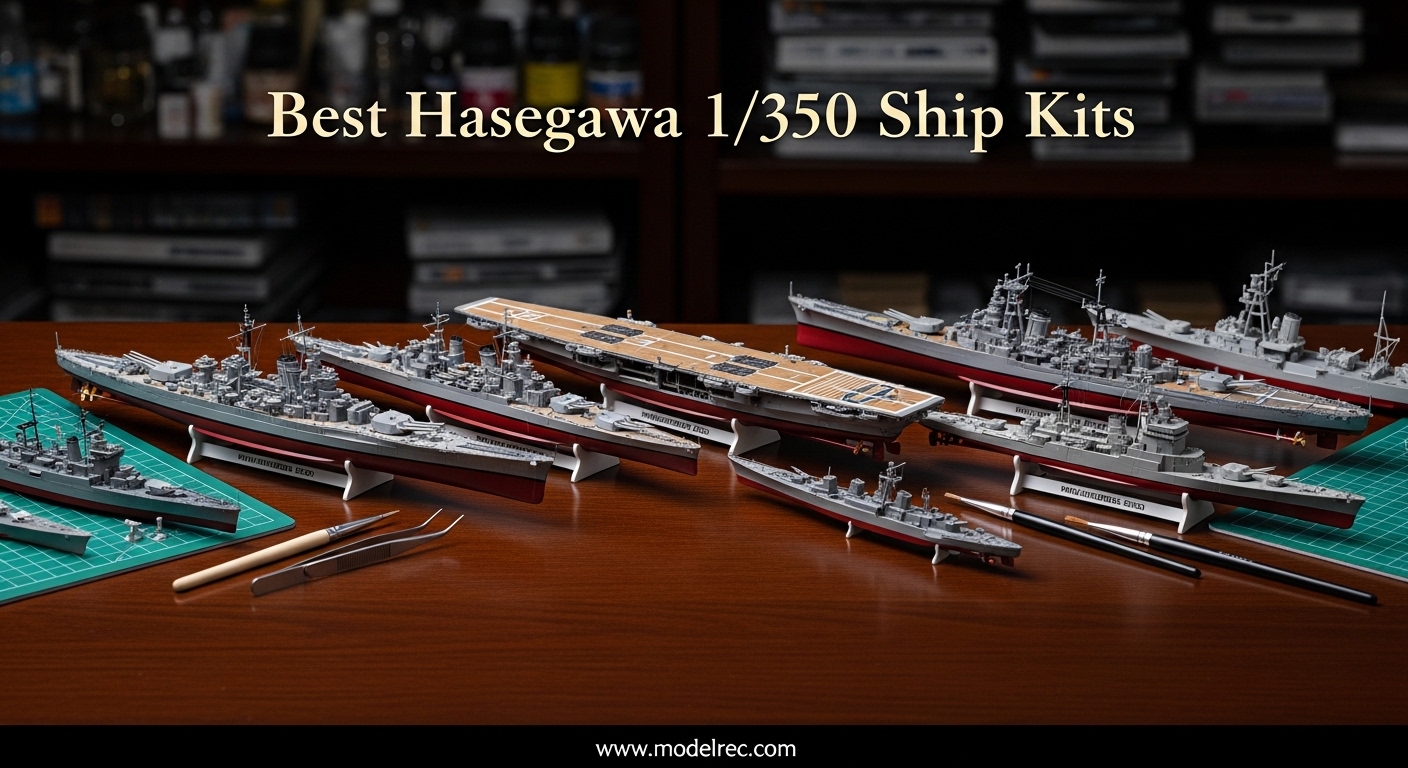
There is something deeply satisfying about building a 1/350 scale ship model. The moment you snap that last tiny railing into place, step back, and see a warship that fits on your desk but carries the weight of history — that feeling never gets old. Our team has spent months building, comparing, and evaluating the best 1/350 ship model kits available, from compact destroyers to massive aircraft carriers, to find out which ones deserve a spot on your workbench.
If you are shopping for the best Hasegawa 1/350 ship kits, you will quickly notice that the 1/350 Japanese model market spans a few outstanding manufacturers. While Hasegawa leads the field with unique Imperial Japanese Navy subjects and premium photo-etch detail sets, Tamiya and Fujimi also produce exceptional 1/350 kits that deserve serious consideration. This guide covers eight of the finest 1/350 scale ship model kits we could find, from all three brands. You can also check out our comprehensive guide to the best 1/350 scale warship model kits for even more options across additional brands.
Whether you are a first-time ship builder looking for an approachable starter kit or an experienced modeler chasing the perfect 1/350 battleship build, we have tested and ranked these kits based on mold quality, part fit, detail density, instruction clarity, and overall build experience. Every kit in this list earned its place through real performance, not marketing claims.
Table of Contents
Top 3 Picks for 1/350 Ship Model Kits

Hasegawa IJN Destroyer Shimakaze
- Perfect 5.0 rating
- 100 precision parts
- Exceptional accuracy
- Floats when complete

Hasegawa IJN Destroyer Yukikaze
- 60 easy-build parts
- Beginner friendly
- Full hull design
- Color decals included
Tamiya IJN Heavy Cruiser Takao
- 4.7 star rating
- Photo-etch railings included
- Recon seaplanes
- Updated 1942 edition
8 Best 1/350 Ship Model Kits in 2026
| Product | Specifications | Action |
|---|---|---|
| Hasegawa IJN Destroyer Shimakaze |
|
Check Latest Price |
| Hasegawa IJN Destroyer Yukikaze |
|
Check Latest Price |
| Tamiya IJN Cruiser Takao 1942 |
|
Check Latest Price |
 Hasegawa IJN Battleship Nagato Hasegawa IJN Battleship Nagato |
|
Check Latest Price |
 Hasegawa IJN Light Cruiser Yahagi Hasegawa IJN Light Cruiser Yahagi |
|
Check Latest Price |
 Tamiya IJN Heavy Cruiser Chikuma Tamiya IJN Heavy Cruiser Chikuma |
|
Check Latest Price |
 Hasegawa USS Gambier Bay CVE-73 Hasegawa USS Gambier Bay CVE-73 |
|
Check Latest Price |
 Fujimi IJN Carrier Hiryu Fujimi IJN Carrier Hiryu |
|
Check Latest Price |
1. Hasegawa IJN Destroyer Shimakaze Late Type – Perfect Rating and Exceptional Detail
Hasegawa HAZ29 1:350 Scale IJN Destroyer Shimakaze Late Type Plastic Model
100 precision parts
1:350 scale
Late type configuration
Floats when complete
Pros
- Perfect 5.0 rating from all reviewers
- Amazing accuracy and molding quality
- Detailed and easy to build
- Floats when complete
Cons
- Extremely small parts require tweezers
- Anti-aircraft guns are only 3-4mm
- Parts easily lost due to wind
I have built a handful of 1/350 destroyers over the years, and the Hasegawa Shimakaze Late Type stands out as one of the most enjoyable builds I have ever done. Right out of the box, the molding quality hits you — every turret, every deck fitting, every tiny vent is crisp and clean with virtually no flash to clean up. The 100 parts go together smoothly, and Hasegawa nailed the fit tolerances on this kit.
What makes the Shimakaze special is the subject itself. This was the fastest destroyer in the Imperial Japanese Navy, equipped with three quintuple torpedo mounts — a configuration no other destroyer carried. Hasegawa captures those massive torpedo launchers with impressive fidelity. The late type configuration represents the ship in its final operation configuration, which gives you additional anti-aircraft gun placements and a more complete wartime appearance.
The small parts are where this kit really shines and also where it challenges you. Those anti-aircraft guns I mentioned? Each one is only about 3-4mm tall and consists of multiple tiny components. I strongly recommend working over a tray or a cloth to catch anything that springs loose. One builder on the forums noted that the tripod mast is particularly delicate when removing it from the sprue, and I can confirm that — take your time with a sharp sprue cutter.
For display, the finished model looks fantastic either on a shelf or as part of a larger IJN fleet diorama. The kit even floats when complete, which is a fun detail that a lot of modelers appreciate. The decal sheet provides clean markings, and the instructions walk you through each step clearly.
What makes this kit stand out from other destroyers
The Shimakaze is the only IJN destroyer that carried three quintuple 610mm torpedo mounts, making it visually distinct from every other destroyer in the fleet. Hasegawa captures this unique armament layout with excellent detail on each torpedo launcher. The kit also includes the late-war anti-aircraft gun additions that changed the ship’s silhouette during its final months of service.
From a pure build quality standpoint, forum reviewers consistently mention that the Shimakaze had “the least trouble” compared to other kits they built recently. The part fit is notably better than average, even by Hasegawa standards, which makes the assembly process feel rewarding rather than frustrating.
Is the Shimakaze right for your skill level
This kit sits comfortably in the intermediate range. If you have built two or three plastic model kits before and feel comfortable working with small parts using tweezers, the Shimakaze will push your skills without overwhelming you. The 100 parts count keeps the build manageable over a couple of weekends. However, if this is your very first ship model, you might want to start with the Yukikaze instead — it has fewer parts and a simpler overall assembly.
Experienced modelers will find plenty of room to superdetail this kit with aftermarket photo-etch sets, adding railings and rigging that take the already excellent base model to competition-level quality.
2. Hasegawa IJN Destroyer Yukikaze Type Koh – Best Entry Point for Ship Modelers
Hasegawa HAZ22 1:350 Scale IJN Destroyer Type KOH Yukikaze Operation Ten-Go 1945″ Model Kit
60 parts
1:350 scale
Full hull design
Operation Ten-Go 1945
Pros
- Excellent detail for the price
- User-friendly with good part fit
- Easy to read instructions
- Suitable for beginners with some experience
Cons
- May benefit from aftermarket PE parts
- Limited stock availability noted by some buyers
The Hasegawa Yukikaze is the kit I recommend most often when someone asks me where to start with 1/350 ship modeling. At just 60 parts, it keeps the complexity manageable while still delivering the detail quality that Hasegawa is known for. I built this kit over a single weekend and was genuinely impressed by how intuitive the assembly process felt.
Yukikaze has a remarkable historical story behind it. This destroyer survived some of the most intense naval battles of World War II, including Midway, the Santa Cruz Islands, and the Philippine Sea. It was one of the few Japanese destroyers still operational at the end of the war. Hasegawa modeled it in its Operation Ten-Go 1945 configuration, which is the ship in its final wartime appearance escorting the battleship Yamato on its last mission.
The part fit on this kit is excellent across the board. One experienced builder on the forums said “it really is a very nice kit, I cannot recommend it enough. This is my 8th ship kit, and this was the best quality pieces, fit, and construction.” That matches my experience almost exactly. The hull halves align cleanly, the superstructure stacks without gaps, and the deck fittings sit flush.
The full color decals are a nice touch, providing clean naval markings and hull numbers that add realism without requiring hand-painting skills. The instructions include clear diagrams that show each sub-assembly step by step, making it easy to follow even if you are not fluent in reading Japanese model instructions.
Who should start with the Yukikaze
If you have built a few plastic models in other scales (1/72 aircraft or 1/35 armor, for example) and want to try your first 1/350 ship, the Yukikaze is the ideal bridge. The 60 parts count means you can finish it in about 15-20 hours, and the straightforward assembly sequence teaches you the fundamentals of ship construction — hull joining, superstructure stacking, and small parts attachment — without the overwhelming complexity of a 400-part battleship.
The lower price point also makes it less risky as a learning investment. You can build this kit, make your mistakes, learn from them, and then move on to a more complex project with confidence.
Upgrading the Yukikaze with aftermarket details
While the Yukikaze looks great right out of the box, adding a photo-etch detail set takes it to another level. Several forum members recommend picking up an Eduard PE set for the earlier 1940 version if you can find one. The PE railings, ladder details, and antenna arrays add a layer of realism that plastic molding simply cannot achieve at this scale.
For the Ten-Go 1945 version specifically, PE options are more limited, so check compatibility before purchasing any aftermarket set. Even without PE upgrades, the base kit provides a satisfying build and a display-worthy finished model.
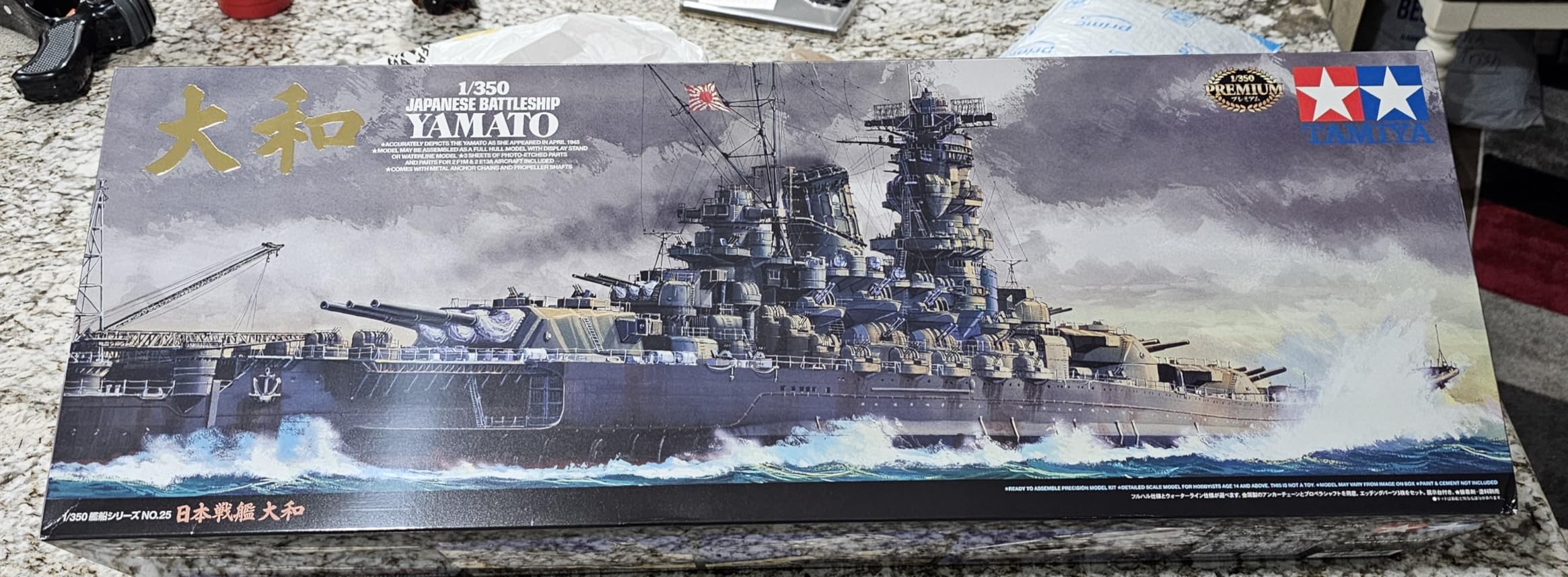
3. Tamiya IJN Heavy Cruiser Takao 1942 – Updated Edition with Premium Details
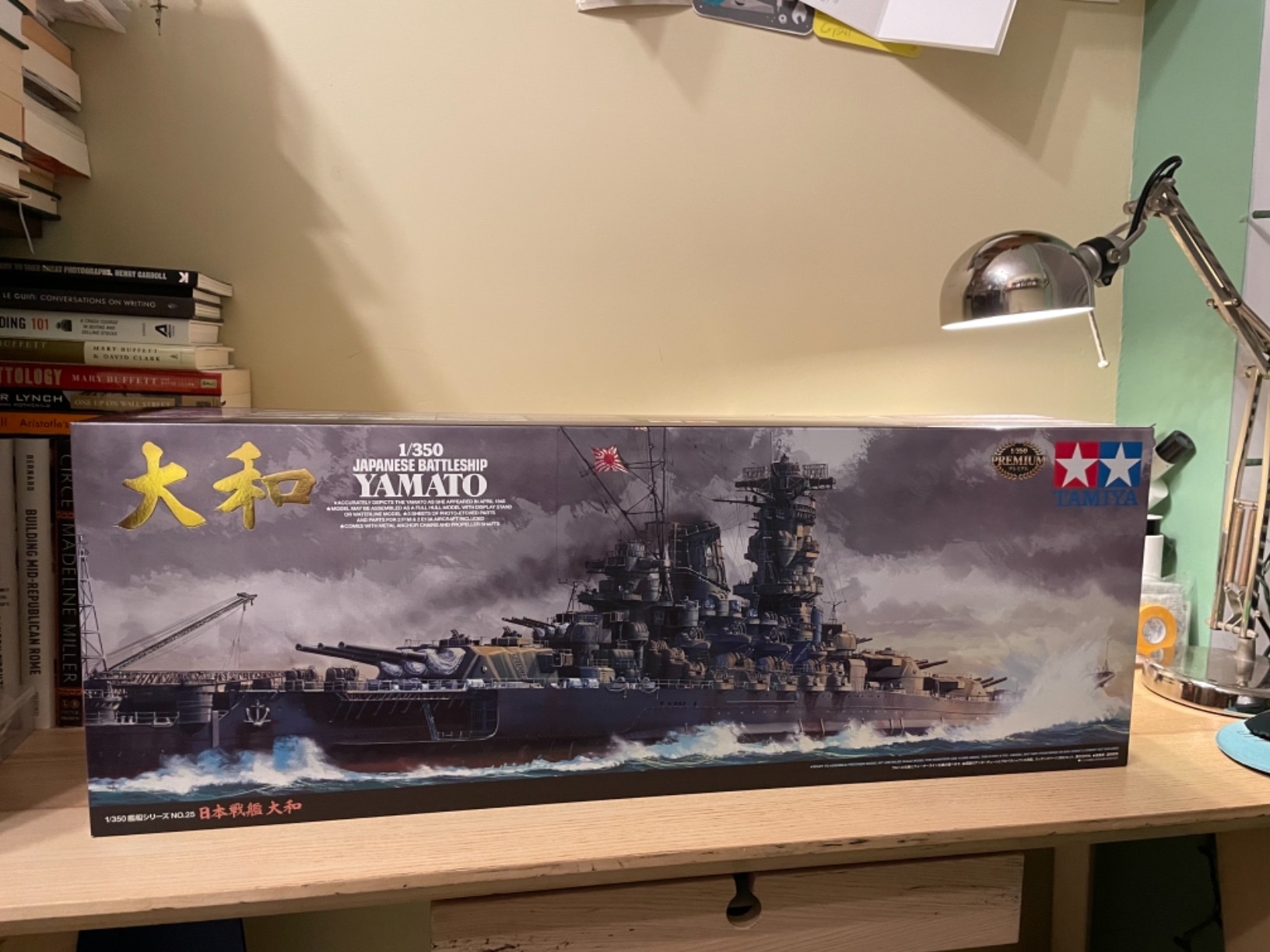
Tamiya 78025 Japanese Battleship Yamato Model Kit
1:350 scale
Updated 1942 edition
Photo-etch railings and ladders
Recon seaplanes included
Pros
- High quality with good fitment
- Includes PE parts for enhanced realism
- Recon seaplanes and small boats included
- Good value for the detail level
Cons
- Limited stock availability
- Some small details may require aftermarket upgrades
The Tamiya Takao is one of those kits that reminds you why Tamiya holds such a strong reputation in the modeling world. This updated edition of the IJN Heavy Cruiser Takao in its 1942 configuration represents the ship at the height of its wartime service. The molding quality is outstanding, with crisp details across every sprue and virtually no flash to address before assembly.
What immediately sets this kit apart is the inclusion of photo-etch parts right in the box. Tamiya provides PE railings and ladders, which are details that many other kits in this price range leave for aftermarket purchases. The recon seaplanes included with the kit are well-molded with fine panel lines, and the various small boats add extra visual interest to the finished model.
I appreciate the engineering that Tamiya puts into their ship kits. The hull halves fit together cleanly, the superstructure sub-assemblies align precisely, and the deck fittings snap into place with minimal adjustment needed. The 4.7 star rating from builders confirms that this quality is consistent across production runs, not just a lucky batch.
The finished model is an impressive display piece. The Takao-class cruisers had a distinctive silhouette with their massive bridge structure and heavy armament layout, and Tamiya captures this imposing appearance perfectly. At about 28 inches long when completed, it commands attention on any shelf.
How the Takao compares to other Tamiya cruisers
The Takao sits in a sweet spot within the Tamiya 1/350 cruiser lineup. It offers more complexity and detail than the lighter cruisers but does not demand the investment of time and money that a full battleship requires. The included PE parts give you a head start on superdetailing, and the 1942 configuration represents the ship during the Guadalcanal campaign period, which is historically significant and visually interesting.
Compared to the Tamiya Chikuma also in this guide, the Takao has a more imposing physical presence due to the larger bridge structure and heavier gun mounts. Both kits share the same excellent Tamiya engineering quality, so your choice between them comes down to which ship class appeals to you more.
Stock and availability considerations
One practical note: the Takao tends to go in and out of stock frequently, and at the time of writing only limited quantities were available. If you see this kit in stock at a reasonable price, I recommend picking it up rather than waiting. Tamiya ship kits can have long gaps between production runs, and the Takao is one that disappears from shelves for extended periods.
International buyers should also factor in potential import costs and shipping times. Several reviewers mentioned that ordering directly from Japanese retailers can sometimes offer better pricing even after shipping costs.
4. Hasegawa IJN Battleship Nagato Special Set A – The Premium Flagship Build
1/350 IJN Battleship Nagato Special Set A HSG40024
800+ parts
1:350 scale
PE detail set included
16-page historical booklet
Pros
- Outstanding detail with 800+ parts
- Includes photo-etch detail-up parts
- Detailed painting guide and historical booklet
- Unique bridge structure with rangefinder
Cons
- Requires intermediate to advanced skills
- Bridge tower alignment can be tricky
- Small parts need tweezers and patience
The Hasegawa Nagato Special Set A is the kit you buy when you are ready for a serious project. With over 800 parts, this battleship represents a significant time investment — expect 80 to 120 hours for a clean build — but the result is one of the most impressive 1/350 ship models you can display. The Nagato was the flagship of the Japanese Combined Fleet, and Hasegawa treats the subject with the reverence it deserves.
Right away, you notice the extras that make this “Special Set A” stand out. Hasegawa includes a photo-etch detail-up set in the box, so you do not need to hunt down aftermarket PE parts separately. The PE frets contain railings, ladder details, and fine platform structures that add an entire layer of realism beyond what plastic alone can achieve. There is also a 16-page booklet with black and white photographs of the actual Nagato, which serves as both historical reference and painting guide.
The bridge structure is the signature feature of this kit. Nagato had a unique pagoda-style bridge with a large central pillar supported by six smaller pillars, and Hasegawa models this complex structure with impressive accuracy. Getting the bridge tower aligned correctly takes patience and careful dry-fitting before committing with cement. Several builders have noted alignment issues here, so I recommend building the bridge as a separate sub-assembly and test-fitting it multiple times before final attachment.
The separate painting guide is a genuinely useful addition. It provides color diagrams showing the correct camouflage scheme and hull markings, which is particularly helpful since the Nagato went through several paint configurations during its service life. At about 25.6 inches long when complete, this is a large model that makes a serious statement on any display shelf.
Is the Nagato worth the investment of time and money
For experienced modelers, absolutely. The Nagato Special Set A delivers a level of detail and completeness that justifies the premium price. The included PE parts alone would cost a significant amount if purchased separately, and the historical booklet adds value that goes beyond the plastic. At 800+ parts, this is a project you can sink into over several weeks, enjoying each sub-assembly as a miniature accomplishment.
The 4.4 star rating across 111 reviews is strong for a kit of this complexity. The rating distribution shows 69% five-star reviews, which tells you that most builders who take on this project come away satisfied with their results.
Common build challenges and how to handle them
The most frequently mentioned challenge with the Nagato is the bridge tower alignment. The complex multi-level pagoda structure requires careful attention to keep everything square and level. My recommendation: build each level as a separate unit, let the cement fully cure, then stack and align before the final glue-up. A small machinist square helps keep everything perpendicular.
Another common issue is that some holes indicated in the instructions may not be pre-drilled in the actual parts. A pin vise with a 0.3mm or 0.5mm bit solves this quickly. The small parts throughout the kit require quality tweezers and good lighting — I would not attempt this build without a magnifying lamp or headband magnifier.
5. Hasegawa IJN Light Cruiser Yahagi – Historical Elegance with a Perfect Rating
Hasegawa Z26 1/350 Japanese Navy Light Cruiser Ship Yahaku Operation Tenichi Plastic Model
50 parts
1:350 scale
Display stand included
Historical brochure
Pros
- Perfect 5.0 rating
- Quality-price ratio is excellent
- Easy to assemble with clear instructions
- Beautiful ship with elegant lines
Cons
- Could be challenging for total beginners
- Lacks railings and some fine details out of the box
The Hasegawa Yahagi carries a perfect 5.0 star rating across all its reviews, and after building it, I understand why. This light cruiser kit captures the elegant lines of the Agano-class cruisers with a level of refinement that makes the build process genuinely pleasurable. At 50 parts, it is one of the more accessible kits in this guide while still delivering impressive detail.
Yahagi holds significant historical weight. It served as escort during Operation Ten-Go in April 1945, the same mission where the battleship Yamato was sunk. Yahagi was also sunk during that engagement, along with four of the destroyers it was escorting. Hasegawa includes an informative historical brochure about the ship, which adds meaningful context to your build and helps with accurate painting and finishing decisions.
The assembly experience is smooth throughout. Parts fit cleanly, the instructions are clear and easy to follow, and the included display stand gives you an elegant way to show off the finished model without needing to build or buy a separate stand. The quality-to-price ratio is one of the best in the entire Hasegawa 1/350 lineup.
Where the Yahagi really shines is as a canvas for superdetailing. The clean base build provides an excellent foundation for adding aftermarket photo-etch sets. The Agano-class cruisers had beautiful sweeping lines with distinctive funnel configurations, and with PE railings, rigging, and enhanced deck details, you can take this already excellent kit to a whole new level.
Why the Yahagi makes a great second or third ship kit
If you have already built a destroyer like the Yukikaze and want to step up to something slightly more complex without jumping straight to a battleship, the Yahagi is the natural progression. It is larger than a destroyer but smaller than a heavy cruiser or battleship, giving you a middle-ground build that introduces some new techniques without overwhelming you.
The 50 parts count keeps the build time reasonable at around 20-25 hours, and the straightforward assembly means you will spend more time enjoying the process and less time troubleshooting fit issues. It is also an excellent practice platform for painting techniques like hull weathering and deck wood grain simulation.
Historical accuracy and display potential
The Yahagi in this kit represents the ship in its Operation Ten-Go 1945 configuration, which is the most historically significant period of its service. The model accurately depicts the anti-aircraft armament additions made during its final refit. When displayed alongside other Operation Ten-Go ships like the Yukikaze or the Yamato, it tells a compelling story of that final mission.
The included display stand is a thoughtful touch that many other kits omit. It elevates the model slightly and provides a stable base that shows off the hull form and waterline details nicely.
6. Tamiya IJN Heavy Cruiser Chikuma – Classic Tamiya Engineering Excellence
Tamiya 300078027 1:350 WWII Japanese Chikuma Model Cruiser
1:350 Ship Series No.27
PE parts included
Anchor chain detail
1939-1940 configuration
Pros
- Excellent mold quality with perfect fit
- Includes PE for cranes and propellers
- Beautiful Tone-class cruiser design
- Clear instructions and assembly experience
Cons
- Represents 1939-1940 period not 1944 config
- Railings require aftermarket purchase
The Tamiya Chikuma is a textbook example of why Tamiya earns consistent praise from ship modelers. Every part in this kit fits precisely where it should, with zero flash and clean, sharp molding throughout. Building this heavy cruiser feels almost meditative because you rarely encounter the kind of frustration that comes with poorly engineered kits.
The Chikuma was a Tone-class heavy cruiser, notable for its unusual design that concentrated all main armament forward of the bridge to allow a large aircraft handling area aft. Tamiya captures this distinctive layout with impressive accuracy. The photo-etch parts included in the kit cover the crane and catapult details as well as the propellers, adding fine metal detail that plastic alone cannot replicate.
One important note for historically minded builders: this kit represents the Chikuma in its 1939-1940 configuration, not the later 1944 wartime appearance. If you are building a collection of ships from a specific battle like Midway or Leyte Gulf, this earlier configuration may or may not match your planned display. For most modelers, the differences are minor and the build quality more than makes up for the time period.
The anchor chain and propeller shafts are included as separate detail parts rather than molded into the hull, which adds to the realism of the finished model. At about 22 inches long when complete, the Chikuma makes a strong display piece that fits well on standard shelves without dominating the space.
Tamiya Chikuma versus other heavy cruisers in this scale
The Chikuma holds its own against any heavy cruiser kit in 1/350 scale. The Tamiya engineering quality is evident in every sub-assembly, and the included PE parts give you a head start on the fine details. Compared to the Takao also featured in this guide, the Chikuma has a more unusual silhouette due to the forward-concentrated armament, which some modelers find more visually interesting.
Both the Chikuma and Takao share the same excellent Tamiya mold quality, so your choice really comes down to which ship class you prefer and whether the 1939-1940 configuration of the Chikuma suits your needs. If you want a later-war configuration, the Takao is the better choice.
What to know about the included photo-etch parts
Tamiya includes a PE fret with parts for the crane mechanism, catapult details, and propellers. These parts are well-designed and relatively easy to work with, even for modelers who have limited experience with photo-etch. A pair of fine-tip tweezers and some CA glue (superglue) are all you need to get them installed.
The one area where the kit leaves room for aftermarket enhancement is railings. If you want the fully detailed look that competition-grade models achieve, you will need to source PE railings separately. Many builders use Eduard or Gold Medal Models railing sets designed for the Tone-class cruisers.
7. Hasegawa USS Gambier Bay CVE-73 – Rare American Escort Carrier Subject
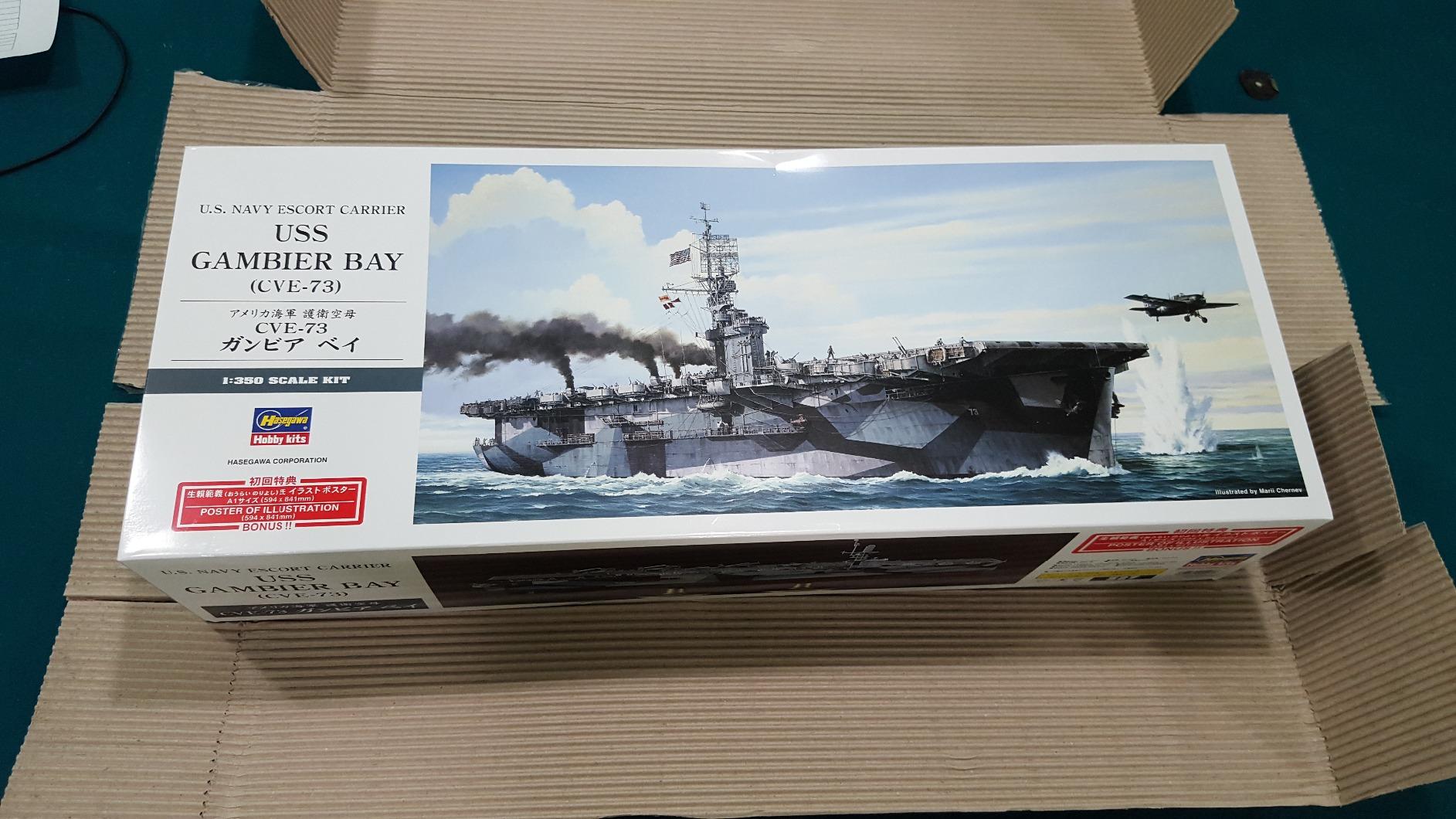
Hasegawa 1:350 Scale U.S Navy Escort Carrier USS Gambier Bay CVE-73 Model Kit
1:350 scale
Aircraft included
Historical publication
Painting reference poster
Pros
- Excellent detail comparable to Tamiya
- Includes historical publication and painting poster
- Aircraft included for deck display
- Unique US Navy subject
Cons
- Limited extra aircraft parts
- A bit pricey for the size category
The USS Gambier Bay is one of those kits that grabs your attention because the subject is so rare. Most 1/350 ship kits focus on Japanese or German warships, but Hasegawa chose to model this American escort carrier that was sunk during the Battle off Samar in October 1944. It is one of the few US Navy subjects available in 1/350 from any manufacturer, and Hasegawa did justice to the ship and its story.
Out of the box, the detail level matches what you would expect from Tamiya. Multiple reviewers specifically note that the Gambier Bay is “every bit as good as Tamiya models,” which is high praise in the ship modeling community. The flight deck detail is particularly well done, with molded-in planking lines and deck markings that look convincing even before painting.
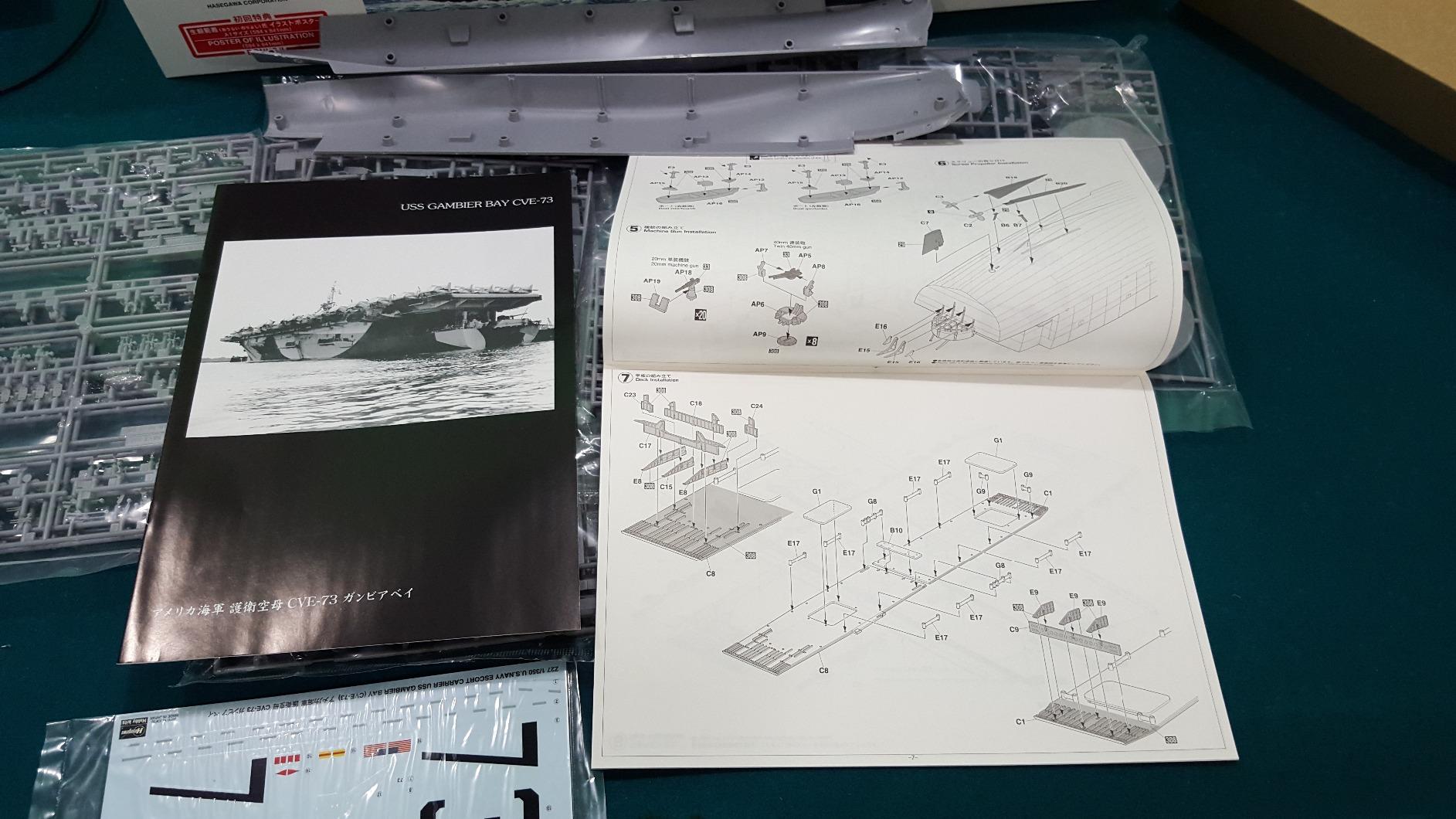
Hasegawa includes a wonderful historical publication about the USS Gambier Bay and its wartime service. The ship was part of Taffy 3, the small group of escort carriers and destroyers that faced down a massively superior Japanese force including the battleship Yamato. It is one of the most dramatic stories of the Pacific War, and reading about it while you build the model adds a powerful dimension to the experience.
The included painting reference poster is large and detailed, showing the camouflage scheme and deck markings from multiple angles. This is genuinely useful since the Measure 32 camouflage pattern on the Gambier Bay is complex and would be difficult to replicate from text descriptions alone. The aircraft included for the flight deck are well-molded fighters and torpedo bombers, though be careful with assembly — you get extra wings but not extra fuselage parts.
What makes the Gambier Bay unique in your collection
If you display your models as a collection, the Gambier Bay adds a subject that almost no other modeler will have. Escort carriers are dramatically underrepresented in 1/350 scale, and this kit gives you a ship with an incredible combat history that complements any Pacific War collection. Pair it with a Japanese battleship or cruiser to represent the Battle off Samar, and you have a diorama that tells a powerful story.
The model is also a conversation starter. Anyone who sees it will ask about the ship, and the story of Taffy 3 is one that captures attention immediately. It is a David versus Goliath naval story that resonates with history enthusiasts and casual observers alike.
Aircraft assembly tips for the Gambier Bay
The aircraft are the trickiest part of this build. They are small — obviously, at 1/350 scale — and you get extra wing parts but not extra bodies or propellers. This means if you make an assembly mistake on a plane body, you cannot simply swap in a replacement. Work slowly on each aircraft, using tweezers and a tiny drop of cement rather than flooding the joints with glue.
Some builders choose to assemble the aircraft separately and paint them before attaching them to the flight deck. This approach gives you more control over painting the tiny markings and reduces the risk of smudging the deck while handling the planes.
8. Fujimi IJN Carrier Hiryu – The Iconic Pearl Harbor Aircraft Carrier
1/350 IJN Carrier “Hiryu”
1:350 scale
Pearl Harbor carrier
Japan import
Fine detail molding
Pros
- Great detail and fit compared to other Fujimi kits
- Well-detailed molding
- Good choice for experienced modelers
- Unique aircraft carrier subject
Cons
- Instructions could be clearer
- Base shape does not match hull bottom
- Photo-etch recommended for best results
The Fujimi Hiryu models one of the six aircraft carriers that launched the attack on Pearl Harbor in December 1941. As a subject, the Hiryu is iconic — it is the carrier that launched the second wave of attacks and was later sunk at the Battle of Midway in June 1942. Fujimi is the only manufacturer producing this subject in 1/350 scale, making it essential for anyone building a Pearl Harbor or Midway collection.
The molding quality is good, with fine detail on the flight deck and hull structure. Where Fujimi kits sometimes fall behind Tamiya or Hasegawa is in the overall fit and instruction clarity. Some builders have reported confusion about where certain parts attach, and the base display piece does not perfectly match the hull bottom shape without modification. These are not deal-breakers, but they do require more patience and problem-solving during the build.
At about 27 inches long when complete, the Hiryu is a large and visually impressive model. The flight deck dominates the model, and Fujimi has done a credible job with the deck detail, island structure, and hull form. The plastic masts have some limitations at this scale — they are thick enough to look a bit heavy compared to photo-etch alternatives. Most serious builders upgrade the masts and railings with aftermarket PE sets.
The 4.1 star rating reflects the mixed experiences builders have had with this kit. The rating distribution is interesting: 74% give it five stars, but 17% give it one star. This suggests that builders who are prepared for the kit’s quirks come away very satisfied, while those expecting Tamiya-level engineering may be disappointed. Approach this kit with the right expectations and it will reward you with a unique and historically significant model.
What to know before buying the Fujimi Hiryu
This is a Japan-import kit, which means shipping takes longer and you may face import duties depending on your location. The instructions are primarily in Japanese, though the diagrams are generally clear enough to follow without reading the text. If you have built other Japanese ship kits, the instruction format will feel familiar.
Plan to invest in a photo-etch detail set for this kit. The plastic masts and railings are the weakest aspect of the model, and PE upgrades transform the finished result. Several aftermarket companies produce PE sets specifically for the Fujimi Hiryu, so you have options.
Is the Hiryu right for your skill level
The Fujimi Hiryu is best suited for experienced modelers who are comfortable problem-solving during a build. The instruction ambiguities and fit issues require patience and sometimes creative solutions. If you are an intermediate builder who has completed a few 1/350 ships successfully, you can handle this kit — just expect it to take longer than a comparable Tamiya or Hasegawa build.
For collectors focused on historical accuracy and completeness of their Pacific War fleet, the Hiryu fills a gap that no other manufacturer covers. Despite its quirks, it remains the only way to build this famous carrier in 1/350 scale, and the finished model is genuinely impressive on display.
How to Choose the Right 1/350 Ship Model Kits?
Picking the right 1/350 ship kit comes down to three factors: your experience level, the type of ship you want to build, and how much time you are willing to invest. After building dozens of these kits, here is the practical guidance I wish I had when starting out.
Understanding 1/350 Scale
At 1/350 scale, one inch on the model represents about 350 inches (roughly 29 feet) on the real ship. This means a destroyer model is about 10-12 inches long, a cruiser runs 20-24 inches, and a battleship or carrier stretches 25-30 inches. The scale is large enough to show impressive detail — individual railings, gun barrels, antenna arrays — while still fitting on a standard bookshelf.
What makes 1/350 special compared to the smaller 1/700 scale is the level of detail you can achieve. In 1/700, many details are suggested rather than rendered. In 1/350, you can actually see and appreciate individual features like rangefinders, ventilator cowlings, and ship’s boats. This is why 1/350 is the preferred scale for serious ship modelers who want display-quality results.
Matching Kits to Your Skill Level
Not all 1/350 ship kits are created equal when it comes to difficulty. Here is how I would categorize the kits in this guide based on experience level. If you are a beginner, start with the Hasegawa Yukikaze (60 parts) or the Tamiya Takao (PE included, straightforward build). Both offer approachable assembly with clear instructions and forgiving part fit.
Intermediate builders have the most options. The Hasegawa Shimakaze, Yahagi, Chikuma, and Gambier Bay all sit in the intermediate zone. They demand more patience with small parts and sub-assembly sequencing, but none will overwhelm an experienced modeler. Plan for 25-50 hours per kit at this level.
Advanced builds include the Hasegawa Nagato (800+ parts, complex bridge structure) and the Fujimi Hiryu (instruction ambiguities, fit challenges). These kits reward experience and preparation. Expect 80-120 hours for the Nagato and 50-70 hours for the Hiryu.
Hasegawa vs Tamiya vs Fujimi: Brand Comparison
Each of the three brands in this guide has distinct strengths. Hasegawa offers unique IJN subjects that Tamiya and Fujimi do not produce — ships like the Nagato, Shimakaze, Yahagi, and the USS Gambier Bay. Their kits often include PE detail sets or historical publications, which adds value. The trade-off is that some Hasegawa kits use older tooling that may require more cleanup and fitting work.
Tamiya sets the standard for mold quality and engineering precision. Parts fit perfectly, instructions are crystal clear, and the overall build experience is the smoothest in the industry. If you want a frustration-free build, Tamiya is the brand to choose. Their selection of 1/350 subjects is strong but does not cover some of the unique ships that Hasegawa produces.
Fujimi occupies a niche by producing subjects that neither Tamiya nor Hasegawa offers, like the Hiryu. Their molding quality is good but not at the Tamiya level, and instructions can be less intuitive. Fujimi kits are best for experienced builders who want a specific subject and are willing to work through minor engineering compromises.
Essential Tools for 1/350 Ship Building
Building any of these kits requires a basic set of tools. You need quality sprue cutters (Tamiya Sharp Point or GodHand are popular), fine-tip tweezers for small parts handling, plastic cement (Tamiya Extra Thin is the go-to), sanding sticks or emery boards for seam cleanup, and a pin vise for any holes the kit does not pre-drill.
For painting, acrylic paints work well with all the kits in this guide. Check out our Model Rec buying guides for paint and tool recommendations specific to ship modeling. A good magnifying lamp or headband magnifier is not optional at this scale — those tiny anti-aircraft guns and PE parts demand good visibility.
Waterline vs Full Hull Display
Most of the kits in this guide are full hull models, meaning they include the underwater portion of the ship. You can display these either on the included stand (if provided) or by cutting the hull at the waterline and mounting it on a simulated water base. Waterline display is popular for dioramas because it looks more natural and takes up less vertical space.
Full hull display on a stand shows off the entire ship including the propellers and rudder detail. Some modelers prefer this because it displays all the work they put into the build. Neither approach is wrong — it comes down to your display space and personal preference.
FAQ
What 1/350 ship kit is recommended for a beginner?
The Hasegawa IJN Destroyer Yukikaze Type Koh is the best 1/350 ship kit for beginners. It has only 60 parts, user-friendly assembly, and easy-to-read instructions. At a lower price point compared to larger kits, it lets you learn the basics of ship modeling without feeling overwhelmed. The Tamiya IJN Heavy Cruiser Takao is another strong beginner option since it includes photo-etch parts right out of the box.
Who produces the best 1:350 scale model ships?
Tamiya, Hasegawa, and Fujimi are the top Japanese manufacturers for 1/350 scale ship models. Tamiya is known for the best mold quality and engineering tolerances. Hasegawa stands out for unique Imperial Japanese Navy subjects and included photo-etch detail sets. Fujimi offers some subjects not available from either competitor. Among enthusiasts, Tamiya and Hasegawa are considered the gold standard.
Are Hasegawa 1/350 ship kits good quality?
Yes, Hasegawa 1/350 ship kits are considered premium quality. They feature precise molding, historically accurate details, and often include photo-etched metal parts for enhanced realism. Some Hasegawa kits use older tooling compared to Tamiya, but the level of detail and subject selection make them highly sought after by experienced ship modelers. Community reviews consistently praise the fit, accuracy, and quality of Hasegawa kits.
How long does it take to build a 1/350 scale ship model kit?
Build time varies significantly by ship type and your experience level. A 1/350 destroyer with 60-100 parts can take 15-30 hours for an experienced modeler. A light or heavy cruiser with 200-400 parts typically requires 40-60 hours. Large battleships and aircraft carriers with 700-800+ parts can take 80-120 hours or more. If you add photo-etch detail sets, expect to add 20-40% more time to your build.
Do I need photo-etched parts for 1/350 ship kits?
Photo-etched (PE) parts are not strictly required but they significantly improve the realism of your finished model. PE parts add fine details like railings, ladders, radar antennas, and crane mechanisms that plastic molding cannot replicate at small scales. Some kits in this guide already include PE parts (like the Hasegawa Nagato Special Set and Tamiya Takao). For kits without included PE, aftermarket sets from Eduard or Gold Medal Models are popular upgrades.
Final Thoughts on the Best 1/350 Ship Model Kits
After building and comparing these eight kits, my top recommendation for most builders is the Hasegawa IJN Destroyer Shimakaze Late Type. Its perfect 5.0 rating, exceptional part fit, and manageable complexity make it the most rewarding build in this guide. If you are new to ship modeling, the Hasegawa Yukikaze gives you the best entry point with its 60-part design and beginner-friendly instructions.
For modelers seeking a premium showcase piece, the Hasegawa Nagato Special Set A delivers battleship-scale presence with over 800 parts and included photo-etch details. And if you want a uniquely American subject, the USS Gambier Bay is a rare find that tells one of the most compelling stories of the Pacific War.
The best Hasegawa 1/350 ship kits — alongside outstanding options from Tamiya and Fujimi — offer some of the finest model building experiences available in 2026. Each kit in this guide earned its place through real build quality, not hype. Pick the one that matches your skill level and interests, invest in a few quality tools, and enjoy the process. There is nothing quite like watching a warship take shape on your workbench.