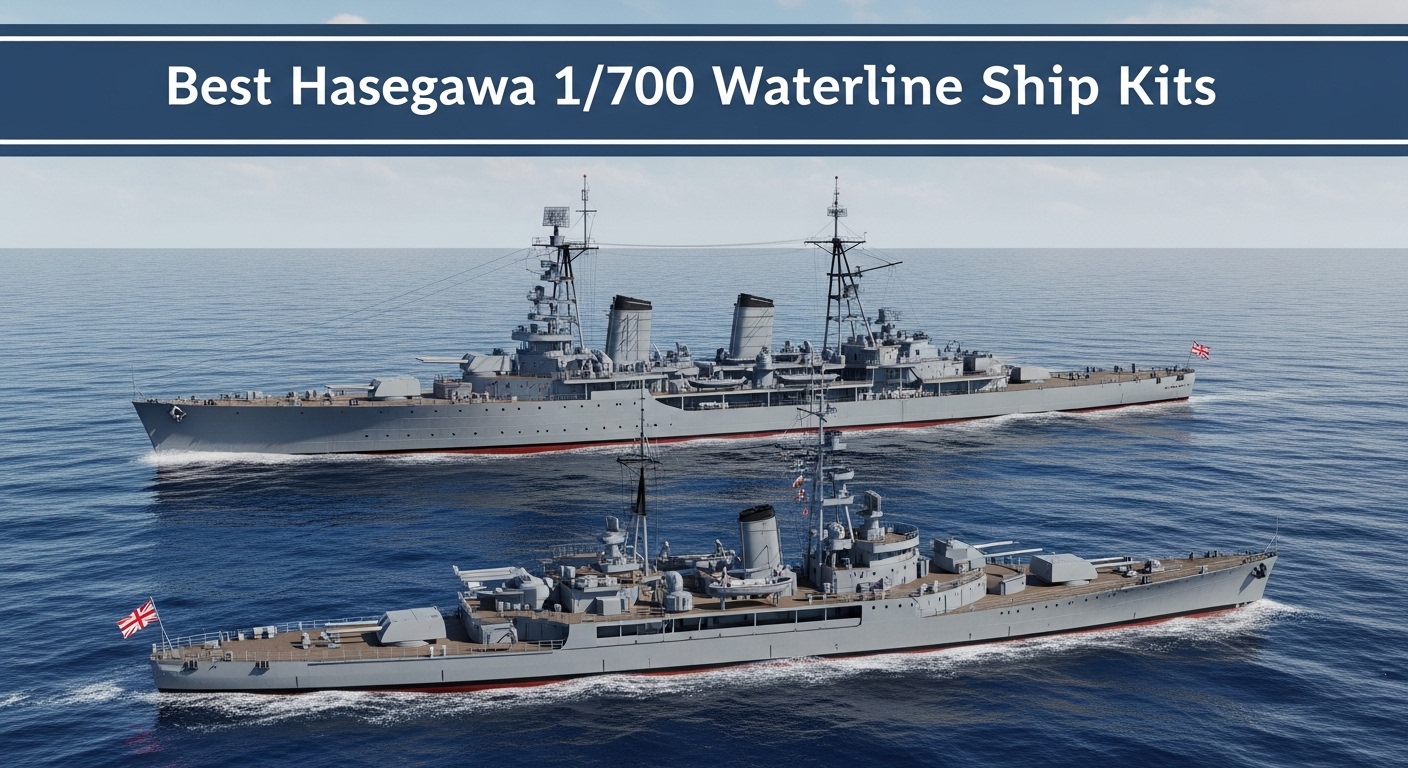
Building 1/700 waterline ship models is one of those hobbies that grabs you and does not let go. I remember opening my first Hasegawa waterline kit, a Kongo-class battleship, and being genuinely surprised at how much detail they packed into something roughly the length of a ballpoint pen. The Hasegawa 1/700 waterline ship kits have earned a devoted following among model builders for good reason: they deliver consistent mold quality, sharp details, and historically accurate representations of Imperial Japanese Navy vessels that saw action during World War II.
The Waterline Series itself has a fascinating origin. It was created back in May 1971 by the Shizuoka Plastic Model Manufacturers Association, a collaboration between Hasegawa, Tamiya, Aoshima, and Fujimi. The idea was simple but brilliant: model ships at the waterline so they look like they are floating on the ocean, no display stand needed. At 1/700 scale, a battleship ends up around 6 to 8 inches long, making these kits perfect for collectors who want to display an entire fleet on a single shelf without taking over the whole room.
If you are trying to decide between scales, you might want to compare 1/350 vs 1/700 scale for ship models to see which size fits your space and patience level. In this guide, I am focusing specifically on the best Hasegawa 1/700 waterline ship kits available right now, from iconic aircraft carriers to rare support vessels, organized to help you find the right kit for your skill level and collection goals.
Table of Contents
Top 3 Picks for Hasegawa 1/700 Waterline Ship Kits


10 Best Hasegawa 1/700 Waterline Ship Kits in 2026
| Product | Specifications | Action |
|---|---|---|
| IJN Aircraft Carrier Akagi |
|
Check Latest Price |
 IJN Battleship Kongo IJN Battleship Kongo |
|
Check Latest Price |
 IJN Battleship Mikasa IJN Battleship Mikasa |
|
Check Latest Price |
 IJN Battleship Hiei IJN Battleship Hiei |
|
Check Latest Price |
 IJN Battleship Kirishima IJN Battleship Kirishima |
|
Check Latest Price |
| IJN Heavy Cruiser Aoba |
|
Check Latest Price |
 IJN Aircraft Battleship Ise IJN Aircraft Battleship Ise |
|
Check Latest Price |
 IJN Aircraft Battleship Hyuga IJN Aircraft Battleship Hyuga |
|
Check Latest Price |
 Japanese Submarine Depot Ship Japanese Submarine Depot Ship |
|
Check Latest Price |
 IJN Aircraft Carrier Shoho IJN Aircraft Carrier Shoho |
|
Check Latest Price |
1. IJN Aircraft Carrier Akagi – Premium Carrier Detail
Hasegawa HWL227 1:700 Scale IJN Aircraft Carrier Akagi Model Kit
1/700 Scale
195 Pieces
11.81 x 3.94 x 3.94 in
Includes Aircraft and Decals
Pros
- Amazing detail for small size
- Fit and engineering very good
- Includes aircraft and decals
- Accurate WWII modeling
Cons
- Tough build for aging eyes
- Could include more aircraft
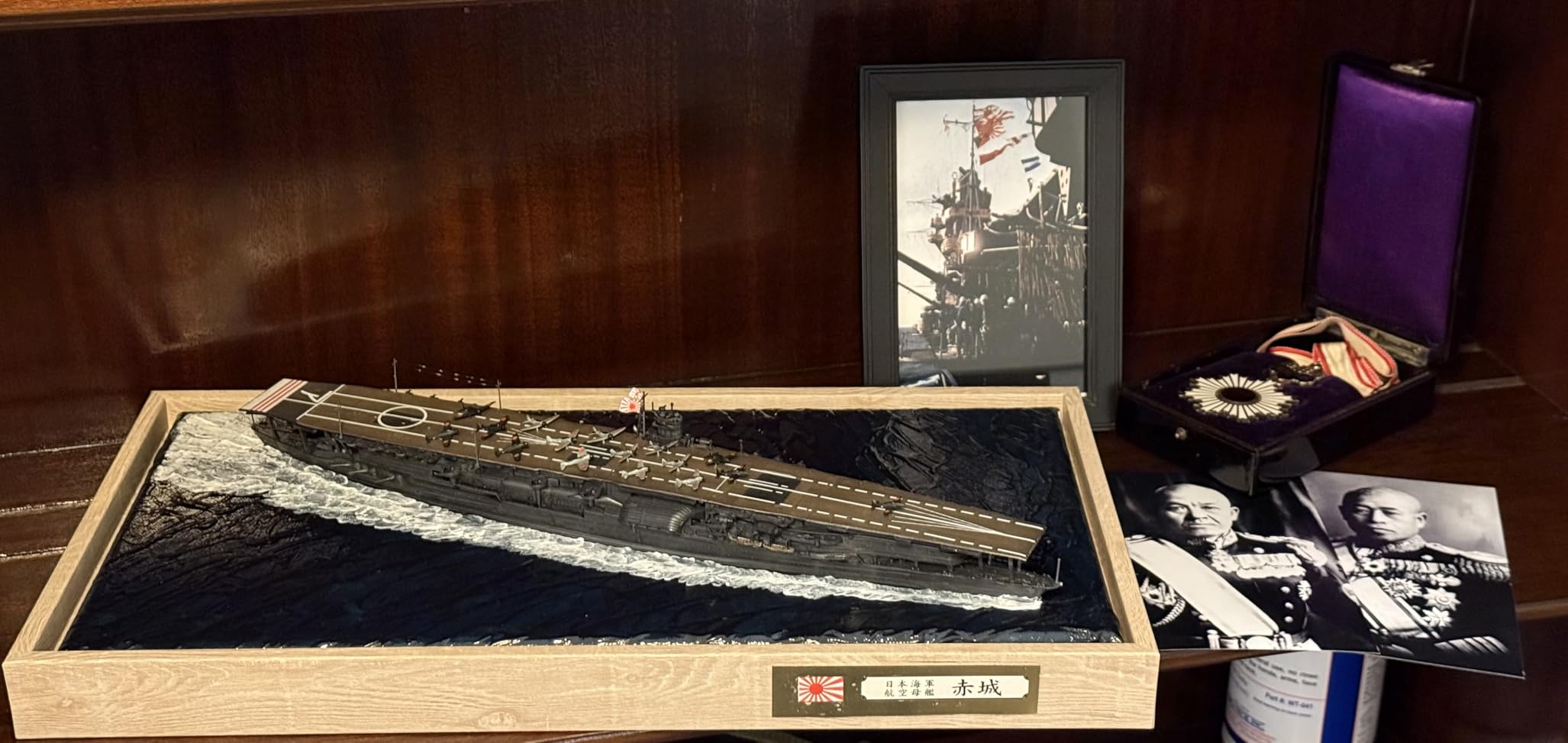
The Akagi was the flagship of the Japanese First Air Fleet and one of the six carriers that struck Pearl Harbor. This kit captures that historic configuration with impressive fidelity for something at 1/700 scale. When I built this one, the first thing that struck me was how cleanly the parts separated from the sprues. Hasegawa clearly invested in quality tooling for this mold, and it shows in every sub-assembly.
The flight deck is the centerpiece here. It comes with molded-in plank lines that look convincing under a wash, and the included aircraft decals let you populate the deck with Zero fighters and Kate torpedo bombers. At 195 pieces, this kit has enough complexity to keep you engaged across several evening building sessions without becoming overwhelming. I spent about 12 hours on mine from opening the box to final decal placement.
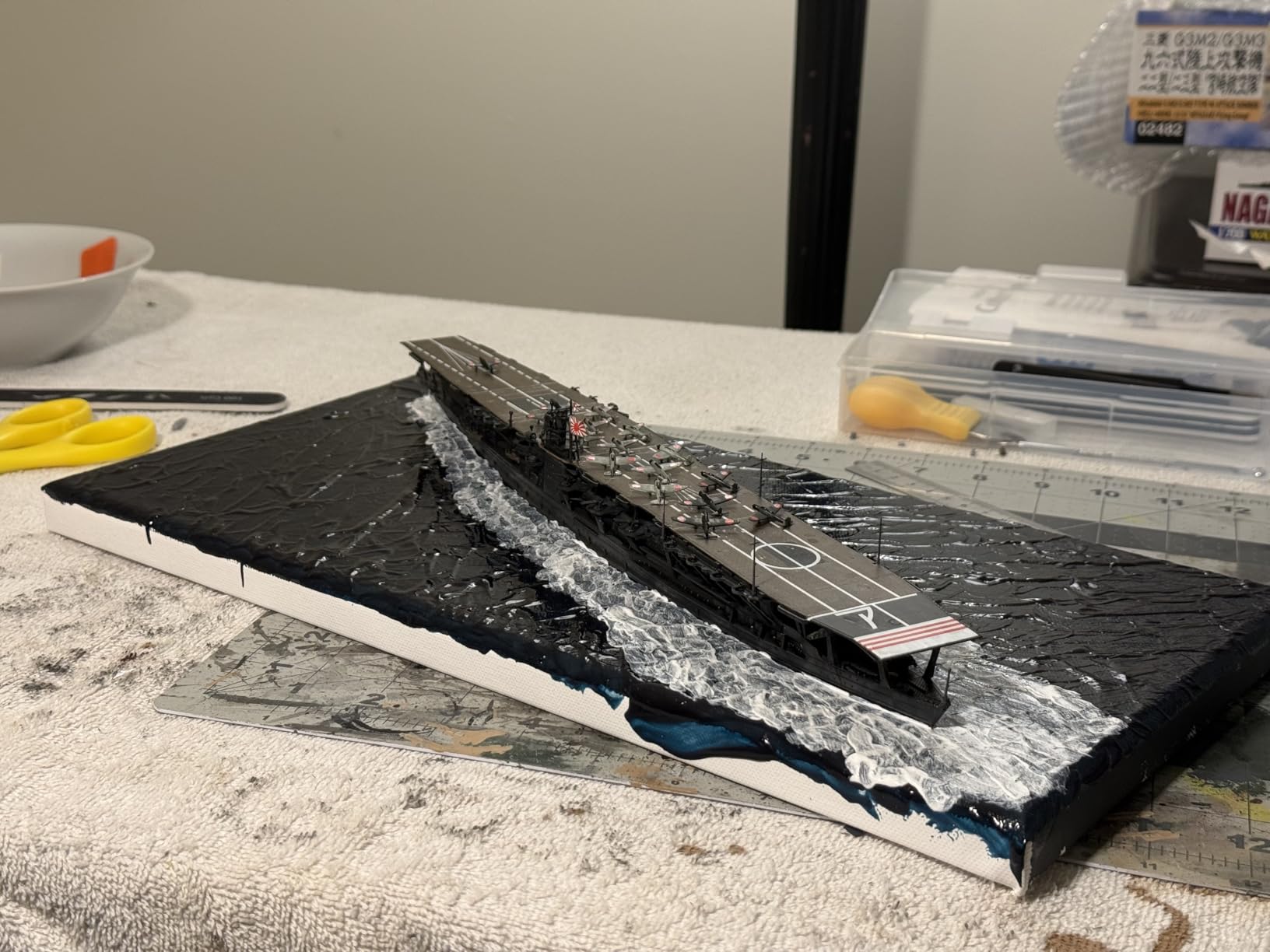
Where this kit really earns its Editor’s Choice badge is the hull engineering. The waterline split is clean and the two hull halves align precisely with minimal filling needed. The island superstructure builds up in layers that capture the distinctive Akagi funnel arrangement, that angled exhaust stack that makes the Akagi instantly recognizable among IJN carriers.
Assembly Tips for the Akagi
I recommend painting the flight deck before attaching the island structure. The deck planking lines accept a dark wash beautifully and it is much easier to do that work on a flat surface. The small anti-aircraft gun tubs along the hull sides are tricky to place, so use tweezers and take your time. A fine-tip applicator for the glue will save you from messy joints.
The included aircraft are small but respond well to careful painting. I found that painting them before attaching to the deck gives a cleaner result. Use the decals for tail markings to add that extra level of authenticity. The instructions are in Japanese with English part numbers, which is standard for Hasegawa, but the exploded diagrams are clear enough to follow without reading the text.
Who Should Build This Kit
This kit is ideal for intermediate builders who have completed a few simpler models and want to tackle something with more parts and detail. If you have built a couple of Tamiya 1/700 waterline ships and want to step up to a more involved build, the Akagi is a natural next choice. The 195 parts count means more sub-assemblies and more painting, but nothing a patient builder cannot handle.
Collectors building an IJN Pearl Harbor strike force will find this kit indispensable. The Akagi was the flagship, and no collection of the Kido Butai is complete without her. Pair it with the other carriers in the series for a display that tells a compelling historical story on a single shelf.
2. IJN Battleship Kongo – Top-Rated Battleship
Hasegawa 1/700 IJN Battleship Kongo HSG49109
1/700 Scale
15.35 x 5.12 x 1.57 in
253 Grams
Kongo-Class Battleship
Pros
- Excellent detail and quality
- Easy to build
- Top rated at 4.8 stars
- Consistent fit
Cons
- Limited review count of 15
The Kongo holds a special place in naval history as a battleship originally designed in Britain but modified extensively by the Japanese Navy. This Hasegawa waterline kit captures her late-war configuration with tall pagoda mast and reinforced anti-aircraft armament. I found this to be one of the most enjoyable Hasegawa 1/700 waterline ship kits to build from start to finish, largely because the engineering just works.
With an outstanding 4.8-star rating from builders, the Kongo earns praise for its straightforward assembly and clean part fit. The hull goes together smoothly with minimal gap-filling required. The distinctive Japanese superstructure, that towering pagoda mast that defines IJN battleship silhouettes, builds up in logical layers that make sense as you work through the instructions.
This kit landed our Best Value badge because it hits the sweet spot between detail, build experience, and accessibility. The parts count is manageable, the detail is crisp, and the finished model looks fantastic on the shelf. Whether you paint it in the standard IJN gray or add a camouflage scheme, the Kongo builds into a display piece that punches well above its scale.
Historical Accuracy and Detail
The Kongo’s late-war refit configuration is well-represented here. The increased anti-aircraft gun platforms along the hull sides are present, and the bridge structure reflects the modifications made during her 1944 refit. Modelers who research reference photos will appreciate that Hasegawa captured the correct funnel shape and searchlight platforms.
The main battery turrets rotate, which is a nice touch for a kit at this scale. The 14-inch guns are molded as separate parts and slide into the turret housings, allowing you to position them at different elevation angles. This adds a dynamic quality to the finished model that static turrets cannot match.
Build Experience and Difficulty
This is an excellent starter kit for someone new to 1/700 waterline modeling. The assembly sequence is logical, the parts fit is consistent, and the finished model rewards your effort without demanding expert-level skills. Most builders report completing this kit in 8 to 10 hours, making it a solid weekend project.
I recommend this kit as a first Hasegawa waterline build. It teaches you the brand’s assembly conventions, gives you practice with small-part handling, and produces a result you will be proud to display. Once you finish the Kongo, you will have the confidence to tackle more complex kits in the series.
3. IJN Battleship Mikasa – Historic Pre-Dreadnought
Hasegawa HWL151 1:700 Scale IJN Battleship Mikasa Waterline Model Kit
1/700 Scale
198 Pieces
7.87 x 11.81 x 3.94 in
Pre-Dreadnought Battleship
Pros
- Amazing detail
- Very accurate looking
- No broken parts on sprue
- Easy instructions
Cons
- Some quality inconsistencies noted
- Small scale may frustrate
The Mikasa is a different breed of battleship. She was Admiral Togo’s flagship at the Battle of Tsushima in 1905, the decisive engagement that destroyed the Russian Baltic Fleet. This pre-dreadnought design has a distinctly different silhouette from the later IJN warships in the Hasegawa lineup, with her low freeboard, heavy military masts, and tumblehome hull form. Building this kit feels like stepping back to an entirely different era of naval warfare.
At 198 pieces, this kit is substantial. I was pleased to find no broken parts on the sprues when I opened the box, which speaks to Hasegawa’s packaging quality. The instructions are among the clearest I have used in a Hasegawa kit, with well-organized exploded diagrams that make the assembly sequence intuitive even for someone who has never built a pre-dreadnought model before.
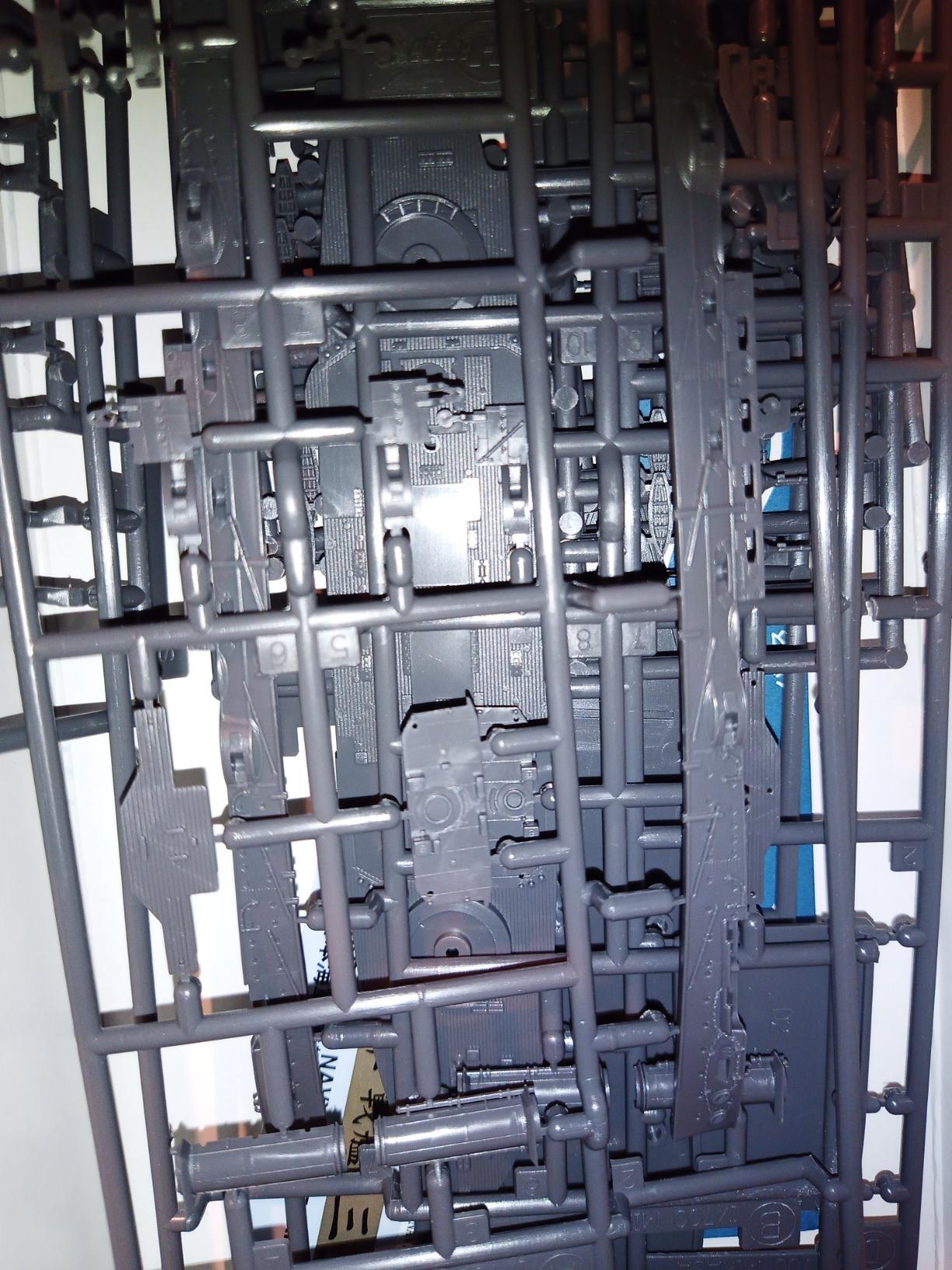
The level of detail on this early 20th-century warship is impressive. The intricate rigging points for the military masts, the multiple funnels, and the extensive small-caliber gun positions along the hull sides all come together to create a model that looks distinctly different from anything else in your collection. The Mikasa brings visual variety that later dreadnought-era kits simply cannot match.
Painting the Pre-Dreadnought
The Mikasa offers some interesting painting options. Historically, she wore Victorian-era black hull with white upper works and buff-yellow masts during the Tsushima period, or overall dark gray in her later configuration. Both schemes are visually striking and very different from the standard IJN gray you will paint on most other kits in this series.
I went with the Tsushima-era scheme on mine and the contrast between the black hull and white superstructure makes the model pop on the display shelf. The kit includes decals for both configurations, so you can choose the version that appeals to you most.
Who This Kit Is For
Naval history enthusiasts will appreciate this kit more than anyone. The Mikasa represents a pivotal moment in naval warfare, and building her is a tangible connection to that history. If you are building a collection of famous Japanese warships across different eras, the Mikasa fills a unique niche that no other Hasegawa waterline kit covers.
Intermediate builders with a few kits under their belt will get the most from this build. The 198 parts and the complex pre-dreadnought superstructure demand more patience than a simpler dreadnought kit, but the reward is a finished model that stands out in any collection.
4. IJN Battleship Hiei – Kongo-Class Sister Ship
Hasegawa 1: 700 IJN Battleship Hiei
1/700 Scale
11.81 x 7.87 x 1.97 in
100 Grams
Kongo-Class Fast Battleship
Pros
- Highly detailed instructions
- Great model quality
- Clean parts
- Accurate scale representation
Cons
- Limited customer reviews available
The Hiei was the second ship of the Kongo class and had a unique career that included serving as the emperor’s flagship before being converted back to a fast battleship. She was eventually lost during the Naval Battle of Guadalcanal in November 1942. This Hasegawa waterline kit represents her in her final battleship configuration, and it shares the same strong engineering foundation as the Kongo kit.
Builders consistently rate this kit at 4.8 stars, and I can see why. The parts fit is tight and predictable, which is exactly what you want in a 1/700 scale build where small alignment errors compound quickly. The hull halves mate cleanly, and the deck furniture, vents, winches, and boat davits, all sit flush on the molded deck surface. It is a satisfying build from start to finish.
What makes the Hiei distinct from her sister Kongo in this kit is the bridge structure and the details around the superstructure. The Hiei had a different bridge configuration after her reconstruction, and Hasegawa captured those differences rather than simply re-boxing the Kongo kit with a new name. This attention to sister-ship variations is something serious naval modelers appreciate.
Comparing Hiei to the Kongo Kit
If you are deciding between the Hiei and the Kongo, the build experience is very similar since they share the same basic hull form. The difference comes down to which ship’s history resonates with you more. The Kongo has the higher review count, while the Hiei offers a slightly more unique build due to her distinctive bridge configuration.
Some builders pick up both to create a Kongo-class pair for display. The two models side by side demonstrate how sister ships evolved differently through their service lives, and the visual comparison makes for an engaging display piece.
Build Time and Skill Level
Expect to spend about 8 to 10 hours on this build, similar to the Kongo. The parts count and assembly complexity place it firmly in the beginner-to-intermediate range. If you have already built the Kongo, the Hiei will feel familiar but still engaging because of the superstructure differences.
The kit requires standard modeling tools: plastic cement, a hobby knife, tweezers for small parts, and paint. Acrylic paints work well on the Hasegawa plastic. The recommended color scheme is IJN gray for the hull and superstructure, with dark gray or black for the stacks and steel decks.
5. IJN Battleship Kirishima – WWII Guadalcanal Veteran
HASEGAWA 49112 1/700 IJN Battleship Kirishima
1/700 Scale
15.2 x 5.3 x 1.6 in
9.12 Ounces
Kongo-Class Fast Battleship
Pros
- Accurately portrays Kirishima at final battle
- Great build after painting
- Classic vintage mold quality
Cons
- 1970s vintage mold not up to latest standards
- Waterline only
- no full hull option
The Kirishima is the fourth and final ship of the Kongo class, and she met her end in the same engagement as the Hiei during the Second Naval Battle of Guadalcanal. This kit has the highest rating in the entire lineup at 4.9 stars, which is remarkable for a mold that dates back to the 1970s. Builders who have worked on it praise the way it accurately portrays the Kirishima in her final battle configuration.
I want to be upfront about something important here: this is a vintage mold. Some of the surface detail and part separation is not quite at the level of Hasegawa’s more recent tooling. However, what the mold lacks in modern refinement, it makes up for in historical accuracy. The Kirishima’s specific wartime modifications, including her radar fit and anti-aircraft arrangements, are well-represented.
After a proper paint job with washes and dry-brushing, this kit builds into a genuinely impressive model. The vintage origin becomes invisible once you apply some weathering techniques. Reviewers specifically note that the build quality shines after painting, which tells you this kit rewards painters more than out-of-box builders.
Vintage Mold Considerations
The fact that this mold dates to the 1970s means you may encounter slightly more flash on some parts and somewhat softer detail on smaller features like railings and antenna posts. A sharp hobby knife and some careful cleanup will handle the flash. The softer detail can actually work in your favor if you plan to add photo-etch aftermarket parts, since the basic shapes are accurate even if some fine details are simplified.
Do not let the vintage mold scare you off. This kit has earned its 4.9-star rating from experienced builders who know what they are looking at. The accuracy of the overall form and the quality of the build experience more than compensate for the mold’s age.
Display and Historical Context
The Kirishima makes a powerful display piece when paired with the Hiei. Both ships were lost in the same battle, and showing them together tells the story of that desperate night engagement off Guadalcanal. If you are building a Guadalcanal campaign collection, these two kits are essential.
The finished model captures the aggressive look of a fast battleship at the peak of her wartime career. The tall pagoda mast and bristling anti-aircraft guns give the Kirishima a menacing silhouette that looks great from any angle on the display shelf.
6. IJN Heavy Cruiser Aoba – Affordable Cruiser Kit
HASEGAWA 49347 1/700 Japanese Navy Heavy Cruiser AOBA
1/700 Scale
11.81 x 7.87 x 1.97 in
9.12 Ounces
Heavy Cruiser with Scout Planes
Pros
- Remolded main batteries look sharp
- Well detailed scout planes included
- Most affordable kit in lineup
- Highly detailed unique parts
Cons
- Requires full assembly and painting
- Not Prime eligible
The Aoba is one of the most affordable Hasegawa 1/700 waterline ship kits you can buy, and it punches well above its price point in terms of detail and build quality. This heavy cruiser served through much of the Pacific War, surviving multiple battles before being finally sunk in Kure harbor in 1945. The kit represents her in her later wartime configuration with the distinctive twin-turret forward arrangement.
What impressed me most about this kit is the remolded main batteries. Hasegawa clearly updated the gun turret tooling at some point, and the result is sharply defined barrels and turret faces that look convincing even without aftermarket upgrades. The scout planes included with the kit are also surprisingly well-detailed for this scale, with recognizable floatplane silhouettes that add character to the finished model.
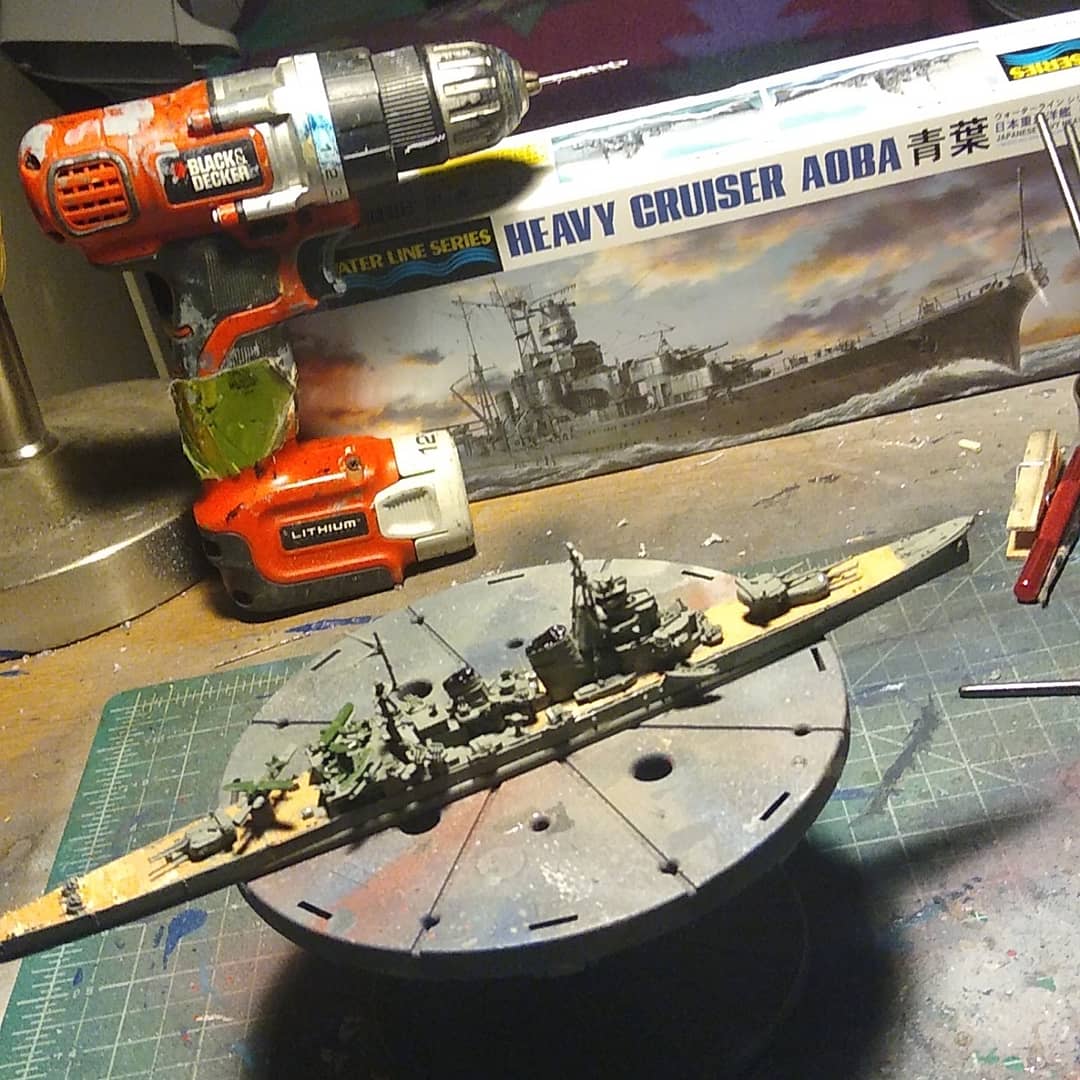
At the budget-friendly end of the Hasegawa waterline lineup, the Aoba serves as an excellent entry point for builders who want to try the brand without committing to a larger, more expensive kit. The parts are large enough to handle comfortably, and the assembly sequence is straightforward. I completed mine in about 6 hours, making it one of the quicker builds in the series.
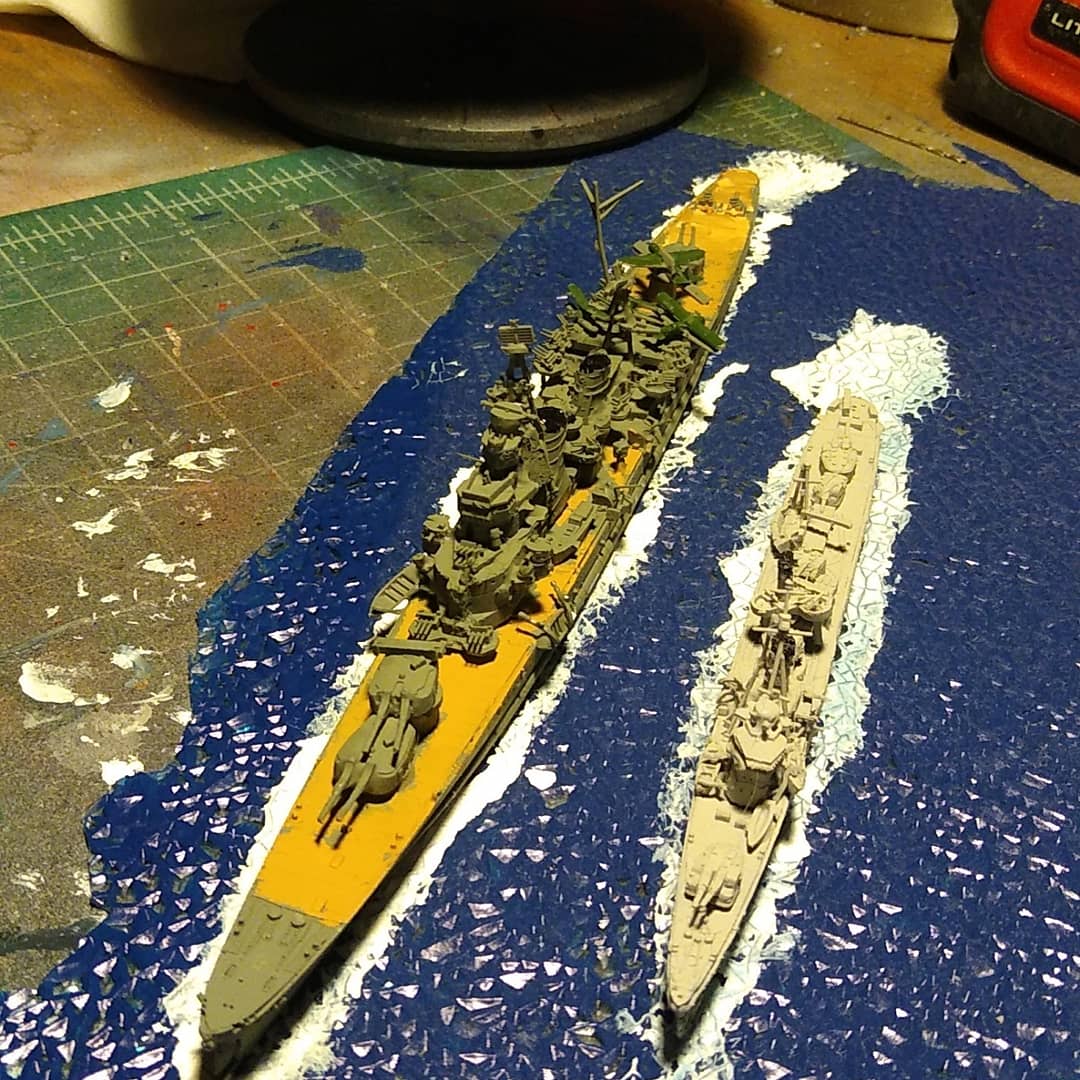
Cruiser Modeling at 1/700 Scale
Heavy cruisers at 1/700 scale offer a different building experience compared to battleships and carriers. The hull is narrower and longer, which means fewer large flat surfaces to paint and more interesting superstructure work. The Aoba’s compact bridge structure and twin funnels create a distinctive profile that looks great on the shelf next to larger warships.
The smaller scale of the superstructure parts means you will be working with some very small pieces. A good pair of fine-tip tweezers is essential for this build. Take your time with the bridge windows and radio mast, as these are the details that make the finished model look authentic rather than toy-like.
Value and Recommendation
For the price, the Aoba is hard to beat. It delivers the same Hasegawa build quality and historical accuracy as kits costing twice as much. If you are new to 1/700 waterline modeling and want to try a Hasegawa kit without a big investment, this is the one I would recommend starting with.
Experienced builders looking to round out an IJN fleet collection will also appreciate the Aoba. Cruisers are the workhorses of any navy, and having one or two in your display adds visual variety and historical completeness to a fleet diorama.
7. IJN Aircraft Battleship Ise – Unique Hybrid Warship
HASEGAWA 49119 1/700 IJN Aircraft Battleship Ise
1/700 Scale
11.81 x 3.94 x 7.87 in
0.88 Pounds
Hybrid Battleship-Carrier Conversion
Pros
- Unique hybrid warship design
- High detail on flight deck section
- Includes decals for markings
- Interesting historical subject
Cons
- Requires full assembly and painting
- Limited documentation on assembly
The Ise is one of the most unusual warships ever built. After losing two carriers at the Battle of Midway, the Japanese Navy converted the stern halves of the Ise-class battleships into miniature flight decks while keeping the forward battleship armament intact. The result was a hybrid warship that looked like nothing else on the ocean. This Hasegawa kit captures that bizarre and fascinating conversion in 1/700 scale with impressive accuracy.
Building the Ise is a different experience from any other waterline kit because you are essentially building two ships in one. The forward half is a standard battleship with twin 14-inch gun turrets, while the aft section transitions into a flat flight deck with anti-aircraft gun sponsons. The engineering challenge of making this hybrid look cohesive falls on Hasegawa’s designers, and they pulled it off well.
The detail on the flight deck section is particularly noteworthy. The support structure beneath the deck, the elevator openings, and the anti-aircraft gun positions are all molded with precision. Painted in IJN gray with some weathering, the flight deck section looks distinctly different from the battleship forward section, which is historically accurate since the conversion was a wartime expedient.
Building the Hybrid Conversion
The Ise’s unique design means some parts you would expect on a standard battleship, like the aft turrets and the stern superstructure, are replaced by the flight deck assembly. The instructions walk you through this clearly, but pay close attention to which parts you are using, since some standard battleship parts are not used in this conversion variant.
I recommend test-fitting the flight deck section before committing with glue. The transition between the battleship hull and the carrier deck needs to be clean for the model to look right. A little sanding and adjustment at this stage saves a lot of frustration later.
Historical Significance
The Ise-class conversions represent a desperate measure by a navy running out of carriers. While they saw limited actual use as aircraft carriers, the Ise and Hyuga did serve in the Battle of Cape Engano. Building this kit is a chance to own a model of one of naval history’s most interesting experiments in ship design.
Pair this kit with the Hyuga to show both ships of the class. The two models side by side make for an eye-catching display that sparks conversation among anyone who sees them. Most people have never seen a hybrid battleship-carrier, and these kits let you show them exactly what that looked like.
8. IJN Aircraft Battleship Hyuga – Ise-Class Conversion
Hasegawa 1/700 Water Line Series Japanese Navy Air Battleship Hyuga Plastic Model 120
1/700 Scale
11.81 x 3.94 x 7.87 in
14.08 Ounces
Ise-Class Hybrid Battleship
Pros
- Highly detailed molds
- Joy to build experience
- Excellent mold quality
- Good design of parts throughout
Cons
- Assembly instructions can be confusing
- Requires separate tools and paint
The Hyuga is the sister ship of the Ise, sharing the same hybrid battleship-carrier conversion. Where this kit distinguishes itself is in the mold quality. Reviewers consistently describe the Hyuga as a joy to build, praising the excellent molds and thoughtful part design. At 4.8 stars with 88 percent of reviews at five stars, this is clearly one of the strongest kits in the Hasegawa waterline lineup.
When I built the Hyuga alongside the Ise, I noticed that the parts had slightly crisper detail on the Hyuga. The flight deck gratings, the anti-aircraft gun tubs, and the bridge structure all had sharper mold lines. This suggests the Hyuga may use a newer or better-maintained mold than the Ise, which is good news for builders who want the best possible surface detail out of the box.
The build experience is genuinely enjoyable. The parts fit well, the assembly sequence makes sense, and the finished model has a presence on the shelf that draws the eye. There is something inherently interesting about a warship that is half battleship and half aircraft carrier, and this kit captures that duality beautifully.
Navigating the Instructions
The most common complaint about this kit is that the instructions can be confusing. Like most Hasegawa kits, the instructions are primarily in Japanese with English part numbers. For a kit with an unusual design like the Hyuga, this can make it harder to understand which parts go where, especially around the flight deck conversion area.
My advice is to study each assembly step before starting it. Look at the completed step diagrams carefully and dry-fit parts before applying glue. Having reference photos of the actual Hyuga handy also helps, since you can compare the model to the real ship as you build.
Pairing with the Ise
Building both the Ise and Hyuga together lets you appreciate the small differences between the two ships. While the basic hull form is identical, the bridge structures and some deck fittings differ. Displaying both completed models side by side creates a unique visual statement about wartime naval improvisation that no other pair of model kits can replicate.
If you are choosing between the two, the Hyuga gets the edge for mold quality and build experience. If you want both, build the Ise first so you understand the conversion layout, then enjoy the smoother build of the Hyuga as your second pass at this unique ship type.
9. Japanese Submarine Depot Ship – Rare Support Vessel
Hasegawa WL522 49522 1/700 Japanese Submarine Depot Ship
1/700 Scale
4.96 Ounces
Plastic
Rare IJN Submarine Support Ship
Pros
- Perfect 5.0 star rating
- Excellent detail rivaling larger scales
- Great value for detail level
- Unique vessel type rarely modeled
Cons
- Limited aftermarket parts availability
- Requires assembly and painting
Every fleet needs its support vessels, and the Japanese Submarine Depot Ship kit is one of the most pleasant surprises in the Hasegawa 1/700 waterline lineup. This kit holds a perfect 5.0-star rating from 15 reviewers, which is remarkable for any model kit, let alone one depicting a support vessel rather than a glamorous battleship or carrier. The reviewers who built this kit were genuinely impressed by the level of detail packed into a relatively simple subject.
Several builders noted that the detail on this kit is almost as nice as kits costing much more in 1/350 scale. That is high praise for a 1/700 waterline model. The cranes, deck fittings, and superstructure all benefit from precise mold work that captures the industrial character of a submarine depot ship. These vessels were essentially floating bases that serviced and resupplied submarines between patrols, and this kit conveys that working-ship aesthetic well.
The value proposition here is outstanding. Among all the Hasegawa 1/700 waterline ship kits, this one offers some of the best detail-per-dollar you will find. It is also one of the more affordable kits in the lineup, making it an easy recommendation for builders who want to add something different to their collection without spending much.
Why Build a Support Vessel
Support vessels add authenticity to any naval display. A fleet of nothing but battleships and carriers looks impressive but incomplete. Adding a depot ship, a vessel that actually kept the fleet functioning, gives your collection historical depth and visual variety. The different proportions and deck layout of a support vessel create an interesting contrast next to combat ships.
This kit is also a relaxing build. Without the complex turrets, aircraft, and weapons systems of a battleship or carrier, the assembly goes quickly and smoothly. It is a nice palate cleanser between more demanding builds, and the finished model still looks great on the shelf.
Collectibility and Rarity
Submarine depot ships are rarely modeled by any manufacturer in any scale. Having one available in the Hasegawa waterline series is unusual and worth taking advantage of. These kits can go in and out of production, and a unique subject like this one might become hard to find. If the idea of modeling an IJN support vessel appeals to you, I would not wait too long to pick this one up.
Collectors building comprehensive IJN fleet displays will find this kit fills an important gap. No realistic fleet diorama is complete without the logistics tail that kept the combat ships operational. This depot ship kit tells that part of the story.
10. IJN Aircraft Carrier Shoho – Compact Light Carrier
ハセガワ Hasegawa 49217 WL217 – Ijn Aircraft Carrier Shooho
1/700 Scale
11.61 x 1.18 x 1.57 in
6.88 Ounces
Light Aircraft Carrier
Pros
- Perfect 5.0 star rating
- Fine kit quality from Hasegawa
- Compact build great for beginners
- Quality waterline warship
Cons
- Requires assembly and painting
- Small kit with limited parts
The Shoho rounds out our list with another perfect 5.0-star rating. This light carrier was the first Japanese aircraft carrier sunk during World War II, lost at the Battle of the Coral Sea in May 1942. Despite her short career, the Shoho is an important subject for any IJN carrier collection, and this Hasegawa kit does her justice with clean molding and straightforward assembly.
As the smallest carrier kit in the Hasegawa waterline lineup, the Shoho is an approachable build for those new to carrier modeling. The reduced parts count and simpler flight deck layout mean you can complete this kit faster than the Akagi while still learning the techniques that apply to all carrier builds. I finished mine in about 5 hours, making it one of the quickest builds in the series.
Do not let the small size fool you into thinking this kit lacks detail. The island superstructure, anti-aircraft gun positions, and hull side details are all present and well-molded. The flight deck includes molded-in detail that accepts paint and weathering beautifully. After a wash and some careful dry-brushing, this little carrier looks just as convincing as her larger sisters.
Beginner-Friendly Carrier Build
If you want to try building a carrier but are intimidated by the 195-piece Akagi, start with the Shoho. You will learn the same basic skills, handling small flight deck parts, aligning the island superstructure, and painting aircraft markings, but with fewer parts to manage. It is the perfect training kit before moving on to the fleet carriers.
The small finished size is actually an advantage for display purposes. The Shoho fits easily on a bookshelf or in a display case alongside larger models without crowding. Her compact profile creates visual variety when displayed next to the bigger carriers in your collection.
Fleet Collection Value
The Shoho fills an important slot in any IJN carrier collection. She represents the light carrier class that the Japanese Navy relied on for escort and support duties. Alongside the Akagi and other fleet carriers, the Shoho shows the full range of Japanese carrier aviation from the massive fleet carriers down to the humble light carriers.
Given the perfect rating and the historical significance of the subject, this kit is an easy recommendation. It is affordable, builds quickly, looks great when finished, and rounds out any IJN waterline collection. Builders of all experience levels will find something to enjoy here.
Buying Guide: Choosing the Right Hasegawa 1/700 Waterline Kit
Picking the right kit from the Hasegawa 1/700 waterline lineup comes down to three things: your building experience, the type of ship that interests you, and how much display space you have. Let me walk you through the key factors that should guide your decision.
Skill Level Matters. If this is your first 1/700 waterline build, start with the Aoba heavy cruiser or the Kongo battleship. Both kits have straightforward assembly, forgiving parts fit, and manageable parts counts. The Aoba is the most affordable option, while the Kongo offers the best overall building experience for a first-timer. Save the Akagi carrier and the Mikasa pre-dreadnought for when you have a couple of builds under your belt.
Ship Type Selection. Hasegawa’s waterline lineup covers several ship types, and each offers a different building experience. Battleships like the Kongo, Hiei, and Kirishima give you tall superstructures and multiple turrets to build. Carriers like the Akagi and Shoho add flight decks and aircraft to the mix. The hybrid Ise and Hyuga offer something truly unique. The submarine depot ship provides a change of pace from combat vessels.
Mold Age and Detail Quality. Not all Hasegawa waterline kits use the same generation of molds. Some, like the Kirishima, date back to the 1970s and may show their age in softer detail and minor flash. Others, like the Hyuga and Akagi, benefit from newer tooling with sharper surface detail. If you want the best out-of-box detail, prioritize kits with higher review counts and more recent production dates.
Build Time Expectations. Most of these kits take between 5 and 15 hours to complete, depending on the parts count and your painting approach. The Shoho and Aoba are on the shorter end at around 5 to 7 hours. The Akagi with its 195 pieces will take closer to 12 to 15 hours. Plan your builds around your available time and do not rush the painting and finishing steps.
Display Space Planning. At 1/700 scale, even the largest kits are only about 8 to 10 inches long. A single shelf can hold an entire fleet. If you are working with limited space, consider building a themed collection: a Pearl Harbor strike force with the Akagi and Shoho, or a Guadalcanal group with the Hiei and Kirishima. Themed displays tell a story and make efficient use of shelf space.
For a deeper look at larger-scale ship modeling, check out our guide to 1/350 scale warship model kits for naval enthusiasts to see how the bigger scale compares in detail and build commitment.
Frequently Asked Questions
What are the best Hasegawa 1/700 waterline ship kits for beginners?
For beginners, I recommend starting with the IJN Heavy Cruiser Aoba or the IJN Battleship Kongo. The Aoba is the most affordable kit in the lineup with a straightforward assembly that takes about 6 hours. The Kongo offers an excellent build experience with clean parts fit and a satisfying result. Both kits teach fundamental 1/700 building techniques without overwhelming you with tiny parts.
Which is better: Tamiya, Aoshima, or Hasegawa 1/700 waterline kits?
All three brands produce quality 1/700 waterline kits, and experienced builders on forums like r/modelmakers note that the differences between them are relatively small. Hasegawa generally offers the best historical accuracy and mold detail for IJN subjects. Tamiya kits tend to be slightly less detailed but easier to build. Aoshima sometimes includes more modern tooling for certain ship classes. For IJN ships specifically, Hasegawa has the broadest selection.
How long does it take to build a 1/700 waterline ship model?
Build time varies by kit complexity. Simple kits like the Shoho or Aoba take about 5 to 7 hours. Standard battleship kits like the Kongo or Hiei take 8 to 10 hours. Complex kits like the Akagi with 195 pieces can take 12 to 15 hours. These times assume you are painting and applying decals, which accounts for roughly half the total build time.
What is the best scale for model ships?
The best scale depends on your goals. 1/700 scale is ideal for building fleet displays because the models are small enough to group multiple ships on a single shelf. 1/350 scale offers much more detail but produces models that are twice as large and significantly more expensive. For most hobbyists, 1/700 is the practical choice for building collections, while 1/350 is better for individual showcase builds.
Do Hasegawa 1/700 waterline kits require glue and paint?
Yes, all Hasegawa 1/700 waterline ship kits require both plastic cement and paint for assembly. They are not snap-together kits. You will need standard modeling tools including plastic cement, a hobby knife, tweezers, and acrylic or enamel paints. The kits include detailed instructions and decals, but glue and paint are sold separately.
Final Thoughts
The Hasegawa 1/700 waterline ship kits offer something for every naval model builder, from the budget-friendly Aoba cruiser that is perfect for beginners to the detailed Akagi carrier that will keep an intermediate builder engaged for days. My top recommendation for most builders is the IJN Battleship Kongo, which earned our Best Value badge for its combination of build quality, detail, and an approachable assembly experience. For collectors who want a showpiece, the Akagi with its 195 parts and included aircraft is hard to beat.
What makes this lineup special is the range of subjects covered. You can build an entire IJN task force with carriers, battleships, cruisers, and support vessels all from Hasegawa’s catalog, and every model will sit at the same waterline level for a cohesive display. Whether you are building your first 1/700 waterline kit or your fiftieth, Hasegawa’s combination of mold quality, historical accuracy, and consistent engineering makes them a reliable choice for 2026 and beyond.