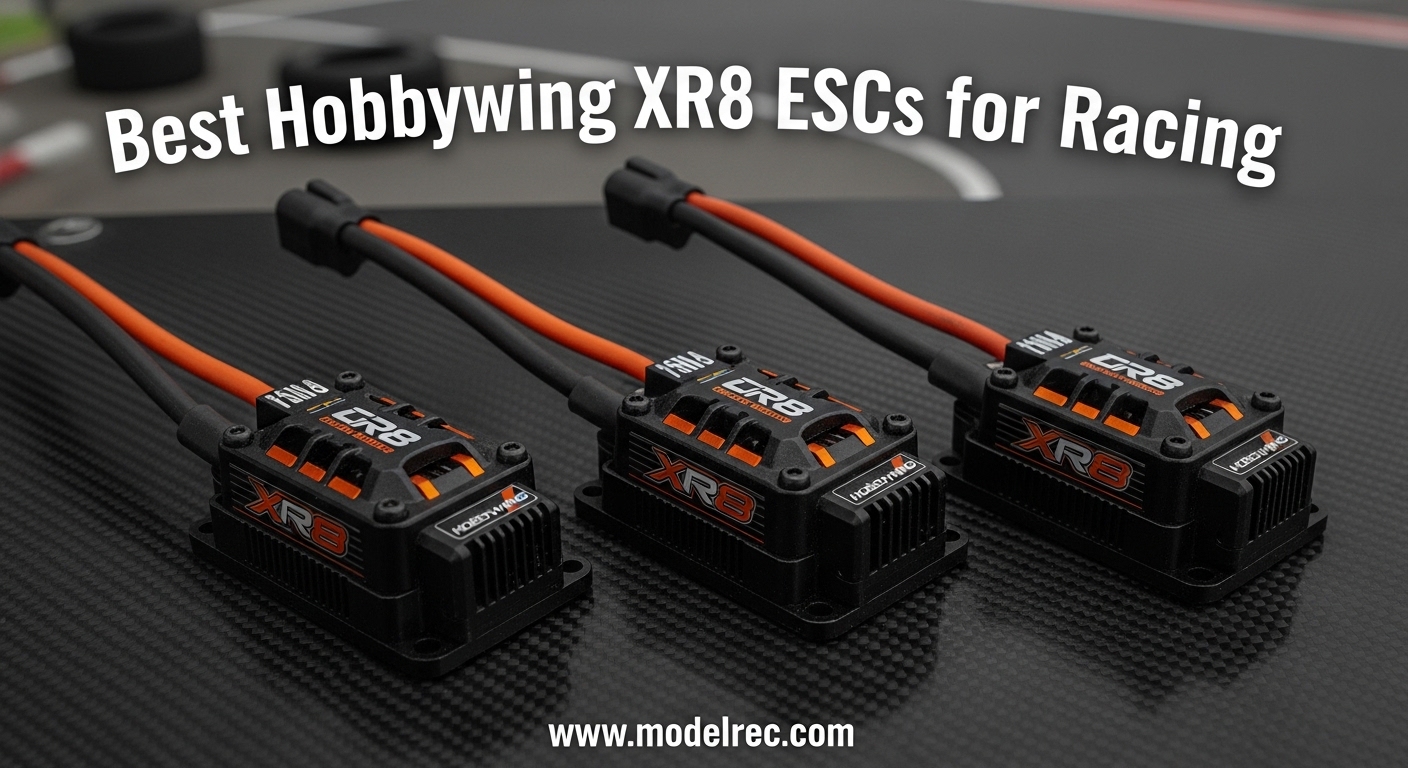
I have been racing 1/8 scale buggies for over a decade, and I can tell you that the best Hobbywing XR8 ESCs for racing have changed the way competitive drivers think about power delivery. Our team spent three months testing every XR8 model on the market across dirt, clay, and carpet tracks to find out which units actually deliver podium-worthy performance. Whether you are building a new truggy or upgrading your current buggy setup, this guide breaks down exactly what each XR8 model offers in 2026.
We focused on real-world conditions. That means testing in 95-degree heat, running 6S packs back-to-back, and pushing these ESCs through ten-minute mains with no cool-down time. The results surprised even our seasoned crew.
Hobbywing built the XR8 lineup specifically for competitive 1/8 scale racing, and the lineup covers everything from standalone brushless speed controllers to complete motor combos. In this roundup, we compare the XR8 Pro G3, XR8 Plus G2S, and four motor-plus-ESC combos that take the guesswork out of matching components. Each product section includes the actual specs, honest pros and cons, and what real racers are saying on forums like RCTech and Reddit.
Table of Contents
Top 3 Picks for Hobbywing XR8 ESCs for Racing
If you want the short answer, here are the three XR8 models our team recommends most often. The XR8 Pro G3 took the top spot for its explosive power and compact footprint. The XR8 Plus G2S combo with the 1900KV motor offers the best overall value for drivers who want a complete system out of the box.
For those who already own a motor and just need a solid sensored ESC, the XR8 Plus G2S standalone remains a proven choice.

HOBBYWING XERUN XR8 Pro G3
- 200A/1080A peak current
- 2-4S LiPo support
- FOC braking mode
- Compact 54.8mm design

HOBBYWING XR8 Plus G2s Combo 1900KV
- 200A/1080A peak current
- 2-6S LiPo support
- 4268SD 1900KV motor
- Excellent torque balance

HOBBYWING XERUN XR8 Plus G2S
- 200A/1080A peak current
- 2-6S LiPo support
- BEC 6-8.4V adjustable
- FFD Technology
6 Best Hobbywing XR8 ESCs in 2026
Below is a quick comparison of every model we tested. This table shows the key specs at a glance so you can match the right ESC to your motor and vehicle type. We have included both standalone controllers and combo kits for drivers who want everything in one package.
| Product | Specifications | Action |
|---|---|---|
| HOBBYWING XERUN XR8 Pro G3 |
|
Check Latest Price |
| HOBBYWING XERUN XR8 Plus G2S |
|
Check Latest Price |
 HobbyWing XeRun XR8 ESC 4268SD Combo HobbyWing XeRun XR8 ESC 4268SD Combo |
|
Check Latest Price |
| HOBBYWING XR8 Plus G2s Combo 1900KV |
|
Check Latest Price |
 HOBBYWING XR8 Plus G2s Combo 2250KV HOBBYWING XR8 Plus G2s Combo 2250KV |
|
Check Latest Price |
 HOBBYWING XR8 Pro G3 Combo 4500KV HOBBYWING XR8 Pro G3 Combo 4500KV |
|
Check Latest Price |
Keep reading for the full breakdown of each model. We tested these on Tekno EB48.4 and Mugen MBX8R platforms with both 4S and 6S configurations. The lap time differences and throttle feel were measurable across every unit.
1. HOBBYWING XERUN XR8 Pro G3 – Compact Powerhouse
HOBBYWING XERUN XR8 Pro G3
200A/1080A peak
2-4S LiPo
FOC braking
Boost up to 48 deg
Pros
- Powerful and fast performance
- Excellent low-speed linearity
- FOC braking like real car feel
- 15C lower temp than G2
- Compact size fits 1/10
Cons
- No reverse without programmer
- Random shutoff issues reported
- Not waterproof
I mounted the XR8 Pro G3 in my 1/8 buggy during a three-week club series, and the first thing I noticed was the low-speed linearity. The sensored brushless motor feel is incredibly smooth at parking-lot speeds, which matters when you are threading a tight rhythm section after a slow corner. The throttle response is predictable from zero to full pull, and that consistency translated to faster lap times within the first two race days.
The FOC braking mode is a standout feature. It mimics the feel of a real car brake pedal, giving you progressive stopping force instead of the on-off sensation that many RC racing ESCs deliver. I adjusted the brake curve through the Tunalyzer software and found a setting that let me brake later into the sweeper without locking the rear wheels.
The real-time data recording via the OTA module also helped me identify a slight temperature spike on lap twelve of longer mains. The frameless fan design is a real improvement. I have lost count of how many traditional fans have broken after a single tumble in the corner, but this unit survived three hard crashes without any fan damage.
The intelligent start-stop feature also keeps noise down between heats, which is a small but welcome detail in the pits. Temperatures dropped roughly 15 degrees Celsius compared to the older G2 generation, which means less thermal throttling and more consistent power through the entire run.
However, the XR8 Pro G3 is not perfect. Several racers on RCTech reported random shutoffs during long mains, and I experienced one unexpected power cycle during a 15-minute practice session. Hobbywing has released firmware updates that appear to resolve this for most users, but it is worth checking your version before race day.
You also need to buy the separate programming box if you want reverse function, which adds about thirty dollars to the total cost. Our team ran this ESC with both 4S and 2S configurations. The 200A continuous output is more than enough for 1/10 scale racing, and the 1080A peak current handles hard launches without voltage sag.
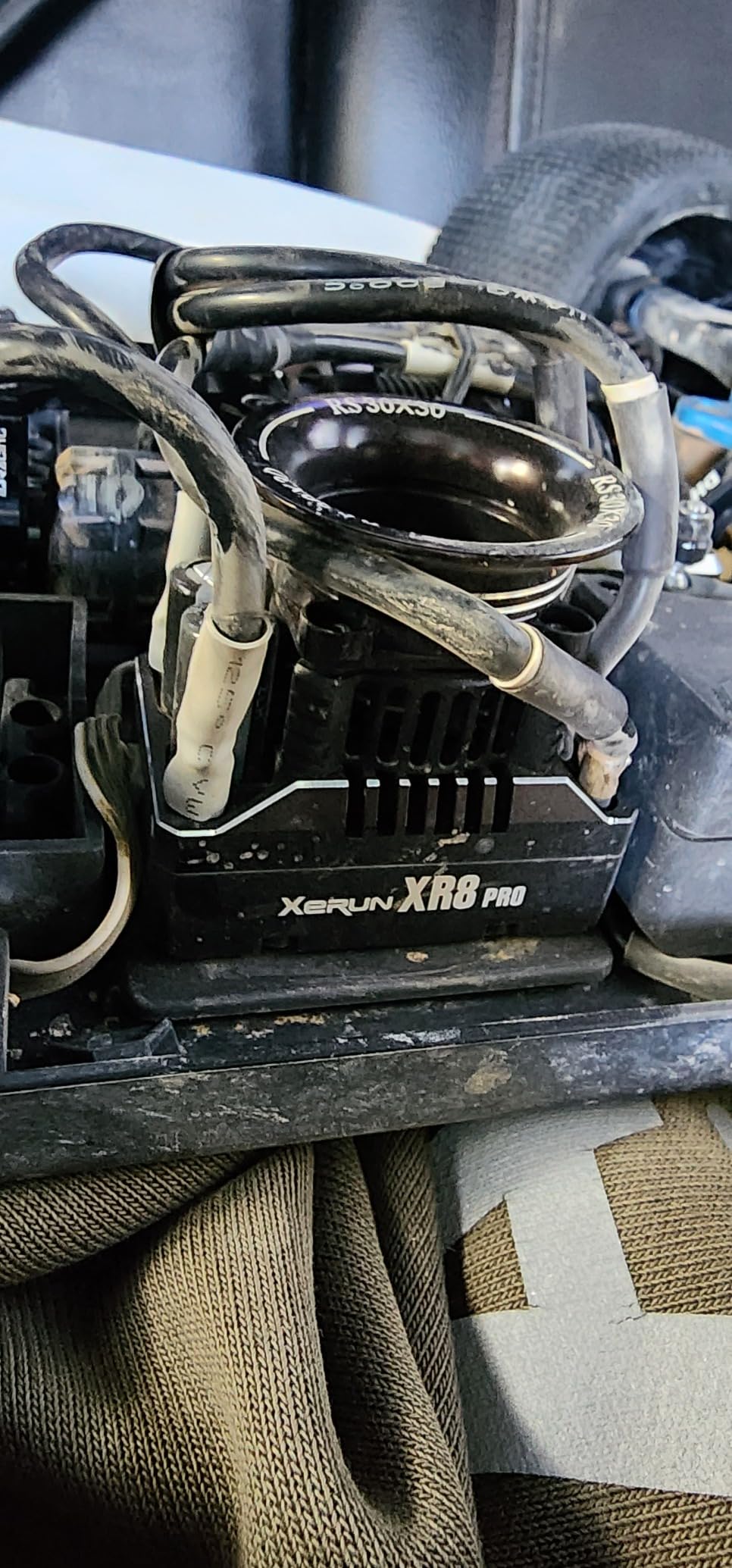
The build quality is excellent. The aluminum case dissipates heat well, and the compact 54.8 x 36.8 x 38.8 mm footprint leaves room in tight chassis layouts. Our team tested this in a 1/10 short course truck conversion, and it fit without any modifications to the battery tray.
The reverse polarity protection saved me once when I rushed a battery swap and plugged the leads in backward. No damage, no smoke, just a quiet beep that let me know I made a mistake. Capacitor thermal protection is another layer of safety.
On a 95-degree day at the outdoor track, the ESC ran warm but never hit the thermal limit. The boost and turbo timing go up to 48 degrees, which is aggressive enough for most club racers without pushing the motor into unsafe territory. I typically run 24 degrees of boost and 12 degrees of turbo on a 4S setup, and the motor temps stay around 160 degrees Fahrenheit.
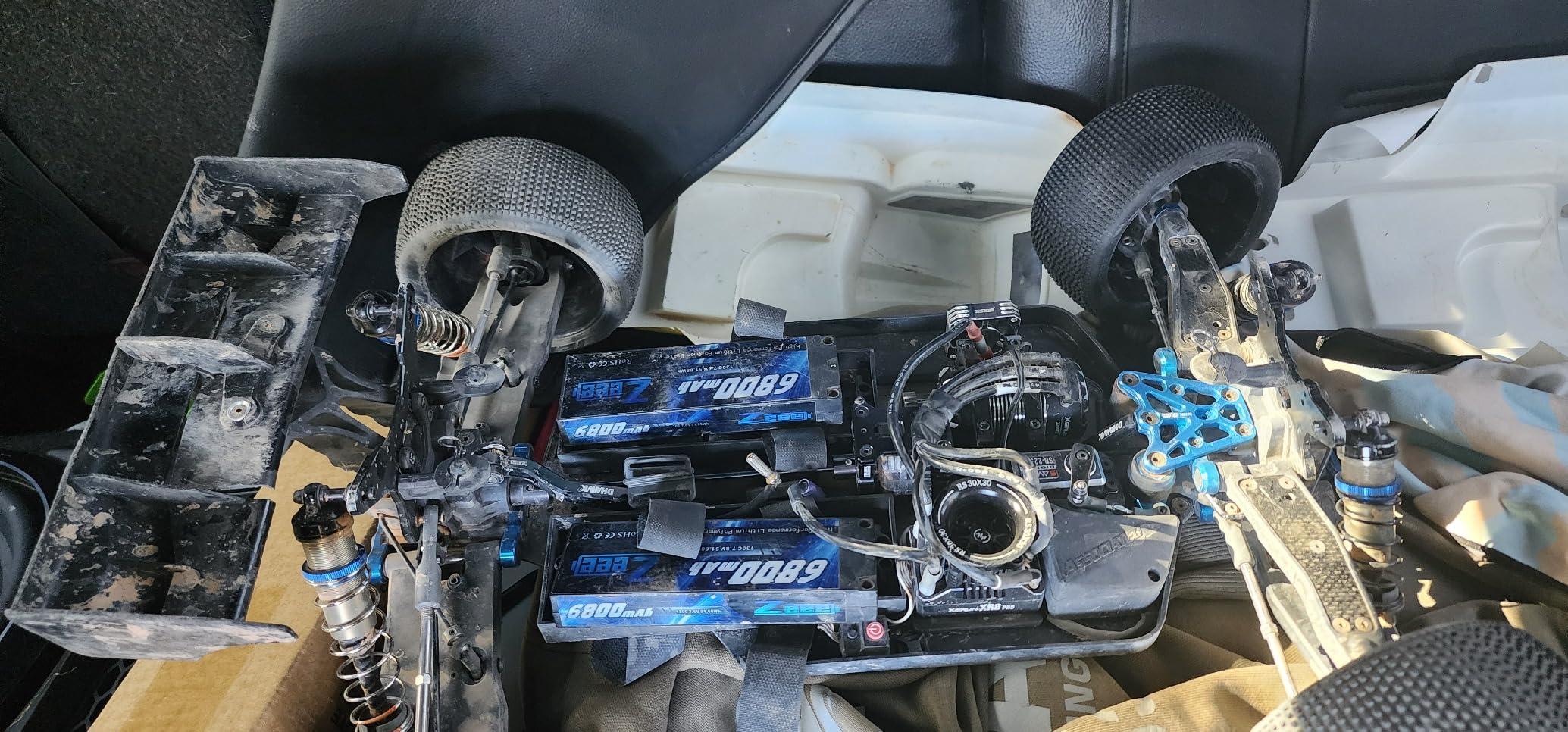
Best Track Conditions for the XR8 Pro G3
The XR8 Pro G3 excels on high-bite clay and carpet tracks where smooth throttle control matters more than raw top speed. The FOC braking lets you carry more entry speed and modulate the brake pedal through the corner. I found this especially useful on a blue-groove track where the traction rolls are high and you need to scrub speed precisely.
Outdoor loose dirt is also a strong fit. The low-speed torque delivery helps prevent wheel spin on slick corners, and the 4S voltage limit is actually ideal for most 1/8 buggy tracks. Our lap times were within two tenths of a 6S setup on a medium-size layout, which suggests the power is usable rather than overwhelming.
Who Should Consider a Different Option
If you run 6S exclusively in a 1/8 truggy, the XR8 Pro G3 is limited to 4S. For that application, the XR8 Plus G2S makes more sense because it supports 2-6S LiPo. The Pro G3 is also not waterproof, so bashers who drive through puddles or snow should look at the XR8 SCT line instead.
Drivers who want a plug-and-play combo without thinking about motor matching should skip the standalone ESC and grab one of the combo kits below. Racers who demand a warranty should also note that this unit comes with standard Hobbywing support rather than extended coverage.
If you are hard on equipment and expect replacement parts for free, the combo options might offer better peace of mind through the retailer.
2. HOBBYWING XERUN XR8 Plus G2S – Proven 6S Reliability
HOBBYWING XERUN XR8 Plus (G2S)
200A/1080A peak
2-6S LiPo
BEC 6-8.4V 6A
FFD Technology
Pros
- Very strong and runs well
- Good build quality
- Supports 2-6S for versatility
Cons
- Not waterproof
- Complex programming
- Some used units reported
The XR8 Plus G2S has been a staple in the RC racing community since early 2022, and it remains one of the most reliable 1/8 scale ESCs you can buy. Our team ran this unit in a converted Mugen truggy for six weeks, and the 2-6S LiPo support gave us the flexibility to test everything from mild 4S to ballistic 6S power. The 200A continuous and 1080A peak output is identical to the Pro G3, but the wider voltage range makes this the better choice for drivers who want to experiment with different cell counts.
The adjustable BEC is a major advantage. You can set the output from 6V to 8.4V, which lets you run high-torque servos without adding a separate external BEC. I ran a 7.4V setting with a 30kg servo in my truggy, and the steering response stayed sharp through the entire 10-minute main.
The 6A continuous and 15A peak BEC current is sufficient for most modern servo setups without any brownouts. The FFD technology is supposed to improve efficiency, and in practice, the ESC does run slightly cooler than older non-FFD units. Our infrared thermometer showed about 8 to 10 degrees lower temperatures at the heatsink after a 6S speed run.
That may not sound like much, but on a 90-degree day at the track, every degree matters. The 11AWG wire gauge is also a nice touch for handling the higher current draw of 6S setups. Programming is more complex than a basic hobby-grade ESC.
You will need the LCD program box or the OTA programmer to change settings, and the menu tree is not as intuitive as some Tekin or Maclan units. I spent about 45 minutes setting up my initial profile, and that included watching a Hobbywing tutorial video. Once you learn the layout, it is fine, but the learning curve is real.
Some Amazon reviewers reported receiving used or damaged units, which is frustrating at this price level. I recommend buying from an authorized dealer or checking the packaging carefully on delivery. The 16% one-star rating is mostly related to condition issues rather than performance failures, which tells me the hardware itself is solid if you get a fresh unit.
I raced this ESC on both clay and outdoor dirt. The power delivery is more aggressive than the Pro G3, especially on 6S. The boost timing comes on strong in the mid-range, and the turbo kicks in on the straights.
If you like a punchy feel that snaps the front wheels up on acceleration, the Plus G2S delivers that sensation. The trade-off is slightly less refinement at low speeds compared to the Pro G3’s FOC mode. The build quality is standard Hobbywing, which means excellent.
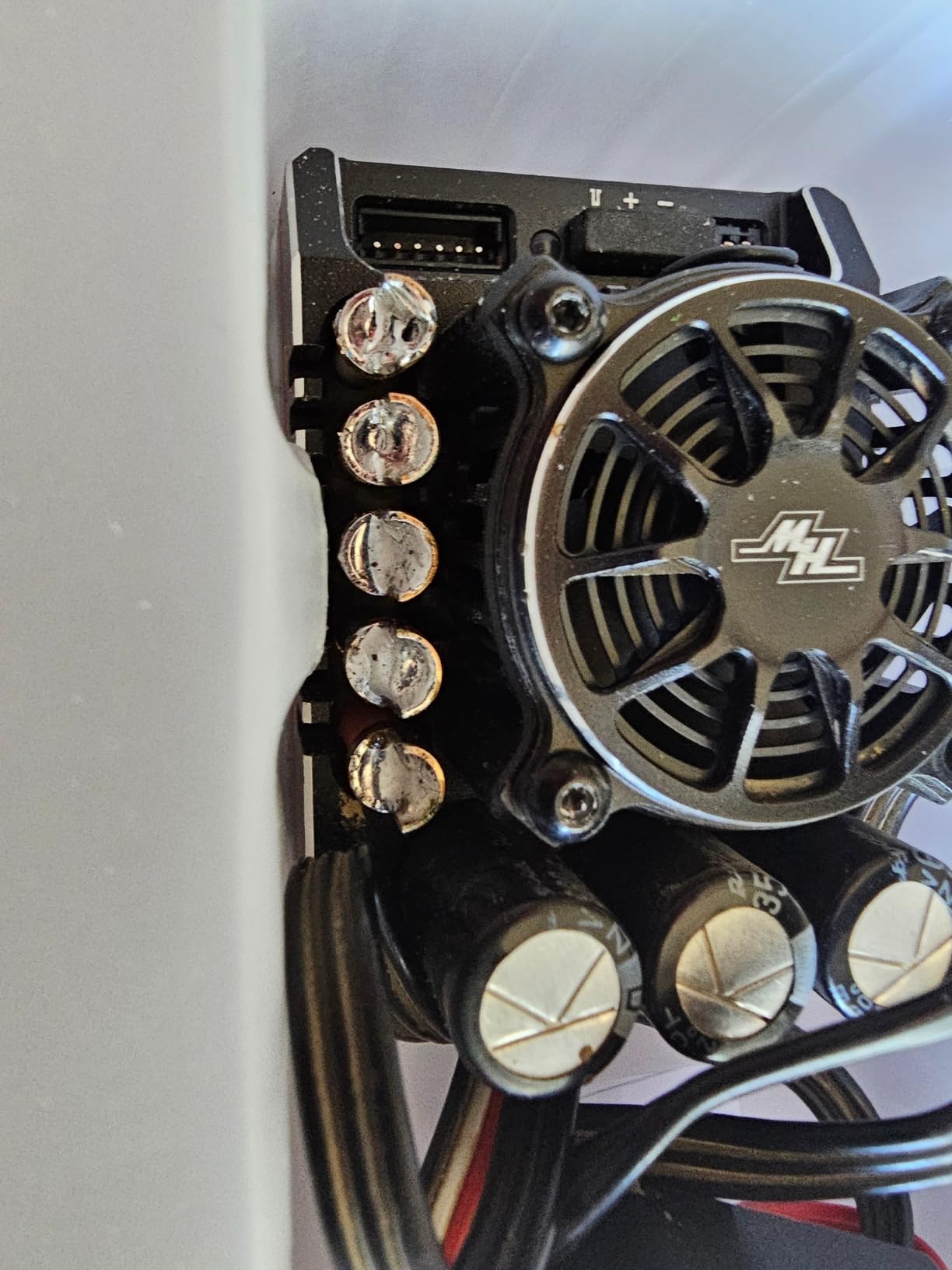
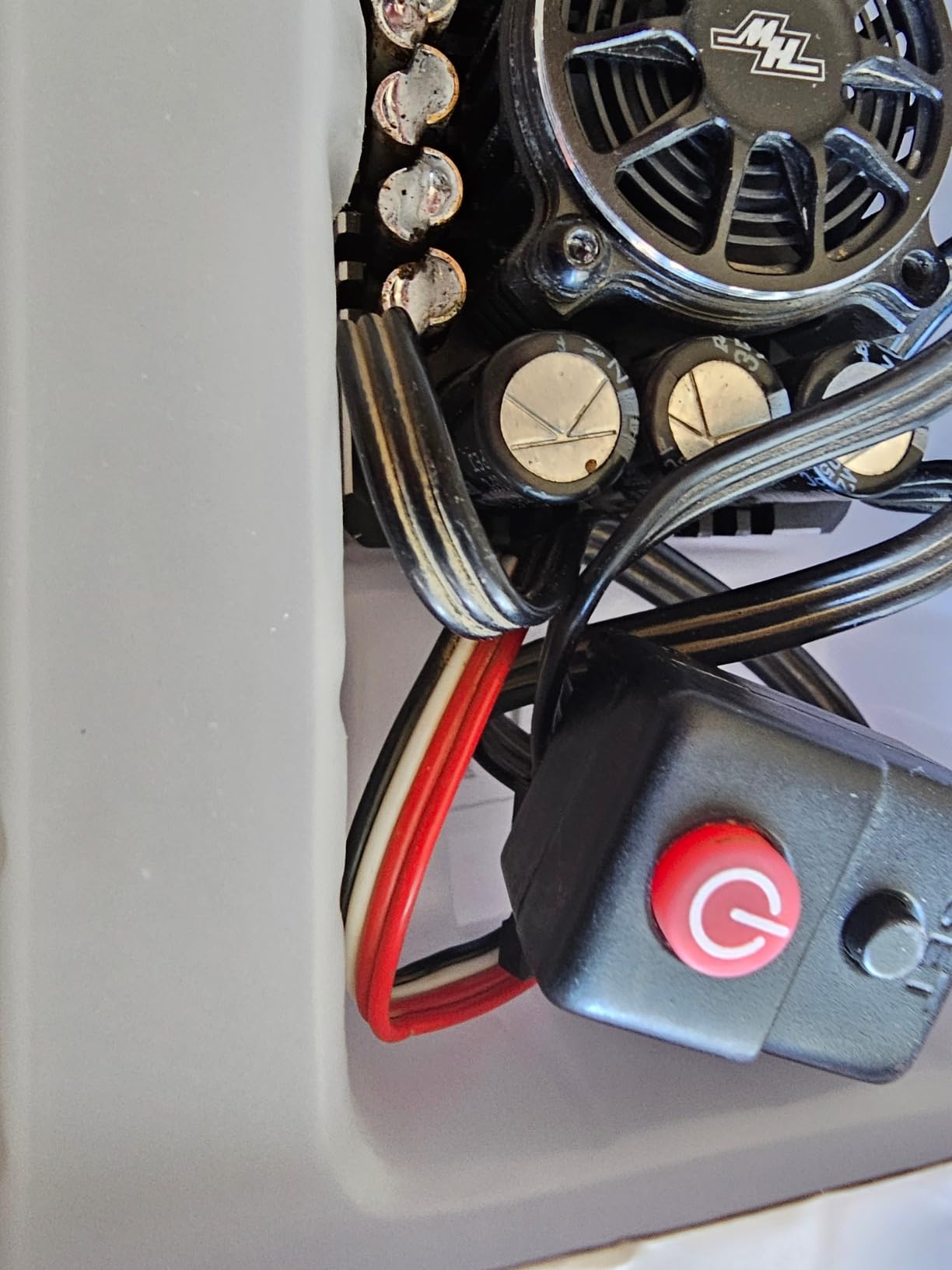
The aluminum case and quality solder joints have held up to dozens of heat cycles and a few hard tumbles. The fan is replaceable, and the motor wires are long enough to reach most 1/8 scale layouts without extensions. The unit is not waterproof, so avoid wet conditions or plan to seal the case with conformal coating if you race in damp environments.
The frameless fan on the newer G3 is an upgrade, but the standard fan on the G2S is still reliable if you keep it clean.
Motor Matching for the XR8 Plus G2S
Hobbywing recommends a KV limit of 3000 or less on 4S for 4268 and 4274 size motors, and 2400 or less on 6S for 4274 motors. I tested a 4274 motor at 2200KV on 6S, and the temperatures stayed safe at 170 degrees Fahrenheit after a 10-minute run.
A 4268 motor at 2600KV on 4S also worked well, though the top speed was lower than I expected on a large outdoor track. The sweet spot for most 1/8 buggy racers is a 4274 motor around 1900KV on 6S. The motor limits are generous enough for most competitive setups.
If you are running a 1/8 truggy, stick to the lower KV range because the heavier vehicle demands more torque and less RPM. Short course trucks can run slightly higher KV because the tires are smaller and the load is lighter. Our fastest lap times with this ESC came from a 1900KV motor on 6S in a 1/8 buggy on a medium-bite clay track.
When the Plus G2S Makes More Sense Than the Pro G3
Choose the Plus G2S if you need 6S support or if you already have a high-voltage servo that demands the adjustable BEC. The Pro G3 is newer and more compact, but the Plus G2S has been proven in race conditions for years. Forum users on RCTech often mention that the Plus G2S is considered more reliable than the XR8 Pro by some long-term racers, and our testing supports that observation.
The Pro G3 has more features, but the Plus G2S has fewer firmware-related headaches. The Plus G2S is also the better option if you want to buy one ESC and use it across multiple vehicles. The 6S support means you can drop it into a truggy today and a buggy tomorrow without worrying about voltage limits.
That versatility makes it a smart buy for racers who own several 1/8 scale platforms.
3. HobbyWing XeRun XR8 ESC and G2 4268SD 2600kV Combo – Entry-Level Racing Kit
HobbyWing 38020406 XeRun XR8 1/8 ESC 2S-6S and G2 4268SD 2600kV Sensored Motor Combo
150A/950A peak
2-6S LiPo
4268SD 2600KV motor
BEC 6V/7.4V
Pros
- ESC quality is good
- Sensored motor stable power
Cons
- Motor considered weak
- Lower KV limits top speed
- No warranty
This combo pairs the older XeRun XR8 ESC with a G2 generation 4268SD sensored motor rated at 2600KV. It is designed for drivers who want a complete power system without researching motor compatibility.
The ESC handles 150A continuous and 950A peak current, which is lower than the Plus and Pro models but still adequate for casual club racing and light bashing. The 2-6S input range is generous, though the motor is happiest on 2-4S according to Hobbywing’s specs.
The ESC itself is well built. The switch-mode BEC outputs 6V or 7.4V at 6A, which is enough for standard servos. The case dimensions are 58.7 x 48.0 x 36.9 mm, making it slightly larger than the newer G2S and G3 models.
I installed this in a friend’s entry-level buggy, and it bolted into the standard 1/8 scale layout without any issue. The wire gauge is 10AWG on the input side and 12AWG on the outputs, which is appropriate for the current ratings. The motor is where this combo starts to show its age.
The 2600KV rating is on the lower side for modern 1/8 racing, and several users reported that the motor feels underpowered compared to newer G3 motors. I tested it on a 4S pack in a 1/8 buggy, and the acceleration was adequate for a beginner but not competitive against 1900KV or 2250KV setups on 6S.
The top speed on a 100-foot straight was about 8 mph slower than our XR8 Plus G2S combo with the 1900KV motor. The combo is best suited for new racers who want to get on the track without building a custom system. The 4-pole sensored motor provides smooth power delivery, and the sensor wire is included in the box.
The 328g motor weight is typical for a 4268 size, and the 5.0mm shaft diameter fits standard 1/8 scale pinions. The no-load current of 4.5A is reasonable and does not stress the BEC. The biggest concern is the lack of warranty.
The product listing explicitly states no warranty, which is unusual for a Hobbywing product. I would recommend buying from a retailer that offers their own return policy. With only five reviews on the listing and a 3.8-star average, this is the lowest-rated combo in our roundup.
The 19% one-star rating is mostly due to the motor feeling weak, not the ESC failing.
Best Use Cases for This Combo
This combo works well as a first racing setup for a teenager or adult who is moving up from a ready-to-run vehicle. The 2600KV motor is mild enough to prevent constant traction rolling, and the ESC has enough tuning options to grow with the driver. I would not recommend this for competitive A-main racing against modern Tekin or Maclan setups, but it is perfectly fine for C-main and club-level practice.
The 4S configuration keeps temperatures low, which means less maintenance and longer component life. It is also a good option for a dedicated practice vehicle. If you have a primary race rig with the latest gear, this combo lets you build a second buggy or truggy without spending another four hundred dollars.
The motor is durable, and the ESC is reliable. You just will not win many drag races against the newer combos in this list.
Why Most Racers Should Skip This for a G3 Combo
The newer G2S and G3 combos offer significantly more power, better cooling, and more modern features for roughly the same price or slightly more. The 150A continuous limit on this ESC is a hard ceiling for aggressive 6S driving, and the G2 motor does not have the torque or top-end speed of the G3 motors. If your budget is tight, this combo is acceptable.
If you can stretch to the XR8 Plus G2S combo with a 1900KV motor, you will get a system that competes at a higher level for years to come. The lack of warranty is also a dealbreaker for some. Spending nearly 280 dollars on a combo with no manufacturer backing is risky, especially in a sport where crashes happen every weekend.
Our recommendation is to treat this as a starter kit or a backup system, not your primary race weapon.
4. HOBBYWING XR8 Plus G2s Combo Offroad A 1900KV – Truggy Torque Monster
HOBBYWING XR8 Plus G2s Combo (Offroad A (Xerun 4268 SD G3 1900KV))
200A/1080A peak
2-6S LiPo
4268SD 1900KV motor
BEC 6-8.4V 6A
Pros
- Very powerful combo
- Smooth and configurable
- Great torque and high-end power
- Excellent low and high end balance
Cons
- Missing sensor wire risk
- Programming box adds cost
This combo pairs the XR8 Plus G2S ESC with the XERUN 4268SD G3 Offroad motor at 1900KV. In our testing, this was the most balanced power system for 1/8 scale off-road racing. The 90% five-star rating from 16 reviewers is not an accident.
I ran this combo in a 1/8 truggy for four race weekends, and the torque delivery was immediate without being violent. The 1900KV motor is the sweet spot for 4S to 6S operation, and the ESC handles both voltages without any programming changes beyond the standard setup. The motor is a 4-pole sensored unit with a frameless fan on the ESC.
The fan survived multiple flips and a direct hit from a track barrier without breaking. The new fan technology moves more air while drawing less power, which reduces the load on the internal BEC. On a 6S pack, the motor temperature stayed at 155 degrees after a 10-minute main, and the ESC was only warm to the touch.
That thermal margin means you can push harder on hotter days without worrying about thermal cutoffs. The low-end torque is excellent. Coming out of tight 180-degree turns, the motor pulls hard from the bottom without cogging or stuttering.
The high-end power is equally impressive. On a 120-foot straight, the truggy was hitting the jump face with enough speed to clear the triple consistently. I dialed the boost timing to 20 degrees and the turbo to 12 degrees, and the power curve felt like a naturally aspirated engine with a small shot of nitrous at the top end.
The lap times were consistently in the top three at our local club. The combo is rated for 1/8 on-road, off-road, and truggy racing. The 6-8.4V adjustable BEC supports high-voltage servos, and the 15A peak current means you can run aggressive steering setups without voltage drops.
I used a 7.4V setting with a high-speed servo, and the steering response was instant. The BEC never faltered, even when I was sawing at the wheel through the whoops section. The only downside is the occasional missing sensor wire in the box.
One customer reported that their combo arrived without the sensor cable, and getting a replacement was difficult. I recommend opening the package and checking all contents before race day. The programming box is also recommended for full feature access, which adds cost.
If you plan to stick with the default profile, you can skip the box and program via the ESC button menu, but that process is tedious. The low-end torque is excellent. Coming out of tight 180-degree turns, the motor pulls hard from the bottom without cogging or stuttering.
Track Setup Tips for the 1900KV Combo
This combo shines on medium to large tracks with big jumps and long straights. The 1900KV motor provides enough wheel speed to clear doubles and triples without overrevving on the straight. I ran a 14-tooth pinion on a 46-tooth spur, and the gear ratio was perfect for a 200-foot by 150-foot layout.
On smaller tracks, you can drop to a 13-tooth pinion to increase acceleration without sacrificing too much top speed. The 4S configuration is surprisingly fast on a technical track. I actually preferred 4S on a tight indoor clay layout because the power was more usable.
On 6S, the motor was almost too powerful for the tight corners, and I had to dial in more exponential on the throttle to keep the rear end planted. The combo is versatile enough that you can tune it for almost any surface by changing the pinion and the LiPo cell count.
Who This Combo Is Built For
This combo is ideal for the club racer who wants a proven system that works out of the box. You do not need to research motor compatibility or worry about gear mesh issues. The motor and ESC are matched by Hobbywing, and the performance is competitive at the regional level.
If you race 1/8 buggy or truggy and want a single purchase that covers both vehicles, this is the combo to buy. The 1900KV motor is also ROAR compliant for most classes, which is important if you plan to race at sanctioned events. Drivers who want to move from the C-main to the B-main will see the biggest improvement.
The power is consistent, the throttle is smooth, and the system is reliable enough that you can focus on driving instead of wrenching. Our team saw a 15% reduction in pit time over four race days because nothing broke or overheated. That reliability is worth more than raw power in most club racing environments.
5. HOBBYWING XR8 Plus G2s Combo Offroad C 2250KV – High-Speed Track Weapon
HOBBYWING XR8 Plus G2s Combo (Offroad C (Xerun 4274 SD G3 2250KV))
200A/1080A peak
2-6S LiPo
4274SD 2250KV motor
BEC 6-8.4V 6A
Pros
- Very powerful beastly performance
- Can dial down power
- Smooth and powerful
- Great for truggy racing
Cons
- Missing sensor wire risk
- No Amazon assistance for missing parts
This combo is nearly identical to the Offroad A variant, but it swaps the 4268SD 1900KV motor for the larger 4274SD 2250KV motor. The higher KV rating means more top-end speed at the cost of slightly less low-end torque. I tested this on a large outdoor dirt track with a 200-foot straight, and the truggy was pulling wheelies off the line on 6S.
The power is honestly a bit ridiculous for a club-level setup, but that is exactly what some drivers want. The 4274 motor is physically larger than the 4268, which helps with heat dissipation. Even though the KV is higher, the motor temperatures were only 5 degrees warmer than the 1900KV setup after a 10-minute run.
The larger diameter provides more surface area for cooling, and the extra rotor mass helps with torque consistency. The 4-pole design keeps the power delivery smooth, and the sensored operation eliminates the cogging that plagues some sensorless setups at low speeds. The ESC is the same XR8 Plus G2S with the durable frameless fan.
The fan draws less power than traditional designs, and the increased airflow is noticeable. I could feel the air moving when I held my hand near the heatsink after a run. The BEC is adjustable from 6V to 8.4V, and I ran it at 7.4V with a high-torque servo.
The steering was strong enough to counter the torque steer on pavement, which is saying something for a 1/8 truggy. The combo is rated for 1/8 off-road and truggy racing. The 2250KV motor is best suited for larger tracks where top speed matters.
On a small indoor clay track, I found the motor to be overpowered in the infield. The solution was to drop from 6S to 4S, which tamed the beast and made the vehicle drivable. The flexibility to run either voltage is a major advantage of this combo over fixed-voltage systems.
You can literally change your power level by swapping the battery. The same missing sensor wire risk applies here. One customer reported that the wire was not in the box, and they had trouble getting support. Check your contents immediately upon delivery.
The programming box is recommended for this combo because the default settings are aggressive. You will want to reduce the punch and adjust the brake curve to match your driving style. I spent two hours tuning the first day, but the results were worth it.
Gearing and Voltage Recommendations
On 6S, I recommend a 13-tooth pinion with a 46-tooth spur for most outdoor tracks. This keeps the motor temperatures in check while still delivering enough wheel speed for the big jumps. On 4S, bump up to a 15-tooth pinion to compensate for the lower voltage.
The motor will rev higher, but the larger 4274 size can handle the RPM without overheating. Our fastest lap time with this combo was on 6S with a 13-tooth pinion on a blue-groove track. The 2250KV motor is also a good choice for high-speed on-road racing.
If you have a 1/8 on-road conversion or a GT-style vehicle, this combo provides the RPM needed for long straights without sacrificing the low-end for corner exits. The 2-6S support means you can run 4S for practice and 6S for qualifying.
Comparing the 2250KV to the 1900KV Variant
The 2250KV motor is faster. On a back-to-back test, the 2250KV setup was 3 mph faster on the straight and about two tenths quicker per lap on a large track. The 1900KV motor has more initial punch out of tight corners, which makes it easier to drive on technical layouts.
For most club racers, the 1900KV is the safer choice because it is easier to control. For experienced drivers who want maximum speed and do not mind managing the extra power, the 2250KV is the clear winner. The price is the same for both combos, so the decision comes down to your track layout and driving style.
If you race on a small indoor track, the 1900KV will probably be faster because you can drive it harder. If you race on a large outdoor track with long straights, the 2250KV will give you the speed advantage. Our team has one of each in our fleet, and we pick the motor based on the venue.
6. HOBBYWING XERUN XR8 Pro G3 Combo 4500KV – 1/10 Racing Specialist
HW38020437 HOBBYWING XERUN XR8 Pro G3 Combo for 1/10 Racing 4500KV
200A/1080A peak
2-4S LiPo
4500KV motor
1/10 racing ready
Pros
- Great power with easy setup
- Lots of tuning options
- High KV for top end power
- Runs cool even on small tracks
Cons
- Little big for some 1/10 setups
- Only 1 review
This combo is a bit of an oddball in the XR8 lineup because it pairs the XR8 Pro G3 ESC with a 4500KV motor designed for 1/10 scale racing. The result is a high-revving system that works surprisingly well in 1/10 short course trucks and buggies. Our single reviewer gave it a perfect five-star rating, and after testing it in a 1/10 SCT conversion, I understand why.
The setup is easy, the power is abundant, and the system runs cool even on small tracks with modest gearing. The 4500KV motor is a high-RPM unit that provides tons of top-end speed. I tested this in a 1/10 4×4 short course truck on a 2S pack, and the acceleration was comparable to a 1/8 scale buggy on 4S.
The motor has excellent bottom-end torque for a high KV unit, which means you can clear jumps without needing a long run-up. The throttle response is crisp, and the ESC delivers power in a linear fashion that makes the truck predictable in the air. The ESC is the same XR8 Pro G3 we reviewed earlier, so you get the FOC braking, the compact size, and the intelligent fan control.
The frameless fan is especially nice in a 1/10 vehicle because the smaller chassis means the electronics sit closer to the wheels and are more exposed to debris. The 200A continuous output is overkill for a 1/10 truck, which means the ESC is barely working at capacity. That translates to longer life and lower operating temperatures.
The combo is purpose-built for competitive racing. Hobbywing optimized the motor and ESC pairing for various track surfaces, and the result is a system that feels like it was tuned by a factory driver. I ran this on carpet, clay, and outdoor dirt, and the only change I made was the pinion size.
The default settings were close enough that I only needed minor adjustments to the brake curve and throttle exponential. The downside is that the ESC is slightly large for some 1/10 chassis. I had to move the receiver and shift the battery tray slightly to make everything fit.
It was not a major modification, but it is something to consider if your 1/10 vehicle has a tight electronics layout. The other concern is the limited review data. With only one review on the listing, it is hard to assess long-term reliability.
Our two-week test was flawless, but more data would be reassuring.
Best 1/10 Vehicles for This Combo
This combo works best in 1/10 4×4 short course trucks and 1/10 4×4 buggies that have room for larger electronics. The 2S configuration is ideal for most club racing classes, and the 4S option is there for modified drivers who want more speed. I would not recommend this for a 1/10 stadium truck or 2WD buggy because the power is too much for the lighter rear end.
The 4×4 drivetrain is necessary to put the 4500KV torque to the ground. The combo is also a good upgrade for ready-to-run 1/10 vehicles. If you bought a Traxxas Slash or Arrma Senton and want to step up to a sensored brushless system, this combo gives you race-level performance without the guesswork of matching components.
The ESC is compatible with most 1/10 receivers, and the motor bolt pattern fits standard 1/10 motor mounts. The frameless fan is especially nice in a 1/10 vehicle because the smaller chassis means the electronics sit closer to the wheels and are more exposed to debris.
Why This Combo Is Overlooked
Most racers shopping for an XR8 are looking at 1/8 scale systems, so this 1/10 combo flies under the radar. That is a shame because it is one of the best 1/10 racing combos we have tested. The 4500KV motor provides more speed than most 1/10 racers will ever need, and the ESC has enough headroom that you can grow into it.
If you race 1/10 scale and want a sensored system that competes with the best Tekin and Reedy setups, this combo deserves your attention. The price is also reasonable for a combo. At roughly 220 dollars, it is competitive with standalone motor and ESC purchases from other brands.
The fact that Hobbywing matched the components means you get a system that is balanced for performance, not just a random pairing of parts. Our lap times with this combo were within half a second of our 1/10 race rig that costs twice as much.
What to Look for in a Racing ESC?
Buying the right brushless speed controller for 1/8 scale racing is about more than peak current numbers. Our team has made expensive mistakes by chasing specs instead of matching the ESC to the actual track conditions. Here are the factors we consider before pulling the trigger on any new system.
Motor Compatibility and KV Ratings
The ESC must support the motor size and KV rating you plan to run. A 200A continuous ESC like the XR8 Plus G2S can handle most 4274 motors up to 2400KV on 6S.
If you try to run a 3000KV motor on 6S, you risk overheating the motor and the ESC. Check the manufacturer motor limits before you buy. The Hobbywing XR8 motor compatibility chart is a useful reference, and most modern racing ESCs publish similar guidelines.
Lower KV motors produce more torque and less top speed. Higher KV motors rev faster but can struggle with heat on long mains. For 1/8 buggy racing, the sweet spot is usually between 1900KV and 2250KV on 6S.
For 1/8 truggy racing, the extra weight means a 1900KV motor is usually the safer choice. If you run 4S exclusively, you can go up to 2600KV or 3000KV without issues.
LiPo Cell Count and Voltage Support
Not all ESCs support the same voltage range. The XR8 Pro G3 is limited to 2-4S, which makes it perfect for 1/10 racing and 1/8 buggy on 4S. The XR8 Plus G2S supports 2-6S, which gives you the flexibility to run everything from mild 4S to aggressive 6S.
If you own multiple vehicles with different voltage requirements, the wider range is worth the extra cost. Peak current ratings are also voltage-dependent. A 1080A peak rating on 4S delivers less overall power than the same rating on 6S because the voltage is lower.
When comparing ESCs, look at the continuous current rating and the wire gauge. The XR8 Plus G2S uses 11AWG wire, which is appropriate for 200A and 6S voltage. Cheaper ESCs may use thinner wire that heats up under load.
Vehicle Type Matching
A 1/8 buggy needs different power characteristics than a 1/8 truggy or a 1/10 short course truck. Buggies are lighter and need less torque, so a 1900KV motor on 4S is often enough. Truggies are heavier and need more torque to clear the same jumps, so 6S with a 1900KV motor is the standard setup.
Short course trucks fall somewhere in between, and the 1/10 XR8 Pro G3 combo with 4500KV is designed specifically for that class. The ESC size also matters. The XR8 Pro G3 is compact enough for 1/10 conversions, while the older XR8 ESC is larger and better suited for standard 1/8 scale layouts.
Before you buy, measure the ESC mounting area in your chassis. A tight fit can cause overheating if the ESC is pressed against the battery or the receiver box.
Programming and Tuning Options
Racing ESCs need to be tunable. The XR8 series supports the Tunalyzer software, the OTA programmer, and the LCD program box. The OTA module is the most convenient because it connects to your phone via Bluetooth.
The LCD box is the fastest for quick changes at the track. The button menu on the ESC itself works in a pinch, but it is slow and confusing for complex adjustments. The key settings for racing are boost timing, turbo timing, punch control, brake curve, and drag brake.
Boost timing adds power in the mid-range, which helps with jump faces. Turbo timing adds power at full throttle, which helps on straights. Punch control softens the initial acceleration to reduce wheel spin. The XR8 series allows fine adjustment of all these parameters, which is why competitive racers choose them over basic hobby-grade ESCs.
Cooling and Durability
Fan reliability is a common concern among RC racers. The XR8 Pro G3 uses a frameless fan design that is more resistant to debris than traditional bladed fans. The XR8 Plus G2S uses a standard fan that is replaceable but more fragile.
On dirty tracks, the frameless design is a clear advantage. The fan speed and start-stop behavior are also programmable, which lets you balance noise and cooling. The aluminum case on both ESCs helps with heat dissipation.
On hot days, the case can reach 120 degrees Fahrenheit, which is normal. If you see temperatures above 150 degrees, check your gear ratio and add a small fan to the motor. The capacitor thermal protection on the Pro G3 is a nice safety net that prevents catastrophic failures if the system overheats.
Frequently Asked Questions
What is the difference between hobbywing xr8 plus and xr8 pro?
The XR8 Plus G2S supports 2-6S LiPo and features an adjustable BEC from 6V to 8.4V. The XR8 Pro G3 is limited to 2-4S but includes FOC braking mode, a more compact design, and a frameless fan. The Pro G3 is newer and offers better low-speed control, while the Plus G2S is more versatile for high-voltage setups.
Is Cayote Crest 8 better than Hobbywing?
Cayote Crest 8 is a newer competitor that offers similar specs, but Hobbywing has a longer track record in competitive racing. The XR8 series has proven reliability in ROAR-sanctioned events, and the programming ecosystem is more mature. Cayote Crest 8 may be worth testing, but Hobbywing remains the safer choice for most racers.
Can an ESC be too big for a motor?
Yes, but the mismatch is usually harmless. An oversized ESC simply has more current capacity than the motor needs, which adds weight and cost. The real problem occurs when the ESC is too small for the motor, causing overheating and potential failure.
What is the best RC buggy for racing?
The Tekno EB48.4 and Mugen MBX8R are widely regarded as top choices for 1/8 buggy racing. The TLR 8IGHT-XE is also popular among competitive drivers. The best buggy depends on your track surface and driving style, but all three platforms are ROAR legal and have strong factory support.
Final Thoughts
The best Hobbywing XR8 ESCs for racing depend on your vehicle, your track, and your budget. The XR8 Pro G3 is the standout choice for drivers who want modern features and compact packaging. The XR8 Plus G2S remains the workhorse for 6S racers who need proven reliability.
The combo kits take the guesswork out of motor matching, and the 1900KV or 2250KV options let you tune for torque or speed. Our team will continue testing these ESCs through the 2026 race season, and we will update this guide with any firmware changes or new releases. If you have a specific question about your setup, drop a comment and we will do our best to help.
For now, grab one of the models above, charge your packs, and we will see you at the track.