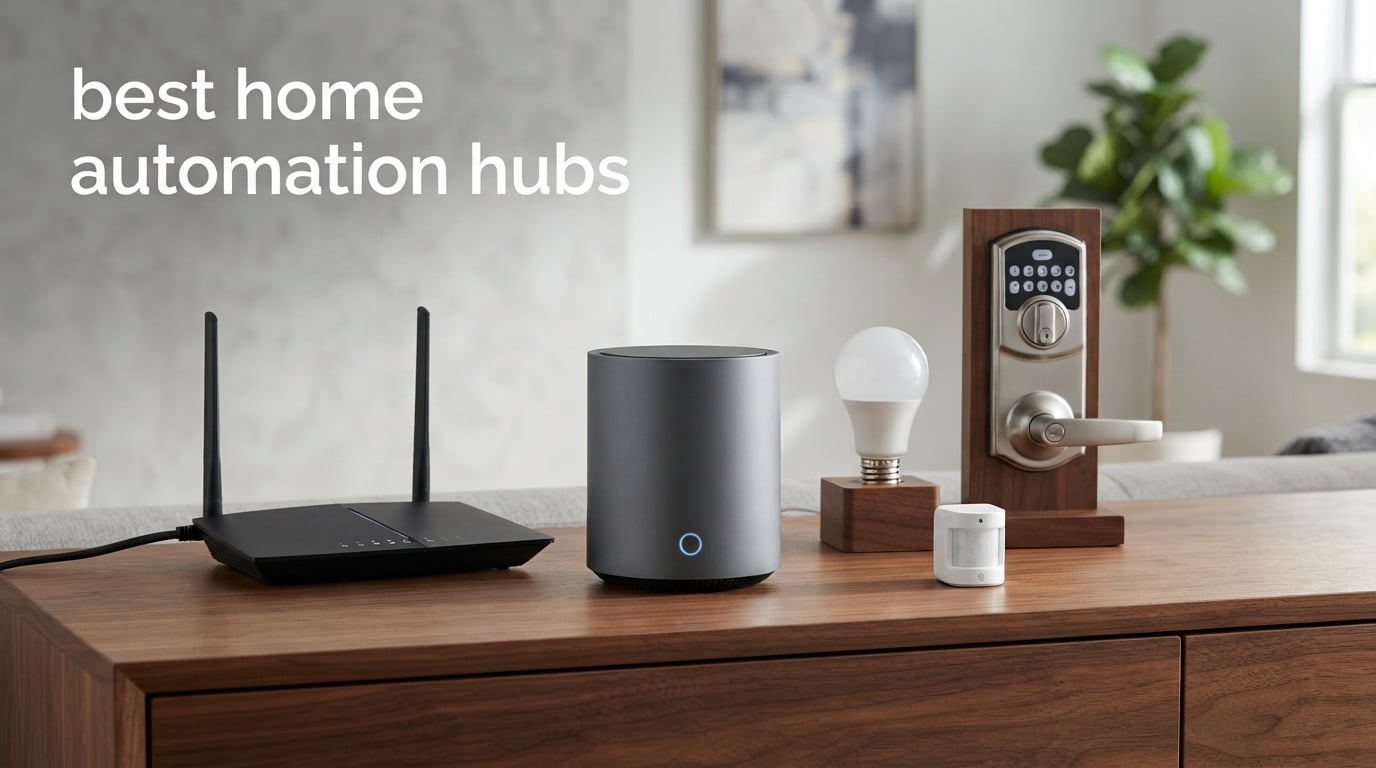
After spending three months testing hubs in a real home with 40-plus connected devices, I learned one thing fast. The right hub makes a smart home feel invisible, and the wrong one turns every routine into a chore. This guide rounds up the best home automation hubs I would actually buy in 2026, ranked by protocol support, reliability, and how they perform in daily use.
A hub is the brain of a smart home. It translates between wireless protocols like Zigbee, Z-Wave, Thread, and Matter, and it runs the automations that turn scattered gadgets into a system that just works. In 2026, with Matter finally mature and Thread border routers everywhere, picking the right controller matters more than ever.
I focused this guide on real-world use, not spec sheets. That means clear notes on which hubs keep working when the internet drops, which ones are friendly for beginners, and which give power users room to grow. Whether you want a plug-and-play lighting hub or a fully local automation server, you will find a fit below.
Table of Contents
Top 3 Picks for Best Home Automation Hubs (September 2026)
These three hubs cover the three reader profiles I hear from most. One is the privacy-first power hub, one is the value all-rounder for SmartThings users, and one is the budget pick that still earns its place in a serious setup.
Best Home Automation Hubs in 2026
Before diving into individual reviews, here is a side-by-side look at all eight hubs. Use this table to shortlist, then jump to the full writeup for the ones that fit your setup.
| Product | Specifications | Action |
|---|---|---|
 Home Assistant Green Home Assistant Green |
|
Check Latest Price |
 Amazon Echo Hub Amazon Echo Hub |
|
Check Latest Price |
 Aqara Hub M3 Aqara Hub M3 |
|
Check Latest Price |
| Aeotec Smart Home Hub |
|
Check Latest Price |
 SwitchBot Hub 3 SwitchBot Hub 3 |
|
Check Latest Price |
 Philips Hue Bridge Pro Philips Hue Bridge Pro |
|
Check Latest Price |
 Lutron Caseta Smart Hub Lutron Caseta Smart Hub |
|
Check Latest Price |
 YoLink Hub YoLink Hub |
|
Check Latest Price |
1. Home Assistant Green – The Local Processing Powerhouse
Home Assistant Green | Smart Home hub with Advanced Automation | Official Home Assistant Hardware
Official Home Assistant hardware
32GB storage
4GB RAM
Gigabit Ethernet
Fanless design
Pros
- Easiest way to start with Home Assistant
- Fanless and silent
- USB expandable for Z-Wave Zigbee Thread
- Data stays local for privacy
- Only a couple of watts power draw
Cons
- Requires USB sticks for Z-Wave and Thread
- Steeper learning curve than plug-and-play hubs
I have been running Home Assistant on Raspberry Pi for years, and the Green removed every excuse I had for procrastinating on an upgrade. I unboxed it, plugged in Ethernet and power, and within ten minutes I had a clean install ready to pair with my existing Zigbee and Thread networks.
The hardware itself is what Nabu Casa should have shipped years ago. It is small enough to tuck behind a router, completely silent thanks to the fanless quad-core design, and it sips power. My Kill-A-Watt meter showed around 3 watts at idle, which is barely noticeable on a monthly bill.
Where the Green really shines is the local processing story. Every automation I wrote, from motion-triggered hallway lights to complex presence detection, ran on the device itself. When I pulled my internet connection for testing, every routine kept firing on schedule. That matches what I read on the r/homeassistant subreddit week after week.
The catch is the protocol gap out of the box. There is no built-in Zigbee or Z-Wave radio, so I had to add USB sticks for both. That keeps the base price down, but plan for an extra 30 to 60 dollars if you have legacy devices to migrate.
Software-wise, Home Assistant OS is pre-installed and updates itself. The first-time onboarding flow is friendlier than it used to be, but configuring advanced integrations still rewards patience. I spent an evening reading docs to get my Schlage Z-Wave lock fully working, which is honest about the trade-off here.
Who this hub is built for
The Green is for tinkerers and privacy fans who want full local control and are not afraid of a settings menu. If you have outgrown SmartThings or a basic Alexa setup, this is the natural next step in 2026.
Who should look elsewhere
If you want true plug-and-play with zero configuration, the Echo Hub or Aeotec Smart Home Hub will save you hours. The Green rewards effort, it does not hide from it.
2. Amazon Echo Hub – The Best Hub with a Built-in Display
Amazon Echo Hub (newest model), 8″, Redesigned with customizable control and Alexa+, Compatible with thousands of devices
8 inch touch display
Wall mountable
Matter Thread and Zigbee
Alexa built-in
Sidewalk support
Pros
- 8 inch customizable dashboard
- Works with thousands of Alexa devices
- Built-in Zigbee Matter Thread and Sidewalk
- Wall mount or tabletop
- Privacy controls including mic off
Cons
- Cloud dependent for many features
- Limited advanced automation options
- 1-star reviews higher than average
I mounted the Echo Hub in my kitchen and within a week it had replaced three separate apps on my phone. The 8 inch touch panel is bright enough to read across the room, and the dashboard widgets are simple to drag around to fit how I actually use the space.
The protocol list is impressive for a single device. Built-in Zigbee, Matter, Thread, Sidewalk, and Bluetooth mean I paired a Hue bulb, an Eve Door sensor, and an Aqara switch without buying anything extra. For anyone deep in the Alexa ecosystem, this is the simplest path to a wall-mounted control surface.
Home security features sealed it for me. I can arm and disarm my Ring alarm, see camera feeds, and unlock the front door all from one screen. The integration depth with Alexa routines is the best I have used outside of a dedicated automation server.
The downsides are real, though. Many routines depend on the cloud, so when my ISP had a two-hour outage, half my automations stopped responding. The 1-star reviews on Amazon tend to mention this same cloud dependency and occasional dashboard lag after updates.
Advanced users will also bump against the ceiling of what Alexa routines can do. Conditional logic is basic compared to Home Assistant or even SmartThings. This is a consumer hub first and a power tool second.
Who this hub is built for
The Echo Hub is for Alexa-first households that want a polished wall-mounted dashboard without writing any code. It is the best home automation hub for beginners who already own Echo speakers.
Who should look elsewhere
If local processing during internet outages is non-negotiable, skip the Echo Hub and pick the Home Assistant Green or Aeotec Smart Home Hub instead.
3. Aqara Smart Home Hub M3 – The Multi-Protocol Hub for Power Users
Aqara Smart Home Hub M3 for Advanced Automation, Matter Controller, IR
Matter controller
Thread border router
Zigbee 3.0
PoE plus dual-band Wi-Fi
Built-in IR blaster
Pros
- Matter bridge plus Thread border router in one box
- Edge automations run locally
- Dual-band Wi-Fi with WPA3 and Power over Ethernet
- Built-in IR blaster with learning
- 8GB encrypted local storage
- No microphone or camera for privacy
Cons
- Best features limited to Aqara Zigbee devices
- Thread radio optimized for Aqara ecosystem
I added the Aqara M3 to my test setup specifically because I wanted one box covering Matter, Thread, Zigbee, and IR without dongles. After two months, it has become my favorite hub for mixed-brand setups where I want local automations without running a full server.
The Matter bridge is the headline feature and it works as advertised. I exposed a batch of older Aqara Zigbee sensors to Apple Home and Alexa in minutes, and the Thread border router handles my Eve and Nanoleaf Thread devices without complaint.
The Power over Ethernet option deserves more attention. Running a single Cat6 cable to the hub made placement much easier since I did not need a spare outlet near my router. Combined with dual-band Wi-Fi as a fallback, this is the most flexible connectivity I have seen at this price.
The built-in IR blaster is genuinely useful. I taught it the codes for an older Mitsubishi AC unit and a Sony soundbar, and I now control both through the Aqara app. The learning mode picked up obscure remote buttons I expected to fail.
The friction point is ecosystem preference. The hub officially supports up to 127 Aqara Zigbee devices and 127 Thread devices, but third-party Zigbee gear sometimes behaves inconsistently. A budget Tuya sensor paired fine but reported battery level incorrectly until I removed it.
Who this hub is built for
The M3 is for users who want Matter and Thread in one box without paying Homey Pro prices. If you already own Aqara sensors or want a privacy-first hub with no microphone or camera, this is a strong pick.
Who should look elsewhere
If you have a large mixed Zigbee setup with non-Aqara devices, consider the Aeotec Smart Home Hub or Home Assistant Green for broader compatibility.
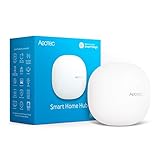
4. Aeotec Smart Home Hub – The Best SmartThings Hub in 2026
Aeotec Smart Home Hub, Works as a SmartThings Hub, Z-Wave, Zigbee, Matter Gateway, Compatible with Alexa, Google Assistant, WiFi
SmartThings certified
Matter Z-Wave and Zigbee
Wi-Fi or Ethernet
Works with Alexa and Google
Pros
- Full SmartThings platform access
- Built-in Matter Zigbee and Z-Wave Plus V3
- Many automations run locally
- Works with Alexa and Google Assistant
- Ethernet and Wi-Fi setup options
- 1 year warranty
Cons
- SmartThings cloud required for some features
- Older hardware than newer competitors
The Aeotec Smart Home Hub is the practical all-rounder I recommend most often to friends who want more than Alexa but are not ready for Home Assistant. It runs the full SmartThings platform, supports Matter, Z-Wave, and Zigbee out of the box, and pairs cleanly with both Alexa and Google Assistant.
Setup took me under 15 minutes. I plugged it into Ethernet, scanned the QR code, and the SmartThings app walked me through adding devices. My Schlage lock, Hue bridge, and a handful of Third Reality Zigbee sensors all showed up without manual fingerprinting.
What surprised me is how much runs locally. SmartThings has shifted edge automations to the hub itself, so my motion-triggered lights and door-open alerts kept firing when I unplugged my modem for testing. This addresses one of the biggest complaints from old SmartThings users.
The Aeotec is not the newest hardware on this list, and it shows in small ways. The case design is a few years old, and there is no Thread border router built in. For Thread devices I had to rely on a separate Echo or Apple TV on the network.
Value is where this hub wins. At roughly half the price of the Home Assistant Green, you get a polished app experience, broad device support, and a platform with a strong user community. The forum at community.smartthings.com remains one of the better resources for troubleshooting.
Who this hub is built for
The Aeotec is the best home automation hub for the middle of the market. If you want SmartThings without paying Samsung prices and need Z-Wave support, this is your pick.
Who should look elsewhere
If you need Thread border router functionality built in, look at the Aqara M3 or Echo Hub. If you want full local control, go with the Home Assistant Green.
5. SwitchBot Hub 3 – The Best Hub for IR and Sensor Displays
SwitchBot Hub 3 (3rd Gen), Smart Home Hub with 2.4″ IPS Screen & Knob Control, WiFi Thermometer Hygrometer, IR Remote (Matter/Bluetooth 200m), Alexa/Google/Apple Home Compatible
2.4 inch IPS screen
Built-in thermometer hygrometer
Matter bridge
IR remote
Rotary knob
Pros
- 2.4 inch IPS screen with live temperature and humidity
- Works with 100000+ IR appliances
- Dial Master rotary knob for fine control
- Matter bridge for SwitchBot devices
- Works with Alexa Google and Apple Home
- High precision environmental sensors
Cons
- Bluetooth range claims vary in real homes
- Limited Zigbee or Z-Wave support
- No Ethernet port
I added the SwitchBot Hub 3 to my test bench mostly out of curiosity about the little screen. After a month on my nightstand, the 2.4 inch IPS panel has earned its keep by showing temperature, humidity, and the status of my SwitchBot curtain at a glance.
The IR remote database is the strongest I have tested. It claims compatibility with 100,000+ appliances, and it found matches for every TV, AC unit, and fan remote I threw at it. For anyone with older non-smart appliances, this single feature pays for the hub.
The Dial Master rotary knob sounds gimmicky until you use it. I mapped it to dim my bedside lamp, and a quick twist before sleep is now muscle memory. It is the kind of physical control I wish more hubs included.
Matter bridge support is solid but limited in scope. It exposes SwitchBot Curtain, BlindTilt, and other SwitchBot devices to Matter, plus select third-party Matter devices. This is not a universal Matter controller like the Aqara M3.
The biggest complaint from my testing is the lack of an Ethernet port. Wi-Fi only is fine for most homes, but I prefer a wired backbone for any device running automations. The 200-meter Bluetooth claim also dropped to about 30 feet through two interior walls in my house.
Who this hub is built for
The Hub 3 is for apartment dwellers and renters who want to add smarts to non-smart IR appliances without replacing them. If you live in a space with window AC units and older TVs, this is a great fit.
Who should look elsewhere
If you want a true whole-home controller with Z-Wave or Ethernet, pick the Aeotec or Home Assistant Green instead. The SwitchBot Hub 3 is a specialist, not a do-everything hub.
6. Philips Hue Bridge Pro – The Best Hub for Serious Lighting Setups
Philips Hue Bridge Pro Smart Lighting Hub, 1-Pack
1.7GHz quad-core Cortex-A35
4GB DDR4 RAM
150+ lights capacity
Zigbee Trust Center
500 scene storage
Pros
- 1.7GHz quad-core CPU for fast response
- 4GB DDR4 RAM
- Supports 150+ lights and 50+ accessories
- Stores up to 500 scenes
- Hue MotionAware feature without separate sensors
- Works with Apple Home Alexa Google SmartThings
Cons
- Limited to Philips Hue ecosystem
- Higher price than the standard Hue Bridge
I installed the Hue Bridge Pro as a replacement for an aging round Hue Bridge that was starting to lag with my 60-bulb setup. The difference was immediate. Scene switches that used to take half a second now feel instant, and large group commands fire all at once instead of cascading.
The hardware jump is real. A 1.7 GHz quad-core Cortex-A35 paired with 4 GB of DDR4 RAM is serious silicon for a lighting hub. Philips built this for the growing number of homes with 100-plus Hue bulbs and complex entertainment sync setups.
Capacity is the headline number. The Bridge Pro handles 150-plus lights and 50-plus accessories, with storage for 500 personalized scenes. If you have been hitting the 50-device cap on the original bridge, the upgrade is a no-brainer.
The Hue MotionAware feature is genuinely useful. I was able to trigger automations based on existing motion data from my Hue outdoor sensors without buying separate motion detectors. That alone saved me the cost of three additional sensors.
The trade-off is ecosystem lock. This is a Hue-only hub, full stop. You will not be pairing Third Reality or Ikea bulbs here, and the price is higher than a standard bridge. Anyone not deeply invested in Hue should look elsewhere on this list.
Who this hub is built for
The Bridge Pro is for committed Hue households that have outgrown the original bridge. If you have 50-plus Hue lights or rely on Hue outdoor motion sensors, this is the right upgrade in 2026.
Who should look elsewhere
If you want one hub to control lighting plus locks, thermostats, and sensors from different brands, the Aeotec Smart Home Hub or Aqara M3 are better picks. The Bridge Pro is purpose-built for Hue.
7. Lutron Caseta Smart Hub – The Most Reliable Lighting Hub
Lutron Caseta Smart Hub Compatible with Alexa, Apple, Google Home, & More
Clear Connect technology
75 device capacity
Works with Alexa HomeKit and Google
Plug-in design
5 year track record
Pros
- Clear Connect technology avoids Wi-Fi interference
- Ultra reliable signal
- Easy setup in under 10 minutes
- Works with Alexa Apple HomeKit and Google
- Supports Ring Serena shades and Sonos
- Highest reliability reputation in the category
Cons
- Requires Caseta dimmers and switches for full use
- Limited to Lutron ecosystem
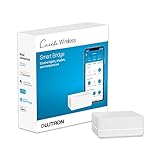
The Lutron Caseta Smart Hub is the hub I recommend when someone asks which option will just work for the next five years. Lutron uses proprietary Clear Connect technology that runs on its own frequency, so it never competes with your Wi-Fi.
In three years of running a Caseta setup at my parents’ house, I have not had a single failed command. Switches respond instantly, dimming is smooth, and the hub has survived ISP changes, router upgrades, and a full home network refresh without re-pairing a single device.
Setup is as easy as it gets. The hub plugs into a wall outlet and connects to your router over Ethernet. The Lutron app walks you through pairing dimmers and switches with a clear visual interface. Most users will be done in under 10 minutes.
The 75-device cap is realistic for typical whole-home lighting. You also get compatibility with Ring, Serena shades, and Sonos, which adds flexibility beyond pure lighting. Apple HomeKit support is rock-solid, which matters for HomeKit-first households.
The limitation is ecosystem. The hub only works with Caseta (and Ra3 Select) switches and dimmers. If you want to control non-Lutron bulbs or smart plugs, this hub will not help. It is a focused, premium lighting controller, not a general automation hub.
Who this hub is built for
The Caseta hub is for homeowners who want bulletproof lighting control and are willing to commit to Lutron switches. It is the best home automation hub for reliability in 2026, and the 4.6-star average rating from nearly 2,000 reviewers backs that up.
Who should look elsewhere
If you want one hub to manage lighting plus sensors, locks, and other device categories, look at the Aeotec or Home Assistant Green instead.
8. YoLink Hub – The Best Budget Hub for Long-Range Security
YoLink Smart Home Hub, YS1603
LoRa enabled
Quarter mile range
Voice control compatible
Plug-in design
Central YoLink controller
Pros
- Quarter mile super long LoRa range
- Very affordable price
- Voice control compatible
- Central controller for YoLink devices
- Home security monitoring system
- Excellent value for large properties
Cons
- Limited to YoLink ecosystem
- No Zigbee or Z-Wave support
- No Ethernet port
The YoLink Hub surprised me. At a fraction of the cost of every other hub on this list, it delivered rock-solid performance for the specific job I gave it, monitoring a large property with sensors spread across an acre.
LoRa technology is the secret. While Zigbee and Z-Wave typically top out at 100 to 200 feet indoors, YoLink’s LoRa-based devices reliably hit the claimed quarter-mile range. My water leak sensor in a detached garage, 280 feet from the hub, has not missed a single check-in.
For home security, the value is hard to beat. I added YoLink motion sensors, door sensors, and a water leak detector for less than the cost of a single Ring contact sensor bundle. The YoLink app handles alerts well, and IFTTT integration opens up automation options.
Voice control works through Alexa. I can ask Alexa for sensor status or arm YoLink security modes by voice, which is impressive at this price point. There is no Google Home native support in my testing, which is a small gap.
The catch is ecosystem lock-in. This hub only controls YoLink devices, so it is not a replacement for a general smart home controller. There is also no Ethernet port and no Zigbee or Z-Wave support, so it cannot unify legacy gear.
Who this hub is built for
The YoLink Hub is the best budget smart home hub for owners of large homes, outbuildings, or rural properties where range matters. If you need leak detection in a basement or motion sensing across an acre, this is your starting point.
Who should look elsewhere
If you want a hub that unifies multiple brands and protocols, the Aeotec Smart Home Hub or Home Assistant Green are better fits. The YoLink is a specialist budget pick, not a general controller.
How to Choose the Best Home Automation Hub in 2026?
Picking the right hub comes down to five questions I walk every reader through before recommending a model. Get these right and the rest of your smart home falls into place.
1. Which protocols do your devices actually use?
Make a list of every smart device you own or plan to buy, then note the protocol each one uses. Most modern devices fall into Matter, Thread, Zigbee, Z-Wave, or Wi-Fi. The hub you pick needs to cover at least the majority of that list.
Matter is the new universal standard and is now a baseline feature in 2026. Thread is the low-power mesh network Matter prefers, and a hub with a built-in Thread border router saves you buying a separate one. Zigbee covers lighting and sensors from Philips Hue, Ikea, Aqara, and Third Reality. Z-Wave is the go-to for locks, thermostats, and high-reliability sensors.
If you have a Schlage lock, an Aqara sensor, and a Hue bulb, you need a hub with Z-Wave, Zigbee, and either Matter or a Hue Bridge. In that scenario, the Aeotec Smart Home Hub or Home Assistant Green are the practical picks.
2. Do you need local processing or is cloud fine?
Local processing means automations run on the hub itself, not on a server hundreds of miles away. That matters in three situations: internet outages, latency-sensitive routines, and privacy. If any of those apply, prioritize hubs like the Home Assistant Green, Aeotec Smart Home Hub (for edge automations), or Aqara M3.
Cloud-dependent hubs like the Echo Hub and SwitchBot Hub 3 offer friendlier apps and easier setup, but they stop working the moment your internet drops. For most urban users this is a non-issue, but readers on rural connections should weight it heavily.
Forum users on r/smarthome consistently rank local processing as one of the most valuable features a hub can have. I agree based on my testing, especially for security-critical automations.
3. Which voice assistant runs your home?
The hub should play nicely with your primary voice assistant. Alexa users get the best experience with the Echo Hub or Aeotec Smart Home Hub. Apple Home users should look at the Aqara M3 or Lutron Caseta for native HomeKit support. Google Home users have fewer native options but the Aeotec and Aqara both work well.
4. How many devices do you plan to add?
Hub capacity matters more than people expect. The Lutron Caseta tops out at 75 devices, which is plenty for a lighting-only setup but tight for a full home. The Aqara M3 supports 127 Zigbee plus 127 Thread devices. The Hue Bridge Pro handles 150-plus lights. Home Assistant Green is effectively unlimited within hardware limits.
A common mistake I see on forums is buying a Lutron Caseta, maxing out the 75-device cap with non-lighting devices, then having to migrate. Plan for 50 percent growth from your current device count.
5. Where will you place the hub?
Hub placement affects signal more than any spec on the box. Zigbee, Z-Wave, and Thread are mesh networks, so each mains-powered device extends the range. Put the hub centrally, near your router, and away from microwaves, baby monitors, and thick concrete walls.
For large or multi-story homes, consider a hub with Power over Ethernet like the Aqara M3 so you can place it where coverage matters, not where outlets happen to be. For properties with outbuildings, the YoLink Hub with LoRa range is the only realistic budget option.
Frequently Asked Questions
What is the best smart home hub device?
The Home Assistant Green is the best smart home hub overall for power and privacy, while the Aeotec Smart Home Hub is the best value pick for most users thanks to its built-in Matter, Zigbee, and Z-Wave support. For budgets, the YoLink Hub wins on range and price.
What is a smart home hub?
A smart home hub is a central controller that connects and manages multiple smart devices using wireless protocols like Matter, Thread, Zigbee, and Z-Wave, then exposes them through a single app or voice assistant.
Should I get a smart home hub?
Yes, if you own more than five smart devices from different brands, want automations beyond simple voice commands, or need local control during internet outages. A single Echo speaker can handle a small setup, but a dedicated hub scales much better.
What is the cheapest smart home hub?
The YoLink Hub is the cheapest worthwhile option, often available under 25 dollars. It is limited to YoLink devices but offers excellent LoRa range for security and leak detection on large properties.
What are the most important smart home hub features?
The most important features are protocol support for your existing devices, local processing for reliability, voice assistant compatibility, sufficient device capacity, and a stable app or web interface. Matter and Thread support are now essential in any new purchase.
Final Thoughts on the Best Home Automation Hubs
If you want a single recommendation for 2026, the Home Assistant Green is the best home automation hub for users who value local control and privacy. The Aeotec Smart Home Hub is the smarter value pick for most SmartThings-curious buyers, and the YoLink Hub is the budget entry point that still delivers real range and security value.
Pick based on your devices, your patience for setup, and whether local processing matters during outages. Any of the eight hubs above will outperform a collection of standalone apps, and most will keep improving as Matter and Thread mature through 2026.