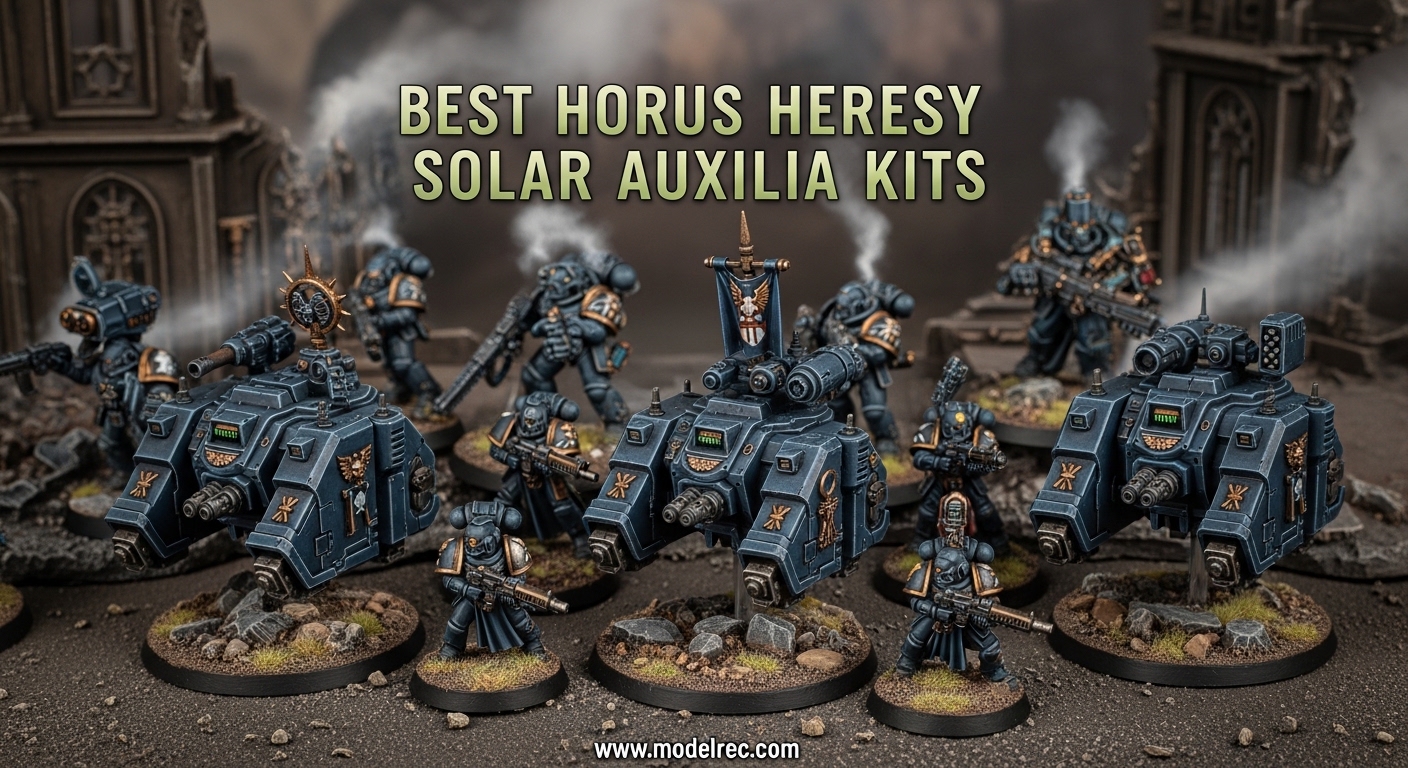
If you are building a Solar Auxilia force for Warhammer: The Horus Heresy, you already know the feeling of staring at the Games Workshop webstore trying to figure out which kits actually matter. I have been there. After spending months assembling, painting, and gaming with these models, I put together this guide to the best Horus Heresy Solar Auxilia kits so you can spend less time researching and more time building your army.
The Solar Auxilia are one of the most rewarding factions in the Age of Darkness. Their void-sealed armour, disciplined lasrifle sections, and mechanized support options give you a force that plays completely differently from Space Marine Legions. Whether you want an infantry-heavy shooting army or a mechanized armored column, the Solar Auxilia kit range has you covered.
In this guide, I walk through every major kit in the Solar Auxilia range, rank them by value and utility, and share what I learned from actually building and playing with each one. From the core Lasrifle Section that forms your army’s backbone to the mighty Malcador heavy tank, I cover it all so you can make informed choices for your collection.
Table of Contents
Top 3 Picks for Horus Heresy Solar Auxilia Kits


Solar Auxilia Leman Russ Strike Tank
- Multiple build options
- Versatile battle tank
- 5-star rated
8 Best Horus Heresy Solar Auxilia Kits in 2026
| Product | Specifications | Action |
|---|---|---|
| Solar Auxilia Battle Group |
|
Check Latest Price |
| Solar Auxilia Lasrifle Section |
|
Check Latest Price |
| Leman Russ Strike/Command Tank |
|
Check Latest Price |
 Leman Russ Assault Tank Leman Russ Assault Tank |
|
Check Latest Price |
 Solar Auxilia Malcador Solar Auxilia Malcador |
|
Check Latest Price |
 Solar Auxilia Basilisk/Medusa Solar Auxilia Basilisk/Medusa |
|
Check Latest Price |
 Tactical Command Section Tactical Command Section |
|
Check Latest Price |
 Solar Auxilia Veletaris Solar Auxilia Veletaris |
|
Check Latest Price |
1. Solar Auxilia Battle Group – The Complete Starter Army
GAMES WORKSHOP Warhammer Horus Heresy Solar Auxilia Battlegroup Box Set
28 miniatures
Aethon Heavy Sentinel
Dracosan Transport
Leman Russ Tank
20 Rifle Section
Tactical Command
4 Transfer Sheets
Pros
- Complete army in one box
- Great value per model
- Includes vehicles and infantry
- Transfer sheets included
- Good starting point for new players
Cons
- Requires significant assembly time
- One report of missing sprues
When I first decided to start a Solar Auxilia army, the Battle Group box was the obvious starting point. This set gives you 28 miniatures including an Aethon Heavy Sentinel, a Dracosan Armoured Transport, a Leman Russ Battle Tank, 20 Rifle Section troopers, and 5 Tactical Command Section models. That is a playable force straight out of one box.
The value proposition here is hard to beat. You get infantry, armor, and a transport all together, which means you can hit the tabletop with a real army rather than piecing together individual kits over months. The included transfer sheets (two infantry and two vehicle sheets) let you add cohort markings and details that really sell the elite military look.
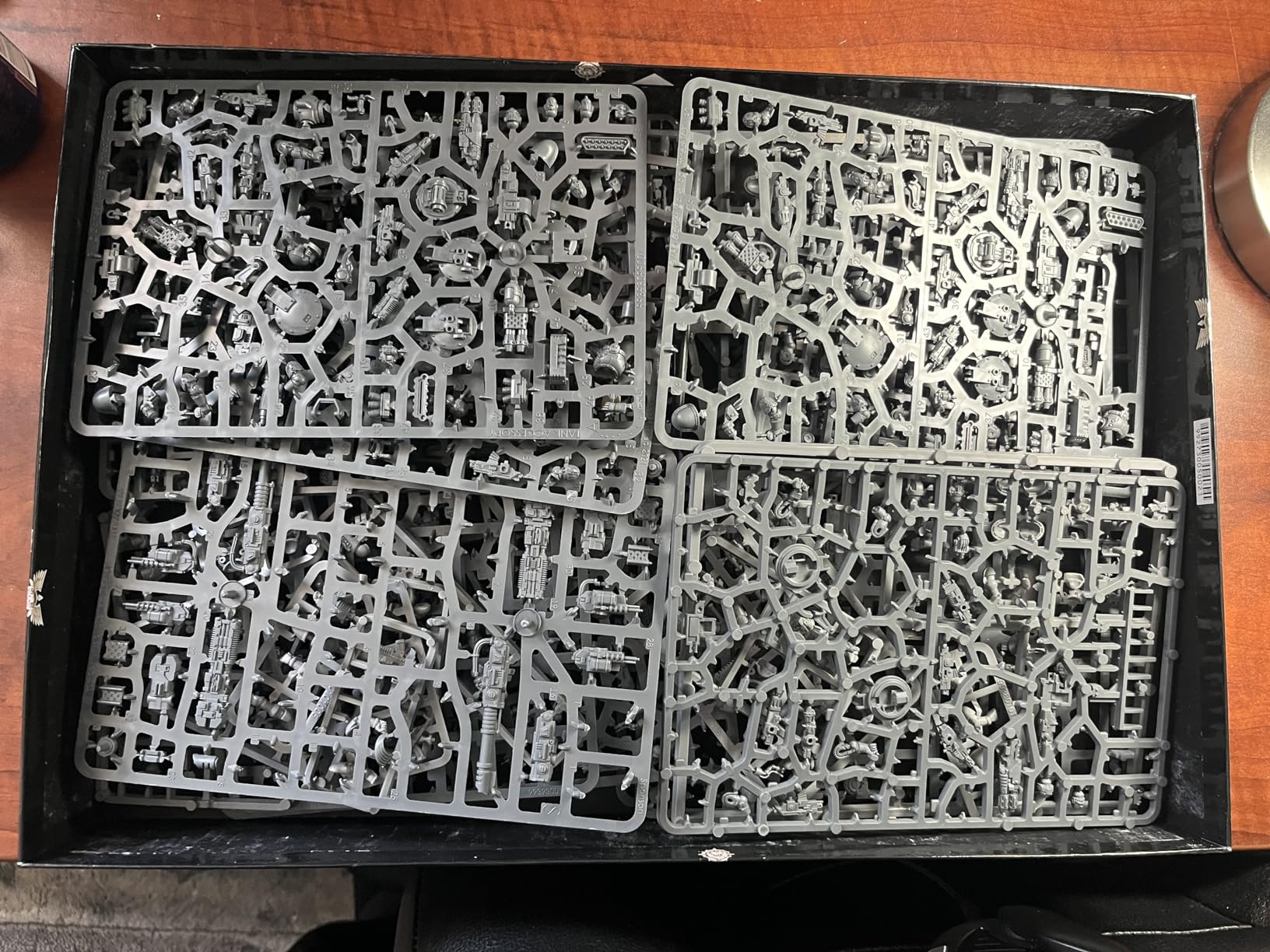
Assembly is a project, though. Between the vehicles and the 25 infantry models, expect to spend a solid weekend getting everything clipped, cleaned, and glued. The Dracosan transport in particular has some fiddly track components that test your patience. But the end result is deeply satisfying when you line up your completed battle group on the shelf.
One thing to watch for: I have seen one report of a buyer receiving missing sprues and a wrong model range, so inspect your box contents when it arrives. The vast majority of buyers report complete kits with high-quality casting from Games Workshop.
Best Army Build Path From This Box
The Battle Group gives you everything you need for a Tercio formation, which is the organizational backbone of a Solar Auxilia army. Run the 20 Rifle Section models as two 10-man Lasrifle Sections, use the Tactical Command miniatures for your command element, and support them with the Leman Russ and Sentinel for fire support. The Dracosan can ferry a squad forward under armor.
This box easily gets you to a playable 1,500-point force with room to grow. Add a second Lasrifle Section box and you are well on your way to a full 2,000 to 3,000 point army.
Who Should Buy This Kit
If you are new to Solar Auxilia, this is the kit I recommend first. It removes the guesswork from army building by giving you a balanced mix of units. Veterans building a second cohort or expanding their force will also appreciate the savings compared to buying each kit individually.
However, if you only want one specific vehicle or a small infantry reinforcement, buying individual kits makes more sense than this large box.
2. Solar Auxilia: Lasrifle Section – Core Infantry Backbone
Games Workshop – Warhammer – Horus Heresy – Solar Auxilia: Lasrifle Section
20 infantry troopers
Usable as 1 unit or 2x10
Command gear upgrades
Bayonet options
Customizable Sergeants
Pros
- 20 models in one box
- Excellent value per model
- Great for kitbashing
- Versatile for multiple factions
- Highly customizable
Cons
- Fiddly to assemble
- Some small parts
The Lasrifle Section is the workhorse of any Solar Auxilia army, and this box delivers 20 infantry troopers for your ranks. After building two boxes of these, I can tell you that the value per model is outstanding compared to most Games Workshop infantry kits. You get enough models to field one large 20-man section or two 10-man sections, giving you real tactical flexibility.
Each trooper comes with the iconic void-sealed armour that sets Solar Auxilia apart from other Imperial infantry. The lasrifle design has a distinctly retro-futuristic military look that I love. You also get command gear upgrades including vox operators, augury scanners, and cohort vexilla banners that add visual interest and battlefield utility to your squads.
Assembly is where things get a bit tedious. With 20 models to build, the repetitive nature of the process wears on you. The small attachment points for bayonets and specialist weapons are fiddly, and I recommend a good pair of sprue cutters and some patience. The tradeoff is that once built, these models look fantastic ranked up in firing lines.
Beyond Solar Auxilia armies, these models have serious kitbashing potential. Multiple reviewers mention using them for Imperial Guard, Skitarii, and Genestealer Cults conversions. The 28mm scale and detailed sculpts make them a versatile addition to any hobby workbench.
How Many Lasrifle Sections Do You Actually Need
Most competitive Solar Auxilia lists I have seen and played with run at least three Lasrifle Sections. At 20 models each, that means you will want two to three boxes depending on your points level. For a 2,000-point game, three sections is a solid foundation. For larger 3,000-point games, four sections is common.
The reason is simple: Lasrifle Sections are cheap in points, and massed lasfire is your primary anti-infantry tool. They hold objectives, screen your vehicles, and put out consistent damage every turn.
Assembly Tips That Save Time
Build your Sergeants first while your motivation is high, because they have the most customization options and take the longest. Then batch-assemble the standard troopers by attaching legs to bases, then torsos, then arms. This assembly line approach cut my build time by nearly half on my second box.
Also, decide on your weapon loadouts before you start gluing. The box includes enough bits for different configurations, and once those arms are attached, changing your mind means breaking out the clippers again.
3. Solar Auxilia: Leman Russ Strike/Command Tank – Versatile Armor
Warhammer Games Workshop Horus Heresy – Solar Auxilia: Leman Russ Strike/Command Tank
Strike or Command Tank build
Multiple weapon options
Advanced comms variant
Detailed plastic kit
Pros
- Incredibly versatile
- Multiple build options
- Superior detail vs 40K version
- Enjoyable assembly
- High quality plastic
Cons
- Requires assembly
- Supplied unpainted
The Leman Russ Strike/Command Tank is the most versatile armor option in the Solar Auxilia range, and it earns its perfect 5-star rating honestly. This kit lets you build either a Strike Tank configured for tank-hunting or infantry-shredding, or a Command Tank variant with advanced communications gear and defensive upgrades.
I built mine as a Strike Tank with the battle cannon, and the detail on this kit genuinely surprised me. Compared to the older 40K Leman Russ kit, this Heresy-era version has sharper mold lines, more crisp detail on the hull and turret, and better proportions. The tracks fit together more cleanly too, which anyone who has built the 40K version will appreciate.
The Command Tank variant is worth considering if you want to run a mechanized list. The advanced comms array gives you battlefield control options that matter in games, and the defensive upgrades help keep the tank alive under fire. Having both build options in one kit means you can choose based on what your army needs.
Assembly went smoothly for me over about two hours. The instructions are clear, the parts fit well, and I had no gaps or warping issues. Games Workshop really stepped up the quality on this newer tooling.
Strike Tank vs Command Tank: Which to Build
For most players, the Strike Tank is the better first choice. It gives you flexible firepower that can adapt to different targets on the battlefield. The Command Tank is situational and best if you already have a solid core of units and want to add command synergy to your armored column.
If you run multiple Leman Russ tanks, building one of each is the ideal setup. The Strike Tank handles direct damage while the Command Tank buffs nearby units and provides resilient leadership on the tabletop.
Weapon Loadout Recommendations
The battle cannon is the all-rounder pick that handles both infantry and light armor. For a dedicated tank-hunter build, the lascannon options on turret and hull give you the punch to threaten heavier targets. I run mine with the battle cannon and hull heavy flamer, which gives me a tank that can shoot at range and deter charges.
Your sponson choices also matter. Heavy bolters for anti-infantry work, or plasma cannons if you want to threaten armor. Match your loadout to the rest of your army so you are not duplicating roles.
4. Solar Auxilia: Leman Russ Assault Tank – Frontline Breaker
Warhammer Games Workshop Horus Heresy – Solar Auxilia: Leman Russ Assault Tank
Demolisher cannon option
Plasma cannon or volkite macro-saker
Cosmetic customization
Hull and pintle weapons
Pros
- Highly detailed miniatures
- Usable in Horus Heresy and 40K
- Great for kitbashing
- Formidable tank design
- Multiple weapon options
Cons
- Requires assembly
- Supplied unpainted
The Leman Russ Assault Tank is the aggressive sibling of the Strike Tank. Where the Strike Tank sits back and shoots, the Assault Tank charges forward with a demolisher cannon, plasma cannon, or volkite macro-saker to crack open enemy fortifications and heavy armor at close range.
I love this kit for its sheer presence on the tabletop. The demolisher cannon build in particular looks intimidating, and opponents respect it enough to focus fire on it, which draws attention away from your infantry. The cosmetic customization options let you add extra armor plating, stowage, and crew details that make each tank unique.
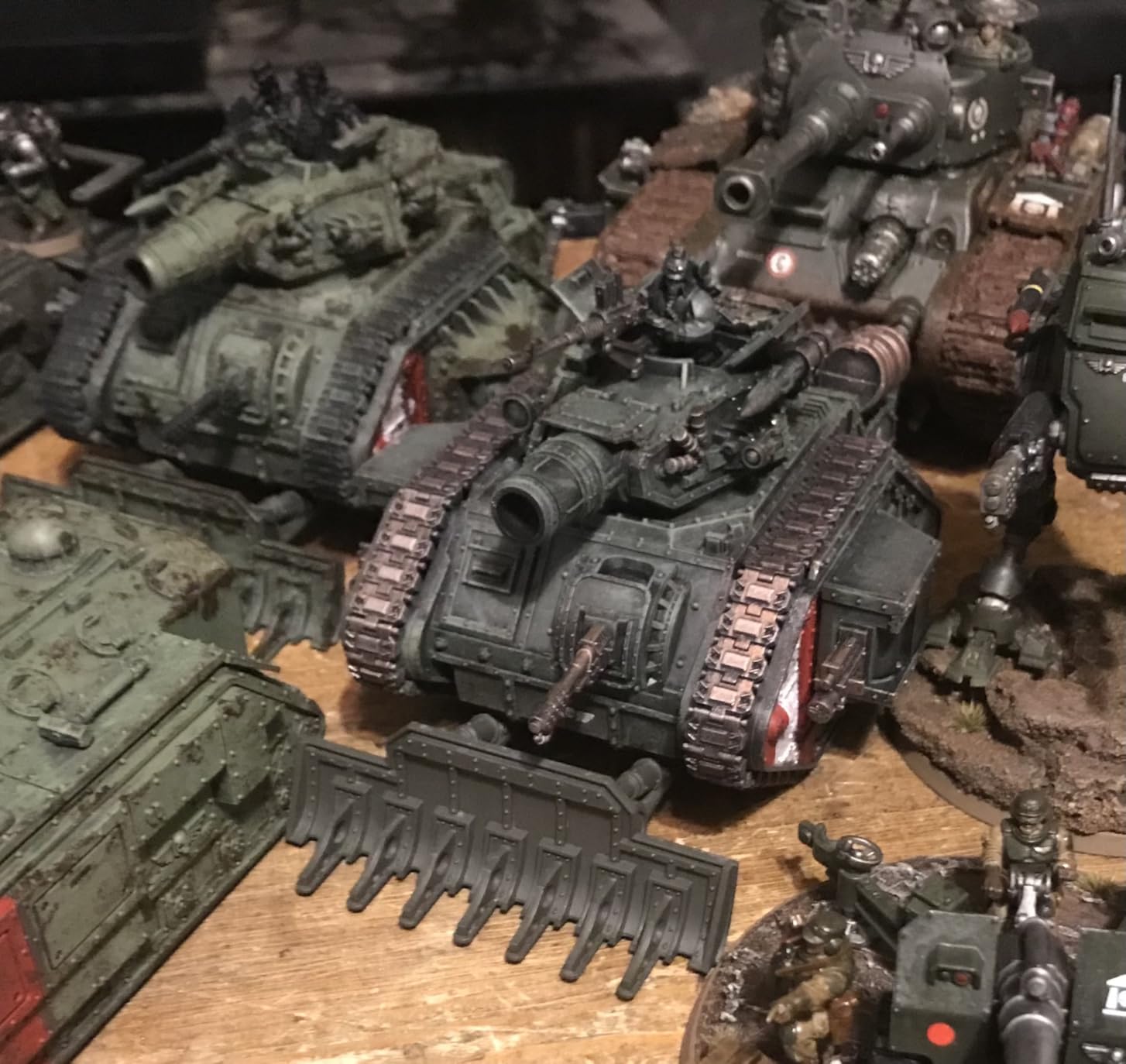
One of the biggest advantages of this kit is cross-game compatibility. Multiple reviewers confirmed that you can use this tank in both Horus Heresy and Warhammer 40K games, which is a real bonus if you play both systems. The kitbash potential is also excellent since the weapon and hull options mix well with bits from other kits.
Assembly quality matches the Strike Tank kit, which is to say it is excellent. Clean mold lines, well-fitting parts, and a straightforward build process. This is one of those kits where building it is genuinely enjoyable rather than a chore.
Assault Tank vs Strike Tank for Your Army
Think of the Assault Tank as a sledgehammer and the Strike Tank as a Swiss army knife. If your army already has plenty of ranged firepower from Lasrifle Sections and artillery, the Assault Tank adds the close-range punch you need to break stalemates. If you are still building your core, the Strike Tank gives you more flexibility.
In my games, running both together creates a one-two punch that opponents struggle to counter. The Strike Tank shoots from distance while the Assault Tank advances to deliver the killing blow.
Best Weapon Configuration for Assault Role
The demolisher cannon is the classic choice and for good reason. At close range, it wounds most targets on a 2+ and does enough damage to threaten anything short of a Spartan. Pair it with hull-mounted plasma for extra anti-tank insurance.
The volkite macro-saker is an interesting alternative if you face infantry-heavy armies. The deflagrate rule can cascade damage through tightly packed units, making it situationally devastating against horde lists.
5. Solar Auxilia Malcador – Heavy Firepower Platform
WARHAMMER Horus Heresy – Solar AUXILIA MALCADOR
Large heavy tank
Turret, hull, sponson weapons
Multiple weapon options
9x2x12 inch box
Pros
- Large
- high-powered tank
- Highly versatile weapon options
- Turret
- hull
- and sponson combos
- Fun kit to build
- Great for custom variants
Cons
- Requires assembly
- Larger model needs more table space
The Malcador Heavy Tank is the Solar Auxilia’s premier fire support platform, and it is impossible to ignore on the battlefield. This is a large model that dominates the table with turret, hull, and sponson weapon options that let you tailor it to any anti-infantry or anti-tank role you need.
Building the Malcador was one of my favorite assembly experiences in the Solar Auxilia range. The kit is substantial, coming in a 9x2x12 inch box, and every weapon mount has multiple options. I spent a good hour just deciding on my loadout before gluing anything. The turret alone has enough variety to make this tank feel like your own personal creation.
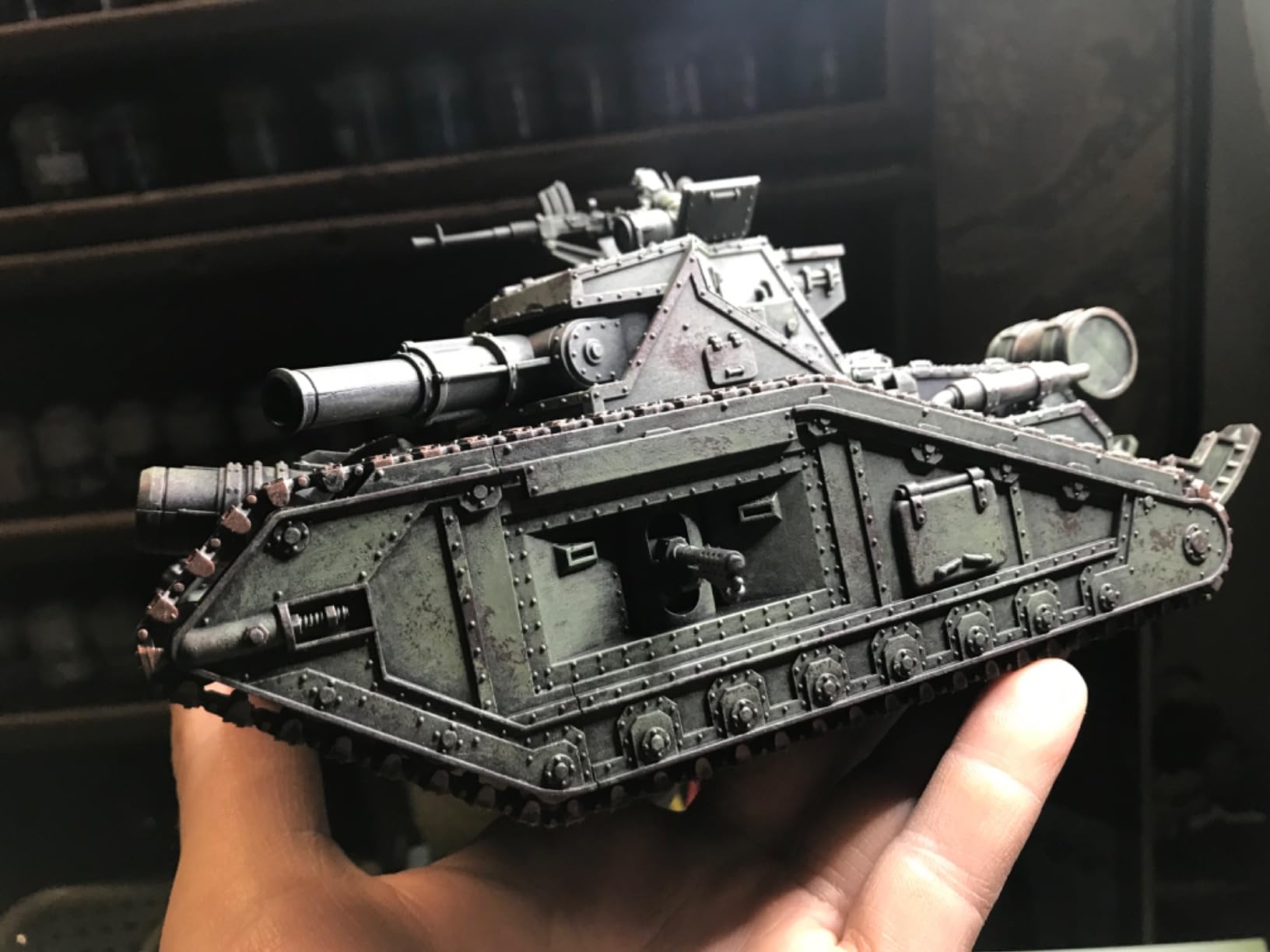
On the tabletop, the Malcador fills a role that the Leman Russ cannot. Its larger hull and heavier weapon options make it a true heavy tank rather than a medium. When I run mine with the battle cannon turret and sponson heavy bolters, it puts out enough firepower to justify its points cost every single turn.
The 5.0 rating from 21 reviews tells you everything about how hobbyists feel about this kit. It is one of those models that makes you want to build it just for the pleasure of building it, even before you consider how good it is in games.
Malcador vs Leman Russ: Which Heavy Armor to Choose
The Malcador brings more raw firepower and a bigger footprint, while the Leman Russ is more maneuverable and cheaper in points. If your army needs a single heavy hitter that commands attention, the Malcador delivers. If you prefer two Leman Russ tanks for the same points, that is also a valid strategy.
I recommend starting with one Leman Russ for general purposes and adding the Malcador as a centerpiece once you have your core sorted. The Malcador works best when supported by other units rather than running alone.
Optimal Weapon Builds for Different Opponents
Against Space Marine armies, run the lascannon or battle cannon turret with sponson plasma to threaten their armor and Dreadnoughts. Against infantry-heavy forces, the heavy bolter sponsons and an anti-infantry turret weapon turn the Malcador into a devastating gun platform. The beauty of this kit is that the weapon options are all on separate sprue sections, so magnetizing your choices is straightforward.
I magnetized my turret and sponsons, which adds about 30 minutes to the build but gives you complete flexibility for every game. It is absolutely worth the extra effort.
6. Solar Auxilia: Basilisk/Medusa – Artillery Support
Warhammer Games Workshop Horus Heresy – Solar Auxilia: Basilisk/Medusa
Basilisk or Medusa build
Armoured artillery
Detailed interior
Adjustable gun positions
2 crew miniatures
Pros
- Builds either Basilisk or Medusa
- Fully detailed interior
- Adjustable gun positions
- Two crew miniatures
- Same price as older 40K kit but newer tooling
Cons
- One report of damaged arrival
- Supplied unpainted
Artillery is a crucial part of any Solar Auxilia army, and the Basilisk/Medusa kit gives you two excellent build options in one box. The Basilisk delivers long-range indirect fire with its earthshaker cannon, while the Medusa brings a siege gun for cracking fortifications at closer range.
The standout feature of this kit is the fully detailed interior. When I built mine as a Basilisk, I was genuinely impressed by the interior detail that most players will never even see once the model is assembled. The two crew miniatures loading the siege gun add life and narrative weight to the model that sets it apart from simpler vehicle kits.
The adjustable gun positions are a nice touch for both display and gaming purposes. You can pose the barrel at different elevation angles, which matters for basilisks that fire indirectly at high angles versus the Medusa’s flatter trajectory. It is a small detail but one that shows Games Workshop put real thought into this kit.
This kit uses newer tooling than the older 40K Basilisk, and the quality difference is noticeable. Sharper details, cleaner mold lines, and better fit between parts. At the same price point as the older version, this is the one to get.
Basilisk vs Medusa: Which to Build
For most Solar Auxilia armies, the Basilisk is the better default choice. Long-range indirect fire lets you target enemy units hiding behind terrain from relative safety. The Medusa shines in specific scenarios where you need to crack fortified positions, making it more situational but powerful in the right context.
If you play on tables with lots of line-of-sight blocking terrain, the Basilisk’s indirect fire is invaluable. On more open tables, the Medusa can leverage its superior range with better line of sight.
Integrating Artillery Into Your Solar Auxilia Force
Solar Auxilia armies benefit enormously from artillery support because your infantry sections can advance while the Basilisk suppresses enemy positions. Park it in a corner behind terrain and let it fire every turn. The points investment is modest for the battlefield control you gain.
I run one Basilisk in most of my lists, and it consistently earns its points by forcing opponents to spread out or take avoidable damage trying to reach it.
7. Solar Auxilia: Tactical Command Section – Leadership Core
Warhammer Games Workshop Horus Heresy – Solar Auxilia: Tactical Command Section
6 detailed models
Veteran Command or Line Command or Legate Marshal
Command vox and augury scanner
Vexilla banner
Multiple build options
Pros
- 6 detailed models
- Highly versatile builds
- Command vox and augury scanner
- Retro Guard aesthetic
- Great value for quality
Cons
- Hobby pricing concerns
- Requires assembly
Every Solar Auxilia army needs leadership, and the Tactical Command Section delivers with six highly detailed models that can be built in multiple configurations. This kit builds either a Veteran Tactical Command Section, a Line Command Section, or a Legate Marshal with Lifewards, giving you real flexibility in how you structure your command hierarchy.
I built mine as a Tactical Command Section with the vox operator and augury scanner, which gives your army critical battlefield awareness. The cohort vexilla banner is a standout miniature that looks incredible when painted up and planted in the center of your firing line. These models have a retro Guard aesthetic that fans of classic Imperial Guard designs will immediately appreciate.
The six models include enough variety in poses and equipment that your command element looks distinct from your standard Lasrifle Sections. The detail quality matches the rest of the Solar Auxilia range, with crisp void-sealed armour and well-sculpted faces. Assembly was straightforward with no tricky fits.
The 4.2 rating reflects some reviewer frustration with Games Workshop pricing rather than the kit quality itself. Most negative reviews come from hobbyists comparing prices across the range, not from dissatisfaction with the actual product.
Legate Marshal vs Standard Command Section
The Legate Marshal with Lifewards is worth building if you want a centerpiece character model that stands out from the rest of your army. The Marshal comes with impressive detail and equipment options including a power sword and volkite serpenta. For a more grounded command element, the standard Tactical Command Section with its vox, scanner, and vexilla options serves your army better mechanically.
If you collect Solar Auxilia seriously, buying a second box to build both options gives you the most army-building flexibility.
Where This Kit Fits in Your Army Building Priority
Make this one of your first three purchases after the Battle Group or Lasrifle Sections. A Solar Auxilia army without a proper command element is leaving significant rules benefits on the table. The Tactical Command Section unlocks Tercio formations and provides command buffs that make your entire force more effective.
It is not the flashiest kit in the range, but it is one of the most functionally important. Buy it early, build it early, and your army will play better from day one.
8. Solar Auxilia Veletaris – Elite Shock Troops
Warhammer Horus Heresy – Solar AUXILIA VELATARIS
10 elite shock troops
Volkite chargers or storm axes
Veletarii Prime upgrade
Command gear options
Pros
- Excellent 30k miniatures
- Well-designed figures
- Great heavy weapons options
- Fair price for quality
- Grim dark aesthetic
Cons
- Packaging can be damaged during shipping
The Veletaris Storm Section brings 10 elite shock troops to your Solar Auxilia army, and they are some of the most characterful models in the entire range. These are your close-range specialists, armed with searing volkite chargers for ranged mayhem or storm axes for brutal melee combat.
I added a box of Veletaris to my army after getting tired of my Lasrifle Sections being charged off objectives. These models solved that problem immediately. Equipped with storm axes, they hit hard enough to deter most assault units from getting close. With volkite chargers, they put out a terrifying volume of fire at short range that can shred enemy infantry.
The sculpts are outstanding. Each model has a dynamic combat stance that conveys aggression and elite training. The Veletarii Prime upgrade gives your squad leader a distinctive look with extra gear and weapon options. At 10 models per box, the value is solid for an elite unit kit.
The only complaint I have seen is about packaging damage during shipping, not the models themselves. The miniatures are excellent and the grim dark aesthetic is exactly what you want from elite Horus Heresy infantry.
Veletaris vs Lasrifle Sections: Role Comparison
Lasrifle Sections are your anvil, and Veletaris are your hammer. Lasrifles hold positions and lay down massed fire from a distance. Veletaris advance, take ground, and punish anything that gets too close. You need both in a well-rounded Solar Auxilia army.
I recommend one box of Veletaris for every two to three Lasrifle Sections. This ratio gives you enough shock troops to contest mid-field objectives while your regular infantry holds your deployment zone.
Weapon Loadout: Volkite vs Storm Axes
Volkite chargers are the more versatile choice because the deflagrate special rule can generate extra hits against infantry targets. Storm axes turn the unit into a dedicated melee threat, which is valuable if your army lacks close-combat punch. My preference is volkite chargers because they let the Veletaris contribute damage at range before finishing targets in assault.
Consider your meta and opponent mix. Against heavily armored armies, the storm axes’ higher strength in melee matters more. Against horde armies, volkite chargers generate kills faster.
How to Choose the Right Solar Auxilia Kit for Your Army?
Building a Solar Auxilia army is not just about picking the coolest models. The Tercio formation system and the shooting-focused playstyle of this faction mean your kit purchases need to work together. Here is what I learned after building and playing with this army for over a year.
For Beginners: The Starter Path
Start with the Solar Auxilia Battle Group. It gives you a playable force in one purchase with infantry, vehicles, and command elements. Add a second Lasrifle Section box to round out your troops, and you have a competitive core that you can expand over time. This two-purchase starter path gets you to the table faster and cheaper than buying individual kits.
Avoid buying single vehicle kits before you have your infantry core sorted. A Leman Russ tank without Lasrifle Sections to screen it will get surrounded and destroyed. Build from the ground up: troops first, then command, then vehicles and specialists.
For Veterans: Expanding Your Force
Once you have your core, the Malcador is an excellent addition for raw firepower. The Veletaris add elite infantry punch that your Lasrifle Sections cannot match. The Basilisk or Medusa provides artillery support that forces opponents into bad positioning decisions.
Consider your local meta when choosing expansion kits. If you face lots of Space Marine armor, add more anti-tank options like the Malcador or a second Leman Russ. Against horde armies, additional Lasrifle Sections and a Veletaris box with volkite chargers are more valuable.
Understanding the Tercio Formation
Solar Auxilia armies organize around the Tercio formation, which groups infantry sections with a command element. Each Tercio needs at least one Tactical Command Section and one or more infantry sections. This structure determines your kit purchasing order: you need command and troops in matching sets rather than random individual kits.
The standard Tercio runs one command section with two to three infantry sections. For your first army, aim for two complete Tercios plus vehicle support. This structure is mechanically sound and visually impressive on the tabletop.
Budget vs Value Considerations
The Battle Group box offers the best value per model in the entire range. Individual vehicle kits are priced fairly for Games Workshop products but add up quickly. The Lasrifle Section box gives you 20 models, making it the best infantry value. The Tactical Command Section costs less than most vehicle kits but provides essential army functionality that makes it a high-priority purchase.
For hobbyists on a tighter budget, prioritize in this order: Battle Group first, then Tactical Command Section, then Lasrifle Section reinforcements, and finally vehicles and specialists. This path ensures every purchase contributes to a playable army rather than sitting in a pile of shame.
FAQs
What is the difference between Solar Auxilia and Tempestus Scions?
Solar Auxilia are Horus Heresy-era elite Imperial soldiers with void-sealed armour, organized in Tercio formations with lasrifles and mechanized support. Tempestus Scions are 40K-era Imperial Guard specialists. Solar Auxilia kits are designed for the Age of Darkness game system and feature different weapon options, armor sculpts, and army organization rules compared to Tempestus Scions. The two factions share a visual lineage but are separate game systems with incompatible rulesets.
Can you play traitor Solar Auxilia?
Yes, Solar Auxilia can be played as traitors aligned with the Warmaster Horus. The Horus Heresy ruleset allows Solar Auxilia to fight for either Loyalist or Traitor factions. Many players enjoy building traitor Solar Auxilia with corrupted paint schemes, rust effects, and Chaos-themed conversions to represent forces that turned against the Emperor during the Age of Darkness.
What new Solar Auxilia units should I add to my army?
After your core Battle Group and Lasrifle Sections, the best additions depend on your playstyle. The Malcador heavy tank adds serious anti-tank firepower. Veletaris storm troops bring elite close-range combat ability. The Basilisk or Medusa provides artillery support. For most armies, adding a Malcador and a Veletaris Section gives you the biggest tactical flexibility improvement for your investment.
Do the Solar Auxilia still exist in 40K?
Solar Auxilia as a named faction do not exist in Warhammer 40K. They were an Age of Darkness formation that was disbanded or reorganized during the founding of the Imperium as it exists in the 41st millennium. However, Solar Auxilia models can be used in 40K games as Imperial Guard proxies with opponent agreement, and many players kitbash them into Guard or Tempestus Scion units.
What kits should I use for conversion work on Solar Auxilia forces?
The Lasrifle Section is the most versatile kit for conversions, with 20 models and extensive weapon options that mix well with Imperial Guard, Skitarii, and Genestealer Cults bits. The Leman Russ tanks are compatible with 40K Leman Russ weapon options. The Tactical Command Section bits work well for officer conversions across multiple Imperial factions. Anvil Industry and other third-party manufacturers also produce compatible void-armour infantry for Solar Auxilia conversion projects.
Building a Solar Auxilia army for the Horus Heresy is one of the most satisfying projects in the Warhammer hobby. The best Horus Heresy Solar Auxilia kits give you everything from massed infantry to heavy armor, and the range is deep enough to support any playstyle from gunline shooting to aggressive mechanized assaults.
For most players, the Battle Group box is the smartest starting point. Add Lasrifle Sections for numbers, a Tactical Command Section for leadership, and vehicles like the Malcador and Leman Russ for firepower. That formula will get you a competitive, visually striking army that plays as good as it looks on the tabletop in 2026.