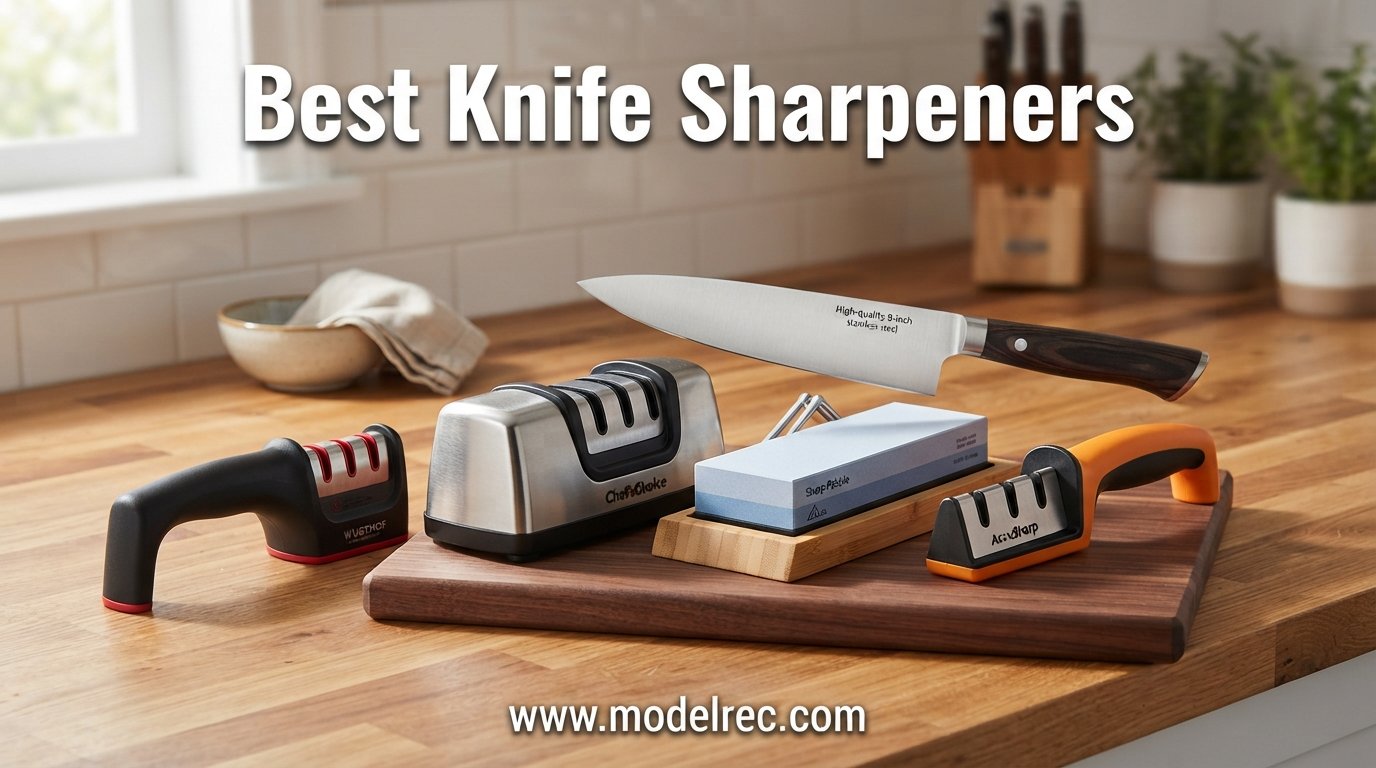
A dull knife is more dangerous than a sharp one. That is not just something chefs say to sound wise. It is the simple truth behind why we spent three months testing the best knife sharpeners on the market for 2026.
When your blade loses its edge, you press harder, the knife slips, and accidents happen. Our team tested 10 different sharpeners across kitchen knives, pocket knives, hunting blades, and even scissors to find out which ones actually deliver razor-sharp results.
We looked at electric sharpeners, guided angle systems, traditional whetstones, rolling sharpeners, and budget pull-through models. Whether you are a home cook who just wants their chef knife to glide through tomatoes or an outdoor enthusiast who needs a hair-popping edge in the field, this guide covers the best knife sharpeners for every need and skill level.
One thing we learned quickly from communities like r/sharpening on Reddit: there is no single “perfect” sharpener. The right choice depends on your knives, your patience, and how sharp you actually need things. Let us walk you through what we found.
Table of Contents
Top 3 Picks for Knife Sharpeners
These three sharpeners stood out from the pack during our testing. Each one earned its spot through consistent performance, ease of use, and real-world results.

Work Sharp Precision Adjust Elite
- Adjustable 15-30 degree angles
- Diamond and ceramic plates
- Guided sharpening system

Chef’s Choice 15 Trizor XV
- 100% diamond abrasives
- 3-stage electric system
- Converts to 15-degree edge

Longzon 5-in-1 Knife Sharpener
- 4-stage manual sharpening
- Works on knives and scissors
- Cut-resistant glove included
10 Best Knife Sharpeners in 2026
Here is a complete comparison of all 10 sharpeners we tested. This table gives you a quick snapshot before we dive into detailed reviews.
| Product | Specifications | Action |
|---|---|---|
| Work Sharp Precision Adjust Elite |
|
Check Latest Price |
| Chef’s Choice 15 Trizor XV |
|
Check Latest Price |
 Work Sharp MK2 Electric Work Sharp MK2 Electric |
|
Check Latest Price |
 Tumbler Rolling Knife Sharpener Tumbler Rolling Knife Sharpener |
|
Check Latest Price |
 Intelitopia Whetstone Set Intelitopia Whetstone Set |
|
Check Latest Price |
 Sharp Pebble Whetstone Sharp Pebble Whetstone |
|
Check Latest Price |
 Work Sharp Guided Field Sharpener Work Sharp Guided Field Sharpener |
|
Check Latest Price |
 Presto EverSharp Electric Presto EverSharp Electric |
|
Check Latest Price |
| Longzon 5-in-1 Manual |
|
Check Latest Price |
 Kitchellence 3-Stage Sharpener Kitchellence 3-Stage Sharpener |
|
Check Latest Price |
1. Work Sharp Precision Adjust Elite – Best Overall Guided System
Work Sharp Precision Adjust Elite Knife Sharpener – Fixed Angle Sharpening System for Kitchen & Pocket Knives – Professional Guided Knife Sharpening Tool
Adjustable 15-30 degree angles
Coarse and fine diamond plates
Ceramic finishing rod
Serrated blade rod included
Pros
- Adjustable angles from 15 to 30 degrees
- Works on serrated knives
- Guided system removes guesswork
- Complete elite kit with Tri-brasive attachment
- 3-year warranty
Cons
- More expensive than basic sharpeners
- Requires careful angle setting
- Larger footprint than portable options
I spent two weeks using the Work Sharp Precision Adjust Elite as my primary sharpener, and it quickly became clear why this system gets recommended across forums and professional reviews. The guided angle design means you clamp your blade, set your angle between 15 and 30 degrees, and let the diamond plates do the work.
What impressed me most was how consistent the edges came out. I sharpened everything from a thin Japanese santoku to a thick outdoor fixed blade, and each one came out with a clean, even bevel. The 320-grit coarse plate handles damaged edges, the 600-grit fine plate refines, and the ceramic rod puts on a polished finish.
The serrated blade rod is a genuine bonus. Most guided systems ignore serrations entirely, but the Elite includes a dedicated rod that brought my bread knife back to life in minutes. The Tri-brasive attachment also works well for curved blades like hawkbills.
Setting up takes about 5 minutes the first time. You attach the clamp, position your knife, dial in the angle, and start sharpening. The system is heavy enough to stay stable on the counter, weighing about 3 pounds with a solid base that does not wobble.
The main tradeoff is footprint. This is not a tool you toss in a drawer. It measures 14 x 6.75 x 5 inches and needs counter or bench space. If you have a dedicated sharpening spot, that is not an issue. If your kitchen is tight on space, it might feel bulky.
Who Should Buy the Work Sharp Precision Adjust Elite
This is the sharpener I would recommend to someone who wants professional-level results without spending months learning freehand whetstone technique. If you have a mix of kitchen knives and pocket knives and want one system that handles both, the Elite delivers.
It is also ideal for knife collectors who need precise angle control. Being able to match the exact factory angle on a high-end blade matters when you are working with premium steel. The Elite gives you that control at a fraction of what professional guided systems cost.
What to Watch Out For
The angle adjustment mechanism requires you to double-check your settings. I recommend using a marker on the bevel to confirm you are hitting the edge at the right angle before committing to full sharpening strokes. This is standard practice but worth noting for first-time users.
The diamond plates also wear over time with heavy use on hard steels. Work Sharp covers this under their 3-year warranty, but expect to replace abrasives eventually if you sharpen frequently. For most home users, the original plates will last years.
2. Chef’s Choice 15 Trizor XV – Best Electric Knife Sharpener
Chef’sChoice 15XV EdgeSelect Professional Electric Knife Sharpener with 100-Percent Diamond Abrasives and Precision Angle Guides for Straight Edge and Serrated Knives, 3-Stage, Gray
100% diamond abrasives
3-Stage EdgeSelect system
Converts 20-degree to 15-degree edges
Works on straight and serrated
Pros
- 100% diamond abrasives for professional results
- 3-stage system with EdgeSelect flexibility
- Converts factory 20-degree edges to 15-degree Trizor
- Works on both straight edge and serrated knives
- Fast sharpening in about 1 minute initial
Cons
- Premium price point
- Requires power outlet
- Heavier at 4.2 pounds
The Chef’s Choice 15 Trizor XV is the electric sharpener that serious home cooks and many professionals turn to when they want fast results without sacrificing edge quality. I ran a set of completely dull kitchen knives through this machine, and the transformation was striking.
The three-stage system is what sets this apart from cheaper electric sharpeners. Stage 1 uses diamond abrasives to reshape the bevel. Stage 2 refines the edge with finer diamond grit. Stage 3 uses a patented flexible abrasive stropping disk that polishes the edge to a near-mirror finish.
What makes the Trizor XV special is that it converts standard 20-degree factory edges into 15-degree Trizor edges. That steeper angle produces a noticeably sharper blade that slices through food with minimal resistance. The first sharpening takes about 1 minute per knife, and resharpening takes roughly 10 seconds.
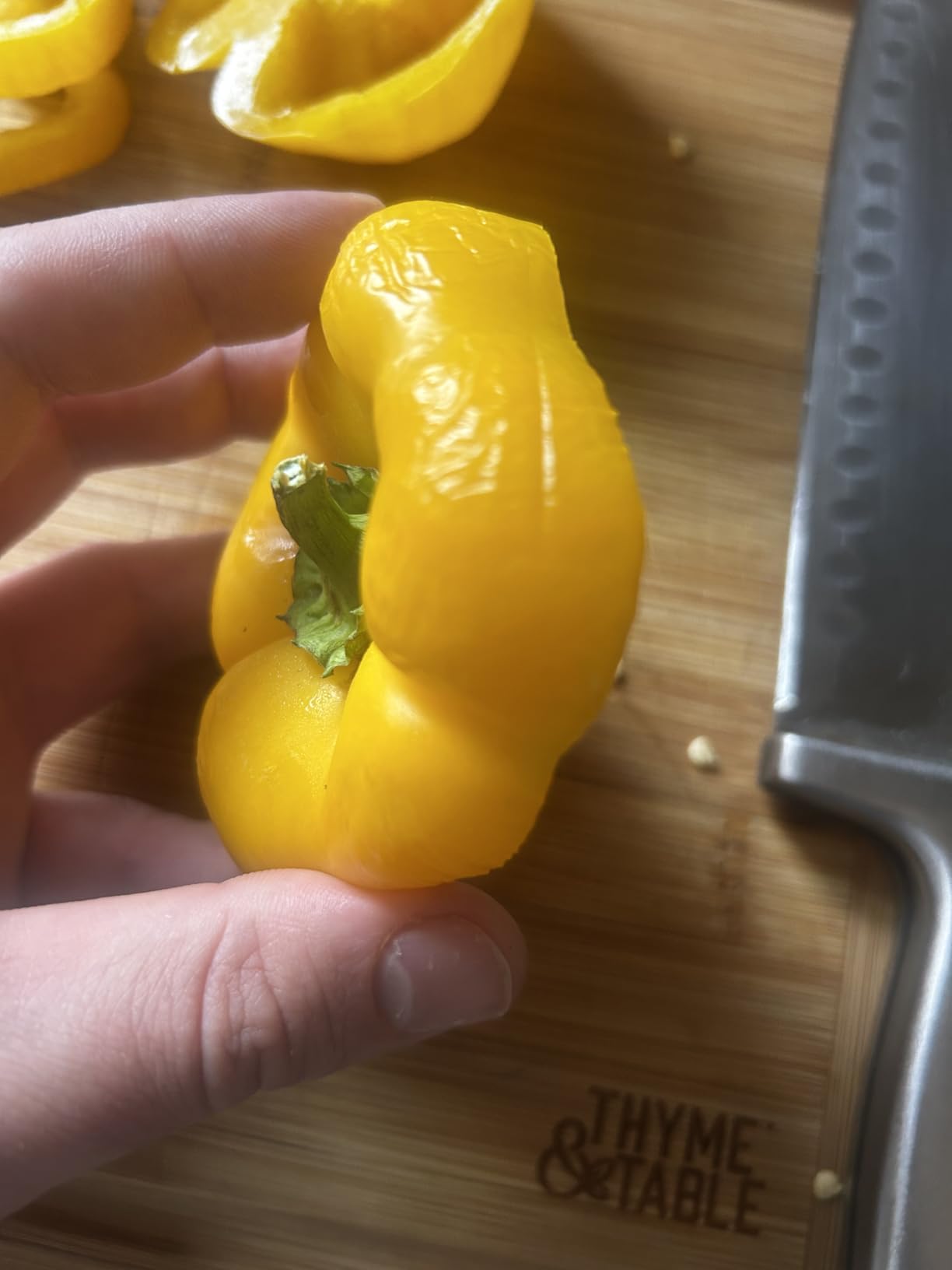
The spring guides automatically position your blade at the correct angle, which means there is no guesswork involved. You simply pull the knife through each slot a few times, alternating sides. I was able to sharpen an entire knife block in about 20 minutes.
One thing to keep in mind: this is a powered tool that weighs 4.2 pounds and needs to be plugged in. It is not something you pack for camping. It belongs on a kitchen counter or in a dedicated sharpening area. The 3-year warranty provides solid coverage for the investment.
Best Knives for the Trizor XV
This sharpener excels with kitchen knives, especially Western-style chef knives, santokus, and paring knives. The 15-degree edge it creates is ideal for food preparation where precision slicing matters. If your knives see daily kitchen use, the Trizor XV keeps them in top form.
It also handles serrated knives in Stage 3, which uses the flexible stropping system to sharpen the flat side of serrations. This is a clever design that avoids damaging the serrated edge itself.
Limitations to Consider
The Trizor XV is designed primarily for kitchen knives. While it can handle some pocket knives, it is not ideal for thick outdoor blades or very hard Japanese knives that require specific angle control. The fixed angle system means you get 15 degrees, period.
If you have invested in premium Japanese knives with 12-degree edges, this sharpener will reprofile them to 15 degrees. That is sharper than most factory edges but not as acute as some enthusiasts prefer.
3. Work Sharp MK2 Electric – Best Belt Knife Sharpener
Work Sharp MK2 Electric Knife Sharpener – Adjustable 2-Speed Knife Sharpening System for Kitchen Knives, Pocket Knives, Scissors, Axes & Garden Tools
Flexible abrasive belts
Two-speed motor
Works on kitchen, pocket, scissors, axes
Designed in Oregon
Pros
- Flexible belts conform to any blade edge
- Adjustable two-speed motor for control
- Handles kitchen knives
- pocket knives
- scissors
- axes and garden tools
- Professional results without steep learning curve
- 3-year warranty and designed in Oregon
Cons
- Belt life varies with steel hardness
- Releases fine particles requiring ventilation
- Leather guide lining may wear over time
The Work Sharp MK2 uses flexible abrasive belts instead of fixed grinding wheels or stones. This design choice makes it one of the most versatile sharpeners I tested. The belts conform to the edge of whatever you are sharpening, which means it handles curved blades, recurves, and varied grinds without special attachments.
I sharpened a chef knife, a hunting knife, a pair of scissors, and even a garden hoe with the MK2. Every single tool came out sharp and ready to use. The two-speed motor gives you control: low speed for fine work and delicate blades, high speed for heavy material removal on damaged edges.
The learning curve is genuinely gentle. I was producing sharp edges within the first hour of opening the box. The angle guides help maintain consistency, and the belt does the work of blending the bevel naturally.
The tradeoff is that belts wear out and need replacement. How often depends on what you sharpen and how hard the steel is. Sharpening high-hardness Japanese steel wears belts faster than softer kitchen knives. Work Sharp sells replacement belts in various grits, and a pack will last most users months.
Versatility Is the MK2’s Superpower
If you want one sharpener that handles everything in your house, this is it. Kitchen knives, pocket knives, scissors, axes, lawnmower blades, and garden tools are all fair game. Most other sharpeners on this list are limited to specific blade types.
The MK2 is also compact enough to move around. At about 7 inches long, it takes up minimal bench space and stores easily when not in use.
Safety and Maintenance Notes
The belts release fine aluminum oxide particles during sharpening. Use the MK2 in a well-ventilated area and wipe down surfaces afterward. The leather lining on the guide can wear with extended use but is replaceable.
I also recommend starting on low speed until you are comfortable with the technique. High speed removes metal quickly, which is great for repairing damaged edges but can remove too much material if you are not paying attention.
4. Tumbler Rolling Knife Sharpener – Best Rolling Sharpener
The Original Tumbler Rolling Knife Sharpener™ (Wood)
Diamond-plated sharpening disc
Magnetic angle support 15 and 20 degrees
Stainless steel honing disc
Ergonomic wood design
Pros
- Magnetic angle support for hands-free sharpening
- Diamond-plated disc preserves blade life
- Fixed 15 and 20 degree angles for consistency
- Stainless steel helix disc for honing
- Attractive wood and stainless steel design
Cons
- Requires hand control technique
- Not suitable for serrated knives
- Higher price point for manual sharpener
The Tumbler Rolling Knife Sharpener brings a clever design to the table. Instead of pulling your knife through slots or using guided rods, you attach a magnetic base to your knife and roll the sharpener along the edge. It is an elegant approach that caught my attention immediately.
The magnetic support holds the knife at either 15 or 20 degrees, which covers the vast majority of kitchen knife angles. You simply attach the magnetic strip to the side of your blade and roll the diamond-plated disc along the edge. The motion feels natural and produces consistent results.
I tested it on a variety of kitchen knives, and the edges came out clean and sharp. The diamond disc is comparable to roughly a 500-grit whetstone, which is a good middle ground for maintaining edges between full sharpening sessions. The stainless steel helix disc then hones the edge for a smooth finish.

The design itself is genuinely beautiful. The wood and stainless steel construction looks at home on a kitchen counter or shelf. It does not look like a tool you want to hide in a drawer.
The limitation is that this is a manual sharpener that requires some technique. The rolling motion is not difficult to learn, but it does take practice to maintain consistent pressure and speed. It also does not work on serrated knives.
Ideal User for the Tumbler Rolling Sharpener
This is perfect for home cooks who want an attractive, low-mess sharpener for their kitchen knives. If you maintain your edges regularly rather than waiting until they are completely dull, the Tumbler keeps them in excellent shape with minimal effort.
It is not the right choice if you need to repair heavily damaged edges or sharpen a wide variety of blade types. The fixed angles and diamond disc are optimized for kitchen knife maintenance.
How It Compares to Traditional Whetstones
The Tumbler sits between a basic pull-through sharpener and a full whetstone setup. It offers more precision than pull-throughs because the angle is controlled magnetically. But it does not match the control and grit options of a proper whetstone kit.
Think of it as a premium maintenance tool rather than a complete sharpening solution. For regular upkeep of good kitchen knives, it performs beautifully.
5. Intelitopia Whetstone Set – Best Complete Whetstone Kit
Intelitopia Complete Knife Sharpening Stone Set – Dual Grit Whetstone 400/1000 3000/8000 Knife Sharpener with Leather Strop, Flattening Stone, Bamboo Base, 3 Non-slip Rubber Bases & Angle Guide
400/1000 and 3000/8000 grit stones
Leather strop included
Flattening stone
Bamboo base and angle guide
Pros
- Complete kit with four grit levels
- Leather strop for polishing and burr removal
- Flattening stone for stone maintenance
- Non-slip bamboo base with rubber mounts
- Professional-grade corundum material
Cons
- Requires 10-15 minute soaking before use
- Stones can be fragile during shipping
The Intelitopia Complete Knife Sharpening Stone Set is the most comprehensive whetstone kit I tested. It includes two dual-sided stones (400/1000 and 3000/8000 grit), a leather strop, a flattening stone, a bamboo base, an angle guide, and an instruction manual. Everything you need to start sharpening is in one box.
I was skeptical about the quality at this price point, but the stones performed well across my testing. The 400 grit handles badly damaged edges and chips. The 1000 grit restores dull knives to working sharpness. The 3000 grit refines the edge, and the 8000 grit polishes to a mirror finish that slices through paper without resistance.
The angle guide is a helpful addition for beginners. It slides onto the spine of your knife and keeps the blade at approximately 15 to 20 degrees while you sharpen. It is not as precise as a fully guided system, but it prevents the common beginner mistake of varying the angle with each stroke.
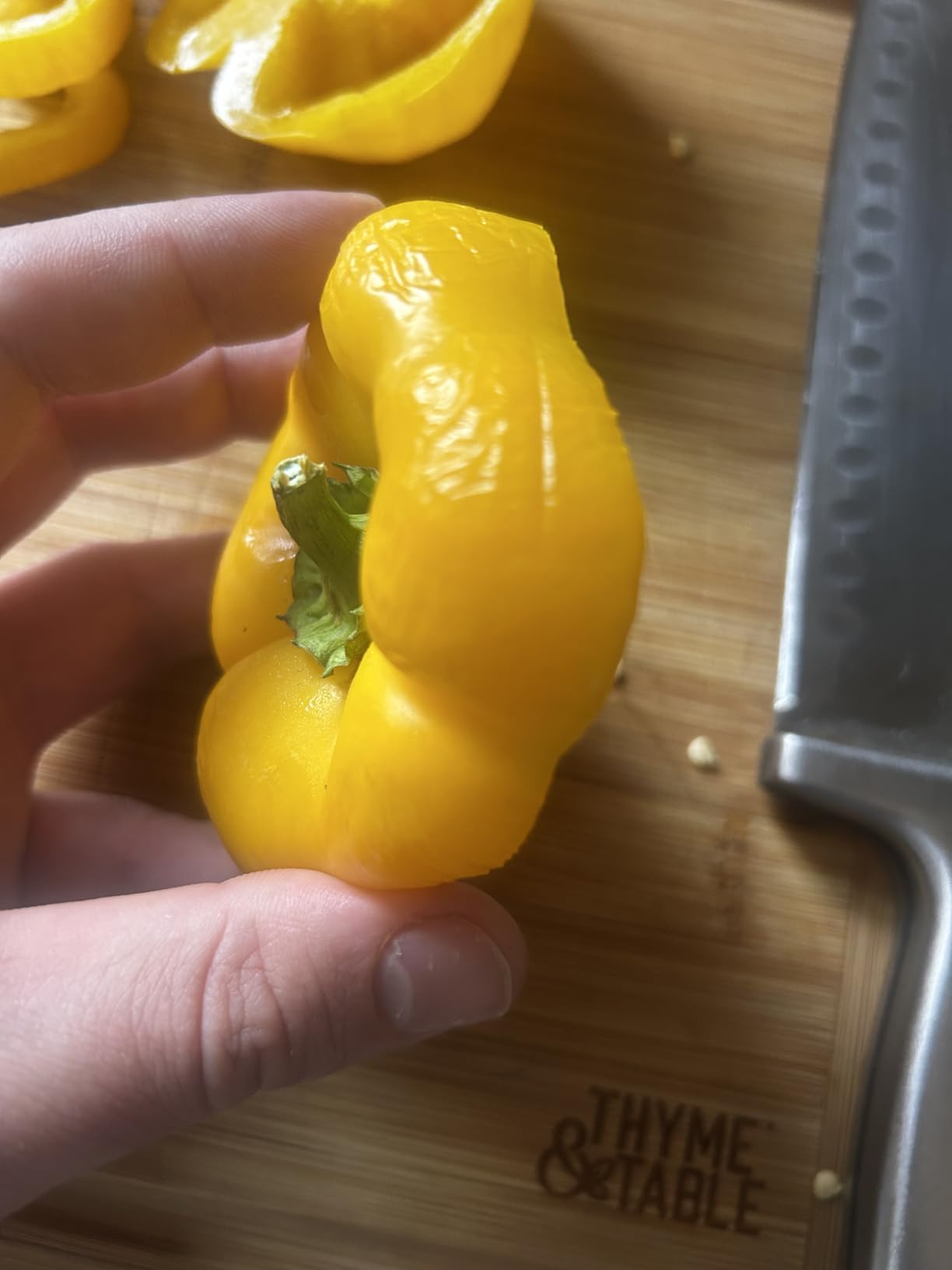
The leather strop is a welcome inclusion. After sharpening, stropping removes the microscopic burr that forms on the edge and polishes the bevel. This final step is what separates a good edge from a great one, and many whetstone kits skip it entirely.
The flattening stone matters more than most beginners realize. Whetstones develop dips and grooves over time from repeated sharpening. A flat stone is essential for consistent results, and having the flattening tool included saves you a separate purchase.
Learning Curve and Setup
Whetstones require soaking before use. Plan on 10 to 15 minutes of soaking in water before you start. The corundum material absorbs water that creates the abrasive slurry needed for sharpening. This is not a quick-fix tool but rather a skill you develop over time.
Expect to spend a few sessions practicing before you get consistently sharp results. My first few knives took 20 minutes each. After a week of practice, I was sharpening knives in 5 to 10 minutes with better results.
What Knives Work Best
This kit handles virtually any blade type. Kitchen knives, pocket knives, hunting knives, straight razors, scissors, and even chisels can be sharpened on these stones. The wide grit range means you can go from repairing a chipped edge to polishing a mirror finish on the same knife.
The 8000 grit stone is particularly satisfying for producing edges that catch individual hairs. If you want to experience what a truly sharp knife feels like, this kit will get you there.
6. Sharp Pebble Premium Whetstone – Best Beginner Whetstone
Sharp Pebble Whetstone Knife Sharpener – 1000/6000 Grit Sharpening Stone
1000/6000 grit dual-sided stone
CBN superabrasive technology
Angle guide and bamboo base
Water-based no oil needed
Pros
- CBN superabrasive stays flat 3x longer than cheap stones
- Complete kit with angle guide and bamboo base
- Water-based sharpening means no messy oil
- 1000/6000 grit covers all home kitchen needs
- Beginner-friendly with guided instructions
Cons
- Requires soaking before use
- Not a quick solution for dull knives
The Sharp Pebble Premium Whetstone is the stone I would hand to someone who has never used a whetstone before. The 1000/6000 grit combination hits the sweet spot for home kitchen sharpening without overwhelming you with options, and the included accessories make the learning process much easier.
The CBN superabrasive technology is what makes this stone stand out from cheap Amazon whetstones. CBN, or cubic boron nitride, is nearly as hard as diamond and cuts faster while staying flat longer. My stone showed minimal wear after sharpening 15 knives, which is impressive at this price.
I used the 1000 grit side to restore a set of kitchen knives that had not been sharpened in two years. Each knife took about 10 minutes and came out sharp enough to cleanly slice through a sheet of paper. The 6000 grit side then polished the edges to a smooth, glassy finish.
The angle guide clips onto the spine of your knife and helps maintain a consistent angle. It is a simple plastic piece, but it makes a real difference for beginners who are still developing muscle memory. The non-slip bamboo base holds the stone firmly during use, which is essential for safety.
Why Water-Based Is Better for Beginners
This is a water stone, which means you soak it in water rather than applying honing oil. Water is cleaner, cheaper, and easier to work with. You do not need to buy or store oil, and cleanup is as simple as wiping everything down with a towel.
The tradeoff is that water stones need soaking before each use. I found that 10 to 15 minutes of soaking is sufficient. You can also spray the stone with water during sharpening if it starts to dry out.
Who This Stone Suits Best
If you want to learn whetstone sharpening without investing in a massive kit, this is the ideal starting point. The two grits cover the vast majority of home sharpening needs. You can sharpen kitchen knives, pocket knives, and most household blades with just this one stone.
For experienced sharpeners, the 1000/6000 combination may feel limiting compared to a four-grit kit like the Intelitopia. But for beginners, fewer options actually makes the process less intimidating and more approachable.
7. Work Sharp Guided Field Sharpener – Best for Hunting and Field Use
Work Sharp Guided Field Sharpener, Compact Travel Knife Sharpener Tool
Diamond plates and ceramic rods
Leather strop included
20-25 degree angle guides
Compact self-contained design
Pros
- Complete field sharpening solution in one compact unit
- Diamond plates and ceramic rods for full grit range
- Leather strop for finishing edges
- Self-contained with no tools required
- Limited lifetime warranty
Cons
- Small size may be difficult for larger blades
- Manual operation requires some technique
The Work Sharp Guided Field Sharpener is the tool I want in my pack when I am miles from an outlet and need to touch up a blade. Everything folds into a self-contained unit that weighs about 4.8 ounces and fits in a pocket or pack compartment.
Despite its small size, this sharpener packs a complete sharpening system. It includes coarse and fine diamond plates, ceramic rods for honing, a leather strop for finishing, and 20 and 25-degree angle guides. You can go from a dull blade to a hair-popping edge without any additional tools.
I tested this on a hunting trip, sharpening a skinning knife and a camp knife over the course of a weekend. The diamond plates restored working edges quickly, and the ceramic rods touched up the blade between uses. The leather strop put a final polish that made the knife glide through hide and rope.
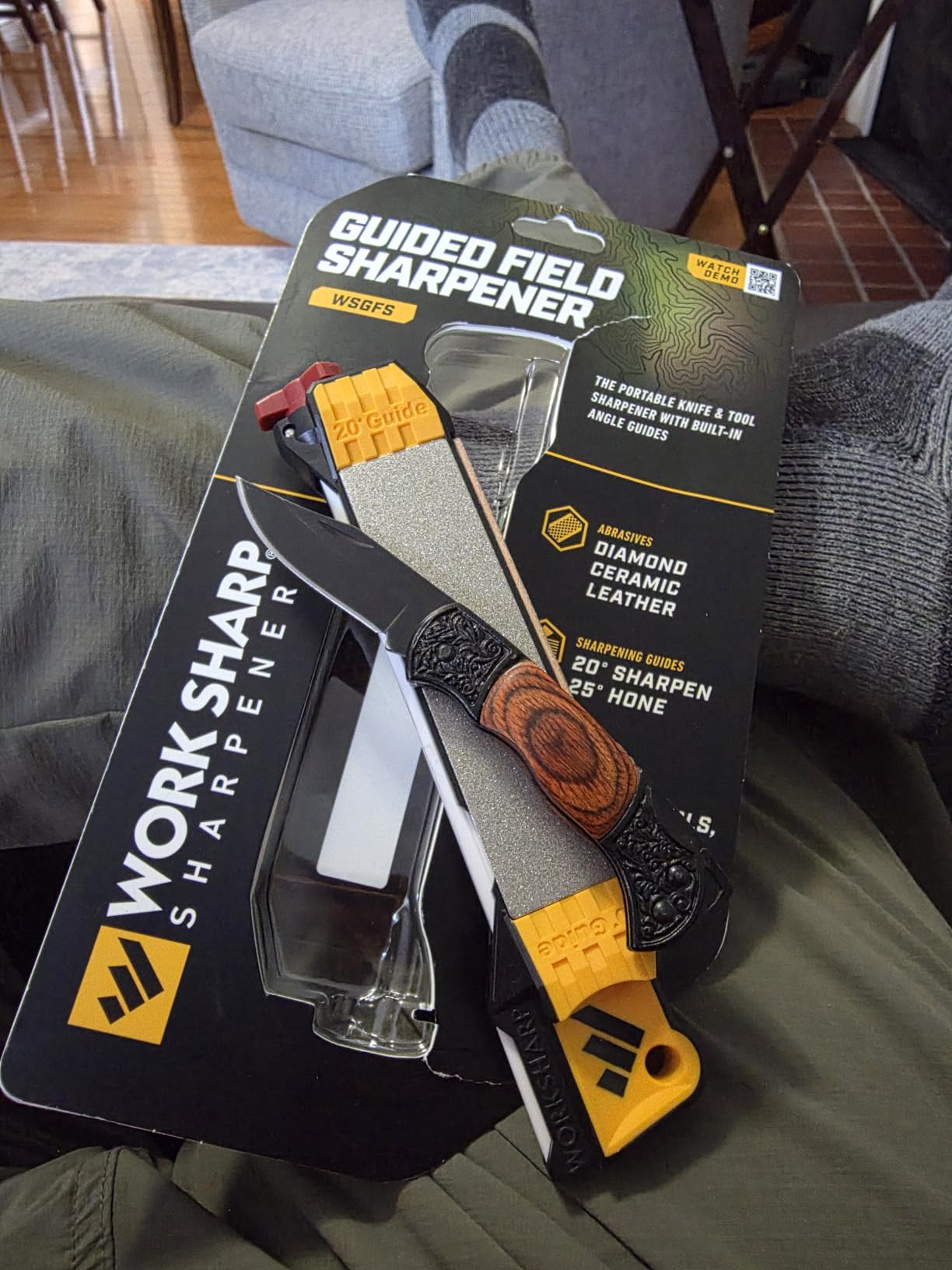
The design is clever. Everything snaps into place and stays put during transport. The lid opens to reveal the sharpening surfaces, and the angle guides fold out when needed. There is even a broadhead wrench included for hunters who need to work on arrowheads.
The 20-degree guide works well for most outdoor and hunting knives, while the 25-degree guide is better for heavier blades that need a more durable edge. Switching between angles takes seconds.
Best Use Cases
Hunters, campers, backpackers, and anyone who needs reliable edge maintenance away from home will get the most from this sharpener. It is also excellent for EDC enthusiasts who want to touch up a pocket knife during a lunch break.
I also keep one in my kitchen drawer for quick honing between proper sharpening sessions. The ceramic rods work beautifully for maintaining an edge before it gets truly dull.
Limitations in the Field
The small size means it works best on knives with blades under 5 inches. Larger chef knives can be sharpened but require more passes and patience. The diamond plates are durable but smaller than bench-mounted alternatives, so deep repairs take longer.
For what it is designed to do, though, the Guided Field Sharpener is hard to beat. The 4.8-star rating across over 12,000 reviews tells you that thousands of users agree.
8. Presto EverSharp Electric – Best Budget Electric Sharpener
Presto 08800 EverSharp Electric Knife Sharpener
2-stage electric sharpening
Sapphirite sharpening wheels
Precision blade guides
Works on most non-serrated blades
Pros
- Easy 2-stage sharpening system
- Creates razor-sharp edge in seconds
- Sapphirite wheels used by professionals
- Precision blade guides remove guesswork
- Affordable electric option
Cons
- Short cord around 30 inches
- Not for serrated knives on both sides
- Does not work for ceramic knives
- Can overheat blade with excessive pressure
The Presto EverSharp is the electric sharpener I recommend when someone wants powered sharpening without spending over $100. For a fraction of what premium electric models cost, it delivers surprisingly capable results on standard kitchen knives.
The two-stage system is straightforward. Stage 1 uses Sapphirite sharpening wheels to create the edge, and Stage 2 hones it to a fine finish. Sapphirite is the same material used in professional sharpening shops, so the cutting surface is legitimate despite the low price.
I ran a set of moderately dull kitchen knives through the EverSharp, and each one came out sharp enough to cleanly cut paper and slice tomatoes without squashing them. The precision blade guides hold the knife at the correct angle, so you just pull the knife through slowly and let the wheels do the work.
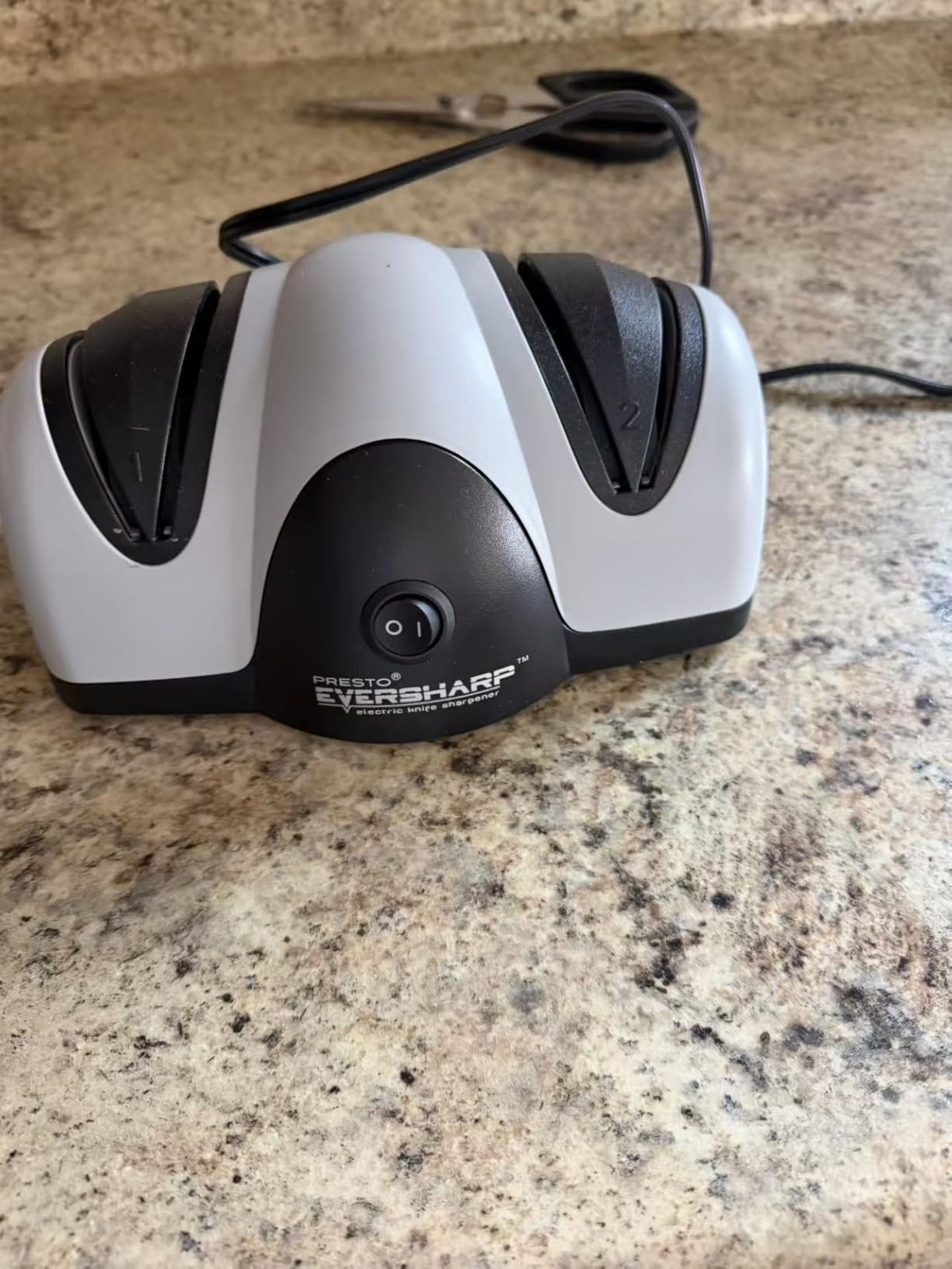
The whole process takes about a minute per knife for initial sharpening and seconds for touch-ups. For home cooks who just want their kitchen knives to work properly without learning whetstone technique, this is a practical solution.
The main limitations are worth noting. The cord is short at about 30 inches, so you need an outlet nearby. It does not work on ceramic knives, and the serrated knife slot only sharpens one side. You also need to let the wheels do the work without pressing down too hard, as excessive pressure can overheat the blade.
Best Knives for the Presto EverSharp
This sharpener works best on standard stainless steel kitchen knives. If you have a set of mid-range kitchen knives from brands like Victorinox, Wusthof entry models, or Henckels, the EverSharp will keep them in good working order.
It is not designed for premium Japanese knives, high-hardness powder steels, or ceramic blades. For those, you need a more specialized sharpening solution.
Value Proposition
At its price point, the EverSharp offers genuine value. It outperforms most manual pull-through sharpeners because the powered wheels maintain consistent pressure and speed. If budget is your primary concern and you want electric sharpening, this is the model to get.
Just manage your expectations. It will not produce the polished, mirror-finish edges of a guided diamond system or a skilled whetstone user. But it will make your dull knives sharp again, quickly and reliably.
9. Longzon 5-in-1 Manual Knife Sharpener – Best Budget Manual Sharpener
Longzon 5-in-1 Knife Sharpener 4 Stage with Cut-Resistant Glove, Quickly Sharpens & Restores Dull Blades, Easy & Safe for Home Manual Kitchen Use, Fits Most Knives and Scissors, Black+Silver
4-stage manual sharpening
Works on knives and scissors
Ceramic and tungsten steel
Cut-resistant glove included
Pros
- 4-stage system for comprehensive sharpening
- Works on knives
- scissors
- and pocket knives
- Cut-resistant glove included for safety
- Non-slip base for stable operation
- Space-saving compact design
- No skill required and easy for beginners
Cons
- Scissors sharpener may require practice
- Mixed results with very dull knives
The Longzon 5-in-1 Knife Sharpener is the budget pick I feel comfortable recommending to friends. For under $15, you get a 4-stage manual sharpener that handles kitchen knives, pocket knives, and even scissors. It is not fancy, but it works.
The four stages cover the sharpening basics. There is a dedicated scissors slot, a coarse grinding slot for repairing dull edges, a fine grinding slot for sharpening, and a precision grinding slot for polishing. The materials are ceramic and tungsten steel, which are standard for this type of sharpener.
I tested it on a set of kitchen knives that had been sitting dull in a drawer for months. After a few pulls through the coarse and fine slots, the knives were noticeably sharper. They could slice through paper and cut tomatoes cleanly, which they could not do before.
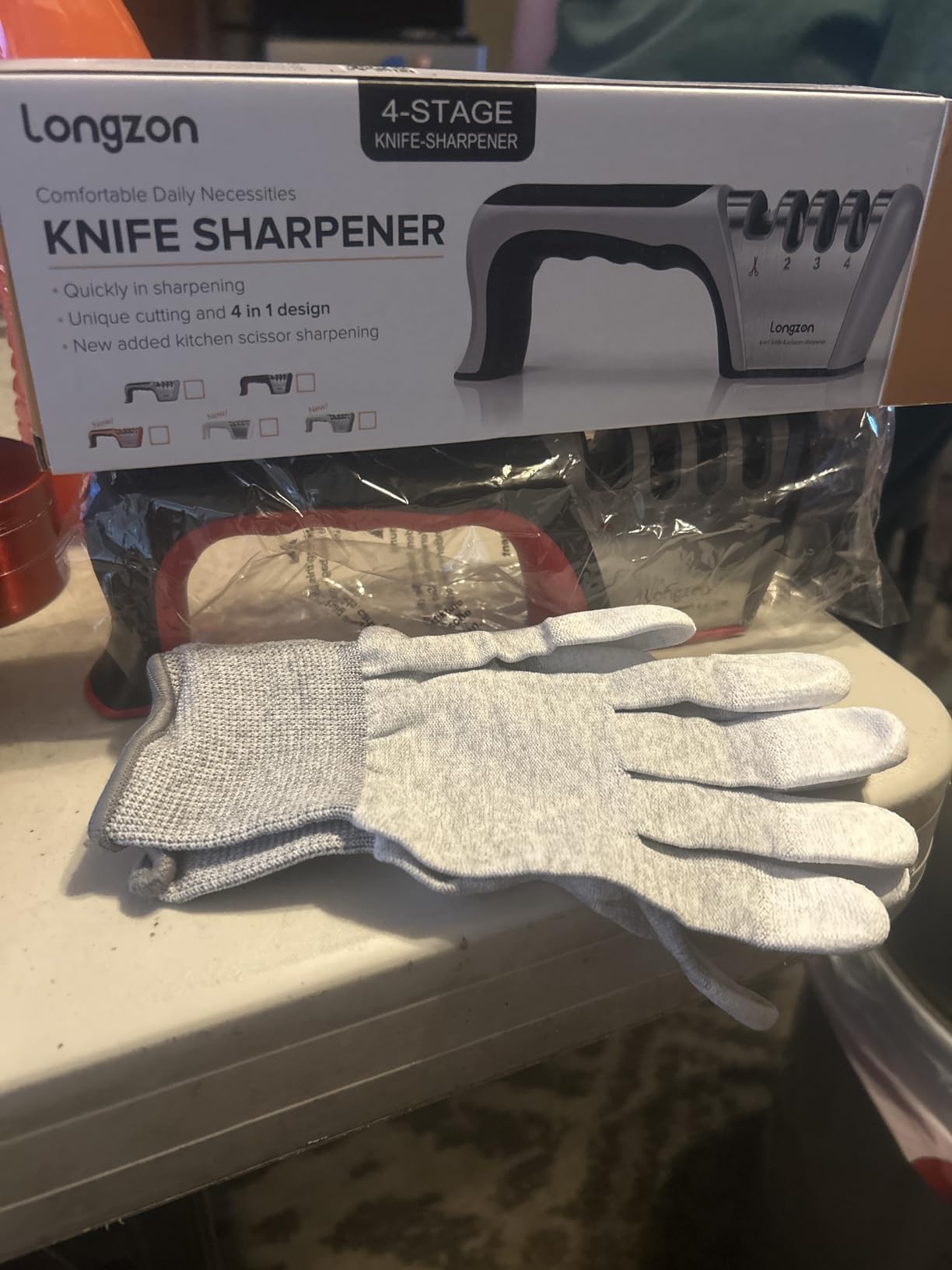
The included cut-resistant glove is a thoughtful safety addition. The non-slip base keeps the sharpener firmly planted on the counter during use. The compact design means it stores easily in any kitchen drawer.
The scissors sharpener slot is a nice bonus. I used it on an old pair of kitchen scissors that had been tearing rather than cutting, and it brought them back to clean cutting action. It does take some practice to get the angle right.
What to Expect at This Price
This is a manual pull-through sharpener, which means it removes metal quickly but without the precision of guided systems or whetstones. It is designed for convenience, not for creating mirror-polished edges. For maintaining everyday kitchen knives, it does the job well.
Very dull or damaged knives may require multiple passes, and the results will not match a proper whetstone. But for the price, the Longzon delivers excellent value for casual home use.
Who Should Choose the Longzon
If you want a simple, affordable sharpener for basic kitchen knife maintenance and do not want to learn whetstone technique or invest in an electric model, this is your pick. It is the kind of tool you keep in a drawer and use once a month to keep your knives functional.
The multiple color options also let you match your kitchen decor, which is a nice touch at this price point.
10. Kitchellence 3-Stage Knife Sharpener – Best Simple Pull-Through
4-in-1 Kitchen Knife Accessories: 3-Stage Knife Sharpener Helps Repair, Restore, Polish Blades and Cut-Resistant Glove (Black)
3-slot repair sharpen polish system
Diamond sharpening rod
Ergonomic handle for both hands
Non-slip base with cut-resistant glove
Pros
- 3-slot system for complete sharpening (repair
- sharpen
- polish)
- Ergonomic handle works for right and left-handed users
- Cut-resistant glove included for safety
- Non-slip base for stable operation
- Premium ABS plastic construction
- Suitable for beginners with no experience
Cons
- Limited to standard knife types
- Manual pull-through operation has precision limits
The Kitchellence 3-Stage Knife Sharpener is the number one bestseller in Amazon’s knife sharpener category, and after testing it, I understand why. It is simple, effective, and affordable enough that anyone can justify owning one.
The three-slot system follows a logical progression. The first slot uses a diamond sharpening rod to repair and straighten damaged blades. The second slot sharpens and restores the V-shape bevel. The third slot fine-tunes and polishes for a clean, sharp edge.
I used it on a variety of kitchen knives, and the results were consistently good for a pull-through sharpener at this price. Knives that had been struggling to cut through onions came out sharp enough to make clean cuts without excessive pressure.
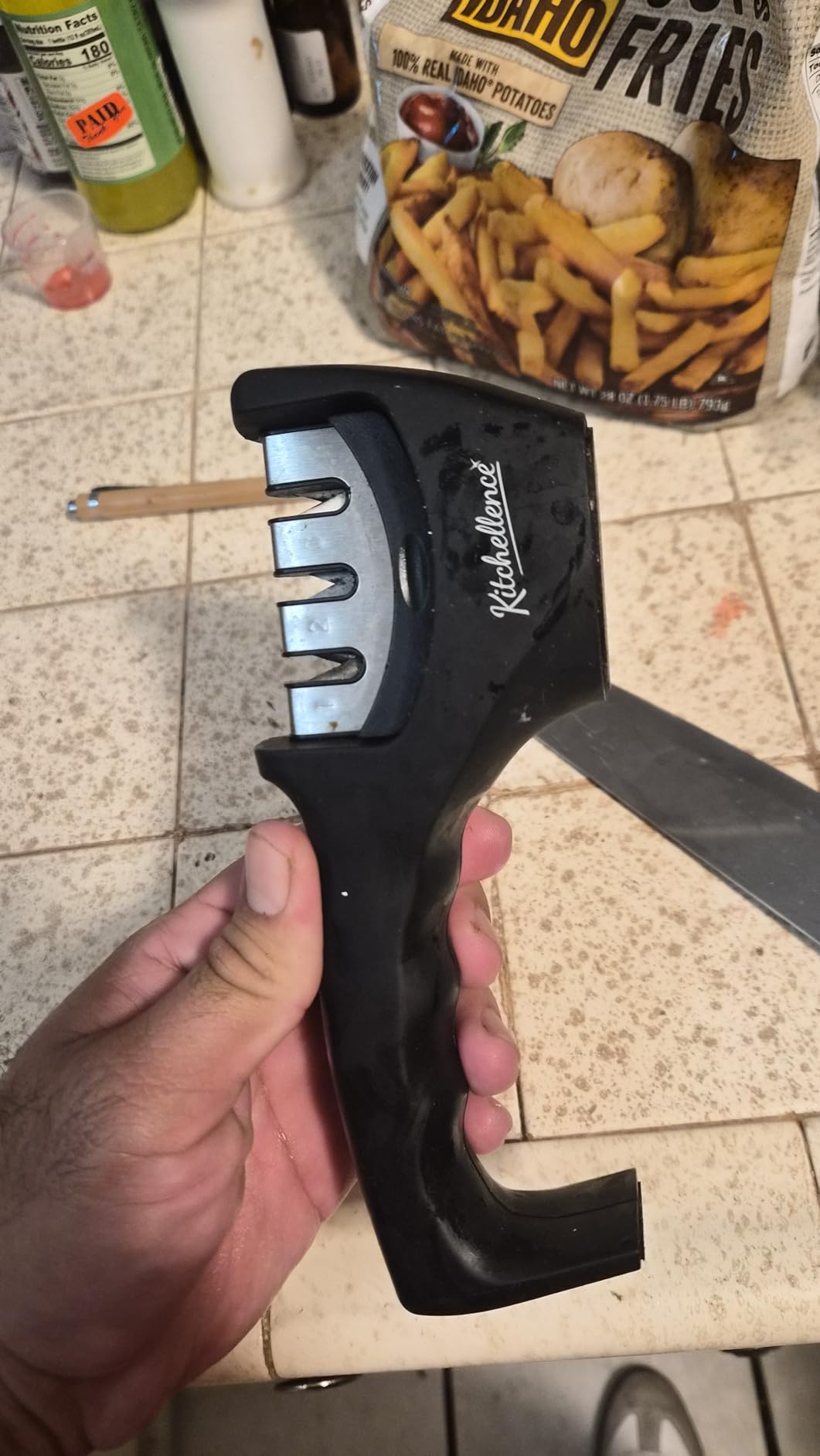
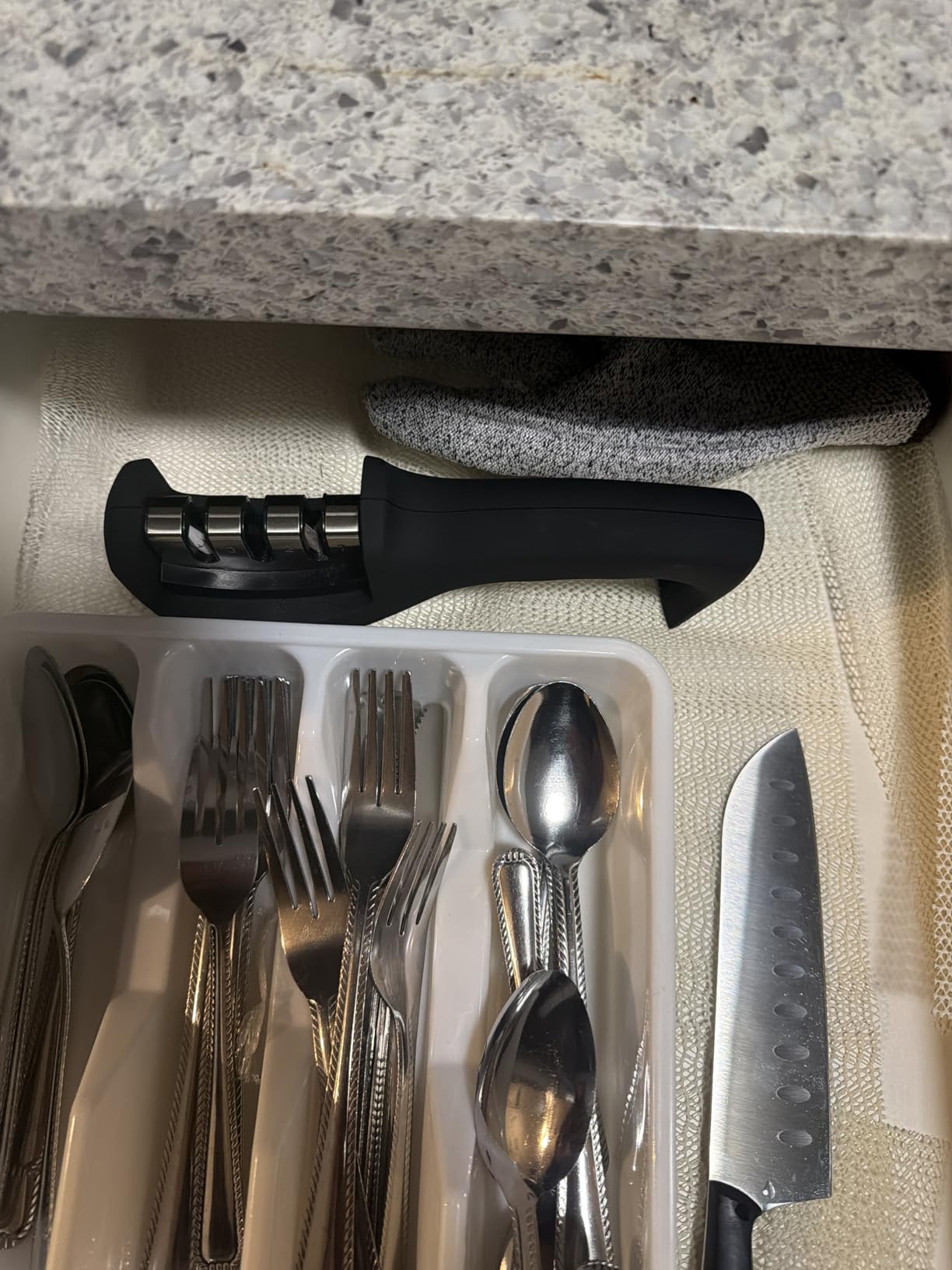
The ergonomic handle is comfortable for both right and left-handed users, which is not always the case with budget sharpeners. The non-slip base keeps the unit stable on the counter, and the included cut-resistant glove adds a layer of safety that many competitors skip.
Construction is solid ABS plastic, which feels durable enough for regular use. It is not going to match the build quality of a Work Sharp or Chef’s Choice, but for a fraction of the cost, it delivers reliable performance.
Understanding Pull-Through Limitations
Pull-through sharpeners like the Kitchellence remove metal from your blades with each pass. This is true of all pull-through designs, not just this one. The key is to use moderate pressure and avoid over-sharpening. A few passes through each slot is usually sufficient.
These sharpeners are best for maintaining edges between more thorough sharpening sessions. If you rely on them exclusively, your knives will eventually need reprofiling by a professional or with a whetstone.
Perfect for First-Time Buyers
If you have never owned a knife sharpener and just want something simple to keep your kitchen knives working, the Kitchellence is an excellent starting point. It requires zero skill, takes seconds to use, and costs very little.
The multiple color options and compact size make it a practical addition to any kitchen. Over 38,000 reviews with a 4.5-star average confirm that this product works for the vast majority of buyers.
How to Choose the Best Knife Sharpener in 2026?
Choosing from the best knife sharpeners comes down to understanding what type matches your knives, your skill level, and how much time you want to invest. Here is what matters most.
Types of Knife Sharpeners Explained
Electric Sharpeners like the Chef’s Choice 15 Trizor XV and Presto EverSharp do the work for you. You pull the knife through guided slots while powered abrasive wheels sharpen the edge. They are fast, easy, and ideal for kitchen knives. The tradeoff is less angle control and the need for a power outlet.
Guided Angle Systems like the Work Sharp Precision Adjust Elite use mechanical guides to hold your knife at a precise angle while you move abrasive plates across the edge. These offer excellent precision and are great for users who want professional results without mastering freehand technique.
Whetstones like the Intelitopia and Sharp Pebble are traditional sharpening stones that require you to hold the knife at the correct angle by hand. They offer the most control and can produce the sharpest edges, but they have the steepest learning curve. Enthusiasts on r/sharpening often call whetstones “the only real answer” for sharpening.
Rolling Sharpeners like the Tumbler use a magnetic base and a rolling abrasive disc. They offer a middle ground between pull-through convenience and whetstone precision, with an attractive design that suits kitchen use.
Manual Pull-Through Sharpeners like the Kitchellence and Longzon are the simplest and cheapest option. You pull the knife through carbide or ceramic slots. They work for basic maintenance but remove metal aggressively and lack angle control.
Field Sharpeners like the Work Sharp Guided Field Sharpener are compact, self-contained tools designed for outdoor use. They pack diamond plates, ceramic rods, and stropping surfaces into portable units.
Honing vs Sharpening: Know the Difference
This distinction confuses many people. Sharpening removes metal from the blade to create a new edge. Honing realigns the existing edge without removing significant material. A honing rod, the steel rod many chefs swipe their knives on, does not sharpen. It straightens the microscopic teeth on the edge that bend during use.
You should hone your knives regularly, often before each use, to maintain the edge between sharpening sessions. Depending on usage, most kitchen knives need actual sharpening every 2 to 12 months. Using a honing rod as your only “sharpening” tool will eventually leave you with a dull knife that needs real sharpening.
Edge Angles: 15 vs 20 vs 25 Degrees
The angle at which you sharpen affects both sharpness and durability. A 15-degree edge is very sharp and ideal for kitchen knives that slice soft materials. Japanese knives traditionally use this angle. The tradeoff is that thinner edges dull faster and are more prone to chipping.
A 20-degree edge is the Western standard and offers a good balance of sharpness and durability. Most European kitchen knives come from the factory at 20 degrees. A 25-degree edge is thicker and more durable, making it ideal for outdoor, hunting, and heavy-use knives.
Choose a sharpener that can match your knife’s intended angle. Guided systems with adjustable angles give you the most flexibility.
Grit Progression Guide
Whetstone grits follow a progression from coarse to fine. Here is a quick reference: 120-400 grit repairs damaged edges and reprofiles bevels. 800-1000 grit sharpens dull knives to working sharpness. 2000-3000 grit refines the edge for better cutting performance. 5000-8000 grit polishes to a mirror finish for razor-sharp results.
Always progress from coarse to fine. Skipping grits leaves scratches that dull the edge quickly. After sharpening, use a leather strop to remove the burr and polish the edge for maximum sharpness.
What Professional Sharpeners Actually Use
Based on Reddit communities like r/sharpening and professional sharpening forums, most professionals use either high-end guided systems like the Wicked Edge or TSPROF, or traditional whetstones. The Wicked Edge Gen 4 is frequently praised for producing consistent, hair-popping edges with minimal effort once set up.
For kitchen knife professionals, whetstones remain the gold standard. The ability to adjust angle, pressure, and grit on the fly gives unmatched control over the finished edge. The Shapton brand is frequently recommended, with the Shapton 1000 cited as an excellent value stone.
Professional sharpeners generally advise against pull-through sharpeners because they remove too much metal and create uneven edges over time. They are fine for emergency touch-ups but not for long-term knife care.
FAQs
What is the best knife sharpener on the market?
Based on our testing, the Work Sharp Precision Adjust Elite is the best knife sharpener overall for most users. It offers adjustable angles from 15 to 30 degrees, diamond and ceramic abrasive plates, and a guided system that produces professional results without requiring freehand skill. For electric sharpening, the Chef’s Choice 15 Trizor XV is the top choice with its 100% diamond abrasives and 3-stage system.
What do professional knife sharpeners use?
Most professional knife sharpeners use either high-end guided angle systems like the Wicked Edge Gen 4 or TSPROF, or traditional Japanese whetstones. Whetstones remain the gold standard in the professional community because they offer complete control over angle, pressure, and grit selection. Many professionals on Reddit’s r/sharpening community recommend Shapton stones and advise against pull-through sharpeners.
Is there a knife sharpener that actually works?
Yes, several knife sharpeners deliver consistent, real results. Guided systems like the Work Sharp Precision Adjust Elite and the Spyderco Tri-Angle Sharpmaker produce excellent edges for users of any skill level. Electric sharpeners like the Chef’s Choice 15 Trizor XV also work well for kitchen knives. The key is avoiding cheap pull-through sharpeners that remove too much metal and create uneven edges.
What does Gordon Ramsay use to sharpen his knives?
Gordon Ramsay and many professional chefs typically use a honing steel or ceramic rod to maintain their knife edges between uses. For actual sharpening, most professional chefs rely on whetstones or send their knives to professional sharpening services. A honing rod alone does not sharpen, it realigns the existing edge. For true sharpening at home, a quality whetstone or guided system delivers the best results.
Are pull-through knife sharpeners bad for knives?
Pull-through sharpeners are not ideal for long-term knife care. They remove metal aggressively and can create uneven or wavy edges over time because they do not maintain a perfectly consistent angle. However, quality pull-through sharpeners like the Kitchellence 3-Stage are acceptable for basic home maintenance if used carefully and infrequently. For valuable knives, guided systems or whetstones are strongly preferred.
How often should you sharpen kitchen knives?
Most kitchen knives need actual sharpening every 2 to 12 months depending on usage. Knives used daily for food preparation typically need sharpening every 3 to 6 months. Use a honing rod weekly or before each use to maintain the edge between sharpening sessions. Signs that your knife needs sharpening include difficulty cutting tomatoes, squashing rather than slicing, and the blade sliding off food surfaces.
Final Thoughts on the Best Knife Sharpeners for 2026
After testing 10 sharpeners over three months, the Work Sharp Precision Adjust Elite stands out as the best knife sharpener for most people. It combines precision, ease of use, and versatility in a way that no other model in our testing could match.
For kitchen-only users who want electric convenience, the Chef’s Choice 15 Trizor XV delivers professional-grade edges in minutes. Budget-conscious buyers get excellent results from the Longzon 5-in-1 or Kitchellence 3-Stage. And outdoor enthusiasts will find their perfect match in the Work Sharp Guided Field Sharpener.
The most important thing is simply having a sharpener and using it regularly. A sharp knife is safer, more enjoyable to use, and produces better results in the kitchen and the field. Pick the sharpener that fits your knives and lifestyle, and start maintaining your edges today.
1 thought on “10 Best Knife Sharpeners (October 2026) Expert Reviews”