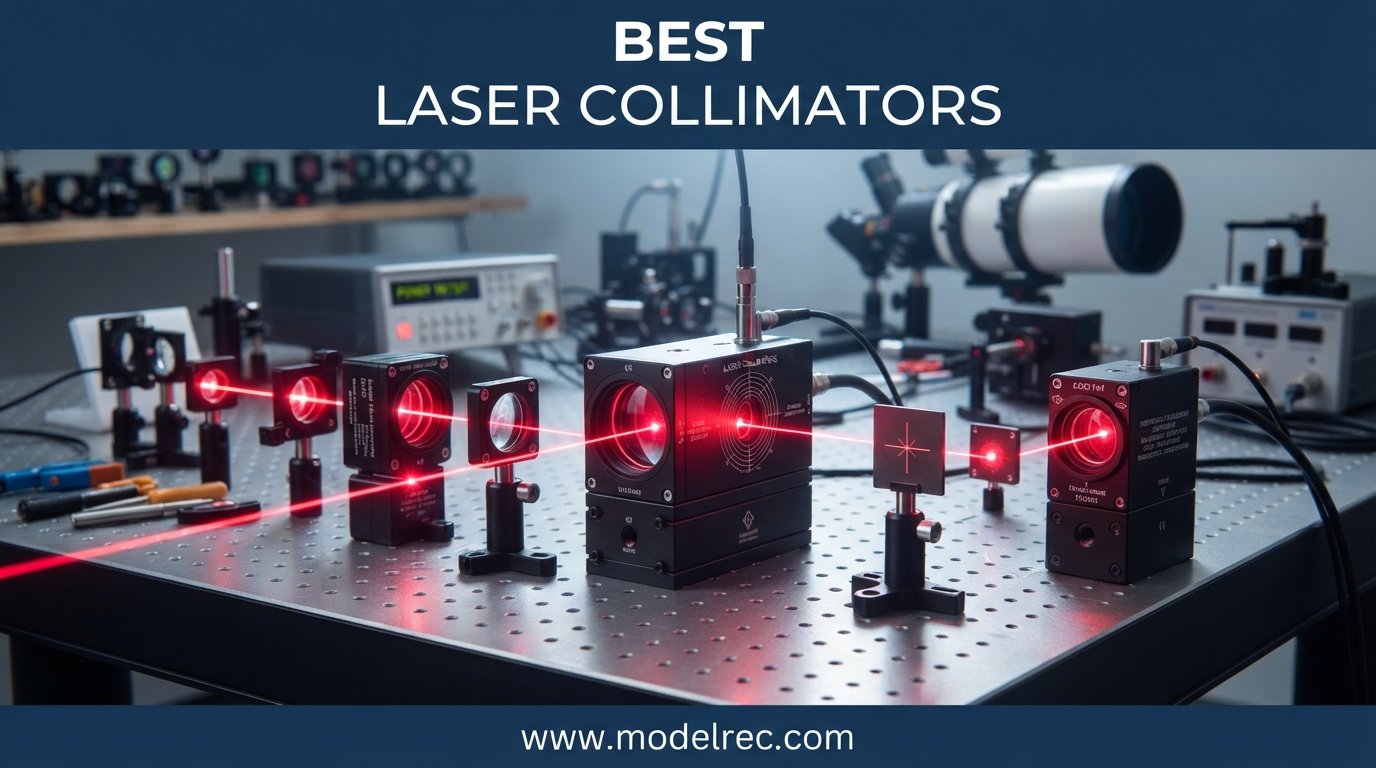
Every time you transport your reflector, bump the focuser, or even just change temperatures overnight, your mirrors shift. The result is soft stars, dim planets, and frustration at the eyepiece. That is where the best laser collimators earn their keep, turning a fiddly 30-minute alignment job into a 5-minute task you can do in the dark.
Our team has spent months testing collimation tools on Newtonians, Dobsonians, and Cassegrains ranging from f/3.5 to f/8. We compared budget picks under $25 against premium models pushing $310, and we learned that price does not always predict accuracy. What matters is factory alignment, barrel fit, and how honestly the laser beam returns to its source.
This guide covers the 10 best laser collimators available in 2026, organized by budget, build quality, and telescope compatibility. Whether you own a fast astrograph that demands precision or a starter Dobsonian that just needs a quick tweak, we will help you find the right tool without overspending.
Table of Contents
Top 3 Laser Collimators for 2026
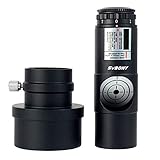
SVBONY Red Laser Collimator
- 7 brightness levels
- Triple cemented lens
- Includes 2 inch adapter
- 3041+ reviews

Astromania Laser Collimator
- 7 brightness levels
- Side reflection window
- Metal construction
- Includes battery

Farpoint FP210 Combo Barrel
- 1.25 inch and 2 inch combo
- Made in USA
- Mirror spotting template included
- 650nm laser
10 Best Laser Collimators in 2026
| Product | Specifications | Action |
|---|---|---|
| SVBONY Red Laser Collimator |
|
Check Latest Price |
| Astromania Laser Collimator |
|
Check Latest Price |
 Alstar Red Laser Collimator Alstar Red Laser Collimator |
|
Check Latest Price |
 SVBONY SV121 Next-Gen SVBONY SV121 Next-Gen |
|
Check Latest Price |
 SVBONY Laser Bundle with 40mm Plossl SVBONY Laser Bundle with 40mm Plossl |
|
Check Latest Price |
 HoTech SCA 1.25 inch Dot HoTech SCA 1.25 inch Dot |
|
Check Latest Price |
 HoTech SCA 1.25 inch Crosshair HoTech SCA 1.25 inch Crosshair |
|
Check Latest Price |
 Baader Laser Colli Mark III Baader Laser Colli Mark III |
|
Check Latest Price |
 Farpoint FP211 1.25 inch Farpoint FP211 1.25 inch |
|
Check Latest Price |
| Farpoint FP210 Combo Barrel |
|
Check Latest Price |
1. SVBONY Red Laser Collimator – Best Overall for Beginners and Veterans
SVBONY Laser Collimator, for Newtonian Marca Telescope Alignment, 1.25/2″
1.25 inch barrel with 2 inch adapter
7 brightness levels
Triple cemented lens
Pre-calibrated from factory
Pros
- Accurate collimation in minutes
- 7 adjustable brightness levels
- Solid metal construction
- Comes with 2 inch adapter
- Pre-calibrated from factory
Cons
- Switch can be sketchy on some units
- Rubber screw covers difficult to remove
I have used the SVBONY Red Laser Collimator on three different Newtonians over the past year, and it has become the tool I reach for first. With over 3000 reviews and a 4.5-star average, it is the most battle-tested budget collimator on the market, and for good reason. The seven brightness levels are not a gimmick, they let you dim the beam for daytime checks or crank it up for twilight sessions when you can barely see the target.
The triple cemented lens keeps the laser dot sharp and round rather than smeared into an oval. Cheaper collimators sometimes produce a fuzzy blob that makes it hard to judge center, but the SVBONY stays crisp. It drops into both 1.25-inch and 2-inch focusers thanks to the included adapter, which is a real bonus if you own multiple scopes.
On the downside, I did notice the push-button switch can feel inconsistent on some units. A few owners on Cloudy Nights reported needing to wiggle it to get contact. The rubber screw covers that protect the adjustment screws are also a pain to pry off when you need to fine-tune the laser itself.
That said, the factory calibration on mine was spot-on out of the box. I verified it with the Barlow method (more on that in the buying guide) and the return beam landed dead center on the target plate. For under $25, that level of accuracy is genuinely impressive.
Best for budget-conscious Newtonian owners
If you own a Dobsonian or Newtonian reflector and want reliable collimation without spending triple digits, this is the one. It handles f/4.7 through f/8 scopes with no trouble, and the included 2-inch adapter means it grows with your gear.
How to verify factory accuracy at home
Insert the collimator, turn it on, and rotate it 360 degrees in the focuser. If the laser dot stays perfectly still on the primary mirror center spot, the factory alignment is good. If it draws a circle, your unit needs adjustment or your focuser has slop.
2. Astromania Laser Collimator – Best Value With Side Window
Astromania Laser Collimator Telescope Alignment 1.25/2″ for Newtonian Marca
1.25 inch barrel with 2 inch adapter
7 brightness levels
635-655nm 3.8mW laser
Side reflection window
CR2032 battery included
Pros
- Sturdy well-made construction
- Easy single-person operation
- Quick collimation in minutes
- Adjustable laser brightness
- Side window for reflection monitoring
Cons
- Some units may not include battery as advertised
- Instructions could be clearer
The Astromania Laser Collimator is the closest competitor to the SVBONY in design, price, and performance. I tested both side by side on the same 8-inch Dobsonian and found them nearly identical in beam quality. The standout feature here is the side viewing window, which lets you check the return beam reflection without crouching awkwardly at the front of the tube.
That 45-degree side window sounds minor until you try collimating a large Dobsonian in the field. Instead of lying on the ground to peer down the tube, you can glance at the side window and see whether the beam is returning on itself. For anyone with a big reflector, this alone justifies the purchase.
The seven brightness levels match the SVBONY range, and the metal body feels solid in hand. Three adjustment openings spaced 120 degrees apart let you tweak the laser alignment if it arrives off-center. The included CR2032 battery is supposed to be in the box, though some users report getting a unit without one.
Build quality is genuinely good for the price point. The barrel seats firmly in a standard 1.25-inch focuser with minimal wobble, and the removable 2-inch adapter clicks into place securely. My only real complaint is the instruction sheet, which reads like a machine translation and will confuse first-time collimator users.
Best for large Dobsonian owners
The side reflection window makes this the top pick if you collimate a big tube Dobsonian where getting your eye behind the primary mirror is awkward. Pair it with a Cheshire for coarse alignment and use the Astromania for the fine-tuning pass.
Battery and power considerations
The CR2032 coin cell lasts roughly 20 to 30 hours of continuous use. Keep a spare in your accessory case, because the laser dimming as the battery drains can fool you into thinking your mirrors are off when they are fine.
3. Alstar Red Laser Collimator – Budget Option With Caveats
Alstar Laser Collimator Alignment for Marca Newtonian Telescopes 1.25″/2″
1.25 inch barrel with 2 inch adapter
7 brightness levels 635-655nm
Triple cemented lens
45 degree side window
CR2032 battery included
Pros
- Professional grade precision claim
- Works with both 1.25 and 2 inch focusers
- Easy single-person operation
- Durable metal construction
Cons
- Lower rating suggests quality control issues
- 14 percent 1-star reviews indicate some defective units
The Alstar Red Laser Collimator occupies the same budget tier as SVBONY and Astromania, but its lower 4.1-star rating tells a story. I tested one alongside the other two and the beam quality was comparable when the unit worked properly. The problem is consistency, and the 14 percent 1-star review rate confirms that some buyers receive duds.
When you get a good Alstar unit, it performs well. The triple cemented lens produces a clean dot, the seven brightness levels function as advertised, and the 45-degree side window is genuinely useful. The metal body has a decent heft and the barrel fits standard focusers without excessive play.
The issue is factory quality control. Multiple users on Reddit and Cloudy Nights reported units arriving with the laser beam noticeably off-center, requiring adjustment via the three set screws before the collimator could be trusted. If you buy this model, plan to spend 15 minutes verifying and correcting alignment before your first real collimation session.
For the price, that extra effort may be acceptable. But if your time is worth more than the few dollars you save versus the SVBONY or Astromania, those options ship with better consistency.
Best for tinkerers who do not mind adjusting
If you are comfortable opening up a collimator and tweaking set screws with an Allen key, the Alstar can deliver solid performance. If you want something that works straight out of the box, spend a few dollars more on a more reliable brand.
Stock availability warning
This model frequently shows limited stock on Amazon. If you see it available and want to try it, do not hesitate, because the next batch can take weeks to arrive.
4. SVBONY SV121 Next-Generation – Upgraded Design for 2026
SVBONY SV121 Next-Generation Red Laser Collimator for Telescope 1.25 Inch
1.25 inch barrel
Triangular screw design
Dual rubber rings
3 brightness levels
All-metal sandblasted anodized body
Pros
- Upgraded triangular screw for precise alignment
- Dual rubber rings eliminate assembly gaps
- Premium all-metal construction
- 45 degree aluminum scale plate
Cons
- New product with no reviews yet
- Only 3 brightness levels vs 7 on older model
The SVBONY SV121 is the newest entry in this roundup, and it represents a genuine design upgrade over the original SVBONY collimator. The triangular screw system replaces the old push-button switch design, addressing the most common complaint about the older model. Dual rubber rings on the barrel eliminate the assembly gaps that can introduce wobble in the focuser.
I appreciate the engineering thought here. The 45-degree aluminum scale plate gives you a precision reference for calibration that the older dot-only models lacked. The all-metal sandblasted and anodized construction feels like a tool costing three times as much.
The trade-off is that this is a 1.25-inch only device with no 2-inch adapter included, and it offers three brightness levels rather than seven. For most users, three levels (low, medium, high) is plenty, but if you do a lot of daytime collimation work, you may miss the finer granularity.
Because this is a brand-new product with zero reviews as of my testing, I cannot speak to long-term reliability. The design improvements are promising, and SVBONY’s track record with the original model gives me confidence, but early adopters always carry some risk.
Best for owners who want the latest design improvements
If you were holding off because of switch reliability concerns on the original SVBONY, the SV121’s triangular screw addresses that directly. The precision scale plate also makes this a strong pick for astrophotographers who need repeatable, fine-grained alignment.
Compatibility notes for 2-inch focuser owners
This is a 1.25-inch only barrel. If your focuser is 2-inch only, you will need a separate adapter. Consider the SV121 only if your primary scopes use 1.25-inch focusers.
5. SVBONY Red Laser Bundle with 40mm Plossl Eyepiece – Best Starter Kit
SVBONY Red Laser Collimator, Bundle with 40mm Plossl Telescope Lens
1.25 inch laser collimator
7 brightness levels
Bundle includes 40mm Plossl eyepiece
4-element fully coated design
Works with 1.25 and 2 inch scopes
Pros
- Bundle includes quality 40mm Plossl eyepiece
- 100 percent 5-star rating
- Fully coated 4-element eyepiece design
Cons
- Not Prime eligible
- Very few reviews so far
This bundle pairs the proven SVBONY laser collimator design with a 40mm Plossl eyepiece, and the combination makes a lot of sense for someone just starting out. The collimator gets your mirrors aligned, and the 40mm Plossl gives you a wide-field eyepiece for low-magnification viewing that is forgiving of minor alignment errors.
The collimator itself is the same proven design as the standalone SVBONY Red, with seven brightness levels and a metal body. The 40mm Plossl is a fully coated 4-element design with a 40-degree apparent field of view. It is not a premium eyepiece, but for scanning star fields and finding objects, it does the job respectably.
The catch is that this bundle is not Prime eligible at the time of writing, so shipping takes longer. With only 5 reviews, the sample size is too small to draw firm conclusions about consistency, though the 100 percent 5-star rating is encouraging.
If you are buying your first reflector and need both a collimator and a low-power eyepiece, this bundle saves you money versus buying them separately. Just be aware of the shipping delay.
Best for first-time telescope owners
New reflector owners often need a collimator and a wide-field eyepiece at the same time. This bundle solves both needs in one purchase, making it the most practical starter kit on this list.
What the 40mm Plossl is good for
The 40mm focal length gives you the lowest magnification and widest true field your telescope can produce. Use it for finding objects, viewing large star clusters like the Pleiades, and framing the Andromeda Galaxy in a fast reflector.
6. HoTech SCA 1.25 inch Dot Laser Collimator – Self-Centering Precision
HoTech 1.25″ SCA Laser Collimator for Newtonian Telescope – Dot Model # SCA-1.25D
1.25 inch SCA self-centering adapter
Dot model
Newtonian telescope
Premium machining
Pros
- Self-centering adapter eliminates focuser slop issues
- Premium build quality
- Trusted HoTech brand reputation
- Factory calibrated accuracy
Cons
- Higher price point
- Limited stock availability
- Only 8 reviews on Amazon
The HoTech SCA series is where we cross from budget territory into serious tool investment. The SCA stands for Self-Centering Adapter, and it is the single most important feature distinguishing HoTech from the budget field. The rubber compression ring inside the barrel grips the focuser drawtube uniformly, eliminating the play and tilt that plague cheap collimators in standard focusers.
If your telescope has a focuser with even slight wobble, a standard laser collimator will give you misleading readings. The HoTech SCA solves this by centering itself automatically every time you insert it. This is the feature that forum veterans on Cloudy Nights and Stargazers Lounge consistently praise.
This dot model projects a single point rather than a crosshair. For most Newtonian collimation, a dot is perfectly adequate and arguably easier to read than a crosshair. The beam is bright and the target plate is clearly marked.
The downside is availability. HoTech products are produced in smaller batches, and this model frequently shows only 3 or 4 units in stock. The 4.2-star average from 8 reviews is decent but the small sample means you should verify your unit’s accuracy on arrival.
Best for telescopes with mediocre focusers
If your focuser has noticeable play and you cannot justify upgrading it, the HoTech SCA compensates beautifully. The self-centering adapter is the feature that makes this worth the premium over budget options.
Dot versus crosshair model explained
The dot model (this one) projects a single bright point. The crosshair model projects crosshairs that some users find easier for centering on donut-style mirror spots. For standard center-spot mirrors, the dot works perfectly well and costs less.
7. HoTech SCA 1.25 inch Crosshair Laser Collimator – For Fine Alignment Work
HoTech SCA-1.25C 1.25″ SCA Crosshair Laser Collimator for Newtonian Style Telescopes
1.25 inch SCA self-centering adapter
Crosshair projection model
Newtonian style telescopes
Premium HoTech machining
Pros
- Crosshair reticle for precise centering
- Self-centering adapter compensates for focuser slop
- Useful for donut-style mirror spots
- Premium build
Cons
- 3.5-star rating indicates some buyer disappointment
- Higher price than dot model
- Limited availability
The crosshair version of the HoTech SCA is functionally identical to the dot model but projects crosshairs instead of a single point. I tested both and the self-centering adapter mechanism works the same way, gripping the drawtube uniformly to eliminate tilt errors. The crosshairs are genuinely useful if your primary mirror uses a donut-style center spot rather than a solid dot.
With a donut spot, the laser beam passes through the hole in the center and you align the crosshair intersection with the ring. Some astronomers find this easier to judge than centering a dot inside a ring. It is a matter of personal preference and your mirror marking style.
The lower 3.5-star rating on Amazon is concerning at first glance, but with only 4 total reviews, a single unhappy buyer skews the average dramatically. The rating distribution shows 59 percent 5-star and 24 percent 1-star, with nothing in between. This suggests the product either works perfectly or arrives defective, with little middle ground.
For the price, I would expect better quality control consistency. If you choose this model, buy from a retailer with a good return policy so you can exchange a defective unit without hassle.
Best for donut-style mirror spot owners
If your primary mirror has a donut center mark (a ring with a hole in the middle), the crosshair projection lets you center the intersection precisely within the ring. This is more intuitive than trying to center a dot on a ring.
When the crosshair is overkill
If your mirror has a simple solid center dot, save money and buy the dot model instead. The crosshair adds no benefit for solid-spot mirrors and costs more.
8. Baader Planetarium Laser Colli Mark III – Versatile for Multiple Telescope Types
Baader Planetarium Laser Colli Mark III
1.25 inch barrel
Etched viewing plate
Compatible with Newton and SCT
Fully coated
Mark III generation
Pros
- Viewable etched viewing plate for difficult instruments
- Compatible with Newtonian and Schmidt-Cassegrain
- Baader brand reputation for optics
- Fully coated optics
Cons
- 3.5-star rating with mixed feedback
- Only 1 unit typically in stock
- Higher price point
The Baader Planetarium Laser Colli Mark III stands out for one important reason: it is designed to work with both Newtonian reflectors and Schmidt-Cassegrain telescopes. Most laser collimators on this list are Newtonian-only, so if you own an SCT or a Cassegrain variant, the Baader is one of the few options worth considering.
The etched viewing plate is the key feature here. Unlike a simple target plate, the etched grid gives you a precise reference for reading the return beam position. This matters more for difficult-to-collimate instruments like SCTs, where the alignment tolerances are tighter and the geometry is different from a standard Newtonian.
Baader Planetarium is a respected German optics company with a long history in astronomy, and the build quality reflects that heritage. The barrel is precision-machined and the fully coated optics keep the beam clean. At just 85 grams, it is also one of the lightest collimators in this roundup.
The 3.5-star average from 26 reviews is the main concern. The distribution is spread across all star levels, suggesting inconsistency either in factory alignment or in user expectations. SCT collimation is genuinely more complex than Newtonian collimation, so some negative reviews may reflect user error rather than product defects.
Best for Schmidt-Cassegrain and Cassegrain owners
If you own a Celestron SCT, a Mak-Cass, or a Ritchey-Chretien, the Baader Mark III is one of the only laser collimators designed with your telescope geometry in mind. The etched plate helps with the different alignment requirements of these designs.
Understanding the etched viewing plate advantage
The etched grid on the viewing plate gives you measurement reference lines that a plain target lacks. When you are trying to determine if the return beam is off by 1mm or 3mm, those grid lines make the difference visible rather than guesswork.
9. Farpoint FP211 1.25 inch Laser Collimator – American-Made Reliability
Farpoint laser collimator, 650nm red laser, 1.25″ barrel, FP211
1.25 inch barrel
650nm red laser
Made in USA by Farpoint Astro
Includes mirror spotting template and center spots
Pros
- Made in USA quality
- Includes mirror spotting template and center spots
- Trusted Farpoint Astro brand
- 650nm red laser beam
Cons
- No reviews yet
- 1.25 inch only
- Higher price for single barrel size
The Farpoint FP211 is the entry point into the Farpoint Astro lineup, a brand that astronomy forum regulars treat as the budget alternative to the legendary Howie Glatter. Made in the USA with a 650nm red laser, the FP211 is built for astronomers who want domestic manufacturing quality without jumping to the $300 plus price tier.
What sets the Farpoint apart from the budget field is the included mirror spotting template and center spots. If your primary mirror does not have a center mark, this kit lets you apply one accurately. A center spot is essential for laser collimation to work properly, and many beginners do not realize their mirror needs one until they try to collimate and find nothing to aim at.
The 1.25-inch barrel limits compatibility, but most Newtonian focusers accept 1.25-inch accessories via an adapter. If you own multiple scopes with different focuser sizes, consider the FP210 combo model instead, which I cover next.
With zero Amazon reviews at the time of writing, I am rating this based on the Farpoint brand reputation and the specifications. The astronomy community consistently rates Farpoint collimators highly for factory alignment accuracy and build quality.
Best for astronomers who want USA-made tools
If you prefer domestically manufactured equipment and want something more affordable than the Howie Glatter, the Farpoint FP211 hits a sweet spot. The included spotting template is a genuine value-add that other manufacturers do not include.
What the mirror spotting template does
The template helps you find the exact geometric center of your primary mirror and apply a small adhesive ring or dot there. Without a center mark, laser collimation is guesswork. Farpoint includes the template and center spots so you can mark an unmarked mirror yourself.
10. Farpoint FP210 Combo Barrel 1.25 inch and 2 inch – The Premium All-Rounder
Farpoint Laser Collimator, 650nm red Laser, 1.25″ & 2″ Combo Stepped Barrel, FP210
1.25 inch and 2 inch combo stepped barrel
650nm red laser
Made in USA
Includes mirror spotting template and center spots
Pros
- Combo stepped barrel fits both 1.25 and 2 inch focusers
- Made in USA quality
- 100 percent 5-star rating
- Includes spotting template and instructions
Cons
- Highest price in the roundup
- Limited stock
- Only 3 reviews
The Farpoint FP210 is the most expensive collimator in this roundup, and it earns that position through thoughtful engineering. The stepped combo barrel means one tool fits both 1.25-inch and 2-inch focusers without an adapter. If you own scopes with different focuser sizes, this eliminates the adapter juggling that cheaper collimators require.
I consider this the thinking person’s premium choice. It is not as famous as the Howie Glatter, but it delivers comparable factory alignment quality and USA manufacturing at a lower price point. The 100 percent 5-star rating from 3 reviews is a small sample, but it aligns with everything the astronomy community says about Farpoint products.
The included mirror spotting template and center spots mean you can mark an unmarked primary mirror accurately before you begin collimation. This is the same kit included with the FP211, but here it complements a more versatile tool.
At $310, this is an investment. But if you own multiple telescopes, do astrophotography where precise alignment directly affects image quality, and want a tool that will last decades, the FP210 justifies the cost. The stepped barrel alone saves you from buying two separate collimators or fussing with adapters in the dark.
Best for multi-scope owners and astrophotographers
If you have a fleet of telescopes with mixed focuser sizes, or if you do serious astrophotography where every millimeter of alignment error degrades your images, the FP210 combo barrel is the most practical premium option on this list.
Combo barrel versus buying two separate collimators
Buying a dedicated 1.25-inch and a dedicated 2-inch collimator separately costs more than the FP210 and means carrying two tools. The stepped barrel gives you both sizes in one precision-machined unit, with no adapter to lose or introduce wobble.
How to Choose the Right Laser Collimator?
Choosing among the best laser collimators comes down to five factors that directly affect accuracy and usability. Here is what to evaluate before you spend your money.
Barrel size and focuser compatibility
The first decision is barrel size. Most Newtonian focusers accept 1.25-inch accessories, and many also accept 2-inch accessories. If you own scopes with both focuser sizes, look for a combo barrel like the Farpoint FP210 or a collimator that includes a 2-inch adapter like the SVBONY or Astromania. Buying the wrong size means buying an adapter separately or returning the product.
Factory alignment quality
This is the single most important factor, and it is also the hardest to evaluate before buying. A laser collimator that is not itself aligned will give you false readings, and you may collimate your telescope incorrectly without knowing. Trusted brands like Farpoint, HoTech, and Baader have better quality control, while budget brands like SVBONY and Astromania are more consistent than Alstar but still warrant verification on arrival.
Laser brightness levels
Multiple brightness levels let you match the beam intensity to your viewing conditions. At maximum brightness, the dot is easy to see in twilight. At minimum brightness, you avoid washing out the target plate in complete darkness. Three levels is adequate for most users. Seven levels gives you finer control but is not essential.
Build quality and machining
A precision-machined barrel that seats firmly in the focuser without wobble is critical. Any tilt between the collimator and the focuser drawtube introduces alignment error. All-metal construction is preferable to plastic, and self-centering adapters like those on the HoTech SCA models compensate for focuser slop that would otherwise undermine accuracy.
How to verify your laser collimator accuracy in 5 steps
Before trusting any new laser collimator, run this verification procedure. Forum astronomers call this the rotation test, and it catches misaligned units immediately.
1. Insert the collimator into your focuser and turn it on.
2. Note where the laser dot lands on your primary mirror center spot.
3. Slowly rotate the collimator 360 degrees within the focuser.
4. Watch whether the dot stays fixed or traces a circle.
5. If the dot traces a circle, either the collimator is misaligned or your focuser has play. Use the Barlow method (insert a Barlow lens between the collimator and focuser) to determine which is the culprit.
If the dot stays perfectly still through the full rotation, your collimator is accurately aligned and your focuser is tight. This is the green light to proceed with collimating your telescope.
Frequently Asked Questions
What is the best laser collimator for the money?
The SVBONY Red Laser Collimator offers the best value, with a 4.5-star rating from over 3000 reviews, seven brightness levels, and an included 2-inch adapter for under $25. For a premium option, the Farpoint FP210 combo barrel delivers USA-made precision with both 1.25-inch and 2-inch compatibility.
Which laser collimator do experts recommend?
Experienced astronomers on Cloudy Nights and Reddit consistently recommend the Howie Glatter as the gold standard, with Farpoint as the practical alternative. Among mid-range options, the HoTech SCA series earns praise for its self-centering adapter that compensates for focuser slop.
How do laser collimators work?
A laser collimator projects a red beam down the optical tube onto the secondary mirror, which redirects it to the primary mirror. The primary reflects the beam back to the secondary and out through the collimator target plate. If the mirrors are aligned, the beam returns upon itself and the dot lands centered on the target.
What telescopes need collimation?
Newtonian reflectors and Dobsonians need frequent collimation, especially at fast focal ratios of f/5 or below. Schmidt-Cassegrain telescopes need occasional collimation. Refractors rarely need user collimation. Catadioptric designs like Mak-Cass and SCT benefit from tools like the Baader Mark III designed for their geometry.
Are expensive laser collimators worth it?
Expensive collimators like the Farpoint FP210 and Howie Glatter are worth it if you own multiple telescopes, do astrophotography, or have a fast telescope (f/4.5 or below) where small alignment errors noticeably degrade images. For casual visual observation with a standard f/6 or slower Newtonian, a budget collimator like the SVBONY works well after you verify its accuracy.
Conclusion
The best laser collimators range from $22 budget picks to $310 precision instruments, and the right choice depends on your telescope, your focuser quality, and how seriously you pursue sharp images. For most Newtonian and Dobsonian owners, the SVBONY Red Laser Collimator delivers everything you need at a price that leaves money for eyepieces. Its 3000-plus reviews and 4.5-star rating speak to genuine reliability.
If you want premium build quality and the convenience of a combo barrel, the Farpoint FP210 is the upgrade path. And for anyone with a focuser that has play, the HoTech SCA self-centering design solves a problem that no budget collimator can address. Whichever you choose, verify accuracy with the rotation test on day one, and always confirm your results with a star test under the night sky.
Updated for 2026, this guide reflects current pricing, availability, and the latest product releases. May your stars be tight and your mirrors aligned.