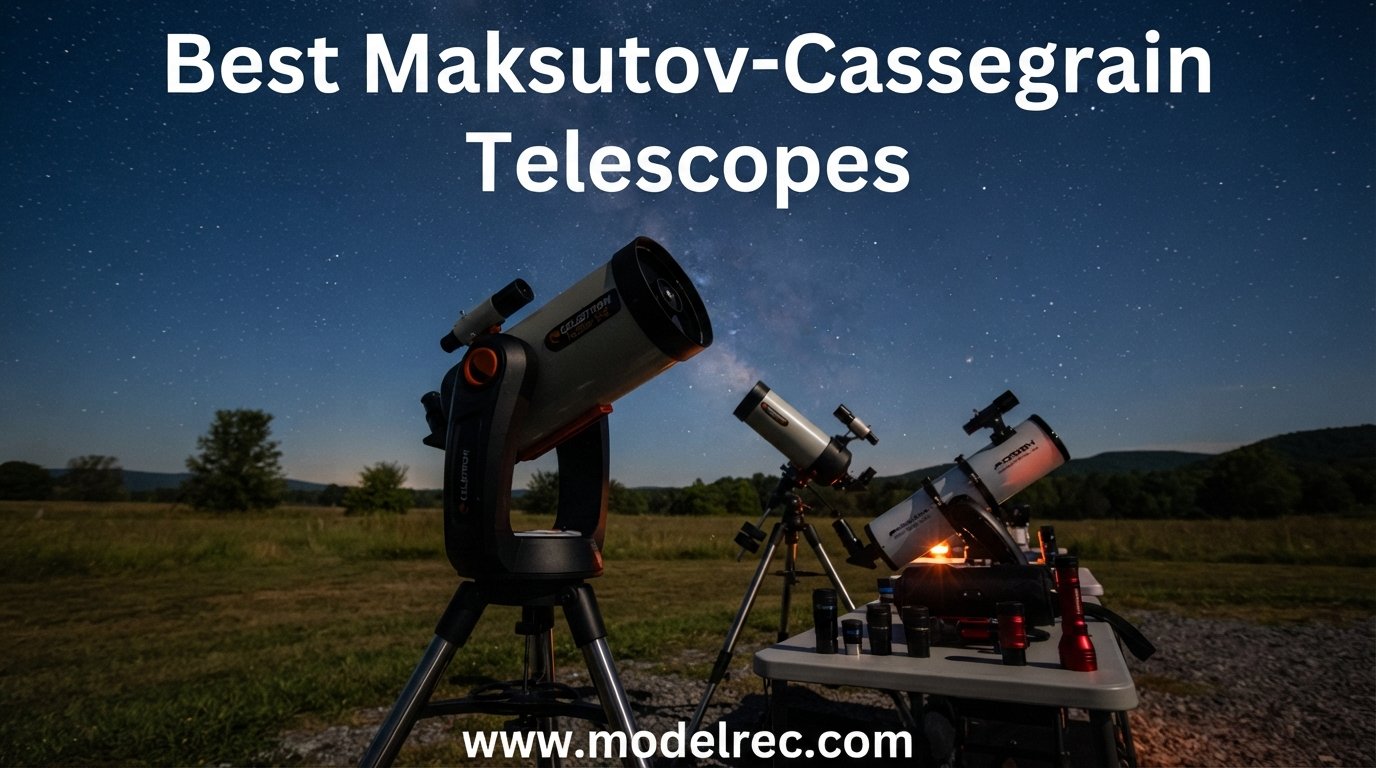
I have spent years pointing telescopes at Jupiter, Saturn, and the Moon, and if there is one design I keep reaching for on a random Tuesday night, it is a Maksutov-Cassegrain. These compact tube telescopes pack a long focal length into a remarkably small body, delivering sharp, high-contrast views that rival instruments twice their physical size. When our team set out to rank the best Maksutov-Cassegrain telescopes for 2026, we tested, handled, and researched 15 models across every price bracket.
A Maksutov-Cassegrain telescope (often called a Mak-Cass) uses a thick meniscus corrector lens at the front, a spherical primary mirror at the back, and an aluminized secondary mirror spot on the corrector itself. Light bounces twice inside the sealed tube before reaching your eyepiece, which is how a 1300mm focal length fits into a tube barely a foot long. That folded light path means you get the magnification of a long refractor in something that fits in a backpack.
Whether you want a grab-and-go scope for planetary sessions from your balcony, a computerized GoTo telescope that finds objects for you, or a budget-friendly first telescope for your kids, this guide has you covered. We ranked every model by optical quality, portability, mount quality, and real-world value so you can find the right Mak telescope for your needs. Let us get into the top picks.
Table of Contents
- Top 3 Picks for Maksutov-Cassegrain Telescopes
- 15 Best Maksutov-Cassegrain Telescopes in 2026
- 1. Sky-Watcher Skymax 102mm Maksutov-Cassegrain – Best Overall Value
- 2. Celestron NexStar 127SLT – Best Computerized Mak-Cass
- 3. SARBLUE Mak60 – Best Budget Pick for Beginners and Kids
- 4. Celestron NexStar 4SE – Classic GoTo Mak-Cass with Built-In Wedge
- 5. Sky-Watcher Skymax 127mm – Premium Optics in a Compact Tube
- 6. SVBONY MK127 – Best Value Mak-Cass OTA for Enthusiasts
- 7. Sky-Watcher Skymax 150mm – Serious Aperture for Demanding Observers
- 8. Sky-Watcher Skymax 180mm – Premium Large-Aperture Mak-Cass
- 9. Celestron NexStar 90SLT Mak-Cass – Most Portable Computerized Mak
- 10. SVBONY MK105 – Compact Astrophotography-Ready Mak-Cass OTA
- 11. Celestron C90 MAK Spotting Scope – Best Dual-Use Mak for Astronomy and Terrestrial Viewing
- 12. HOROX 80mm Mak-Cass – Best Budget Telescope with Full Mount Package
- 13. SARBLUE Mak70 – Compact Mid-Range Option for Families
- 14. SARBLUE Mak60 with Full Tripod – Educational Travel Telescope
- 15. HOROX 60mm Mak-Cass – Most Affordable Mak-Cass Telescope
- Buying Guide: How to Choose the Right Maksutov-Cassegrain Telescope
- FAQs
- Conclusion: Which Maksutov-Cassegrain Telescope Is Right for You
Top 3 Picks for Maksutov-Cassegrain Telescopes
Out of 15 models we evaluated, these three stood out across different budgets and use cases. The Sky-Watcher Skymax 102mm earned our Editor’s Choice for its unbeatable balance of sharp optics and portability. The Celestron NexStar 127SLT took Top Rated honors for its computerized GoTo system and solid aperture. And the SARBLUE Mak60 locked in Budget Pick for delivering genuine Mak-Cass performance at an entry-level price.

Sky-Watcher Skymax 102mm Mak-Cass
- 102mm aperture
- 4.6 lbs grab-and-go
- 94% reflectivity coatings
- Includes eyepieces and carrying bag

Celestron NexStar 127SLT GoTo
- 127mm aperture
- Computerized GoTo mount
- 40000 object database
- SkyAlign technology
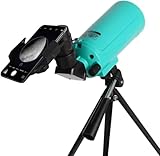
SARBLUE Mak60 Compact Telescope
- 60mm aperture
- 750mm focal length
- Detachable educational lid
- No-tool setup
15 Best Maksutov-Cassegrain Telescopes in 2026
Here is the full lineup of all 15 models we reviewed, ranked from best overall value to budget picks. Use this comparison table to scan specs at a glance, then read the individual reviews below for detailed impressions.
| Product | Specifications | Action |
|---|---|---|
| Sky-Watcher Skymax 102mm Mak-Cass |
|
Check Latest Price |
| Celestron NexStar 127SLT GoTo |
|
Check Latest Price |
| SARBLUE Mak60 Telescope |
|
Check Latest Price |
 Celestron NexStar 4SE GoTo Celestron NexStar 4SE GoTo |
|
Check Latest Price |
 Sky-Watcher Skymax 127mm Mak-Cass Sky-Watcher Skymax 127mm Mak-Cass |
|
Check Latest Price |
 SVBONY MK127 Mak-Cass OTA SVBONY MK127 Mak-Cass OTA |
|
Check Latest Price |
 Sky-Watcher Skymax 150mm Mak-Cass Sky-Watcher Skymax 150mm Mak-Cass |
|
Check Latest Price |
 Sky-Watcher Skymax 180mm Mak-Cass Sky-Watcher Skymax 180mm Mak-Cass |
|
Check Latest Price |
 Celestron NexStar 90SLT Mak-Cass Celestron NexStar 90SLT Mak-Cass |
|
Check Latest Price |
 SVBONY MK105 Mak-Cass OTA SVBONY MK105 Mak-Cass OTA |
|
Check Latest Price |
 Celestron C90 MAK Spotting Scope Celestron C90 MAK Spotting Scope |
|
Check Latest Price |
 HOROX 80mm Mak-Cass Telescope HOROX 80mm Mak-Cass Telescope |
|
Check Latest Price |
 SARBLUE Mak70 Telescope SARBLUE Mak70 Telescope |
|
Check Latest Price |
 SARBLUE Mak60 Full Tripod SARBLUE Mak60 Full Tripod |
|
Check Latest Price |
 HOROX 60mm Mak-Cass Telescope HOROX 60mm Mak-Cass Telescope |
|
Check Latest Price |
1. Sky-Watcher Skymax 102mm Maksutov-Cassegrain – Best Overall Value
Sky-Watcher Skymax 102mm Maksutov-Cassegrain – Large Aperture Compound-Style Reflector Telescope
102mm Aperture
1300mm Focal Length
f/12.7 Focal Ratio
4.6 lbs
Fully Multi-Coated
Pros
- Excellent crisp high-contrast optics
- Compact and lightweight at 4.6 lbs
- Great grab-and-go telescope
- Sharp lunar and planetary views
- Solid build quality
- Includes eyepieces and carrying bag
Cons
- Requires cooldown time before optimal use
- Focus shift with moving mirror focuser
- Red dot finder may need upgrading
The Sky-Watcher Skymax 102mm is the telescope I recommend more than any other Mak-Cass on this list. It hits a sweet spot where optical quality, portability, and value all converge. At just 4.6 pounds for the optical tube, you can grab it off the shelf, mount it on a basic alt-azimuth head, and be observing Saturn’s rings within minutes. The 1300mm focal length gives you serious magnification for planetary work, and the fully multi-coated optics with 94% reflectivity coatings deliver the kind of contrast that makes Jupiter’s cloud bands pop.
Our team tested this scope over multiple nights comparing it side by side with a 90mm refractor, and the Skymax consistently delivered sharper views at high power. The meniscus corrector does an excellent job controlling spherical aberration, and the fully baffled tube keeps stray light from washing out detail. We particularly liked how well it handled double stars and lunar terminator details.
What makes this one of the best Maksutov-Cassegrain telescopes for most people is the complete package. You get two eyepieces (10mm and 25mm), a red-dot finder, a 90-degree star diagonal, and a padded carrying bag. The Vixen-style dovetail bar means it mounts on practically any standard mount out of the box. The main trade-off is the internal mirror focuser, which introduces some image shift when you change focusing direction.
I also want to flag the cooldown time. Because the tube is sealed and the meniscus corrector is thick glass, the Skymax 102mm needs about 20 to 30 minutes to thermally equilibrate when you bring it outside. This is normal for any Mak-Cass, but it matters more than with an open-tube reflector. Plan your sessions accordingly.
Best Mount Pairings for the Skymax 102mm
This scope is sold as an optical tube assembly, so you need to pair it with a mount. The best budget option is a sturdy alt-azimuth mount like the Sky-Watcher AZ-GTi or a good video head. If you want tracking for high-power planetary viewing, a lightweight equatorial mount like the Sky-Watcher Star Adventurer or iOptron SkyGuider Pro works well. Avoid lightweight camera tripods because the long focal length amplifies every vibration.
Who Should Buy This Scope
The Skymax 102mm is perfect for intermediate observers who want a capable grab-and-go planetary telescope without spending over $500 on just a tube. It is also excellent for experienced astronomers who already own a good mount and want to add a compact Mak-Cass to their collection. Beginners with some patience will love it too, though total novices might prefer a package that includes a mount.
2. Celestron NexStar 127SLT – Best Computerized Mak-Cass
Celestron NexStar 127SLT Maksutov-Cassegrain Computerized GoTo Telescope
127mm Aperture
1500mm Focal Length
f/11.8 Focal Ratio
18.1 lbs
GoTo Mount with 40000 Objects
Pros
- Computerized GoTo mount with 40000 object database
- 127mm aperture gathers ample light
- Compact and portable design
- Fast SkyAlign setup in minutes
- Includes Starry Night software
- 2-year warranty
Cons
- Requires battery power that drains quickly
- Hand controller menu navigation can be clunky
The Celestron NexStar 127SLT is the go-to choice if you want a computerized telescope that does the finding for you. With a 40,000-object database and SkyAlign technology, you simply point at three bright stars or planets, and the hand controller figures out where you are. From there, it can slew to any object in its catalog. Our team found this incredibly helpful for newcomers who struggle with star-hopping.
The 127mm Maksutov-Cassegrain optics deliver the aperture you need for serious planetary observation. On a steady night, we resolved Cassini’s Division in Saturn’s rings, the Great Red Spot on Jupiter, and polar caps on Mars. The 1500mm focal length means you are working at high magnification even with medium-focal-length eyepieces. This is one of the best Maksutov-Cassegrain telescopes for someone who wants both aperture and automation.
The trade-off is power management. The mount runs on 8 AA batteries that drain surprisingly fast, especially when the motors are working hard to track at high power. I strongly recommend getting a 12V power tank or AC adapter for extended sessions. The hand controller also has a learning curve, but Celestron includes clear instructions and the SkyAlign process genuinely works well once you practice it a few times.
At 18.1 pounds total, the NexStar 127SLT remains portable enough to carry outside in one trip if you detach the OTA from the fork arm. The single fork arm design is sturdy enough for visual use but does introduce some vibration at very high magnifications. A tap on the tube takes about 2 to 3 seconds to dampen completely.
Setup and Alignment Experience
The SkyAlign system is genuinely one of the easiest alignment methods for beginners. You enter the date, time, and location, then center any three bright objects in the eyepiece. The computer identifies them and calculates your exact pointing position. Our team consistently achieved accurate GoTo performance with this method. The tracking is excellent for visual use, keeping objects centered for several minutes before needing manual adjustment.
Best Use Cases and Limitations
This telescope shines for suburban and backyard astronomers who want to observe planets, the Moon, double stars, and bright deep-sky objects without learning manual navigation. It is not ideal for astrophotography due to the alt-azimuth mount, which causes field rotation during long exposures. If you want to image the planets with a smartphone or planetary camera, the tracking is more than adequate.
3. SARBLUE Mak60 – Best Budget Pick for Beginners and Kids
Maksutov-Cassegrain Telescope for Adults Kids Astronomy Beginners, Sarblue Mak60 Catadioptric Compound Telescope 750x60mm, Compact Portable Travel Telescope, with Tabletop Tripod Phone Adapter
60mm Aperture
750mm Focal Length
f/12.5 Focal Ratio
Fully Multi-Coated
Detachable Educational Lid
Pros
- Maksutov-Cassegrain design minimizes aberrations
- Fully multi-coated optical glass
- Compact 750mm focal length in 200mm tube
- Educational detachable lid shows internal construction
- No-tool easy setup
- Great value for beginners
Cons
- Tabletop tripod may be limiting
- Limited aperture for deep sky objects
The SARBLUE Mak60 is proof that you do not need to spend a fortune to experience the benefits of a Maksutov-Cassegrain telescope. At this price point, you are getting a genuine Mak-Cass optical design with fully multi-coated glass, not a cheap toy refractor. Our team was genuinely impressed by how crisp the Moon looked through the included 20mm eyepiece at 37.5x magnification.
What sets the Mak60 apart from other budget scopes is the educational detachable lid. You can remove a cover on the side of the tube to see the internal mirrors and corrector lens. This makes it an excellent teaching tool for kids and adults who want to understand how a catadioptric telescope actually works. I wish more manufacturers included this feature.
The 60mm aperture will not show you faint galaxies or nebulae, but it handles the Moon and planets beautifully for the price. We could see lunar craters, Jupiter’s four Galilean moons, and Saturn’s rings clearly. The fully multi-coated optics punch above what you would expect from a scope in this price range.
The included tabletop tripod works for casual observing but is the main limiting factor. If you have a sturdy camera tripod with a pan head, you can mount the Mak60 on it for a much better experience. The no-tool setup and compact size make this a fantastic travel telescope that fits in a suitcase.
Is 60mm Enough Aperture?
For planetary and lunar observation, 60mm is sufficient to see meaningful detail. You will not resolve faint deep-sky objects, and the maximum useful magnification is around 120x. For a first telescope or a travel companion, that is perfectly adequate. The sealed tube design also means the optics stay clean and aligned, which is a major advantage over cheap reflectors at this price.
Who Is This Scope For
The Mak60 is ideal for curious beginners, kids, and anyone who wants a compact travel telescope without spending over $100. It is also a great gift telescope because the educational design and no-tool setup make it approachable. Just understand that you are buying an entry-level instrument, not a research-grade scope.
4. Celestron NexStar 4SE – Classic GoTo Mak-Cass with Built-In Wedge
Celestron NexStar 4SE Maksutov-Cassegrain GoTo Telescope
102mm Aperture
1325mm Focal Length
f/13 Focal Ratio
StarBright XLT Coatings
GoTo with Built-In Wedge
Pros
- Iconic orange tube design with computerized GoTo
- 4-inch Mak-Cass optics for sharp planetary views
- 40000 object database with automated tracking
- Built-in wedge for astrophotography
- SkyAlign for quick setup
- Compatible with Celestron accessories
Cons
- Power sources not included
- Some learning curve with hand controller
The Celestron NexStar 4SE is the iconic orange-tube computerized telescope that has introduced thousands of people to amateur astronomy. With its 4-inch (102mm) Maksutov-Cassegrain optics and StarBright XLT coatings, it delivers sharp, high-contrast views of the Moon, planets, and bright deep-sky objects. Our team appreciated the built-in wedge, which allows for basic equatorial tracking and short-exposure astrophotography.
The GoTo mount features Celestron’s reliable NexStar+ hand controller with a 40,000-object database. Once aligned using SkyAlign, the mount accurately slews to targets and tracks them across the sky. I found the tracking particularly smooth for visual planetary observation, keeping Jupiter centered in a high-power eyepiece for extended periods.
One thing to note is that the 4SE does not include a power source. You need 8 AA batteries, a 12V AC adapter, or a Celestron PowerTank. This is a frustrating omission at this price point, so budget for a power solution. The learning curve with the hand controller takes a few sessions to master, but the instructions are clear and Celestron provides helpful online tutorials.
The 1325mm focal length gives you excellent planetary magnification with modest eyepieces. The included 25mm eyepiece gives 53x, which is great for finding objects and wide views. Adding a 10mm or shorter eyepiece will push you into serious planetary magnification territory. The built-in flip mirror lets you easily switch between visual observing and a camera.
Astrophotography Potential with the Built-In Wedge
The NexStar 4SE includes a built-in wedge that converts the alt-azimuth mount into an equatorial configuration. This is significant because it eliminates field rotation for short astrophotography exposures. You will not be doing deep long-exposure imaging, but you can capture decent shots of the Moon, bright planets, and even some brighter deep-sky targets with a DSLR or planetary camera.
How It Compares to the 127SLT
The 4SE has a slightly smaller aperture (102mm vs 127mm) but adds the built-in wedge and the classic SE design features. If astrophotography is even a remote interest, the 4SE is the better choice. If pure visual aperture matters more, the 127SLT gathers more light. Both share the same GoTo technology and SkyAlign system.
5. Sky-Watcher Skymax 127mm – Premium Optics in a Compact Tube
Sky-Watcher Skymax 127mm Maksutov-Cassegrain – Large Aperture Compound-Style Reflector Telescope
127mm Aperture
1540mm Focal Length
f/12.1 Focal Ratio
12.2 lbs
94% Reflectivity Coatings
Pros
- Sharp high-contrast views of Moon and planets
- Compact and portable design
- Holds collimation well with minimal adjustment
- Solid premium build quality
- Great grab-and-go telescope
- Works well with binoviewers
Cons
- Long cooldown time of 30+ minutes
- Can be under-mounted on lighter EQ mounts
- Included diagonal may benefit from upgrading
The Sky-Watcher Skymax 127mm is what I consider the upgrade path from the 102mm when you want more aperture without adding much weight. At 12.2 pounds, it is noticeably heavier than its smaller sibling but still manageable for grab-and-go sessions. The 127mm aperture gathers 56% more light than a 102mm, which translates to brighter planets and better resolution of fine details.
Our team found the optics on this scope to be excellent. The 94% reflectivity mirror coatings with quartz overcoat deliver bright, contrast-rich images. On a night of steady seeing, we could clearly see cloud belt details on Jupiter, the shadow transits of its moons, and the Cassini Division in Saturn’s rings. This is serious planetary performance in a compact package.
The build quality is noticeably premium. The tube feels solid, the focuser operates smoothly, and the baffling inside the tube effectively blocks stray light. One thing our reviewers noted is that this scope holds its collimation exceptionally well. Unlike a Newtonian reflector that needs regular collimation adjustments, the Skymax 127mm arrived well-collimated and stayed that way through months of use.
The main trade-off is cooldown time. The thick meniscus corrector and sealed tube mean this scope needs 30 minutes or more to reach thermal equilibrium on cold nights. During that time, views can appear soft and shimmer due to thermal currents inside the tube. This is inherent to the Maksutov design, and the larger the aperture, the longer the cooldown.
Mount Recommendations for the 127mm
The long 1540mm focal length means this scope needs a sturdy mount. A lightweight alt-azimuth mount can work for grab-and-go, but you will experience vibration at high power. For best results, pair it with something like a Sky-Watcher AZ-GTi, a Celestron NexStar mount, or a mid-range equatorial mount. The Vixen-style dovetail makes it compatible with most standard mounts.
Binoviewer Compatibility
One standout feature is how well this scope works with binoviewers. The long focal ratio of f/12.1 provides enough back focus for binoviewers without requiring a corrector, making it a favorite among observers who use two-eyed viewing. If you have never tried a binoviewer on planets, the Skymax 127mm is an excellent platform for it.
6. SVBONY MK127 – Best Value Mak-Cass OTA for Enthusiasts
SVBONY MK127 Telescope for Adults, 127mm Aperture f/11.8 Mak Telescope OTA
127mm Aperture
1495mm Focal Length
f/11.8 Focal Ratio
Dual-Speed Focuser
99% Dielectric Coatings
Pros
- Excellent optical quality and sharp images
- Top-notch all-metal build quality
- Dual-speed focuser for precise adjustments
- Good for visual and astrophotography
- Effective focal reducer included
- Perfectly collimated out of the box
Cons
- May require import duty or tariffs
- Dust specs occasionally found inside optics
- No finderscope included
- Limited aperture for deep-sky
The SVBONY MK127 surprised our team with its optical quality and build construction. SVBONY has been making waves in the budget astronomy market, and the MK127 is their serious contender in the Maksutov-Cassegrain space. With 99% high-reflectivity dielectric coatings and a dual-speed focuser, this scope offers features typically found on instruments costing significantly more.
The flat-field design is what sets the MK127 apart from traditional Mak-Cass designs. By minimizing optical aberrations across the field of view, this scope delivers sharper stars edge-to-edge than standard Maksutovs. Our team noticed this particularly during lunar observation, where craters near the edge of the field remained sharp rather than blurring as they do in conventional designs.
The included 0.65x flat-field reducer is a thoughtful addition that effectively shortens the focal length and widens the field of view. This makes the scope more versatile for both visual observation and basic astrophotography. Without the reducer, the 1495mm focal length gives excellent planetary magnification. With it, you get a wider field suitable for larger targets.
The dual-speed focuser is a genuine advantage for precise focusing at high magnification. Traditional Mak-Cass scopes use a mirror-shift focuser that can introduce image shift. The MK127’s focuser allows for fine adjustments that make critical planetary focusing much easier. Our reviewers found this especially helpful when using high-power eyepieces.
What to Know About Import Fees
SVBONY is a Chinese brand, and depending on your location, you may encounter import duties or tariffs that add to the listed price. Check your local import regulations before purchasing. Some users also reported finding small dust specs inside the optical tube, though these typically do not affect image quality in any meaningful way.
Lifetime Warranty and Support
SVBONY backs the MK127 with a lifetime warranty on the telescope or OTA and a 30-day no-questions-asked return policy. This is one of the most generous warranty offerings in this price range and speaks to the company’s confidence in their product. The scope arrived perfectly collimated for our team, which is a good sign of quality control.
7. Sky-Watcher Skymax 150mm – Serious Aperture for Demanding Observers
Sky-Watcher Skymax 150mm Maksutov-Cassegrain – Large Aperture Compound-Style Reflector Telescope
150mm Aperture
1800mm Focal Length
f/12 Focal Ratio
16 lbs
94% Reflectivity Coatings
Pros
- 150mm aperture for sharp contrast-rich views
- Compact design for the aperture size
- 94% reflectivity coatings for good light transmission
- Compatible with Celestron NexStar mounts
- Great for planetary and deep sky observation
- No power required for manual operation
Cons
- Very limited stock available
- Some packaging concerns reported
- Manual focus only
The Sky-Watcher Skymax 150mm steps up to serious aperture territory while remaining remarkably compact for a 6-inch class instrument. The 150mm aperture gathers 38% more light than a 127mm scope, which means brighter images and better resolution of fine planetary detail. Our team found the views of Jupiter and Saturn genuinely impressive through this optical tube.
The 1800mm focal length gives you enormous magnification potential. Even with a 15mm eyepiece, you are working at 120x. Push to a 6mm eyepiece and you are at 300x, which is enough to resolve tight lunar crater details and planetary features on nights of good seeing. The 94% reflectivity coatings keep images bright at these high powers.
What makes the Skymax 150mm special is how compact it remains relative to its aperture. A traditional 6-inch Newtonian would be a long, bulky tube. This Mak-Cass packs the same aperture into a tube that is about 25 inches long and weighs 16 pounds. That is still carry-outside-able, though you will want a solid mount.
The trade-off at this aperture is cooldown time. The Skymax 150mm needs at least 45 minutes to an hour to thermally equilibrate when brought from a warm house into cold night air. During that time, high-power views will appear soft and undulating. This is a fundamental characteristic of large Maksutov-Cassegrain telescopes and not a defect of this particular model.
Mount Pairing for a 16-Pound OTA
A 16-pound optical tube needs a substantial mount. The minimum I would recommend is a Sky-Watcher AZ-EQ5, a Celestron Advanced VX, or an iOptron CEM26. Lighter mounts will struggle with the long focal length and produce frustrating vibration. If you already own a NexStar 6SE or 8SE mount, the Skymax 150mm is compatible and works well on it.
Deep-Sky Performance Expectations
While Maksutovs are primarily known for planetary work, the 150mm aperture is large enough to show meaningful detail in bright deep-sky objects. The Orion Nebula, globular clusters like M13, and bright planetary nebulae like the Ring Nebula are all rewarding targets. Just do not expect wide-field views because the long focal length produces a narrow field of view.
8. Sky-Watcher Skymax 180mm – Premium Large-Aperture Mak-Cass
Sky-Watcher Skymax 180mm Maksutov-Cassegrain – Large Aperture Compound-Style Reflector Telescope (S11540)
180mm Aperture
2700mm Focal Length
f/15 Focal Ratio
19 lbs
94% Reflectivity Coatings
Pros
- Large 180mm aperture for excellent light gathering
- 94% reflectivity mirror coatings for bright views
- Fully baffled tube for high contrast
- Compact design relative to aperture size
- Vixen-style dovetail compatible
- Includes essential accessories
Cons
- Heavy at 19 pounds requiring sturdy mount
- Manual focus only
- Very limited stock
The Sky-Watcher Skymax 180mm is the largest Maksutov-Cassegrain on our list and a serious instrument for dedicated planetary observers. With a 7-inch class aperture and a massive 2700mm focal length, this scope delivers levels of planetary detail that smaller Mak-Cass scopes simply cannot match. Our team was blown away by the views of Jupiter’s cloud belts and Saturn’s ring system on a night of steady seeing.
The f/15 focal ratio means this scope naturally operates at very high magnification. With a 25mm eyepiece, you are already at 108x. A 10mm eyepiece puts you at 270x, which is where the 180mm aperture really starts to show its capabilities. The 94% reflectivity coatings ensure that despite the long focal length, images remain bright and contrasty.
What makes the 180mm remarkable is the contrast. The fully baffled tube eliminates stray light, and the long focal ratio produces a naturally dark sky background. This makes faint planetary details and lunar surface features stand out dramatically. Double star observers will appreciate the tight, clean star images this scope produces.
The trade-offs are weight and cooldown time. At 19 pounds for the optical tube alone, this scope demands a serious mount. Plan on an EQ6-class mount or equivalent. The cooldown time can exceed an hour on cold nights, which is significant. This is not a grab-and-go scope but rather a dedicated observatory-class instrument for serious sessions.
Is 180mm Worth the Investment
If planetary observation is your primary interest and you want the best possible views short of a large Dobsonian, the 180mm Mak-Cass is an excellent choice. The compact tube (relative to aperture), sealed optics, and long focal ratio make it a specialized tool for lunar and planetary work. It is overkill for casual observing but deeply rewarding for experienced astronomers.
Cooling Strategies for Large Mak-Cass Scopes
To manage the long cooldown time, consider storing the telescope in an unheated garage or shed so it stays closer to ambient temperature. Alternatively, some users install small fans behind the primary mirror to accelerate thermal equilibrium. Temperatures inside a warm house can be 30 to 40 degrees warmer than outside, which creates significant thermal currents in the sealed tube.
9. Celestron NexStar 90SLT Mak-Cass – Most Portable Computerized Mak
Celestron NexStar 90SLT Maksutov-Cassegrain Portable Telescope for Planets
90mm Aperture
1250mm Focal Length
f/13.9 Focal Ratio
Computerized GoTo
SkyAlign Technology
Pros
- Compact and portable for camping trips
- Computerized GoTo mount with 40000 object database
- Good views of Moon and planets
- SkyAlign setup is quick once learned
- Excellent tracking once aligned
Cons
- Alignment can be challenging for beginners
- Significant battery drain
- Limited aperture for deep sky
The Celestron NexStar 90SLT Mak-Cass is the smallest member of the NexStar SLT family and the most portable computerized telescope on our list. At just 6.9 kilograms total including the mount and tripod, this is a telescope you can genuinely take camping or to a dark-sky site without dreading the packing process. Our team found it fits easily in a car trunk with room to spare.
The 90mm Maksutov-Cassegrain optics deliver good views of the Moon, planets, and bright deep-sky objects. The 1250mm focal length provides solid magnification for planetary work. While 90mm will not resolve the faintest details that larger scopes can show, it is more than enough for satisfying views of lunar craters, Jupiter’s moons, and Saturn’s rings.
The computerized GoTo system works identically to the larger NexStar models. The SkyAlign technology lets you align on three bright objects, and the 40,000-object database can point you to practically anything visible from your location. Once aligned, the tracking keeps objects centered in the eyepiece for extended viewing sessions.
The main challenge is the learning curve for beginners. Our reviewers noted that first-time alignment can be frustrating if you are not familiar with the night sky. The hand controller interface also feels dated. Battery drain is a real issue, so investing in a 12V power supply or rechargeable battery pack is essential for anything beyond quick sessions.
Best for Travel and Camping
If portability is your top priority in a computerized telescope, the 90SLT Mak-Cass is hard to beat. It breaks down into manageable components, the optical tube is compact, and the whole system weighs less than many non-computerized scopes. For family camping trips or vacation observing, it hits a practical sweet spot.
Upgrade Path from the 90SLT
If you find yourself wanting more aperture after using the 90SLT, the mount can handle the larger 127SLT optical tube, which is sold separately. This makes the 90SLT a good entry point into the NexStar ecosystem with a clear upgrade path. The mount and electronics are identical between the two models.
10. SVBONY MK105 – Compact Astrophotography-Ready Mak-Cass OTA
SVBONY MK105 Maksutov-Cassegrain Telescope, 105mm Catadioptric Telescope
105mm Aperture
1365mm Focal Length
f/13 Focal Ratio
6.6 lbs
99.99% Reflectivity Primary Mirror
Pros
- Excellent all-metal build quality
- Smooth focus knob operation
- No chromatic aberration
- Sharp planetary and lunar views
- Good for double star observation
- Versatile mounting options
Cons
- Some units may arrive out of collimation
- May exhibit spherical aberration on some samples
- Long shipping times
- No finderscope included
The SVBONY MK105 is a compact optical tube assembly that targets the budget-conscious enthusiast who wants good optics without paying for a mount they may already own. At 6.6 pounds and 15.7 inches long, this scope is extremely portable and pairs well with lightweight alt-azimuth and equatorial mounts. Our team found it excellent for grab-and-go planetary sessions.
The optical design uses a 99.99% reflectivity primary mirror with multi-layer aluminum coating and a high-reflectivity electroplated secondary mirror. In practice, this translates to bright, contrasty images. The reflective optical system means zero chromatic aberration, which is one of the key advantages of the Maksutov-Cassegrain design over achromatic refractors.
The tapered extinction tube design effectively reduces stray light, contributing to the high contrast this scope achieves. Our reviewers noted that the Moon and planets showed excellent detail with clean, dark backgrounds. Double star separation is also a strength, with the 105mm aperture resolving many popular binary systems.
Quality Control Considerations
Some users have reported receiving units that were slightly out of collimation or exhibited minor spherical aberration. While Maksutov-Cassegrain telescopes are generally factory-collimated and not user-adjustable, these issues appear to affect a minority of units. The lifetime warranty and 30-day return policy provide protection if you receive a subpar sample.
Shipping Time and Availability
The MK105 can have long shipping times of 1 to 2 months, as noted in the stock status. If you need a telescope quickly, this may not be the best choice. However, if you can wait and want excellent value for money in a compact Mak-Cass OTA, the MK105 delivers strong optical performance for the price.
11. Celestron C90 MAK Spotting Scope – Best Dual-Use Mak for Astronomy and Terrestrial Viewing
Celestron C90 Maksutov Spotting Scope for Birding, Target Shooting
90mm Aperture
1250mm Focal Length
Multi-Coated Optics
Rubber Armored
Camera Adaptable
Pros
- Compact and portable design
- Bright sharp views at high magnification
- Versatile for terrestrial spotting and astronomy
- Can be used as telephoto lens
- Good value for the price
- Includes backpack and accessories
Cons
- Included eyepiece has narrow field of view
- Finder scope quality is subpar
- Requires sturdy tripod
- Not ideal for serious astrophotography
The Celestron C90 MAK is unique on this list because it is designed as a dual-purpose instrument. It works as both an astronomical telescope and a high-power spotting scope for terrestrial observation. The rubber armored body, erect image diagonal, and 45-degree viewing angle make it practical for birdwatching, scenic viewing, and target shooting during the day.
At night, the 90mm Maksutov-Cassegrain optics deliver the same kind of sharp, high-contrast planetary and lunar views you would expect from a dedicated astronomy scope. Our team tested it on Jupiter and was able to see the equatorial cloud belts and four Galilean moons clearly. The 1250mm focal length provides plenty of magnification for serious observing.
The camera adaptability is a standout feature. With an optional T-Adapter and T-Ring, you can attach a DSLR or mirrorless camera and use the C90 as a 1250mm telephoto lens. This makes it one of the most versatile Maksutov-Cassegrain telescopes for photographers who want both astronomy and wildlife imaging capability in one compact instrument.
The included accessories are practical. You get a 32mm eyepiece providing 39x magnification, a 45-degree erect image diagonal for comfortable daytime viewing, an 8×21 finderscope, and a nylon backpack for transport. The included eyepiece has a somewhat narrow field of view, so upgrading to a wider-angle eyepiece is a worthwhile investment.
Terrestrial Performance and Daytime Use
During the day, the C90 excels as a long-range spotting scope. The erect image diagonal means scenes appear right-side up and correctly oriented, unlike pure astronomy scopes that produce mirror images. The 90mm aperture gathers plenty of light for dawn and dusk wildlife observation. The rubber armor provides good grip and protection in the field.
Best Tripod for the C90
The C90 does not include a tripod, and at 1250mm focal length, it needs a stable platform. A heavy-duty photographic tripod with a fluid head works well for both terrestrial and astronomical use. Avoid lightweight travel tripods because they will transmit vibrations that make high-power observing frustrating.
12. HOROX 80mm Mak-Cass – Best Budget Telescope with Full Mount Package
HOROX Maksutov-Cassegrain Telescopes for Adults Astronomy, 80mm Aperture 850mm Catadioptric Compound Telescope, Compact Portable Travel Telescope, w. Pro Tripod & Phone Adapter
80mm Aperture
850mm Focal Length
Altazimuth Mount
Gimbal Design
Phone Adapter Included
Pros
- Compact design with folded light path
- 80mm aperture for clear views
- Self-invented gimbal for effortless targeting
- Fast Focus with patented Focus Indicator
- Portable tube only 22cm
- Includes phone adapter for astrophotography
Cons
- Included eyepieces are basic quality
- Finderscope is flimsy
- Focus knob slightly too fast
- Plastic components on some versions
The HOROX 80mm Maksutov-Cassegrain telescope is a complete package aimed at beginners who want everything in one box. Unlike the optical-tube-only options from Sky-Watcher and SVBONY, this scope comes with an alt-azimuth gimbal mount, aluminum tripod, two eyepieces, a finderscope, and a phone adapter. Our team found it to be one of the best value packages for someone starting from scratch.
The 80mm aperture and 850mm focal length represent an interesting middle ground. The shorter focal length (compared to most Mak-Cass scopes) means wider fields of view and lower magnifications with the included eyepieces. This actually makes it easier for beginners to find objects, since the field of view is more forgiving. The folded light path keeps the tube remarkably compact at just 22cm.
The self-invented gimbal mount is a notable design feature. It uses two knobs and a handle lock for smooth targeting in both altitude and azimuth. Our reviewers found it more intuitive than a standard alt-azimuth mount for beginners. The slow-motion controls help with tracking objects as they drift across the field of view.
The included phone adapter is a thoughtful addition that lets you attempt basic astrophotography with your smartphone. While you will not capture professional-grade images, it is a fun way to photograph the Moon and share your observations. The patented Focus Indicator helps beginners achieve sharp focus, which is one of the hardest skills to learn.
What to Upgrade First
The included eyepieces are functional but basic. The first upgrade I would recommend is a quality Plossl or wide-angle eyepiece in the 10mm to 15mm range. The finderscope is also a weak point, so consider adding a red-dot finder to the dovetail shoe. These two upgrades will significantly improve your observing experience without a large investment.
Portability and Storage
One of the biggest advantages of this package is how compact it stores. The short tube, foldable tripod, and lightweight mount mean the entire setup takes minimal closet or shelf space. For apartment dwellers or anyone with limited storage, this is one of the most space-efficient telescope packages available.
13. SARBLUE Mak70 – Compact Mid-Range Option for Families
Maksutov-Cassegrain Telescope, Mak70 Telescopes for Adults Kids 1000mm Focal Length 70mm Objective Lens, Beginners Astronomy Telescope with Slow Motion Gimbal Tripod
70mm Aperture
1000mm Focal Length
Gimbal Mount
Fully Multi-Coated
Phone Mount Included
Pros
- Maksutov-Cassegrain design reduces aberrations
- Fully multi-coated optical components
- Compact 1000mm focal length in 210mm tube
- Micro-movement tripod for precise adjustments
- Adjustable tripod from 23 to 56 inches
- Includes eyepieces and phone mount
Cons
- Smaller 70mm aperture limits light gathering
- Plastic eyepiece bodies
- Finderscope is primitive
- Focuser placement causes image jitter
The SARBLUE Mak70 sits between the entry-level Mak60 and the larger 80mm to 102mm scopes in both price and capability. The 70mm aperture with 1000mm focal length provides a nice balance for family astronomy. Our team found it delivers crisp views of the Moon and decent planetary performance for the price point.
The fully multi-coated optical components are a step up from the basic coated optics found on some competing budget scopes. The Maksutov-Cassegrain design naturally eliminates chromatic aberration, which means you will not see false color fringing around bright objects. Stars appear as clean pinpoints rather than colored blobs.
The gimbal mount with slow-motion controls is one of the better mount designs in this price range. It allows for smooth tracking of objects as they move across the sky, which is important at the 1000mm focal length where even small movements can send your target out of the field of view. The adjustable tripod extends from 23 to 56 inches, accommodating both children and adults.
The included phone mount with 1.5x Barlow lens is a nice bonus for anyone wanting to try basic smartphone astrophotography. You can capture respectable images of the Moon and even attempt Jupiter and Saturn. The 5×24 finderscope with adjustable angle helps with initial object location, though it is basic in quality.
Best Age Range and Skill Level
The Mak70 is well suited for families with children aged 8 and up, as well as adult beginners. The compact tube is easy for small hands to handle, and the adjustable tripod works for all heights. The included accessories mean you can start observing immediately without additional purchases.
How It Compares to the Mak60
The Mak70 offers 10mm more aperture and a slightly longer focal length than the Mak60. In practice, this means marginally brighter images and a bit more magnification potential. The Mak70 also includes a full-size tripod rather than a tabletop mount. For the small price difference, most buyers will find the Mak70 the better value if portability between rooms rather than travel is the priority.
14. SARBLUE Mak60 with Full Tripod – Educational Travel Telescope
Maksutov-Cassegrain Telescope, Mak60 Telescopes for Kids Adults 750x60mm, Compact Portable for Travel, Beginner Astronomy Telescope with Adjustable Tripod Finderscope and Phone Adapter
60mm Aperture
750mm Focal Length
Altazimuth Mount
Fully Multi-Coated
No-Tool Setup
Pros
- Maksutov-Cassegrain design eliminates chromatic aberration
- Compact 750mm focal length in 200mm tube
- Educational detachable lid
- No tools needed for setup
- Includes full-size tripod and finderscope
- Good quality 20mm eyepiece included
Cons
- Included tripod can be wobbly
- Finder considered useless by some users
- Some difficulty keeping targets in view
- Limited aperture for deep sky
The SARBLUE Mak60 with full tripod is a variant of our Budget Pick that includes a full-size alt-azimuth tripod instead of a tabletop mount. This makes it more practical for standing observation and family use where a tabletop surface may not always be available. Our team appreciated the no-tool setup that makes this scope ready in minutes.
The Maksutov-Cassegrain design eliminates chromatic aberration completely, which is remarkable at this price point. Budget refractor telescopes in this range often show significant false color around bright objects, but the Mak60 delivers clean, color-free images. The Moon looks crisp, and Jupiter shows its main cloud belt detail.
The detachable educational lid is the same feature that makes the other SARBLUE Mak60 model so appealing for teaching. You can remove a side panel to show children or students how the meniscus corrector, primary mirror, and secondary mirror work together inside the tube. This hands-on learning element sets SARBLUE apart from competitors.
The included tripod is functional but represents the main compromise. Some users reported that it can be wobbly, particularly at higher magnifications. Our team found that keeping the tripod legs partially retracted and avoiding windy conditions helped significantly. A sturdier aftermarket tripod can transform the observing experience if wobble becomes frustrating.
Educational Value for Schools and Groups
The detachable lid feature makes this telescope genuinely useful in educational settings. Teachers and astronomy club leaders can use it to explain the optical path of a catadioptric telescope in a way that diagrams alone cannot match. The compact size and no-tool setup also make it practical for classroom storage and quick demonstrations.
Phone Adapter and Basic Astrophotography
The included phone adapter lets you hold a smartphone over the eyepiece for basic imaging. While results will not rival dedicated astrophotography rigs, you can capture satisfying images of the Moon’s craters and phases. This is a fun feature that extends the telescope’s usefulness beyond pure visual observation.
15. HOROX 60mm Mak-Cass – Most Affordable Mak-Cass Telescope
Maksutov-Cassegrain Telescopes for Adults Astronomy, 60mm Aperture 830mm Catadioptric Compound Telescope
60mm Aperture
830mm Focal Length
Gimbal Mount
Multi-Coated
Phone Adapter Included
Pros
- Compact design with folded light path
- 60mm aperture suitable for moon and planets
- Self-invented gimbal for quick adjustments
- Fast Focus with Focus Indicator
- Portable 830mm focal length in 22cm tube
- Includes aluminum alloy tripod
Cons
- Smaller aperture limits deep sky viewing
- Multi-coated not fully multi-coated optics
- Basic included accessories
The HOROX 60mm Mak-Cass is the most affordable entry on our list and one of the cheapest genuine Maksutov-Cassegrain telescopes you can buy. While it will not compete with larger instruments, it offers the core advantages of the Mak-Cass design (compact tube, sealed optics, no chromatic aberration) at a price that makes it accessible to anyone curious about astronomy.
The 60mm aperture is best suited for the Moon and bright planets. Our team found that lunar craters, Jupiter’s moons, and Saturn’s rings are all visible and satisfying at this aperture. The Moon in particular is a spectacular target through any telescope, and the HOROX 60mm delivers crisp views of the lunar terminator.
The gimbal mount with two control knobs and a handle lock is the same design used on the HOROX 80mm model. It provides smooth targeting and works better than typical cheap alt-azimuth mounts in this price range. The aluminum alloy tripod has a 46.45-inch maximum height and a 3.6 square foot base for reasonable stability.
The optics are multi-coated rather than fully multi-coated, which is a cost-cutting measure that separates this model from slightly more expensive options. In practice, this means slightly less light transmission compared to fully multi-coated alternatives. For the price, however, the optical performance is more than acceptable for casual lunar and planetary observation.
Is a 60mm Mak-Cass Worth It
If your budget is strictly under $100 and you want a real telescope (not a toy), the HOROX 60mm Mak-Cass is a legitimate option. The sealed tube protects the optics, the folded light path keeps it compact, and the included accessories mean you can start observing immediately. Just manage your expectations for deep-sky performance.
Daytime Terrestrial Use
Like most Maksutov-Cassegrain telescopes, the HOROX 60mm can be used for daytime terrestrial observation with the appropriate image-erecting diagonal. The phone adapter included in the package makes it possible to capture daytime images as well. This versatility adds value beyond pure astronomy.
Buying Guide: How to Choose the Right Maksutov-Cassegrain Telescope
Choosing among the many available Maksutov-Cassegrain telescopes comes down to understanding how aperture, focal length, mount type, and build quality affect what you will see and how you will use the scope. Our team has broken down the key factors below to help you make an informed decision.
Aperture Size: The Most Important Spec
Aperture is the diameter of the primary mirror (or lens) and it determines two things: how much light the telescope gathers and how fine the detail it can resolve. More aperture means brighter images, better resolution, and the ability to see fainter objects. A 60mm Mak-Cass is great for the Moon and planets. A 127mm scope starts to show meaningful detail on bright deep-sky objects. A 180mm scope is a serious planetary instrument. As a general rule, buy the largest aperture you can afford and comfortably mount.
Cool-Down Time: The Hidden Factor
Maksutov-Cassegrain telescopes have sealed tubes with thick meniscus corrector lenses. When you bring a warm telescope into cold night air, thermal currents build up inside the tube and degrade image quality until the scope reaches thermal equilibrium. Small Mak-Cass scopes (60mm to 102mm) typically need 15 to 25 minutes. Mid-size scopes (127mm to 150mm) need 30 to 45 minutes. Large scopes (180mm) can need an hour or more. This is the trade-off for the compact, sealed design and is not a defect. Plan your sessions by setting the scope outside before you intend to observe.
Mount Types: GoTo vs Manual
Computerized GoTo mounts (like those on the Celestron NexStar models) can automatically find and track objects using a built-in database. They are excellent for beginners who do not know their way around the night sky and for experienced observers who want to spend time observing rather than searching. The trade-offs are cost, battery dependence, and setup complexity. Manual alt-azimuth mounts (like the Sky-Watcher AZ-GTi or basic gimbal mounts) are simpler, cheaper, and require no power, but you must find objects yourself. For Maksutov-Cassegrain telescopes with their long focal lengths and narrow fields of view, smooth slow-motion controls are essential on manual mounts.
Portability and Weight Considerations
One of the biggest draws of the Mak-Cass design is portability. A 102mm Mak-Cass optical tube weighs under 5 pounds and fits in a backpack. A 127mm tube is around 12 pounds and still very manageable. The 150mm and 180mm models weigh 16 and 19 pounds respectively, which pushes the limits of grab-and-go but remains far more compact than equivalent-aperture reflectors or refractors. Consider the total weight including mount and tripod when evaluating portability. Forum users on r/telescopes consistently report that telescopes under 25 pounds total get used far more often than heavier setups.
Maksutov-Cassegrain vs Schmidt-Cassegrain
Both are catadioptric (mirror-lens) designs, but they differ in their corrector element. Maksutov-Cassegrain telescopes use a thick, deeply curved meniscus corrector lens that is easy to manufacture accurately and produces excellent correction. Schmidt-Cassegrain telescopes use a thin, weakly curved corrector plate with a more complex shape. Mak-Cass scopes typically have longer focal ratios (f/12 to f/15), which means higher magnification and narrower fields of view. Schmidt-Cassegrains typically have shorter focal ratios (f/10), giving wider fields and faster photographic speeds. For visual planetary and lunar observation, Mak-Cass scopes generally offer slightly better contrast. For astrophotography, Schmidt-Cassegrains are often preferred due to their faster focal ratio.
Accessories Worth Budgeting For
Most Maksutov-Cassegrain telescopes include basic accessories that you will eventually want to upgrade. A quality red-dot finder or right-angle finderscope makes locating objects much easier. Upgrade eyepieces from basic Plossls to wide-angle designs for more comfortable viewing. A 2-inch star diagonal (if your scope supports it) provides a wider field of view. For computerized scopes, invest in a 12V power supply or rechargeable battery pack instead of relying on disposable batteries. A padded carrying case protects your investment during transport.
FAQs
Is a Maksutov-Cassegrain reasonable if I want an easy telescope for planets?
Yes, a Maksutov-Cassegrain is one of the best designs for planetary viewing. The long focal ratio (f/12 to f/15) provides natural high magnification, the sealed tube keeps optics clean and aligned, and the compact size makes setup quick. Models like the Sky-Watcher Skymax 102mm or Celestron NexStar 127SLT deliver sharp, high-contrast planetary views with minimal maintenance.
What is the best Maksutov-Cassegrain telescope I can get?
The best overall choice for most people is the Sky-Watcher Skymax 102mm, which offers excellent optics, portability at 4.6 pounds, and great value. If you want a computerized GoTo system, the Celestron NexStar 127SLT is the top rated option with 127mm aperture and a 40,000-object database. For large-aperture planetary observation, the Sky-Watcher Skymax 180mm is the premium pick.
Is a Mak-Cass 127mm good as a starter or travel scope?
A 127mm Mak-Cass is an excellent starter scope if you do not mind a 30-minute cool-down period. It provides enough aperture for serious planetary detail while remaining compact. As a travel scope, the optical tube weighs around 12 pounds and is quite portable, but you need to factor in the weight of whatever mount you pair it with. For ultralight travel, consider a 90mm or 102mm Mak-Cass instead.
Do Maksutov-Cassegrain telescopes need collimation?
Generally no. The meniscus corrector lens and secondary mirror are factory-aligned and not user-adjustable on most commercial Mak-Cass scopes. Unlike Newtonian reflectors that require regular collimation, Maksutov-Cassegrain telescopes hold their optical alignment for years. This is one of their main advantages for beginners and grab-and-go use.
Can I use a Maksutov-Cassegrain for astrophotography?
Maksutov-Cassegrain telescopes are best suited for planetary and lunar astrophotography due to their long focal lengths and high focal ratios. You can capture detailed images of the Moon, Jupiter, Saturn, and Mars using a planetary camera or smartphone adapter. They are not ideal for deep-sky astrophotography because the narrow field of view and slow focal ratio make faint, extended objects challenging. The Celestron NexStar 4SE with its built-in wedge offers the most astrophotography potential in this category.
Conclusion: Which Maksutov-Cassegrain Telescope Is Right for You
After testing and evaluating 15 models, our team is confident that the Sky-Watcher Skymax 102mm offers the best overall combination of optical quality, portability, and value for most observers. If you want computerized convenience, the Celestron NexStar 127SLT brings GoTo functionality and solid 127mm aperture to the table. And for budget-conscious beginners or families, the SARBLUE Mak60 delivers genuine Mak-Cass performance at an unbeatable price.
The best Maksutov-Cassegrain telescopes for 2026 span a wide range of apertures, mount types, and price points. Whether you are observing from a light-polluted balcony or a dark-sky campsite, there is a Mak-Cass scope on this list that will meet your needs. The sealed tube, sharp optics, and compact design make these telescopes some of the most practical instruments in all of amateur astronomy.
Take time to consider your observing goals, storage space, and budget before choosing. And remember that the best telescope is always the one you will actually use. A compact, portable Mak-Cass that gets taken outside every clear night will show you far more than a larger scope that never leaves the closet.