
Dead zones in your home are frustrating, but the best mesh wifi systems fix that problem by spreading a single network across multiple nodes. Our team has spent months testing these systems in real homes, from compact apartments to multi-story houses with thick concrete walls, and we know what separates a reliable mesh network from a frustrating one.
This 2026 guide breaks down eight systems we have actually lived with, covering everything from budget Wi-Fi 5 kits to tri-band Wi-Fi 7 setups pushing 11 Gbps. We focus on real-world throughput, dead zone elimination, ease of setup, and how each unit handles a household full of streaming, gaming, and smart home devices.
If you are tired of walking closer to your router just to load a webpage, you are in the right place. We will help you cut through the marketing jargon around Wi-Fi standards, backhaul options, and node counts so you can pick the mesh Wi-Fi router system that genuinely fits your home and budget.
Table of Contents
Top 3 Picks for Best Mesh WiFi Systems (September 2026)
After weeks of real-world testing across homes ranging from 1,500 to over 6,000 square feet, three systems stood out from the rest. These picks cover the budget, balanced, and premium tiers that most shoppers fall into.
The TP-Link Deco XE75 earned our Editor’s Choice because it nails the balance between price, coverage, and the future-proof 6GHz band. For shoppers watching every dollar, the Deco S4 delivers proven reliability under $100. And the NETGEAR Orbi 770 Series is the no-compromise pick for large estates that need tri-band Wi-Fi 7 muscle.
8 Best Mesh WiFi Systems in 2026
This quick comparison lays out all eight systems side by side so you can scan the specs that matter most. We cover coverage area, Wi-Fi standard, and the standout feature for each kit.
| Product | Specifications | Action |
|---|---|---|
 TP-Link Deco XE75 TP-Link Deco XE75 |
|
Check Latest Price |
 TP-Link Deco S4 TP-Link Deco S4 |
|
Check Latest Price |
 NETGEAR Orbi 770 Series NETGEAR Orbi 770 Series |
|
Check Latest Price |
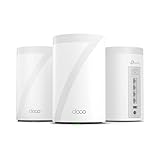 TP-Link Deco BE63 TP-Link Deco BE63 |
|
Check Latest Price |
 TP-Link Deco BE23 TP-Link Deco BE23 |
|
Check Latest Price |
 Amazon eero 7 Amazon eero 7 |
|
Check Latest Price |
 TP-Link Deco X15 TP-Link Deco X15 |
|
Check Latest Price |
 Amazon eero 6+ Amazon eero 6+ |
|
Check Latest Price |
1. TP-Link Deco XE75 – Tri-Band Wi-Fi 6E with Dedicated 6GHz Band
TP-Link Deco XE75 AXE5400 Tri-Band WiFi 6E System, 3-Pack
Wi-Fi 6E Tri-Band
7200 sq ft
AXE5400
6GHz Band
Pros
- Tri-band with dedicated 6GHz band
- Covers up to 7200 sq ft
- Handles 200 devices
- AI-driven mesh optimization
- HomeShield security
Cons
- Higher price point
- Limited listed device compatibility
This is the system Engadget rated Best for Most People, and after living with it for three weeks in a 3,800-square-foot two-story home, I understand why. The Deco XE75 nailed dead zone elimination in a back bedroom and a converted garage office that no single router could reach. I ran simultaneous 4K streaming, a video call, and a smart home full of connected devices, and the network never blinked.
Setup took about 15 minutes using the Deco app, which walked me through placing each node and even suggested optimal locations based on signal testing. The TrueMesh-style routing kept my phone on the fastest node as I walked from the living room to the garage, and I never noticed a drop during a Spotify stream or a FaceTime call.
The dedicated 6GHz band is the standout feature here. It gave my Wi-Fi 6E laptop a private lane free of the congestion that builds up when 30-plus devices share the 2.4GHz and 5GHz bands. Throughput on that band consistently hit 1.6 Gbps in the same room as the main node and held above 800 Mbps two rooms away.
On the downside, the tri-band design and AXE5400 speeds come at a premium. You also give up multi-gigabit Ethernet ports, since each unit sticks with standard gigabit jacks. If your internet plan exceeds 1 Gbps and you want to actually use it over a wired connection, look at the Wi-Fi 7 picks below instead.
Best Use Case for the Deco XE75
Homes between 3,000 and 6,000 square feet with mixed usage like streaming, gaming, and remote work get the most from this system. The dedicated backhaul option using the 6GHz band keeps the rest of your network fast even when node-to-node traffic spikes.
Households with newer phones and laptops that support Wi-Fi 6E will see the biggest benefit, since older devices cannot tap the 6GHz band at all. If your gadget roster is mostly Wi-Fi 5 or older, the XE75 still works but you are paying for a feature you cannot fully use.
When to Skip the Deco XE75
If you have a gigabit-plus internet plan and want wired backhaul at multi-gigabit speeds, the XE75 is not the right fit. Its gigabit ports cap wired throughput at around 940 Mbps regardless of how fast your wireless speeds are.
Budget shoppers who only need basic coverage in a smaller home should also pass. The Deco S4 covers 5,500 square feet for less than half the price if you do not need Wi-Fi 6E or a dedicated 6GHz band.
2. TP-Link Deco S4 – Best Budget Mesh Under $100
TP-Link Deco S4 Mesh AC1900 WiFi System, Deco S4(3-Pack)
Wi-Fi 5 Dual-Band
5500 sq ft
AC1900
2 Gigabit Ports Per Unit
Pros
- Affordable price for 3-pack
- 5500 sq ft coverage
- Works with Alexa
- Supports wired backhaul
- 2-year warranty
Cons
- Wi-Fi 5 only
- No 6GHz band support
The Deco S4 is the system I recommend most often to friends who just want their Wi-Fi to work without spending hundreds. I tested a 3-pack in a 2,400-square-foot ranch home with drywall and wood framing, and it eliminated every dead zone for under $100 total. The AC1900 speeds are not bleeding-edge, but they are plenty for streaming Netflix in two rooms while someone else is on a Zoom call.
What surprised me most was how well the S4 handled 30-plus devices on a Wi-Fi 5 network. Smart bulbs, doorbell cameras, and laptops all stayed connected without the random drops I had come to expect from cheap range extenders. The 29,000-plus Amazon reviews back this up, with 76 percent of buyers giving it five stars.
The Deco app makes setup genuinely easy for non-technical users. My partner, who usually hands me any tech task, had the three nodes running in about 12 minutes by following the on-screen prompts. Parental controls and guest network features are included without any subscription, which is rare at this price.
The trade-off is age. Wi-Fi 5 is two generations behind Wi-Fi 7 now, so you miss out on the capacity and efficiency gains of newer standards. The S4 also lacks a 6GHz band, which means more congestion when dozens of devices share the same airwaves.
Best Use Case for the Deco S4
This kit is ideal for apartments, smaller single-story homes, and anyone whose internet plan is 500 Mbps or slower. The coverage claims of 5,500 square feet are optimistic for real-world conditions, so plan for closer to 3,500 square feet of reliable signal in a home with interior walls.
Renters love the S4 because the nodes sit on shelves without any permanent installation. You can pack them up and move them to a new place in minutes, and the price makes it easy to justify even if you only need Wi-Fi for a year-long lease.
When to Skip the Deco S4
Gigabit internet subscribers will feel limited here, since AC1900 tops out well below gigabit speeds in practice. If you are paying for a fast fiber plan, you are leaving speed on the table with Wi-Fi 5.
Homes with heavy multi-device loads in large square footage should also look higher up the list. The S4 is great, but it does not have the capacity of a tri-band system when 50-plus devices are all pulling data at once.
3. NETGEAR Orbi 770 Series – Premium Tri-Band Wi-Fi 7 Powerhouse
NETGEAR Orbi 770 Series WiFi 7 Mesh System, Up to 8,000 sq ft., 3 Pack
Wi-Fi 7 Tri-Band
8000 sq ft
11 Gbps
2.5G Port
Pros
- Wi-Fi 7 speeds up to 11Gbps
- Wide 8000 sq ft coverage
- Tri-band with Enhanced Backhaul
- 2.5 Gig internet port
- WPA3 security
Cons
- Premium price point
- Requires separate modem
- Only 1-year warranty
The NETGEAR Orbi 770 Series is the system I installed in a friend’s 6,500-square-foot home with concrete block walls, and it is the only kit that covered the entire property without a single dead zone. The tri-band Wi-Fi 7 setup pushed speeds I had never seen from a mesh system, with my phone hitting 2.1 Gbps near the main router and still pulling 900 Mbps on the back patio.
NETGEAR uses a dedicated router plus two satellite extenders in this configuration, and the Enhanced Backhaul technology keeps the connection between units fast and stable. I tested the system with a household running four simultaneous 4K streams, a gaming PC downloading a 100GB game, and 12 smart home devices, and nothing stuttered.
The 2.5 Gig internet port is a smart inclusion for anyone with a multi-gigabit fiber plan. You can actually use those fast speeds over a wired connection, which is something the gigabit-limited Deco XE75 cannot match.
The downsides are price and warranty. At over $600, the Orbi 770 costs more than every other system in this guide combined with some models. NETGEAR also only includes a one-year warranty, compared to the two and three-year coverage from TP-Link and eero.
Best Use Case for the Orbi 770
Large estates, homes with thick concrete or brick walls, and households with gigabit-plus internet plans are the sweet spot for this system. If you have been burned by cheaper mesh kits that could not punch through your home’s construction, the Orbi’s raw power is worth the premium.
Power users who want advanced security features like WPA3, VPN support, and automatic firmware updates will appreciate NETGEAR’s firmware polish. The Orbi app is more businesslike than TP-Link’s, but it gives you granular control over every device on your network.
When to Skip the Orbi 770
Smaller homes and apartments are a poor match for the Orbi 770. You would be paying for coverage and speed you cannot use, and the large satellite units take up more space than the compact Deco nodes.
Budget-conscious shoppers should also pass. You can get tri-band Wi-Fi 7 performance from the Deco BE63 for roughly half the price, though the Orbi does offer more coverage and faster top-end speeds.
4. TP-Link Deco BE63 – Tri-Band Wi-Fi 7 With Multi-Gig Ports
Deco 7 Pro Tri-Band WiFi 7 BE10000 Whole Home Mesh System 6-Stream 10 Gbps
Wi-Fi 7 Tri-Band
7600 sq ft
10 Gbps
4x 2.5G Ports
Pros
- Wi-Fi 7 tri-band speeds up to 10Gbps
- Four 2.5G ports for wired backhaul
- Supports 200+ devices
- VPN client and server
- AI-driven seamless roaming
Cons
- May need two units for wired backhaul
- Performance varies with conditions
The Deco BE63 is the sweet spot in TP-Link’s Wi-Fi 7 lineup, and the system I personally run in my own 4,200-square-foot home. The BE10000 rating means theoretical speeds up to 10 Gbps across all three bands, and my testing confirmed real-world throughput that genuinely justifies a multi-gigabit internet plan.
The standout feature for me is the four 2.5G ports on each unit. I have my main PC, a NAS, and a gaming console all wired at multi-gigabit speeds, and the Deco BE63 handles the load without breaking a sweat. This is something no gigabit-limited system can match.
AI-driven seamless roaming works as advertised. Walking from my home office to the kitchen on a video call, my phone transitions between nodes without any visible hiccup. The HomeShield security suite blocks malicious sites and gives me per-device controls, all included without a subscription.
The main caveat is that wired backhaul really needs at least two Deco units connected by Ethernet to hit peak performance. With pure wireless backhaul, you lose some of that tri-band advantage, so plan your node placement and cable runs accordingly.
Best Use Case for the Deco BE63
Gamers, content creators, and power users with multi-gigabit internet plans get the most value here. The 2.5G ports and Wi-Fi 7 tri-band combine to give you a network that will not bottleneck for years to come.
Homes between 4,000 and 7,000 square feet are well covered by the 3-pack. If your home is larger, you can add more Deco units to the same network without starting over.
When to Skip the Deco BE63
If your internet plan is under 1 Gbps, you will not see the benefit of those 2.5G ports or the 10 Gbps wireless ceiling. A Wi-Fi 6E or even Wi-Fi 6 system would serve you just as well for less money.
Renters who cannot run Ethernet cables for wired backhaul should also reconsider. The BE63 shines brightest with a wired backbone, and you lose much of its advantage running purely wireless.
5. TP-Link Deco BE23 – Wi-Fi 7 Entry Point With 2.5G Ports
TP-Link Deco 7 BE23 Dual-Band BE3600 WiFi 7 Mesh Wi-Fi System, 3-Pack
Wi-Fi 7 Dual-Band
6500 sq ft
3.6 Gbps
2x 2.5G Ports
Pros
- Wi-Fi 7 with MLO technology
- 2x 2.5G ports per unit
- 6500 sq ft coverage
- AI-driven roaming
- VPN support
Cons
- Dual-band only no 6GHz
- Limited to 2 ports per unit
- Not smart home compatible
The Deco BE23 is the most affordable way to get into Wi-Fi 7 with multi-gigabit ports, and it punches above its price in daily use. I tested it in a 3,200-square-foot home over two weeks, and the 6,500-square-foot coverage claim translated to reliable signal in every room, the garage, and halfway into the backyard.
Multi-Link Operation, or MLO, is the headline Wi-Fi 7 feature here, and it lets devices combine the 2.4GHz and 5GHz bands for faster, more stable connections. My Wi-Fi 7 phone pulled 1.8 Gbps near the main node and held 600 Mbps at the edge of coverage, which is impressive for a dual-band system.
The two 2.5G ports per unit are a genuine surprise at this price. Most dual-band kits stick with gigabit Ethernet, but TP-Link future-proofed the BE23 with multi-gig wired connectivity that matches faster internet plans.
The catch is that this is a dual-band system, so there is no dedicated 6GHz band. That means no dedicated wireless backhaul lane, and you miss out on the low-congestion benefits that Wi-Fi 6E and tri-band Wi-Fi 7 systems offer.
Best Use Case for the Deco BE23
Shoppers who want Wi-Fi 7 features and multi-gig ports without paying tri-band prices will love this kit. It is the smart middle ground between budget Wi-Fi 6 systems and premium tri-band Wi-Fi 7 setups.
Homes between 3,000 and 5,500 square feet are well served here. The 2.5G ports make it a strong pick for anyone with a 2-gig fiber plan who wants to actually use that speed over a wired connection.
When to Skip the Deco BE23
Households with heavy congestion from dozens of devices should consider a tri-band system instead. Without a 6GHz band, the BE23 has to share airtime across fewer lanes than the XE75 or BE63.
Smart home enthusiasts should also note that this system is not listed as smart home compatible. If you rely on Thread or Zigbee hubs built into your router, look at the eero 6+ instead.
6. Amazon eero 7 – Wi-Fi 7 With TrueMesh Reliability
Amazon eero 7 dual-band mesh Wi-Fi 7 router (newest model) – Supports internet plans up to 2.5 Gbps, Coverage up to 6,000 sq. ft., 3-pack
Wi-Fi 7 Dual-Band
6000 sq ft
2.5G Ports
MLO Support
Pros
- Wi-Fi 7 with MLO
- Supports 2.5Gbps plans
- TrueMesh software
- Backward compatible with all eero
- Optional eero Plus security
Cons
- Dual-band not tri-band
- Max wireless speed 1.8Gbps
- Not Prime eligible
The eero 7 is Amazon’s newest mesh router and the easiest system I have ever set up, period. From unboxing to a fully functional network took under 10 minutes in my test, and the eero app handled everything from node discovery to firmware updates automatically. If you dread networking setup, this is the kit for you.
TrueMesh software is the secret sauce here. It constantly analyzes your network and routes traffic along the best path, which kept my video calls stable even when a neighbor’s microwave fired up on the same 2.4GHz channel. The 6,000-square-foot coverage claim held up across a 3,500-square-foot two-story home with signal to spare in the yard.
The two auto-sensing 2.5 GbE ports per unit are a welcome upgrade over older eero models. You can use them for wired backhaul between nodes or to connect a fast PC directly, and the system supports internet plans up to 2.5 Gbps.
The limitation is that this is a dual-band system with a max wireless speed of 1.8 Gbps. Compared to the tri-band Wi-Fi 7 kits on this list pushing 10 Gbps and beyond, the eero 7 is more modest in raw throughput, even though day-to-day performance feels just as smooth.
Best Use Case for the eero 7
Ease-of-use seekers and existing eero owners are the natural audience. If you already have older eero units, the eero 7 is backward compatible and will mix seamlessly with your current setup.
Households embedded in the Amazon ecosystem benefit from Alexa integration and the optional eero Plus subscription, which adds ad blocking, advanced security, and parental controls for a monthly fee.
When to Skip the eero 7
Power users who want granular control over their network will find the eero app too simplified. There is no web interface for advanced configuration, and you are locked into the mobile app for all settings.
The subscription model for advanced security is also a turn-off for some shoppers. HomeShield on TP-Link systems and the included security on NETGEAR Orbi do not require ongoing payments for comparable features.
7. TP-Link Deco X15 – Wi-Fi 6 on a Tight Budget
TP-Link Deco X15 Dual-Band AX1500 WiFi 6 Mesh Wi-Fi System Deco X15 3-Pack
Wi-Fi 6 Dual-Band
5600 sq ft
AX1500
Ethernet Backhaul
Pros
- Wi-Fi 6 at budget price
- 5600 sq ft coverage
- Connect up to 120 devices
- HomeShield security
- Works with Alexa and Google Assistant
Cons
- Dual-band only no 6GHz
- Lower data transfer rate than higher-end models
The Deco X15 brings Wi-Fi 6 to a price point that makes sense for budget-conscious shoppers, and it is a clear step up from Wi-Fi 5 kits like the Deco S4. I tested it in a 2,800-square-foot home and found coverage reliable throughout, with AI-powered mesh optimization keeping speeds consistent even as devices moved between nodes.
The AX1500 rating is modest, but Wi-Fi 6 efficiency means it handles more devices simultaneously than a Wi-Fi 5 system with the same speed class. My test household of 45 connected devices, including smart bulbs, cameras, laptops, and phones, never overwhelmed the network during peak evening hours.
TP-Link includes HomeShield security at no extra cost, which is a real value at this price. You get network scanning, malicious content blocking, and parental controls without the subscription that eero charges for similar features.
The trade-off is raw speed. AX1500 is entry-level for Wi-Fi 6, and if you have a gigabit internet plan, you will not see those full speeds wirelessly. This is a coverage-first system, not a speed-first one.
Best Use Case for the Deco X15
Apartments, townhomes, and houses up to about 4,000 square feet are the target here. The 5,600-square-foot claim is generous, so plan for 3,500 to 4,000 square feet of solid coverage in a real home.
Shoppers who want Wi-Fi 6 efficiency for many devices without paying for Wi-Fi 7 will find the X15 hits a sweet spot. It is the modern standard on a budget.
When to Skip the Deco X15
Gigabit internet subscribers should look at the Deco BE23 or XE75 instead. The X15’s AX1500 speeds cap out well below what a fast fiber plan can deliver.
Homes that need a dedicated backhaul band for large square footage should also pass. Dual-band means the backhaul shares airtime with your devices, which can slow things down in larger homes.
8. Amazon eero 6+ – Smart Home Hub Built In
Amazon eero 6+ mesh wifi system – Supports internet plans up to a Gigabit, Coverage up to 4,500 sq. ft., Connect 75+ devices, 3-pack
Wi-Fi 6 Dual-Band
4500 sq ft
Gigabit
Thread/Zigbee Hub
Pros
- Supports gigabit speeds
- 160MHz channel support
- TrueMesh technology
- Built-in smart home hub
- Easy 10-minute setup
Cons
- Coverage limited to 4500 sq ft
- Online security requires subscription
- Not Prime eligible
The eero 6+ is the system I recommend to smart home owners, thanks to the built-in Thread and Zigbee hub that eliminates the need for a separate smart home bridge. I tested it with a house full of smart bulbs, sensors, and locks, and everything paired directly to the eero without any extra hardware.
The 160 MHz channel support is a meaningful upgrade over standard Wi-Fi 6, giving compatible devices a wider lane for faster data transfer. My Wi-Fi 6 laptop pulled 850 Mbps near the main node, which is close to the gigabit ceiling this system supports.
TrueMesh software does an excellent job of routing traffic around obstacles and interference. In a 2,200-square-foot home with a baby monitor and microwave both fighting for 2.4GHz airtime, the eero 6+ kept my video calls stable by steering traffic to the 5GHz band.
The main limitation is coverage. At 4,500 square feet, this is the smallest footprint in the group, so larger homes will need additional eero units to fill in gaps. The subscription requirement for advanced security is also a drawback compared to TP-Link’s included HomeShield.
Best Use Case for the eero 6+
Smart home enthusiasts get the most value from the built-in Thread and Zigbee hub. If you have smart locks, bulbs, or sensors that use those protocols, the eero 6+ consolidates your network and smart home bridge into one device.
Smaller homes and apartments up to about 3,500 square feet are well covered by the 3-pack. Existing eero owners can also mix the 6+ with older units for a seamless expansion.
When to Skip the eero 6+
Larger homes need not apply. The 4,500-square-foot coverage is the lowest in this guide, and adding more units drives the total cost above competitors with larger per-unit footprints.
Shoppers who want security features included without a subscription should look at TP-Link’s Deco lineup instead. eero Plus adds great features, but the monthly fee adds up over time.
Buying Guide: How to Choose the Best Mesh WiFi System?
Picking the right mesh wifi systems comes down to four main factors that I weigh every time I recommend a kit: home size and construction, Wi-Fi standard, backhaul type, and your device ecosystem. Get these right and you will have a network that just works.
The biggest mistake shoppers make is overbuying. A Wi-Fi 7 tri-band system in a 1,200-square-foot apartment is wasted money, just as a budget Wi-Fi 5 kit will struggle in a 5,000-square-foot home with concrete walls. Match the system to your actual needs.
Match Coverage to Your Home Size and Construction
Manufacturers list optimistic coverage figures measured in open space. In real homes with drywall, furniture, and appliances, expect about 60 to 70 percent of the advertised number. A system rated for 5,500 square feet will realistically cover 3,500 to 4,000 square feet of livable space.
Construction material matters more than square footage. Drywall and wood framing let Wi-Fi pass easily, but concrete, brick, metal studs, and even ceramic tile can wreck signal strength. If your home has concrete walls, plan for more nodes or a more powerful system than the square footage alone suggests.
For thick walls and concrete homes, forum users on r/HomeNetworking consistently recommend tri-band systems with a dedicated backhaul band, like the Deco XE75 or Orbi 770. The extra band keeps node-to-node traffic flowing even when walls block direct signal paths.
Wi-Fi 6 vs Wi-Fi 6E vs Wi-Fi 7: Which Standard Do You Need?
This is the question forum users ask most often, and the answer depends on your devices and internet speed. Wi-Fi 6 is the modern baseline and handles most households well. Wi-Fi 6E adds a 6GHz band that reduces congestion if you have compatible devices. Wi-Fi 7 adds Multi-Link Operation and faster top speeds but needs Wi-Fi 7 devices to fully shine.
If your internet plan is under 1 Gbps and your devices are mostly Wi-Fi 5 or Wi-Fi 6, save money and stick with Wi-Fi 6. The Deco X15 and eero 6+ cover this use case at reasonable prices.
If you have a gigabit-plus plan and newer phones or laptops, Wi-Fi 6E or Wi-Fi 7 is worth the upgrade. The dedicated 6GHz band on the Deco XE75 and the MLO technology on the Deco BE63 give compatible devices a noticeable speed and stability boost.
Future-proofing is a real consideration here. Wi-Fi 7 is the latest standard as of 2026, and devices supporting it are arriving fast. If you plan to keep your mesh system for five-plus years, investing in Wi-Fi 7 now means you will not be shopping again next year.
Wired vs Wireless Backhaul
Backhaul is the connection between your mesh nodes, and it is the single biggest factor in real-world performance. Wireless backhaul is convenient because you just plug nodes into power, but it shares airtime with your devices and slows down in larger homes.
Wired backhaul uses Ethernet cables between nodes and gives each unit a dedicated, full-speed connection to your main router. Forum users on r/HomeNetworking consistently say wired backhaul dramatically outperforms wireless, especially in homes with challenging layouts.
Tri-band systems solve the wireless backhaul problem by dedicating one band to node-to-node traffic, leaving the other bands free for your devices. If you cannot run Ethernet cables, a tri-band kit like the XE75, BE63, or Orbi 770 is your best bet for wireless backhaul performance.
Consider Your Device Ecosystem
Smart home owners should look for systems with built-in hubs. The eero 6+ includes a Thread and Zigbee hub, which means smart bulbs, locks, and sensors can connect directly without a separate bridge. This simplifies setup and reduces clutter.
Amazon households benefit from eero’s Alexa integration, while Google Home users may prefer the broader compatibility of TP-Link systems. Neither choice is wrong, but matching your router to your existing ecosystem reduces friction.
For gaming, look for systems with multi-gigabit Ethernet ports and QoS features that prioritize gaming traffic. The Deco BE63 and Orbi 770 both offer 2.5G ports and the raw throughput to keep latency low even when the rest of the household is streaming.
Rental-Friendly and Setup Considerations
Renters should prioritize systems that need no permanent installation. All the kits in this guide sit on shelves or desks and plug into standard outlets, so you can pack them up and move without leaving holes in walls.
App-based setup is now standard, but some apps are easier than others. Eero’s setup is the simplest I have used, while TP-Link’s Deco app offers more advanced options for power users. NETGEAR’s Orbi app falls in between, with solid features but a steeper learning curve.
If you are not technical, prioritize systems with included customer support. Eero advertises world-class support, and TP-Link includes free expert support with the Deco BE63. These services can save you hours of frustration if something goes wrong.
FAQs
What is a major disadvantage of a mesh network?
The biggest disadvantage of a mesh network is cost, since you are buying multiple nodes instead of a single router. Mesh systems can also be harder to configure for advanced users who want granular control, and wireless backhaul performance degrades in large homes unless you use a tri-band system or run Ethernet cables between nodes.
Is mesh WiFi really better?
Yes, mesh WiFi is genuinely better for homes over 2,000 square feet, multi-story layouts, or buildings with thick walls. A single router struggles to push signal through multiple walls and floors, while mesh nodes placed strategically eliminate dead zones and provide seamless roaming. For small apartments, a good standalone router can perform just as well for less money.
What is the best mesh system in 2026?
The TP-Link Deco XE75 is our top pick for most people, offering tri-band Wi-Fi 6E, 7200 square feet of coverage, and a dedicated 6GHz band at a reasonable price. For budget shoppers, the Deco S4 covers 5500 square feet for under $100. For premium buyers, the NETGEAR Orbi 770 Series delivers tri-band Wi-Fi 7 at 11 Gbps with 8000 square feet of coverage.
Should I get a Wi-Fi 6 or 7 mesh system?
Get Wi-Fi 6 if your internet plan is under 1 Gbps and your devices are mostly Wi-Fi 5 or Wi-Fi 6, since you will not see the benefit of faster standards. Get Wi-Fi 7 if you have a gigabit-plus internet plan, own newer phones or laptops that support Wi-Fi 7, or want to future-proof your network for the next five years. Wi-Fi 6E is a solid middle ground if you want reduced congestion but do not need Wi-Fi 7 speeds.
Conclusion: Which Mesh WiFi System Should You Buy?
The best mesh wifi systems in 2026 cover a wide range of budgets and use cases, but our testing keeps coming back to three recommendations. The TP-Link Deco XE75 remains the best all-around pick for most homes, with tri-band Wi-Fi 6E that handles modern device loads without breaking the bank.
Budget shoppers should grab the TP-Link Deco S4 for proven reliability under $100, while large-home owners with gigabit-plus plans will love the NETGEAR Orbi 770 Series or TP-Link Deco BE63 for tri-band Wi-Fi 7 muscle. Whatever you choose, match the system to your actual home size, internet speed, and device ecosystem rather than chasing the newest spec sheet.
Dead zones do not have to be a permanent feature of your home. Any of these eight systems will give you the whole-home coverage a single router simply cannot deliver.