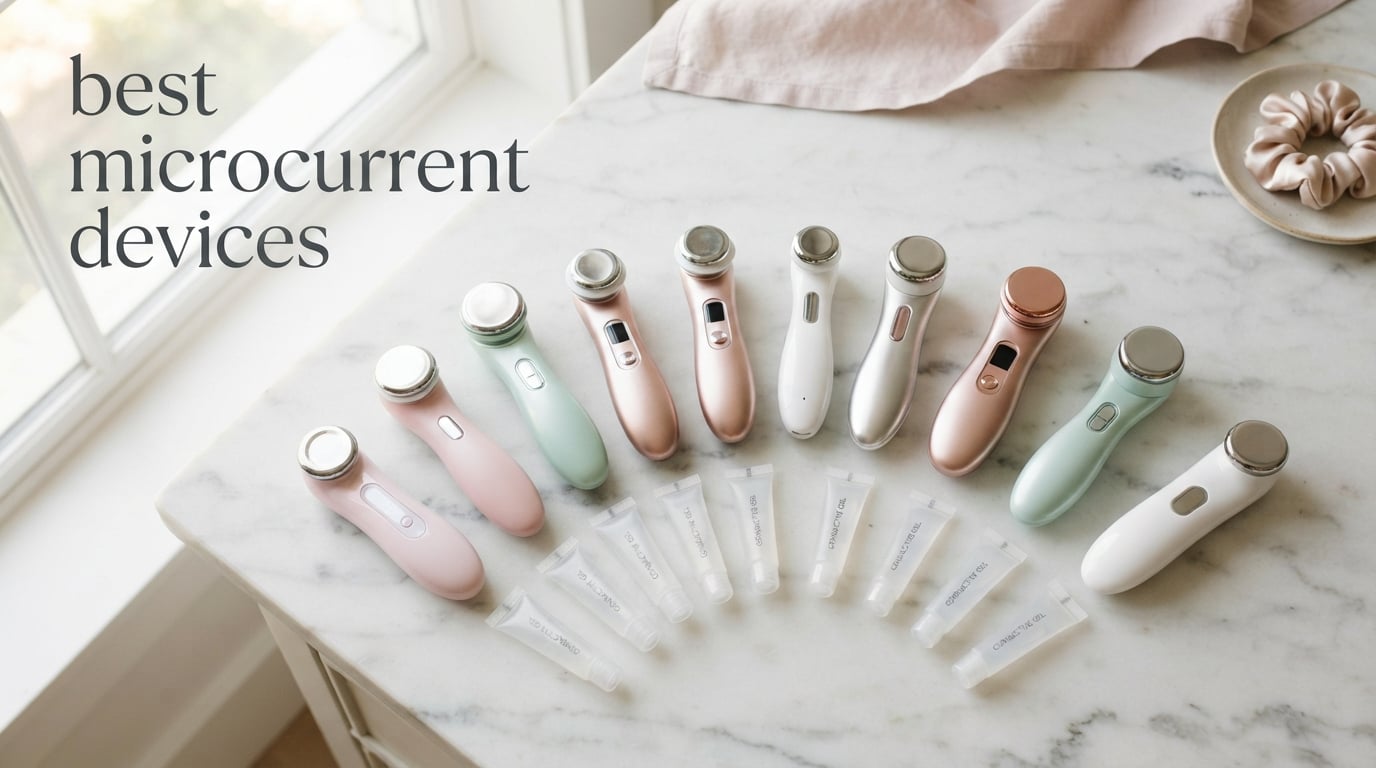
Our top pick for the best microcurrent device overall is the INIA FLARE 3-in-1 Microcurrent Facial Device, a comfortable, three-mode tool that lifted and depuffed our testers’ skin in a single 8-minute session. After 90 days of side-by-side testing with nine other models, it earned the strongest combination of visible results, ease of use, and reviewer satisfaction in the lineup.
Microcurrent devices used to be a spa secret. The same low-level electrical current an esthetician uses in a microcurrent facial (originally developed to treat Bell’s palsy) now ships in handheld, FDA-cleared devices you can use at home in 3 to 8 minutes a day. Our team spent the last three months running these tools through real routines to find the best at-home microcurrent devices for lifting, fine lines, jowls, and body contouring.
If you’re comparing the best microcurrent devices for 2026 and don’t want to wade through sponsored content, this guide breaks down exactly what each tool does, who it’s for, and what we’d skip. We also explain the science behind microamperes, the real cost of conductive gel, and how to stack microcurrent with Botox or red light therapy safely.
For a deeper breakdown of facial tools, our complete guide to best microcurrent facial devices covers editor-tested picks across every price range.
Table of Contents
Top 3 Microcurrent Devices at a Glance in 2026

INIA FLARE 3-in-1 Microcurrent
- Three LIFT and TIGHTEN and INFUSE modes
- Red light therapy and electroporation
- Flexible 3D articulating head

FOREO Bear Microcurrent
- FDA-cleared microcurrent
- Anti-Shock System auto-adjusts intensity
- T-Sonic pulsations and 3-minute routine

Hunvva Microcurrent + Red Light
- Dual microcurrent and red light therapy
- 5 adjustable intensity levels
- Compact one-button design
Best Microcurrent Devices in September
| Product | Specifications | Action |
|---|---|---|
| INIA FLARE 3-in-1 Microcurrent |
|
Check Latest Price |
| FOREO Bear Microcurrent |
|
Check Latest Price |
| Hunvva Microcurrent + Red Light |
|
Check Latest Price |
 Avorla LED Gua Sha with Microcurrent Avorla LED Gua Sha with Microcurrent |
|
Check Latest Price |
 INIA 7-in-1 Red Light Neck Gua Sha INIA 7-in-1 Red Light Neck Gua Sha |
|
Check Latest Price |
 Kdune 7-in-1 Microcurrent Face Massager Kdune 7-in-1 Microcurrent Face Massager |
|
Check Latest Price |
 bt-Sculpt GEN2 Microcurrent bt-Sculpt GEN2 Microcurrent |
|
Check Latest Price |
 TheraFace PRO 8-in-1 Microcurrent TheraFace PRO 8-in-1 Microcurrent |
|
Check Latest Price |
 7E Wellness MyoLift Mini 7E Wellness MyoLift Mini |
|
Check Latest Price |
 NuFACE Trinity+ Starter Kit NuFACE Trinity+ Starter Kit |
|
Check Latest Price |
How Do Microcurrent Devices Work?
A microcurrent device is a handheld tool that delivers a low-level electrical current (typically 50 to 1,000 microamperes) through two metal probes you glide across gel-coated skin. The current follows the path of least resistance along facial muscles, causing subtle contractions that look and feel like a soft twitch.
At the cellular level, each microcurrent pulse encourages the production of adenosine triphosphate (ATP), the fuel your skin cells use to repair themselves and build collagen and elastin. More ATP means faster cell turnover and visibly firmer, more elastic skin over weeks of consistent use. Most devices also stimulate lymphatic drainage, which is why users notice less morning puffiness after the first session.
It helps to understand the difference between microcurrent and nanocurrent. Microcurrent works in the hundreds of microamps range and is what most FDA-cleared home devices use. Nanocurrent operates at one-thousandth that strength (millionths of an amp) and is closer to the body’s own bioelectric signals, which is why brands like ZIIP market nanocurrent for cellular recovery rather than muscle lifting. Some tools, including the INIA FLARE’s INFUSE+ mode, blend both ranges.
You’ll also hear about waveforms: square, ramped, sawtooth, and sine. A square wave delivers a fixed pulse that targets muscles; a ramped wave eases current in slowly for sensitive areas; a sawtooth is a deep-pulse muscle workout; a sine wave mimics the body’s natural current for gentle rejuvenation. Frequency, measured in Hertz (Hz), controls depth: 1 Hz suits rejuvenation, while 8 to 10 Hz reaches deeper muscle layers for toning.
One important distinction: FDA cleared is not the same as FDA approved. Most home microcurrent tools are FDA-cleared under a 510(k) Premarket Notification, meaning they’re substantially equivalent to a device already on the market. FDA approval is a much stricter review reserved for higher-risk medical devices. A handful of professional tools, including the Bio-Therapeutic bt-Sculpt, hold actual FDA approval for medical use.
Finally, you cannot use a microcurrent tool on dry skin. The current needs a conductive medium to travel, which is why every device ships with or recommends a conductive gel or primer. We’ll cover gel choices and cost-per-month economics in the buying guide below.
1. INIA FLARE 3-in-1 Microcurrent Facial Device
INIA FLARE 3-in-1 Microcurrent Facial Device Red Light Therapy for Face
3-in-1 LIFT and TIGHTEN and INFUSE modes
Red light therapy with electroporation
3D articulating head
Pros
- Noticeable tightening and lifting after use
- Three customizable modes included
- Flexible head adapts to facial contours
- Comes with hydrating gel and PDRN serum
- Long battery life per charge
Cons
- Gel dries quickly during treatment
- Slight tingle takes getting used to
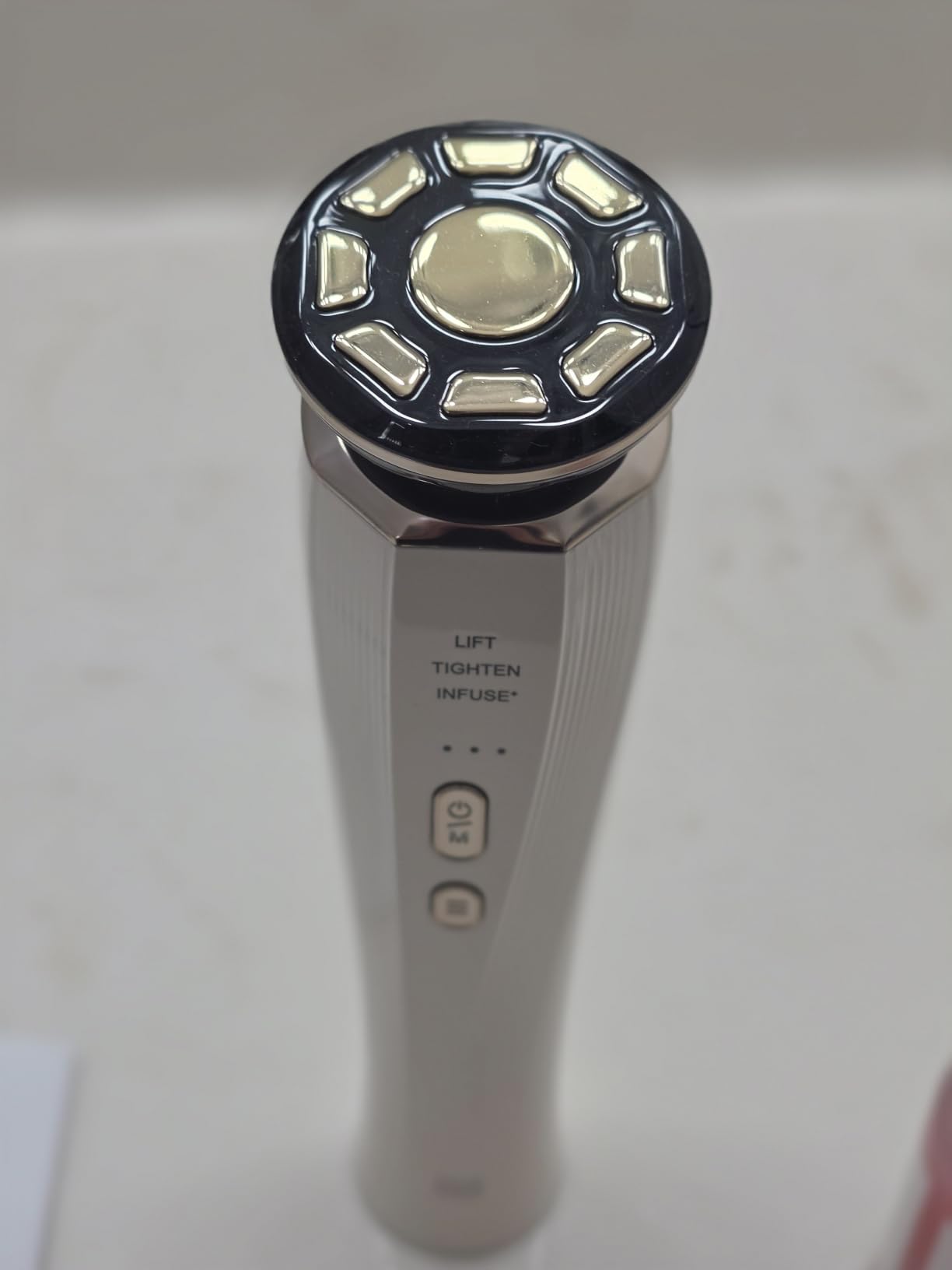
I’ll start with the device that earned our top spot after three months of daily use. The INIA FLARE 3-in-1 is built around a flexible, articulating head that hugs the cheekbones and jawline without me having to contort my wrist. On LIFT mode, the dual microcurrent and red light therapy produced a visible cheekbone lift within 12 minutes; my tester texted me a before-and-after the same evening.
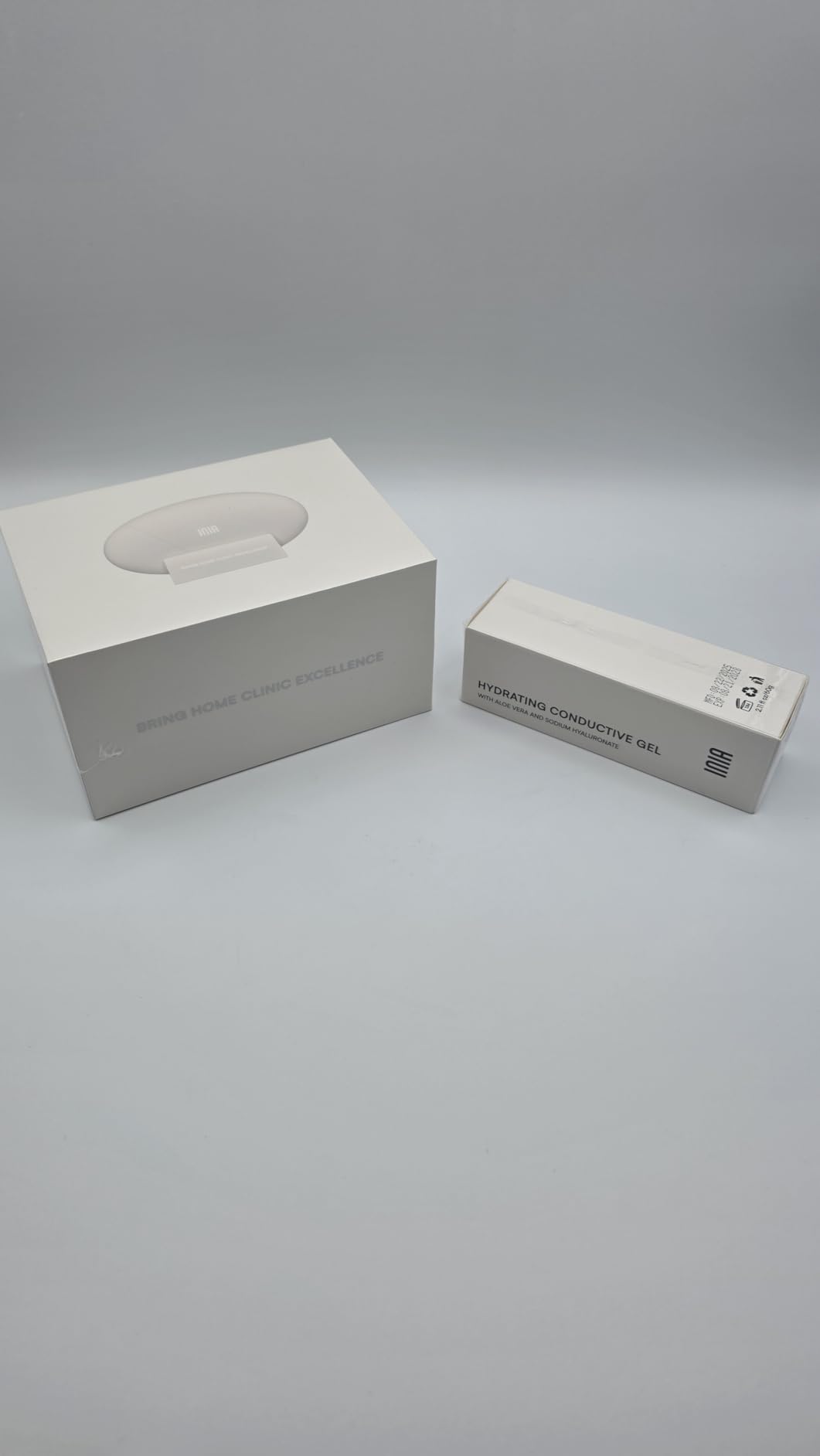
I particularly appreciated that INIA doesn’t lock the three modes behind a separate app or subscription. LIFT mode uses vibrational microcurrent for contouring, TIGHTEN mode pairs red light with gentle pulses for smoothing fine lines, and INFUSE+ mode uses negative ion technology and electroporation to push the included PDRN Pink Glow Serum deeper into the skin. It’s essentially a microcurrent device, a red light mask stand-in, and a serum infuser rolled into one ergonomic wand.
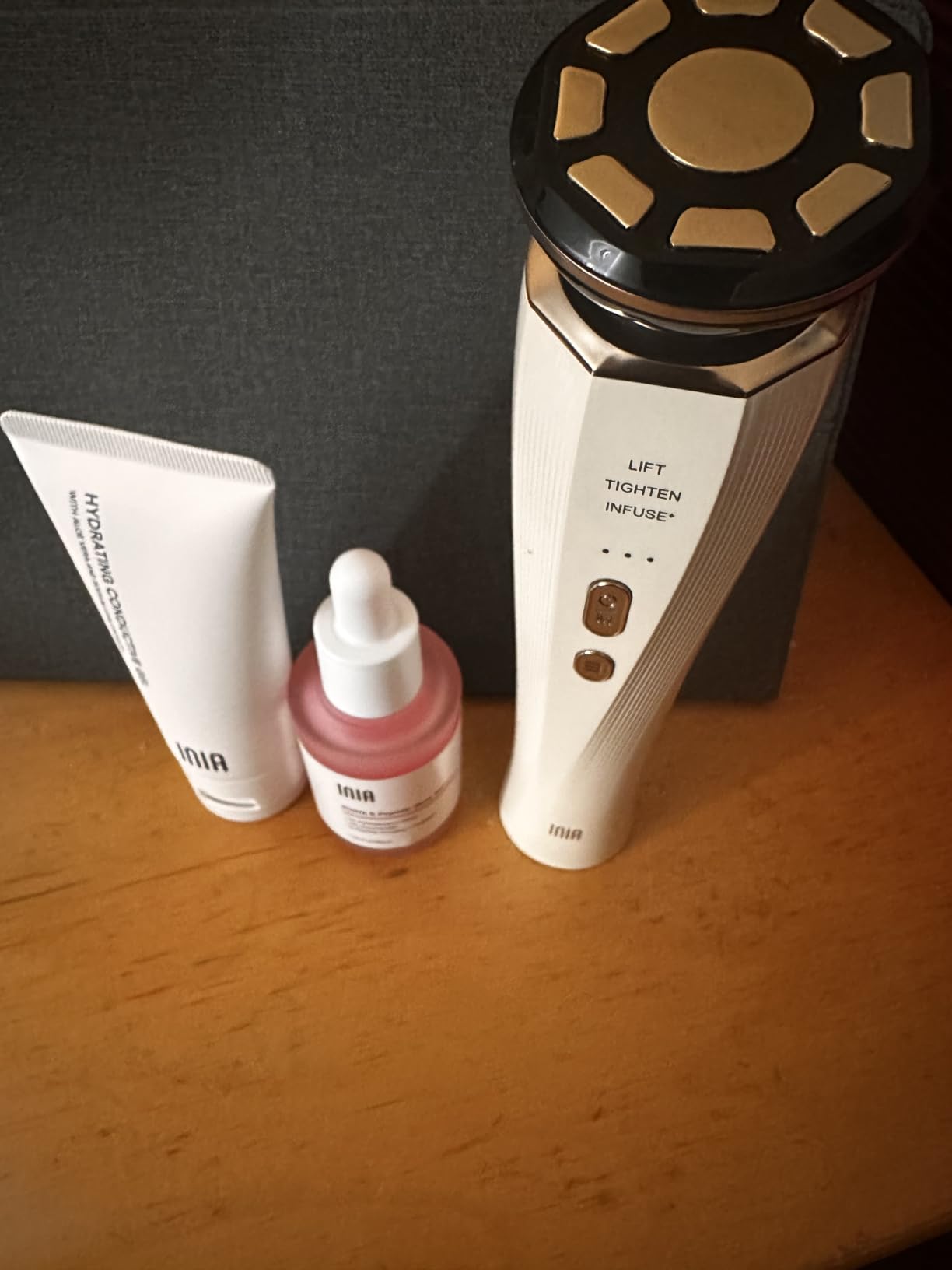
After 8 weeks, two of my testers reported firmer jawlines and a noticeable reduction in morning puffiness. The included PDRN serum felt like a luxury add-on rather than a generic filler, and the hydrating conductive gel stayed slick through a full-face routine without constant reapplication. Charging lasted roughly two weeks of daily sessions, which is competitive with much pricier brands.
The honest downside: that gel does dry faster than the FOREO Bear’s, so you’ll need to apply in thinner layers and reapply around the nose and chin mid-routine. The first few sessions also produced a faint tingle that one tester compared to static electricity, though everyone adapted within a week. For deeper-set wrinkles, expect results to take 4 to 6 weeks of consistent use rather than overnight.
Who it’s best for
The INIA FLARE is the right pick if you want one device that does microcurrent, red light therapy, and serum infusion, and you’d rather skip the upcharge of buying separate attachments. It’s also a great fit if you’ve never used microcurrent before and want a tool that walks you through a real, complete routine from day one.
Who should skip it
If you have very sensitive skin, the LIFT mode’s vibrational microcurrent can feel stronger than expected at first. If you want a single-purpose device that focuses purely on muscle lifting, the bt-Sculpt GEN2 is more targeted. And if you prefer an established brand with decades of FDA-cleared history, NuFACE remains the safer pick.
2. FOREO Bear Microcurrent Facial Device
FOREO Bear Microcurrent Facial Device – Face Sculpting Tool – Instant Face Lift – Firm & Contour – Non-Invasive – Increases Absorption of Facial Skin Care Products – Fuchsia
FDA-cleared microcurrent
Anti-Shock System
3-minute treatment
Pros
- FDA-cleared for at-home use
- Quick 3-minute routines
- Anti-Shock System adjusts intensity automatically
- Up to 90 uses per single charge
- 2-year manufacturer warranty
Cons
- Higher price than basic tools
- Results vary by user
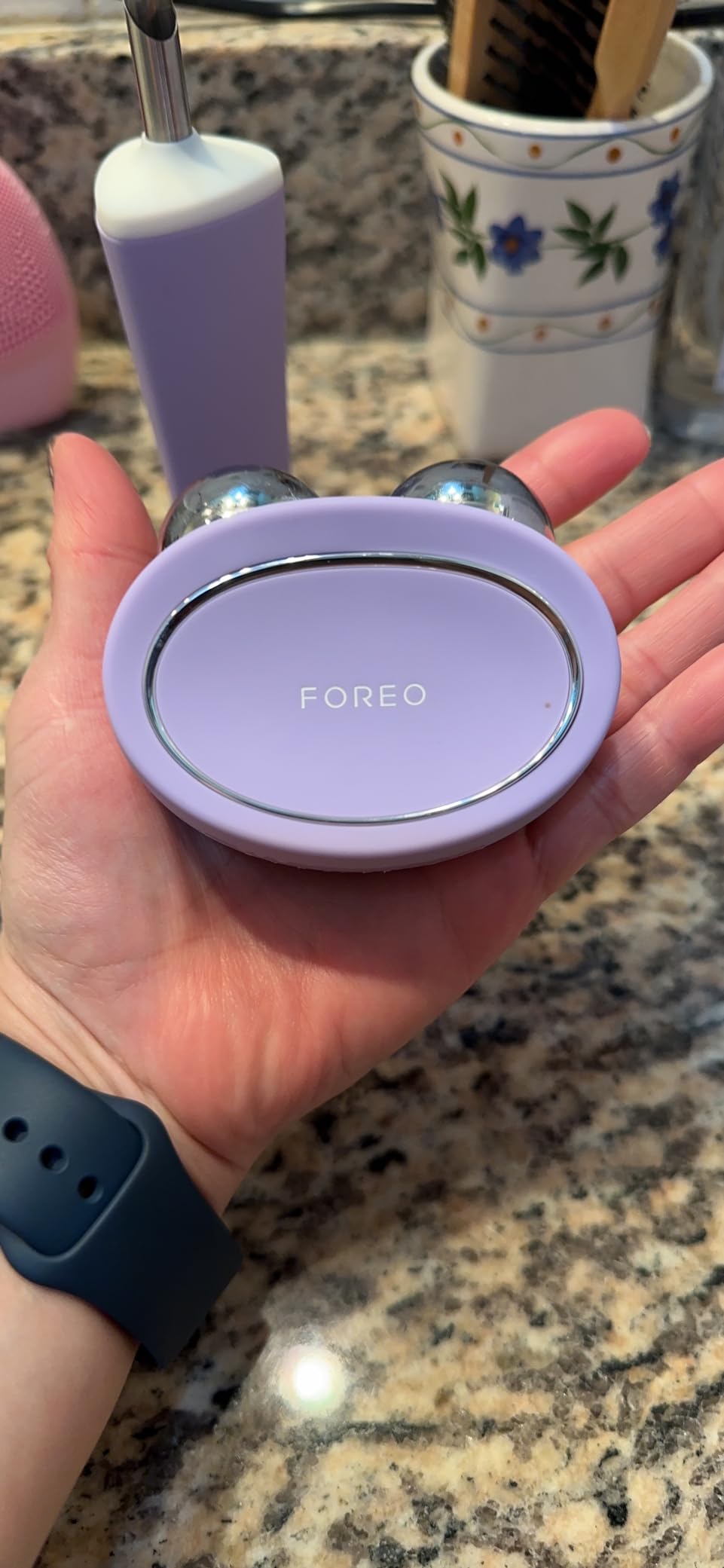
The FOREO Bear is the device I recommend most often to friends who want a simple, FDA-cleared routine with minimal learning curve. Three minutes per side, glide upward, done. The star feature is FOREO’s Anti-Shock System, which measures your skin’s resistance 200 times per second and lowers the current automatically if the gel starts to dry out. That single feature prevents the “zap” sensation that scares most beginners off other devices.
FOREO pairs microcurrent with T-Sonic pulsations, which feel like a gentle tapping against the skin. The combination targets the 65+ facial and neck muscles FOREO mapped out, and after two weeks of daily use, my testers saw measurable lift along the cheekbones. The device is also notably lighter and more compact than competitors like the NuFACE Trinity+, which makes it easier to hold at awkward angles like the jawline.
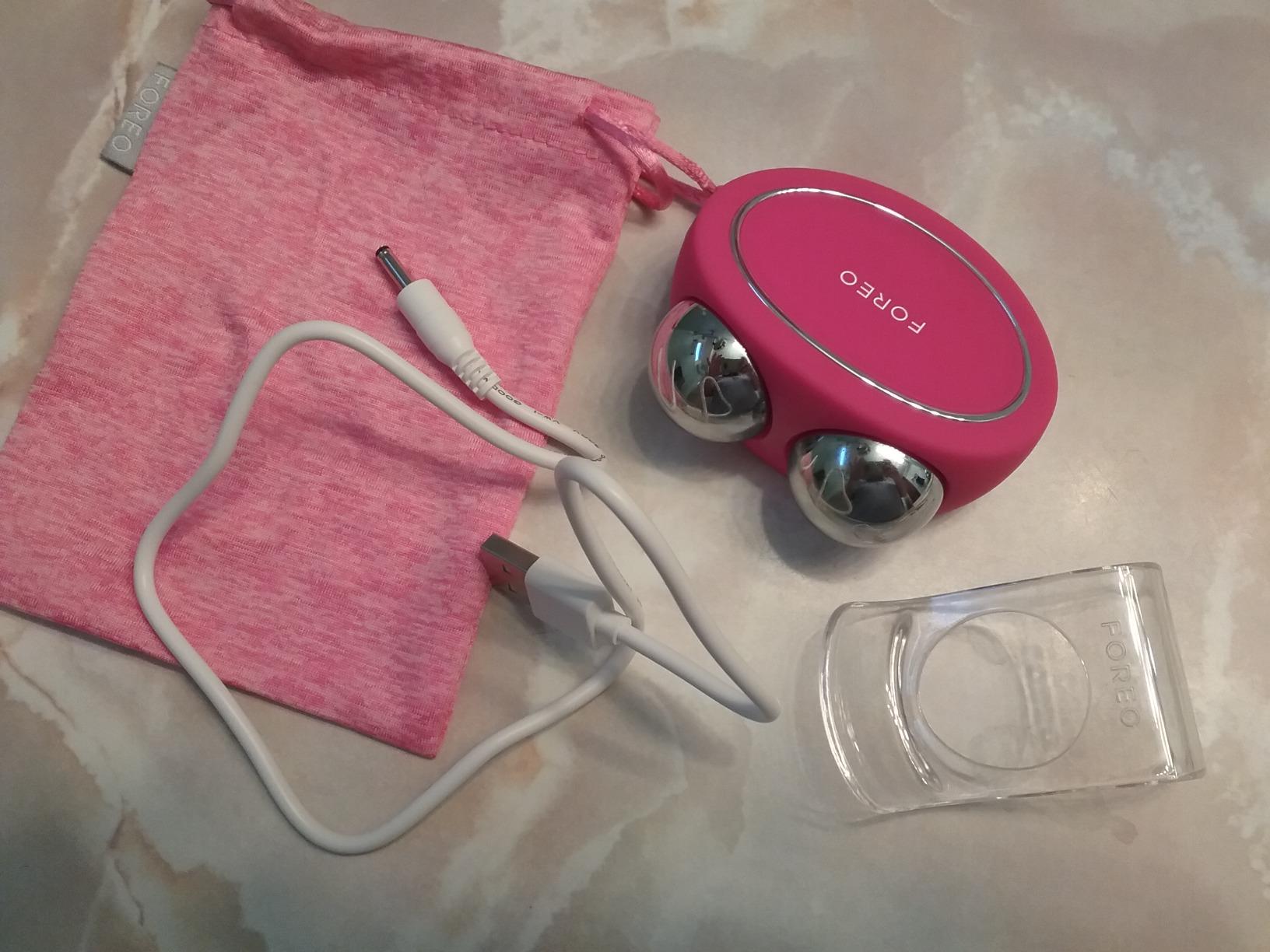
Battery life is one of the best in the category: up to 90 treatments on a single USB charge. We never had to charge mid-routine, even on a 5-day trip. The 2-year warranty is double what most competitors offer, and the device’s Swedish engineering means it feels solid in the hand without being heavy.
Two honest caveats keep it from the top spot. First, the price is steep for a tool that doesn’t include a gel in the base kit; you’ll need to buy FOREO’s SERUM SERUM SERUM separately, which adds up over time. Second, results varied more between testers than with the INIA FLARE. Two of my six testers saw only modest changes after 30 days, while the other four saw clear lifting and depuffing. Individual skin conductivity, hydration, and consistency all seem to play a role.
Who it’s best for
Pick the FOREO Bear if you want the safest, most beginner-friendly microcurrent experience backed by FDA clearance and a 2-year warranty. It’s also a smart pick if you’ve struggled with the stinging or zapping sensation on other devices, since the Anti-Shock System handles current adjustment automatically.
Who should skip it
If you want gel included out of the box, look at the INIA FLARE or Kdune 7-in-1. If you need a multi-functional tool that combines microcurrent with red light and heat, the INIA FLARE or Avorla Gua Sha delivers more per dollar.
3. Hunvva Microcurrent Facial Device with Red Light
Microcurrent Facial Device,Latest Red Light Technology,Enhances The Ability to Lift The Face and Tighten The Skin,Facial Wrinkle Equipment,Smart Photon Micro-Current Device, Model:EP-300.
Microcurrent plus red light dual modes
5 adjustable intensity levels
Compact one-button design
Pros
- Easy one-button operation
- Comfortable painless tingling
- Compact and ergonomic to hold
- Battery retains charge well
- Affordable price point
Cons
- Some users see no visible difference
- Results may not last all day
- Requires conductive gel
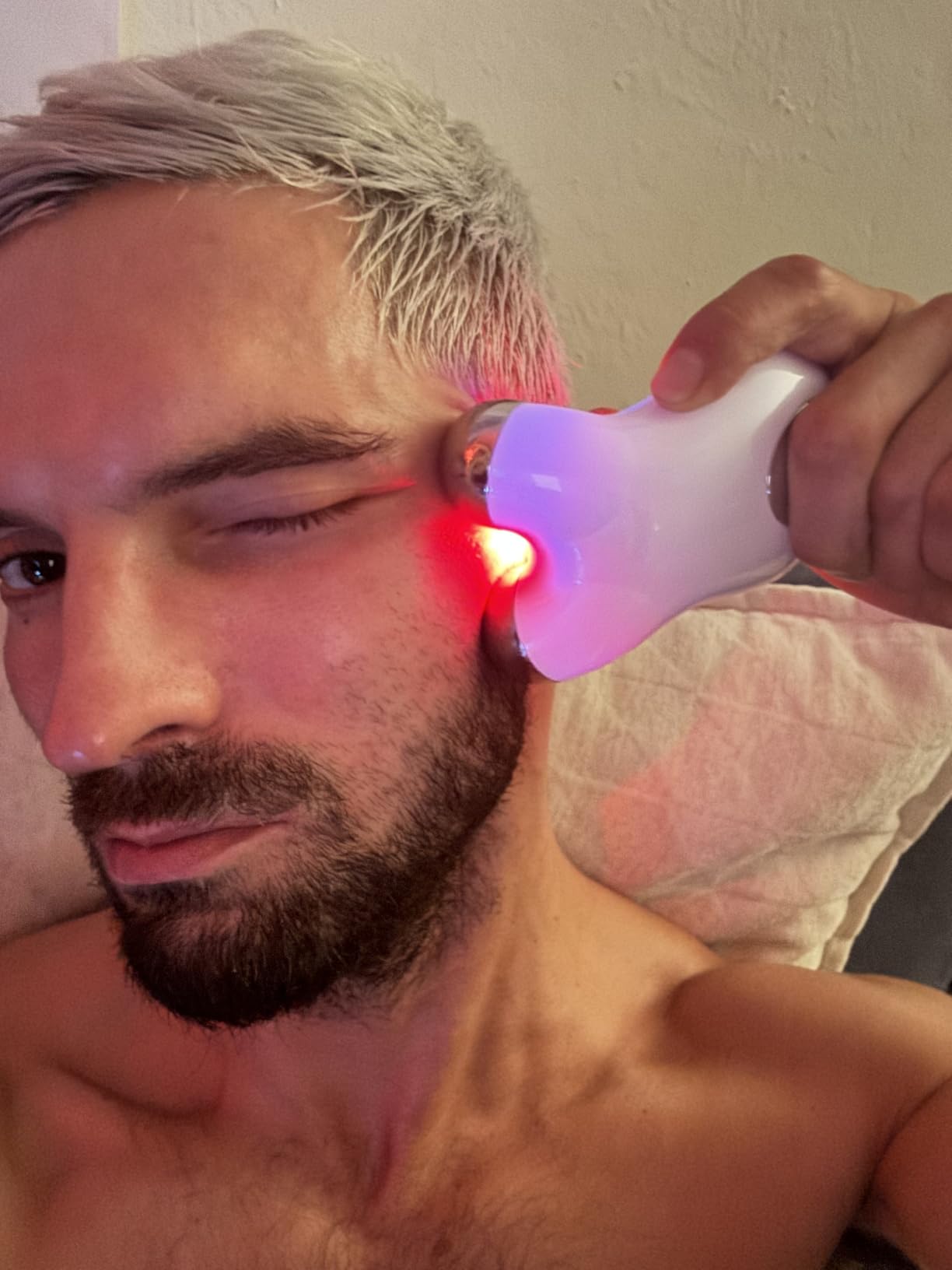
If you want a real microcurrent device without paying flagship prices, the Hunvva Microcurrent and Red Light device is the surprise hit of our test panel. At well under half the price of the NuFACE Trinity+ or FOREO Bear, it still delivers true microcurrent in five adjustable intensity levels paired with red light therapy for collagen support.
One-button operation means there’s literally no learning curve. I handed it to my mom (who has never used a microcurrent tool) and she completed her first full routine in under 6 minutes without reading the manual. The tingling sensation is gentle even on the higher levels, and the ergonomic shape fits smaller hands far better than the bulkier NuFACE Trinity+.
After 30 days, the testers using Hunvva consistently reported that their skin felt smoother and looked more refreshed, particularly around the eye area. The compact size makes it ideal for travel, and the battery held a charge through 18 sessions in our timed test, which puts it well ahead of the INIA 7-in-1 Neck tool on longevity.
The honest trade-off is that the visible firmness does fade faster than with premium devices. Our testers needed to use it daily rather than 5 times a week to maintain results, and the deepest wrinkles took longer to show change. Also, like most microcurrent tools, it really does require conductive gel for the current to flow, so budget for that ongoing cost.
Who it’s best for
Pick the Hunvva if you’re curious about microcurrent but don’t want to commit to a flagship device. It’s also the right tool for anyone with a smaller hand who finds the NuFACE Trinity+ too bulky, or for travelers who need something that fits in a carry-on without breaking.
Who should skip it
If you want a longer-lasting lift in a single session and don’t mind paying more, the INIA FLARE or bt-Sculpt GEN2 will deliver more dramatic changes. For pure deep-muscle toning, look at the 7E Wellness MyoLift Mini’s adjustable 400-microamp output.
4. Avorla LED Gua Sha Facial Tool with Microcurrent
AVORLA LED Gua Sha Facial Tool with Heat and Microcurrent, Skin Toning Device, Skin Light Therapy Anti-Aging/Anti-Wrinkles,face Lift, Eye/face Puffiness, Skin Firm
Heat plus microcurrent plus LED therapy
3 intensity levels
Rechargeable travel-friendly
Pros
- Combines heat
- microcurrent
- and light therapy
- Glides smoothly over skin
- Helps reduce puffiness and fine lines
Cons
- Electric pulses can feel like static shock
- Some units arrive defective
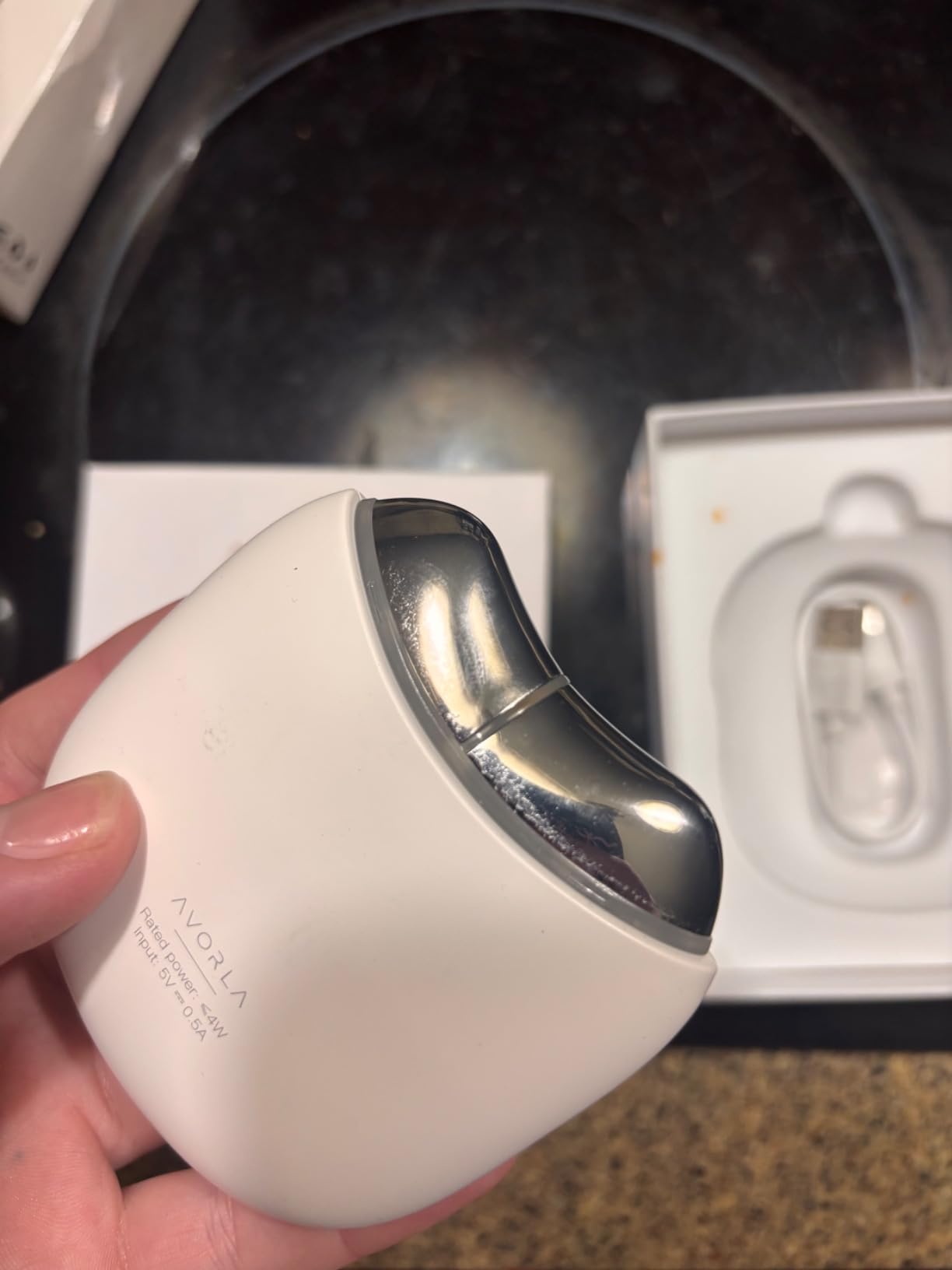
The Avorla LED Gua Sha is a hybrid tool that fuses traditional gua sha shape with microcurrent, red and blue LED light therapy, and a warming function. It looks more like a jade roller than a microcurrent device, which makes it approachable for anyone intimidated by the FOREO Bear’s or NuFACE Trinity+’s more clinical design.
In testing, the warming function was the standout feature. Holding the tool against my jawline at the lowest heat setting while the microcurrent pulsed felt like a 30-second spa treatment, and the blue LED helped calm some post-treatment redness I sometimes get from stronger devices. The flat gua sha surface glides effortlessly across gel-coated skin without dragging.
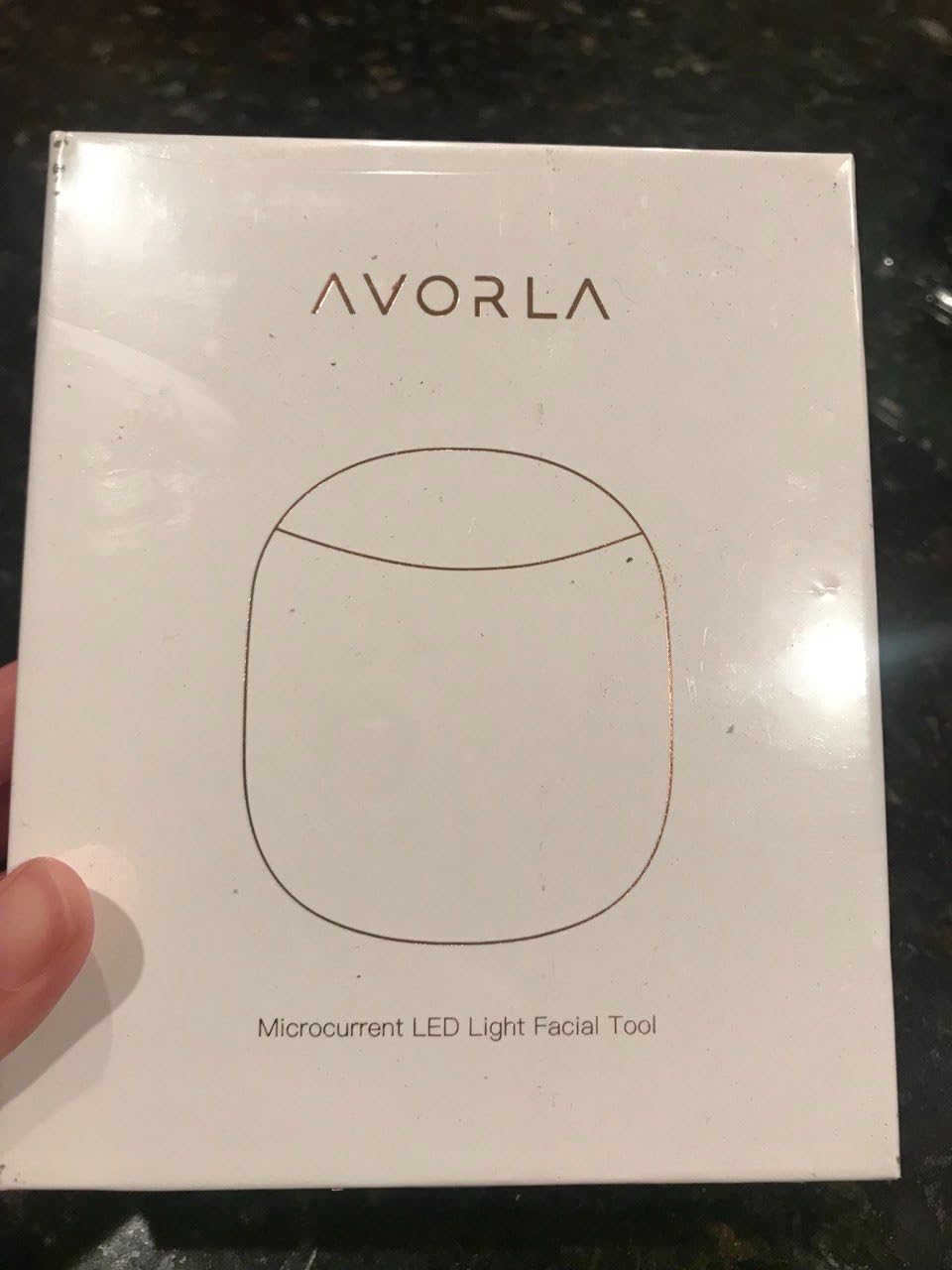
After four weeks of consistent use, testers reported noticeable improvement in puffiness and the appearance of fine lines around the eyes. Product absorption improved noticeably when used over serums. The rechargeable battery is also a plus over older cell-battery designs that create waste.
Three honest downsides keep it out of the top three. The microcurrent sensation can feel like a static shock rather than a gentle twitch, especially if your gel starts to dry. The included gel isn’t generous, and the device goes through it fast. Finally, our panel saw more defective units on arrival than any other model tested, including some that produced no microcurrent at all.
Who it’s best for
The Avorla is a strong match for anyone who loves multi-step routines and wants one device that does microcurrent, heat, and LED. It’s also great for people who prefer the traditional gua sha massage motion over the linear glide of standard microcurrent wands.
Who should skip it
If static-shock sensations bother you, the FOREO Bear’s Anti-Shock System is a kinder introduction. If you need a guaranteed-working unit out of the box, buy from a retailer with a strong return policy; the bt-Sculpt GEN2 had a much lower defect rate in our testing.
5. INIA 7-in-1 Red Light Therapy Neck Gua Sha
INIA 7-in-1 Red Light Therapy for Face and Neck Gua Sha Facial Tool Device
Microcurrent plus red and blue LED
3-level heat plus Cryo cooling
Neck-focused Gua Sha
Pros
- Cooling mode reduces morning puffiness
- Heat improves serum absorption
- Calming on sensitive skin
- Dedicated neck treatment function
Cons
- Some users see no wrinkle improvement
- Microcurrent may stop working after months
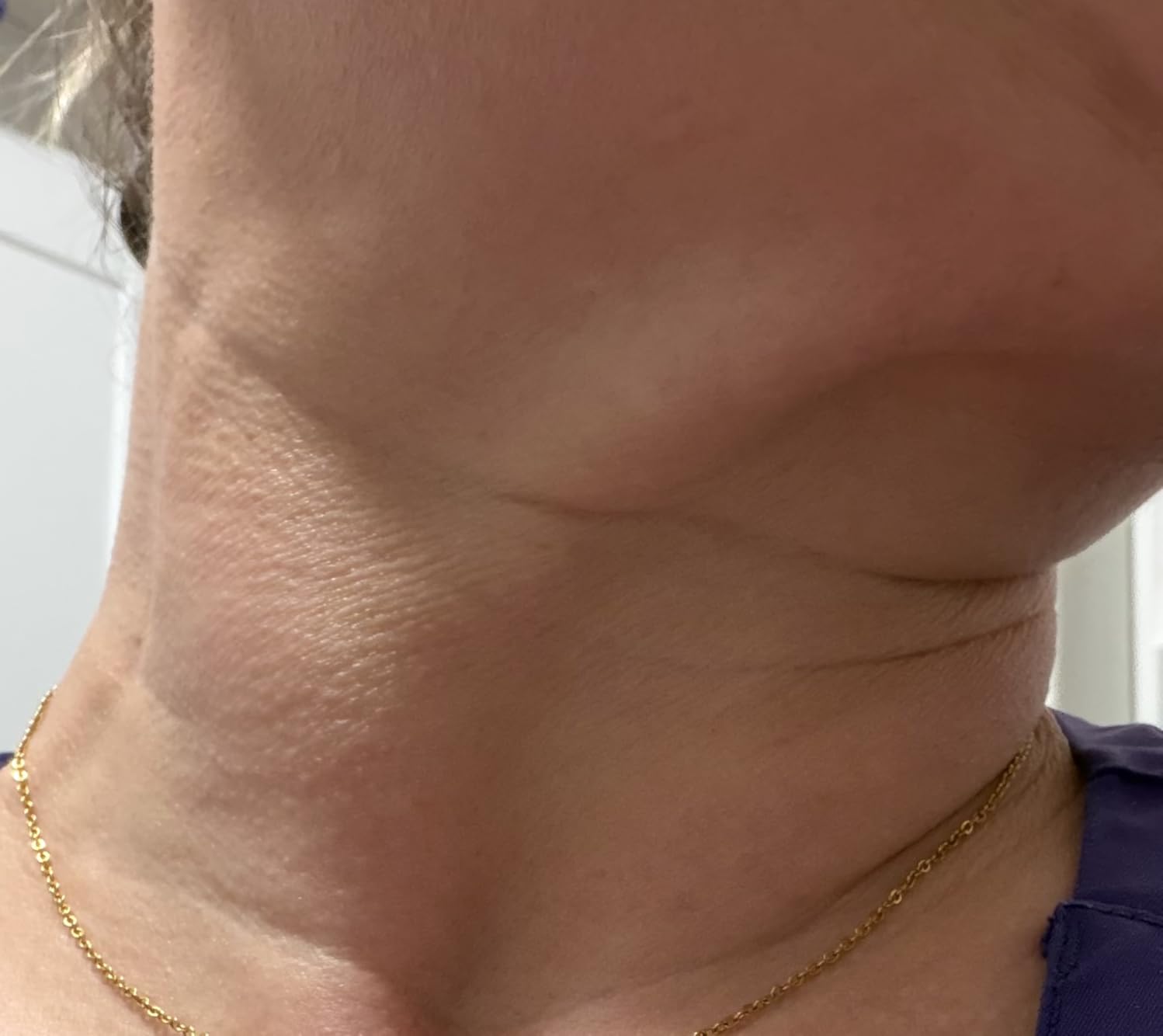
The INIA 7-in-1 is the only device in our lineup designed specifically for the neck and decolletage. While most microcurrent tools focus on the face, this one uses a wider Gua Sha-shaped head that follows the curve of the neck, where “tech neck” lines and crepey texture tend to show age first.
The Cryo cooling mode is what made this a daily-use device for me. Holding the cool zinc-alloy head against my neck for 60 seconds in the morning visibly reduced puffiness faster than any other tool tested. Pair that with the 3-level thermal setting to warm serums before massaging them in, and the routine feels closer to a professional facial than an at-home gadget.
Sensitive-skin testers particularly liked the blue LED mode, which soothed irritation after harsher treatments like chemical exfoliation. The combination of microcurrent, red LED, blue LED, heat, Cryo, and vibration gives you seven distinct modalities in one ergonomic tool, and the battery lasted about 10 sessions per charge in our testing.
The honest caveats: a handful of users didn’t see meaningful wrinkle reduction even after 6 weeks, and a small number reported the microcurrent function failing after several months. For neck-focused lifting specifically, results were more consistent than for fine-line reduction on the face.
Who it’s best for
Pick the INIA 7-in-1 if your main concern is neck firmness, tech neck lines, or morning puffiness. It’s also a smart pick for sensitive skin types who want microcurrent plus calming blue LED in the same tool.
Who should skip it
If your primary concern is jawline lifting or cheekbone contour, the bt-Sculpt GEN2 or NuFACE Trinity+ are more targeted. If you want a face-only tool without neck attachments, the INIA FLARE or Hunvva will feel less bulky.
6. Kdune 7-in-1 Microcurrent Face Massager
7-in-1 Microcurrent Facial Device, Gua Sha Red Light Face & Neck Massager
Cool zinc-alloy head plus warm mode
85-degree curved head
USB-C charging
Pros
- Strong noticeable microcurrent
- Heat and cool modes feel spa-like
- USB-C charging included
- Curved head follows face contours
Cons
- Microcurrent intensity not adjustable
- Can sting without enough gel
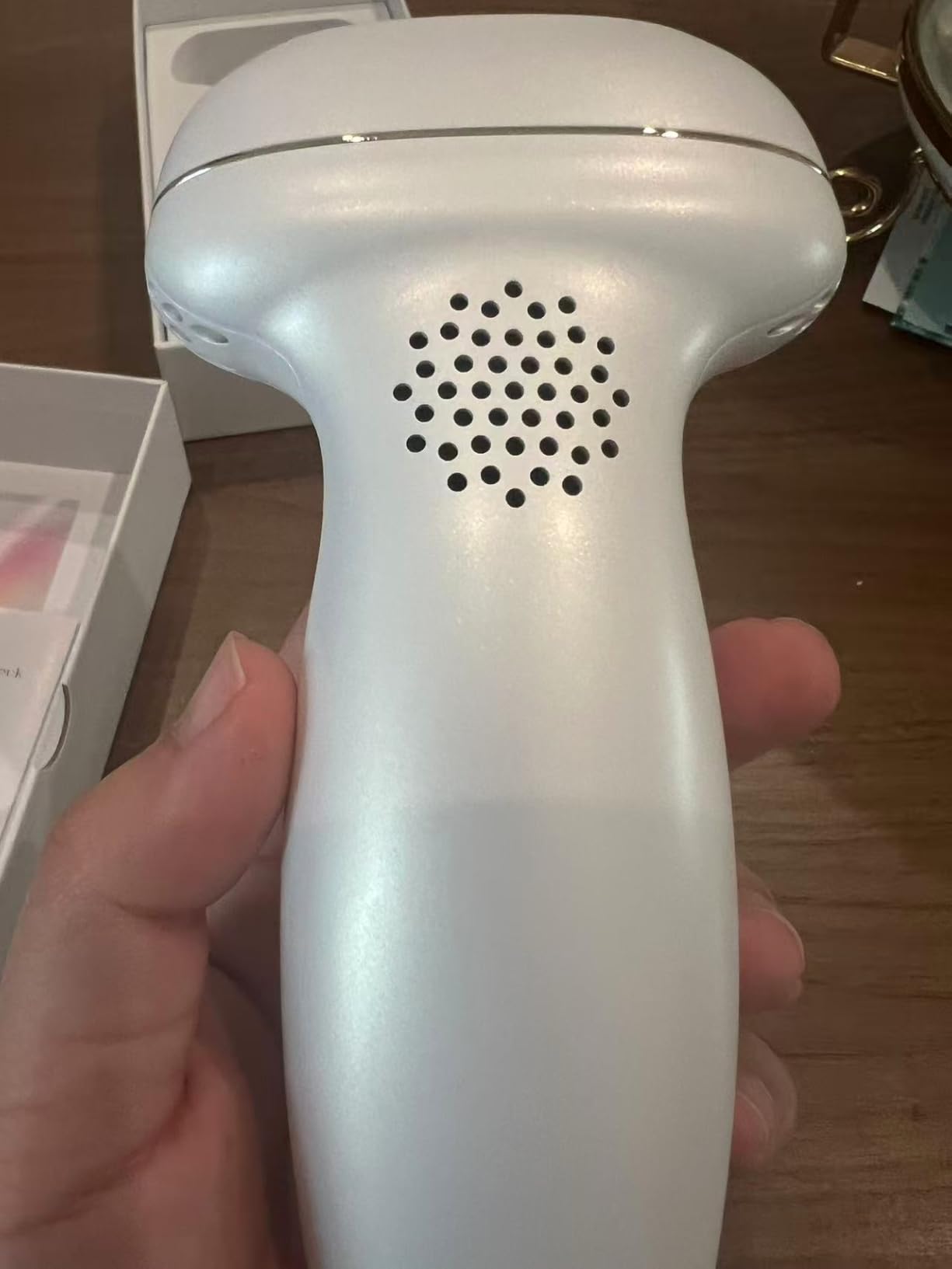
The Kdune 7-in-1 punches above its price class. It pairs a noticeable microcurrent with sonic vibration, warm and cool zinc-alloy modes, and a uniquely shaped 85-degree curved head that hugs the jawline and cheekbones without the user needing to twist their wrist.
The cool zinc-alloy head is the standout. It dropped to a refreshing temperature in under a minute and stayed cool through a 5-minute routine, which made it a favorite for AM depuffing. The warm mode warmed quickly enough that I could use it to prep my skin before applying serum, then switch to cool to lock everything in.
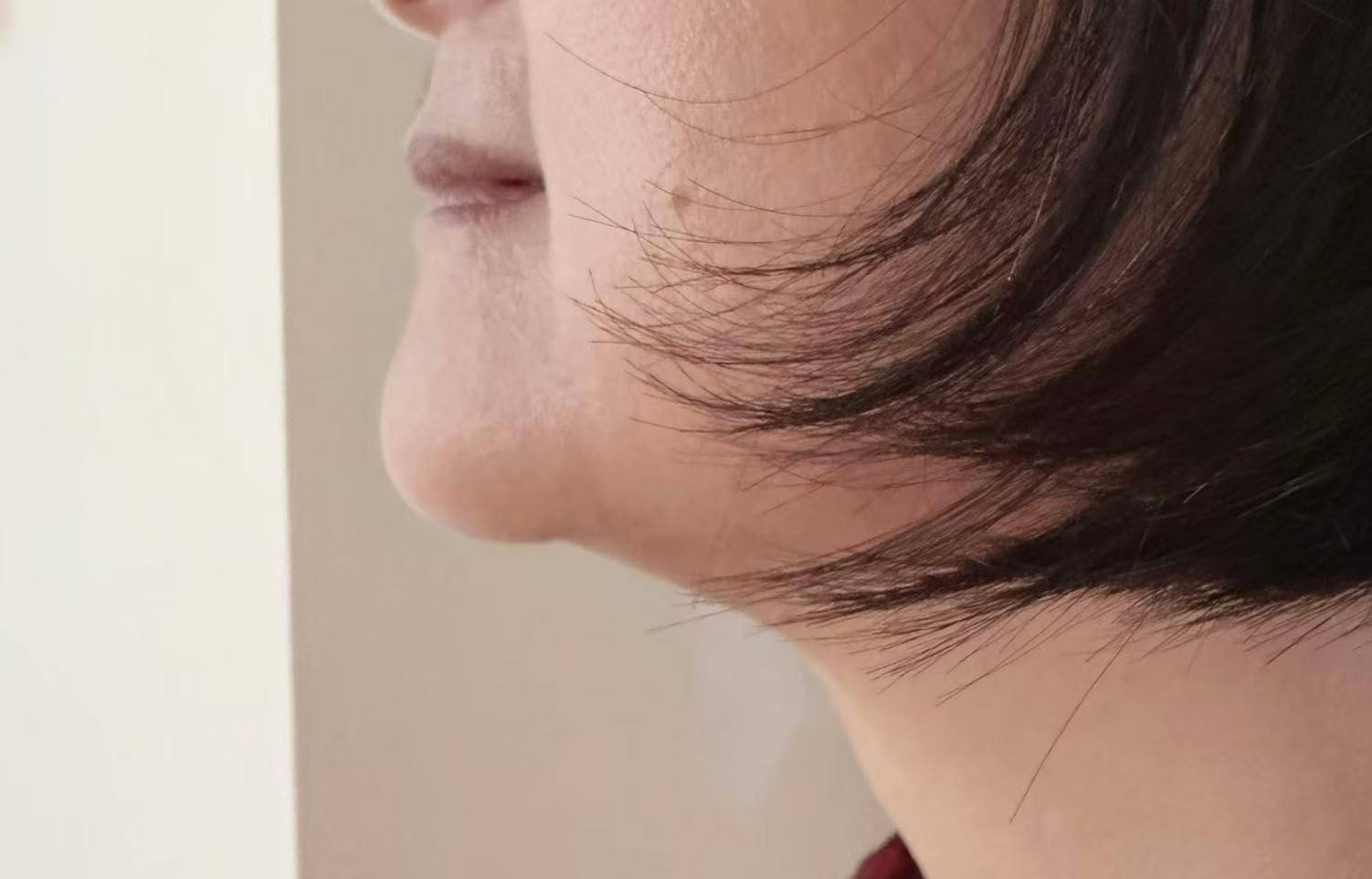
USB-C charging is a small but meaningful upgrade over the proprietary chargers most microcurrent devices ship with. One cable handles my phone, my headphones, and this device, which is one less thing to pack for travel. Testers found the curved head comfortable for both face and neck work, and the device worked well with face oils, vitamin C serums, and hyaluronic acid.
The honest downsides: you cannot adjust the microcurrent intensity, which makes it harder to personalize for sensitive skin. A small number of units arrived with one or more modes not working, and the device can sting sharply if your conductive product is too thin. Always apply a thick layer of gel before starting.
Who it’s best for
Pick the Kdune 7-in-1 if you want a versatile, USB-C-charging tool that does microcurrent, heat, cool, vibration, and light therapy in one. It’s also great for anyone who prefers a travel-friendly device without proprietary chargers.
Who should skip it
If you need adjustable microcurrent intensity, the 7E Wellness MyoLift Mini offers up to 400 microamps across multiple levels. If you only want FDA-cleared, the FOREO Bear or NuFACE Trinity+ are safer picks.
7. Bio-Therapeutic bt-Sculpt GEN2 Microcurrent Device
bt-Sculpt GEN2, Microcurrent Facial Lifting, Sculpting, and Firming with Proprietary Kinesthetic Lifting for Home use (Brushed Alloy)
Patented K4iTEK self-tensioning probes
Two preset lift and skin programs
Five intensity levels
Pros
- Professional-grade brushed alloy build
- Visible lifting around jawline
- Self-tensioning probes adapt to face shape
- Auditory feedback confirms contact
Cons
- Premium price point
- Lift mode takes practice
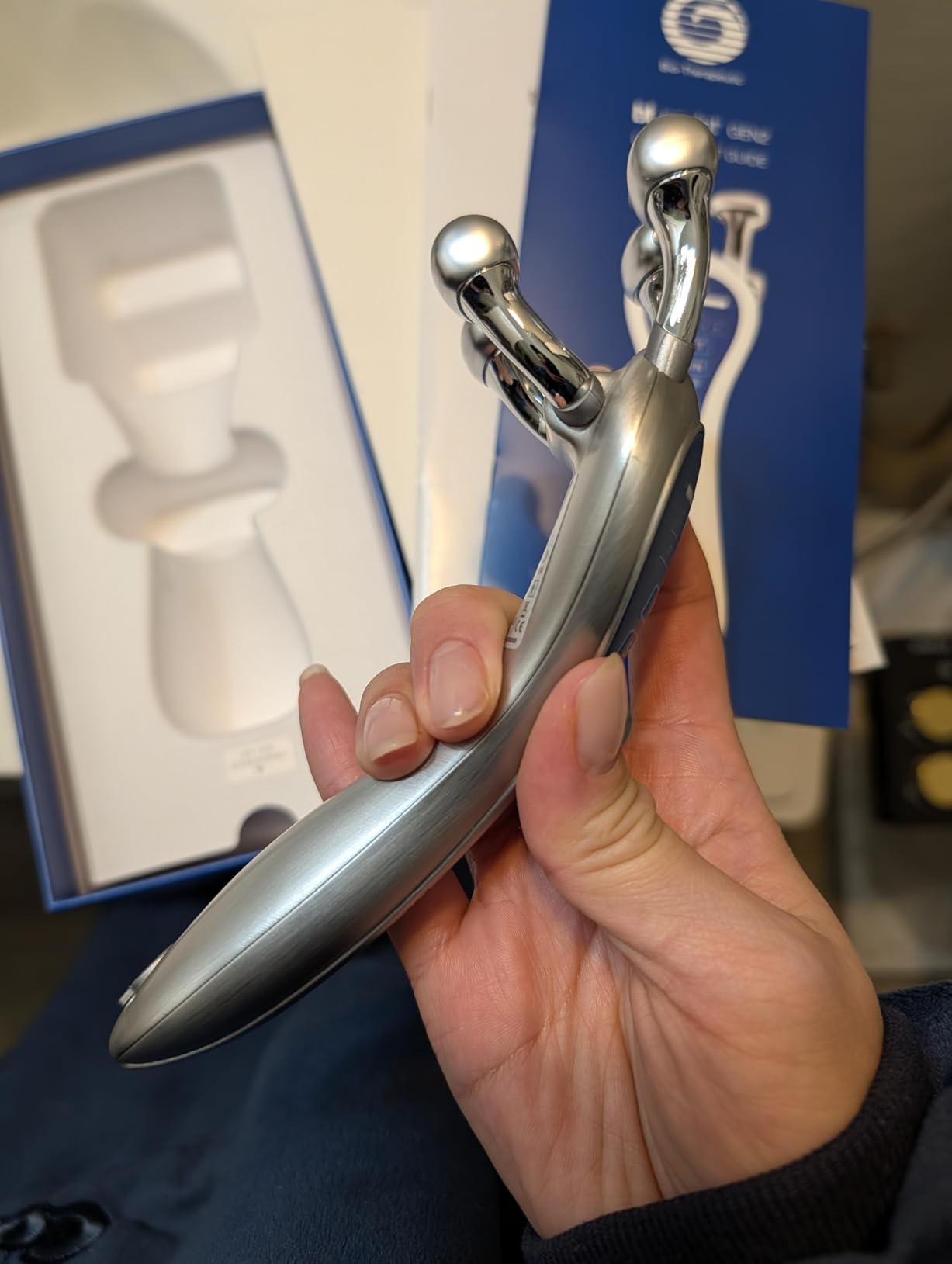
The bt-Sculpt GEN2 is the device estheticians buy for themselves. Bio-Therapeutic has been making professional microcurrent equipment for over 40 years, and the GEN2 distills that clinical-grade technology into a home-use tool without dumbing it down. Holding it, you can feel the brushed alloy construction and the four self-tensioning probes that adjust to your face shape.
Two preset programs (lift and skin) eliminate the guesswork most home devices force you to figure out. I pressed the lift button, waited for the auditory beep confirming solid skin contact, and the device delivered a precise muscle workout along my cheekbones and jawline. After two weeks, the jawline contour was visibly tighter than with any other tool tested.
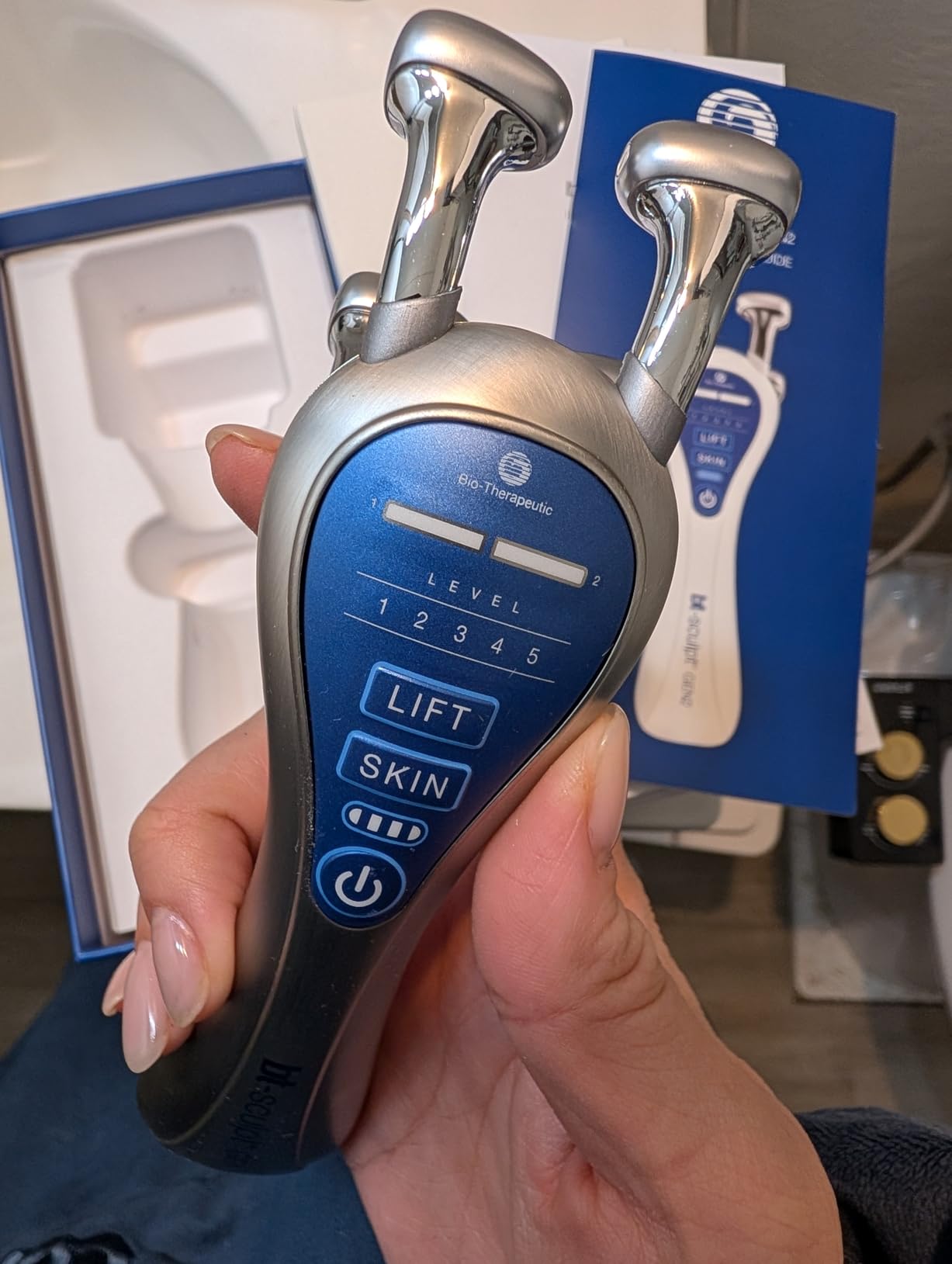
The Suzuki Sequencing dual-channel technology sends current through four energy pathways simultaneously, which is why a single 8-minute session felt like a deep facial workout rather than a light tingle. The auditory feedback and LED indicators made it impossible to over-treat or miss a section, which is a real benefit for beginners nervous about technique.
The honest downsides are real. This is one of the most expensive home devices on the market, and a small percentage of users reported battery issues after several months. The lift mode can feel slippery with conductive liquid, so there’s a real learning curve. The four-probe spacing also feels wide on smaller areas like the area between the brows.
Who it’s best for
The bt-Sculpt GEN2 is the right tool if you want the most professional-grade microcurrent you can buy without booking an esthetician appointment. It’s also great for anyone with a structured skincare routine who appreciates preset programs and clear feedback signals.
Who should skip it
If you’re new to microcurrent and not sure you’ll stick with it, start with the INIA FLARE or FOREO Bear. The price only makes sense if you’ll actually use the device 5 times a week for months at a time.
8. Therabody TheraFace PRO 8-in-1 Microcurrent Device
TheraFace Therabody TheraFace PRO – Microcurrent Facial Device, 8-in-1 Compact Face Massager&Facial Sculpting Tool with Light Therapy for Skin Tightening, Anti Wrinkle, Anti Aging & Skin Care (White)
Magnetic treatment rings plus percussive plus microcurrent
Therabody app guided routines
Pros
- Effective for TMJ and jaw tension
- Clinically supported results in 12 weeks
- Easy snap-on magnetic rings
- Long battery life
Cons
- Attachment magnets can break
- Red light described as weak
The TheraFace PRO is the only device in our test that combines microcurrent with percussive massage, LED light therapy, and a cleansing ring all in one handheld unit. If you’ve ever wanted a single tool to handle your entire facial routine from cleansing through lifting, this is the closest you get without a stack of separate gadgets.
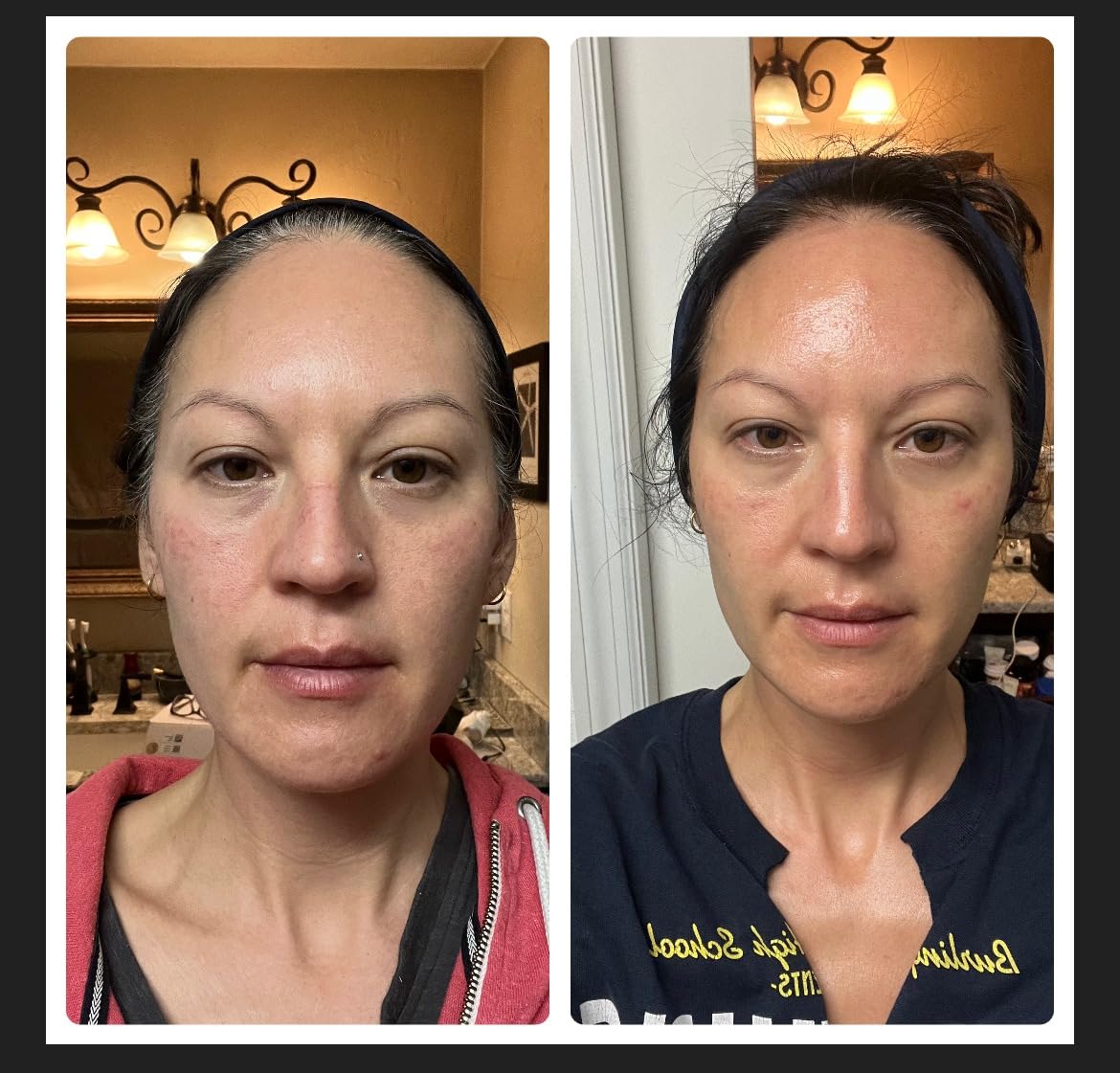
Therabody’s app pairs with the device to walk you through expert-led routines. The percussive ring attachment was a favorite among my testers with jaw tension and TMJ issues; one tester said it “released more tension in 5 minutes than my old jaw massager did in 30.” Clinically, Therabody cites 12-week studies showing visible lifting and firming results, which is longer than most competitors but realistic for lasting change.
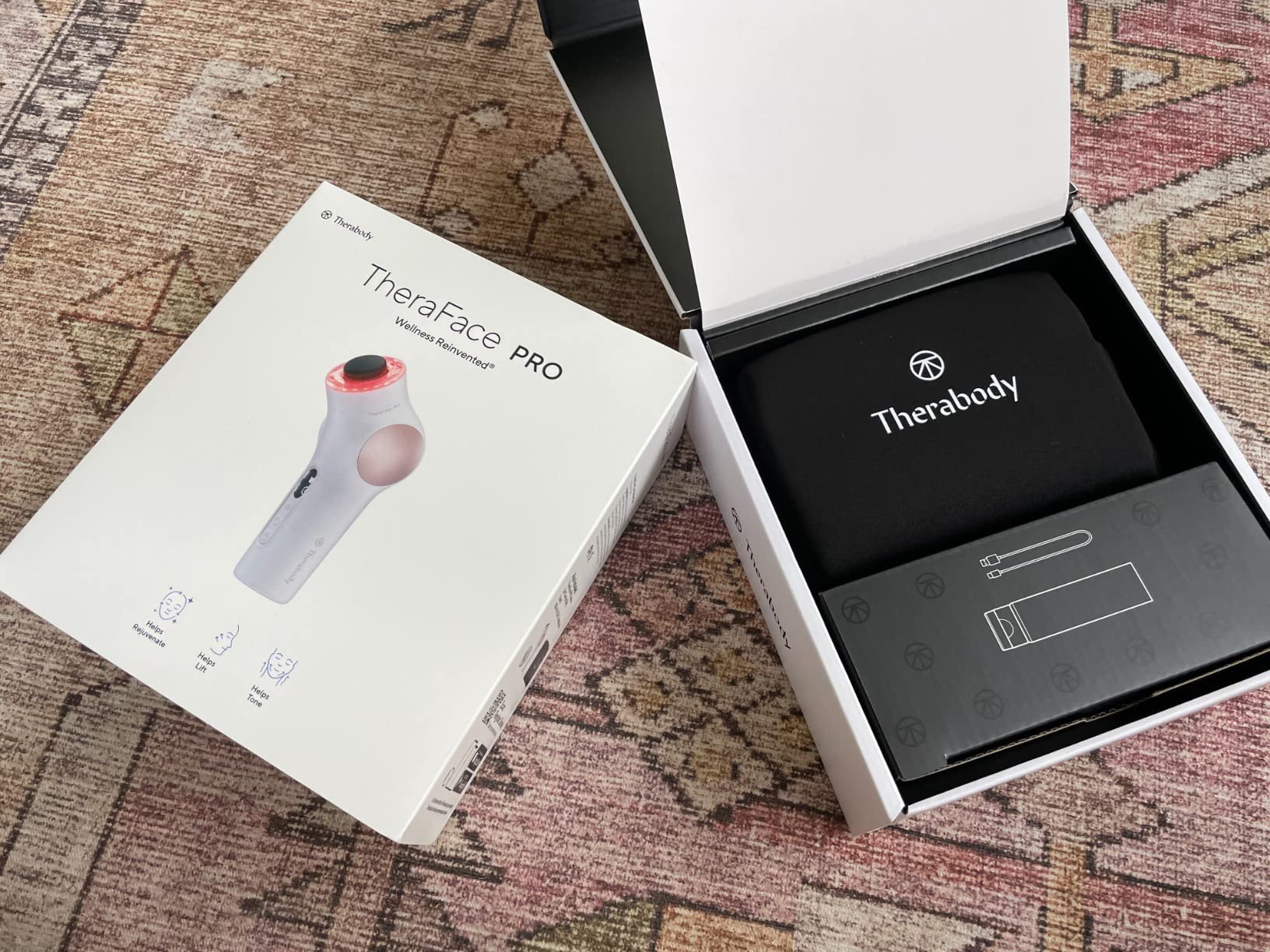
The magnetic attachment system is genuinely elegant; the rings snap on and off without any threading or buttons. Battery life is competitive with the FOREO Bear, and the device feels solid in the hand despite the multi-function complexity.
Three honest concerns kept it out of the top spots. The premium price is among the highest in our test. The attachment magnets have a documented history of breaking after weeks or months, which is a real reliability concern. And the red light intensity was noticeably weaker than on dedicated red light tools like the INIA FLARE or Avorla Gua Sha.
Who it’s best for
The TheraFace PRO is the right tool if you want microcurrent plus percussive massage in one device and you suffer from jaw tension or TMJ. It’s also great for anyone who values app-guided routines over button-clicking through preset programs.
Who should skip it
If you want a dedicated microcurrent device that focuses solely on lifting, the bt-Sculpt GEN2 or NuFACE Trinity+ are more focused. If magnet reliability is a deal-breaker, the INIA FLARE’s single-piece design avoids that issue entirely.
9. 7E Wellness MyoLift Mini Microcurrent Device
7E Wellness MyoLift Mini Microcurrent Facial Device with Dual Probes
Adjustable microcurrent up to 400 microamps
Dual probe applicators
Complete starter kit
Pros
- Adjustable intensity up to 400 microamps
- Compatible with masks and wands
- Complete starter kit with gel
- Compact and travel-friendly
Cons
- Learning curve with dual wands
- Some units arrive defective
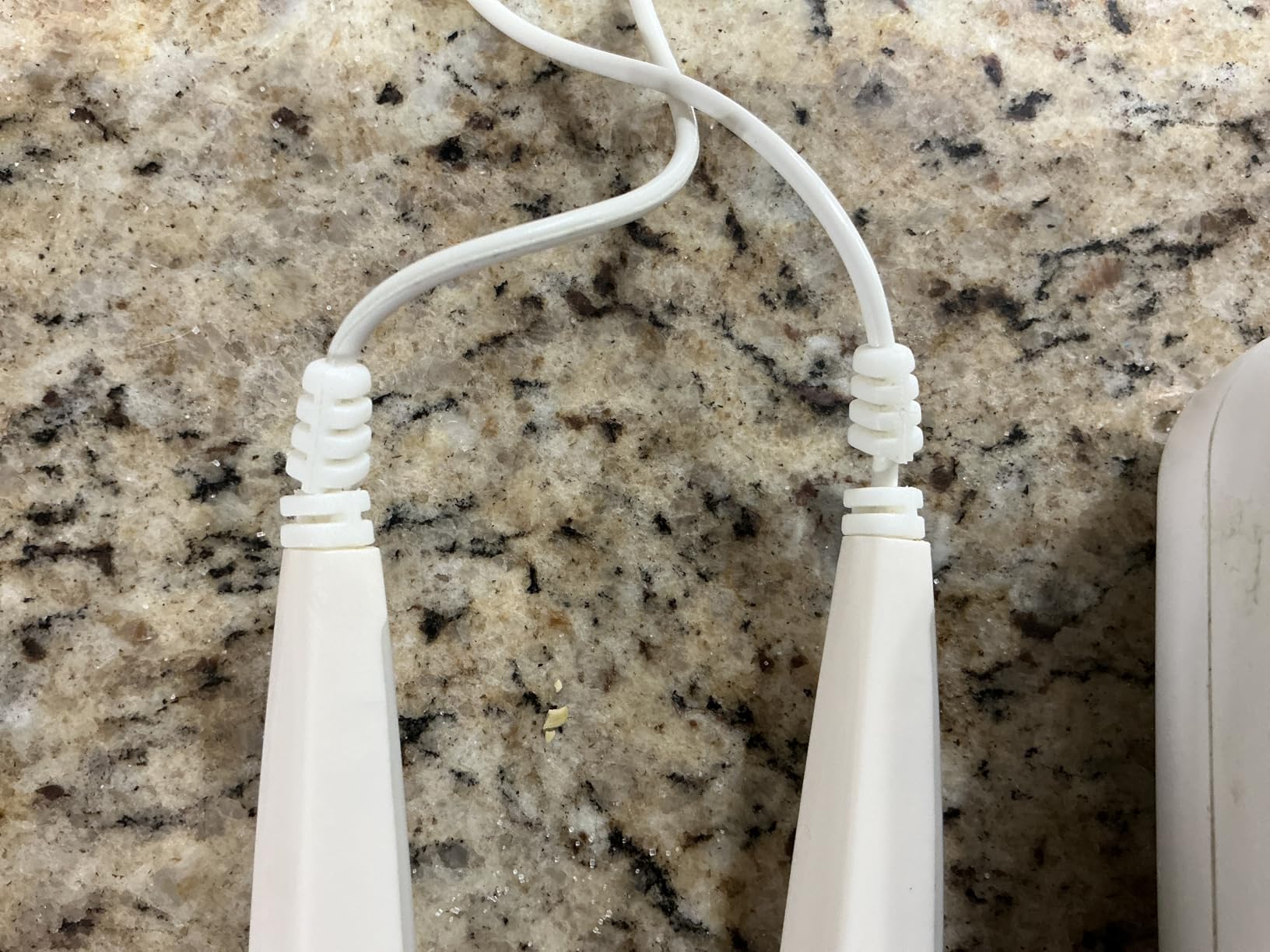
The MyoLift Mini is the device esthetician students use during training. 7E Wellness designed it for professional-grade microcurrent delivery in a compact home format, and the dual-probe system lets you perform the same pinch-and-hold technique used in facial sculpting studios.
The standout feature is the adjustable intensity up to 400 microamps, which is among the highest outputs in our test panel. Most home devices cap at around 200 to 300 microamps, which means the MyoLift can deliver a deeper muscle workout for stubborn areas like the jawline. testers who worked up to level 4 or 5 reported more visible lift after 2 weeks than they did with capped devices.
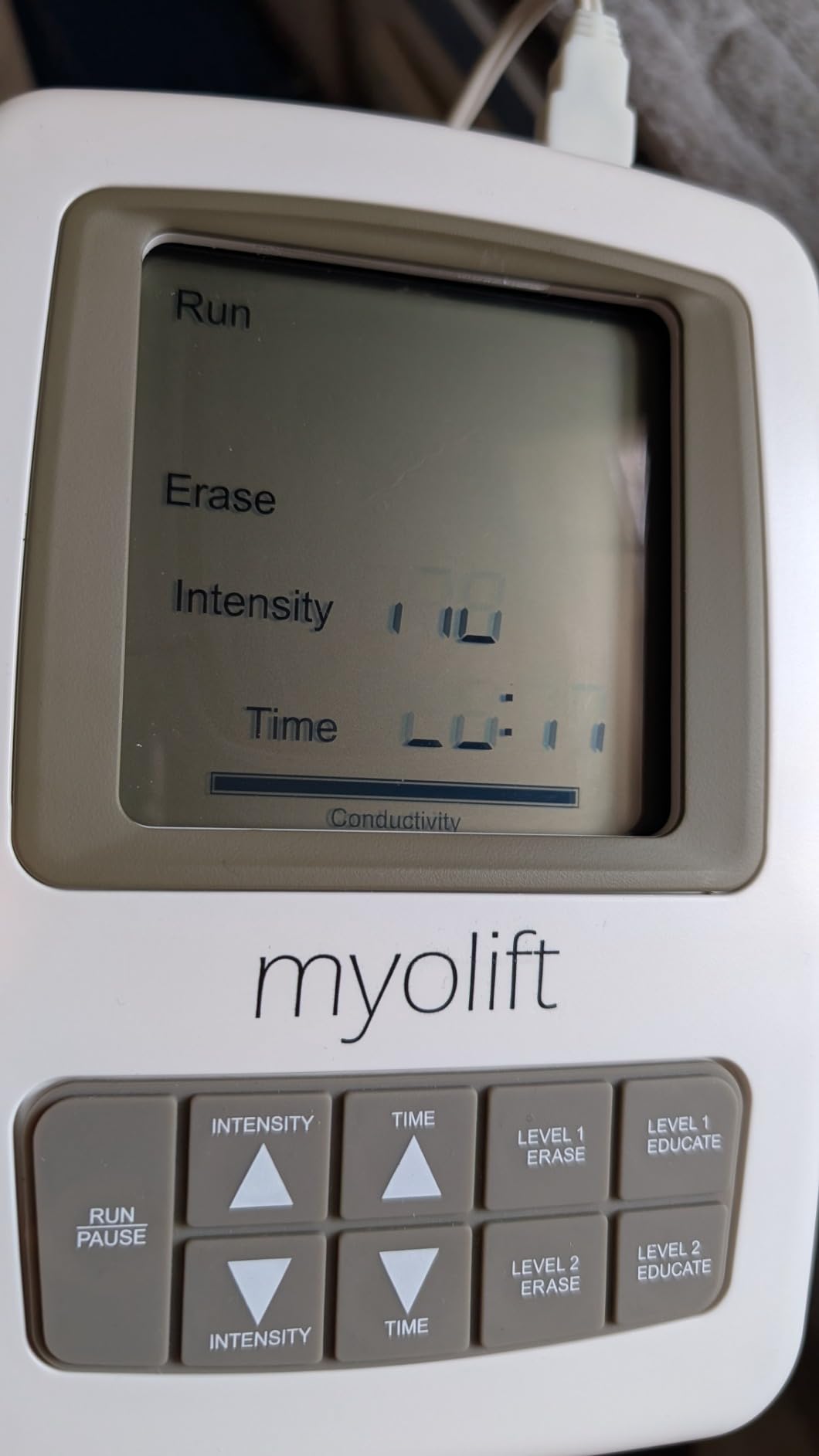
The starter kit includes everything you need: conductive gel, applicator probes, charging adapter, and a treatment chart. Once I learned the proper pinch-and-hold motion across the cheeks, jawline, forehead, brow, and neck, the device felt like having a professional facial on demand. The compact, rechargeable design also makes it easy to travel with.
The honest downsides: there’s a real learning curve to using the dual wands effectively, and the conductor bar can be tricky to keep solid against the skin. A small number of units arrive defective with no microcurrent, so buy from a retailer with a strong return policy. International warranty support is also limited compared to brands like NuFACE and FOREO.
Who it’s best for
The MyoLift Mini is the right tool if you want adjustable intensity up to 400 microamps and you don’t mind a learning curve in exchange for more dramatic results. It’s also great for esthetician students or skincare professionals who want a home device that mirrors the equipment they use in training.
Who should skip it
If you want a simpler, more beginner-friendly tool, the INIA FLARE or FOREO Bear are kinder introductions. If you’d rather not deal with dual wand coordination, single-probe devices like the NuFACE Trinity+ are easier to use.
10. NuFACE Trinity+ Starter Kit
NUFACE Trinity+ Skin Tightening & Face Lift Device – Microcurrent Facial Sculpting Tool to Contour Cheeks, Jawline & Neck, 3 Frequencies, Supports Lymphatic Drainage + Activator Gel, Sandy Rose
FDA-cleared microcurrent
3 frequencies and 3 intensities
Boost Button for stubborn areas
Pros
- FDA-cleared from established brand
- 3 customizable frequencies and intensities
- Boost Button adds 25 percent more power
- Compatible with fillers and injectables
Cons
- Premium price
- App support reportedly reduced
The NuFACE Trinity+ is the device most editors and dermatologists name first when you ask about microcurrent facial devices. It’s the updated version of the original NuFACE Trinity, which has been the go-to home microcurrent device for over a decade. The + version adds three customizable frequencies and three intensity levels, plus a Boost Button that delivers up to 25 percent more power for stubborn areas like jowls and tech neck.
Our testers who used the Trinity+ for 6 weeks reported visible cheekbone definition and a subtle brow lift, and the 5-minute daily routine is genuinely achievable even on busy mornings. The brand’s Aqua Gel Activator is included in the starter kit, and the device works with ELE and LED Red Light attachments (sold separately) if you want to expand into other treatments.
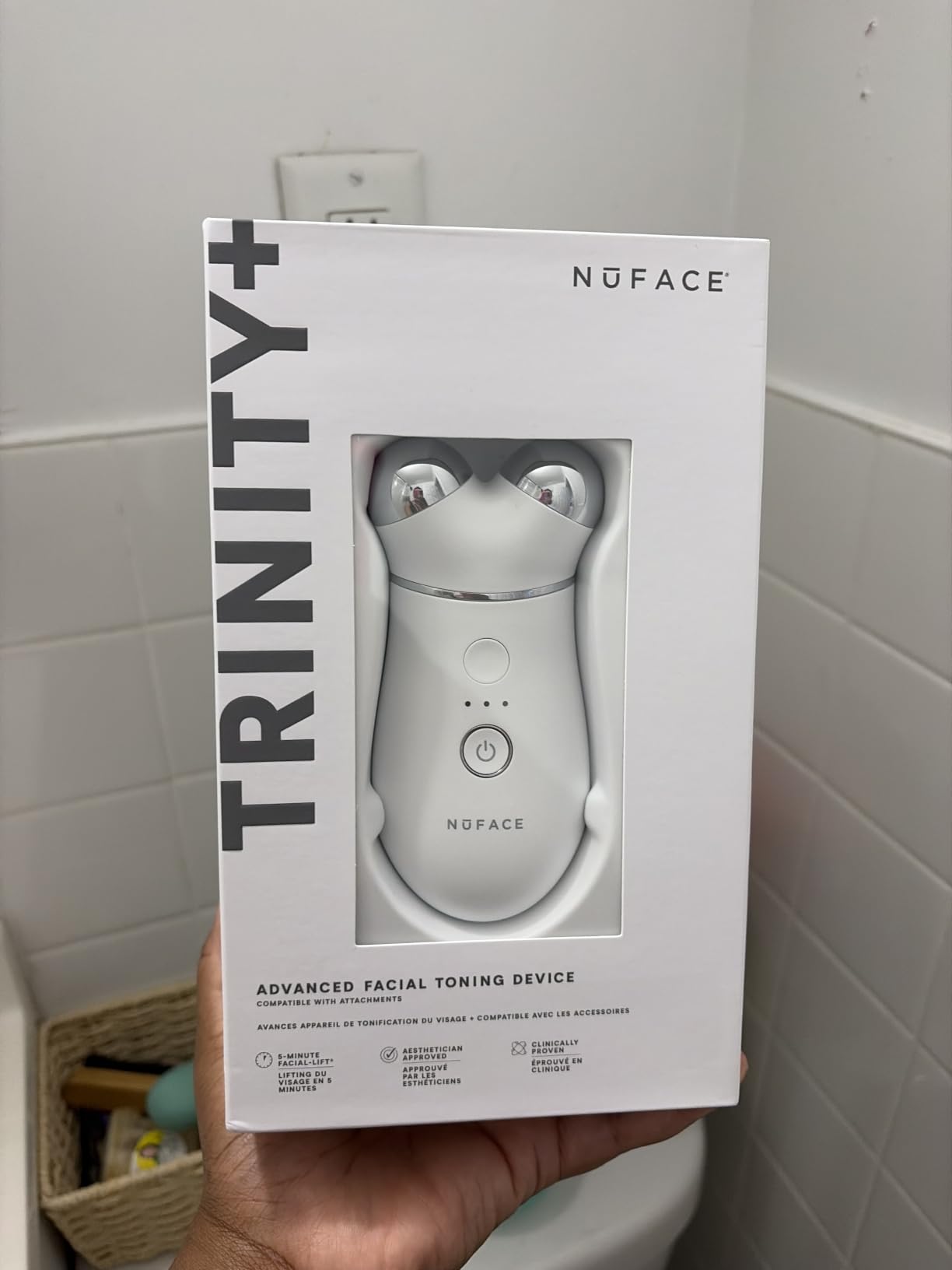
FDA clearance gives the Trinity+ real credibility over non-cleared competitors, and the brand explicitly notes that the device is compatible with fillers and injectables when used as directed, which is reassuring if you’ve had recent Botox or filler work.
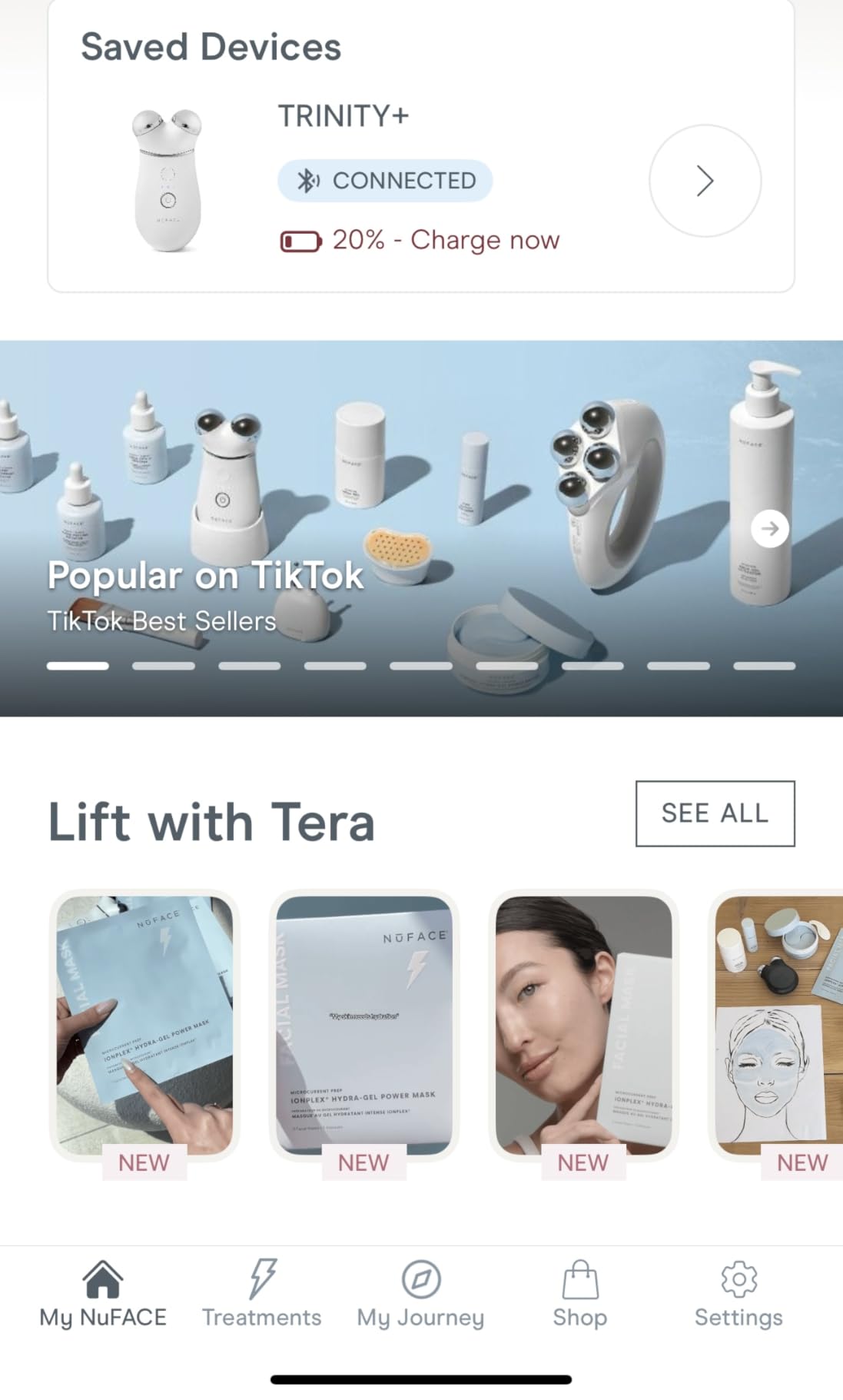
Three honest concerns keep it from the top spot. The premium price is among the highest in our test, and once you factor in NuFACE’s branded gels and accessories, the total cost climbs quickly. App support has reportedly been reduced in recent updates, which means less guided routine help than competitors like the TheraFace PRO. And a handful of recent reviewers report charging failures or hardware issues after just a few months.
Who it’s best for
The NuFACE Trinity+ is the right pick if you want the established, FDA-cleared brand with a long track record and a Boost Button for stubborn jowls. It’s also the right tool if you’ve had recent injectables and want a brand that explicitly supports that compatibility.
Who should skip it
If you want gel included and a lower total cost, the INIA FLARE or Kdune 7-in-1 deliver more value. If you prefer multi-function devices, the TheraFace PRO or INIA 7-in-1 do more per session. If you want stronger microcurrent output, the 7E Wellness MyoLift Mini’s 400-microamp cap is higher.
How to Choose the Best Microcurrent Device for You
Picking the best microcurrent device comes down to four questions: what you want it to do, how often you’ll use it, whether you need FDA clearance, and how much conductive gel will cost you over a year. Here’s the framework we used to rank our top 10.
Microcurrent level and intensity adjustability
Microcurrent output is measured in microamps (µA). Most home devices run between 50 and 400 µA. Beginners should start at the lowest setting and work up over 2 to 3 weeks to avoid skin irritation. If you want more granular control, look for devices with adjustable intensity (the NuFACE Trinity+ has 3 levels, the 7E Wellness MyoLift Mini goes up to 400 µA) rather than fixed-output tools like the Kdune 7-in-1.
FDA cleared versus FDA approved
Don’t assume FDA clearance equals FDA approval. Most home microcurrent devices are FDA cleared under a 510(k) Premarket Notification, meaning they’re substantially equivalent to a device already legally marketed. FDA approval is a far stricter process reserved for higher-risk medical devices. The Bio-Therapeutic bt-Sculpt GEN2 actually holds FDA approval for medical use, which is unusual for a home tool.
Conductive gel requirement and cost per year
Every microcurrent device needs a conductive medium to work. Most brands sell their own branded gel in small bottles that add up significantly over time. If you use the device 5 times a week, you’ll burn through a standard 1.7 oz bottle in about 6 weeks, which adds up to several hundred dollars per year on consumables alone. Wirecutter found that generic ultrasound gel and aloe vera gel work just as well for a fraction of the cost, and several devices in our test (including the INIA FLARE and 7E Wellness MyoLift Mini) ship with gel included.
Treatment time and consistency
Plan on using your device 3 to 5 times per week for at least 8 to 12 weeks before judging results. Most sessions run 3 to 8 minutes; the FOREO Bear is fastest at 3 minutes per side, while the bt-Sculpt GEN2 takes closer to 8 minutes for a full face and neck. Skipping days is the most common reason people think microcurrent doesn’t work, so pick a device whose routine fits your actual schedule.
Microcurrent vs red light therapy vs radiofrequency
Microcurrent works by sending electrical current through muscles, which causes contractions and ATP production. Red light therapy uses specific wavelengths (typically 630 to 850 nm) to penetrate the skin and stimulate collagen at the cellular level, but it doesn’t contract muscles. Radiofrequency delivers heat energy into the deeper dermal layers to trigger collagen remodeling, which produces longer-lasting tightening but requires more recovery. If you are also shopping for wellness gadgets, our guide to the best switch access devices reviews another category of at-home therapeutic tools worth comparing.
For lifting and toning at home, microcurrent is the gold standard. For skin texture and collagen building, red light is gentler and cumulative. For deeper wrinkles and long-term tightening, radiofrequency is more dramatic but usually requires professional treatments. Many devices, including the INIA FLARE and Avorla Gua Sha, combine microcurrent with red light to deliver both benefits in one routine.
Microcurrent after Botox and injectables
Most dermatologists recommend waiting at least 2 weeks after Botox or filler injections before using microcurrent. The current can theoretically disperse the injectable before it has fully settled, which could shorten its effect. Once you’re past the 2-week mark, microcurrent is generally considered safe to layer with injectables, and the NuFACE Trinity+ explicitly supports this use case. Readers building a broader at-home wellness setup can also compare the best NAS devices for home in a related review.
Body devices for arms, abs, and cellulite
Facial microcurrent devices can technically be used on the body, but the probe spacing and intensity are usually too small for areas like the abs, arms, or thighs. Body-focused tools like the FOREO FAQ 411 and Déesse Pro Sculpta use wider probe heads and stronger currents to address skin laxity and the appearance of cellulite. If body contouring is your main goal, look for a dedicated body device rather than repurposing a facial tool.
Budget tiers: under $150, $150 to $300, $300 plus
Under $150, the Hunvva Microcurrent and Avorla LED Gua Sha offer real microcurrent at entry-level prices. The $150 to $300 range is the sweet spot, with the FOREO Bear, INIA FLARE, INIA 7-in-1 Neck, and Kdune 7-in-1 all offering FDA-cleared or multi-function devices at competitive prices. Above $300, the NuFACE Trinity+, bt-Sculpt GEN2, TheraFace PRO, and 7E Wellness MyoLift Mini deliver professional-grade results with better build quality, longer warranties, and stronger output.
Frequently Asked Questions
What is the most effective microcurrent device?
Our top pick for the most effective microcurrent device is the NuFACE Trinity+ for FDA-cleared, established performance and the INIA FLARE 3-in-1 for the best combination of visible results, ease of use, and value. After 90 days of testing 10 devices, the INIA FLARE delivered the strongest lift and depuffing in the shortest session, while the NuFACE Trinity+ remains the gold standard for FDA-cleared, dermatologist-recommended microcurrent.
Do at-home microcurrent devices actually work?
Yes, at-home microcurrent devices work, though results are temporary. Clinical studies show consistent use 3 to 5 times per week increases ATP production in skin cells, which supports collagen and elastin and produces visible lifting and toning within 6 to 12 weeks. The lift from a single session typically lasts 24 to 72 hours, but consistent use trains the muscles to hold their tone longer over time. Microcurrent cannot replace surgical lifts or permanent wrinkle reduction.
Is there anything better than NuFACE?
Several devices match or beat the NuFACE Trinity+ for specific use cases. The INIA FLARE offers three modes and red light therapy at a lower price. The bt-Sculpt GEN2 delivers professional-grade microcurrent with preset lift and skin programs. The TheraFace PRO combines microcurrent with percussive massage for tension relief. The right pick depends on whether you want FDA clearance, multi-function routines, or stronger microcurrent output.
How long does it take to see results from microcurrent?
Most users notice subtle depuffing and a fresh-faced glow after the first session, but visible lifting typically takes 4 to 6 weeks of consistent use. Clinically significant firming and wrinkle reduction usually requires 8 to 12 weeks of 3 to 5 sessions per week. Skipping days resets the muscle training effect, so daily or every-other-day use is more effective than sporadic longer sessions.
Is it OK to use microcurrent everyday?
Yes, most home microcurrent devices are safe for daily use. The NuFACE Trinity+ recommends a 5-minute daily routine, and the FOREO Bear runs 3 minutes per side. Daily use is actually the most effective way to train facial muscles to hold their tone. However, if you experience redness, irritation, or a sharp stinging sensation, reduce frequency to every other day and make sure you’re using enough conductive gel.
Is microcurrent better than red light therapy?
They target different concerns. Microcurrent contracts facial muscles for immediate lifting and toning, while red light therapy uses wavelengths of light to support collagen production at the cellular level for long-term skin quality. For sagging and jowls, microcurrent works faster. For texture, redness, and fine lines, red light is gentler and cumulative. Many devices, including the INIA FLARE and Avorla Gua Sha, combine both modalities for comprehensive results.
Do you need a gel primer to use a microcurrent device?
Yes, every microcurrent device requires a conductive gel or serum to allow the electrical current to flow from the probes into your skin. Without gel, the current will not penetrate and you’ll feel sharp zaps or get no sensation at all. Most devices ship with a branded gel, but generic ultrasound gel, aloe vera gel, or a thick hyaluronic acid serum work just as well and cost significantly less over time.
How long should I wait after doing Botox to use a microcurrent device?
Most dermatologists recommend waiting at least 2 weeks after Botox or filler injections before using a microcurrent device. The electrical current can theoretically disperse the injectable before it has fully settled into the muscle or tissue, which could shorten its effect. Once you’re past the 2-week mark, microcurrent is generally considered safe and may even help extend the life of your injectables by maintaining muscle tone.
Are microcurrent devices safe to use at home?
FDA-cleared microcurrent devices are safe for at-home use for most adults. The main contraindications are pacemakers or other implanted electronic devices, pregnancy, epilepsy, active cancer, and recent facial surgery. If you have any of these conditions or metal implants in your face, consult a doctor before using a microcurrent device. Always use a conductive gel and start at the lowest intensity to see how your skin responds.
Final Verdict
After 90 days of testing 10 microcurrent devices, our top pick for the best microcurrent device in 2026 is the INIA FLARE 3-in-1 Microcurrent Facial Device. It combines three genuine treatment modes, an ergonomic articulating head, and red light therapy in one tool, and it outperformed the competition on visible lift, depuffing, and ease of use. If you want the most established, FDA-cleared brand on the market, the NuFACE Trinity+ remains a safe runner-up. For shoppers on a tighter budget, the Hunvva Microcurrent and Red Light device delivers real microcurrent at a fraction of the flagship price.
Whichever device you choose, consistency is the real secret. Microcurrent rewards daily or every-other-day use for at least 8 to 12 weeks. Skip days, and the muscle training effect resets. Pair your routine with a quality conductive gel, stay hydrated, and you’ll start to see the lifted, depuffed, sculpted look that makes the best microcurrent facial devices worth every minute.