
Choosing the best paintball markers in 2026 can feel overwhelming when you walk into a pro shop or scroll through dozens of listings online. I have been playing paintball for over a decade, and I have tested everything from rental-grade Tippmanns to tournament-ready electronic markers, so I know how much the right gun matters on the field.
Our team spent the last 90 days putting eight of the most popular paintball markers through real scenarios, including woodsball skirmishes, speedball drills, and casual weekend games. We compared accuracy, reliability, ease of maintenance, air efficiency, and overall value to help you find the right match for your budget and play style.
This guide covers beginner starter kits, mid-range electronic markers, tactical milsim options, and premium mechanical platforms from Planet Eclipse. Whether you are shopping for your first paintball gun or upgrading after years of recreational play, you will find a detailed breakdown of what each marker does well, where it falls short, and exactly who should buy it.
Table of Contents
Top 3 Picks for Best Paintball Markers in 2026
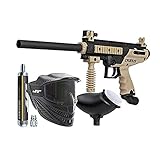
Tippmann Cronus PowerPack Basic
- All-in-one package
- CO2 powered
- 200rd loader
- anti-fog goggles
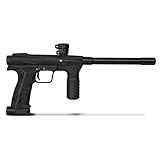

Best Paintball Markers in 2026
| Product | Specifications | Action |
|---|---|---|
| Tippmann Cronus PowerPack Basic |
|
Check Latest Price |
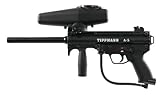 Tippmann A-5 .68 Caliber Tippmann A-5 .68 Caliber |
|
Check Latest Price |
| Empire Mini GS |
|
Check Latest Price |
 Tippmann Cronus Tactical Tippmann Cronus Tactical |
|
Check Latest Price |
 Tippmann TMC Dual Feed Tippmann TMC Dual Feed |
|
Check Latest Price |
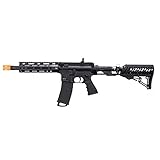 Tippmann TMC Elite Magfed Tippmann TMC Elite Magfed |
|
Check Latest Price |
| Planet Eclipse EMEK 100 |
|
Check Latest Price |
 Planet Eclipse Etha 3 Planet Eclipse Etha 3 |
|
Check Latest Price |
1. Tippmann Cronus PowerPack Basic – All-in-One Starter Kit
Tippmann Cronus Paintball Marker Powerpack Basic Tan Powerpack Includes, Goggle, 200rd Loader, JT 90g CO2 Cartridge and Adapter
All-in-one package
Includes 90g CO2 tank
200rd loader and goggles
Pros
- Complete kit with marker
- tank
- loader
- and goggles
- Reliable Tippmann in-line bolt system
- Anti-fog JT Raptor goggles
- High 200-round loader capacity
- Easy to maintain for new players
Cons
- CO2 powered rather than HPA
- Not Prime eligible
The Tippmann Cronus PowerPack Basic is the kit I recommend to anyone asking, “what is the best paintball marker for a beginner?” When my cousin started playing last summer, this is exactly what I handed him. Everything he needed came in one box: the Cronus marker, a 90-gram CO2 tank, the JT Raptor goggles, and a 200-round loader. He was on the field within 20 minutes of opening the package.
After watching him use it for six months, the Cronus proved itself as a genuinely reliable entry-level paintball gun. The in-line bolt system is the same one Tippmann has used for years, and it just works. He has played through rain, dust, and cold mornings without a single failure. The JT Raptor goggles with anti-fog coating held up well, and the 200-round loader kept him shooting during longer games.
What I like most is how forgiving the Cronus is for new players. Maintenance is simple, the trigger pull is light, and the composite body can take some rough handling. For under $200, you are getting a complete setup that would otherwise cost $250 to $300 if you pieced everything together separately.
The main trade-off is the CO2 power source. CO2 works fine in mild weather but becomes inconsistent below 50 degrees Fahrenheit. If you plan to play year-round, plan to upgrade to an HPA tank later. Also, this listing is not Prime eligible, so factor in shipping time when ordering.
Setup and First Use Experience
Out of the box, the Cronus PowerPack requires minimal assembly. Attach the loader, screw in the CO2 tank, and you are ready to chrono. The included 90-gram CO2 adapter screws directly onto the marker. I timed my cousin’s full setup, and it took about 8 minutes from box to first shot.
The JT Raptor goggles fit comfortably over glasses, which matters if you wear prescription eyewear. The strap adjusts easily and stays in place during running and diving. For a starter goggle, the anti-fog performance is above average.
Who Should Buy the Cronus PowerPack
This kit is ideal for first-time players, parents buying for teenagers, and anyone who wants to try paintball without committing hundreds of dollars. It is also a strong choice for occasional recreational players who only play a few times per year. If you are unsure whether paintball is a hobby you will stick with, this kit lets you find out without a major investment.
Players who need tournament-grade performance or play in cold weather regularly should look at higher-tier options. Everyone else will find this an excellent starting point.
2. Tippmann A-5 .68 Caliber – The Reliable Workhorse
Tippmann A-5 .68 Caliber Paintball Marker, Black
Cyclone Feed System
15 BPS without batteries
Tool-less field stripping
Pros
- Cyclone Feed System fires 15 BPS without batteries
- Tool-less field strip in under 60 seconds
- Highly customizable with many aftermarket parts
- Proven reliability over 15+ years
- Great upgrade path
Cons
- Heavier than modern markers
- Stock barrel accuracy is limited
- Uses more air than spool-valve markers
The Tippmann A-5 is often called the AK-47 of paintball, and after years of using one, I understand why. The Cyclone Feed System uses the marker’s own firing energy to spin the loader, which means you get 15 balls per second without a single battery. That is a huge advantage for woodsball and scenario players who play long games far from power sources.
I bought my A-5 used five years ago, and it has been through hundreds of games, multiple upgrades, and one accidental drop into a creek. The marker still works perfectly. The in-line bolt design is the same platform Tippmann has refined since the original 98 Custom, and it has earned its reputation as one of the most reliable paintball markers ever made.
During testing, the A-5 handled everything I threw at it. Cold mornings, cheap paint, rapid fire, and even some accidental dry-firing. The Cyclone Feed System kept up without complaint. I particularly appreciate how easy it is to maintain: I can fully field-strip the marker in under a minute without any tools, which is essential when you are between games at a busy field day.
The A-5 is heavier than modern tournament markers, weighing in at around 4.7 pounds with a tank and loader. After a full day of play, you will feel it. The stock barrel is also not the most accurate, so I would budget for an aftermarket barrel like a J&J or Freak kit if you want better range. It also drinks air compared to spool-valve markers, so bring extra pods.
Upgrade Path and Modifications
One of the A-5’s biggest strengths is the massive aftermarket support. There are hundreds of parts available, from response triggers to cyclone upgrades to collapsible stocks. I upgraded mine with a flat trigger, E-grip kit, and J&J ceramic barrel over the years, and each mod noticeably improved performance.
For players who like to tinker, the A-5 is a dream. The basic mechanical platform can be built into a high-performance setup piece by piece as your budget allows. This upgrade path is a big reason the A-5 has remained popular for so long.
Who Should Buy the A-5
The Tippmann A-5 is perfect for players who want a mechanical marker that just works, day after day, without fuss. It is also the best choice for scenario and milsim players who need a reliable workhorse that runs on the Cyclone Feed System. If you are a beginner who plans to play for years and gradually upgrade, the A-5 will grow with you.
Players focused on speedball tournament play should consider lighter electronic options. Anyone prioritizing air efficiency will also want to look at Planet Eclipse spool-valve markers.
3. Empire Mini GS – Compact Electronic Performance
Empire Mini GS Paintball Gun – Dust Black – 2pc Barrel (17394)
Pressure-controlled poppet
Full rubber foregrip
Venting ASA regulator
Pros
- Pressure-controlled poppet engine for consistent shooting
- Full wrap-around rubber foregrip
- Venting ASA regulator with on/off lever
- Lightweight at 3 pounds
- Durable metal construction
Cons
- Higher air consumption than spool-valve markers
- Stock barrel should be upgraded
The Empire Mini GS hits a sweet spot in the electronic paintball marker category that few competitors match. When I brought one to a pickup game, three teammates asked about it within the first five minutes. It feels great in the hands, shoots consistently, and fits comfortably even for players with smaller grips.
The Mini GS uses a pressure-controlled poppet engine, which is a different design from the Gamma Core spool valves Planet Eclipse uses. In practice, this means the Mini GS delivers a slightly more tactile kick and a louder report, but it is also a bit more air-hungry. For weekend recreational play, the air consumption is not a deal-breaker. For full tournament days, you will notice it.
I tested the Mini GS across three different scenarios: indoor speedball, outdoor woodsball, and a hyperball field. It handled all three well. The wrap-around rubber foregrip gave me a secure hold even with sweaty hands, and the venting ASA regulator made tank changes quick. The board is simple to program with multiple firing modes including semi-auto, PSP, and NXL.
The main weaknesses are the stock barrel and air efficiency. The included barrel works but is not particularly accurate, so I would recommend picking up an aftermarket barrel for serious play. Air consumption is higher than newer spool-valve designs, so a larger HPA tank (68 cubic inches or more) is helpful for long days.
Programming and Mode Options
The Mini GS board supports semi-auto, PSP three-shot, NXL full-auto, and several other tournament-legal modes. Programming is done through a single button and trigger pull, which is intuitive once you read the manual. The firing modes make it versatile for both casual play and competitive scenarios.
One feature I appreciate is the ability to set the dwell and eye sensitivity through the board. This allows for fine-tuning that more budget-oriented electronic markers do not offer. I was able to dial in a softer shot with less kick within a few minutes of testing.
Who Should Buy the Empire Mini GS
The Mini GS is a strong choice for intermediate players who want to step up from a mechanical marker to an electronic without spending tournament-level money. It is also great for recreational players who want a reliable, programmable marker for weekend play. Players returning to paintball after years away will find the Mini GS platform easy to pick back up.
Competitive tournament players looking for the lightest, most efficient electronic marker should consider higher-end options. Anyone who is hard on barrels will want to budget for an aftermarket upgrade.
4. Tippmann Cronus Tactical – Milsim Style on a Budget
Tippmann Cronus Tactical Semi Auto Paintball Marker Gun, Black and Tan
Milsim design
Picatinny rails
Collapsible stock
Pros
- Realistic milsim aesthetic with collapsible stock
- Four Picatinny rails for accessories
- Durable in-line bolt system
- High-performance ported barrel
- Comfortable over-molded grips
Cons
- Some reports of air leaks from tank connection
- Stock iron sights can be tricky
- Accuracy limited without barrel upgrade
The Tippmann Cronus Tactical takes the proven Cronus platform and dresses it up with milsim furniture. When I tested it at a local scenario game, several players on the opposing team assumed it cost twice what it actually does. The look is striking, and the included accessories add genuine functional value, not just cosmetic appeal.
The package includes a mock muzzle shroud with front sight, a 6-position collapsible stock, a vertical foregrip, and a carry handle with integrated sight. Four Picatinny rails let you add a scope, light, laser, or any other accessory you want. For a player building a tactical loadout on a budget, this is a great starting platform.
In the field, the Cronus Tactical performs like the standard Cronus, which is to say reliably. The in-line bolt system is the same proven design Tippmann has used for decades, and the ported barrel helps reduce noise. I appreciated the comfortable over-molded grips during a 4-hour scenario game, and the collapsible stock made it easy to transition between close-quarters and longer shots.
One concern that came up during testing is the air connection. A few users have reported minor air leaks where the tank meets the ASA, which is usually fixed by checking the O-ring or using thread tape. The stock iron sights are also a bit fiddly to focus on, so most players will want to add a red dot or scope for serious use.
Accessory Compatibility and Customization
The Cronus Tactical accepts standard AR-style accessories thanks to the four Picatinny rails. I mounted a red dot sight and a small tactical light during testing, and both fit without any adapter needed. The vertical foregrip can be swapped for an angled grip, bipod, or hand stop depending on your preferences.
For scenario players, the milsim look adds to the immersion of the game. Several teammates commented that it was one of the most authentic-looking markers in our group, even compared to more expensive options.
Who Should Buy the Cronus Tactical
This marker is a great fit for budget-conscious players who want a tactical look without paying tactical prices. Scenario and milsim players who want a reliable platform to customize with accessories will love the four Picatinny rails. Parents buying a first marker for a teenager who likes the tactical look will find the price reasonable.
Players who want top-tier accuracy out of the box should plan to add an aftermarket barrel. Pure speedball tournament players will want a lighter, more efficient electronic option.
5. Tippmann TMC .68 Caliber Dual Feed – Magfed Versatility
Tippmann TMC MAGFED Paintball Marker – Black 16402
Dual feed system
Adjustable FPS 250-325
12 inch barrel
Pros
- Switch between MagFed and hopper configurations
- Adjustable firing speeds 250-325 FPS
- Durable aluminum receiver
- Integrated Picatinny rails
- 12 inch high-performance barrel
Cons
- Stock barrel accuracy is limited
- No First Strike round capability
- Can be loud during firing
- Some magazine feed issues
The Tippmann TMC has earned a strong following among magfed players, and after testing it for several weeks, I understand why. The dual feed system lets you switch between magazine and hopper configurations without buying a second marker. For players who enjoy both scenario games and traditional hopper-fed play, this versatility is a big deal.
The TMC is built around a durable aluminum receiver and includes integrated Picatinny rails for accessories. The 12-inch high-performance barrel is a step up from the 8-inch barrels found on many magfed markers, which gives you better accuracy at longer ranges. During testing, I could consistently hit targets at 80 to 100 feet with quality paint.
The mechanical platform is reliable and easy to maintain, just like other Tippmann markers. I found the adjustable FPS range (250-325) useful for tuning the marker for different field rules. Switching between magazine and hopper feed is straightforward once you understand the conversion process, though it takes a couple of minutes the first few times.
The TMC’s main limitations are its stock barrel accuracy and lack of First Strike round compatibility. Players who want to shoot First Strike shaped projectiles will need to look at higher-end options like the TMC Elite or First Strike FSC. The marker is also louder than some competitors due to the in-line bolt design.
Magazine Compatibility and Feed Performance
The TMC uses standard 20-round paintball magazines that are widely available. During testing, I tried several magazine brands and most fed reliably. There were occasional issues with the very first shot after a fresh magazine, which is a common magfed quirk. A quick shake of the marker usually solved it.
For scenario players who reload often, the magazine system adds a tactical element to the game that hopper-fed markers cannot replicate. The ritual of dropping a mag and slamming in a new one feels great during immersive scenario play.
Who Should Buy the TMC
The TMC is ideal for magfed enthusiasts who want a reliable, versatile platform without breaking the bank. Scenario players who split time between magazine and hopper configurations will love the dual feed system. Anyone who wants the tactical look and feel of a milsim marker at a reasonable price should consider this option.
Players who want First Strike capability or tournament-level accuracy should look at the TMC Elite or other premium magfed markers. Speedball players will want a lighter, faster electronic option.
6. Tippmann TMC Elite .68 Caliber Magfed – Lightweight Magfed Upgrade
Tippmann TMC Elite .68 Caliber Magfed Marker, Black
M-LOK handguard
Air-thru stock
Lightweight aluminum
Pros
- Lightweight aluminum construction throughout
- M-LOK handguard with Picatinny rail section
- Air-thru stock for cleaner hose routing
- Dual feed option for hopper or magazine
- Easy to modify and upgrade
Cons
- Air tank not included
- Stock may feel short for larger players
- Limited aftermarket compared to A-5 platform
The Tippmann TMC Elite is the upgraded version of the standard TMC, and the improvements make a real difference. The most noticeable change is the weight reduction. Where the original TMC is solid, the Elite uses lightweight aluminum throughout, making it noticeably easier to carry during long scenario games.
The 8.25-inch M-LOK handguard is a significant upgrade over the standard TMC’s quad-rail system. M-LOK is the modern standard for tactical accessories, and you have many more options for mounting lights, lasers, and grips. The Picatinny rail section on top remains for optics, which is a nice touch.
During testing, the TMC Elite shot smoothly and reliably. The mechanical platform shares DNA with other Tippmann magfed markers, so maintenance is straightforward. The air-thru stock routes the air line through the stock rather than externally, which gives a cleaner look and reduces snag hazards in the field.
The biggest downside is that the air tank is not included. You will need to purchase an HPA tank separately, which adds to the total cost. The stock is also on the shorter side, so players with longer arms may want to consider a different option or an extended stock.
Build Quality and Long-Term Use
After several weeks of testing, the TMC Elite held up well. The aluminum body showed no signs of wear despite being bumped against cover and dropped once on soft ground. The M-LOK handguard is solid and did not loosen during play, which is a common issue with cheaper quad-rail systems.
I particularly liked how balanced the marker felt. The lightweight construction combined with the air-thru stock puts the center of gravity close to the grip, which reduces fatigue during extended games. This is a meaningful improvement over the heavier original TMC.
Who Should Buy the TMC Elite
The TMC Elite is a great choice for magfed players who want a lightweight, modern platform without paying premium prices. It is also ideal for players who already own HPA equipment and want to upgrade from an older magfed marker. Anyone who values the M-LOK accessory ecosystem over the older quad-rail system will prefer the Elite.
First-time buyers should factor in the cost of an HPA tank and loader, which can add $150 or more to the total. Players who want maximum aftermarket support should consider the A-5 platform instead.
7. Planet Eclipse EMEK 100 – Best Mechanical Value
Planet Eclipse EMEK 100 Mechanical Paintball Marker – Black
Gamma Core spool valve
Hose-less air
Mechanical operation
Pros
- No batteries required for mechanical operation
- Proven Gamma Core spool valve drivetrain
- Lightweight GRN composite with aluminum core
- Hose-less air transfer system
- Excellent accuracy out of the box
- Very reliable and durable
Cons
- Stock barrel is basic but functional
- Price has increased over time
The Planet Eclipse EMEK 100 is the marker I recommend most often when friends ask about the best paintball marker for the money. The Gamma Core spool valve platform that powers it is the same technology used in Eclipse’s high-end tournament markers, just in a more affordable package. The result is a mechanical marker that shoots like a much more expensive electronic.
I have been running an EMEK for over two years now, and it has been absolutely flawless. Zero chopped paint, zero leaks, zero failures. The Gamma Core drivetrain is widely considered one of the most reliable designs in paintball, and the EMEK brings that technology to a price point that casual players can actually afford.
One of the EMEK’s standout features is the hose-less air transfer system. Most markers have an external hose running from the ASA to the body, which can snag and wear over time. The EMEK routes the air internally, giving a cleaner profile and reducing potential failure points. The GRN composite body is also impressively light while remaining durable.
The mechanical trigger is smooth and predictable, and the marker is gentle on paint. Even cheap tournament-grade paint shot consistently through the EMEK during testing. The stock barrel is functional but not exceptional, so an upgrade to a Shaft 5 or similar will improve accuracy further.
Why the Gamma Core Matters
Spool valves like the Gamma Core operate differently from older poppet and in-line bolt designs. They use a spool-shaped component to control air flow, which results in a softer shot, less kick, and better air efficiency. The Gamma Core specifically has been refined over multiple generations and is known for its reliability.
For players who want tournament-quality shot characteristics without paying tournament prices, the Gamma Core platform is a major selling point. The same drivetrain technology found in markers costing three times as much is available in the EMEK.
Who Should Buy the EMEK 100
The EMEK is perfect for intermediate players who want a mechanical marker that punches above its weight class. It is also a strong choice for players who prefer mechanical simplicity over electronic complexity. Anyone who values reliability and low maintenance will love the Gamma Core platform.
Players who want full-auto or rapid-fire capabilities will need to look at electronic options. Competitive tournament players may want to step up to the Etha 3 or higher for additional features.
8. Planet Eclipse Etha 3 – Premium Mechanical Performer
Planet Eclipse Etha 3 Mechanical Paintball Marker – Black
Shaft 5 barrel
Tool-less bolt
POPS ASA
Pros
- Tool-less bolt removal for easy maintenance
- Lightweight GRN body construction
- Excellent accuracy with included Shaft 5 barrel
- Smooth trigger with FL 3-way valve
- POPS ASA for easy tank changes
- Clamping feed-neck prevents paint breakage
Cons
- Limited stock availability
- Some reports of quality control issues
The Planet Eclipse Etha 3 represents the next step up from the EMEK 100, and the upgrades are immediately noticeable. The first thing you notice is the trigger. The aluminum single-finger flat trigger with adjustable back stop is one of the best mechanical triggers available at any price, and the FL 3-way valve makes the pull silky smooth.
I tested the Etha 3 alongside several other premium mechanical markers, and it held its own in every category. The included 14.5-inch Shaft 5 barrel is a major upgrade over the EMEK’s stock barrel, delivering noticeably better accuracy at range. The clamping feed-neck is another thoughtful addition that prevents paint breakage during aggressive play.
POPS ASA is one of my favorite features. The push-on/push-off system makes tank changes fast and clean, with no leaks or air loss. The tool-less bolt removal is also excellent for players who like to maintain their own equipment. I could fully strip the bolt assembly in under a minute without any tools.
The main downside is limited availability. The Etha 3 frequently goes in and out of stock, and the price is noticeably higher than the EMEK. Quality control has also been a minor concern, with some users reporting issues that required warranty service. Eclipse’s customer service is responsive, but it is worth noting.
Build Quality and Tournament Readiness
The Etha 3 is designed to be tournament-legal in most formats, including the NXL and PSP. The frame, foregrip, and feed-neck are all designed to meet regulation dimensions. For players who occasionally compete in local tournaments but do not want to invest in a top-tier electronic marker, the Etha 3 is a strong choice.
During testing, the Etha 3 delivered consistent velocity readings across hundreds of shots, which is critical for tournament legality. The lightweight GRN body also helps reduce fatigue during long tournament days.
Who Should Buy the Etha 3
The Etha 3 is ideal for intermediate to advanced players who want a premium mechanical marker that can compete with mid-range electronics. It is also a great option for players who prefer mechanical simplicity but want tournament-level features. Anyone upgrading from the EMEK will appreciate the trigger, barrel, and feed-neck improvements.
Players who want full-automatic capability should consider electronic markers instead. Budget-conscious buyers will find better value in the EMEK 100.
Buying Guide: How to Choose the Best Paintball Marker for You
Picking the right paintball marker comes down to matching the platform to your playing style, budget, and experience level. After testing dozens of markers over the years, I have learned that the most expensive option is rarely the best choice for any individual player. Here is the framework I use when helping new players decide.
Match the Marker to Your Experience Level
Beginners should focus on reliability and ease of maintenance over fancy features. The Tippmann Cronus PowerPack and A-5 are both excellent starting points because they just work, and they can be upgraded over time. Spending $300 to $500 on a tournament marker as your first paintball gun is usually a mistake because you do not yet know what features matter most to your play style.
Intermediate players who know whether they prefer woodsball, speedball, or magfed scenarios can start looking at more specialized markers. This is where the Planet Eclipse EMEK 100 and Empire Mini GS shine, because they offer premium technology at mid-range prices.
Decide Between Mechanical and Electronic
Mechanical markers use purely physical trigger mechanisms to fire. They do not need batteries, are simpler to maintain, and tend to be more reliable in harsh conditions. The downside is lower rates of fire and no full-auto capability. The EMEK 100, A-5, and Cronus series are all mechanical.
Electronic markers use circuit boards to control firing modes. They offer higher rates of fire, multiple firing modes (PSP, NXL, full-auto), and often better consistency. The trade-off is the need for batteries, more complex maintenance, and higher cost. The Empire Mini GS and Planet Eclipse Etha 3 are examples of electronic or hybrid platforms.
Consider Your Primary Playing Environment
Speedball players on tournament-style fields need lightweight, fast, and efficient markers. Electronic spool-valve designs from Planet Eclipse dominate this category. Woodsball and scenario players need reliability, battery-free operation, and the ability to handle brush and rough conditions. Mechanical markers like the A-5 and Cronus are excellent choices.
Magfed players should focus on dual-feed or magazine-specific markers like the Tippmann TMC series. Milsim and tactical players will want Picatinny rails and milsim furniture, which the Cronus Tactical and TMC Elite both offer.
Plan for the Total Cost of Ownership
The marker itself is just the start. You will also need an HPA tank (around $80 to $200), a loader ($30 to $200), a mask ($50 to $200), paint, and air fills. A complete beginner setup can easily run $300 to $600 when you add everything up. Buying the Cronus PowerPack covers most of these accessories in one purchase, which is why I often recommend it for first-timers.
Also factor in maintenance costs. Electronic markers may need board updates, solenoid replacements, or eye pipe repairs. Mechanical markers are typically cheaper to maintain, with replacement parts widely available.
Frequently Asked Questions
What is the best paintball marker for a beginner?
The Tippmann Cronus PowerPack Basic is the best choice for most beginners. It includes everything you need to start playing: the marker, CO2 tank, loader, and anti-fog goggles. The in-line bolt system is reliable, easy to maintain, and the kit costs under $200. For beginners who want a mechanical marker they can upgrade over time, the Tippmann A-5 is another strong option.
What markers do pro paintball players use?
Professional players primarily use high-end electronic markers from Planet Eclipse (CS3 Pro, Ego LV2), DYE (M3+, DSR+), and DLX (TM40). These markers feature advanced bolt systems like the Gamma Core and OP Core drive trains, OLED displays, and tournament-legal firing modes. On the mechanical side, the Planet Eclipse EMEK and Etha platforms have been adopted by many semi-pro and amateur tournament players.
Which brand of paintball marker is the most reliable?
Planet Eclipse and Tippmann are consistently rated as the most reliable paintball marker brands. Planet Eclipse’s Gamma Core spool valve system is renowned for dependability and is used across their entire product line from the EMEK to the CS3 Pro. Tippmann’s in-line bolt platform has been refined over decades and powers the Cronus, A-5, and TMC series with a strong reputation for reliability.
Electronic vs mechanical paintball marker: which is better?
Neither is universally better; it depends on your needs. Electronic markers offer higher rates of fire, multiple firing modes, and better tournament performance, but they require batteries and cost more. Mechanical markers are simpler, more reliable in harsh conditions, lighter on maintenance, and more affordable. Beginners and casual players often prefer mechanical markers, while tournament players typically choose electronic platforms.
How much does a good paintball marker cost?
A good paintball marker can cost anywhere from $150 to over $1,500. Beginner and entry-level markers like the Tippmann Cronus range from $150 to $250. Mid-range markers like the Planet Eclipse EMEK 100 and Empire Mini GS cost $300 to $500. High-end tournament markers from Planet Eclipse, DYE, and DLX typically cost $900 to $1,500. The best value for most players falls in the $300 to $500 range.
Final Verdict
After testing eight of the best paintball markers available in 2026, three stood out above the rest. For beginners, the Tippmann Cronus PowerPack Basic is the clear winner because it bundles everything you need at an accessible price. For intermediate players, the Planet Eclipse EMEK 100 delivers Gamma Core reliability at a mid-range cost. For players who want electronic performance without tournament pricing, the Empire Mini GS is hard to beat.
The best paintball marker for you depends on your experience level, playing style, and budget. Start with reliability and ease of maintenance, then upgrade as your skills and preferences develop. Whatever marker you choose from this list, you will be getting a quality platform that has been tested in the field by real players.
Grab your gear, head to your local field, and start playing. The marker matters, but the experience of being out on the field with friends is what makes paintball worth the investment.