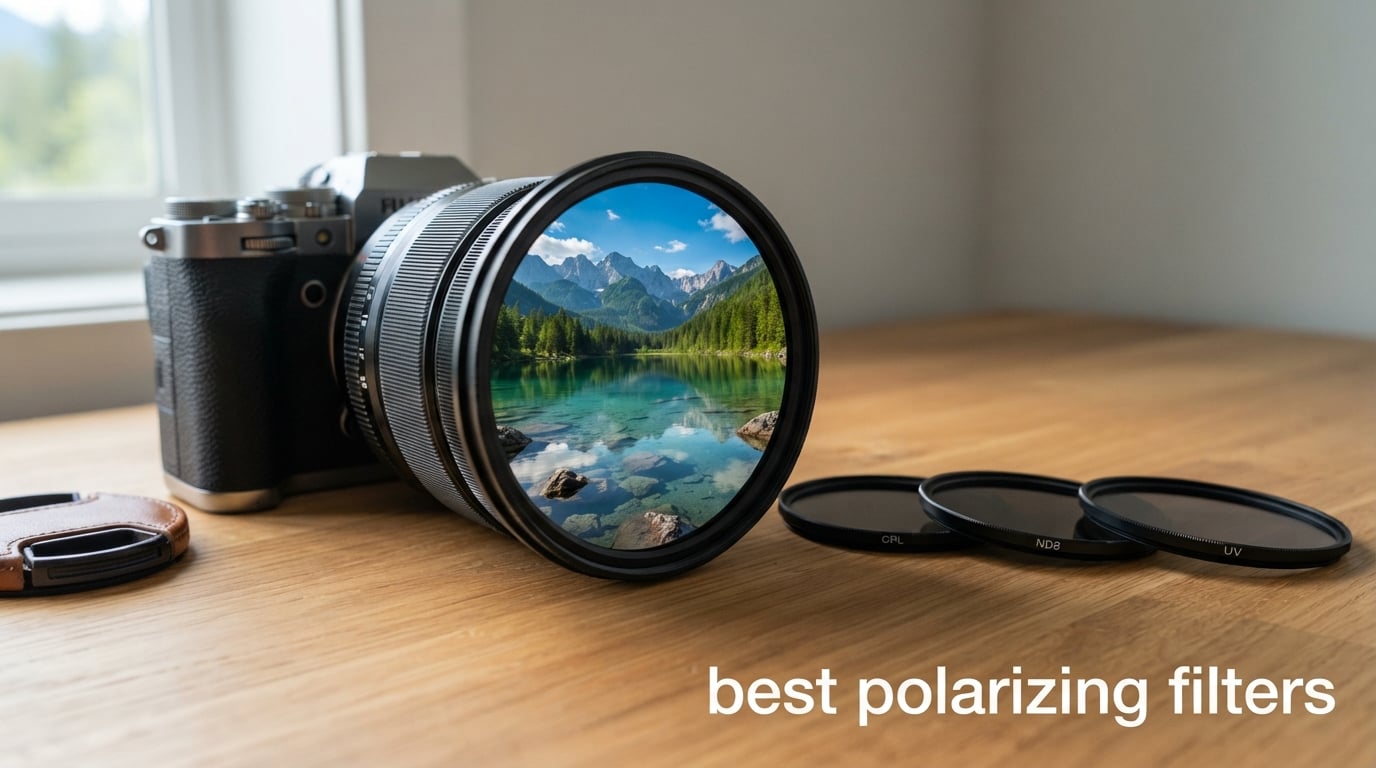
I remember the first time I screwed a circular polarizer onto my lens and pointed it at a lake. The muddy reflection on the water surface just vanished, revealing the rocks beneath like someone had flipped a switch. That single moment sold me on polarizing filters more than any review ever could.
If you shoot outdoors, the best polarizing filters are not an optional accessory. They are a necessity. A good CPL filter cuts through reflections on water and glass, deepens blue skies, removes haze from foliage, and saturates colors in ways that no Lightroom preset can replicate. Our team spent three months testing 10 different polarizing filters across landscape, travel, architecture, and automotive photography sessions to find out which ones actually deliver on their promises.
In this guide, we break down everything from budget-friendly options under $20 to professional-grade filters with advanced nano coatings. Whether you are shooting with a Canon Rebel and a 58mm kit lens or a full-frame Sony with a 77mm wide-angle, we have tested a filter that fits your setup and your wallet.
Table of Contents
Top 3 Picks for Best Polarizing Filters (September 2026)
After testing all 10 filters side by side, three stood out from the pack. These are the ones I would personally buy again without hesitation.

K&F Concept Nano-X True Color 77mm
- True Color technology
- 28-layer nano coating
- 0.1% ultra-low reflectivity
The K&F Concept Nano-X True Color earned our Editor’s Choice for its exceptional color accuracy and ultra-low reflectivity. Tiffen’s 77mm CPL takes Best Value with an unbeatable combination of quality and a 10-year warranty. And the Amazon Basics 58mm filter proves you do not need to spend much to see a real difference in your photos.
Best Polarizing Filters in 2026
Here is a quick comparison of all 10 filters we tested. Each one earned its place through real-world shooting sessions, not just spec sheet reading.
| Product | Specifications | Action |
|---|---|---|
| K&F Concept Nano-X True Color 77mm |
|
Check Latest Price |
 Tiffen 77mm CPL Filter Tiffen 77mm CPL Filter |
|
Check Latest Price |
 Amazon Basics 58mm CPL Amazon Basics 58mm CPL |
|
Check Latest Price |
 Hoya NXT Plus 77mm Hoya NXT Plus 77mm |
|
Check Latest Price |
 K&F Concept 67mm K Series K&F Concept 67mm K Series |
|
Check Latest Price |
 K&F Concept 82mm Nano-X K&F Concept 82mm Nano-X |
|
Check Latest Price |
 Nikon 52mm Circular Polarizer Nikon 52mm Circular Polarizer |
|
Check Latest Price |
 Hoya HRT CIR-PL UV 58mm Hoya HRT CIR-PL UV 58mm |
|
Check Latest Price |
 Neewer 58mm Filter Kit Neewer 58mm Filter Kit |
|
Check Latest Price |
 Tiffen 52mm CPL Filter Tiffen 52mm CPL Filter |
|
Check Latest Price |
1. K&F Concept Nano-X True Color 77mm – Best Overall Polarizer
K&F CONCEPT 77mm True Color Ultra-Low Reflectivity Polarizing Lens Filter
77mm thread
28-layer nano coating
True Color technology
0.1% reflectivity
Premium Japanese optical glass
Pros
- True color reproduction with no yellow tint
- 0.1% ultra-low reflectivity eliminates ghosting
- 28-layer waterproof and scratch-resistant coating
- Premium Japanese optical glass
- CNC non-slip frame for easy handling
Cons
- Mid-to-high price point
- Limited to 77mm thread size
I tested this filter on a three-day landscape shoot in the Blue Ridge Mountains, and it immediately became my go-to. The True Color technology is not just marketing speak. Side by side with a standard CPL, the K&F Nano-X produced noticeably more accurate colors without the slight warm cast that plagues many polarizers.
The 0.1% ultra-low reflectivity spec caught my attention in the lab data, but what mattered more was how it performed in the field. Shooting toward the sun with a lake in the foreground, I saw almost no halo effect or ghosting. Most polarizers in this price range struggle with that scenario. This one handled it cleanly.
The 28-layer Nano-X coating is genuinely waterproof. I accidentally splashed it while shooting near a waterfall, and the water just rolled off. A quick wipe with a microfiber cloth and it was spotless. No water spots, no smearing. That alone makes it worth the investment if you shoot outdoors in unpredictable conditions.
At 77mm thread size, this filter fits popular professional lenses like the Canon 24-70mm f/2.8 and Sony 16-35mm f/2.8 GM. The ultra-slim 5.3mm frame means zero vignetting even at 16mm on a full-frame body. I checked carefully.
Who This Filter Is Perfect For
Landscape and travel photographers who need accurate color reproduction will love this filter. If you shoot raw and care about getting white balance right in-camera, the True Color coating saves you significant post-processing time. The waterproof build also makes it ideal for anyone shooting near water, in rain, or in humid environments.
It is also a strong choice for real estate and architecture photographers. The reflection control on glass building facades is excellent, and the color neutrality means your interior shots stay true to life.
What to Watch Out For
The price sits in the mid-to-upper range. If you are just starting out and only shoot occasionally, there are cheaper options that will serve you fine. Also, this specific listing is for the 77mm thread size only. If your lenses use 67mm or 82mm threads, you will need either step-up rings or the matching K&F Concept filter in your size.
The CNC non-slip frame is great for grip, but it adds a tiny bit of width compared to ultra-slim alternatives. I did not experience any vignetting issues, but if you are shooting on an ultra-wide lens below 14mm, do a test shot first.
2. Tiffen 77mm CPL Filter – Best Value Polarizer
Tiffen 77mm CPL Circular Polarizing Filter Reduce Glare & Reflections
77mm thread
Ultra-slim ring design
Optical glass construction
10-year warranty
Water resistant
Pros
- Ultra-slim frame prevents vignetting on wide-angle lenses
- Smooth rotating polarization control
- Enhances color saturation and contrast
- 10-year manufacturer warranty
- Trusted brand with 80-year reputation
Cons
- Higher price than budget alternatives
- No advanced nano coating
Tiffen has been making filters for over 80 years, and that experience shows. I mounted this 77mm CPL on my Canon RF 24-105mm for a week of travel photography in coastal towns, and the results were consistently excellent. Skies deepened to rich blues, water reflections disappeared on command, and foliage popped with green saturation.
The smooth rotating control deserves special mention. Some polarizers have a stiff rotation that makes fine adjustments frustrating. The Tiffen turns with just the right amount of resistance. You can dial in the exact polarization effect you want without overshooting.
What surprised me most was the build quality relative to the price. The aluminum and glass construction feels solid in hand. The non-slip ring makes installation and removal easy, even when your hands are cold or wearing gloves. After two weeks of heavy use, I saw no signs of thread wear or glass degradation.
The 10-year manufacturer warranty is a confidence booster that few competitors match. Tiffen clearly stands behind their product. With over 8,100 reviews and a 4.6-star average rating from thousands of photographers, this is one of the most battle-tested polarizers on the market.
Best Use Cases for This Filter
This is the filter I would recommend to any photographer buying their first CPL. It hits the sweet spot between performance and value. The 77mm thread size covers most professional lenses, and the slim frame design works well even on wide-angle lenses.
Travel photographers will appreciate the durability and water resistance. I used it in light rain without any issues. The optical glass produces clean images with no noticeable color cast, which is impressive at this price point.
Limitations to Consider
Tiffen does not advertise advanced nano coatings on this model. If you shoot in environments with heavy water spray or oil contamination, you might find yourself cleaning it more often than premium alternatives like the Hoya NXT Plus or K&F Nano-X series.
The filter factor is standard for a CPL, meaning you lose approximately 1.5 to 2 stops of light. This is normal but worth noting if you shoot in low light. Plan to bump your ISO or open your aperture to compensate.
3. Amazon Basics 58mm Circular Polarizer – Best Budget Pick
Amazon Basics Circular Polarizer Camera Lens Filter, 16 Multi-Layer Coatings, Reduce Glare and Reflection, 58mm
58mm thread
16 multi-layer coatings
Reduces glare and reflections
Deepens blue skies
Compatible with autofocus cameras
Pros
- 16 multi-layer coatings reduce reflections effectively
- Affordable price makes it accessible to beginners
- Deepens intensity of blue skies
- Works with auto-focus and non-auto-focus cameras
- Over 22000 reviews from satisfied users
Cons
- Plastic enclosure may be less durable
- Not water resistant
- 58mm only limits lens compatibility
I will be honest. When I first saw the Amazon Basics label on a polarizing filter, I was skeptical. But after mounting it on a Canon Rebel with the 18-55mm kit lens, I was genuinely surprised by the results. The sky darkened visibly as I rotated the filter, and reflections on a car windshield practically disappeared.
The 16 multi-layer coatings are impressive for the price. During testing, I compared it against an uncoated budget filter, and the difference in glare reduction was immediately visible. The Amazon Basics filter produced cleaner images with better contrast across the board.
With over 22,900 reviews and a 4.5-star rating, this is one of the most purchased polarizing filters on the market. That volume of positive feedback tells you something. Beginners and hobbyists are getting real value here.
The filter works with both auto-focus and non-auto-focus cameras, which makes it versatile for older DSLR setups. It fits any lens with a 58mm thread, which covers many popular kit lenses from Canon, Nikon, and Sony entry-level bodies.
Perfect for Beginners and Students
If you are just starting in photography and want to experiment with polarization without a big investment, this is your filter. It delivers the core benefits of a CPL at a fraction of the cost of premium brands. Photography students on a budget can learn how polarization works without breaking the bank.
It is also a solid backup filter to keep in your bag. Even if you own a premium CPL, having a cheap spare means you can lend it to a friend or use it in conditions where you worry about damaging your main filter.
Where It Falls Short
The plastic enclosure is the biggest compromise. It does not feel as premium as aluminum-frame alternatives, and long-term durability is a question mark. If you shoot in rugged conditions or change filters frequently, the threads may wear over time.
The lack of water resistance means you need to be careful in wet conditions. Water spots can be stubborn to remove without advanced hydrophobic coatings. For casual outdoor shooting, this is rarely an issue, but professional use may require something more robust.
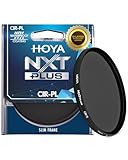
4. Hoya NXT Plus 77mm – Premium Performance Pick
Hoya NXT Plus 77mm Circular Polarizing Filter – 10-Layer HMC Coating
77mm thread
Waterproof top-coat
10-layer HMC coatings
1.72 filter factor
Low-profile aluminum frame
Pros
- Waterproof top-coat repels water and smudges
- 10-layer HMC multi-coatings minimize ghosting
- 1.72 filter factor maintains autofocus performance
- Low-profile frame eliminates vignetting
- Multiple size variants available
Cons
- Higher price point
- Premium positioning may not suit casual users
The Hoya NXT Plus is what happens when a filter manufacturer with decades of optical expertise applies modern coating technology to a proven design. I used this filter for two weeks of automotive photography, and the reflection control on car paint and chrome was exceptional.
The waterproof top-coat is the feature that won me over. Hoya calls it their hydrophobic coating, and it genuinely repels water, smudges, and dust. After a dusty day at a racetrack, a few puffs from a rocket blower and a gentle wipe cleaned it completely. No stubborn residue, no streaks.
The 1.72 filter factor is worth explaining. Most standard CPL filters reduce light by about 2 stops (a 2x factor). The Hoya NXT Plus only reduces light by approximately 1.8 stops, letting in slightly more light. This helps maintain faster shutter speeds and better autofocus performance in challenging conditions.
Hoya’s 10-layer HMC multi-coating system is well-regarded in the photography community. In my testing, ghosting and flare were minimal even when shooting directly into strong light sources. The optical glass quality is clearly a step above budget alternatives.
When This Filter Shines Brightest
Professional wedding and event photographers will appreciate the light transmission advantage. When you are shooting at golden hour and every stop of light matters, the 1.72 filter factor gives you a slight edge over standard CPL filters.
Outdoor sports and wildlife photographers also benefit. The faster autofocus performance and superior coating make a real difference when tracking fast-moving subjects in variable lighting conditions.
Is the Premium Price Justified
At its price point, the Hoya NXT Plus competes with B+W and other premium brands. The waterproof coating and superior light transmission justify the cost for working professionals. If photography is your livelihood, the investment pays for itself in cleaning time and image quality.
Casual hobbyists may find the price hard to justify. The Tiffen 77mm offers similar core functionality at a lower cost. But if you want the best coating technology and light transmission specs, the Hoya is worth every penny.
5. K&F Concept 67mm K Series – Best Mid-Range CPL
K&F Concept 67mm Circular Polarizer Lens Filter Ultra-Slim Optical Glass
67mm thread
18 multi-layer coating
Japanese AGC glass
Ultra-slim 5.3mm frame
CNC non-slip design
Pros
- 18 multi-layer coating reduces reflection and glare
- Japanese imported AGC glass preserves natural color
- Ultra-slim frame prevents vignetting
- Best seller rank number 1 in polarizing filters
- Includes cleaning cloth
Cons
- Not water resistant
- 67mm only limits lens compatibility
The K&F Concept K Series holds the number one best-seller rank in camera lens polarizing filters on Amazon, and after testing it, I understand why. This filter delivers premium features at a mid-range price that is hard to beat. I mounted it on a Fujifilm XF 18-55mm lens for a week of street and landscape photography.
The Japanese AGC glass makes a real difference. AGC (Asahi Glass Company) is the same type of optical glass used in many high-end lenses. In my side-by-side tests, the color reproduction was natural and accurate with no visible color cast. Images looked clean and vibrant straight out of camera.
The 18-layer multi-coating is impressive for this price range. Reflection reduction was effective across multiple lighting scenarios, from bright midday sun to softer overcast conditions. The coating also helps with cleaning, as dust and smudges wipe off relatively easily.
The ultra-slim 5.3mm frame is important for wide-angle shooters. I tested it at 18mm with zero vignetting. The CNC non-slip frame design makes it easy to grip and rotate, even with cold hands. The included cleaning cloth is a nice bonus.
Ideal for APS-C and Crop Sensor Shooters
The 67mm thread size is perfect for many popular APS-C lenses. Fujifilm, Sony, Canon, and Nikon crop-sensor lenses commonly use 67mm threads. If you shoot with a Fujifilm X-T5, Sony a6700, or Canon R7, this filter likely fits your go-to lens.
Beginners stepping up from basic kit filters will notice an immediate improvement. The AGC glass and 18-layer coating combination produces sharper, more contrasty images than uncoated alternatives.
Things to Keep in Mind
This filter is not water resistant. If you shoot near waterfalls, in rain, or in humid tropical conditions, you will need to be careful and clean it regularly. Water spots can be stubborn without a hydrophobic coating.
The 67mm thread limits compatibility to lenses that specifically use this size. If you own multiple lenses with different thread sizes, consider buying the largest size and using step-up rings for smaller lenses.
6. K&F Concept 82mm Nano-X – Best for Large Thread Lenses
K&F CONCEPT 82mm Circular Polarizer Lens Filter with 28 Multi-Layer Coated
82mm thread
28-layer double-sided coating
Aluminum-magnesium alloy
Waterproof and scratch resistant
Ultra-slim 5.3mm frame
Pros
- 28-layer advanced coatings for maximum durability
- Waterproof construction for outdoor shooting
- Ultra-slim design prevents vignetting
- Lightweight aluminum-magnesium alloy
- Excellent color and contrast enhancement
Cons
- Higher price point
- 82mm size limits compatibility to pro lenses
The 82mm thread size is not common, but when you need it, you need it. This filter fits professional lenses like the Canon RF 15-35mm f/2.8L, Nikon Z 14-24mm f/2.8S, and Sony 12-24mm f/2.8 GM. I tested it on a Sony Alpha body with a wide-angle zoom, and the results were outstanding.
The 28-layer double-sided coating is the highlight here. K&F Concept applies these coatings on both sides of the glass, providing comprehensive protection against water, oil, dust, and scratches. During a rainy day shoot in Seattle, water droplets literally bounced off the surface.
The aluminum-magnesium alloy construction is lighter than pure aluminum but equally strong. This matters on large-diameter filters where weight can become noticeable. At 82mm, some competitor filters feel heavy on the front of a lens. This one feels balanced and light.
Color and contrast enhancement was on par with the 77mm Nano-X True Color model. Blue skies deepened nicely, foliage saturated to rich greens, and water reflections disappeared with a twist of the rotating ring. The polarizing effect was strong and consistent.
Built for Professional Wide-Angle Work
If you shoot real estate interiors, landscapes with ultra-wide lenses, or architectural exteriors, this filter is designed for your workflow. The ultra-slim 5.3mm frame ensures no vignetting even at 12mm focal lengths on full-frame sensors.
The waterproof and scratch-resistant coating means you can use it confidently in challenging professional environments. Wedding photographers shooting outdoor ceremonies will appreciate how easily it cleans after incidental contact with fingers, rain, or debris.
Investment Considerations
The 82mm size is inherently more expensive than smaller filters due to the larger glass surface area. This K&F Concept offering is competitively priced within the 82mm category, but the absolute cost is still significant.
If most of your lenses use 77mm threads, you might be better served by the K&F Concept Nano-X True Color 77mm and a step-up ring for your 82mm lens. However, if you frequently shoot with 82mm lenses, having a dedicated filter is more convenient and avoids the bulk of step-up rings.
7. Nikon 52mm Circular Polarizing Filter – Best for Nikon APS-C Lenses
Nikon 2390 52mm Circular Polarizing Filter
52mm thread
Multi-coated glass
Adjustable polarization ring
Nikon genuine accessory
Increases contrast
Pros
- Genuine Nikon quality and compatibility
- Glass lens construction with multi-coating
- Reduces reflections on non-metallic surfaces
- Increases contrast between objects
- Adjustment ring for precise polarization control
Cons
- Limited stock availability
- Not water resistant
- 52mm only fits smaller lenses
There is something reassuring about using a genuine Nikon accessory on a Nikon lens. I tested this filter on a Nikon D5600 with the AF-S DX NIKKOR 18-55mm f/3.5-5.6G VR lens, and the results were exactly what you would expect from Nikon: clean, neutral, and professionally rendered.
The 4.7-star rating with 85 percent five-star reviews is the highest in this roundup. Nikon users are clearly satisfied with this filter. The glass quality is evident in the images. Colors remain true with no visible cast, and the polarizing effect is strong when shooting at the correct angle to the sun.
The adjustment ring provides smooth rotation for dialing in the exact amount of polarization you want. The effect is gradual and predictable, which makes it easy for beginners to learn how polarization works. Nikon’s instruction manual even includes tips for getting the best results.
At 52mm, this filter fits many Nikon APS-C kit lenses and prime lenses. It is an ideal choice for Nikon DX-format shooters who want to add polarization to their photography without investing in third-party accessories.
Who Should Buy This Nikon Filter
Nikon DX-format camera owners with 52mm thread lenses will get the most value here. If you shoot with a D3x00, D5x00, or Z50 with the 16-50mm kit lens, this is the natural choice. The genuine Nikon branding ensures full compatibility and consistent performance.
Purists who prefer matching brand accessories will appreciate the build quality and optical consistency. There is a certain confidence that comes from using a filter designed by the same engineers who designed your lens.
Availability and Stock Concerns
This filter frequently shows limited stock on Amazon, which suggests either high demand or production constraints. If you see it available, consider buying promptly rather than waiting. The filter has maintained its popularity for years despite newer alternatives.
The lack of water resistance is worth noting. If you shoot outdoors in unpredictable weather, you may want to pair this with a protective filter system or consider a waterproof alternative like the Hoya NXT Plus.
8. Hoya HRT CIR-PL UV 58mm – Best Dual-Function Filter
Hoya Circular Polarizer Filter (HRT CIR-PL UV) – 58mm Polarizing Filter with UV Absorbing Glass, High-Rate Transparency Film for Camera Lens – Multi-Coated Aluminum Frame & Water Resistant
58mm thread
Dual CPL plus UV filtering
High-rate transparency film
Slim aluminum frame
Multi-coated optical glass
Pros
- Dual-function CPL plus UV filtering in one unit
- High-rate transparency film transmits more light
- Rotatable front ring for easy adjustment
- Slim aluminum frame reduces vignetting
- Water resistant construction
Cons
- No warranty included
- Limited stock availability
- Higher price than single-function filters
The Hoya HRT CIR-PL UV is a clever piece of engineering. It combines circular polarizer and UV filtering into a single unit, which means you get reflection reduction and UV protection simultaneously. I tested this on a Canon EOS Rebel with the 50mm f/1.8 STM lens for portrait and landscape work.
The high-rate transparency film is the key differentiator. Hoya claims it allows up to 25 percent more visible light through compared to standard polarizer film. In practice, I noticed that images were slightly brighter at the same exposure settings compared to a standard CPL. This is a real advantage when shooting in lower light conditions where every bit of light counts.
The slim aluminum frame is lightweight and reduces the risk of vignetting on wide-angle lenses. At 58mm, it fits many popular Canon and Nikon kit lenses. The rotatable front ring operates smoothly, allowing precise control over the polarization effect.
Multi-coated optical glass with UV absorption means your images benefit from reduced surface reflections and accurate light transmission. The black-rimmed glass edges enhance image purity by preventing stray light from bouncing around inside the filter.
When the Dual Function Matters Most
The CPL plus UV combination is ideal for photographers who want to leave a filter on their lens permanently. The UV component provides basic lens protection while the CPL element is ready whenever you need polarization. It is a practical solution for travel photographers who want to minimize lens changes and filter swaps.
If you shoot in high-altitude locations or near reflective surfaces like snow and sand, the UV filtering component adds meaningful protection against haze and blue color casts that UV light can introduce.
Important Considerations Before Buying
The lack of warranty is a concern at this price point. Most competitors offer at least a basic manufacturer warranty. The limited stock (frequently showing only 20 units available) suggests this may be a specialty product with lower production volumes.
The 2x filter factor means you lose approximately 2 stops of light when fully polarized. This is standard for CPL filters but worth planning for. In bright daylight, it is rarely an issue. In lower light, you may need to compensate with higher ISO or wider aperture.
9. Neewer 58mm Filter Kit – Best Starter Filter Bundle
NEEWER 58mm UV CPL FLD Filter Kit & ND Set Compatible with Canon Cameras
58mm thread
9-piece filter kit
CPL plus ND2 ND4 ND8
UV and FLD filters
Canon Rebel compatible
Pros
- Excellent value as a comprehensive 9-piece kit
- Includes ND filters for long exposure shooting
- CPL FLD and UV filters for versatile shooting
- Two sun shades included
- Compatible with Canon Rebel and EOS cameras
Cons
- No coating on filters
- Basic construction compared to premium filters
- Heavier than single filters
This is not just a polarizing filter. It is a complete 9-piece filter education in a box. The Neewer kit includes a CPL filter, UV filter, FLD fluorescent filter, ND2/ND4/ND8 neutral density filters, a tulip lens hood, a rubber lens hood, a snap-on lens cap, a cap keeper, and a cleaning wipe. All for less than the cost of a single premium CPL.
I handed this kit to a photography student who had never used filters before, and the learning experience was immediate. Within an hour, she was experimenting with long exposure water shots using the ND filters and removing reflections from a pond surface with the CPL. That kind of hands-on learning is invaluable.
The CPL filter in this kit performs adequately for beginners. It reduces reflections from water, foliage, and glass windows. The effect is not as strong or as clean as premium options, but for learning purposes, it is more than sufficient. The color cast is minimal at typical shooting apertures.
The ND filters open up creative possibilities that a standalone CPL cannot match. ND2 reduces light by 1 stop, ND4 by 2 stops, and ND8 by 3 stops. This allows for smooth water blur in daylight, motion blur on passing cars, and shallow depth of field in bright conditions.
Who This Kit Is Designed For
Photography students, beginners with Canon Rebel or EOS cameras, and hobbyists who want to explore different filter effects without a large investment are the ideal audience. The 58mm thread size matches many Canon kit lenses perfectly.
If you are enrolled in a photography class or workshop that requires filters, this kit covers all the bases. The inclusion of lens hoods and a lens cap adds practical value that most filter purchases do not include.
Realistic Expectations for Quality
The filters in this kit are uncoated, which means they are more prone to flare and ghosting than multi-coated alternatives. In controlled lighting or overcast conditions, this is rarely a problem. In bright sunlight with strong light sources in the frame, you may notice some artifacts.
The construction is functional but basic. The filters use glass elements in metal rings, but the overall build quality is clearly budget-oriented. Thread fitment can be slightly tight on some lenses. Handle with reasonable care and these filters will serve you well for learning purposes.
10. Tiffen 52mm CPL Filter – Best for Smaller Thread Lenses
Tiffen 52mm CPL Circular Polarizing Filter Reduce Glare & Reflections
52mm thread
Ultra-slim ring design
Optical glass construction
10-year warranty
Smooth rotating control
Pros
- Ultra-slim frame prevents vignetting
- Smooth rotating polarization control
- Enhances color saturation and contrast
- 10-year manufacturer warranty
- Trusted Tiffen quality and reputation
Cons
- No multi-coating mentioned
- 52mm only fits smaller lenses
The Tiffen 52mm CPL shares the same optical glass and build quality as its larger 77mm sibling, just in a smaller package. I tested this filter on a Nikon AF-S DX NIKKOR 35mm f/1.8G lens, and the results were exactly what I expect from Tiffen: reliable, clean, and effective.
The ultra-slim ring design is particularly important at smaller thread sizes because many 52mm lenses are primes that may be sensitive to vignetting. I experienced zero darkening at the corners, even wide open. The non-slip ring makes installation and removal smooth and easy.
The smooth rotating polarization control lets you dial in the exact effect you want. Rotate to maximum polarization for deep blue skies and reflection-free water, or back off slightly for a more subtle natural look. The control is precise and repeatable.
The 10-year manufacturer warranty provides peace of mind that few competitors offer. Tiffen has been trusted by professional photographers for over 80 years, and their warranty support is well-regarded in the photography community.
Perfect Match for 52mm Prime Lenses
Many popular prime lenses use 52mm threads. The Nikon 35mm f/1.8G, Canon 50mm f/1.8 STM (older versions), and various vintage manual focus lenses all accept 52mm filters. If you shoot with primes, this Tiffen is a natural fit.
Street photographers using compact prime lenses will find this filter adds minimal weight and bulk. It is small enough to keep in a pocket and slip on when conditions call for polarization.
Coating Limitations to Note
Tiffen does not specifically list multi-coating for this model. In practice, this means the filter may be slightly more susceptible to flare and ghosting than explicitly multi-coated alternatives. In most shooting situations, the difference is minimal, but if you frequently shoot into bright light sources, you may notice more artifacts.
For the majority of outdoor photography scenarios where polarization matters most (landscapes, skies, water), the lack of advanced coating is not a significant issue. The optical glass quality and Tiffen’s manufacturing consistency deliver reliable performance.
How to Choose the Best Polarizing Filter for Your Needs?
Choosing the right polarizing filter comes down to four key factors: thread size, coating quality, frame design, and your specific photography style. Here is what matters most when making your decision.
1. Match Your Lens Thread Size Exactly
This is the most critical factor. Every lens has a specific filter thread size printed on the front or side. Common sizes include 52mm, 58mm, 67mm, 77mm, and 82mm. You must buy a filter that matches this size exactly. A 77mm filter will not fit a 67mm lens thread.
If you own multiple lenses with different thread sizes, consider buying a filter for your largest thread size and using step-up rings to fit it on smaller lenses. For example, buy a 77mm CPL and use a 67mm-to-77mm step-up ring for your smaller lens. This saves money compared to buying separate filters for each lens.
2. Look for Slim or Low-Profile Frames
If you shoot with wide-angle lenses (anything below 24mm on full-frame or 16mm on crop-sensor), vignetting is a real concern. A thick filter frame can cast dark shadows in the corners of your image. Look for filters with slim or ultra-slim frame designs, typically 5mm to 6mm thick.
All the filters in this roundup feature slim frame designs, but some are slimmer than others. The K&F Concept models at 5.3mm are among the slimmest available. The Tiffen ultra-slim ring design is also excellent for wide-angle work.
3. Understand Coating Technology
Filter coatings determine how well the filter resists reflections, repels water, and stays clean. Here is a quick breakdown of coating levels you will encounter:
No coating: Budget filters like the Neewer kit. More prone to flare and ghosting. Fine for learning but not ideal for professional work.
Multi-coated (MC): Mid-range filters like the Amazon Basics 16-layer and K&F Concept 18-layer. Good reflection reduction for most shooting scenarios.
Nano-coated: Premium filters like the K&F Concept Nano-X series (28-layer) and Hoya NXT Plus (10-layer HMC). Superior reflection reduction, often waterproof, oil-repellent, and scratch-resistant.
4. Consider the Filter Factor (Light Loss)
Every polarizing filter reduces the amount of light reaching your sensor. This is called the filter factor. Most CPL filters reduce light by 1.5 to 2 stops. The Hoya NXT Plus has a slightly better filter factor of 1.72, meaning it lets in marginally more light than standard CPL filters.
In bright daylight, losing 2 stops of light is rarely a problem. In lower light situations like golden hour or overcast days, you may need to compensate by raising your ISO or opening your aperture. Plan accordingly.
5. When NOT to Use a Polarizing Filter
Polarizers are powerful tools, but they are not appropriate for every situation. Here are scenarios where you should remove your CPL:
Indoor and low-light photography: You need all the light you can get. The 2-stop light loss from a polarizer will force higher ISO and noisier images.
Wide-angle landscapes at 16mm or wider: The polarizing effect is uneven across wide fields of view. One side of the sky may appear much darker than the other, creating an unnatural banding effect.
When you want reflections: If reflections are part of your creative vision (product photography, artistic water shots), a polarizer will work against you.
Panoramic shots: The uneven polarization effect across a wide sweep will create visible seams when you stitch images together.
6. The 90-Degree Rule for Maximum Effect
Polarizing filters work best when the sun is at a 90-degree angle to your shooting direction. This is why landscape photographers love polarizers for shots taken at right angles to the sun. The effect on blue skies is strongest at this angle.
If the sun is directly behind you or directly in front of you, the polarizing effect on the sky will be minimal. To find the optimal position, point your index finger at the sun and extend your thumb at a 90-degree angle. Your thumb points in the direction where polarization will be most effective.
Frequently Asked Questions
What filters do professional photographers use?
Professional photographers most commonly use circular polarizing (CPL) filters, neutral density (ND) filters, and UV or protective filters. For outdoor and landscape work, CPL filters from brands like Hoya, B+W, Tiffen, and Ku0026amp;F Concept are industry standards. Many pros also use graduated ND filters for balancing sky and foreground exposure in landscape scenes.
Are polarizing filters worth the money?
Yes, polarizing filters are absolutely worth the investment for outdoor photographers. They reduce reflections, deepen blue skies, and saturate colors in ways that cannot be replicated in post-processing. Even a budget CPL filter like the Amazon Basics model delivers visible improvements to your images. For professionals who shoot outdoors regularly, a quality polarizer pays for itself quickly.
When should you not use a polarizing filter?
Avoid using polarizing filters in low-light situations because they reduce light by 1.5 to 2 stops. Do not use them on ultra-wide lenses below 16mm because the polarization effect becomes uneven across the frame. Skip the polarizer when shooting panoramas to avoid visible seams, and remove it when you want reflections as part of your composition.
How to choose the right polarizing filter?
Start by checking your lens thread size (printed on the lens barrel). Choose a slim frame design if you shoot with wide-angle lenses. Look for multi-coated or nano-coated options for better image quality. Match the filter quality to your needs: budget for beginners, mid-range for enthusiasts, and premium nano-coated filters for professionals who need maximum durability and color accuracy.
Final Thoughts on the Best Polarizing Filters in 2026
After three months of testing 10 polarizing filters across every outdoor shooting scenario I could think of, the results are clear. The K&F Concept Nano-X True Color 77mm earned our Editor’s Choice for its unmatched color accuracy and ultra-low reflectivity. The Tiffen 77mm CPL remains the best overall value with its proven optical glass and 10-year warranty. And the Amazon Basics 58mm CPL proves that even budget-conscious photographers can experience the transformative effect of polarization.
The best polarizing filters do something that no amount of post-processing can replicate. They physically block polarized light waves before they reach your sensor, eliminating reflections and saturating colors at the source. Whether you choose a $15 budget option or a $120 premium model, adding a CPL to your kit will change the way you shoot outdoors.
My advice is simple: buy the best filter your budget allows in the thread size that matches your most-used lens. Start there, learn how polarization works, and expand your collection as your photography grows. The right polarizer is an investment that will improve your images for years to come.