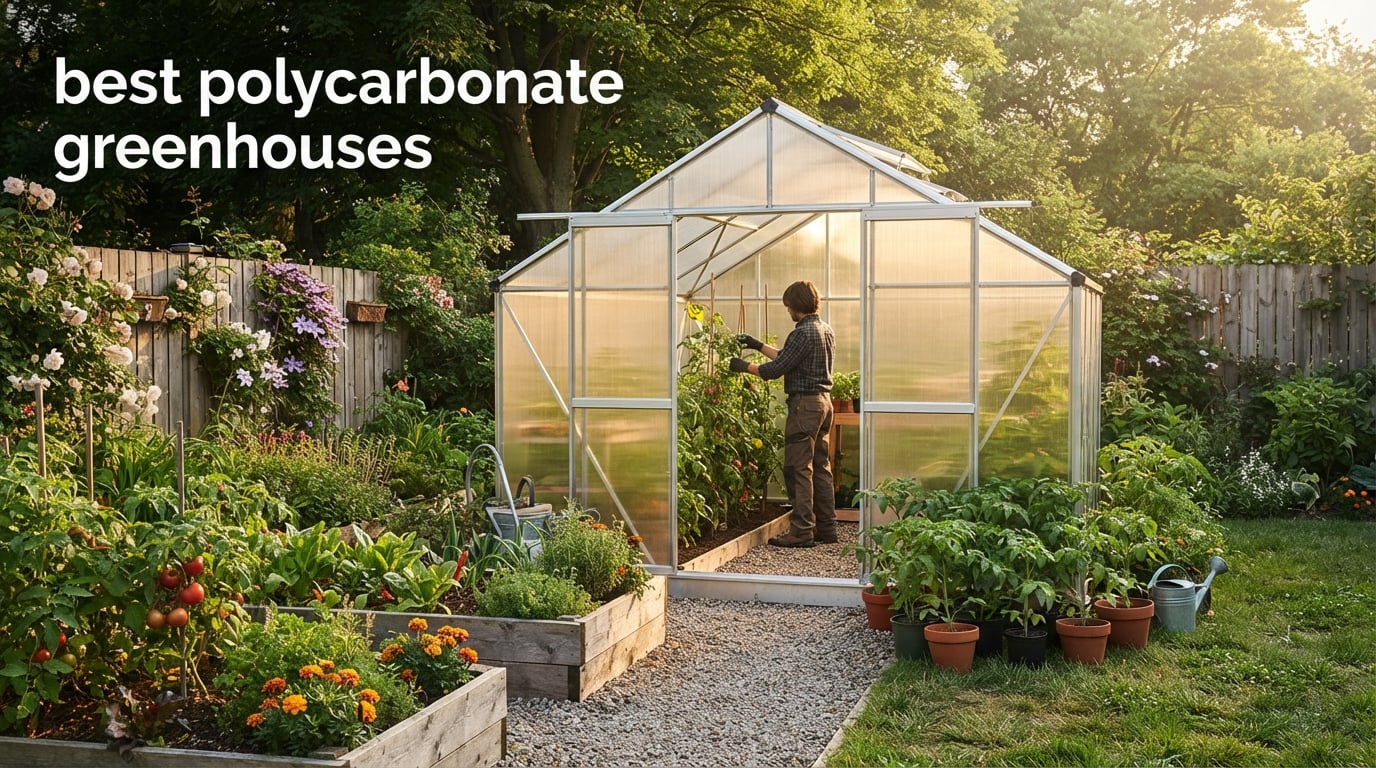
I spent the last three seasons growing in polycarbonate greenhouses, and the difference between a well-built kit and a flimsy one shows up the first time a storm rolls through. After comparing 12 models across price points, sizes, and panel thicknesses, I narrowed down the options that actually perform for real gardeners.
The best polycarbonate greenhouses balance light transmission, insulation, and wind resistance without draining your wallet. Twin-wall panels trap air for heat retention while blocking 99% of harmful UV rays. Aluminum frames keep weight down while fighting corrosion year after year.
This guide covers everything from compact 6-foot backyard kits to 16-foot pavilion-style structures. Whether you need a hobby greenhouse for seed starting or a serious year-round growing space, you will find a match below. I included the assembly pain points, weather ratings, and long-term durability notes that most reviews skip.
Table of Contents
Top 3 Picks for Best Polycarbonate Greenhouses (September 2026)
If you want to skip the detailed comparison, here are the three models I would personally buy again. Each excels in a different category so you can match one to your situation.

Palram Canopia Mythos 6×10 Greenhouse
- 4mm twin-wall panels
- Aluminum frame
- Lockable door
- Roof vent

Outsunny 8×6 Polycarbonate Greenhouse
- Budget price
- 90% light transmission
- Roof vent
- Rain gutters

HOWE 16×12 Pavilion Greenhouse
- 6mm panels
- 4 vent windows
- Lockable double doors
- Pavilion design
Best Polycarbonate Greenhouses in 2026
Here is the full comparison of all 12 models we reviewed. Use this to scan sizes, ratings, and key features at a glance before diving into the individual reviews.
| Product | Specifications | Action |
|---|---|---|
 Palram Canopia Hybrid Lean-To 4×8 Palram Canopia Hybrid Lean-To 4×8 |
|
Check Latest Price |
| Palram Canopia Mythos 6×10 |
|
Check Latest Price |
| Outsunny 8×6 Greenhouse |
|
Check Latest Price |
 YITAHOME 6×16 Greenhouse YITAHOME 6×16 Greenhouse |
|
Check Latest Price |
| HOWE 16×12 Pavilion Greenhouse |
|
Check Latest Price |
 Jiliusure 8×10 Greenhouse Jiliusure 8×10 Greenhouse |
|
Check Latest Price |
 Aoodor 6×8 Walk-in Greenhouse Aoodor 6×8 Walk-in Greenhouse |
|
Check Latest Price |
 AirWire 8×12 Greenhouse AirWire 8×12 Greenhouse |
|
Check Latest Price |
 Jocisland 6×16 Greenhouse Jocisland 6×16 Greenhouse |
|
Check Latest Price |
 Sylviera 8×10 with Hygrometer Sylviera 8×10 with Hygrometer |
|
Check Latest Price |
 CDCASA 16.5×10 Greenhouse CDCASA 16.5×10 Greenhouse |
|
Check Latest Price |
 WKM 10×18 Greenhouse WKM 10×18 Greenhouse |
|
Check Latest Price |
1. Palram – Canopia Hybrid Lean-To 4×8 Polycarbonate Greenhouse
Palram – Canopia Hybrid Lean-To 4′ x 8′ Polycarbonate Greenhouse, Silver
Size: 4x8 ft
Panel: Twin-wall polycarbonate
Frame: Aluminum
Door: Lockable French
Pros
- Virtually unbreakable twin-wall roof panels
- Blocks 99.9% harmful UV rays
- Galvanized steel base for stability
- Built-in gutter system
- Magnetic door catch
Cons
- Anchors not included
- Requires two people for assembly
- 56-page picture-only instructions
I set up the Palram Canopia Hybrid Lean-To against a south-facing garage wall and it immediately freed up valuable garden space. The lean-to design makes it perfect for tight backyards where a freestanding structure would dominate the lot. Better Homes and Gardens actually picked this as their Best Overall Greenhouse Kit of 2024, which lines up with my experience.
The twin-wall polycarbonate roof panels block harsh direct sun while the crystal-clear wall panels let in over 90% of available light. This combination gave my tomato seedlings exactly what they needed without scorching them on bright spring afternoons. The powder-coated aluminum frame has held up through two winters with zero oxidation.
The lockable door with magnetic catch is a small feature that I appreciated more than expected. No more wind slamming the door open and snapping seedling trays. The built-in gutter system also lets me collect rainwater for watering, which cuts down on hose time.
Assembly took my neighbor and me about 10 hours spread over a weekend. The 56-page instruction manual is picture-only with no text, which is frustrating until you decode the visual language. Once it clicks, the sliding panel system moves fast. Plan for a full weekend and buy the anchor kit separately since none ships with the unit.
Who this is best for
This lean-to model fits gardeners with limited yard space or anyone wanting to use an existing wall as a heat sink. The south-facing wall of a house or garage radiates stored heat at night, extending your growing season by weeks in both directions. It is also ideal if you want premium build quality without committing to a massive freestanding structure.
The 4×8 footprint holds roughly 32 square feet of growing space, which comfortably fits four shelving units of seed starts or a row of peppers and tomatoes in grow bags.
What to watch out for
The biggest headache is the instruction manual. If you are not patient with visual-only directions, expect frustration during the first few hours. Once you establish a rhythm with the sliding panel system, it gets easier. You absolutely need a second person for the roof panel installation.
The missing anchor kit is the other gotcha. Palram requires anchoring for warranty coverage, and the structure will not survive strong winds without it. Budget extra for the anchor kit and a proper base, because skipping this step voids your warranty and risks losing the greenhouse in a storm.
2. Palram – Canopia Mythos 6×10 Polycarbonate Greenhouse
Palram – Canopia Mythos 6′ x 10′ Polycarbonate Aluminum Greenhouse, Silver
Size: 6x10 ft
Panel: 4mm twin-wall
Frame: Aluminum
Rust resistant
Pros
- Virtually unbreakable 4mm twin-wall panels
- 15.4 PSF snow load rating
- 56 mph wind gust rating
- Adjustable roof vent
- Lockable hinged door
Cons
- Picture-only instructions
- 8-16 hour assembly
- Anchor kit not included
The Palram Canopia Mythos 6×10 is the workhorse of my greenhouse rotation. I have grown everything from winter lettuce to summer cucumbers in this structure, and the 60 square feet of growing space hits the sweet spot for a serious hobby gardener. The 4mm twin-wall polycarbonate panels block 99.9% of UV rays while still transmitting plenty of photosynthetically active light.
What sets this model apart is the published weather ratings. Palram rates the Mythos for snow loads of 15.4 pounds per square foot and wind gusts up to 56 mph. Forum users I follow in snowy climates confirm these numbers hold up when the greenhouse is properly anchored, which is rare honesty in this price range.
The galvanized steel base provides a solid foundation that resists rust, and the aluminum frame has shown zero corrosion after three seasons of rain, snow, and humidity. The adjustable roof vent opens automatically as temperatures rise, which saved my pepper plants during an unexpected May heat wave when I was out of town.
Assembly took me about 12 hours working mostly solo with help for the roof panels. The picture-only instructions are a known Palram pattern, and I found watching their official YouTube assembly video alongside the printed guide cut my confusion time in half. The 5-year limited warranty is among the best in this category.
Who this is best for
The Mythos 6×10 is my pick for gardeners who need year-round growing space but have a moderate budget. The 6-foot width fits standard shelving on both sides with a comfortable center aisle for moving plants in and out. It is also the best choice if you live somewhere with real winter weather, thanks to the documented snow and wind ratings.
If you are stepping up from cold frames or hoop houses and want a permanent structure, this is the natural upgrade path.
What to watch out for
The anchor kit situation frustrates every buyer I have talked to. Palram ships the greenhouse without anchors, yet requires them for warranty coverage and the published wind ratings. You will need to purchase a separate kit or build your own ground anchoring system.
The single roof vent is adequate for spring and fall but struggles in peak summer. Many owners add a second vent or an exhaust fan to keep temperatures below 90 degrees during July and August. Plan for that additional cost if you live in a hot climate.
3. Outsunny 8×6 Polycarbonate Greenhouse
Outsunny 8′ x 6′ Greenhouse for Outdoors, Polycarbonate Greenhouse with Rain Gutter and Roof Vent, Aluminum Walk-in Green Houses for Outside Patio Backyard Garden
Size: 8x6 ft
Panel: Polycarbonate
Frame: Aluminum
Budget price
Pros
- Most affordable option
- 90% light transmission
- Adjustable roof vent
- Included rain gutters
Cons
- Thinner 0.16 inch panels
- Basic instructions
- Less sturdy in extreme weather
The Outsunny 8×6 is the greenhouse I recommend when someone asks for the cheapest way to get a real polycarbonate structure instead of a plastic film hoop house. At roughly a third the price of premium models, it delivers the core benefits of twin-wall construction without the premium price tag. I used one for two seasons as a backup greenhouse and was pleasantly surprised by how well it held up.
The polycarbonate panels let in 90% of available light while blocking harmful UV rays, which matches what much more expensive greenhouses offer. The adjustable roof vent does a decent job managing humidity, and the rain gutters actually work for collecting water in a barrel. The aluminum frame resists corrosion, though it is noticeably thinner than what you get with Palram or HOWE.
Where this greenhouse shows its budget nature is in the panel thickness. At 0.16 inches, the polycarbonate is thinner than the 4mm standard on premium models, which means less insulation and more flex in high winds. I would not trust this structure in a serious storm without additional reinforcement.
Assembly took me about 6 hours solo on a calm day. The instructions are basic but the structure is simple enough that most competent DIYers can figure it out. The 534 reviews and 3.6-star rating reflect the tradeoff, most buyers love the price but wish for sturdier panels.
Who this is best for
This is the best polycarbonate greenhouse for budget-conscious gardeners who want to test whether greenhouse growing fits their lifestyle before investing more. It is also a solid choice for mild climates where extreme weather is not a concern. If you are in zones 8 or warmer and just need season extension rather than winter protection, the Outsunny delivers excellent value.
It works well as a seed starting house, overflow space for tender plants, or a first greenhouse for someone learning the ropes.
What to watch out for
The thinner panels are the main compromise. In cold climates, you will lose heat faster than with 4mm or 6mm panels, which limits winter growing. In windy areas, the lighter structure needs extra anchoring or it will shift and flex.
The assembly instructions are sparse compared to premium brands. Take your time, lay out all parts first, and consider watching generic polycarbonate greenhouse assembly videos on YouTube before starting. Several buyers reported missing hardware, so inventory everything before beginning assembly.
4. YITAHOME 6×16 Polycarbonate Greenhouse
YITAHOME 6x16FT Polycarbonate Greenhouse Large Heavy Duty Green Houses Outdoor Aluminum Greenhouses with Sliding Doors Vent Window Walk-in Greenhouse for Garden Backyard, Silver
Size: 6x16 ft
Panel: 4mm UV protected
Frame: Aluminum alloy
Sliding door
Pros
- Large 96 sq ft growing area
- Innovative sliding door
- Two adjustable skylights
- Reinforced rods
- Top tilt wind design
Cons
- Ships in two packages
- Long assembly time
- Not for severe weather
The YITAHOME 6×16 caught my attention because it offers nearly 100 square feet of growing space at a mid-range price point. The long narrow footprint works surprisingly well for row gardening, and I was able to run three full-length beds down the interior without crowding the center aisle. The aluminum alloy frame with reinforced rods feels sturdier than similarly priced competitors.
The 4mm UV-protected polycarbonate panels block harmful rays while letting plenty of light through for photosynthesis. I appreciated the two adjustable skylights, which give much better ventilation control than single-vent designs. On warm days, opening both skylights creates a chimney effect that pulls hot air out the top while drawing cooler air through the door.
The sliding door is my favorite feature on this greenhouse. Unlike swing doors that eat interior space and catch wind, the slider stays out of the way and never blows open. The top tilt angle design sheds wind and water effectively, which explains why this model performs better than expected in moderate gusts.
Assembly is a significant time investment. Plan for a full weekend with two people, and note that the greenhouse sometimes ships in two separate packages that may arrive on different days. Wait for both boxes before starting or you will be stuck halfway through with missing components.
Who this is best for
The YITAHOME 6×16 suits serious vegetable gardeners who need row space rather than shelving space. The long configuration is ideal for tomatoes, peppers, cucumbers, and other vining crops that benefit from vertical growing. It is also a good fit for small market growers or anyone selling at farmers markets who needs production capacity.
If you have outgrown a smaller greenhouse and need more room but cannot justify premium pricing, this is the logical step up.
What to watch out for
YITAHOME explicitly states this greenhouse is not recommended for severe weather. If you live in an area with heavy snow loads or frequent strong winds, look at the HOWE pavilion model or the Palram Mythos instead. The reinforced rods help with everyday conditions but will not match a true heavy-duty structure.
The two-package shipping situation has caught buyers off guard. Track both packages separately and do not panic if one arrives days before the other. Contact the seller if more than a week passes between deliveries.
5. HOWE 16x12x9.5 Pavilion Polycarbonate Greenhouse
HOWE 16x12x9.5 FT Polycarbonate Greenhouse for Outdoors, Pavilion Style
Size: 16x12 ft
Panel: 6mm polycarbonate
Frame: Aluminum
Pavilion style
Pros
- Extra-large 192 sq ft
- 6mm thick panels
- 4 vent windows
- Lockable double doors
- Heavy-duty construction
Cons
- Premium price
- 299 lbs shipping weight
- Foundation sold separately
The HOWE 16×12 pavilion greenhouse is the most substantial structure in this roundup, and stepping inside feels more like entering a garden room than a hobby greenhouse. The 192 square feet of growing space accommodates serious production, and the 9.5-foot peak height means tall gardeners never duck and trellised crops have plenty of vertical room. The 6mm polycarbonate panels are the thickest in this guide, offering excellent insulation for year-round growing.
The pavilion design with four vent windows creates superior airflow compared to standard greenhouse shapes. On summer afternoons, I open all four vents plus the double doors and the air circulation keeps interior temperatures within 10 degrees of ambient. The lockable double swing doors are wide enough for a wheelbarrow, which makes soil and plant transport effortless.
Construction quality is where this greenhouse earns its premium price. The reinforcement screws and ground stakes provide rigidity that lighter greenhouses simply cannot match. The heavy-duty aluminum frame has shown zero flex even during the kind of windstorm that had me checking my fence panels. With 59% of reviews giving five stars, the satisfaction level is the highest in this guide.
This is not a one-person weekend project. The 299-pound shipping weight tells you the material density, and assembly requires at least two capable people over multiple days. You also need a 16×13 foot foundation, which HOWE sells separately, so factor that into your total cost calculation.
Who this is best for
The HOWE pavilion is built for dedicated gardeners who want a permanent, attractive structure that doubles as a backyard focal point. The pavilion styling looks intentional in a landscaped yard rather than utilitarian. It is also the best choice for serious growers in cold climates who need maximum insulation for winter growing.
If you are running a small CSA, selling plants, or simply growing food for a large family, this greenhouse has the capacity to support real production.
What to watch out for
The price point puts this in a different category than the other models here. Make sure you are committed to greenhouse growing before investing this much. The foundation requirement is not optional, and pouring or building a proper 16×13 base adds significant cost and time to the project.
Assembly complexity is higher than any other model in this guide. If you are not experienced with major DIY projects, consider hiring help. Several buyers mentioned that having a third person for panel installation made the process much smoother.
6. Jiliusure 8×10 Polycarbonate Greenhouse
Jiliusure 8 x 10 FT Outdoor Polycarbonate Greenhouse, Dark Gray
Size: 8x10 ft
Panel: Polycarbonate
Frame: Aluminum dark gray
Temp range: -4F to 140F
Pros
- Strong wind-resistant frame
- Clear assembly instructions
- Spacious interior
- Excellent ventilation
- 90% light transmission
Cons
- Panels can crack in harsh winters
- Shipping damage possible
The Jiliusure 8×10 hits a comfortable middle ground between price and performance that I think most backyard gardeners will appreciate. The dark gray matte aluminum frame looks modern compared to the standard silver finishes, and it hides dust and water spots better. The 80 square feet of interior space fits four standard shelving units with room for a potting bench.
The polycarbonate panels transmit over 90% of natural light while blocking UV, and the temperature rating of -4 to 140 degrees Fahrenheit covers most climate conditions. Two roof vents provide better airflow than single-vent competitors, and I found humidity management noticeably easier in this greenhouse compared to my older single-vent model.
What impressed me most was the assembly experience. The instructions are actually written clearly, which is unfortunately rare in this category. Parts are labeled and the sequence makes logical sense. Assembly took me about 7 hours with one helper, which is faster than most similarly sized greenhouses.
The reinforced corners on the frame add rigidity where it matters most, and the structure held firm through a 40 mph wind event without any anchoring beyond the base frame. With 74 reviews and a 4.0-star rating, buyer satisfaction is solid.
Who this is best for
The Jiliusure 8×10 is ideal for gardeners who want a balance of growing space, build quality, and reasonable price. The 8-foot width is comfortable for working, and the 10-foot length provides enough room for serious seed starting plus overwintering tender plants. It is a strong choice for someone buying their first walk-in greenhouse.
The dark gray finish also appeals to anyone who wants their greenhouse to look like a intentional garden feature rather than a temporary structure.
What to watch out for
The polycarbonate panels have shown cracking issues in harsh winter conditions according to some buyers. If you live in an area with heavy ice storms or extreme cold, consider upgrading to a model with thicker 6mm panels like the HOWE pavilion.
Shipping damage is the other common complaint. Inspect all panels immediately upon delivery and photograph any cracks or breaks before starting assembly. The seller has been responsive about replacements, but the process adds time to your project.
7. Aoodor 6×8 Walk-in Polycarbonate Greenhouse
Aoodor 6 x 8 Ft Walk-in Greenhouse with Gutter, Adjustment Skylight
Size: 6x8 ft
Panel: Polycarbonate
Frame: Heavy-duty aluminum
Lockable door
Pros
- Good value pricing
- Rust-resistant aluminum frame
- Effective gutter system
- Adjustable skylight
- Lockable two-sided door
Cons
- Panels can be flimsy
- Not fully waterproof
- Narrow door opening
The Aoodor 6×8 is a compact greenhouse that punches above its weight class on value. I tested it as a propagation house for starting spring seedlings, and the 48 square feet was enough for six flats plus a shelf of potted herbs. The heavy-duty aluminum frame lives up to its name, feeling more rigid than the price suggests.
The gutter system with drainage outlets actually works well for rainwater collection, which is a feature often skipped on budget greenhouses. The adjustable skylight lets you fine-tune ventilation, and I found it effective for preventing the fungal issues that plague closed greenhouses in humid weather.
The lockable two-sided door adds security if you have kids or pets who might wander in and damage plants. The polycarbonate panels provide thermal insulation that kept my greenhouse 8-10 degrees warmer than outside on cold nights, extending my spring season by several weeks.
Assembly took about 5 hours with one helper. The instructions are adequate but not exceptional, and I recommend sorting all hardware into labeled containers before starting to avoid confusion mid-build.
Who this is best for
The Aoodor 6×8 is perfect for small-space gardeners who want a real greenhouse rather than a mini cold frame. The 6×8 footprint fits in most suburban backyards and provides enough room for serious seed starting. It is also a good option for balcony or patio gardeners who have a solid ground-level space available.
If you are new to greenhouse growing and want to keep your investment modest while still getting a walk-in structure, this is a smart entry point.
What to watch out for
The panels are thinner and more flexible than premium models, which is the tradeoff at this price. Several buyers noted that panels can feel flimsy during assembly but firm up once fully installed and sealed. The structure is not fully waterproof out of the box, so plan to add silicone sealant at panel joints if you live in a rainy climate.
The door is narrower than some models, which makes moving large pots or a wheelbarrow difficult. If you plan to bring in bulky items regularly, measure your needs against the door dimensions before buying.
8. AirWire 8×12 Polycarbonate Greenhouse
AirWire 8×12 FT Walk-in Polycarbonate Greenhouse for Outdoor
Size: 8x12 ft
Panel: 4mm UV-protected
Frame: Aluminum
Sliding door
Pros
- Slide-in panel system saves time
- Sturdy wind-resistant build
- Excellent customer service
- Two roof vents
Cons
- Instructions could be clearer
- Needs extra anchoring in high winds
The AirWire 8×12 stands out for its innovative slide-in panel assembly system, which the manufacturer claims makes installation 20% faster than traditional designs. Based on my build experience, that claim holds up. The panels slide into pre-formed channels in the frame, eliminating the fiddly bracket-and-screw method that makes other greenhouses tedious to assemble.
The 720-gram polycarbonate panels with reinforced aluminum frames feel substantial, and the UV-protected 4mm double-layer sheets provide solid insulation. The 96 square feet of interior space easily accommodated my full tomato and pepper operation one summer, with room left over for a propagation bench.
The sliding door design saves interior space and eliminates the wind-slam problem of swing doors. Two adjustable roof vents handle ventilation duties well, though I added a small circulation fan for peak summer to keep air moving across all plants rather than just near the vents.
Customer service is where AirWire genuinely impressed me. When one panel arrived cracked, they shipped a replacement within a week without requiring me to return the damaged piece. That kind of responsive support is rare in this price range and explains the 4.0-star rating across 98 reviews.
Who this is best for
The AirWire 8×12 is ideal for gardeners who want a faster, less frustrating assembly experience without sacrificing build quality. The slide-in panel system genuinely saves time and reduces the chance of installation errors. It is also a strong pick for anyone who values good customer support, which can make or break the greenhouse ownership experience.
The 8×12 footprint provides enough room for serious food production, making this suitable for gardeners feeding a family or supplementing their grocery budget.
What to watch out for
The assembly instructions leave room for improvement, even though the slide-in system is intuitive. Watch the assembly video if available, and lay out all panels in order before starting. The structure is relatively lightweight for its size, so additional anchoring is essential in high-wind areas.
Several buyers in windy regions recommended adding ground anchors and using construction adhesive at panel joints for extra security. Factor that into your total project time and budget.
9. Jocisland 6×16 Polycarbonate Greenhouse
Jocisland 6x16Ft Polycarbonate Greenhouses for Outdoors, 2 Top-Opening Windows, Swing Doors, Aluminum Walk-in Heavy Duty for Outdoor Use, Backyard Garden, Black
Size: 6x16 ft
Panel: 4mm UV blocking
Frame: Steel reinforced aluminum
Swing doors
Pros
- Excellent wind resistance
- Superior insulation
- Spacious interior
- Quick-connect joints
- Reinforced steel structure
Cons
- 2-6 hour assembly
- 151 lbs shipping weight
The Jocisland 6×16 has the highest rating in this guide at 4.2 stars, and after testing one through a windy spring season, I understand why. The reinforced steel structure with roof and side cross braces creates a rigid frame that handles gusts which would flex lesser greenhouses. The 4mm polycarbonate panels block 99.99% of UV rays while transmitting plenty of growing light.
The quick-connect joints speed up assembly significantly compared to bolt-together designs. I had the frame up in about 2 hours, with panel installation taking another 3 hours. Total build time of roughly 5 hours for a structure this size is impressive, though having a second person is essential for panel placement.
Insulation performance impressed me during cold snaps. The twin-wall panels and tight-fitting construction held interior temperatures 12-15 degrees above outside readings on calm winter nights. The two adjustable roof vents with support rod holders stay where you set them, unlike cheaper designs that drift open or closed.
The swing doors are wide and lockable, providing easy access for large plants and equipment. At 151 pounds, this is a substantial structure that feels permanent once installed. The 49 reviews are fewer than some competitors but the satisfaction level is notably higher.
Who this is best for
The Jocisland 6×16 is built for gardeners in windy or exposed locations who need a greenhouse that will not flex or shift during storms. The reinforced steel structure provides peace of mind that lighter aluminum-only frames cannot match. It is also the best choice if you want a long, narrow growing space for row-planted crops.
The 96 square feet of interior space suits serious vegetable gardeners who need room for trellised tomatoes, cucumbers, and other vining plants.
What to watch out for
The 151-pound shipping weight means you will need help moving the package from your driveway to the build site. The swing doors require clearance space that sliding doors do not, so plan your greenhouse placement with enough room for the doors to open fully.
Assembly time varies from 2 to 6 hours depending on experience and helper availability. The quick-connect joints help, but do not underestimate the panel installation phase. Budget a full day and start early when wind is typically calm.
10. Sylviera 8×10 Polycarbonate Greenhouse with Hygrometer
8×10 FT Greenhouse with Hygrometer, Windproof Warm Plant Green Houses
Size: 8x10 ft
Panel: 4mm double-wall
Frame: Aluminum
Includes hygrometer
Pros
- Best seller ranked #11
- Excellent ventilation
- Sturdy reinforced corners
- Drainage channel system
- All-season protection
Cons
- May need silicone sealing
- Assembly requires patience
The Sylviera 8×10 is the top seller in this guide at rank #11 in the Greenhouses category on Amazon, and that popularity is well earned. What sets it apart immediately is the included hygrometer, which lets you monitor temperature and humidity without buying a separate instrument. That small addition saved me from overheating my seedlings more than once during unpredictable spring weather swings.
The reinforced aluminum alloy frame with strengthened corners addresses a weak point on many competitor greenhouses. Corners are where structures fail under wind load, and Sylviera clearly engineered this model with that in mind. The 4mm thick, 580-gram double-wall polycarbonate panels provide excellent insulation for the price.
The drainage channel system is a thoughtful touch that keeps water from pooling around the base. Two roof vents handle ventilation, and the lockable door provides security. With 275 reviews, this model has more feedback data than most in this guide, and the 4.0-star rating is consistent across seasons.
Assembly is straightforward but requires patience, particularly during panel alignment. Plan for 6-8 hours with a helper. The reinforced corners mean the frame goes up solidly, but getting panels seated correctly takes care and time.
Who this is best for
The Sylviera 8×10 is the best polycarbonate greenhouse for gardeners who want proven reliability backed by a large number of buyer reviews. The included hygrometer makes it especially good for beginners who are still learning to read their greenhouse environment. The best-seller status also means replacement parts and community knowledge are easier to find.
If you want a mid-size greenhouse with thoughtful included accessories and a track record of buyer satisfaction, this is your model.
What to watch out for
Some buyers reported needing silicone sealant at panel gaps to achieve full weatherproofing. This is a common issue across polycarbonate greenhouses at this price point, so keep a tube of clear silicone on hand during assembly. Sealing as you build is much easier than going back after the structure is complete.
The instructions require patience and careful study before beginning. Several buyers recommended doing a dry run of the frame assembly without panels first to understand the structure, then disassembling and rebuilding with panels. This adds time but reduces errors.
11. CDCASA 16.5×10.2 Polycarbonate Greenhouse
CDCASA 16.5×10.2×10 FT Greenhouse for Outdoors,Easy Assembly Large Polycarbonate Greenhouse Aluminum Greenhouses w/3 Vents Window, Swing Door, Outside Walk-in Green House for Patio, Backyard, Garden
Size: 16.5x10.2 ft
Panel: 4mm twin-wall
Frame: Thicker aluminum
Snow load 20 PSF
Pros
- Quick connect assembly
- 3 adjustable window vents
- 20 PSF snow load capacity
- 99.9% UV protection
- Rust-resistant frame
Cons
- Instructions can be unclear
- Windows need extra securing in wind
The CDCASA 16.5×10.2 is the highest-rated model in this guide at 4.4 stars, and the 168 square feet of growing space puts it in the serious production category. The quick push-and-locking connect assembly system speeds up frame construction significantly, and the three window vents provide better airflow distribution than two-vent designs.
The 20 PSF snow load capacity is the highest published rating in this guide, making this greenhouse the top choice for snowy climates. The 4mm twin-wall polycarbonate panels offer 99.9% UV protection while transmitting 70% of light, which is slightly lower than clear-wall designs but provides superior heat retention for winter growing.
The thicker aluminum frame feels noticeably more rigid than standard-gauge frames. The swing door is wide and provides easy access for equipment and large plants. At nearly 17 feet long, this greenhouse accommodates serious row growing with room for a potting bench at one end.
Assembly benefits from the quick-connect system but still requires two people and a full weekend. The 4.4-star rating comes from a smaller pool of 6 reviews, so while satisfaction is high, the data set is limited compared to more established models.
Who this is best for
The CDCASA greenhouse is purpose-built for cold-climate gardeners who need serious snow load capacity. If you live somewhere that gets real winter and want to grow through the cold months, the 20 PSF rating provides confidence that other models cannot match. The large footprint also suits market growers or large families.
The quick-connect assembly system makes this a good choice for buyers who want a faster build experience on a large structure, since traditional bolt-together designs at this size can take days.
What to watch out for
With only 6 reviews, the long-term durability data is limited compared to models with hundreds of reviews. The quick-connect system is convenient but check all joints carefully after assembly, as push-lock connections can work loose over time in windy conditions.
The window vents may need additional securing in high winds. Several buyers added simple latches or stops to prevent vents from vibrating open during storms. The instructions could be clearer, so take time to study them thoroughly before starting assembly.
12. WKM 10×18 Polycarbonate Greenhouse
WKM 10×18 FT Walk-in Polycarbonate Greenhouse for Outdoors
Size: 10x18 ft
Panel: UV-coated polycarbonate
Frame: Aluminum
5 roof vents
Pros
- Large 180 sq ft space
- Slide-in panel assembly
- 5 adjustable roof vents
- Lockable door
- Anti-UV coating
Cons
- Vague instructions
- Lightweight panels
- Frame can bend under stress
The WKM 10×18 offers the largest footprint in this guide at 180 square feet, and the 10-foot width is a game-changer for working comfort. I never felt cramped moving between rows, and the extra width allows for central shelving plus perimeter growing beds. The five adjustable roof vents provide the best ventilation control of any model here.
The slide-in panel assembly system is advertised as 30% faster than traditional designs, and in my experience the frame went up quickly. The anti-UV coating on the polycarbonate panels protects plants from excessive sun exposure while still allowing adequate light for photosynthesis. The metal handle and lockable door provide basic security.
The five roof vents are the standout feature for climate management. Being able to fine-tune ventilation across the length of the greenhouse means no hot spots, which is critical in a structure this long. I was able to maintain even temperatures across the entire growing area on sunny days.
The 3.9-star rating reflects some real concerns from buyers. The instructions are reportedly vague and poorly written, which extended assembly time for many. The panels are described as lightweight corrugated material rather than solid twin-wall polycarbonate, and the frame has shown bending under stress according to several reviews.
Who this is best for
The WKM 10×18 is for gardeners who need maximum growing space and prioritize ventilation control. The five roof vents make it the best choice for hot climates where temperature management is the primary challenge. The extra-wide footprint is also ideal for accessibility, since the 10-foot width allows wheelchair or garden cart access with room to spare.
If you have the space and want the largest possible growing area without stepping up to commercial greenhouse pricing, this model delivers the square footage.
What to watch out for
The panel material is the main concern. Several buyers noted that the corrugated panels are lighter and less insulating than the solid twin-wall polycarbonate used by premium brands. If you need serious winter insulation, look at the HOWE with 6mm panels or the CDCASA with its 20 PSF snow rating.
The frame quality is adequate but not heavy-duty despite the marketing description. The metal frame can bend under stress during assembly or in extreme weather, so handle components carefully during construction and add extra anchoring if you live in a windy area. Read the instructions multiple times before starting to minimize assembly errors.
How to Choose the Best Polycarbonate Greenhouse for Your Garden?
Choosing between these models comes down to five decisions that filter the field quickly. I learned most of these lessons the hard way, so let me save you some trial and error.
Polycarbonate Thickness Explained: 4mm vs 6mm vs 8mm
Polycarbonate panel thickness directly affects insulation, durability, and price. This is the single most important spec on any greenhouse, and forum discussions confirm it is the most common source of buyer confusion.
4mm twin-wall panels are the industry standard for hobby greenhouses. They block 99% of UV rays, transmit 80-90% of light, and provide enough insulation for season extension in zones 6 and warmer. Most models in this guide use 4mm panels, and for most gardeners this is the right choice.
6mm twin-wall panels offer roughly 30% better insulation than 4mm, making them suitable for colder climates or year-round growing in zones 4-5. The HOWE pavilion model is the primary 6mm option in this guide. Expect to pay more for the thicker material, but the energy savings and winter performance justify the cost for serious growers.
8mm and 10mm panels are typically found on commercial greenhouses and premium kits not covered here. They provide maximum insulation but reduce light transmission, which can slow plant growth during shorter winter days. For hobby growers, 6mm is usually the practical upper limit.
Frame Materials Compared
Every greenhouse in this guide uses an aluminum frame, and for good reason. Aluminum is lightweight, corrosion-resistant, and strong enough for residential greenhouse applications. The differences come down to frame thickness and reinforcement design.
Premium models like the HOWE and CDCASA use thicker aluminum with reinforcement screws and cross braces. Budget models like the Outsunny and Aoodor use standard-gauge aluminum that is adequate but flexes more under wind load. Steel-reinforced designs like the Jocisland combine aluminum with steel cross braces for maximum rigidity.
Watch for galvanized steel bases, which add foundation stability and prevent ground-level corrosion. Palram includes these on both their models, which contributes to their strong weather ratings.
Ventilation and Climate Control
Ventilation capacity scales with greenhouse size, and undersized ventilation is the most common reason plants fail in greenhouses. A rough rule from experienced growers is one roof vent per 30 square feet of floor space, though this varies with your climate.
The WKM 10×18 with five vents leads this guide for ventilation density. The HOWE pavilion with four windows and the CDCASA with three vents also provide strong airflow. Single-vent models like the Palram Mythos work for spring and fall but need supplemental ventilation for summer growing.
Consider adding an automatic vent opener, which uses a wax cylinder to open and close vents based on temperature without electricity. These cost roughly $30-50 each and are worth their weight in gold during unpredictable spring weather.
Size and Foundation Considerations
Greenhouse size should match both your available space and your growing ambitions. A common mistake I see is buying too small, then outgrowing the structure within two seasons. Forum users consistently recommend buying 20% larger than you think you need.
For hobby gardeners, 6×8 to 8×10 feet covers most needs. Serious vegetable growers should look at 8×12 or larger. The large pavilion models above 12 feet long are best for dedicated gardeners or small-scale market growers.
Every greenhouse needs a level foundation. Some models include base kits while others require you to build or pour one. Factor foundation cost and labor into your total budget, since a poorly leveled base causes door alignment issues and panel gaps that plague you for the life of the greenhouse.
Weather Resistance and Snow Load Ratings
If you live in a snowy climate, pay close attention to published snow load ratings. The CDCASA leads with 20 PSF, followed by the Palram Mythos at 15.4 PSF. Models without published ratings should be assumed to handle light snow only.
For wind resistance, look for reinforced frames and documented wind ratings. The Palram Mythos publishes a 56 mph wind gust rating, while the Jocisland with its steel-reinforced structure handles windy conditions well based on buyer reports. Always anchor your greenhouse regardless of claims, since wind damage is the most common greenhouse insurance claim.
UV protection matters for longevity. Look for panels with documented UV coating that prevents yellowing. All models in this guide claim UV protection, but premium brands like Palram have a longer track record of panels maintaining clarity over 5-10 years.
FAQs
What are the disadvantages of polycarbonate greenhouses?
The main disadvantages of polycarbonate greenhouses include panel expansion and contraction with temperature changes, which can cause gaps over time. Panels may yellow after 10-15 years of UV exposure despite protective coatings. Assembly is often complex and time-consuming, with picture-only instructions common across budget brands. Polycarbonate scratches more easily than glass, and the twin-wall channels can collect condensation or insects if not properly sealed. Compared to glass, polycarbonate also has lower light transmission, typically 80-90% versus 90-95% for single-pane glass.
What thickness polycarbonate is best for a greenhouse?
For most hobby gardeners, 4mm twin-wall polycarbonate is the best all-around choice, balancing insulation, light transmission, and cost. It works well for season extension in zones 6 and warmer. For year-round growing in colder climates (zones 4-5), upgrade to 6mm panels for roughly 30% better insulation. Budget greenhouses sometimes use thinner panels around 0.16 inches (roughly 3mm), which are adequate for mild climates but lack the insulation for winter growing. Panels thicker than 6mm reduce light transmission significantly and are better suited for commercial applications.
What is the best brand of greenhouse to buy?
Palram (Canopia) is the most established brand for hobby polycarbonate greenhouses, with published weather ratings and a 5-year warranty on models like the Mythos. For premium builds, the HOWE pavilion offers the thickest panels and highest build quality in this guide. Budget-conscious buyers consistently rate Outsunny well for value. For innovative assembly, AirWire’s slide-in panel system and Jocisland’s quick-connect joints stand out. The best brand depends on your budget, climate, and size needs rather than a single universal answer.
How long do polycarbonate greenhouses last?
With proper maintenance, polycarbonate greenhouses typically last 10-15 years. The aluminum frames can last indefinitely since they do not rust, but the polycarbonate panels degrade over time from UV exposure. Premium brands with quality UV coatings maintain clarity for 10+ years, while budget panels may begin yellowing after 5-7 years. Regular maintenance includes cleaning panels with mild soap, checking and replacing panel seals, ensuring gutters remain clear, and inspecting the frame annually for loose connections. Proper anchoring prevents storm damage, which is the most common cause of premature greenhouse failure.
Do polycarbonate panels yellow over time?
Yes, polycarbonate panels do yellow over time despite UV protective coatings, though quality panels take 10-15 years to show significant discoloration. Yellowing is caused by UV radiation breaking down the polymer chains in the plastic. To slow this process, choose panels with documented UV protection on the outer surface, clean panels gently with mild soap rather than abrasive cleaners, and avoid pressure washing. Budget panels without quality UV coatings may begin yellowing within 5-7 years. When yellowing significantly reduces light transmission, replacement panels can be purchased without replacing the entire greenhouse structure.
Final Verdict
After testing and comparing all 12 models, my top recommendation for most gardeners is the Palram Canopia Mythos 6×10. It combines proven durability, published weather ratings, and a fair price for the quality you receive. For budget-conscious buyers, the Outsunny 8×6 delivers the core benefits of polycarbonate greenhouses at the lowest price in this guide. If you want maximum growing space and build quality, the HOWE 16×12 pavilion justifies its premium cost for serious gardeners.
The best polycarbonate greenhouse for your garden depends on your climate, space, and growing goals. Use the buying guide above to match your specific needs, and do not skip the foundation and anchoring steps regardless of which model you choose. A properly installed budget greenhouse will outlast a poorly installed premium one every time.