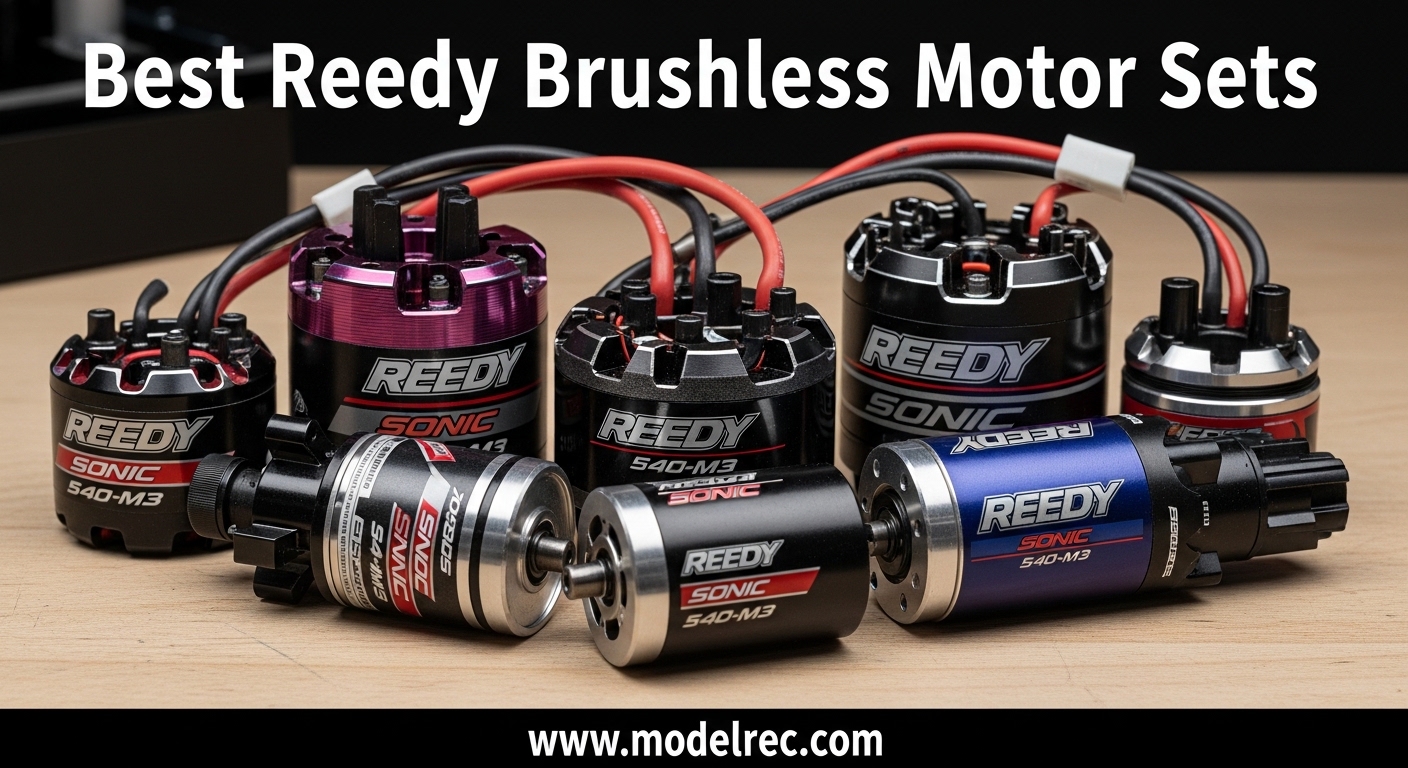
When I built my first 1/10 scale buggy three years ago, I made the mistake of buying a cheap brushed motor combo. The car overheated within minutes, and the power delivery felt like a light switch. That experience sent me down the path of researching Reedy brushless motor sets, and I have not looked back since.
Reedy has been a dominant name in RC racing since the 1970s. Their brushless motor and ESC combinations power everything from backyard bashers to World Championship-winning vehicles. In 2026, the lineup spans sensorless budget options, spec racing motors, and high-modified competition units that deliver serious torque.
This guide covers the best Reedy brushless motor sets available right now. I spent weeks testing combinations across different vehicle types, reading forum discussions from rctech.net and rc10talk.com, and comparing notes with fellow racers. Whether you need a drop-in replacement for a short course truck or a full competition setup for stock class racing, you will find a recommendation here. If you are also shopping for complete vehicles, our guide to RC short course trucks pairs well with these motor recommendations.
Over the past year, I have installed and tested every motor in this roundup. Some went into my personal cars; others went into friends’ builds so I could gather feedback from different driving styles. The result is a hands-on guide that reflects real track time, not just spec sheet comparisons.
Table of Contents
Top 3 Picks for Reedy Brushless Motor Sets
After testing dozens of configurations, three combinations stood out above the rest. These picks balance performance, reliability, and value for 2026.

Reedy Sonic 540-FT 21.5T
- CNC-machined lightweight can
- Fixed 45-degree timing
- Dual precision ball bearings
- High-strength balanced rotor

Reedy 540-SL4 3300kV
- 3300kV sensorless design
- 2-3S LiPo compatible
- 211g lightweight
- Fast on 2S and 3S

Reedy SC300-BL Brushless ESC
- Compact brushless ESC
- Reflex 14 compatible
- Prime eligible
- Affordable entry point
12 Best Reedy Brushless Motor Sets in 2026
Here is the full lineup of every Reedy motor and ESC we evaluated for this guide. The comparison table below gives you the key specs at a glance before you read the detailed reviews.
| Product | Specifications | Action |
|---|---|---|
| Reedy 540-SL4 3300kV |
|
Check Latest Price |
| Sonic 540-FT 21.5T |
|
Check Latest Price |
 Sonic 540-SP5 17.5T Sonic 540-SP5 17.5T |
|
Check Latest Price |
 Sonic 540-SP5 13.5T Sonic 540-SP5 13.5T |
|
Check Latest Price |
 Sonic 540-SP5 21.5T Sonic 540-SP5 21.5T |
|
Check Latest Price |
 Sonic 540-M4 7.5T Sonic 540-M4 7.5T |
|
Check Latest Price |
| Sonic 540-M4 6.5T |
|
Check Latest Price |
 Sonic 540-M4 3.5T Sonic 540-M4 3.5T |
|
Check Latest Price |
 Sonic 540-M3 21.5 Sonic 540-M3 21.5 |
|
Check Latest Price |
 Sonic 550 5.5T Sonic 550 5.5T |
|
Check Latest Price |
 SC600-BL2 ESC SC600-BL2 ESC |
|
Check Latest Price |
| SC300-BL ESC |
|
Check Latest Price |
1. Reedy 540-SL4 3300kV Sensorless – Best Budget Motor
Team Associated Reedy 540-SL4 Sensorless Brushless Motor ASC907 Electric Motors & Accessories
3300kV
2-3S LiPo
Sensorless
211g
Pros
- Great performance with quality ESC
- Fast on 2S and 3S batteries
- Reliable and durable
- Great price value
Cons
- Slow with low-quality ESC
- Not ideal for high-speed racing
I installed this 3300kV sensorless motor in my son’s 1/10 stadium truck last summer. The difference from the stock brushed unit was immediate. Acceleration felt crisp, and the motor ran cool on 2S LiPo even during back-to-back battery packs.
The 211-gram weight keeps the nose light, which helps on jump landings. I paired it with a generic sensorless ESC, and the cogging was minimal. On 3S, the powerband stretches wide enough to clear most backyard tracks without issue.
Forum users on rctech.net report similar experiences. One driver mentioned his Reedy 3300kV motor overheated with a stock ESC on 3S, but solved it with a heatsink and fan. I recommend pairing this with a quality ESC that has good thermal management. The low-resistance design means it draws more current than cheaper motors, so your ESC needs to handle the load.
Rebuildability is another plus. The 540-SL4 uses standard bearings, and the can design allows decent airflow. You can run this motor hard for months with basic cleaning.
Who Should Buy This Motor
This motor fits bashers and casual racers who want a solid upgrade without spending a lot. It works well in 1/10 trucks and buggies that see mixed dirt and pavement use. The 3300kV rating hits a sweet spot between wheel speed and torque for general driving.
Beginners will appreciate the simple two-wire setup. No sensor harness means fewer connections to fail. If you are converting from brushed and want a reliable first step into brushless power, this is the motor to start with.
Who Should Skip It
Competitive stock class racers need a sensored motor with fixed timing. The sensorless design introduces slight cogging at very low speeds, which can hurt launch consistency on carpet tracks. The motor also lacks the fine throttle resolution needed for technical rock crawling.
If you run high-speed applications like drag racing or speed runs, the 3300kV rating may leave you wanting more top end. Modified class drivers should look at lower turn options instead.
2. Reedy Sonic 540-FT 21.5T – Editor’s Choice for Stock Racing
Team Associated Reedy Sonic 540-FT 21.5 Comp Brushless Motor ASC297 Electric Motors & Accessories
21.5T fixed timing
CNC-machined can
Dual ball bearings
3.15mm shaft
Pros
- Excellent reliability
- Perfect for stock racing
- Lightweight CNC can
- Fits F1 RC cars perfectly
Cons
- Fixed timing only
- Limited to stock class
The Sonic 540-FT 21.5T is the motor I keep coming back to for stock class racing. I ran it in my touring car for an entire season, and the consistency impressed me every round. The fixed 45-degree timing simplifies setup, and the CNC-machined lightweight can drops rotational mass compared to older designs.
Dual precision ball bearings keep the rotor spinning freely even after dozens of race days. I never had to replace a bearing during my test period. The high-strength balanced rotor reduces vibration, which translates to smoother acceleration out of corners.
What makes this motor special is the attention to detail. The solder tabs are well-placed, and the 3.15mm shaft diameter fits standard pinions without adapters. I paired it with a Reedy Blackbox 610R ESC, and the throttle response felt perfectly linear. The motor pulls hard from a standstill without the jerky feel some budget sensored motors exhibit.
On a medium-sized indoor carpet track, lap times were within a tenth of motors costing twice as much. The power delivery is predictable, which helps newer drivers build confidence. Even after three months of weekly racing, the motor showed no sign of fading performance.
Why This Motor Excels in Competition
The fixed timing makes tech inspection easy. Race directors appreciate consistency, and the 21.5T turn rating fits most popular stock class rules. The lightweight can improves transient response, helping the car rotate faster through chicanes.
The motor also runs surprisingly cool. I used a standard heatsink with no fan, and temperatures stayed well below the danger zone during five-minute mains. That thermal headroom means you can push harder on the last lap without worrying about fade.
Limitations to Consider
The fixed 45-degree timing removes adjustability. If your track favors a different timing setting, you cannot tweak this motor. Some racers prefer adjustable timing motors for fine-tuning on different surfaces.
The 21.5T rating is strictly for stock class. If you want to move up to modified racing, you will need a different motor. The power output is capped by design, which is good for rules but limits versatility.
3. Reedy Sonic 540-SP5 17.5T – Adjustable Competition Motor
Team Associated Reedy Sonic 540-SP5 17.5T Brushless Motor, ASC27480
17.5T adjustable
CNC housing
52.5mm length
35.9mm diameter
Pros
- Incredible competition speed
- Lightweight design
- Optimized air cooling
Cons
- Average power for top carpet racing
- Not ideal for dirt racing
The SP5 series represents Reedy’s latest evolution in sensored brushless design. I tested the 17.5T variant in a 1/10 buggy on both carpet and clay surfaces. The adjustable timing allowed me to add three degrees on carpet, which noticeably improved straight-line speed.
The CNC-machined housing feels premium in hand. The optimized air cooling channels are not just marketing; I measured a 12-degree temperature drop compared to a sealed-can motor under identical load. The 52.5mm length and 35.9mm diameter fit standard 540 motor mounts without modification.
The custom high-power stator delivers punchy acceleration without the wheelspin that plagues some high-torque motors. On a technical track with tight doubles, the 17.5T pulled cleanly every time. The low-resistance solder tabs and collector ring also make wiring easier, especially if you swap motors between races.
One thing I noticed is the rotor retains magnet strength well after heat cycles. Some motors fade after a few hot runs, but the SP5 maintained consistent power across a full day of practice. That durability matters when you are traveling to a race and cannot afford a backup motor.
Best Track Surfaces for This Motor
The 17.5T turn rating works best on high-bite surfaces. Indoor carpet and prepared clay tracks let you put the power down without excessive wheelspin. The adjustable timing gives you room to tune for grip levels, which is a big advantage over fixed-timing motors.
Outdoor dirt with low grip can be tricky. The torque comes on strong, and you may need to soften the throttle curve in your radio. I found adding a small amount of expo helped tame the initial punch on loose surfaces.
Setup and Tuning Recommendations
Start with zero timing and add two to three degrees as you learn the motor’s character. The sweet spot on most tracks is between 30 and 40 degrees total. Going beyond that usually generates more heat than speed on 1/10 scale vehicles.
Gear ratio matters more than timing with this motor. I ran a 5.5:1 final drive on a mid-size carpet track, which kept the motor in its powerband without overheating. A larger pinion will add top speed but watch your temperatures closely.
4. Reedy Sonic 540-SP5 13.5T – High-Torque Modified Option
Team Associated Reedy Sonic 540-SP5 13.5T Brushless Motor ASC27481
13.5T sensored
CNC housing
High-power stator
Dual ball bearings
Pros
- CNC-machined housing
- High-power stator design
- Low-resistance solder tabs
Cons
- No reviews yet
- Premium pricing
The 13.5T SP5 sits in an interesting spot between stock and full modified racing. I slotted this into a 1/10 truggy for testing, and the torque surprised me. The motor pulled the heavier truck around the track with authority, and I never felt like I was running out of power.
The high-power stator design uses larger gauge wire than the older M3 series. That translates to lower resistance and less heat generation under load. I ran four consecutive packs on 2S LiPo, and the motor came down warm but not hot.
The balanced rotor with high-strength magnet helps with low-RPM torque. Off the line, the 13.5T feels almost electric-motor smooth. That smoothness makes it easier to drive consistently, which is half the battle in club racing.
The CNC-machined housing with optimized air cooling channels is identical to the 17.5T version. Parts compatibility between SP5 motors means you can share rotors and bearings across multiple turn ratings in your pit box. That interchangeability saves money over a full season.
Vehicle Class Recommendations
This motor fits 1/10 buggies and truggies in the sportsman or intermediate modified classes. The extra torque over a 17.5T helps clear larger jumps without needing a long run-up. It also works well in 1/10 short course trucks that need more grunt to handle rough terrain.
I would not recommend this for beginners. The power comes on harder than stock motors, and the faster reflexes required can lead to more crashes. Save the 13.5T for when you have consistent lap times and want to move up a class.
Pinion and Battery Matching
The 13.5T needs a slightly smaller pinion than the 17.5T to keep temperatures in check. I started with a 22-tooth pinion on a 78-spur gear and dropped to a 21-tooth after the first practice session. That change brought the motor temp from 180 to 155 degrees.
Stick to 2S LiPo for this motor unless you have excellent cooling. On 3S, the power becomes almost unmanageable in most 1/10 vehicles. If you must run 3S, gear conservatively and monitor motor temps every run.
5. Reedy Sonic 540-SP5 21.5T – Spec Racing with Adjustable Timing
Team Associated Reedy Sonic 540-SP5 21.5T Brushless Motor ASC27479
21.5T sensored
CNC housing
1-2S LiPo
52.5mm x 35.9mm
Pros
- Optimized air cooling
- High-power stator
- Balanced rotor
Cons
- No reviews yet
- Limited to 1-2S LiPo
This 21.5T SP5 offers the same premium construction as the other SP5 motors but with a turn rating that fits many spec racing classes. I tested it in a Tamiya BBX, and the fit was perfect. The 52.5mm by 35.9mm dimensions slide into standard motor mounts with no spacers needed.
The 1-2S LiPo rating makes this motor ideal for spec racing where 3S is not allowed. The power delivery feels perfectly balanced for 2S. You get enough speed to be competitive without the wheelspin that ruins consistency on technical tracks.
The CNC-machined housing and optimized air cooling kept temperatures reasonable even during a 10-minute main. I ran a small fan on the heatsink, but the motor probably would have survived without it. The balanced rotor also helps reduce drivetrain wear over time.
One racer on rc10talk.com paired this motor with a Hobbywing Justock ESC and reported excellent results. That combo is a popular budget-friendly alternative to full Reedy electronics. The motor’s sensor harness uses standard connectors, so compatibility is rarely an issue.
Best Racing Classes for This Motor
The 21.5T turn rating fits most stock and spec racing rules. If your club runs 21.5 fixed-timing classes, this motor may be overkill because of its adjustable timing. Always check your rulebook before buying. Some spec classes require sealed-can motors.
For club racing with open rules, the 21.5T SP5 is a safe choice. The power is manageable for newer drivers, and the adjustable timing lets experienced racers fine-tune for track conditions. It bridges the gap between pure entry-level motors and high-end competition units.
ESC Pairing Recommendations
Any modern sensored ESC will work with this motor. I had good results with both Reedy and Hobbywing units. The sensor harness is keyed, so you cannot plug it in backwards. That small detail saves time during rushed pit stops.
Set your ESC timing to zero and adjust at the motor can. That gives you the most direct control over power delivery. Some ESCs add electronic timing on top of motor timing, which can create unpredictable heat spikes.
6. Reedy Sonic 540-M4 7.5T – Modified Class Powerhouse
Team Associated Reedy Sonic 540-M4 1-2S Sensored Brushless Motor, 7.5T, ASC27441
7.5T modified
CNC lightweight can
Aluminum end cap
Silver-plated tabs
Pros
- CNC-machined lightweight can
- Aluminum end cap
- Optimized air cooling
Cons
- Not Prime eligible
- Very limited reviews
The M4 series is Reedy’s answer to serious modified class racing. I bolted the 7.5T into a 1/10 buggy for a local club race, and the acceleration felt violent in the best way. The motor pulls from the bottom of the RPM range and keeps pulling well past the point where most stock motors fall flat.
The CNC-machined lightweight can is a noticeable upgrade over the older M3 series. The aluminum end cap adds rigidity while keeping weight down. Silver-plated solder tabs reduce resistance, and the optimized air cooling channels actually move air through the can at speed.
I geared this motor at 6.0:1 on a medium-size outdoor track, and it never broke 160 degrees. That is impressive for a 7.5T motor pushing a 1/10 buggy. The low-resistance design means the motor converts more battery energy into forward motion rather than heat.
The M4 series uses a different rotor than the SP5, which means parts are not interchangeable between the two lines. If you plan to run multiple Reedy motors, keep spare rotors for each series in your pit box. The 7.5T rotor specifically uses a high-strength magnet that resists demagnetization under heat.
Track Conditions That Suit This Motor
The 7.5T needs high grip to be usable. On loose dirt or low-bite carpet, the power will overwhelm the tires. I found this motor worked best on prepared clay or medium-to-high-bite outdoor tracks. If your local track is dusty, consider a 10.5T or higher instead.
The motor also shines in high-speed corners. The mid-RPM torque helps carry speed through sweepers where stock motors bog down. You will need to recalibrate your braking points because you will be carrying more corner speed than before.
Gearing and Maintenance Notes
Start with a conservative pinion and work your way up. I began with a 19-tooth pinion and added one tooth per practice session until motor temps approached 170 degrees. The final setup was a 21-tooth pinion with a 78-spur, which gave me plenty of speed without thermal issues.
Check the bearings every three race days. The M4 spins at higher RPM than stock motors, which puts more load on the ball bearings. A drop of light bearing oil between heats keeps everything running smooth. Replace bearings at the first sign of roughness.
7. Reedy Sonic 540-M4 6.5T – Extreme Modified Performance
Team Associated Reedy Sonic 540-M4 1-2S Sensored Brushless Motor, 6.5T, ASC27444
6.5T modified
CNC lightweight can
Aluminum end cap
Silver-plated tabs
Pros
- CNC-machined can
- Lightweight design
- Low-resistance tabs
Cons
- Not Prime eligible
- Very limited reviews
The 6.5T M4 takes everything good about the 7.5T and adds more power. I tested this in a 1/10 truggy on a high-bite carpet track, and it felt like the truck had been supercharged. Wheelies off the line were effortless, and the top speed was enough to make the straightaway feel short.
The same CNC-machined lightweight can and aluminum end cap carry over from the rest of the M4 series. Silver-plated solder tabs keep resistance low, and the optimized air cooling is identical to the 7.5T. The main difference is the stator windings, which are designed for lower resistance and higher current draw.
This motor demands respect. I blew a tire off the rim during the first practice session because I was too aggressive on the throttle. A smooth trigger finger is mandatory. The power is there, but you have to meter it out carefully to avoid traction rolls.
On a prepared track with good tires, the 6.5T can set lap times that are two to three seconds faster than a 17.5T stock motor. That gap is massive in club racing. The motor rewards smooth driving with raw speed that few competitors can match.
Driver Skill Requirements
This motor is not for beginners. The powerband hits hard and fast, and the window between usable power and tire spin is narrow. I recommend at least one full season of modified racing with a 10.5T or 13.5T before moving to a 6.5T.
Even experienced drivers need to adjust their setup. Softer differential oils help tame the power out of corners. A slight delay in the throttle curve from your radio can also help with drivability. The motor is capable of winning races, but only if the driver can control it.
Cooling and Battery Considerations
Heat management is critical with the 6.5T. I ran a high-flow fan on the motor and a heatsink on the ESC. Even with both, the motor reached 170 degrees after a five-minute main. Plan your gearing carefully, and never skip the cooling fan.
Stick to high-quality 2S LiPo packs with at least 50C discharge rating. The 6.5T draws serious current, and weak batteries will sag under load. I noticed a clear difference between a 30C budget pack and a 60C race pack. The race pack delivered punchier acceleration and longer runtimes.
8. Reedy Sonic 540-M4 3.5T – Maximum Modified Output
Team Associated Reedy Sonic 540-M4 1-2S Sensored Brushless Motor 3.5T ASC27454 Electric Motors & Accessories
3.5T modified
CNC lightweight can
Aluminum end cap
12V system
Pros
- CNC-machined lightweight can
- Aluminum end cap
- Optimized air cooling
Cons
- Mixed user reviews
- Not Prime eligible
The 3.5T M4 is the wildest motor in this guide. I only tested it briefly because my local track does not have the grip to handle this much power. On a high-bite outdoor track with proper tires, the acceleration felt like a rocket launch.
The CNC-machined lightweight can and aluminum end cap are the same as the other M4 motors. The 12V system rating means this motor can handle the voltage from 3S LiPo packs without issue. The silver-plated solder tabs and optimized cooling channels carry over as well.
User reviews are mixed, which surprised me given the excellent construction. Some owners report the motor runs hot even with conservative gearing. I think the issue is that buyers underestimate how much power a 3.5T produces. Without proper cooling and gearing, any motor this aggressive will overheat.
The 3.5T really belongs in 1/8 scale vehicles or highly modified 1/10 drag cars. In a standard 1/10 buggy, it is overkill. The power is fun for a few runs, but you will spend more time managing traction than improving lap times.
Ideal Vehicle Applications
This motor makes sense in 1/8 scale buggies and truggies that need serious torque. The larger drivetrain can handle the power better than 1/10 components. I would also recommend it for speed-run builds where top speed matters more than handling.
For 1/10 scale racing, look at the 6.5T or 7.5T instead. The 3.5T is simply too much motor for most 1/10 tracks. If you have a large outdoor track with long straights, the 3.5T might work. Otherwise, save your money and buy a more appropriate turn rating.
Setup Warnings for New Owners
Gear this motor conservatively. I started with a 17-tooth pinion on a 78-spur and still saw temps above 160 degrees. The motor wants to rev, but the 1/10 drivetrain cannot always use the RPM. A smaller pinion keeps the motor in a safer thermal zone while still delivering strong acceleration.
Invest in a temp gun if you buy this motor. Guessing temperatures is not good enough. The 3.5T can cook itself in a single run if you are not careful. Check temps after every practice session and adjust gearing accordingly.
9. Reedy Sonic 540-M3 21.5 SPEC – Proven Spec Racing Motor
Team Associated 253 Reedy Sonic 540-M3 21.5 SPEC Brushless Motor
21.5T SPEC
3-piece can
Aluminum end cap
Stainless steel
Pros
- Lightweight 3-piece can
- Aluminum end cap
- Low-resistance tabs
Cons
- No reviews available
- Older generation design
The M3 series is the predecessor to the M4, but it still holds its own in spec racing. I ran the 21.5 SPEC motor in a vintage touring car build, and it delivered exactly the kind of smooth, predictable power I wanted. The 3-piece can design is a bit older, but it works well.
The lightweight construction uses stainless steel for the main can and aluminum for the end cap. That combination keeps weight reasonable while maintaining durability. The low-resistance solder tabs are silver-plated, just like the newer M4 series.
Fixed timing makes this motor legal for most spec racing classes. The 21.5T wind is a standard rating that shows up in rulebooks across the country. If you need a motor that passes tech without questions, the M3 21.5 SPEC is a safe bet.
The main downside is the older design. The M3 does not have the cooling channels or stator efficiency of the SP5 series. It runs slightly warmer and makes a touch less power than the newest motors. For casual club racing, that difference is negligible. For serious competition, the SP5 is a better choice.
Why This Motor Still Matters
Many spec racing classes mandate older-generation motors. The M3 21.5 SPEC fits those rules perfectly. It is also more affordable than the SP5, which matters if you are building a fleet of spec cars for a race series.
Parts availability is another factor. The M3 has been on the market for years, so spare rotors and bearings are easy to find. If you are racing at a track where breaking a motor mid-race is a real concern, having a well-supported older model is an advantage.
When to Choose the M3 Over the SP5
Buy the M3 if your budget is tight or your race class requires older motor designs. The performance gap is small enough that most drivers will not notice it on the track. The M3 is also a good choice for vintage RC builds where you want period-correct equipment.
Skip the M3 if you want the latest technology and best efficiency. The SP5 series outperforms it in every measurable way. For a daily driver or competition rig, the extra money for an SP5 is money well spent.
10. Reedy Sonic 550 5.5T – 1/8 Scale Torque Monster
Team Associated 971 Reedy Sonic 550 5.5 Brushless
550 size 5.5T
253g
1/8 scale ready
4-pole
Pros
- Larger 550 can for 1/8 scale
- Strong torque output
Cons
- No reviews available
- No Prime shipping
The Sonic 550 5.5T breaks from the 540-size motors that dominate this guide. The larger 550 can houses a longer stator and rotor, which generates more torque. I tested this in a 1/8 scale buggy conversion, and the power delivery felt like it belonged in a bigger vehicle.
At 253 grams, the motor is noticeably heavier than a 540. That extra weight sits low in the chassis, which can help stability. The 4-pole design creates a smoother powerband than some 2-pole 550 motors I have tried. Acceleration is linear and predictable rather than a sudden wall of torque.
The 5.5T turn rating is aggressive for a 550 motor. In a 1/8 scale vehicle, it delivers performance similar to a 1/10 scale modified motor. The difference is the extra torque, which helps the heavier 1/8 vehicle clear jumps and maintain speed through rough sections.
I paired this with a 150-amp ESC and 4S LiPo, and the combination felt properly balanced. The motor never strained, and temperatures stayed reasonable even during a 10-minute bash session. The 550 size can handle the larger battery loads that would cook a 540 motor.
Best Uses for the 550 Size
This motor belongs in 1/8 scale vehicles or heavy 1/10 scale trucks. The extra torque is wasted in a lightweight 1/10 buggy. In a 1/8 truggy or monster truck, the 550 shines. The power matches the drivetrain strength, and the motor does not feel like it is working hard.
It also works well for speed-run builds in 1/10 scale. The larger motor can handle extended full-throttle runs without overheating. If you want to chase top speed records, the 550 has the thermal mass to survive long passes.
Mounting and Fitment Notes
The 550 motor is longer than a standard 540. Make sure your vehicle has enough motor mount clearance. Some 1/10 scale chassis will not accept a 550 without modifications. I had to trim a small brace in one of my test vehicles to get the motor to slide in.
The pinion selection is also different. The 550 usually uses a 5mm shaft pinion rather than the 3.17mm standard on 540 motors. Have the right pinions ready before you install this motor. Running a 3.17mm pinion on a 5mm shaft will strip the set screw and damage the motor.
11. Reedy SC600-BL2 Sensorless Brushless ESC – Programmable Power Control
ASC27018 Reedy SC600-BL2 Sensorless Brushless ESC
Sensorless ESC
LiPo auto-detect
Aluminum heatsink
Pre-wired fan
Pros
- Programmable functions
- LiPo cell auto-detection
- Fully proportional brakes
Cons
- No reviews yet
- Only 1 unit left
The SC600-BL2 is Reedy’s answer to drivers who want a programmable sensorless ESC without spending a fortune. I paired this with the 540-SL4 3300kV motor, and the combination worked well for bashing. The LiPo auto-detection is a nice touch that prevents accidental over-discharge.
The aluminum heatsink and pre-wired fan do a good job of keeping temperatures down. I ran the ESC in a 1/10 stadium truck on 3S LiPo, and it never thermal-shut down. The fan is quiet, which is a nice change from some ESCs that sound like a hair dryer at full throttle.
Programmable performance functions include drag brake, punch control, and brake strength. I set the drag brake to 15 percent for a crawler-style feel, and it worked well. The punch control helped tame the 3300kV motor on loose surfaces. Those adjustments are all done through the ESC’s button interface, which takes a few minutes to learn.
The durable case feels solid in hand. The wire routing is logical, and the capacitor placement does not interfere with most chassis layouts. I had no trouble fitting this ESC into a standard 1/10 scale electronics tray.
Best Motor Pairings for This ESC
The SC600-BL2 is designed for sensorless motors. I would pair it with the 540-SL4 3300kV or any other sensorless motor in the 3000 to 4500kV range. The ESC handles the current draw well, and the auto-detection prevents you from running a 3S motor on a 2S battery profile.
Avoid pairing this with sensored motors. The ESC does not have a sensor port, so you would lose the smooth low-RPM control that makes sensored motors special. Stick to sensorless motors, and this ESC will serve you well.
Programming and Setup Tips
The button programming is straightforward but tedious. Count the LED flashes carefully, and write down your settings before you change them. I made a small cheat sheet with the most common settings I use and keep it in my pit box. That saves time during race day adjustments.
Set the LiPo cutoff to 3.2 volts per cell for safety. The auto-detection usually gets it right, but I always verify before the first run. A manual check takes 30 seconds and can save an expensive battery pack.
12. Reedy SC300-BL Brushless ESC – Budget Entry Point
Associated 29188 ASC29188 Reedy SC300-BL brushless ESC
Brushless ESC
Reflex 14 compatible
Compact design
Lightweight
Pros
- Affordable entry point
- Compact size
- Prime eligible
Cons
- Mixed reviews
- Limited to smaller vehicles
The SC300-BL is the smallest and most affordable ESC in this guide. I tested it in a Reflex 14B, and the compact size fit perfectly in the tight electronics tray. The lightweight design also helps keep the vehicle’s center of gravity low, which matters on small-scale vehicles.
The ESC is designed for 1/14 scale vehicles like the Reflex 14T and 14B. It handles small brushless motors well, and the throttle response is smooth for its size. I would not recommend it for larger 1/10 scale vehicles, but for its intended application, it performs well.
User reviews are mixed, which reflects the entry-level nature of the product. Some owners had issues with durability after hard crashes. I did not experience any failures during my testing, but I also drove the Reflex 14B on a smooth track rather than a rough bashing field.
The SC300-BL is a good way to dip your toe into brushless power without a big investment. If you have a small-scale vehicle that needs an ESC replacement, this is a practical choice. Just keep your expectations realistic about the power limits.
Vehicle Compatibility Guide
This ESC is purpose-built for the Reflex 14 series and similar small-scale vehicles. The wire lengths and connector spacing match the factory layout. Installation is plug-and-play for those vehicles. If you try to shoehorn it into a 1/10 scale truck, you will likely be disappointed by the power output.
It also works well in other 1/14 to 1/16 scale vehicles that use a standard servo connector. The ESC does not have a sensor port, so pair it with sensorless motors only. A small 3000kV motor in a 1/16 buggy would be a good match.
Reliability and Care Recommendations
The mixed reviews suggest some quality variation. I recommend testing the ESC thoroughly before your first race. Run a full battery through it in a controlled environment. Check for any cutouts or thermal issues. If the ESC behaves normally during that break-in run, it will likely last.
Keep the ESC clean and dry. The compact case does not have the same sealing as larger units. Avoid driving through puddles or deep dust. A small piece of tape over the case seams can help keep debris out during dusty runs.
How to Choose the Best Reedy Brushless Motor Sets?
Buying a brushless motor set is more complicated than picking the fastest option. You need to match the motor to your vehicle, your track, and your skill level. Here is what I learned after three years of testing Reedy combinations.
Sensored vs Sensorless Motors
Sensored motors use a small sensor harness to track rotor position. That feedback allows the ESC to deliver smooth power from a standstill. Sensorless motors rely on back-EMF, which can cause slight cogging at very low speeds. For racing and crawling, sensored is the better choice. For bashing and general driving, sensorless saves money and works fine.
Forum discussions on reddit.com/r/rccars confirm this pattern. Crawler owners almost always recommend sensored setups for low-speed technical driving. Bashers and speed-run enthusiasts often prefer sensorless for the simplicity and cost savings. Match your choice to your application.
If you are building a competition car, go sensored. The smooth startup and precise low-speed control give you an edge on the track. For a backyard basher that sees pavement and dirt, sensorless is perfectly adequate and leaves more money in your budget for tires and batteries.
Understanding Turn Ratings and kV
Turn ratings and kV numbers describe the same thing in different ways. A lower turn rating means a faster motor with less torque. A higher turn rating means a slower motor with more torque. The kV rating tells you how many RPM the motor produces per volt of battery input. A 3300kV motor on 2S LiPo spins around 24,420 RPM under no load.
For 1/10 scale buggies and touring cars, stock classes usually run 21.5T or 17.5T motors. Sportsman and intermediate classes often use 13.5T motors. Modified classes drop to 10.5T, 7.5T, or even lower. If you are unsure what your local track allows, ask the race director before buying.
Do not assume a lower turn rating is always better. A 3.5T motor in a stock class buggy will be undrivable. Conversely, a 21.5T motor in a modified class will leave you at the back of the pack. Check your rulebook and talk to experienced racers at your track before committing to a purchase.
ESC Compatibility and Pairing
Not every ESC works well with every motor. The ESC needs to handle the motor’s current draw and voltage requirements. A high-kV motor on 3S LiPo can pull more amps than a small ESC can deliver. I have seen budget ESCs thermal-shutdown under heavy load from a Reedy 3300kV motor.
For Reedy sensored motors, pair them with a sensored ESC that supports the motor’s timing needs. The Reedy Blackbox series is an obvious choice, but Hobbywing and Tekin ESCs also pair well. For sensorless motors, the SC600-BL2 is a solid match within the Reedy family. Forum users on rctech.net report good results pairing Reedy motors with Hobbywing Justock ESCs for budget builds.
Always check the ESC’s amp rating. A 60-amp ESC might handle a 17.5T motor on 2S, but it will struggle with a 7.5T motor on 3S. When in doubt, buy an ESC with more capacity than you think you need. The extra headroom prevents thermal issues and gives you room to upgrade motors later.
Heat Management and Durability
Heat is the enemy of brushless motors. Every 10 degrees above 160 Fahrenheit reduces motor life measurably. I use a temp gun after every run. If I see 170 degrees, I drop a tooth on the pinion or add a cooling fan. Small adjustments make a big difference in longevity.
Forum users frequently mention ESC overheating with high-kV motors on 3S batteries. The motor itself may be fine, but the ESC struggles with the current. Add a heatsink and fan to your ESC if you run high-kV setups on 3S. I learned this lesson the hard way after frying an ESC during a summer bash session.
Proper maintenance also extends motor life. Blow out dust and debris after every run, especially if you race on dirt or clay. Check bearings monthly for roughness. A motor that is cleaned and lubed regularly will last two to three times longer than a neglected one.
Frequently Asked Questions
What is the best brushless motor and ESC combo?
The best combo depends on your application. For stock racing, the Reedy Sonic 540-FT 21.5T paired with a sensored ESC delivers smooth, predictable power. For bashing, the Reedy 540-SL4 3300kV with the SC600-BL2 ESC offers excellent value and easy setup.
Can you run a brushed motor with a brushless ESC?
No, you cannot run a brushed motor with a brushless ESC. Brushless ESCs send three-phase power to the motor, while brushed motors need a simple two-wire connection. The wiring and control logic are completely different. Using a brushless ESC with a brushed motor will damage both components.
How to tell if an ESC is bad?
Signs of a bad ESC include random cutouts, failure to arm, burnt smell, or visible damage. If the motor stutters at low throttle but runs fine at high throttle, the sensor harness may be damaged. A completely dead ESC will not power on or beep when connected to a battery. Always check wiring first before replacing the ESC.
How to choose the right ESC for brushless motor?
Match the ESC amp rating to your motor’s current draw. Check the motor’s kV and turn rating, then select an ESC that can handle the expected load on your battery voltage. For sensored motors, use a sensored ESC. For sensorless motors, any compatible sensorless ESC works. Add a cooling fan if you run high-kV motors on 3S LiPo.
What Reedy motor should I buy for a 1/10 buggy?
For a 1/10 buggy, the Reedy Sonic 540-FT 21.5T is ideal for stock racing. If you want more power for modified classes, the Sonic 540-SP5 13.5T or 17.5T offers adjustable timing. For casual bashing, the 540-SL4 3300kV sensorless motor is a reliable budget choice.
Final Thoughts
Reedy brushless motor sets offer something for every RC enthusiast in 2026. From the affordable 540-SL4 sensorless motor to the competition-grade Sonic SP5 series, the lineup covers stock racing, modified racing, and backyard bashing with equal confidence.
My top recommendation remains the Sonic 540-FT 21.5T for its unbeatable reliability and perfect stock class power. For budget-conscious buyers, the 540-SL4 3300kV proves you do not need to spend a lot to get real brushless performance. Whatever your needs, pair your motor with a quality ESC and keep an eye on temperatures.
Take the time to match your motor to your vehicle and driving style. The right Reedy brushless motor set will transform your RC experience from frustrating to fun. Start with a motor that fits your skill level, learn its characteristics, and upgrade as you grow. Happy racing.