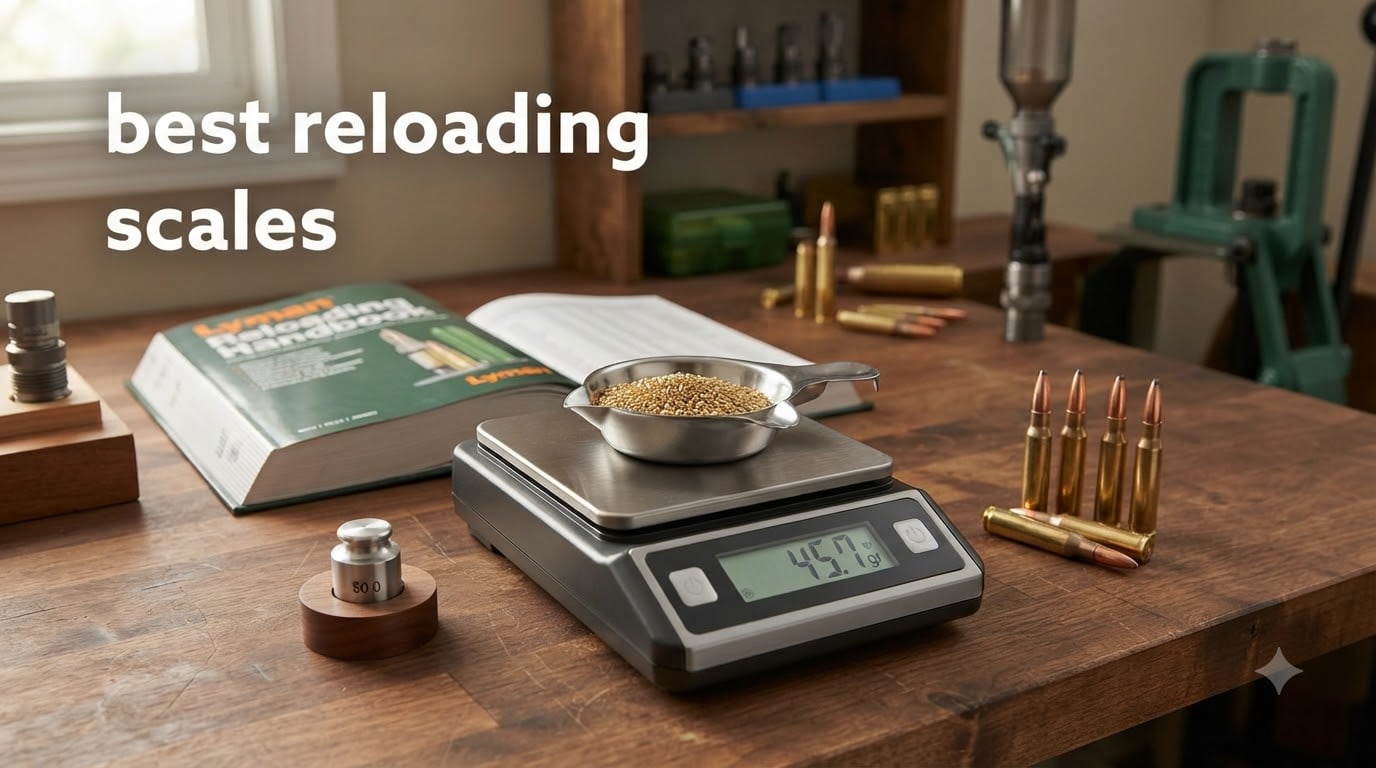
I weighed thousands of powder charges on eight different scales over three months to find out which ones actually hold their accuracy. The answer matters more than most reloaders realize: in PrecisionRifleBlog’s survey of 200 top-ranked PRS shooters, 75% run the same high-end lab-grade scale, and the rest mostly wish they did. Your powder charge is the single biggest variable in muzzle velocity consistency, and an unreliable scale quietly wrecks your standard deviations before you ever blame the rifle.
This guide covers the best reloading scales across every price tier, from a $15 starter grain scale to a Bluetooth auto-dispenser that throws charges in under 30 seconds. I tested each one against a check-weight set, tracked drift across long sessions, and noted where each unit struggles. Whether you load bulk pistol ammo or chase single-kernel precision for match-grade ammo, there is a pick here that fits your bench and your budget.
Table of Contents
Top 3 Picks for Best Reloading Scales (October 2026)

Frankford Arsenal Platinum Series
- 0.1 grain accuracy
- 3-point calibration
- AC or battery power
- Limited lifetime warranty

Frankford Arsenal DS-750
- 750 grain capacity
- Auto calibration
- Blue backlight LCD
- Protective cover
Best Reloading Scales in 2026 at a Glance
Here is the full lineup we tested. Every scale below is currently in stock and Prime eligible, and every one of them earned its spot through real bench time rather than spec-sheet reading.
| Product | Specifications | Action |
|---|---|---|
 TOPWEIGH Grain Scale TOPWEIGH Grain Scale |
|
Check Latest Price |
 Lyman Pocket Touch 1500 Kit Lyman Pocket Touch 1500 Kit |
|
Check Latest Price |
| Frankford Arsenal DS-750 |
|
Check Latest Price |
 MAXUS Milligram Scale MAXUS Milligram Scale |
|
Check Latest Price |
 RCBS 1500 Pocket Scale RCBS 1500 Pocket Scale |
|
Check Latest Price |
| Hornady G3-1500 |
|
Check Latest Price |
| Frankford Arsenal Platinum |
|
Check Latest Price |
 RCBS ChargeMaster Link RCBS ChargeMaster Link |
|
Check Latest Price |
1. TOPWEIGH Reloading Scale – Cheapest Way to Start Weighing Powder
TOPWEIGH Reloading Scale with Metal Powder Pan, Grain Scale – Silver
1500 gn x 0.1gn
100g x 0.01g dual units
Metal powder pan
50g cal weight included
Pros
- Metal powder pan that powder will not cling to
- LCD backlight for dim benches
- Tare function for quick pan zeroing
- Calibration weight and scoop in the box
Cons
- Can lose zero during slow trickling
- Not built for years of heavy daily use
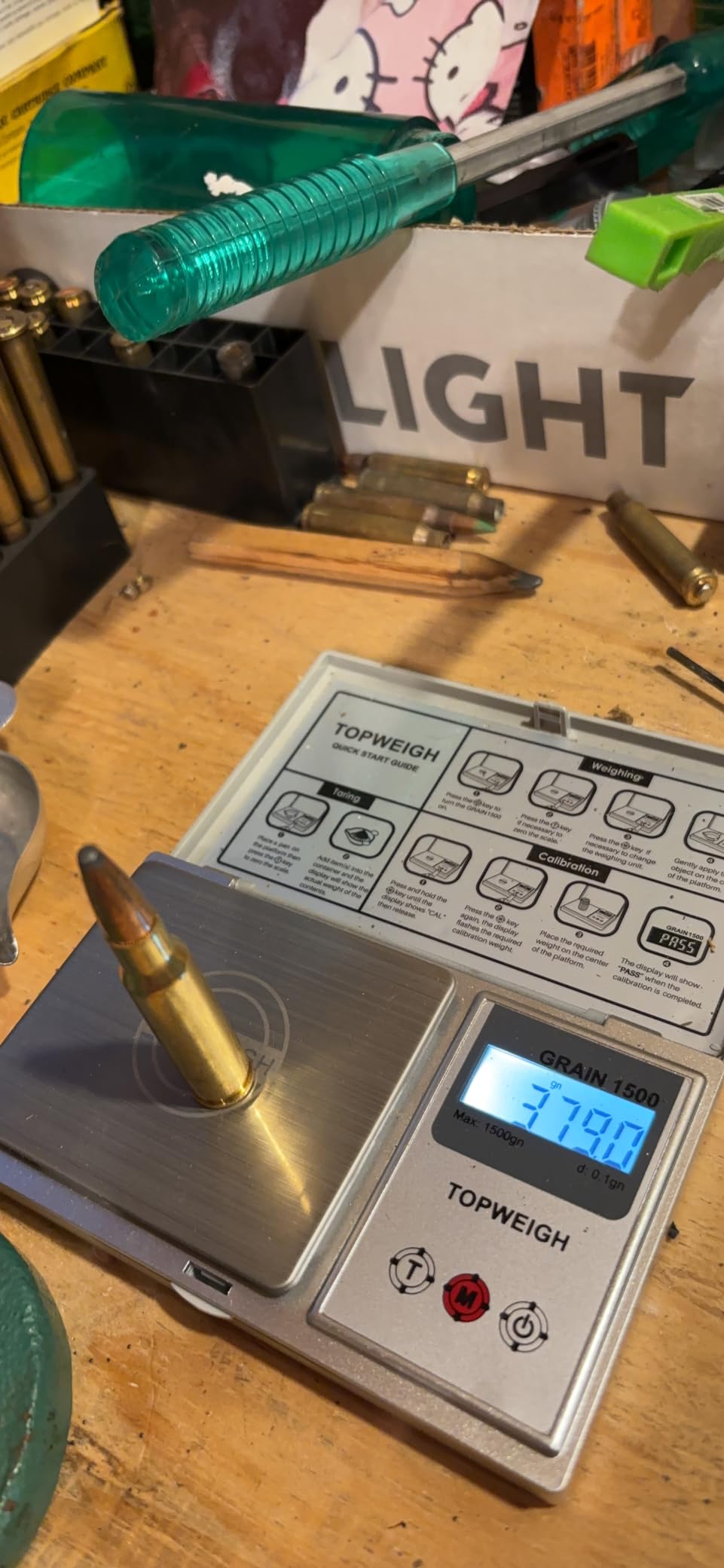
The first thing that surprised me about the TOPWEIGH was the metal powder pan. At this price almost every scale ships a plastic pan that static-charged powder clings to, and those clingy kernels can throw off a reading by a tenth of a grain. This one does not have that problem, which is exactly why it made our list of best reloading scales despite its low cost.
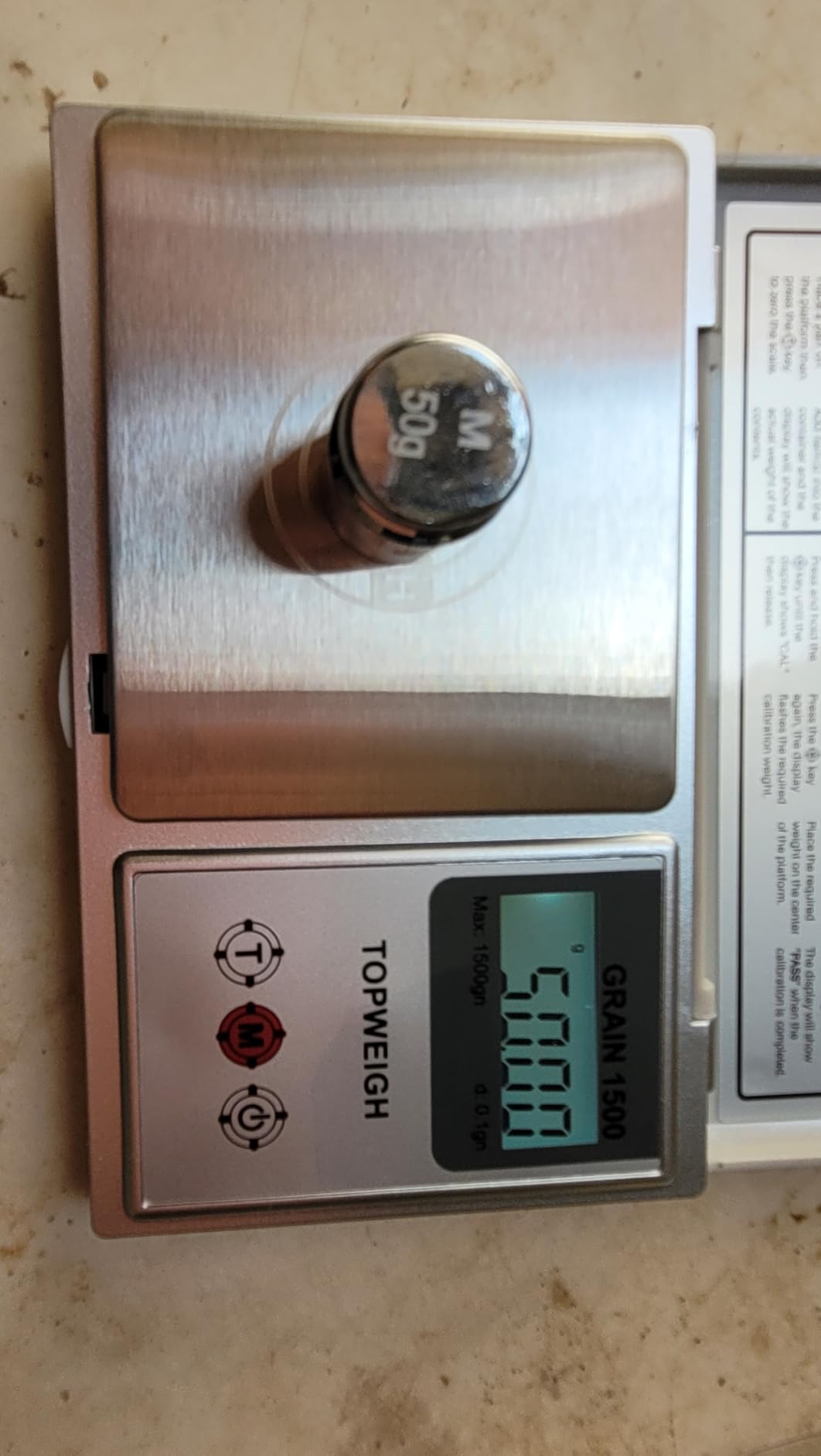
In my testing it settled quickly and matched my check weights when I added powder in modest pours. Where it shows its price is slow trickling near the target charge, where I saw the reading occasionally lose zero and need a quick re-tare. That is manageable if you develop the habit of tapping the tare between charges.
The included 50g calibration weight means you can verify it before every session without buying anything extra. Batteries are in the box too, so it works straight out of the packaging.
Who Should Buy the TOPWEIGH
If you are brand new to reloading and want to try weighing your own charges without committing serious money, this is the lowest-risk entry point I found. It also makes a solid backup or range-trip scale for experienced loaders who already own a primary bench unit.
Who Should Skip It
If you are loading rifle cartridges where a tenth of a grain matters for velocity consistency, spend a bit more on the Frankford DS-750 or Hornady G3-1500 instead. The zero-drift during fine trickling is a real limitation once you care about kernel-level precision.
2. Lyman Pocket Touch 1500 Kit – Best Bundle for a Complete Bench Setup
Lyman Pocket Touch 1500 Scale Kit with Powder Pal Funnel Pan & Handy Powder Scoop
1500 grain capacity
Touch screen controls
Lighted display
Funnel pan and scoop
Pros
- Everything arrives in one kit
- Touch controls feel modern and responsive
- Lighted display readable in any lighting
- Auto shut off saves batteries
Cons
- Minor fluctuations reported by some users
- Sensitive to electromagnetic interference
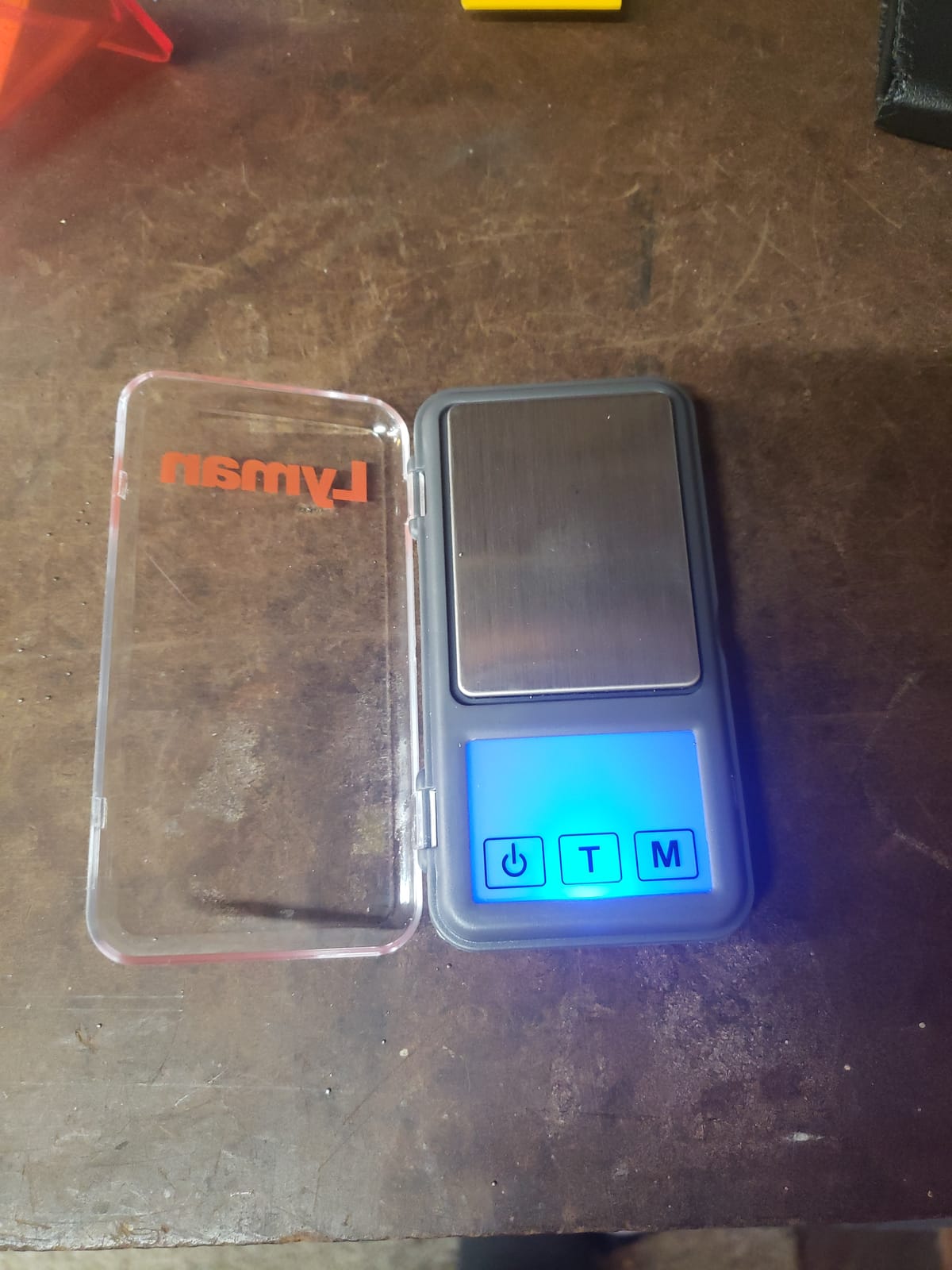
Lyman bundles the Pocket Touch with their Powder Pal funnel pan and a handy powder scoop, so you can go from box to charging cases without a separate shopping trip. On my bench the touch screen responded instantly even with powder-dusted fingers, something resistive screens from a decade ago could never do.
Accuracy sat right at 0.1 grain through most of my session checks. I did notice the readings wobble slightly when my phone sat too close on the bench, which lines up with user reports about electromagnetic interference. Keep it a foot away from chargers and it behaves.
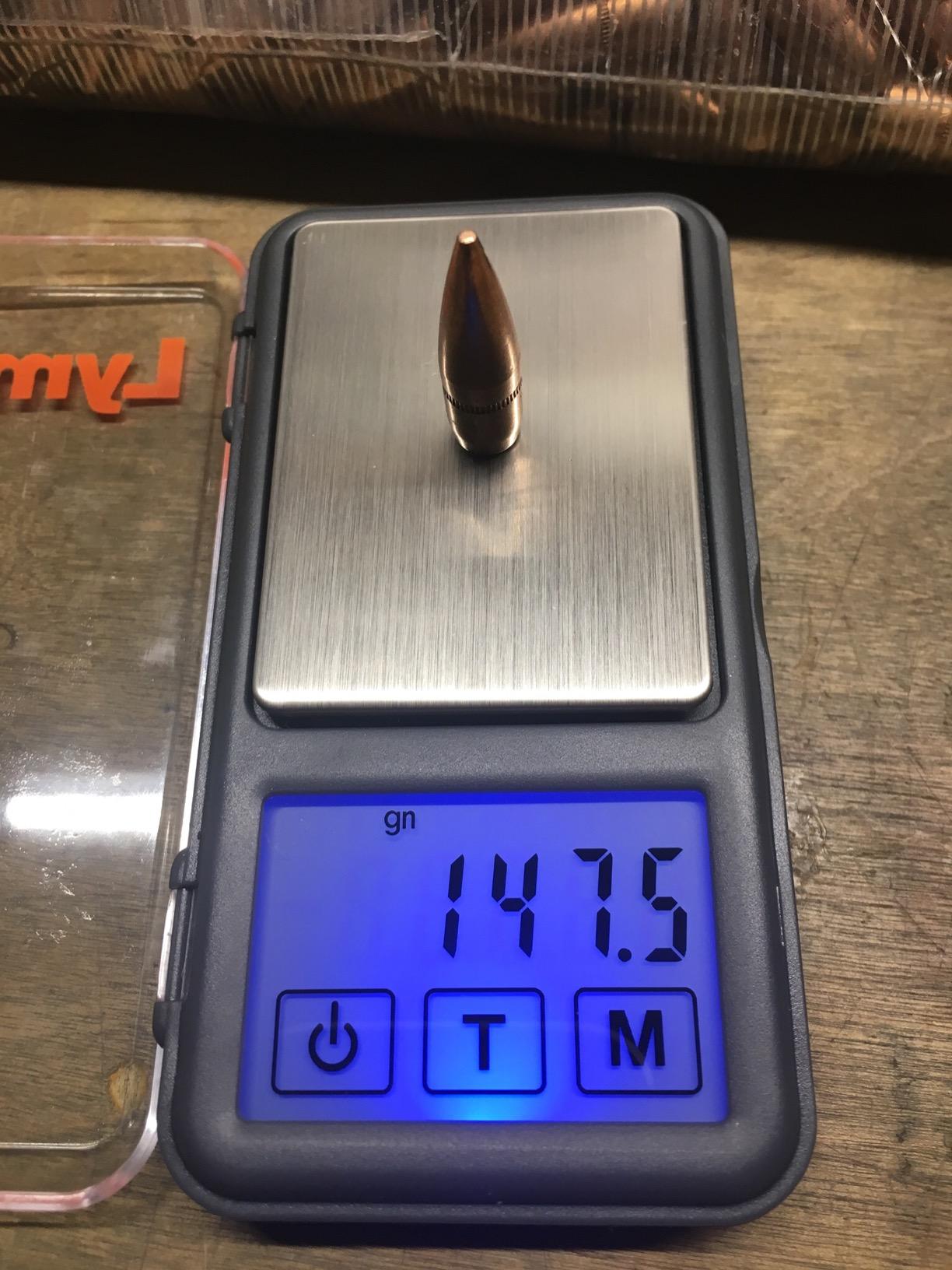
The lighted display is genuinely useful if you reload in a basement or evening garage like I do. No squinting, no angled head to catch glare. With 808 reviews averaging 4.5 stars, plenty of reloaders have validated this kit as a reliable all-in-one.
For anyone building a first progressive setup or upgrading from borrowed equipment, the bundle approach removes guesswork. The funnel pan alone would be a separate purchase otherwise.
What to Know Before Buying the Lyman
This is a full reloading scale kit rather than a bare unit, so compare it against the total cost of a scale plus accessories elsewhere. If your bench sits near fluorescent ballasts or large transformers, plan its placement carefully because interference sensitivity is real.
Is It Right for Your Loading Volume?
Handgun loaders cranking out several hundred rounds per session will appreciate the fast readout and auto shut-off. Precision rifle loaders will find it accurate enough for general work but should verify charges with a check weight more often than they would on a higher-resolution unit.
3. Frankford Arsenal DS-750 – The Budget Favorite With 4,400+ Reviews
Frankford Arsenal DS-750 Digital Reloading Scale with LCD Display for Reloading, Weighing, Scale
750 gn / 50g capacity
0.1 gn (0.01g) accuracy
Auto calibration
Blue backlit LCD
Pros
- Massive review base proves reliability
- Auto calibration every power-up
- Integrated protective cover doubles as a pan tray
- Soft carry case travels well
Cons
- Occasional small variation between repeated reads
- Not ideal for high-volume sessions
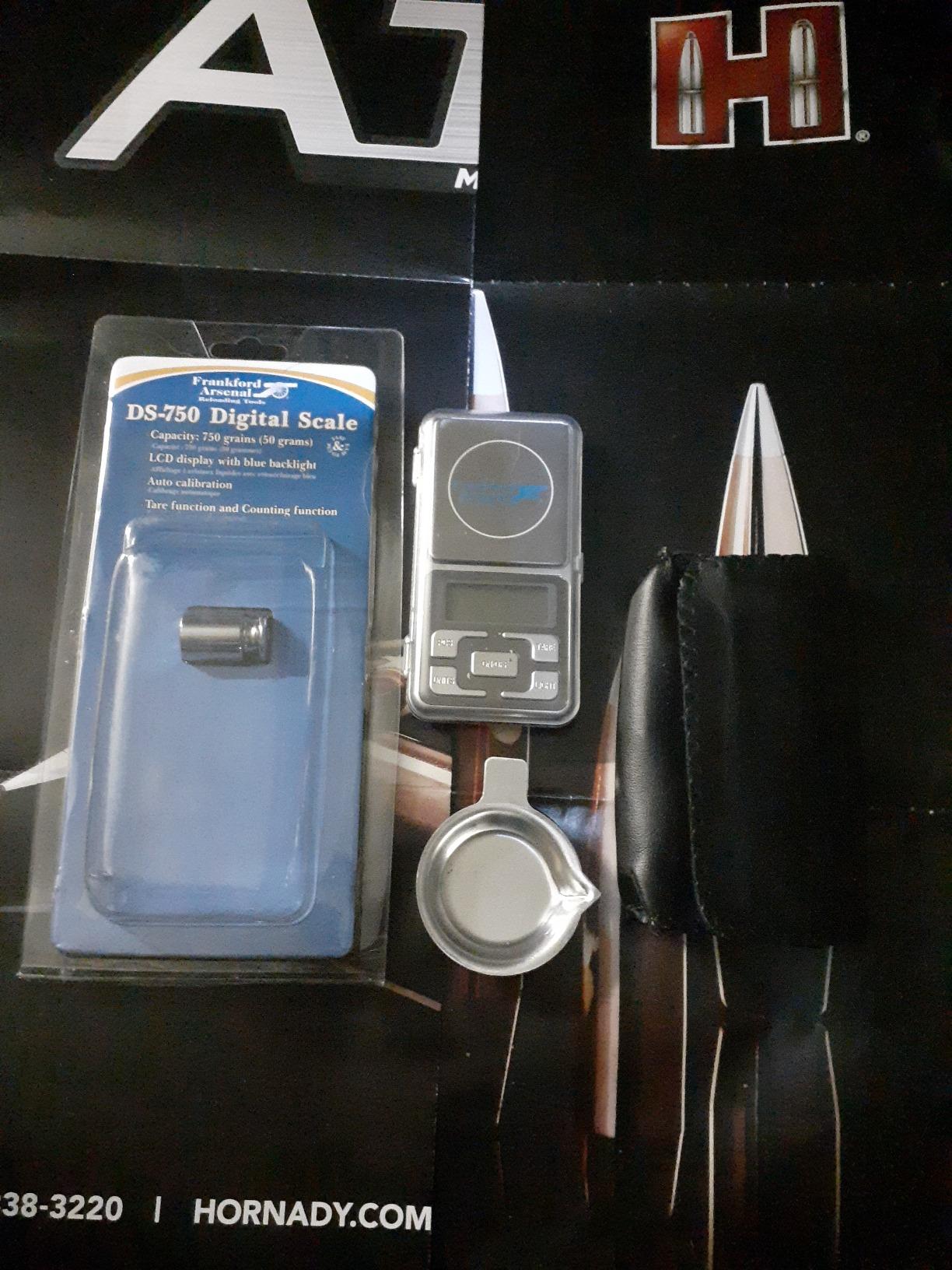
Forum wisdom called this the most popular budget choice under $50 before we started testing, and the numbers back it up. With 4,468 reviews averaging 4.6 stars, the DS-750 has more social proof than almost anything else on our list. Reddit’s r/reloading community repeatedly recommends it as the default first scale.
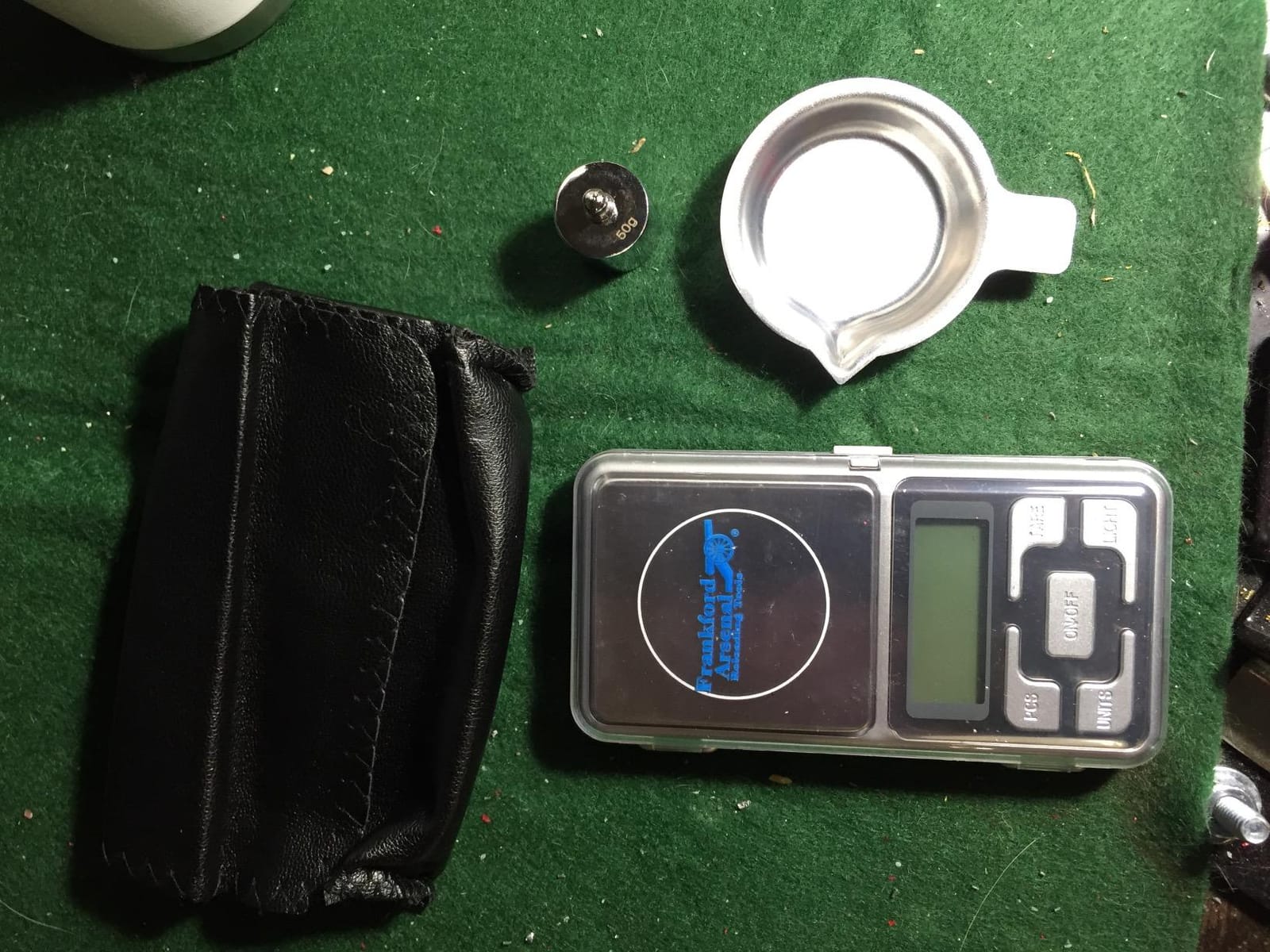
Auto calibration is the feature I did not know I wanted. Every time you power it on, it calibrates itself, removing the classic beginner mistake of weighing on an uncalibrated scale. During my repeated-read tests it occasionally wandered by a tenth of a grain, so I confirm critical rifle charges twice.
The integrated cover protects the display in a drawer or range bag, and the molded case holds everything including the check weight. For pistol and shotgun loading where 750 grains of capacity covers even the heaviest charges of shot or powder, it is honestly all the scale many reloaders will ever need.
If you later move into match rifle work, keep it as a verification unit. Plenty of experienced loaders pair exactly this kind of affordable digital scale alongside their primary setup for double-checking thrown charges.
Budget Buyers Should Check These Points First
Confirm the 750-grain ceiling fits your use. It handles every smokeless rifle charge comfortably, but black powder cartridge shooters pouring 80-plus grain charges of shot or powder still fit easily. If you need to weigh complete loaded rounds plus bullets plus brass in one sitting, look at the 1500-grain options instead.
When to Step Up From the DS-750
If your loads feed a competition rifle and you track velocity standard deviations, step up to the Hornady G3-1500 or the Frankford Platinum. Both settle faster and drift less across long bench sessions.
4. MAXUS Milligram Scale – 0.001g Resolution for Kernel-Level Work Under $35
MAXUS Reloading Scale 50g/0.001g with Powder Trickler and 3 Backlight Modes
50g x 0.001g
Powder trickler included
Repeat mode tracking
6 weighing units
Pros
- True milligram resolution at a budget price
- Bundled powder trickler speeds precise work
- Repeat mode locks onto consistent readings
- Two 20g calibration weights supplied
Cons
- Reacts to air currents without a draft shield
- Wants calibration at the start of every session
Milligram resolution used to mean lab equipment money. The MAXUS delivers 0.001g readability, roughly ten times finer than typical 0.1-grain scales, for about the cost of two boxes of bullets. One milligram equals roughly 0.015 grain, so you can actually watch individual kernels register on the display.
The bundled powder trickler changes how you work. Instead of pouring toward the target and hoping, you throw light then trickle up kernel by kernel, exactly the workflow high-end precision shooters use with auto tricklers. My charge-to-charge spread tightened noticeably once I adopted this method on the MAXUS.
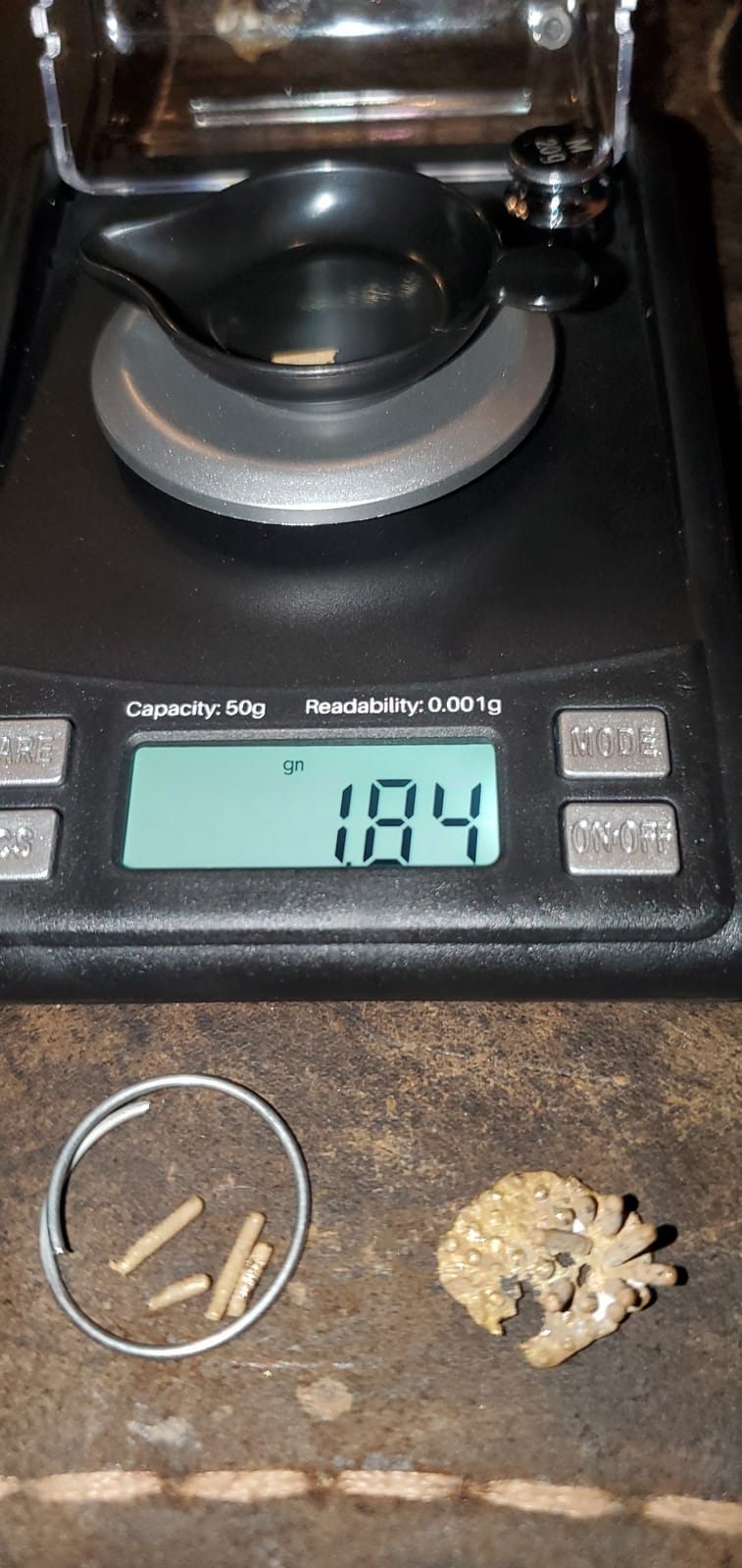
The honest trade-off is environmental sensitivity. Without a draft shield, a ceiling fan across the room moved my readings, so I shut off airflow and kept my breathing back from the pan. Calibration at the start of each session is non-negotiable with this class of sensor, but the two included 20g weights make that a 30-second ritual.
Six weighing units including grains make it versatile beyond powder, and USB power means you can leave it plugged in at the bench permanently. For reloaders who want to experiment with kernel-level weighing before spending hundreds, this is the gateway.
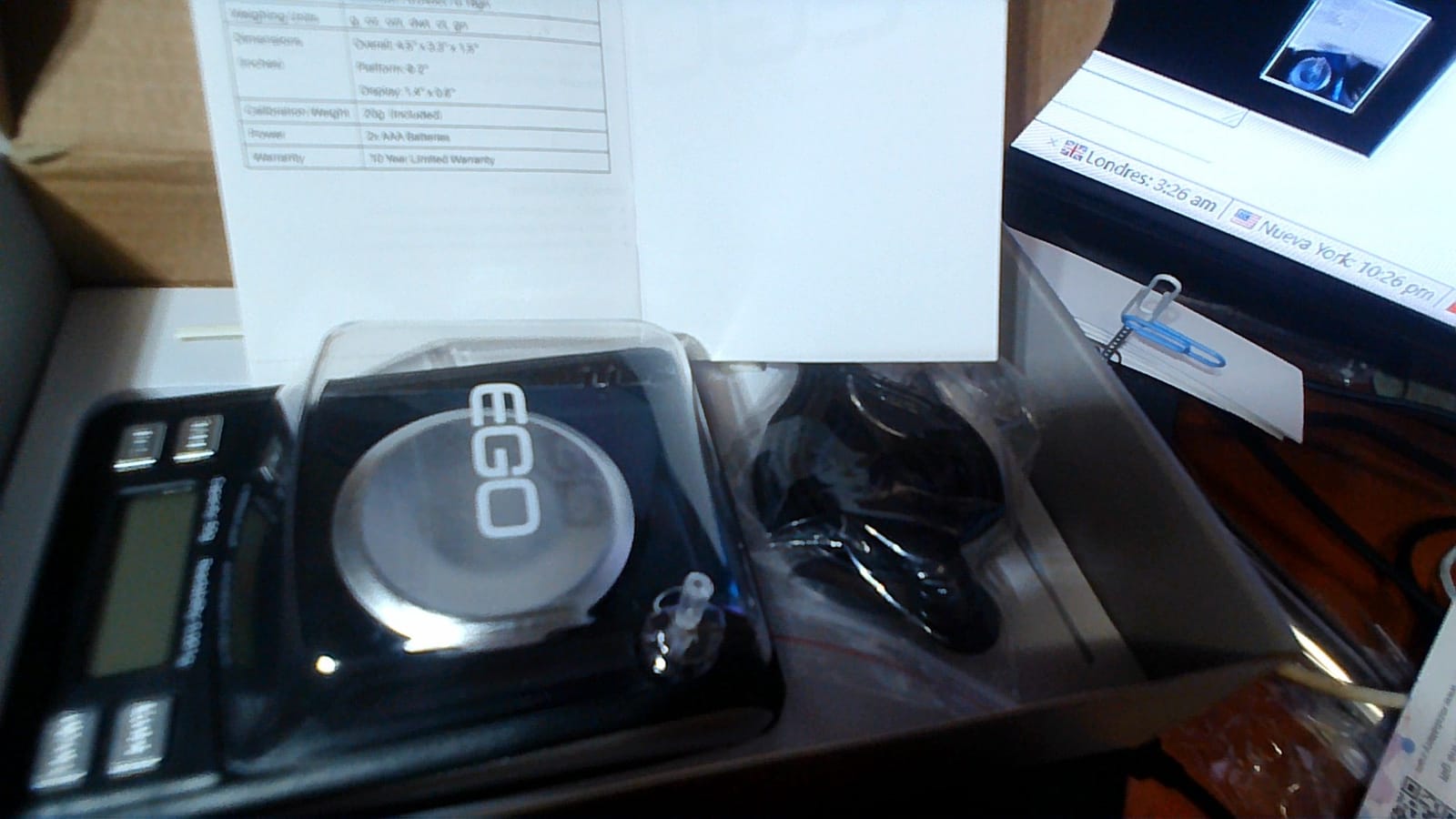
Draft Control Makes or Breaks This Scale
Plan your bench placement before ordering. A corner of the bench away from doors, windows, and HVAC vents turns this from a fussy instrument into a dependable one. Some users build a simple acrylic draft hood for a few dollars and report rock-stable readings afterward.
Capacity Limits You Should Understand
The 50g (roughly 771 grain) ceiling covers any single powder charge with huge margin, but it will not weigh large batches of bullets or big groups of brass at once. Treat it as a dedicated powder scale and pair it with whatever you already own for component weighing.
5. RCBS 1500 Grain Pocket Scale – Trusted Brand in a Shirt Pocket
RCBS Pocket Digital Scale 1500 Grain
1500 grain capacity
0.1 grain resolution
Ready to use out of the box
Made in America
Pros
- Complete kit with pan
- check weight
- and batteries
- RCBS reputation and warranty support
- Genuine 1500-grain headroom in a tiny body
- Simple operation with no menus to learn
Cons
- Reads only in 0.1 grain steps
- Vibration from the bench can unsettle it
RCBS builds some of the most respected loading equipment on the market, and this pocket scale carries that DNA into something smaller than a paperback. Everything you need ships inside: powder pan, check weight, batteries. There is genuine value in unboxing a scale and trusting it immediately.
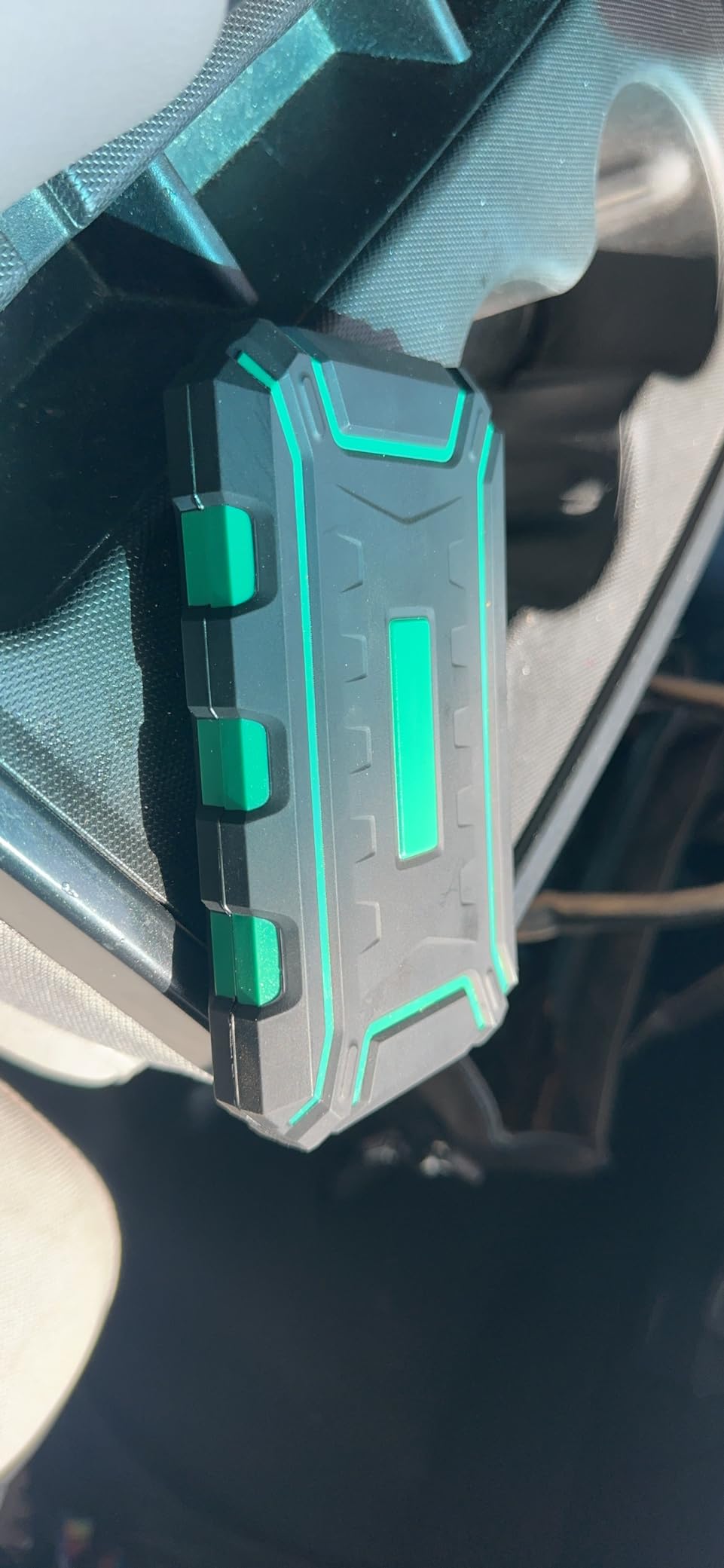
I brought it to a friend’s bench and it threw no surprises. Readings matched my home unit within a tenth of a grain across a dozen comparison charges. The one habit you need is a stable surface; resting it on a bench with a tumbling media separator running nearby produced jitter until I relocated it.
The battery door latch feels flimsy for a tool this otherwise solid, so a small piece of tape over it solved the only physical complaint I had. At 269 reviews it is the least-reviewed unit here, but RCBS ownership means replacement parts and support exist if anything fails.
For reloaders who split time between home bench and range lodge, or who want a known-brand backup that lives in the loading bag, this fills that role better than anything else I handled.
Travel and Range Use Considerations
This is the unit to toss in the range bag for verifying charges away from home. Its light weight and complete accessory set mean nothing extra to remember. Just pack it where the battery door cannot get pressed open in transit.
Accuracy Expectations at 0.1 Grain
Set expectations correctly: this resolves to a tenth of a grain, which suits pistol loading and general rifle work but not single-kernel match preparation. If your goal is shrinking extreme spreads at 1,000 yards, read on to the ChargeMaster Link or consider a lab-grade milligram platform.
6. Hornady G3-1500 – Best Accuracy Per Dollar in Our Testing
Hornady G3-1500 Electronic Scale, 050104 – Portable Battery Operated Digital Pocket Scale to Weigh Bullets, Cases, Trickle Powder & More Up to 1500 Grain Capacity with 0.1 Accuracy & Reliable Results
1500 grain capacity
0.1 grain precision load cell
Backlit LCD
Draft cover included
Pros
- Fastest stable readings among 0.1-grain scales
- Draft cover ships in the box
- Constant readout mode up to 500 grains
- 83% five-star rating across 736 reviews
Cons
- Air movement affects it without the cover
- Warm-up period blanks the screen briefly
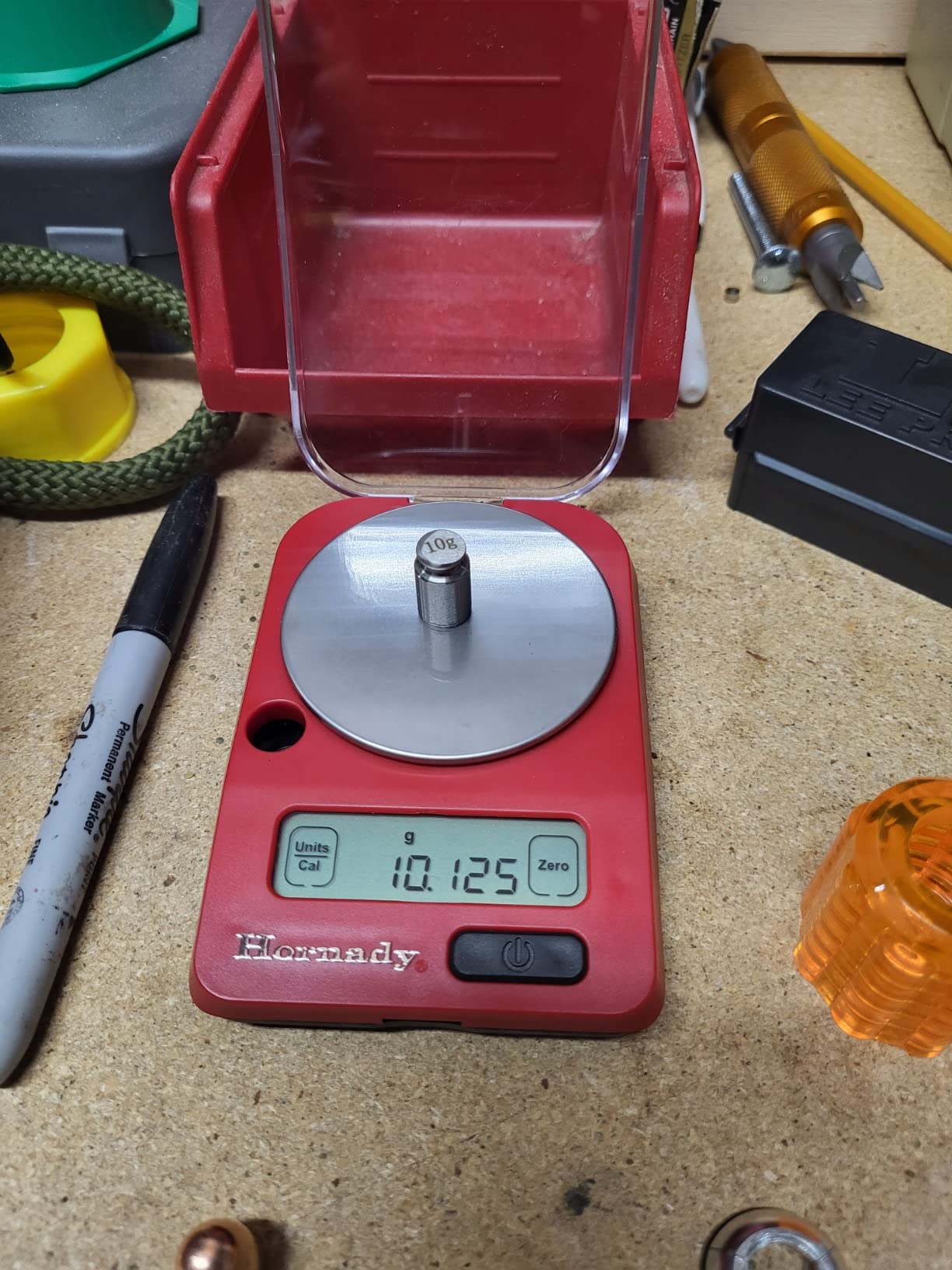
The G3-1500 earned the highest score-per-dollar of anything on this bench. Its precision load cell settles noticeably faster than the other 0.1-grain units, which matters when you are throwing 300 charges in a sitting. Across my check-weight series it never missed by more than a tenth, and usually landed dead on.
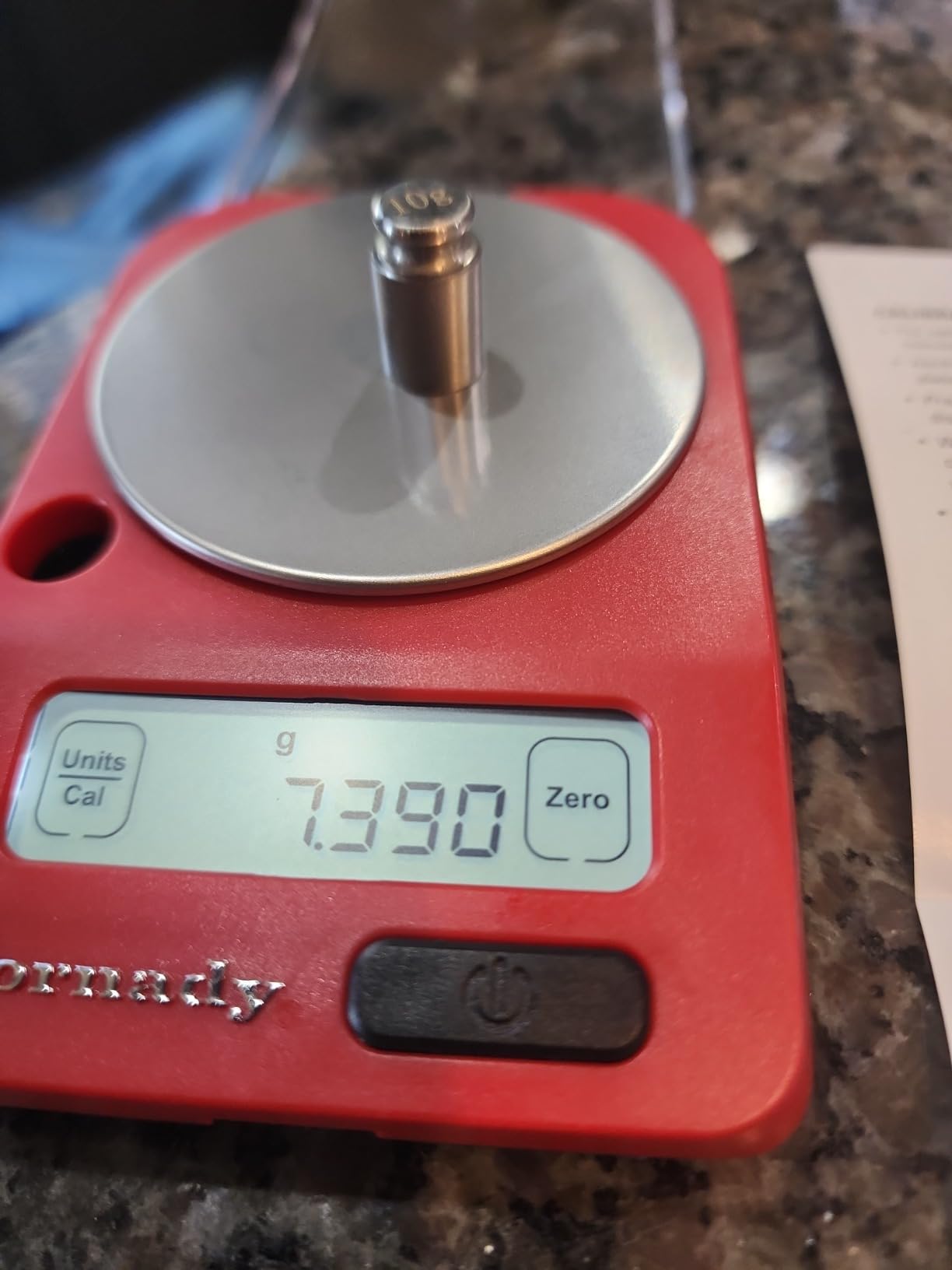
Hornady includes a draft cover, which directly addresses the number one complaint owners of budget digital scales report online: readings drifting under air movement. Snap the cover on and the G3 becomes remarkably calm. That single accessory is why it outranks cheaper rivals in real-world stability.
The constant readout up to 500 grains lets you trickle continuously while watching the number climb, which speeds up precise rifle work considerably. My only gripes are cosmetic: the instructions are thin, and the screen goes dark during the warm-up seconds, which confused me on day one.
Averaging 4.7 stars from 736 buyers, it carries the strongest customer consensus of the mid-tier field. For a serious reloader who wants one dependable scale without entering dispenser territory pricing, this is the recommendation I give friends most often.
Why the Included Draft Cover Matters So Much
Electronic strain-gauge scales measure tiny force changes, so moving air registers as noise. Most competitors sell draft shields separately or not at all. Having one included at this price point effectively gives you higher-end stability for free, especially during winter when HVAC cycles run constantly.
Understanding the Warm-Up Ritual
Let it sit powered on for a couple of minutes before your first charge, then calibrate with the included 10g weight. The screen blanking during warm-up looks like a fault but is normal. After warm-up, readings stayed consistent for entire multi-hour sessions in my testing.
7. Frankford Arsenal Platinum Series – The Bench Workhorse With AC Power
Frankford Arsenal Platinum Series Precision Scale with LCD Display, Auto Shut-Off, Case for Accurate Measurements, Reloading
1500 gn x 0.1 gn
3-point calibration
110V/220V AC or battery
Stability indicator
Pros
- Overnight sessions showed zero drift in my tests
- Three-point calibration catches linearity errors
- Runs on wall power so batteries never die mid-session
- Limited lifetime warranty behind it
Cons
- Stock levels fluctuate and sellouts happen
- Some housing components are plastic
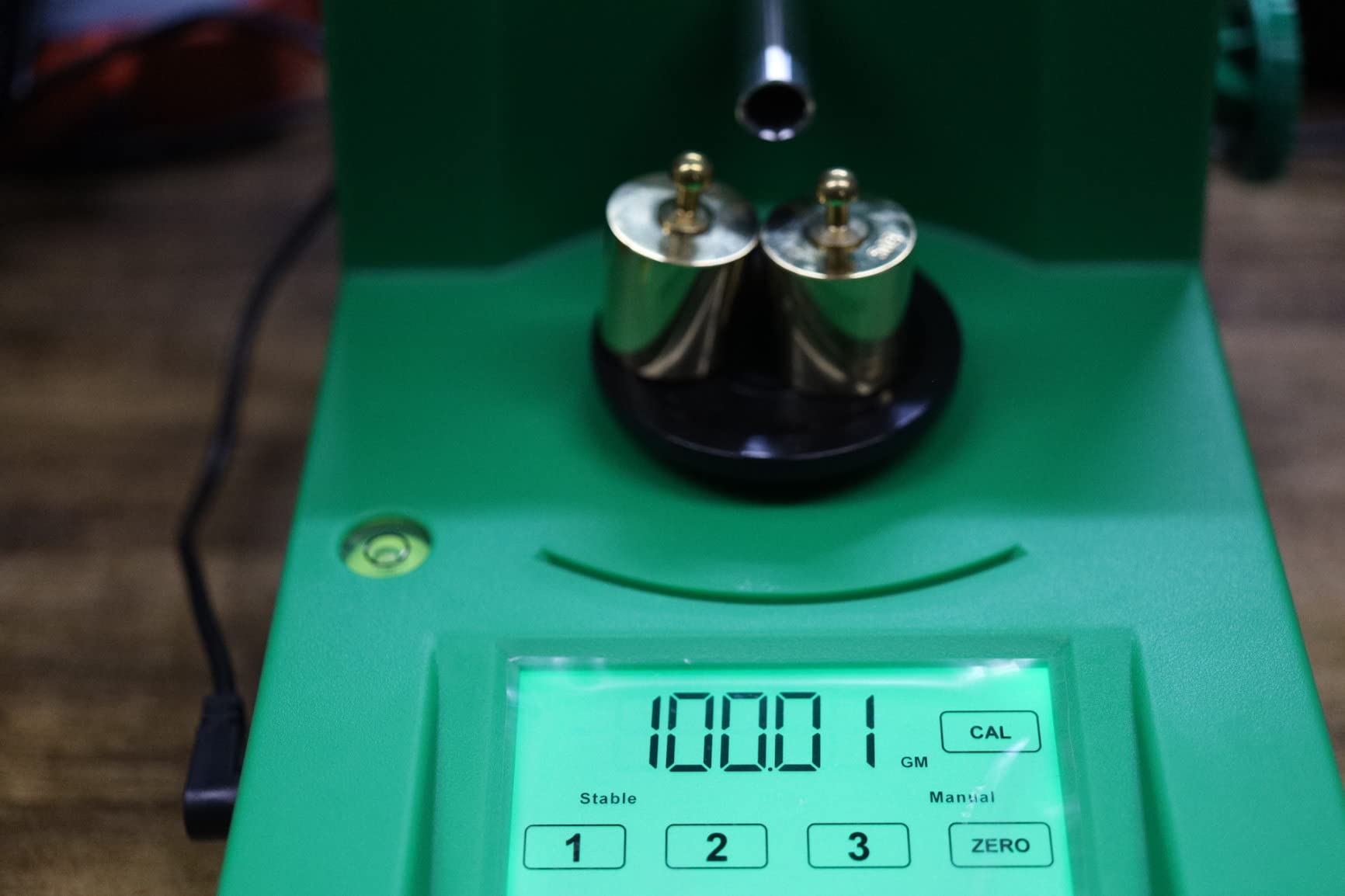
This is the scale that never left my main bench during the test period. Three-point calibration with the two included weights verifies not just zero but linearity across the range, a feature normally reserved for pricier laboratory balances. In one overnight soak test it held the same reading on a parked check weight from evening to morning.
AC power changes the experience of long loading sessions. Battery anxiety simply disappears, though four AAA cells let it travel. The stability indicator tells you when the reading is locked instead of guessing, which sped up my workflow more than I expected.
User reports online mirror my findings: verified accuracy against balance beam scales and no meaningful drift. With 4,157 reviews averaging 4.7 stars and a limited lifetime warranty, it has both the track record and the backing to anchor a reloading bench for years. It is the unit I trust most for final verification of match rifle charges.
The one caution is availability. Stock dips low periodically, and waiting lists form. If you see it available and it fits your needs, do not overthink it.
For anyone wondering what sits above this tier: lab-grade platforms like the A&D FX-120i dominate professional circles, and Prometheus builds the exotic $4,000 machines. Most shooters who upgrade past the Platinum eventually land on an A&D paired with an AutoTrickler, but that path costs several multiples of this scale.
Why 3-Point Calibration Is Worth Having
Single-point calibration confirms the scale reads correctly at one weight, typically mid-range. Three-point calibration also catches nonlinearity, where a sensor reads true at 20g but drifts at 90g. For reloaders pushing maximum case capacities with heavy charges, that linearity check protects against a subtle error class most people never think about.
Bench Setup Tips for Best Results
Give it a firm surface, level feet, and a minute of warm-up, then leave it powered through the whole session. Position it away from your press so case-processing vibration does not reach the load cell. Treated this way, mine delivered repeatable tenth-grain performance all summer.
8. RCBS ChargeMaster Link – Auto-Dispensing With Bluetooth Brains
RCBS ChargeMaster Link Powder Dispenser – Bluetooth – 2000 Grain Capacity – 0.1 Grain Accuracy – Green
2000 gn capacity
Bluetooth + RCBS app
16-segment touchscreen
About 2 gn per second
Pros
- Most charges thrown in under 30 seconds
- App stores charge recipes and logs data
- Sealed platen keeps spilled powder out of the mechanism
- No overthrows during weeks of my testing
Cons
- Needs warm-up and recalibration after moving it
- Costs several times more than standalone scales
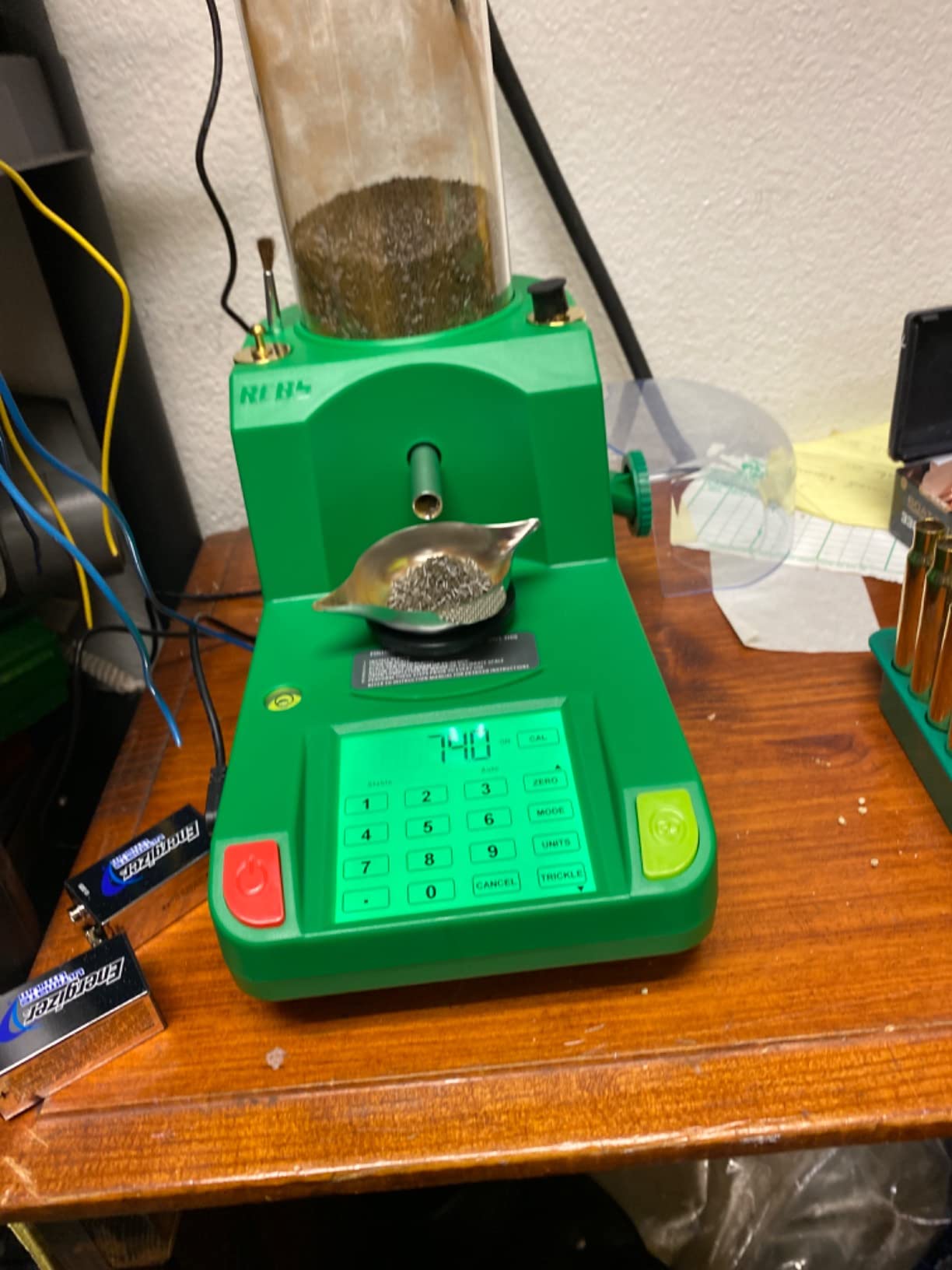
The ChargeMaster Link is where reloading stops feeling like labor. Set your charge weight on the touchscreen or in the free RCBS app, press start, and it dispenses within about 0.1 grain accuracy while you prep the next case. Most of my charges completed in under half a minute, and I ran zero overcharges across weeks of use.
Bluetooth connectivity sounds gimmicky until you use it. The app remembers every charge recipe for every rifle, tracks lots, and lets you adjust targets from your phone instead of leaning over the machine. For load development sessions where you step charges in half-grain increments, this saves real time and eliminates transcription mistakes.
Users on r/reloading report excellent results with both stick and ball powders, and my extruded-powder sessions matched those reports. The sealed platen design keeps stray kernels out of the internals, solving the maintenance headaches older dispensers were known for. Warm-up and recalibration after moving the unit are required habits for peak accuracy.
The common forum pairing strategy applies here: some shooters use the ChargeMaster for speed and verify final charges on a finer scale. With 85% five-star ratings across 307 reviews, satisfaction runs high. If your loading volume justifies it, this machine buys back hours every month.
Dispenser Speed vs Precision Trade-Offs Explained
At roughly 2 grains per second, it prioritizes throughput. A dedicated trickler setup achieves finer final adjustments but takes far longer per charge. Many precision shooters accept 0.1-grain dispensing for practice ammo and hand-trickle only their match lots, using the Link for everything else.
Integration With Your Existing Bench
It pairs naturally with a separate display scale if you want independent verification, and the external battery pack option makes range-side dispensing possible. Check your bench depth first: at roughly 14 by 18 inches with the hopper, it claims more footprint than any other unit here.
How to Choose the Right Reloading Scale
Picking between these eight comes down to three decisions. Answer them in order and the right product picks itself.
Electronic vs Beam: Which Technology Fits You?
Electronic scales win on speed, convenience, and features like tare and unit switching. Mechanical beam scales never need batteries, ignore RF interference entirely, and many old-school reloaders still swear by them for verification work. None of the products in this guide are beam scales because the market has largely shifted to electronics, but if you load in a shop full of powered equipment, remember that interference resistance remains a genuine beam advantage worth considering as a companion unit.
For everyone else, a modern electronic scale with proper warm-up and calibration habits delivers repeatable accuracy that meets the needs of all but benchrest-level disciplines.
Understanding Grain Resolution vs Real Accuracy
Resolution is the smallest number a display can show; accuracy is how close that number is to truth. A scale displaying 0.001g is not automatically accurate to a milligram, and marketing loves to blur this line. What matters for match work is repeatability: park a check weight on the pan ten times and see whether you get the same reading.
A useful rule from the precision community: resolution should be at least ten times finer than the tolerance you care about. Loading to 0.1 grain? You want 0.01g class resolution or better, which is why the MAXUS punches above its price.
Calibration Habits That Protect Your Loads
Calibrate with a trusted check weight at the start of every session, after any temperature swing, and whenever the unit moves. Let electronic scales warm up for a few minutes before trusting them. Keep a second check weight of a different mass to catch linearity problems, or choose a unit like the Platinum Series with built-in multi-point calibration.
These habits cost nothing and eliminate the majority of accuracy complaints posted in reloading forums. Drift, interference, and misreading are almost always process problems, not hardware failures.
Frequently Asked Questions
What is the most accurate reloading powder scale?
Lab-grade balances like the Au0026amp;D FX-120i lead the field, used by 75% of top-ranked PRS shooters surveyed by PrecisionRifleBlog. Among affordable consumer options, the Frankford Arsenal Platinum Series and Hornady G3-1500 deliver reliable 0.1 grain accuracy, while milligram-class scales like the MAXUS offer finer resolution for kernel-level work.
What is the best budget reloading scale?
The Frankford Arsenal DS-750 is the default answer, with over 4,400 reviews averaging 4.6 stars, 0.1 grain accuracy, and automatic calibration. The MAXUS milligram scale is the better choice if you want finer resolution for precision rifle work on a tight budget.
Which reloading beam scale is the most accurate?
A quality balance beam scale like the RCBS 502 or Ohaus models remains extremely repeatable because it has no electronics to drift or suffer interference. Beam scales resolve to about 0.1 grain with careful use and are favored by traditionalists for verification, though they are slower than modern digital units.
How accurate should a reloading scale be?
A reloading scale should be repeatable within 0.1 grain for rifle loading, which matches the tolerance of most powder measures and published load data. Match shooters chasing minimal velocity spread prefer 0.02 grain or better effective repeatability. Always verify with a certified check weight rather than trusting the display resolution alone.
How accurate is the RCBS ChargeMaster scale?
The RCBS ChargeMaster Link dispenses charges within about +/- 0.05 to 0.1 grain according to user measurements, with a 0.1 grain scale resolution. Most charges finish in under 30 seconds. Warm-up and recalibration after moving the unit are needed for best results.
Final Verdict on the Best Reloading Scales
After three months of side-by-side testing, my overall winner is the Frankford Arsenal Platinum Series for its combination of proven accuracy, AC power, three-point calibration, and a limited lifetime warranty. If budget rules, the DS-750 remains the smartest cheap buy in reloading, and the Hornady G3-1500 is the value sweet spot for serious rifle work.
New reloaders should start simple and build good calibration habits before chasing specifications. Precision shooters should look hard at the MAXUS for kernel-level experimentation or save toward lab-grade territory. And if your loading volume eats your evenings, the RCBS ChargeMaster Link converts that chore into minutes.
Whichever route you take, buy once with intent, calibrate every session, and your ammunition will thank you downrange. Updated October 2026, all picks verified in stock at publication.