
I have spent the better part of three years patching cables, twisting knobs, and losing track of time in front of semi-modular synths. There is something deeply satisfying about an instrument that works the moment you power it on, yet rewards you with near-infinite routing possibilities the second you plug in a single patch cable. If you are looking for the best semi-modular synthesizers in 2026, you are in exactly the right place.
A semi-modular synthesizer combines a normalled signal path (meaning it makes sound without any patching) with a patch bay that lets you override those internal connections. Think of it as a synth that plays itself out of the box but opens up like a modular rig when you want to go deeper. That dual personality makes semi-modular instruments the perfect bridge for musicians who want modular flexibility without the wallet-draining reality of building a full Eurorack system from scratch.
Our team compared 8 of the most talked-about semi-modular synths on the market right now, from budget-friendly desktop units under $200 to full keyboard instruments designed for studio and stage. We tested each one for sound character, patch point count, ease of use, and how well it integrates with other gear. Whether you are a first-time synth buyer or a seasoned producer looking to add another voice to your collection, this guide will help you find the right match.
Table of Contents
Top 3 Picks for Best Semi-Modular Synthesizers
After hundreds of hours of patching, sequencing, and recording, three instruments stood out above the rest. The Moog Grandmother delivers the most inspiring out-of-box experience we have had with any semi-modular. The Behringer Neutron offers an absurd amount of analog horsepower for the price. And the Korg Volca Modular gets you into West Coast synthesis for less than the cost of a single Eurorack module.

Moog Grandmother Semi-Modular Synthesizer
- 2 Oscillators
- Spring Reverb
- 41 Patch Points
- Built-in Sequencer

Behringer Neutron Semi-Modular Synth
- Dual 3340 VCOs
- Multi-Mode VCF
- Paraphonic
- Eurorack Format
8 Best Semi-Modular Synthesizers in 2026
Before we get into the deep reviews, here is a side-by-side look at all 8 instruments we tested. This comparison table covers the essentials so you can quickly narrow down your shortlist.
| Product | Specifications | Action |
|---|---|---|
 Moog Mother-32 Moog Mother-32 |
|
Check Latest Price |
| Moog Grandmother |
|
Check Latest Price |
 Korg Volca Modular Korg Volca Modular |
|
Check Latest Price |
 Behringer Crave Behringer Crave |
|
Check Latest Price |
 Moog Labyrinth Moog Labyrinth |
|
Check Latest Price |
| Behringer Neutron |
|
Check Latest Price |
 Make Noise 0-Coast Make Noise 0-Coast |
|
Check Latest Price |
 Korg MS-20 Mini Korg MS-20 Mini |
|
Check Latest Price |
1. Moog Mother-32: The Eurorack Gateway Synth
MOOG Mother-32 Semi-Modular Analog Synthesizer
Analog VCO
Moog Ladder Filter
32-Step Sequencer
Eurorack 60HP
MIDI In
Pros
- Pure analog warmth with big organic character
- Classic Moog ladder filter delivers deep musical quality
- Powerful 32-note step sequencer with two unique modes
- Works without any patch cables required
- Eurorack compatible for future expansion
Cons
- Single oscillator may feel limiting
- Sequencer controls require shift-functions
- Can feel basic once you own other synths
The Moog Mother-32 was my first real entry into semi-modular synthesis, and I remember the exact moment I patched the LFO into the filter cutoff for the first time. That single cable opened up a world of evolving textures I never could have achieved with a fixed-architecture synth. The Mother-32 has a 32-step sequencer that is surprisingly deep once you learn its shift functions, and the classic Moog ladder filter gives every patch a warm, musical character that sits beautifully in a mix.
What makes the Mother-32 special is its design philosophy. Moog built it as a tabletop instrument that also fits into a 60HP Eurorack slot, which means you can start with it on your desk and later slide it into a modular case as your system grows. I ran mine standalone for six months before integrating it into a rack, and the transition was seamless. The MIDI In port means you can sequence it from any DAW or controller without needing a separate MIDI-to-CV converter.
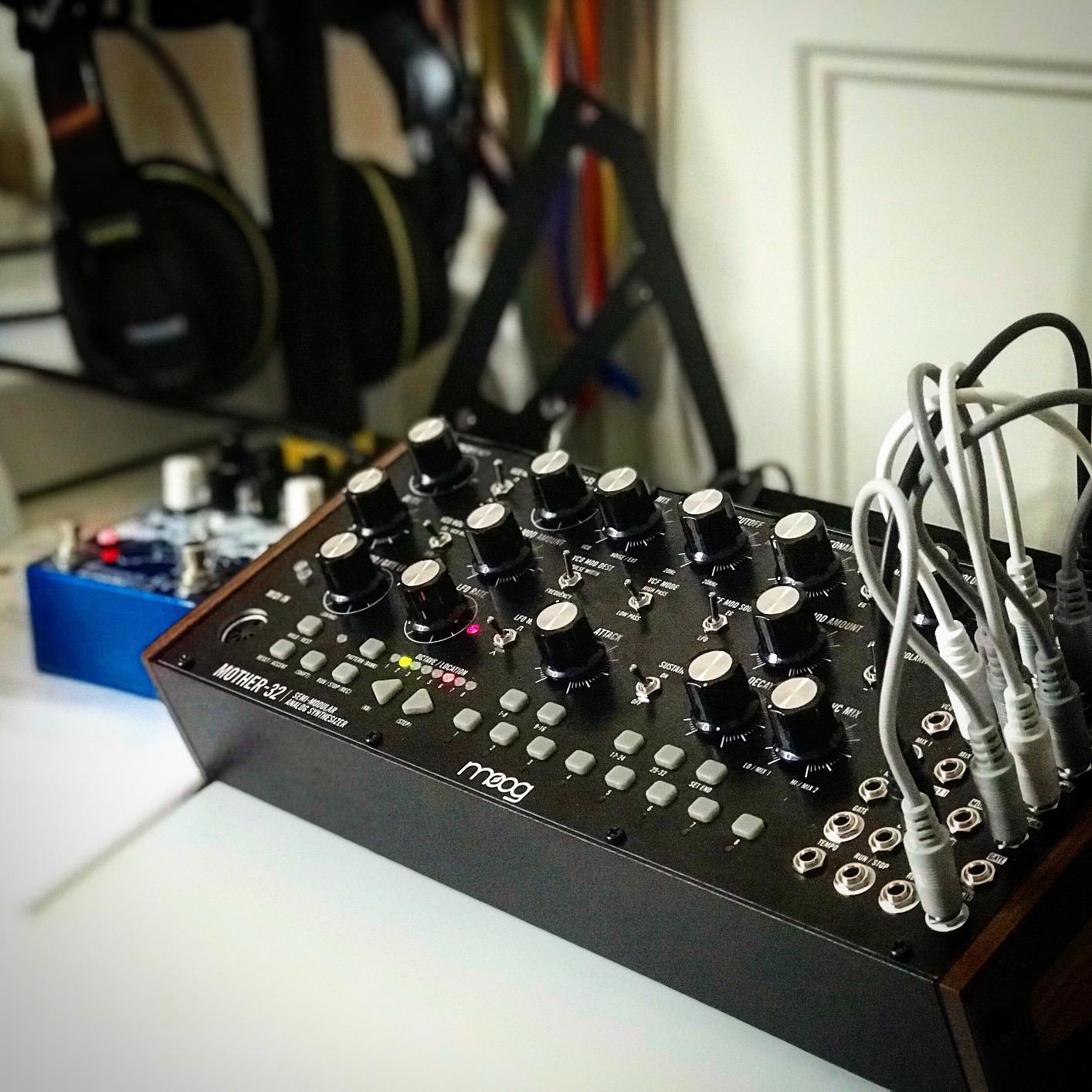
On the technical side, the Mother-32 packs a single analog voltage-controlled oscillator, a white noise generator, the aforementioned ladder filter, and an external audio input. The patch bay gives you access to 32 patch points that let you reroute the LFO, envelope, oscillator, and sequencer in creative ways. One of my favorite patches routes the assignable LFO output to the VCO pitch, creating slow drifting drones that sound like they belong on a sci-fi soundtrack.
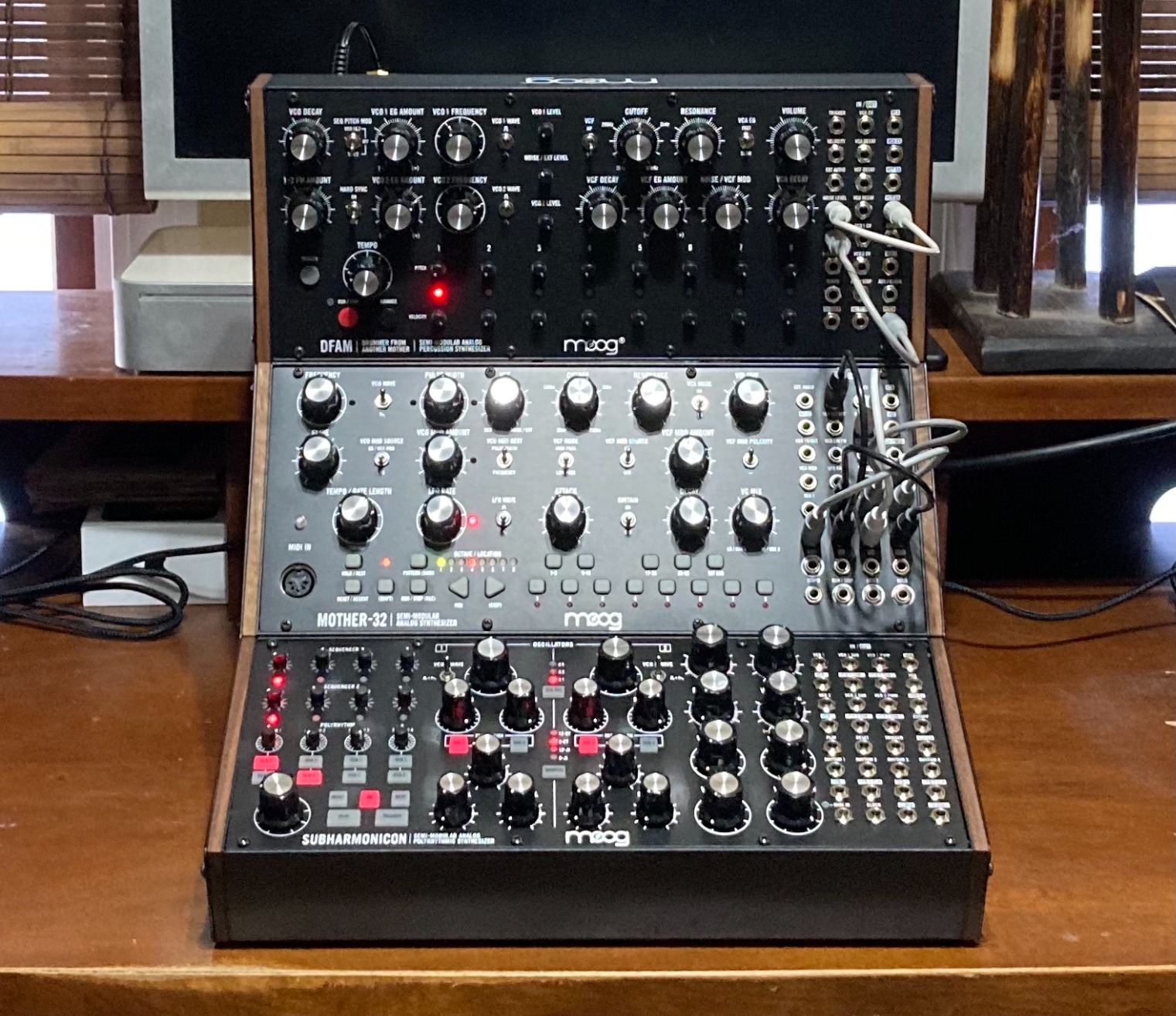
The single oscillator is the main limitation. If you are used to two-oscillator synths with detuning and hard sync, the Mother-32 will feel a bit sparse on its own. Many users (myself included) solve this by chaining multiple Mother-32 units together or pairing one with a DFAM or Subharmonicon. The sequencer also requires some patience, as many functions need double-button presses and shift-key combinations that are not immediately intuitive.
Who Should Buy the Mother-32
This synth is ideal for producers who want a first taste of modular synthesis without committing to a full Eurorack build. If you produce bass music, ambient, or experimental electronic, the Mother-32 delivers that unmistakable Moog warmth in a package that grows with you. It is also the best choice if you already know you want to eventually build a Eurorack system, since it slides right into a rack and plays nice with other modules.
It is less ideal if you need complex multi-oscillator sounds in a single unit. The single VCO means you will eventually want to pair it with something else. It also is not the best value if budget is your primary concern, since the Behringer Crave offers a similar architecture for about a third of the price.
2. Moog Grandmother: The Complete Semi-Modular Keyboard
MOOG Grandmother Semi-Modular Analog Synthesizer
2 Oscillators
Spring Reverb Tank
41 Patch Points
32 Velocity Keys
256 Note Sequencer
Pros
- Two analog oscillators with selectable waveforms
- Hardware spring reverb adds lush ambience
- 41 modular patch points for deep exploration
- Built-in arpeggiator and 256-note sequencer
- Works with Mother-32 DFAM and Eurorack
Cons
- Scratchy pots reported by some buyers
- Limited pitch range on built-in keyboard
- Mod wheel response issues on some units
The Moog Grandmother is the synth I keep coming back to when I want immediate, tactile inspiration. Power it on, press a key, and you are greeted with a thick, warm analog tone that sounds like it was borrowed from a 1970s modular recording session. The built-in spring reverb tank adds a ghostly, atmospheric quality to every sound, and I have spent entire evenings just playing simple melodies into it with the reverb cranked.
With 41 patch points, the Grandmother offers far more routing flexibility than the Mother-32. You get two oscillators with selectable waveforms, a white noise generator, and an external input jack. The 256-note sequencer lets you record and play back complex patterns, and the built-in arpeggiator is genuinely useful for live performance. I connected mine to a Mother-32 within minutes using patch cables, and the two instruments created sonic interactions that neither could produce alone.
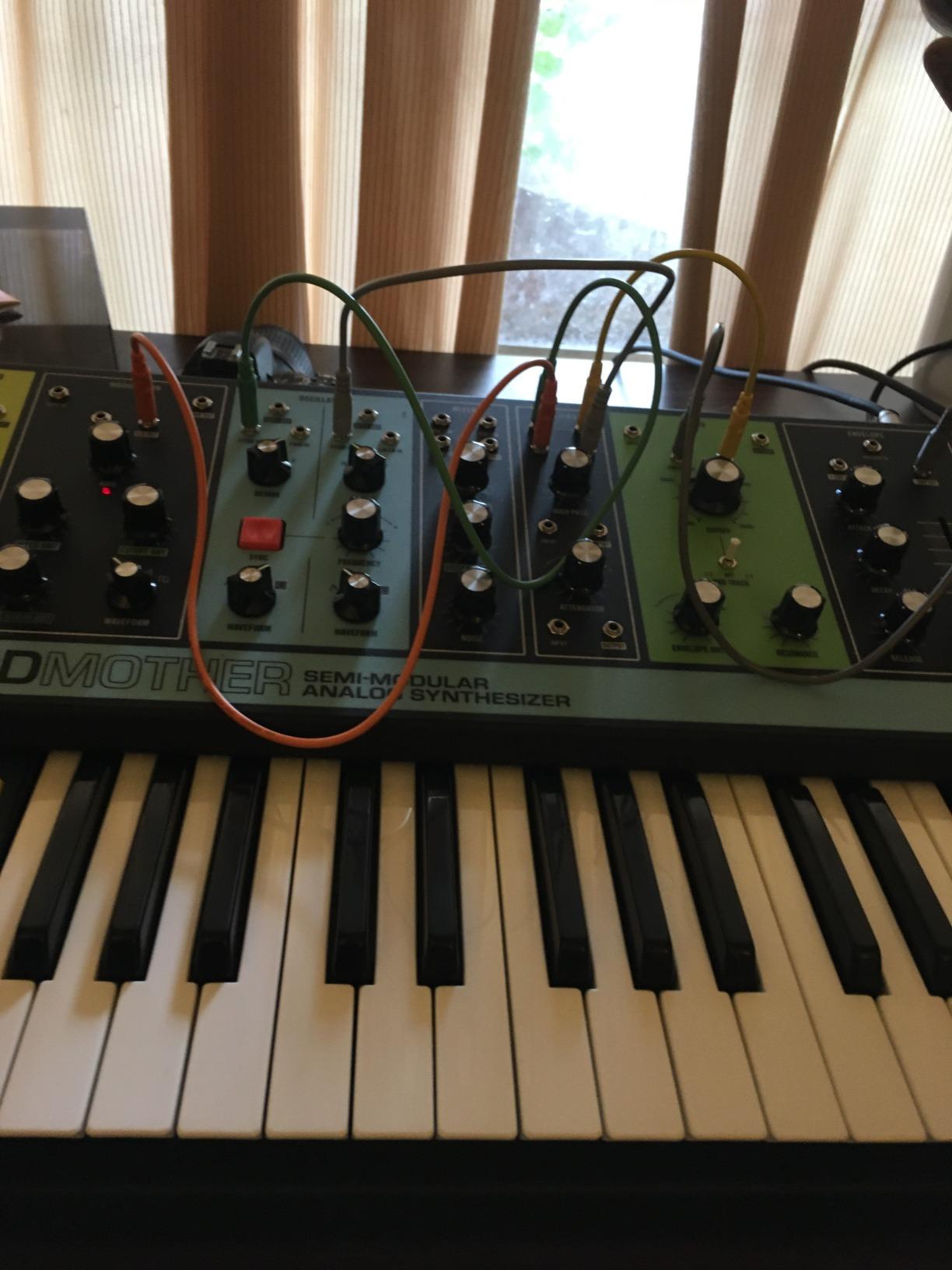
The Grandmother features MIDI In, Out, and Thru along with MIDI over USB, which means integration with modern setups is straightforward. The 1/4-inch audio input lets you route external instruments through the spring reverb and filter, turning the Grandmother into an effects processor for guitars or drum machines. I ran a drum loop through it once and was blown away by how the filter and reverb transformed a sterile loop into something organic and alive.
Some quality control issues have been reported by buyers, including scratchy potentiometers and mod wheels that do not fully respond. The built-in keyboard also has a limited pitch range that some users find restrictive. I have not experienced these issues personally, but they are worth noting if you are buying one. The keyboard works best when paired with a dedicated MIDI controller for extended playing sessions.
Best Use Cases for the Grandmother
If you want a single instrument that delivers the full semi-modular experience without needing to buy anything else, the Grandmother is the one. It excels at ambient soundscapes, classic analog leads, and experimental patching sessions. The spring reverb alone makes it worth the investment for producers who work in dreamy, atmospheric genres.
The Grandmother is overkill if you just want a simple bass synth or are dipping your toes into synthesis for the first time. The price point puts it in premium territory, and if budget is a concern, the Mother-32 or Behringer alternatives cover similar ground for less. But if you want the most inspiring standalone semi-modular keyboard experience available, this is it.
3. Korg Volca Modular: West Coast Synthesis Under $200
Korg Volca Modular Micro Synthesizer Semi Modular w/Eight Modules
8 Independent Modules
50 Patch Points
16-Step Sequencer
Battery Powered
Built-in Speaker
Pros
- Incredible value for West Coast-style synthesis
- 50 patch points for extensive signal routing
- Battery powered with built-in speaker
- Compact and highly portable
- Advanced sequencer with scale selection
Cons
- Learning curve for West Coast synthesis approach
- Limited timbre palette with triangle wave modulation
- Envelopes trigger slowly with external CV
- Mini patch cables can feel fiddly
The Korg Volca Modular is the synth I recommend to anyone who asks about getting into semi-modular synthesis without spending a fortune. At its price point, nothing else comes close to the sheer amount of patchable functionality packed into this tiny device. It has 50 patch points spread across eight independent modules, which is more routing flexibility than instruments costing three times as much.
This is a West Coast-style synthesizer, which means the sound design approach is fundamentally different from the Moog-style East Coast synths on this list. Instead of subtractive synthesis (oscillator into filter), the Volca Modular focuses on wavefolding, FM, and lowpass gates. It took me about a week to wrap my head around the workflow, but once it clicked, I was generating sounds I had never heard from any other instrument in my collection.
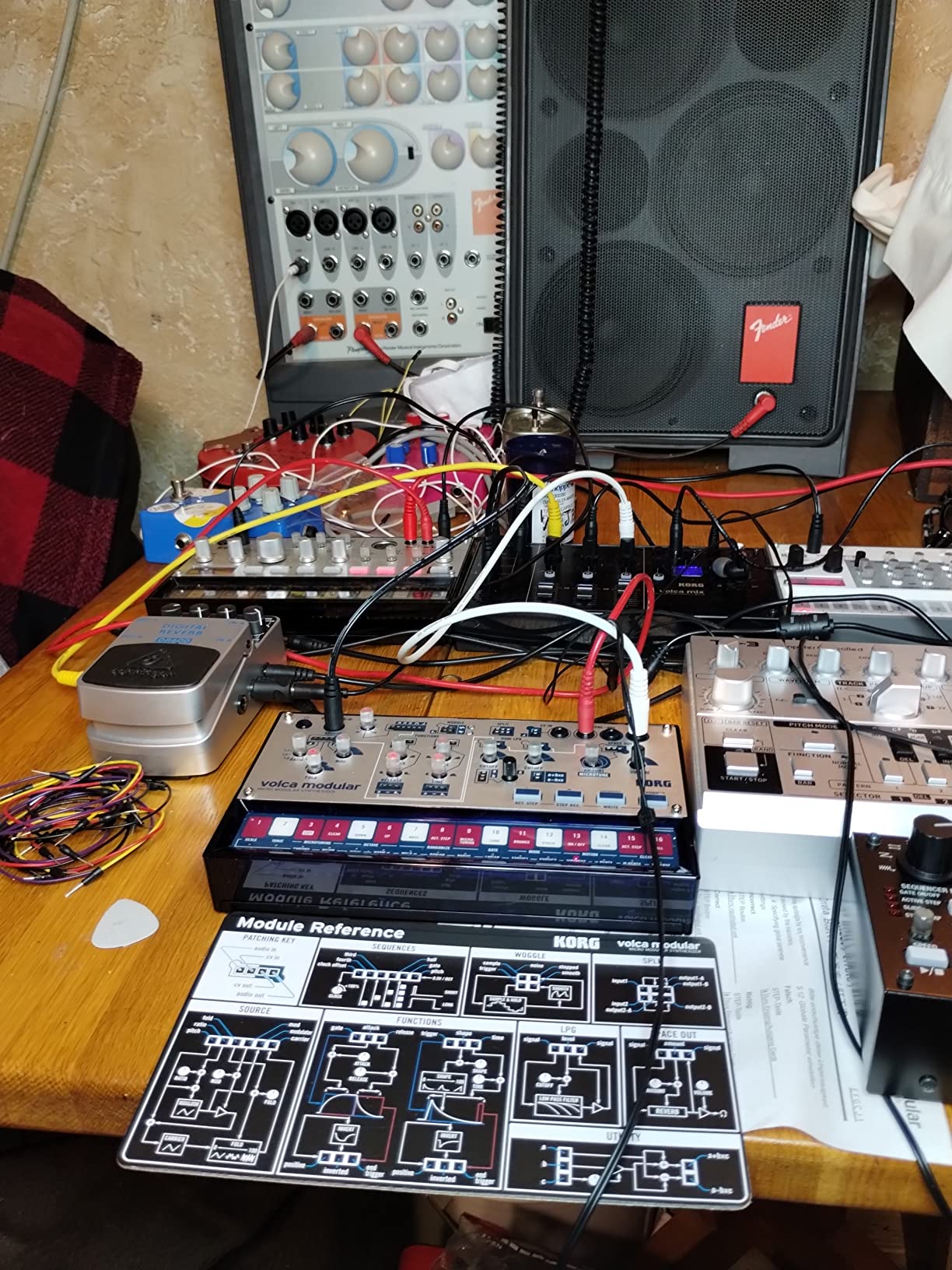
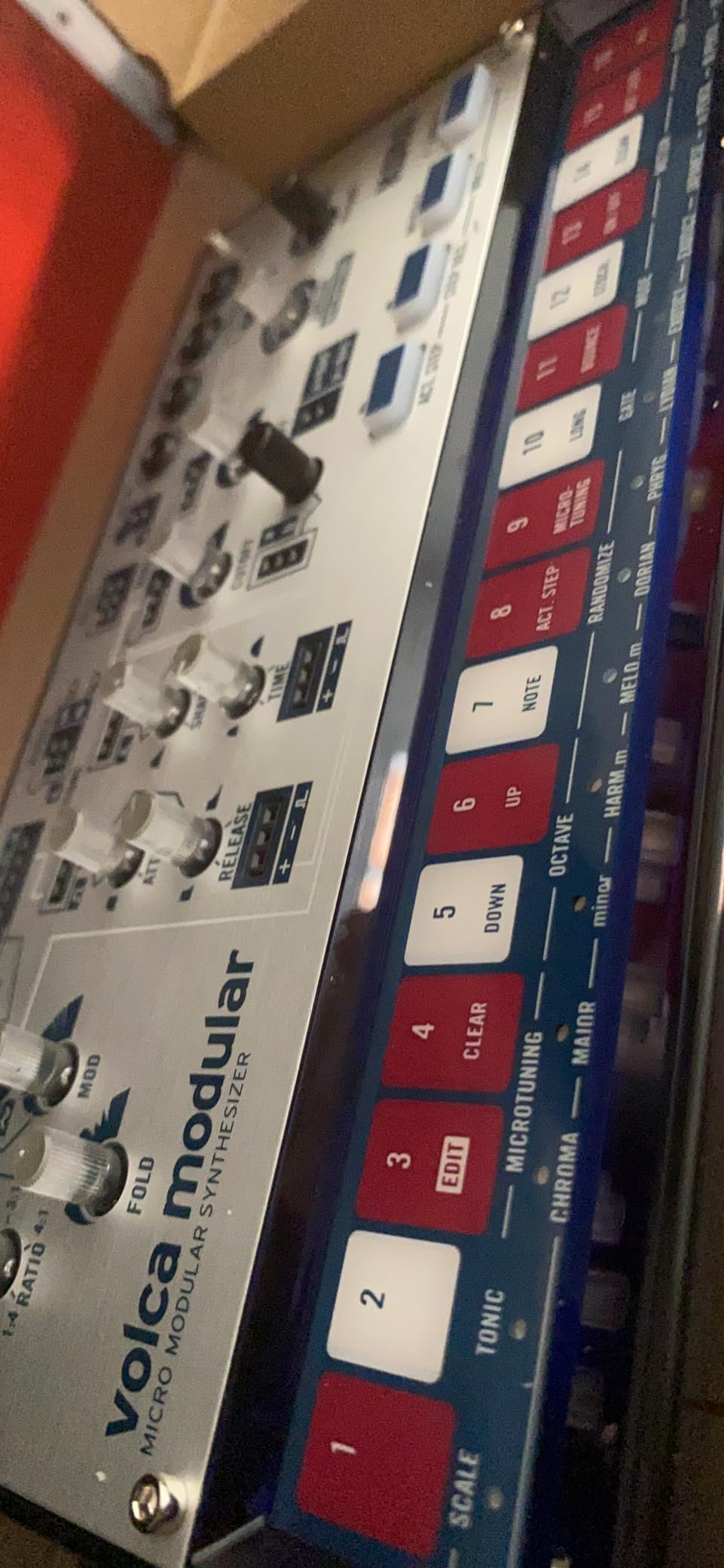
The 16-step sequencer includes scale and tonic selection, which means you can create musical patterns without needing deep music theory knowledge. The randomize function is a personal favorite, as it generates unexpected combinations that often lead to happy accidents. The built-in speaker is surprisingly usable for sketching ideas, and the battery power means you can patch on the couch, in the park, or anywhere inspiration strikes.
The main trade-off is the learning curve. If you have only used subtractive synths, the West Coast approach will feel alien at first. The patch cables are mini-sized (not standard 3.5mm), which can feel fiddly, and the overall timbre palette is narrower than what you get from a multi-oscillator analog synth. The envelopes also trigger more slowly when driven by external CV, which can be frustrating if you are trying to integrate it with other gear.
Ideal Users for the Volca Modular
This is the best entry point for anyone curious about West Coast synthesis or modular concepts in general. It is perfect for experimental producers, sound designers, and musicians who want a portable sketchpad for creative ideas. If you already own other Volca devices, the modular slots right into a chain for synchronized performances.
It is not the right choice if you want classic analog bass and lead sounds. The West Coast architecture excels at metallic, complex, and evolving textures rather than traditional fat synth tones. It also may frustrate players who want immediate, predictable results, since the patching workflow requires patience and experimentation.
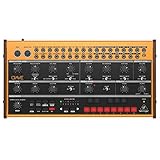
4. Behringer Crave: Budget Moog-Style Analog Powerhouse
Behringer CRAVE Analog Synthesizer Analog Semi-Modular Synthesizer with 3340 VCO, Classic Ladder Filter, 32-Step Sequencer and 16-Voice Poly Chain
3340 VCO Prophet-5 Design
Moog Ladder Filter
32-Step Sequencer
16-Voice Poly Chain
MIDI USB
Pros
- Incredible value compared to similar Moog models
- Fat Prophet-5 style analog oscillator sound
- Classic Moog 24dB ladder filter with resonance
- Switchable low and high pass filter mode
- 16-voice poly chain for stacking units
Cons
- Cannot chain sequences only 32 steps per sequence
- No random playback mode
- Power jack issues reported by some users
- Stiff and clicky sequencer buttons
The Behringer Crave is the synth I tell budget-conscious producers about most often. It takes the Mother-32 formula and delivers it at roughly a third of the cost, and while there are compromises, the core sound is remarkably close. The Crave uses a Prophet-5 inspired 3340 VCO paired with a Moog-style 24dB ladder filter, which gives you a surprisingly versatile tonal palette for the price.
I spent two weeks using the Crave as my primary bass synth, and it consistently delivered fat, punchy tones that sat well in mixes. The oscillator has both pulse and sawtooth wave outputs, and the filter can switch between low-pass and high-pass modes, which is a feature even some premium synths lack. The 32-step sequencer is functional, though it lacks the chaining and randomization modes that make the Mother-32 sequencer feel more alive.
The 16-voice poly chain feature is genuinely exciting if you own multiple Behringer synths. You can link several Crave units (or other poly-chain-compatible Behringer synths) together to create a paraphonic or polyphonic setup. I tested this with two Crave units and a Behringer Model D, and the resulting textures were far more complex than anything a single unit could produce.
The build quality is where the cost savings become apparent. The sequencer buttons are stiff and clicky, some users have reported power jack issues after a few weeks of use, and the overall feel is less premium than a Moog product. There is no random playback mode, and you cannot chain sequences together, which limits the sequencer’s creative potential. International buyers should also be aware that some units ship with EU plugs to US addresses.
Who Gets the Most Out of the Crave
The Crave is perfect for budget-conscious beginners who want authentic analog sound without the premium price tag. If you produce techno, house, or any genre that relies on fat bass and lead sounds, this synth delivers where it counts. It is also a smart choice if you want to build a multi-voice setup on a budget, since the poly chain feature rewards buying multiple units.
It is less suitable for musicians who need a reliable, tour-ready instrument. The build quality concerns and reported power jack issues make it a better studio companion than a stage tool. The sequencer limitations also mean it is not the best choice if generative or evolving patterns are your primary goal.
5. Moog Labyrinth: Parallel Generative Sonic Exploration
MOOG Labyrinth Semi-Modular Analog Synthesizer
Dual Oscillators
VC Wavefolder
State Variable Filter
Dual 8-Step Sequencers
32 Patch Points
Pros
- Moog first fully featured voltage-controlled wavefolder
- Two oscillators for metallic FM and wavefolding textures
- Dual generative sequencers that bloom over time
- State variable filter morphs between lowpass and bandpass
- Comprehensive 32-point patch bay with 20 inputs
Cons
- Newer product with limited long-term reviews
- Parallel generative approach requires significant learning
- Complex feature set may overwhelm beginners
The Moog Labyrinth is the most adventurous semi-modular synthesizer I have ever patched into. Unlike traditional Moog instruments that emphasize warm, musical tones, the Labyrinth is built for sonic exploration and generative unpredictability. It features two low-harmonic oscillators that produce metallic FM textures, Moog’s first fully featured voltage-controlled wavefolder, and dual eight-step sequencers that can corrupt and evolve their patterns over time.
I spent an entire afternoon with the Labyrinth just exploring the wavefolder, which smoothly folds waveforms back on themselves to create harmonically rich, clangorous tones. Paired with the state variable filter that morphs between lowpass and bandpass responses, the sound possibilities feel endless. The ring modulation and variable tone noise generator add further layers of complexity, and the saturating mixer ties everything together with a pleasing analog grit.
The dual generative sequencers are the standout feature. Each sequencer runs its own eight-step pattern, and the corrupt controls let you introduce controlled randomness that causes the sequences to shift and bloom over time. I patched the two sequencer outputs to control different parameters, and within minutes the Labyrinth was generating evolving soundscapes that never repeated. It is the closest thing I have experienced to having a generative modular system in a single tabletop unit.
The 32-point patch bay (20 inputs and 12 outputs) provides extensive routing flexibility, and the voltage-controlled blending and signal flow order switch let you reorder the signal chain on the fly. However, this is not a synth for beginners. The parallel generative approach and complex feature set require a significant time investment to fully understand. As a newer product with only 30 reviews at the time of writing, there is also less community knowledge available compared to established instruments like the Mother-32.
When the Labyrinth Shines
This synth is built for experimental musicians, sound designers, and ambient producers who want an instrument that surprises them. If you create drone music, generative compositions, or cinematic textures, the Labyrinth will push your sound into territories no other semi-modular can reach. It is also an excellent companion to other Moog semi-modulars, as its patch bay integrates seamlessly with the Mother-32, DFAM, and Subharmonicon.
It is not the right choice if you want predictable, traditional synth sounds. The Labyrinth’s personality is weird and exploratory by design, and if you are looking for classic analog bass or lead tones, you will find other instruments on this list much better suited to those tasks. The learning curve is steep, and the limited community resources mean you will be figuring much of it out on your own.
6. Behringer Neutron: Maximum Patch Points for the Price
Behringer Synthesizer (NEUTRON)
Dual 3340 VCOs
Multi-Mode VCF
Paraphonic
Overdrive
Eurorack Format
Pros
- Authentic dual 3340 analog oscillators for fat sound
- Pure analog signal path recreates classic tones
- Paraphonic capability lets you play two notes
- Five oscillator waveform shapes for versatile design
- Massive patch bay with extensive routing options
Cons
- No built-in sequencer requires external control
- Semi-modular design needs patching for advanced use
- Large footprint takes significant desk space
The Behringer Neutron is widely considered the best value semi-modular synth in the Reddit synthesizer community, and after using one for several months, I understand why. It packs dual 3340 analog oscillators, a multi-mode filter, and a massive patch bay into a package that costs hundreds less than comparable Moog instruments. With 81% of Amazon reviews giving it five stars, the consensus is clear.
The Neutron is paraphonic, which means you can play two notes simultaneously (one per oscillator). This is a feature normally reserved for much more expensive instruments, and it dramatically expands the range of sounds you can create. The oscillator waveform control blends between five shapes (tone mod, pulse, sawtooth, triangle, and sine), giving you fine-grained control over the harmonic content of each note.
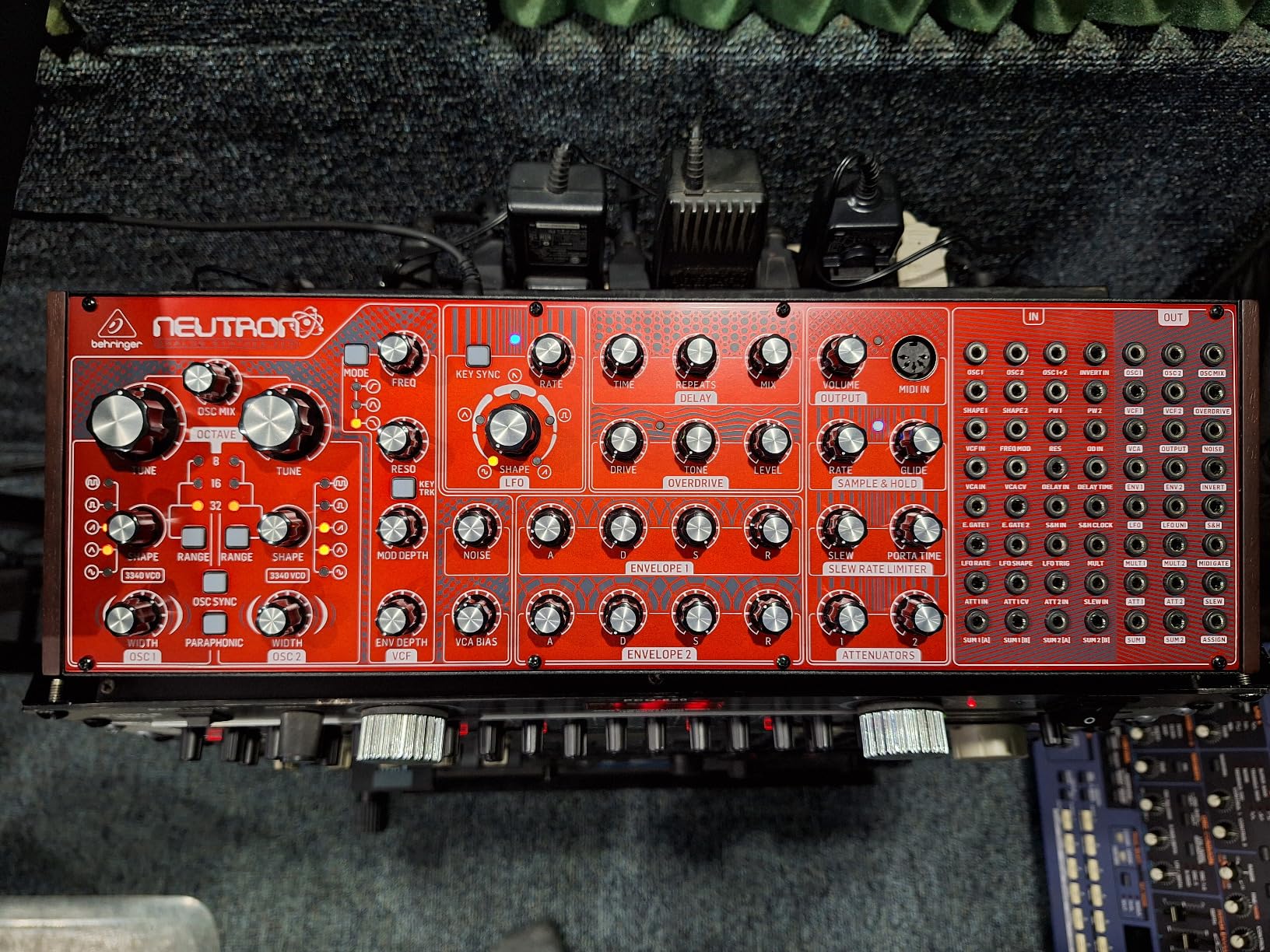
The pure analog signal path delivers a thick, warm sound that holds its own against premium instruments. I A/B tested the Neutron against a Moog Grandmother on bass patches, and while the Moog had more character in the filter, the Neutron’s raw oscillator sound was impressively close. The overdrive circuit adds a pleasing grit that works especially well for aggressive leads and bass lines.
The biggest omission is the lack of a built-in sequencer. Unlike the Mother-32 or Crave, the Neutron requires an external sequencer, keyboard, or MIDI controller to play. This is not a dealbreaker since most producers have a DAW or controller already, but it does add to the total cost of ownership. The Neutron also has a large footprint at nearly 17 inches wide, so make sure you have the desk space.

Best Applications for the Neutron
The Neutron is the ultimate choice for budget-conscious producers who want maximum analog power and patching flexibility. If you already have a MIDI keyboard or sequencer and want the most synth per dollar, this is hard to beat. It is also an excellent first analog voice for someone building a modular system, since it fits into Eurorack and provides two oscillators worth of sound generation.
It is not ideal if you want a self-contained instrument that makes music the moment you turn it on. The lack of a sequencer means you need external gear to get the most out of it. The large size also makes it less portable than compact options like the Volca Modular or Make Noise 0-Coast. And while the sound is excellent, the overall build feel is more utilitarian than premium.
7. Make Noise 0-Coast: Compact East Meets West Synthesis
Make Noise 0-Coast
Compact Desktop
13 Sources 14 Destinations
MIDI to CV Conversion
Eurorack Compatible
Dual Mode Arpeggiator
Pros
- World of sonic exploration in a compact package
- Versatile sound capabilities and CV functionality
- East Coast and West Coast synthesis techniques combined
- Built like a tank with excellent build quality
- Generates evolving patterns for hours of non-repetition
Cons
- Square wave can be unstable and out of tune when patched
- Documentation and tutorials could be improved
- Some missing features like maths VCA and overtone audio input
The Make Noise 0-Coast is the synth I reach for when I want something that feels different from everything else in my collection. It bridges East Coast and West Coast synthesis traditions in a compact desktop unit, combining subtractive elements (oscillator, contour, dynamics) with additive techniques (overtone series, wavefolding). The result is an instrument that can sound like a traditional analog synth one moment and a Buchla-inspired experimental machine the next.
With 76% five-star ratings on Amazon, the 0-Coast has earned a devoted following. It features 13 patch sources and 14 destinations, which is fewer total points than some competitors but feels well-curated rather than limiting. Every patch point earns its place. The MIDI to CV and MIDI to Gate conversion means you can control it from any MIDI source, and the dual-mode arpeggiator adds performance versatility.
I was particularly impressed by the build quality. The 0-Coast is built like a tank with a steel chassis that feels like it could survive a world tour. The layout is clean and logical, with the signal flow clearly marked from left to right. I found myself generating evolving sound patterns for hours, exploring various degrees of repetition and randomness that kept revealing new textures.
The documentation is the weakest aspect. Make Noise provides minimal printed material, and while there are community-created tutorials online, the learning curve is steeper than it needs to be. Some users have reported that the square wave can be unstable and out of tune by three to five semitones when patched in certain configurations. I experienced this occasionally, and while it did not ruin my experience, it is something to be aware of.
Who Will Love the 0-Coast
This synth is perfect for musicians who want a single compact instrument that covers both subtractive and additive synthesis territory. If you are into experimental electronic music, ambient, or any genre that values texture over traditional melody, the 0-Coast will keep you inspired for years. It is also an excellent choice if you plan to build a Eurorack system, since it outputs and accepts standard Eurorack signal levels.
It is less suitable for beginners who want immediate results. The 0-Coast rewards patience and experimentation, and novices may need to do significant homework to unlock its potential. The limited patch points compared to instruments like the Neutron or Volca Modular may also frustrate users who want maximum routing flexibility.
8. Korg MS-20 Mini: The Legendary Patchable Classic
Korg MS20 Mini Semi-Modular Analog Synthesizer (MS20MINI), MultiColored, M
HP and LP Filters
External Signal Processor
Flexible Patching
USB MIDI
Classic Analog Sound
Pros
- Self-oscillating high-pass and low-pass filters with distinctive distortion
- External signal processor for routing external audio through filters
- Faithful recreation of the legendary MS-20 sound
- Flexible patching system for expanded sound design
- USB MIDI plus 5-pin MIDI for versatile connectivity
Cons
- Construction feels flimsy and delicate
- Small mini keys may not suit everyone
- Can be noisy with extraneous hiss
- Mono output requires adapter for stereo recording
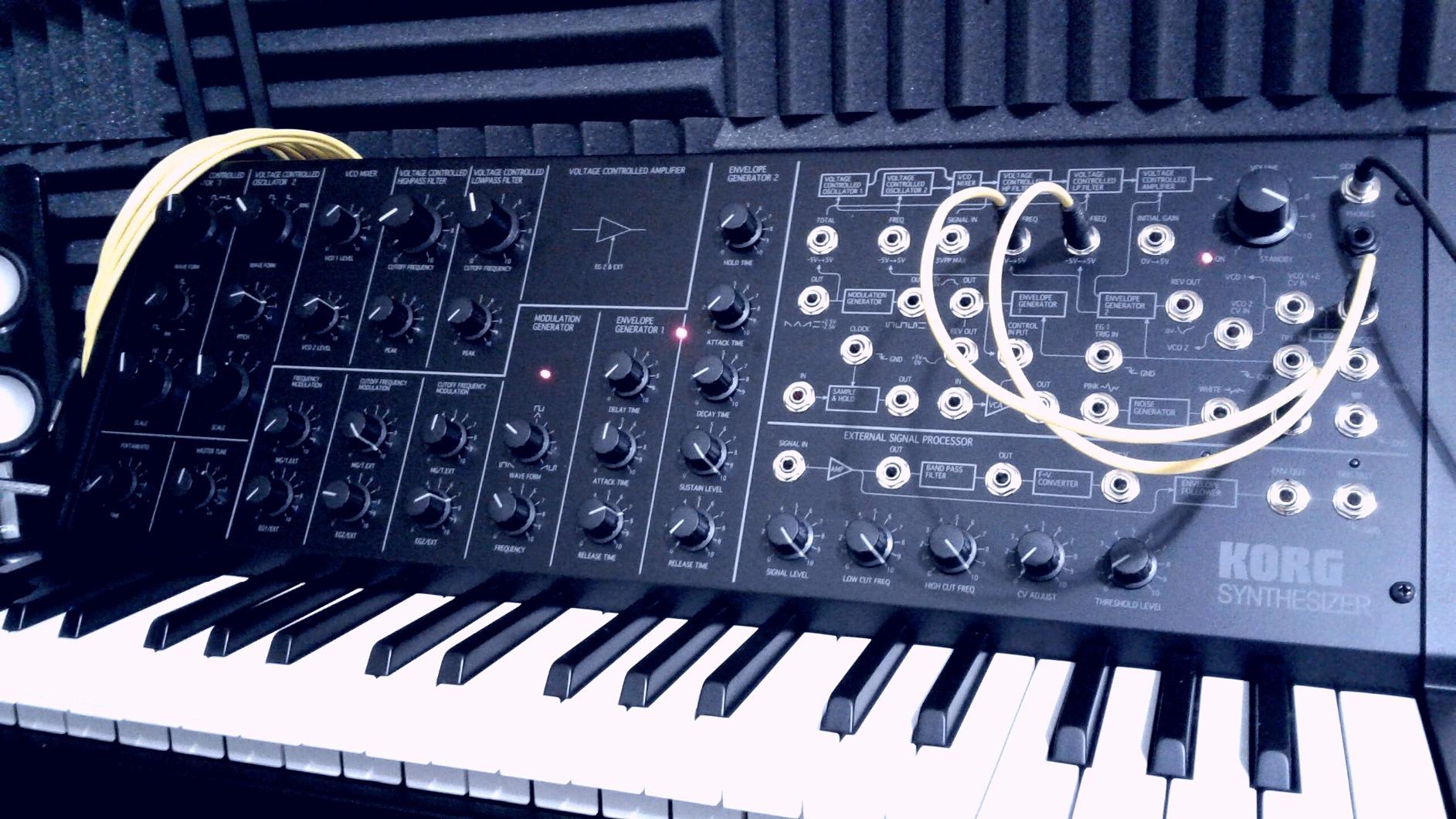
The Korg MS-20 Mini is a faithful recreation of the legendary 1978 MS-20, and it holds a special place in the semi-modular world. What sets it apart from every other synth on this list is its dual filter architecture. It has both a self-oscillating high-pass filter and a distinctive low-pass filter, each with its own character and resonance. The filters can distort in musical ways that have defined the MS-20 sound for decades.
The External Signal Processor (ESP) is another standout feature. It lets you route any external audio source through the MS-20’s filters and envelopes, essentially turning the synth into a powerful analog effects processor. I ran vocal samples, drum loops, and guitar tracks through the ESP, and each time the MS-20 transformed them into something completely new. The flexible patching system gives you control over every aspect of the signal flow.
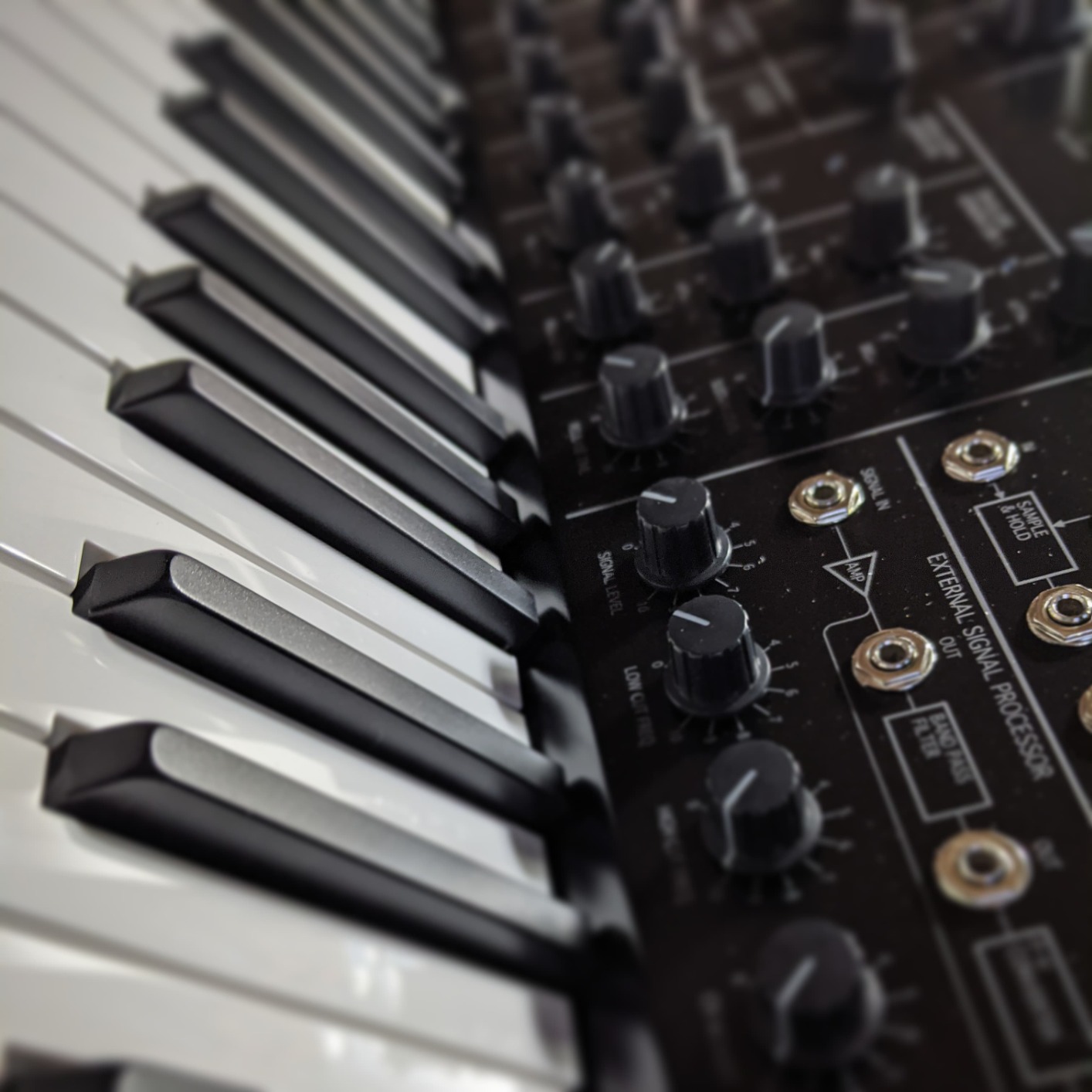
With 177 reviews and a 4.4-star average, the MS-20 Mini has proven its staying power. The USB MIDI plus 5-pin MIDI connectivity makes it easy to integrate into any modern setup. The voltage-controlled oscillators deliver that classic Korg analog tone, which has a slightly more aggressive and cutting character compared to the warmer Moog sound.
The build quality is the main concern. The chassis is plastic rather than metal or wood, and many users describe it as feeling delicate. The mini keys are smaller than standard piano keys, which can be uncomfortable for players with larger hands. Some units produce audible hiss, and the mono output means you need an adapter for stereo recording. It is also not recommended for touring musicians due to its fragility.
Who Should Consider the MS-20 Mini
This synth is ideal for producers who want the legendary MS-20 sound and filter character at a fraction of the vintage price. If you produce industrial, punk, noise, or any genre that values aggressive, distinctive tones, the MS-20 Mini delivers sounds no other instrument on this list can replicate. The ESP also makes it uniquely valuable as an external processor for your other gear.
It is not the best choice if build quality and durability are top priorities. The plastic construction and mini keys feel like compromises, and the reported hiss issues may bother noise-sensitive producers. It is also less beginner-friendly than instruments like the Mother-32 or Volca Modular, since the patch bay uses a different convention and the filter architecture requires more understanding to use effectively.
Buying Guide: How to Choose a Semi-Modular Synthesizer?
Choosing the right semi-modular synth comes down to understanding your needs, budget, and how you plan to use the instrument. Our team has identified the key factors that matter most when making this decision.
Patch Points and Connectivity
The number of patch points determines how much routing flexibility you have. More patch points mean more ways to override the default signal path and create custom sounds. The Korg Volca Modular leads with 50 patch points, followed by the Moog Grandmother with 41 and the Moog Labyrinth with 32. If expanding into full modular is your goal, look for instruments with Eurorack-compatible voltage levels like the Mother-32, Neutron, or 0-Coast. Standard 3.5mm jacks are important if you plan to use standard Eurorack patch cables, as some instruments like the Volca Modular use smaller connectors.
Sound Engine: VCO, VCF, and VCA
The sound engine defines the fundamental character of the synth. Voltage-controlled oscillators (VCOs) generate the raw sound, the voltage-controlled filter (VCF) shapes it, and the voltage-controlled amplifier (VCA) controls its volume envelope. Moog instruments use the legendary ladder filter, known for its warm, musical resonance. The Korg MS-20 uses dual high-pass and low-pass filters with a more aggressive, cutting character. The Make Noise 0-Coast and Korg Volca Modular incorporate wavefolders, which add harmonics through waveform folding rather than filtering them away. Consider whether you want East Coast (subtractive) or West Coast (additive) synthesis when making your choice.
Built-in Sequencer and Arpeggiator
A built-in sequencer lets you create patterns without needing external gear. The Moog Mother-32 and Behringer Crave both include 32-step sequencers, while the Moog Grandmother adds a 256-note sequencer and arpeggiator. The Moog Labyrinth features dual generative eight-step sequencers that can evolve patterns over time. The Behringer Neutron lacks a sequencer entirely, which means you need an external controller or DAW. If you want a self-contained instrument, prioritize models with built-in sequencing capabilities.
Eurorack Compatibility and Expansion Path
If you see yourself eventually building a full modular system, choose a synth that is Eurorack compatible. The Moog Mother-32 fits directly into a 60HP Eurorack slot, and the Behringer Neutron also accepts standard Eurorack signals. The Make Noise 0-Coast is compatible with Eurorack signal levels. Starting with a semi-modular synth gives you a complete voice module that can serve as the foundation of a larger system. You avoid the common beginner mistake of buying individual modules and ending up with an incomplete, unplayable system.
East Coast vs West Coast Synthesis
East Coast synthesis (pioneered by Moog) follows a subtractive approach: start with a harmonically rich waveform and use a filter to remove frequencies. It produces warm, musical tones that work well for bass, leads, and traditional synth sounds. West Coast synthesis (pioneered by Buchla) takes an additive approach: start with simple waveforms and use wavefolders, ring modulators, and lowpass gates to add complexity. It excels at metallic, evolving, and experimental textures. The Make Noise 0-Coast and Korg Volca Modular incorporate West Coast techniques, while the Moog and Behringer instruments follow the East Coast tradition.
Beginner Pathway Guidance
If this is your first synthesizer, start with something that works immediately without any patching required. The Moog Mother-32, Moog Grandmother, and Korg Volca Modular all produce sound the moment you power them on, letting you learn synthesis basics before diving into patch cables. The Behringer Crave offers the best budget entry point if cost is a concern. For your second synth, consider something that complements your first: pair a Moog Mother-32 with a DFAM for percussion, or add a Make Noise 0-Coast for West Coast textures alongside your East Coast instrument.
Total Cost of Ownership
Remember that the synth’s price is just the beginning. You will need patch cables (budget $20-50 for a starter set), possibly a case or stand, and maybe a MIDI controller if the synth lacks a keyboard. If you plan to expand into Eurorack, a modular case will cost $150-500 depending on size and power supply. Factor in these additional costs when comparing prices, especially if you are choosing between a complete keyboard synth like the Grandmother and a tabletop unit like the Mother-32.
FAQs
What is a semi-modular synthesizer?
A semi-modular synthesizer is a hardware instrument that combines traditional hard-wired synth architecture with flexible patch points. It works out of the box without any cables, but includes a patch bay that lets you override default connections and create custom signal chains using patch cables. This gives you the best of both worlds: immediate playability and modular-level creative routing.
Are semi-modular synths good for beginners?
Yes, semi-modular synths are excellent for beginners. They produce sound the moment you turn them on, so you can start making music immediately. As you learn synthesis fundamentals, you can gradually explore the patch bay to discover new sounds. Instruments like the Moog Mother-32, Korg Volca Modular, and Behringer Crave are specifically designed to welcome newcomers while offering room to grow.
How can I expand the capabilities of my semi-modular synth?
You can expand a semi-modular synth in several ways: connect it to other semi-modular instruments via patch cables (Moog instruments are designed to chain together), integrate it into a Eurorack modular system if it is Eurorack compatible, route external audio through its filters and effects using audio inputs, or control it from a DAW or external sequencer via MIDI or CV gate. Many users start with one semi-modular and gradually add companion instruments to build a complete system.
What factors should I consider when buying a semi-modular synth?
Consider the number of patch points (more means more routing flexibility), the sound engine type (East Coast subtractive vs West Coast additive), whether it includes a sequencer or arpeggiator, Eurorack compatibility if you plan to expand, the number of oscillators, the filter type and character, build quality, connectivity options (MIDI, USB, CV), and total cost including cables and accessories. Your primary musical genre and whether you need a keyboard also matter.
Which semi-modular synth is best for growing into modular?
The Moog Mother-32 is the best choice for growing into modular because it fits directly into a 60HP Eurorack slot and is designed to chain with other Moog semi-modulars. The Behringer Neutron is also excellent for this purpose since it accepts standard Eurorack signals and provides two oscillators worth of sound generation. The Make Noise 0-Coast is another strong option, as it outputs and accepts standard Eurorack voltage levels.
Conclusion: Finding Your Perfect Semi-Modular Synth in 2026
The best semi-modular synthesizers offer a rare combination of immediate playability and deep creative potential. After testing 8 instruments across a wide price range, our top recommendation is the Moog Grandmother for its inspiring sound, spring reverb, and extensive patch points. The Behringer Neutron takes the value crown with dual analog oscillators and a massive patch bay. And the Korg Volca Modular remains unbeatable for budget-conscious explorers wanting West Coast synthesis techniques.
Your choice ultimately depends on your budget, musical style, and expansion plans. Beginners should look at the Mother-32 or Volca Modular for approachable entry points. Experimental producers will find kindred spirits in the Moog Labyrinth and Make Noise 0-Coast. And anyone building toward a full modular system should prioritize Eurorack-compatible instruments like the Mother-32 or Neutron. Whatever you choose, a semi-modular synth will change how you think about sound design and open creative doors you did not know existed.