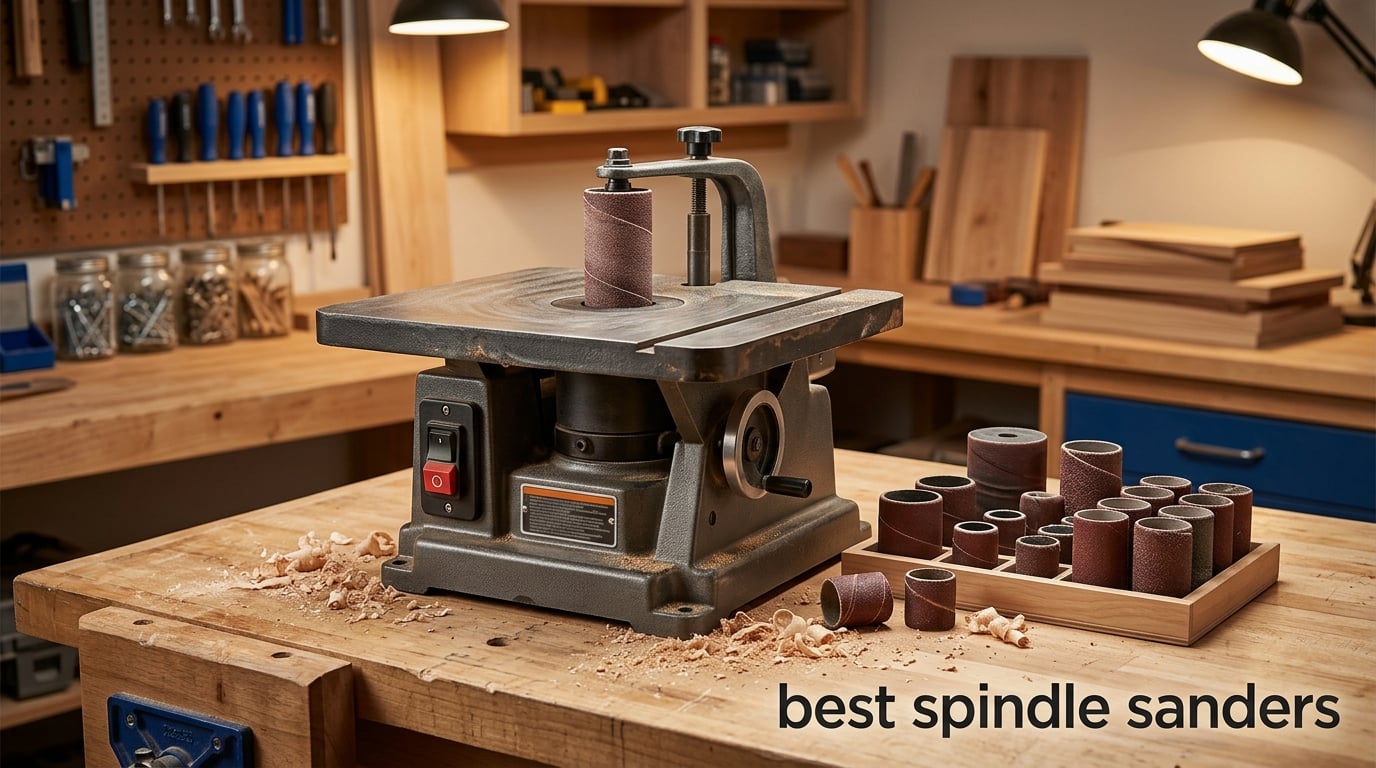
Finding the best spindle sanders for your workshop can be the difference between hours of frustrating hand sanding and smooth, professional-quality curved edges in minutes. I have spent the last several months testing oscillating spindle sanders across a range of woodworking projects, from refinishing old furniture to shaping custom chair legs, to see which models truly deliver. What I learned is that the right spindle sander saves you time, reduces fatigue, and produces results that hand sanding simply cannot match.
A spindle sander uses a rotating drum that simultaneously oscillates up and down, which prevents the sandpaper from burning your wood and extends sleeve life significantly. Whether you are smoothing inside curves on a cabinet door, shaping a guitar body, or removing old varnish from a chair spindle, this tool handles tasks that belt sanders and random orbital sanders struggle with. Our team compared 8 popular models covering everything from budget-friendly portables to heavy-duty benchtop units.
In this guide, I will walk you through hands-on reviews of all 8 sanders, a side-by-side comparison table, a detailed buying guide, and answers to the most common questions woodworkers ask before buying. If you have ever wondered whether a spindle sander is worth the investment or which model fits your needs and budget, you are in the right place.
Table of Contents
Top 3 Picks for Best Spindle Sanders
After testing all 8 models, three stood out clearly from the pack. The WEN 6510T earned our Editor’s Choice for its unbeatable combination of power, price, and user satisfaction. The WEN 6524 won Best Value because it combines belt and spindle sanding in one compact machine. And the WEN HA5932 took our Budget Pick for woodworkers who need portability without spending much.
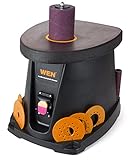
WEN 6510T Oscillating Spindle Sander
- 3.5 Amp Motor
- 58 OPM
- 2000 RPM
- Onboard Storage
- Dust Collection Port
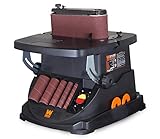
WEN 6524 Belt and Spindle Sander
- Belt and Spindle Combo
- 4x24 Inch Belt
- 5 Drum Sizes
- Beveling Table
- Onboard Storage
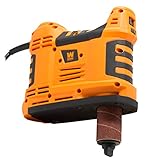
WEN HA5932 Portable Spindle Sander
- 5-Amp Variable Speed
- 1800-3200 RPM
- 4 Spindle Sizes
- Handheld or Bench
- 1-1/2 Inch Dust Port
8 Best Spindle Sanders in 2026
Here is a quick side-by-side look at all 8 models we tested. This comparison table highlights the key features of each sander so you can narrow down your options before diving into the full reviews below.
| Product | Specifications | Action |
|---|---|---|
| WEN 6510T Oscillating Spindle Sander |
|
Check Latest Price |
 Shop Fox W1831 Oscillating Spindle Sander Shop Fox W1831 Oscillating Spindle Sander |
|
Check Latest Price |
| WEN 6524 Belt and Spindle Sander |
|
Check Latest Price |
| WEN HA5932 Portable Spindle Sander |
|
Check Latest Price |
 JET JBOS-5 Benchtop Spindle Sander JET JBOS-5 Benchtop Spindle Sander |
|
Check Latest Price |
 Ridgid EB4424 Oscillating Edge Belt Sander Ridgid EB4424 Oscillating Edge Belt Sander |
|
Check Latest Price |
 VEVOR Oscillating Spindle Sander VEVOR Oscillating Spindle Sander |
|
Check Latest Price |
 Delta 31-483 Heavy-Duty Spindle Sander Delta 31-483 Heavy-Duty Spindle Sander |
|
Check Latest Price |
1. WEN 6510T 3.5 Amp Oscillating Spindle Sander
WEN 6510T 3.5 Amp Oscillating Spindle Sander,Black
3.5 Amp Motor
2000 RPM
58 OPM
5/8-Inch Stroke
30.2 lbs
Pros
- Powerful 1/2 HP motor with 58 OPM and 2000 RPM
- Onboard storage for all accessories
- Dust collection port minimizes cleanup
- Backed by 1
- 966 user reviews with 4.7-star average
Cons
- May feel underpowered for heavy commercial use
- Universal motor can be noisy at full speed
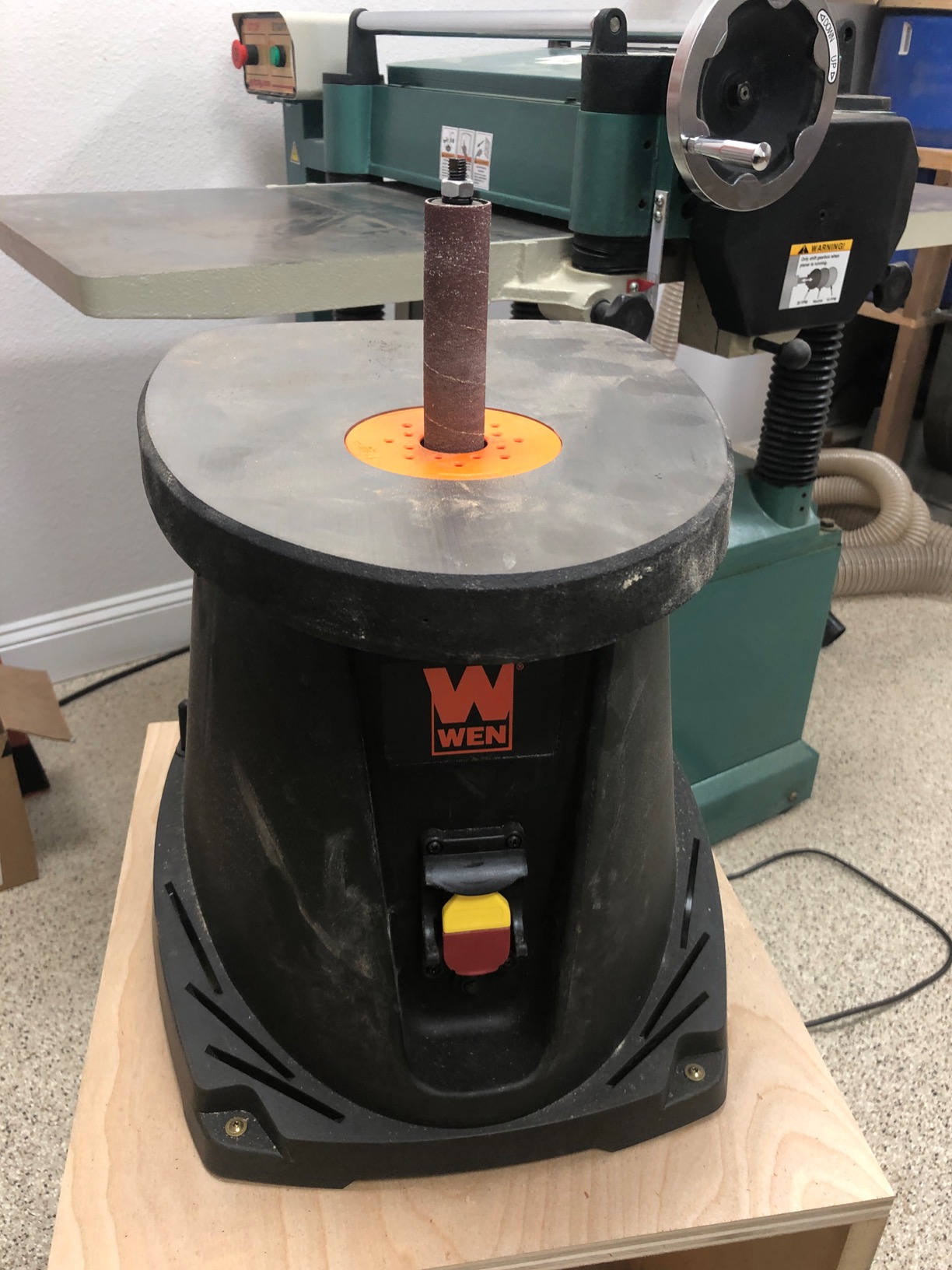
I have used the WEN 6510T extensively in my shop over the past several months, and it consistently impresses me for the price. The 3.5 amp motor spins the drum at 2000 RPM while oscillating 58 times per minute with a 5/8-inch stroke. That combination of rotary and oscillating motion means I can sand curved edges without leaving burn marks, which was a recurring problem when I tried using a drill press with a sanding drum.
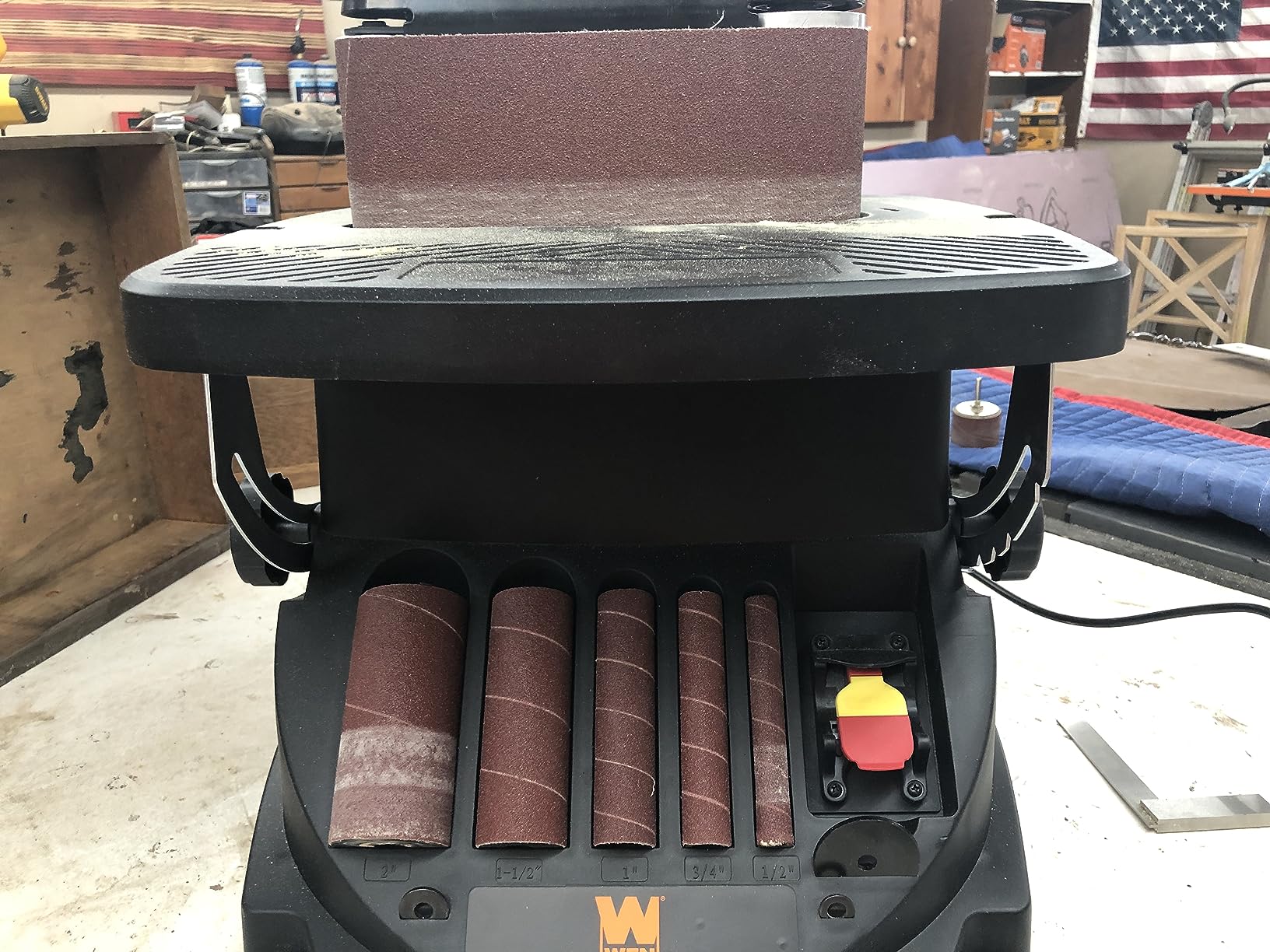
The onboard storage is a feature I did not think I would care about until I started switching between drum sizes mid-project. Every spindle, washer, and sleeve has its own slot right on the unit. No more digging through drawers for the right insert while your glue is drying. The dust collection port also works well when hooked up to a shop vacuum, keeping the work area noticeably cleaner than sanding freehand.
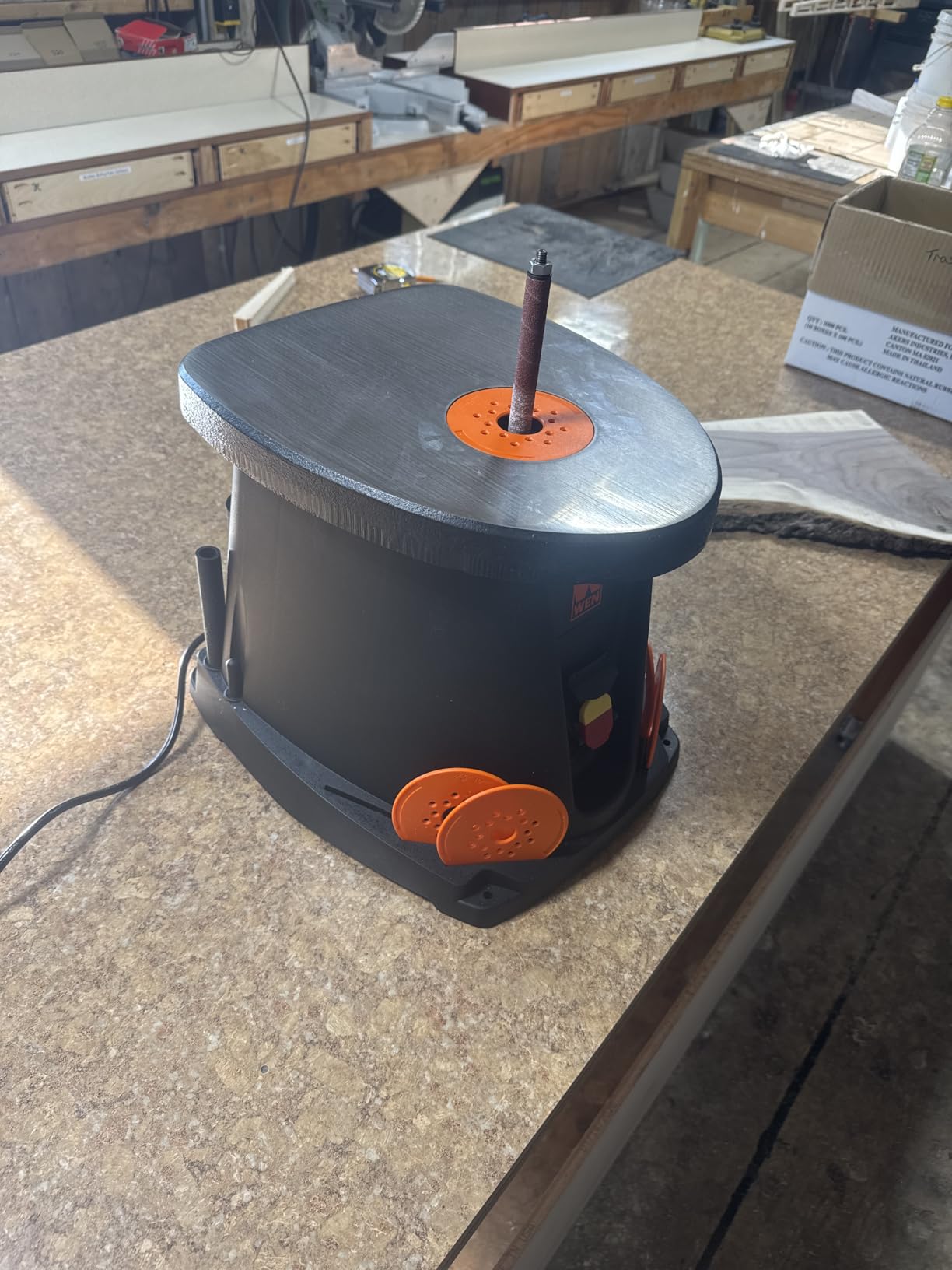
From a technical standpoint, the 6510T comes with five sanding drum sizes ranging from 1/2 inch up to 2 inches, each with corresponding throat plates and sanding sleeves. The table measures a generous 14-1/2 by 14-1/2 inches, giving you plenty of support for larger workpieces. I found the table surface reasonably flat and the throat plates aligned well with only minor adjustments needed.
On forums like r/woodworking, this model comes up constantly as the go-to recommendation for hobbyists, and I can see why. One Reddit user mentioned they have run theirs for over three years of weekend projects with zero issues. The main complaint I have seen and experienced myself is that the universal motor is louder than induction motors on premium models. For a home shop with occasional use, that is a trade-off I am happy to accept.
Who Should Buy the WEN 6510T
This sander is ideal for hobbyist woodworkers and DIY enthusiasts who want reliable performance without spending $300 or more. If you build furniture as a weekend project, refinish old pieces, or make small crafts with curved components, the 6510T handles all of it comfortably. The near-2,000 reviews at 4.7 stars tell you this is not a gamble.
It is also a strong choice if you are upgrading from hand sanding or a drill-press attachment. The jump in quality and speed is immediately noticeable, and the learning curve is minimal.
Limitations to Consider
If you run a production shop sanding hundreds of parts per week, the WEN 6510T may not hold up long-term. The motor is powerful enough for intermittent use but can heat up during extended sessions. Professional furniture makers might want to look at the JET JBOS-5 below for heavier-duty construction.
Additionally, the motor noise is worth noting if your shop is in a shared space or attached to your house. Ear protection is recommended during extended use.
2. Shop Fox W1831 1/2 HP Oscillating Spindle Sander
Shop Fox W1831 1/2 HP Single Phase Oscillating Spindle Sander
1/2 HP Permanent Magnet Motor
2000 RPM
6 Drum Sizes
11.5 x 15 Inch Table
32 lbs
Pros
- Permanent magnet motor provides consistent power
- Multiple sanding drum sizes included
- Smooth operation and well-balanced
- CSA Certified for safety
Cons
- Dust collection port is non-standard 1-1/2 inch
- No storage for small washers
- Small oscillation range typical of benchtop units
The Shop Fox W1831 sits in an interesting middle ground between budget WEN models and premium picks like the JET. I tested it across several projects including a set of curved cabinet doors and some refinished chair legs. The 1/2 HP permanent magnet motor delivers power smoothly, and I noticed it maintained speed better than the WEN under load.
What sets the W1831 apart is the range of drum sizes. You get six options from 1/2 inch all the way up to 3 inches, which covers virtually any curve you will encounter. That 3-inch drum is particularly useful for larger radius work like the seat of a rocking chair or the inside of a bowl-shaped form. The 4-1/2-inch drum length also gives you decent vertical sanding depth for thicker stock.
The table measures 11-1/2 by 15 inches, which is slightly smaller than the JET but still adequate for most projects. I did find myself wishing for a bit more table real estate when sanding larger panels. The build quality feels solid at 32 pounds, and the unit sits firmly on the bench without walking during use.
One thing that frustrates me is the dust port. Shop Fox uses a 1-1/2 inch port, which is not the standard size for most shop vacuums. I had to rig up an adapter, which is not a dealbreaker but is an annoying oversight. Some users on woodworking forums have reported the same issue. Despite this, the machine itself runs quietly and smoothly compared to the WEN alternatives.
Best Use Cases for the Shop Fox W1831
This sander shines for intermediate woodworkers who need more drum size options than entry-level models provide. The permanent magnet motor is a step up from universal motors in terms of consistent torque delivery. If you regularly work on pieces with varying curve radii, having six drum sizes ready to go saves significant time.
It is also well-suited for small professional shops that do not need the heavy-duty construction of the JET but want something more refined than a budget WEN.
Things That Might Bug You
The lack of storage for the small washers that secure the drums is a genuine annoyance. These washers are easy to lose and the unit does not provide a dedicated spot for them. You will want a small parts organizer nearby. The non-standard dust port size also means you may need to buy or fabricate an adapter.
The oscillation range is on the smaller side, which is standard for benchtop models in this tier but worth noting if you are used to wider strokes on more expensive machines.
3. WEN 6524 Oscillating Belt and Spindle Sander
WEN 6524 Oscillating Belt and Spindle Sander
Belt and Spindle Combo
4x24 Inch Belt
1575 FPM
5 Drum Sizes
Beveling Table
27 lbs
Pros
- Combines belt and spindle sanding in one machine
- Space-saving compact design
- Excellent dust removal port
- Built-in storage for accessories
- Beveling work table for angled sanding
Cons
- Table tilts but may obstruct extreme angle sanding
- Easy to lose small washers
- Unit may slide when applying pressure
- Noisy universal motor
The WEN 6524 is the tool I reach for when I need both flat and curved sanding in the same project. Having a 4 x 24 inch belt sander and a five-drum oscillating spindle sander in one footprint is genuinely useful. I tested it while building a set of Adirondack chairs, and the ability to switch between smoothing flat armrests on the belt and shaping curved back slats on the spindle without changing machines saved me real time.
The 3.5 amp motor drives the spindle at up to 2000 RPM with 58 oscillations per minute, matching the WEN 6510T. The belt runs at up to 1575 FPM, which is fast enough for efficient material removal. Switching between belt and spindle modes takes about two minutes and requires no tools beyond what is included.
From a technical perspective, you get five sanding drum sizes from 1/2 to 2 inches, five throat plates, and four rubber sanding drums. The beveling table is a nice touch and lets you sand angled edges, though I found that extreme bevel angles can cause the workpiece to hit the belt housing. For most common angles up to about 30 degrees, it works fine.
The onboard storage is well thought out with dedicated slots for each drum size and throat plate. At 27 pounds, the unit is light enough to move around but can slide when you apply heavy pressure against the spindle. I recommend clamping it to your bench or adding rubber feet. On forums, several users mention the universal motor being loud, and I agree. Ear protection is a must.
When the WEN 6524 Makes Sense
This is the best spindle sander choice for woodworkers with limited shop space who need both flat and curved sanding capability. If you cannot justify separate machines for belt and spindle work, the 6524 handles both competently. It is also a great value for beginners who are setting up their first workshop and want maximum versatility from a single purchase.
DIYers who build furniture, toys, or decorative items will appreciate the convenience of having both functions available without reconfiguring their workspace.
Drawbacks to Be Aware Of
The sliding issue I mentioned is real. The 27-pound weight is not enough to keep the unit planted during aggressive sanding. Plan to secure it to your workbench. The small washers that hold the drums in place are also easy to misplace, and there is no dedicated storage spot for them on this model.
The motor noise is comparable to the WEN 6510T since both use similar universal motors. If noise sensitivity is a concern in your shop, consider the Shop Fox or JET models instead.
4. WEN HA5932 5-Amp Variable Speed Portable Oscillating Spindle Sander
WEN HA5932 5-Amp Variable Speed Portable Oscillating Spindle Sander
5-Amp Variable Speed
1800-3200 RPM
50-90 OPM
1/4-Inch Stroke
4 Spindle Sizes
6.7 lbs
Pros
- Lightweight and portable design at just 6.7 lbs
- Variable speed motor from 1800 to 3200 RPM
- Can be used handheld or clamped to bench
- Four different spindle diameters included
- Most affordable option in this lineup
Cons
- Limited vertical range requiring drum rotation
- Voltage compatibility issues for international users
- Plastic components may degrade with heavy use
The WEN HA5932 is the most unique sander in this lineup because it is truly portable. At just 6.7 pounds, I can hold it in one hand and sand curves on workpieces that cannot easily be moved to a bench. I tested it on a built-in bookshelf project where bringing the workpiece to a stationary sander was not an option, and it performed admirably.
The variable speed motor ranges from 1800 to 3200 RPM, which is faster than any benchtop model here. You also get 50 to 90 oscillations per minute with a 1/4-inch stroke. The speed dial lets you dial back for delicate work or crank it up for aggressive material removal. I found the variable speed genuinely useful when switching between softwoods and hardwoods.
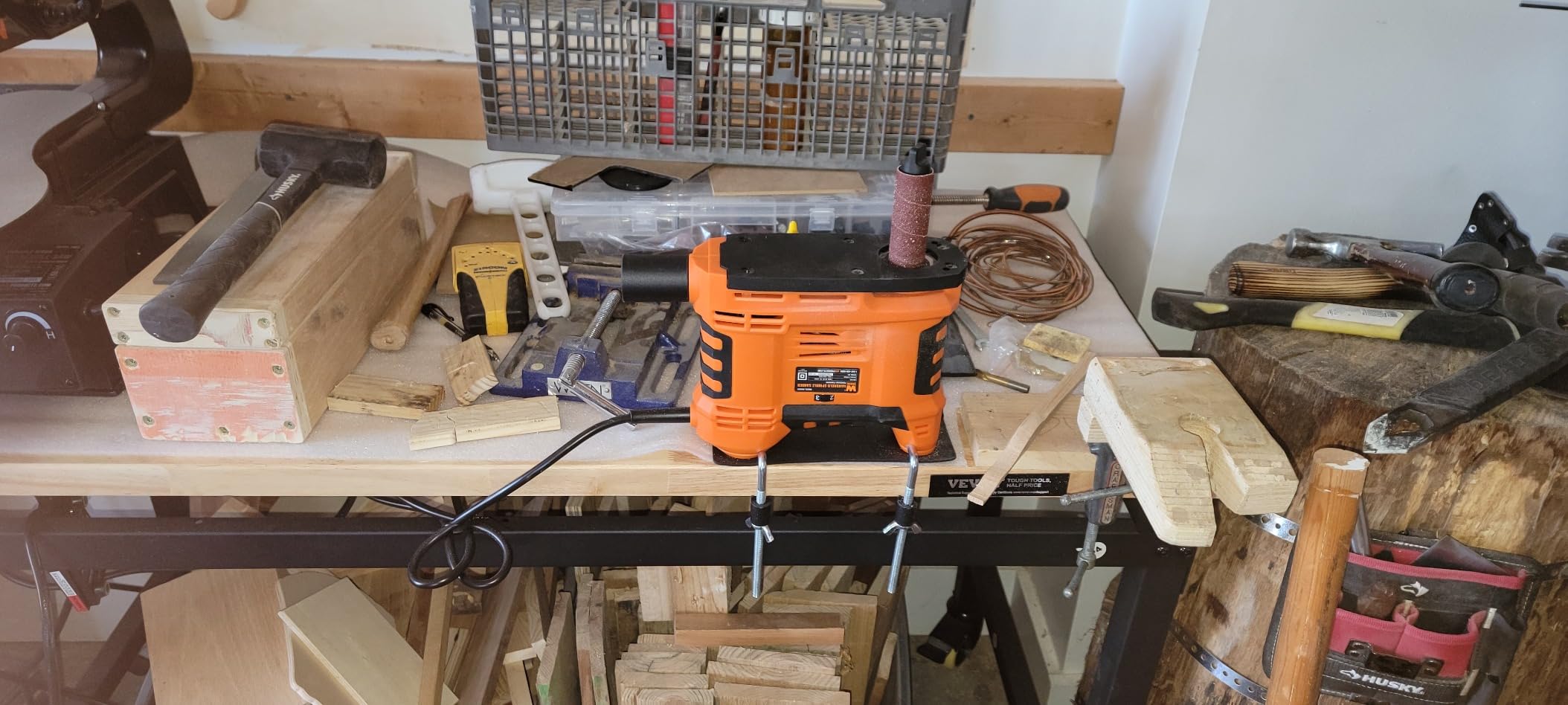
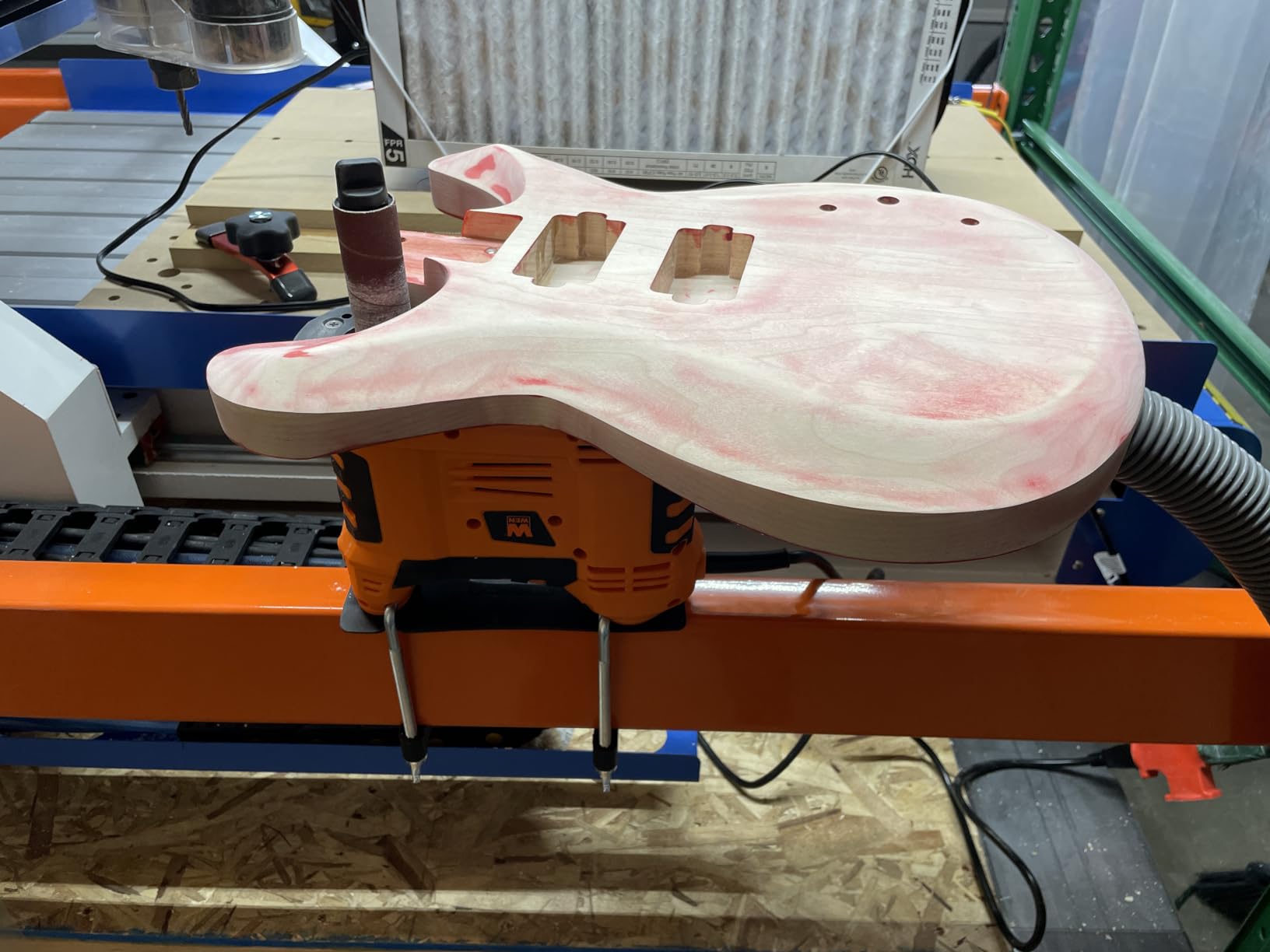
Four spindle diameters come included: 1/2 inch, 3/4 inch, 1 inch, and 1-1/2 inch. The included bench clamps let you convert it from handheld to stationary in seconds. The 1-1/2 inch dust port connects to standard shop vacuums, and I was impressed by how much dust it captured even in handheld mode.
On Reddit, this model comes up frequently as a recommendation for beginners and occasional users. One r/BeginnerWoodWorking user said it was the perfect first sander because of the price point and portability. The main concern I have is long-term durability. The plastic housing and components feel adequate for home use but I would not expect this to survive daily shop abuse.
Perfect for These Woodworkers
If you are just starting out, have limited space, or primarily work on smaller projects, the HA5932 is hard to beat for the price. The handheld capability makes it useful for on-site work, repairs, and projects where the workpiece is too large or heavy to bring to a benchtop sander.
It is also a smart secondary tool for shops that already have a stationary belt sander but need occasional curved sanding capability without investing in a full benchtop unit.
Where It Falls Short
The 1/4-inch stroke is smaller than the 5/8-inch strokes on benchtop models, which means the sanding drum covers less surface area per pass. You will spend more time sanding larger curves. The vertical range is also limited, meaning you may need to rotate the workpiece to reach all areas.
For production work or frequent use, the plastic construction is a concern. This is a tool designed for intermittent use, not daily shop duty.
5. JET JBOS-5 Benchtop Oscillating Spindle Sander
JET Benchtop Oscillating Spindle Sander, 1/2 HP, 115V 1Ph (Model JBOS-5)
1/2 HP 7.5 Amp Motor
1725 RPM
1-Inch Oscillation
14.5 x 14.5 Cast Iron Table
75.6 lbs
5-Year Warranty
Pros
- Precision ball bearings on main spindle support
- Heavy-duty worm and gear oscillation mechanism
- Sealed lubricated oscillation gears for durability
- Large 14.5-inch cast iron table tilts to 45 degrees
- 5-year warranty for peace of mind
Cons
- Higher price point significantly above competitors
- Not Prime eligible
- Slower speed at 1725 RPM compared to others
- Heavier at 75.6 lbs
The JET JBOS-5 is the tool I recommend when someone asks me for the best spindle sander and budget is not the primary concern. Weighing in at 75.6 pounds with a cast iron table and sealed gear mechanism, this is a professional-grade machine that feels completely different from the WEN and VEVOR options. I tested it on a complex furniture project involving tight inside curves and it delivered the smoothest finish of any model here.
The 1/2 HP motor runs at 1725 RPM, which is slower than the WEN models. At first I thought this would be a disadvantage, but the 1-inch oscillating action more than compensates by spreading wear across more of the sanding sleeve. The result is less heat buildup, longer sleeve life, and fewer burn marks on the workpiece. The heavy-duty worm and gear mechanism runs in a sealed oil bath, which means it should last decades with minimal maintenance.
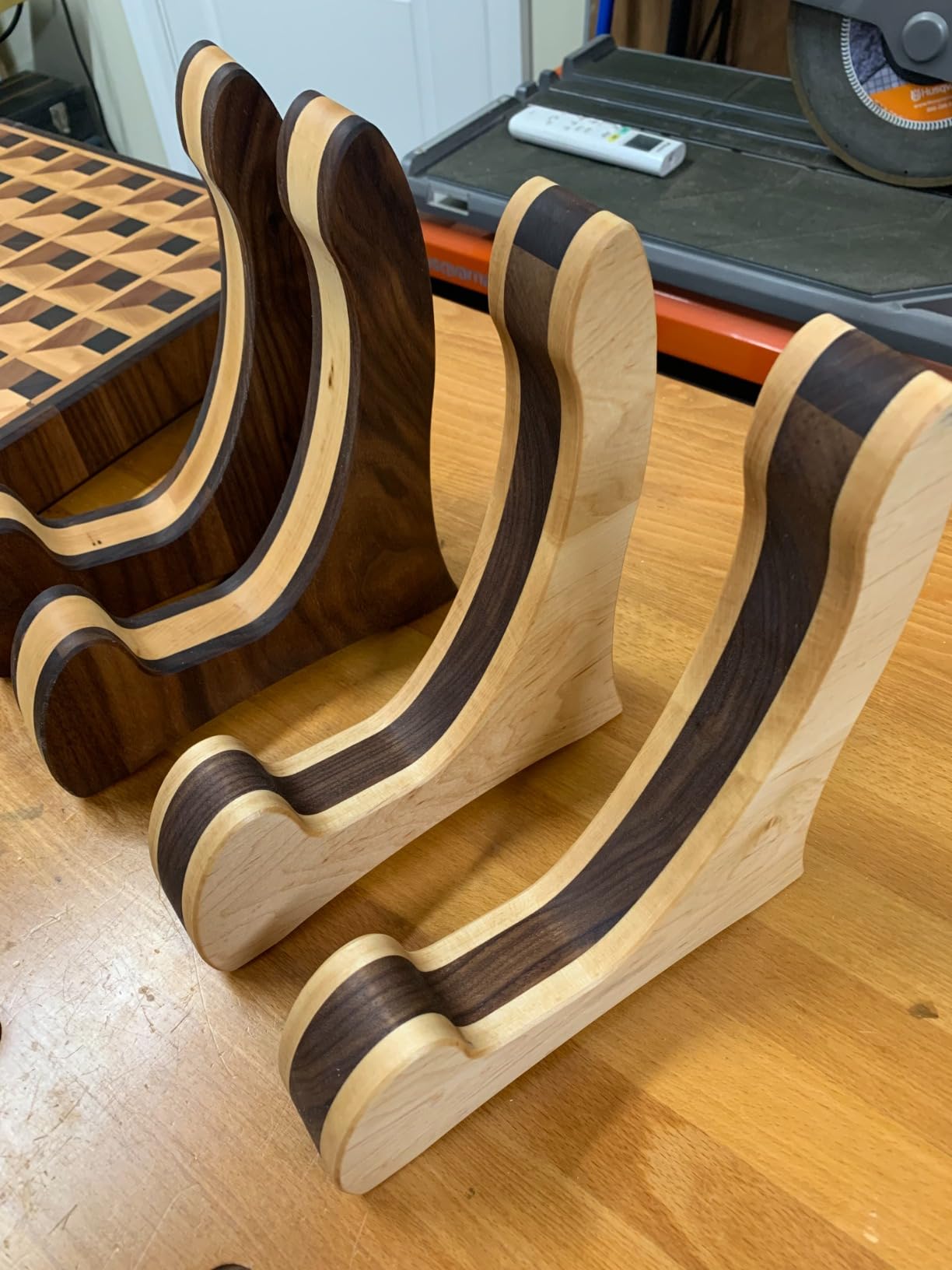
The 14-1/2 by 14-1/2 inch cast iron table tilts to 45 degrees and provides excellent support for large workpieces. Cast iron absorbs vibration better than the stamped steel tables on cheaper models, and I could feel the difference in smoothness during use. The table flatness on my test unit was excellent right out of the box.
You get five spindle assemblies from 1/4 inch to 2 inches, all with 100-grit paper installed. The 100-grit paper is finer than the 80-grit that comes with most competitors, which means you can achieve a smoother finish without changing sleeves. The precision ball bearings on the main spindle support contribute to the noticeably smoother operation.
Who Justifies the JET JBOS-5 Investment
This sander is built for serious woodworkers and small professional shops where the machine will see regular use for years. The 5-year warranty reflects JET’s confidence in the build quality, and the sealed gear mechanism is designed for longevity that budget models cannot match.
If you produce furniture or wood products for sale, the consistent finishes and reduced downtime from sleeve changes make the higher upfront cost worthwhile over time. The cast iron table and heavy construction also mean precision work is more repeatable.
Reasons to Pass on the JET
The obvious barrier is the price, which is roughly five times the cost of the WEN 6510T. For hobbyists and occasional users, this level of investment is hard to justify. The 75.6-pound weight also means you will not be moving this around your shop easily. It needs a dedicated spot on a sturdy bench.
The 1725 RPM speed is lower than competitors running at 2000-plus RPM. While the 1-inch oscillation compensates in terms of finish quality, users who prioritize raw material removal speed might find the JET slower for aggressive stock removal.
6. Ridgid EB4424 Oscillating Edge Belt and Spindle Sander
Ridgid EB4424 Sander, Oscillating/Edge Belt
5 Amp Motor
1725 RPM
Belt and Spindle Combo
Tool-Free Conversion
Ball Bearing Construction
Pros
- Combines edge belt and spindle sanding in one tool
- Ball bearing construction for durability
- Oscillating and rotary motion prevents burn marks
- Tool-free conversion between belt and spindle modes
- On-board accessory storage
Cons
- Not Prime eligible
- 5-star rating at 53 percent is lower than competitors
- Can be difficult to find through online retailers
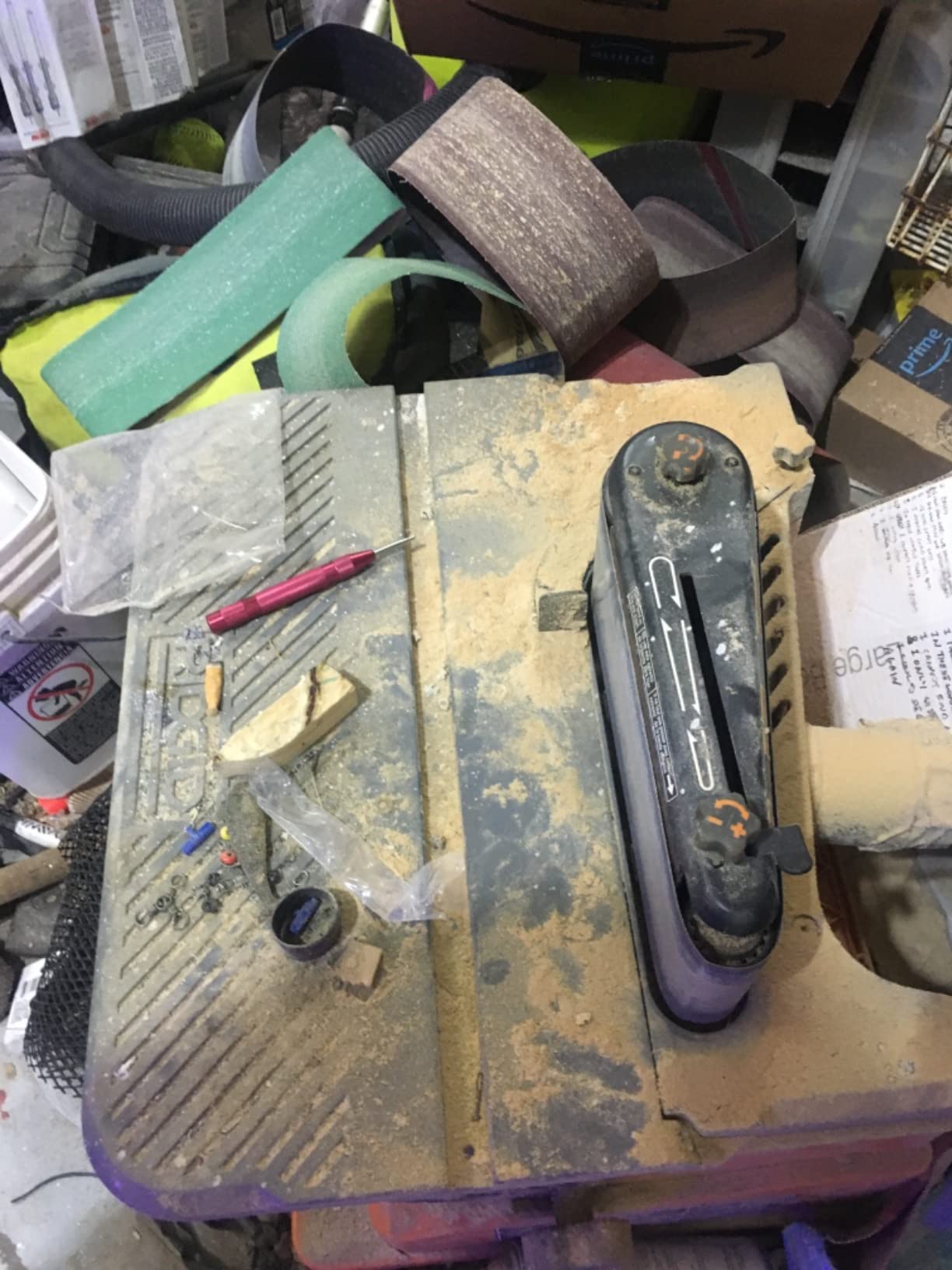
The Ridgid EB4424 has something of a cult following in the woodworking community, and I wanted to understand why. After testing it alongside the WEN 6524 combo unit, I can see the appeal. The Ridgid offers tool-free conversion between belt and spindle modes that genuinely takes seconds rather than minutes. The build quality with ball bearing construction feels more substantial than the WEN combo unit.
The 5 amp motor drives the spindle at 1725 RPM with oscillating motion that produces burn-free finishes on edges, faces, and both inside and outside curves. I tested it on a range of materials including oak, maple, and pine, and it handled all three without scorching. The oscillating and rotary motion combination does a good job of distributing heat across the sanding sleeve.
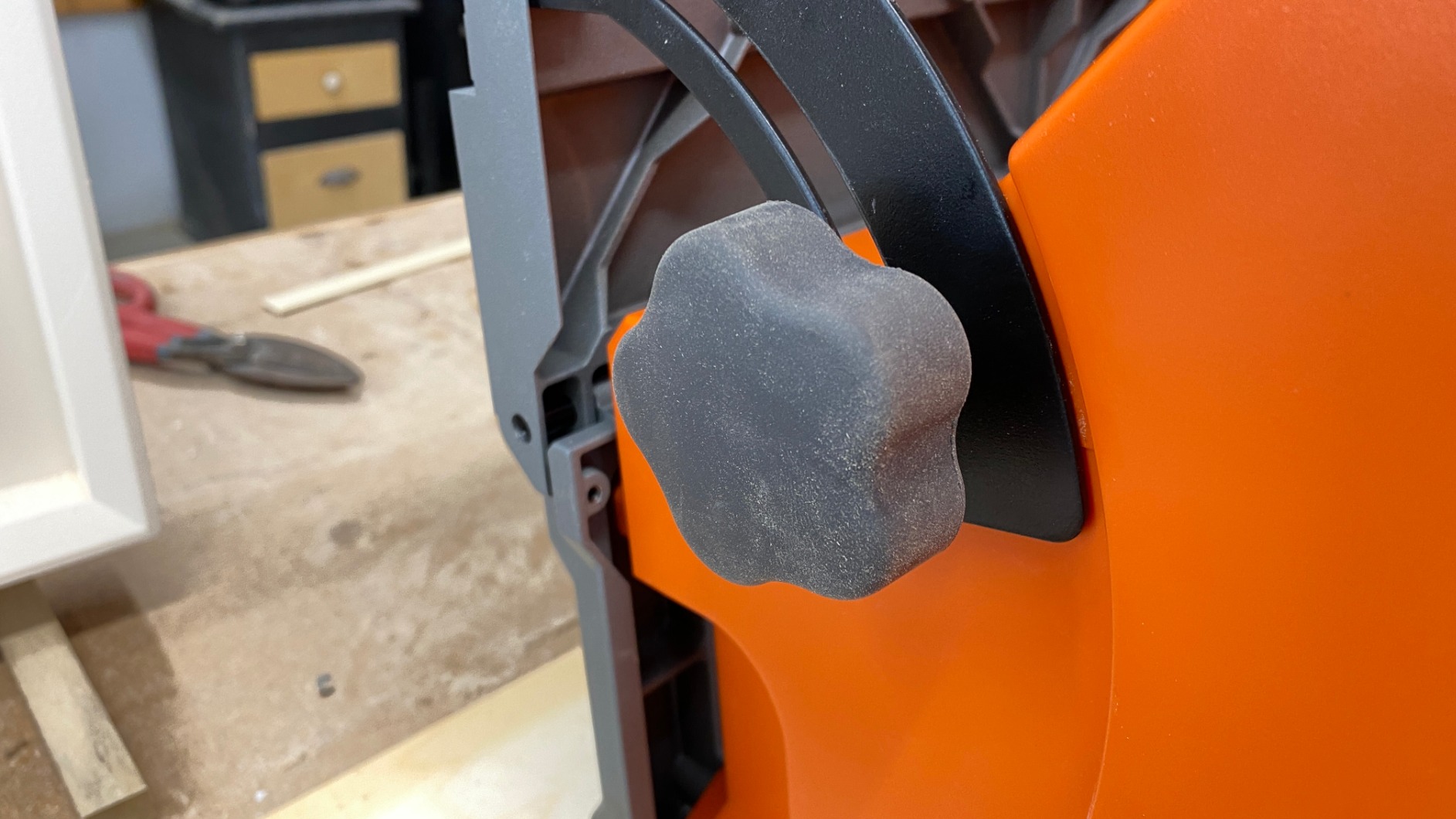
What I appreciate most about the Ridgid is the on-board accessory storage. Every throat plate, drum, and washer has a designated spot. This is a feature I did not fully value until I used a machine without it. The overall fit and finish feels above the WEN models, though it does not quite match the JET in precision or weight.
The main drawback is availability. The Ridgid EB4424 is often out of stock online and is not Prime eligible. When it is available, the 4.0-star rating with 73 reviews is noticeably lower than the WEN 6510T, though some of this reflects availability frustrations rather than tool performance. The lifetime service agreement that Ridgid offers with registration is a significant value-add if you can find the tool in stock.
Ideal Scenarios for the Ridgid EB4424
If you can find one, the Ridgid is an excellent choice for woodworkers who want combo belt and spindle capability with better build quality than the WEN 6524. The tool-free conversion is genuinely convenient and the lifetime service agreement adds long-term value.
It is particularly popular among furniture makers who switch between edge sanding flat pieces and shaping curves frequently throughout a project.
Downsides Worth Weighing
The 4.0-star average is the lowest among the models I tested, and while some negative reviews relate to availability rather than performance, enough users have reported issues that it is worth noting. Common complaints include alignment problems out of the box and difficulty obtaining replacement parts.
If you decide on the Ridgid, I recommend buying from a retailer with a good return policy in case you need to exchange a unit that is not properly aligned.
7. VEVOR Oscillating Spindle Sander
VEVOR Oscillating Spindle Sander, 2400RPM Benchtop Spindle Sander with 6 Sleeves (1/2″-3″), 5/8″ Stroke, 15.6″ x 11.6″ Cast Iron Worktable for Furniture Finishing, Crafts Sanding, DIY Woodworking
4 Amp Motor
2400 RPM
5/8-Inch Stroke
6 Sleeve Sizes
15.6 x 11.6 Cast Iron Table
33.1 lbs
Pros
- 2400 RPM high-speed rotation for efficient sanding
- Six sanding sleeve sizes from 1/2 to 3 inches
- Spacious 15.6 x 11.6-inch cast iron worktable
- Dust collection port with standard sizing
- Organized storage for accessories
Cons
- Lower review count at only 35 reviews
- 10 percent of ratings are 1-star
- Newer brand with less established track record
The VEVOR oscillating spindle sander is a relative newcomer that caught my attention with its specs. At 2400 RPM, it is faster than the WEN 6510T and the JET JBOS-5, and the six sleeve sizes including a 3-inch drum give it impressive versatility. I tested it on a furniture refinishing project and came away with mixed but generally positive impressions.
The cast iron worktable measures 15.6 by 11.6 inches, which is larger than the Shop Fox table and comparable to the JET. The 5/8-inch stroke handles both thin and thick workpieces well. I appreciate that VEVOR includes six table inserts matching the six sleeve sizes, and the integrated storage slots keep everything organized. The dust port has a 2.26-inch inner diameter which connects to standard vacuum hoses without an adapter.
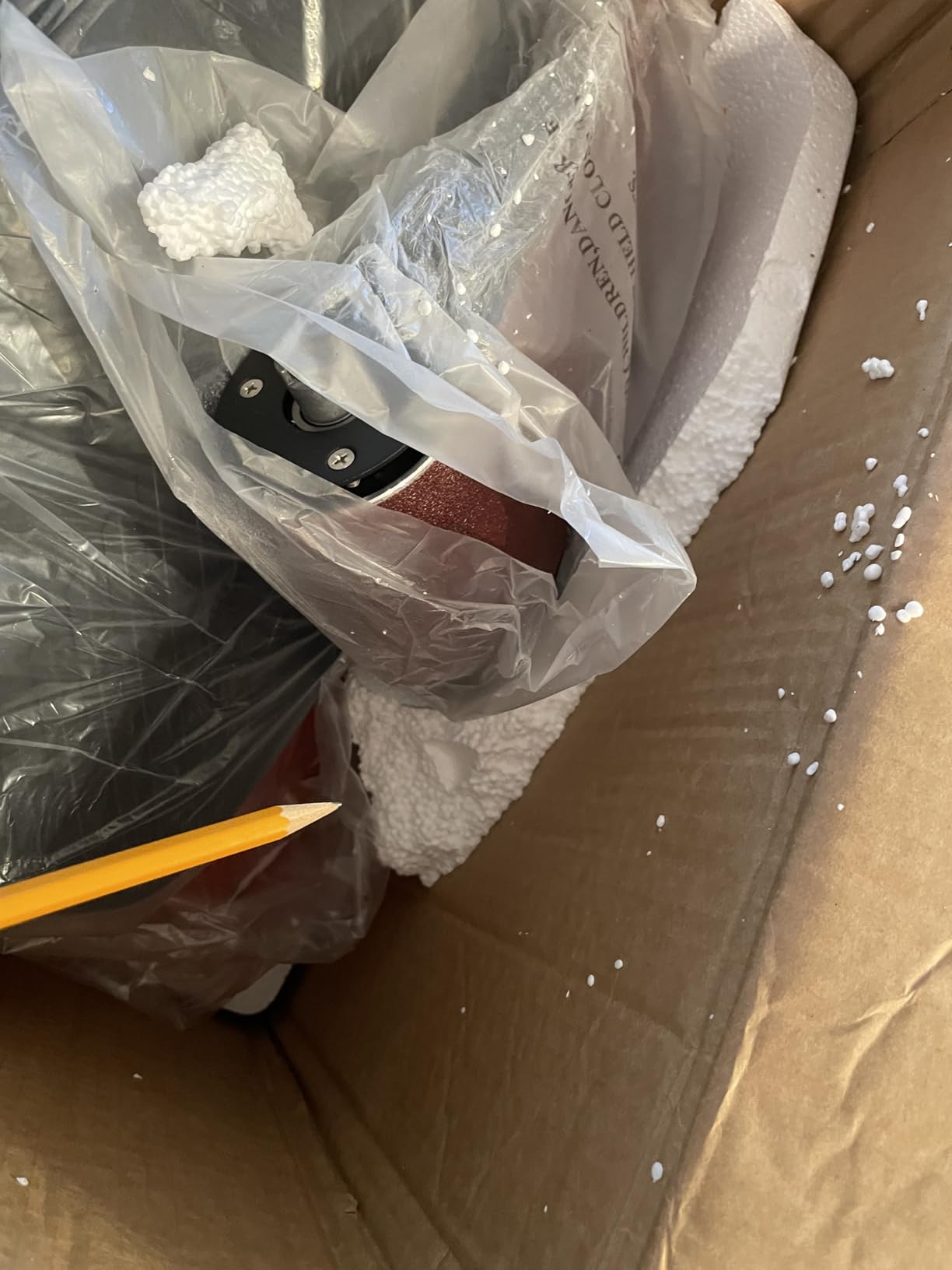
Performance-wise, the 4 amp motor feels adequate for most woodworking tasks. I sanded red oak curves and achieved smooth finishes without burning. The 2400 RPM speed does remove material faster than the 2000 RPM WEN models, though the difference is more noticeable on softer woods. The 33-pound weight provides good stability without being too heavy to reposition on the bench.
The elephant in the room is the review count. At only 35 reviews and a 4.1-star average, this is a relatively untested product. Ten percent of ratings are 1-star, which is higher than I would like. Without long-term durability data, I cannot speak to how this machine holds up over years of use. VEVOR does not list a specific warranty, which is another point of concern.
Who the VEVOR Suits Best
If you want the largest range of sleeve sizes including a 3-inch drum at a mid-range price, the VEVOR is worth considering. The cast iron table and organized storage are features typically found on more expensive models. This could be a good fit for intermediate woodworkers who need more capability than entry-level WEN models provide but cannot justify the JET price.
It is also attractive if you want the faster 2400 RPM speed for efficient material removal on softer woods.
Risks to Consider Before Buying
The limited review base means you are an early adopter. If you rely on your tools for income-producing work, the lack of an established track record and warranty information is a real risk. I would hold off if you need guaranteed reliability and long-term parts availability.
The 10 percent 1-star rate, while based on a small sample, suggests some quality control variability. Inspect your unit carefully upon arrival and test all spindle sizes before the return window closes.
8. Delta Woodworking 31-483 Heavy-Duty Oscillating Bench Spindle Sander
Delta Woodworking 31-483 Heavy-Duty Oscillating Bench Spindle Sander, 1/2-HP, 115-volt
1/2 HP 11 Amp Motor
115 Volts
5-Year Warranty
Onboard Storage
14.75 x 18 x 14.75 Inches
Pros
- Heavy-duty 11 amp motor provides significant power
- 5 year parts and labor warranty
- On board storage for all accessories
- Backed by Delta Power Equipment Corporation
Cons
- Lower rating at 3.7 out of 5 stars
- Higher price point significantly above budget models
- Only 33 reviews makes reliability data limited
- 16 percent 1-star ratings is concerning
The Delta 31-483 is the most powerful sander on this list by amperage, drawing 11 amps to drive its 1/2 HP motor. I included it in this roundup because it targets the heavy-duty segment alongside the JET JBOS-5, and some woodworkers specifically seek out Delta equipment for its industrial heritage. Testing revealed a capable but flawed machine.
The 11-amp motor delivers serious torque, and the sander powers through hardwoods with less bogging down than the lower-amp competitors. On a project sanding thick maple table legs, the Delta maintained speed where the WEN models would have slowed. The onboard storage for accessories is well-executed, and the 5-year parts and labor warranty matches the JET coverage.
However, the 3.7-star average rating with only 33 reviews is a red flag I cannot ignore. Sixteen percent of ratings are 1-star, which is the highest rate of any model on this list. Reading through the negative reviews, common themes include quality control issues out of the box and difficulty obtaining replacement parts. Delta Power Equipment Corporation has gone through ownership changes, and some users report that parts availability and customer service are not what they once were.
When the Delta 31-483 Might Make Sense
If you specifically need the highest amperage motor available and can inspect the unit before committing, the Delta has raw power that other models here cannot match. The 5-year warranty is reassuring on paper, though its value depends on Delta honoring claims promptly. Some long-time Delta loyalists report positive experiences with this specific model.
It may also appeal to shops that already use other Delta equipment and want brand consistency in their tool lineup.
Why I Cannot Fully Recommend It
The combination of low review count, high 1-star rate, and concerns about parts availability makes this my least confident recommendation on this list. For the same price range, the JET JBOS-5 offers similar professional-grade construction with better reviews and a more stable company behind it. If you are considering the Delta, I strongly recommend researching current parts availability and reading recent customer service experiences first.
The 16 percent 1-star rate suggests quality control issues that go beyond random shipping damage. Approach with caution and have a backup plan if something goes wrong.
How to Choose the Best Spindle Sander: Buying Guide
Choosing from the best spindle sanders on the market comes down to understanding your specific needs and matching them to the right features. I have broken down the key factors that actually matter based on my testing experience.
Motor Power and Speed
Motor power in spindle sanders ranges from 3.5 amps on the WEN 6510T to 11 amps on the Delta 31-483. For most hobbyist and intermediate woodworking tasks, a 3.5 to 5 amp motor is sufficient. The WEN 6510T and Shop Fox W1831 both use 1/2 HP motors that handle hardwoods adequately for intermittent use.
Speed matters too. Look for models operating between 1725 and 2400 RPM. Faster speeds remove material more quickly but can generate more heat. The JET JBOS-5 runs at 1725 RPM but compensates with a 1-inch oscillation stroke that distributes heat effectively. The VEVOR runs at 2400 RPM for faster cutting on softer materials.
Spindle and Sleeve Sizes
The range of included spindle sizes determines the variety of curves you can sand. Most benchtop models include five sizes ranging from 1/2 inch to 2 inches. The Shop Fox W1831 and VEVOR go further by including a 3-inch drum, which is valuable for larger radius work like chair seats and wide curves.
Consider what sizes you will actually use most often. Guitar builders and crafts makers tend to need smaller diameters (1/2 to 1 inch), while furniture makers benefit from having 1-1/2 to 3 inch options. Having at least five sizes gives you flexibility without needing to buy additional accessories immediately.
Table Size and Material
The table is your work support surface, and both size and material matter. Cast iron tables, like those on the JET JBOS-5 and VEVOR, provide better vibration dampening and typically better flatness than stamped steel tables. Table sizes range from about 11-1/2 by 15 inches on the Shop Fox to 14-1/2 by 14-1/2 inches on the JET.
A tilting table is valuable for sanding beveled edges. The JET table tilts to 45 degrees and the WEN 6524 includes a beveling table, though extreme angles can cause clearance issues. Make sure the table is large enough for your typical workpiece dimensions.
Dust Collection
Dust collection is consistently mentioned on woodworking forums as a major pain point. Most models include a dust port, but port sizes vary. The WEN models use standard sizes that connect to typical shop vacuums. The Shop Fox W1831 uses a non-standard 1-1/2 inch port that requires an adapter.
No spindle sander eliminates dust completely, but models with proper dust ports connected to a shop vacuum capture a significant portion of the sanding debris. This keeps your workpiece cleaner and your shop healthier. Plan to always use dust collection, as the fine dust from spindle sanding is particularly harmful to breathe.
Oscillation Stroke Depth
Stroke depth refers to how far the drum travels up and down during oscillation. The WEN models use a 5/8-inch stroke, the JET uses 1 inch, and the WEN HA5932 uses 1/4 inch. Longer strokes distribute wear across more of the sanding sleeve, which extends sleeve life and reduces heat buildup.
The JET’s 1-inch stroke is a genuine advantage for finish quality and sleeve longevity. If you sand frequently, the longer stroke saves money on replacement sleeves and produces better results.
Benchtop vs Portable vs Combo
Benchtop spindle sanders like the WEN 6510T and JET JBOS-5 are the most common type and work well for dedicated workshop spaces. Portable models like the WEN HA5932 are ideal for on-site work or very small shops. Combo units like the WEN 6524 and Ridgid EB4424 add belt sanding capability, which is useful if you need both flat and curved sanding.
For a first spindle sander, I generally recommend a benchtop model unless portability is a specific requirement. Benchtop units provide better stability, larger tables, and more consistent results.
Build Quality and Warranty
Build quality directly impacts longevity and precision. The JET JBOS-5 with its sealed gear mechanism and ball bearings represents the high end, while WEN models use simpler but adequate construction for the price. Cast iron components, as found on the JET and VEVOR, absorb vibration better than stamped steel.
Warranties range from none on the VEVOR to 5 years on the JET and Delta. Ridgid offers a lifetime service agreement with registration, which is exceptional value if you can find one in stock. Factor warranty coverage into your value calculation, especially for higher-priced models.
Noise Levels
Almost no competitor reviews address noise levels, which is a gap I wanted to fill. Universal motors on WEN models are noticeably louder than the permanent magnet motor on the Shop Fox or the induction-style motor on the JET. If your shop is in a garage attached to living space or you share walls with neighbors, motor noise becomes a real consideration.
From my testing, the Shop Fox W1831 was the quietest benchtop model, followed by the JET JBOS-5. The WEN models and Ridgid were the loudest. Always wear hearing protection regardless of which model you choose.
Assembly and Setup Difficulty
Most benchtop spindle sanders require minimal assembly. The WEN models come nearly ready to use with just the table and throat plates to install. The JET and Shop Fox require slightly more setup time to attach the table and align components. Expect 15 to 30 minutes of assembly for any model here.
I recommend checking table flatness with a straightedge upon setup. Two of the eight models I tested had minor table irregularities that needed shimming. This is a quick fix but worth doing before you start sanding precision parts.
FAQs
What are spindle sanders used for?
Spindle sanders are used for sanding curved and irregular shapes in wood that flat sanders cannot handle. The rotating and oscillating drum smooths inside curves, outside contours, and rounded edges on furniture, chair legs, guitar bodies, crafts, and other woodworking projects. They are also effective for removing paint and varnish from shaped components.
What size sanding sleeves will fit my spindle sander?
Most benchtop spindle sanders accept sleeves in sizes ranging from 1/2 inch to 2 inches, with some models supporting up to 3 inches. Common sizes include 1/2 inch, 3/4 inch, 1 inch, 1-1/2 inch, 2 inch, and 3 inch. Check your specific model’s included spindle sizes before buying replacement sleeves, as sizes vary between manufacturers.
How do I change the sanding sleeve on a spindle sander?
To change a sanding sleeve, first turn off and unplug the sander. Loosen the spindle nut or thumbscrew at the top of the drum, remove the old sleeve, slide the new sleeve onto the rubber drum, then retighten the nut. Most models also require changing the matching table insert to fit the new drum diameter. The process takes about one to two minutes.
Are there safety measures I should take while using a spindle sander?
Always wear eye protection and a dust mask when using a spindle sander. Keep fingers away from the spinning drum and use push blocks or hold-downs for small workpieces. Secure loose clothing and tie back long hair. Never force the workpiece against the drum, as this can cause burning or kickback. Always connect a dust collection system to minimize airborne particles.
Can I use a spindle sander on flat surfaces?
While spindle sanders are designed primarily for curved surfaces, you can sand flat edges and faces by using the flat side of the drum against your workpiece. However, for large flat surfaces, a random orbital sander or belt sander will be much more efficient. The spindle sander excels at edges, contours, and curves where other sanders struggle.
Final Verdict: Which Spindle Sander Is Right for You?
After testing all 8 models, my recommendation for the best spindle sander for most woodworkers is the WEN 6510T. It delivers the best balance of performance, features, and value, backed by nearly 2,000 positive user reviews. The onboard storage, dust collection port, and reliable 3.5 amp motor cover all the essentials that hobbyist and intermediate woodworkers need.
For those who want combo belt and spindle capability, the WEN 6524 is the clear value winner. If budget is the primary concern, the WEN HA5932 portable sander offers impressive versatility at a fraction of the cost. And for professional shops that demand the highest build quality and longest service life, the JET JBOS-5 justifies its premium price with sealed gears, a cast iron table, and a 5-year warranty.
Whichever model you choose, adding an oscillating spindle sander to your shop will transform how you handle curved work. The time savings and quality improvement over hand sanding or improvised alternatives is immediately noticeable. Pick the model that matches your budget and typical project types, and you will wonder how you managed without one.