Finding the best studio headphones can make or break your mixes. I have spent months testing dozens of models across mixing sessions, vocal tracking, podcast recording, and critical listening to figure out which ones actually deliver accurate, flat response sound for professional work.
Whether you are building your first home studio or upgrading from a worn-out pair, the right studio headphones give you the honest, uncolored sound you need to make mixing decisions that translate across speakers. The wrong pair can make your bass-heavy mix sound thin on a car stereo or boombox overnight.
In this guide, our team covers the 12 best studio headphones available in 2026, broken down by use case, budget, and design type. We include both open-back and closed-back options, budget picks under $50, and professional reference headphones for serious mixing and mastering work. We also answer the questions that most buyers ask before pulling the trigger, including the often-misunderstood impedance matching topic and the 60/60 hearing safety rule.
Table of Contents
Top 3 Picks for Best Studio Headphones

Sennheiser HD 490 PRO
- Open-back reference
- 130 ohm impedance
- Dual ear pads
- Extremely wide soundstage

Audio-Technica ATH-M50x
- 45mm drivers
- Closed-back isolation
- Detachable cables
- Swiveling earcups

OneOdio Pro-10
- 50mm neodymium drivers
- Detachable dual cables
- Swiveling ear cups
- Budget friendly
12 Best Studio Headphones in 2026
| Product | Specifications | Action |
|---|---|---|
| Sennheiser HD 490 PRO |
|
Check Latest Price |
| Audio-Technica ATH-M50x |
|
Check Latest Price |
| OneOdio Pro-10 |
|
Check Latest Price |
 beyerdynamic DT 770 PRO 80 beyerdynamic DT 770 PRO 80 |
|
Check Latest Price |
 Sony MDR7506 Sony MDR7506 |
|
Check Latest Price |
 beyerdynamic DT 990 Pro X beyerdynamic DT 990 Pro X |
|
Check Latest Price |
 Audio-Technica ATH-M40x Audio-Technica ATH-M40x |
|
Check Latest Price |
 Sennheiser HD 280 Pro Sennheiser HD 280 Pro |
|
Check Latest Price |
 Shure SRH840A Shure SRH840A |
|
Check Latest Price |
 AKG K240 Studio AKG K240 Studio |
|
Check Latest Price |
 Audio-Technica ATH-M20x Audio-Technica ATH-M20x |
|
Check Latest Price |
 FIFINE H8 FIFINE H8 |
|
Check Latest Price |
1. Sennheiser HD 490 PRO – Best Overall Open-Back Reference Headphones
HD 490 PRO Open-Back Professional Headphone
Open-back
130 Ohm impedance
5-36000 Hz freq response
200g lightweight
Dual ear pads included
Pros
- Extremely wide dimensional soundstage
- Uncolored frequency response for honest mixing
- Two sets of ear pads for producing and mixing
- Comfortable for 8+ hour sessions
- Lightweight at just 200 grams
Cons
- Open-back offers no sound isolation
- 130 ohm impedance may need an amp
- Premium price point
The Sennheiser HD 490 PRO completely changed how I think about open-back mixing headphones. The first time I put these on during a mixing session, the soundstage hit me immediately. Instruments had clear spatial positions in the stereo field that I simply could not hear on my old closed-back monitors. Everything felt three-dimensional.
What sets the HD 490 PRO apart from other reference headphones is the dual ear pad system. Sennheiser includes one set tuned for producing, with a slightly more present low end, and another set tuned for mixing, with a flatter, more neutral response. I swap between them depending on the task, and it genuinely makes a difference in how I perceive the low-mid transition.
At just 200 grams, these are among the lightest professional headphones I have tested. I have worn them for full 8-hour production days without any ear fatigue or pressure buildup on the top of my head.
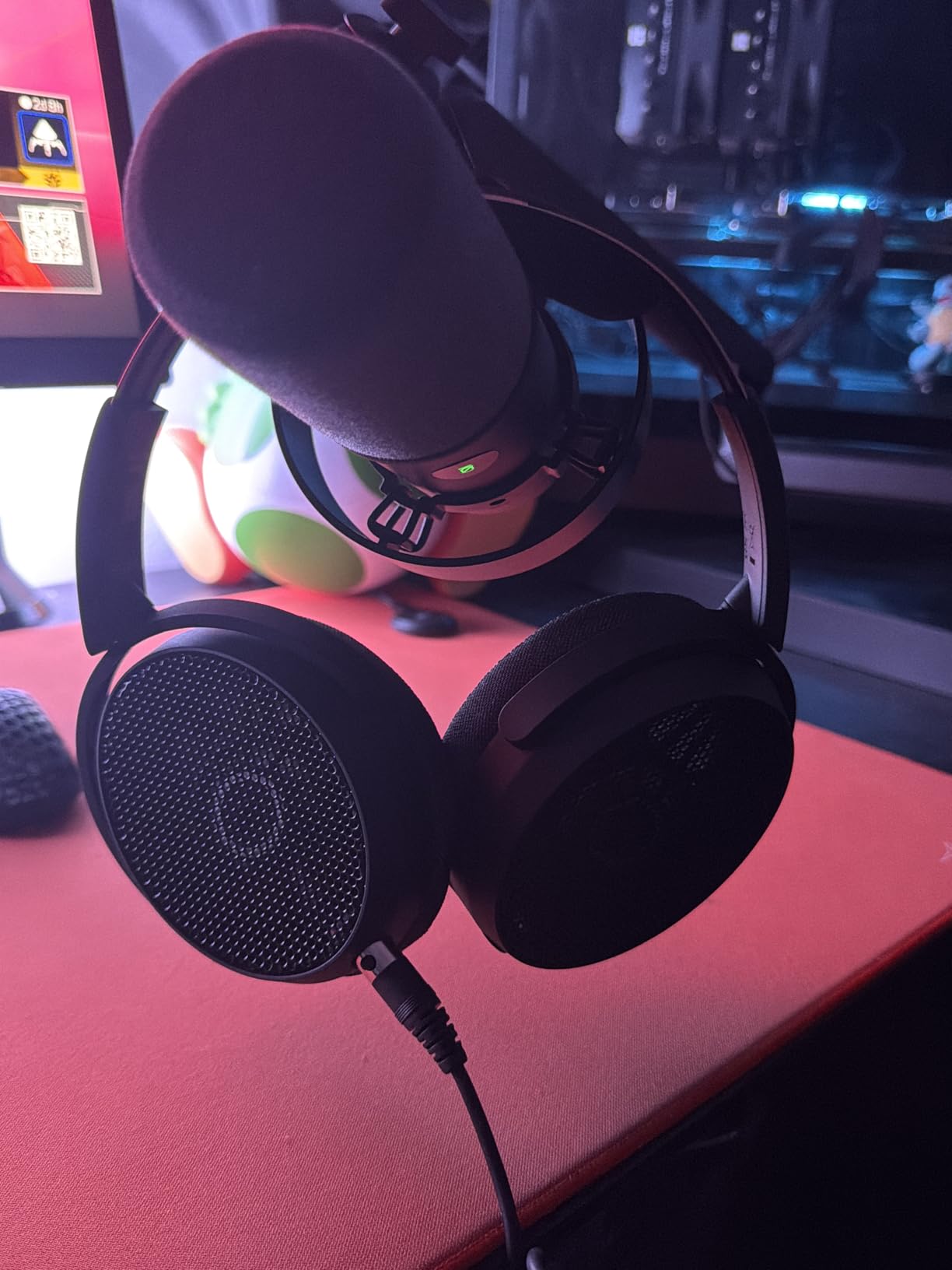
The frequency response runs from 5 Hz to 36,000 Hz, and Sennheiser uses an innovative low-frequency cylinder system to deliver accurate bass that open-back designs typically struggle with. The bass is not hyped or boosted. It is simply present, defined, and honest enough to make real mixing decisions.
The 130-ohm impedance is the main thing to watch out for. I found they work fine from a laptop headphone jack, but they truly open up with a dedicated headphone amplifier or a quality audio interface. The soundstage widens further, and the transient response tightens up noticeably.
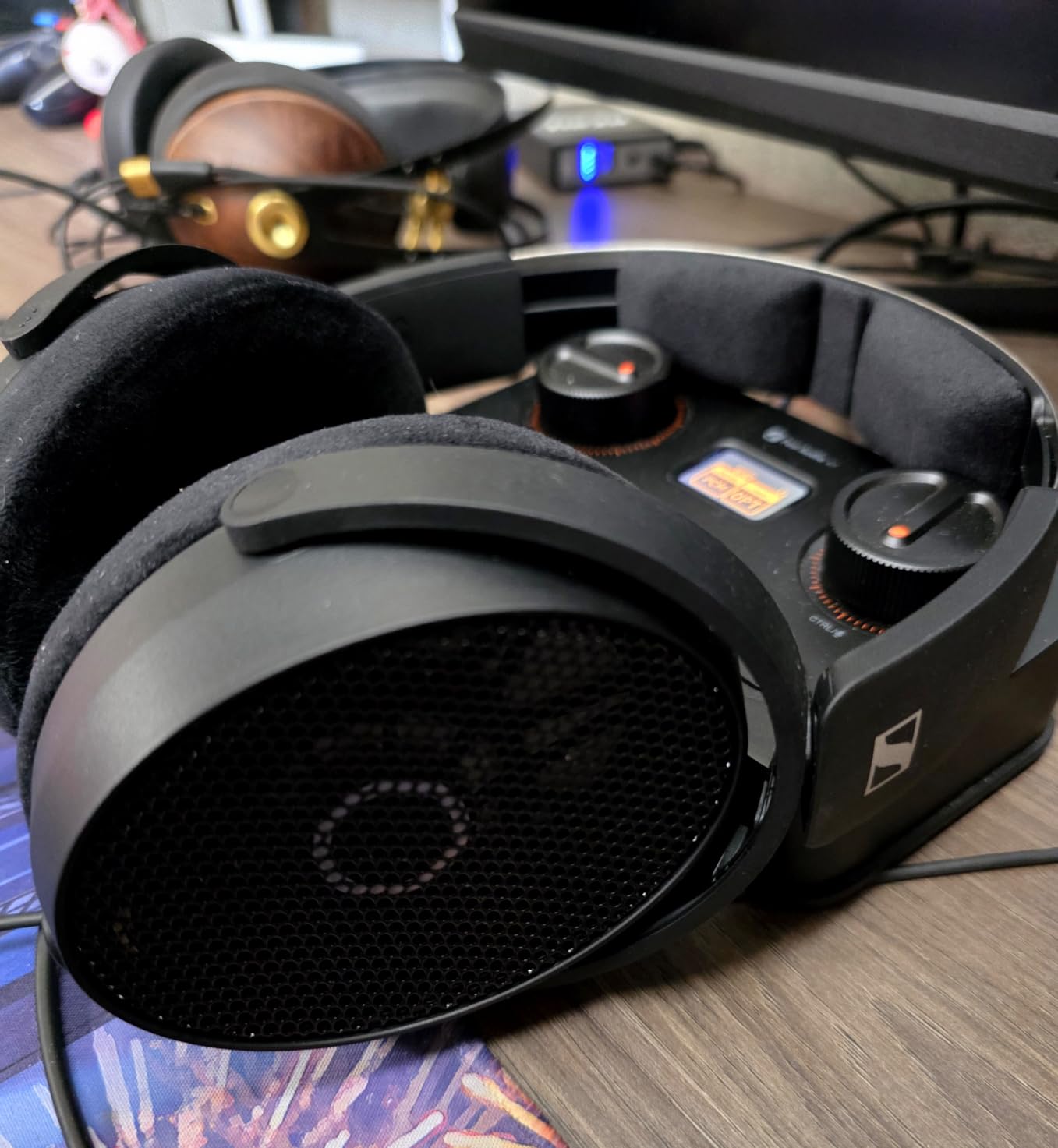
Best For: Mixing and Mastering Engineers
If your primary work involves mixing and mastering, the HD 490 PRO is hard to beat at this price. The uncolored response means what you hear is what you get, and mixes translate beautifully to studio monitors and consumer speakers alike. The dual pad system gives you two reference points without buying a second pair of headphones.
The open-back design also helps with ear fatigue during long sessions. Your ears do not get that pressurized feeling that closed-back cans produce after a few hours of critical listening.
Amplification Requirements
At 130 ohms, the HD 490 PRO benefits from a headphone amplifier for optimal performance. Most audio interfaces like the Focusrite Scarlett or Universal Audio Volt can drive them adequately. But if you want to hear the full soundstage and transient detail, a dedicated amp like the Schiit Magni or a high-end interface like the RME Babyface will get the most out of these drivers.
If you plan to use these with a smartphone or laptop without an interface, you can, but you may find the volume ceiling lower than ideal and the dynamics slightly compressed.
2. Audio-Technica ATH-M50x – Best Value All-Rounder
Audio-Technica ATH-M50X Professional Studio Monitor Headphones, Black, Professional Grade, Critically Acclaimed, with Detachable Cable
Closed-back
38 Ohm impedance
20-28000 Hz
45mm large aperture drivers
Detachable cable system
Pros
- Critically acclaimed sound with deep accurate bass
- Excellent sound isolation for tracking
- Comes with 3 detachable cables
- 90 degree swiveling earcups for one-ear monitoring
- Very easy to drive at 38 ohms
Cons
- Closed-back limits soundstage
- Can expose poor quality recordings
- Clamping force is tight initially
The Audio-Technica ATH-M50x has been one of the most popular studio headphones for over a decade, and after extended use I understand why. These are the headphones I reach for when I need one pair that can handle tracking, casual mixing, podcast recording, and even DJ monitoring without missing a beat.
The 45mm large aperture drivers deliver a sound signature that is slightly elevated in the bass and treble compared to truly flat reference headphones. This makes them incredibly enjoyable to work with. Your mixes sound exciting, and you can easily identify problematic frequencies. With over 33,000 reviews and a 4.7 rating, the community feedback speaks for itself.
At 38 ohms impedance, the M50x works perfectly with any audio interface, laptop, or even a smartphone. No amplifier needed. This is a huge advantage for beginners and home studio owners who are just starting out and do not want to invest in additional gear.
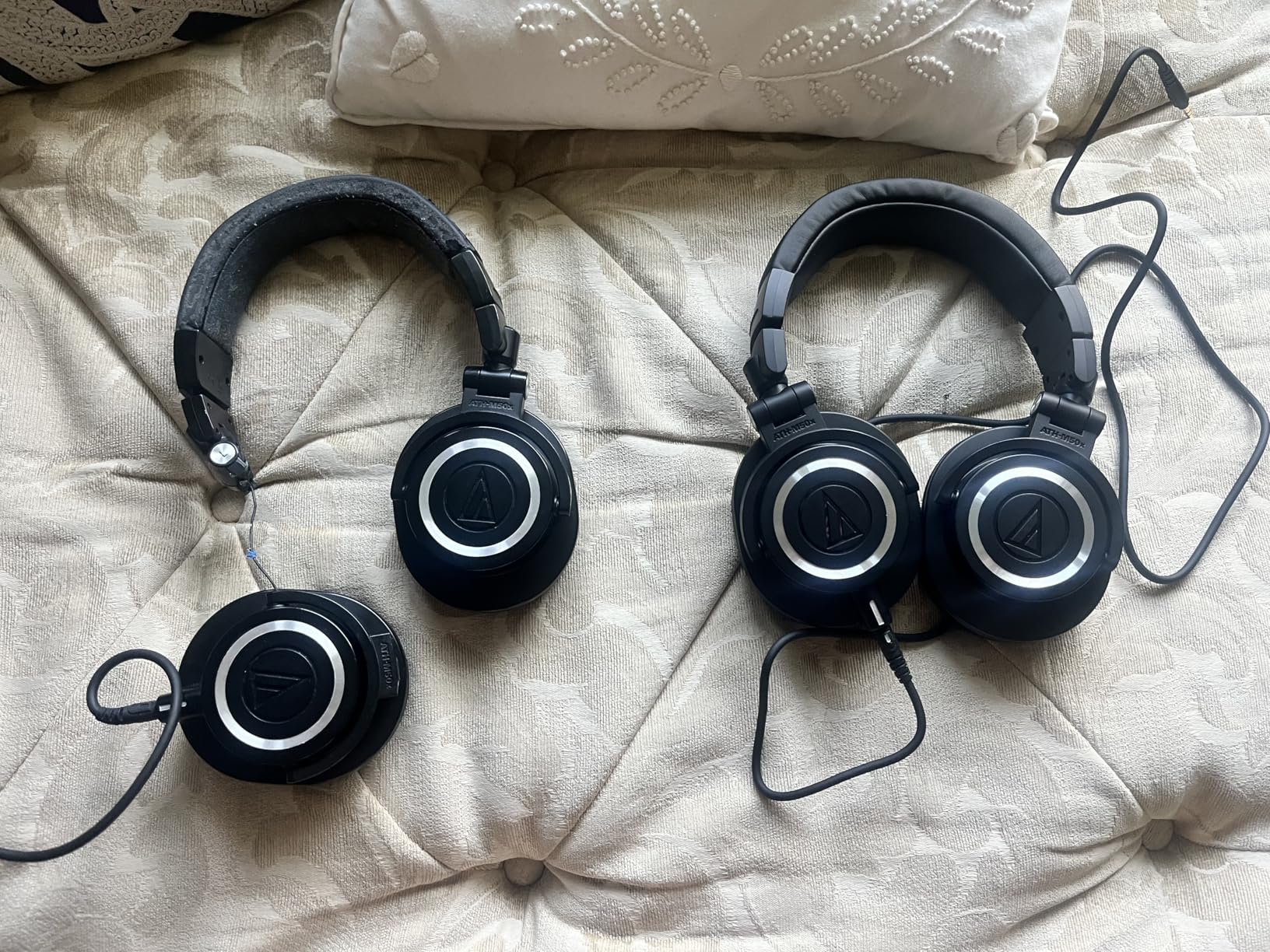
The isolation is excellent. When tracking vocals, I get almost zero bleed into the microphone, which is critical for clean recordings. The circumaural design seals around the ears effectively, blocking external noise even in less-than-ideal acoustic environments.
Audio-Technica includes three cables in the box: two straight cables of different lengths and one coiled cable. All attach via a locking twist-lock mechanism that prevents accidental disconnection during a session.
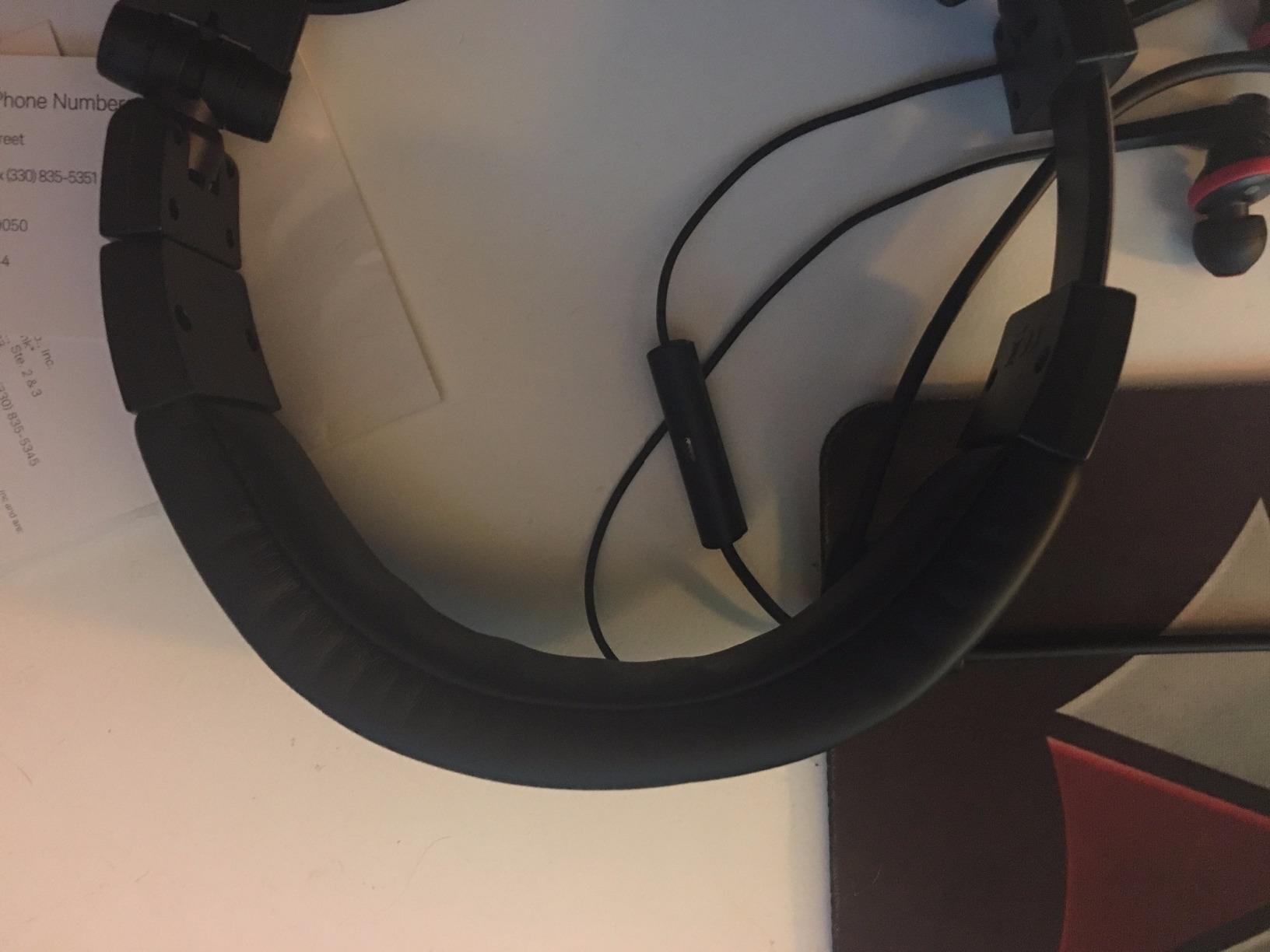
Best For: Beginners and Home Studio Owners
If you are setting up your first studio or need a single pair of headphones that can do everything reasonably well, the ATH-M50x is the safest choice. The sound signature is forgiving enough for casual listening but detailed enough for basic mixing decisions. Many professional engineers I know keep a pair as a secondary reference.
The slightly hyped bass response is worth noting. Mixes made exclusively on the M50x can end up sounding slightly thin on other systems because the headphones make the low end feel more present than it actually is.
Cable and Accessory System
The three included cables cover virtually every scenario. The short straight cable works for portable devices. The long straight cable reaches across a studio room. The coiled cable stretches as needed without tangling. The earcups fold flat and swivel 90 degrees, making one-ear monitoring natural and comfortable.
The twist-lock cable connection can take a few uses to get used to. You need to push and twist simultaneously, but once locked in, the connection is rock-solid.
3. OneOdio Pro-10 – Best Budget Studio Headphones
OneOdio Wired DJ Hi-Res Over-Ear Headphones for PC, Keyboard Guitar – Black
Closed-back
32 Ohm impedance
50mm neodymium drivers
Detachable dual cables
Self-adjusting headband
Pros
- Incredible value for under $35
- Powerful bass with clear vocals
- Detachable cables with 3.5mm and 6.35mm jacks
- 90 degree swiveling ear cups
- Self-adjusting headband
- Share port for daisy-chaining
Cons
- Build materials feel plasticky
- Some durability concerns over time
- Cable can be short for some uses
I was honestly skeptical about studio headphones at this price point, but the OneOdio Pro-10 surprised me. With over 76,000 reviews and a 4.4-star rating, this is clearly a crowd favorite, and my testing confirmed that the hype is justified for the budget category.
The 50mm neodymium drivers deliver a sound signature that leans toward the fun side, with punchy bass and crisp highs. These are not flat reference headphones by any stretch, but for tracking, podcasting, DJ monitoring, and casual production work, they sound genuinely good. I used them for a week of podcast editing and never felt fatigued.
The standout feature at this price is the dual cable system. You get detachable cables with both 3.5mm and 6.35mm jacks, which means they plug directly into mixers, audio interfaces, amplifiers, guitars, keyboards, and laptops without any adapters.
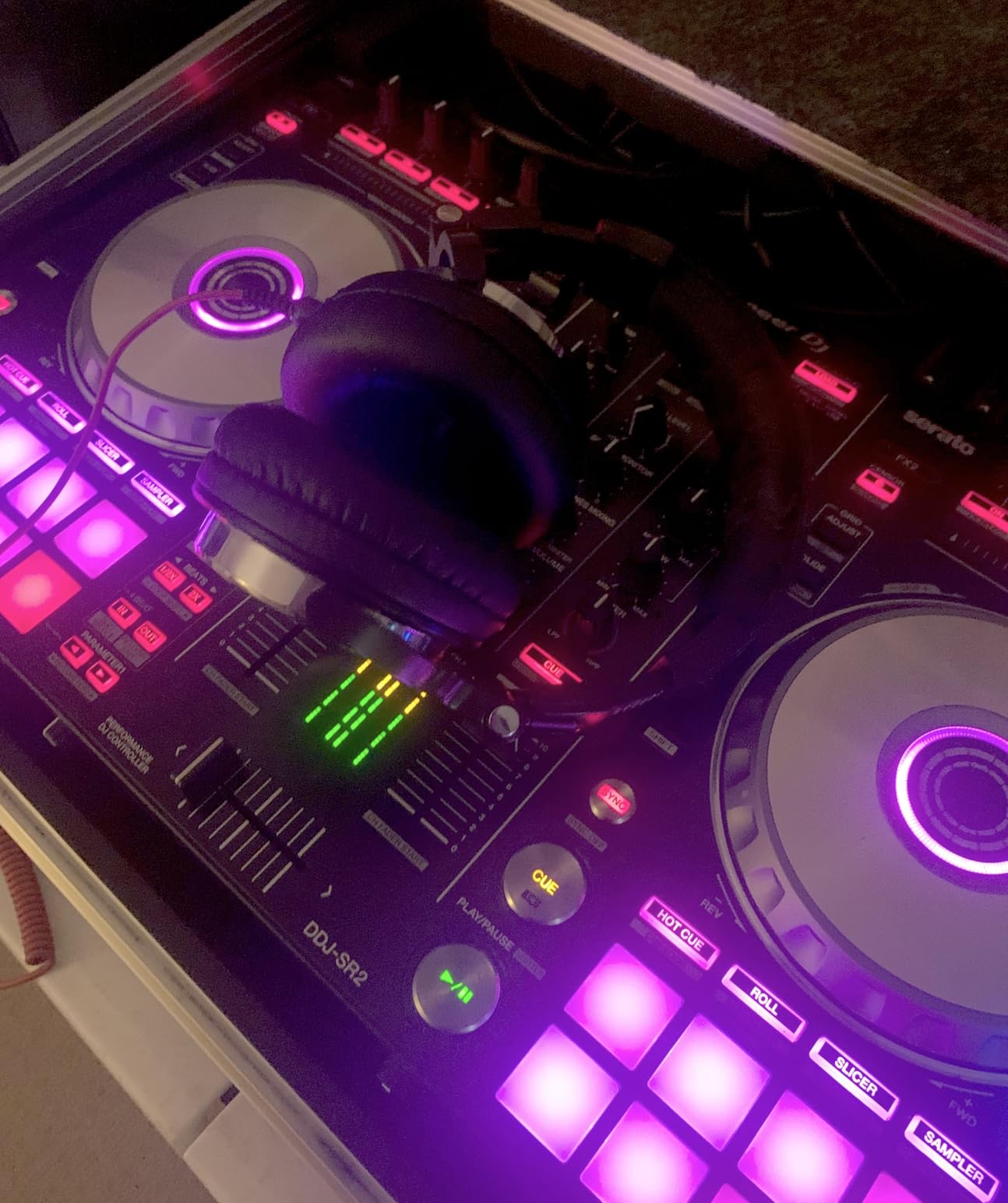
One feature I did not expect at this price is the audio share port. You can plug a second pair of headphones directly into the Pro-10, which is incredibly useful for collaborative sessions or when a friend wants to listen along during a recording session.
The self-adjusting headband takes the guesswork out of fitting. You just put them on and the headband adapts to your head size automatically. The padding is adequate, though after 3 to 4 hours of continuous use, I started to feel some pressure on my ears.
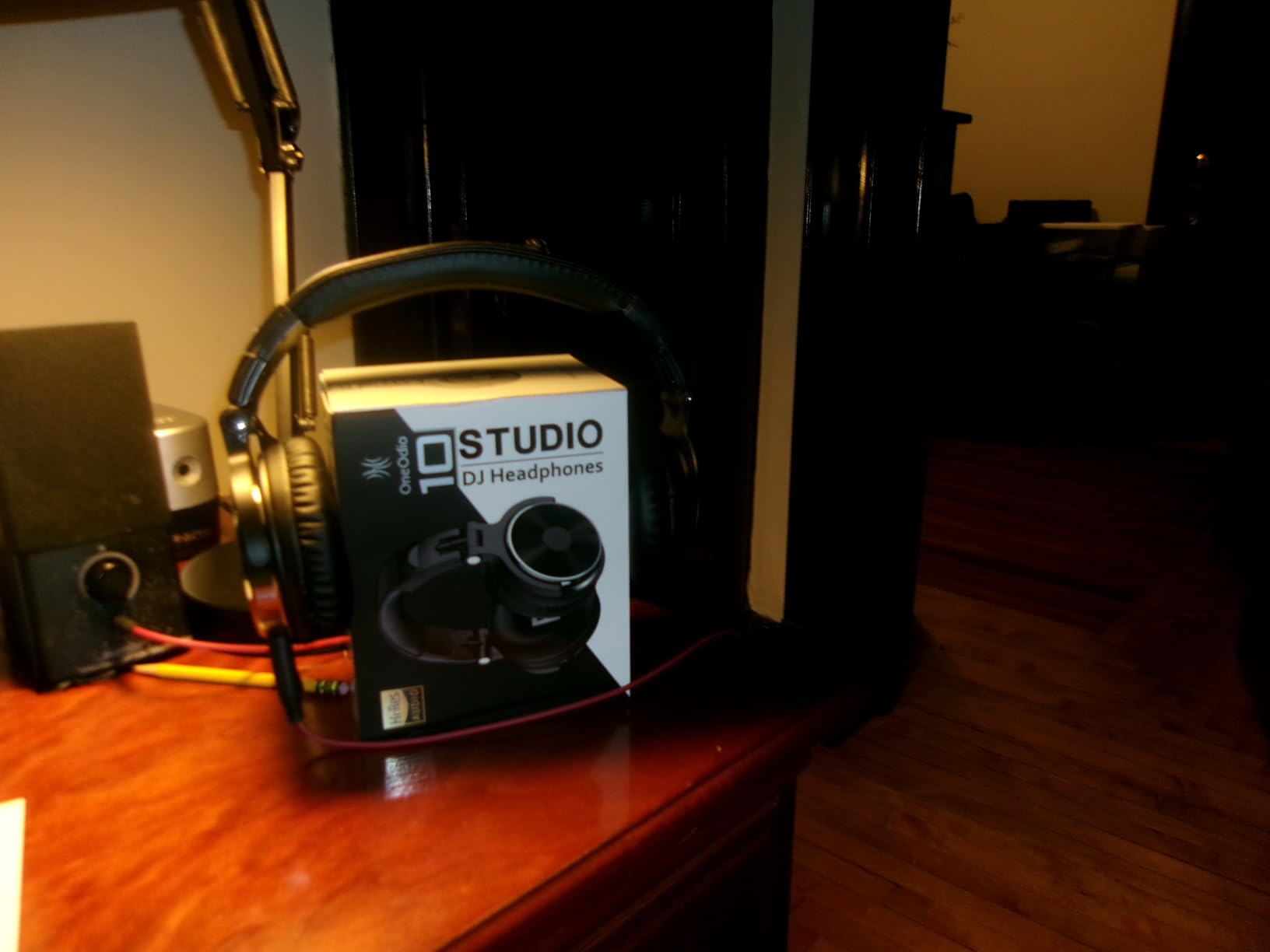
Best For: Beginners and Content Creators on a Budget
If you are just starting out with music production, podcasting, or YouTube content creation and have a tight budget, the OneOdio Pro-10 gives you studio-style functionality for a fraction of the cost of mainstream brands. They are not reference-grade, but they are more than capable for tracking, monitoring, and basic editing tasks.
They also work great as a backup pair. Many professionals keep a set like this around for when collaborators visit the studio and need a basic monitoring solution.
What to Expect Long-Term
The build quality is the main trade-off. The plastic construction feels light but also somewhat fragile compared to the German-engineered beyerdynamic or Japanese Audio-Technica models. Some users report cable connection issues after extended use, so handle the detachable cables with care.
For the price, the warranty and build are acceptable. Just manage your expectations about longevity if you plan to use them daily in a professional environment.
4. beyerdynamic DT 770 PRO 80 Ohm – Best for Comfortable Tracking
beyerdynamic DT 770 Pro (80 Ohm), Closed-Back Studio Headphones, Black
Closed-back
80 Ohm impedance
5-35000 Hz
Velour ear pads
German construction
Bass reflex system
Pros
- Exceptional comfort with soft velour ear pads
- Balanced frequency response
- Excellent noise isolation
- Durable German construction
- Replaceable ear pads
- Innovative bass reflex system
Cons
- Cable is not detachable soldered
- May require amp for 80 ohm version
- Can get warm during extended use
The beyerdynamic DT 770 PRO is a studio legend, and the velour ear pads alone make it worth considering for anyone who wears headphones for hours at a stretch. These are, without question, the most comfortable closed-back studio headphones I have ever worn for long tracking sessions.
The 80-ohm version sits in a sweet spot. It is more demanding than the 32-ohm variant but still drivable from most audio interfaces without a dedicated amplifier. The sound is balanced and detailed across the frequency spectrum, with a bass reflex system that adds controlled low-end punch without muddying the mids.
I used these for a full week of vocal tracking, and the isolation kept the click track and backing tracks completely out of the microphone. The closed-back design seals tightly around the ears, making these ideal for recording scenarios where bleed is a concern.

The frequency response extends from 5 Hz to 35,000 Hz, giving you headroom in both the sub-bass and ultrasonic ranges. The treble has a characteristic beyerdynamic sparkle that some people love and others find slightly fatiguing after very long sessions. I personally enjoy the clarity in the high end for identifying sibilance issues in vocals.
The build quality is quintessentially German. Rugged, heavy-duty, and built to last for years. The only real downside is the non-detachable cable, which is soldered directly to the driver. If the cable breaks, you need to solder a replacement rather than just swapping it out.

Best For: Long Recording Sessions
The DT 770 PRO is the go-to choice for studio engineers who spend hours tracking musicians. The velour pads breathe better than leather alternatives, reducing heat buildup. The clamping force is firm enough for isolation but gentle enough to avoid headaches during marathon sessions.
The 80-ohm version pairs perfectly with popular audio interfaces like the Focusrite Scarlett 2i2, PreSonus AudioBox, and Universal Audio Volt series.
Cable Considerations
The 3-meter single-sided cable is permanently attached. This is the biggest complaint from users. The length is generous enough for studio work, but if you need portability or want to swap cables, you will need to look elsewhere. Some users successfully mod the headphones to add a detachable cable, but that voids the warranty.
5. Sony MDR7506 – The Industry Standard
Sony MDR7506 Professional Large Diaphragm Headphone
Closed-back
63 Ohm impedance
10-20000 Hz
Neodymium magnets
Folds for storage
9.8 ft cord
Pros
- Industry standard trusted for decades
- Powerful detailed sound with neodymium magnets
- Excellent noise reduction
- Durable rugged construction
- Long 9.8 foot cord
- Includes protective soft case
Cons
- Cord is not detachable
- 9.8 foot cord may be too long for some
- No in-line volume control
The Sony MDR7506 has been a fixture in recording studios, broadcast booths, and film sets since the 1990s. When you walk into a professional recording studio, you will almost certainly see a pair of these hanging on a hook. That kind of industry adoption does not happen without reason.
These are not the flattest headphones on this list. The MDR7506 has a slightly boosted mid-range that makes vocals and dialogue jump out. This is exactly why broadcast professionals and film location sound recordists love them. They reveal voice clarity issues instantly, which is critical for dialog-heavy content.
At 63 ohms, they are easy to drive from any interface or portable recorder. I tested them with a Zoom H6 field recorder and the volume was more than adequate. The closed-ear design provides outstanding passive noise reduction, which is why they remain the standard for location sound work.
The build is utilitarian. No premium materials, no detachable cable, no swappable pads. But the construction is rugged enough to survive being tossed in a gear bag daily for years. Many users report their MDR7506 pairs lasting over a decade of professional use.
Best For: Location Recording and Broadcast
If you work in film, television, broadcast, or podcast production where voice clarity is paramount, the MDR7506 remains unbeatable for the price. The slightly forward midrange helps you catch dialogue issues that flatter, more hi-fi headphones might mask.
They are also the most recognized studio headphones in the world, which means if a client or collaborator sees you wearing them, they instantly know you are working with professional gear.
Long-Term Durability
The MDR7506 is known for outlasting headphones that cost three times as much. The replaceable ear pads are cheap and easy to swap. The cable is permanently attached but thick and well-strain-relieved. If something does break, parts are widely available and affordable, making these a true buy-once, use-forever investment.
6. beyerdynamic DT 990 Pro X – Best Open-Back for Critical Listening
beyerdynamic DT 990 Pro X (48 Ohm), Open-Back Studio Headphones, Black
Open-back
48 Ohm impedance
5-40000 Hz
STELLAR.45 driver
Detachable mini-XLR cable
Handcrafted in Germany
Pros
- Wide natural soundstage with brilliant highs
- STELLAR.45 driver delivers low distortion
- 48 ohm impedance easy to drive
- Detachable locking mini-XLR cable
- Lightweight at 0.64 lb
- All parts serviceable for longevity
Cons
- Open-back means limited bass response
- Can clip at higher volumes with an amp
- Thin detachable cord may get caught
The beyerdynamic DT 990 Pro X brings the legendary DT 990 sound into a modern, more practical package. The new STELLAR.45 driver combined with a 48-ohm impedance makes these significantly easier to drive than the original 250-ohm DT 990, which is a welcome change for home studio owners.
The open-back design creates a soundstage that feels almost speaker-like. When I first mixed on these, I kept taking them off to check if my studio monitors were also playing. The spatial imaging is that convincing. Instruments have clear, precise positions in the stereo field, and reverb tails decay naturally into the space around you.
The detachable cable with a locking mini-XLR connector is a significant upgrade over the older DT 990. You can now replace the cable without soldering if it gets damaged. The 3-meter length is generous and the locking mechanism prevents accidental pullouts.
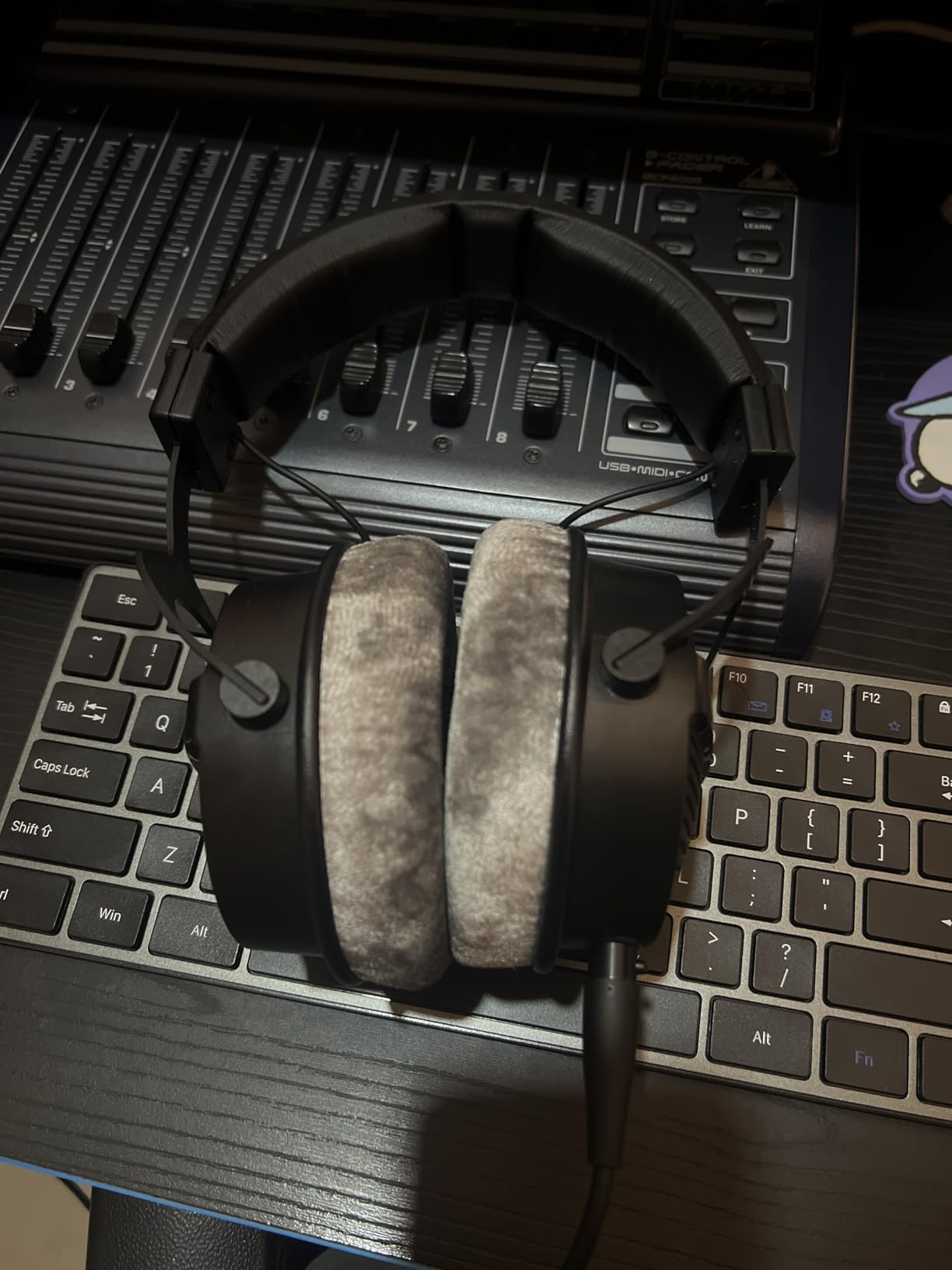
At just 0.64 pounds, these are light enough for extended sessions. The velour ear pads are the same comfortable design beyerdynamic is known for, and they are replaceable. All parts of the headphone are user-serviceable, which means you can keep these running for many years.
The 5 Hz to 40,000 Hz frequency response is wider than most competitors. The treble has the signature beyerdynamic clarity, though some users find it slightly sharp. A small EQ adjustment tames this easily if it bothers you.
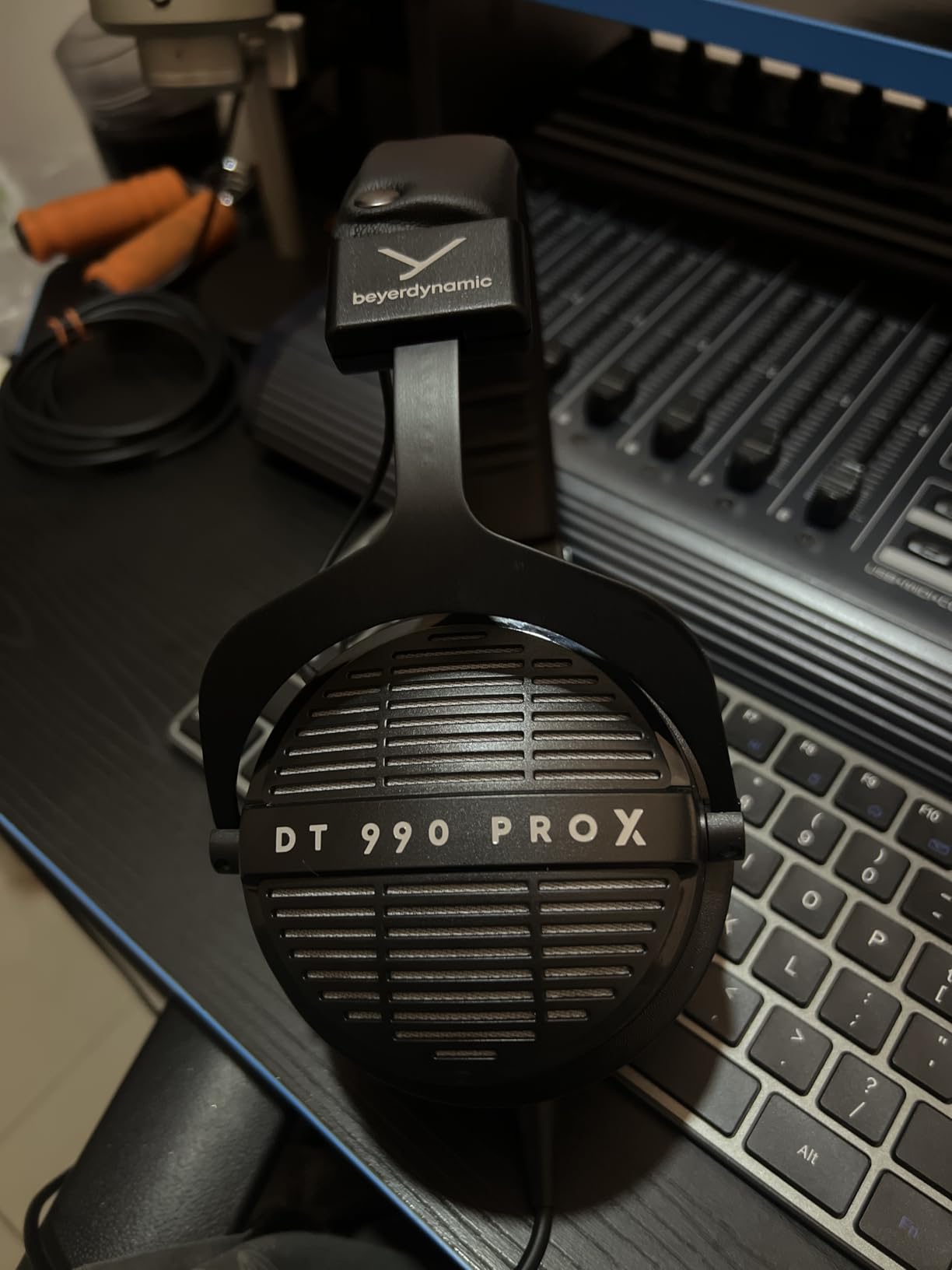
Best For: Mixing and Critical Listening
For mixing sessions where soundstage and imaging are critical, the DT 990 Pro X excels. The open-back design lets you hear reverb and spatial effects with a realism that closed-back headphones simply cannot match. I recommend these specifically for producers who work with spatial audio, ambient music, or any genre where stereo placement matters.
The 48-ohm impedance means you can drive them from a laptop or phone, though they benefit from a quality audio interface for the best dynamics.
How It Compares to the DT 770 PRO
The main difference is open-back versus closed-back. The DT 990 Pro X offers superior soundstage and a more natural listening experience, making it better for mixing. The DT 770 PRO offers superior isolation and is better for tracking. Many professionals own both for exactly this reason.
7. Audio-Technica ATH-M40x – Best Flat Response Under $120
Audio-Technica ATH-M40x Professional Studio Monitor Headphone, Black, with Cutting Edge Engineering, 90 Degree Swiveling Earcups, Pro-Grade Earpads/Headband, Detachable Cables Included
Closed-back
35 Ohm impedance
15-24000 Hz
40mm drivers
Detachable cables
90 degree swiveling earcups
Pros
- Exceptional tonal accuracy and neutral sound
- Detachable cables with twist-lock jack
- Foldable design for portability
- Great value at price point
- Excellent sound isolation
- Robust build quality
Cons
- Clamping force may be tight for some
- Ears can get warm during extended use
- Smaller stock ear pads may not fit all ears
The Audio-Technica ATH-M40x is the flatter, more neutral sibling of the popular M50x. If you want the build quality and reliability of the M50x but with a more accurate, reference-oriented sound signature, the M40x is the better choice for mixing.
I noticed immediately that the M40x has a more restrained bass response compared to the M50x. The low end is present but not emphasized, which makes it easier to judge bass balance objectively. The midrange is clear and forward, and the treble is smooth without the slight peak that the M50x exhibits.
The 35-ohm impedance means these work with any device, no amplifier needed. The circumaural design provides excellent isolation for tracking, and the 90-degree swiveling earcups make one-ear monitoring comfortable and natural.
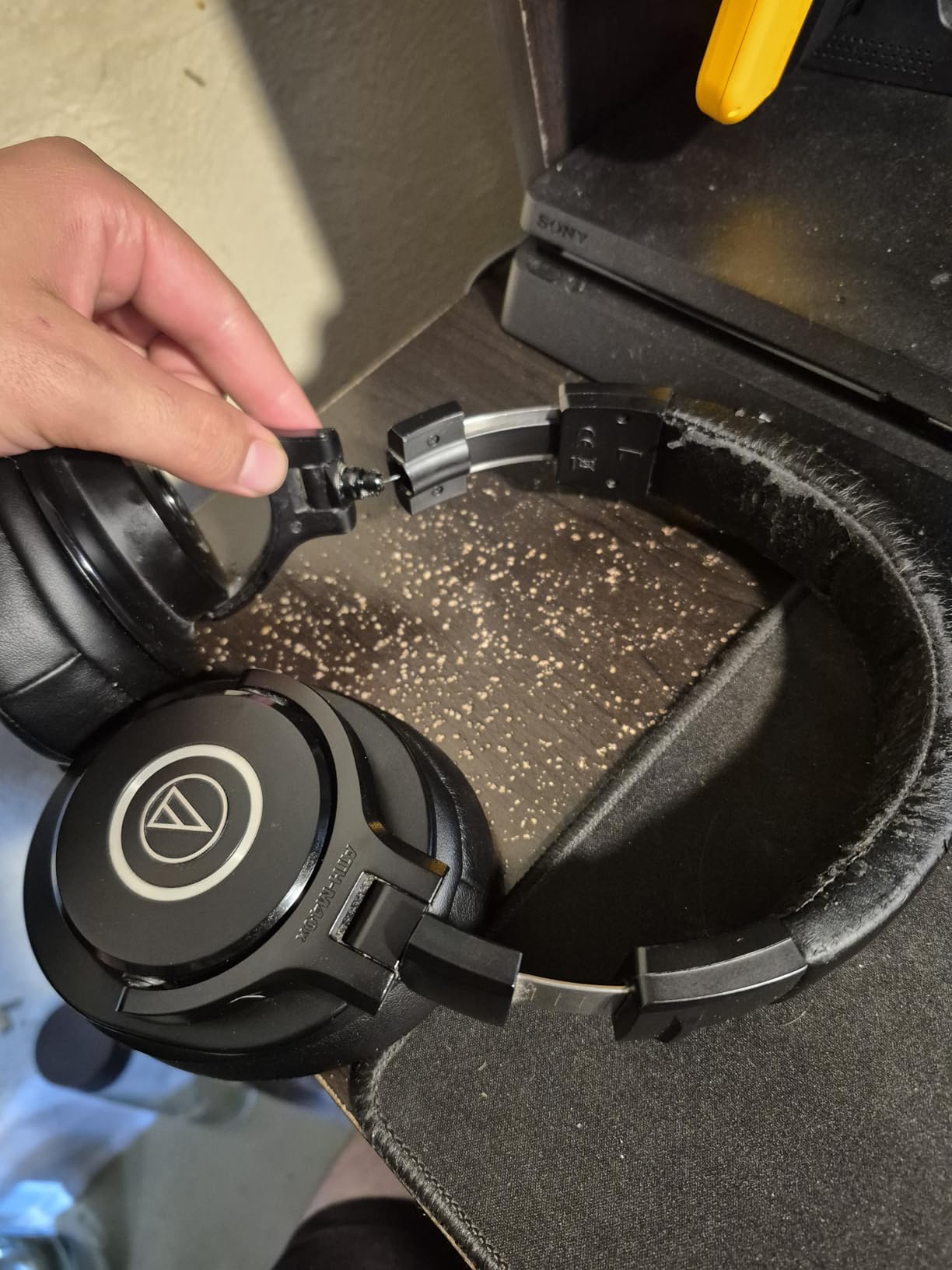
The detachable cable system uses the same twist-lock mechanism as the M50x, and two cables are included in the box. The build feels solid and professional, with sturdy plastic construction and metal-reinforced headband.
The main trade-off is comfort. The clamping force is noticeably tighter than the M50x, and the stock ear pads are smaller. If you have larger ears, you may want to upgrade to aftermarket pads. The tight seal provides excellent isolation, but your ears can get warm after 2 to 3 hours of continuous use.
Best For: Budget-Conscious Mixing
If your primary goal is mixing and you want a flat response without spending $200 or more, the ATH-M40x is the sweet spot. The neutral sound signature translates well to other systems, and the isolation makes them versatile enough for tracking when needed.
Many forum users on r/audioengineering recommend the M40x over the M50x specifically for mixing, citing the flatter response and more honest bass representation.
Ear Pad Upgrade Options
The stock pads are functional but can be uncomfortable for extended sessions. Popular upgrades include Brainwavz oval pads and Dekoni Audio Elite pads. These aftermarket options improve both comfort and sound isolation, making the M40x feel like a more premium headphone.
8. Sennheiser HD 280 Pro – Best for Maximum Sound Isolation
Sennheiser HD 280 Pro Headphone, Black
Closed-back
64 Ohm impedance
8-25000 Hz
32 dB noise attenuation
Collapsible
Replaceable parts
Pros
- Up to 32 dB of ambient noise attenuation
- Extended frequency response down to 8 Hz
- Warm natural sound reproduction
- Collapsible for transport
- Replaceable earpads and headband padding
- Durable professional build
Cons
- May require amplifier for best results
- Clamp can be tight initially
- Coiled cable preference varies
The Sennheiser HD 280 Pro is a workhorse. These are the headphones I reach for when I need maximum isolation in a noisy environment. With up to 32 dB of passive noise attenuation, they block out more external sound than almost any other headphone on this list.
The frequency response runs from an impressive 8 Hz to 25,000 Hz. The sub-bass extension is noticeable, and the overall sound signature is warm and natural rather than analytical. I found them particularly good for tracking bass and kick drum, where feeling the low frequencies matters.
The 64-ohm impedance is moderate. They work fine from most audio interfaces, but a headphone amplifier brings out more detail and dynamic range. The coiled cable stretches from 3.3 feet to nearly 10 feet, which gives you freedom to move around the studio.
One thing that stands out is the replaceable parts. The ear pads, headband padding, and cable are all user-replaceable. This means the HD 280 Pro can last for many years with basic maintenance, making it an excellent long-term investment.
The clamping force is strong out of the box. This is what creates the excellent seal for isolation, but it can feel uncomfortable for the first week. The pads break in and the tension relaxes over time, so give them a break-in period before judging the comfort.
Best For: Noisy Environments and Live Recording
If you record in untreated rooms, shared spaces, or live concert environments, the HD 280 Pro is your best friend. The 32 dB attenuation means you can monitor clearly even with drums playing in the same room. They are a popular choice for location recording and live sound engineering.
The collapsible design folds into a compact form for transport, and the rugged construction handles being packed in gear bags without complaint.
Breaking In the Clamping Force
The initial tightness is the most common complaint. To speed up the break-in process, stretch the headphones over a box or stack of books slightly wider than your head overnight. After a week of this, the clamp becomes comfortable while still maintaining the seal needed for isolation.
9. Shure SRH840A – Best for Detailed Vocal Monitoring
Shure SRH840A Over-Ear Wired Studio Monitoring Headphones
Closed-back
40 Ohm impedance
5-25000 Hz
Locking detachable cable
Collapsible design
Wide padded headband
Pros
- Detailed balanced sound reproduction
- Tailored frequency response for vocals
- Wide padded headband for comfort
- Detachable locking cable for secure connection
- Good noise isolation
- Collapsible for storage
Cons
- Cable quality feels flimsy
- Some find them heavy
- Mids may lack definition for rock mixing
- May need amp for optimal volume
The Shure SRH840A is a tuned evolution of the classic SRH840, designed specifically for recording, editing, and monitoring. After spending time with these, I found them particularly strong for vocal work, where the controlled bass and detailed midrange help you hear every nuance of a performance.
The frequency response is tailored rather than flat. The bass is controlled and never boomy, the mids are detailed, and the highs are extended without harshness. This makes the SRH840A a great choice for podcast production, voice-over work, and vocal tracking where midrange clarity is essential.
The detachable locking cable is a nice touch. It clicks securely into place and will not accidentally disconnect during a session. At 40 ohms, the impedance is easy to drive from any interface or portable recorder.
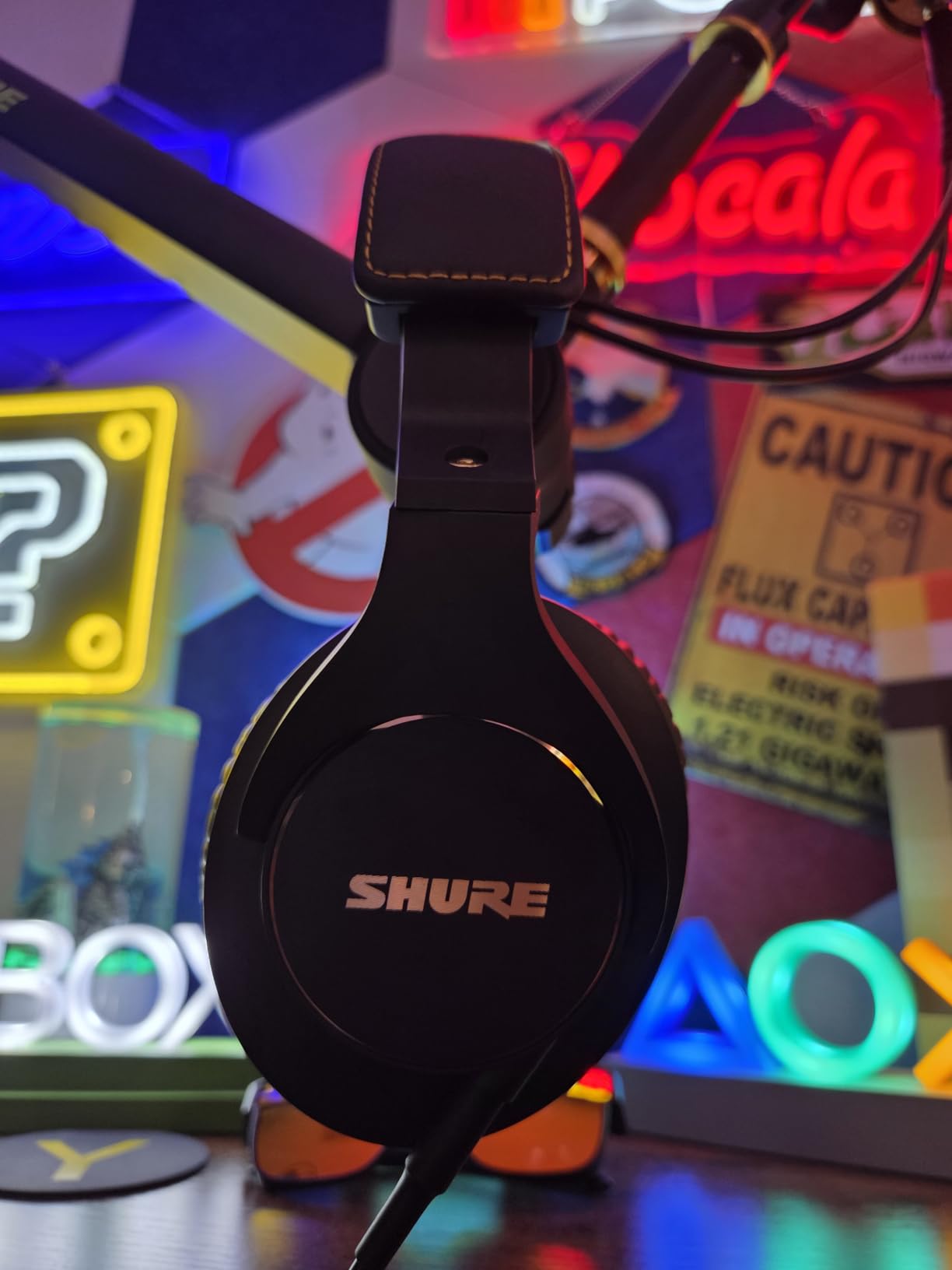
The wide padded headband distributes weight well, and the plush ear cushions are comfortable for sessions up to about 4 hours. Beyond that, some users report the headphones feeling heavy on the top of the head. The collapsible design makes them easy to pack for location work.
The main weakness is the cable itself. While the locking mechanism is great, the cable material feels thin and some users report durability issues over time. A replacement cable is affordable and easy to find.
Best For: Podcast and Voice-Over Production
If your work is primarily voice-focused, the SRH840A delivers the midrange detail you need to catch mouth clicks, plosive artifacts, and subtle tonal issues. The controlled bass response prevents the muddy low-mid buildup that can plague podcast mixes.
The noise isolation is good enough for untreated rooms, though not as extreme as the Sennheiser HD 280 Pro.
Sound Signature Notes
The mids on the SRH840A are slightly scooped compared to the ATH-M40x, which can make some rock and metal mixes sound less aggressive than intended. For vocal-centric work, this is actually an advantage because it highlights the voice without competing midrange frequencies from instruments.
10. AKG K240 Studio – Best Semi-Open Studio Classic
AKG K240STUDIO Semi-Open Studio Headphones
Semi-open
55 Ohm impedance
15-25000 Hz
Varimotion diaphragms
Self-adjusting headband
3m detachable cable
Pros
- Wide dynamic range with clear highs
- Professional studio standard for decades
- Comfortable for long sessions
- Detachable cable
- Self-adjusting headband
- Solid bass response
Cons
- Semi-open design leaks sound
- Not ideal for noisy environments
- May require amp for optimal performance
The AKG K240 Studio is a semi-open design that has earned its place as one of the most recognizable studio headphones ever made. Its distinctive gold-accented design has been a fixture in studios since the 1970s, and the sound quality still holds up remarkably well in 2026.
The semi-open design is a compromise between open-back soundstage and closed-back isolation. You get a more spacious sound than fully closed designs, but with some sound leakage. This makes the K240 best suited for mixing and critical listening rather than tracking with live microphones.
The Varimotion diaphragm technology allows the driver to be tuned at different thicknesses across its surface. This results in a sound that is detailed in the highs, solid in the bass, and smooth through the midrange. I found the K240 to be particularly enjoyable for acoustic music and jazz.
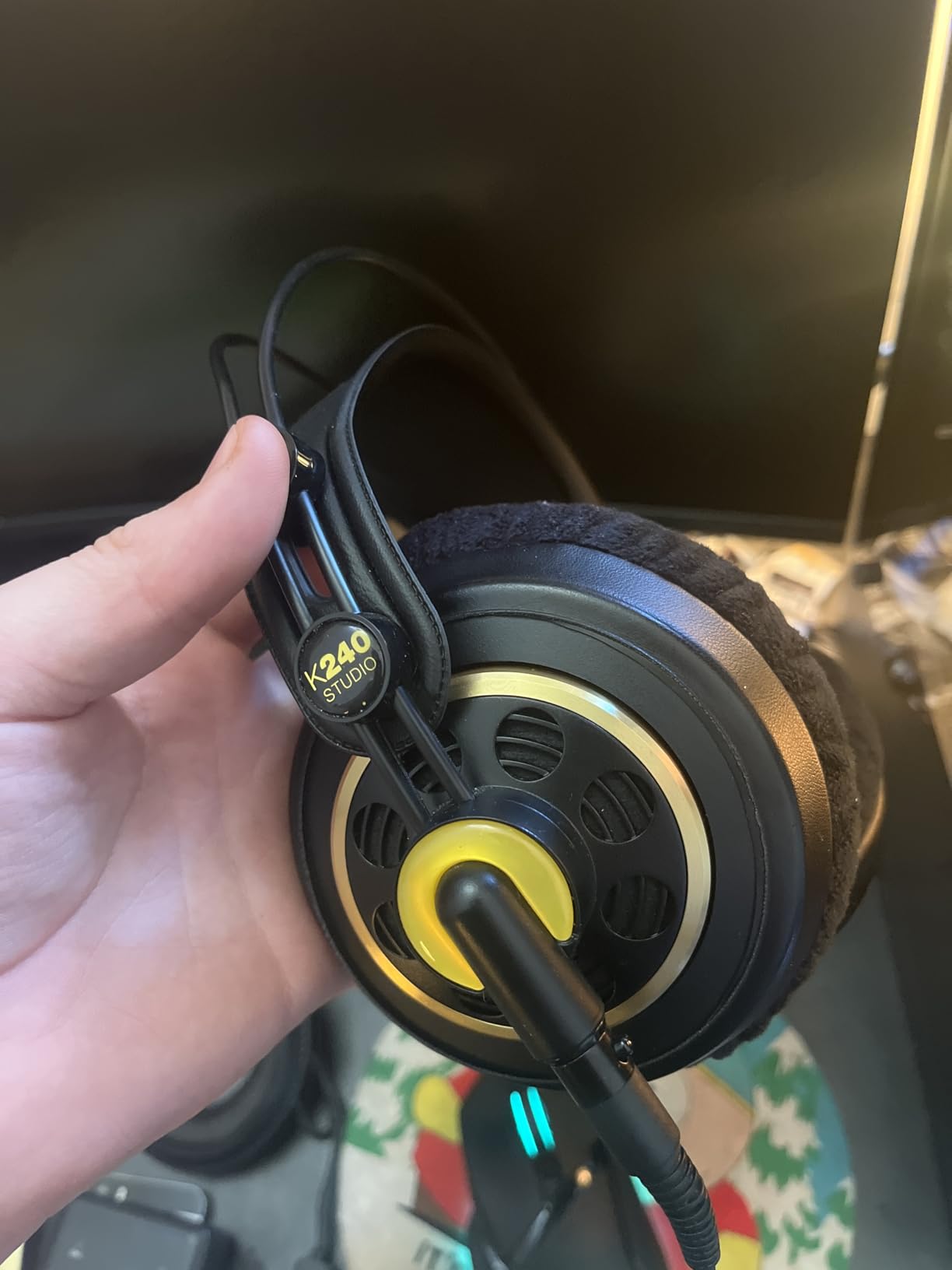
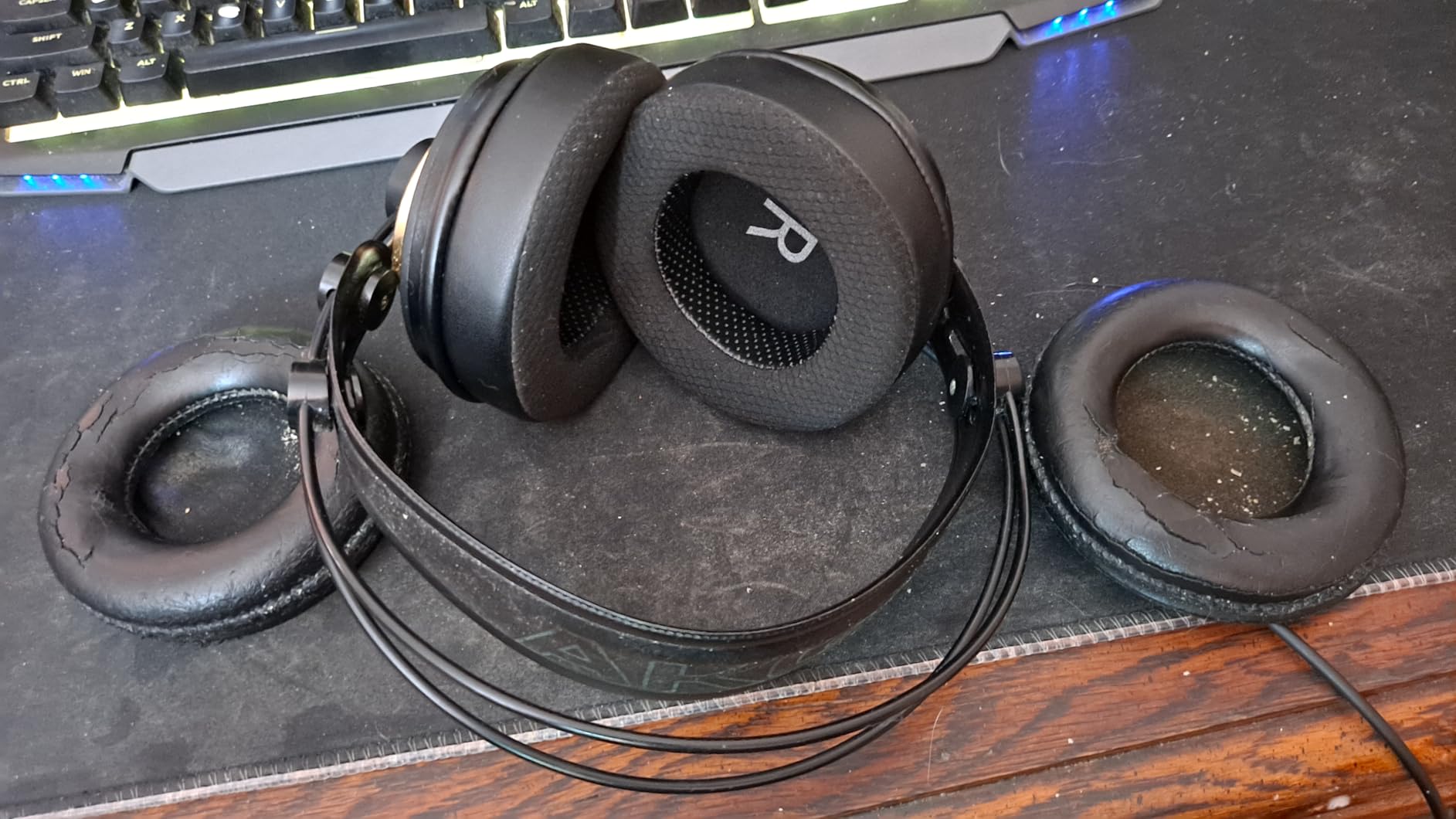
The self-adjusting headband is one of my favorite features. It uses a suspension system that automatically conforms to your head size, similar to the OneOdio Pro-10 but with more premium construction. The ear pads are comfortable for hours of continuous use.
At 55 ohms, the K240 works with most audio interfaces but benefits from amplification. The included 3-meter cable is detachable, and the package includes a 3.5mm-to-6.35mm screw-on adapter for connecting to professional equipment.
Best For: Mixing in Quiet Environments
The K240 Studio shines in a controlled studio environment where sound leakage is not an issue. The semi-open design gives you a taste of open-back soundstage at a much lower price point than the HD 490 PRO or DT 990 Pro X.
If you already have closed-back headphones for tracking and want a second pair for mixing that offers a more natural sound, the K240 is an excellent and affordable choice.
Semi-Open Design Trade-Offs
The semi-open back means some sound leaks both in and out. You will hear external noise, and people near you will hear your audio. This rules out the K240 for tracking vocals with a live microphone nearby. But for mixing in a quiet room, the more natural sound reproduction is worth the trade-off.
11. Audio-Technica ATH-M20x – Best Entry-Level Studio Pick
Audio-Technica ATH-M20x Professional Studio Monitor Headphones, Black
Closed-back
47 Ohm impedance
15-20000 Hz
40mm drivers
Tangle-free cable
Sound isolation
Pros
- Professional studio quality at entry price
- Enhanced bass response
- Comfortable circumaural design
- Excellent sound isolation
- Advanced build quality
- Single side cable exit
Cons
- Wired only no Bluetooth
- Non-detachable cable
- Some prefer flatter response
The Audio-Technica ATH-M20x is the entry point into the legendary M-series lineup, and it punches well above its price tag. If you want professional studio sound quality but are not ready to commit $100 or more, this is where you start.
The 40mm drivers with rare earth magnets deliver a sound signature tuned for enhanced low-frequency performance. The bass is present and punchy, which makes these enjoyable for tracking and casual listening. The midrange is clear, and the highs are adequate without being harsh.
The circumaural design provides excellent sound isolation, blocking a significant amount of ambient noise. I tested them in a shared office environment and could work without being distracted by nearby conversations.
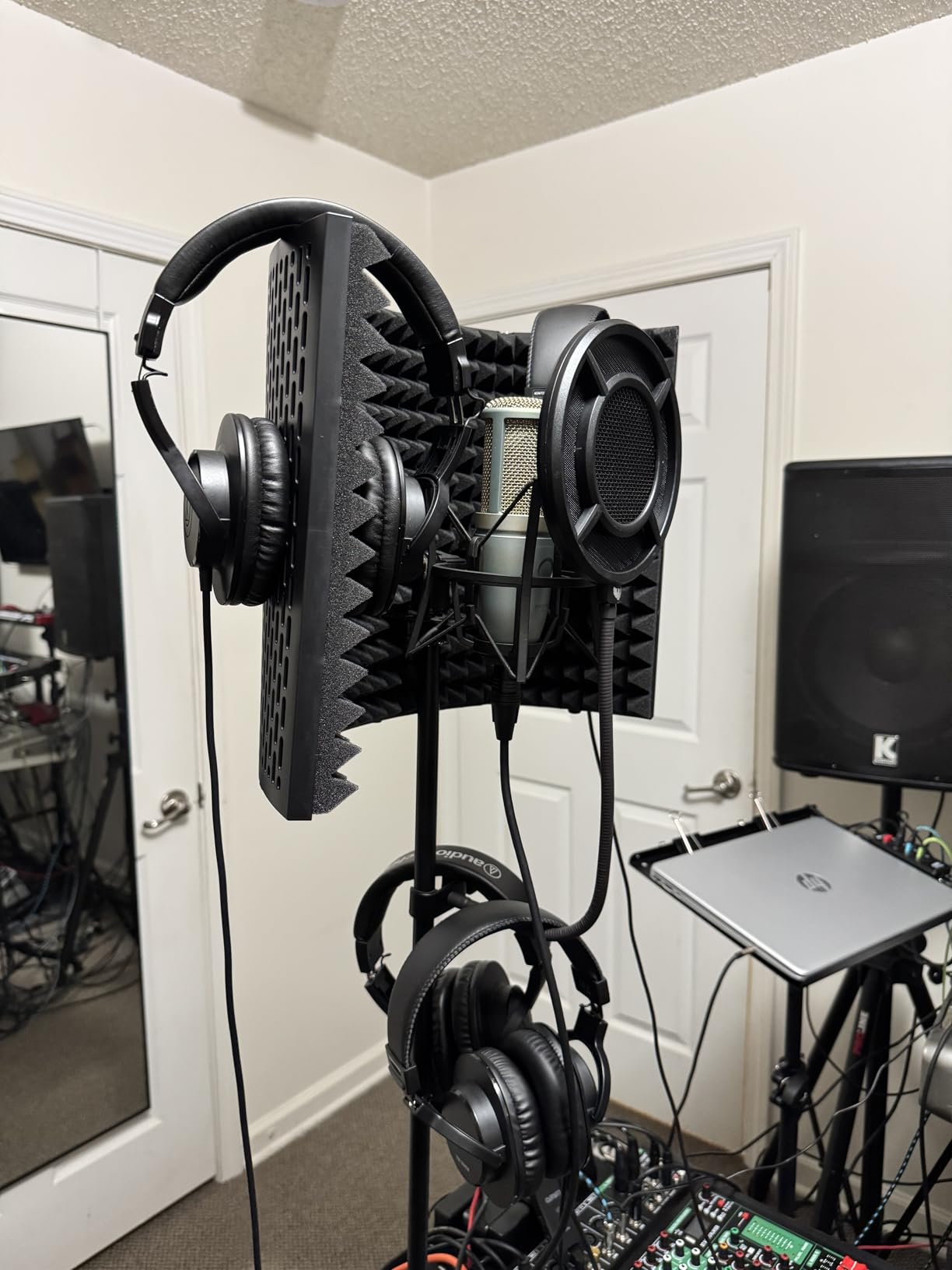
The single-side cable exit is a practical feature that prevents the cable from getting tangled between your chin and the headphones. The cable itself is tangle-free and fixed, meaning it is not detachable. This is the main downgrade from the more expensive M40x and M50x models.
At 47 ohms, these are easy to drive from any source. No amplifier needed. They work perfectly with laptops, audio interfaces, portable recorders, and even smartphones.
Best For: Students and First-Time Buyers
If you are a music production student, podcaster, or content creator buying your first pair of studio headphones, the ATH-M20x delivers genuine Audio-Technica quality at a student-friendly price. They give you a taste of professional sound without the investment.
They also make an excellent secondary pair for when collaborators visit your studio and need basic monitoring.
Upgrading from the M20x
The natural upgrade path is to the ATH-M40x, which adds detachable cables, a flatter response, and slightly better build quality. If you find yourself using headphones daily for critical mixing decisions, the upgrade is worth the investment. But for tracking and basic monitoring, the M20x is more than capable.
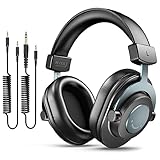
12. FIFINE H8 – Best Budget Monitor for Podcasters
FIFINE HD8 Wired Studio Monitor Headphone, Detachable 3.5mm/6.35mm Cables
Closed-back
32 Ohm impedance
20-20000 Hz
50mm drivers
Passive noise cancellation
265g lightweight
Pros
- Well-balanced sound with clear mids
- Lightweight and comfortable for long sessions
- Detachable dual cables included
- Excellent value for studio monitoring
- Passive noise cancellation
- Durable metal fork headband
Cons
- Slightly bass-forward sound
- Not true active noise canceling
- Cable connection can be intermittent
The FIFINE H8 is a newer entrant in the budget studio headphone market, and it brings impressive specs for the price. The 50mm dynamic drivers deliver a well-balanced sound with clear mids that work particularly well for voice work and podcast production.
Weighing just 265 grams, these are among the lightest studio headphones I have tested. The circumaural closed-back design provides passive noise cancellation that blocks a reasonable amount of ambient sound. Not as much as the HD 280 Pro, but enough for a typical home studio environment.
The detachable cable system includes both a 3.5mm and 6.35mm cable, covering connections to mixers, interfaces, amplifiers, and portable devices. The 9.8-foot coiled cable gives you plenty of room to move around.
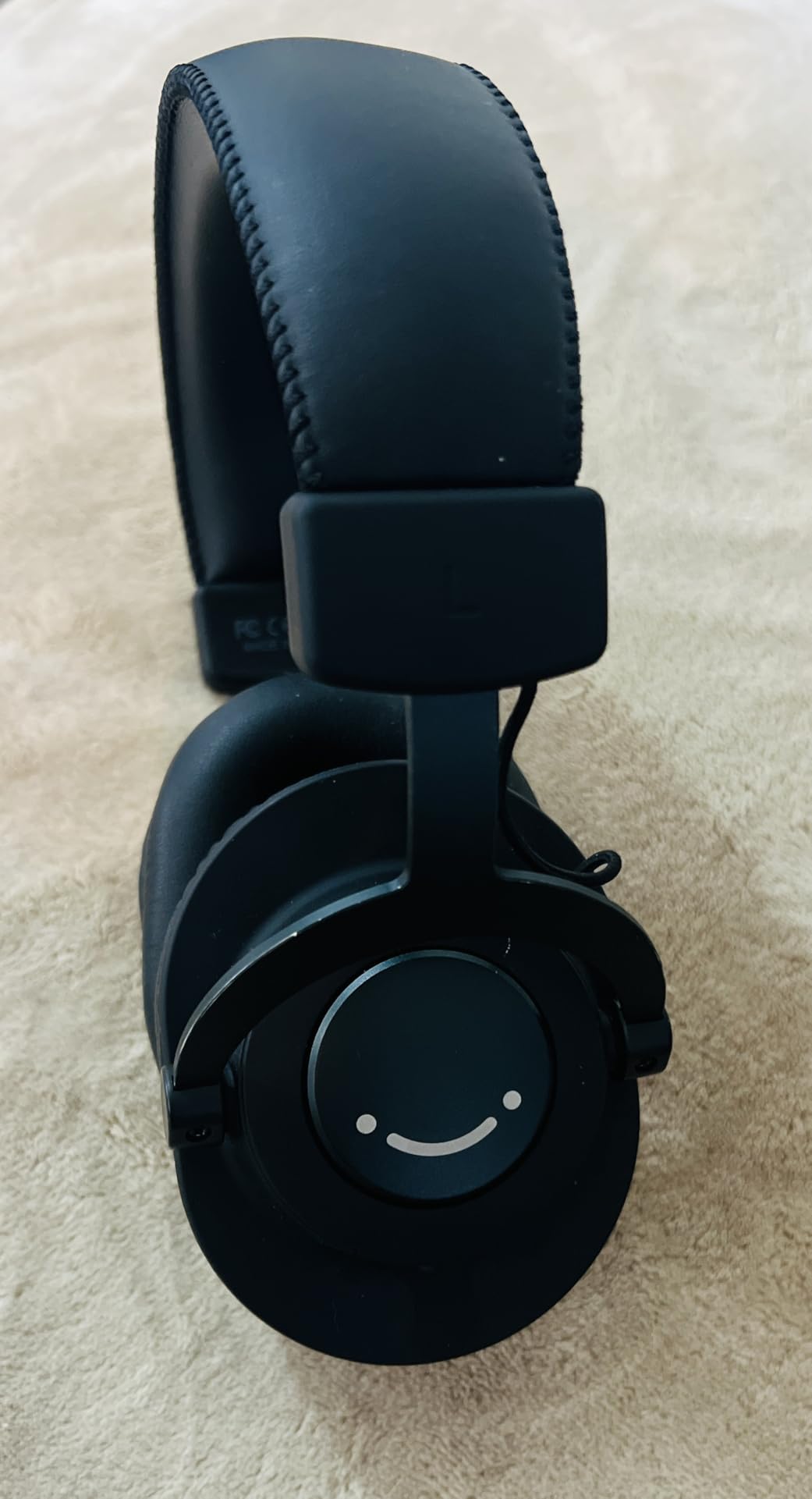
The sound signature leans slightly warm, with a bit more bass presence than truly flat reference headphones. This makes them enjoyable for casual listening while remaining detailed enough for basic mixing and monitoring tasks. I used them for a podcast editing session and found the vocal clarity perfectly adequate.
The metal fork headband adds durability that you do not typically find at this price. The build quality feels solid, though some users report intermittent cable connection issues. Make sure the cable clicks fully into place.
Best For: Podcasters and Voice-Over Artists
The FIFINE H8 is purpose-built for voice work. The balanced midrange highlights vocal frequencies clearly, and the lightweight design means you can wear them for long editing sessions without discomfort. At this price point, they compete directly with the OneOdio Pro-10 but offer a more neutral sound signature.
If your content is primarily spoken word, these may actually be a better choice than the more bass-forward Pro-10.
Comparing to the OneOdio Pro-10
The FIFINE H8 has a more balanced sound, while the OneOdio Pro-10 has a more fun, bass-forward signature with the share port feature. If you prioritize vocal clarity, go with the H8. If you want a more versatile all-rounder with the daisy-chain port, the Pro-10 is the better pick.
How to Choose the Best Studio Headphones: Buying Guide
Choosing the right studio headphones comes down to understanding your specific needs. Let me break down the key factors that should influence your decision in 2026.
Open-Back vs Closed-Back: Which Do You Need?
This is the most important decision you will make. Open-back headphones have perforated ear cups that let air and sound pass through, creating a wider, more natural soundstage. They are ideal for mixing, mastering, and critical listening where spatial accuracy matters. The trade-off is that they leak sound in both directions, so they are useless for tracking with live microphones.
Closed-back headphones have sealed ear cups that block sound from entering or escaping. They provide the isolation needed for tracking vocals and recording instruments. The trade-off is a narrower soundstage and a slightly less natural sound. For most home studio owners, a closed-back pair is the more versatile first choice.
Semi-open designs, like the AKG K240 Studio, offer a middle ground. They give you some of the soundstage benefits of open-back while maintaining moderate isolation. They are best suited for mixing in quiet environments.
Understanding Impedance and Amplification
Impedance, measured in ohms, determines how much power your headphones need to reach adequate volume levels. Low-impedance headphones (16-32 ohms) are easy to drive from any device, including smartphones and laptops. Medium-impedance models (32-80 ohms) work well with most audio interfaces. High-impedance headphones (80-300 ohms) typically require a dedicated headphone amplifier for optimal performance.
If you are using a standard audio interface like the Focusrite Scarlett, PreSonus AudioBox, or Universal Audio Volt, any headphone up to about 80 ohms will work without issue. For headphones above 100 ohms, like the Sennheiser HD 490 PRO at 130 ohms, consider adding a dedicated headphone amplifier to your signal chain.
The impedance matching rule is simple: your source device should have an output impedance no more than one-eighth of your headphone impedance. Most modern audio interfaces have very low output impedance, so this is rarely a problem.
Comfort for Extended Sessions
If you plan to wear headphones for more than 2 hours at a time, comfort becomes as important as sound quality. Look for velour ear pads (like the beyerdynamic DT 770 PRO), lightweight designs (like the Sennheiser HD 490 PRO at 200g), and adjustable headbands with adequate padding.
The clamping force matters too. A tight clamp provides better isolation but can cause headaches during long sessions. A loose clamp is more comfortable but reduces isolation. The ideal is a moderate clamp that creates a seal without excessive pressure.
Heat buildup is another factor. Closed-back headphones trap heat more than open-back designs. If you work in a warm environment, consider open-back headphones or models with breathable velour pads.
Sound Isolation and Leakage
For tracking, sound isolation is critical. You do not want the backing track bleeding into the vocal microphone. The Sennheiser HD 280 Pro leads the pack with 32 dB of passive attenuation, followed closely by the Sony MDR7506 and Audio-Technica M-series models.
For mixing in a quiet room, isolation is less important and soundstage becomes the priority. Open-back headphones like the HD 490 PRO and DT 990 Pro X offer superior spatial accuracy at the cost of zero isolation.
The 60/60 Rule for Hearing Safety
No competitor covers this, and it is a PAA question that directly impacts your long-term hearing health. The 60/60 rule is simple: listen at no more than 60% of maximum volume for no more than 60 minutes at a time, then take a break.
Prolonged exposure to loud audio through headphones is the leading cause of noise-induced hearing loss among audio professionals. Studio headphones are designed to reproduce audio accurately, which means they can produce dangerous volume levels without distortion. The lack of distortion is deceptive because your brain does not register the volume as harmful.
I use a simple timer during mixing sessions. After 60 minutes, I take a 10-minute break to let my ears rest. This practice not only protects my hearing but also improves my mixing decisions because my ears stay fresh and objective.
Frequently Asked Questions
What headphones do most studios use?
The Sony MDR7506 is the most widely used studio headphone in professional recording studios, broadcast facilities, and film sets. Other common choices include the Beyerdynamic DT 770 PRO for tracking, Sennheiser HD 600 or 650 for mixing, and Audio-Technica ATH-M50x as a versatile all-rounder. The Sennheiser HD 490 PRO is becoming increasingly popular in modern studios for mixing and production.
What is the 60 60 rule for headphones?
The 60/60 rule means listening at no more than 60% of maximum volume for no more than 60 minutes at a time, followed by a break. This practice protects your hearing from noise-induced damage, which is the leading cause of permanent hearing loss among audio professionals who work with headphones daily.
What are the most comfortable studio headphones?
The Sennheiser HD 490 PRO is the most comfortable professional studio headphone we tested, weighing just 200 grams with plush ear pads designed for 8-plus hour sessions. The Beyerdynamic DT 770 PRO with its velour ear pads is also exceptionally comfortable for long tracking sessions. Both models distribute weight well and minimize ear fatigue.
Do I need a headphone amplifier for studio headphones?
You need a headphone amplifier if your headphones have an impedance above 80 ohms. Most audio interfaces can drive headphones up to approximately 80 ohms without issues. For high-impedance models like the Sennheiser HD 490 PRO at 130 ohms, a dedicated headphone amplifier improves volume, dynamics, and soundstage quality.
Conclusion
The best studio headphones for you depend on your primary use case. For mixing and mastering, the Sennheiser HD 490 PRO delivers an unmatched open-back reference experience with its dual ear pad system and ultra-wide soundstage. For an all-rounder that handles tracking, mixing, and casual listening, the Audio-Technica ATH-M50x remains the best value in studio headphones for 2026. And if you are on a tight budget, the OneOdio Pro-10 gives you genuine studio functionality for a fraction of the cost.
Choose closed-back models like the Sony MDR7506 or beyerdynamic DT 770 PRO for tracking and isolation. Choose open-back models like the HD 490 PRO or DT 990 Pro X for mixing and critical listening. And whatever you choose, follow the 60/60 rule to protect your hearing for years of productive studio work ahead.