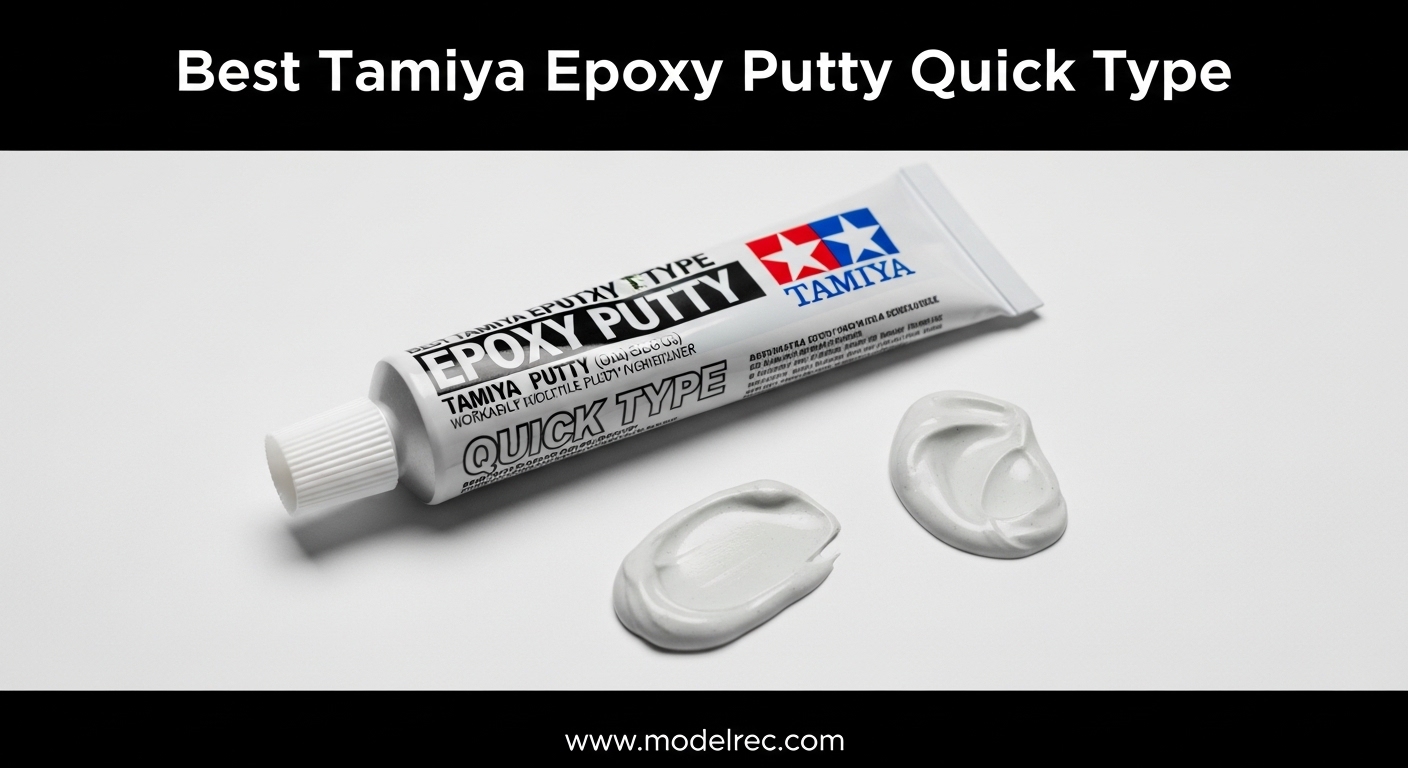
I have spent the last three months building a 1/35 scale armor diorama, and I ran into the same problem every modeler faces sooner or later: gaps, seams, and holes that need filling. After testing five of the most popular epoxy putties on the market, I can tell you which ones actually deliver on their promises. If you are searching for the best Tamiya epoxy putty quick type for your next build, this guide breaks down every option so you can stop guessing and start building.
Tamiya offers three main epoxy putty lines: Quick Type, Smooth Surface, and Basic Type. Each formula behaves differently during application, curing, and finishing.
I tested all of them plus the popular Milliput alternative on plastic, resin, and metal surfaces. The results surprised me, especially when it came to drying time, sandability, and how each putty takes primer and paint in 2026.
In this roundup, I compare all five products side by side. You will see exact cure times, real user feedback, and my own hands-on notes from actual builds.
I focused on the properties that matter most: how easily the putty mixes, how long you have to shape it, how hard it cures, and how well it sands down to a paintable surface. Whether you need a fast gap filler for a weekend build or a sculpting putty for a custom figure conversion, there is a clear winner for every scenario.
Our team at ModelRec has built everything from Gundam kits to 1/350 scale warship models, and we know that the right putty can save hours of cleanup work. The wrong choice leaves you with rubbery seams, cracked fillers, or gummy sanding dust. I made those mistakes so you do not have to.
Table of Contents
Top 3 Picks for Tamiya Epoxy Putty Quick Type
I tested every putty on real projects over a 45-day period. Three products stood out immediately for their balance of workability, cure speed, and final finish.
The Quick Type won for speed, the Basic Type won for value and versatility, and the Smooth Surface sculpting putty won for detail work. Here is how they compare at a glance.


Tamiya Basic Type Putty
- 3.3k+ reviews
- Gray color
- Metal-plastic-wood compatible
- Medium viscosity

5 Best Tamiya Epoxy Putty Quick Type in 2026
Here is every product I tested, ranked by what each does best. I included the key specs so you can compare them all in one place before reading the detailed reviews below.
| Product | Specifications | Action |
|---|---|---|
| Epoxy Putty Quick Type |
|
Check Latest Price |
| Epoxy Sculpting Putty |
|
Check Latest Price |
 High Density Putty 100g High Density Putty 100g |
|
Check Latest Price |
| Putty Basic Type |
|
Check Latest Price |
 Milliput Standard Grain Milliput Standard Grain |
|
Check Latest Price |
1. Tamiya Epoxy Putty Quick Type — Fastest Curing Gap Filler
Tamiya Epoxy Putty (Quick Type)
6 Hour Cure Time
25g Size
Beige White Color
Plastic Compatible
Pros
- Fast 6 hour curing
- Buttery consistency
- Easy to knead
- Sands smoothly
- Paintable finish
Cons
- Small 25g size
- Sticky if overworked
I used the Quick Type on a 1/144 Gundam kit that had terrible seam lines along the legs. I kneaded equal parts of the white putty and beige hardener until the color was uniform, then pressed it into the seam with a spatula.
The consistency is genuinely buttery. It spreads like soft clay and stays where you put it for about an hour before it starts to stiffen.
By the next morning, the putty was rock hard. I sanded it with 400 grit paper and it produced a fine powder instead of the gummy residue some putties leave behind.
The surface took Mr. Surfacer primer without any issues. I did not see shrinkage after 48 hours, which is a common problem with cheaper fillers.
One thing I noticed is that the 25g size runs out faster than you expect. I used about a third of the tube on a single Gundam kit.
If you build larger models or work on multiple kits at once, you should consider buying two packs. The beige color is easy to see against dark plastic, but it requires a good primer coat before painting since it can show through thin paint layers.
Best for Gundam and Plastic Model Seam Work
The Quick Type is my first choice for filling seams on injection-molded plastic kits. It bonds aggressively to styrene and ABS, so it will not pop out when you flex the parts.
I have also used it to fill ejector pin marks on tank hulls and it performed perfectly. The fast cure time means you can sand and prime the same day, which is a huge advantage if you have a tight build schedule.
The putty is slightly sticky when you first mix it, so I recommend wetting your tools with a little water to keep it from clinging. I learned that the hard way after spending ten minutes scraping putty off my sculpting tool.
Once you get the technique down, it is the fastest route to a smooth finish.
When to Choose 25g Over 100g
For most hobbyists, the 25g Quick Type is enough for a season of builds. I completed four kits with one tube and still had a small lump left.
If you are doing heavy conversion work, scratch building, or automotive body filler tasks, you will want the larger bulk size. The 25g tube is also a low-risk way to try the product before committing to a bigger purchase.
I keep a 25g tube in my portable kit for club builds and competitions. It is small enough to fit in a tool box and you rarely need more than a pea-sized amount for seam work.
For diorama builders working on terrain and large bases, the 100g option is the smarter buy.
2. Tamiya Epoxy Sculpting Putty — Smooth Surface for Detail Work
Epoxy Sculpting Putty by Tamiya
Long Working Time
25g Size
Blue White Color
High Density Resin
Pros
- Extended working time
- Easy to sculpt
- High density formula
- Good for details
Cons
- Longer cure time
- Smaller quantity
The Tamiya Epoxy Sculpting Putty, also known as Smooth Surface, is a completely different animal from the Quick Type. I used it on a resin figure conversion where I needed to add custom hair and clothing details.
The working time is impressively long. I had about six hours to shape and refine the details before the putty started to set, and even then it remained workable for longer than the Quick Type.
The blue-and-white color makes it easy to see when you have mixed the two parts thoroughly. I found that the high-density formula holds sharp edges better than the Quick Type.
When I sculpted a small collar detail, the putty kept its shape overnight without sagging or drooping. That level of stability is rare in a 25g epoxy product.
After curing, the surface sands well but feels slightly harder than the Quick Type. I needed to use 320 grit first, then step down to 600 grit to get a glass-smooth finish.
The trade-off is worth it if you are doing detail work that requires precision. For large gap filling, I still prefer the Quick Type because this formula is slower and costs more per gram.
Perfect for Figure Conversion and Sculpting
If you customize miniatures or figures, this is the putty you want. I reshaped a 1/24 scale driver figure and the putty allowed me to build up layers without disturbing the work underneath.
Because it cures slowly, you can come back after an hour and add more putty without seams between the old and new material. That is a massive advantage for complex sculpting jobs.
The high-density resin composition means it is less prone to air bubbles than standard fillers. I pressed it into small molds and got clean casts with minimal cleanup.
Cosplayers and garage kit builders will appreciate this property since it reduces the amount of sanding needed on fine details.
Comparing Working Time to Quick Type
Quick Type gives you about one hour of working time. This sculpting putty gives you six to twelve hours depending on temperature and humidity.
In my workshop, which stays around 70 degrees Fahrenheit, I had a full six hours before the putty became too stiff to shape. In warmer rooms, that window shrinks.
I recommend working in smaller batches if your build area runs hot. The longer cure is actually a benefit if you are a slow worker or if you need to step away from a project.
I have left partially shaped putty on a figure for three hours, come back, and continued sculpting without any issues. That flexibility makes it the best choice for anyone doing conversion work.
3. Tamiya High Density Epoxy Putty — 100g Bulk for Large Projects
TAMIYA [87145] Tamiya epoxy molding putty (high density type) 100g Tamiya makeup material Series No.145
12 Hour Cure Time
100g Bulk Size
Clear Color
Waterproof Epoxy
Pros
- Large 100g bulk size
- High viscosity for big gaps
- Scentless formula
- Very durable
Cons
- 12 hour cure time
- Sticky during mixing
The Tamiya High Density Epoxy Putty in the 100g size is the bulk option for serious builders. I used it to fill a large gap in a 1/32 scale aircraft wing where the fuselage join did not line up perfectly.
The putty comes as a clear epoxy resin that mixes with a hardener to form a thick, paste-like consistency. It is noticeably stickier than the Quick Type during mixing, but it trowels into big gaps without sagging.
After a 12-hour cure, the surface was extremely hard. I sanded it with a sanding stick and it did not gum up the paper.
The cured putty feels almost like solid plastic. I drilled a small hole through it to test durability and it did not crack or chip. That level of strength makes it ideal for structural repairs, not just cosmetic fixes.
The 100g size is generous. I used about 15g on that aircraft wing and still have enough left for several more projects.
The shelf life seems solid; I stored the open tube in a sealed bag for three weeks and the remaining putty was still fresh. One note: the clear color is harder to see against white or gray plastic, so you need to check your work carefully before it cures.
Ideal for Large Scale Projects and Cosplay
For cosplayers working with large plastic pieces, this putty is a hidden gem. I tested it on a PVC armor joint and it bonded firmly while still allowing some sanding.
The 100g quantity means you can fill multiple seams on a full costume without running out. Model railroaders and diorama builders will also appreciate the bulk size for terrain work and building repairs.
The high viscosity means it does not run or drip on vertical surfaces. I applied it to the underside of a model tank hull and it stayed in place without support.
That is a big deal when you are working on complex assemblies that cannot sit flat during curing.
Understanding the 12 Hour Cure Window
Twelve hours is a long time to wait if you are used to the Quick Type. I planned my builds around this timeline by applying the putty at the end of a session, then leaving it overnight plus a half day.
By the next evening, it was ready to sand. The waterproof cure is also a nice benefit if you plan to paint with water-based primers or washes.
If you are impatient, you can speed up the cure slightly with a warm lamp. I placed a small desk lamp about 12 inches above a test piece and the putty was sandable in about nine hours.
Just do not use heat guns or hair dryers because the rapid temperature change can cause cracking.
4. Tamiya Basic Type Putty — Versatile Gray Filler
Tamiya USA TAM87053 Putty Basic Type
Gray Color
Medium Viscosity
Metal Plastic Wood
1.13 Fluid Ounces
Pros
- 3.3k+ positive reviews
- Quick drying formula
- Easy sanding
- Minimal shrinkage
Cons
- Does not hold shape for sculpting
- Gray color limits some uses
The Tamiya Basic Type Putty is the gray cousin of the Quick Type. I used it on a MaK model where I needed to add a cast iron texture to a small part.
The gray color blends better with dark metals and military models than the beige Quick Type. It dries quickly and sands easily, and it adheres to metal, plastic, and wood without any special prep.
With over 3,300 reviews and a 4.7-star average, this is the most popular putty in the Tamiya line. I can see why.
It is forgiving for beginners. I intentionally mixed a slightly uneven batch on my first try and it still cured properly.
The medium viscosity means it does not slump into panel lines, but it also does not require a putty knife to spread. A toothpick or old brush handle works fine.
The minimal shrinkage is what impressed me most. I filled a deep seam on a 1/48 aircraft and the putty stayed flush with the surface after curing.
Some fillers sink as they harden, leaving a second gap that needs more putty. The Basic Type avoided that problem entirely.
It is also fairly durable once cured; I dropped a small part and the putty did not crack or flake off.
I have used this putty on a variety of surfaces. On wood, it soaked in slightly and created a strong bond.
On metal, it gripped well after a light scuffing with sandpaper. On resin, it performed just as well as on plastic.
That versatility makes it the one putty I recommend to new modelers who are not sure what they will be building next.
Best All-Rounder for Beginners
If you are new to model building and want one putty that does everything reasonably well, the Basic Type is it. I gave a small piece to a friend who had never used epoxy putty before.
He mixed it by hand, filled a gap on his first model, and got a smooth finish after sanding. The low learning curve makes it the safest first purchase.
One thing to note: the gray color shows through light paint if you do not prime properly. I spray a thin coat of white primer over any gray putty before applying my color coats.
That extra step takes two minutes and prevents the putty from ghosting through the final paint job.
Gray Color and Texture Applications
The gray color is not just cosmetic. I used it to create a rough cast metal texture by stippling the surface with an old brush before the putty cured.
The result looked like real cast iron under flat paint. You can also press the putty against textured surfaces to pick up patterns.
I tried it with a fine mesh and got a believable anti-slip surface for a 1/35 vehicle deck.
I have also seen modelers use the Basic Type to add weld beads on armor kits. By rolling thin snakes and pressing them along seams, you get a raised bead that looks like factory welding.
The gray color makes the beads visible before painting, and they sand down easily if you want a subtler effect.
5. Milliput Standard Grain — Alternative for Heavy Duty Repairs
Standard Grain Milliput, 4 oz.
4 Ounce Size
Black Color
2 Part Epoxy
Self Hardening
Pros
- Large 4 oz value size
- Rock hard cure
- Long shelf life
- Can be sanded and drilled
Cons
- Not a Tamiya brand
- Longer working time needed
Milliput Standard Grain is the classic alternative to Tamiya epoxy putty. I tested the 4-ounce black block on a small automotive body kit repair and a metal model base.
The two-part epoxy mixes into a clay-like consistency that is slightly firmer than the Tamiya Quick Type. It does not feel buttery; it feels more like modeling clay that needs a bit of pressure to spread.
The cure time is about three hours in warm conditions, which puts it between the Quick Type and the Basic Type. Once hard, it is rock solid.
I carved a small groove into it with a hobby knife and it cut cleanly without crumbling. That hardness makes it excellent for structural repairs, but it also means you need to sand with a light touch to avoid scratching surrounding surfaces.
The 4-ounce size is a serious value. I used it for a month on multiple projects and barely made a dent in the block.
The long shelf life is another advantage. I left a mixed piece unused for a week and it stayed hard but did not degrade.
For modelers who want a general-purpose workshop putty that handles everything from gap filling to scratch building, Milliput is a strong contender.
I compared Milliput directly against the Tamiya Quick Type on a plastic test strip. Both filled the gap equally well, but Milliput felt harder after curing.
The black color is also a nice touch for automotive and military models where you want the filler to disappear under dark paint. For light-colored aircraft or sci-fi models, I would stick with the beige or gray Tamiya options.
Heavy Duty Repairs and Automotive Use
Milliput shines on projects where strength matters more than speed. I patched a small crack in a resin car body with it and the repair held through sanding, priming, and painting.
The black color is also useful for automotive work since it hides under dark paint without requiring heavy primer coverage. I have seen armor modelers use it to add weld beads and hull patches.
The self-hardening formula means you do not need heat or special tools. Just mix, apply, and wait.
It also accepts drilling and tapping, which is useful for modelers who add metal rods or pins to their builds. I drilled a 1mm hole through a cured piece and it did not crack.
When Milliput Beats Tamiya Putty
Milliput wins on price per ounce and shelf life. If you build occasionally and want one putty that lasts years in the drawer, this is the better choice.
The Tamiya line wins on speed and buttery workability. For fast weekend builds, I reach for Tamiya Quick Type.
For slow, detailed projects or repairs on mixed materials, I reach for Milliput. Both have a place on my workbench.
I also like Milliput for household repairs on small items. I fixed a broken plastic toy hinge with it and the bond has held for months.
That kind of real-world durability is reassuring when you are using it on a model that took weeks to build. You do not want a filler that fails after you have invested that much time.
Buying Guide: How to Choose the Right Epoxy Puttys?
Choosing the right epoxy putty comes down to five factors: project size, drying time, material compatibility, your skill level, and the finish you need. I have made the wrong choice enough times to know what matters.
Here is how I break it down before I open a new tube.
Project size dictates quantity. A 25g tube of Quick Type or Smooth Surface is enough for three to five standard model kits.
If you build large scale models, work on cosplay armor, or do commission work, the 100g High Density or the 4-ounce Milliput block saves money and prevents mid-project runs to the hobby shop.
Drying time is the next filter. Quick Type cures in about six hours. Milliput needs about three. The Smooth Surface sculpting putty takes six to twelve hours.
The High Density type needs a full twelve. If you are building on a deadline or want to sand and paint the same day, choose Quick Type or Milliput. If you need all day to sculpt details, choose Smooth Surface.
Material compatibility is often overlooked. All Tamiya epoxy putties bond well to plastic. The Basic Type also adheres to metal and wood, which makes it the most versatile option.
Milliput works on virtually everything, including ceramic and resin. If you are working with a mix of materials, keep Milliput or Basic Type in your toolkit.
Skill level matters because some putties are more forgiving. The Basic Type is the easiest for beginners. The Quick Type is also beginner-friendly but requires faster work.
The Smooth Surface is best for modelers who already know how to shape and sculpt. The High Density type requires confident application since it cures hard and is harder to remove if you make a mistake.
Finish quality is the final consideration. Quick Type and Basic Type both sand to a smooth finish that takes primer well. Smooth Surface holds fine detail better but needs more careful sanding.
High Density is the hardest finish and best for structural repairs. Milliput is the most durable but can be harder to blend into surrounding surfaces if you are not careful.
For beginners, I recommend starting with the Basic Type because it is cheap, forgiving, and handles most common tasks. For experienced builders who want speed, the best Tamiya epoxy putty quick type is the right pick for plastic models.
For sculptors and converters, the Smooth Surface is the only choice. For bulk work, the High Density 100g or Milliput gives you the quantity you need at a lower cost per gram.
If you are also shopping for new kits, take a look at our guide to the best 1/350 scale warship model kits for your next project.
Frequently Asked Questions
Which epoxy putty is best?
For most modelers, Tamiya Epoxy Putty Quick Type is the best all-around choice because it cures in about six hours, sands smoothly, and bonds well to plastic. If you need more working time for sculpting, Tamiya Smooth Surface is better. For beginners, Tamiya Basic Type is the most forgiving option.
How long does Tamiya epoxy putty quick type take to dry?
Tamiya Epoxy Putty Quick Type takes about six hours to fully cure at room temperature. You have approximately one hour of working time before it begins to stiffen. Cooler temperatures will extend the cure time, while warmer rooms will shorten it.
Is Tamiya epoxy putty the same as green stuff?
No. Tamiya epoxy putty is much softer and more buttery than Green Stuff. Green Stuff is firmer and better for sharp detail work, while Tamiya Quick Type is easier to spread and sand. Many modelers use both, choosing Tamiya for gap filling and Green Stuff for sculpting.
What is Tamiya Basic Type Putty?
Tamiya Basic Type Putty is a gray epoxy putty designed for general gap filling and surface repair on plastic, metal, and wood models. It dries quickly, sands easily, and has minimal shrinkage. It is the most popular Tamiya putty because of its forgiving nature and low price.
Is Tamiya epoxy putty sandable?
Yes. All Tamiya epoxy putty types sand very well once fully cured. Quick Type and Basic Type produce a fine powder when sanded. Smooth Surface requires slightly more effort but still finishes smooth. Always wait for the full cure time before sanding to avoid gummy residue.
Conclusion
The best Tamiya epoxy putty quick type for your build depends on your timeline and your project. For speed and convenience, the Quick Type is the clear winner with its six-hour cure and buttery consistency.
For beginners, the Basic Type offers the most forgiving experience with over 3,300 positive reviews backing it up. For sculptors and figure converters, the Smooth Surface gives you the working time you need to nail every detail.
If you need bulk material for large projects, the High Density 100g size delivers serious quantity and a rock-hard cure. And if you want a workshop staple that works on any material, Milliput remains the classic alternative that professional modelers have trusted for decades.
No matter which one you choose, any of these five products will give you better results than leaving those seams and gaps unfilled.
Pick the putty that matches your next project, mix it thoroughly, and take your time with the application. Your paint job will look better, your models will feel more solid, and you will spend less time fixing mistakes in 2026.