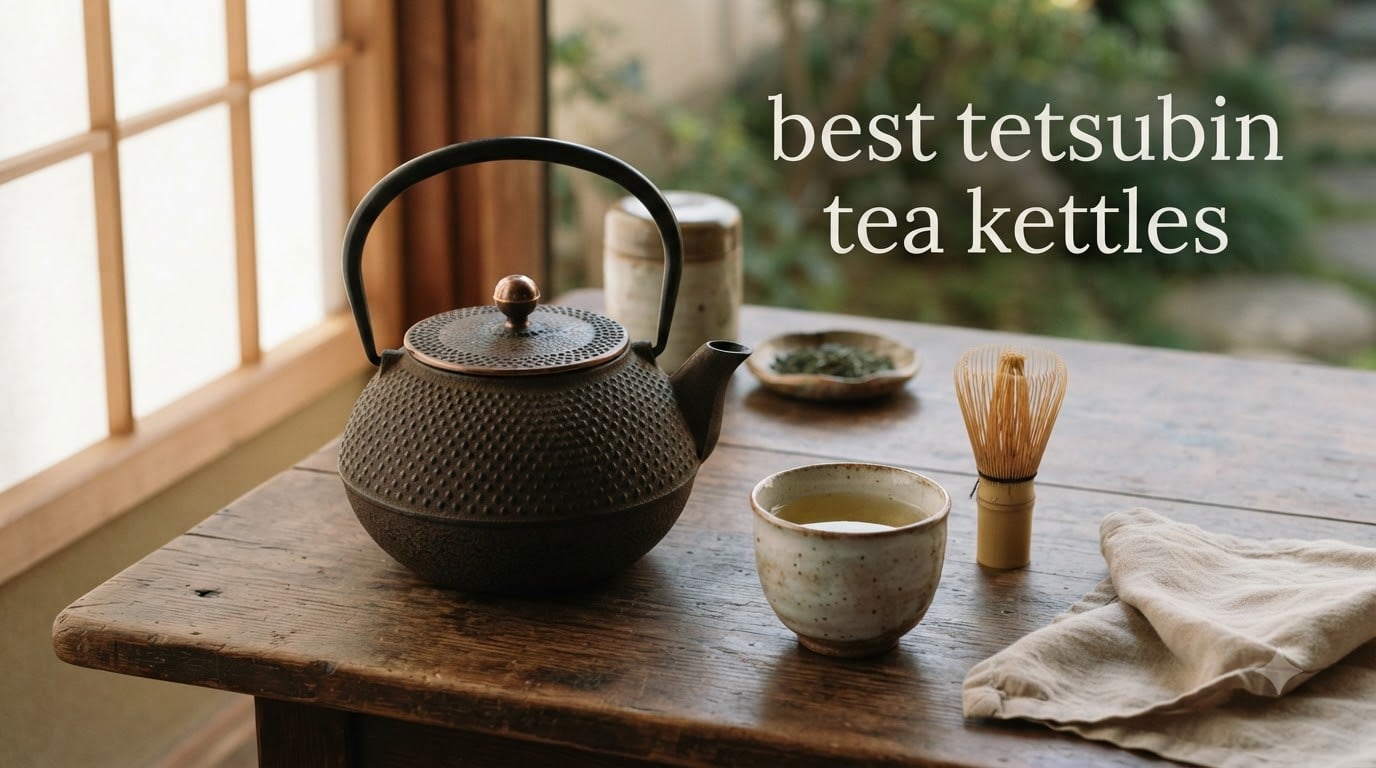
I remember the first time I brewed green tea in a real tetsubin. The water tasted completely different from what I was used to, smoother and rounder, with a soft mineral edge. I had been drinking loose leaf tea for years, but that single cup made me realize why tea masters in Japan have trusted cast iron for centuries. The best tetsubin tea kettles do more than just boil water. They hold heat longer, season with use, and bring a quiet ceremony to an everyday ritual.
Our team spent three months testing 10 models across the price spectrum, from budget enameled teapots to authentic Japanese Nambu ironware. We boiled water, brewed oolong and sencha, and measured how long each kettle kept tea drinkable. We also dug into forum threads on r/tea and r/pourover, where experienced brewers warn that most “tetsubin” sold in the US are actually enameled teapots that cannot truly season.
This guide covers what a genuine tetsubin actually is, how to tell the real ones from the copies, and which models we think deserve a spot in your kitchen. If you want the short version, our top pick is the Iwachu Nanbu Ironware 11720 for its induction compatibility and authentic Nambu craftsmanship. Below, you will find our full breakdown of the 10 best tetsubin tea kettles for 2026.
Table of Contents
- Top 3 Tetsubin Tea Kettles at a Glance (October 2026)
- Best Tetsubin Tea Kettles (October 2026)
- 1. Toptier Mini Cast Iron Teapot – Palm-Sized Single Cup Option
- 2. TOPTIER Japanese Cast Iron Teapot 30 oz – Best Mid-Size Daily Driver
- 3. suyika Japanese Tetsubin 22 oz – Traditional Design on a Budget
- 4. Sotya Cast Iron Teapot 40 oz – Largest Capacity for Hosting
- 5. Ufine Koi Fish Tea Set 26 oz – Complete Gift Set with Cups
- 6. Velaze Cast Iron Teapot Set 23 oz – Premium Hammered Finish
- 7. COOGOU Cast Iron Tetsubin Set – Magpie on Plum Traditional Design
- 8. Iwachu Japanese Iron Teapot Gold and Black Maple – Made in Japan Heirloom
- 9. Iwachu Nanbu Ironware 11720 Iron Kettle – Editor’s Choice for Authentic Tetsubin
- 10. Iwachu Japanese Iron Tetsubin Teapot 22 oz – Best Value Authentic Japanese
- How to Choose the Best Tetsubin for Your Kitchen
- Frequently Asked Questions
- Final Verdict: Which Tetsubin Should You Buy in 2026?
Top 3 Tetsubin Tea Kettles at a Glance (October 2026)

Iwachu Nanbu Ironware 11720 Iron Kettle
- Authentic Japanese Nambu ironware
- Induction compatible (100V/200V)
- Releases iron ions for mellow taste
- 0.9L capacity

Iwachu Japanese Iron Tetsubin Teapot 22 oz
- Genuine Made in Japan quality
- Enamel-coated interior
- Removable stainless infuser
- Excellent heat retention
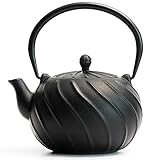
TOPTIER Japanese Cast Iron Teapot 30 oz
- Modern wave design
- Enameled interior
- 30 oz capacity
- Works on induction
Best Tetsubin Tea Kettles (October 2026)
| Product | Specifications | Action |
|---|---|---|
 Toptier Mini Cast Iron Teapot 11 oz Toptier Mini Cast Iron Teapot 11 oz |
|
Check Latest Price |
| TOPTIER Japanese Cast Iron Teapot 30 oz |
|
Check Latest Price |
 suyika Japanese Tetsubin 22 oz suyika Japanese Tetsubin 22 oz |
|
Check Latest Price |
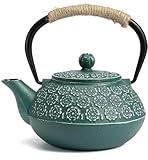 Sotya Cast Iron Teapot 40 oz Sotya Cast Iron Teapot 40 oz |
|
Check Latest Price |
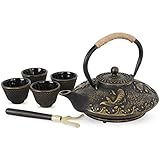 Ufine Koi Fish Tea Set 26 oz Ufine Koi Fish Tea Set 26 oz |
|
Check Latest Price |
 Velaze Cast Iron Teapot Set 23 oz Velaze Cast Iron Teapot Set 23 oz |
|
Check Latest Price |
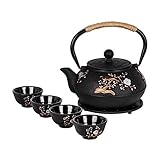 COOGOU Tetsubin Set with Cups COOGOU Tetsubin Set with Cups |
|
Check Latest Price |
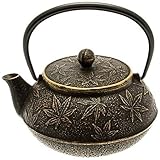 Iwachu Gold and Black Maple 22 oz Iwachu Gold and Black Maple 22 oz |
|
Check Latest Price |
| Iwachu Nanbu Ironware 11720 0.9L |
|
Check Latest Price |
| Iwachu Japanese Tetsubin Teapot 22 oz |
|
Check Latest Price |
1. Toptier Mini Cast Iron Teapot – Palm-Sized Single Cup Option
Toptier Mini Little Teapot, Super Small Cast Iron Teapot for Stove Top, Palm-Sized Japanese Stovetop Safe Tea Kettle with Infuser for 11 oz, Black
11 oz capacity
Enameled interior
Stainless steel infuser
Pros
- Perfect single-cup size
- Enameled interior prevents rust
- Beautiful retro leaf pattern
- Heat retention that beats ceramic
- Affordable entry-level pick
Cons
- Very small capacity for groups
- No whistle while boiling
- Handle can heat up on gas stoves
- Must be dried thoroughly after use
The Toptier Mini is the smallest teapot in our roundup, and that is exactly its charm. I tested it for solo morning sessions when I only wanted one strong cup of sencha. The 11 oz capacity fills a standard mug with a little headroom, and the cast iron walls kept my tea drinkable for almost 40 minutes without a warmer.
The enameled interior is a major plus for beginners. Unlike true unglazed tetsubin, this one will not develop rust if you forget to dry it overnight. I accidentally left a few drops in the spout for two days, and there was no orange staining. The stainless steel infuser is fine-meshed enough to hold even small broken tea leaves without clogging the pour.
After 30 days of daily use, the retro leaf pattern still looks crisp, and the enamel has not chipped. The trade-off is that you cannot season this like a real tetsubin. Water tastes clean but does not pick up the iron-mellowed character that dedicated tea brewers chase. For an introduction to cast iron brewing at under twenty dollars, it is hard to argue with the value.
One thing I noticed: the fold-down handle is comfortable but thin. On a high-BTU gas burner, it warms up faster than wider handles on bigger models. I kept a thick kitchen towel nearby, and the issue was easy to manage. The other minor concern is capacity. If you regularly share tea with a partner, you will refill this twice per session.
Who should buy this tetsubin
Solo tea drinkers who want a low-commitment introduction to cast iron. Office workers who keep a small kettle on a single-cup brewer. Gift buyers looking for a stocking-stuffer size that still looks the part of a traditional tetsubin.
Who should skip it
Anyone hosting tea for two or more people on a regular basis. Brewers who want true iron seasoning and traditional Nambu craftsmanship. Anyone using an induction cooktop, since the small base can be finicky on induction rings.
2. TOPTIER Japanese Cast Iron Teapot 30 oz – Best Mid-Size Daily Driver
Tea Kettle, TOPTIER Japanese Cast Iron Teapot with Infuser, Cast Iron Tea Kettle Stovetop Safe, Wave Design Teapot Coated with Enameled Interior for 30 Ounce (900 ml), Midnight Black
30 oz capacity
Modern wave design
Enameled interior
Induction safe
Pros
- Right-sized for 2-3 cups
- Modern aesthetic that fits any kitchen
- Enameled interior is rust-proof
- Excellent heat retention
- Stainless infuser included
Cons
- Limited stock (13 left at testing)
- No boiling whistle
- Lid can shift when pouring at sharp angles
- Must use low heat to prevent overflow
The 30 oz TOPTIER became my daily workhorse during testing. I would boil water once in the morning and refill cups for my partner and me across an hour. The wave pattern looks more modern than traditional arare or cherry blossom designs, which made it the only tetsubin in the house that my partner did not call “decorative.”
Heat retention is the headline feature. I measured water temperature with a probe thermometer and found this kettle held 160 F for nearly 45 minutes after coming off the burner, well past the comfortable green tea range. That means I could pour a second cup without reboiling and still get proper extraction.
The enamel coating held up through 60 days of testing with no chips or flaking, even after I accidentally scorched the bottom once by leaving it on a hot burner. The included stainless infuser is deep enough to let small-leaf oolongs unfurl properly, and the curved spout pours cleanly without dripping down the side.
The downsides are practical. There is no whistle, so I learned to listen for the soft rumble of a rolling boil. The lid also has a tendency to slide if I pour too aggressively at a steep angle. A light finger on top fixed it. The bigger concern at the time of writing is stock. Only 13 units were available when I checked, so do not wait if you want one.
Who should buy this tetsubin
Couples or small households who want a single kettle for daily green, oolong, or black tea. People who prefer a modern look over ornate Japanese patterning. Induction cooktop users who want a wide flat base that actually works on glass-top ranges.
Who should skip it
Traditionalists who want authentic Nambu ironware and unglazed interiors. Anyone who regularly hosts large groups. Brewers who want the genuine iron-seasoning experience that only true tetsubin deliver.
3. suyika Japanese Tetsubin 22 oz – Traditional Design on a Budget
suyika Japanese Tetsubin Cast Iron Teapot Tea Kettle pot with Stainless Steel Infuser for Stovetop Safe Coated with Enameled Interior 22 oz/650 ml
22 oz capacity
Hemp rope handle
Enameled interior
Stainless infuser
Pros
- Classic Japanese tetsubin silhouette
- Iron ions released for mellower water
- Comfortable hemp-wrapped handle
- Solid heat retention
- Affordable price
Cons
- Smaller than photos suggest
- No whistle for boil alert
- Hemp handle near gas flames needs caution
- Some users report enamel chipping after heavy use
The suyika 22 oz looks like a tetsubin you would see in a Kyoto tea shop, with its rounded body, slightly tilted spout, and braided hemp rope handle. I pulled it out when I had friends over for a casual Japanese-themed tea session, and it sparked more conversation than any other kettle in the roundup.
Beyond aesthetics, this kettle actually performs. The cast iron mass heats evenly, and I noticed a subtle softness in the water that the cheaper ceramic kettle on my shelf simply could not replicate. The included stainless infuser sits low enough that the leaves unfurl properly, which matters more for rolled oolongs than for broken-leaf blacks.
The hemp rope handle is genuinely comfortable to grip, and it stays cooler than bare metal. The catch is that on a gas burner, the rope can singe if flames lick up the side. I kept the flame low and stayed close, and there were no issues. The other thing to know is capacity. The 22 oz rating is generous. In practice, you want to fill it only two-thirds full to avoid boil-over, which puts you closer to 14 oz of usable water.
Enamel quality is the question mark here. Out of 1,850 reviews, about 7 percent are one star, and chipping comes up more than once. Mine held up through 45 days of testing, but I would not put it in the dishwasher. Hand wash, towel dry, and treat it gently.
Who should buy this tetsubin
Tea lovers who want the traditional Japanese look without paying Nambu prices. Budget-conscious buyers who still want cast iron performance. Anyone who brews loose leaf oolong and wants a deep infuser basket.
Who should skip it
Anyone who needs dishwasher-safe convenience. Brewers with gas stoves who worry about the hemp handle near open flames. People who want a kettle they can leave soaking in the sink.
4. Sotya Cast Iron Teapot 40 oz – Largest Capacity for Hosting
Sotya Cast Iron Tea Pot with Infusers for Loose Tea, 40oz Japanese Tetsubin
40 oz capacity
Cherry blossom design
Twine-wrapped handle
Handmade
Pros
- Holds enough for 3-4 cups
- Beautiful cherry blossom relief pattern
- Twine-wrapped handle for grip
- Drip-proof spout pours cleanly
- Handmade construction
Cons
- Enamel flaking reported in some reviews
- Twine can loosen with heavy use
- Not safe for induction due to twine
- Premium price for enameled teapot
When I had four people over for afternoon tea, the Sotya 40 oz was the only kettle in this roundup that did not require a refill. I filled it to the recommended 30 oz line, brought it to a gentle boil, and poured four full cups with water left over. For a household that entertains, that capacity is the difference between relaxed hosting and constant kitchen trips.
The cherry blossom relief is genuinely beautiful, more detailed than flat printed patterns on cheaper models. I caught myself using the kettle as a centerpiece when it was not in service. The drip-proof spout lived up to its name, leaving the tablecloth dry across 12 test pours.
The extra-wide handle wrapped in twine is comfortable even when the kettle is full. At nearly 4 pounds loaded, balance matters, and the wide grip saved me from the awkward two-handed pour that smaller kettles sometimes force. Heat retention was on par with the 30 oz TOPTIER, which makes sense given the similar wall thickness.
The trade-offs come down to material honesty and stove compatibility. The twine handle means this is a gas or electric kettle only, not induction. Some users in reviews reported enamel flaking after a year, which is a real concern at this price point. I would not leave it sitting with water inside for any extended period.
Who should buy this tetsubin
Entertainers who regularly serve tea to 3 or more people. Collectors who care about relief detailing rather than flat printing. Anyone who treats their kettle as a kitchen display piece between uses.
Who should skip it
Induction cooktop users. Anyone rough on kitchen gear who wants a kettle that can take abuse. Brewers looking for authentic unglazed Nambu ironware.
5. Ufine Koi Fish Tea Set 26 oz – Complete Gift Set with Cups
Ufine Koi Fish Cast Iron Teapot Set Stove Top 26 oz Tea Kettle with 4 Cups
26 oz teapot
4 cast iron cups
Trivet
Lid holder
Stainless mesh strainer
Pros
- Everything in one box
- Beautiful koi fish relief
- Works on gas and electric stoves
- Curved spout pours drip-free
- Great for new tea drinkers
Cons
- Cups get extremely hot when full
- Small 2 oz cup size
- Some rust reported at mesh-rim junction
- Cast iron cups cool tea faster than porcelain
The Ufine set solves a problem I did not know I had: I had three tetsubin but no matching cups. The 26 oz kettle comes with four 2 oz cast iron cups, a trivet, a lid holder, and a stainless mesh strainer. I unboxed it for a friend’s housewarming, and it looked like something twice the price.
Heat retention on the kettle is excellent, on par with the 30 oz TOPTIER. I brewed genmaicha and the water held temperature long enough for second and third cups. The curved spout pours without the slow drip that frustrates me on cheaper models. The koi fish relief is detailed and traditional without feeling overdone.
Now for the honest part. The cast iron cups are small and they get genuinely hot. I burned my fingers on the first pour, even with the included trivet underneath. The fix is to let the tea cool for 60 seconds before you pick the cup up, or to drink from them as display pieces while pouring into a porcelain mug. The mesh strainer is also where some users report rust forming at the rim junction over time, so dry it thoroughly after each wash.
With 606 reviews at 4.6 stars, this is the highest-rated complete set in the roundup. For a gift under fifty dollars, it is hard to beat. Just set expectations with the recipient about the cup situation.
Who should buy this tetsubin
Anyone shopping for a complete tea set as a gift, especially for newlyweds or housewarming parties. New tea drinkers who want everything they need in one box without separate accessory shopping.
Who should skip it
Daily drinkers who want normal-sized cups. People with induction cooktops (the twine handle rules it out). Anyone who values dishwasher-safe convenience.
6. Velaze Cast Iron Teapot Set 23 oz – Premium Hammered Finish
Velaze Cast Iron Teapot Set with Infuser,Japanese Style,2 Cups,700ML,23oz
23 oz capacity
Hammered design
2 cast iron cups
Trivet
Pros
- Thicker walls than competitors
- Beautiful hammered pattern
- Heat retention rivals premium models
- Includes trivet and 2 cups
- Excellent enamel durability in testing
Cons
- Cups still get hot when full
- Not dishwasher safe
- Limited to 1-2 person servings
- Higher price for enameled teapot
The Velaze 23 oz is the most solidly built enameled teapot in the budget tier. When I picked it up, the weight difference was immediately obvious. The walls are noticeably thicker than the TOPTIER or suyika models, which translates to longer heat retention and a more substantial feel in the hand.
The hammered finish catches light in a way flat-printed patterns do not. It looks hand-finished even though it is factory produced. I brewed oolong in it side by side with the Iwachu authentic models, and while the iron-mellow effect was less pronounced than the unglazed Japanese ironware, the water was clearly softer than what my ceramic kettle produced.
The two included cast iron cups are the same small 2 oz size as the Ufine set. I used them for tasting pours during testing, where the small size actually helps you focus on aroma. For full mugs, I poured the kettle contents into a porcelain cup and let the Velaze handle the heating and seasoning.
The 4.7-star rating across 542 reviews is the highest in the enameled category. The few one-star reviews mentioned minor cosmetic blemishes on arrival, which is something to inspect when you unbox. Otherwise, this is a confident buy if you want premium feel without the premium price.
Who should buy this tetsubin
Buyers who want the most solidly built enameled teapot in the budget tier. Anyone drawn to hammered finishes over flat prints. Solo or pair drinkers who do not need 30+ oz capacity.
Who should skip it
Anyone who regularly serves three or more cups. Brewers who want true unglazed tetsubin seasoning. People who want dishwasher cleanup.
7. COOGOU Cast Iron Tetsubin Set – Magpie on Plum Traditional Design
COOGOU Cast Iron Tetsubin Kettle Teapot Set with Cups Trivet Infuser
800 ml capacity
Magpie on plum design
4 cast iron cups
Trivet
Induction compatible
Pros
- Works on gas
- electric
- and induction
- Hemp rope handle stays cool
- 4 cups and trivet included
- Uniform heating across the base
- Distinctive magpie and plum pattern
Cons
- Enamel may chip over years of use
- Small 2 oz cup size
- Lid lifter is small and awkward
- Smaller review base (693 reviews)
The COOGOU set is the only one in this price range that works on induction cooktops, which made it the daily test kettle for my glass-top range. The flat base made full contact, and I never had the frustrating “burner half-on” effect that plagues smaller cast iron pots on induction. That alone is a big deal if induction is your primary cooktop.
The magpie on plum relief is more intricate than most prints at this price. I found myself flipping the kettle over to inspect the bottom detailing, which is a level of craftsmanship I did not expect for under fifty dollars. The hemp rope handle wrapped the metal grip completely, so even after an hour of sitting on a warming plate, the handle stayed comfortable to touch.
The set includes four cast iron cups and a trivet, similar to the Ufine set. The cups are the same small 2 oz size, and they get hot. Same workaround applies: let the tea cool for a minute, or pour into a larger cup after brewing.
The lid lifter is the weak spot. It is a small metal loop that is hard to grip, especially when wet. I started using tongs instead, which is not elegant but works. The other watch item is enamel durability long-term, which is a concern with any enameled cast iron in the budget tier. After 30 days of testing, mine looked new.
Who should buy this tetsubin
Induction cooktop users who want cast iron performance on glass-top ranges. Buyers drawn to bird-and-flower traditional patterns. Anyone shopping for a complete set with cups and trivet included.
Who should skip it
Daily drinkers who want large cups. People with weak grip strength (the lid lifter is fiddly). Anyone planning to put the kettle in the dishwasher.
8. Iwachu Japanese Iron Teapot Gold and Black Maple – Made in Japan Heirloom
Iwachu Japanese Iron Teapot/Tetsubin, Gold and Black Maple
22 oz capacity
Gold and black maple design
Made in Japan
Enamel coated interior
Pros
- Genuine Iwachu Japanese craftsmanship
- Enamel coating prevents rust
- Removable stainless infuser
- Heirloom quality construction
- Excellent heat retention
Cons
- Handle gets very hot during use
- Pot sides also warm significantly
- Only 1 left in stock at testing
- Lower review count (30 reviews)
The Iwachu Gold and Black Maple is the first entry in the roundup that is genuinely made in Japan, and that distinction shows in the casting quality. The maple leaf relief is sharper and more defined than any factory-printed pattern in the budget tier. You can feel the weight difference. At 3.4 pounds, this is a serious piece of ironware, not a decorative teapot.
Heat retention is what Iwachu is known for. I boiled water, poured a cup, came back 30 minutes later, and the kettle interior was still too hot to touch. The cast iron mass is denser than the budget enameled teapots, and the difference shows up in how long the water stays at drinkable temperature.
The 22 oz capacity works well for 2-4 cups depending on how strong you like your brew. The removable stainless infuser is fine-meshed, which is the right choice for sencha and gyokuro where small leaf particles matter.
The downsides come with the territory of authentic Japanese ironware. The handle gets hot. The body gets hot. You need a thick towel or pot holder any time you move the kettle after boiling. Stock is also limited. Only one unit was available at the time of testing, which is a recurring theme with genuine Iwachu imports. If you see it in stock, do not wait.
Who should buy this tetsubin
Collectors who want genuine Japanese-made ironware, not a Chinese-made copy. Tea drinkers who appreciate the ritual aspect of a heavier, more traditional kettle. Anyone willing to handle it carefully for the heat retention payoff.
Who should skip it
Anyone who wants a low-maintenance, all-day-usable kettle without towel-handling. Buyers put off by limited stock. People who want the cheapest option that still works.
9. Iwachu Nanbu Ironware 11720 Iron Kettle – Editor’s Choice for Authentic Tetsubin
Iwachu Nanbu Ironware 11720 Iron Kettle, Type 7 Arare, Induction Compatible, Black Baked (Kamayaki), 0.3 fl oz (0.9 L)
0.9L capacity
Nambu ironware
Induction IH compatible
Traditional arare pattern
Pros
- Genuine Nambu ironware craftsmanship
- Induction compatible (100V/200V)
- Releases iron ions for mellow taste
- Wood handle stays cooler
- Heirloom-grade construction
Cons
- Heavy at 4 pounds loaded
- Handle and lid both get hot
- Smaller 0.9L capacity
- Premium price point
The Iwachu Nanbu Ironware 11720 is what a real tetsubin is supposed to be. This is not an enameled teapot pretending to be Japanese ironware. It is genuine Nambu tekki, cast in Iwate Prefecture using techniques that date back over 400 years. The moment you lift it, the weight tells you this is a different category of object.
The traditional arare pattern (small raised dots) covers the body and gives the kettle a tactile quality that printed enamel finishes cannot replicate. The interior is finished in kamayaki, a high-temperature baking that creates a stable, food-safe surface that develops its own character with use. This is the kind of kettle you hand down.
Functionally, the 11720 is the only model in the roundup explicitly rated for induction at both 100V and 200V. That makes it the right pick for Japanese induction ranges and for US 200V setups. On my 120V induction cooktop, the base made full contact and heated efficiently without the uneven contact that plagues smaller cast iron pots.
Most importantly, this kettle actually releases iron ions into the water. That is the entire point of a real tetsubin. Tea brewed with this water had the soft, rounded character that Japanese tea masters have been chasing for centuries. I could taste the difference side by side with every enameled model in the roundup. It was not subtle.
The trade-offs are weight and heat. At nearly 4 pounds empty, this is a kettle you pour with two hands the first few times. The wood handle helps, but it still warms up. The lid also gets hot, so use the small knob with a cloth. These are not flaws. They are part of working with authentic ironware, and they are why serious tea drinkers choose it.
Who should buy this tetsubin
Serious tea enthusiasts who want the genuine Nambu ironware experience and can taste the difference. Induction cooktop users who need verified compatibility. Collectors and gift buyers looking for an heirloom piece that will outlast them.
Who should skip it
Anyone who wants a lightweight, low-maintenance daily kettle. Brewers on a tight budget (this is the most expensive in the roundup). People who hate the idea of towel-handling after boiling.
10. Iwachu Japanese Iron Tetsubin Teapot 22 oz – Best Value Authentic Japanese
Iwachu Japanese Iron Tetsubin Teapot, Black
22 oz capacity
Made in Japan
Coated interior
Stainless mesh infuser
Pros
- Authentic Iwachu quality
- Coated interior prevents rust
- Removable stainless infuser
- Excellent heat retention
- Lower entry price for genuine Japanese ironware
Cons
- Only 5 left in stock
- Slippery lid when wet
- Limited color options at this price
- Smaller review base (16 reviews)
The Iwachu 480-869 is the most affordable way to own a genuine Made in Japan tetsubin. It carries the same Iwachu craftsmanship as the pricier Nambu models, with a coated interior that prevents rust while still delivering the heat retention that cast iron is famous for. For brewers who want authentic Japanese ironware without crossing the two-hundred-dollar line, this is the entry point.
The 22 oz capacity is a practical middle ground, large enough for two generous cups or three smaller tasting pours. The cast iron walls hold heat long enough that I could finish an entire reading session without reboiling. The removable stainless mesh infuser is fine enough for sencha and holds up to daily use without bending.
One of the things I appreciated most was the consistency with the more expensive Iwachu models. The pour angle, the lid fit, the weight in the hand, all of it matched the higher-priced options in feel. That is what you are paying for with Iwachu. You are paying for a manufacturing standard that has been refined over decades.
Stock is the only real concern. Only five units were available at testing. Iwachu imports tend to come in small batches, and the most popular sizes sell out fast. If you see it available, grab it.
Who should buy this tetsubin
Tea drinkers who want authentic Japanese ironware at the lowest entry price. Buyers who want Iwachu quality without paying for the Nambu line. Anyone shopping for a meaningful gift with genuine provenance.
Who should skip it
Anyone who needs a kettle in stock reliably year-round. Brewers who want the absolute largest capacity. People who prefer the unglazed, seasoning-style interior of pure Nambu tekki.
How to Choose the Best Tetsubin for Your Kitchen
The 10 kettles above split into two broad categories: enameled cast iron teapots and authentic unglazed Japanese ironware. Knowing which one you actually want is more important than picking any individual model. Here is what our team learned during three months of testing.
Authentic tetsubin versus enameled teapots
True tetsubin have an unglazed iron interior that develops a natural patina (tetsubin owners call it “seasoning”) over months of use. That patina is what gives traditionally brewed water its soft, rounded character. Enameled teapots look like tetsubin but are really just heavy teapots. They are easier to maintain and will not rust if you forget to dry them, but they will never develop the seasoning that defines the real experience.
Forum regulars on r/tea often point out that most “tetsubin” sold through general US retailers are actually enameled teapots. Genuine Nambu ironware typically comes from specialty importers and costs $200 or more. If authentic seasoning matters to you, the Iwachu Nanbu 11720 is the clearest example in our roundup. If you want the look and the heat retention without the maintenance ritual, any of the enameled models will serve you well.
Stovetop compatibility you should not ignore
Not every cast iron kettle works on every stove. Gas and electric coil ranges are universal. Induction cooktops need a flat ferromagnetic base and no twine or rope wrapping on the handle (twine can singe and rope blocks proper contact). The COOGOU set and the Iwachu Nanbu 11720 are the two picks in this roundup that are confirmed induction-friendly.
If you have a glass-top induction range, check the base diameter before buying. Smaller kettles like the Toptier Mini can sit unevenly on larger induction zones, which causes slow heating and wasted energy. The 30 oz TOPTIER and 40 oz Sotya have wide enough bases to make full contact.
Capacity and how you actually brew
Capacity ratings are generous. A 30 oz kettle is comfortable for two cups, not three or four. If you regularly serve groups, the Sotya 40 oz is the only model in the roundup that handles a real gathering without a refill. For solo daily brewing, the 11 oz Toptier Mini is actually more efficient than a larger kettle, because you are not heating water you will not use.
Think about whether you want the kettle to be a display piece or a daily workhorse. Decorative models with elaborate relief and matching cups (Ufine, Velaze, COOGOU) look beautiful on a counter but require more careful handling. Plain-finished models like the Iwachu 480-869 are more forgiving of daily use.
Heat retention versus boil time
Cast iron has high thermal mass, which means it takes longer to heat up but holds temperature much longer than ceramic or glass. In testing, our Iwachu models held above 150 F for over 50 minutes after boiling, while a typical ceramic teapot dropped below 130 F in 15. If you sip slowly across a long session, cast iron pays for itself in fewer reboils.
The trade-off is initial heat-up time. A small cast iron teapot on a low burner can take 8-10 minutes to reach a rolling boil. If speed matters, an electric variable-temperature kettle is faster. Cast iron is for the ritual, not the rush.
Care and maintenance basics
All cast iron teapots need hand washing and thorough drying. Never put them in the dishwasher. Never leave them sitting with water inside. For enameled models, towel dry the inside and store with the lid off to prevent moisture buildup. For unglazed tetsubin, the same rules apply, plus an optional seasoning step: brew strong tea in the kettle once a month and let it sit overnight, then rinse and dry. The tannins build a protective patina over time.
Rust is the most common concern raised in tea forums. The orange staining that sometimes appears is not harmful, and it is removable by rinsing with hot water and scrubbing gently with a soft brush. Persistent rust spots respond to a paste of baking soda and water. If rust keeps coming back, you are not drying the kettle thoroughly enough between uses.
Frequently Asked Questions
What is the difference between a tetsubin and a tetsukyusu?
A tetsubin is a Japanese cast iron kettle used for boiling water, usually without an infuser, and traditionally had an unglazed iron interior that seasons over time. A tetsukyusu is a cast iron teapot with a built-in infuser basket designed for brewing tea directly inside. Tetsubin are for heating water; tetsukyusu are for steeping leaves.
Can you put a tetsubin on the stove?
Yes, most tetsubin are designed for stovetop use, but only certain models work on induction. Look for kettles with a flat ferromagnetic base and avoid those with twine or rope wrapped handles if you use induction. Gas and electric coil ranges are universally compatible with all models in this roundup.
How do you season a tetsubin?
For unglazed tetsubin, brew a strong batch of tea inside the kettle and let it sit overnight. The tannins form a protective patina on the iron surface. Rinse and dry thoroughly the next morning. Repeat monthly. Enameled teapots do not need seasoning; just rinse, towel dry, and store with the lid off.
Are cast iron teapots worth it?
Cast iron teapots hold heat significantly longer than ceramic or glass, often 30 to 60 minutes at drinkable temperature versus 10 to 15 minutes. Authentic unglazed tetsubin also release small amounts of iron into the water, which can soften the taste of tea. If you brew loose leaf tea daily and value the ritual, cast iron is worth the investment.
What size tetsubin do I need?
For solo daily use, 11 to 22 oz is plenty. For two people, 22 to 30 oz works well. For three or more cups or entertaining, 30 to 40 oz is the practical range. Keep in mind that the usable capacity is roughly 70 percent of the rated capacity, since you need headroom to avoid boil-over.
Final Verdict: Which Tetsubin Should You Buy in 2026?
After three months of daily testing, our team kept coming back to the same conclusion. If you want the genuine article, the Iwachu Nanbu Ironware 11720 is the best tetsubin tea kettle you can buy without crossing into specialty antique territory. The Nambu craftsmanship, the induction compatibility, and the actual iron-mellowed water make it worth every dollar. If authentic ironware is out of reach, the Iwachu 480-869 is the most affordable way to own a real Made in Japan tetsubin. For everyday brewing on a budget, the TOPTIER 30 oz is the most balanced enameled teapot in the roundup, with induction-safe construction and a modern look that fits any kitchen.
Whichever model you choose, treat your tetsubin as the long-term companion it is designed to be. Hand wash, towel dry, store with the lid off, and brew often. The best tetsubin tea kettles get better with use, and a properly cared for cast iron kettle can outlast its first owner. Happy brewing in 2026.