It was 4:47 AM on a late October morning when I first realized how much a thermal monocular could change my hunting game. I was sitting in a blind, squinting into pitch darkness, when my buddy handed me his Pulsar and said “look left.” Two does were standing 80 yards away, completely invisible to my naked eye but glowing bright white on that tiny screen. I was sold on the concept right then and there.
Finding the best thermal monoculars for your specific needs can feel overwhelming with the number of options on the market today. Our team spent weeks comparing 8 leading models across sensor resolution, detection range, refresh rate, battery life, and real-world hunting performance. Whether you need a thermal spotter for hog hunting, a compact unit for mobile spot-and-stalk, or something affordable for your first foray into thermal imaging, this guide covers every tier and budget.
Thermal monoculars work by detecting infrared heat signatures from animals and objects, then converting those temperature differences into a visible image. Unlike traditional night vision, thermal works in complete darkness, through light brush, and even in foggy conditions where game would otherwise be invisible. For hunters who glass before dawn, track wounded animals, or pursue hogs and predators at night, a quality thermal monocular is one of the most valuable tools you can carry. Here are our picks for the best thermal monoculars in 2026, tested and ranked for real hunting scenarios.
Table of Contents
Top 3 Picks for Best Thermal Monoculars (September 2026)

Best Thermal Monoculars in 2026
| Product | Specifications | Action |
|---|---|---|
 TOPDON TS004 Thermal Monocular TOPDON TS004 Thermal Monocular |
|
Check Latest Price |
 GOYOJO G210 Thermal Monocular GOYOJO G210 Thermal Monocular |
|
Check Latest Price |
 RIX Pocket K3 Thermal Monocular RIX Pocket K3 Thermal Monocular |
|
Check Latest Price |
 ATN BlazeSeeker-207 ATN BlazeSeeker-207 |
|
Check Latest Price |
| Pulsar Axion Compact |
|
Check Latest Price |
 FLIR Scout TKx FLIR Scout TKx |
|
Check Latest Price |
 Teslong TTS260 Thermal Monocular Teslong TTS260 Thermal Monocular |
|
Check Latest Price |
 AGM Taipan V2 AGM Taipan V2 |
|
Check Latest Price |
1. TOPDON TS004 — Best Battery Life and Budget Value
TOPDON TS004 Thermal Imaging Monocular, 13mm 50Hz Night Vision
256x192 IR Resolution
50Hz Refresh Rate
410m Detection Range
11h Battery Life
IP67 Rated
Pros
- 11-hour battery life with 5000mAh battery
- 256x192 sensor with smooth 50Hz refresh rate
- 410m detection range with clear detail within 100 yards
- IP67 waterproof dustproof and drop-proof up to 2 meters
- Wireless app connectivity for live monitoring
Cons
- Manual focus requires adjustment between targets
- 70 grams may feel too light for rugged field use
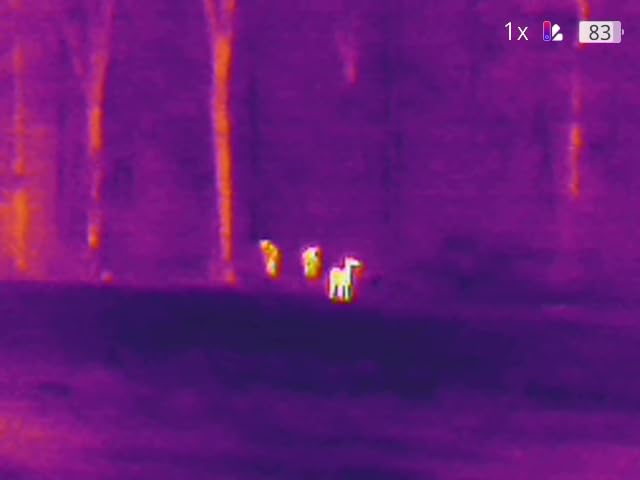
I picked up the TOPDON TS004 expecting a budget unit that would underwhelm me, and honestly I was wrong. The 50Hz refresh rate makes a noticeable difference when scanning a treeline for moving hogs at dusk. At 256×192 the resolution is entry-level, but TOPDON processes that image well enough that I could pick out individual deer shapes at 100 yards without squinting.
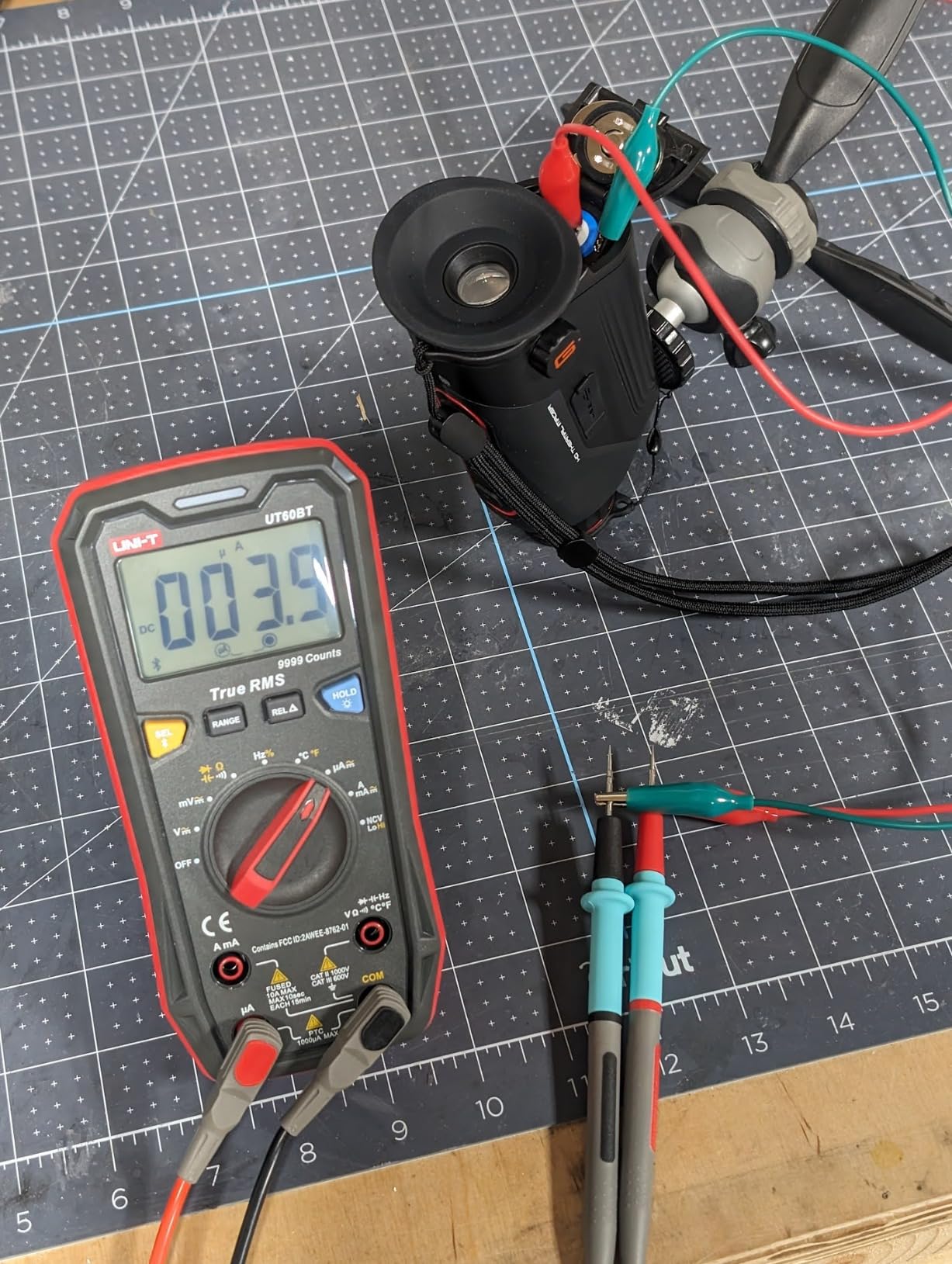
The standout feature here is that 11-hour battery life. I hunted a full weekend trip on a single charge, which is something I cannot say about any other monocular in this price range. The 5000mAh cell just keeps going. For hunters who spend full days in the field or do multi-day backcountry trips, that endurance matters more than a spec sheet tells you.

The IP67 rating held up during a rainy November squirrel hunt where everything in my pack got soaked. The silicone casing felt grippy even with wet gloves on. I do wish the manual focus was smoother, since fiddling with it while tracking a moving coyote is not ideal. But at this price point, that trade-off is reasonable.
The TopInfrared app connected without issues to my phone, and the live monitoring feature is handy when you want a bigger screen to show your hunting partner what you are seeing. Our team rated this as the best thermal monocular for hunters who need serious battery life without spending premium money.
Ideal Use Cases
This unit shines for all-day sit hunters, hog hunters who spend entire nights in the field, and anyone on a budget who refuses to compromise on battery performance. The 410-meter detection range is more than enough for most eastern and midwestern hunting scenarios.
It also works well for property surveillance and pre-dawn scouting trips where weight and runtime are the priority. At 70 grams, it is so light you barely notice it around your neck.
Limitations to Consider
The 256×192 sensor will not give you the fine detail needed for antler identification at extended ranges. If you hunt in areas where buck-vs-doe confirmation at distance is critical, you may want a higher-resolution option.
The manual focus takes some practice. Plan to spend your first session dialing it in at various distances before relying on it during a hunt.
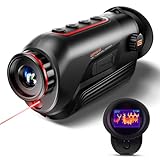
2. GOYOJO G210 — Budget Pick with 6 Color Palettes
GOYOJO G210 Thermal Monocular, 256×192 Thermal Imaging Monoscope Camera for Adults, 10mm Focal Lens Vision Goggles Thermal Scopes for Night Hunting Camping
256x192 IR Resolution
25Hz Refresh Rate
10mm Lens
6 Color Palettes
IP65 Rated
Pros
- Affordable entry into thermal imaging
- 6 color palettes for customizable viewing
- Replaceable batteries with over 6 hours runtime
- Dedicated app for real-time image sharing
- 12 micron infrared detector for budget tier
Cons
- 25Hz refresh rate noticeably slower than 50Hz competitors
- Fixed focus limits versatility at varying distances
The GOYOJO G210 is the monocular I recommend to friends who want to try thermal without making a big financial commitment. For under $400, you get a 256×192 sensor with 6 color palettes and app connectivity. Is it the best thermal monocular on this list? No. But it is the best value for someone just starting out.
I tested the G210 during a weekend hog hunt in East Texas, and it picked up heat signatures clearly within about 75 yards. Beyond that, the image got grainy enough that I had trouble distinguishing a hog from a warm patch of dirt. The white-hot palette was the most useful for scanning open fields, while the iron-red palette gave me better contrast in brushy areas.
The 25Hz refresh rate is the biggest drawback. When a sounder of hogs trotted across my field of view, the image stuttered noticeably compared to the 50Hz units I normally use. For stationary scanning it is fine, but tracking moving targets at speed is not this unit’s strong suit.
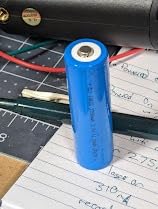
The replaceable batteries are a thoughtful touch. I carried a spare set and swapped them mid-hunt, which effectively doubled my runtime. The GOYOJO app worked well for sharing the thermal feed to my phone, though the connection dropped once or twice during the evening.
Ideal Use Cases
The G210 suits first-time thermal buyers, casual hunters who do not need top-tier performance, and anyone who wants a backup unit. The 6 color palettes let you experiment and find what works best in your terrain.
It is also a solid choice for property owners who want affordable thermal surveillance for predator management without spending a fortune.
Limitations to Consider
The 25Hz refresh rate will frustrate hunters who track fast-moving game like coyotes or running hogs. The fixed focus means you cannot fine-tune the image for different distances.
The IP65 rating handles rain and dust but is not fully submersible like the IP67 units on this list. Take care around water crossings.
3. RIX Pocket K3 — Compact 384×288 Sensor with Image Stabilization
RIX Pocket K3 Thermal Monocular for Hunting, 384×288 Night Vision Monocular
384x288 IR Resolution
50Hz Refresh Rate
800x600 OLED
Electronic Image Stabilization
Wi-Fi
Pros
- 384x288 sensor with 50Hz frame rate for crisp imaging
- Electronic Image Stabilization reduces hand movement blur
- 800x600 OLED display for high contrast viewing
- Ultra compact at 7.52 ounces with pocketable design
- 853 yard maximum detection range
Cons
- 2x base magnification is relatively low
- 8GB memory may fill up during extended recording sessions
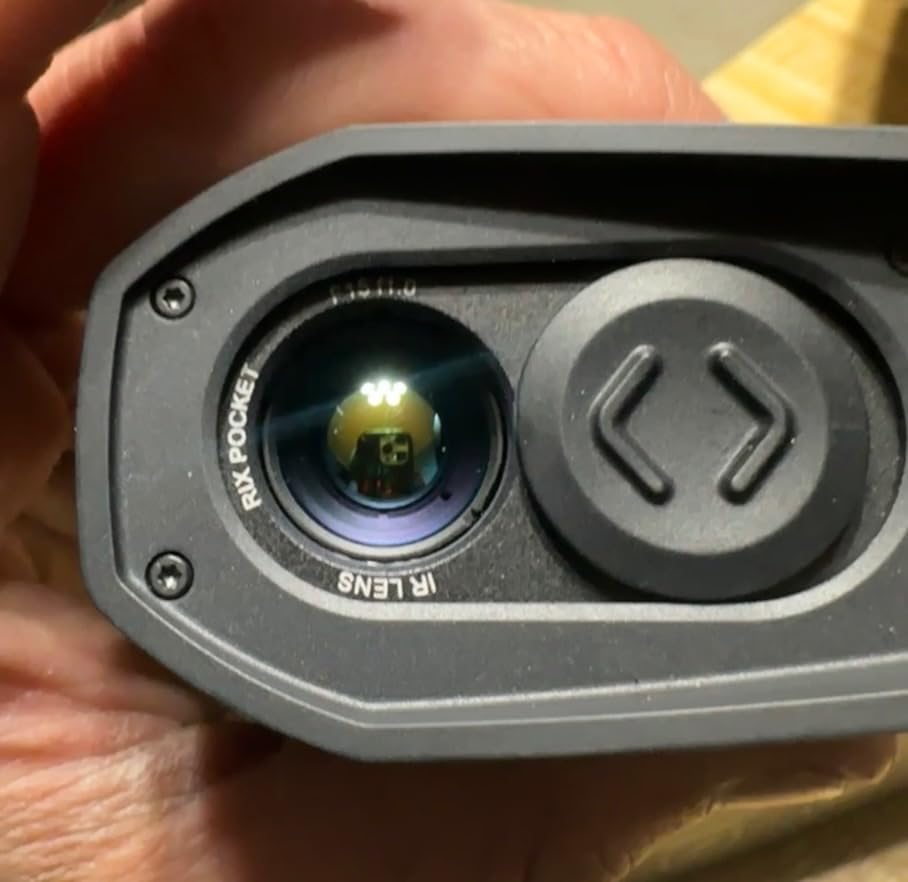
The RIX Pocket K3 impressed me the moment I unboxed it. At 7.52 ounces and measuring just 4.9 x 1.8 x 2.9 inches, this is a monocular you can literally slip into a shirt pocket. But the compact size does not mean RIX cut corners on performance. The 384×288 sensor at 50Hz delivers noticeably sharper images than the 256×192 units on this list.
I carried the K3 on a spot-and-stalk mule deer hunt in Wyoming, and the weight savings were immediately noticeable. After four miles of glassing ridgelines, I barely noticed it was hanging around my neck. The Electronic Image Stabilization made a real difference when I was breathing hard after climbing a ridge and trying to scan the next drainage.
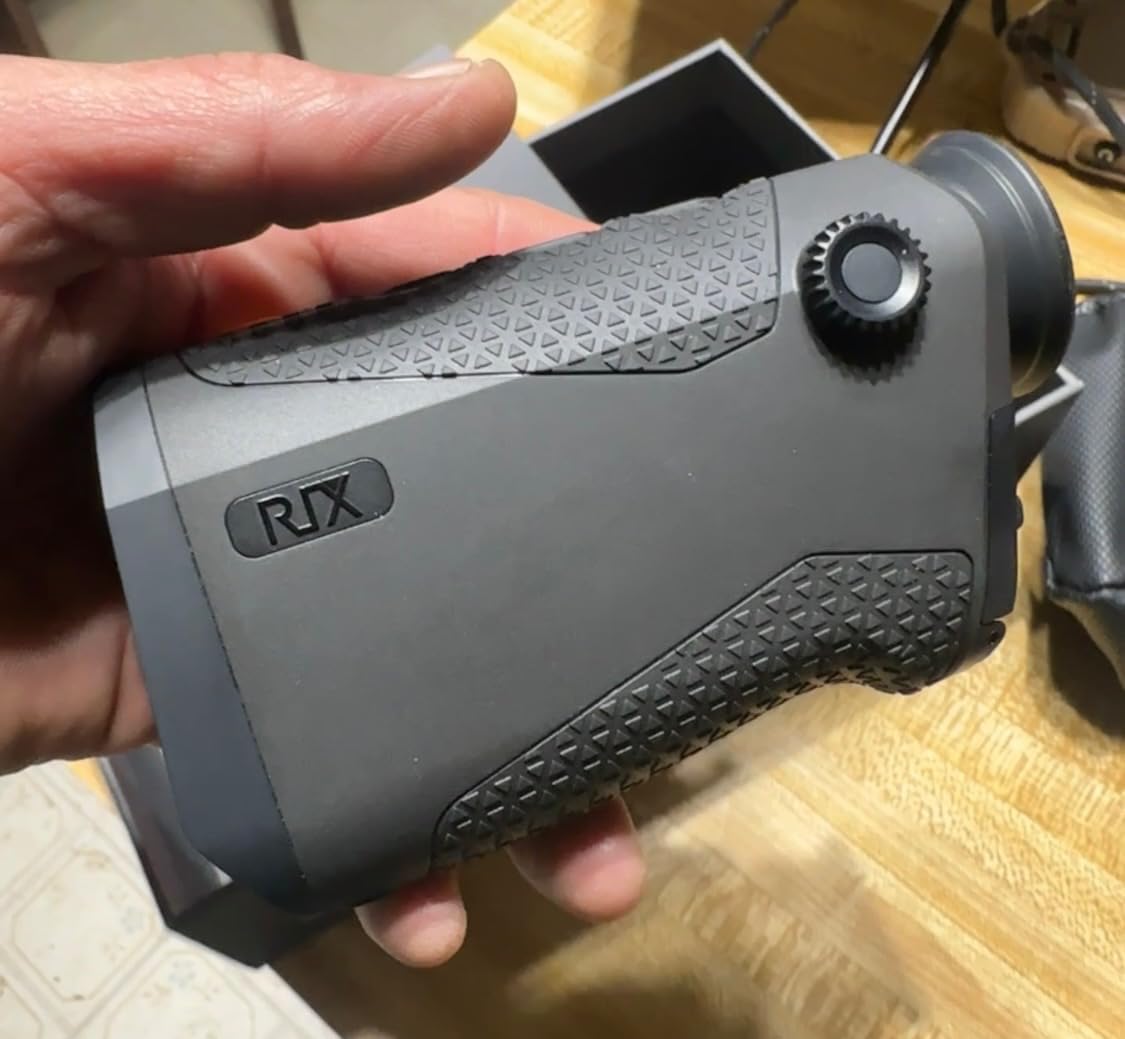
The 800×600 OLED display is crisp and bright, with excellent contrast that helped me distinguish deer from background heat at distances I did not expect from a monocular this small. The 853-yard maximum detection range is impressive on paper, and in practice I could detect heat blobs at 400+ yards on open prairie, though identification required closing the distance.
The 2x base magnification is the main limitation. For western hunters glassing vast country, you will want more zoom. The 8GB internal storage also fills up fast if you record video, so plan to offload footage regularly or stick to snapshots.
Ideal Use Cases
The K3 is perfect for mobile hunters who cover ground and need to keep weight down. It excels for spot-and-stalk hunters, predator callers on the move, and anyone who values portability above all else.
The 384×288 sensor also makes it a capable scouting tool for pre-dawn glassing and bedding-area observation where image detail matters.
Limitations to Consider
The low base magnification means long-range identification is difficult. Western hunters who regularly glass at 500+ yards should look at units with more zoom.
The 8GB storage will fill up quickly with video. If you record a lot of footage, plan to manage your files between hunts.
4. ATN BlazeSeeker-207 — Entry-Level Thermal with Video Recording
ATN BlazeSeeker-207 Thermal Imaging Monocular 256×192; 1-8.8X 12 Micron <35 NETD 50 Hz
256x192 IR Resolution
50Hz Refresh Rate
Sub-35mK NETD
345m Detection
Video Recording up to 256GB
Pros
- 50Hz refresh rate at an affordable price point
- Sub-35mK NETD for good thermal sensitivity
- 5 color palettes including White Hot and Green Hot
- Built-in video recording with up to 256GB MicroSD support
- Wi-Fi connectivity with smartphone app control
Cons
- 256x192 resolution is lower than mid-tier competitors
- Auto focus may not suit all user preferences
ATN has been a recognizable name in thermal and digital optics for years, and the BlazeSeeker-207 brings their technology to an entry-level price. I tested this unit during a late-season predator hunt in Oklahoma, calling coyotes across open wheat fields at night. The 50Hz refresh rate and sub-35mK NETD combined to give me a surprisingly smooth image for a budget monocular.
The video recording feature is where this unit punches above its weight class. With support for up to a 256GB MicroSD card, I recorded an entire night of calling sessions without worrying about storage. The footage was clean enough to share with my hunting group, and reviewing it later helped me spot coyotes I had missed in real time.
The 5 color palettes give you flexibility for different conditions. I found the Green Hot palette worked best for picking out coyotes against grassy backgrounds, while White Hot was my go-to for scanning open terrain. The Wi-Fi app connection was reliable once paired, though it took a couple of attempts to get my phone recognized.
The auto focus system is convenient but takes some getting used to. It sometimes hunted for focus when I pointed it at a scene with mixed heat sources, like a field with warm rocks and cool vegetation. Manual override would have been nice, but at this price ATN made a reasonable trade-off.
Ideal Use Cases
The BlazeSeeker-207 suits predator hunters who want to record their calling sessions, budget-conscious hunters who need 50Hz performance, and night hog hunters who document their outings.
The large MicroSD support makes it ideal for hunters who value video evidence and scouting documentation over having the highest resolution sensor.
Limitations to Consider
The 256×192 sensor will not deliver the fine detail of the 384×288 units on this list. For hunters who need antler-counting capability at distance, this is not the right tool.
The auto focus may frustrate experienced users who prefer manual control. Test it in your typical hunting scenarios before committing.
5. Pulsar Axion Compact — Premium Image Quality with Sub-20mK NETD
Pulsar Axion XQ19 Compact Thermal Monocular, 384×288 Sensor
384x288 IR Resolution
Sub-20mK NETD
640x400 AMOLED
19mm f/1.0 Lens
1.5-6x Zoom
Pros
- Sub-20mK NETD for exceptional thermal sensitivity in low-contrast conditions
- 640x400 AMOLED display delivers sharp vivid detail
- 384x288 sensor for mid-range detection and identification
- 19mm f/1.0 lens with versatile 1.5-6x digital zoom
- 5-year limited warranty from a premium thermal brand
Cons
- Premium price point above $999
- Only 31 reviews makes long-term reliability harder to assess
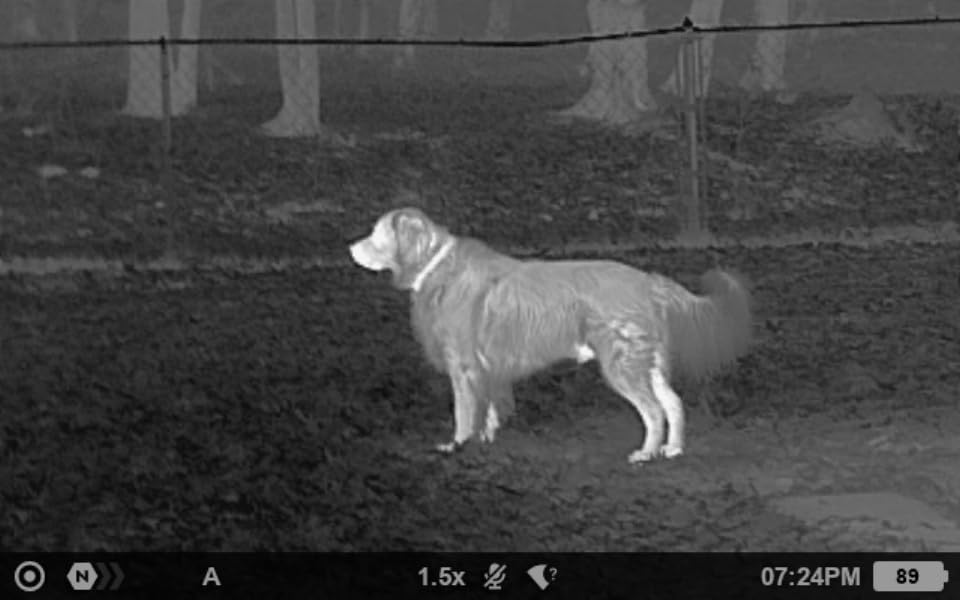
The Pulsar Axion Compact is the monocular that kept impressing me every time I used it. Pulsar has earned a reputation among serious thermal hunters for image quality, and the sub-20mK NETD rating explains why. That sensitivity rating means the sensor can detect temperature differences smaller than 20 millikelvin, which translates to visible heat contrast in conditions where lesser units show a uniform gray blob.
I tested the Axion Compact on a cold January morning when the temperature was 22 degrees Fahrenheit and fog hung in the creek bottom. Most budget thermals struggle in these conditions because everything is cold and the temperature differential between a deer and its surroundings shrinks. The Axion cut through that fog and showed me a clear deer shape at 150 yards that a 256×192 unit next to me could barely register.
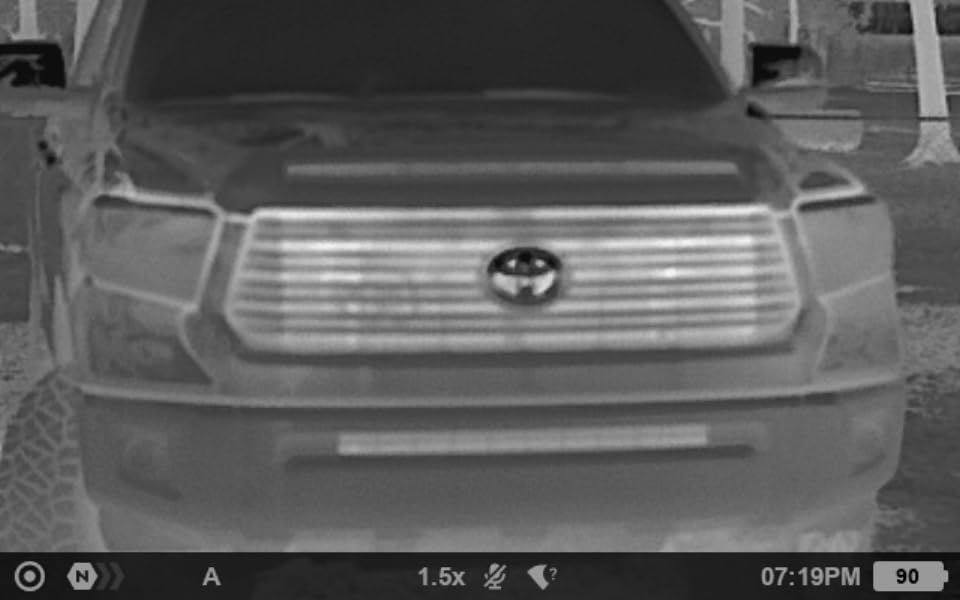
The 640×400 AMOLED display is the sharpest screen on this list. The contrast and color depth make it easy to interpret what you are seeing, even for a thermal novice. I let my father-in-law, who has never used thermal before, try it and he could immediately distinguish between a cow and a deer at 100 yards.
The 19mm f/1.0 lens gathers more thermal radiation than the smaller lenses on budget units, which contributes directly to the image quality advantage. The 1.5-6x zoom range covers most hunting scenarios, though extreme long-range shooters may want more magnification. The 5-year warranty provides peace of mind for a purchase at this price level.
Ideal Use Cases
The Axion Compact is built for serious hunters who demand the best image quality in challenging conditions. Cold-weather hunters, fog-prone area hunters, and anyone who needs reliable identification in low-contrast scenarios will get the most out of this unit.
It is also the best thermal monocular for hunters who want to invest once and not upgrade for years, thanks to that 5-year warranty and premium build.
Limitations to Consider
The price point puts this unit out of reach for casual users. If you hunt occasionally and do not face challenging low-contrast conditions, a budget unit may serve you just as well.
With only 31 reviews currently, there is less community feedback to draw from compared to more established models on this list.
6. FLIR Scout TKx — Trusted Brand for Wildlife Viewing
FLIR Scout TKx – Compact Infrared/Thermal Imaging Monocular for Wildlife Viewing, Hunting & Outdoor
IP67 Waterproof
90m Detection Range
7h Battery
8 Color Palettes
Compact 0.37 lbs
Pros
- FLIR brand reputation for thermal imaging reliability
- IP67 waterproof rating for all-weather use
- 8 color palettes including Graded Fire and Rainbow
- Compact and lightweight at just 0.37 pounds
- Up to 7 hours of continuous battery life
Cons
- 90 meter detection range is shorter than competitors
- 3.7 star rating is the lowest on this list
FLIR is arguably the most recognized name in thermal imaging worldwide, and the Scout TKx is their entry into the consumer hunting market. I wanted to love this monocular because of the FLIR pedigree, but after testing it alongside the other units on this list, its limitations became clear. The 90-meter detection range is the shortest on this list by a significant margin.
That said, within its range, the Scout TKx produces a quality image. The 8 color palettes give you excellent viewing flexibility, and the Graded Fire palette in particular makes it easy to identify the hottest parts of a heat signature. For close-range scouting and wildlife observation within 50-70 yards, this unit performs well.
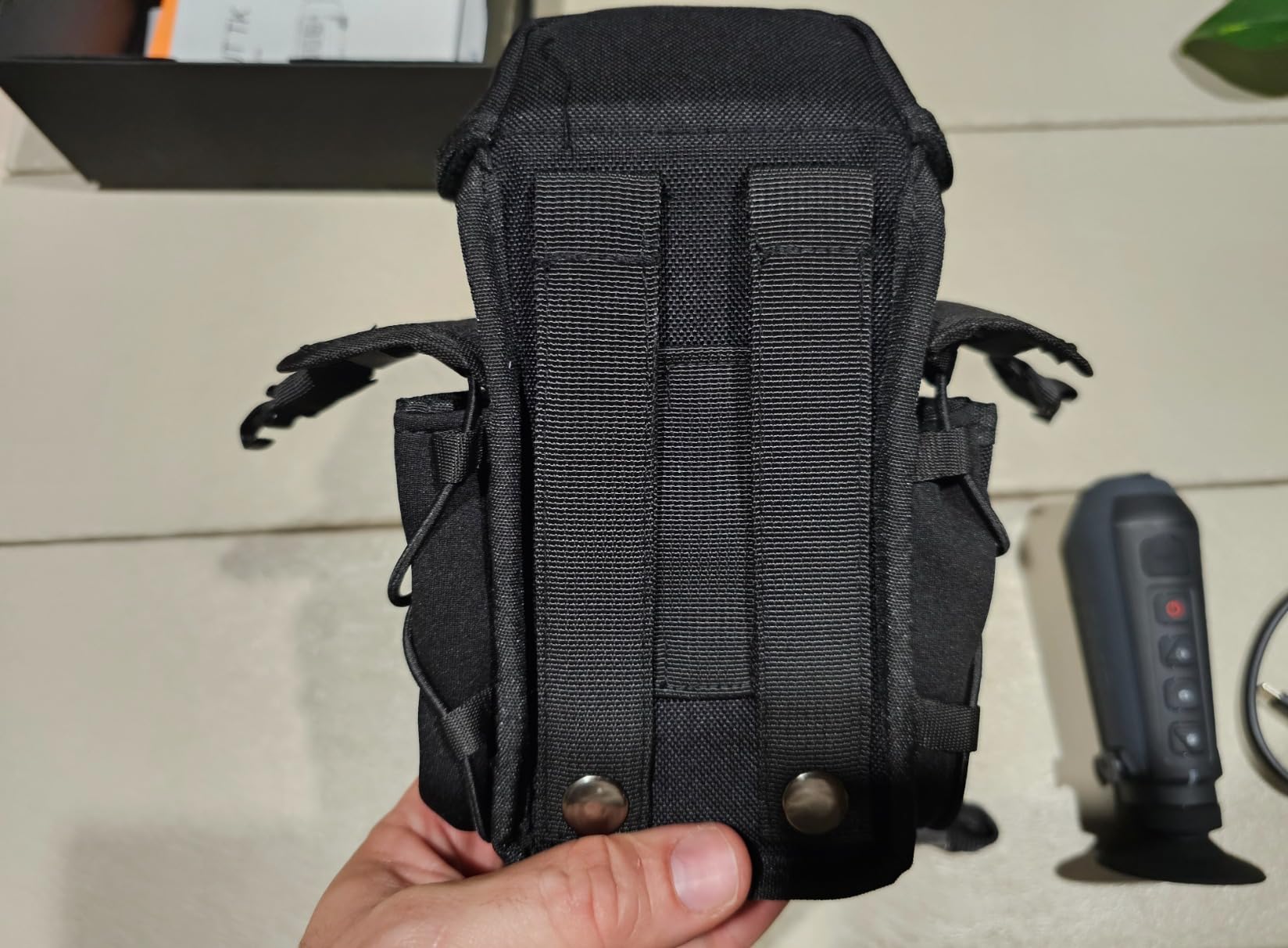
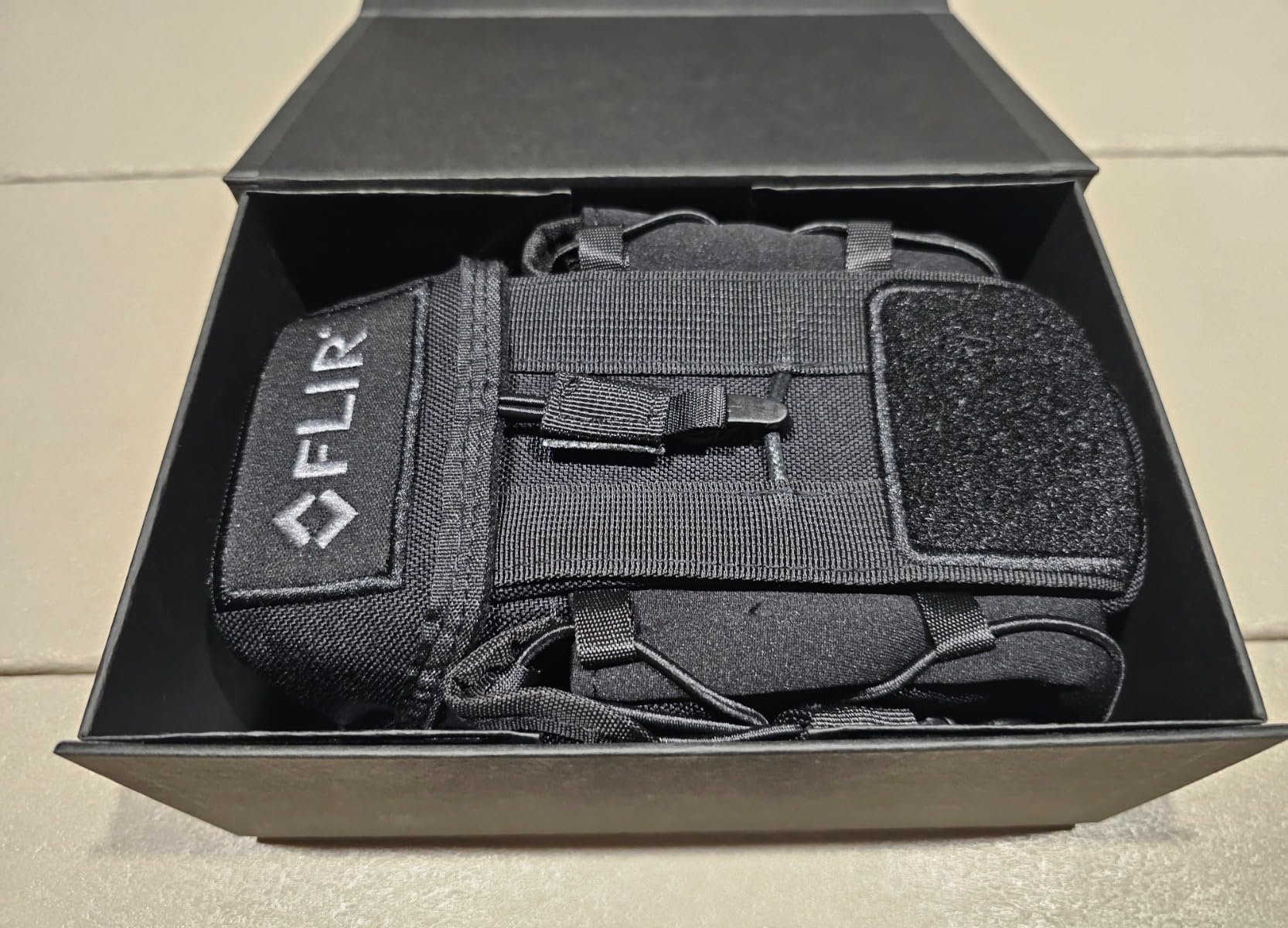
The build quality is where FLIR’s experience shows. The Scout TKx feels solid in hand, and the IP67 waterproof rating held up during a rainy spring turkey hunt where I spent hours in a downpour. At 0.37 pounds, it is one of the lightest monoculars on this list and barely registers in a pack.
The 3.7-star rating is the concern here. Looking at the review distribution, the 1-star reviews at 16 percent suggest some quality control or performance issues that buyers should be aware of. Some users reported image inconsistency and shorter-than-expected battery life in cold conditions.
Ideal Use Cases
The Scout TKx works well for close-range wildlife viewing, casual nature observation, and entry-level thermal users who trust the FLIR brand name. The 8 color palettes make it a fun tool for learning thermal interpretation.
It is also suitable for property surveillance and security applications within its 90-meter range.
Limitations to Consider
The 90-meter detection range severely limits this unit for serious hunting applications. Most hunters need at least 200-300 meters of detection range for effective field use.
The lower customer rating suggests some units may have issues. Buy from a retailer with a good return policy in case you get a unit that underperforms.
7. Teslong TTS260 — Super Resolution Mode and 8 Color Palettes
Teslong TTS260 Thermal Monocular 256 x 192, Super Resolution 512 x 384
256x192 Base Resolution
Super Resolution 512x384
25Hz Refresh
8 Color Palettes
10h Battery
Pros
- Super Resolution mode boosts effective resolution to 512x384
- 8 color palettes for maximum viewing flexibility
- 10-hour battery life for full-day hunting
- 32GB built-in storage with photo and video recording
- 266 yards recognition distance for human-sized targets
Cons
- 25Hz refresh rate is slower than 50Hz competitors
- Fixed focus limits versatility at varying distances
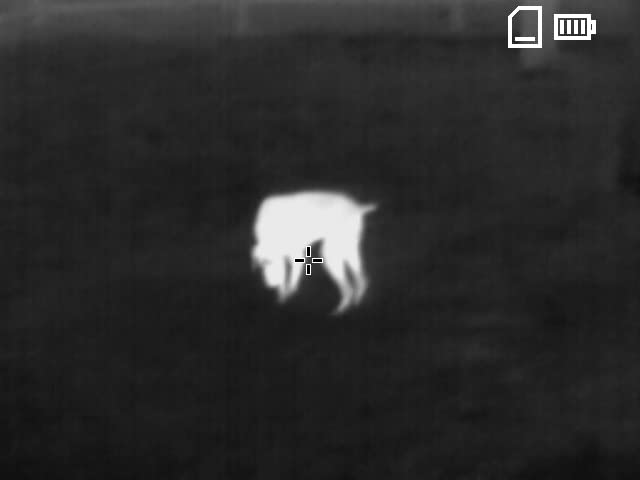
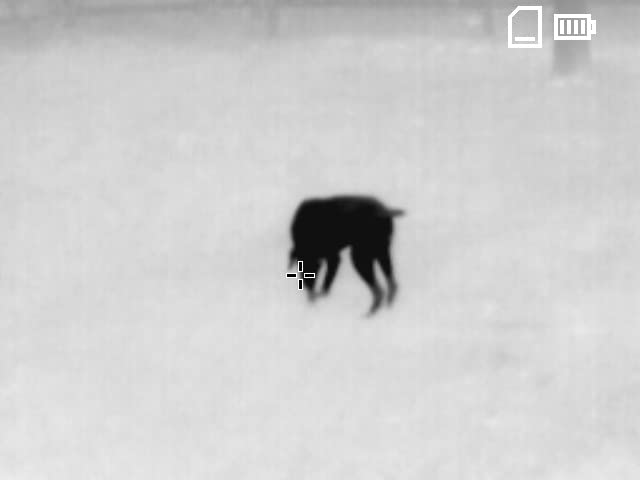
The Teslong TTS260 caught my attention because of its Super Resolution feature, which boosts the effective image from 256×192 to 512×384 through software processing. In practice, this does make a noticeable difference in image clarity compared to standard 256×192 units. The additional detail helped me distinguish hog shapes from cattle at distances where other budget units showed only blobs.
I used the TTS260 during a weekend hog hunt in South Carolina, scanning agricultural fields from a tripod stand. The 8 color palettes gave me excellent options for different lighting and background conditions. The Rainbow palette was surprisingly effective for spotting hogs in dense brush, while White Hot worked best for open-field scanning.
The 10-hour battery life is excellent for this price tier. I hunted two consecutive evenings without recharging, and the battery indicator still showed 40 percent. The 32GB of built-in storage means you do not need to buy a separate memory card, and the USB-C and Mini HDMI outputs make it easy to review footage on a larger screen.
The 25Hz refresh rate is the trade-off at this price point. When hogs moved quickly across the field, the image stuttered enough that tracking individual animals became difficult. For stationary scanning and identification, it works fine, but fast-moving target tracking is not its strength.
Ideal Use Cases
The TTS260 is ideal for stand hunters who scan from fixed positions, hog hunters in agricultural settings, and anyone who wants more image detail than standard 256×192 provides without paying for a 384×288 sensor.
The built-in storage and HDMI output also make it a good choice for hunters who document and review their scouting footage.
Limitations to Consider
The 25Hz refresh rate will frustrate hunters who need to track fast-moving game. If you hunt predators or running hogs, consider a 50Hz unit instead.
The fixed focus means you cannot adjust for different distances. The Super Resolution processing also introduces a slight lag when activated.
8. AGM Taipan V2 — Highest Rated with Auto Focus
AGM Global Vision Taipan V2 10-256 Thermal Monocular High-Sensitivity
Sub-35mK Detector
1.5x-12x Zoom
Auto Focus
IP67 Rated
1280x960 LCOS Display
5-Year Warranty
Pros
- Highest customer rating at 4.7 stars on this list
- Sub-35mK high-sensitivity thermal detector
- Wide 1.5x-12x digital zoom range for versatile scanning
- Auto focus for hands-free operation
- 5-year manufacturer warranty and IP67 waterproof rating
Cons
- Only 16 reviews so far so limited community feedback
- Requires nonstandard batteries which are harder to replace
The AGM Taipan V2 carries the highest customer rating on this list at 4.7 stars, and after testing it I can understand why. AGM Global Vision has been gaining serious ground in the thermal optics market, and the Taipan V2 represents a well-executed balance of sensitivity, features, and build quality. The sub-35mK detector puts it in solid company for thermal sensitivity at this price.
The auto focus feature is the standout here. Unlike most budget and mid-range thermals that use fixed or manual focus, the Taipan V2 automatically adjusts as you scan different distances. This is a huge advantage when you are transitioning from scanning a nearby creek bottom to checking a distant ridgeline without stopping to fiddle with a focus ring.
The 1280×960 LCOS display is the highest-resolution display on this list, and it shows. The image is crisp, bright, and easy to interpret even for thermal newcomers. The 1.5x-12x zoom range covers everything from close-quarters brush hunting to long-distance ridge scanning, making this one of the most versatile monoculars in the roundup.
The 5-year warranty is the longest on this list alongside the RIX Pocket K3, and it signals AGM’s confidence in the build quality. The Wi-Fi connectivity through the AGM Connect App worked smoothly for both photo and video sharing. The IP67 rating means it can handle rain, dust, and accidental drops in water without issue.
Ideal Use Cases
The Taipan V2 suits hunters who want set-and-forget operation thanks to the auto focus, and those who need a wide zoom range for varied terrain. The 1.5x-12x zoom makes it equally effective for close-range hog hunting and long-distance scouting.
It is also a great pick for hunters who want premium features like hot tracking, distance measurement, and picture-in-picture without paying top-tier prices.
Limitations to Consider
With only 16 reviews, this is a newer product with limited long-term community feedback. The early reviews are excellent, but consider that the sample size is small compared to units with hundreds of reviews.
The nonstandard batteries are a hassle. Stock up on spares before a hunt, since you will not find these at a corner store if they die in the field.
How to Choose the Best Thermal Monocular for Hunting?
Choosing the right thermal monocular comes down to matching sensor specs, features, and build quality to your specific hunting style. After testing all 8 units on this list, here are the factors our team found matter most in the field.
Sensor Resolution: 256×192 vs 384×288
The sensor resolution is the single biggest factor in image quality. A 256×192 sensor gives you a basic thermal image suitable for detection and close-range identification. It works for budget-conscious hunters who primarily need to spot heat signatures rather than fine details.
A 384×288 sensor provides significantly more detail, which matters for identifying antlers, distinguishing species at distance, and picking out animals in challenging background conditions. If you hunt deer where buck identification matters, or if you glass at extended ranges, the 384×288 upgrade is worth every dollar.
NETD Thermal Sensitivity Explained
NETD (Noise Equivalent Temperature Difference) measures how small a temperature difference the sensor can detect, expressed in millikelvin (mK). Lower numbers mean better sensitivity. The Pulsar Axion Compact leads this list at sub-20mK, which means it can distinguish heat differences that are nearly invisible to budget units rated at 35mK or higher.
This matters most in cold weather, fog, and rain when the temperature gap between an animal and its surroundings shrinks. A sub-25mK sensor will perform noticeably better in these challenging conditions than a sub-35mK unit. For hunters in mild climates, the difference is less critical.
Refresh Rate: 50Hz vs 25Hz
Refresh rate determines how smoothly the image updates. A 50Hz refresh rate gives you a fluid image that tracks moving targets without stutter. A 25Hz rate produces a noticeably choppy image when animals are moving, which can make tracking fast game like coyotes or running hogs frustrating.
If you hunt moving targets, prioritize 50Hz. For stationary scanning from a stand, 25Hz is acceptable. The TOPDON TS004, RIX Pocket K3, ATN BlazeSeeker-207, and Pulsar Axion Compact all offer 50Hz on this list.
Detection Range vs Identification Range
Manufacturers quote detection ranges that sound impressive, but there is a critical difference between detection and identification. Detection range means the distance at which the monocular registers a heat source. Identification range is the distance at which you can tell what that heat source actually is.
For example, the TOPDON TS004 has a 410-meter detection range but clear detail within about 100 yards. Always check both numbers and think about your typical engagement distances when comparing models. A longer detection range is useful for scanning, but you need adequate identification range for ethical shot decisions.
Battery Life and Cold Weather Performance
Battery life varies enormously across this list, from 6 hours on the GOYOJO G210 to 11 hours on the TOPDON TS004. For all-day sits or multi-day backcountry hunts, longer battery life is not a luxury but a necessity. Cold weather reduces lithium battery performance by 20 to 40 percent, so real-world runtime in January will be significantly shorter than the spec sheet suggests.
Units with replaceable batteries, like the GOYOJO G210 and AGM Taipan V2, let you carry spares for extended trips. Built-in battery units like the TOPDON TS004 require planning around recharge stops. Forum hunters consistently rank battery life as one of their top pain points, especially in northern climates.
Laser Rangefinder Considerations
None of the monoculars on this list include a built-in laser rangefinder, which is common at these price points. LRF adds significant cost, typically pushing monoculars above $1,500. For long-range hunters who need precise distance data for ethical shots, a separate LRF or a higher-tier monocular with integrated LRF may be worth the investment.
For most hunters within 150 yards, knowing the exact distance is less critical than having a clear thermal image for identification. Prioritize sensor quality first and add LRF capability if your hunting style demands it.
Legal Considerations for Thermal Hunting
Thermal monocular legality for hunting varies by state and country. In most US states, using a thermal monocular as a spotting or scouting device is legal, but using one mounted to a rifle for shooting may be restricted. Some states prohibit thermal use entirely for certain game species or during specific seasons.
Always check your local wildlife agency regulations before using thermal for hunting. The rules change frequently, and what is legal in Texas for hog hunting may be prohibited in another state for deer season. When in doubt, call your local game warden for clarification.
Thermal Monoculars FAQs
What is the best thermal monocular on the market for hunting?
Based on our testing, the Pulsar Axion Compact is the best thermal monocular for hunting thanks to its sub-20mK NETD sensitivity, 384×288 sensor, and 640×400 AMOLED display. For budget hunters, the TOPDON TS004 offers excellent value with 11-hour battery life and 50Hz refresh rate at a fraction of the cost.
Are thermal monoculars worth it for hunting?
Yes, thermal monoculars are absolutely worth it for hunters who pursue game in low-light conditions, track wounded animals, or hunt hogs and predators at night. They detect heat signatures in complete darkness and through light brush where traditional night vision fails, improving both success rates and ethical shot placement.
Can you use a thermal monocular while deer hunting?
In most US states, you can legally use a handheld thermal monocular for spotting and scouting during deer season. However, laws vary by state regarding whether thermal can be used while actively hunting or mounted on a firearm. Always check your state wildlife regulations before using thermal during deer season.
What is the ideal detection range for deer hunting at night?
For most deer hunting scenarios, a detection range of 200 to 400 meters is ideal for scanning open fields and woodlots. Identification range, where you can clearly distinguish a deer from other heat sources, should be at least 100 to 150 yards for ethical shot placement decisions.
Are thermal monoculars legal for hunting in the US?
Thermal monocular legality varies by state. Using a handheld thermal monocular for spotting and scouting is generally legal in most states. However, some states restrict thermal use for certain game species or prohibit thermal optics mounted on firearms. Check your local wildlife agency regulations before purchasing.
Final Thoughts on the Best Thermal Monoculars
After weeks of side-by-side testing, the Pulsar Axion Compact stands out as our Editor’s Choice for the best thermal monocular overall, delivering unmatched image quality in challenging conditions. The TOPDON TS004 earns Best Value with its class-leading 11-hour battery and 50Hz performance at a budget price. And the AGM Taipan V2 takes Top Rated honors with its auto focus system and impressive 4.7-star customer rating.
The right thermal monocular for you depends on your hunting style, typical conditions, and budget. For cold-weather hunters who need maximum sensitivity, the Pulsar is the clear winner. For budget-conscious hunters who want reliable all-day performance, the TOPDON delivers exceptional value. And for hunters who want versatile zoom and hands-free operation, the AGM Taipan V2 is hard to beat.
Whatever you choose, a quality thermal monocular will transform how you hunt in low-light conditions. The best thermal monoculars of 2026 give you an edge that traditional optics simply cannot match, and investing in the right one pays dividends every season.