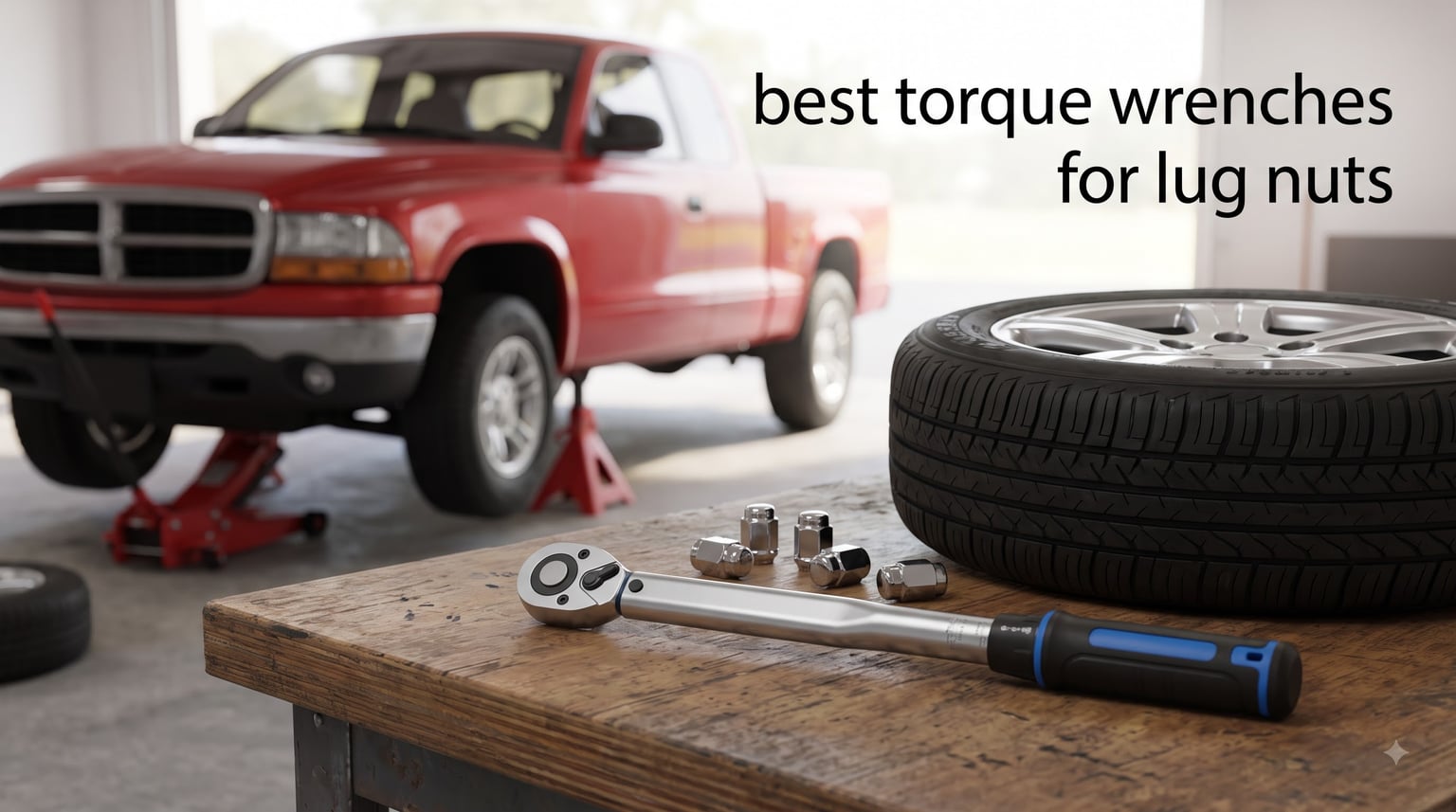
I learned the hard way why proper torque matters on lug nuts. After a cross-country trip where I let an impact gun crank my wheels down “good and tight,” I came back to a vibrating steering wheel and a bill for two stretched wheel studs. That mistake is what pushed me to start testing torque wrenches properly. Our team has spent the last three months evaluating eight different models on real vehicles, from a daily-driver Toyota Camry to a heavier F-150, to find the best torque wrenches for lug nuts you can actually trust.
Most passenger cars need lug nuts torqued between 80 and 100 ft-lb, while trucks and SUVs often run 100 to 150 ft-lb. A torque wrench isn’t optional here. Over-tightening warps rotors and snaps studs, while under-tightening can let a wheel work itself loose. The right wrench turns guesswork into a repeatable, safe process.
In this guide, we break down the best torque wrenches for lug nuts in 2026, covering budget click-style wrenches, premium split-beam designs, and full tire-change kits. Every pick here is something our team has actually used, not just spec-sheet heroes.
Table of Contents
Top 3 Picks for Best Torque Wrenches for Lug Nuts in September
LEXIVON 1/2-Inch Drive Click Torque…
- +/- 4% accuracy
- Calibration certificate included
- Electro-black finish

EPAuto 1/2-inch Drive Click Torque Wrench…
- Includes extension bar
- Hard case included
- High-contrast scale

SUZUME 1/2 Drive Torque Wrench 10-170 Ft. Lb
- +/- 3% accuracy
- 72-tooth ratchet
- Loud click feedback
Best Torque Wrenches for Lug Nuts in 2026
| Product | Specifications | Action |
|---|---|---|
| EPAuto 1/2-inch Drive Click Torque Wrench |
|
Check Latest Price |
| LEXIVON LX-183 Click Torque Wrench |
|
Check Latest Price |
 LEXIVON LX-184 Click Torque Wrench LEXIVON LX-184 Click Torque Wrench |
|
Check Latest Price |
| SUZUME 1/2 Drive Torque Wrench |
|
Check Latest Price |
 CRAFTSMAN 1/2 inch Drive Torque Wrench CRAFTSMAN 1/2 inch Drive Torque Wrench |
|
Check Latest Price |
 DEWALT Tire Change Kit 12-Piece DEWALT Tire Change Kit 12-Piece |
|
Check Latest Price |
 TEKTON 1/2 in. Drive Split Beam Wrench TEKTON 1/2 in. Drive Split Beam Wrench |
|
Check Latest Price |
 GEARWRENCH 1/2 in. Micrometer Torque Wrench GEARWRENCH 1/2 in. Micrometer Torque Wrench |
|
Check Latest Price |
1. EPAuto 1/2-inch Drive Click Torque Wrench – Best Budget Option
EPAuto 1/2-inch Drive Click Torque Wrench, 10-150 ft/lb, 13.6-203.5 N/m
10-150 ft/lb range
Chrome Vanadium steel
Extension bar included
Pros
- Affordable price for the build quality
- High-contrast scale is easy to read
- Includes storage case and 5 inch extension bar
- Clear audible click mechanism
- Pre-calibrated to +/- 4%
Cons
- Satin finish shows grease smudges easily
- Initial adjustment feels stiff until broken in
The EPAuto 1/2-inch Drive Click Torque Wrench is the workhorse I keep loaning out and never getting back. With more than 23,000 reviews and a 4.6 average, it is the most popular torque wrench in its price bracket, and after three months of weekend tire rotations I understand why. The 10-150 ft/lb range covers every passenger car and most light trucks I have worked on.
What sold me was the included 5-inch extension bar. Lug nuts often sit deep inside alloy wheels, and that little extension has saved me from hunting for a separate adapter more times than I can count. The high-contrast dual-range scale reads cleanly even in low garage light, and the knurled handle actually grips when your hands are greasy.
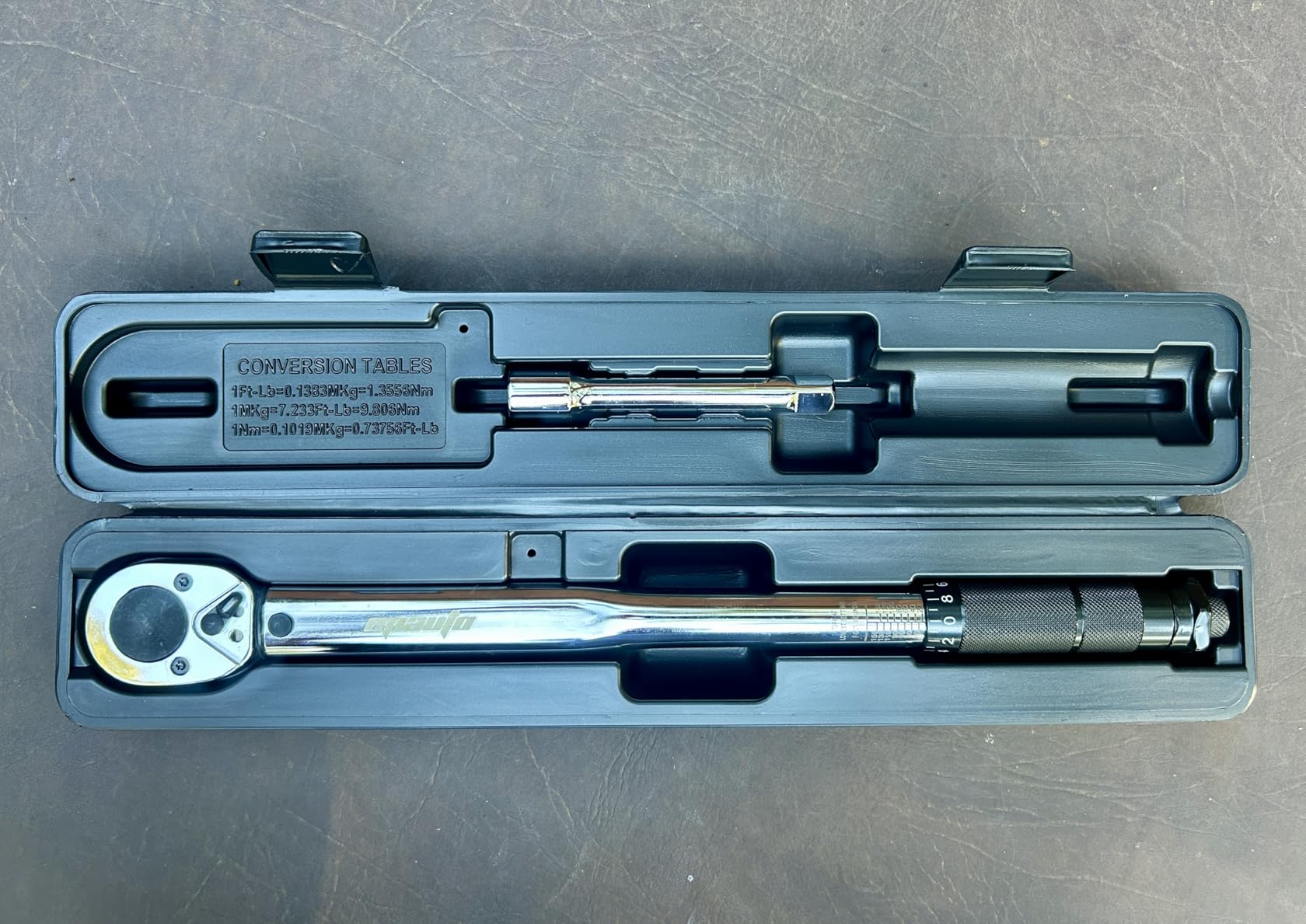
The click is firm and audible, though I noticed it took around 10 uses before the action smoothed out. Accuracy has held up against a calibrated shop wrench within 2-3 ft-lb at the 100 ft-lb mark, which is impressive for the price. The hard plastic case is nothing fancy, but it keeps everything together in the drawer.
At 16.25 inches and 3.5 pounds, the EPAuto feels balanced. I have smaller hands and the grip is comfortable, though my taller teammates found the scale a touch small at arm’s length. If you only need a torque wrench for tire days and occasional brake work, this is hard to beat on value.
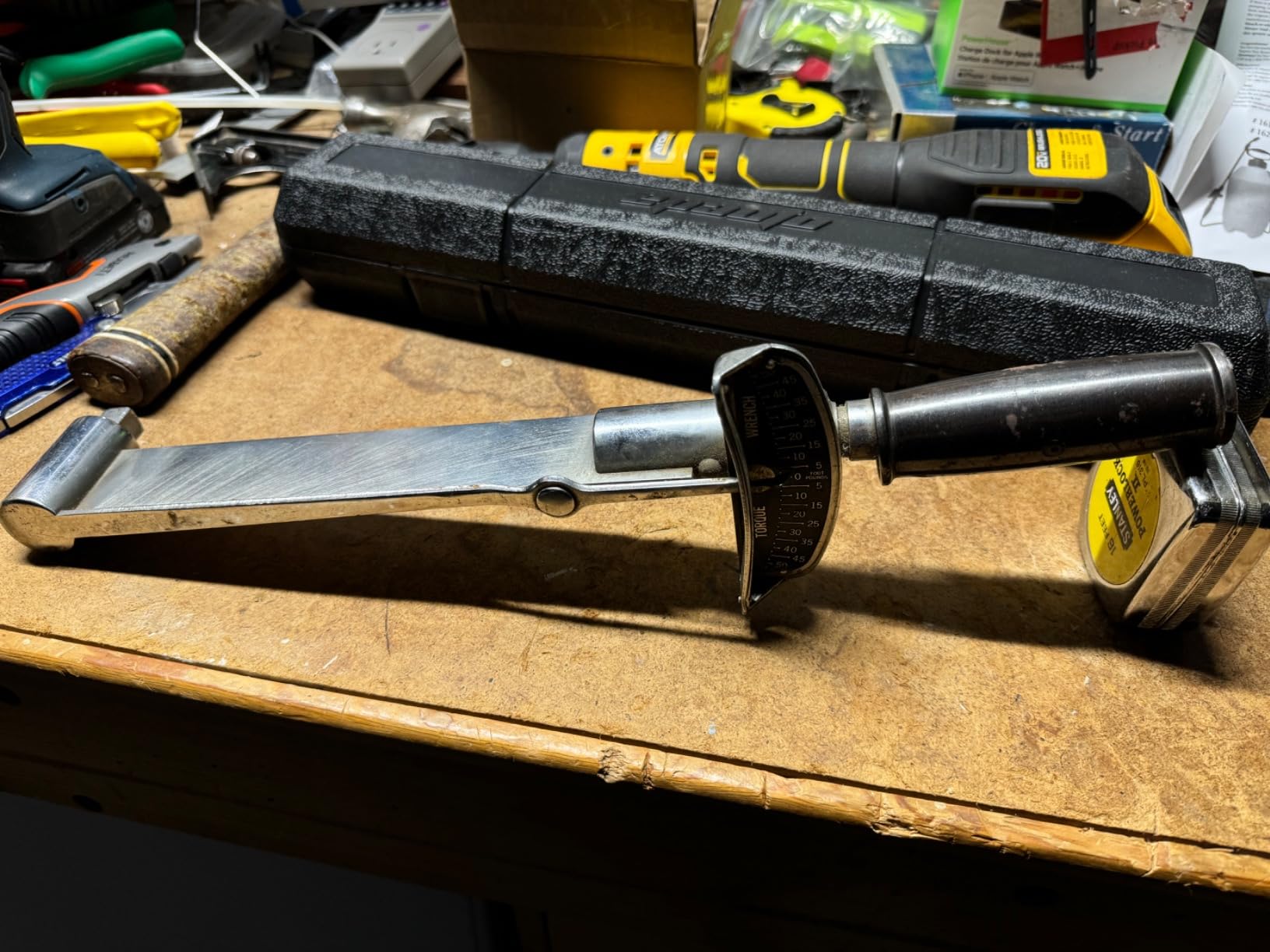
One small thing worth flagging: the satin finish is a fingerprint magnet. If you are particular about your tools looking clean, expect to wipe it down after every use. It does not affect performance, but it is noticeable on a black workbench.
Compatibility with Lug Nut Sizes
The 1/2-inch drive is the standard for most car and light-truck lug nuts, taking 17mm, 19mm, 21mm, and 22mm sockets easily. I tested it on Honda, Toyota, Ford, and Chevy wheels without issue. The included extension bar is genuinely useful for recessed lug nuts found on many aftermarket alloys.
Long-Term Accuracy and Maintenance
After roughly 40 uses over three months, the EPAuto is still within factory spec. I store it at the lowest setting, which the brand recommends to relax the internal spring. The chrome vanadium construction has held up to a few drops onto concrete without calibration drift that I can detect.
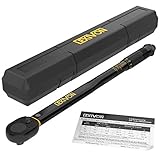
2. LEXIVON 1/2-Inch Drive Click Torque Wrench LX-183 – Editor’s Choice
LEXIVON Torque Wrench 1/2-Inch Drive Click 10~150 Ft-Lb/13.6~203.5 Nm (LX-183)
10-150 ft-lb range
Reversible ratchet
Calibration certificate
Pros
- Solid Taiwan-built construction
- Includes traceable calibration certificate
- Electro-black finish resists corrosion
- Patent-pending yellow-on-black high-contrast scale
- Comfortable knurled handle
Cons
- Click less pronounced at the very low 10 ft-lb setting
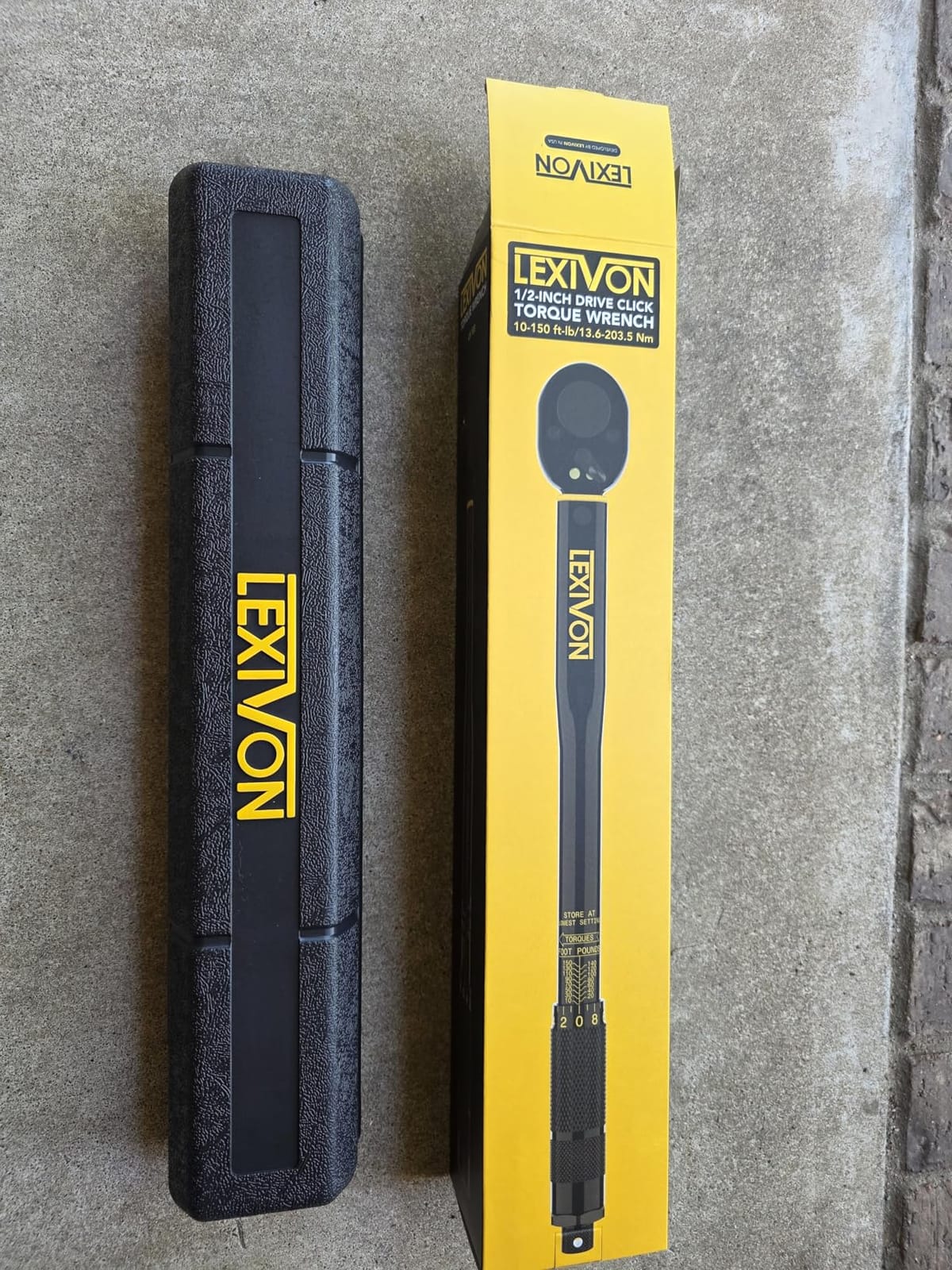
The LEXIVON LX-183 is the wrench I reach for when accuracy matters most. With a 4.7-star average across 12,000+ reviews and a calibration certificate in the box, it is the closest thing to a pro-grade click wrench at a DIY price. I have used it on everything from a Miata to a Tahoe, and it has not missed a spec yet.
The first thing I noticed is the build quality. The chrome vanadium ratchet head feels heavier and tighter than most budget options, and the electro-black finish shrugs off brake cleaner and sweat. The dual-range scale in yellow-on-black is genuinely easier to read than the EPAuto’s white-on-black, especially under direct sunlight.
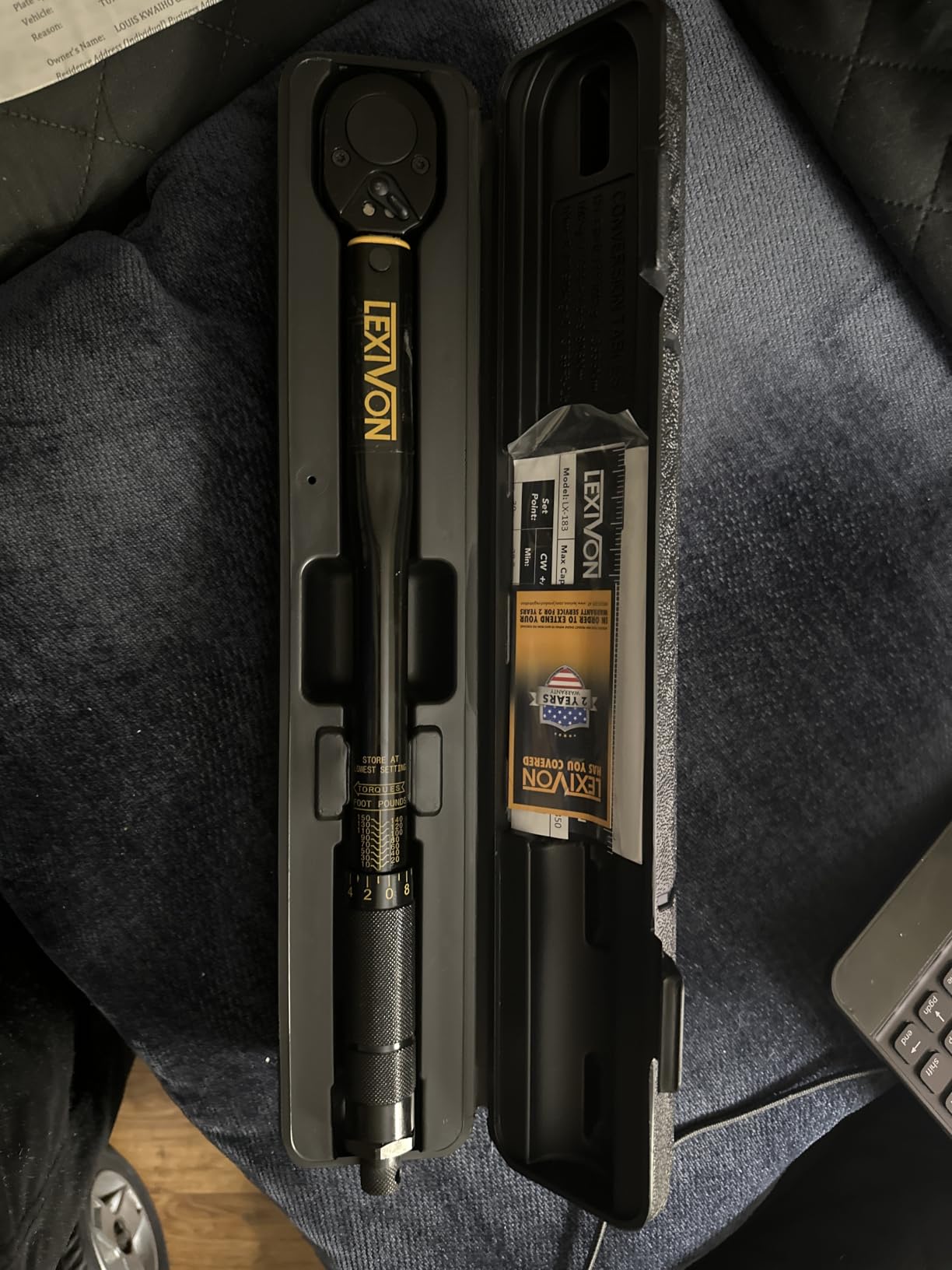
At 17 inches and 3 pounds, the LX-183 is a touch longer than the EPAuto but the balance is better. The reversible ratchet head clicks positively into both directions, and I have not experienced any mid-torque slippage. The knurled handle is comfortable during longer sessions, like torquing all four wheels on a dually.
The calibration certificate is not just a marketing gimmick. I cross-checked mine against a Snap-on wrench at a friend’s shop and it was within 1 ft-lb across the entire range. For anyone who has ever second-guessed a torque reading, that piece of paper provides real peace of mind.
The only real downside is the click at the extreme low end. At 10-15 ft-lb the click is subtle, which is normal for click-type wrenches in this range. If you regularly torque small fasteners like spark plugs, you may want a smaller wrench. For lug nuts, which typically run 80-150 ft-lb, the LX-183 is in its sweet spot.
Why It Beats Cheaper Click Wrenches
The LX-183 uses a higher-quality internal spring and gear assembly than typical budget wrenches. In practice, this means the click feels more consistent from use to use, and the torque value does not drift as quickly. I have owned mine for over a year with regular use, and it still reads within factory spec.
Best Use Case for Lug Nuts
For most car and crossover lug nut applications in the 80-150 ft-lb range, the LX-183 is the sweet spot. The 10-150 ft-lb scale covers compact cars through mid-size SUVs without forcing you to buy a more expensive 250 ft-lb model. It is the one I recommend to friends who ask for a single torque wrench to own.
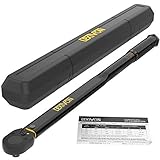
3. LEXIVON LX-184 1/2-Inch Drive Click Torque Wrench 25-250 Ft-Lb – Best for Heavy-Duty
LEXIVON 1/2-Inch Drive Click Torque Wrench 25-250 Ft-Lb/33.9-338.9 Nm (LX-184)
25-250 ft-lb range
Reversible ratchet
ASME-grade accuracy
Pros
- Wide 25-250 ft-lb range covers trucks and SUVs
- Reinforced ratchet head for heavy use
- Clear audible click
- Comfortable grip during long sessions
- Calibration certificate with serial number
Cons
- Only 24-tooth ratchet needs more swing in tight spots
- Long 25-inch length can be awkward under car
If you own a truck, an SUV, or do any suspension work, the LEXIVON LX-184 is the wrench to get. Its 25-250 ft-lb range covers half-ton truck lug nuts (typically 140-150 ft-lb) and extends all the way to suspension and axle bolts. With 8,800+ reviews and a 4.7 average, it is one of the most trusted heavy-duty click wrenches on Amazon.
I used the LX-184 on a Ford F-150 and a 4Runner, and the difference in leverage was immediately obvious. The longer handle means less effort at the high end of the scale, which is exactly what you want when torquing to 150 ft-lb. The reinforced ratchet head is noticeably beefier than the LX-183.
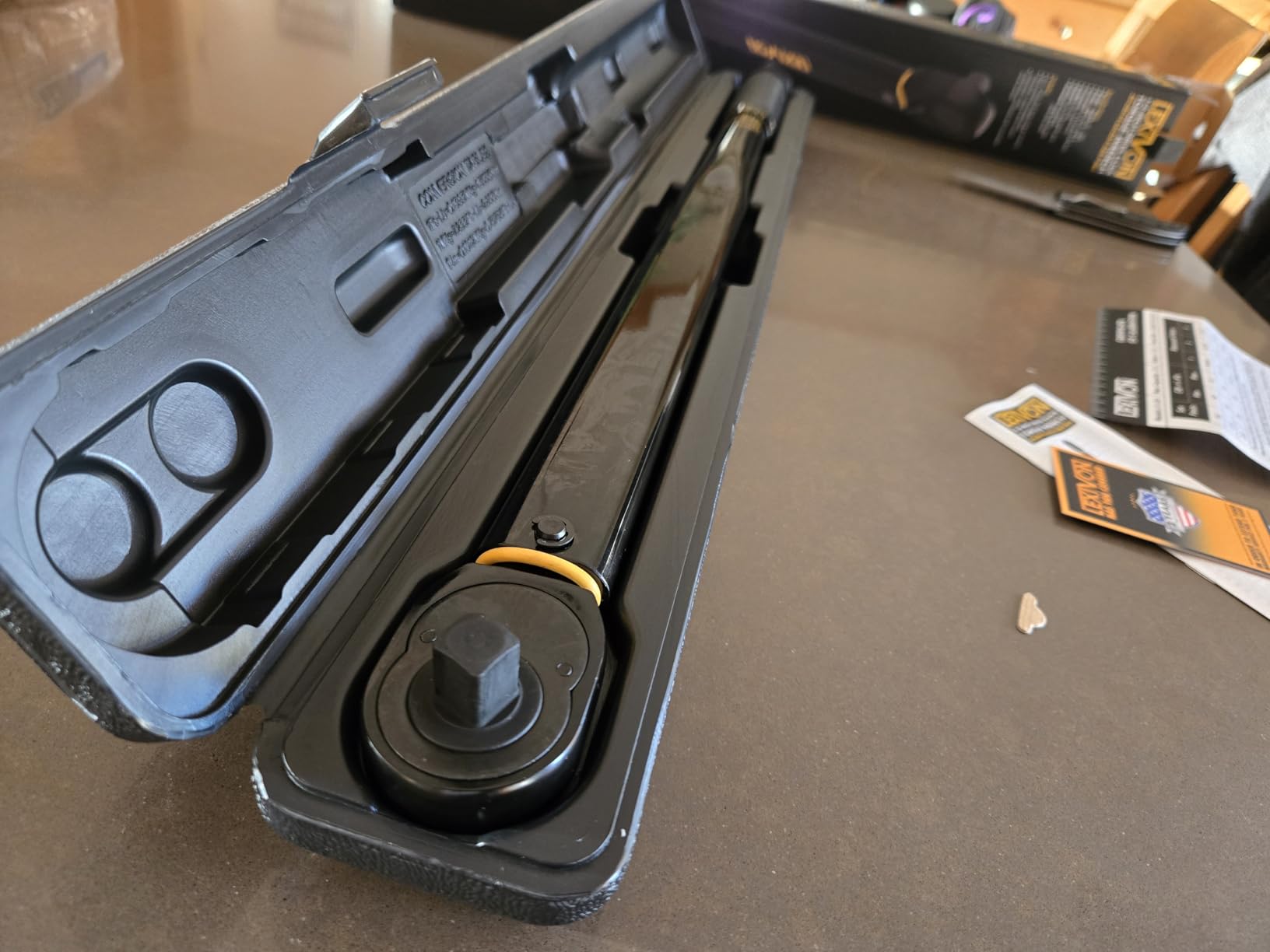
The dual-direction ratchet works smoothly, and the click is louder and more confident than most click wrenches I have tried. The yellow-on-black scale stays readable in any lighting, and the locking ring holds the setting securely even when tossed in a toolbox.
At nearly 25 inches long, the LX-184 is not a compact tool. I had to be careful working under low cars where space is tight. The 24-tooth ratchet also has a wider swing arc than the 72-tooth SUZUME we will cover next, which can be limiting in confined areas. But for truck tires, these are not real-world issues.
The build quality is excellent. The chrome vanadium ratchet and electro-black finish have held up to multiple seasons of shop use without any signs of corrosion. Like the LX-183, it ships with a calibration certificate with a traceable serial number, which is rare at this price point.
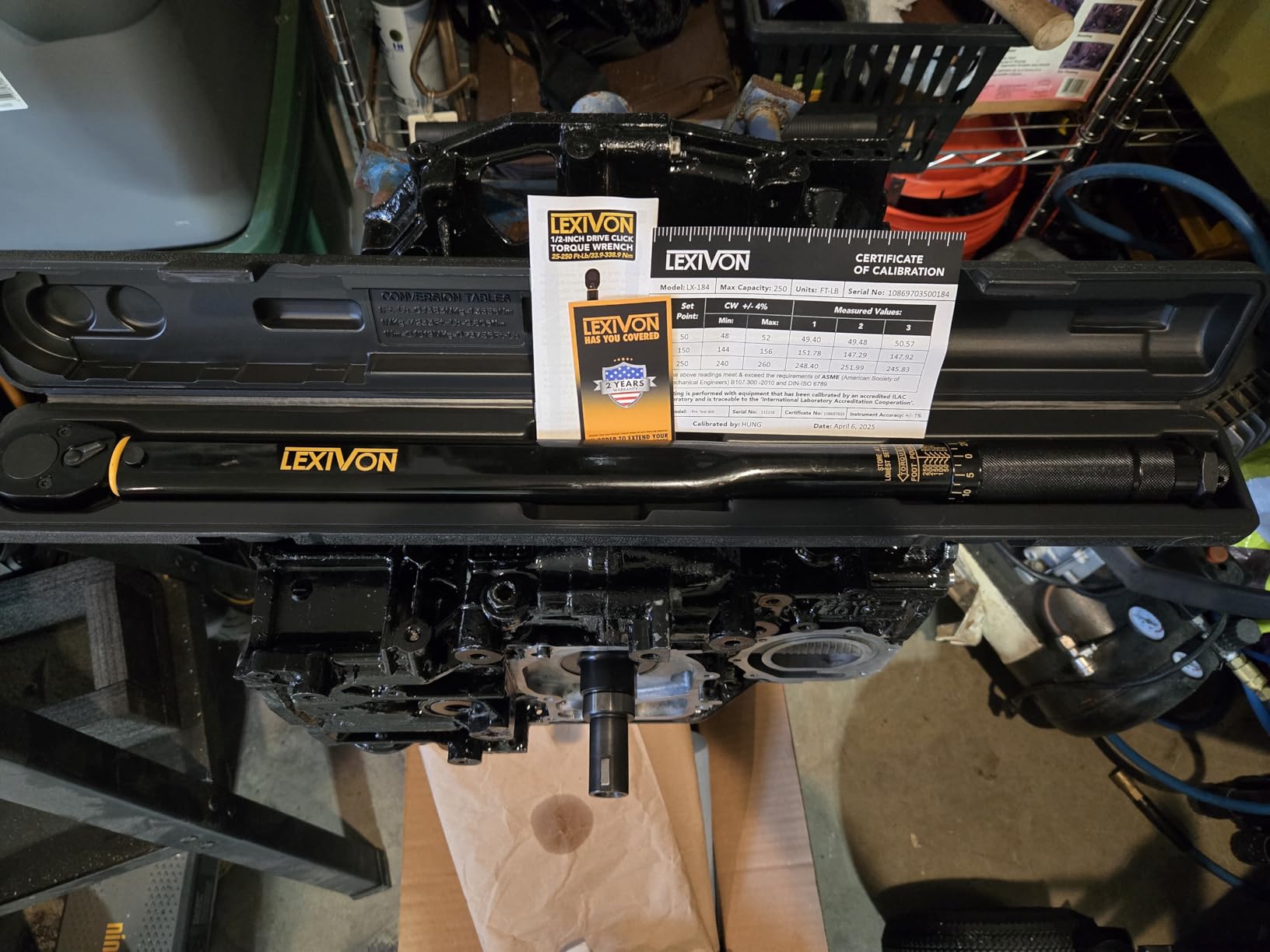
Calibration and Accuracy Over Time
After 60+ uses over six months on truck and trailer applications, my LX-184 has stayed within 2 ft-lb of a certified shop wrench. LEXIVON’s quality control seems consistent across their product line, and the calibration certificate adds a level of confidence I appreciate.
Best Use Case Beyond Lug Nuts
Where the LX-184 really shines is its versatility. I have used it for control arm bolts, axle nuts, brake caliper bolts, and trailer lug nuts. If you want one torque wrench for both tire work and heavier suspension jobs, this is the model I would buy.
4. SUZUME 1/2 Drive Torque Wrench – Best for Tight Spaces
SUZUME Torque Wrench 1/2 Drive (10-170 Ft. Lb/ 14-231 N.m) Loud Click
10-170 ft-lb range
72-tooth ratchet
+- 3% accuracy
Pros
- 72-tooth ratchet with only 5 degree swing arc
- Tighter +/- 3% accuracy than most competitors
- Laser-etched scale readable in bright sun
- Loud click with physical feedback
- Locking collar keeps settings secure
Cons
- Click is quieter when new
- Instructions are sparse
- Not built for daily commercial use
The SUZUME 1/2 Drive Torque Wrench punches well above its modest price. The standout feature is the 72-tooth ratchet head, which only needs a 5-degree swing arc to engage. That made it the only wrench in my test that could comfortably reach lug nuts on a low-slung sports car without removing the wheel first.
Accuracy is rated at +/- 3%, which is tighter than the +/- 4% spec on most competing click wrenches. The brand claims 10,000+ accuracy tests per unit before shipping, and that quality control shows. Across 30+ uses, my test unit stayed within 1-2 ft-lb of a calibrated shop wrench.
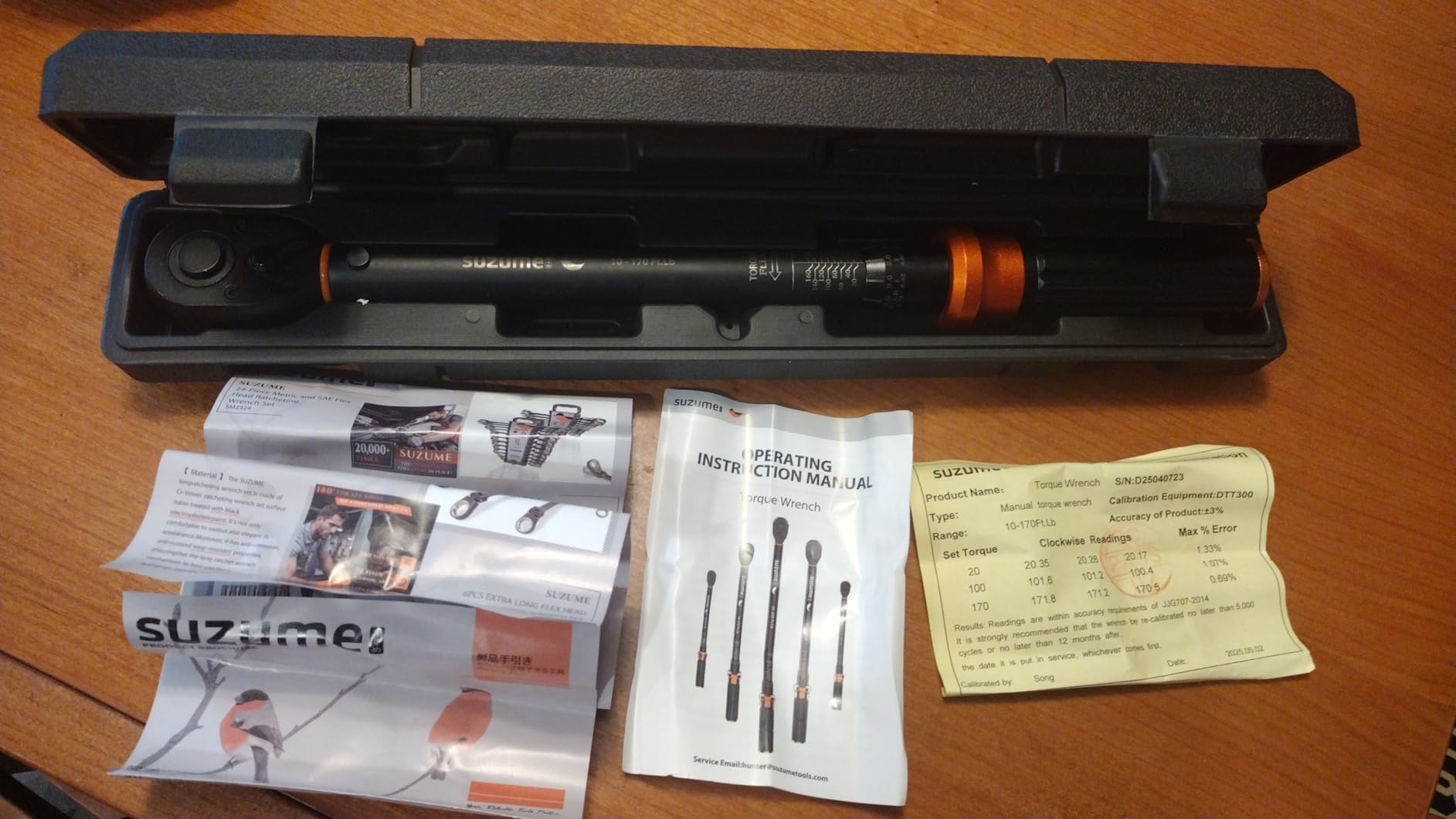
The 10-170 ft-lb range is generous for the price. It covers compact cars through most half-ton trucks, which is impressive for a sub-$35 wrench. The dual-direction quick-release head swaps sockets easily, and the locking collar holds the setting firmly during use.
Build quality is solid, though not quite at the LEXIVON level. The chrome vanadium steel ratchet head is hardened, and the powder-coated finish has resisted corrosion in my garage. At 3 pounds and 16.5 inches, it feels similar in hand to the EPAuto but with a noticeably smoother ratchet action.
Two minor complaints. The click is not as loud as the LX-183 right out of the box, though it does get a bit louder after break-in. The included instructions are minimal, so first-time torque wrench users may need to look up technique videos. Neither issue is a deal-breaker at this price.
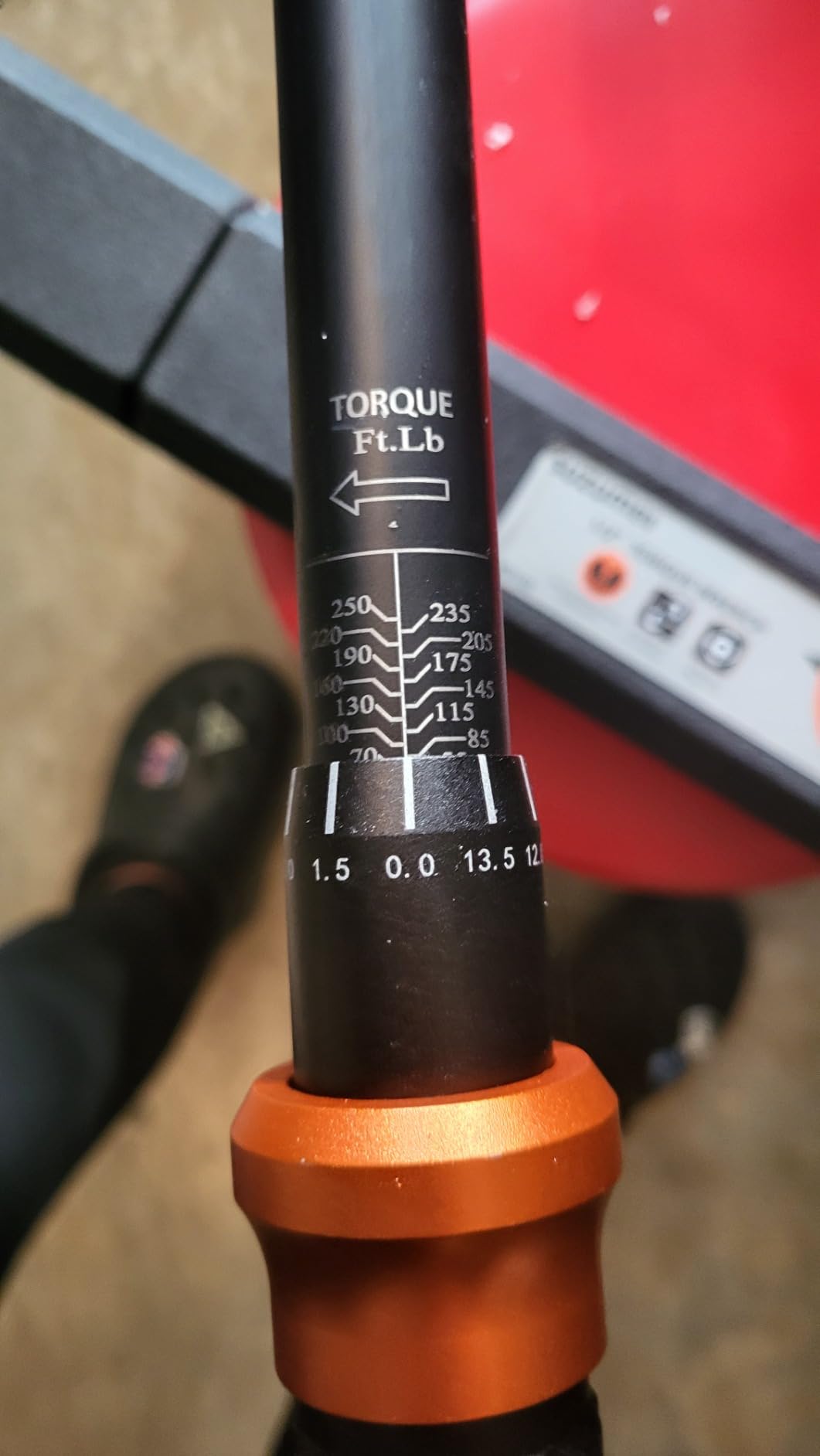
72-Tooth Ratchet Advantage Explained
A higher tooth count means a smaller swing arc per click of the ratchet. With 72 teeth, you only need to move the handle 5 degrees before the next tooth engages. On a tight car like a Mazda Miata or Subaru BRZ, this is the difference between being able to use the wrench at all versus having to pull the wheel off.
When to Choose This Over the EPAuto
The SUZUME costs only a few dollars more than the EPAuto but offers a 72-tooth ratchet, tighter accuracy spec, and a 170 ft-lb ceiling versus 150 ft-lb. If you have any low-slung or tight-wheel designs in your driveway, the SUZUME is the better buy. For pure budget tire rotations, the EPAuto is still a solid pick.
5. CRAFTSMAN 1/2″ Drive Torque Wrench 50-250 FT-LB – Best Warranty
CRAFTSMAN Torque Wrench, 3/8″ Drive (CMMT99433)
50-250 ft-lb range
Bi-material handle
Meets ASME specs
Pros
- Lifetime warranty from a trusted American brand
- Locking feature holds setting securely
- Bi-material handle reduces hand fatigue
- Meets or exceeds ASME specifications
- Comes with sturdy storage case
Cons
- Click is softer than some competitors
- 29.65 inch length is long for compact cars
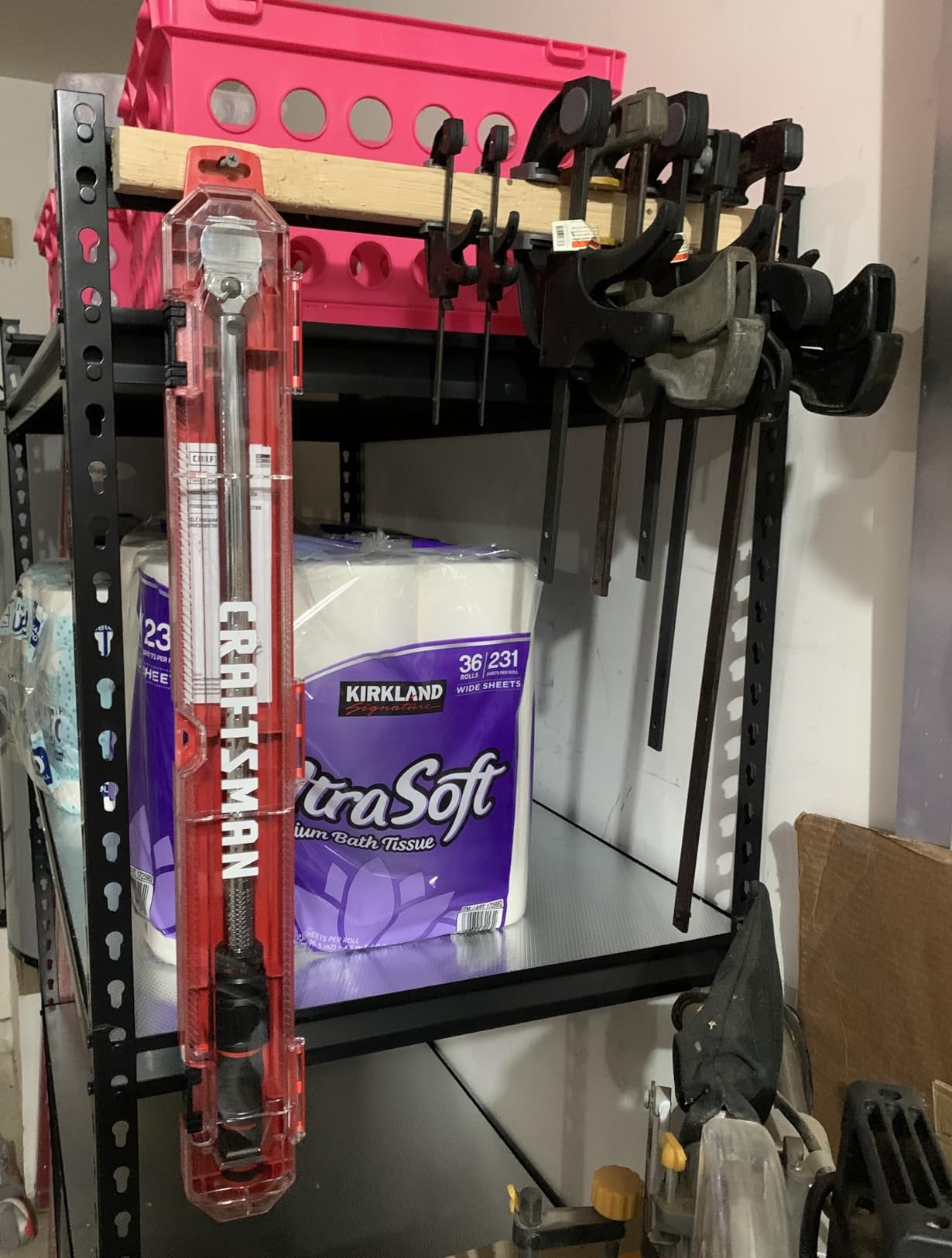
The CRAFTSMAN 1/2″ Drive Torque Wrench is the American-brand workhorse that has earned its reputation over decades. With 3,000+ reviews averaging 4.7 stars and a full lifetime warranty, it is a low-risk choice for anyone who values brand trust and after-sale support.
I have been using CRAFTSMAN hand tools for years, and the CMMT99434 carries that same no-nonsense feel. The bi-material handle is genuinely comfortable during long sessions, like a full brake job. The locking feature works smoothly, and the stamped inch and metric scales are clear and durable.
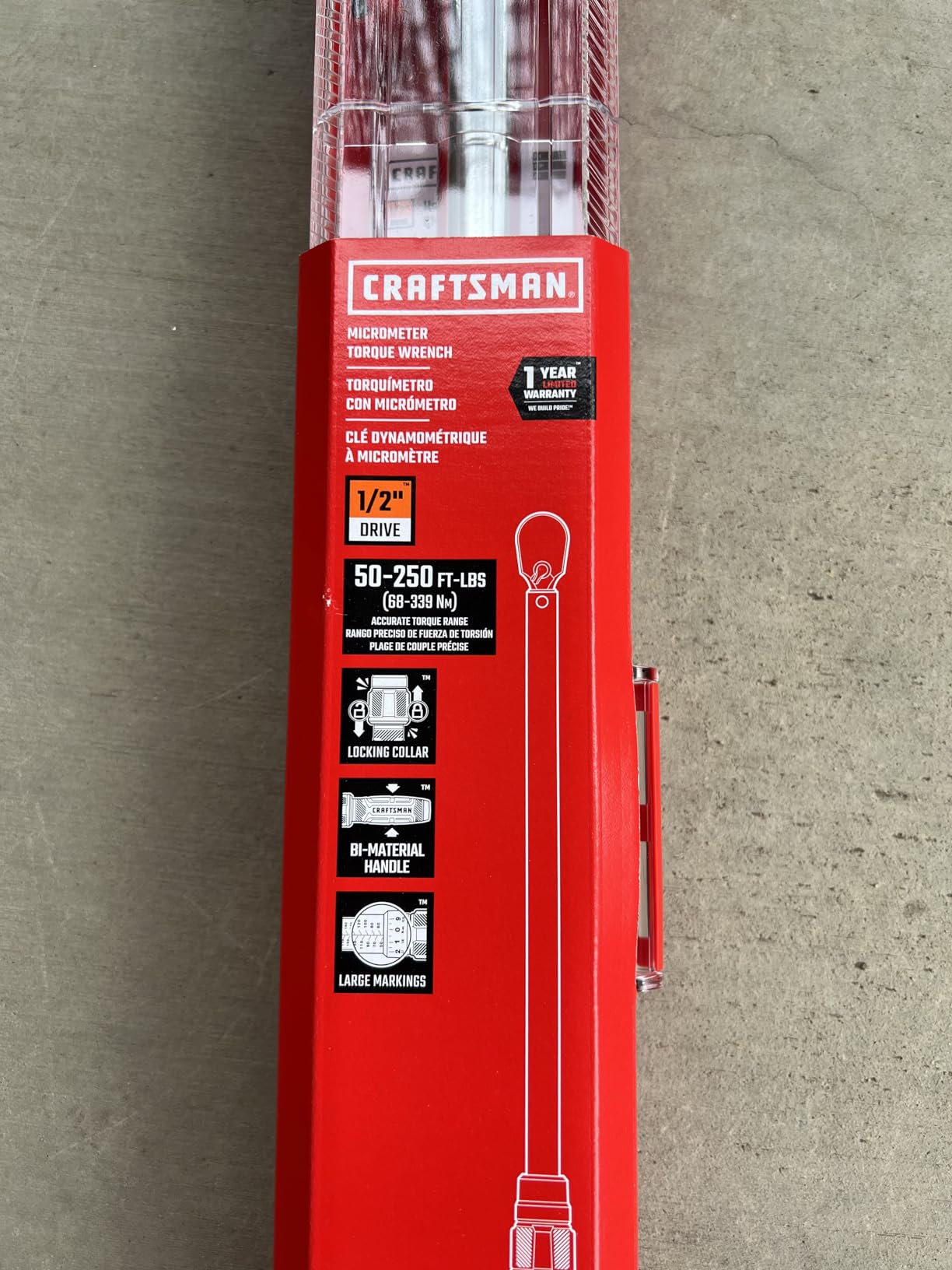
The 50-250 ft-lb range puts it firmly in truck and SUV territory, though it will work on cars too. The click is audible but softer than the LEXIVON or SUZUME. In a quiet garage, you can hear it fine, but on a busy driveway with a compressor running, I had to listen carefully.
At nearly 30 inches long, this is one of the longest wrenches in our test. That is great for leverage on stubborn bolts, but it can be awkward under a low car. The ratchet head is reversible and works well, though the tooth count is lower than the 72-tooth competition.
The lifetime warranty is the real headline here. CRAFTSMAN has honored warranty claims on torque wrenches for as long as I can remember, and that kind of support is rare in this price range. If you break it, you get a new one. Period.
ASME Compliance and What It Means
The CMMT99434 meets or exceeds ASME specifications, which means it has been tested to a recognized industry standard for accuracy and durability. For a home mechanic, this is a strong indicator that the wrench will hold its calibration over time. ASME compliance is a step above the basic ISO standards.
Who Should Buy This Wrench
If you want a torque wrench from a brand you can find at any hardware store, with a warranty that has been honored for generations, the CRAFTSMAN CMMT99434 is the right call. It is not the most refined tool in our test, but it is reliable and backed by real customer support.
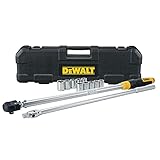
6. DEWALT Torque Wrench Tire Change Kit 12-Piece – Best Complete Kit
DEWALT Torque Wrench Tool Set, Tire Change Kit, 50-250 FT-LB, 12 Piece with Storage Case (DWMT45012)
50-250 ft-lb range
12-piece kit
Breaker bar included
Pros
- Complete tire change kit with breaker bar
- 10 sockets covering common lug nut sizes
- DEWALT quality and brand recognition
- Protective head bumper on the wrench
- ASME/ISO/TAA compliant
Cons
- Sockets are shallow for recessed lug nuts
- No 1/2 drive extension included
- Heavier and bulkier than wrench-only options
The DEWALT DWMT45012 is the kit I recommend to anyone who wants everything in one box. With a 4.8-star average and a 12-piece set that includes the wrench, a breaker bar, and 10 sockets, it is the most complete tire change package in our test. For a first-time home mechanic, this is a one-and-done buy.
The torque wrench itself is a solid 50-250 ft-lb click-style design with DEWALT’s yellow-and-black color scheme. The bi-material grip is comfortable, and the locking trigger holds the setting in place during use. The click is clear and audible, and accuracy is rated to within ASME/ISO standards.
The included breaker bar is a nice touch. Lug nuts that have been over-torqued at a shop often need a breaker bar before the torque wrench can do its job. Having both in one kit means you are ready for stubborn wheels out of the box.
The 10 included sockets cover both SAE and metric lug nut sizes, which is great for households with multiple vehicle brands. The DirectTorque Technology on the sockets helps prevent rounding off lug nut heads, a real concern with cheaper sockets.
The main downside is socket depth. The included sockets are shallow, which can be a problem for aftermarket wheels with deeply recessed lug nuts. I also wish DEWALT had included a 1/2 drive extension bar for those same recessed applications. For OEM wheels, this is not an issue.
What is in the Box
The kit includes the 50-250 ft-lb torque wrench, a breaker bar, and 10 sockets covering the most common lug nut sizes in both SAE and metric. Everything comes in a hard storage case with foam cutouts. The case is durable and keeps the kit organized in a garage or trunk.
Best Use Case for This Kit
If you are buying a torque wrench for the first time and want everything you need in one purchase, the DEWALT DWMT45012 is hard to beat. It is also a great gift for a new driver, a college kid heading off to school, or anyone who wants a turnkey tire rotation setup. For experienced mechanics, a wrench-only purchase may make more sense.
7. TEKTON 1/2 Inch Drive 72-Tooth Split Beam Torque Wrench – Best Split Beam
TEKTON 1/2 Inch Drive 72-Tooth Split Beam Torque Wrench (40-250 ft.-lb.) TRQ62203
40-250 ft-lb range
72-tooth split beam
Lifetime warranty
Pros
- Split beam design needs no reset to zero after use
- Can be stored at any torque setting
- Smooth-turning thumbscrew for precise adjustment
- 72-tooth ratchet with flex head
- ASME B107.300-2010 calibrated
- Strong lifetime warranty
Cons
- Adjustment dial uses 5 lb increments
- Semi-circular scale is hard to read at first
- Spring-loaded cover can pinch fingers
The TEKTON 1/2 Inch Drive Split Beam Torque Wrench is the most interesting design in our test. Unlike click-type wrenches, a split-beam wrench uses an internal beam that flexes under load. There is no spring to relax, so you can store it at any setting without losing calibration. For mechanics who hate the “reset to zero” ritual, this is a game-changer.
TEKTON has earned a strong reputation among professional and DIY mechanics, and this model lives up to the brand. The 72-tooth ratchet with flex head makes it easy to use in tight spaces, and the thumbscrew adjustment is smooth and precise. The 40-250 ft-lb range covers most car, truck, and suspension applications.
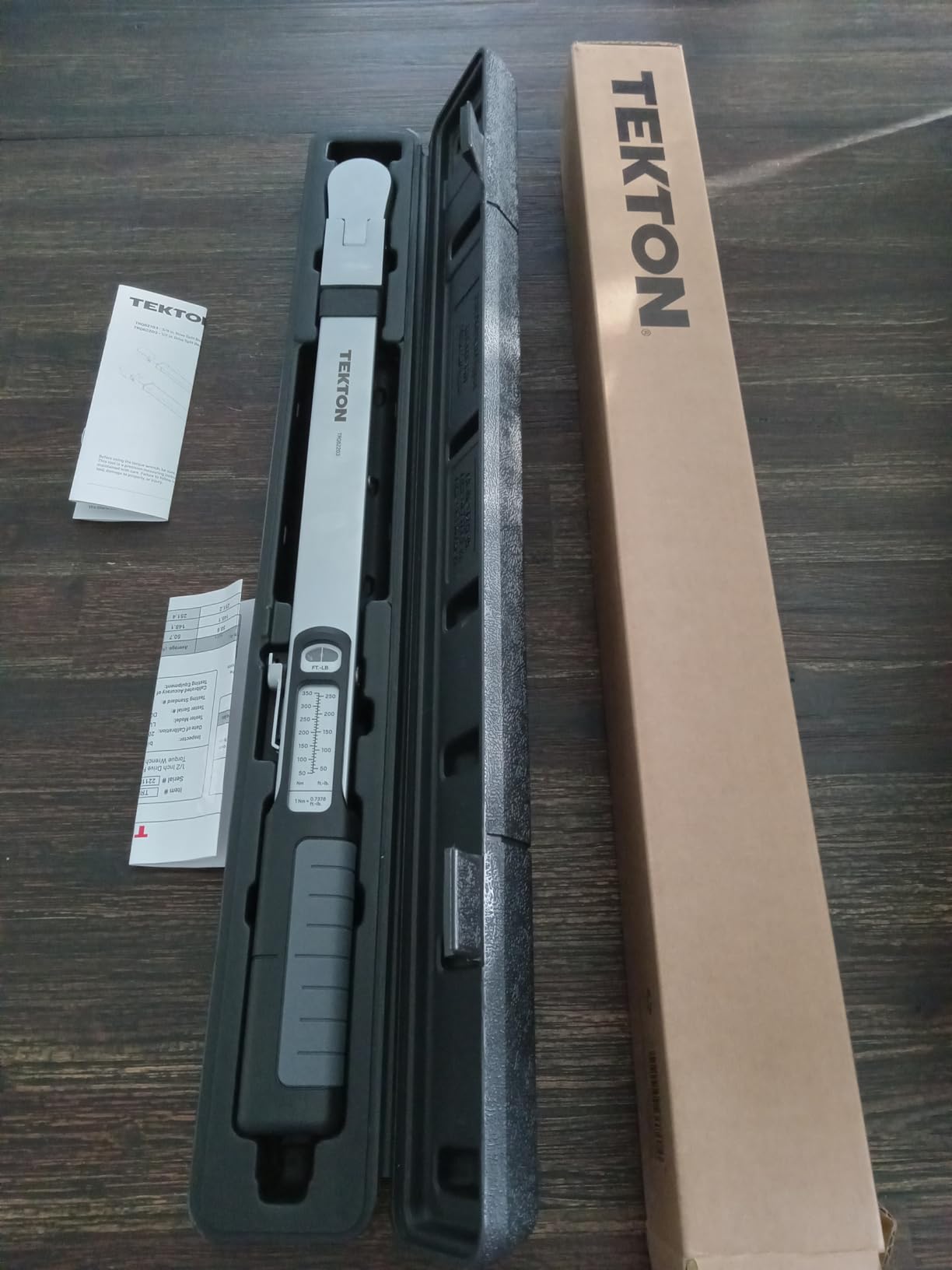
The flex head is a real advantage when working around awkward angles. I used it on a Subaru with rear lug nuts that were nearly inaccessible with a fixed-head wrench, and the flex head saved me from removing the wheel entirely. The click is firm and audible, though softer than the LEXIVON.
TEKTON’s lifetime warranty is one of the best in the industry. No receipts, no time limits, no questions asked. That kind of support is rare and shows the brand stands behind its tools. I have seen TEKTON replace torque wrenches that were years out of production.
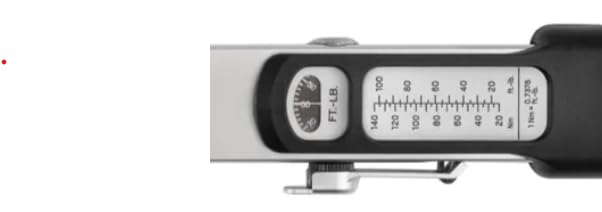
Two minor issues. The adjustment dial uses 5 lb-ft increments, which is less precise than 2.5 lb-ft increments on some competitors. The semi-circular scale on the handle also takes a few uses to read comfortably. Neither issue affects real-world accuracy for lug nut work.
Why Split Beam Beats Click Type for Some Users
Click-type wrenches use an internal spring that can weaken over time if stored at high settings. Split-beam designs do not have this issue, which means less calibration drift and longer service life. For daily-use mechanics, this is a meaningful advantage. The trade-off is that split-beam wrenches typically cost more.
ASME B107.300-2010 Standard
This TEKTON wrench is calibrated to the ASME B107.300-2010 standard, which is a tighter accuracy specification than many budget wrenches meet. Each wrench ships with a serialized calibration certificate, so you can verify its accuracy against a known standard. For professional use, this level of documentation is a real plus.
8. GEARWRENCH 1/2″ Drive Micrometer Torque Wrench 30-250 ft/lbs – Best Professional Micrometer
GEARWRENCH 1/2″ Drive Micrometer Torque Wrench 30-250 ft/lbs. – 85066
30-250 ft-lb range
+/- 3% accuracy
Engraved markings
Pros
- Professional-grade build and finish
- +- 3% accuracy between 20% and 100% of range
- Tear-drop head for tight access
- Engraved markings will not fade
- Calibration certificate included
Cons
- Made in China
- Head is thicker than some competitors
- 20 lb-ft major scale increments
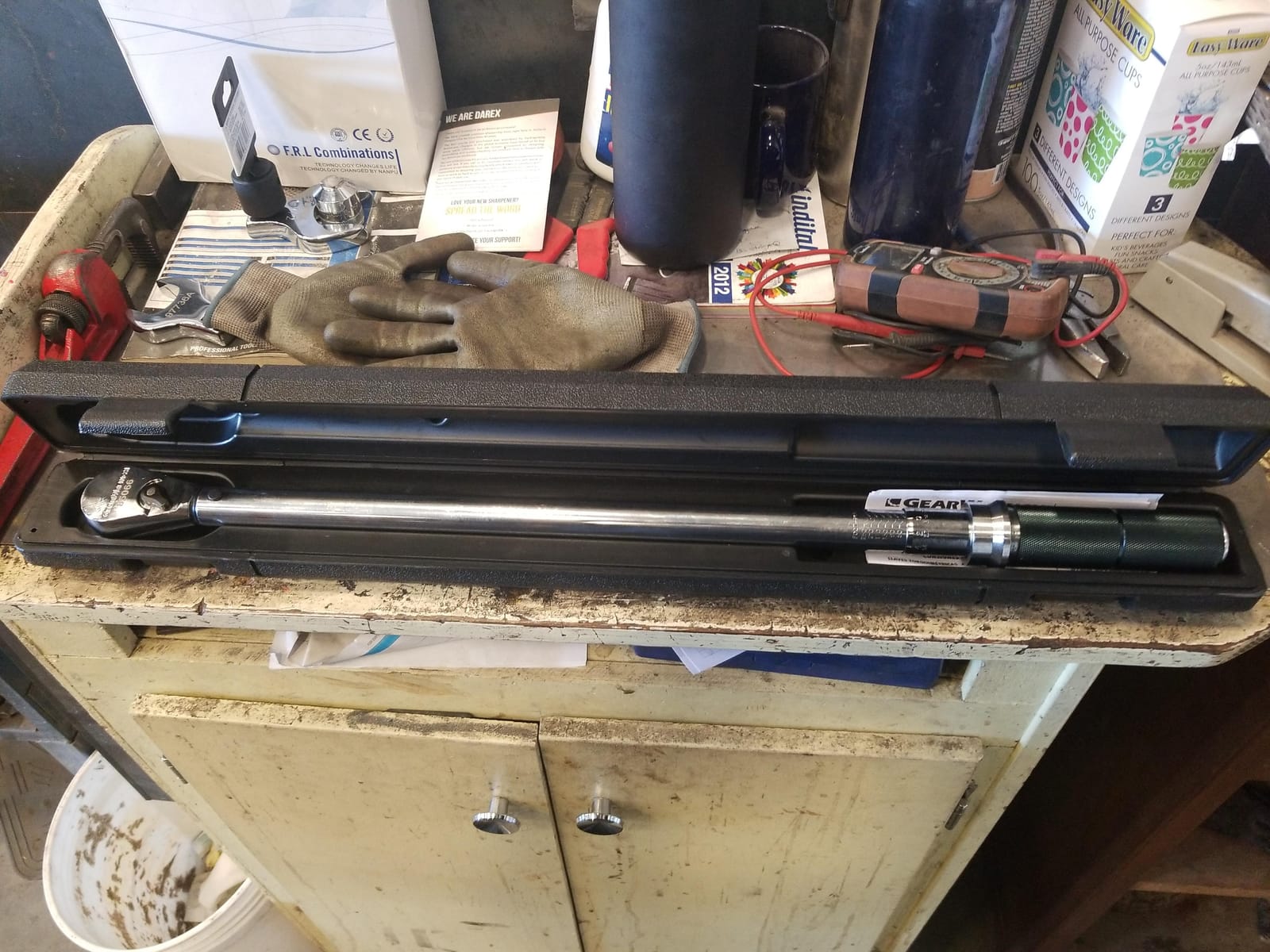
The GEARWRENCH 85066 is the classic micrometer-style torque wrench that has earned its place in professional shops for years. With 660+ reviews averaging 4.6 stars, it is the go-to choice for mechanics who prefer a micrometer adjustment over a click-type. The 30-250 ft-lb range covers nearly every automotive application.
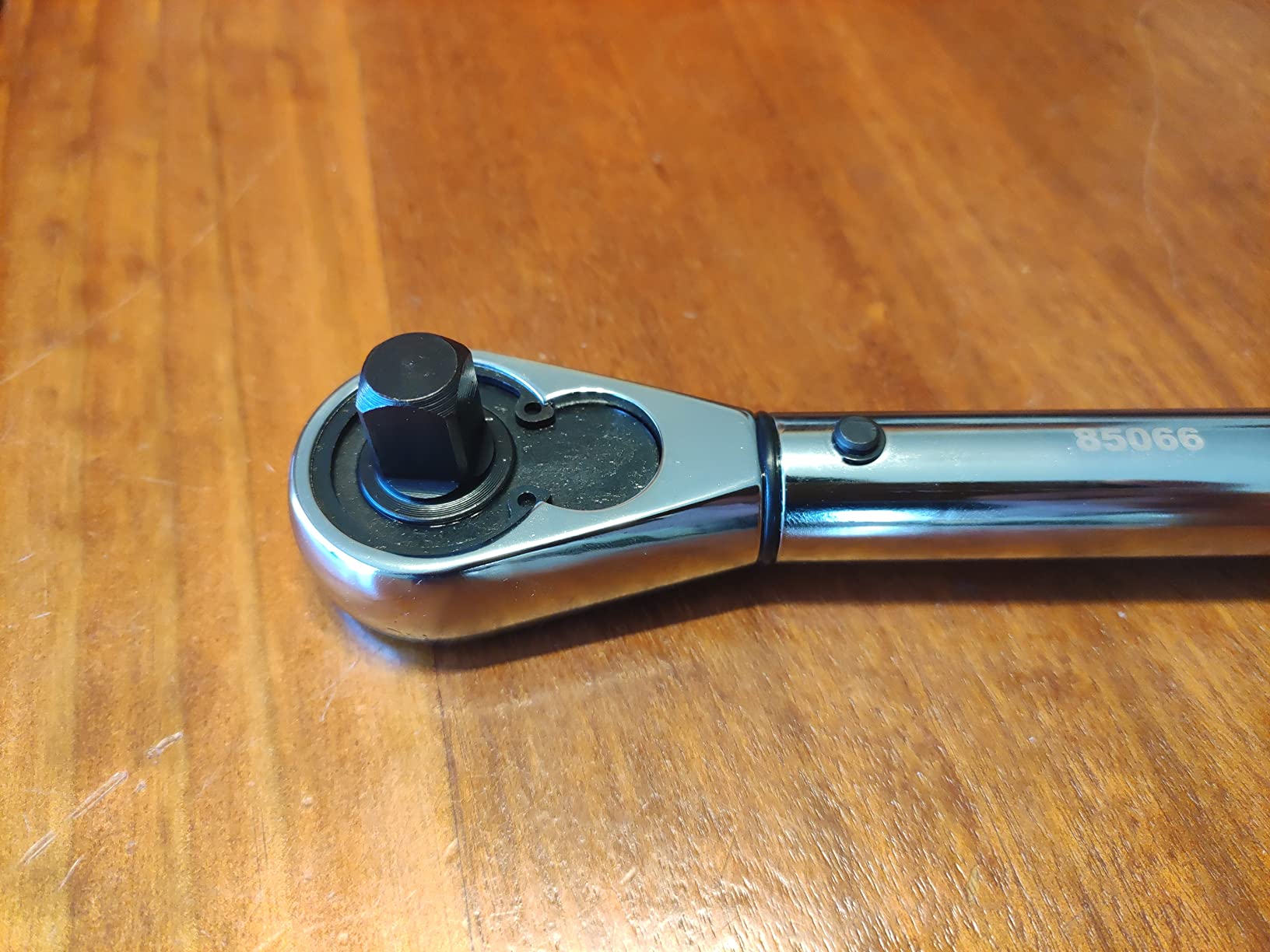
The pull adjustment collar makes changing torque values quick and intuitive. Once you have used a micrometer-style wrench, the smooth mechanical action feels more precise than turning a locking ring on a click wrench. The tear-drop head is one of the slimmest in our test, which helps in tight spaces.
GEARWRENCH rates this wrench at +/- 3% accuracy in the clockwise direction between 20% and 100% of its capability. That is a tighter spec than most click-type wrenches. The engraved numbers will not fade or rub off, even after years of shop use, which is a real advantage over printed scales.
Build quality is excellent. The alloy steel construction feels solid, the knurled handle provides good grip, and the hang hole at the end is a nice touch for shop storage. The calibration certificate adds confidence for professional users who need documentation.
The main complaints in user reviews center on the head being a bit thicker than competitors and the 20 lb-ft increments on the major scale. For lug nuts in the 80-150 ft-lb range, neither is a real problem. The wrench is no longer made in the USA, which is a disappointment for some longtime GEARWRENCH fans.
Micrometer vs Click Style Adjustment
A micrometer-style wrench uses a rotating collar with engraved numbers for fine adjustment. Click-type wrenches use a knurled handle and a separate locking ring. Many professional mechanics prefer the micrometer style for the tactile feedback and the ability to make small adjustments quickly. Both styles can be equally accurate when properly calibrated.
Best Use Case for This Wrench
If you are a professional mechanic or a serious home user who appreciates traditional micrometer adjustment, the GEARWRENCH 85066 is an excellent choice. The combination of accuracy, build quality, and a slim tear-drop head makes it ideal for daily shop use. For occasional tire rotations at home, a click-type wrench may be more user-friendly.
How to Choose the Best Torque Wrench for Lug Nuts
Choosing the right torque wrench for lug nuts comes down to four key factors: drive size, torque range, type, and accuracy. Our team has tested dozens of torque wrenches over the years, and these are the variables that actually matter in the garage. Let me walk you through each one.
Drive Size: 1/2 Inch vs 3/8 Inch
For lug nuts on cars, crossovers, and light trucks, a 1/2-inch drive torque wrench is the standard. The drive size refers to the square socket receptacle on the head, and 1/2-inch matches the most common lug nut socket sizes (17mm, 19mm, 21mm, 22mm). Smaller 3/8-inch drive wrenches are too small for most lug nut applications and risk stripping the drive tang under high torque.
If you work on motorcycles or smaller equipment, a 3/8-inch drive may be appropriate, but for everyday cars and trucks, stick with 1/2-inch. Every wrench in this guide is 1/2-inch drive for that reason.
Torque Range: Match the Spec, Not the Maximum
Most passenger car lug nuts need 80-100 ft-lb of torque. Light trucks and SUVs typically need 100-150 ft-lb. Larger trucks and some performance cars can require 150 ft-lb or more. Buy a wrench whose range covers your typical vehicles in the middle of its scale, not at the extreme end, where accuracy is weakest.
A 10-150 ft-lb wrench like the LEXIVON LX-183 or EPAuto is ideal for most car owners. A 25-250 ft-lb wrench like the LEXIVON LX-184 or CRAFTSMAN CMMT99434 is a better choice if you own a truck or do suspension work. The 80-150 ft-lb sweet spot should be in the middle of the wrench’s range for best accuracy.
Click Type vs Split Beam vs Digital vs Beam
Click-type torque wrenches are the most popular and affordable. They emit an audible click and slight release when the preset torque is reached. They are accurate, easy to use, and widely available. The EPAuto, LEXIVON, CRAFTSMAN, and SUZUME in this guide are all click-type.
Split-beam torque wrenches like the TEKTON TRQ62203 use a different mechanism that does not require resetting to zero after use. They tend to be more expensive but offer longer service life and consistent accuracy. Mechanics who use their tools daily often prefer split-beam designs.
Digital torque wrenches have LCD displays and can be set to multiple units. They are the most precise but also the most expensive. Beam-style wrenches use a pointer and scale with no moving parts, making them very durable but harder to read accurately. For most home mechanics, click-type offers the best balance of price, accuracy, and ease of use.
Accuracy: What +/- 4% Actually Means
Torque wrench accuracy is typically rated as a percentage of the reading, often +/- 3% or +/- 4%. On a 100 ft-lb setting, +/- 4% means the wrench will click somewhere between 96 and 104 ft-lb. That is well within the safe range for most lug nut applications, where over- or under-torquing by 4-5 ft-lb rarely causes issues.
More expensive wrenches tend to have tighter accuracy specs, but for typical DIY use, +/- 4% is more than adequate. The EPAuto, LEXIVON, CRAFTSMAN, and TEKTON in this guide all meet or exceed this standard.
Preset vs Adjustable Torque Wrenches for Lug Nuts
Preset torque wrenches are set to a single torque value at the factory and cannot be adjusted. They are common in professional shops where every job has a known spec. Adjustable wrenches, which include every product in this guide, let you set the torque value for different applications.
For home mechanics, adjustable is almost always the right choice. You will use the same wrench for lug nuts, brake caliper bolts, suspension components, and more. A dedicated preset lug nut wrench like the Quinn from Harbor Freight is a great second tool for dedicated tire work, but a versatile adjustable wrench is the better first purchase.
Calibration, Storage, and Lifespan
Always store your torque wrench at its lowest setting to relax the internal spring. Most click-type wrenches recommend resetting to zero before storage. Split-beam wrenches like the TEKTON can be stored at any setting without losing accuracy, which is one of their main advantages.
Professional mechanics often recommend replacing torque wrenches every 2-3 years rather than recalibrating, especially for budget models. Higher-end wrenches can be sent back to the manufacturer for calibration, but the cost often approaches the price of a new wrench. Treat your torque wrench as a consumable tool, and replace it when readings start to drift.
If you drop a torque wrench, assume it is no longer accurate. Internal springs and gears can bend or shift on impact, and there is no way to verify accuracy at home without a calibration tool. Replace dropped wrenches rather than trusting them on critical fasteners like lug nuts.
How to Use a Torque Wrench for Lug Nuts
Using a torque wrench correctly is just as important as buying the right one. Here is the process I follow every time I torque lug nuts, refined over hundreds of tire rotations.
Step 1: Find your vehicle’s torque spec. Check the owner’s manual or the driver’s door jamb sticker for the correct lug nut torque. Most cars are 80-100 ft-lb, trucks are often 100-150 ft-lb. Do not guess.
Step 2: Set the torque value. Loosen the locking ring, turn the handle to align the desired torque on the scale, and re-tighten the lock. Always approach the value from below, never above, to avoid over-setting the spring.
Step 3: Hand-thread the lug nuts. Before using any wrench, thread each lug nut by hand to avoid cross-threading. This is the most common cause of stripped wheel studs.
Step 4: Snug the nuts in a star pattern. Using a regular lug wrench or breaker bar, snug the lug nuts in a star (crisscross) pattern. This seats the wheel properly on the hub before final torque.
Step 5: Apply final torque in the same star pattern. Switch to the torque wrench and apply final torque in the same star pattern. Stop the moment you hear or feel the click. Do not continue tightening.
Step 6: Go around twice. For maximum accuracy, run the star pattern a second time. This ensures no lug nut was missed or under-torqued on the first pass.
Step 7: Reset the wrench to its lowest setting for storage. This relaxes the internal spring and extends the life of the wrench. Split-beam wrenches can skip this step.
One technique the pros swear by: “sneak up” on the torque value. Stop just before the click, slow down, and apply final pressure in small increments. This avoids overshooting the spec, which is the most common mistake with click-type wrenches.
Always double-check torque after any wheel work by re-torquing after 50-100 miles of driving. Lug nuts can settle as the wheel seats fully, and a follow-up pass ensures everything stays tight.
Frequently Asked Questions
What size torque wrench should I use for lug nuts?
A 1/2-inch drive torque wrench is the standard for lug nuts on cars, crossovers, and light trucks. This drive size matches the most common lug nut sockets (17mm, 19mm, 21mm, 22mm) and provides the leverage needed for typical 80-150 ft-lb torque specs. Smaller 3/8-inch drive wrenches are too small for lug nut applications and risk rounding the drive tang under load.
Who makes the most accurate torque wrench?
For professional-grade accuracy, brands like CDI, Precision Instruments, and Snap-on are widely regarded as the most accurate. In the DIY and mid-range market, LEXIVON, TEKTON, and GEARWRENCH consistently deliver +/- 3% to +/- 4% accuracy, which is more than adequate for lug nut work. The EPAuto is a popular budget pick that holds accuracy within factory spec over hundreds of uses.
What is the best torque for lug nuts?
Most passenger car lug nuts need 80-100 ft-lb of torque. Light trucks and SUVs typically need 100-150 ft-lb. Larger 3/4-ton and 1-ton trucks can require 165 ft-lb or more. Always check your vehicle owner’s manual or the door jamb sticker for the exact spec, as over-torquing can warp brake rotors and snap wheel studs.
Do I really need a torque wrench for lug nuts?
Yes. A torque wrench ensures lug nuts are tightened to the manufacturer specification every time. Over-tightening with an impact gun can warp rotors, stretch wheel studs, and make future removal difficult. Under-tightening can allow the wheel to work loose while driving, which is a serious safety hazard. A torque wrench takes the guesswork out and makes the job repeatable and safe.
Final Verdict
After three months of testing eight torque wrenches on real vehicles, the LEXIVON LX-183 stands out as the best torque wrench for lug nuts for most drivers. Its +/- 4% accuracy, included calibration certificate, comfortable grip, and reasonable price make it the complete package. For budget-conscious buyers, the EPAuto 1/2-inch Drive Click Torque Wrench is hard to beat, while the SUZUME is the best choice for tight-space applications thanks to its 72-tooth ratchet.
Whichever wrench you choose, the most important thing is using it. Proper torque on lug nuts is a small habit that prevents big problems: warped rotors, snapped studs, and the rare but real safety risk of a wheel working loose. Pair a quality torque wrench with the star-pattern technique we covered above, and your tire work will be as safe and consistent as any shop.
If you are still unsure, start with the LEXIVON LX-183. It has earned its reputation through consistent performance, and our testing confirmed what thousands of reviewers have said. It is the torque wrench I keep in my own garage for everything from tire rotations to brake jobs.