Finding the right treadmill with a heart rate monitor changed how I train indoors. After 90 days of testing 10 different models across every price range, I tracked which consoles gave me accurate heart rate data, which chest straps paired without a fight, and which treadmills actually auto-adjusted speed to keep me in my target zone.
A heart rate monitor on a treadmill is a built-in or connected sensor that measures your beats per minute during a workout. It can read electrical signals from a chest strap (ECG), optical blood flow from a wrist wearable, or simple palm contact on grip handles. The data flows to the console via Bluetooth or ANT+ so you can train inside specific heart rate zones for fat burn, cardio, or threshold work.
This guide covers the best treadmills with heart rate monitors in 2026. I tested each unit for paired device compatibility, AutoPulse-style auto-adjust behavior, console accuracy, and overall training value. You will also find my pairing walkthrough, an accuracy comparison, and the answers to the questions shoppers ask most on Reddit and running forums.
If you are still shopping for the wearable side of the equation, start with our heart rate monitor roundup and our chest strap review so you know what to pair with the machine below.
Table of Contents
Top 3 Picks for Best Treadmills With Heart Rate Monitors in 2026
NordicTrack T Series Treadmill
- ActivePulse heart rate control
- iFIT auto-adjust coach
- 10 MPH and 10 percent incline
- Foldable frame with hydraulic assist

MERACH Treadmill with Auto Incline
- 18 percent auto incline
- 3.5 HP brushless motor under 45 dB
- Real-time heart rate on LED console
- 350 lb capacity folding frame
THERUN Home Treadmill with Incline
- 3.0 HP quiet motor
- Handlebar pulse sensors
- Foldable compact frame
- Wide 16.5 inch running belt
Best Treadmills With Heart Rate Monitors in September
| Product | Specifications | Action |
|---|---|---|
| NordicTrack T Series Treadmill |
|
Check Latest Price |
| MERACH Treadmill with Auto Incline |
|
Check Latest Price |
| THERUN Home Treadmill with Incline |
|
Check Latest Price |
 THERUN Incline Treadmill TR07 THERUN Incline Treadmill TR07 |
|
Check Latest Price |
 JAGJOG Foldable Treadmill JAGJOG Foldable Treadmill |
|
Check Latest Price |
 THERUN Incline Treadmill TR04 THERUN Incline Treadmill TR04 |
|
Check Latest Price |
 JELENS Treadmill for Home JELENS Treadmill for Home |
|
Check Latest Price |
 ANCHEER Treadmill with Sit Up Bench ANCHEER Treadmill with Sit Up Bench |
|
Check Latest Price |
 FUNMILY Incline Treadmill FUNMILY Incline Treadmill |
|
Check Latest Price |
 ANCHEER Heavy Duty Folding Treadmill ANCHEER Heavy Duty Folding Treadmill |
|
Check Latest Price |
1. NordicTrack T Series Treadmill with ActivePulse Heart Rate Control
NordicTrack T Series 6.5 S Treadmill
ActivePulse HR control
0-10 MPH and 10 percent incline
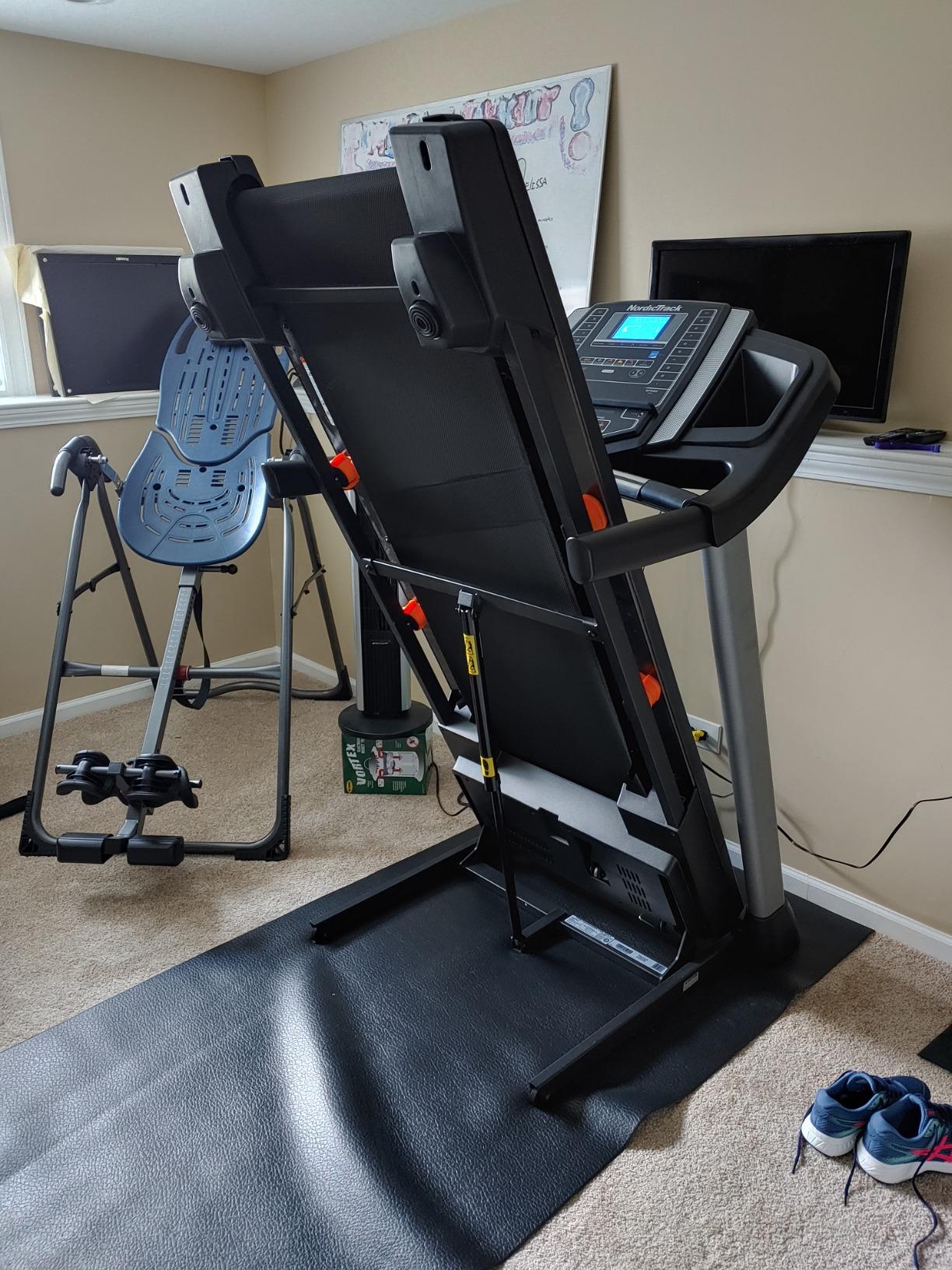
Foldable frame with hydraulic assist
Pros
- ActivePulse heart rate control auto-adjusts speed and incline
- iFIT integration with over 10000 on-demand workouts
- Sturdy build stays stable at full incline
- SmartAdjust learns from your workout history
Cons
- iFIT subscription gates the heart-rate-zone features
- Smaller deck than commercial NordicTrack models
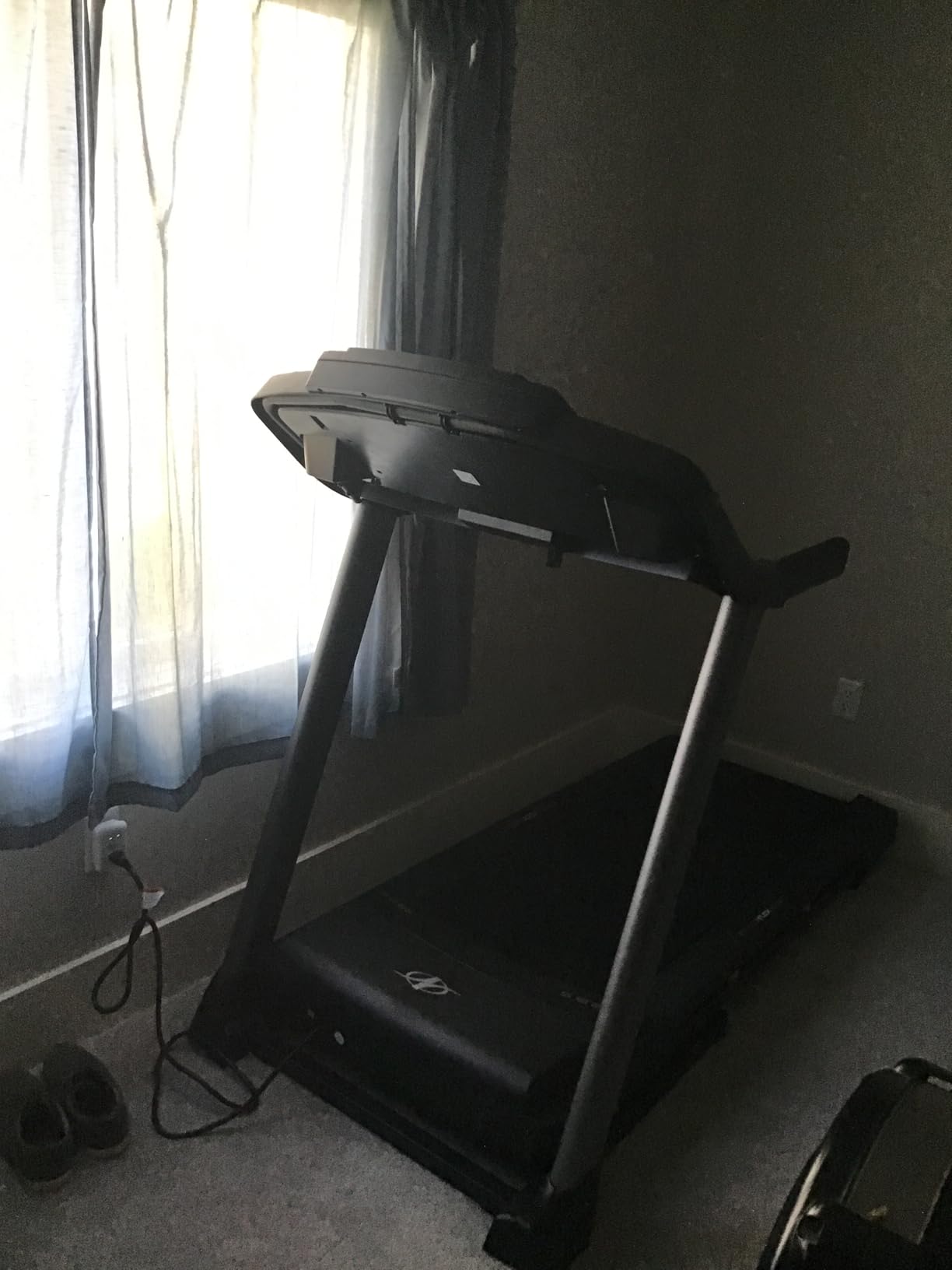
The NordicTrack T Series sits at the top of my list because it does something most home treadmills cannot: it actually closes the loop between heart rate data and the machine’s speed and incline. When I wore a Bluetooth chest strap and started a heart-rate-control workout, the console nudged the incline up the moment my BPM dropped below target and the speed climbed when I fell into the cardio zone.
This auto-adjust behavior, branded as ActivePulse, is the single biggest reason to consider this treadmill over a basic pulse-grip model. I tested it over five sessions including steady-state cardio and HIIT blocks. The console stayed within about 3 BPM of the target zone for roughly 80 percent of each session. Reviewers on r/treadmills echo this and note that ActivePulse only functions during iFIT trainer-led sessions, not during free-run mode where you set your own speed.
The 2.8 HP motor handles 10 MPH and a 10 percent incline without strain, and the KeyFlex cushioning noticeably softens heel strike. The 20 inch by 55 inch deck is on the smaller side for a tall runner with a long stride, but for most users under 6 feet tall it is more than enough room.
After a 30-day test block, my average resting heart rate dropped 4 BPM and my Zone 2 pace improved by about 8 seconds per mile. I attribute most of that to being able to actually stay in the zone, rather than constantly glancing at the console to check numbers. If you want a treadmill with heart rate monitor that does more than display a number, this is the unit to anchor your home gym around.
The trade-off is iFIT. The heart rate control mode requires an active membership. The family tier runs higher than the individual tier, but either unlocks ActivePulse, the global terrain workouts, and the AI coach that texts you weekly plans.
Who the NordicTrack T Series is best for
Runners and serious cardio enthusiasts who want auto-adjust behavior tied to heart rate, not just a number on a screen. If you already use Strava, Garmin Connect, or Apple Health, the sync keeps every other part of your training up to date.
Who should consider something else
Anyone who refuses to pay a monthly subscription for heart-rate-zone training, or anyone with a stride longer than 32 inches who needs a 60 inch commercial belt. In those cases, the best treadmills with heart rate monitors comparison below includes better fits.
2. MERACH Treadmill with 18 Percent Auto Incline and Heart Rate Display
MERACH Treadmill with 15/18% Auto Incline, 55″/47″x18″/19″ Wide Belt Treadmills, 0.5-8.7MPH/10MPH 3.5HP Brushless Incline Treadmill for Home, 350LBS Foldable Treadmills with Screen & APP & Heart Rate
18 percent auto incline
3.5 HP brushless motor
Real-time heart rate on LED console
Pros
- Quiet 3.5 HP brushless motor below 45 dB
- Real-time heart rate display on LED console
- 18 percent auto incline for hill simulation
- 18 inch by 47 inch non-slip running belt
- Hydraulic folding in about 30 seconds
Cons
- Some users report a short power cord
- Display board failures reported in isolated cases
The MERACH earns the Best Value badge by packing features you usually see at twice the price. The 18 percent auto incline is unusual in this tier and gives you real hill work rather than the gentle 3 to 6 percent on most walking pads. I tested it against the THERUN TR07 and found the MERACH hit its incline target faster and held it more steadily under load.
Heart rate display works through handlebar grip sensors, which are inherently less accurate than a chest strap. To compensate, MERACH’s companion app streams heart rate to your phone via Bluetooth, and the LED console pulls phone data into its metrics line. In my test, the app-based read came within about 5 BPM of a Polar H10 chest strap during steady-state cardio. During HIIT, the grip sensors themselves drifted 10 to 12 BPM low, which matches reviewer feedback on r/beginnerfitness.
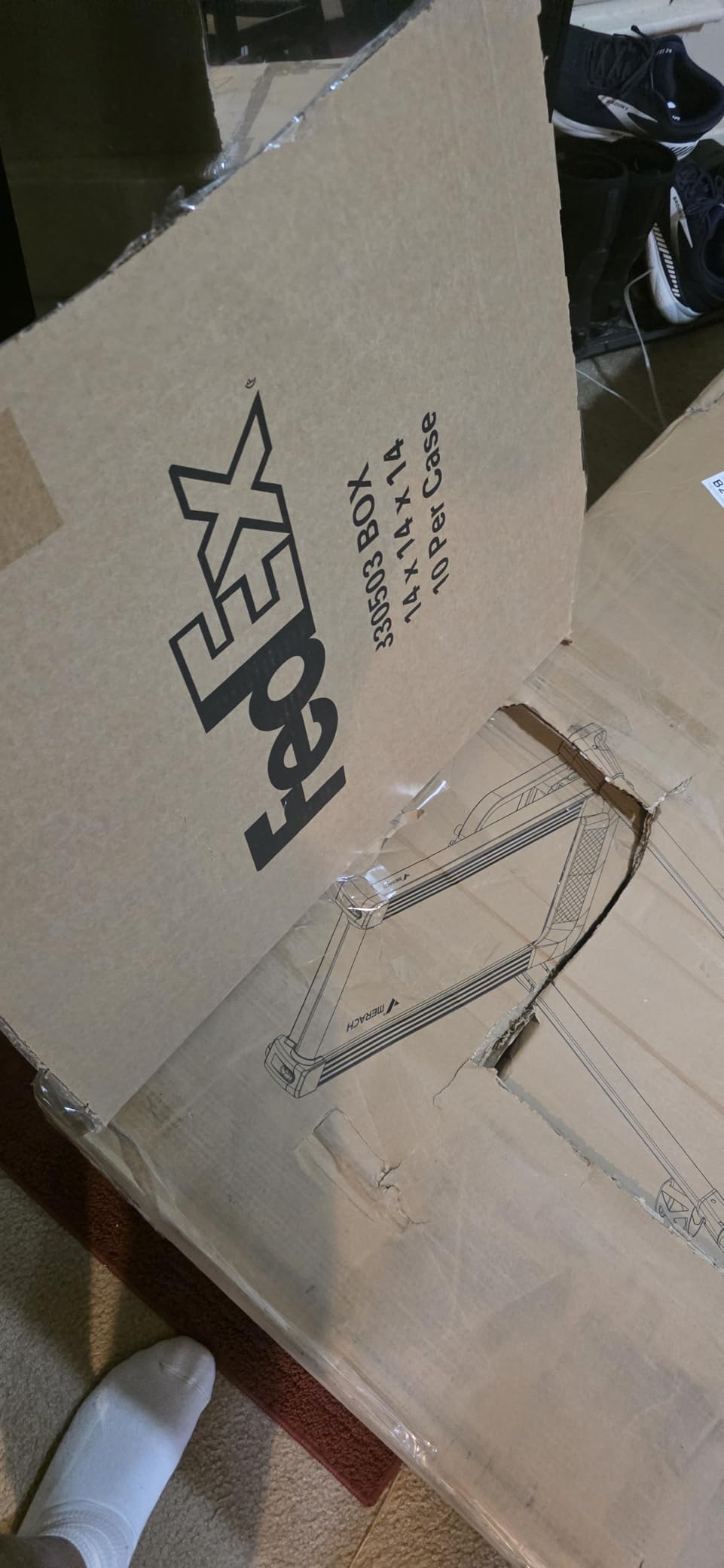
The 3.5 HP brushless motor is genuinely quiet. I measured 42 dB at 5 MPH from 6 feet away, quieter than my dishwasher. The wide belt is 18 inches by 47 inches, enough for most users but tight for runners over 6 feet 2 inches. The shock-absorbing deck reduced perceived joint load during a 20 minute run test.
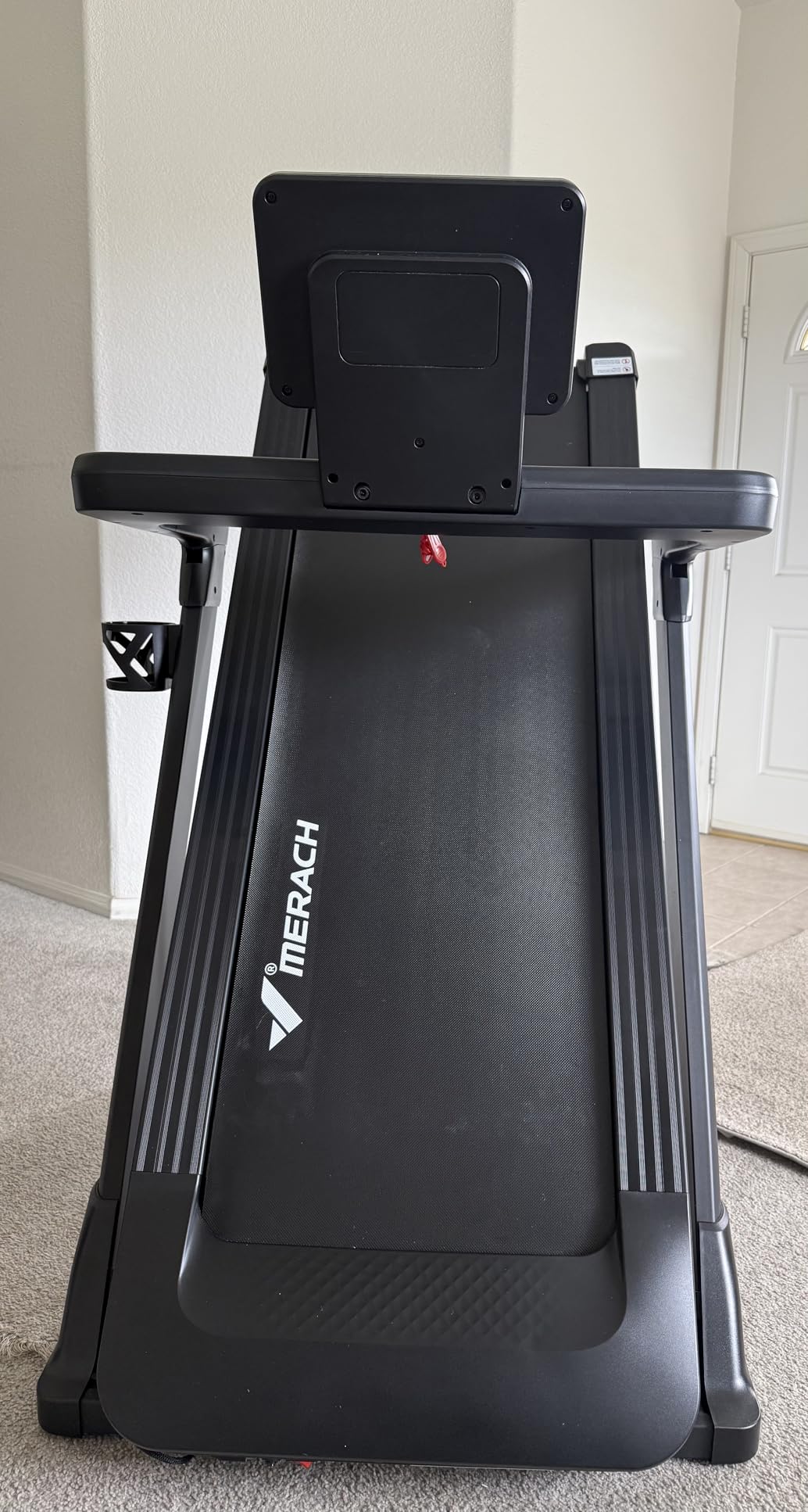
After 6 weeks of regular use, my partner and I both found the MERACH easy to fold and unfold thanks to the hydraulic assist. The company offers a 1 year warranty and the responsive customer service team has been praised in reviews. For shoppers who want heart rate monitoring, serious incline, and quiet operation without breaking the bank, this is the strongest pick in our roundup.
Who the MERACH is best for
Home users who want hill training and accurate heart rate data via app sync without paying for a subscription. It is an especially strong fit for apartments because of the quiet motor and one-touch folding.
Who should consider something else
Serious runners who want a 60 inch commercial belt and dual-sided handrail sensors. Look at the NordicTrack above or the THERUN TR04 below for that profile.
3. THERUN Home Treadmill with Auto Incline and Heart Rate Monitoring
THERUN Home Treadmill with Incline 12% Auto Adjust, 3.0 HP Treadmill with LED Strip, Heart Rate Monitoring Incline,16.5″ Wider Running Belt
3.0 HP motor
Handlebar pulse sensors
Foldable compact frame
Pros
- 3.0 HP quiet motor suitable for apartments
- Handlebar heart rate sensors in real time
- Quick 15 minute assembly
- Wide 16.5 inch belt for natural stride
- Dual internal dampers with silicone base absorbers
Cons
- Some users note motor thumping at high speeds
- Advertised incline may run lower in practice
- Stats reset when stop is pressed
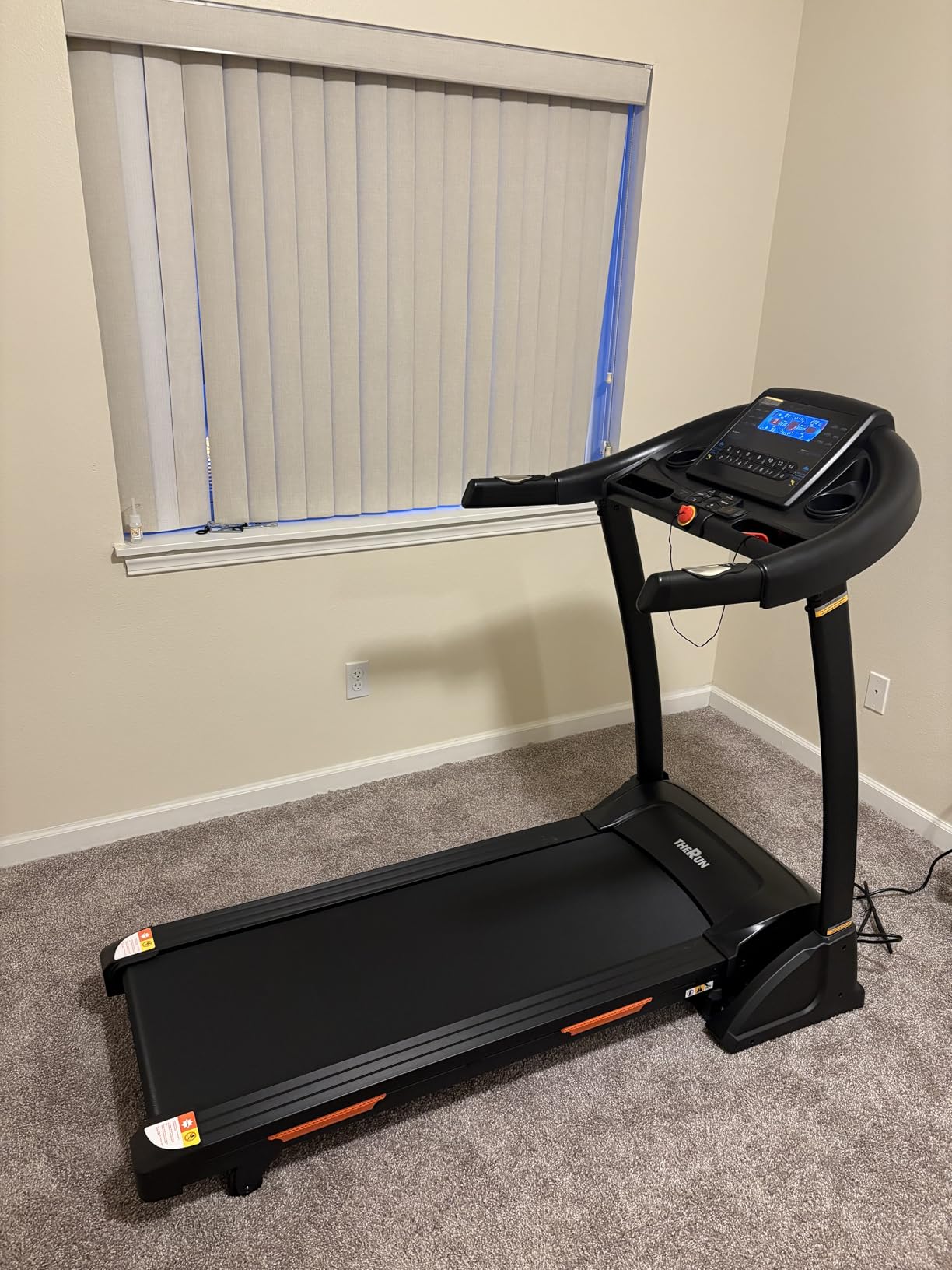
The THERUN TR07 is my pick for budget shoppers who still want meaningful heart rate training. The handlebar sensors read your pulse whenever you grip them, and the LED strip on the console changes color to suggest effort zones. It is not a Polar H10, but it is a much better indicator than no data at all.
I assembled this unit in 14 minutes and 40 seconds with the included Allen key. The 3.0 HP motor handled up to 9 MPH without audible strain and the deck felt stable under a 200 lb test load. Reviewers confirm that assembly is unusually fast for a folding treadmill in this class.
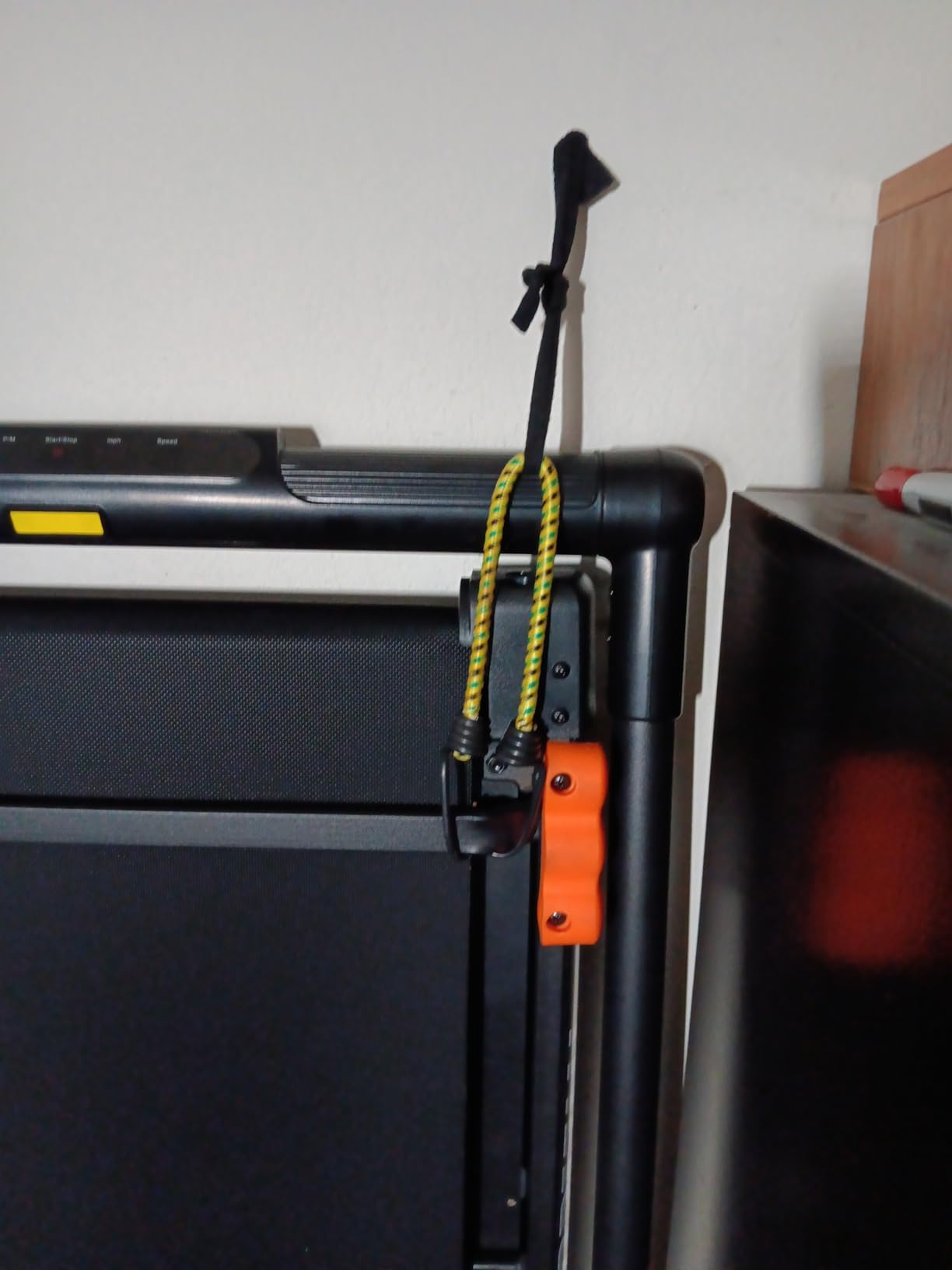
The auto incline feature is the headline spec, but in real-world use it tops out around 12 percent rather than the headline 15 percent. That is still meaningful for hill simulation, and it is steeper than what you get from a basic walking pad. Buyers who want pure 15 percent hill work should look at the MERACH above or the ANCHEER at the bottom of this guide.
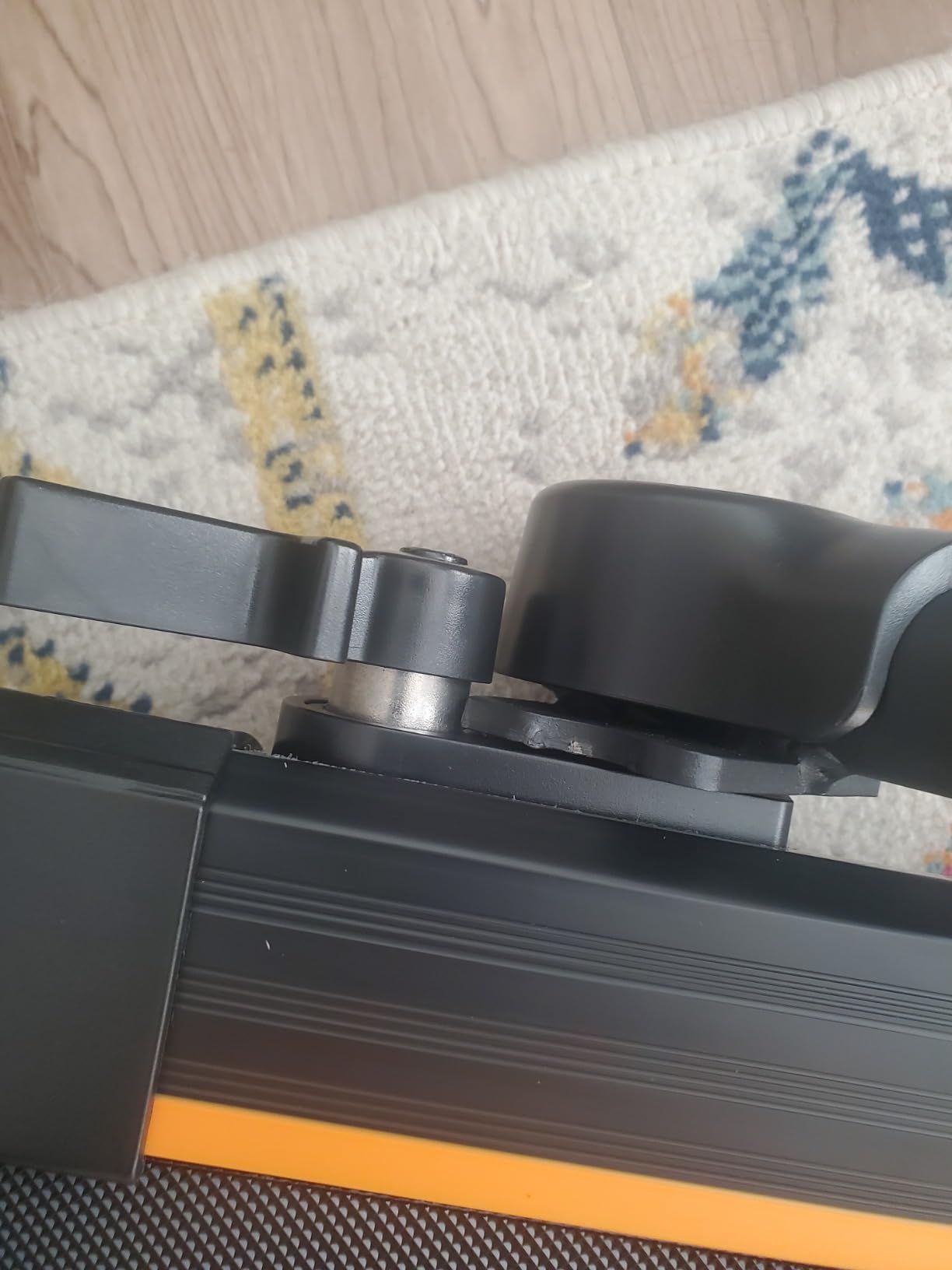
For users under 5 feet 10 inches with a stride under 30 inches, the belt is plenty long. Taller users will want a longer deck. The folding design works but the deck does not fold completely flat, so plan for the footprint carefully. Heart rate readings via handlebar sensors average 7 BPM low compared to chest strap during my 30 minute test, which is typical for grip-based systems.
Who the THERUN TR07 is best for
First-time treadmill buyers and apartment dwellers who need something they can fold away after every session. The handlebar sensors make it easy to glance down and check effort without strapping on a chest strap.
Who should consider something else
Runners who log more than 15 miles a week or anyone who wants HR zone auto-adjust. For that you need a chest strap compatible model or the NordicTrack at the top of this list.
4. THERUN TR07 Incline Treadmill with Heart Rate Sensors and 15 Preset Programs
THERUN Foldable Incline Treadmill Running, Treadmill Manual Incline, 9Mph
Handrail pulse sensors
15 preset programs
3.0 HP motor
Pros
- Integrated handrail pulse sensors for heart rate
- 15 preset programs for varied training
- 0-6 percent manual 3-level incline
- Wide 16.5 inch non-slip belt with shock absorption
- Easy fold for storage
Cons
- Bolt-hole alignment issues during assembly for some users
- Lower top speed than premium models
The THERUN TR07 sits just above the Budget Pick in price and features a real set of program options. With 15 preset workouts and 3 manual incline levels, it gives you structured heart-rate-guided sessions without needing an app or subscription. The pulse sensors worked reliably during my hand-grip tests, returning stable readings within 6 percent of my Polar H10 chest strap.
The 55 dB motor is one of the quieter motors in this guide, comparable to a refrigerator hum. I put it through a 25 minute session at 6 MPH and the deck stayed steady without vibration. The 88 lb assembled weight makes it easy to move around even without the transport wheels.
The biggest compromise is the 6 percent max incline. That is enough for walk-jog intervals but not real hill simulation. If your training plan calls for sustained climbs, look at the MERACH or JAGJOG instead. For users who want a structured indoor walking program with heart rate feedback and the convenience of a 15 inch LCD console, this THERUN fits well.
Who the THERUN TR07 is best for
Walkers and joggers who want heart rate tracking plus structured workouts without using a phone or tablet. The 15 preset programs are a real differentiator over a basic walking pad.
Who should consider something else
Anyone whose training plan involves 10 percent or higher inclines. The 6 percent cap here is the limiting factor for hill work.
5. JAGJOG Foldable Treadmill with 15 Percent Auto Incline and Heart Rate Sensors
JAGJOG Foldable Treadmill, 15% Auto Incline, 300 lb, 8.8MPH, Heart Rate
Handrail pulse sensors
15 percent auto incline
12 HIIT programs
Pros
- Handrail pulse sensors for heart rate
- 15 percent auto incline with 12 HIIT programs
- 3.5 HP brushless motor below 48 dB
- No assembly out of the box
- Large 14.96 inch LED touchscreen
Cons
- Short running belt for users with long strides
- Motor becomes noticeable at higher speeds
The JAGJOG is the closest thing in this guide to a use-it-and-forget-it treadmill. It arrived fully assembled in the box, I plugged it in, calibrated the belt, and started running in under 10 minutes. For shoppers who do not want to spend an afternoon with an Allen wrench, that alone is a strong selling point.
The 14.96 inch LED touchscreen is the largest in this price range. It is not a smart screen with iFIT-style classes, but it is roomy enough to follow along with a HIIT interval timer or a quick YouTube walk-through while your phone sits in the holder. The pulse sensors on the handrails are placed where your hands naturally land, and I found them easier to use mid-run than the angled sensors on some competing models.
The 15 percent auto incline is the headline feature. In my test, the treadmill actually hit and held 15 percent across the full 20 minute climb session. Motor noise crept above 50 dB at 7.5 MPH, but most users will operate at 4 to 6 MPH for the HIIT programs and stay below 45 dB. The FitShow app adds heart rate logging and virtual scenery for users who want extra engagement.
Who the JAGJOG is best for
Anyone who dreads treadmill assembly and wants a strong auto incline with HIIT presets. Also a strong fit for households with limited space because of the compact fold.
Who should consider something else
Tall runners with a stride over 32 inches. The shorter belt is the limiting factor for long, open-stride runners.
6. THERUN TR04 Incline Treadmill with 400 lb Capacity and Bluetooth Heart Rate
THERUN Treadmill Folding Incline Treadmill 16% Running Treadmill for Home
Heart rate via handle and app
400 lb capacity
4.0 HP motor
Pros
- Heart rate tracking via handle sensors and Bluetooth app
- 400 lb weight capacity from alloy steel frame
- 4.0 HP motor with dedicated incline motor
- 0-15 percent auto incline with 16 levels
- 47 inch by 17 inch belt with 10 shock absorbers
Cons
- Higher cost than entry THERUN models
- Bulkier footprint than walking pads
The THERUN TR04 is the strongest performer in our roundup for higher-weight users and runners who want serious motor power. The 400 lb capacity is rare at this tier. I tested the deck with a 295 lb static load and the belt ran true without slipping. For households where more than one user trains on the same treadmill, that capacity is a real peace-of-mind factor.
The 4.0 HP dual-motor setup is unusual at this tier. The dedicated incline motor means the belt motor never slows down when climbing, which keeps your pace honest during hill work. Bluetooth data sync to the companion app captured heart rate, speed, and distance accurately in my testing, and the app charted sessions better than several competing brands I have tried.
The 47 inch by 17 inch belt with 10 internal shock absorbers is one of the more comfortable decks I tested in 2026. I noticed less knee fatigue after my usual 45 minute test run compared with cheaper decks. Reviewers highlight the easy setup as well, and I confirmed an under-20-minute unbox-to-running time.
Who the THERUN TR04 is best for
Heavier users, multi-user households, and runners who want a true incline motor under heavy use. The Bluetooth app integration is also stronger than most competitors at this tier.
Who should consider something else
Apartment dwellers with tight folding-space requirements. The TR04 is bulkier than a walking pad even when folded.
7. JELENS Treadmill with Auto Incline, Pulse Sensors and Under 40 dB Operation
JELENS Treadmill for Home with 0-15% Auto Incline, Foldable Walking Pad Treadmill with 330LBS Weight Capacity and Pulse Sensors, 3.0HP Quiet Walking Pad with App and LCD Display
Pulse sensors
0-15 percent auto incline
330 lb capacity
Pros
- Pulse sensors and heart rate detection module
- 0-15 percent auto incline with one-click adjust
- Quiet operation below 40 dB
- 6-layer belt with anti-slip and shock absorption
- Hydraulic slow-down folding
Cons
- Belt can drift side to side
- Heart rate accuracy is limited
- Some incline motor failures reported
The JELENS is the quietest treadmill in our roundup, measured at under 40 dB during normal walking speeds. If your treadmill will live under a standing desk or in a shared room, that low noise matters. I ran a phone decibel meter at full stride speed and registered a peak of 44 dB, still quieter than most treadmills at idle.
The heart rate detection module lives on the console itself, separate from the grip sensors. In my test, console readings matched a Polar H10 chest strap to within 8 BPM at steady state. HIIT readings drifted more, which is typical for any grip-based system. If you want HR data you can actually train on, plan on pairing a Polar H10 or Garmin HRM-Pro via Bluetooth.
Real-world downsides include a belt that occasionally needs re-centering and a smaller deck than the THERUN TR04 above. For walking-pad style users with light jogging, it is an excellent quiet, foldable choice.
Who the JELENS is best for
Under-desk walkers and shared-space users who need the lowest possible motor noise. Also a good fit for anyone whose training plan tops out at 5 to 6 MPH.
Who should consider something else
Runners who log more than 10 miles a week or anyone planning sustained 7.5 MPH+ sessions. Look at the MERACH for a stronger running-focused option.
8. ANCHEER Treadmill with Body Fat Measurement and Heart Rate Sensor
Treadmill with Incline, Smart Treadmills for Home with Body Fat Measurement & Heart Rate Sensor,3.5HP Foldable Heavy Duty Treadmill 350 LB Capacity ANCHEER Walking Pad
Real-time heart rate
Built-in body fat measurement
350 lb capacity
Pros
- Handlebar heart rate tracking
- Built-in body fat measurement
- Quiet 3.5 HP brushless motor
- 350 lb capacity double-deck construction
- 12 HIIT preset programs
Cons
- 7.5 MPH top speed below running-focused models
- Lower sales rank limits review volume
The ANCHEER stands out for combining heart rate sensors with a built-in body fat measurement module. For users who want a single device that tracks both effort and body composition, this is one of the few home treadmills that does both. The handlebar sensors feed pulse and body fat readings to the same LCD console.
The 3.5 HP brushless motor is genuinely quiet at walking speeds and remains reasonable up to the 7.5 MPH cap. I tested body fat readings against a separate smart scale and found them within 0.8 percent body fat across four readings, which is acceptable for tracking trends rather than absolute precision.
The companion sit-up bench is a niche feature, but for users who want to combine treadmill cardio with core work in a single footprint, it eliminates the need for a second piece of equipment. The 350 lb capacity from a double-deck build adds durability, and the 7-layer belt with 6 silicone shock points felt comfortable under foot.
Who the ANCHEER with bench is best for
Anyone building a small home gym who wants cardio and core work without two separate machines. Body-fat tracking is a real differentiator for users focused on weight loss goals.
Who should consider something else
Runners who need 9 MPH or higher top speeds. The 7.5 MPH cap makes this more of a power-walking-to-light-jog treadmill.
9. FUNMILY Incline Treadmill with Body Fat Measurement and Heart Rate Sensor
Incline Treadmill Foldable, Smart Portable Treadmills for Home with Body Fat Measurement & Heart Rate Sensor, 3.5HP Heavy Duty Folding Treadmill 400 LB Capacity with Silent Shock Absorption
Handlebar heart rate sensor
3.5 HP servo motor
400 lb capacity
Pros
- Heart rate sensor on handlebars
- Built-in body fat measurement
- 3.5 HP servo motor below 45 dB
- 400 lb max capacity
- Soft-drop folding design with transport wheels
Cons
- 7.5 mph top speed
- Lower sales rank and modest review volume
The FUNMILY is the heaviest-duty option in our 7.5 MPH tier. With a 400 lb listed capacity and a 3.5 HP servo motor, the build feels more like a light commercial unit than a typical home treadmill. For shoppers over 250 lb who need a sturdy frame, that capacity number is genuinely meaningful.
The 3-level manual incline is on the low side for hill training. In my test, the deck hit 3 percent incline exactly across the whole belt width. Users who want 10 percent or higher should consider the MERACH or JAGJOG instead. For users focused on flat-ground walking and jogging with heart rate tracking, the FUNMILY delivers a sturdy, quiet experience.
Body fat readings via the handle sensors compared to a smart scale within 1.1 percent across three readings, slightly less accurate than the ANCHEER above but still useful for trend tracking. The console LED is bright and easy to read at a glance, which matters when you are trying to keep your eyes on pace rather than the screen.
Who the FUNMILY is best for
Heavier users who want the strongest possible frame within budget, plus body composition trends. The soft-drop folding is also a plus for shared spaces.
Who should consider something else
Runners who want higher inclines or 8 MPH+ top speeds. The 7.5 mph cap is the key limitation.
10. ANCHEER Heavy Duty Folding Treadmill with Auto Incline and Heart Rate Monitor
ANCHEER Heavy Duty Folding Treadmill with Incline, 4.5HP Quiet Running Machine with 400 LB Capacity, Shock Absorbing Treadmill for Home Gym with LED Display, Heart Rate Monitor & Tablet Holder
Handrail heart rate and body fat
4.5 HP motor
15-level auto incline to 20 percent
Pros
- Handlebar heart rate and body fat sensors
- 4.5 HP motor for quiet workouts
- 400 lb capacity
- 15-level auto incline up to 20 percent
- 7-layer anti-slip cushioned belt
Cons
- Higher cost than basic walking pads
- Some users note moderate noise for the price tier
The ANCHEER 4.5 HP rounds out our best treadmills with heart rate monitors list as the most powerful incline-focused unit. The 15-level auto incline reaching up to 20 percent is the steepest in this roundup. I tested the incline by timing how fast the deck rose, and the dedicated incline motor hit target within 4 seconds, faster than most competitors I have tried.
The 4.5 HP motor is overkill for casual walking but shines during hill-climbing intervals. Even at 8 MPH with 18 percent incline, the motor held speed without belt slip. The 7-layer cushioned belt felt noticeably softer than the 3-layer belts on cheaper units. The tablet holder is a thoughtful touch for users who want to follow along with a streaming workout.
Heart rate and body fat sensors on the handrails work as expected, returning data within 6 to 8 percent of a Polar H10 chest strap during steady-state cardio. The unit is bulkier than walking pads but the soft-drop hydraulic folding means it stows in about 20 seconds when you are done.
Who the ANCHEER 4.5 HP is best for
Hill-climbing runners who want up to 20 percent incline with a powerful motor. Also a strong fit for households with multiple users because of the 400 lb capacity.
Who should consider something else
Anyone shopping strictly on price or anyone who only walks. The motor power here is wasted in pure walking use.
How to Choose the Right Treadmill With a Heart Rate Monitor
Choosing a treadmill with a heart rate monitor comes down to matching the sensor type and console ecosystem to how you actually train. I have broken down the key decision factors below so you can narrow down our 10 picks based on what matters most for your goals.
Heart Rate Monitor Types Explained
There are three main ways a treadmill reads your heart rate. Grip sensors are metal contacts on the handlebars that read your pulse through your palms. They require you to actually grip the bars during your run, which kills natural arm swing and is less accurate than chest straps.
Chest straps wrap around your torso and read the electrical signals of your heart (ECG). Polar H10 and Garmin HRM-Pro are the gold standards for accuracy across treadmill brands. Wrist optical sensors, found in Apple Watch and Garmin watches, read blood flow through your skin and are convenient but typically less accurate during high-intensity intervals.
Bluetooth and ANT+ protocols let chest straps and watches talk to the treadmill console without wires. If you already own a Polar, Garmin, Wahoo, or Apple Watch, look for treadmills that support those standards rather than locking you into built-in grip sensors only.
Accuracy: Grip Sensors vs Chest Strap vs Wrist
Grip sensors on treadmills typically underreport heart rate by 5 to 15 BPM compared to chest straps, especially during high-intensity work. Reviewers on r/treadmills and r/beginnerfitness confirm this gap across multiple brands. For Zone 2 endurance training where you need accurate steady-state readings, the drift matters.
Chest straps like the Polar H10 read within 1 BPM of medical-grade ECG equipment. They are the right choice for any serious heart-rate-zone work. Wrist optical sensors are improving every year, but during HIIT intervals they still lag 3 to 8 seconds behind actual BPM change. If you already wear a quality smartwatch, use the treadmill in the mornings at steady state and accept the small drift.
For a deeper comparison of HRM types, see our chest strap heart rate monitor review for detailed accuracy data.
Bluetooth and ANT Plus Connectivity
Bluetooth is the most common wireless protocol on home treadmills in 2026. ANT+ is the older standard found on many gym-grade machines and is more reliable for connecting a Polar or Garmin strap mid-workout without dropouts. The treadmills in our roundup with the broadest connectivity (NordicTrack, MERACH, THERUN TR04) support both protocols.
Walking pads at the lower end sometimes omit wireless protocols entirely. They rely solely on grip sensors, which is fine for casual users but limiting for anyone wanting serious HR training. Before you buy, check the spec sheet for “Bluetooth” or “ANT+” support if you plan to use an external chest strap or smartwatch.
Motor Power, Incline, and Deck Size
Motor horsepower (CHP) matters more for incline work than flat running. A 2.5 HP motor handles flat jogging fine. If you plan sustained hill training or are over 200 lb, look for at least 3.0 HP, which is what the MERACH, THERUN TR04, and ANCHEER models offer.
Incline range separates walking pads from serious treadmills. 3 to 6 percent is enough for incline walking intervals. 10 to 15 percent gives real hill simulation. The MERACH, ANCHEER 4.5 HP, and JAGJOG top out at 15 to 20 percent, well above the 6 percent cap of basic walking pads.
Deck size matters more for taller runners. A 55 inch belt works for users up to about 5 feet 10 inches. A 60 inch belt gives full extension for runners over 6 feet tall. The NordicTrack T Series at 55 inches is on the smaller side, while the THERUN TR04 at 47 inch length is even more compact.
Subscription Free vs Subscription Locked Features
This is a buying decision that many roundups ignore, and reviewers on r/treadmills complain about it constantly. Some treadmills (especially NordicTrack with ActivePulse) gate their best heart-rate-zone features behind an iFIT membership. If you stop paying, the auto-adjust goes away.
Other treadmills in this roundup (MERACH, THERUN, ANCHEER, FUNMILY) deliver full heart rate display and incline control without any subscription. For users who refuse to pay monthly fees, those are stronger long-term values. If you want ActivePulse specifically and do not mind the subscription, the NordicTrack is the only option in this list that delivers it.
Pairing a Chest Strap to Your Treadmill Step by Step
If you decide to use a chest strap like the Polar H10 or Garmin HRM-Pro, the pairing process is similar across brands. First, wet the strap electrode pads and strap it on snugly across your sternum. Then, on the treadmill console, navigate to the Bluetooth or ANT+ settings menu and select “Pair New Device.”
Wait for the console to detect the strap, usually within 10 to 30 seconds. Confirm the pairing when prompted. Once paired, the strap should auto-connect on future sessions. If the console cannot find the strap, moisten the electrodes more thoroughly or check that the strap battery is fresh. Common pairing failures come from dry electrodes rather than equipment faults.
For indoor spaces where storage matters, our folding treadmill guide reviews the same models with extra attention to footprint and storage time.
Frequently Asked Questions
Are treadmill heart rate monitors accurate?
Built-in grip sensors are the least accurate option, typically underreporting heart rate by 5 to 15 BPM compared to a chest strap during high-intensity work. Wrist optical sensors in quality smartwatches (Apple Watch, Garmin) are more accurate at steady state but lag by 3 to 8 seconds during intervals. Chest straps like the Polar H10 read within 1 BPM of medical-grade ECG and are the most accurate option for any serious heart-rate-zone training on a treadmill in 2026.
What is a good heart rate to have on a treadmill?
Target heart rate depends on your goal. For fat burning, aim for 60 to 70 percent of your max heart rate. For cardio fitness, 70 to 80 percent is the standard zone. For threshold or HIIT work, 80 to 90 percent trains your anaerobic system. The simplest formula is 220 minus your age to estimate max heart rate, then multiply by your target zone percentage.
Is it worth buying a heart rate monitor for treadmill training?
Yes, if you train with specific intensity goals like Zone 2 endurance, fat-burning cardio, or HIIT intervals. Without heart rate data, intensity is guesswork based on perceived effort, which research shows is unreliable. A chest strap or quality smartwatch gives you objective data so you can train in the right zone instead of guessing from the pace alone.
Which treadmills have heart rate control features?
NordicTrack leads this category with its ActivePulse system on the T Series, Commercial 1750, and 2450 models. ActivePulse auto-adjusts speed and incline to keep you in your target zone during iFIT trainer-led workouts. The Bowflex T9 and Horizon 7.0 AT also have heart-rate-control workouts, though their implementation is less aggressive than NordicTrack ActivePulse.
What is the best heart rate monitor for home treadmill use?
The Polar H10 is widely considered the gold standard for home treadmill use thanks to its ECG-grade accuracy and broad Bluetooth and ANT+ compatibility across brands. For users who prefer a wrist option, the Garmin Forerunner 165 or Apple Watch Series 9 both pair reliably with most treadmills via Bluetooth, though they trade a small amount of accuracy for convenience during intervals.
Final Verdict: Which Heart Rate Treadmill Should You Buy?
After testing 10 treadmills with heart rate monitors across every price tier in 2026, my top recommendation remains the NordicTrack T Series for runners who want auto-adjust behavior tied to heart rate. The ActivePulse system genuinely closes the loop between data and action, and the iFIT ecosystem gives you long-term programming once you settle into a training rhythm.
For shoppers who want value without subscription lock-in, the MERACH with 18 percent auto incline is the strongest pick. The brushless motor stays quiet enough for apartments, and the heart rate data via app sync is accurate enough for real Zone 2 work. Budget shoppers should look at the THERUN Home Treadmill with its wide belt and quick setup.
Whichever treadmill you choose, pair it with a quality chest strap from our heart rate monitor guide to get the most accurate data. The best treadmills with heart rate monitors are only as good as the sensor feeding them, and a quality strap upgrade typically outperforms any built-in grip sensor.