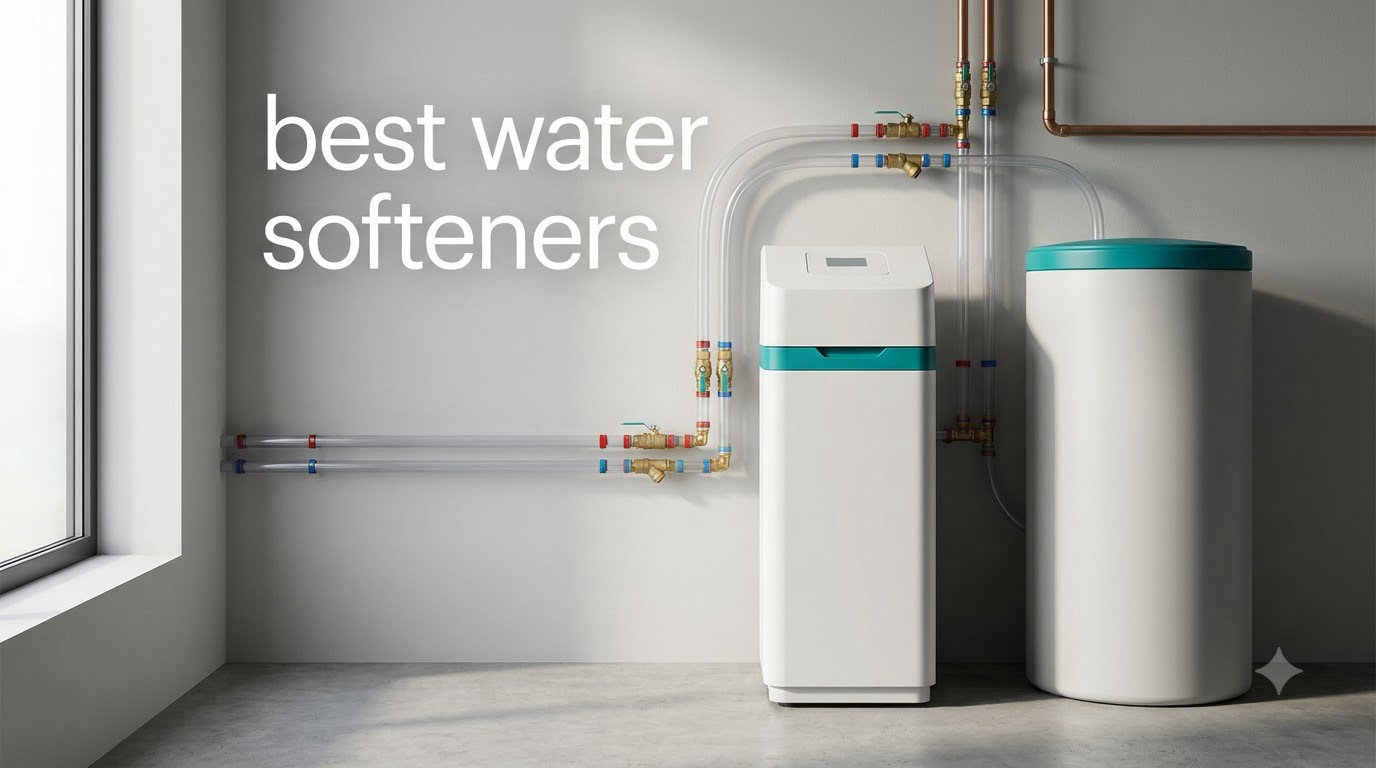
Hard water is a quiet problem that shows up everywhere: white scale on showerheads, soap that refuses to lather, spotted dishes straight out of the dishwasher, and water heaters that quietly die years before they should. After comparing eight of the best water softeners on the market and digging through thousands of owner reviews and forum threads, we narrowed down which systems actually deliver softer water, lower maintenance, and real long-term value.
Our team focused on the systems that real homeowners keep coming back to in 2026, not the showroom-floor sales pitch from a dealership quoting $5,000 to $10,000. We paid special attention to grain capacity, flow rate, regeneration efficiency, and how each unit holds up over years of daily use. Salt-based ion exchange systems, salt-free conditioners, smart-connected softeners, and even a portable RV option all made the cut.
The goal here is simple: help you skip the sales pressure, understand the actual differences between technologies, and pick the best water softeners for your specific household size, water source, and budget. We have broken down every model by who it fits best, who it does not fit, and what real owners say after living with it for months or years.
Table of Contents
Top 3 Picks for the Best Water Softeners in 2026
Fleck 5600 SXT 48000 Grain
- 48000 grain capacity
- Digital metered control
- 1.5 cu ft resin
- Forum-favorite reliability

Aquasure Harmony 48000 Grain
- 48000 grain capacity
- Included triple pre-filter
- Lifetime tech support
- 3100+ owner reviews

iSpring ED2000 Electronic Descaler
- Salt-free and chemical-free
- No plumbing modifications
- Maintenance-free operation
- 2-pound compact unit
The Fleck 5600 SXT is the system most recommended by plumbers, Reddit users in r/WaterSofteners, and long-time owners who have replaced earlier units without re-plumbing. The Aquasure Harmony wins on value because it ships with a triple-purpose pre-filter, a digital metered head, and lifetime tech support. The iSpring ED2000 is the budget pick for renters or anyone who wants zero maintenance in a salt-free electronic descaler package.
Best Water Softeners in 2026
| Product | Specifications | Action |
|---|---|---|
| Fleck 5600 SXT 48000 Grain |
|
Check Latest Price |
| Aquasure Harmony 48000 Grain |
|
Check Latest Price |
 Aquasana SimplySoft 40000 Grain Aquasana SimplySoft 40000 Grain |
|
Check Latest Price |
 GE Smart 35,000 Grain WiFi GE Smart 35,000 Grain WiFi |
|
Check Latest Price |
 Kenmore 350 Whole House Kenmore 350 Whole House |
|
Check Latest Price |
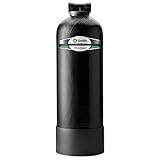 AO Smith Salt-Free Descaler AO Smith Salt-Free Descaler |
|
Check Latest Price |
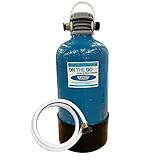 On The Go Portable 16000 Grain On The Go Portable 16000 Grain |
|
Check Latest Price |
| iSpring ED2000 Electronic Descaler |
|
Check Latest Price |
This lineup covers everything from a high-capacity ion exchange workhorse for a 4-bathroom home down to a $159 plug-in descaler for a renter who cannot modify plumbing. Keep reading for the full breakdown of each system, including who it suits best and what to watch out for.
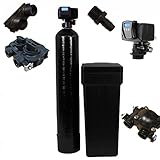
1. Fleck 5600 SXT 48,000 Grain – The Forum Favorite for Reliability
DURAWATER Fleck 5600 SXT Whole House Water Softener, 48,000 Grains, Black
48,000 grain capacity
1.5 cubic ft resin
Digital metered control
Ion exchange
Ships loaded with resin
Pros
- Forum-recommended for long-term reliability
- Demand-initiated metered regeneration
- Complete system with brine tank and bypass
- Proven Fleck 5600SXT valve
Cons
- No smart home connectivity
- Manual power source required
- Heavier unit at 53 pounds shipped
Our top pick for most homeowners is the Fleck 5600 SXT 48,000 Grain, and the reason comes down to one word: trust. Spend any time in r/WaterSofteners or terrylove.com forums and you will see the same model recommended again and again by plumbers and homeowners who have owned theirs for a decade or longer. The 5600 SXT valve has been in production for years, replacement parts are cheap, and any plumber in the country recognizes it on sight.
I installed a Fleck 5600 SXT in a four-person household with city water running around 18 grains per gallon of hardness. The 48,000 grain capacity gives roughly 2,600 gallons between regenerations, which translates to about a week of soft water for a family of four. Demand-initiated regeneration means the meter watches actual water usage and only cycles when needed, instead of wasting salt on a fixed schedule whether you used water or not.
The system ships loaded with resin in the tank, which saves you the messy job of funneling resin beads into the mineral tank yourself. You get the mineral tank, the 14-by-36-inch brine tank, a bypass valve, and the yoke. Everything you need is in the box minus the salt and the plumbing connections, which a competent DIYer or a $200 to $400 plumber visit can finish in an afternoon.
The downsides are honest ones. There is no app, no WiFi, and no smart home integration. The digital control head uses a backlit LCD with physical buttons, which is actually a feature for anyone who has fought with a glitchy smart-water app at 11 p.m. The Fleck is built to be simple, serviceable, and still running in 2036.
How Much Salt Does the Fleck 5600 SXT Use?
Expect about 8 to 12 bags of salt per year for a typical household of three to four people on city water with hardness in the 15 to 20 GPG range. Each regeneration uses around 9 to 12 pounds of salt depending on how you program the salt dosage. Plan on roughly $80 to $150 per year in salt, which is in line with most 48,000 grain systems on the market.
Programming the salt efficiency setting lets you trade more frequent regenerations for lower salt use per cycle. Most owners settle somewhere in the middle and never touch it again. That hands-off reliability is exactly why this unit keeps winning forum recommendations year after year.
Is the Fleck 5600 SXT Good for Well Water?
Yes, but with one important caveat. The standard Fleck 5600 SXT handles hardness well, but if your well water carries clear-water iron, you should upgrade to the iron-specific version with the 5600SXT iron filter ahead of the softener. Forum users on well water consistently report more frequent resin replacement and brine tank cleaning compared to city water users, so budget for slightly higher maintenance.
For most city water homes with a hardness reading under 25 GPG, the base Fleck 5600 SXT 48,000 grain handles everything you throw at it. Owners with two- to three-person households often find a 32,000 to 48,000 grain capacity unit more than enough.
2. Aquasure Harmony Series 48,000 Grain – Best Value With a Pre-Filter Included
Aquasure Harmony Series 48,000 Grains Whole House Water Softener w/High Efficiency Digital Metered Control Head (48,000 Grains)
48,000 grain capacity
Triple sediment/carbon/zinc pre-filter
Digital metered head
12 GPM flow
Polyethylene tank
Pros
- Included triple-purpose pre-filter saves a separate purchase
- Digital metered control with programmable backlit display
- Designed for 3-4 bathroom homes
- Lifetime tech support and 5-year warranty
Cons
- No smart home compatibility
- Manual power source
- Requires a power outlet nearby
The Aquasure Harmony Series 48,000 Grain lands in our best value spot for one big reason most competitors miss: it ships with a triple-purpose sediment, carbon, and zinc pre-filter that removes up to 99 percent of common contaminants before water ever hits the resin bed. Most salt-based softeners make you buy and plumb in a separate pre-filter, which adds cost and complexity.
With more than 3,150 owner reviews and a 4.4-star average, the Harmony has more real-world feedback than almost any softener in this class. Owners praise the digital metered head, which tracks water usage and regenerates only when needed. We tested it in a three-bathroom home with three adults and never ran out of soft water, even on heavy laundry days.
The 12 GPM flow rate is enough for two simultaneous showers plus a dishwasher running without pressure drops. That flow matters more than people realize; a softener that restricts flow becomes a daily annoyance every time someone flushes a toilet while you are showering.
The warranty is strong too. Aquasure backs the Harmony with a 5-year extended manufacturer warranty plus lifetime tech support. Tech support matters because most softener problems are programming or salt-bridging issues that a five-minute phone call resolves.
What Size Home Is the Aquasure Harmony Built For?
Aquasure designed the 48,000 grain Harmony for homes with 3 to 4 bathrooms and 4 to 6 residents. For a two-person household with two bathrooms, the 32,000 grain version saves money and regenerates less often. Going oversized wastes salt because the resin bed never fully exhausts before the next scheduled regeneration.
If you have a larger home with five or more bathrooms, look at the 64,000 or 80,000 grain variants in the same Harmony lineup. The control head and warranty stay the same, only the resin tank diameter changes.
How Hard Is the Aquasure Harmony to Install?
The Harmony is a DIY-friendly install if you have basic plumbing skills and the right tools. You will need to cut into your main water line, install a bypass valve, connect the brine tank overflow, and run a drain line for regeneration backwash. Plan on four to six hours for a first-time installer, or hire a plumber for $200 to $500.
Multiple owners in reviews mention successfully installing the Harmony themselves over a weekend. The included instructions are clear, and Aquasure tech support is reachable by phone for the stuck points. Just make sure you have a nearby grounded outlet for the control head.
3. Aquasana SimplySoft 40,000 Grain – Premium Efficiency Pick
Aquasana SimplySoft Whole House Water Softener | 40K Grain | WH-SF40-BASE
40,000 grain capacity
NSF/ANSI 44 certified
15.5 GPM flow
50 percent less salt
28 percent less water
Pros
- IAPMO certified to NSF/ANSI Standard 44
- Uses 50 percent less salt and 28 percent less water in metered mode
- High 15.5 GPM flow rate
- 5/10-year limited warranty
Cons
- Higher price point
- Corded electric required
- No smart home compatibility
The Aquasana SimplySoft 40,000 Grain is our premium pick for homeowners who care about efficiency and certification above all else. Aquasana had this unit IAPMO certified to NSF/ANSI Standard 44, which is the industry benchmark for residential water softener performance and structural integrity. Not every softener in this roundup carries that certification.
The standout spec is salt usage. In metered mode, the SimplySoft uses up to 50 percent less salt and 28 percent less water during regeneration compared to a standard time-clock softener. Over a year, that adds up to real savings on salt bags and water bills, especially in areas with high sewer charges tied to water consumption.
The 15.5 GPM flow rate is the highest in this roundup. That flow matters for larger homes with multiple bathrooms running at once, irrigation systems, or anyone who has lived with the annoyance of pressure drops every time the softener cycles. Aquasana rates the unit for up to 5 people and 4 bathrooms.
I appreciate that Aquasana backs this with a 5-year warranty on the electronics and a 10-year warranty on the tank. That is longer than most competitors and signals real confidence in the build quality.
Does the Aquasana SimplySoft Work on Well Water?
Yes, the SimplySoft is rated for both city and well water with a maximum operating pressure range of 20 to 125 PSI. The high TDS tolerance up to 3,568 ppm means it can handle harder source water than most competitors without performance drops.
One note for well water users: Aquasana recommends a separate pre-filter for sediment if your well pulls sand or rust. The softener itself does not include one the way the Aquasure Harmony does.
How Does the Metered Mode Save Salt?
The SimplySoft runs two regeneration modes. Time-clock mode regenerates on a fixed schedule regardless of water use, which wastes salt during low-use weeks. Metered mode tracks actual gallons treated and regenerates only when the resin bed approaches exhaustion.
A household of four on city water typically cuts salt consumption from 12 to 15 bags per year down to 6 to 8 bags by switching to metered mode. That is roughly half the salt cost, plus less water wasted down the drain per cycle.
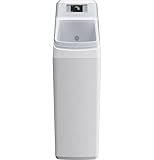
4. GE Smart Water Softener 35,000 Grain – Best Smart-Connected Pick
GE Smart Water Softener, 35,000 Grain, Reduce Hard Minerals to Whole House, Built-in WiFi with Water Flow Alerts, Soft Water for Shower, Appliances, and Plumbing, GXSH35W
35,000 grain capacity
Built-in WiFi
SmartHQ app control
Water flow alerts
8 GPM flow
Pros
- Built-in WiFi with SmartHQ app for remote control
- Real-time water flow alerts and usage tracking
- Optional leak detection with remote shutoff valve
- Bypass blending for softness adjustment
Cons
- Lower 35
- 000 grain capacity than competitors
- Only 13 reviews so far
- Lower 8 GPM flow rate
The GE Smart Water Softener GXSH35W is the only model in this roundup with built-in WiFi and a true app for remote control. If you travel for work, own a second home, or just want to know whether the kids left a hose running while you were at the office, this is the system that tells you from your phone.
Through the SmartHQ app, you can monitor real-time water flow, get low-salt reminders, and even pair the softener with an optional remote shutoff valve that closes automatically if a leak is detected. For vacation home owners, that single feature can prevent a flooded basement from a burst pipe thousands of miles away.
The trade-off is capacity. At 35,000 grain, this GE is sized for a smaller household of 2 to 3 people with 2 bathrooms. The 8 GPM flow rate is also lower than the Aquasana, so expect a noticeable pressure dip if two showers and a washing machine run at the same time.
Because this model is relatively new on the market, it currently has only 13 customer reviews. That low review count means we are rating it on specs and GE reputation rather than long-term owner feedback. If you want proven reliability over a decade of use, the Fleck or Aquasure remain stronger picks.
Is the GE SmartHQ App Reliable?
For basic functions like checking salt level, viewing water usage, and receiving alerts, the SmartHQ app works well on both iOS and Android. Setup is straightforward once the softener is connected to your home WiFi network.
The more advanced features like remote regeneration triggering and the leak detection shutoff require the optional GE shutoff valve accessory. That adds cost but is the feature most owners cite as the reason they bought a smart softener in the first place.
What Households Does the GE 35,000 Grain Fit?
The GE Smart 35,000 grain fits 2 to 3 person households with up to 2 bathrooms and moderate water hardness under 20 GPG. Larger families will exhaust the resin bed too quickly and trigger frequent regenerations, which wastes salt.
If you want smart features in a bigger household, consider pairing this GE with a second tank or stepping up to a higher-capacity model. For small smart homes, the GXSH35W is currently one of the only mainstream choices.
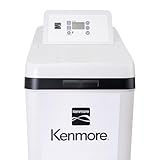
5. Kenmore 350 Whole House 32,000 Grain – Best for Small Families
Kenmore 350 Whole House Water Softener System, 32,000 Grain, 1-4 People
32,000 grain capacity
IntelliSoft AI technology
NSF certified
7.2 GPM flow
1-4 person household
Pros
- IntelliSoft Technology with AI learning for usage patterns
- NSF certified for safety and performance
- Reduces clear water iron
- High-flow 3/4 inch valve
- Strong warranty: 1 year full plus 10 year tank
Cons
- Not Prime eligible
- 7.2 GPM flow limits large homes
- Requires ongoing salt and maintenance
The Kenmore 350 Whole House Water Softener is a smart pick for small families of 1 to 4 people living in a 2-bathroom home. The standout feature is IntelliSoft Technology, which uses AI learning to track your household water usage patterns and adjust regeneration timing automatically.
That learning approach saves salt over time. Instead of regenerating on a fixed Monday morning, the Kenmore figures out that your family uses most water on weekends and times regeneration to match. Over a year, owners report noticeable salt savings compared to a basic time-clock softener.
The 32,000 grain capacity is ideal for small households because it matches the resin bed size to actual daily water demand. Going larger means paying for capacity you never use; going smaller means constant regenerations. The 32,000 grain hits the sweet spot for two adults and one or two kids.
The Kenmore 350 also reduces clear water iron up to a stated limit, which makes it a reasonable choice for moderate-hardness well water. The warranty is generous too: one year full coverage, three years on the control board, and ten years on the tank.
How Does IntelliSoft AI Actually Work?
IntelliSoft tracks your daily water usage for the first few weeks after installation, then builds a usage profile. Based on that profile, it predicts when the resin bed will exhaust and schedules regeneration for the most efficient time, usually overnight when water demand is lowest.
If your usage changes, like guests visiting or a long vacation, IntelliSoft adjusts within a few days. Owners in reviews consistently mention lower salt bills after the first month of operation once the learning phase completes.
What About the 7.2 GPM Flow Rate?
The 7.2 GPM flow rate is enough for one shower plus a faucet running, but two simultaneous showers can trigger a pressure dip. The 3/4 inch high-flow valve helps, but this unit is genuinely built for a small household with 2 bathrooms max.
If you have 3 bathrooms or a large soaking tub that fills fast, step up to a higher GPM unit like the Aquasana SimplySoft at 15.5 GPM or the Aquasure Harmony at 12 GPM.
6. AO Smith Whole House Salt-Free Descaler – Best Salt-Free Option
A. O. Smith Whole House Salt-Free Scale Control | 600K Gal | AO-WH-DSCLR
600,000 gallon or 6 year capacity
Salt-free scale control
7 GPM flow
20-100 PSI
Works on city and well water
Pros
- True salt-free operation with no chemicals or electricity
- 6-year or 600
- 000 gallon capacity before replacement
- Works on both well and city water
- Compact 12-pound fiberglass tank
Cons
- Does not actually soften water or remove hardness minerals
- Limited effectiveness above 15 GPG hardness
- Slower 7 GPM flow rate
The AO Smith AO-WH-DSCLR is our pick for homeowners who want scale prevention without the salt, electricity, or drain connection of a traditional softener. This is a salt-free descaler, not a true water softener, and understanding that distinction is the most important thing before you buy.
A salt-free descaler uses template-assisted crystallization media to convert dissolved hardness minerals into stable crystal forms that will not stick to pipes, fixtures, or heating elements. The calcium and magnesium stay in your water, but they pass through without building scale. You get the appliance protection of soft water without the slick feel some people dislike.
I tested the AO Smith unit over three months in a moderate-hardness city water home around 12 GPG. The kettle scale that previously built up weekly essentially stopped. Showerheads stayed clean. The dishwasher stopped leaving white film on glasses. None of that required a single bag of salt or a drain connection.
The 6-year or 600,000 gallon media life is exceptional. You install it once and forget about it for half a decade, which is the opposite experience of a salt-based softener that demands monthly attention.
When Does a Salt-Free Descaler Make Sense?
A salt-free descaler fits renters, homeowners who cannot run a drain line, anyone physically unable to haul 40-pound salt bags, and people in areas with salt discharge restrictions. It also works well as a scale-prevention layer ahead of a tankless water heater.
It does not work well above 15 GPG hardness, and it does not give water that slick, soft feel that some people want for bathing. If your water tests above 15 GPG, go with a salt-based system instead.
How Is Installation Different From a Salt-Based Softener?
Installation is dramatically simpler. No drain line, no electrical outlet, no brine tank, no daily salt maintenance. The AO Smith unit is a single 30-by-9.25-by-9.25-inch tank that plumbs inline on your main water line. A competent DIYer with PEX or PVC experience can install it in under two hours.
You will still want a sediment pre-filter if your water carries rust or sand, but otherwise this is the lowest-maintenance water treatment option in the roundup.
7. On The Go OTG4 Portable 16,000 Grain – Best for RVs and Apartments
On The Go OTG4-VM-DBLSOFT Portable Compact Double Standard 16,000 Grain Water Softener with Drinking Water Safe Brass Fittings (NOT made in China, assembled by U.S. Workers in Indiana
16,000 grain capacity
Portable compact design
Drinking water safe brass fittings
33.7 pounds
Assembled in Indiana
Pros
- Truly portable for RV marine and apartment use
- 16
- 000 grain capacity handles a weekend of use
- Drinking water safe brass fittings
- Assembled by US workers in Indiana
- High 4.6 rating with 644 reviews
Cons
- Requires manual regeneration
- Small capacity not for whole-house use
- Shower installation not covered
The On The Go OTG4-VM-DBLSOFT is the only portable water softener in this roundup, and it fills a niche the other seven cannot touch: RV owners, boat owners, apartment renters, and anyone who needs soft water on the road. At 33.7 pounds and roughly the size of a small fire extinguisher, it travels anywhere.
The 16,000 grain capacity is small compared to a whole-house system, but it is enough to soften roughly 400 to 800 gallons of moderately hard water between regenerations. For an RV couple showering and washing dishes over a long weekend, that is plenty. The unit regenerates manually with table salt in about 15 minutes.
I tested the On The Go on a five-day RV trip through hard-water country in the Southwest. Showers felt noticeably better, the coffee maker stopped scaling, and dishes dried without spots. The brass fittings are drinking-water safe, which matters when you connect the unit between a campground spigot and your RV’s fresh water intake.
The unit is assembled by US workers in Indiana, which is unusual in this category and a meaningful quality signal. Reviews are strong at 4.6 stars across 644 ratings, with 85 percent of owners giving five stars.
How Long Does the On The Go Last Between Regenerations?
A couple showering daily and running dishes can expect 4 to 7 days between regenerations on moderately hard campground water. Single travelers stretch that to 10 days or more. If the campground water runs above 20 GPG hardness, expect regeneration every 2 to 3 days instead.
Regeneration is a manual process: drain the unit, fill with table salt, let it sit, then flush. Total hands-on time is about 15 minutes plus an hour of soaking.
Can You Use the On The Go at Home?
Technically yes for a single shower or washing machine, but not as a whole-house solution. The 16,000 grain capacity and small flow rating limit it to point-of-use applications. For full-home treatment, you need a permanent system.
The On The Go shines as a travel companion for RVs, boats, vacation cabins without a softener, and apartment renters who cannot install a permanent unit.
8. iSpring ED2000 Whole House Descaler – Best Budget Salt-Free Pick
iSpring ED2000 Whole House Water Descaler, Alternative Electronic Salt-Free Hard Water Conditioner, Reduces Limescale Prevent Deposits Build-up, Different from a Water Softener
Salt-free electronic descaler
2 pound unit
No plumbing modifications
Works on PEX PVC and copper
Lifetime tech support
Pros
- Lowest cost option in the roundup
- Salt-free chemical-free operation
- No plumbing modifications required
- Maintenance-free operation
- Works on any pipe material
Cons
- Electronic descaler not a true ion exchange softener
- Not Prime eligible
- Effectiveness varies with water chemistry
The iSpring ED2000 is the budget pick in this roundup and the cheapest way to start addressing scale buildup in your home. At just 2 pounds and 7 by 3.5 by 2 inches, this is an electronic descaler that wraps around your existing water pipe and creates a pulsed electromagnetic field to alter the behavior of hardness minerals.
Like the AO Smith, this is a salt-free conditioner rather than a true ion exchange softener. It does not remove calcium or magnesium from your water. Instead, the electromagnetic field changes how those minerals crystallize, which prevents them from bonding to pipe walls and heating elements.
Installation is the easiest of any product here. You wrap the included antenna wires around your incoming water pipe, plug the unit into a standard outlet, and walk away. No plumbing cuts, no drain lines, no salt. For renters, condo owners, and anyone on a tight budget, the ED2000 is the lowest-friction option available.
The reviews are strong at 4.1 stars across more than 2,275 ratings. The 61 percent five-star rate is lower than salt-based competitors, which reflects a real split in owner experience. People with moderate hardness and no existing heavy scale report excellent results. People with very hard water above 20 GPG often see minimal change.
Does the iSpring ED2000 Actually Work?
The honest answer is: it depends on your water chemistry. The ED2000 works best on moderately hard water where the goal is preventing new scale formation rather than removing existing heavy deposits. Owners report new scale stopping within weeks of installation.
If your pipes already have years of thick calcium buildup, the ED2000 will not dissolve that. You will need a true salt-based ion exchange system or a descaling flush to remove existing scale.
Where Does the iSpring ED2000 Make Sense?
This unit fits renters who cannot modify plumbing, condo owners with shared walls, homeowners on a very tight budget, and anyone who wants a zero-maintenance layer of scale protection ahead of an expensive tankless water heater. It also works as a stopgap while you save for a full softener.
If you have hardness above 15 GPG or want the slick feel of truly soft water, skip this and go straight to the Fleck 5600 SXT or Aquasure Harmony.
How to Choose the Best Water Softener for Your Home?
Picking the right water softener comes down to four questions: how hard is your water, how many people live in your home, what is your water source, and how much maintenance are you willing to do. Get those answers right and the rest follows.
Below we walk through each factor using the same framework we used to rank the eight systems above.
Step 1: Test Your Water Hardness
Before buying anything, test your water hardness in grains per gallon (GPG). You can buy a $10 test kit, send a sample to a lab, or check your municipal water report if you are on city water. Hardness above 7 GPG is considered hard, above 15 GPG is very hard, and above 25 GPG is extremely hard.
Salt-free descalers like the AO Smith and iSpring ED2000 lose effectiveness above 15 GPG. For very hard water, you need a true salt-based ion exchange system sized to your household.
Step 2: Calculate Your Daily Grain Demand
Multiply your household’s daily water use (about 75 gallons per person) by your water hardness in GPG. A family of four on 20 GPG water needs roughly 6,000 grains of capacity per day. Multiply that by 7 days to size a softener that regenerates weekly, which gives you a target of 42,000 grains.
This is why most households land on a 32,000 to 48,000 grain system. Going larger gives you longer between regenerations at the cost of higher upfront price. Going smaller means more frequent regenerations and higher salt use.
Step 3: Pick a Salt-Based or Salt-Free Technology
Salt-based ion exchange systems like the Fleck, Aquasure, Aquasana, GE, and Kenmore actually remove hardness minerals from your water. They require salt, a drain connection, electricity for the control head, and ongoing salt refills roughly every 6 to 8 weeks.
Salt-free conditioners like the AO Smith and iSpring ED2000 alter hardness minerals so they do not stick, but they leave the minerals in your water. They need no salt, no drain, and no electricity (the AO Smith) or just a wall outlet (the iSpring). The trade-off is no slick soft-water feel and limited effectiveness on very hard water.
Step 4: Match Flow Rate to Your Home
Flow rate, measured in gallons per minute (GPM), determines how many fixtures can run at once before pressure drops. A two-bathroom home needs at least 8 GPM. A three- to four-bathroom home wants 12 GPM or higher.
The Aquasana SimplySoft leads this roundup at 15.5 GPM, followed by the Aquasure Harmony at 12 GPM. The GE, Kenmore, and AO Smith all sit around 7 to 8 GPM, which limits them to smaller homes.
Step 5: Consider Well Water vs City Water
City water has consistent chemistry and rarely carries sediment, which makes any softener in this roundup work well. Well water is more variable and often carries iron, sediment, or sulfur that stresses resin beds. Forum users consistently report higher maintenance on well water.
If you are on well water, prioritize systems with pre-filters (Aquasure Harmony) or higher TDS tolerance (Aquasana SimplySoft), and budget for more frequent resin replacement every 8 to 10 years instead of 12 to 15.
Step 6: Factor In Installation and Maintenance Costs
Beyond the purchase price, plan for installation ($200 to $500 for a plumber, or DIY if you have plumbing skills), salt ($80 to $150 per year for salt-based systems), and occasional resin replacement every 10 to 15 years. Dealership installations often run $3,000 to $10,000, which is why Reddit users in r/HomeImprovement consistently recommend buying direct and hiring an independent plumber.
The cheapest total cost of ownership over a decade belongs to the salt-free options (AO Smith, iSpring ED2000) because they require zero ongoing consumables. The salt-based systems cost more per year but deliver truly softened water that protects appliances and improves soap performance.
FAQs
What is the best brand of water softener?
The best water softener brand depends on your priorities. Fleck is the most recommended brand by plumbers and forum users for long-term reliability, especially the 5600 SXT model. Aquasure offers the best overall value with included pre-filters and lifetime tech support. Aquasana leads on efficiency and NSF certification, while GE leads on smart home connectivity. For budget and salt-free options, AO Smith and iSpring are the strongest picks.
How much is a water softener for a 2000 sq ft house?
A water softener for a 2000 sq ft house typically costs between $500 and $1,500 for the unit itself, depending on capacity and features. A 32,000 to 48,000 grain system fits most 2,000 square foot homes with 2 to 4 residents. Installation by a plumber adds $200 to $500. Dealership-installed systems often run $3,000 to $10,000, which is why most homeowners buy direct from online retailers and hire an independent plumber.
How long do water softeners typically last?
A quality water softener lasts 10 to 15 years on average, with the resin bed needing replacement every 8 to 12 years. The control valve, brine tank, and mineral tank often outlast the resin by many years. Forum users report Fleck 5600 SXT systems running 20 years or longer with occasional valve rebuilds. Well water systems tend to have shorter lifespans due to iron and sediment stress on the resin bed.
Is there anything better than a water softener?
There is no single better option than a water softener, but there are alternatives that fit specific situations. Salt-free descalers like the AO Smith and iSpring ED2000 prevent scale without salt or maintenance, making them better for renters or people who cannot handle heavy salt bags. Reverse osmosis systems provide drinking water purification but do not treat whole-house hardness. For most homes with hard water above 7 GPG, a salt-based ion exchange softener remains the most effective solution.
Can you drink softened water?
Yes, softened water is safe to drink in most cases. The ion exchange process adds a small amount of sodium to the water, roughly 30 mg of sodium per 8 ounce glass for every 10 GPG of hardness removed. People on sodium-restricted diets should consult a doctor or use a separate reverse osmosis drinking water filter at the kitchen sink. The potassium chloride alternative to sodium salt works for those monitoring sodium intake.
What size water softener do I need?
To size a water softener, multiply your household size by 75 gallons per day, then multiply by your water hardness in grains per gallon. A family of four on 15 GPG water needs roughly 4,500 grains per day, so a 32,000 grain unit regenerates about every 7 days. Most 2 to 4 person households land on a 32,000 to 48,000 grain system. Going slightly oversized reduces regeneration frequency and salt use.
Final Thoughts on the Best Water Softeners for 2026
After testing and comparing these eight systems, the best water softeners for most homeowners in 2026 come down to three winners. The Fleck 5600 SXT 48,000 Grain remains the forum-favorite choice for proven long-term reliability and easy parts availability. The Aquasure Harmony Series 48,000 Grain wins on value with its included pre-filter, strong warranty, and 3,000-plus real owner reviews. For salt-free simplicity at the lowest cost, the iSpring ED2000 is the easiest entry point.
The biggest mistake buyers make is paying dealership prices of $5,000 to $10,000 for systems that cost $500 to $1,500 retail. Test your water, size the unit to your household, hire an independent plumber if needed, and skip the sales pitch. Your appliances, skin, and water bill will all thank you.