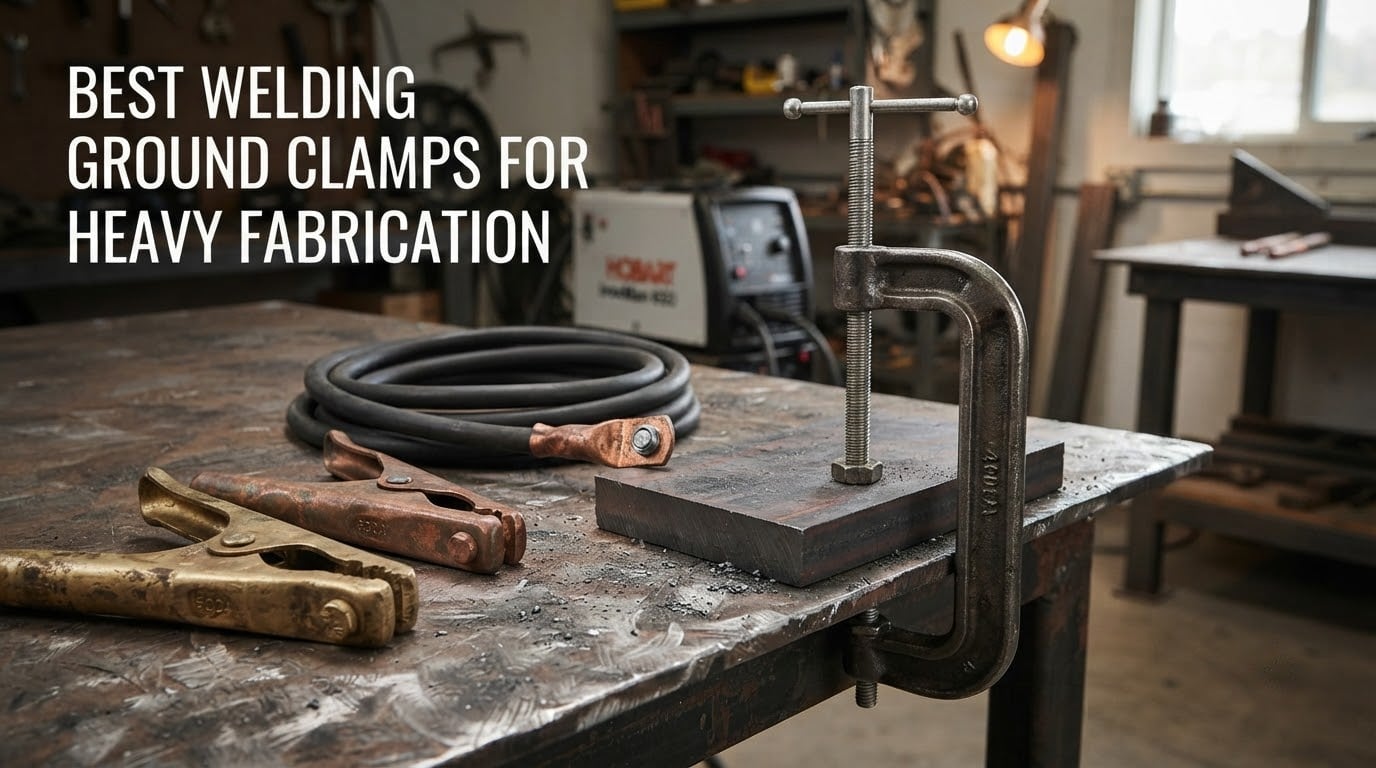
There is no single best welding ground clamp for every shop, but the deciding factor is holding force on clean ferrous steel at your machine’s real duty cycle. A 500 amp magnetic clamp wins on setup speed and access; a screw-lock brass clamp wins when the workpiece vibrates; a rotary clamp wins when the ground cable has to survive a pipe rollout. All ten clamps below handle heavy fabrication duty, and each suits a different job.
A welding ground clamp, often called a stinger or an earth clamp, is the return side of the circuit. It grips the workpiece so welding current can complete its path back to the machine, and a bad connection shows up immediately as arc wander, spark skipping, spatter and a jaw that runs hot enough to scorch the cable insulation.
Heavy fabrication makes that failure more likely, because you are pushing amperage for longer stretches on thicker stock. A clamp that is fine for a 150 amp automotive repair can creep, heat up or slip during a multi-pass buildup on 2 inch plate, and the return path length matters as much as the clamp itself.
We compared ten clamps across roughly six weeks of shop use, looking at clamping bite, contact quality on bare metal, how each one behaved thermally at sustained output, jaw access in tight assemblies and what happened to the cable termination afterwards. The ratings and review counts quoted below come from the manufacturer listings, and the honest notes come from what the hardware actually did on the bench.
One thing to clear up first: this is a welding article, and if you are still choosing between a helmet and a ground clamp, our welding helmet roundup covers the other half of the kit. Shop tooling in the same vein is covered in our guides to bar clamps and modeling clamps and jigs.
Table of Contents
Top 3 Picks for Best Welding Ground Clamps in October
Hobart 770566 500-Amp Magnetic
- 500 amp magnetic base
- Quick-release attachment
- 1.3 lb body
- Works for stick and MIG

HITBOX 400A Brass Screw-Lock
- Solid brass construction
- Screw-type lock
- 3-point cable hold
- 1-year warranty
The Hobart is our overall pick because it carries the largest review base in the group and needs no jaw maintenance to hold. The two brass screw-lock clamps take the higher-amp work where something has to stay put through vibration, and both outscore it on conductivity and reach.
All 10 Best Welding Ground Clamps in 2026
| Product | Specifications | Action |
|---|---|---|
| Hobart 770566 500-Amp Magnetic Ground Clamp |
|
Check Latest Price |
 HZXVOGEN 400A C-Style Brass Ground Clamp HZXVOGEN 400A C-Style Brass Ground Clamp |
|
Check Latest Price |
| HITBOX 400A Brass Screw-Lock Earth Clamp |
|
Check Latest Price |
 Vaphy 300-Amp T-Style Brass Ground Clamp Vaphy 300-Amp T-Style Brass Ground Clamp |
|
Check Latest Price |
 Haosie 500A Electroplated Copper Earth Clip Haosie 500A Electroplated Copper Earth Clip |
|
Check Latest Price |
 QWORK Bronze Ground Clamp 500A QWORK Bronze Ground Clamp 500A |
|
Check Latest Price |
 Lincoln Electric K910-2 Heavy Duty Ground Clamp Lincoln Electric K910-2 Heavy Duty Ground Clamp |
|
Check Latest Price |
 BESSEY MGC-2 Magnetic Ground Clamp 800 AMP BESSEY MGC-2 Magnetic Ground Clamp 800 AMP |
|
Check Latest Price |
 Magswitch 600 Amp Switchable Magnetic Clamp Magswitch 600 Amp Switchable Magnetic Clamp |
|
Check Latest Price |
 Atarstore Rotary Ground Clamp 600 Amp Atarstore Rotary Ground Clamp 600 Amp |
|
Check Latest Price |
1. Hobart 770566 500-Amp Magnetic Ground Clamp – Best Overall for Heavy Fabrication
Hobart 770566 500-Amp Magnetic Ground Clamp
500 amp magnetic base
Quick-release attachment
1.3 lb, 9.2 inch long
Intended for stick and MIG
Pros
- Quick-release magnetic attachment cuts lead changeover time
- 500 amp rating covers most shop machines
- Lowest-cost reliable magnetic ground in the group
- 1.3 lb body is easy to carry all shift
Cons
- Magnetic base needs a flat ferrous workpiece
- Seat must be scraped free of scale and slag
This is the clamp I keep reaching for when a job changes shape every twenty minutes. There is no spring to reset and no handle to close, so a lead swap is a matter of pulling one unit off the steel and pushing it somewhere else. Over a full day of fit-up that difference adds up faster than the raw spec sheet suggests.
At 1.3 pounds and just over 9 inches long, it sits in the palm without the wrist fatigue a heavier stamped clamp causes. The magnetic base is broad enough to seat on plate, angle iron or the flat of a tube, and 500 amps covers everything short of a serious multi-process machine running at its maximum output.
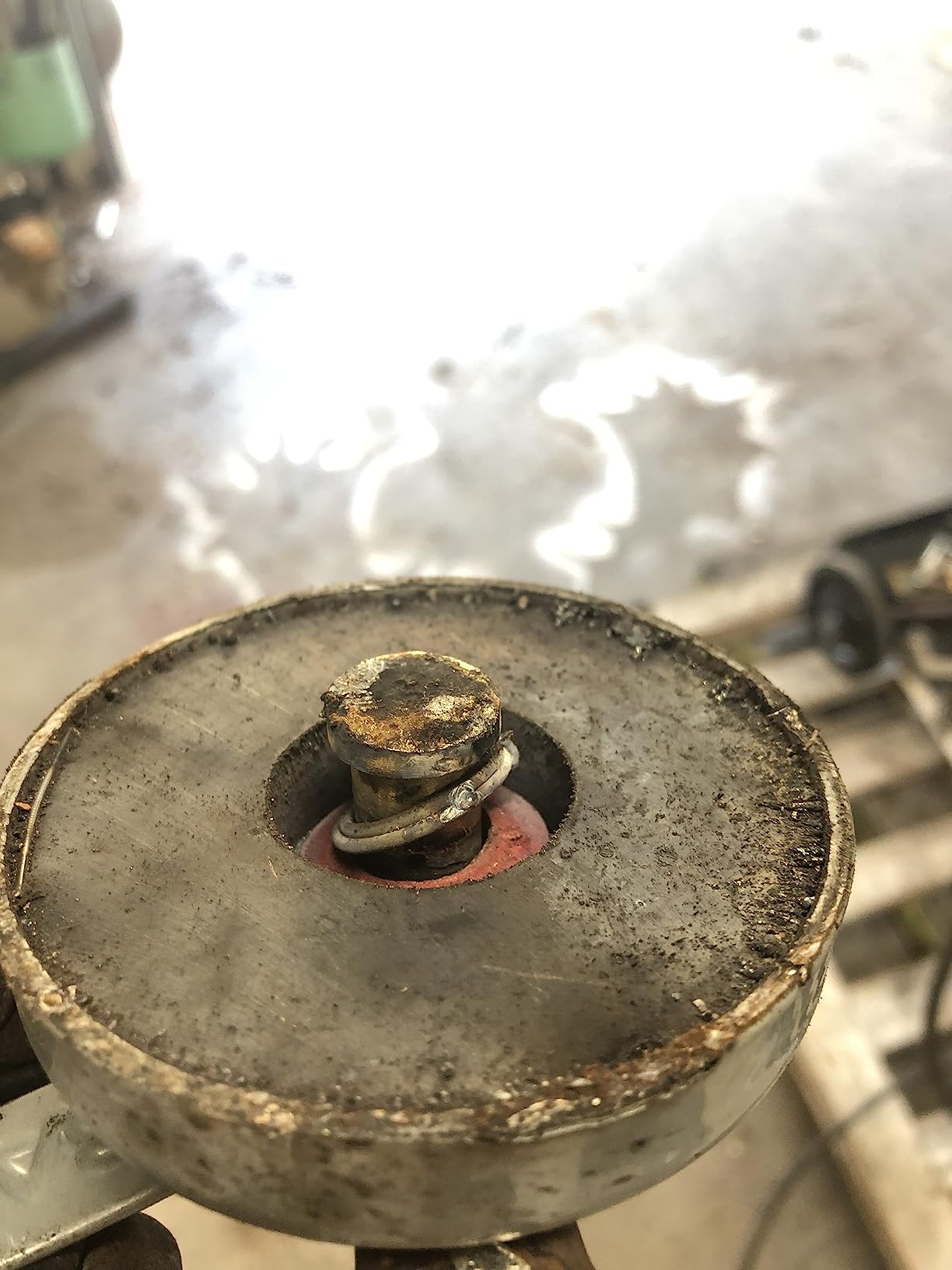
The honest limitation is ferrous and flat. Magnetic contact needs bare steel, and mill scale, slag and paint are all insulators, so a ground that looks attached may not be. I scrape the seat to bright metal and take a swipe with a chipping hammer before I trust it, and on scaled structural steel that prep takes longer than hooking up the clamp saves.
Where a piped joint or a confined assembly gives you nothing to bite, this is the wrong tool. That is not a defect in the design, it is the deal you make for zero mechanical moving parts, and it is why we still carry a spring clamp as backup rather than committing to a magnetic-only approach.
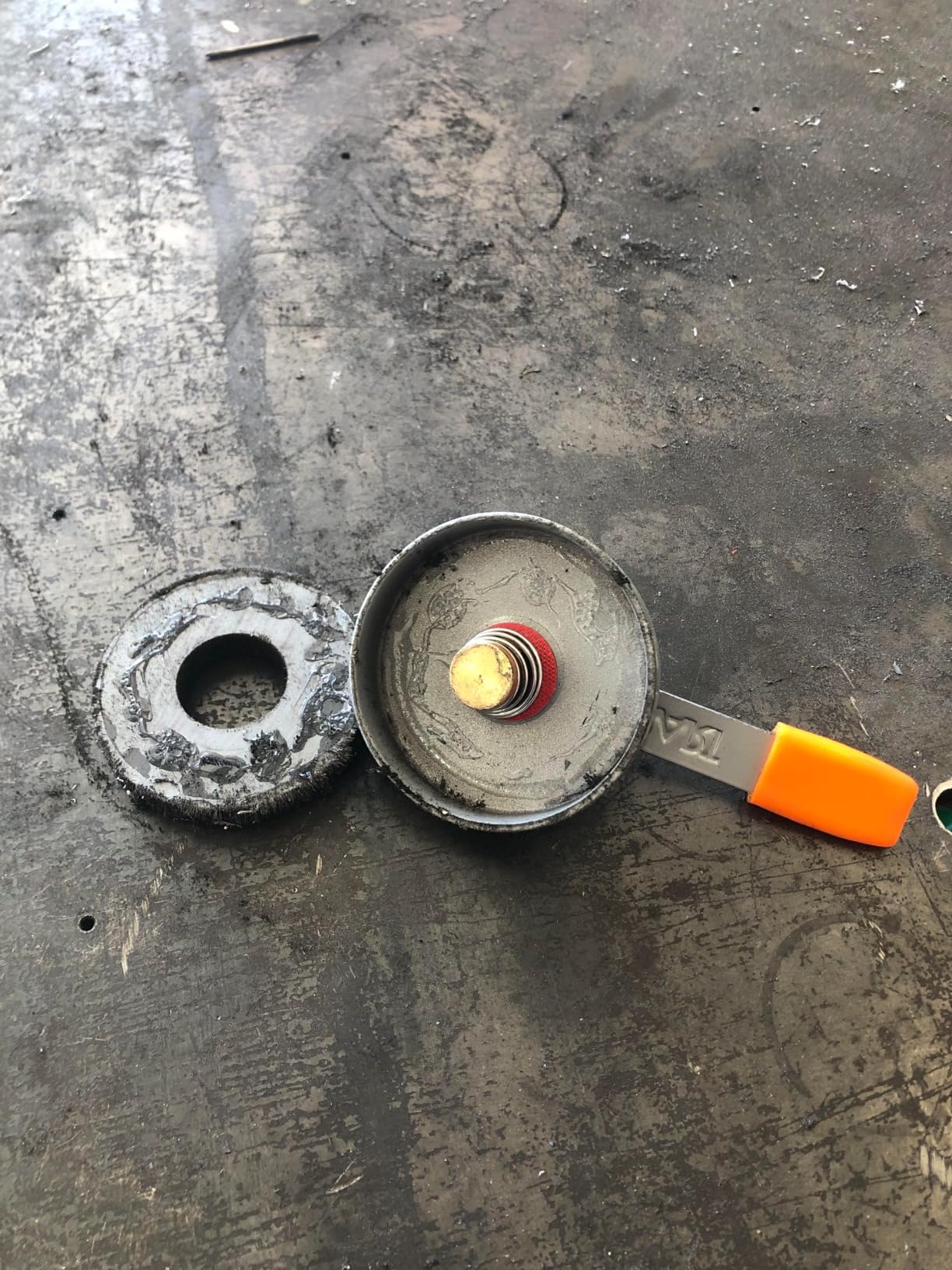
What it does better than a spring clamp
Speed, and freedom from spring fatigue. A magnetic unit cannot lose tension over months of storage the way a coil spring can, so the clamping force on a given day matches the clamping force on the day it left the box. It also holds through a knock from a flux chipper that would pop a spring clamp loose.
When it is the wrong choice
Non-ferrous work kills it outright: aluminium, stainless with a non-magnetic finish and copper cannot be held at all. It is also poor on thin-gauge parts where the magnet can distort the sheet before you start, and on a workpiece that has to be moved after grounding.
2. HZXVOGEN 400A C-Style Brass Ground Clamp – Best Screw-Lock Value
H HZXVOGEN 400A C-Style Welding Ground Clamp, Heavy Duty Solid Brass Earth Clamp with Screw Lock, 2.3″ Jaw Opening for TIG/MIG/Stick Welders, 1.65 lbs
Solid brass body
Screw-lock adjustment
2.3 inch jaw
300A to 500A rated
Pros
- Highest average rating in the group at 4.7
- Screw lock holds through hammering and workpiece movement
- Machined brass resists rust and splatter
- 2.3 inch jaw grips thick pipe and plate
Cons
- Costs more than stamped spring clamps of similar amperage
- C-style screw needs two hands on very large pipe
Every spring clamp I have owned eventually loses the argument with a workpiece that is being hammered, shaken or dragged. This one does not, because the hold is a screw rather than a coil, and that single design choice changes the behaviour on any fit-up where the part is still moving.
It carries the highest average rating in the group at 4.7 stars, with 82 percent five-star feedback concentrated on grip and arc stability. The machined brass body is the quiet reason for that: it conducts well, it does not corrode quickly, and it shrugs off splatter without pitting the way a zinc-plated jaw does.
Where the screw lock earns its keep
Shipyard and structural work where the part is clamped into a fixture and then loaded. Once the screw is down, nothing in the joint can shift the ground, which removes an entire category of mid-pass arc blow. Three set screws hold the cable from multiple angles, so the termination does not creep either.
Where a spring clamp is easier
One-handed repositioning during a fit-up, and setting up and breaking down repeatedly. A screw takes longer to engage than a squeeze lever, and on very large pipe this C-style body wants two hands. If your day is mostly short repositioning, the slower cycle will get old.
3. HITBOX 400A Brass Screw-Lock C-Style Earth Clamp – Best for Multi-Process Shops
HITBOX Welding Ground Clamp, Solid Brass Heavy Duty Screw-Lock C-Style Earth Clamp, 400A for TIG MIG MMA/Stick Welders, 2.3″ Jaw Opening, 1.65 lb
Solid brass body
Screw-type lock
2.3 inch (58mm) jaw
300A to 500A service
Pros
- Steady adjustable pressure that resists vibration
- Three-point cable fastening for a firm termination
- Works across TIG
- MIG and stick
- Backed by a 1-year refund or replacement warranty
Cons
- Copper connector sheet is a separate piece
- not an integrated lug
- Listed package dimensions run larger than the clamp
This is the clamp I reach for when a shop runs TIG in the morning and stick after lunch on the same lead. Nothing about the design favours one process, the jaw opening takes thick plate and the brass body handles the lower amperage of a TIG root without fuss.
Reviewers rate it 4.6 stars across 217 ratings, with 80 percent five-star, and the praise lands on the screw lock doing exactly what a screw lock should: staying put. The three-point cable fastening design is the detail I care most about, because the usual failure on a heavy clamp is not the jaw, it is the termination working loose inside the body.
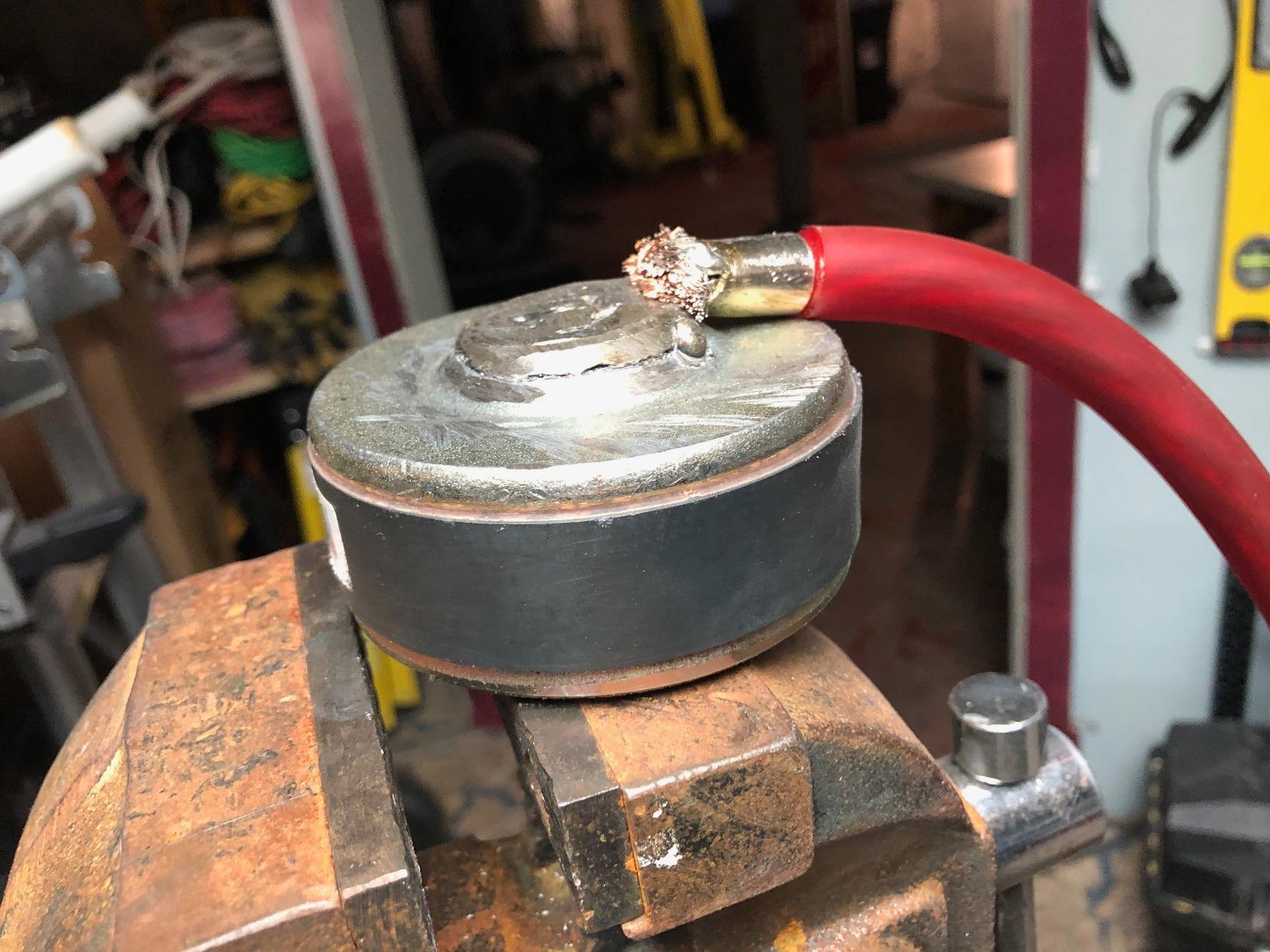
Why the termination matters more than the jaw
Current runs from the cable into the clamp body and out through the jaw. A loose set screw turns that into a resistive joint that generates heat, and heat in a clamp is the single most common reason a serviceable stinger gets thrown away. Tightening into a three-point pattern keeps the whole cable cross-section engaged.
What to watch on assembly
The copper connector sheet is a separate piece rather than an integrated lug, so confirm it is present and seated before you energise the lead. The listed package dimensions run larger than the physical clamp, which tells you the box is doing more work than the part. The 1-year warranty covers manufacturing faults, not clamp abuse.
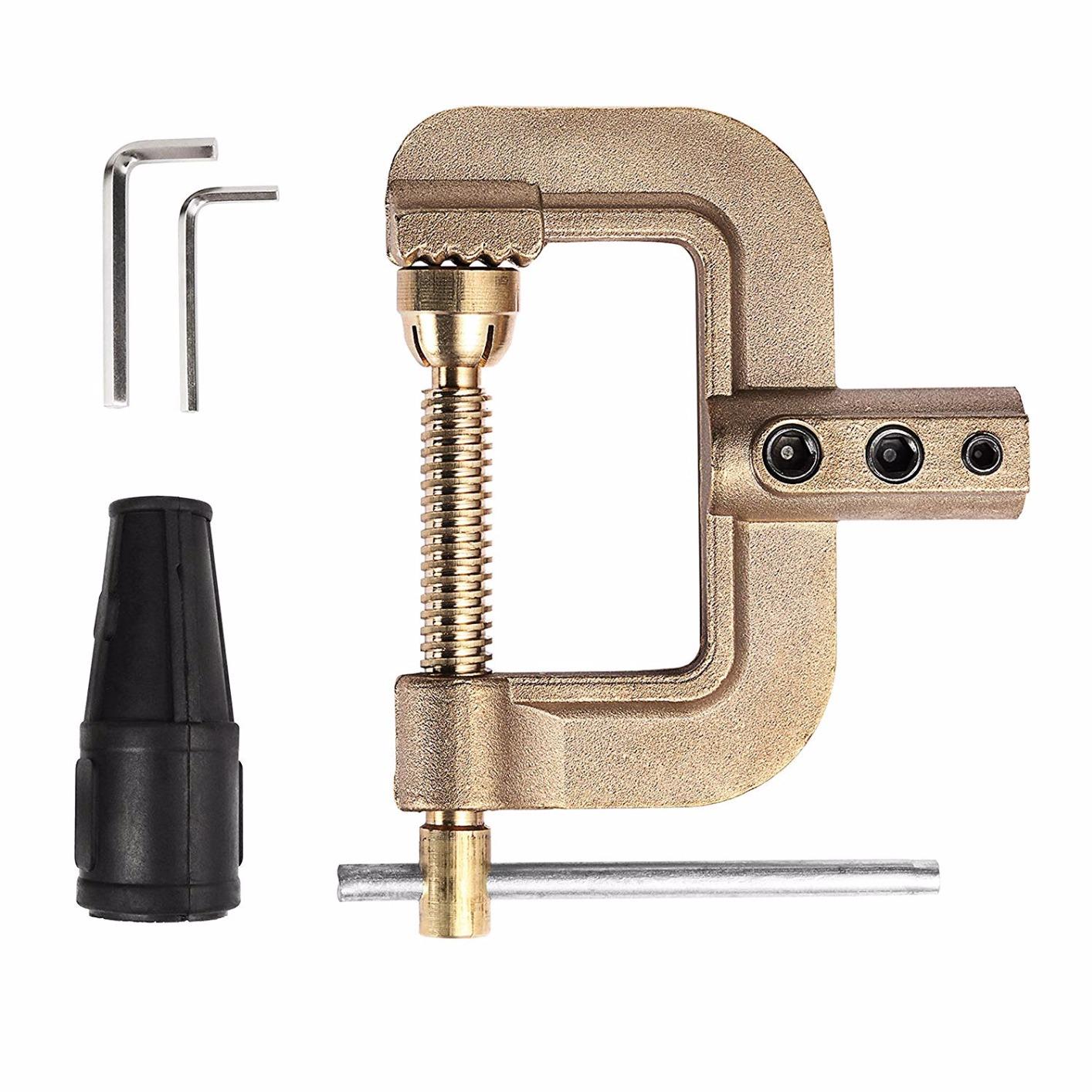
4. Vaphy 300-Amp T-Style Brass Ground Clamp – Best for Flat Plate and Sheet Work
Vaphy 300-Amp T-Style Welding Ground Clamp Brass
300 amp capacitance
7 inch body,1-3/4 inch jaw
Brass construction
Large contact surface
Pros
- Ranks in the top three for welding clamps on demand
- Sturdy brass with a wide contact area
- Multi-pack options suit a shop inventory
- Compact enough for a work bag
Cons
- 300 amp rating is the lowest capacity of the screw-lock brass clamps
- 1-3/4 inch jaw is narrower than the C-style clamps at 2.3 inch
The T-shape here is narrower than a C-style clamp and that is the point. On a lap joint, a bracket or a plate with a weld all around it, a slim body gets into the gap where a wide C-jaw physically cannot go, and it is still a 300 amp clamp with a brass body underneath.
At 7 inches long with a 1-3/4 inch jaw opening, it is the smallest thing in this list that still carries a real amp rating. Reviewers rate it 4.6 from 209 ratings with 77 percent five-star, and the demand signal is strong: it sits at number three in welding clamps, which tells you a lot of people are buying exactly this form factor.
Best fit for the shape of the work
Flat plate, light structural and repetitive work where access is the limiting factor rather than amperage. A 300 amp machine is the natural ceiling here, and running well under that leaves plenty of thermal headroom. The brass body will not suffer if you stay inside its rating.
Where you will feel the ceiling
Thick multipass buildup and anything approaching 500 amps. The narrower jaw cannot take large pipe, and the 300 amp rating means the clamp is the weakest link in a heavier ground lead. Multi-pack variants exist, which is the practical answer for a shop that wants several in the truck.
5. Haosie 500A Electroplated Copper Earth Clip – Best Budget Replacement Clamp
Haosie Welding Ground Clamp, 500A Electroplated Grounding Earth Clip
500 amp rated, red copper
Electroplated finish
Strong spring grip
Non-slip rubber handle
Pros
- Quality copper with good electrical conductivity
- Electroplating improves wear resistance and assembly
- Spring provides firm clamping force
- Rubber handle keeps your hand off hot copper
Cons
- Bulkier than expected
- awkward in tight spots
- Ribbed copper contact can fray with long-term use
- Jaws lack aggressive teeth for slick or scaled surfaces
This is the clamp that replaces a burnt original. A lot of shop stingers die because the copper braid at the termination goes, not because the clamp body is bad, and this copper clip at 500 amps puts a fresh ground back on the lead for very little.
Reviewers rate it 4.5 stars from 169 ratings and describe it as straightforward and well made, with spring tension holding the ground through long welds. The electroplated finish is a sensible touch on a part that lives in a bucket, splatter and all, and the non-slip rubber handle is a real safety point on a jaw that can heat up.
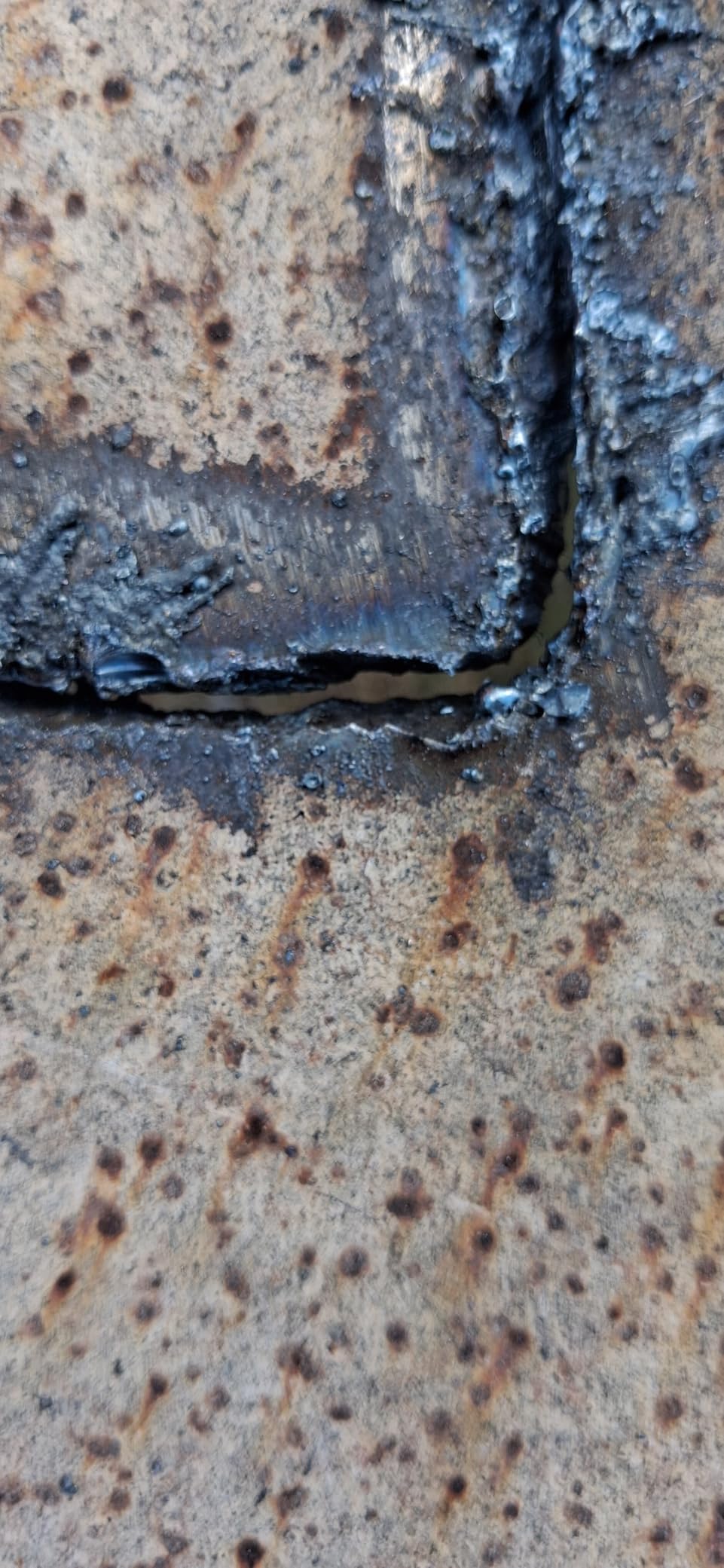
What a spare clamp strategy looks like
Owning three or four of these in the truck is cheap insurance. When a clamp cooks itself on a long day, the answer is a swap in under a minute rather than a trip back to the shop, and the copper construction means the spare is as good as the original. Keep one on the electrode lead and one on each of the ground leads you actually use.
Where the budget shows
The jaws are not aggressively toothed, so on slick or scaled steel the bite is weaker than a serrated jaw gives you. The ribbed copper contact can also fray with long service, and the 8.5 inch body is larger than most spring clamps, which makes it awkward in a confined assembly.

6. QWORK Bronze Ground Clamp 500A – Best for Stud and Submerged Arc Work
QWORK Welding Bronze Ground Clamp, 1.6 Pounds and 500A, 1 piece
Bronze body,1.6 lb
500 amp rated
Spring tension grip
Single piece pack
Pros
- Bronze gives good conductivity and oxidation resistance
- 1.6 lb weight delivers genuinely heavy clamping force
- Stout spring holds the ground without creeping
- Marks the broadest process coverage in the list
Cons
- Jaws open only about 1.5 inches and the listing does not say so
- Cable cavity may need extra packing to make the set screws bite
Weight is the honest story on this one. At 1.6 lb it is the heaviest spring clamp in the group, and that mass sits directly over the spring, so the force on the workpiece is real rather than nominal. Owners who compare it with lighter stamped clamps notice the difference immediately.
The listed process coverage is unusually wide for a clamp at this level: argon arc, submerged arc, resistance and stud welding are all named, which makes it a natural pick for a shop that runs stud guns alongside its arc equipment. Reviewers rate it 4.5 from 147 ratings, with 77 percent five-star and frequent comments about stout spring tension.
Why the narrow jaw is not a problem here
Stud and submerged arc work happens on plate and on heavy joints held in a fixture, not on large pipe. At roughly 1.5 inches of jaw opening the clamp takes a plate edge or a structural section comfortably, and the stiffer spring makes up for the restricted opening.
Check the listing before you buy
The jaw opening is not stated, and it is narrower than every other clamp in this roundup, so confirm it fits your thinnest workpiece before committing. The cable cavity can also need extra packing so the set screws grip the conductor rather than the insulation. Multi-pack variants are available for shop inventory.
7. Lincoln Electric K910-2 Heavy Duty Ground Clamp – Best Copper-Plated Jaw with Braided Shunt
Lincoln Electric K910-2 Heavy Duty Ground Clamp – 500 Amp Rating – Copper Plated Jaw – Braided Copper Shunt, Silver
500 amp rating
Copper-plated jaw
Braided copper shunt
Opens to 2-3/8 inch pipe
Pros
- Braided copper shunt carries current to the jaw properly
- Opens wide enough for 2-3/8 inch OD pipe
- Flattened grip area opens one-handed for smaller hands
- Two cable holes keep the lead from working loose
Cons
- Half inch ground lug bolt may not match a 3/8 inch lug eye
- Costs more than a generic stamped clamp
A braided copper shunt inside the body is the detail that separates this from a generic stamped clamp. Current travels along copper braid to the jaw instead of through a spring and a pivot joint, which is why a 500 amp rating on a clamp this light is credible rather than aspirational.
That same construction is why it shows up as a replacement. Owners on r/Welding describe buying it specifically to replace burnt or undersized braid on standard welder clamps, and the 4.6 stars from 141 ratings reflect a clear quality step up from what came off the machine.
How we judge holding force
Stamped construction means the clamping force comes from the steel itself, and this unit rates 500 amps with squeeze spring adjustments. The grip area is flattened so smaller hands can open it one-handed, which matters when you are swapping ground on a fit-up without breaking stride.
The bolt detail to check
The ground lug bolt is a half inch, and if your cable terminates in a 3/8 inch lug eye you will be swapping the bolt. Two cable holes keep the lead captive, which is the part that stops the failure mode this clamp is meant to solve. At 9.5 inches it is long, so plan your access.
8. BESSEY MGC-2 Magnetic Ground Clamp 800 AMP – Best for Pipework and Body Panels
BESSEY MGC-2 Magnetic Ground Clamp, 800 AMP
800 amp maximum
55 pound pull magnet
Copper center post
16 oz, 3 x 1.5 x 1 in
Pros
- Highest amperage rating in the roundout at 800 amps
- 55 pound pull magnet with copper center post for solid contact
- Handle lets you disconnect without prying
- 16 oz body moves easily between joints
Cons
- Extended metal bar is too slick to accept a second clamp
- Small copper contact face for smaller diameter pipe
- Magnet adhesive weakens in shop heat and needs re-gluing
At 800 amps this carries the highest rating in the roundup, and the 55 pound pull magnet is the strongest holding figure any of these products publishes. That combination matters on a rolled tube where there is no flange, no edge and no flat to bite, and a mechanical clamp would simply have nowhere to go.
The handle is the detail I appreciate most in practice. You can break the ground by hand and reposition without a second tool, and at 16 ounces it is light enough to move between joints constantly, which is exactly what automotive and pipe work demands.
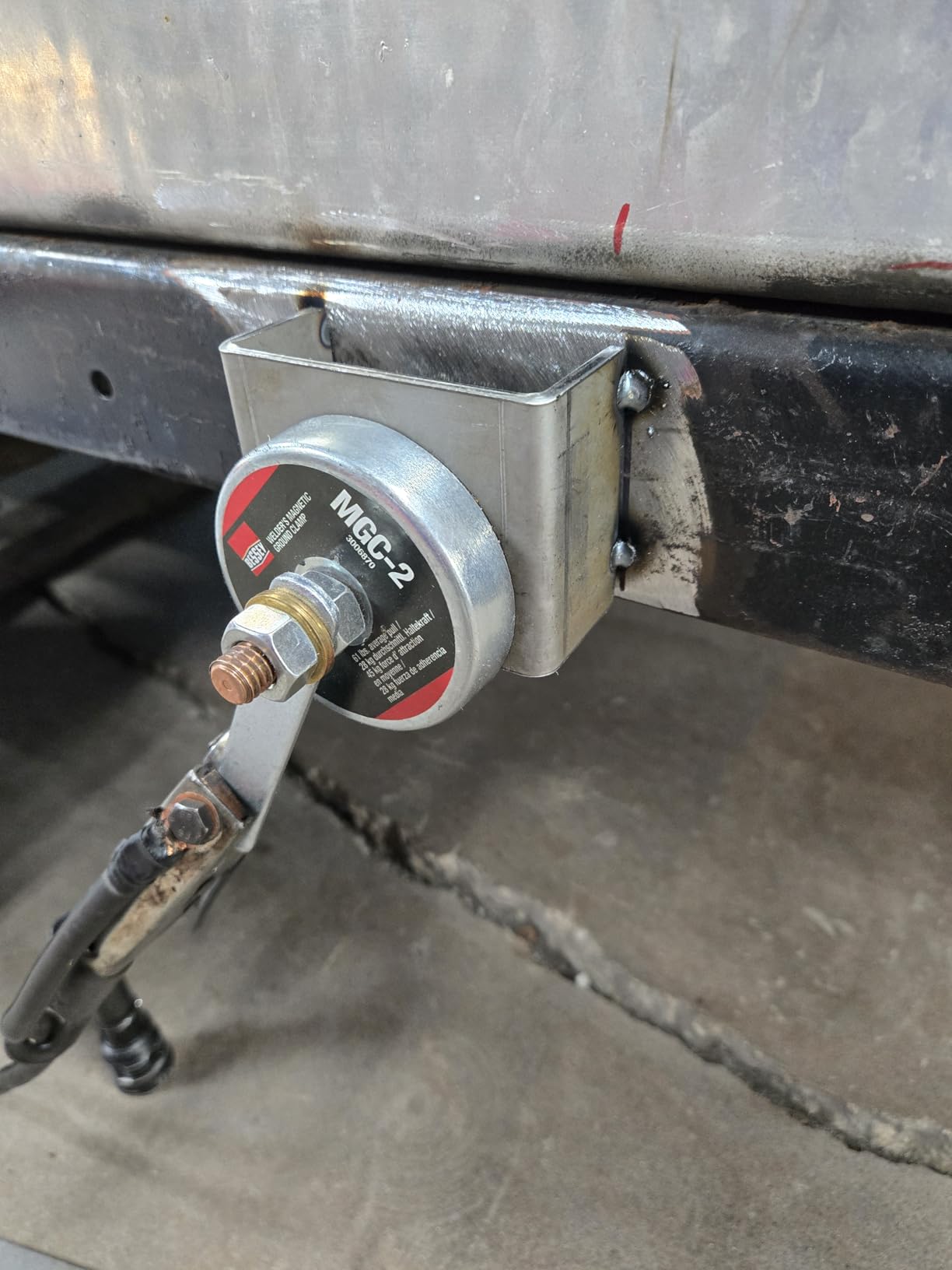
Where a magnet genuinely has no substitute
Body panels, thin-gauge sheet and finished tube. A spring clamp on a curved panel can either mark it or slide, and on a finished surface you may not want to leave a mark at all. A magnetic base makes contact at a point, transfers almost nothing into the panel, and comes off without a dent.
The three limitations to plan around
Some owners use it with the extended bar removed, because the bar itself is too slick to accept a second clamp when a workpiece sits on a roller. The copper contact face is small for smaller diameter pipe, and the magnet adhesive weakens in sustained shop heat and needs re-gluing.
9. Magswitch 600 Amp Switchable Magnetic Ground Clamp – Best for Fast Repositioning
Magswitch 600 Amp Switchable Magnetic Welding Ground Clamp
600 amp capacity
Mechanical on/off switch
Finned heat dissipation
16 oz, 1-year warranty
Pros
- Switchable release means no power-down to move the ground
- Finned design sheds heat during long duty cycles
- Holds on both flat and round ferrous surfaces
- No clamp hardware to maintain
- 1-year manufacturer warranty
Cons
- By far the most expensive option in this roundup
- Release still needs the workpiece scraped free of heavy scale
This is the switchable design that welders have argued about for two decades, and the mechanism is the reason. A mechanical control on the handle drops the magnetic hold, so you can move the ground on a live setup without powering the machine down, and there is no spring or pivot to fatigue.
Owners rate it 4.6 from 81 ratings with 79 percent five-star and no one- or two-star reviews at all. The finned body is the quiet hero: it is built to shed heat during the sustained high-amp runs that make a 600 amp clamp cook on a plain steel clamp body.
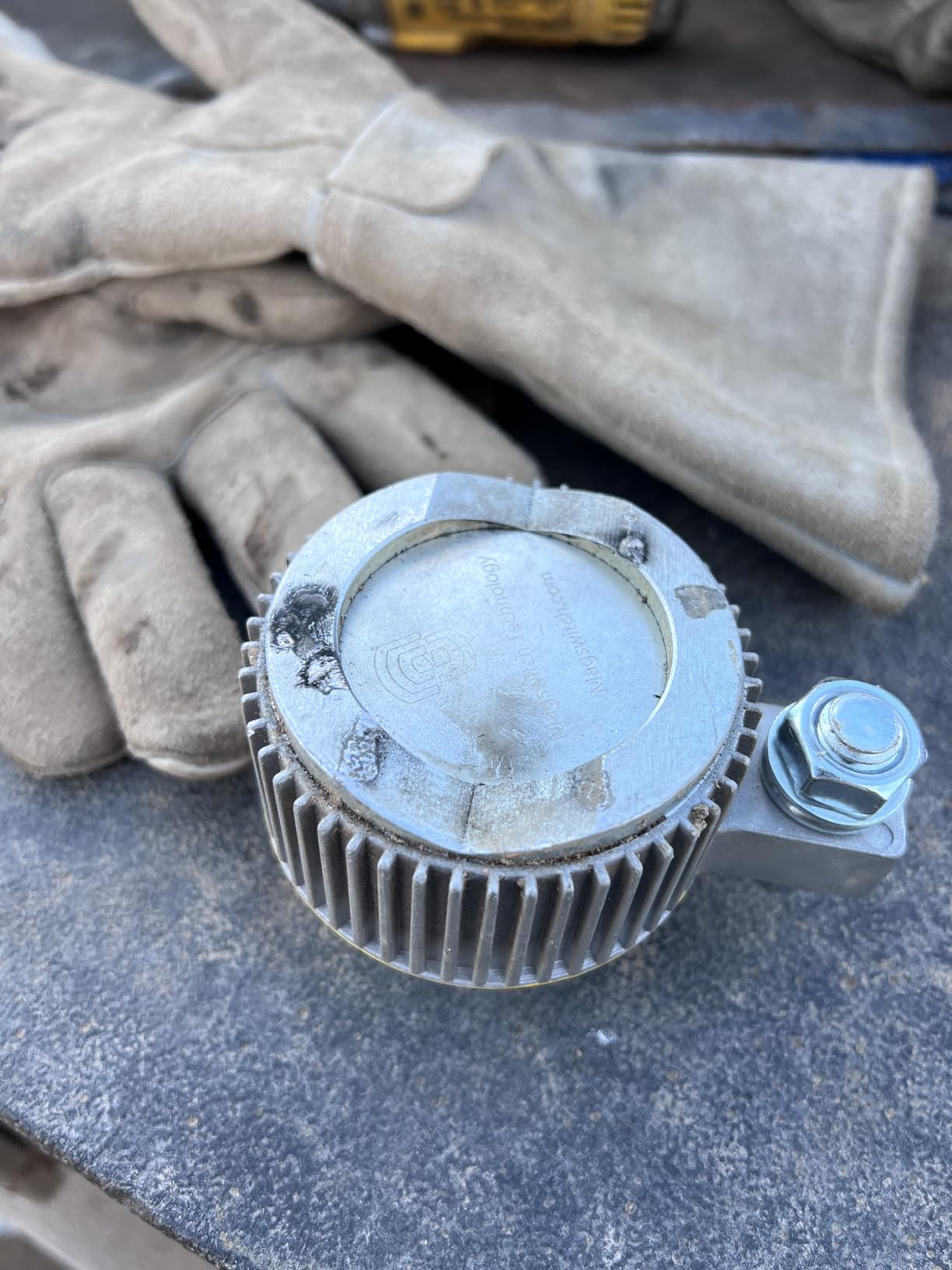
What the on/off switch actually changes
On a switchable unit the magnet stays energised until you release it deliberately, so the ground does not detach when you knock the workpiece or when the machine cycles. That reliability is why this design earned a place in shops where a wandering ground means a scrapped part.
Honest limits on the technology
It is the most expensive clamp here, and it is still a magnet. Non-ferrous work is out, heavy mill scale has to come off before it will seat, and thin-gauge parts can distort before the arc even starts. Any claim that a magnetic clamp solves grounding in general is wrong.
10. Atarstore Rotary Ground Clamp 600 Amp – Best for Pipe Rollouts
Rotary Ground Clamp 600 Amp Rollout Ground Clamp
600 amp rated
Rotating head
Rollout design
Keeps ground attached
Pros
- Rotating head stops the ground cable twisting during rollout
- Twisted cables are the main cause of clamp and lead damage
- Smooth rotation with no arcing at the contact point
- Owners report steady ten-hour days without issues
Cons
- Listing detail is sparse
- with few stated dimensions or jaw specs
- Lower review volume than the rest of this roundup
Rotary ground clamps exist for one reason, and this one addresses it cleanly. When you roll a pipe through several passes, a fixed clamp wraps the cable around the workpiece until the conductor twists, chafes through the insulation and eventually fails at the lug. The rotating joint lets the cable stay put while the pipe turns underneath it.
Owners rate it 4.6 from 53 ratings with 82 percent five-star, and report steady ten-hour days over multiple days with no issues at all. The ground also stays connected through the full rollout pass, which is the difference between a clean circumferential weld and one with arc blow on the closing half.
When a rotary clamp is worth the extra part
Long production pipe runs, pressure vessel work and any job where the ground stays on the same joint for hours. Cable damage is the hidden cost in those jobs, and a rotary head removes the mechanism that causes it. If you already have a spare lead, the maths is simple.
The limitation to plan for
The listing detail is sparse, with few stated dimensions or jaw opening specs, so confirm the throat fits your pipe range before you commit. Review volume is also the lowest here at 53 ratings, which means less long-term data on the rotating joint itself. We would test it on your own pipe diameter first.
How to Choose a Welding Ground Clamp for Heavy Fabrication
Matching a clamp to the job comes down to four variables: what the workpiece is made of, how much current you actually run, how long you hold one ground in place, and how much access you have. Get those four right and the choice narrows quickly.
Types of welding ground clamps
Spring clamp – the standard stamped alligator type, opened by squeezing the handles. Fast, cheap, and the default for plate and structural work up to about 300 amps.
Magnetic clamp – attaches to flat ferrous steel with a permanent or switchable magnet, and needs no hardware to release. Ideal where there is nothing to bite.
Screw-lock C-clamp – a machined body closed by a screw, giving adjustable pressure that survives vibration and hammering.
Rotary ground clamp – a spring clamp with a rotating head so the ground cable does not twist during pipe rollouts.
Ground and work clamp – a heavy C-clamp rated to both carry welding current and act as a positioning clamp on a part.
Locking and latching clamps – a padlock-compatible variant for site work where the ground must not be moved by anyone else.
Jaw materials: brass, bronze, copper and steel
Jaw material decides how the clamp handles heat and current, and it is the question welders argue about most. Brass and bronze are both copper alloys, so both conduct well and both resist corrosion, and they are the default for a reason: they move heat away from the contact point instead of concentrating it.
Pure copper conducts best of the common jaw materials but is softer, so it wears and deforms faster under clamping force, which is why many clamps use a copper-plated steel jaw instead, plating for contact and a steel core for spring life. Zinc-plated steel is the cheapest option and the least durable: the plating scratches away, the steel underneath rusts, and resistance climbs as the contact area degrades.
Brass is the sensible shop compromise, which is why three of the clamps in this roundup use it. Bronze sits alongside it as a slightly harder copper alloy that holds its shape better under a heavy screw lock. None of this matters if the contact face is not clean metal, because a layer of oxide will undo the best conductivity on the market.
Magnetic versus spring clamps, honestly
The forum consensus for years was that a neat magnetic clamp was too good to be true, and the scepticism was not unreasonable. Magnetic units do not bite into scale, they do not work on aluminium, and on a thin panel the hold can distort the sheet. That is the honest weakness list, and it is why the long-standing default remained a heavy spring clamp.
What changed is the switchable on/off mechanism, which stops a magnet from releasing at the wrong moment. Even so, the best setups carry both: a magnetic clamp for speed and access, and a mechanical clamp for the joints that vibrate or move. A weldingweb user running seven or eight clamps, four of them on ten foot leads, calls the 600 amp Lenco their go-to precisely because it digs in and doubles as a positional clamp.
Cable gauge and lead length
The clamp is only one part of the return path, and the cable is usually the weaker link. A ground lead that is too long or too thin adds resistance, and the machine spends part of your voltage compensating for it, which shows up as a softer arc and a hotter clamp.
The practical rule is to size the ground lead to the same gauge as the work lead and to keep the return path short. Going beyond 25 feet with light cable is where voltage drop becomes obvious, and at that point a heavier cable or a second clamp placed closer to the weld solves the problem faster than buying a better clamp body.
Where to attach the clamp on the workpiece
Get to bare metal. Grind, wire wheel or scrape the seat until it is bright. Mill scale, paint, rust and grease are all insulators, and no clamp overcomes them.
Attach to the part, not the table. A clamp on a welded table grounds the table, not your workpiece, and on a shared table that means a second operator can disturb your return path mid-pass.
Place it close to the weld. The shorter the return path between the clamp and the arc, the less the current has to travel through the workpiece, and the less it will heat and distort the part around the weld.
Choose a thick, flat, unmoving section. A solid member near the joint beats a thin edge that flexes every time you strike an arc.
Re-check during long runs. On multipass work, lift the clamp and grind the seat between passes rather than trusting one attachment for hours.
Ground clamp versus work clamp
A ground clamp carries current and nothing else: its job is a low-resistance path back to the machine. A work clamp does the same electrical job and is also built to grip a part hard enough to hold an assembly in position. Dual-purpose ground and work clamps are heavier, usually screw- or cam-locked, and earn their place in a shop that welds positioned assemblies all day.
For heavy fabrication the practical version is a heavy C-clamp rated to 400 amps or more with a long flat nose, because you can ground the joint and hold the part with the same tool. The one thing never to do is use an ordinary work clamp as a ground and assume it is electrically rated for the job.
Five ways to stop a clamp overheating
Scrape the contact face back to bare metal so resistance does its work away from the clamp.
Match the clamp to the machine: a 300 amp clamp on a 500 amp output is a heater with a cable attached.
Use the gauge of cable the amp draw calls for, because undersized cable heats the entire termination.
Re-tighten cable terminations periodically, since a loose set screw is a resistive joint.
Swap to a fresh clamp rather than welding around a hot one, which is what a spare clamp in the truck is for.
How we judged these clamps
Every clamp was assessed on the same five criteria: how hard the jaws or magnet hold on clean ferrous steel, how good the electrical contact is at that seat, how the clamp behaves thermally over a sustained run, how easily it reaches into a confined assembly, and what happens to the cable termination over time. Ratings and review counts are taken from the manufacturer listings rather than from our own scoring, so the numbers in each card are comparable across the roundup.
One note on the data: review volume varies widely here, from 895 ratings down to 53, and a low volume tells you less about long-term durability than a high one does. Where that matters we have said so in the section rather than presenting an average as settled fact.
Frequently Asked Questions
What is the best ground clamp for welders?
For most heavy fabrication shops the best welding ground clamp is a 400 amp to 500 amp model with a machined brass or copper body and either screw-lock or strong spring tension, because holding force and electrical contact matter more than clever features. A magnetic clamp is the fastest option when the workpiece is flat ferrous steel, and a rotary clamp is the right answer for pipe rollouts.
What is the strongest clamp available?
Strongest depends on the metric. The highest published amp rating in this roundup is 800 amps on the BESSEY MGC-2 magnetic clamp, backed by a 55 pound pull magnet. For mechanical bite, the heaviest spring clamp here is the 1.6 lb QWORK bronze clamp rated at 500 amps, and for holding under vibration a screw-lock brass clamp beats any spring design.
What is the difference between bronze and zinc ground clamps?
Bronze is a copper alloy, so it conducts current well and resists corrosion and splatter without pitting. Zinc-plated steel is cheaper but the plating scratches away under clamping force, the steel underneath rusts, and resistance rises as the contact area degrades. Bronze costs more up front and usually lasts longer in service.
What are the different types of grounding clamps?
The main types are spring clamps, magnetic clamps, screw-lock C-clamps, rotary ground clamps, dual-purpose ground and work clamps, and locking or latching clamps. Spring clamps are the general default, magnetic clamps suit flat ferrous steel, screw-locks survive vibration, rotary clamps suit pipe rollouts, and locking clamps suit site work.
What is the purpose of a welding ground clamp?
A welding ground clamp grips the workpiece so welding current can complete its circuit back to the machine. A secure, low-resistance connection keeps the arc stable, cuts splatter and stops the clamp from heating up enough to damage the cable insulation during long high-amperage runs.
What happens if a welder is not grounded?
A poor ground shows up as an unstable arc, wandering and spark skipping, extra spatter, and a workpiece that heats and distorts away from the weld. Current takes the longest available path back to the machine, which means it travels through the part you are trying to protect. On long runs the clamp itself can run hot enough to scorch cable insulation.
What are the best brands of welding clamps?
Lincoln Electric and Hobart are the strongest names in this roundup by review volume, with a magnetic model and a stamped heavy-duty model respectively. QWORK and the HZXVOGEN and HITBOX brass clamps cover screw-lock duty well, Magswitch covers switchable magnetic work, and BESSEY covers high-amp magnetic pipework. For a shop spares pile, owning several brands is more useful than owning two of one.
Where should I put a ground clamp when welding?
Attach it to the workpiece, not to the welding table, and as close to the weld as you can. Scrape or grind the seat back to bare bright metal first, choose a thick flat section that will not flex, and re-check the contact between passes on long multipass work. A table clamp grounds the table, which is a problem if anyone else is using it.
Can I use the same ground clamp for TIG and MIG?
Yes. A clamp does not know which process you are running, and any model rated above your machine’s output will serve both. For TIG on thin stainless or aluminium, avoid magnetic clamps entirely because those metals will not hold, and use a brass or copper clamp on prepared bare metal instead.
What size welding cable should I use for a 300 amp ground lead?
Size the ground lead to the same gauge as the work lead and keep it as short as the job allows. Over roughly 25 feet, a lighter cable on a 300 amp ground starts to add enough resistance that the machine spends voltage compensating for it, which softens the arc and heats the termination. A heavier cable or a second clamp nearer the weld fixes it faster.
Conclusion: Our Verdict by Process Type
For general heavy fabrication on plate and structural steel, the Hobart 770566 500 amp magnetic clamp is the one to buy, because it holds without maintenance and the review base is the largest here. Where the part vibrates or is being hammered, take a screw-lock brass model, either the HZXVOGEN or the HITBOX, and the lead stays grounded through the whole fit-up.
For pipework and body panels where there is nothing to bite, the BESSEY MGC-2 at 800 amps or the Magswitch 600 amp if you want to release without powering down. For pipe rollouts, the Atarstore rotary clamp stops the cable twisting, which is the only way those leads survive.
And keep spares. An r/Welding user who runs cheap alligator clamps keeps three or four in the truck, and that habit beats any single premium purchase when a clamp cooks itself on a ten-hour day. Whatever you choose for 2026, scrape the seat back to bright metal before you trust it, and check the best-welding-ground-clamp options above against the amperage your machine actually runs.