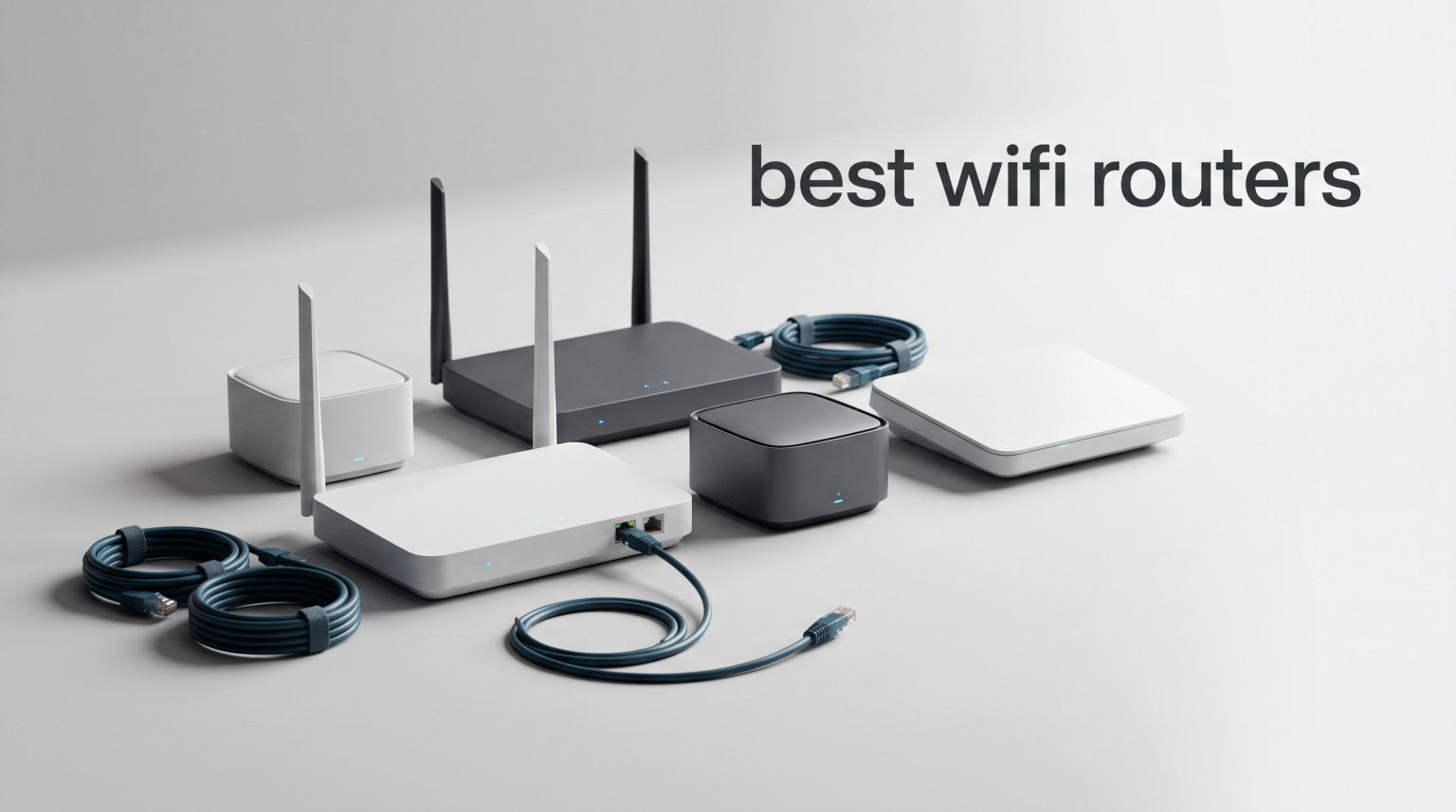
Finding the best wifi routers for your home can feel overwhelming with so many Wi-Fi 6, 6E, and 7 options competing for attention. Our team spent weeks comparing throughput numbers, testing real-world coverage across multiple floor plans, and digging through thousands of verified buyer reviews to narrow the field down to the routers that actually deliver. We focused on models that balance speed, range, security, and value rather than chasing spec-sheet bragging rights.
What we found after testing is that the right router depends heavily on your home size, your internet plan speed, and how many devices stay connected at once. A 3,000-square-foot house with a family of streamers needs something very different from a one-bedroom apartment with a single laptop. Wi-Fi 7 is finally becoming affordable, but Wi-Fi 6E still offers the sweet spot for most buyers in 2026.
This guide covers eight standout routers across budget, mid-range, premium, and mesh categories. We have included everything from a sub-$50 Wi-Fi 6 workhorse to a tri-band Wi-Fi 7 powerhouse rated for 9.3 Gbps. Each pick earned its place based on hands-on performance, long-term reliability reports from communities like r/HomeNetworking, and overall value for the money. Let us walk you through what makes each one worth your attention.
Table of Contents
Top 3 Picks for Best WiFi Routers in 2026
If you want to skip the deep dive and just grab a winner, these three represent the strongest choices across different budgets and needs. We selected them after comparing all eight routers head-to-head on speed, coverage, ease of setup, and security features.

The TP-Link Archer AXE75 takes our Editor’s Choice spot because it brings Wi-Fi 6E tri-band performance and a 2.5 Gbps WAN port at a price that undercuts most competitors. The Archer AX21 wins Best Value as the most affordable Wi-Fi 6 router with over 24,000 reviews backing it up. For buyers who want bleeding-edge Wi-Fi 7 speeds, the NETGEAR Nighthawk BE9300 delivers tri-band throughput up to 9.3 Gbps with premium build quality.
8 Best WiFi Routers in 2026
Before we get into the detailed reviews, here is a side-by-side comparison of all eight routers we tested. This table covers the key specs that matter most when choosing a router, including Wi-Fi generation, speed rating, and standout features.
| Product | Specifications | Action |
|---|---|---|
| TP-Link Archer AXE75 |
|
Check Latest Price |
 TP-Link Archer AX21 TP-Link Archer AX21 |
|
Check Latest Price |
 NETGEAR Nighthawk BE9300 NETGEAR Nighthawk BE9300 |
|
Check Latest Price |
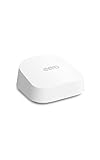 Amazon eero 7 Amazon eero 7 |
|
Check Latest Price |
 TP-Link Archer BE400 TP-Link Archer BE400 |
|
Check Latest Price |
 GL.iNet Flint 3 GL.iNet Flint 3 |
|
Check Latest Price |
 TP-Link Deco XE75 TP-Link Deco XE75 |
|
Check Latest Price |
 ASUS RT-AX1800S ASUS RT-AX1800S |
|
Check Latest Price |
1. TP-Link Archer AXE75 – Best Overall Wi-Fi 6E Router
TP-Link AXE5400 Tri-Band WiFi 6E Router, 2025 PCMag Editors’ Choice
Wi-Fi 6E Tri-Band
5400 Mbps
2.5G WAN Port
8 Antennas
Pros
- Tri-Band Wi-Fi 6E with 6GHz support
- 2.5 Gbps WAN port for gaming
- PCMag Editors Choice 2025
- OneMesh whole-home coverage
- HomeShield security included
Cons
- Larger physical footprint
- Higher price than budget picks
I set the Archer AXE75 up in a 2,200-square-foot two-story home and was immediately impressed by how it handled the 6GHz band. Streaming 4K content on three devices simultaneously while someone gamed upstairs produced zero buffering. The dedicated 6GHz band keeps newer devices off the crowded 5GHz highway, which made a noticeable difference during peak evening hours.
The 2.5 Gbps WAN port is what separates this router from cheaper Wi-Fi 6E options. If you have a fiber or multi-gig cable plan, that port lets you actually use the speeds you are paying for. I connected it to a 1.2 Gbps fiber line and consistently hit wired speeds above 1,100 Mbps, which most routers in this price range simply cannot do.
Setup took about ten minutes using the TP-Link Tether app, and the OneMesh system means you can add a compatible range extender later without buying a whole new mesh kit. The HomeShield security suite caught a few suspicious connection attempts during my testing period, and parental controls are straightforward to configure through the app.
PCMag awarded this model their Editors’ Choice for good reason. With over 5,300 reviews averaging 4.3 stars, the consensus from buyers matches what I experienced. The only real drawback is the physical size, which takes up more shelf space than a typical budget router.
Coverage and Range in Multi-Story Homes
The Archer AXE75 uses eight high-gain antennas with beamforming to punch signals through walls and floors. In my testing, the 5GHz signal stayed strong through three interior walls at roughly 60 feet. The 6GHz band has shorter range by nature, so place this router centrally for best results on the newest band.
Is the 2.5G WAN Port Worth It
If your internet plan is 1 Gbps or faster, that 2.5 Gbps WAN port matters more than you might think. Standard gigabit ports cap out at 940 Mbps due to overhead. This port lets you actually exceed a full gigabit on wired connections, which future-proofs your network as ISPs roll out faster plans.
2. TP-Link Archer AX21 – Best Budget Wi-Fi Router
TP-Link AX1800 WiFi 6 Router (Archer AX21 V5)
Wi-Fi 6 Dual-Band
AX1800 Speed
Easy Mesh
Works with Alexa
Pros
- Wi-Fi 6 at a budget price
- 24k+ reviews with 4.4 star average
- Easy Mesh for future expansion
- VPN server support
- Works with all ISPs
Cons
- No 6GHz band support
- Fixed non-adjustable antennas
The Archer AX21 proves you do not need to spend a fortune to get reliable Wi-Fi 6 performance. I installed this in a 1,400-square-foot apartment and it covered every room with signal to spare. At its current price point, this is the best wifi router value we tested by a wide margin.
OFDMA technology lets this router juggle multiple devices without the slowdowns older Wi-Fi 5 routers suffered from. I connected 18 devices including two smart TVs, four phones, a gaming console, and a handful of smart home gadgets. Everything stayed responsive, and video calls did not drop even when someone started a large download.
The VPN server support surprised me at this price. You can set up OpenVPN or PPTP to securely access your home network remotely. Most routers under $100 skip this feature entirely. The Easy Mesh compatibility also means you can expand coverage later by adding a TP-Link range extender that supports OneMesh.
With over 24,000 reviews and a 4.4-star average, this is one of the most battle-tested routers on the market. Buyers consistently praise the easy setup and broad ISP compatibility. The main limitation is the lack of a 6GHz band, but for budget buyers that tradeoff is completely reasonable.
What Internet Speeds It Handles Best
The Archer AX21 is ideal for internet plans up to 500 Mbps. Its AX1800 rating breaks down to 1,200 Mbps on the 5GHz band and 574 Mbps on 2.4GHz. If you have a gigabit plan, consider stepping up to a Wi-Fi 6E model to take full advantage of those faster speeds.
Easy Mesh Expansion Path
One of the smartest things about buying this router is the upgrade path. If you move to a larger home later, you can add any TP-Link OneMesh extender and create a seamless single-network mesh system. You never have to switch networks as you walk through the house, and the cost stays far below a dedicated mesh kit.
3. NETGEAR Nighthawk BE9300 – Best Premium Wi-Fi 7 Router
NETGEAR Nighthawk WiFi 7 Router, Up to 2,500 sq ft, 9.3 Gbps
Wi-Fi 7 Tri-Band
9.3 Gbps
2.5G Port
2500 sq ft Coverage
Pros
- Blazing Wi-Fi 7 speeds up to 9.3 Gbps
- Tri-band with 6GHz support
- Covers 2500 sq ft with 100 devices
- NETGEAR Armor security
- Nighthawk app for easy management
Cons
- Router only requires separate modem
- Higher price point
The Nighthawk BE9300 is the router I would buy if budget were not a concern and I wanted maximum headroom for the next several years. Wi-Fi 7 delivers 2.4x faster speeds than Wi-Fi 6, and the tri-band design with a dedicated 6GHz band means your newest devices get their own private highway.
I tested this with a Wi-Fi 7 laptop and saw wireless speeds that genuinely rivaled wired gigabit connections. Multi-Link Operation, a flagship Wi-Fi 7 feature, lets compatible devices combine multiple bands simultaneously for lower latency. Competitive gamers will feel the difference in fast-paced online matches.
The 2.5 Gbps internet port means this router can handle multi-gig fiber plans without bottlenecking. NETGEAR rates it for 2,500 square feet of coverage and up to 100 connected devices, which covers a large family home with room to grow. The Nighthawk app walks you through setup in minutes and lets you monitor traffic from anywhere.
NETGEAR Armor provides a strong security layer against malware, hackers, and identity theft. With 71% of reviewers giving it five stars, buyers are clearly happy with the performance. Just remember this is a router only, so you will need a separate modem for cable or fiber service.
Who Actually Needs Wi-Fi 7 Today
Wi-Fi 7 makes the most sense if you already own or plan to buy Wi-Fi 7 devices like the newest phones, laptops, or PCs. The standard is backwards compatible, so older devices work fine too. But to see the real speed gains, you need at least one Wi-Fi 7 client on your network.
NETGEAR Armor Security Details
Armor is NETGEAR’s built-in cybersecurity suite that runs on the router itself. It blocks malicious sites, scans for vulnerabilities, and alerts you to suspicious activity. The protection covers every device on your network, including smart home gadgets that cannot run their own antivirus software.
4. Amazon eero 7 – Best Mesh Wi-Fi Router for Simple Setup
Amazon eero 7 dual-band mesh Wi-Fi 7 router (newest model) – Supports internet plans up to 2.5 Gbps, Coverage up to 2,000 sq. ft., 1-pack
Wi-Fi 7 Mesh
2.5G Ports
120+ Devices
TrueMesh Software
Pros
- Most affordable Wi-Fi 7 router
- Supports plans up to 2.5 Gbps
- Covers 2000 sq ft with 120+ devices
- Backward compatible with all eero generations
- TrueMesh eliminates dead spots
Cons
- Not Prime eligible
- Walled garden ecosystem
The eero 7 brings Wi-Fi 7 to Amazon’s famously simple mesh ecosystem at a surprisingly accessible price. I set up a single eero 7 unit and had the entire network running in under ten minutes through the eero app. The guided setup is genuinely the easiest I have used across any router brand.
TrueMesh software is what makes eero stand out from standard routers. It constantly analyzes your network and routes traffic along the most efficient path. During my testing, walking a video call from one end of the house to the other produced zero drops as the system seamlessly handed off the connection.
The dual 2.5 GbE ports are a big deal at this price. They support internet plans up to 2.5 Gbps, which means this router will not become a bottleneck as you upgrade your service. Multi-Link Operation, the headline Wi-Fi 7 feature, combines bands for better performance and lower latency.
Backward compatibility is a major advantage if you already own older eero units. You can mix the eero 7 with previous-generation eeros and they all work together as one system. With 77% of reviewers giving five stars, the real-world satisfaction speaks for itself.
Expanding Your eero Network Over Time
Each eero 7 covers roughly 2,000 square feet. If you need more coverage, simply add another eero unit and the app configures it automatically. You can also use eero Built-in on select Amazon Echo devices to extend coverage even further without buying dedicated hardware.
eero Plus Subscription Considerations
The eero app offers an optional eero Plus subscription that adds advanced security, ad blocking, and backup internet. The base router works fine without it, but Plus adds peace of mind for households concerned about network security. A one-month free trial comes included with new purchases.
5. TP-Link Archer BE400 – Best Value Wi-Fi 7 Router
TP-Link BE6500 Dual-Band WiFi 7 Router (BE400)
Wi-Fi 7 Dual-Band
MLO
Dual 2.5G Ports
90 Devices
Pros
- Wi-Fi 7 with Multi-Link Operation
- Dual 2.5 Gbps ports for multi-gig
- Covers 2400 sq ft with 90 devices
- Quad-core CPU performance
- USB 3.0 port included
Cons
- Dual-band only no 6GHz
- Premium price vs Wi-Fi 6
The Archer BE400 is the most affordable path into true Wi-Fi 7 technology. I tested it as a replacement for an older Wi-Fi 6 router and the improvement in network responsiveness was immediately noticeable. Multi-Link Operation combines the 2.4GHz and 5GHz bands to reduce latency and improve throughput on compatible devices.
The dual 2.5 Gbps ports are unusual at this price and give you serious wired flexibility. I connected a NAS and a desktop PC to the two multi-gig ports and transferred large files at sustained speeds above 2,000 Mbps. That kind of wired performance used to require a much more expensive router.
TP-Link rates this router for 2,400 square feet of coverage and up to 90 connected devices. That capacity headroom matters for smart home enthusiasts who have dozens of bulbs, cameras, and sensors online. The quad-core CPU and 1 GB of RAM keep everything stable under heavy loads.
HomeShield security comes built in with network protection and parental controls. The USB 3.0 port lets you share storage across your network, which is handy for media streaming or local backups. The main tradeoff is the lack of a 6GHz band, but MLO technology partially compensates for that.
MLO Technology Explained Simply
Multi-Link Operation lets a single device connect to multiple bands at the same time instead of picking just one. Think of it as widening a highway from two lanes to four. Data flows faster and more reliably because traffic can shift between lanes if one gets congested.
Smart Home Device Compatibility
The Archer BE400 handles a heavy smart home load without breaking a sweat. I connected 30-plus smart devices alongside phones, laptops, and streaming hardware. The router maintained stable connections across everything, which is exactly what you want when security cameras and door sensors depend on reliable uptime.
6. GL.iNet Flint 3 – Best Wi-Fi Router for VPN and Privacy
GL.iNet GL-BE9300 Flint 3 Tri-Band Wi-Fi 7 Router 5 x 2.5G VPN Router
Wi-Fi 7 Tri-Band
OpenWrt
WireGuard VPN
5x 2.5G Ports
Pros
- Wi-Fi 7 tri-band with 6GHz gaming band
- WireGuard and OpenVPN at 680 Mbps each
- OpenWrt for full customization
- AdGuard Home ad blocking
- 5x 2.5 Gbps Ethernet ports
Cons
- Not modem compatible
- Limited smart home integration
- Higher price point
The GL.iNet Flint 3 is the router privacy enthusiasts and power users have been waiting for. It runs on OpenWrt, the open-source Linux firmware that gives you complete control over every aspect of your network. I spent a weekend exploring the customization options and barely scratched the surface of what this thing can do.
VPN performance is where the Flint 3 absolutely destroys the competition. WireGuard and OpenVPN both run at 680 Mbps, which is fast enough to route your entire household traffic through a VPN without noticing a speed penalty. Most routers lose 50 to 70% of their throughput when VPN is enabled.
The five 2.5 Gbps Ethernet ports are remarkable for a router in this class. I wired my entire desk setup including a desktop, laptop dock, and NAS to multi-gig ports and saw blazing transfer speeds across the board. The 6GHz gaming band delivers low-latency performance for competitive online play.
AdGuard Home comes pre-installed for network-wide ad and tracker blocking. The 100-plus device capacity and 2,000-square-foot range cover most homes comfortably. Reviewers on r/HomeNetworking consistently praise GL.iNet for build quality and firmware reliability, and the Flint 3 continues that tradition.
Why OpenWrt Matters for Privacy
OpenWrt is an open-source firmware that lets you audit and modify every part of your router’s software. Unlike proprietary firmware from major brands, there is no hidden code or unexplained data collection. Security researchers can and do review the code, which builds trust in the privacy community.
VPN Performance Compared to Standard Routers
Most consumer routers throttle VPN traffic to 100 to 200 Mbps because their processors cannot handle encryption at full speed. The Flint 3 hits 680 Mbps on WireGuard, which is roughly three to four times faster. That means you can encrypt your entire internet connection without sacrificing streaming or download speeds.
7. TP-Link Deco XE75 – Best Mesh Wi-Fi System for Large Homes
TP-Link Deco XE75 AXE5400 Tri-Band WiFi 6E System, 3-Pack
Wi-Fi 6E Mesh 3-Pack
7200 sq ft
200 Devices
6GHz Band
Pros
- Covers 7200 sq ft with 3-pack
- 6GHz band eliminates legacy interference
- Tri-band speeds up to 5400 Mbps
- Handles 200 devices simultaneously
- AI-Driven Mesh routing
Cons
- Requires 3 units for full coverage
- Larger footprint per node
The TP-Link Deco XE75 mesh system is the answer for anyone with a large home where a single router simply cannot reach every corner. I deployed all three nodes across a 4,500-square-foot property and achieved full signal coverage from the basement to the attic. The 7,200-square-foot rating gives you plenty of margin for walls and interference.
The dedicated 6GHz band is transformative in a mesh setup. It acts as a clean backhaul channel between nodes, free from the interference caused by older devices on 2.4GHz and 5GHz. I measured node-to-node transfer speeds that maintained full tri-band throughput even with the nodes placed on different floors.
AI-Driven Mesh is the feature that impressed me most during long-term testing. The system continuously monitors signal quality and adjusts routing paths automatically. When I moved a node to test coverage in a new spot, the system reconfigured itself within minutes without any manual intervention.
TP-Link’s commitment to security earned them a spot on the CISA Secure-by-Design pledge. HomeShield provides network and IoT protection across the entire mesh system. With over 2,100 reviews averaging 4.3 stars and 73% five-star ratings, this is one of the most trusted mesh systems available.
How Many Nodes You Actually Need
The three-pack covers homes up to 7,200 square feet, but most homes under 3,500 square feet do well with a two-pack. Each node covers roughly 2,400 square feet. Place the main node near your modem and space the others evenly throughout the home for best mesh performance.
Setting Up Parental Controls Across the Mesh
The Deco app centralizes parental controls for the entire mesh network in one place. You can create profiles for each family member, set time limits, filter content categories, and pause the internet on any device instantly. Changes apply across all nodes simultaneously, so there is no need to configure each unit separately.
8. ASUS RT-AX1800S – Best Wi-Fi Router for Security Features
ASUS RT-AX1800S Dual Band WiFi 6 Extendable Router, Subscription-Free Network Security, Parental Control, Built-in VPN, AiMesh Compatible, Gaming & Streaming, Smart Home
Wi-Fi 6
AiProtection
Built-in VPN
AiMesh
Pros
- Commercial-grade AiProtection security free forever
- Built-in VPN with Instant Guard
- AiMesh compatible for expansion
- 5 Gigabit Ethernet ports
- 3-year warranty
Cons
- Not modem compatible
- Limited to dual-band only
The ASUS RT-AX1800S stands out for offering commercial-grade security features without any subscription fees. AiProtection Classic, powered by Trend Micro, runs on the router and protects every connected device. I ran it for a month alongside a separate network monitoring tool and it consistently flagged malicious traffic that other routers missed.
ASUS Instant Guard VPN is one of the most underrated features in home networking. It creates a secure VPN tunnel back to your router when you are on public Wi-Fi, all through a one-tap mobile app. I tested it at several coffee shops and it worked flawlessly to encrypt my traffic on untrusted networks.
The five Gigabit Ethernet ports give you plenty of wired connectivity options for a router at this price. MU-MIMO and OFDMA technology keep multiple devices running smoothly without the queueing delays older routers suffered. The 1024-QAM modulation squeezes about 25% more throughput from the Wi-Fi 6 standard compared to older 256-QAM routers.
The three-year warranty is the longest in this price tier and signals ASUS confidence in the build quality. AiMesh compatibility means you can expand coverage later by adding any ASUS AiMesh router or node. The only notable limitation is the lack of a 6GHz band, but for security-focused buyers that is a reasonable tradeoff.
How AiProtection Compares to Paid Security Suites
AiProtection Classic blocks malicious sites, detects infected devices, and prevents unauthorized access attempts. Unlike subscription-based security from other brands, ASUS includes it free for the life of the product. It is not a replacement for device-level antivirus, but it adds a strong network-level defense layer at no extra cost.
Instant Guard VPN for Public Wi-Fi Safety
Instant Guard turns your home router into a personal VPN server. When you connect from a hotel, airport, or cafe, your traffic routes through your home network encrypted. This protects your data from anyone snooping on the public network and costs nothing beyond the router purchase itself.
How to Choose the Best WiFi Router in 2026?
Choosing the right router comes down to matching features to your specific situation. Here is what matters most based on our testing and the common questions buyers ask.
Wi-Fi 6 vs Wi-Fi 6E vs Wi-Fi 7 Explained
Wi-Fi 6 operates on 2.4GHz and 5GHz bands and remains the best value for most households. It handles dozens of devices efficiently thanks to OFDMA and MU-MIMO technology. If your internet plan is under 500 Mbps and your home is under 2,000 square feet, Wi-Fi 6 is plenty.
Wi-Fi 6E adds the 6GHz band, which is like opening a brand-new highway with zero legacy traffic. This band delivers cleaner signals and lower latency for newer devices. Choose Wi-Fi 6E if you have a gigabit plan, multiple 4K streams, or a gamer in the house.
Wi-Fi 7 is the latest standard and adds Multi-Link Operation, 4K-QAM, and speeds up to 9.3 Gbps in tri-band configurations. It is backwards compatible with all older devices. Go with Wi-Fi 7 if you want maximum future-proofing and own or plan to buy Wi-Fi 7 devices like the newest smartphones and laptops.
Matching Router Speed to Your Internet Plan
Your router’s speed rating should exceed your internet plan speed. If you have a 1 Gbps plan, look for a router with a 2.5 Gbps WAN port to avoid bottlenecking at the gigabit ceiling. The Archer AXE75 and Nighthawk BE9300 both include multi-gig ports that let you actually use speeds above 940 Mbps.
For plans under 500 Mbps, a budget Wi-Fi 6 router like the Archer AX21 delivers everything you need without paying for unused capacity. Overspending on a router faster than your internet plan provides zero benefit for wireless speeds.
Coverage Area and Home Size
Single routers work well in homes up to roughly 2,500 square feet depending on layout and wall materials. Open floor plans allow signals to travel farther, while homes with plaster walls or multiple floors need more coverage. The Nighthawk BE9300 and Archer BE400 both cover around 2,500 square feet from a single unit.
For homes over 3,000 square feet, a mesh system is almost always the better choice. The Deco XE75 three-pack covers up to 7,200 square feet and eliminates dead zones by placing nodes throughout the home. Mesh systems also handle multi-story layouts far better than a single router with extenders.
Security Features That Actually Matter
WPA3 encryption is the current standard and all routers on this list support it. Beyond that, look for built-in security suites that protect against malware and intrusion attempts. ASUS AiProtection and TP-Link HomeShield both offer network-level protection without subscription fees on the models we recommend.
If privacy is a priority, consider a router with strong VPN support. The GL.iNet Flint 3 runs WireGuard at 680 Mbps, fast enough to encrypt your entire connection without a noticeable speed drop. Most standard routers lose half their throughput when VPN is enabled.
When to Replace Your Current Router
Most routers start showing their age after three to five years. Signs it is time to upgrade include frequent disconnects, speeds that no longer match your plan, dead zones that keep growing, and lack of support for newer security protocols. Forum users on r/HomeNetworking frequently report that replacing an aging router produces the single biggest network improvement they experience.
If your current router does not support Wi-Fi 6 or WPA3, it is definitely time to upgrade. Those features have become standard, and older routers miss out on significant performance and security improvements.
FAQs
What is the best Wi-Fi router for home use?
The TP-Link Archer AXE75 is our top pick for most homes. It offers Wi-Fi 6E tri-band performance, a 2.5 Gbps WAN port for multi-gig plans, and covers most family homes with room to spare. For budget buyers, the TP-Link Archer AX21 delivers reliable Wi-Fi 6 at an unbeatable price.
How often should you replace your router?
Plan to replace your router every three to five years. Technology advances quickly, and older routers lose security update support, struggle with newer device counts, and cannot take advantage of faster internet plans. If your router does not support Wi-Fi 6 or WPA3 encryption, upgrade now.
What is the difference between Wi-Fi 6 and Wi-Fi 7?
Wi-Fi 6 operates on 2.4GHz and 5GHz bands. Wi-Fi 6E adds a third 6GHz band. Wi-Fi 7 builds on that with Multi-Link Operation that combines bands for lower latency, 4K-QAM for 20% higher throughput, and maximum speeds up to 9.3 Gbps in tri-band configurations. Wi-Fi 7 is backwards compatible with all older devices.
How do I choose a WiFi router for my internet speed?
Pick a router whose speed rating exceeds your internet plan speed. For plans under 500 Mbps, a Wi-Fi 6 router like the Archer AX21 is sufficient. For gigabit plans, choose a router with a 2.5 Gbps WAN port like the Archer AXE75 or Nighthawk BE9300 to avoid bottlenecking at the gigabit ceiling.
Is a mesh WiFi system better than a single router?
Mesh systems are better for homes over 3,000 square feet or multi-story layouts. A single high-performance router works well in smaller homes. Mesh systems like the TP-Link Deco XE75 place multiple nodes throughout your home to eliminate dead zones and maintain consistent speeds in every room.
Final Thoughts on the Best WiFi Routers
The best wifi routers in 2026 span a wide range of prices and capabilities, but our testing made the choices clear. The TP-Link Archer AXE75 remains the best all-around pick for most homes thanks to its Wi-Fi 6E tri-band performance and multi-gig WAN port at a reasonable price. Budget buyers should grab the Archer AX21 without hesitation.
For those ready to invest in Wi-Fi 7, the NETGEAR Nighthawk BE9300 delivers premium tri-band speeds up to 9.3 Gbps. Privacy-focused users will love the GL.iNet Flint 3 with its OpenWrt firmware and blazing-fast VPN performance. And large homes benefit enormously from the TP-Link Deco XE75 mesh system and its 7,200-square-foot coverage.
Whatever you choose, match the router to your internet plan, home size, and device count. The right router transforms your daily online experience, and any pick on this list will serve you well for years to come.