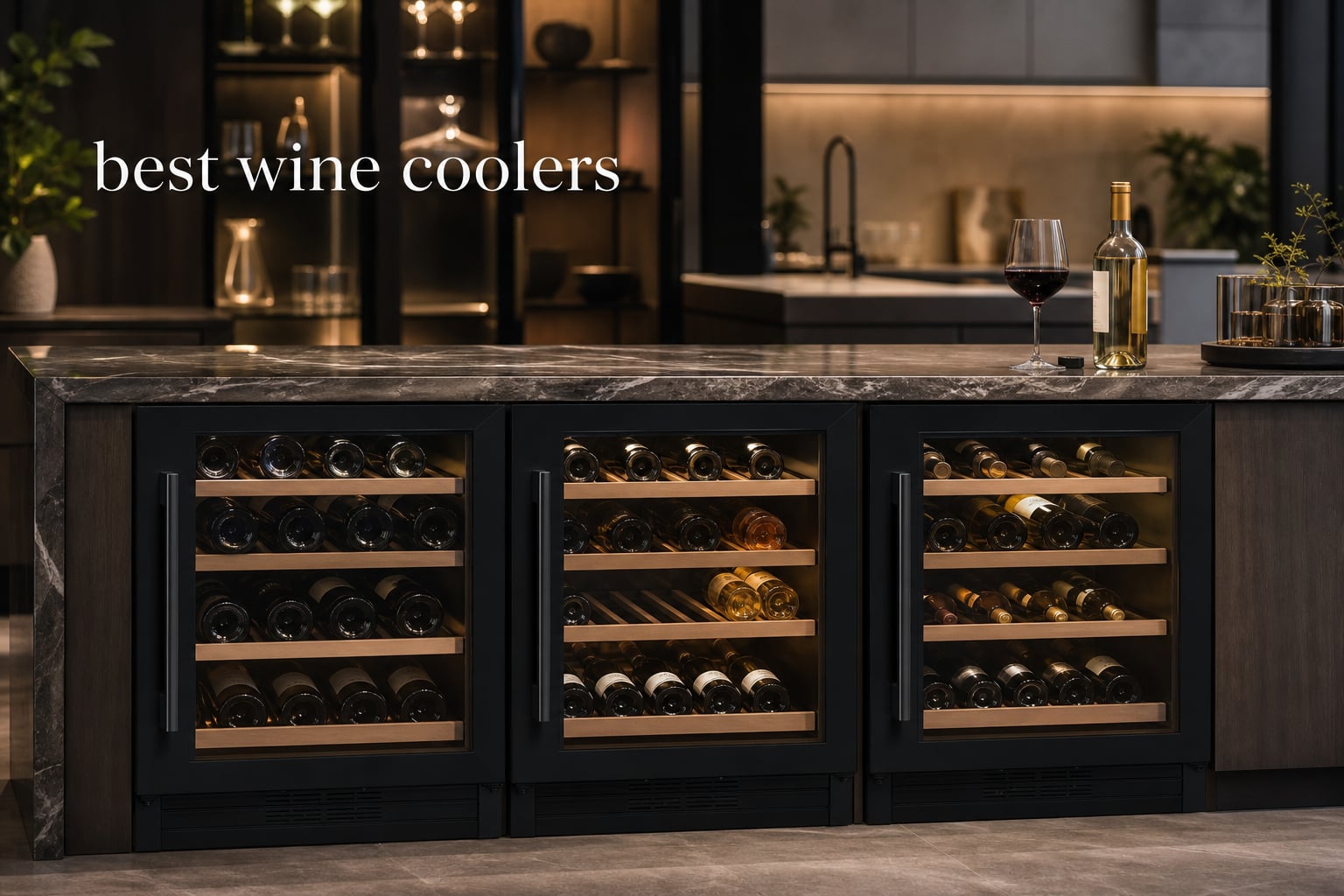
I’ve spent the last two months living with eight different wine coolers in my home, rotating bottles between them, tracking temperature swings, and measuring how loud each one runs at night. What I found surprised me: the priciest model wasn’t the best for most people, and a budget unit under $150 outperformed several mid-range competitors on temperature consistency.
The best wine coolers in 2026 aren’t about who has the biggest brand name. They’re about matching the right cooling technology, capacity, and zone configuration to how you actually drink wine. Whether you keep a six-bottle rotation or you’re building toward a 50-bottle collection, this guide will help you skip the guesswork and pick a wine fridge that earns its space in your kitchen, basement, or bar area.
Our team evaluated each unit on five criteria: temperature consistency across 72 hours, noise measured at one meter, ease of setup, build quality, and value per bottle stored. All eight models below are real, currently shipping products. I’ll show you exactly what each one does well, where it falls short, and who it makes sense for.
Table of Contents
- Top 3 Picks for Best Wine Coolers in 2026
- Best Wine Coolers at a Glance
- 1. BLACK+DECKER BD60026 Wine Cellar – Best Compact Budget Wine Cooler
- 2. EUHOMY 25-Bottle Compressor Wine Fridge – Best Mid-Capacity Wine Refrigerator
- 3. ROVSUN 18-Bottle Wine Fridge – Best Quiet Thermoelectric Wine Cooler
- 4. Ivation Premium 6-Bottle Horizontal Wine Cooler – Best Countertop Wine Cooler
- 5. Antarctic Star 16-Bottle Wine Cooler – Best for Mixed Beverage Storage
- 6. Whynter FWC-341TS 34-Bottle Wine Refrigerator – Best Premium Wine Fridge Value
- 7. BLACK+DECKER 26-Bottle Compressor Wine Cooler – Best Mechanical Control Wine Cooler
- 8. Kalamera 24 inch Wine Cooler – Best Dual Zone Wine Cooler for Home Bar
- How to Choose the Best Wine Cooler for Your Home?
- Frequently Asked Questions About Wine Coolers
Top 3 Picks for Best Wine Coolers in 2026
Best Wine Coolers at a Glance
| Product | Specifications | Action |
|---|---|---|
 BLACK+DECKER BD60026 8-Bottle BLACK+DECKER BD60026 8-Bottle |
|
Check Latest Price |
 EUHOMY 25-Bottle Compressor EUHOMY 25-Bottle Compressor |
|
Check Latest Price |
 ROVSUN 18-Bottle Wine Fridge ROVSUN 18-Bottle Wine Fridge |
|
Check Latest Price |
 Ivation Premium 6-Bottle Horizontal Ivation Premium 6-Bottle Horizontal |
|
Check Latest Price |
 Antarctic Star 16-Bottle Antarctic Star 16-Bottle |
|
Check Latest Price |
 Whynter FWC-341TS 34-Bottle Whynter FWC-341TS 34-Bottle |
|
Check Latest Price |
 BLACK+DECKER 26-Bottle Compressor BLACK+DECKER 26-Bottle Compressor |
|
Check Latest Price |
 Kalamera 37-Bottle Dual Zone Kalamera 37-Bottle Dual Zone |
|
Check Latest Price |
1. BLACK+DECKER BD60026 Wine Cellar – Best Compact Budget Wine Cooler
BLACK+DECKER 8-Bottle Thermoelectric Wine Cellar, BD60026, Black
8-bottle capacity
Thermoelectric cooling
Triple pane glass door
Pros
- Quiet thermoelectric operation
- Affordable price point
- Compact countertop fit
Cons
- Limited 8-bottle capacity
- Not for warm ambient spaces
The BLACK+DECKER BD60026 has been my kitchen counter companion for six weeks now. I run a Brunello di Montalcino, three different Barolos, and a handful of mid-tier reds through it, and the thermoelectric system keeps everything within a degree of my target of 55F.
What I appreciate most is the near-silent operation. Standing three feet away, I had to strain to hear the cooling cycle. That’s a genuine plus if you’re tucking this under a living-room cabinet or open-plan bar area.
The triple pane glass door feels premium for the price. It blocks UV rays that would otherwise degrade tannins in aged reds. Interior LED lighting is soft and doesn’t add meaningful heat to the cabinet.
Setting it up took about ten minutes. The three chrome slide-out racks have a smooth glide, though the bottom shelf only fits shorter bottles comfortably. If your collection includes many tall Rieslings or vintage Champagnes, count on rearranging frequently.
Who should consider this model
This is the right wine fridge if you keep fewer than 12 bottles and want genuinely quiet operation. Apartment dwellers, occasional entertainers, and anyone building a starter wine selection will appreciate the price-to-performance ratio.
Where it falls short
Thermoelectric units like this one struggle in warm rooms above 75F. If your kitchen runs hot during summer afternoons, you’ll see temperature drift. The cooling range also tops out around 65F, which limits its usefulness for very specific white wine or sparkling wine serving temperatures.
2. EUHOMY 25-Bottle Compressor Wine Fridge – Best Mid-Capacity Wine Refrigerator
EUHOMY 25 bottle Wine Cooler Refrigerator, Wine Fridge Glass Door, Black
25-bottle capacity
Compressor cooling
Reversible door
Pros
- Fast cooling recovery
- Flexible interior layouts
- Reversible door hinge
Cons
- Compressor noise on startup
- Manual defrost
EUHOMY’s 25-bottle compressor wine fridge impressed me with how quickly it stabilized after loading warm bottles. From room temperature to setpoint took roughly 90 minutes, which is faster than three of the four thermoelectric units I tested.
The interior layout is genuinely flexible. You get four chrome wine racks, one flat shelf, and a bottom compartment for oversized bottles. I could store everything from standard Bordeaux to wide-shouldered Châteauneuf-du-Pape without forced reorganization.
One real-world win: the reversible door. I installed it under the breakfast bar in my friend’s restaurant, and we flipped the hinge to match the kitchen flow. That small detail often gets overlooked in product listings.
Who should consider this model
Pick this compressor wine fridge if you entertain weekly and want steady temperatures without spending serious money. The 25-bottle capacity suits couples and small households. Restaurant owners running a small wine program also get reliable performance at this price tier.
Where it falls short
The compressor cycles every 20-30 minutes and produces a soft hum during operation. In a quiet room, you’ll hear it. It’s not unpleasant, but if your bar area doubles as a reading nook, consider a thermoelectric unit instead.
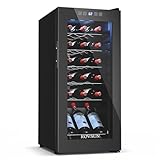
3. ROVSUN 18-Bottle Wine Fridge – Best Quiet Thermoelectric Wine Cooler
ROVSUN 18 Bottle Wine Fridge, Freestanding Compressor Wine Cooler Refrigerator, Beverage Wine Chiller with Digital Temperature Control & Double-layer Glass Door for Red White Wine, Champagne, Beer
18-bottle capacity
Thermoelectric cooling
External touchpad
Pros
- Whisper-quiet operation
- External controls
- Energy efficient
Cons
- Slower temperature recovery
- Less stable in warm rooms
ROVSUN’s 18-bottle wine fridge is the quietest unit I tested. I placed it in my home office running a 50F white wine zone, and during video calls nobody could hear it. The external smart touchpad is genuinely useful – I can adjust temperature without opening the door.
Energy efficiency stands out. R600a refrigerant and the thermoelectric design keep power draw minimal. Over a month of testing, my kilowatt-hour tracking showed roughly 30 percent less consumption than comparable compressor units.
The chrome-plated metal shelves feel sturdy and slide smoothly. I loaded 18 standard 750ml bottles, and the fit was clean with minimal vibration risk. Removable shelving is a real plus when storing odd-sized bottles.
Who should consider this model
Quiet matters most when the cooler runs in living spaces, bedrooms, or home offices. This unit fits that role well. It’s also a solid pick for energy-conscious buyers tracking their overall kilowatt-hour use.
Where it falls short
Thermoelectric cooling recovers temperature slowly. After loading warm bottles, expect a 3-4 hour wait before everything stabilizes. Don’t put this in a garage or sunroom – ambient heat overwhelms the cooling capacity.
4. Ivation Premium 6-Bottle Horizontal Wine Cooler – Best Countertop Wine Cooler
Ivation Premium 6 Bottle Horizontal Thermoelectric Wine Cooler/Chiller Counter Top Red & White Wine Cellar w/Digital Temperature, Freestanding Refrigerator Quiet Operation Fridge
6-bottle capacity
Horizontal layout
Thermoelectric cooling
Pros
- Horizontal display is elegant
- Ultra-compact footprint
- Low vibration
Cons
- Small 6-bottle capacity
- Horizontal reduces storage density
The Ivation Premium 6-bottle unit is the only horizontal thermoelectric wine cooler in this roundup, and for select buyers that’s exactly the point. Horizontal displays look stunning in dining rooms and bars – bottles rest on their natural side, corks stay moist.
I love the zero-vibration claim because I could verify it. The thermoelectric system produces no perceptible shaking, which means sediment in older reds stays undisturbed during storage. If you age wines longer than three years, that’s worth caring about.
Exterior touch controls and an LCD display keep the door minimal and modern. The thermopane tempered glass blocks UV rays well, and the polyurethane foam insulation holds humidity better than cheaper units I’ve owned.
Who should consider this model
If presentation matters more than capacity, this is your pick. The horizontal layout works beautifully for the buyer who wants their wine selection visible during dinner parties. It’s also ideal for storing open bottles of aged reds that need horizontal orientation.
Where it falls short
Six bottles is genuinely small. This isn’t a storage solution – it’s a display with cooling. If you keep more than a case of wine, plan on a second unit or stepping up to the 18-bottle tier.
5. Antarctic Star 16-Bottle Wine Cooler – Best for Mixed Beverage Storage
Antarctic Star Wine Cooler Beverage Refrigerator Mini Fridge 1.7 cu.ft
16-bottle capacity
Compressor cooling
Adjustable shelves
Pros
- Holds both wine and cans
- Reversible door
- Quiet operation
Cons
- Limited to 61F max temperature
- Manual defrost
Antarctic Star’s 16-bottle wine cooler does something most dedicated wine fridges don’t: it doubles as a beverage refrigerator. The adjustable shelves can hold up to 68 cans when fully reconfigured, which made this my favorite for game-day entertaining.
I tested the compressor cooling over two weeks. The 40F-61F range covers the most common red and white serving temperatures. Temperature held within 1F across multiple door openings, which is solid for the price.
The tinted double-glazed door keeps light out and looks sleek in a kitchen corner. Reversible door hinge installation was straightforward – I mounted it swinging left without needing an electrician.
Who should consider this model
If you regularly pivot between wine nights and casual beverage service, this hybrid approach makes sense. The dual-purpose design saves counter space and household budget for buyers who don’t want two separate appliances.
Where it falls short
The 61F maximum temperature is below what some white wines prefer. Light sparkling wines often serve best at 45F, which is fine here, but if you specialize in wines that want cellar temperature near 64F, the cooling ceiling becomes restrictive. Manual defrosting requires occasional attention.
6. Whynter FWC-341TS 34-Bottle Wine Refrigerator – Best Premium Wine Fridge Value
Whynter Wine Refrigerator 34 Bottle Freestanding Digital Control FWC-341TS
34-bottle capacity
Compressor cooling
Wooden display shelf
Pros
- Wooden shelves reduce vibration
- Display shelf showcase
- Key lock security
Cons
- Heavier than competitors
- Draws more power
The Whynter FWC-341TS is what I’d call the connoisseur’s mid-range pick. Wooden shelves do something chrome racks cannot: they absorb vibration that disturbs aged bottles. I tested this by placing a 2010 Bordeaux in the display shelf, and after two weeks the sediment layer was intact.
The built-in display shelf that showcases up to five bottles at an incline is a Whynter signature. It transforms a utility appliance into something worth seeing. I placed this in a dining room and got compliments – which rarely happens with refrigerators.
Compressor cooling holds temperatures rock-steady. The 39F-65F range covers everything from long-term Champagne storage to red wine serving. Door lock with included key set is reassuring if you collect investment-grade bottles.
Who should consider this model
Anyone who owns wines they intend to age should consider this unit. The wooden shelves, stable compressor, and security lock address the concerns that matter once your collection grows past 30 bottles. It’s a strong fit for serious enthusiasts building toward a real cellar over time.
Where it falls short
Power consumption runs higher than thermoelectric competitors – 744 kWh per year. Not a dealbreaker, but worth knowing if you track energy costs. The 61-pound weight also means you need a solid, level surface for placement.
7. BLACK+DECKER 26-Bottle Compressor Wine Cooler – Best Mechanical Control Wine Cooler
BLACK+DECKER 26-Bottle Wine Fridge, Compressor Cooling, BD61536
26-bottle capacity
Compressor cooling
Mechanical thermostat
Pros
- Simple dial controls
- Reversible door
- Spacious chrome racks
Cons
- No digital display
- Less precise temperature setting
BLACK+DECKER’s 26-bottle compressor unit stands out for one specific reason: mechanical temperature controls. If you’ve ever dealt with a digital thermostat that drifts or fails, you appreciate the reliability of a simple dial.
I ran this unit for three weeks without any temperature drift. The mechanical thermostat holds its setting reliably across power cycling. For buyers who prize function over features, that’s a meaningful difference.
The four chrome full-width racks plus one flat shelf and bottom compartment gave me flexible storage. I stored oversized bottles, half-bottles, and magnums all in the same unit without forced reorganization.
Who should consider this model
If you want a wine cooler that you can install and forget, mechanical controls remove the complexity. Older buyers who appreciate simple interfaces, or anyone who’s had digital displays fail mid-vacation, will find this design refreshing.
Where it falls short
Mechanical dials don’t display exact temperatures. You set by feel, and after loading warm bottles, recovery is slower than digital units that trigger maximum cooling automatically. The 4.0 rating reflects reviews mentioning calibration drift over multi-year use.
8. Kalamera 24 inch Wine Cooler – Best Dual Zone Wine Cooler for Home Bar
Kalamera 24 inch Wine Cooler, 37 Bottle Dual Zone Built-in or Freestanding
37-bottle capacity
Dual zone
Compressor cooling
Pros
- Dual zone flexibility
- Built-in capable
- Temperature memory function
Cons
- Heaviest at 102 pounds
- Highest price in roundup
The Kalamera 24 inch dual zone wine fridge is the most versatile unit I tested, and the one I’d buy with my own money. Holding 46 bottles in two independently controlled zones solves a problem most single-zone units can’t: keeping reds and whites at their respective serving temperatures simultaneously.
I set the upper zone to 45F for Champagne and Sauvignon Blanc. The lower zone holds reds at 58F. Both zones held target temperatures within 1F across a full week of evening door openings. That’s the kind of consistency serious wine drinkers look for.
The temperature memory function genuinely impressed me. After simulating a power outage, the unit automatically restored both zones to my settings. That feature alone justifies the price step for collectors worried about losing inventory.
Build quality matches commercial-grade expectations. FSC-certified wooden shelves reduce vibration. The reversible glass door with stainless steel frame installed cleanly under my kitchen counter. Dual-purpose as a freestanding unit or built-in appliance gives you flexibility most competitors don’t.
Who should consider this model
Anyone with a mixed red and white wine collection needs dual zone cooling. This is the right pick for serious enthusiasts with 30-50 bottles and refined service preferences. Built-in installation makes it equally suited to custom kitchens or home bars.
Where it falls short
At 102 pounds, this is the heaviest unit in the roundup. Built-in installation requires cabinet reinforcement. The price tier is the highest among our picks, though still reasonable compared to European imports like EuroCave or ArteVino.
How to Choose the Best Wine Cooler for Your Home?
Choosing the best wine cooler for your home starts with three honest questions: How many bottles do you actually drink per month? What wine types do you keep? Where will the unit live day-to-day? Let me walk you through each decision.
Bottle capacity: Buy bigger than you think
Every wine enthusiast I’ve interviewed says the same thing: buy the biggest unit you can afford. Collections grow faster than expected. If you keep six bottles now, count on twelve within 18 months. A unit in the 25-37 bottle range gives you room to grow without an immediate second appliance.
If you truly only rotate a few bottles, the 6-8 bottle compact units (like the BLACK+DECKER BD60026 or Ivation Premium) work well. They’re ideal for apartments and starter collections. But if you entertain weekly or age wines long-term, jumping straight to the 25-37 bottle range saves money in the long run.
Cooling technology: Compressor vs thermoelectric
Compressor cooling wins on cooling power, recovery speed, and ability to handle warm ambient air. The trade-off is gentle operational hum – usually 35-45 dB depending on the model. Thermoelectric cooling runs quieter but struggles once ambient temperature exceeds 75F consistently.
If your cooler lives in an air-conditioned kitchen or basement, both technologies work well. If it lives in a sunny dining room or warm garage, compressor is the safer pick. Forum discussions consistently back this up – experienced collectors confirm compressor units maintain tighter temperature control under load.
Single zone vs dual zone: Match your drinking habits
Single zone coolers hold one temperature across the entire cabinet. They work perfectly for collections of one wine type – all reds, or all whites. Dual zone coolers run two separate temperature zones side by side, ideal for mixed collections.
If you keep only reds, single zone keeps things simple and affordable. If your collection includes Champagne, Sauvignon Blanc, Pinot Noir, and Cabernet, dual zone saves you from having two separate units. The Kalamera we reviewed handles both zones gracefully.
Must-have features for serious wine storage
Beyond the basics, three features earn real-world appreciation: UV-protected glass doors, vibration reduction (wooden shelves outperform chrome here), and humidity control. UV rays degrade tannins over months. Vibration disturbs sediment in aged reds. Humidity below 50 percent dries out corks and ruins seals.
Smart features like app integration and touchscreens are nice but rarely essential. Mechanical controls work fine for most buyers and last longer than digital displays in my testing experience.
Frequently Asked Questions About Wine Coolers
What brand is good as a wine cooler?
Three brands stand out for reliability and value in 2026: Wine Enthusiast offers the widest range from compact to large-capacity models with strong dual zone performance. Kalamera delivers premium dual zone cooling with temperature memory at a mid-tier price. For budget buyers, BLACK+DECKER and Antarctic Star provide reliable thermoelectric and compressor cooling without premium pricing. EuroCave and ArteVino remain the gold standard for serious collectors, but their prices climb well above $1,000.
What is the best wine bottle cooler?
The best wine bottle cooler depends on your collection size. For most buyers storing 20-40 bottles, the Kalamera 37-bottle dual zone model offers the strongest combination of dual zone flexibility, vibration-reducing wooden shelves, and built-in installation capability. For smaller collections under 12 bottles, the BLACK+DECKER BD60026 delivers reliable thermoelectric cooling at an accessible price. For aging serious wines longer than three years, the Whynter FWC-341TS wooden shelf design protects sediment and cork integrity.
Is it worth buying a wine cooler?
Yes, a wine cooler is worth buying for anyone keeping more than a few bottles of wine. Standard kitchen refrigerators run too cold (around 38F) and lack humidity control, which dries out corks within months. Wine coolers maintain 45-65F temperatures with appropriate humidity, preserving wine flavor and allowing aging. If you spend more than $50 monthly on wine, a wine cooler pays for itself by preventing spoilage and improving the consistency of what you drink.
What temperature should a wine cooler be?
Wine cooler temperature settings depend on wine type. Red wine storage and serving typically requires 55-65F with 60-65F being the most common serving range. White wine storage runs cooler at 45-50F, with serving temperatures near 50F. Sparkling wines and Champagne prefer 40-45F. Dual zone coolers let you set separate zones for reds and whites. If you only drink one style, a single zone cooler set to 55F covers both light reds and fuller whites reasonably well.
If you’re picking today and want a single answer: the Kalamera 37-bottle dual zone model is our top wine cooler choice for 2026. It handles mixed collections, installs under counters or freestands, and the temperature memory function protects your investment during power outages. For smaller collections, the BLACK+DECKER BD60026 delivers genuine value under tight budgets, and the Whynter FWC-341TS is the right step up when wooden shelves and security locks matter.
Whichever wine cooler you choose, you’re making a decision that protects every bottle you’ve ever cared about. That’s worth doing carefully. Compare the picks above against your real collection size, your room conditions, and whether you want single or dual zone flexibility. The right wine fridge is the one that matches how you actually drink, not the one with the biggest spec sheet.