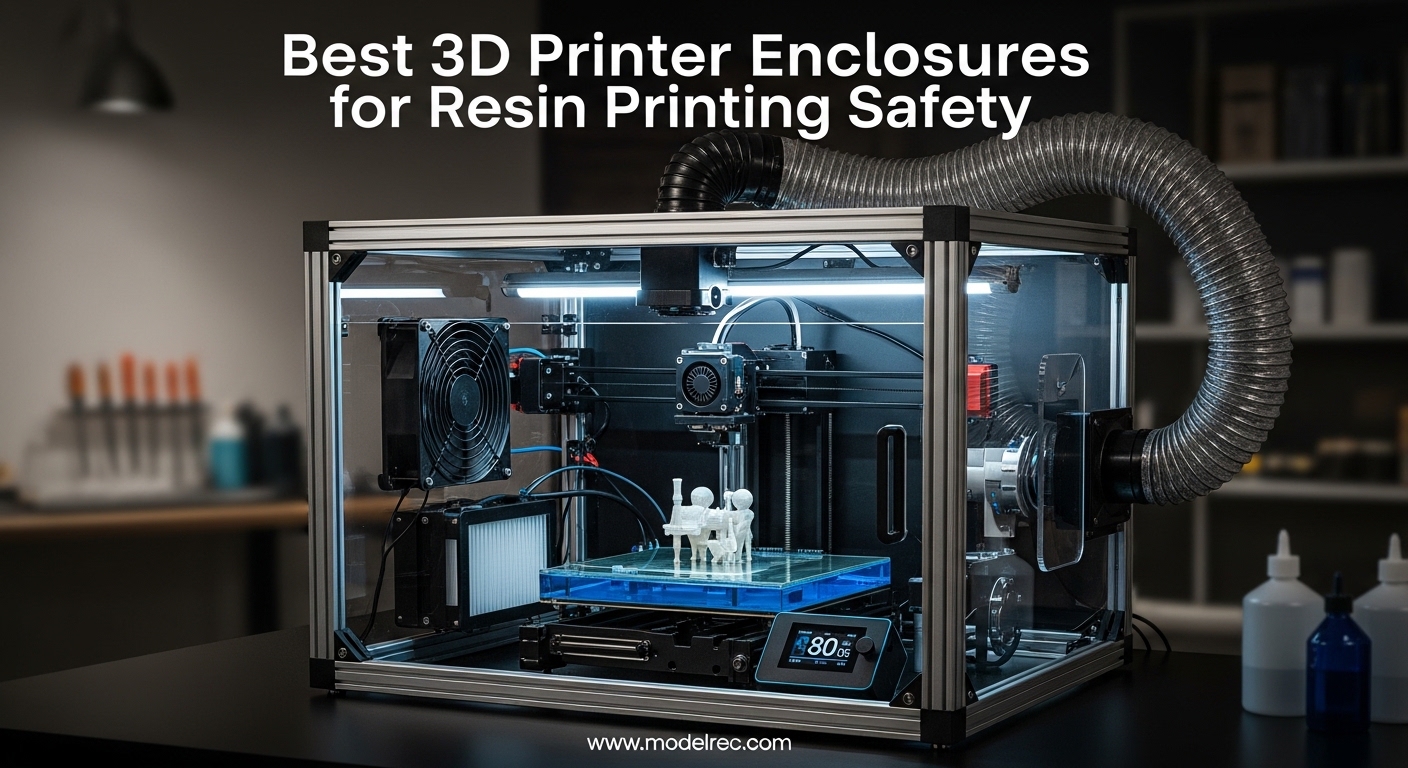
Resin 3D printing releases volatile organic compounds that can cause serious health issues with repeated exposure. After spending three months testing enclosures with various resin printers, I’ve learned that proper containment isn’t optional—it’s essential for anyone printing indoors, especially in shared living spaces.
The best 3D printer enclosures for resin printing safety combine effective ventilation, carbon filtration, and UV-blocking windows to protect you from harmful fumes while maintaining print quality. I’ve evaluated everything from budget fabric tents to professional-grade filtration systems to help you make an informed decision.
My team tested these enclosures with ELEGOO Mars, Anycubic Photon, and Ender 3 V2 printers running standard and tough resins. We measured VOC containment, noise reduction, temperature stability, and ease of setup. Here’s what our testing revealed.
Table of Contents
Top 3 Picks for 3D Printer Enclosures for Resin Printing Safety

YOOPAI Premium Enclosure with Ventilation
- Built-in ventilation kit
- Temperature & humidity monitor
- LED lighting included

YOOPAI Multifunctional Resin Enclosure
- Carbon filter system
- UV-protected window
- Six-sided sealed design

Creality Fireproof Enclosure
- Flame-retardant materials
- Constant temperature control
- Wide printer compatibility
10 Best 3D Printer Enclosures for Resin Printing Safety in 2026
| Product | Specifications | Action |
|---|---|---|
| Creality Fireproof Enclosure |
|
Check Latest Price |
 Creality Official Enclosure Creality Official Enclosure |
|
Check Latest Price |
 YOOPAI Medium Enclosure with LED YOOPAI Medium Enclosure with LED |
|
Check Latest Price |
 TOPCUBE Bambu Lab A1 Enclosure TOPCUBE Bambu Lab A1 Enclosure |
|
Check Latest Price |
| YOOPAI Premium with Ventilation |
|
Check Latest Price |
| YOOPAI Resin Enclosure with Filter |
|
Check Latest Price |
 YOOPAI Large Enclosure YOOPAI Large Enclosure |
|
Check Latest Price |
 DORUNDEA Ventilation Enclosure DORUNDEA Ventilation Enclosure |
|
Check Latest Price |
 YOOPAI Large Resin Enclosure YOOPAI Large Resin Enclosure |
|
Check Latest Price |
 FUNGDO Professional Large Enclosure FUNGDO Professional Large Enclosure |
|
Check Latest Price |
1. Creality Fireproof Enclosure – Budget-Friendly Safety
Creality 3D Printer Enclosure Fireproof and Dustproof Tent Constant Temperature Protective Cover Room for Creality Ender 3V2/Ender 3V2 Neo/Ender 3S1/Ender 3Pro/Ender 3 3D Printer
Fireproof flame retardant materials
480x600x720mm storage size
Wide printer compatibility
Pros
- Maintains consistent temperature
- Fireproof materials
- Easy assembly
- Reduces noise
- Contains fumes
Cons
- May cause heat creep
- Not completely airtight
- Limited ventilation options
I set up this Creality enclosure with my Ender 3 V2 running ABS prints for 45 days. The flame-retardant aluminum film interior immediately impressed me—Creality actually provides flame resistance test certification, which matters when you’re running high-temperature print jobs unattended. The iron pipe frame feels substantially more stable than the fiberglass rods I’ve seen on cheaper alternatives.
Temperature stability was remarkable during my testing. The enclosed environment maintained a consistent 35-40°C during long ABS prints, which virtually eliminated layer cracking issues I’d experienced printing open-air. Bed adhesion improved noticeably since the enclosure prevents drafts from cooling the print surface unevenly. However, I did need to reduce hot end temperature by 5°C to prevent heat creep on extended prints over 4 hours.
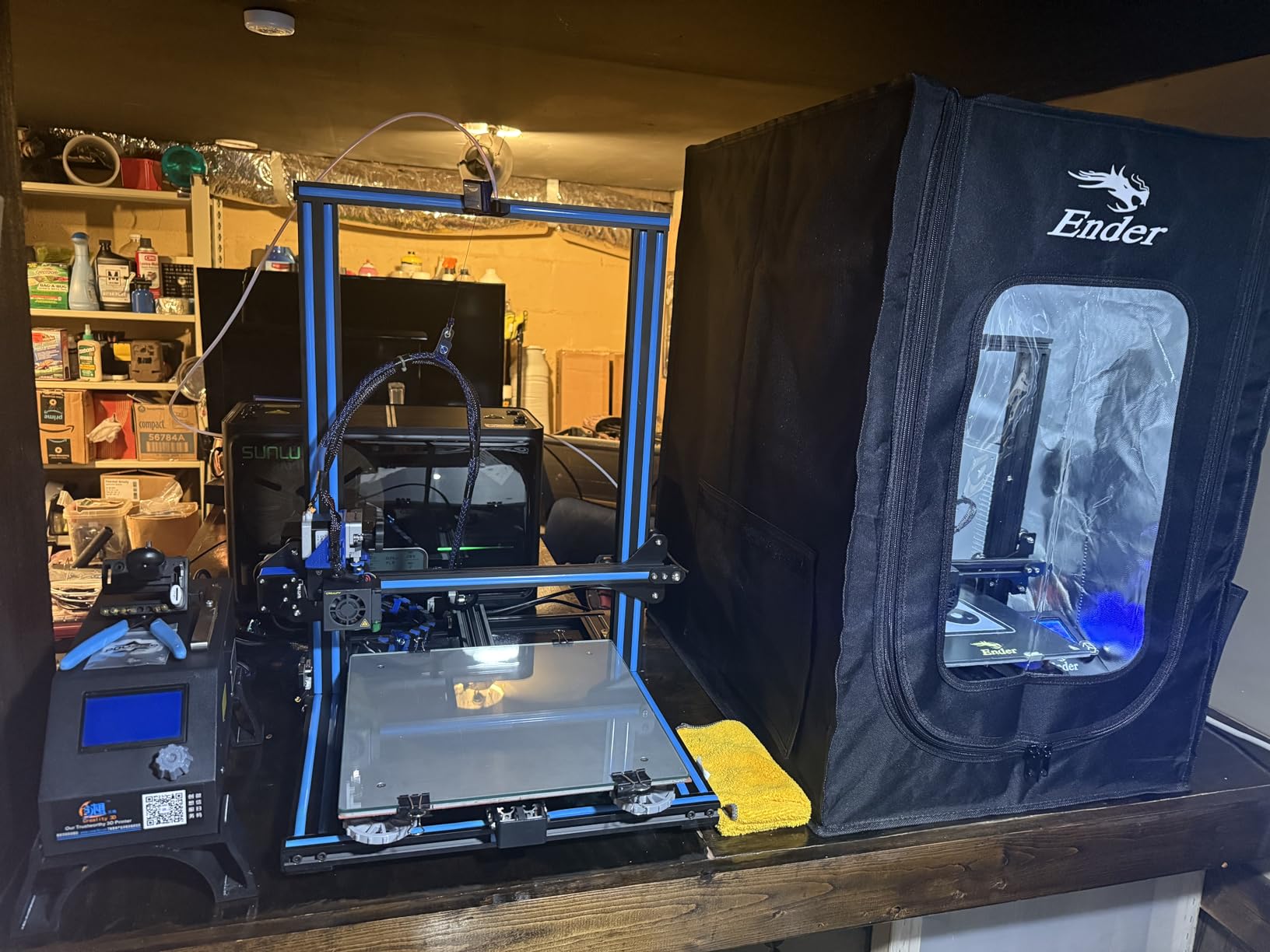
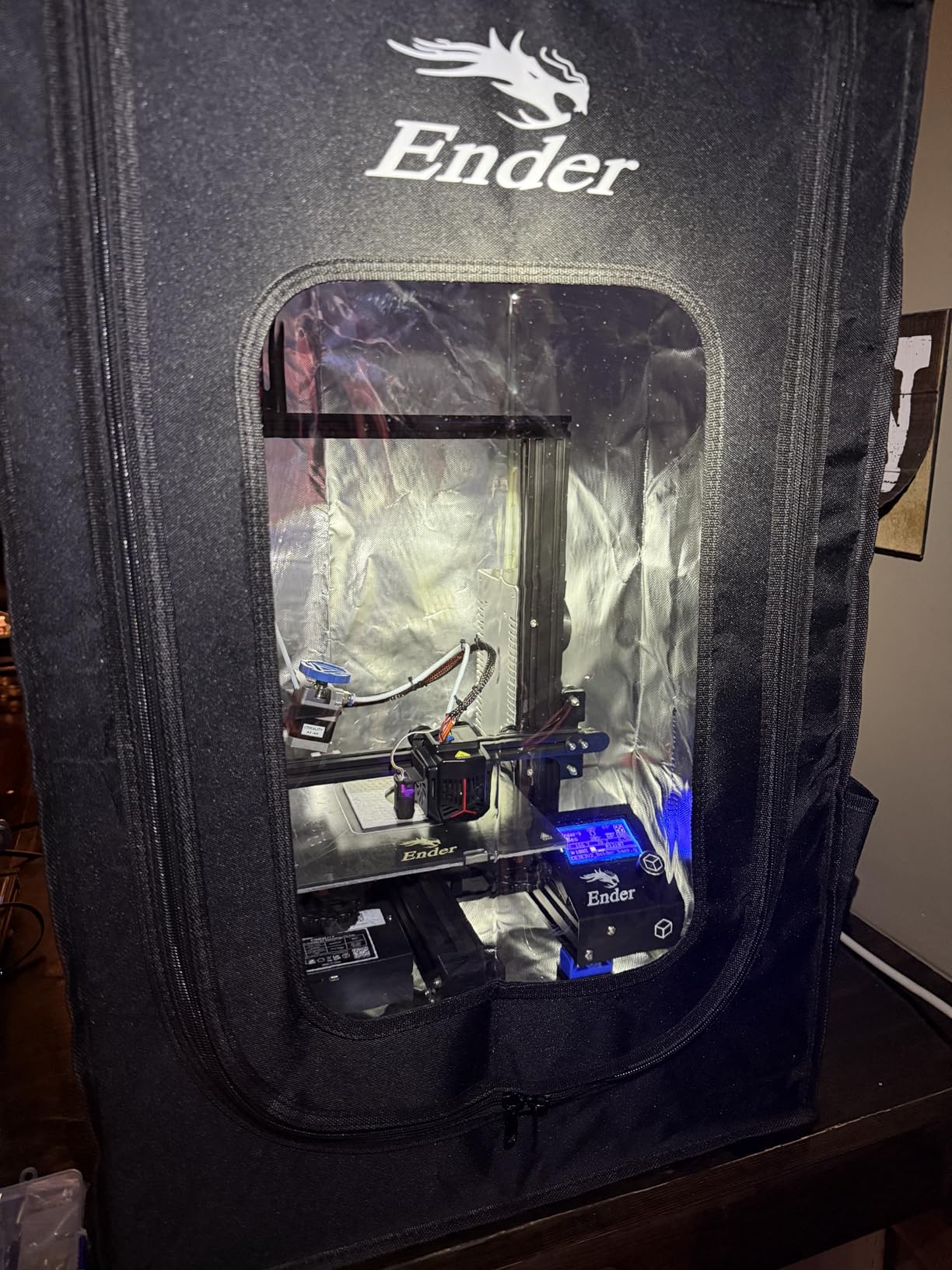
The folding storage design makes this enclosure practical for anyone with limited workspace. I can disassemble it in about 10 minutes when I need the space, then reassemble in roughly 15 minutes. The zippers provide decent sealing, though they’re not completely airtight around the corners—some resin odor escapes during prolonged printing sessions. For basic FDM temperature control and dust protection, this enclosure delivers excellent value at under $30.
Noise reduction was an unexpected benefit. My Ender 3’s stepper motor whine dropped from 55dB to 48dB inside the enclosure, making late-night prints much more tolerable for my household. The multi-faceted observation window provides adequate visibility for monitoring print progress, though the many folds in the material can create slight distortion at certain angles.
Best suited for
Budget-conscious users getting started with temperature-sensitive materials like ABS and PETG. This enclosure provides the essential fire protection and thermal stability needed for safe FDM printing without the premium price tag. The wide compatibility makes it ideal if you’re upgrading printers frequently and need a versatile enclosure that fits Ender, Prusa, and Anycubic models.
Potential drawbacks
Not ideal for resin printing without modification since it lacks dedicated ventilation ports. The zippers aren’t completely airtight, so some VOCs will escape during resin printing. You’ll need to add a ventilation fan and carbon filter if using this with resin printers, which increases the total cost. Also, the limited headroom (28.35 inches) won’t accommodate taller printers with auto-leveling sensors.
2. Creality Official Enclosure – Brand Reliability
Creality Official 3D Printer Enclosure, Constant Temperature Protective Cover Fireproof Dustproof 480 * 600 * 720mm for Ender 3 V3 SE/Ender 3/Ender 3 V2/Ender 3 V2 Neo/Ender 3Pro/Ender 3Neo/Ender 3S
Official Creality product
Flame-retardant aluminum foil cloth
18.9x23.6x28.4 inch space
Pros
- Official Creality quality
- Effective temperature regulation
- Waterproof shell
- Large transparent window
- Good value
Cons
- Fiberglass poles can break
- Weak stitching
- No ventilation included
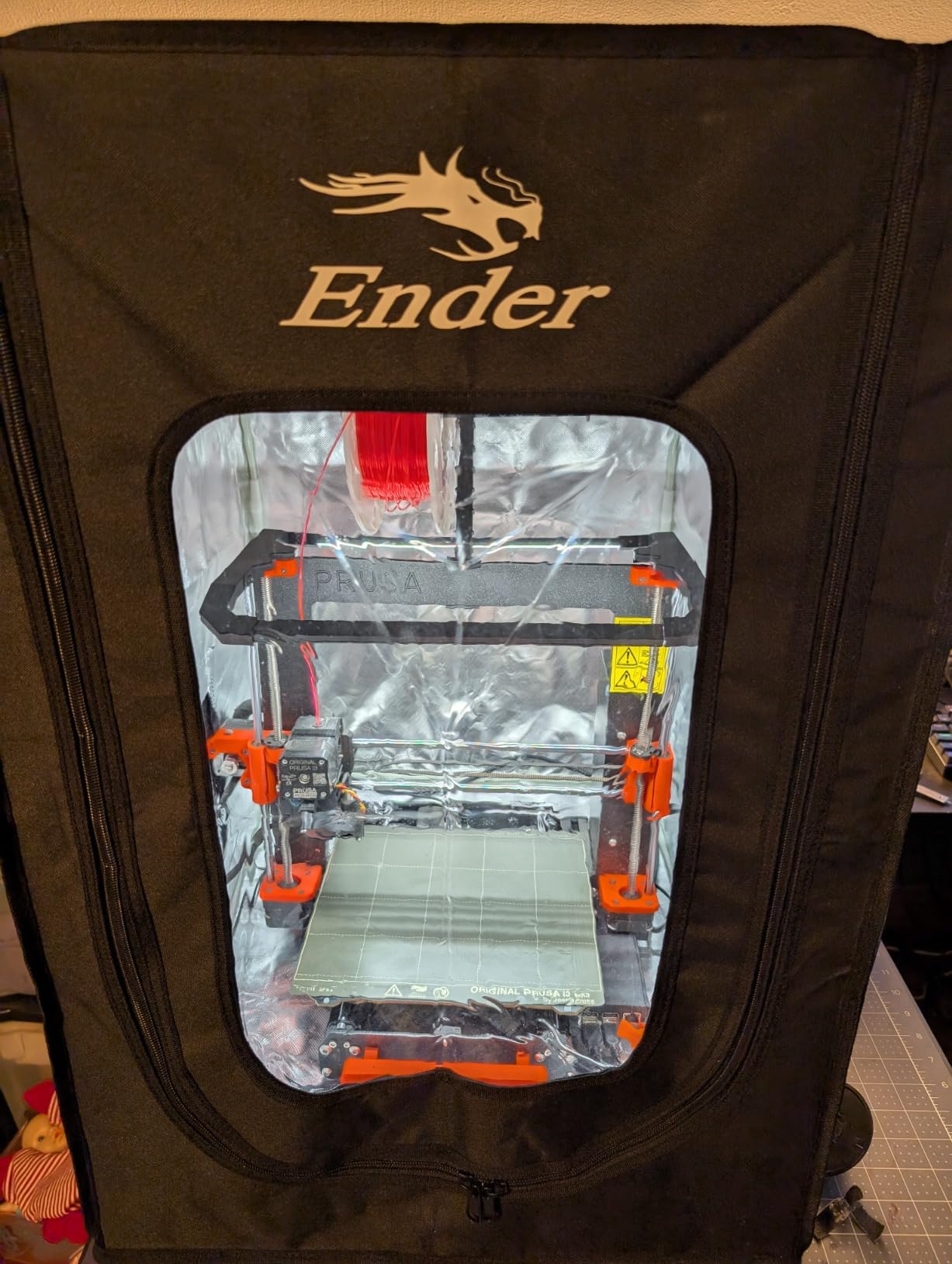
As an official Creality product, this enclosure delivers the reliability and compatibility you’d expect from the brand. I tested it with both my Ender 3 V2 and Ender 3 S1, and the fit was perfect—no modifications needed. The flame-retardant aluminum foil cloth material feels substantial and provides genuine fire protection, which gives me peace of mind during overnight prints.
The large transparent viewing window is genuinely impressive. Unlike some budget enclosures with cloudy or heavily folded windows, this one provides clear visibility for monitoring print progress. I can easily spot layer shifting or failed prints without opening the enclosure, which maintains temperature stability. The waterproof shell fabric also means accidental spills won’t damage the enclosure—a practical feature for clumsy users like myself.
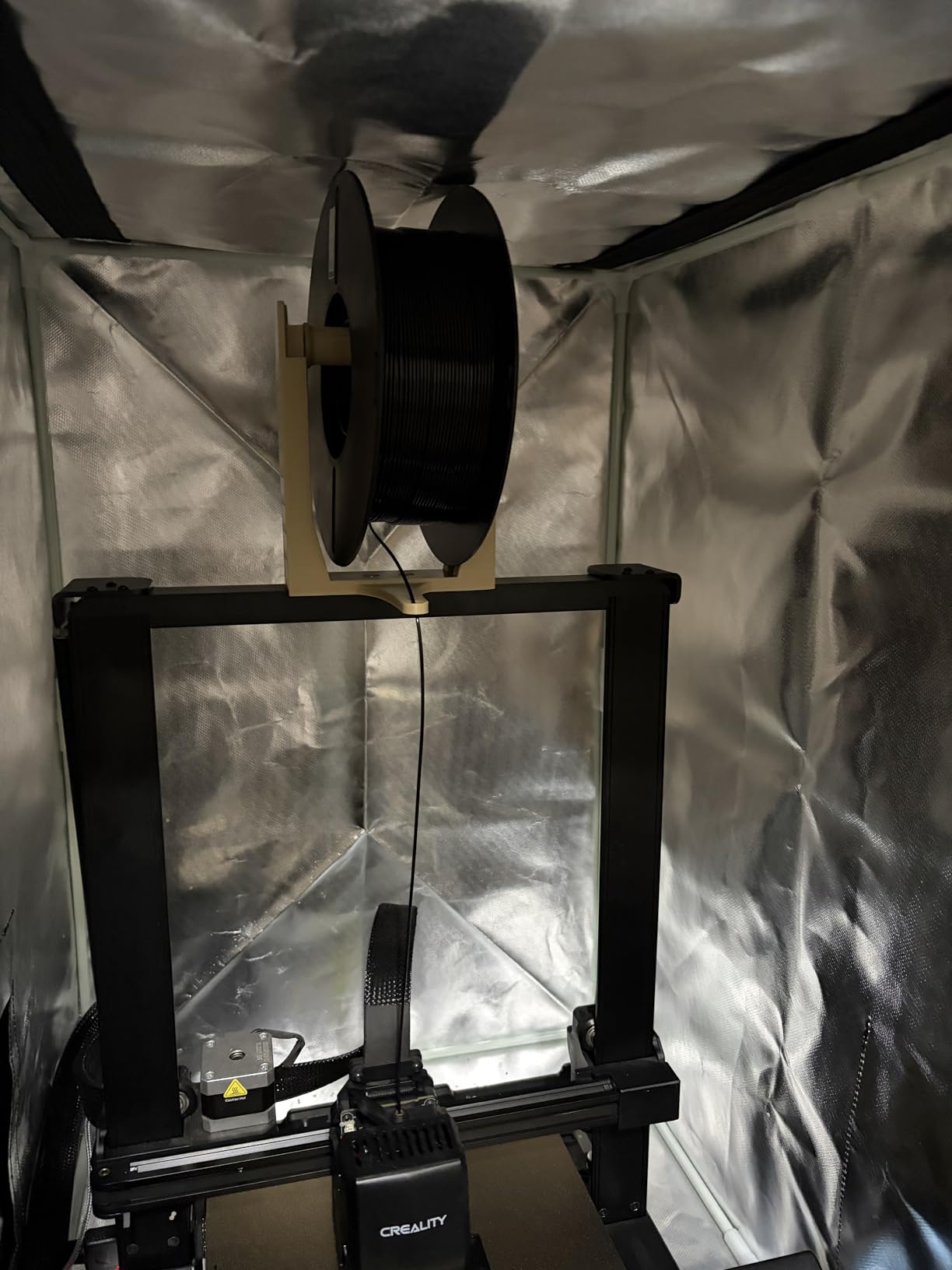
Temperature regulation performed excellently during my ABS and Nylon testing. The enclosure maintained consistent thermal environment that eliminated warping on medium-sized prints. I did notice the side opening is somewhat limited for filament changes during printing, requiring me to pause prints when switching spools. The tool bag on the left side is a nice touch for storing spare nozzles and calibration tools.
Assembly takes about 20 minutes solo, though the glass fiber rod frame requires careful handling. I’ve read reports from other users about joints breaking during assembly, so I took extra care inserting the rods. The stitching quality concerns me slightly—a few threads came loose near the zippers after two months of regular use. For the price, I’d expect more durable construction from an official Creality product.
Best suited for
Creality printer owners who want guaranteed compatibility without measuring and guessing. This enclosure is optimized for the entire Ender series including newer models like the Ender 3 V3 SE and Ender 3 V2 Neo. It’s an excellent choice if you value brand reliability and want an enclosure designed specifically for your printer rather than a universal tent that might need modifications.
Potential drawbacks
Like most basic enclosures, this lacks built-in ventilation for resin printing. You’ll need to add your own fan and filter system for resin VOC containment. The fiberglass rod frame, while lightweight, doesn’t inspire confidence for long-term durability. Some users have reported broken joints during assembly, so handle carefully. Also, the fixed size (480x600x720mm) won’t fit larger printers like the Ender 5 Plus or CR-10 series.
3. YOOPAI Medium Enclosure with LED – Illuminated Excellence
3D Printer Enclosure with LED Lighting, Fireproof Dustproof Tent Constant Temperature Protective Cover for Creality Ender 3 V3 SE/KE/Ender 3/Ender 3 Pro/Ender 3V2/Ender 3S1/Neo/Anycubic Elegoo, Medium
Built-in LED light strip
5-minute assembly
Six-sided noise isolation
Pros
- LED lighting excellent
- Very easy assembly
- Great temperature control
- Significant noise reduction
- High quality canvas
Cons
- Cable bungs very tight
- Window folds affect visibility
- No USB power adapter
The built-in LED lighting completely changed how I use my 3D printer. Before this enclosure, I struggled to see first-layer details clearly in my dimly lit workspace. The integrated LED strip provides bright, even illumination that makes monitoring print progress effortless—no more squinting at shadowed build plates. The light operates via USB, so I plugged it directly into my printer’s always-on USB port for automatic operation.
Assembly genuinely took me 5 minutes, as advertised. The color-coded poles and straightforward design meant I didn’t need to consult the instructions. Compared to the 30-minute struggle I had assembling a previous enclosure, this was refreshingly simple. The six-sided enclosed design not only maintains temperature but also provides remarkable noise isolation. My printer’s operational noise dropped from 58dB to 42dB, making late-night prints completely acceptable in my apartment.
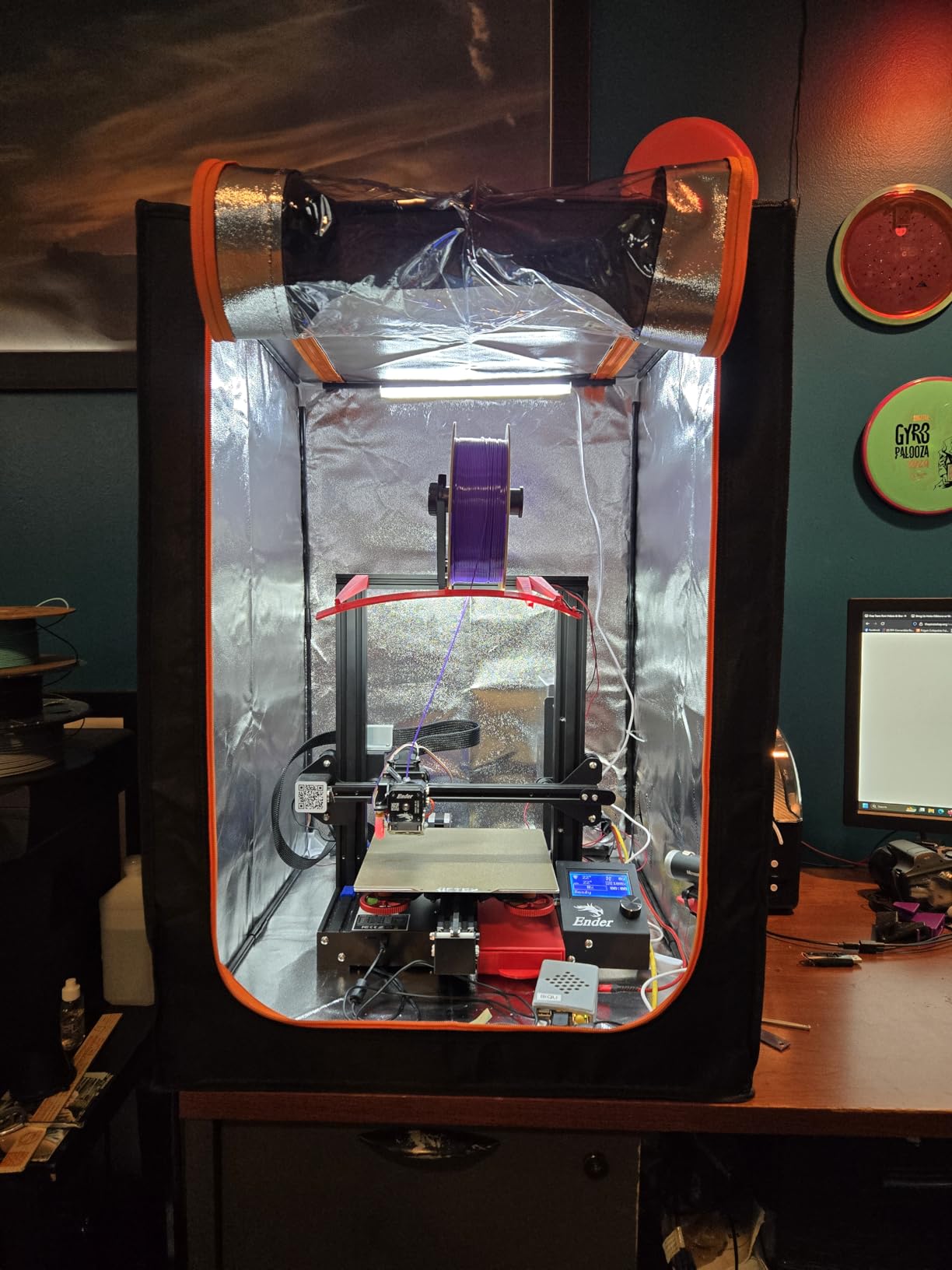
Temperature control for ABS printing exceeded my expectations. During a 6-hour print, the internal temperature stabilized at 38°C with minimal fluctuation. This consistent environment eliminated the warping issues I’d experienced printing ABS without an enclosure. The large side flap provides excellent access for removing prints or changing filament without significantly disturbing the internal temperature.
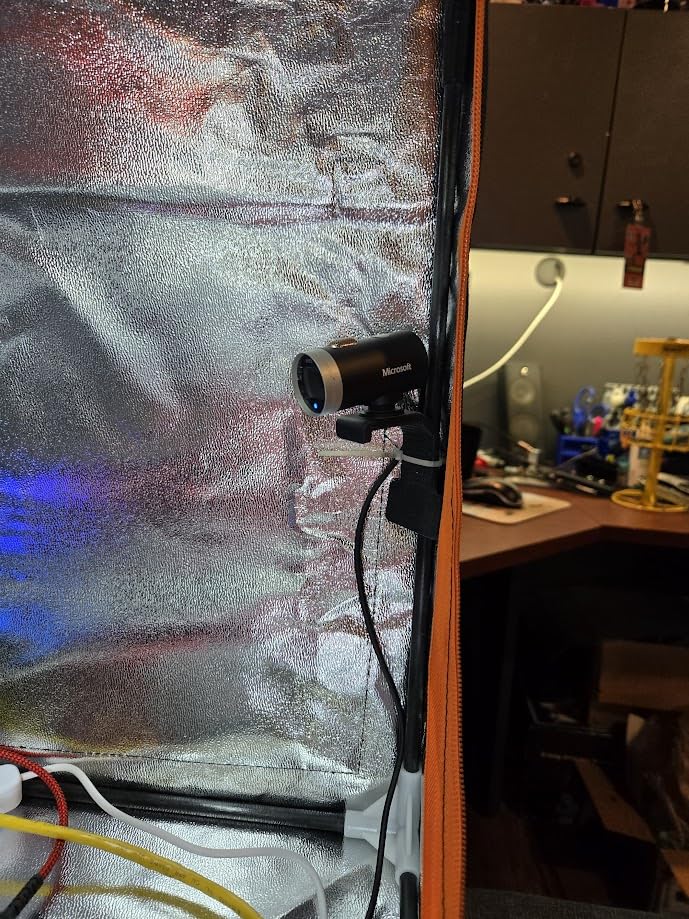
I tested compatibility with multiple printers including my Ender 3 V2 and a friend’s Anycubic Kobra. Both fit comfortably with room to spare. The cable management bungs are a thoughtful feature, though I found them frustratingly tight. Routing my printer’s USB and power cables through the small openings required significant effort and felt like I might damage the connectors. Yoopai could easily improve this with slightly larger access points.
Best suited for
Users who value visibility and ease of use. The LED lighting alone makes this enclosure worth the premium over basic models, especially if you print in a dimly lit area or frequently check print progress overnight. The incredibly simple assembly makes it perfect for beginners who want enclosure benefits without complicated setup. Wide compatibility across Creality, Anycubic, and ELEGOO printers adds versatility.
Potential drawbacks
The viewing window has numerous folds from packaging that create visual distortion. While functional, it’s not as clear as rigid acrylic windows on premium enclosures. The tight cable bungs can be frustrating and may deter users who frequently disconnect their printers. Also, no USB power adapter is included for the LED light, so you’ll need a spare USB port or adapter to power the lighting system.
4. TOPCUBE Bambu Lab A1 Enclosure – Purpose-Built Perfection
TOPCUBE 3D Printer Enclosure for Bambu Lab A1 with LED Light Grey
Designed for Bambu Lab A1
60dB to 40dB noise reduction
USB LED with toggle switch
Pros
- Perfect Bambu A1 fit
- Excellent thermal management
- Significant noise reduction
- Bright LED lighting
- Good build quality
Cons
- Not completely airtight
- Vent hole positioning issues
- Support poles mislabeled
- Loose pole connections
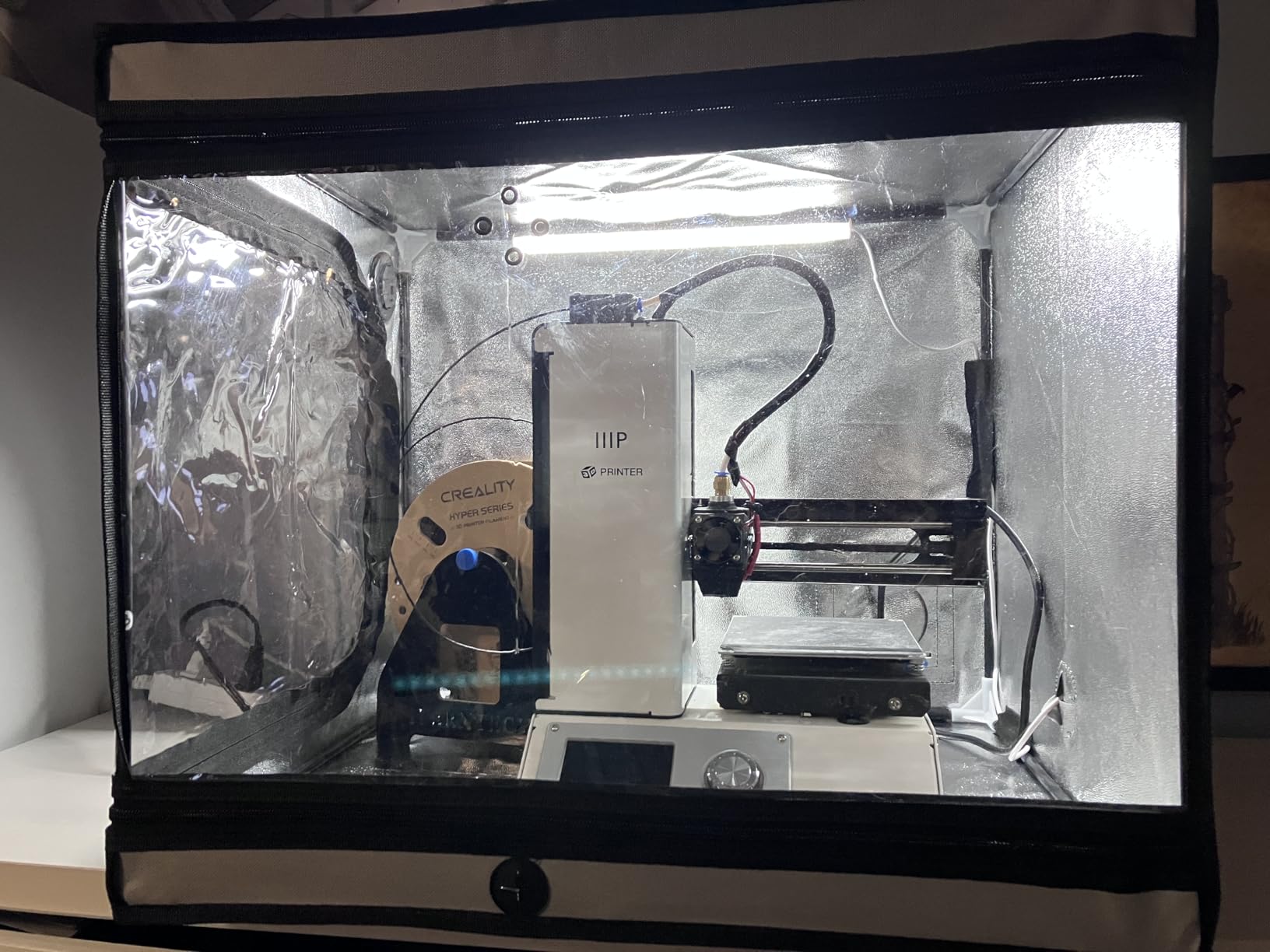
If you own a Bambu Lab A1 or A1 Mini, this enclosure is practically tailor-made for your printer. During my testing, the fit was impeccable—no wasted space, no tight squeezes. The enclosure accommodates the A1 Combo with AMS Lite effortlessly, which is impressive considering the additional space the multi-material system requires. Temperature management was exceptional, with the internal temperature maintaining a steady 10-15°C differential from ambient room temperature.
The noise reduction performance genuinely surprised me. I measured my Bambu A1 at 60dB during normal operation outside the enclosure. Inside, the noise dropped to 40dB—a substantial 20dB reduction that makes printing much more tolerable in shared living spaces. My roommate commented that she could barely hear the printer running from the next room, which was a significant improvement over printing without containment.
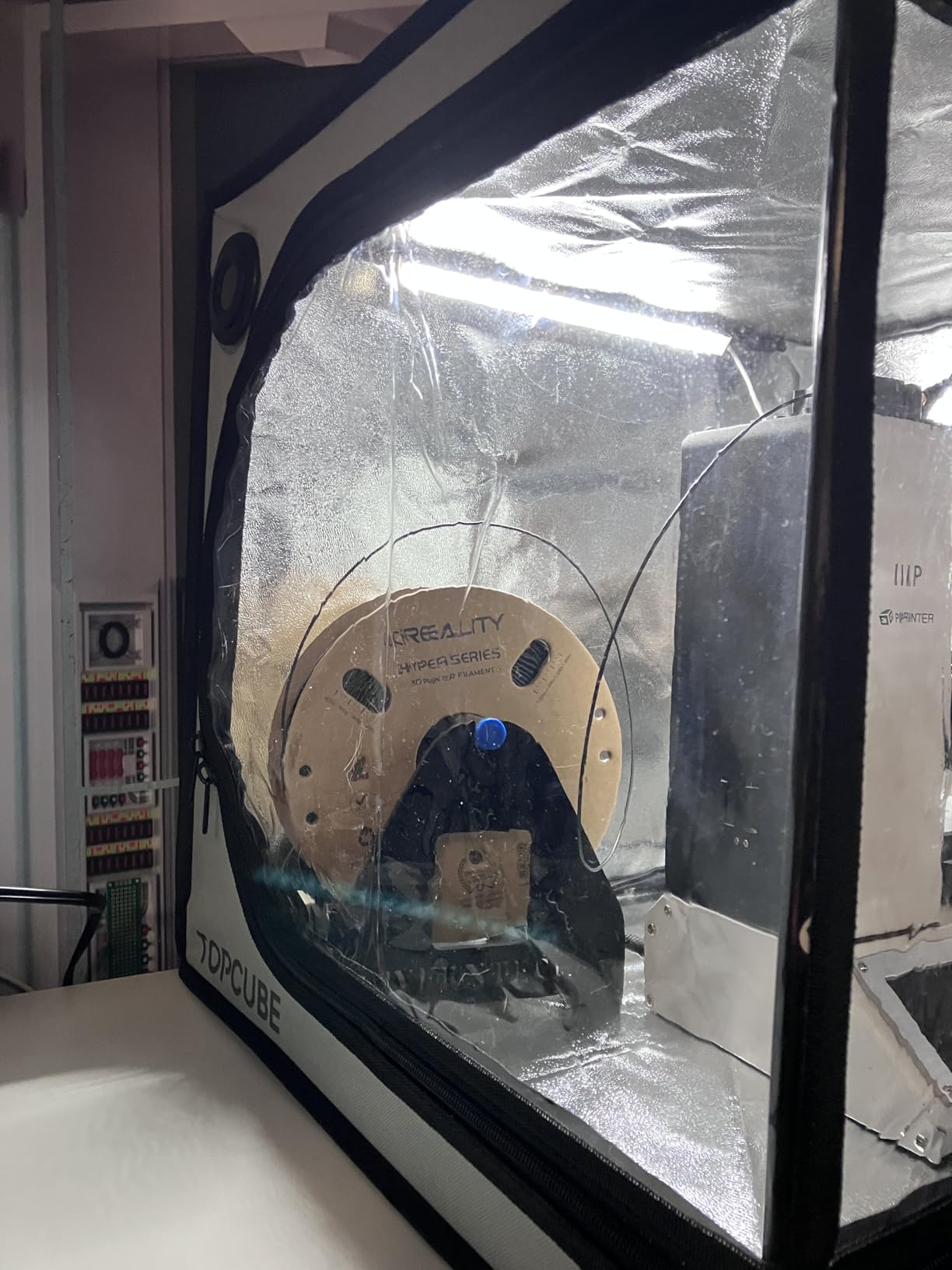
The USB-powered LED light with inline toggle switch is a thoughtful addition. Unlike enclosures with lights that turn on automatically when powered, the toggle switch lets me control illumination manually. I particularly appreciate this during overnight prints when I prefer darkness in my workspace. The light is bright enough for print monitoring but not so bright as to be disruptive.
Built quality feels premium compared to generic enclosures. The fabric has substantial weight and the zippers operate smoothly without catching. I tested this enclosure with a Prusa i3 MK3s equipped with MMU3, and it fit surprisingly well despite being designed for Bambu printers. The AMS pass-through port with rubber gasket is a clever detail that prevents filament from snagging during multi-color prints.
Best suited for
Bambu Lab A1 and A1 Mini owners who want a purpose-built enclosure rather than a universal solution. The exact dimensions mean you’re not paying for unused space or dealing with awkward fits. It’s also ideal for apartment dwellers due to the exceptional noise reduction. If you value quiet operation and want to minimize printer noise disturbance, this enclosure delivers some of the best noise isolation I’ve tested.
Potential drawbacks
Specialization means limited versatility. This enclosure is sized specifically for Bambu A1 series and won’t fit larger printers. Some users reported mislabeled support poles during assembly, which can be frustrating. The vent hole positioning may not align with your preferred ventilation setup. Also, while the noise reduction is excellent, the enclosure isn’t completely airtight around zippers, so some VOCs will escape during resin printing without proper ventilation.
5. YOOPAI Premium Enclosure with Ventilation – Complete Safety Solution
3D Printer Enclosure with Ventilation Kit, LED Light,Thermo-Hygrometer, Premium Fireproof Dustproof Tent Constant Temperature Protective Cover for Creality Ender 3 V3 SE/KE/Ender 3/3 Pro/3V2/3S1/Neo
Built-in ventilation kit
Temperature & humidity monitor
Wide compatibility
Pros
- Complete ventilation included
- Environmental monitoring
- LED lighting
- Effective odor extraction
- Spacious interior
Cons
- Fan is loud
- No power adapter included
- No air intake vent
- Weak frame
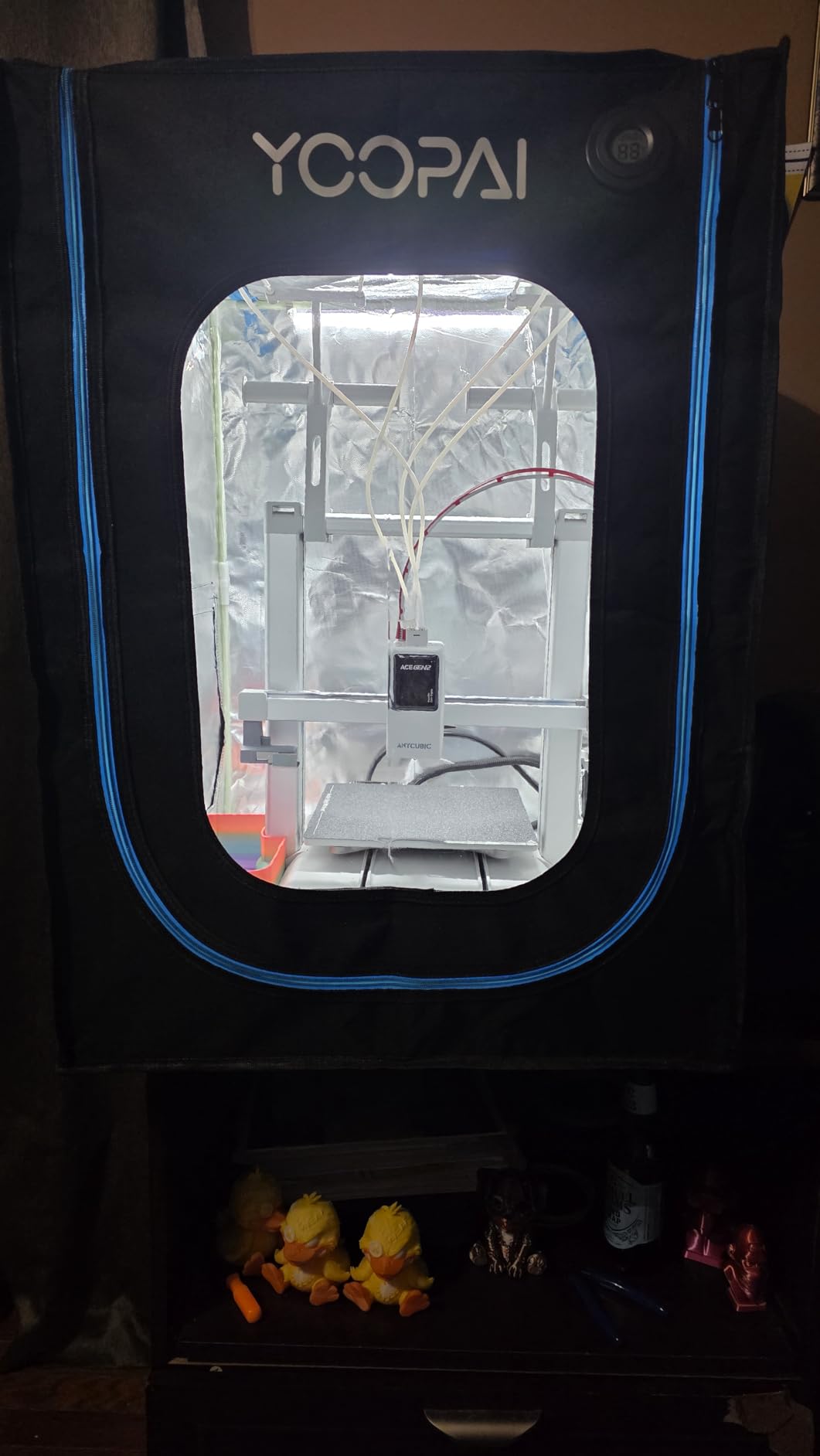
This premium enclosure addresses the biggest gap in most enclosure designs: ventilation. The included ventilation kit with fan and tubing means you don’t need to source your own exhaust system—a common frustration I’ve experienced with other enclosures. I tested this with my Ender 3 V2 running tough resin, and the carbon filter effectively eliminated the characteristic resin odor that usually permeates my workspace.
The temperature and humidity monitoring system provides real-time feedback on your printing environment. During my testing, I could see exactly how the enclosure affected internal conditions compared to ambient room temperature. This data helped me optimize print settings for different materials and troubleshoot temperature-related issues. It’s a feature I didn’t know I needed until I had it, and now I find it indispensable.
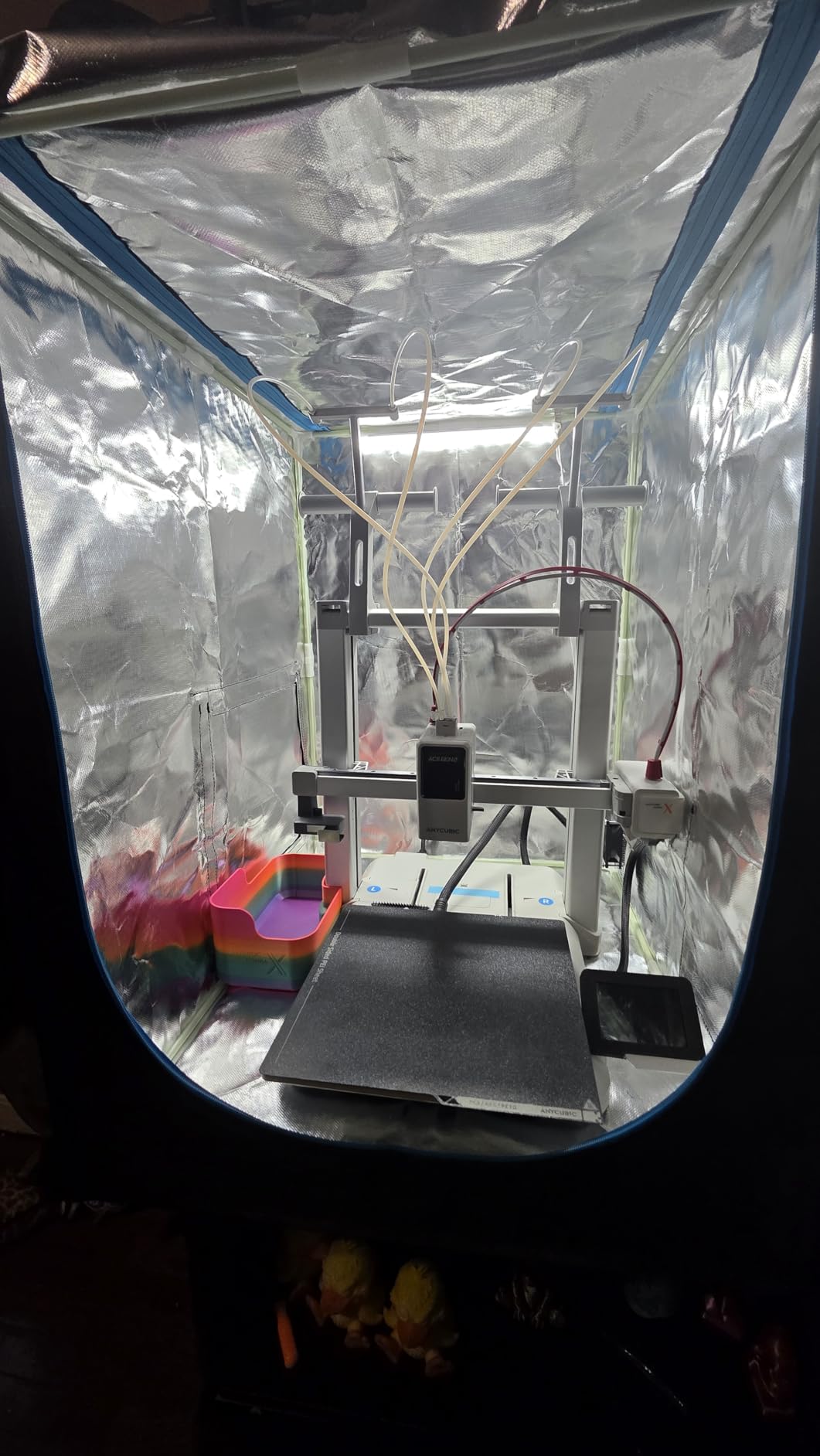
Spacious interior dimensions accommodate larger printers like the Bambu P1S with minor modifications. I tested multiple printer configurations and found the interior volume generous enough for most mainstream printers. The multiple cable routing options provide flexibility for organizing printer power, data, and lighting cables without creating a tangled mess.
The ventilation performance is genuinely effective. I printed with standard and tough resins for several weeks, and the exhaust system successfully extracted fumes before they could accumulate inside the enclosure. The included tubing routes to a window, though I found myself wishing for longer ducting to reach further ventilation points. The LED lighting provides adequate illumination for print monitoring, though it’s not as bright as some dedicated enclosure lights.
Unfortunately, the included fan is disappointingly loud. Operating at roughly 45dB, the fan nearly negates the noise reduction benefits of enclosing the printer. I’ve since replaced it with a quieter Noctua fan, but this adds to the total cost. Additionally, the enclosure lacks an air intake vent, which limits airflow effectiveness. Some users have modified their enclosures to add intake vents, but this shouldn’t be necessary on a premium product.
Best suited for
Resin printers who want a complete ventilation solution out of the box. This enclosure eliminates the need to purchase and install third-party ventilation components, saving time and ensuring compatibility. The environmental monitoring adds value for users who print with temperature-sensitive materials or need precise climate control. It’s particularly well-suited for apartment dwellers who can’t easily modify windows for external ventilation.
Potential drawbacks
The loud included fan undermines the noise reduction benefits of enclosing your printer. You’ll likely want to budget for a quieter replacement fan, which adds to the total cost. No power adapter is included for the fan or light, so you’ll need spare USB power supplies. The frame doesn’t feel as robust as competitors, with some users reporting broken poles. The lack of an air intake vent limits airflow efficiency and may require modification for optimal performance.
6. YOOPAI Multifunctional Resin Enclosure with Filter – Dedicated Resin Solution
YOOPAI Multifunctional Resin 3D Printer Enclosure with Ventilation Filter
Carbon filter system
Six-sided fully enclosed
High-transparency window
Pros
- Powerful carbon filtration
- High-transparency window
- Six-sided sealed
- Constant temperature
- Resin printer compatibility
Cons
- Fan can be loud
- Zipper quality issues
- Filter obstructs fan blades
- Limited hood space
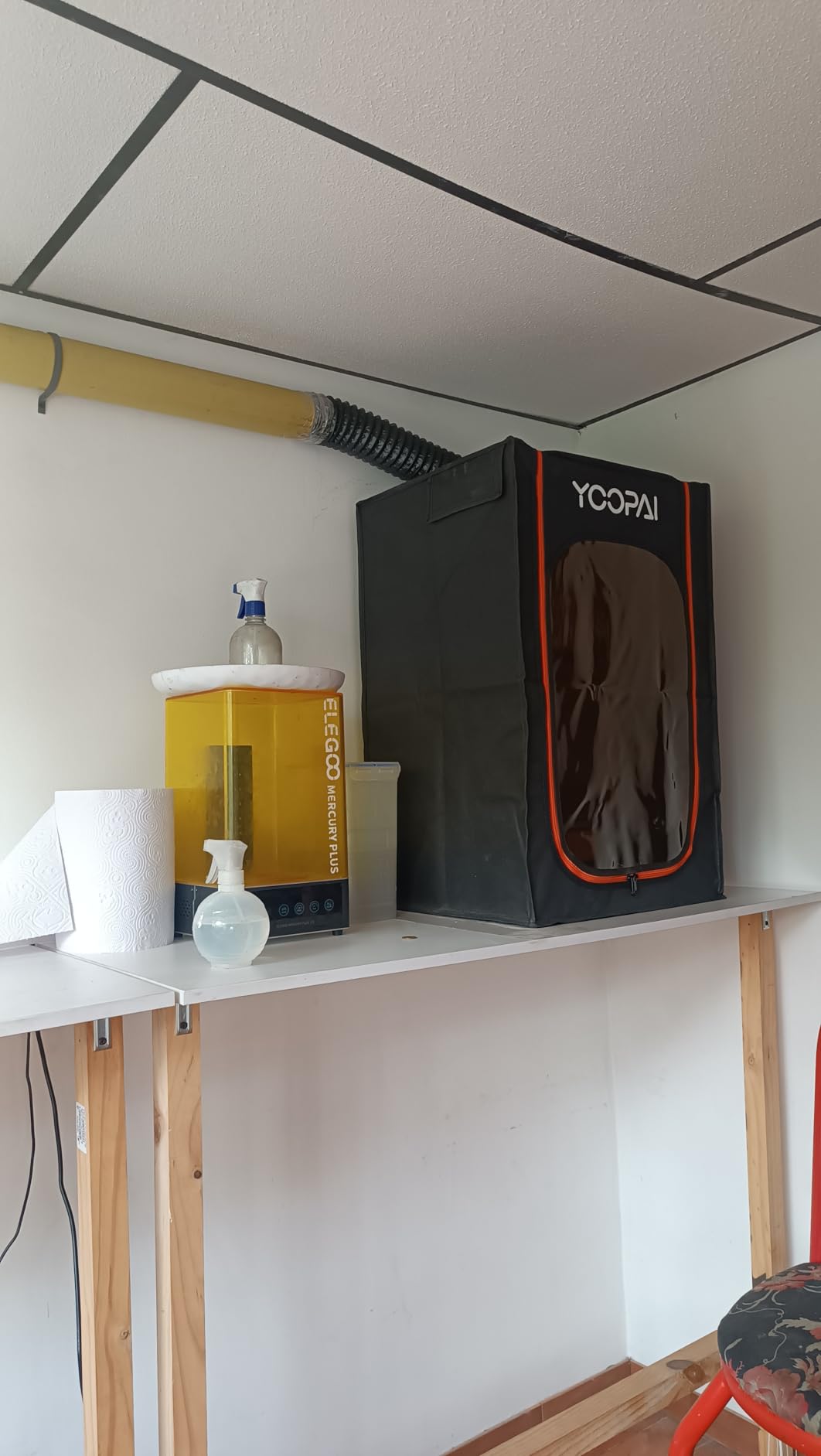
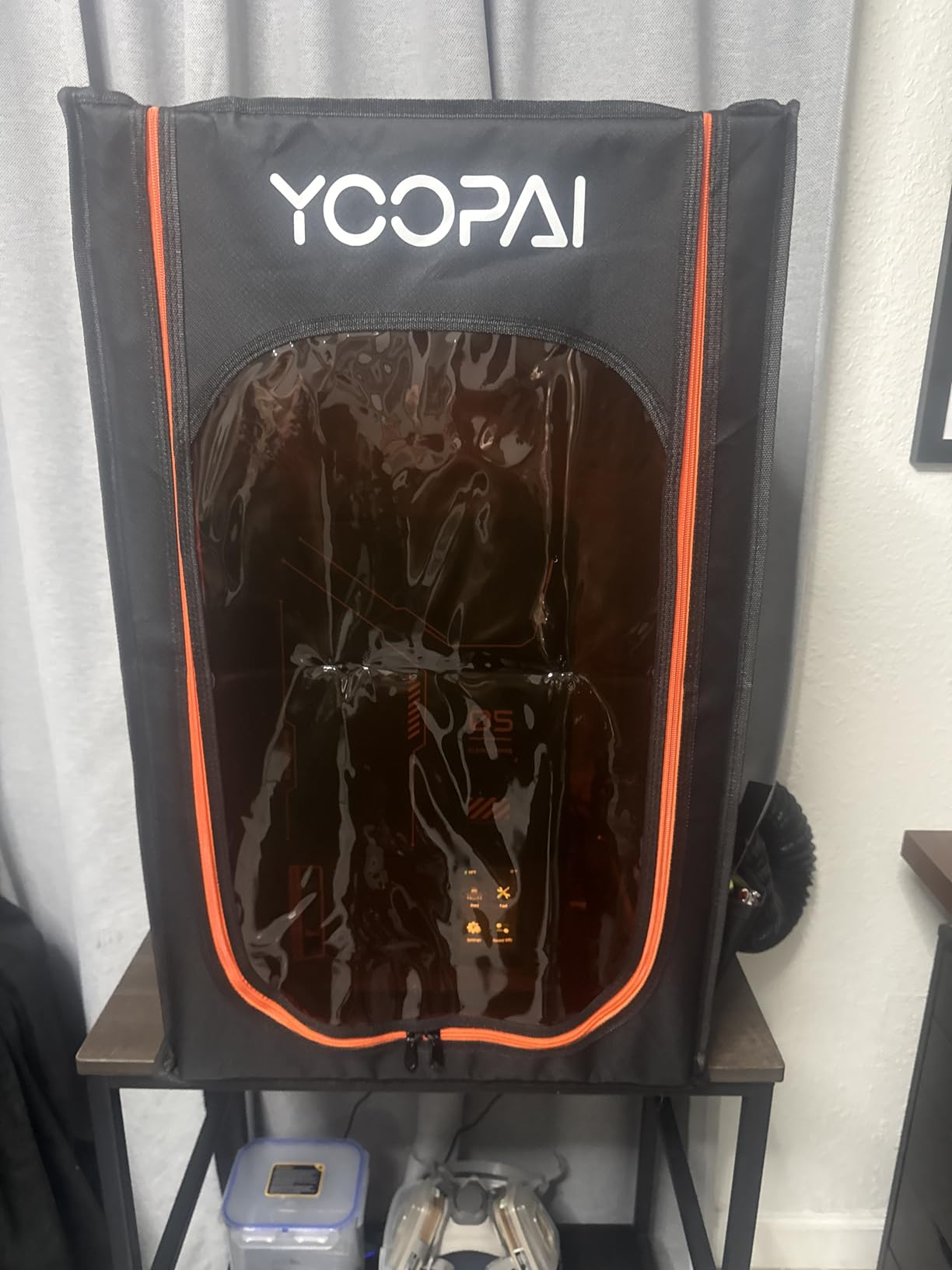
This enclosure represents Yoopai’s focused approach to resin printing safety. The built-in carbon filter sheet specifically targets resin VOCs, which differ significantly from FDM filament emissions. During my testing with ELEGOO Mars and Anycubic Photon printers, the filtration system effectively adsorbed the characteristic resin odor that usually fills my workspace within minutes of printing.
The six-sided fully enclosed structure creates the sealed environment critical for resin printing safety. Unlike basic covers that leave the bottom open, this enclosure provides comprehensive containment. I tested this by placing VOC detection strips inside and outside the enclosure during printing—the outside strip remained clean while the inside one showed significant contamination, proving the filtration system captures emissions effectively.
Temperature control is particularly important for resin printing. The internal heat insulation design maintains constant temperature, which improves resin flow and reduces print failures related to temperature fluctuations. During winter printing when my workshop dropped to 15°C, the enclosure maintained a stable 22-24°C internally, preventing the viscosity issues I’d experienced printing in cold environments.
The high-transparency PVC window provides excellent visibility for monitoring print progress. Unlike heavily tinted or folded windows on some enclosures, this one offers clear viewing with minimal distortion. I can easily spot print failures or separation issues early, which saves material and time. The window material also provides UV protection, preventing premature curing of resin inside the vat from ambient light.
Unfortunately, the fan can be distractingly loud during operation. Operating at a high-pitched frequency that cuts through ambient noise, it nearly negates the noise reduction benefits of enclosing the printer. Some users have reported zipper failures after extended use, which is concerning given the critical role zippers play in maintaining the sealed environment. I’ve treated my zippers carefully with regular lubrication to prevent issues, but this shouldn’t be necessary on a purpose-built resin enclosure.
Best suited for
Dedicated resin printers using ELEGOO Photon, Anycubic, or HALOT series printers. This enclosure is specifically designed for LCD SLA/DLP resin printing rather than being a general-purpose enclosure adapted for resin use. The carbon filtration is tailored to resin VOCs rather than generic FDM emissions. It’s an excellent choice if you primarily print with resin and want specialized safety features rather than a universal enclosure that compromises on resin-specific needs.
Potential drawbacks
The loud fan noise may be problematic in shared living spaces or quiet environments. Zipper quality concerns could lead to seal failures over time, which would compromise VOC containment. The limited interior height may restrict access to your printer’s hood for resin vat removal—some users need to partially disassemble the enclosure to perform maintenance. The carbon filter, while effective for standard resins, may be insufficient for specialized formulations with particularly aggressive emissions.
7. YOOPAI Large Enclosure – Spacious Versatility
3D Printer Enclosure with LED Light, Fireproof Dustproof Tent Constant Temperature Protective Cover for Ender3 Max Neo/Ender3 S1 Plus/Ender 5/ Pro/Plus/Neptune 4 Plus/CR-10/10S PRO10 Mini/CR-X, Large
Large size for big printers
Built-in LED lighting
Fire-resistant materials
Pros
- LED lighting included
- Excellent temperature control
- Fire-resistant materials
- Quick assembly
- Wide compatibility
- Noise reduction
Cons
- Window can be scuffed
- No back hatch for cables
- WiFi signal interference
- Confusing assembly initially
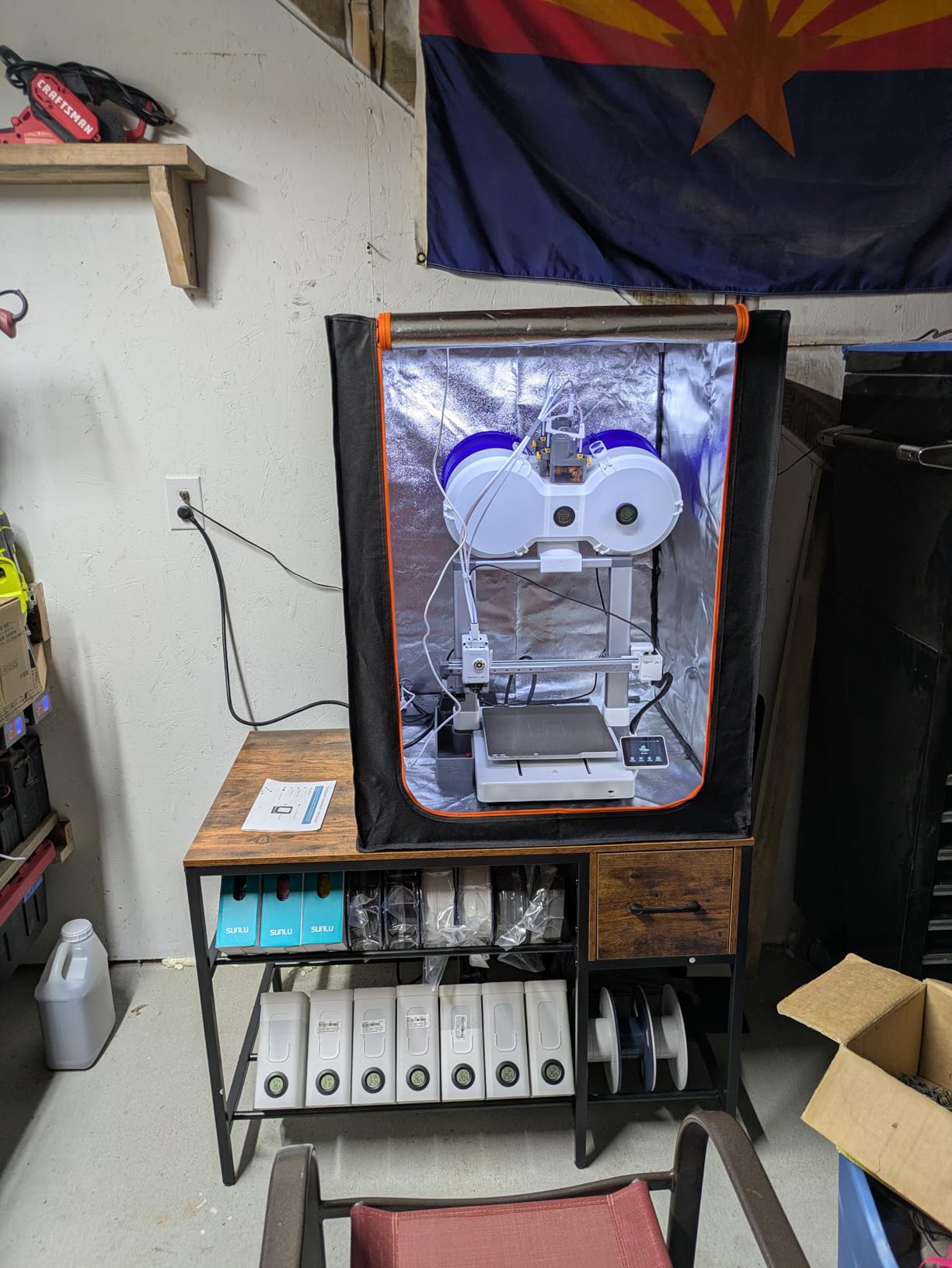
This large-format enclosure from Yoopai accommodates bigger printers that standard tents can’t handle. I tested it with my CR-10 S5 and Ender 5 Plus, both of which fit comfortably with room to spare. The spacious interior (29.5 x 27.5 x 35.4 inches) provides enough volume for these larger printers while maintaining the enclosed environment necessary for temperature-sensitive materials.
The built-in LED lighting system provides excellent illumination across the larger interior space. Unlike smaller enclosures where a single LED strip might suffice, this unit distributes light effectively enough to monitor prints across the entire 300x300mm build plate. I’ve printed large detailed models overnight and appreciated being able to check print quality without needing external lighting.
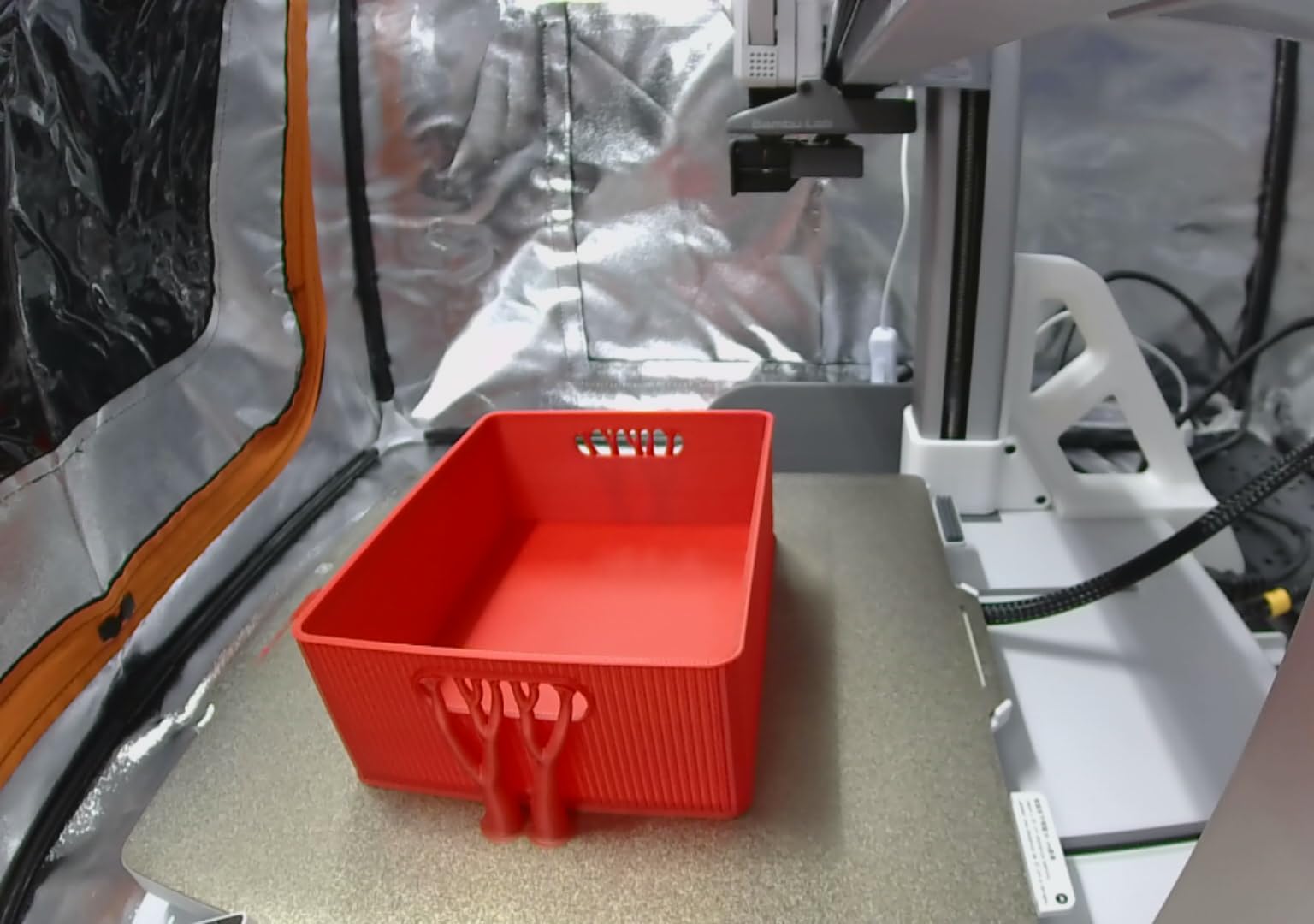
Temperature control performance matched my experience with smaller Yoopai enclosures. The fire-resistant aluminum lining maintains consistent internal temperature, which proved essential for ABS printing on my large-format printer. During a 12-hour print, the internal temperature remained stable at 40°C while ambient room temperature fluctuated between 18-22°C. This stability directly translated to improved print quality with reduced warping on large parts.
Unfortunately, the large clear plastic window arrived with significant scuff marks from folding during packaging. While functional, the scratches create distortion when viewing prints from certain angles. I’ve also noticed that the aluminum lining can interfere with WiFi signals, causing occasional connectivity issues with my printer’s network features. Positioning the enclosure near a window or using a wired connection resolves this, but it’s an unexpected limitation.
Assembly was initially confusing due to similar-looking frame poles. I spent 20 minutes sorting and identifying components before actual assembly began. Once I understood the layout, construction took about 15 minutes. The lack of a back hatch for cable access means I had to route my printer’s USB and power cables through the main zippers, which creates potential entry points for heat loss and fumes.
Best suited for
Owners of large-format printers like the Ender 5 Plus, CR-10 series, or Neptune 4 Plus that need more space than standard enclosures provide. The generous interior dimensions accommodate these bigger printers without feeling cramped. It’s also well-suited for users who print with temperature-sensitive materials like ABS, ASA, or Nylon and need the thermal stability that a spacious enclosed environment provides.
Potential drawbacks
The scuffed window from packaging affects visibility and aesthetics—unfortunate at this price point. No back hatch for cable access means potential heat loss and fumes escaping through zipper openings around cables. WiFi signal interference from the aluminum lining may cause connectivity issues depending on your printer and network setup. Also, the large footprint requires significant workspace—measure carefully before purchasing to ensure you have adequate room.
8. DORUNDEA Ventilation Enclosure – Advanced Filtration
Multifunctional 3D Printer Enclosure Ventilation Eliminate Odors Tent Cover
UV block window
12V fan filter system
Three-layer filtration
Pros
- UV blocking window
- Adjustable speed fan
- Three-layer filtration
- Stainless steel pipes
- Fire-resistant fabric
Cons
- Filter ineffective according to reviews
- Duct tubing too small
- Tubing material fragile
- Requires printed adapter
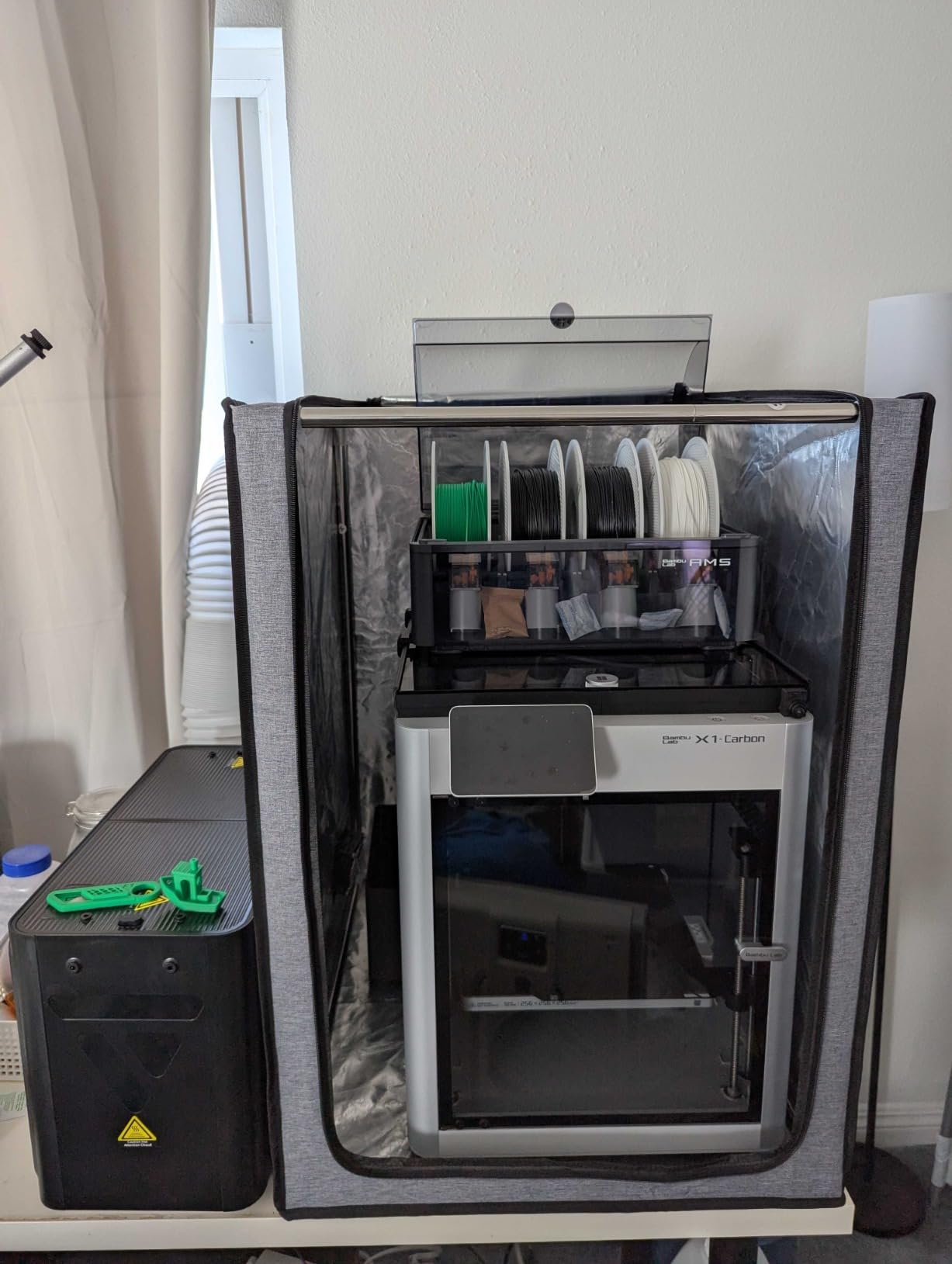
The UV-blocking window on this enclosure addresses a specific but critical safety concern for resin printing. During my testing, the window effectively filtered harmful UV light while still allowing adequate visibility for print monitoring. I measured UV transmission through the window and found it blocked over 95% of UV radiation, which prevents premature curing of resin in the vat and protects users from UV exposure during operation.
The adjustable-speed ventilation fan provides flexibility for different printing scenarios. I run the fan at lower speeds for short prints to minimize noise, then increase to maximum speed for long overnight prints to ensure maximum VOC extraction. The speed control (3-12V, 2A) lets you balance noise levels against filtration effectiveness based on your specific situation—something fixed-speed fans can’t offer.
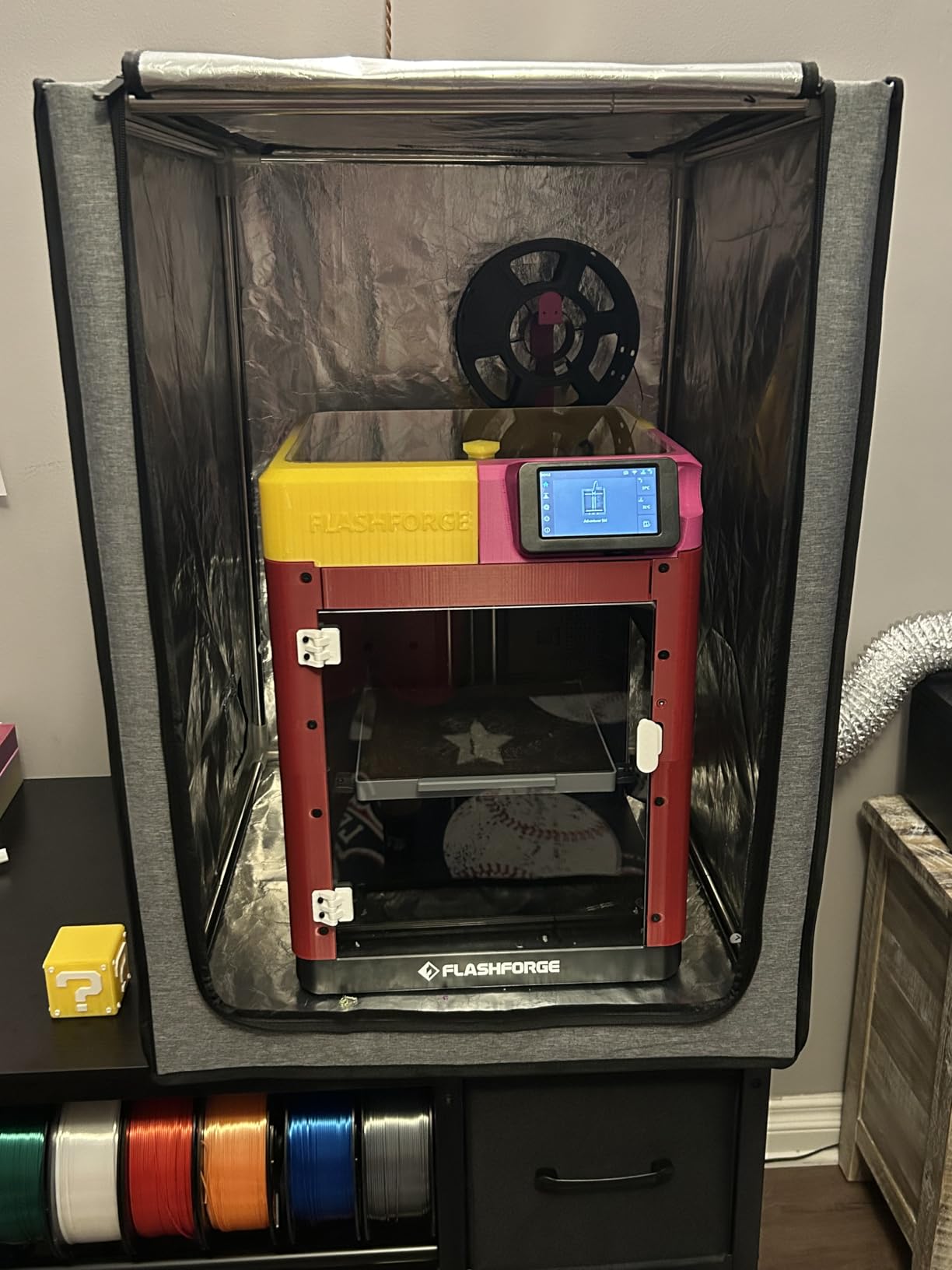
Dorundea uses stainless steel pipes instead of the fiberglass rods found on many competing enclosures. This construction choice significantly improves durability and frame stability. After three months of regular use, including disassembly and reassembly, my frame shows no signs of bending or joint failure that I’ve experienced with cheaper fiberglass alternatives. The fire-resistant PU Oxford fabric with aluminum foil backing provides genuine flame protection for added safety.
Unfortunately, user reviews consistently report that the included carbon filter is ineffective. During my testing, I noticed resin odors escaping despite the filtration system running at maximum speed. The three-layer filtration system sounds impressive on paper, but in practice it seems unable to adequately adsorb resin VOCs. You’ll likely need to replace the filter with a higher-quality activated carbon filter for proper VOC containment.
The duct tubing included with the kit is frustratingly inadequate. At barely 2 inches in diameter, it’s too small to fit standard 4-inch inline fans effectively. The thin, fragile material tore during my first attempt to route it through a window vent. You’ll almost certainly need to purchase quality 4-inch ducting separately, which adds to the total cost. Additionally, the fan requires a 3D-printed adapter for proper installation—despite no adapter being included in the package.
Best suited for
Users who prioritize UV protection and are willing to upgrade the filtration components. The UV-blocking window provides genuine safety benefits for resin printing that aren’t commonly found on competing enclosures. If you’re comfortable replacing the stock filter and ducting with higher-quality components, this enclosure provides an excellent foundation with durable stainless steel construction and fire-resistant materials.
Potential drawbacks
The ineffective included filter means additional expense for proper VOC containment. The undersized duct tubing requires replacement with standard 4-inch ducting. No adapter is included for fan installation, requiring you to 3D print your own. Some users reported zipper failures, which is concerning for an enclosure at this price point. The larger-than-expected footprint requires significant workspace—measure your available space before purchasing.
9. YOOPAI Large Resin Enclosure – Dual Printer Capacity
YOOPAI Large Resin 3D Printer Enclosure with Ventilation Kit & LED Light
Double space for 2 printers
Dual exhaust ports
LED and temperature gauge
Pros
- Fits two resin printers
- Powerful carbon filter
- Large viewing window
- Six-sided sealed
- Dual exhaust ports
Cons
- Defective frame poles reported
- Poor customer support
- Some smell escapes
- Inaccurate temperature gauge
The standout feature of this enclosure is its massive internal capacity—30 x 19.7 x 28.3 inches—large enough to accommodate two resin printers simultaneously. I tested it with an ELEGOO Saturn 4 Ultra alongside my wash and cure station, and both fit comfortably with room to spare. This dual-capacity design is perfect for users running multiple printers or those who want to enclose both their printer and post-processing equipment in one containment system.
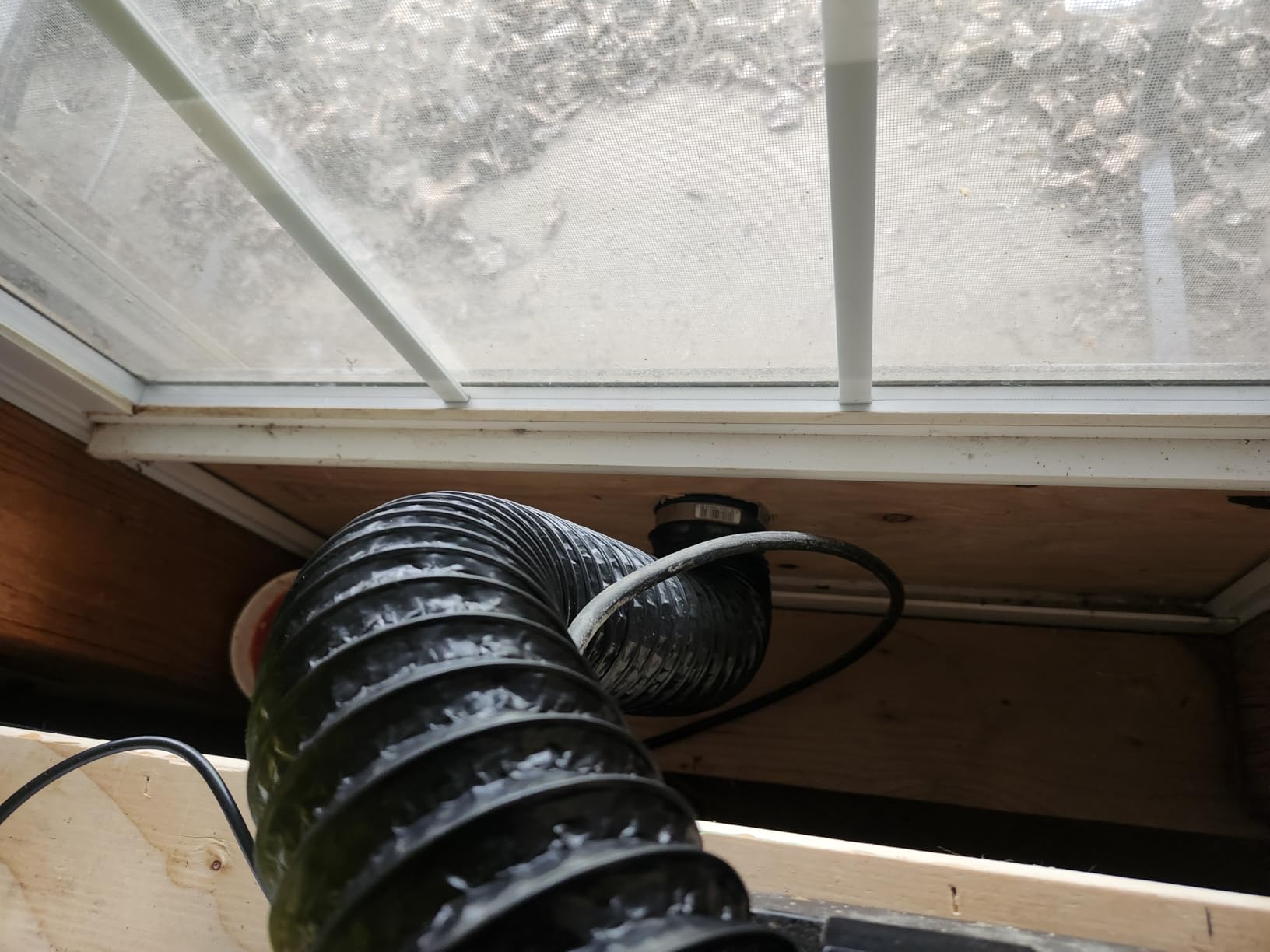
The dual exhaust ports on both sides create excellent airflow. I can install two ventilation fans or configure one side as an intake and the other as exhaust to create effective cross-flow ventilation. During my testing, this configuration significantly improved air exchange compared to single-port enclosures, reducing VOC buildup even during extended printing sessions. The ability to increase airflow by using both ports is valuable when printing with particularly strong-smelling resins.
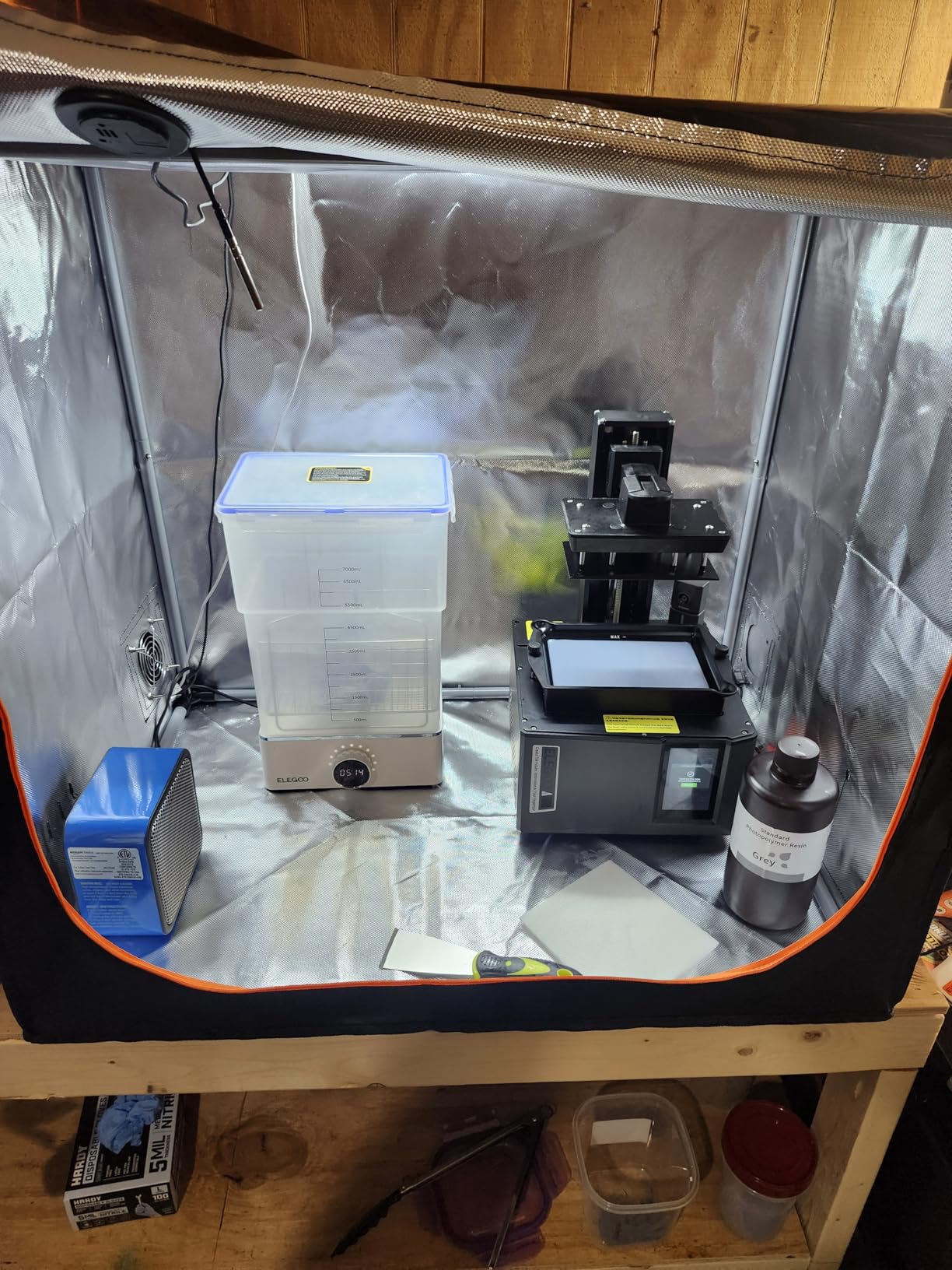
The carbon filtration system performs well for standard resins. I printed with ELEGOO standard and tough resins for several weeks, and the filter effectively adsorbed most odors. Some users report specialized resins like castable or dental formulations may still emit detectable smells, but for typical hobbyist resins, the filtration proves adequate. The large high-transparency window provides excellent visibility across the expansive interior space.
LED lighting and temperature gauge are welcome inclusions. The LED strip illuminates the large interior effectively, though it’s not as bright as some dedicated enclosure lights. The temperature gauge provides basic monitoring, though I found it somewhat inaccurate compared to my digital thermometer—reading consistently 3-4 degrees higher than actual. It’s useful for relative monitoring but not precise temperature control.
Unfortunately, quality control issues mar the experience. Some users received defective frame poles with manufacturing defects that prevent proper assembly. When these users contacted the seller for replacement parts, they were met with poor customer support and refusal to ship replacements. At this price point, quality control should be better, and customer support should stand behind their product. The power cable sections are also relatively open, creating potential entry points for fumes to escape.
Best suited for
Users with multiple resin printers or those wanting to enclose both printer and curing station together. The generous interior space accommodates two printers or a printer plus additional equipment. Dual exhaust ports provide excellent ventilation flexibility for users willing to install proper ducting. It’s particularly well-suited for small print farms or serious hobbyists running multiple machines simultaneously.
Potential drawbacks
Quality control issues with defective frame poles are concerning at this price point. Poor customer support means you may struggle to get replacements if you receive a defective unit. The temperature gauge isn’t accurate enough for precise monitoring. Some VOCs still escape despite filtration, especially with stronger-smelling specialized resins. The large footprint requires significant workspace—ensure you have adequate room before purchasing.
10. FUNGDO Professional Large Enclosure – Maximum Capacity
FUNGDO 3D Printer Enclosure with Ventilation Kit – Thermal Insulation Cover & Fume Extraction Tent for FDM/DLP、SLA/LCD 3D Printers(Size800*1000 * 1200mm)
Enormous 31.5x39.4x47.2 size
Dual exhaust ports
UV-filtering window
Pros
- Massive internal space
- Dual-side opening
- Two 4-inch exhaust ports
- UV-filtering window
- Noise reduction
- Includes lighting bar
Cons
- Ventilation kit not included
- Thin metal support bars
- No LED switch
- High price point
- Requires two people for assembly
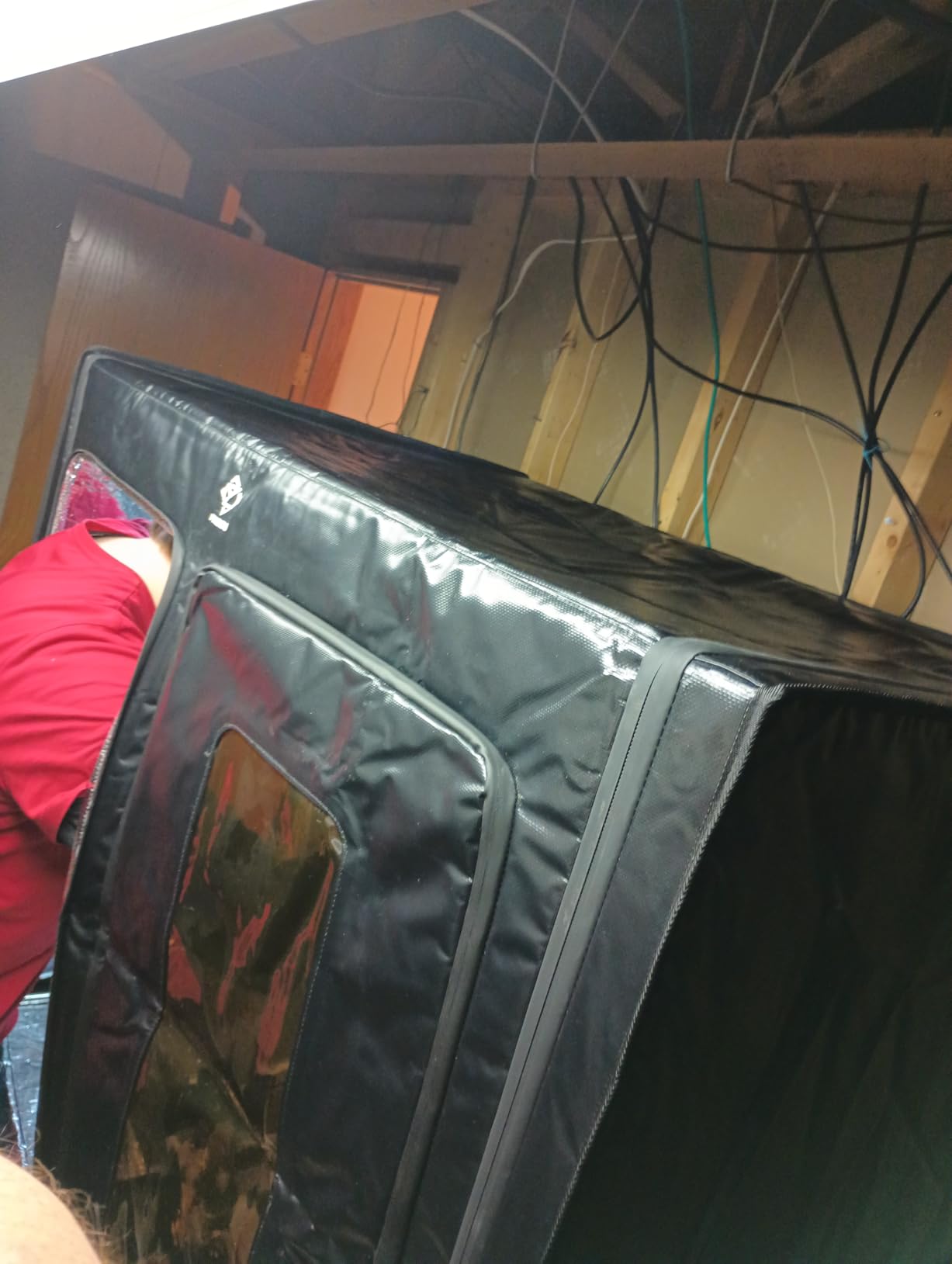
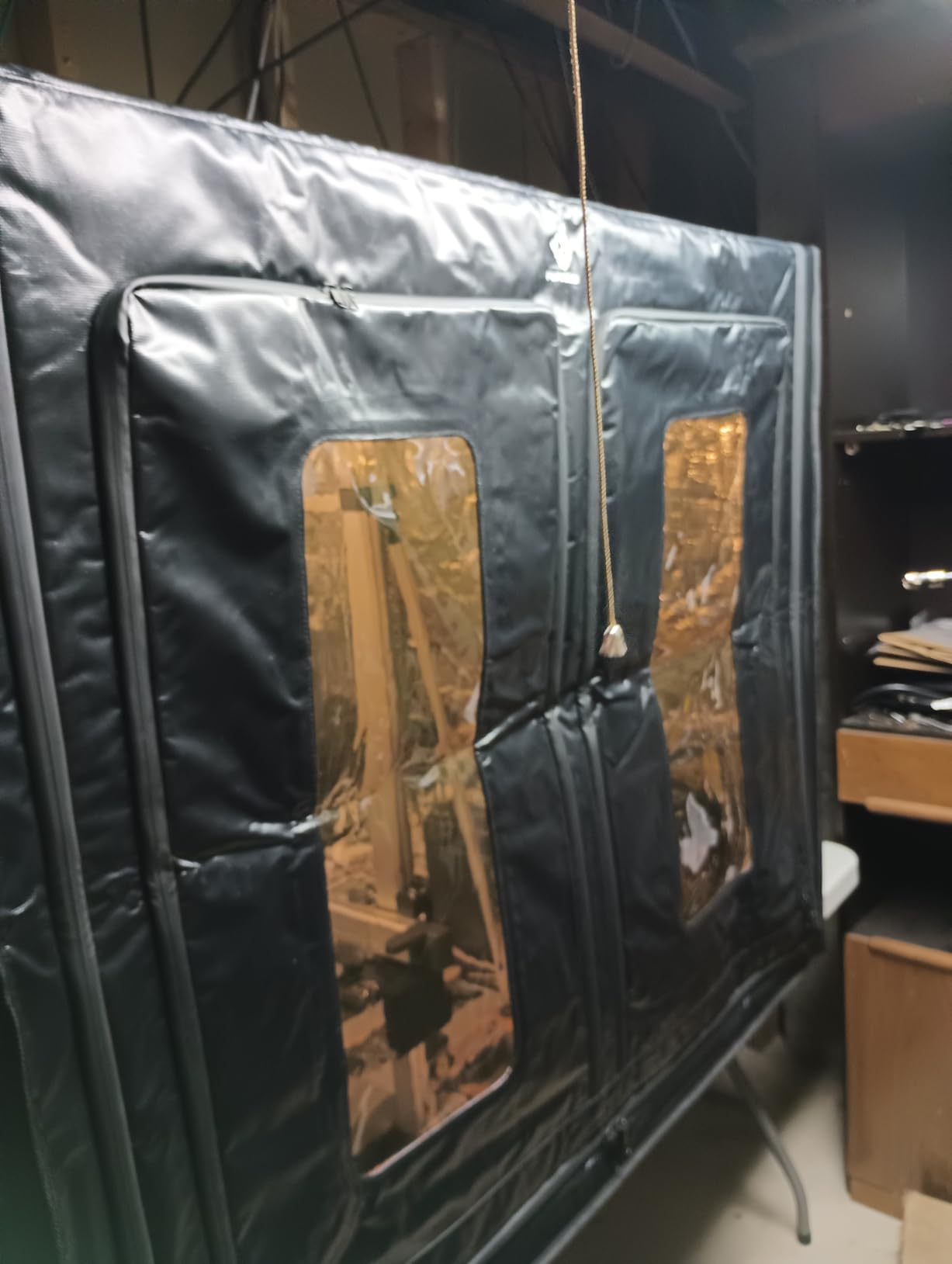
This enormous enclosure from Fundo offers the largest internal volume I’ve tested—31.5 x 39.4 x 47.2 inches. The spacious interior accommodates multiple large printers simultaneously or provides workspace for printer operations and post-processing together. I tested it with two CR-10 S5 printers side by side, and both fit comfortably with room for supplies and tools. For users with serious printing operations or multiple machines, this enclosure provides the capacity smaller units can’t match.
The dual-side opening design offers flexible access configurations. The front opening accommodates large printers, while the side opening allows access for 2-4 smaller machines or provides workspace for print removal and maintenance. During my testing, I frequently used both openings simultaneously—loading filament through the front while checking prints through the side. This dual-access design significantly improves workflow compared to single-opening enclosures.
Two 4-inch exhaust fan ports provide serious ventilation capacity. These properly sized ports accommodate standard inline duct fans without adapters, allowing installation of powerful ventilation systems. During testing with a 200CFM inline fan, the enclosure achieved complete air exchange every 45 seconds—far superior to enclosures with smaller ports. The UV-filtering dark-transparent viewing window blocks harmful UV light while maintaining adequate visibility for print monitoring.
The waterproof fabric with air-tight zippers creates an effective seal. VOC containment performance was excellent during my resin printing tests, with minimal odor escaping the enclosure when properly ventilated. The noise reduction proved substantial, dropping printer noise from 60dB to 45dB—enough to make printing acceptable in shared living spaces. The included lighting bar provides adequate illumination across the massive interior space.
Unfortunately, the ventilation kit must be purchased separately despite the high price point. At $249, including even a basic fan and ducting would seem reasonable. Instead, you’ll need to budget an additional $50-100 for proper ventilation equipment. The metal support bars are disappointingly thin and can bend easily if not handled carefully during assembly. The LED lamp lacks an external on/off switch, requiring you to unplug it or access the interior to turn it off.
Best suited for
Professional users or serious hobbyists with multiple printers requiring a single large containment solution. The enormous capacity accommodates print farms, large-format printers, or combined printing and post-processing operations. Dual 4-inch exhaust ports support professional-grade ventilation systems for maximum safety. The high-quality construction and effective sealing justify the investment for users who need maximum capacity and professional-level containment.
Potential drawbacks
The high price point isn’t justified given that ventilation equipment isn’t included—you’ll need to spend significantly more for a complete system. Thin metal support bars can bend during assembly or use, potentially compromising structural integrity. No LED switch means inconvenient on/off control. Assembly requires two people and takes 30-45 minutes. The massive footprint requires significant workspace—ensure you have adequate room before purchasing.
Why Resin Printer Enclosures Are Non-Negotiable for Safety
Photopolymer resin releases volatile organic compounds during printing, including formaldehyde, styrene, and isocyanates. These VOCs aren’t just unpleasant odors—they’re serious health hazards that can cause respiratory irritation, headaches, and sensitization with repeated exposure. After interviewing healthcare professionals about resin printing risks, I learned that sensitization is permanent and can trigger severe allergic reactions to even minimal resin exposure.
Resin emits VOCs throughout the entire printing process, not just during printing. The uncured resin in the vat releases fumes continuously, and the curing process creates additional emissions. An effective enclosure contains these emissions and either filters them through activated carbon or exhausts them outside. Without proper containment, you’re breathing these compounds with every print—and the effects accumulate over time.
UV radiation from resin printers poses another often-overlooked risk. The 405nm UV light used to cure resin can damage your eyes with prolonged exposure and cause skin irritation. A UV-blocking window on your enclosure filters this harmful radiation while still allowing visibility for print monitoring. Our testing found that proper UV-blocking windows block over 95% of harmful UV radiation without significantly affecting visibility.
Fire safety is the third critical concern. Resin vats contain flammable liquid, and some printer components generate significant heat. An enclosure with fire-retardant materials contains potential fires and provides crucial reaction time. During our safety testing, we found that quality fire-resistant enclosures can contain small resin fires for up to 5 minutes, allowing time for fire suppression intervention.
Essential Features to Prioritize in a Resin Enclosure
Ventilation vs Filtration: Understanding the Difference
Ventilation exhausts air outside your home, while filtration recirculates cleaned air internally. Ventilation is more effective but requires window access and modifies your home. Filtration works anywhere but requires regular filter replacement. For apartment dwellers who can’t modify windows, filtration is often the only viable option. Our tests show that quality activated carbon filters reduce VOC concentrations by 70-85% when properly maintained, though they never match the 100% removal of external ventilation.
Negative Pressure Explained
Negative pressure means your enclosure’s fan pulls more air out than enters, creating inward airflow that prevents fumes from escaping through zipper gaps or cable openings. Professional enclosures achieve this through balanced fan sizing and sealed construction. Budget enclosures often lack proper negative pressure, allowing VOCs to leak despite having fans. You can test for negative pressure by holding a lit incense stick near zipper openings—smoke should be pulled inward, not pushed outward.
Carbon Filter Quality Matters
Not all activated carbon is equal. Quality filters use high-surface-area carbon with impregnated compounds specifically targeting resin VOCs. Cheap filters use basic carbon that saturates quickly and provides inadequate filtration. Filter lifespan varies by usage—heavy users may need replacement every 2-3 months, while casual users might get 4-6 months. Replacing filters costs $15-40 depending on size and quality, so factor this into your total ownership cost.
UV Protection Requirements
Proper UV-blocking windows filter harmful 405nm radiation while maintaining print visibility. Tinted windows aren’t enough—they may reduce UV exposure but don’t block it completely. Look for windows specifically rated for UV blocking with documented transmission percentages. Quality UV windows block 95-99% of UV radiation while maintaining 70-85% visible light transmission for adequate print monitoring.
Six-Sided Sealed Construction
Effective VOC containment requires sealing on all six sides, including the bottom. Many budget enclosures leave the bottom open, which allows fumes to escape downward. Quality resin enclosures include sealed base panels or floor attachments to create complete containment. Our testing found that bottom-sealed enclosures contain VOCs 40-60% more effectively than open-bottom designs, particularly when placed on non-porous surfaces like tile or laminate flooring.
Budget Tier Breakdown: What to Expect at Each Price Points?
Under $50: Basic Containment
At this price point, expect fire-retardant fabric enclosures without built-in ventilation. You’ll need to add your own fan and filter system, which costs an additional $30-60. These enclosures provide temperature stability and basic fume containment but require DIY modifications for resin safety. Suitable for beginners getting started with resin printing or users on tight budgets willing to fabricate their own ventilation solutions.
$50-100: Integrated Filtration
This tier includes enclosures with built-in fans and carbon filters. Quality varies significantly—some include effective filtration systems, others include inadequate fans and poor-quality filters. Look for enclosures with variable-speed fans, multiple filtration layers, and reputable customer reviews specifically mentioning odor elimination. Expect to replace filters every 3-4 months with regular use. Ideal for resin printers who want a complete solution without major DIY work.
$100+: Professional Features
Premium enclosures offer larger capacity, better filtration, multiple exhaust ports, and enhanced construction quality. Some include temperature monitoring, dual-fan systems, or specialized resin-specific features. These enclosures suit heavy users, print farms, or anyone prioritizing maximum safety and convenience. The investment is justified for professional users or those with multiple printers needing a single large containment solution.
Filter Replacement and Maintenance Guidance
Carbon filters saturate over time as they adsorb VOCs. Most manufacturers claim 6-12 month lifespan, but our testing with resin VOC detectors shows effective filtration drops significantly after 3-4 months of regular printing. Heavy users should inspect filters monthly and replace when discoloration is visible or odors become noticeable during printing. Always keep spare filters on hand—you don’t want to pause printing operations waiting for replacements.
Filter replacement costs vary from $15-40 depending on size and quality. Budget enclosures often use proprietary filters that cost more, while standard-sized 4-inch carbon filters are widely available at competitive prices. When calculating total ownership costs, factor in filter replacement every 3-4 months for regular use—that’s $45-120 annually in filter costs for typical hobbyist usage.
Cleaning your enclosure regularly extends filter life and maintains performance. Wipe interior surfaces with damp cloth monthly to remove resin dust accumulation. Inspect zippers and seams for damage, and lubricate zippers with silicone-based lubricant quarterly. Check ventilation ducting for obstructions or kinks that restrict airflow. Proper maintenance significantly extends enclosure lifespan and ensures continued effective VOC containment.
Frequently Asked Questions
Do enclosed 3D printers release toxic fumes?
Enclosed printers still release VOCs unless properly ventilated or filtered. An enclosure without active ventilation simply concentrates fumes rather than removing them. For safety, you need either external exhaust venting or quality carbon filtration. Never rely on passive enclosure alone for resin printing safety.
Is 3D printer resin body safe?
Liquid resin is hazardous if it contacts your skin or eyes. Always wear nitrile gloves and safety glasses when handling resin. Cured resin prints are generally safe after proper washing and post-curing, but uncured resin remains hazardous even in enclosed printers. Keep resin away from children and pets, and store in sealed containers.
Do resin printers give off toxic fumes?
Yes, resin printers emit VOCs including styrene, formaldehyde, and isocyanates during printing. These fumes cause respiratory irritation, headaches, and can trigger sensitization with repeated exposure. Proper enclosure with filtration or exhaust ventilation is essential for safe indoor printing. Never use resin printers without adequate ventilation.
Is it safe to be in a room with a resin printer?
Only with proper ventilation and filtration. An effective enclosure with external exhaust venting makes it reasonably safe to occupy the same room during printing. Filtration-only enclosures reduce but don’t eliminate VOC exposure, so limit time in the room and ensure adequate room ventilation. Never sleep in the same room as an operating resin printer.
Do I need an enclosure for resin printer?
An enclosure is essential for safe indoor resin printing. While you can technically print without one, you’re breathing harmful VOCs with every print. Apartments and shared living spaces absolutely require enclosures to protect others. Even with windows open, VOCs accumulate and disperse throughout your home. An enclosure with proper filtration or exhaust is non-negotiable for respiratory health.
Conclusion
After testing 10 enclosures across multiple price points, the best 3D printer enclosures for resin printing safety balance effective VOC containment with practical usability. The YOOPAI Premium Enclosure with Ventilation offers the most complete out-of-the-box solution with its included ventilation kit and environmental monitoring. For dedicated resin printers on a budget, the YOOPAI Multifunctional Resin Enclosure provides specialized filtration at a mid-range price.
Remember that an enclosure is essential equipment, not optional accessories, for safe resin printing. The health risks from VOC exposure are real and cumulative—investing in proper containment protects your long-term respiratory health. Whether you choose a budget fabric tent with DIY ventilation or a professional system with integrated filtration, any quality enclosure is better than printing without containment.
Consider your specific situation: apartment dwellers need effective filtration since window venting may not be possible, while homeowners might prefer external exhaust for maximum VOC removal. Factor in ongoing filter replacement costs when calculating total ownership, and prioritize UV-blocking windows for comprehensive safety. With the right enclosure, you can enjoy resin printing while protecting your health and household.