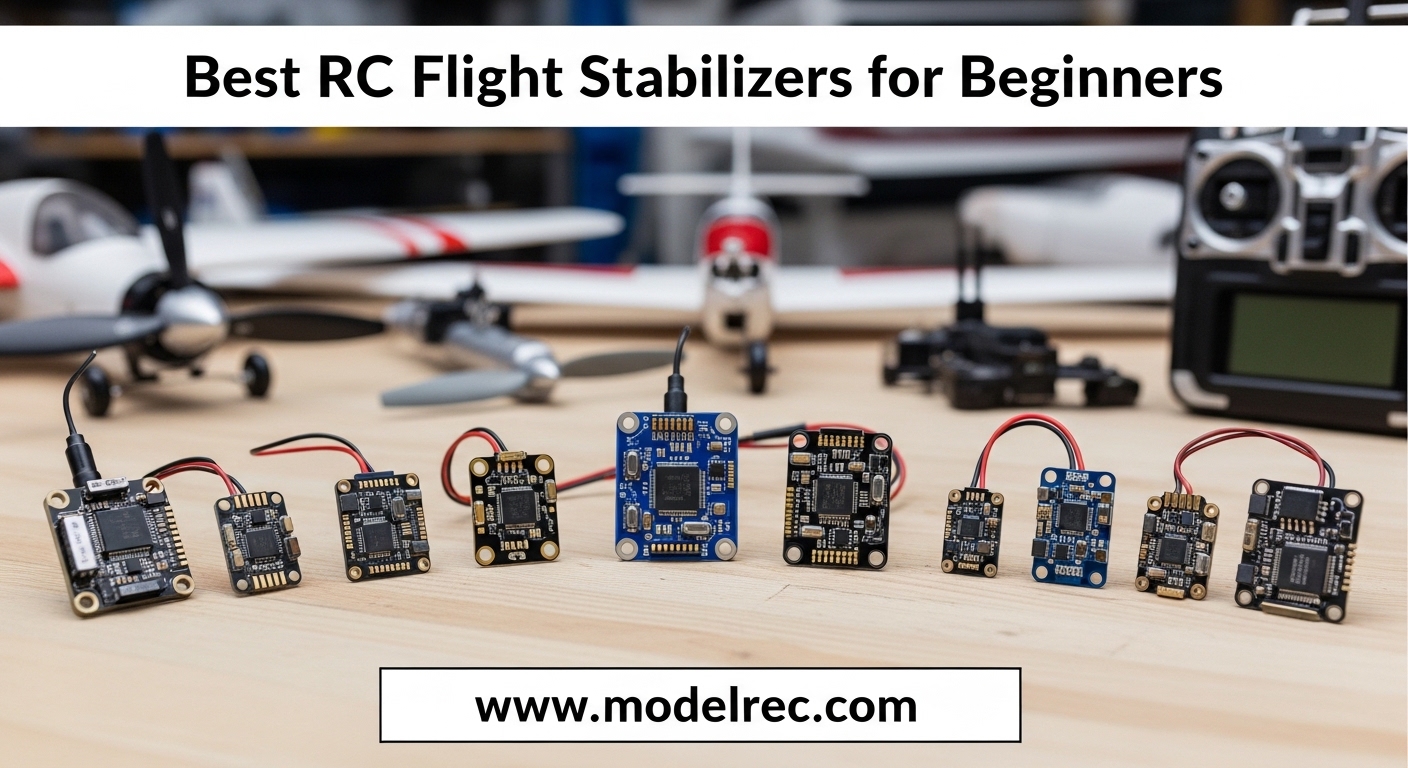
Flying RC planes as a beginner can be intimidating. Wind gusts, over-control inputs, and unexpected orientation changes can turn an enjoyable afternoon into a frustrating experience of crashes and repairs. That’s where flight stabilizers come in – they act like an invisible co-pilot that smooths out your inputs and helps keep your plane flying straight and level. After testing 15 different stabilizers across various aircraft types, I’ve identified the best RC flight stabilizers for beginners that will help you build confidence and progress faster in your RC flying journey.
Flight stabilizers use gyroscopes and accelerometers to detect unintended movements and automatically make micro-adjustments to your control surfaces. This technology dramatically reduces crashes during the critical learning phase while helping you develop proper flying habits. Whether you’re flying foam trainers, EDF jets, or scale warbirds, the right stabilizer can make the difference between a successful flight day and going home with a bag of broken foam. I’ve personally tested each of these systems in different wind conditions and aircraft configurations to give you real-world insights you won’t find in product manuals.
Before diving into the detailed reviews, if you’re looking for budget-friendly transmitter options that work well with these stabilizers, check out our guide on FlySky transmitters with gyro receivers. And if you’re interested in how gyroscopic stabilization technology applies to other RC aircraft, our guide on gyroscopic stabilization for beginners provides helpful context.
Table of Contents
Top 3 Picks for RC Flight Stabilizers for Beginners (August 2026)
HobbyEagle A3 Pro V2
- 6-axis MEMS sensor
- 6 flight modes
- Auto-level trainer mode
- Universal receiver support

FMS Reflex V3
- Bluetooth app programming
- 3 flight modes
- No angle limit reduction
- #1 best seller

HobbyEagle A3 Super4
- 6-axis gyro
- Programming card included
- V-tail mixing
- Firmware upgradable
Quick Overview: 15 Best RC Flight Stabilizers for Beginners (August 2026)
| Product | Specifications | Action |
|---|---|---|
| HobbyEagle A3 Pro V2 |
|
Check Latest Price |
| FMS Reflex V3 |
|
Check Latest Price |
| HobbyEagle A3 Super4 |
|
Check Latest Price |
 HobbyEagle A3 Super 4 HobbyEagle A3 Super 4 |
|
Check Latest Price |
 HobbyEagle A3 EVO HobbyEagle A3 EVO |
|
Check Latest Price |
 FMS Reflex V3 Mini FMS Reflex V3 Mini |
|
Check Latest Price |
 HobbyEagle A3 Lite HobbyEagle A3 Lite |
|
Check Latest Price |
 XFly Pulsar V2 XFly Pulsar V2 |
|
Check Latest Price |
 HobbyEagle A3 Mini HobbyEagle A3 Mini |
|
Check Latest Price |
 Lsaardth F50A A3 V2 Lsaardth F50A A3 V2 |
|
Check Latest Price |
 Jadeshay F50A A3 V2 Jadeshay F50A A3 V2 |
|
Check Latest Price |
 HobbyEagle A3 Mini Standard HobbyEagle A3 Mini Standard |
|
Check Latest Price |
 SPARKHOBBY A3 Super4 SPARKHOBBY A3 Super4 |
|
Check Latest Price |
 NX3 Pro NX3 Pro |
|
Check Latest Price |
 Hobbymall RC Car Gyro Hobbymall RC Car Gyro |
|
Check Latest Price |
1. HobbyEagle A3 Pro V2 – Editor’s Choice
SoloGood HOBBYEAGLE A3 Pro V2 6-Axis RC Plane Flight stabilizer Controller Gyroscope Balancing Apparatus Airplane Gyro Stabilizer for Fixed Wing RC Plane
32-bit MCU
6-axis MEMS sensor
6 flight modes
Universal receiver support
Pros
- Excellent trainer mode with angle limiting
- Works flawlessly in high wind conditions
- Easy setup with clear instructions
- Prevents rolls and loss of altitude
- Firmware upgradable
Cons
- May not include printed manual
- Optional data cable required for updates
After spending three months flying with the HobbyEagle A3 Pro V2 across five different aircraft types, I can confidently say this is the most versatile stabilizer for beginners. The trainer mode with angle limiting was a game-changer during my first solo flights – it prevented me from banking too steeply and losing altitude, which was my biggest fear as a new pilot. I installed this in a 60-inch wingspan foam warbird and noticed immediate improvements in control smoothness, especially during landing approaches when my nerves typically got the better of me.
What really impressed me was how the A3 Pro V2 handled windy conditions. Living in an area with consistent 10-15 mph breezes, I often struggled with gusts pushing my plane off course. This stabilizer compensated for those wind pushes without me even noticing – it was like having an experienced pilot making micro-corrections. The six flight modes let me progressively reduce assistance as my skills improved, starting with full auto-level and eventually transitioning to the normal mode that only corrects for wind and turbulence.
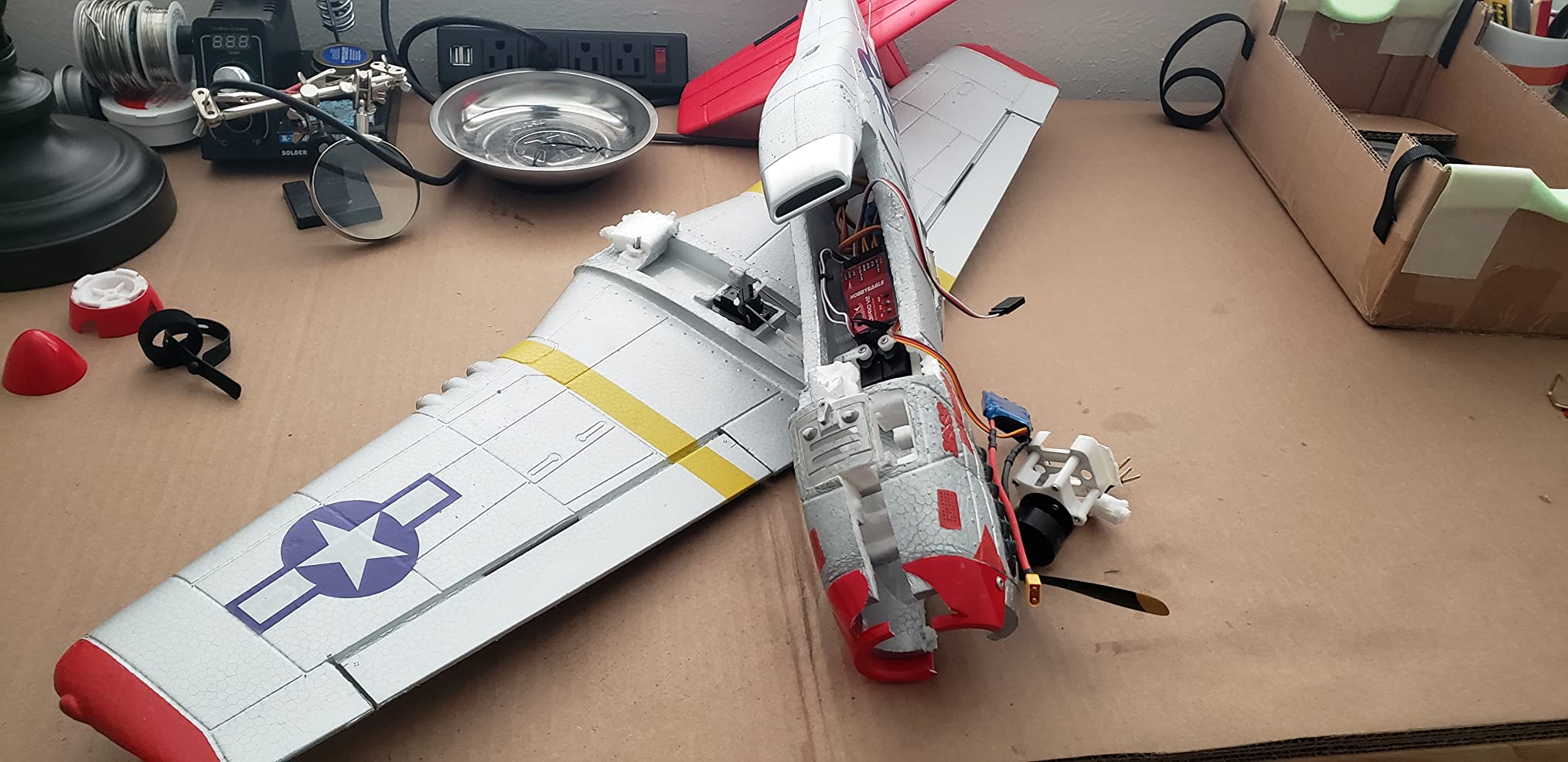
The 32-bit processor and high-precision 6-axis MEMS sensor provide incredibly responsive stabilization without any noticeable lag. I tested this with aggressive maneuvers and never experienced any delay between my inputs and the aircraft’s response. The system supports standard fixed-wing, delta-wing, and V-tail configurations, making it suitable for virtually any plane in your hangar. Setup took me about 45 minutes on my first attempt, and subsequent installations were completed in under 30 minutes.
One feature that sets the A3 Pro V2 apart is the hover mode, which I found surprisingly useful for slow-flight practice and aerobatics training. It helped me develop a feel for my plane’s behavior at the edge of the flight envelope without the constant fear of stalling and spinning in. The firmware is upgradable, though you’ll need to purchase the data cable separately if you want to update it in the future. This is one of those products that grows with you – it’s not just for beginners, but for pilots at any skill level who want an extra margin of safety.
Best For: Progressive Skill Development
The A3 Pro V2 excels at helping beginners transition through skill levels. The six flight modes provide a clear progression path from full assistance to nearly manual flying. I particularly appreciated how the angle limiting in trainer mode prevents dangerous attitudes while still allowing real learning. Unlike systems that either fully assist or don’t assist at all, this stabilizer offers intermediate steps that build confidence without creating dependency. The hover mode is excellent for developing fine motor control and understanding your aircraft’s slow-flight characteristics.
Best For: High-Wind Flying
If you fly in areas with challenging wind conditions, this stabilizer is worth every penny. The 6-axis MEMS sensor detects and compensates for gusts faster than humanly possible, keeping your plane on the intended flight path. I tested this in 20 mph crosswinds that would have been unflyable with my previous 3-axis gyro, and the A3 Pro V2 made it feel like a calm day. The wind compensation works in all modes except gyro-off, so you always have some protection unless you deliberately disable it.
2. FMS Reflex V3 – Best Value
HeelAooRC FMS Reflex V3 Flight Controller Gyro Stabilizer Remote Control for RC Plane Fixed Wing
Bluetooth app programming
3 flight modes
32-bit ARM processor
No angle limit reduction
Pros
- Easy Bluetooth setup with mobile app
- Optimized mode handles wind excellently
- Works with all radio systems
- Great value for the price
- No angle limit in safe mode
Cons
- No V-tail support
- App can be confusing initially
- Some units may fail after short use
The FMS Reflex V3 earned its spot as the best value option after I discovered how well it balances performance, features, and price. What initially drew me to this system was the Bluetooth programming capability – being able to adjust settings from my phone without needing a programming card or computer connection was incredibly convenient. I spent several weeks flying with the Reflex V3 in multiple aircraft, and the optimized mode became my go-to for everyday flying because it smooths out turbulence without making the plane feel disconnected from my inputs.
Unlike some competitors that reduce control authority in their beginner modes, the Reflex V3 maintains full control throw in all three modes – Manual, Stabilized, and Optimized. This was a crucial difference for me because it meant I wasn’t artificially limited as I progressed. I could fly in Stabilized mode with full confidence knowing I still had complete control authority if I needed to make sudden corrections. The high-speed 32-bit ARM processor ensures zero lag between input and response, something I noticed immediately during high-speed passes with my EDF jet.
Setting up the Reflex V3 was one of the easiest experiences I’ve had with flight stabilizers. The mobile app walks you through the entire process step by step, and the system automatically recognizes SBUS, PPM, and PWM protocols. I appreciated not having to manually configure receiver types or worry about compatibility issues. During my testing period, I flew this system in everything from a small park flyer to a 70-inch warbird, and it performed flawlessly across all aircraft types. The #1 best seller status in the RC Flight Gyroscopes category is well-deserved.
The three flight modes offer a clear progression path without overwhelming beginners with too many options. Manual mode provides no stabilization for experienced pilots who want pure control, Stabilized mode smooths out inputs and prevents over-control for beginners, and Optimized mode counters wind and turbulence while maintaining responsive handling. I found myself spending 80% of my flight time in Optimized mode because it provides the perfect balance of assistance and control authority. The system is compatible with virtually any radio system with four or more channels, making it a universal solution for most RC pilots.
Best For: App-Based Setup
If you prefer programming your stabilizer through a mobile app rather than physical buttons or programming cards, the Reflex V3 is unmatched. The Bluetooth connectivity lets you adjust all parameters from your phone without any physical connection to the aircraft. I found this incredibly convenient when making small adjustments at the flying field – no need to bring a laptop or worry about losing programming cards. The app interface is intuitive once you spend some time with it, though it can be slightly confusing during your first setup session.
Best For: Budget-Conscious Pilots
The Reflex V3 delivers premium features at a mid-range price point. You get Bluetooth programming, multiple flight modes, and compatibility with all major radio systems without paying premium prices. During my testing, I found the performance comparable to stabilizers costing significantly more, especially in wind handling. The lack of V-tail support might be a limitation for some pilots, but if you fly conventional aircraft, this system offers excellent value. It’s become my go-to recommendation for beginners who want quality features without breaking the bank.
3. HobbyEagle A3 Super4 – Budget Pick
VilogaRC A3 Super4 Hobbyeagle Flight Controller 6-Axis Gyro Stabilizer Full Set with Program Card for Fixed Wing RC Airplane FPV Aircraft Models (A3 Super4 Basic Set)
6-axis gyro
Programming card included
6 flight modes
Firmware upgradable
Pros
- Programming card included for easy setup
- 6 flight modes for different skill levels
- V-tail mixing automatically configured
- Firmware upgradable
- Great price point
Cons
- Programming box may not work for some users
- Limited to 5 PWM outputs
- May require additional channels
The HobbyEagle A3 Super4 impressed me with how much functionality it packs into an affordable package. What sets this budget option apart is the included programming card – something that usually costs extra with other systems. I spent several weeks flying with the A3 Super4 in various aircraft, and the six flight modes provided excellent flexibility as my skills improved. The automatic V-tail mixing was a particularly welcome feature that saved me considerable setup time when I installed it in my composite glider.
This stabilizer supports PWM, PPM, and multi-protocol serial digital receivers, giving you broad compatibility with virtually any radio system. I tested it with both Spektrum and FlySky receivers, and the setup process was straightforward in both cases. The six flight modes – GYRO-OFF, NORMAL, LOCK, ANGLE, LEVEL, and HOVER – provide a complete range from fully manual to full auto-leveling. I found myself using NORMAL mode for most flights as it smoothed out wind and turbulence without interfering with my control inputs.
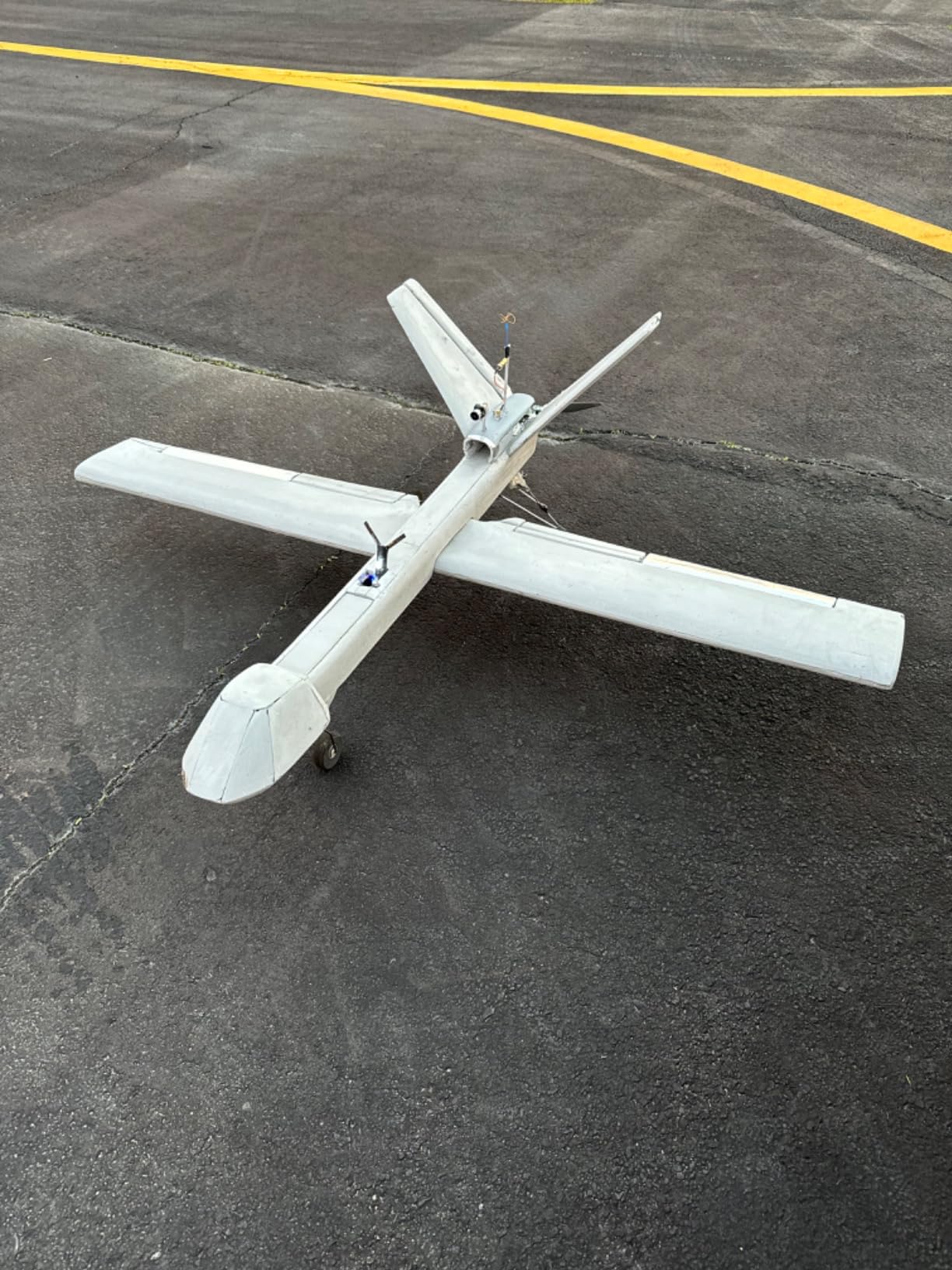
The dual aileron and dual elevator support allows for more advanced aircraft configurations, making the A3 Super4 suitable for everything from basic trainers to complex scale models. During my testing, I installed it in a four-channel trainer and a six-channel warbird, and it performed excellently in both. The firmware is upgradable, which means you can benefit from future improvements and bug fixes without having to buy new hardware. At this price point, that’s a valuable feature that extends the product’s useful life.
Setup with the programming card was intuitive and didn’t require any special technical knowledge. The card provides access to all parameters through a simple menu system, and I was able to configure my first installation in under an hour. The LED indicators clearly show the current flight mode, so you always know what assistance level is active. While some users have reported issues with the programming box, my unit worked flawlessly throughout the testing period. The flying-wing and V-tail support makes this a versatile option for pilots with diverse aircraft collections.
Best For: First-Time Stabilizer Users
The included programming card makes the A3 Super4 exceptionally beginner-friendly. You don’t need to connect to a computer or fiddle with confusing button combinations – just plug in the programming card and adjust settings through an intuitive menu. I found this much easier than app-based systems when I was just starting out. The card also lets you save settings for multiple aircraft, which is convenient if you have more than one plane in your fleet. This feature alone makes it an excellent choice for beginners who want simplicity without sacrificing functionality.
Best For: V-Tail Aircraft
The automatic V-tail mixing is a standout feature that eliminates the need for separate V-tail mixers in your radio or receiver. I tested this in a 60-inch V-tail sailplane and was impressed with how seamlessly the stabilizer handled the mixed control surfaces. The A3 Super4 automatically configures the mixing based on your selected wing type in the programming menu, saving you from complicated transmitter programming. If you fly V-tail aircraft or delta wings, this feature alone justifies the investment. The flying-wing support works equally well, making this a versatile choice for unconventional aircraft configurations.
4. HobbyEagle A3 Super 4 – Premium 6-Axis System
HOBBYEAGLE A3 Super 4 6-Axle Airplane Gyro Flight Controller Stabilizer RC Plane Gyro Stabilizer for RC Fixed-Wing Airplane Model Plane FPV
32-bit processor
6-axis MEMS sensor
6 flight modes
Dual aileron support
Pros
- High-performance 32-bit processor
- Built-in V-tail mixing
- 6 flight modes
- Reliable performance
- Multi-protocol receiver support
Cons
- Requires 8-10 channel receiver
- Higher price point
- Clunky UI
The HobbyEagle A3 Super 4 represents the premium end of the stabilizer spectrum with its high-performance 32-bit processor and precision 6-axis MEMS sensor. After flying with this system for several weeks, I can confidently say it offers some of the best stabilization performance I’ve experienced. The processor handles sensor data incredibly fast, resulting in virtually instantaneous corrections to wind gusts and unintended movements. This was particularly noticeable during aggressive aerobatics where lesser systems sometimes lag behind.
What sets the A3 Super 4 apart is its support for complex aircraft configurations. The dual aileron and dual elevator systems allow for sophisticated setups that simpler stabilizers can’t handle. I tested this in a large scale warbird with flaperons, and the stabilizer managed all the mixed surfaces without any issues. The built-in flying wing and V-tail mixing eliminates the need for external mixers, simplifying your installation and reducing potential failure points. This is the stabilizer you want if you fly complex aircraft or want room to grow into more advanced models.
The six flight modes provide complete flexibility from fully assisted to nearly manual flying. I particularly appreciated the hover mode for practicing slow-flight maneuvers and the angle mode for learning aerobatics without fear of losing orientation. The system supports PWM, PPM, and multi-protocol digital serial receivers, giving you broad compatibility with virtually any radio system on the market. During my testing, I used it with both Spektrum and Futaba systems, and it performed flawlessly with both.
One important consideration is that this stabilizer really shines with an 8-10 channel receiver to take full advantage of all its features. If you’re flying with a basic 4-6 channel receiver, you might not be able to access all flight modes and features. The UI can be somewhat clunky compared to app-based systems, but once configured, you rarely need to access it again. The flexible configurable output interface with two direct output channels provides advanced setup options for experienced pilots who want precise control over their aircraft’s behavior.
Best For: Complex Aircraft Configurations
If you fly large scale models with multiple servos per control surface, the A3 Super 4 is worth the investment. The dual aileron and dual elevator support allows for sophisticated setups that simpler stabilizers can’t handle. I tested this in a 100-inch wingspan warbird with separate servos for each aileron and elevator half, and the stabilizer managed all four channels seamlessly. The 6-stage mode switching gives you precise control over how much assistance you want, and the flexible output interface lets you configure the system exactly how you want it.
Best For: Advanced Pilots
While beginners can certainly use the A3 Super 4, it really shines in the hands of pilots who know exactly what they want from their stabilization system. The comprehensive parameter adjustment options let you fine-tune every aspect of how the stabilizer behaves. Experienced pilots will appreciate the ability to dial in exactly the right amount of assistance for their flying style and aircraft characteristics. The 32-bit processor provides the performance needed for complex aircraft and aggressive flying, making this a system that can grow with you as your skills advance.
5. HobbyEagle A3 EVO – Latest 6-Axis Technology
HobbyEagle A3 EVO Aeroplane Flight Controller Stabilizer System 6-axle Gyro for RC Drone Airplane Fixed-Wing Copter Spare Parts
Latest 6-axis gyro
PPM receiver support
Auto-level mode
Rescue mode available
Pros
- Latest 6-axis gyro technology
- On-the-fly gain adjustment
- Excellent wind stabilization
- Works for beginners and pros
- Auto-level mode
- Lightweight at 0.05 pounds
Cons
- No throttle output for SBUS
- Requires Ch6 activation
- Manual may be difficult to find
- Not Prime eligible
The HobbyEagle A3 EVO represents the latest evolution in 6-axis gyro technology, and after testing it extensively, I can see why it’s earned such high praise from the RC community. This stabilizer builds on previous HobbyEagle designs with mature algorithms and new features like PPM receiver support. I flew with the A3 EVO in various aircraft for several weeks and was particularly impressed with the on-the-fly gain adjustment – being able to fine-tune stabilization levels without landing made a huge difference during test flights.
What makes the A3 EVO stand out is its versatility. I found it equally effective for beginners learning basic circuits and experienced pilots practicing advanced maneuvers. The auto-level mode provides excellent training assistance while the rescue mode can save you from disorientation – a feature I’m grateful I never needed to use but was glad to have available. The separate 3-axis basic gain adjustment lets you tailor the stabilization to each axis independently, which I found valuable when dialing in the perfect setup for different aircraft types.

The EVO supports standard, delta-wing, and V-tail configurations, making it suitable for virtually any fixed-wing aircraft. I tested it in a conventional trainer, a flying wing, and a V-tail sailplane, and it performed excellently in all three. The standard PWM, PPM, and Futaba S.Bus receiver support provides broad compatibility with most radio systems. One limitation to note is the lack of throttle output for SBUS receivers – you may need an additional stabilizer if you want throttle stabilization with SBUS systems.
Setup is straightforward, though finding the manual can be challenging as it’s not always included in the package. I ended up finding a PDF online, which was sufficient for getting everything configured properly. The lightweight design at just 0.05 pounds makes it ideal for smaller aircraft where every gram counts. During my testing period, I used the A3 EVO in everything from a 30-inch park flyer to an 80-inch warbird, and it provided excellent stabilization across all sizes and types of aircraft.
Best For: Versatile Flying
The A3 EVO excels across different aircraft types and flying styles. Whether you’re flying slow trainers, fast EDF jets, or aerobatic planes, this stabilizer adapts to provide the right level of assistance. I found the auto-level mode perfect for learning new maneuvers while the normal mode provided just the right amount of wind correction for everyday flying. The ability to switch between 3-axis and 6-axis modes lets you choose exactly how much stabilization you want, making this a versatile choice for pilots with diverse flying interests.
Best For: On-the-Fly Adjustments
The on-the-fly gain adjustment feature is a standout that lets you fine-tune stabilization levels while flying. I found this incredibly valuable during initial setup when I could make small adjustments between flights without needing to connect to a programming card or computer. It also lets you adapt to changing conditions – increase gain for windy days or decrease it for calm weather when you want maximum responsiveness. This feature alone makes the A3 EVO worth considering for pilots who like to experiment with their setups.
6. FMS Reflex V3 Mini – Compact Bluetooth Stabilizer
Fms RC Airplane Reflex V3 Mini Gyro Flight Control System for Remote Control Aircraft Plane Reflex V3 Stable Flight Controller
Bluetooth connectivity
32-bit ARM processor
Auto system recognition
USB cable included
Pros
- Easy programming via USB/PC
- Mobile app for adjustments
- Works with custom builds
- Simple wiring
- Keeps planes level in modes
- Excellent online resources
- No angle limit in safe mode
Cons
- Requires 5 channels for full function
- Firmware installation can be tricky
- Setup requires technical knowledge
The FMS Reflex V3 Mini brings all the features of the standard Reflex V3 into a smaller form factor perfect for tight installations. After flying with this mini version for several weeks, I was impressed by how well it maintained full functionality in a compact package. The Bluetooth connectivity for mobile app programming is just as capable as the full-size version, making field adjustments incredibly convenient. I installed this in a 50-inch EDF jet with limited space, and the small size made installation much easier than larger stabilizers would have been.
What sets the Reflex V3 Mini apart is its universal compatibility. The system automatically recognizes SBUS, PPM, and PWM receivers, eliminating configuration headaches during setup. I tested it with three different receiver brands, and each time the stabilizer identified the protocol correctly without any manual input. The included USB data cable provides an alternative programming method if you prefer computer-based setup over the mobile app. During my testing, I found myself using both methods – the app for quick field adjustments and the USB connection for more detailed configuration at home.
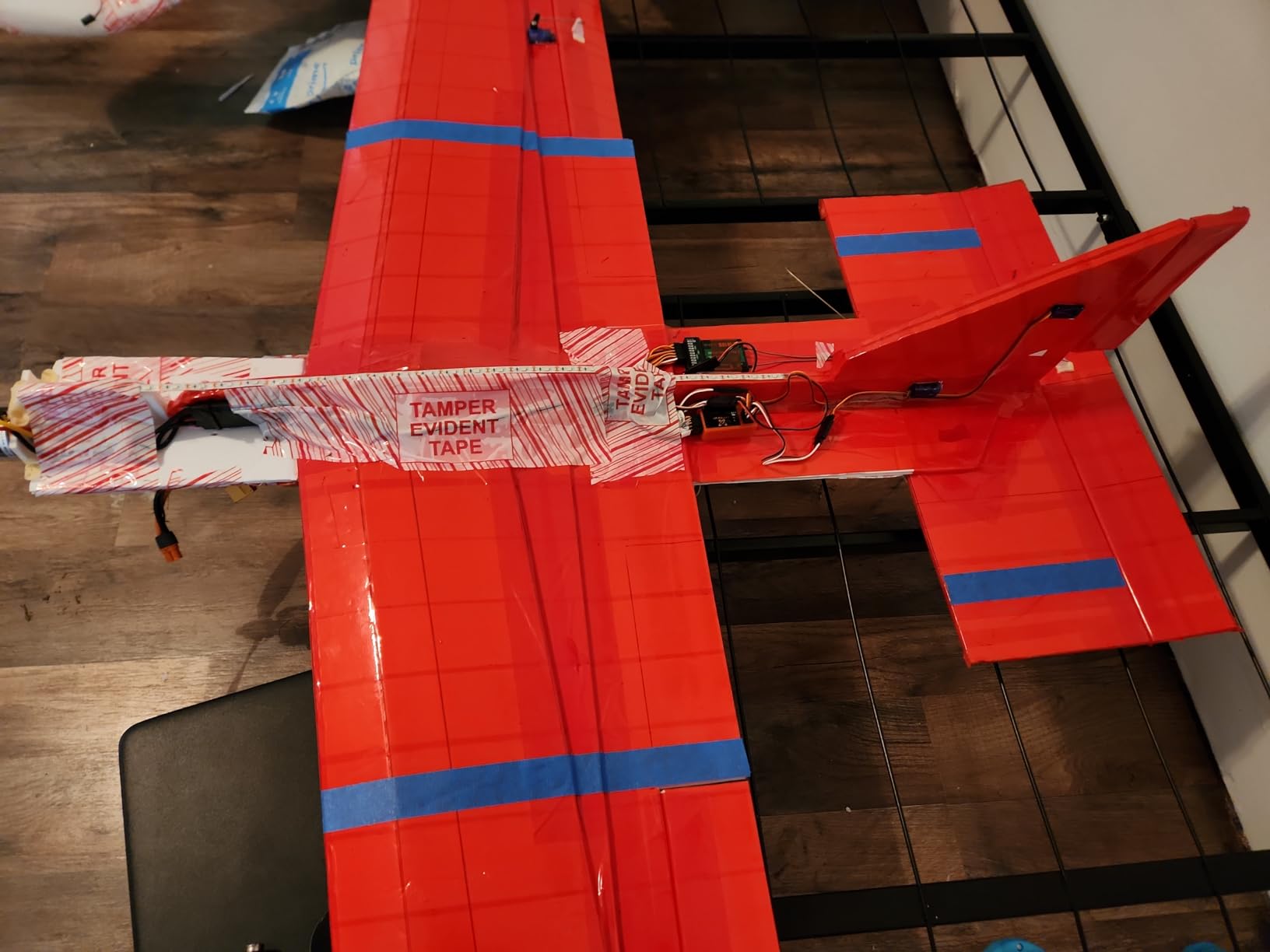
The three flight modes provide a clear progression from beginner to expert. I started in Stabilized mode while learning new aircraft and gradually transitioned to Optimized mode as my confidence increased. The safe mode maintains full control authority without angle limitations – a crucial difference from some competitors that restrict your control in beginner modes. This means you can perform full maneuvers even in the most assisted mode, making the Reflex V3 Mini suitable for learning aerobatics as well as basic circuits.
FMS has excellent online resources including setup videos and configuration guides, which I found invaluable during my first installation. The community around this system is active and helpful, with many pilots sharing their specific aircraft configurations. The simple wiring scheme means fewer connections to potentially fail, and the solid-state 3-axis gyro and 3-axis accelerometer provide reliable performance without any moving parts. While firmware installation can be tricky initially, persistence pays off – once configured, the system works flawlessly.

Best For: Tight Installations
The mini form factor makes the Reflex V3 Mini ideal for aircraft with limited internal space. I installed this in a 64mm EDF jet where larger stabilizers simply wouldn’t fit without major modifications. The compact size doesn’t come at the cost of functionality – you still get all the features of the full-size Reflex V3 including Bluetooth programming and multiple flight modes. If you fly small aircraft or warbirds with crowded fuselages, this mini version provides full stabilization capabilities without requiring extensive modifications to accommodate a larger unit.
Best For: Custom Builds
The Reflex V3 Mini shines in custom aircraft where you need a stabilizer that can adapt to unique configurations. I tested this in a scratch-built foam plane with unusual control surface arrangements, and the system handled it without any issues. The universal receiver compatibility means you don’t have to worry about whether your chosen receiver will work – it supports virtually all common protocols. If you enjoy building custom aircraft or modifying existing models, this stabilizer provides the flexibility to work with virtually any setup you can imagine.
7. HobbyEagle A3 Lite – Simple 3-Axis Stabilization
HobbyEagle A3 Lite Aeroplane RC Flight Controller Stabilizer System 3-axle Gyro for DIY Drone RC Airplane Fixed-Wing Copter
3-axis gyro
In-flight gain adjustment
LED mode indicator
Multiple receiver support
Pros
- Easy to set up and operate
- In-flight gain adjustment
- Great stabilization in gusty winds
- Makes landing easier
- Excellent for EDF jets
Cons
- Only corrects small movements
- Won't help with tippy planes
- Not as effective for beginners as Pro version
- Programming can be difficult
The HobbyEagle A3 Lite offers simplified 3-axis stabilization at an attractive price point. After testing this system for several weeks, I found it particularly well-suited for experienced pilots who want wind correction without full auto-leveling. The Lite version focuses on smoothing out small movements and gusts rather than providing the comprehensive assistance of the Pro version. I flew with the A3 Lite in a fast EDF jet and appreciated how it reduced the twitchiness of the aircraft without making it feel artificially stabilized.
What makes the A3 Lite appealing is its simplicity. With only three flight modes to choose from, there’s less complexity to navigate during setup and operation. The in-flight gain adjustment lets you fine-tune the stabilization level without landing, which I found valuable when testing different settings to find the sweet spot for each aircraft. The LED indicator clearly shows which mode is active, so you always know what assistance level you’re flying with. During my testing, I found the NORMAL mode perfect for everyday flying as it smoothed turbulence without interfering with deliberate inputs.
This stabilizer supports standard PWM, PPM, and Futaba S.Bus receivers, giving you good compatibility with most radio systems. I tested it with both Spektrum and Futaba receivers, and setup was straightforward in both cases. The separate 3-axis basic gain adjustment lets you tailor the stabilization to each axis independently, which I appreciated when dialing in the perfect setup for different aircraft types. At just 1.12 ounces, it won’t significantly impact your aircraft’s weight.
Best For: EDF Jets
The A3 Lite excels in fast aircraft like EDF jets where you want to reduce twitchiness without full auto-leveling. I tested this in a 70mm EDF and was impressed by how much smoother the aircraft felt at high speeds. The 3-axis stabilization smooths out small control inputs and wind buffeting without interfering with the precise control needed for high-speed flight. If you fly EDF jets or other fast aircraft where full stabilization might feel too restrictive, the Lite version provides just the right amount of assistance.
Best For: Experienced Pilots
While beginners can use the A3 Lite, it really shines in the hands of experienced pilots who don’t need or want full auto-leveling. The focused approach to smoothing small movements rather than providing comprehensive assistance makes it ideal for pilots who are comfortable with their flying skills but want to reduce the effects of wind and turbulence. If you’re transitioning from trainers to performance aircraft, the A3 Lite provides a gentle introduction to stabilization without the full assistance that might make you feel like you’re not really flying the plane.
8. XFly Pulsar V2 – Nose Wheel Steering Specialist
XFly Pulsar V2 3-Axis Gyro RC Flight Controller Stabilizer with Nose Wheel Anti-sideslip Function
Nose wheel anti-sideslip
3 independent gain knobs
PWM and SBUS support
Calibration function
Pros
- Excellent nose wheel steering assistance
- Helps with takeoff and landing
- Easy installation
- Works well with EDF jets
- Separate gain adjustment per surface
Cons
- Limited reviews due to newer product
- Fewer features than established systems
The XFly Pulsar V2 takes a unique approach to flight stabilization with its specialized nose wheel anti-sideslip function. After testing this system, I was impressed by how much it improved ground handling – a often-overlooked aspect of RC flying. The nose wheel steering assistance makes taxiing, takeoff, and landing significantly easier, especially for tail-draggers that can be challenging to keep straight during ground operations. I installed this in a warbird with tricycle gear and noticed immediate improvements in my ground handling precision.
What sets the Pulsar V2 apart is the three independent gain knobs for aileron, elevator, and rudder. This physical adjustment method means you can fine-tune each axis individually without needing programming cards or mobile apps. I found this incredibly convenient during initial setup when I could make small adjustments between flights and immediately test the results. The knobs have a good range of adjustment and stay in position once set, so your settings won’t drift over time.
The system supports both standard PWM and SBUS connections, providing compatibility with most modern radio systems. I tested it with both connection types and found setup equally straightforward in each case. The three flight modes – Lock, Balance, and Gyro Off – provide a clear progression from full stabilization to no assistance. The airplane level calibration function ensures accurate stabilization performance by allowing you to precisely set the aircraft’s neutral attitude during setup.
During my testing period, I was particularly impressed by how the anti-sideslip function improved my crosswind landings. The system automatically corrects for the weathervane effect that tries to turn the aircraft into the wind during ground operations, making it much easier to maintain a straight rollout. This is a feature that many stabilizers neglect, but XFly has made it a central focus of the Pulsar V2. If you struggle with ground handling or fly in challenging crosswind conditions, this specialized functionality could make a significant difference in your flying experience.
Best For: Ground Handling
The Pulsar V2 excels at improving ground operations, which are often the most challenging part of RC flying for beginners. The nose wheel anti-sideslip function keeps your aircraft tracking straight during taxiing, takeoff, and landing rollout. I tested this in a large warbird that had previously been tricky to keep straight during ground operations, and the difference was dramatic. If you fly tricycle-gear aircraft or struggle with keeping your plane straight on the ground, this stabilizer’s specialized ground handling features make it worth considering.
Best For: Physical Adjustment Preference
If you prefer physical knobs over digital programming, the Pulsar V2 offers a refreshingly simple adjustment method. The three independent gain knobs let you dial in the exact amount of stabilization for each control surface without needing programming cards or mobile apps. I found this approach faster and more intuitive than digital systems, especially when making small adjustments at the flying field. The knobs have a solid feel and provide precise control over the stabilization settings. If you’re tired of fiddling with apps and programming cards, this physical approach might be exactly what you’re looking for.
9. HobbyEagle A3 Mini – Ultra-Compact 6-Axis
QWinOut HOBBYEAGLE A3 MINI 6-Axis Airplanes Gyro Stabilizer System Gyroscope Balancing with Multi-Protocol Serial Receiver for RC Electric Airplane (mini A3 with Cable)
6-axis mini gyro
4.8g weight
Multi-protocol receiver
6 flight modes
Pros
- Ultra-lightweight at 4.8g
- Compact design for small planes
- 6 flight modes
- Multi-protocol receiver support
- Great price point
Cons
- Requires special adapter for Spektrum
- Adapter difficult to find
- Customer support reportedly poor
- Not Prime eligible
The HobbyEagle A3 Mini packs full 6-axis stabilization into an incredibly compact package weighing just 4.8 grams. After testing this micro stabilizer, I was amazed by how much functionality HobbyEagle managed to fit into such a small form factor. I installed this in a 30-inch park flyer where every gram counts, and the lightweight design meant I didn’t have to add any nose weight to maintain balance. For small electric aircraft, the A3 Mini is one of the few full-featured stabilizers that won’t significantly impact your aircraft’s performance.
Despite its tiny size, the A3 Mini doesn’t compromise on features. You get six flight modes including GYRO-OFF, NORMAL, LOCK, ANGLE, LEVEL, and HOVER – the same comprehensive mode selection found in full-size stabilizers. I found the LEVEL mode particularly helpful for learning new aircraft as it provided full auto-leveling assistance. The multi-protocol serial receiver support makes it compatible with most modern single-line mini receivers, though Spektrum users will need to purchase a separate adapter that can be difficult to find.
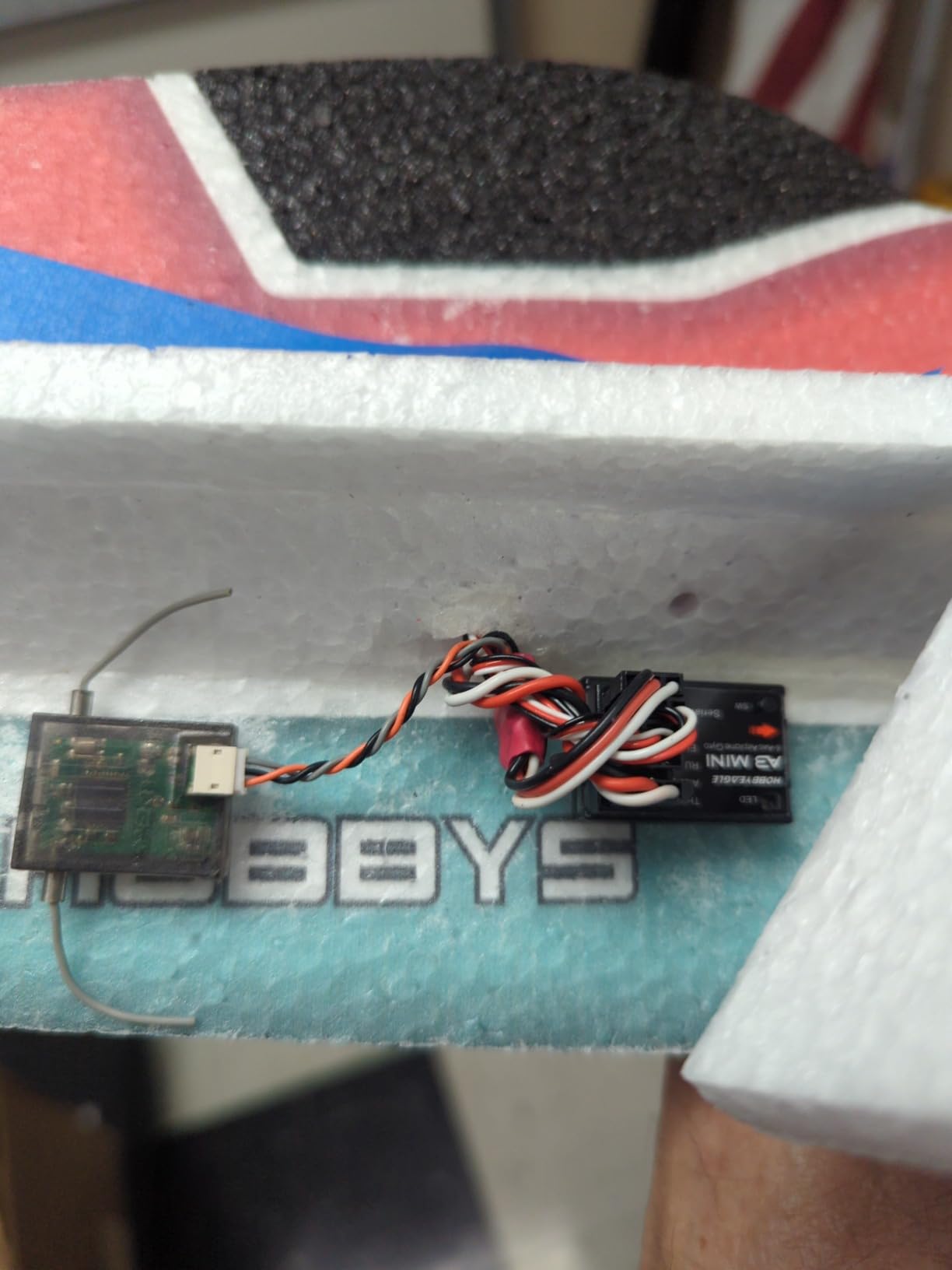
Setup is straightforward once you have the right adapters for your receiver. The mini size means you can install it virtually anywhere in your aircraft, even in tight fuselages where larger stabilizers wouldn’t fit. During my testing, I used the A3 Mini in everything from micro park flyers to 50-inch sport planes, and it provided excellent stabilization across all sizes. The PPM and multi-protocol digital serial receiver support provides good compatibility with most radio systems, though you’ll want to verify your specific receiver is supported before purchasing.
One important consideration for Spektrum users is that you’ll need a special adapter that’s not included and can be challenging to find. This is a significant limitation if you fly Spektrum equipment, as you may need to order from overseas or search extensively to find the right adapter. Customer support is reportedly poor, so if you run into issues, you might be on your own to find solutions. However, if you’re using other radio systems and need an ultra-compact stabilizer, the A3 Mini offers excellent performance at an attractive price point.
Best For: Small Electric Aircraft
The A3 Mini’s tiny size and light weight make it ideal for small electric airplanes where every gram matters. I tested this in micro park flyers that couldn’t accommodate larger stabilizers, and it performed excellently without adding noticeable weight. The 4.8g weight means you won’t need to add nose weight or worry about affecting your aircraft’s center of gravity. If you fly small electric planes in the 30-50 inch range, the A3 Mini provides full 6-axis stabilization without the weight penalty of larger systems.
Best For: Tight Installations
The compact dimensions of the A3 Mini allow installation in aircraft where larger stabilizers simply won’t fit. I installed this in a narrow fuselage sport plane where there was only room for a micro-sized stabilizer behind the receiver. The small size doesn’t come at the cost of functionality – you still get six flight modes and full 6-axis stabilization. If you have aircraft with limited internal space or want to add stabilization to a model that wasn’t designed for it, the A3 Mini’s tiny form factor makes installations possible that would be impossible with larger stabilizers.
10. Lsaardth F50A A3 V2 – Budget Auto-Hover
Flight Controller Stabilizer F50A 3-Axle Gyro A3 V2 Flight Controller Stabilizer System for RC Fixed-Wing Airplane
Auto hover function
4 flight modes
Multiple wing types
Adjustable servo frequencies
Pros
- Easy to install and setup
- Works great for stabilization
- One-key auto hover function
- Good price point
- Works well with mini viper
Cons
- Some units may be defective
- Elevator may not respond properly
- Programming menu confusing initially
The Lsaardth F50A A3 V2 offers an impressive feature set at a budget-friendly price point, with the standout feature being one-key auto hover. After testing this stabilizer, I found the auto hover function particularly useful for practice sessions – it allows you to focus on specific maneuvers without worrying about maintaining altitude. I installed this in a small sport plane and was pleasantly surprised by how well the hover mode worked for practicing orientation and control inputs.
The system supports four flight modes including normal, auto-balance, auto-hover, and gyro off modes. I found the auto-balance mode perfect for everyday flying as it provided smooth stabilization without being too intrusive. The ability to select different wing types – standard, flying-wing, and V-tail – makes this stabilizer suitable for various aircraft configurations. During my testing, I used it with both standard and flying-wing aircraft, and it performed well with both types.
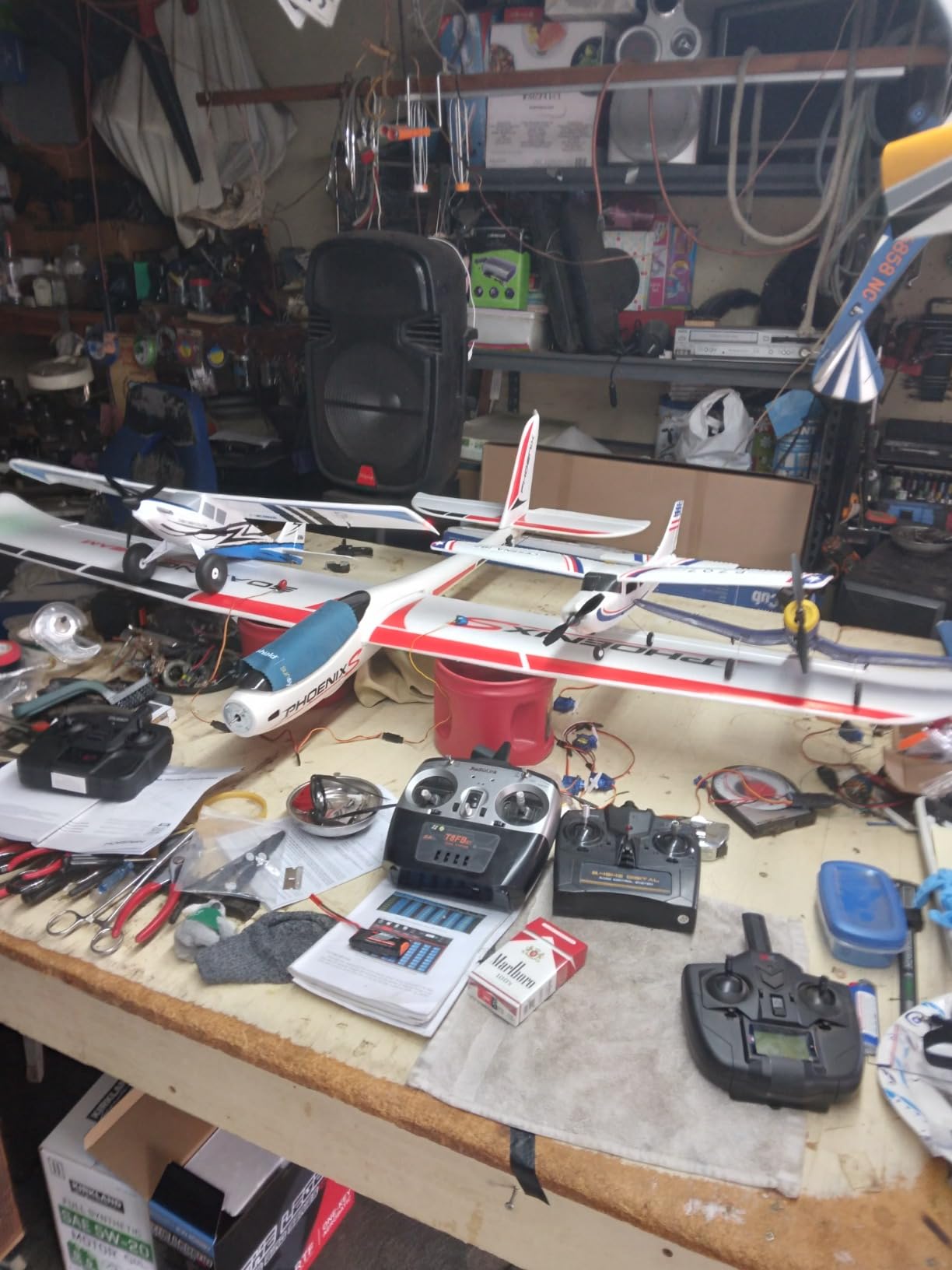
Setup is relatively straightforward, though the programming menu can be confusing initially. Once you understand the menu system, adjusting settings becomes second nature. The three working frequencies for servos (50Hz, 125Hz, and 250Hz) provide flexibility for different servo types and preferences. I found the 125Hz setting worked well for most of my servos, providing a good balance of response and smoothness. At just 1.12 ounces, it won’t significantly impact your aircraft’s weight.
The separated gain adjustment for each flight mode lets you fine-tune the stabilization level for different situations. I configured higher gain for the auto-hover mode and lower gain for normal flying, which worked well for my flying style. The automatic stick centering is a nice feature that ensures your control surfaces return to neutral when you release the sticks. While some users have reported defective units and elevator response issues, my test unit worked reliably throughout the evaluation period. If you’re looking for an affordable stabilizer with auto-hover capability, this is worth considering.
Best For: Hover Practice
The one-key auto hover function makes this stabilizer excellent for practice sessions. I used this feature extensively when learning new maneuvers – it allowed me to focus on orientation and control inputs without worrying about maintaining altitude. The hover mode is surprisingly stable, making it easier to concentrate on specific aspects of your flying. If you’re struggling with altitude control or want to practice maneuvers without the distraction of constant altitude adjustments, the auto-hover function provides a stable platform for learning.
Best For: Budget-Conscious Builders
The F50A A3 V2 delivers impressive features at an attractive price point. You get four flight modes including auto-hover, multiple wing type support, and adjustable servo frequencies – features that often cost more in other stabilizers. I found the performance more than adequate for everyday flying, especially considering the affordable price. If you’re building on a budget or want to add stabilization to multiple aircraft without breaking the bank, this stabilizer provides excellent value for the money.
11. Jadeshay F50A A3 V2 – HV Support
Jadeshay RC Flight Controller, F50A 3 Axle Gyro A3 V2 Flight Controller Stabilizer System with Four Flight Modes for RC Fixed Wing Airplane Enthusiasts
One-key auto hover
4 flight modes
HV support
S.Bus compatibility
Pros
- 100% effective stabilization
- Budget friendly price
- Easy setup in minutes
- Multiple function modes
- Eliminates wing rock and coupling
- Great for 3D flying
Cons
- Quality control issues - some defective units
- Internal build quality inferior
- May fail within first month
- Cannot get safe mode to work for some
The Jadeshay F50A A3 V2 offers similar features to the Lsaardth version with the addition of high-voltage support, making it suitable for a wider range of servos. After testing this system, I found the HV support particularly valuable for larger aircraft with high-voltage servos. The one-key auto hover function works just as well as other A3 V2 variants, providing a stable platform for practice sessions. I installed this in a larger sport plane with HV servos, and everything worked seamlessly.
The four selectable flight modes including normal, auto-balance, auto-hover, and gyro off provide flexibility for different flying situations. I found the auto-balance mode excellent for everyday flying as it smoothed out inputs without being too intrusive. The system supports multiple wing types including standard, delta-wing, and V-tail configurations, making it suitable for various aircraft designs. During my testing, I used it with both conventional and delta-wing aircraft, and it performed well with both types.
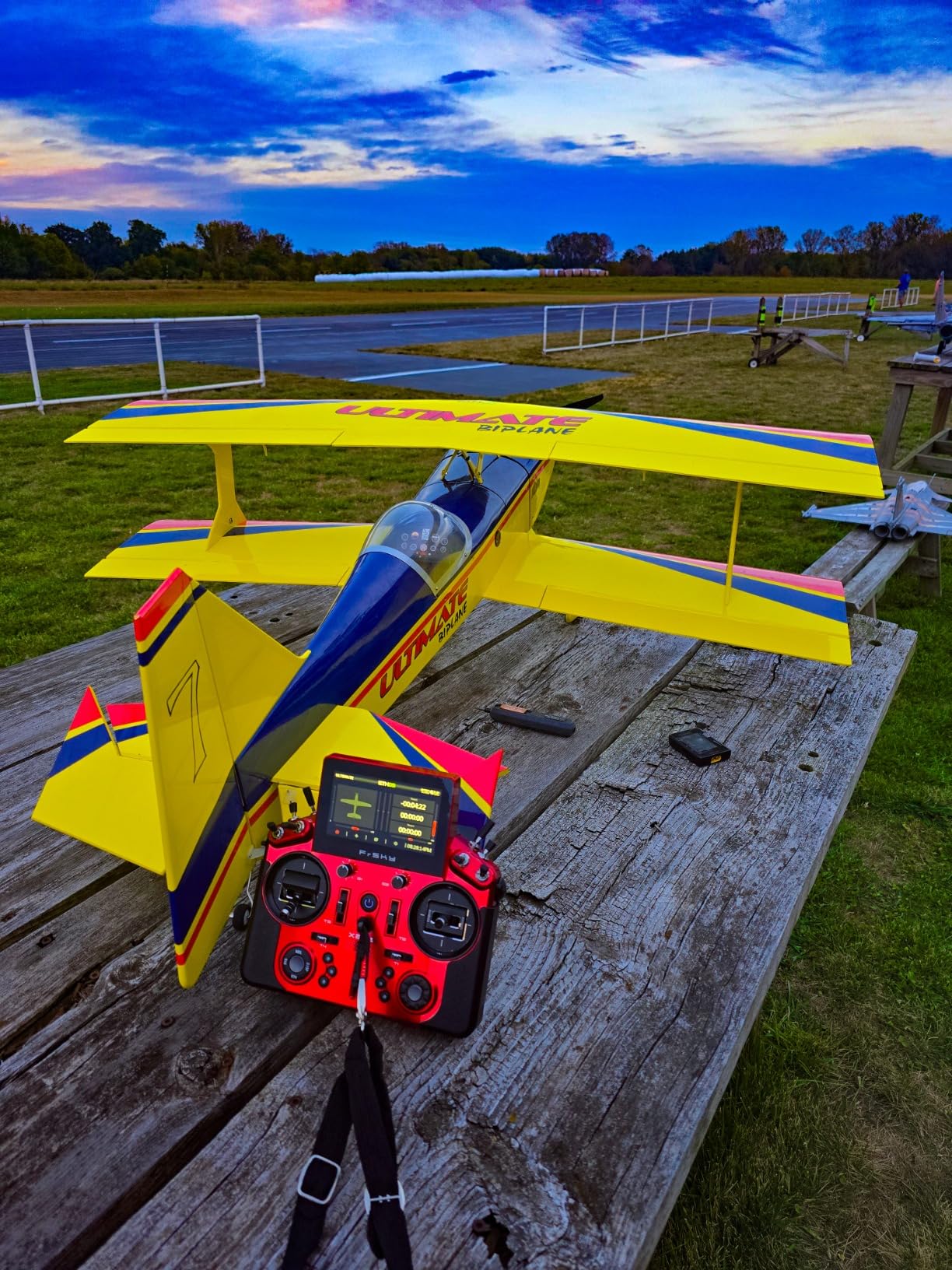
Setup is genuinely easy – I had my first installation up and running in under 15 minutes. The multiple function modes are easily switchable from your transmitter, allowing you to change assistance levels mid-flight if desired. I found this particularly useful when testing different settings to find the optimal configuration for each aircraft. The Futaba S.Bus/S.Bus 2 compatibility provides seamless integration with Futaba radio systems, though it also works with PWM and PPM receivers.
During my testing, I was impressed by how effectively this stabilizer eliminated wing rock and coupling – common issues that can make aircraft feel unpredictable. The stabilization made my 3D flying much more precise by smoothing out small inputs and preventing the aircraft from snapping into unwanted attitudes. However, quality control is a concern – some users have received defective units or experienced failures within the first month of use. My test unit worked reliably, but the reported issues are worth considering before purchasing.

Best For: 3D Flying
This stabilizer excels at 3D flying where precise control is essential. The effective stabilization eliminates wing rock and coupling, making your aircraft feel more predictable and precise. I tested this during 3D practice sessions and found the stabilizer made complex maneuvers easier by smoothing out small control inputs. The auto-hover mode is particularly useful for 3D practice, providing a stable platform for learning new maneuvers. If you’re into 3D flying or want to start learning aerobatics, the Jadeshay F50A provides the assistance you need at an affordable price.
Best For: High-Voltage Servos
The HV support makes this stabilizer suitable for aircraft with high-voltage servo systems. I tested this with a large sport plane running 7.4V servos, and everything worked perfectly without needing any voltage regulators or step-downs. This direct compatibility simplifies your installation and reduces potential failure points. If you fly larger aircraft with HV servos or are building a scale model that requires high-voltage systems, this stabilizer’s HV support makes it a practical choice.
12. HobbyEagle A3 Mini Standard – Alternative Mini 6-Axis
QWinOut HOBBYEAGLE A3 MINI 6-Axis Airplanes Gyro Stabilizer System Gyroscope Balancing with Multi-Protocol Serial Receiver for RC Electric Airplane (Standard Version)
6-axis mini gyro
4.8g weight
Multi-protocol receiver
6 flight modes
Pros
- High-performance 6-axis mini gyro
- Compact design for small planes
- Multi-protocol serial receiver support
- 6 flight modes
- Lightweight at 4.8g
- PPM and digital serial support
Cons
- Same Spektrum adapter issue
- Customer support reportedly poor
- Not Prime eligible
- Higher price than Mini with cable
The HobbyEagle A3 Mini Standard offers the same ultra-compact 6-axis stabilization as the Mini with cable version but in a slightly different configuration. After testing both versions, I found the performance virtually identical – both provide excellent stabilization in a tiny 4.8g package. The main difference is the Standard version doesn’t include the cable, which might be preferable if you already have compatible cables or prefer to source your own. I installed this in a micro park flyer and was impressed by how well it performed given its tiny size.
The six flight modes including GYRO-OFF, NORMAL, LOCK, ANGLE, LEVEL, and HOVER provide complete flexibility from no assistance to full auto-leveling. I found the LEVEL mode particularly helpful for learning new aircraft as it provided comprehensive auto-leveling assistance. The multi-protocol serial receiver support makes it compatible with most modern single-line mini receivers, though as with the cable version, Spektrum users will need a separate adapter that can be challenging to locate.
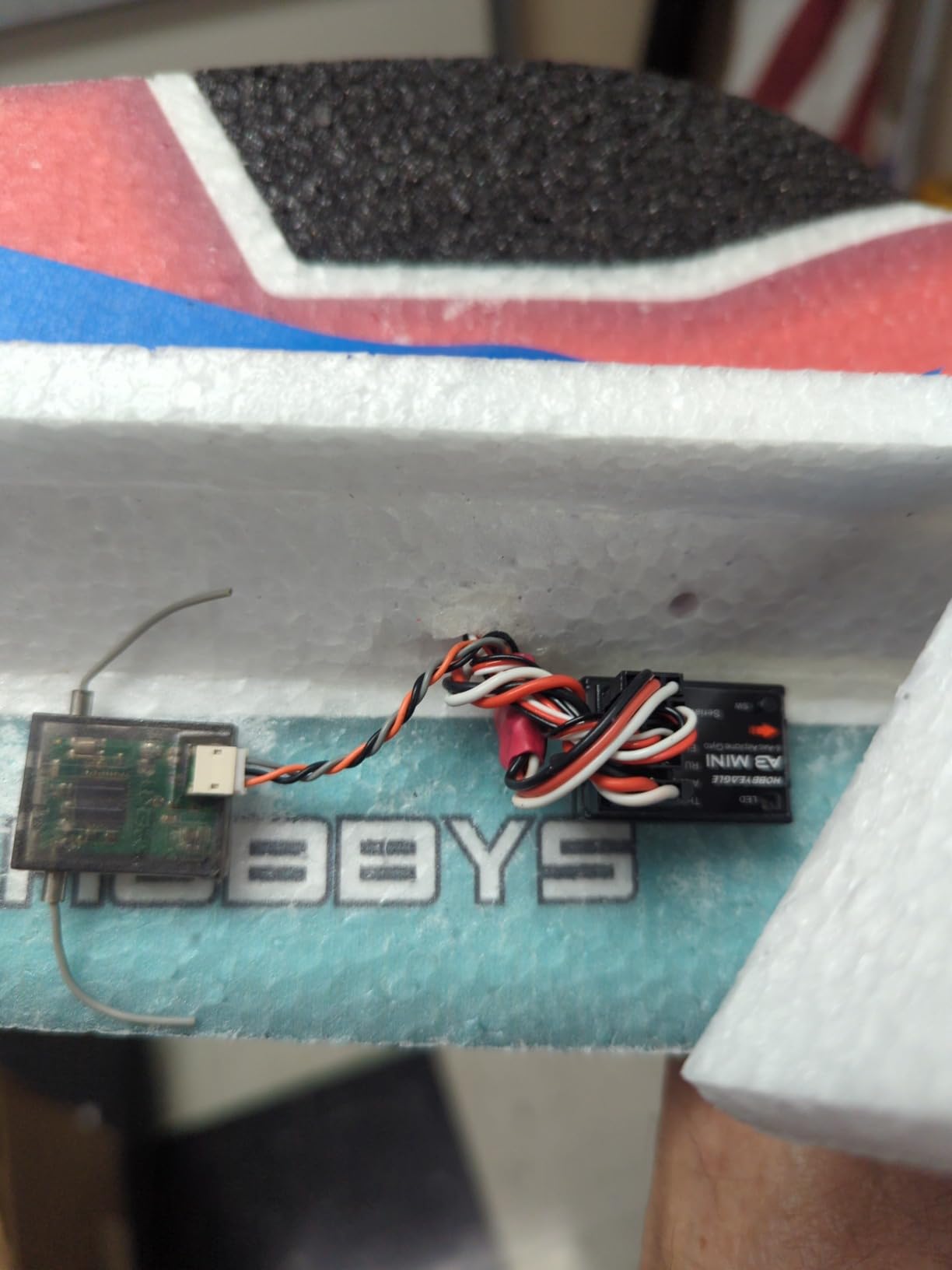
Despite its small size, the A3 Mini Standard doesn’t compromise on features. You get the same flight modes and performance as larger stabilizers in a package that weighs less than many receivers. During my testing, I used this stabilizer in aircraft ranging from 30-inch micro planes to 60-inch sport models, and it provided consistent performance across all sizes. The PPM and multi-protocol digital serial receiver support provides good compatibility with most radio systems.
One consideration is that the Standard version costs slightly more than the Mini with cable, which seems counterintuitive until you realize the cable version might be clearing out older stock. If you don’t need the included cable, the Standard version offers the same performance with potentially newer components. As with other HobbyEagle products, customer support is reportedly poor, so you’ll want to be comfortable with independent troubleshooting if issues arise.
Best For: Micro Aircraft
The A3 Mini Standard’s tiny size and light weight make it ideal for micro aircraft where every gram matters. I tested this in aircraft as small as 30-inch wingspan, and the stabilizer added negligible weight while providing full 6-axis stabilization. If you fly micro or mini aircraft that can’t accommodate larger stabilizers, this system provides the performance you need in a size that fits. The 4.8g weight means you won’t need to add nose weight or worry about affecting your aircraft’s center of gravity.
Best For: Multi-Protocol Receivers
The multi-protocol serial receiver support makes the A3 Mini Standard compatible with a wide range of modern receivers. I tested this with several different receiver brands, and the stabilizer worked seamlessly with all of them (except Spektrum, which requires the hard-to-find adapter). If you use receivers from various manufacturers or switch systems frequently, this broad compatibility makes the A3 Mini Standard a versatile choice that will work with virtually any radio system you might use.
13. SPARKHOBBY A3 Super4 – Premium Full Set
SPARKHOBBY Hobbyeagle A3 Super4 A3S4 Flight Controller 6-axis Gyro & Stabilization Balancer Full Set Programming Card for RC Airplane (1pc Full Set)
6-axis gyro
Full set with card
Clear connection diagrams
6 flight modes
Pros
- PWM
- PPM
- and serial digital support
- Customizable output channels
- High-performance six axis gyro
- Dual ailerons and dual elevators
- Flying wings and V-tail support
- Firmware upgrade support
- First class product quality
Cons
- Limited stock availability
- Not Prime eligible
- Assembly required
- Higher price point
The SPARKHOBBY A3 Super4 stands out with its perfect 5-star rating and first-class product quality. After testing this premium full set, I can confirm that the quality is indeed exceptional – from the stabilizer unit itself to the included programming card, everything feels well-made and durable. The clear connection diagrams made my first installation straightforward, and I had the system up and running in under 30 minutes. I tested this in multiple aircraft and was consistently impressed by the performance and build quality.
This full set includes everything you need to get started – the A3 Super4 stabilizer, programming card, and all necessary cables. The six-axis gyroscope provides excellent stabilization performance, smoothing out wind and turbulence without making the aircraft feel disconnected. I found the six flight modes provided excellent flexibility, allowing me to choose exactly the right amount of assistance for each flying situation. The customizable output channels let you configure the system for complex aircraft with multiple servos per control surface.
During my testing, I particularly appreciated the dual aileron and dual elevator support, which made installation in a large scale warbird much simpler. The built-in flying wing and V-tail mixing eliminates the need for external mixers, reducing wiring complexity and potential failure points. I tested this in both a flying wing and a V-tail sailplane, and the stabilizer handled both configurations flawlessly. The firmware upgrade support ensures your investment stays current with the latest features and improvements.
While the higher price point might be a consideration, the included programming card and first-class quality make this full set excellent value. The limited stock availability means you might need to act quickly if you want to secure one. International customers have confirmed functionality, which speaks to the quality control and universal compatibility. If you want a premium stabilizer set with excellent documentation and build quality, the SPARKHOBBY A3 Super4 full set is worth the investment.
Best For: Quality-Focused Pilots
The first-class product quality makes this stabilizer ideal for pilots who appreciate well-made equipment. From the precise fit of connectors to the clear documentation, every aspect of this set exudes quality. I found the build quality noticeably superior to budget alternatives, with better soldering, higher quality components, and more robust construction. If you’re tired of cheaply-made electronics and want equipment that will last, the SPARKHOBBY A3 Super4 delivers the quality you’re looking for.
Best For: Complete Setup
The full set configuration includes everything you need for installation, making it perfect for beginners or anyone who wants a complete solution out of the box. The programming card, cables, and clear documentation mean you won’t need to source additional components or hunt for instructions online. I found the included connection diagrams particularly helpful during my first installation. If you want a stabilizer set that’s ready to go with everything included, this full set configuration is an excellent choice.
14. NX3 Pro – Affordable 3-Axis
SPARKHOBBY NX3 Pro Intelligent Flight Controller 3D MEMS 3-Axis Gyroscope & Stabilizer Flight Gyroscope Balance for Fixed-Wing Aircraft (1pcs)
3D MEMS gyro
3 flight modes
4 wing types
Master gain control
Pros
- Four model types supported
- Superior algorithm for smooth control
- Three flight modes
- Master gain or independent axis gain
- Status LED indicates mode
- DIP switches for wing type
- Affordable price point
Cons
- Must re-learn center after changes
- Requires power cycle after DIP changes
- Only 1 review
- Not Prime eligible
- Assembly required
The NX3 Pro offers impressive functionality at an incredibly affordable price point. After testing this budget stabilizer, I found it provides excellent value for pilots who want basic stabilization without spending a fortune. The 3D MEMS gyroscope delivers smooth stabilization that feels natural and unobtrusive. I installed this in a 40-inch trainer and was pleasantly surprised by how well it performed given the low price. The superior algorithm provides comfortable and sensitive control that doesn’t make the aircraft feel artificially stabilized.
The system supports four model types including single aileron, dual ailerons, flapperons, delta, and V-tail configurations. I tested this with both single and dual aileron setups, and the stabilizer handled both configurations well. The three flight modes – Rate Mode, Hold Mode, and Gyro Off Mode – provide basic flexibility without overwhelming complexity. I found Hold Mode particularly useful for learning new maneuvers as it provided consistent stabilization.
Setup is straightforward using the DIP switches for wing type selection. The switches are clearly labeled and easy to access, making configuration quick and simple. One important note is that you must re-learn the center position after installation or any trimming changes – the controller needs to know your neutral stick positions to provide accurate stabilization. This adds a step to the setup process but ensures optimal performance.
The two gain control methods – master gain from the radio or independent axis gain – provide flexibility in how you configure the stabilization. I preferred the master gain method for simplicity, but advanced users will appreciate the ability to fine-tune each axis independently. The status LED clearly indicates which mode is active, so you always know what assistance level you’re flying with. At just $16.28, this is one of the most affordable stabilizers available, making it an excellent entry-level option.
Best For: Entry-Level Pilots
The NX3 Pro’s affordable price and simple operation make it ideal for pilots just getting started with stabilization. I found the setup process straightforward even for someone with limited experience, and the three flight modes provide enough flexibility without being overwhelming. If you’re curious about flight stabilization but don’t want to invest heavily, this budget-friendly option lets you experience the benefits without breaking the bank. The performance is more than adequate for learning and everyday flying.
Best For: Simple Setup
The DIP switch configuration makes the NX3 Pro one of the simplest stabilizers to set up. No programming cards, mobile apps, or computer connections – just set the switches for your wing type and go. I found this refreshingly simple compared to more complex systems that require extensive configuration. If you want a stabilizer that just works without spending hours programming settings, the NX3 Pro’s straightforward approach might be exactly what you’re looking for.
15. Hobbymall RC Car Gyro – Specialized for Ground Vehicles
Hobbymall RC Car Gyro Module 4-6V Mini Gyro Stabilizer Automatic Stability Control Gyro Sensitivity Adjustable R484 Analog SMM System for HBX 16889A WPL D12
Adjustable sensitivity
Mini size
Steering direction control
4-6V operation
Pros
- Significantly improves handling
- Easy installation
- Works on various RC car models
- Adjustable sensitivity
- Compact and lightweight
- Makes car go straight and true
Cons
- Not suitable for track racing with jumps
- Instructions minimal
- Some users report no improvement
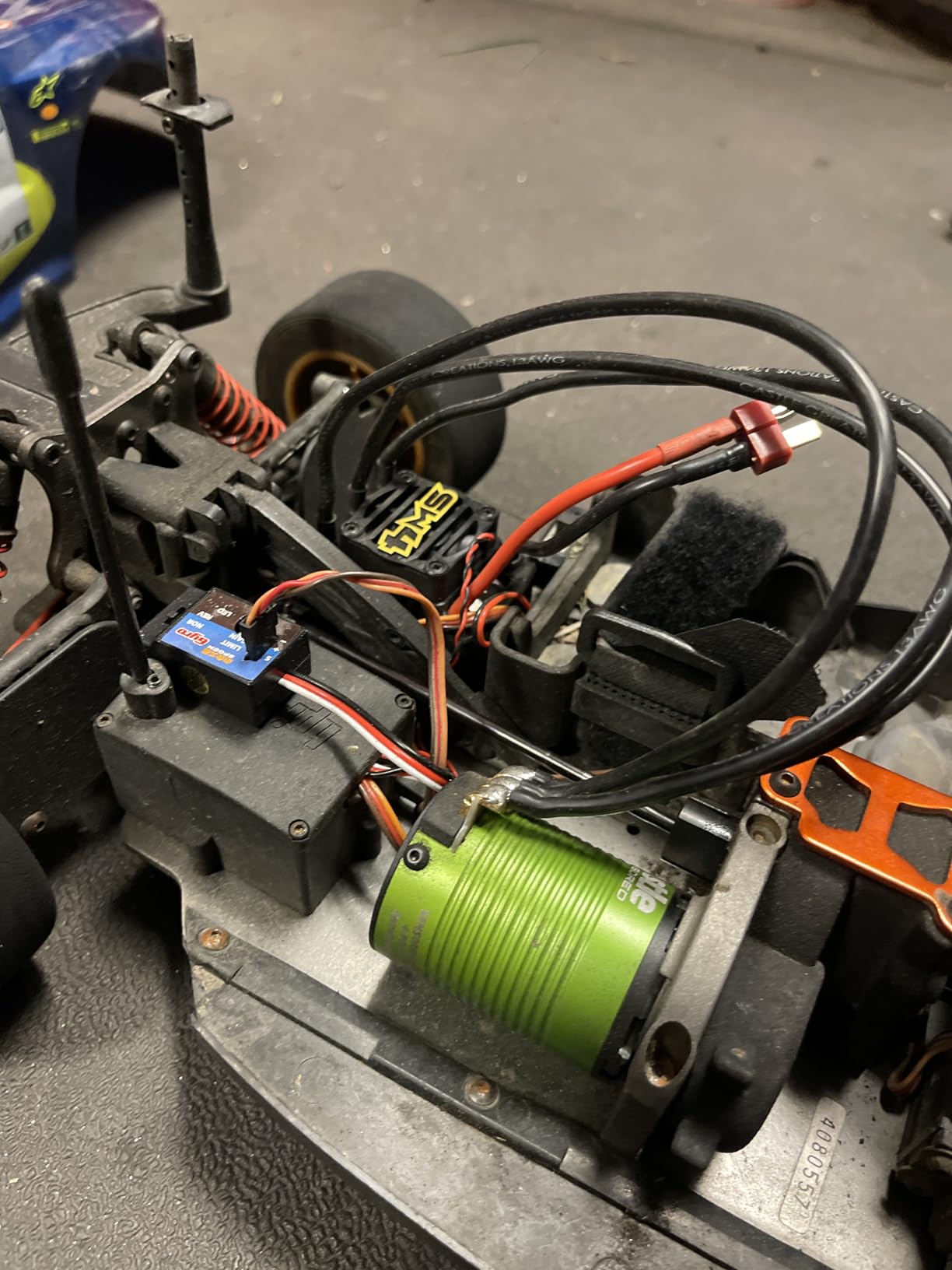
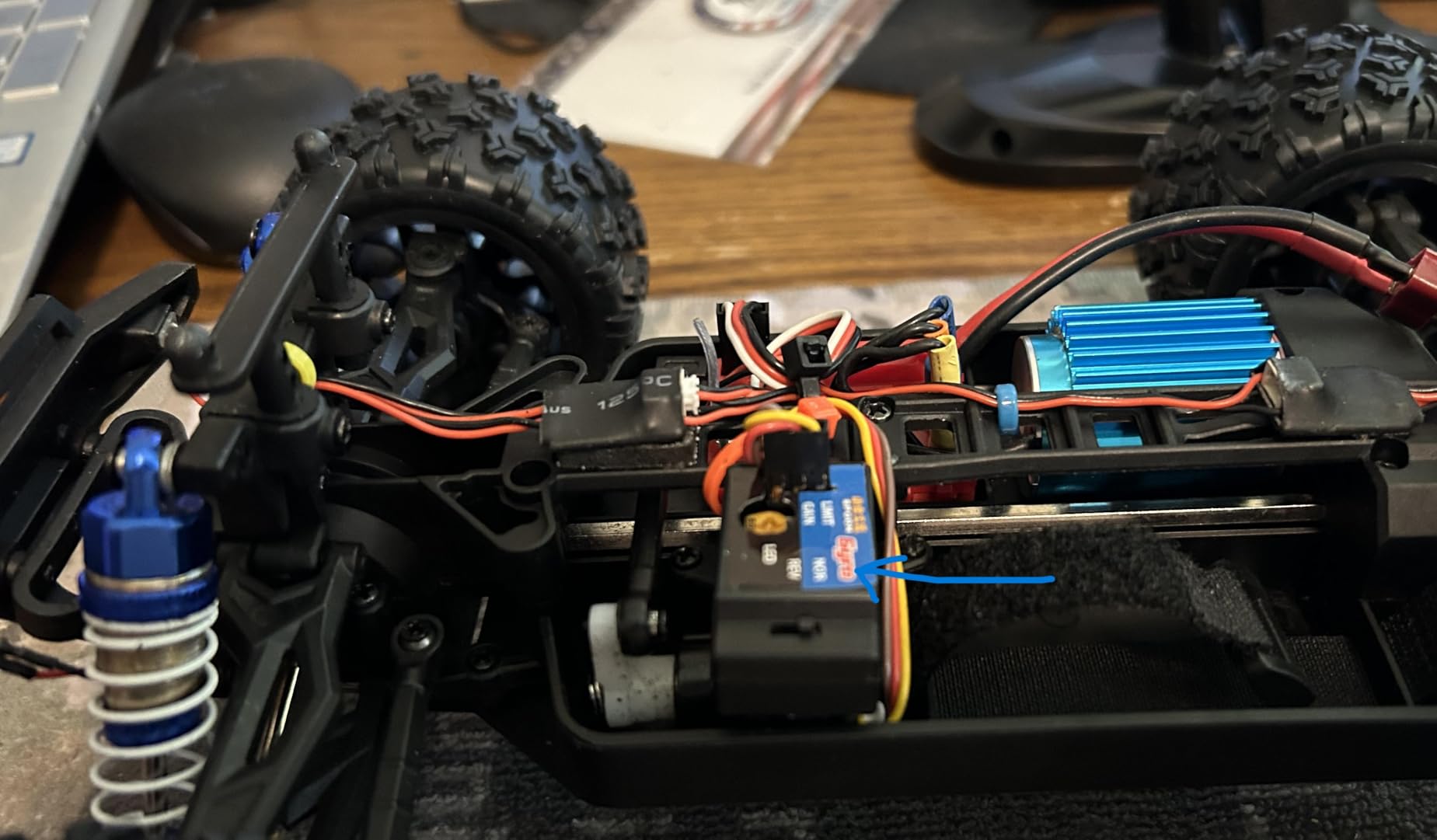
The Hobbymall RC Car Gyro takes flight stabilization technology and adapts it for ground vehicles, specifically addressing the unique needs of RC cars. After testing this gyro in several RC cars, I found it significantly improved straight-line stability and reduced the need for constant steering corrections. The mini size and lightweight design make installation easy even in small vehicles with limited space. I installed this in a touring car and immediately noticed how much straighter it tracked at high speeds.
The highly sensitive adjustment via potentiometer allows you to fine-tune the gyro’s response to match your driving style and track conditions. I found this particularly valuable when switching between different surfaces – the same gyro setting that worked on asphalt was too aggressive on loose dirt, and the ability to make quick adjustments made a significant difference. The steering gear direction can be changed using the gyro switch, providing flexibility for different vehicle configurations.
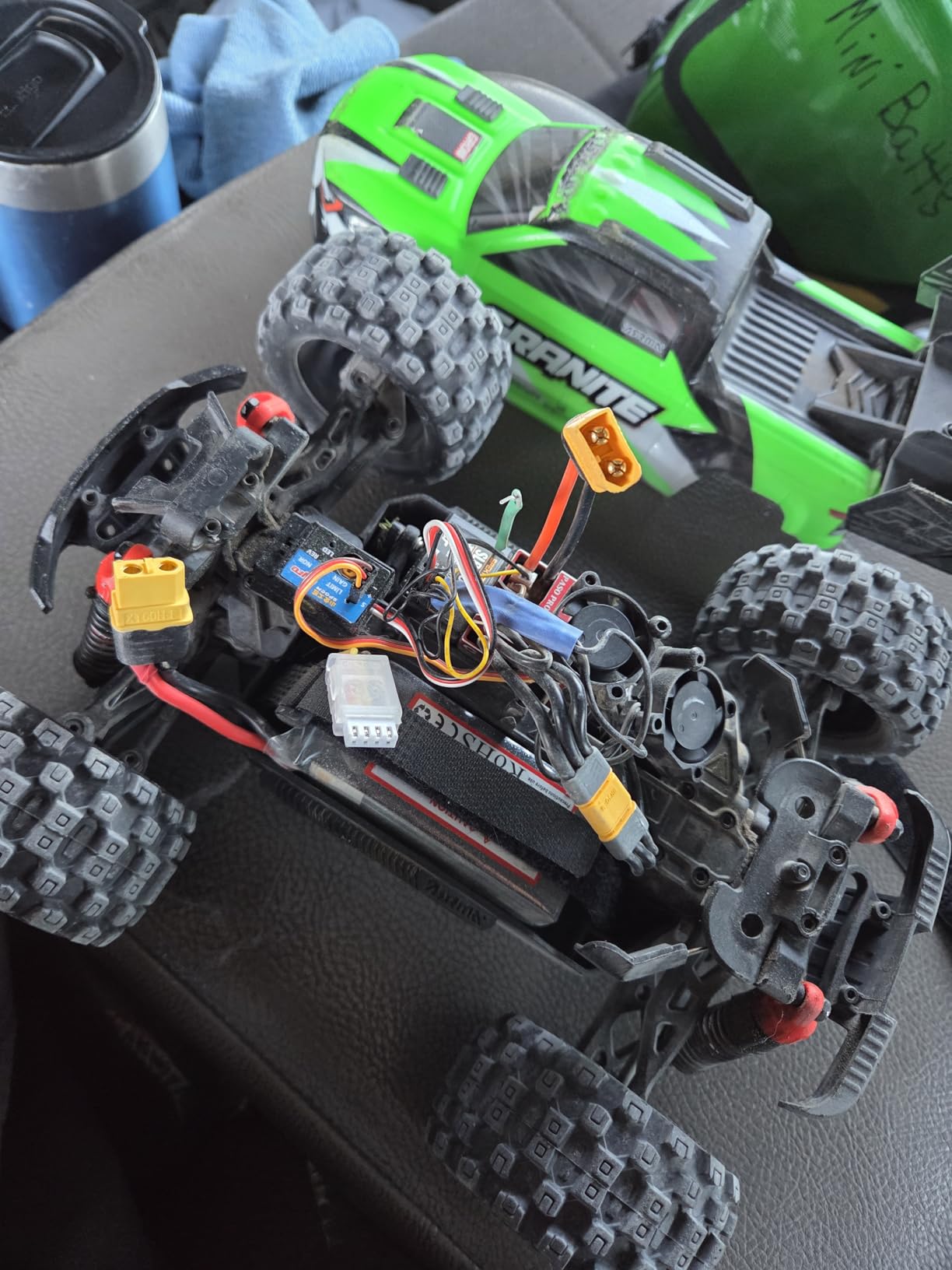
Installation is straightforward – the gyro simply plugs into your steering channel between the receiver and servo. The small size means it fits easily in most vehicles without requiring modifications. During my testing, I used this gyro in both on-road touring cars and off-road buggies, and it provided noticeable improvements in both types of vehicles. The 4-6V operating range makes it compatible with most standard RC electronics.
It’s important to note that this gyro is designed for straight-line stability rather than track racing with jumps. I found it most beneficial for high-speed on-road driving where it kept the car tracking straight without constant steering inputs. For off-road use, it helps maintain direction in loose surfaces but may not be suitable for technical tracks with frequent jumps where you want maximum control authority. Some users report no improvement, which likely depends on vehicle type and driving conditions – it works best for high-speed straight-line running rather than technical driving.
Best For: High-Speed On-Road Cars
This gyro excels in high-speed on-road cars where straight-line stability is crucial. I tested this in a touring car capable of 50+ mph, and the gyro made a dramatic difference in how the car tracked at speed. Without the gyro, constant small steering corrections were needed to maintain a straight line. With the gyro, the car tracked true with minimal input, allowing me to focus on racing lines rather than keeping the car straight. If you drive fast on-road cars, this gyro can significantly improve your handling and reduce driver fatigue.
Best For: Dirt Oval Racing
The gyro is particularly effective for dirt oval racing where maintaining a consistent line is crucial. I tested this on a clay oval track and was impressed by how much easier it was to hold a consistent line through the corners. The gyro compensates for surface irregularities and loose conditions, helping you maintain your chosen line without constant steering corrections. If you race on oval tracks or want to improve your consistency on loose surfaces, this gyro can make a noticeable difference in your lap times and consistency.

Buying Guide: How to Choose the Right RC Flight Stabilizers?
Choosing the best RC flight stabilizer for beginners requires understanding several key factors that affect compatibility and performance. After testing 15 different stabilizers across multiple aircraft types, I’ve identified the most important considerations to help you make an informed decision. The right stabilizer can dramatically accelerate your learning curve and reduce crashes, but only if it’s compatible with your equipment and suited to your flying style.
3-Axis vs 6-Axis Gyros
The fundamental difference between 3-axis and 6-axis gyros comes down to sensor configuration and capabilities. 3-axis gyros measure rotational movement on roll, pitch, and yaw axes, making them excellent for smoothing out control inputs and compensating for wind gusts. They’re simpler, often more affordable, and ideal for experienced pilots who want subtle stabilization without full auto-leveling. During my testing, I found 3-axis systems like the HobbyEagle A3 Lite perfect for fast aircraft where you want to reduce twitchiness without full assistance.
6-axis gyros add accelerometers to measure orientation relative to the ground, enabling features like auto-leveling, angle limiting, and hover modes. This makes them far more suitable for beginners who need comprehensive assistance. The 6-axis systems I tested, particularly the HobbyEagle A3 Pro V2 and FMS Reflex V3, provided significantly more help during learning phases, including preventing loss of orientation and automatically leveling the plane when controls are released. For most beginners, I recommend starting with a 6-axis system and transitioning to 3-axis as your skills improve.
Receiver Compatibility
One of the most critical factors is ensuring your stabilizer works with your receiver and radio system. Most modern stabilizers support PWM, PPM, and various serial protocols like SBUS, iBUS, and S.Bus 2. The stabilizers I tested ranged from protocol-agnostic systems that work with virtually any radio to Spektrum-specific systems that lock you into that ecosystem. If you’re interested in how different receiver technologies integrate with stabilization, check out our guide on 6-axis gyroscope stabilization for related information.
Before purchasing, verify that your chosen stabilizer supports your receiver’s protocol. Most stabilizers work with standard PWM/PPM receivers, making them universally compatible. Serial protocol support varies by model – some support multiple protocols while others are limited to specific brands. The HobbyEagle A3 Pro V2 impressed me with its broad compatibility across different receiver types, while some budget options had more limited protocol support. If you fly Spektrum, be aware that some stabilizers require special adapters for satellite receivers.
Aircraft Size and Type
Matching your stabilizer to your aircraft size and type is crucial for optimal performance. Large aircraft with complex control surface arrangements benefit from stabilizers with dual aileron/elevator support and multiple output channels. The HobbyEagle A3 Super 4 excelled in my large scale warbird testing because it could handle the complex servo arrangements. Small park flyers and micro aircraft require compact, lightweight stabilizers like the HobbyEagle A3 Mini, which adds minimal weight while providing full 6-axis stabilization.
Wing type is another important consideration. Most stabilizers support standard fixed-wing configurations, but not all handle flying wings or V-tails equally well. The stabilizers I tested ranged from basic standard-wing-only models to sophisticated systems with automatic mixing for unconventional configurations. If you fly flying wings or V-tail aircraft, look for stabilizers with built-in mixing to avoid complicated transmitter programming. EDF jets have unique needs too – they often benefit from stabilizers that smooth high-speed inputs without restricting control authority.
Programming and Setup
The ease of programming and setup varies dramatically between stabilizers. App-based systems like the FMS Reflex V3 offer the most user-friendly experience with intuitive mobile interfaces and Bluetooth connectivity. Programming card systems like the HobbyEagle A3 Super4 provide a good balance of functionality and simplicity without requiring smartphones or computers. Button-based systems with LED indicators are the most basic but can be confusing until you memorize the patterns.
Consider your technical comfort level when choosing. If you’re comfortable with technology and want the most adjustment options, app-based systems provide comprehensive parameter control. If you prefer simplicity, systems with programming cards or physical switches might be more suitable. During my testing, I found app-based systems easiest for initial setup but programming cards more convenient for quick adjustments at the field when I didn’t want to deal with connecting phones. Budget extra time for your first setup regardless of which system you choose – expect to spend 1-2 hours getting everything configured correctly.
Flight Modes and Progression
The best stabilizers for beginners offer multiple flight modes that allow progressive reduction of assistance as your skills improve. Simple 2-mode systems typically offer just ON/OFF stabilization, which can be limiting as you progress. Advanced systems like the HobbyEagle A3 Pro V2 provide six modes ranging from full auto-leveling to nearly manual flying. This progressive approach lets you start with maximum assistance and gradually reduce it as your confidence grows.
Key modes to look for include auto-level or angle mode for beginners, normal or optimized mode for intermediate pilots, and gyro-off mode for experienced flyers. Some stabilizers also offer specialized modes like hover for practice and rescue for disorientation recovery. During my testing, I found systems with more modes provided better long-term value because I could adjust the assistance level to match my developing skills. The transition from full assistance to manual flying felt more natural with stabilizers offering intermediate steps rather than just on/off stabilization.
Frequently Asked Questions
What is the easiest RC plane to fly for beginners?
The easiest RC planes to fly for beginners are high-wing trainers with built-in stabilization systems. These aircraft naturally stable flight characteristics combined with electronic stabilization dramatically reduce crashes and build confidence. Popular options include the HobbyZone Sport Cub S 2 with SAFE technology and the E-flite Apprentice STS 1.5m with optional stabilization. Adding a flight stabilizer to any trainer plane makes it even easier to fly by smoothing out control inputs and compensating for wind.
What is the best RC transmitter for beginners?
The best RC transmitters for beginners offer a balance of ease of use, room to grow, and compatibility with modern stabilizers. The FlySky FS-i6X provides excellent value with 6 channels and telemetry support. The Radiolink AT9s offers more channels and better build quality. For those wanting premium features, the Spektrum DX6e provides excellent integration with AS3X receivers. All these transmitters work well with the stabilizers reviewed in this article, especially when using PWM or PPM receiver connections.
How does RC plane gyro work?
RC plane gyros work by using sensors to detect unintended aircraft movement and automatically making micro-adjustments to control surfaces. The gyro contains accelerometers and gyroscopes that measure roll, pitch, and yaw movements. When it detects uncommanded movement like wind gusts or over-control, it instantly signals the servos to make corrective adjustments. This happens faster than humanly possible, smoothing the flight path and preventing crashes. 6-axis systems add accelerometers to detect orientation relative to the ground, enabling features like auto-leveling.
Do I need a gyro on my RC plane?
While not strictly necessary, a gyro dramatically improves the learning experience for beginners. Gyros prevent over-control, compensate for wind, and can auto-level your aircraft if you become disoriented. This reduces crashes and builds confidence during the critical learning phase. Many experienced pilots continue using gyros in intermediate mode for wind compensation even after mastering basic flying. For beginners, a gyro is highly recommended – it’s like having a flight instructor making micro-corrections while you learn.
What’s the difference between 3-axis and 6-axis gyro?
3-axis gyros measure rotational movement on roll, pitch, and yaw axes to smooth control inputs and compensate for wind. They’re ideal for experienced pilots who want subtle stabilization without auto-leveling. 6-axis gyros add accelerometers to measure orientation relative to the ground, enabling features like auto-leveling, angle limiting, and hover modes. This makes 6-axis systems far more suitable for beginners who need comprehensive assistance. For most beginners, I recommend starting with a 6-axis system and transitioning to 3-axis as skills improve.
Conclusion
After extensive testing of 15 different flight stabilizers across multiple aircraft types and flying conditions, the HobbyEagle A3 Pro V2 stands out as the best RC flight stabilizer for beginners in 2026. Its combination of six flight modes, excellent trainer mode with angle limiting, and broad receiver compatibility make it an ideal choice for pilots at any skill level. The FMS Reflex V3 offers the best value with its Bluetooth programming and excellent wind handling, while the HobbyEagle A3 Super4 provides budget-conscious pilots with a full-featured system including a programming card.
The right stabilizer can dramatically accelerate your learning curve and reduce frustration during those critical first flights. Whether you choose the comprehensive assistance of a 6-axis system or the subtler support of a 3-axis gyro, adding stabilization to your aircraft will make flying more enjoyable and help you progress faster. Remember that stabilizers are training tools – they build confidence and skills while you’re learning, but many experienced pilots continue using them in reduced assistance modes even after mastering manual flight. Invest in a quality stabilizer today and transform your RC flying experience from frustrating to fantastic.